THE DEVELOPMENT OF BIODEGRADABLE PLASTIC WITH NATURA.L COLOT]RANT AS PACKAGING MATERIAL
I R \ A I I L I S H A K & I D A I M L T I A M A D
Bioprocess Engineering Department, Faculty ofChemical and Natural Resouces Engineering, Universiti Tekrologi Malaysia, 81310 Skudai, Johor
Abstact.
The aim of this study is to develop biodegradable plastic with natural colouraots as packaging materjal. Blends of anthocyanin and bromocresol purple (BCP) as biological and chemical colourants respectively, tapioca starch, glycerol, polyethylene grafted maleic anhyddde (PE-g-MA), clay nanocomposites and low density polyethylene (LDPE) with different formulation contents for five types of blends were prepared using a lab scale twin screw extruder. A sedes of low densily polyethylene (LDPE) with different blends formulation were developed via blow film extrusion. The moryhology and properties of the blends were evaluated by using a scanning electron microscope (SEM). The dispersion of tapioca starch in the LDPE matrix was homogeneous and mechanical propefiies of the films were improved with the addition of glycerol. The interfacial adhesion between tapioca starch and LDPE was futher improved by the addition of PEg-MA according to the morphological structure sho*n by SEM micrographs, thus enlanced the mechanical propefties of the films. Formulations containing 35 o/o tapioca starch with fairly high concentrations of additives indicate the impoftance of the concentation of starch and the presence of additives on the biodegradabiliry of tapioca starch-LDPE fi lm blends.
1.0 INTRODUCTION
Today's plastics are designed with little consideration for their ultimate disposability. Plastics are strong, easily processable. inexpensive, light-u,eight and energy efficient. They are disposable, very durable and have excellent balaier properues. However, they are also have sevaral disadvantages. One ofthe largest being that plastic does not break down in the environment. They are not readily broken down by the natural elements in the environment or composting to become a part of the biological carbon cycle of our ecosystem.
According to Narayan (1993), plastics are resistant to biological degradation because microorganisms do not have enzymes capable of degrading ard utilizing most man made polylers. The hydrophobic character ofplastics inhibits enzyme activity and the low su.face area of plastics with their inherenl high molecular weight further compounds the problem. Biodegradable plastics shor d have the needed perfomance characteristic in their intended use, but afler use should under.go biodegradation in appropriate waste management infrastuctures to envircnmentally compatible constituents. For example, a truly biodegradable plastic will be converted to CO:, Ll:O, and compost in a composting infiastructure leaving no persistent or toxic residue (Narayan, 1993).
The additbIt of biodegradable ad.liLives 1lr the fom.rulation of plastics cal be enlanced the biodegradability of synlhetic pol),mers like polyethylene. Starch is ore of the most common degadablc fillcrs used in plastic founulations. Ra\.v starch is considered to be a cost etLctive additive and tneets the rectuircmcnt ofhish thermal stability, minimum interference \\'ilh llr\ propeties, rrrJ minimum disrLfbance of produca (Shah et al., 1995). ln plasLics containing blends of polyerhylene $,ith starch. mic.obes iriiiall)' attack stafch rcsulting in at1 jncrease in the porosity al]d slrrlace to volume ratio ofthe polymer blcnd and a consequcnt enhancement of its biodcgradability (Nikazar et a1.. 2005).
3 The biodegradability of the polyefiylcnc-starch blcnds can be frnlhcr enhanced by the addition of othe! additives such as aulooxidants {lbr exa.mple unsaturated latt} acids and tlleir derivatil]es), photo degraders (fbr exampie aromatic or aliphatic ketone), chemical degr.iders (for example an aliphalic polyhydroxy carboxylic acid) and various compelib:l i./(r . lDurr Iic. )00)).
The ircorporatiot of pro-oxidant \i\rhich consisted of ntetal salts and unsaalo?aecl olastomer enianced tlc lhenno-oxidative degladatioo tate of sago starch filled I-LDPE composites (Slr"uma et al.,2001). Lee et a1. (i991) found that the dcgratlation of polyethylene moiecules by lignin degrading bacteria in those Iilms oontaining starch and pro-oxidants. 1he use of plasticized starch such as glycerol has also been fouod to a1l'ect the degradabiljtv ofthe plastic blelds. Jhe plasticjzers cortent is directly rclatcs to the nechanical propcdies of the inalcf ial.
llowcver, the addition of slarch 1.) polyolefin blends results in a reduction in their mechanioel strength. B(]sidcs. thc a ount of starch in tlte blend also affeo:s its mecharical properties. This rill necessitates an i.crease in the thickness of bags nade lrom this blends. lhese n'ieasures include the chenrical nodificatior.t ofstarch. the use of compatibilize$, such as oxidizcd pollcthylcnc, fattl- acids. and eth_,-'lcnc-.o-acrylic acid (Bikiaris et al., I998). lncreaseidg the slafclt contcnl is sho\m to worsen the mecharical a:ld .heological propertics and the processabilitl of the syslern (Willet et. al. 1994). Mani and Bhattacharya (M.uri et ai., 1998) fould that amylose to anylopectin rario of starch affect thc ph)'sical properties of starcltP,l blends. The sizc a.d tlpe of starch in the starch based Pll films also affects its physical propefiies. For example Lee (1994) lbund a slrorg negalive oon€lation between tensile and yjeld st]ength values ofthe films and a\'9rage starch granule diarneter.
2.0
2.1
METHODOLOGY
Material$
Low-densily polyethylene (LDPE) was a product of Titanlene, LDF 200 yy, with a melt flo* index of 2gl10min. Tapioca starch was d ed at 120"C for 24 hr to a moisture content of less than l% prior to specimen preparation. Anthocyanin \\as obtained ftom Labo.atory of Bioprocess. Bromocresol puryle and calcium hydroxide were obtahred from Merck KgaA, Germany. PEg-MA with an approximate maleic anhyddde content of 3wt %, glycerol and ciay nanoconposite were obtained from Laboratorv of Polimer (N14)
) , Preparation of LDPE Blends
Tapioca starch, glycerol (1% of LDPE weight), PE-g-MA ratios of 10% and 20%, of LDPE weight), clay nanocomposites, anthocyanin, bromocresol puple and LDPE were blerded at room temperature with a high speed mixer at tapioca starch to LDPE ratios of \Va, l5yo,25%, and 35% (dw) for live different formulation. These bields which in five different formulation were then nelt-blended in a lab-scale lwin sclew extluder. The plastic film were developed via blow film extnlsion at a processing temperature oI 170'C.
2.3 MorphologyObservation
The blend samples were fractured in liquid nitrogen and the fractwe surface of the samples was observed Ning a Hitachi S-2300 Scanning Electron Microscope (Tokyo, Japan) at an accelerating voltage of25KV.
Figure 1: Pictue showr the extrusron.
3.0
3.1
RESULT AND DISCUSSION
Packaging film formation
A series oflow density polyethylene (LDPE) wfth different formulation of blend were prepared by twin screu' extrusion. Different percentage oftapioca starch in LDPE sheets were then prcduced by blow lilm extrusion. The presence ofhigh starch contents had an adverse effect on the mechanical prcpedies ofLDPE/tapioca starch blends. However, the additioo ofprocessing aids to the blends improved the intefacial adhesion between the two materials, hence, improved the mechanical propefiies ofthe films. High content of starch amount also was found to increase the rate of biode,tradabilitv of LDPE/tapioca starch fi lms.
Packaging film appearance
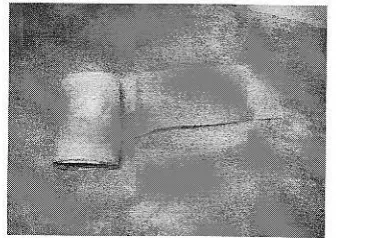
In figures which follow, blend morphologies are presented by plastic film development via blow filnl extrusion. Each figure pefiains morphologies for the LDPE with volume compositions of 0%, 15%, 25%, and 35% weight fraction of tapioca starch to LDPE. Antocyanin and bromocresol puple (BCP) as a biological and chemical colourants arc incorporated into blend morphologies to indicate their stability as natual colourants lbr plastic packaging. Progressive morphology development can be discemed by sequentially inspecting micrographs of each figure conesponding to a pafticular composition.
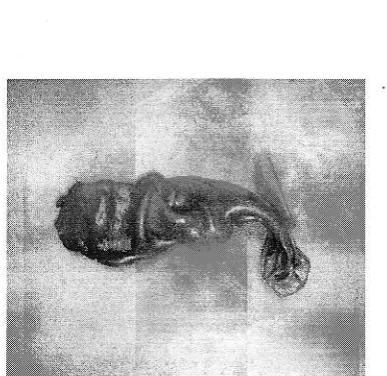
As discussed in relation to Figure 3, the incorporalion of calcium hydroxide (Ca(OH):) and bromocresol purple(BcP) in the polymer matdx which has a negative influence on the strctchilg propedies of the plaslic. 'l'his t\a,o addltives canlnot joinncd togcther with I-DPS $'ilhout the additjon of pliisticizers. l-his plastic iilnr i)r rtalion unable to bbw a:1d ;t shows the chaotic iavered confiou.ation.
Therefore, for the second fomulation, glycerol was added into the blends. The addition of plasticizer such as glycerol can improve the st.eogthens of the plastics characteristics. Glycerol is often used as a plasticizer in polymer blends to increase soffness and pliability. The result presented in Figure 4(a) that the blends was able to blow in order to fonn a plastic fi1lr via blow Jilm extrusion. Figure 4.6 shows the SEM micrographs of LDPE/Calcjum hydroxide/Bromocresol Purple/Glycerol. lt had been repofied that the dispersion of those blends in LDPE mat x was inhomogeneous. The glycerol might have increased the interaction between l-DPE/calcium hydroxide/ bromocresol purple, which in turn hindered the dispersion in LDPE matrix.
Figure ,l (a): Plastic packaging of LDPE/Calcium Hydroxide/glycerol/ Bronocresol Purple
Figure 4.2(b)r SEM microgmphos of fracture suface of LDPE/
Ca(OH)r/glycerol/BCP
Figure 5: Plastic packaging 01'LDPE/tapioca starch/glycerol/Anthocyanin/ Clav nanocomoosites with 15% weishl fraction of starch to LDPE.
and the interfacial adhesion between dispersed phase determine the mechanical properties (Paul, 1978).
9 and matrix are key factors to
Figure 7(a): Plastic packaging ofLDPE/tapioca starch/glycerol/Anthocyanin/
PE-g-MA with 35% \r'eight fracrion ofstarch to LDPE.
Figure 7(b): SEM micrographos ofllacture surface ofLDpE/tapioca starch./ glycerol/PE,g-MA wirh 35% weight fraction of starch to LDPE.
From this srudy, rhe best quanriry 80% LDPE, 20% pE_g_MA (compatibilizer), 35% tapioca sta.ch with antocyanin (nanoencapsulation)
l% glycerol lbr biodegradable with natural colourants as packaging mate al. Thrs indicates the importance ofboth the starch concentration and the presence ofthe appropriate additives in the composition ofstarch based biodegradable LDPE films
Natural colourants
1 0
potential as a natual colourant- Therefore, from the results indicate that anthocyanm can rcplace bromocresol puple as a natuml
colourant-T
Figure 8: Standard Curve For Anthocyanin jn pLI Stability vs. Slorage Days.
Figure 9: Standad Curve For Bromocresol Puple in pH Stability vs. Storage Days
4.0 CONCLUSIONS
1 t
Bromocresol purple can easily degrade itself at the hing tempemture above thar 100'C, while anthocyanin maintain its stabilily during at high temperature. Therefore, anthocyanin can replace brcmoqesol purple as a natwal colourant.
5.0 ACKNOWLEDGEMENT
The financial contribution from Ministy of Higher Education Malaysia (MOHE), Ministly of Science, Technology And Innovatioll (MOSTI) and Research Management Centre UTM was greatly appreciated.
REFERENCES
Abulo, J., S. Thiebaud,I. Alric, E. Bonedon, D. Bikia s, J. Prinos, and C. Panayiotou. 1997. Properties ofoctanoated starch and its blends *ith polyethylene. Carbohydr. Po1ym. 34:101-1 12.
Bikia-ris, D. and C. Panayiotou. 1998. LDPE/starch blends compatibilized with PE-g-MA copoll.mers. J. Appl. Polym. Sci. 70:1503-1521.
Coorey, J. and Winkless, B. (2003). Utilising TRIZ methodologies to evolve and develop next generation food packaging concepts. Univenity College Cork, lreland.