ABSTRACT
KAHN, LANCE WYATT. The Effects of Personality on the Perceptions of Serendipity in College Students. (Under the direction of Raymond S. Ting.)
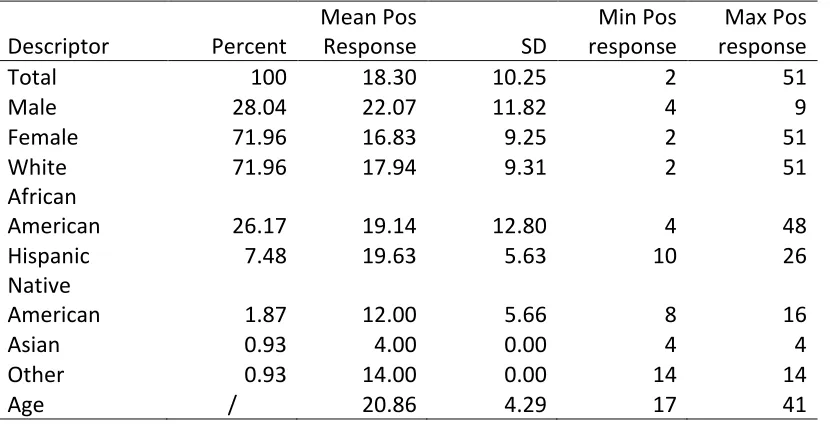
The study explores the potential relationship between personality and perceptions of serendipitous influence on academic and career decision-making. The study was conducted with 107 participants who were enrolled full-time at a rural, church affiliated private college in eastern North Carolina. The participants represented an accurate cross-section of the college in terms of age (mean = 21), sex (72% female, 28% male) and ethnicity (majority white, 26% African American, 7% Hispanic, 2% Native American, 1% Asian). Personality was defined as the Big Five Personality Factors and measured by the NEO-FFI-3.
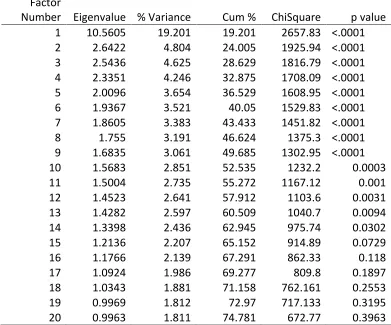
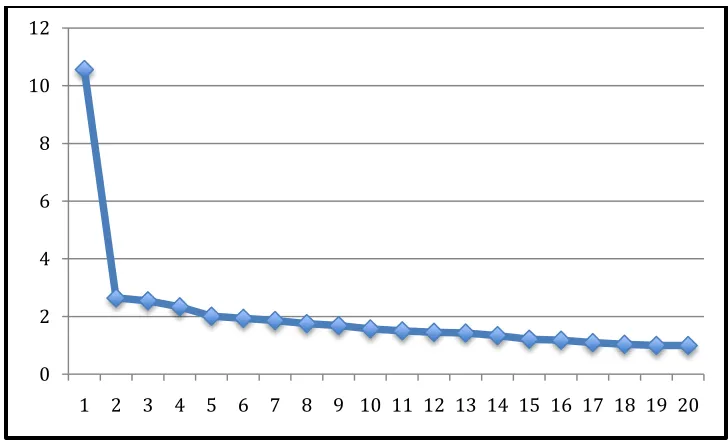
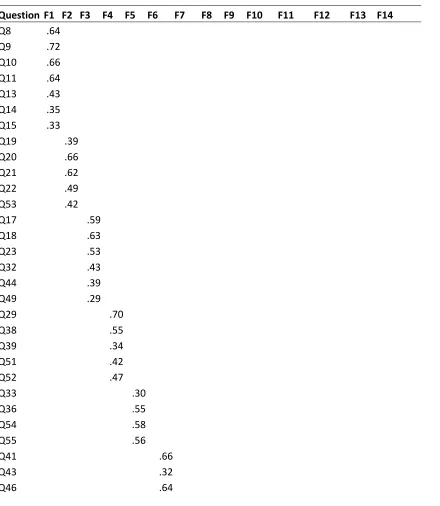
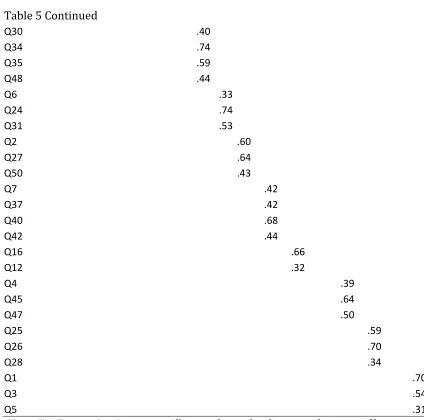
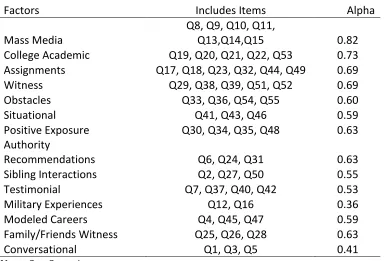
Perceptions of serendipity were measured using the Serendipitous Event Inventory (SEI), which was developed specifically for this study through a focus group and pilot study with participants from the same college. An exploratory factor analysis was conducted on the inventory resulting in a 14-factor solution accounting for 63% of the variance. The results indicate that there is a statistically significant difference between male and female
responses on the SEI. In addition, 44 weak and moderate relationships between personality factors and serendipity factors when data was separated by sex. Aside from the
The Effects of Personality on Perceptions of Serendipity in College Students
by Lance W. Kahn
A dissertation submitted to Graduate Faculty of North Carolina State University
in partial fulfillment of the requirements for the degree of
Doctor of Philosophy
Counseling and Counselor Education Raleigh, North Carolina
2012
APPROVED BY:
_______________________________ _______________________________
Dr. Stanley Baker Dr. Edwin Gerler
_______________________________ _______________________________
Dr. Raymond S. Ting Dr. Angie Smith
BIOGRAPHY
The author, Lance Kahn, has been a practicing career counselor for over 15 years. His work has focused primarily on college students, having worked specifically at Barton College, Lynn University, the University of Massachusetts, and Colorado Mesa University. He earned his Master’s of Science in Counselor Education in Counselor Education in 1998 from the University of Wyoming, and a Bachelor’s of Science in Psychology from the State
ACKNOWLEDGEMENTS
TABLE OF CONTENTS
LIST OF TABLES ... viii
LIST OF FIGURES ... ix
CHAPTER 1 INTRODUCTION ...1
Foci of Recent Work ...2
Categories of Events ...2
Differences between Participants ...5
Shortcoming of the Current Literature ...7
Serendipity as a Theoretical Construct ...9
Happenstance Learning ...9
Chaos Theory of Careers ...10
Purpose of a New Study ...11
Defining Serendipity ...12
Possible Limitations ...14
CHAPTER 2 REVIEW OF LITERATURE ...16
Serendipity in Theory ...16
Happenstance Learning Theory ...16
Genetic Endowment ...17
Environmental Conditions ...17
Learning Experiences...18
Task-approach Skills ...18
Complexity ...24
Change ...25
Constructiveness ...26
Chance...27
Research on Serendipity ...29
Categorical Research ...30
Perception Difference Research ...36
Criticism of CTC and HTL ...44
Personality Factors ...47
Criticism of the Big Five...51
CHAPTER 3 METHOD ...52
Introduction ...52
Participants ...52
Procedure ...54
Research Design...57
Instrumentation ...58
NEO-Five Factor Inventory ...60
Data Analysis ...61
Methodological Limitations ...62
CHAPTER 4 RESULTS ...64
Focus Groups ...64
Statistics and Data Analysis ...64
Pilot Study ...68
Instrumentation ...68
Recruitment ...68
Statistics and Data Analysis ...69
Item Removal ...72
Comparison Study ...73
Recruitment ...73
Serendipitous Event Inventory ...75
Comparison of Means ...82
Relationships ...84
CHAPTER 5 DISCUSSION ...92
Introduction ...92
Serendipitous Event Inventory ...93
Personality and Perceived Influence ...96
Comparison of Means ...101
Limitations of the Study...102
Implications for Future Studies ...104
Conclusion ...105
REFERENCES ...106
APPENDICES ...117
LIST OF TABLES
Table 1 Demographic Breakdown of Pilot Study Participants ...69 Table 2 Pilot Study Comparison of Means ...71 Table 3 Demographic Breakdown of the Comparison Study with Descriptive
Statistics ...75 Table 4 Factor Extraction Assessment Values...76 Table 5 Factor Loadings for 14-Factor solution for the Serendipitous Event
Inventory ...79 Table 6 Internal Reliability Estimates for the Individual Factors for the Serendipitous
Event Inventory ...81 Table 7 Participant Experience of Serendipity Factors ...82 Table 8 Comparison of Means for the Comparison Study ...83 Table 9 Correlation Coefficients of the Personality Factors to the Sum of
Positive Item Responses ...85 Table 10 Correlation Coefficients of the Personality Factors to the Serendipity
LIST OF FIGURES
The Effects of Personality on Perceptions of Serendipity in College Students Since the inception of career counseling the predominant theories of career development have described decision making as a rational process. Whether the theories stem from Parson’s (1909) influential trait and factor theory or the developmental models of
Super (1957; 1990), career decision making as been presented as the product of person and environment in which the person seeks better understanding of him or herself and the environment. The assumption has been that with improved, or accurate, understanding the person can evaluate the expected utility of potential career paths (Murtagh, Lopes, & Lyons, 2011). It has been reasonably argued that such models of career decision making present an idealized version or prescriptive model of how career decision should occur (Goti & Asher, 2001) or that such models are no longer appropriately complex or dynamic to be applicable to contemporary career development (Bright & Pryor, 2003; 2005; Mitchell, Levin, & Krumboltz, 1999; Savakas & Baker, 2005).
Although a few authors and researchers such as Crites (1969) and Salomone and Slaney (1981) included chance events in their concepts of career development, little attention diverged from the strictly rational explanations of career development until the end of the twentieth century. Betsworth and Hansen (1996) and Williams, Soeprapto, Like, Touradji, Hess and Hill (1998) conducted empirical studies that began to lend legitimacy to
of male subjects and 57% of female subjects experiencing serendipitous events that
influenced their career development. Subsequent studies that have explored serendipity have consistently found similarly large proportions of participants perceiving serendipity and chance having a meaningful influence on their careers. Bright, Pryor, Wilkenfeld and Earl (2005) found that 90% of their participants indicated experiencing serendipitous events, Bright, Pryor and Harpham (2005) found 74% of their participants indicated serendipitous influences, and Hirshi (2010) reported 64.7% of participants indicated serendipitous influences.
Foci of Recent Work
Although empirical confirmation of the common occurrence of serendipity as a career influence is important, it merely begs additional questions. Most common among those questions are what types of specific events do people credit as serendipitous influences and what differences exist between participants who have perceived serendipity in their career development and those who have not.
categories: Professional and personal connections, unexpected advancement, right place/right time, influences of marriage and family, encouragement from others, influences from
previous work/volunteer experiences, military experiences, temporary work became permanent, obstacles to original career path, influence of historical events, and unexpected exposure to an interest area. It is interesting to note that Betsworth and Hansen’s (1996) participants provided descriptions of 14 incidents that the judges could not fit into a category and 17 incidents that the judges disagreed with the participants that the described incidents were in fact the rational outcomes of planning or action and not subject to chance or serendipity.
Although these 11 categories are often cited and used in subsequent studies several variations of the categories have occurred. Bright, Pryor and Harpham (2005) conducted a two-part study on perceptions of serendipity. For the second study the authors expanded Betsworth and Hansen’s (1996) original 11 categories to 15 by dividing the item on
unintended exposure to an interest area to two items inquiring if the participants experienced unexpected exposure to work or activities that they either found interesting or did not find interesting. Bright et al., (2005a) also included items assessing unexpected personal events, unexpected financial support or problems and an open “other unexpected event” (2005, p.
work or activity that you find interesting (43%), unintended exposure to work or activity that you did not enjoy (33%), a major change in residence over which you had little control (11%), and any other unplanned event (10%). The eight category instrument was a
modification the authors felt was more appropriate for university aged participants who had more limited life experience than Betsworth and Hansen’s (1996) class reunion attendees.
The modified eight-item list of serendipitous event categories was later used by Bright, Pryor, Wilkenfeld and Earl (2005) to define unplanned events in a study of contextual influences on career decision making, and by Hirschi (2010) in an assessment of personality on perceptions of serendipitous career influences. Bright, Pryor, Chan, and Rijanto (2009) further shorted the list to 6 nonspecified categories in their research comparing perceptions of single/multiple and positive/negative serendipitous events. Further complicating any
agreement on categories of serendipitous events, Bright et al., (2005b) conducted a study of perceived contextual influences on career development. They created a 47-item survey that included the eight categories labeled unplanned events. Results of factor analysis indicated that labeled unplanned events constituted one of four contextual factors in the study. The other factors of contextual influences were the media, family and friends, and teachers and lecturers. The individual items and the factors were not labeled as serendipitous or
Based on his explanation of the ubiquity of serendipitous influences on career, Krumboltz (1998) would likely define all of the items Bright et al., (2005b) described as contextual to be serendipitous influences. By their nature contextual influences, especially distal media influences, are beyond the control of the participant. Any career decisions influenced by such contextual factors would be unpredictable and serendipitous if the participant did not seek out that contextual factor for the purpose of finding assistance in making a career decision.
Differences between participants. The simple fact is that very little empirical study has been done to distinguish any differences between the majority participants who perceive serendipity as an influence on their careers and those who have not. The foci of the studies that have been conducted has been limited to demographic differences, education or career stage differences, socio-career differences and personality differences.
Consistently no gender differences have been found (Bright, et al., 2005a; Bright, et al., 2009; Hirshi, 2010). The work of Hart, Reyner and Christensen (1971) indicated that there was a difference in perception of the influence of serendipitous events between people in professional fields and those in semiskilled or skilled professions, specifically that
participants working in professional fields were less likely to report serendipitous events as having an influence on their careers. This study was credited as inspiration for Bright, et al.’s, (2005a) two studies on differences in perception of serendipitous influences based on
level of education. Despite Bright, et al., (2005b) finding self-reported decreases in contextual (familial and media) influences in 3rd and 4th year university students, no
educational level (Study 1, 1st year, 2nd year, 3rd year and 4th year undergraduates and graduate students; Study 2, undergraduates, graduate students and working professionals).
The only significant difference that Bright, et al., (2005a) were able to find between participants who perceived serendipity as an influence on their careers and those who did not was in locus of control behavior. Participants with a higher external locus of control were more likely to report serendipitous influences than participants with a high internal locus of control. Although the difference only accounted for 9% of the overall variance. These findings supported the earlier work in which Denga (1984) also found that male students at a particular Nigerian school with high internal locus of control were more likely to credit intrinsic qualities to career development than high external locus of control students, who more often credited career development to chance events.
More recent studies found somewhat similar results with Bright, et al., (2009) finding only that participants with high external locus of control behavior were more likely to report experiencing a series of negative independent chance influence, but not singular (positive or negative) chance experiences or series of positive independent chance experiences.
In her study of 8th and 11th grade Swiss students, Hirschi (2010) explored locus of control behavior and the openness personality factor to see how they corresponded with perceptions of chance events as career influences. Her findings regarding locus of control behavior supported Bright, et al.’s, (2005a) findings in that students with high external locus
Of the big five personality factors (Costa & McCrae, 1992) only the Openness factor was assessed in regards to serendipity. Hirschi’s (2010) findings regarding openness were
exactly the opposite of what she had hypothesized. Her results indicated that students with high openness scores were less likely to report serendipitous influences than students with low openness scores. Hirschi (2010) did not compare any of the other four personality factors.
Shortcomings of the Current Literature
The first and most obvious shortcoming concerning research into chance or
serendipity as an influence on careers is that there is so little of it. The totality of research on serendipity as a career influence does not number much in excess of a dozen studies, most of those having been completed following Betsworth and Hansen’s (1996) study. In the studies that have been completed the authors and researchers show little agreement in terminology or definitions of unexpected events or influences. Even if there was consistency in the studies, which there is not, the small number of studies does little to bring attention to a phenomenon that clearly holds a significant place in career development.
Betsworth and Hansen (1996) were the first reserachers to attempt to define and categorize serendipitous events that helped shape their participants’ careers. Although
Betsworth and Hansen (1996) developed 11 categories of serendipitous career events based on the described experiences of their research participants, the categories are generalized and not descriptive when presented to participants of new studies. Bright, et al., (2005a)
research instrument, the contextual influences and chance events listed in question 2 (Q2) categories do not appear to be mutually exclusive. Perceived influences from family members, friends or even teachers and professors should probably not represent individual contextual categories when they could as easily describe “A personal or work relationship” and “Previous work or social experiences” (Bright, et al., 2005a, p. 565). These two
categories of serendipitous events are the most commonly reported experiences of their participants. Participants should be presented with more clearly defined categories or serendipitous events that would allow them to more accurately assess whether they have experienced such an event. Further clarification would also benefit counselors and future researchers that wish to better understand the concept.
Although it makes logical sense to expect perceptions of serendipity to differ along different personality types, the work done to explore this concept has been limited. To date the only aspects of personality to be studied regarding serendipity as been locus of control behavior (Bright, et al., 2005a; Bright, et al., 2009; Hirschi, 2010) and the Openness personality factor (Hirschi, 2010). I believe that the narrow focus does too little to explore the true range of differences between participants who perceive serendipity as a career influence and those who do not. A better comparison may be provided by contrasting all of the Big Five personality factors (Costa & McCrae, 1992) to more effectively expand the knowledge of the difference that personality may cause in the perception of serendipity as a career influence.
Krumboltz’s (1998; 2009) assertion that unexpected and unplanned influences are a fact of
career development, is accepted as a given. The resulting question is then why some minority of people credit all of the events in their career development to the outcomes of rational decision making.
Serendipity as a Theoretical Construct
There is little doubt that rational decision making provides the driving force behind career development, but with the current complex and volatile job market career plans that lack flexibility or acknowledge the possibility of unplanned and unexpected opportunities are inadequate to function as intended. Still the overwhelming majority of career theories behind contemporary career counseling include no concept or inclusion of serendipity. The
exceptions to this state are Planned Happenstance (Mitchell, et al., 1999; Krumboltz, 2009) and the Chaos Theory of Careers (CTC; Bright & Pryor, 2003).
Chaos theory of careers. Bright and Pryor (2003) developed CTC by applying one of the central concepts of chaos theory, sensitive dependence, to career development. With similarities in concept to HLT, this application means that small, seemingly insignificant experiences have the potential to change us and change the way we perceive the world around us. As we exist within a social world and not in physical and social isolation, our experiences often involve the actions of other people and situations that we have little control over. We experience a potential accumulation of innumerable experience that may
potentially change our perceptions, we undergo continuous growth through change, reacting to new experiences that, in their turn influence people and things in our environment. Opportunities for learning and for career development arise through these constant changes.
The theories were inspired by the failure of contemporary career theories to adequately address the complex nature of career decision-making and established as an attempt to persuade career counselors to incorporate concepts of serendipity into their work with clients. Both theories initial publications included or were followed-up with specific interventions or guidelines for use by counselors (Krumboltz, 2009; Bright & Pryor, 2005; Pryor & Bright, 2006; Pryor & Bright, 2007).
Purpose of a New Study
It is my intention to conduct a study that specifically addresses the shortcomings of the current research on the influence of serendipity on career development. The new study would take place in two phases. The first phase would consist of a qualitative study of the perceptions of serendipitous events. I will facilitate a focus group of college students to ask them to discuss and assess personal and vicarious incidents of serendipity affecting the career development experiences of college students. In addition to any events proposed by the focus group, events and categories from the Betsworth and Hansen (1996) and Bright, et al., (2005a) studies will be presented to the group for assessment and categorization. I plan on following up the student results by having a group of career counseling personnel evaluate the conclusions of the student panel and provide their opinions on the validity and accuracy of the panel’s assessment.
My first hypothesis (Hypothesis 1) is that a valid and reliable instrument can be
developed to accurately assess the perceptions of serendipitous influence for college students. The instrument will be created based on the results of the first phase of the study. The
instrument will contain questions about commonly perceived serendipitous events. The purpose of the eventual instrument will be to assess college students’ perceptions of
Factors (Costa & McCrae, 1992). My concern does not pertain to any argument about the objective reality of the decision-making process, or the existence of serendipity as a
legitimate influence. In my opinion, that assertion has already been sufficiently supported. My concern is with the differences between research participants who perceive serendipity as an influence and those who believe that their career development, the current state from the outcome of their career decisions, is the outcome only of a rational thought process and effort.
I also hypothesize (Hypothesis 2) that participants will differ in their likelihood to perceive serendipity as a career influence according to the following criteria:
1. Scores in Neuroticism will show a positive correlation to scores on the serendipitous influence inventory.
2. Scores in Extraversion will show a positive correlation to scores on the serendipitous influence inventory.
3. Scores in Openness will show a positive correlation to scores on the serendipitous influence inventory.
4. Scores in Agreeableness will show a positive correlation to scores on the serendipitous influence inventory.
5. Scores in Conscientiousness will show a negative correlation to scores on the serendipitous influence inventory.
Defining Serendipity
interchangeably (Williams, et al., 1998) while others prefer the term chance (Bright & Pryor, 2003; 2005) happenstance (Mitchell, et al., 1999; Krumboltz, 2009) or even synchronicity (Guindon & Hanna, 2002). Whatever the terminology used, the concepts that the authors are describing appear to be the same, that an event takes place that is unexpected or unplanned which alters the career direction or decision making of an individual. I prefer the term serendipity to chance or happenstance as it holds less of a connotation of random
occurrences. Although some things in life may truly be random, much more is the outcome of complex interactions. For instance, a person may take action that has both direct and indirect outcomes, or the consequences of a decision may be delayed to the point where the individual no longer recognizes the connection to the original activating event. Just because something was unplanned and unexpected does not mean that there is no justifiable
explanation or cause for its occurrence.
Possible Limitations
The most obvious limitation for the proposed study is the same that many of the previous studies on serendipity have had: limited generalizability based on the sample used. It seems obvious to me that all studies are limited by the cultural geography of the location in which they are conducted. In the majority of studies previously mentioned (Bright, et al., 2005a; Bright, et al., 2005b; Bright, et al., 2009; Denga, 1984; Hirschi, 2010) almost no demographic information is provided. The reason that little is provided is that the participants live in a region that lacks ethnic or racial diversity. These studies were
conducted at a primarily white Australian university, predominately white Swiss high school and an all black, male, Nigerian high school.
My proposed study would be limited to the demographic make-up of the college from which I will draw my participants. However, I do not feel that this restriction creates too great a limitation. The college is small, private, church affiliated and located in rural eastern North Carolina, but has a student body demographically similar to many other colleges and universities in the United States. The majority of the students are female, 50% of the students are first generation college students, and 34% are African-American. If I collect a random sample of participants from the student body, then I should have a representative sample of the college that would be similar to that drawn from many other colleges.
It is my intention with this study to explore two ideas. The first is to find what college students define as serendipitous events. The process will be accomplished by creating a focus group of students to assess information from existing research on
events as they are in the process of concentrated career decision-making. Their reflections on personal and vicarious experiences are immediately relevant to career development and not removed by a significant period of time. The results should add clarity to an issue in which there is little agreement.
The second idea that I wish to explore is to expand what is known about the differences between people who perceive serendipity as an influence on their career development and those who have not. To accomplish this I will use a randomly selected sample of participants from the same source as the first part of the study. The participants in the second part of the study will be asked to complete an instrument that inquires whether they have experienced incidents of serendipity as defined by the participants of the first part of the study. The second study will also include the participants completing the NEO-FFI (Costa & McCrae, 1992) to assess their personalities according to the Big Five Personality Factors. I have chosen the FFI (Costa & McCrae, 1992) over the more detailed NEO-PI-R (Costa & McCrae, 1985; 1992) because it is briefer, focusing strictly on the general factors and not the expanded facets within each factor. For the purposes of the study only the general factors are of interest. Using the results of the new instrument and the NEO-FFI (Costa & McCrae, 1992), I will determine if any differences in personality result in
CHAPTER 2
REVIEW OF LITERATURE
The research that I propose is dependent on the clarity and validity of two different concepts; that of serendipity, and personality as defined by Costa and McCrae (1992). There are no similarities or to my knowledge, any published work that has fully linked the two concepts. As a word in the English language, serendipity is relatively young, being coined in 1754 by Horace Walpole to describe the application of intellect to gain new understanding as a result of an unexpected experience (Merton and Barber, 2006). Costa and McCrae
(1985;1992) described personality along five factors describing expression of behaviors and preferences along independent scales labeled: Openness, Conscientiousness, Extroversion, Agreeableness, and Neuroticism (OCEAN).
Serendipity in Theory
Serendipity has been included as a central construct in only two career development theories: Happenstance Learning Theory (HLT; Mitchell, et al., 1999; Krumboltz, 2009) and Chaos Theory of Careers (CTC; Bright & Pryor, 2003). Neither of the original publications of these theories used the term serendipity; however, the authors have subsequently used the term synonymously with both happenstance (Krumboltz, 1998) and chance (Bright, et al., 2005; Mitchell, et al., 1999). For the sake of clarity and parsimony I will refer to the phenomena as serendipity regardless of the word used in the referenced work. Happenstance learning theory
concept of observational learning to career decision-making. Out of this ambition the social learning theory of career decision-making was developed (Krumboltz, 1979) and eventually expanded to become the learning theory of career counseling (Krumboltz, 1996). In it’s new iteration Krumboltz’s theory presented four influencing factors of career development:
genetic endowment, environmental conditions, learning experiences, and task oriented skills. In these four factors Krumboltz (1996) found a reasonable description of the career
development process that sought to describe decision-making as it occurs naturally rather than describing an idealized model of decision- making.
Genetic endowment. The social learning theory of career decision-making recognizes that individuals possess genetic traits that have the potential to influence the decision to pursue, or not pursue, a career direction. Genetic factors may include physical characteristics, such as physical build, or innate potential as in musical or athletic ability. In his explanation of genetic trait influences in social learning theory, Sharf (2002) points out that tone-deaf people are not likely to pursue careers as musicians.
environmental sciences. Due to the physical and cultural geography of Wyoming, this person may have experiences that foster a desire to pursue academic studies and a career in range and soil science, a career path of relevance and applicability in Wyoming. The same conditions that support this desire similarly restrict experiences that might foster further interest in coastal ecology or oceanography. The concept of environmental conditions in HLT is consistent with the concept of background contextual affordances in Social Cognitive Career Theory’s (Lent, Brown, & Hackett, 1996) model of interest development and
decision-making.
Learning experiences. The learning aspect of social learning theory derives from individual experience as Instrumental Learning Experiences and Associative Learning Experiences. Instrumental learning experiences are the direct effects of engaged activity. If a student studies for a test, learns the material and does well on the test, that student has derived a direct benefit from studying and will likely repeat the experience under similar circumstances. Associative learning experiences can occur from observing another person’s
actions, evaluating the positive or negative outcome and applying the knowledge for his or her own benefit. It may also occur by successfully associating knowledge gained from an experience to another unrelated experience.
Task-approach skills. Task-approach skills are the individual’s ability to understand and apply genetic endowments, environmental conditions and events, and learning
The four factors remained intact as the theory progressed from social learning theory of career decision-making to planned happenstance theory (Mitchell, et al., 1999). In fact, much of the theory remains unchanged with the exception of the new focus on learning based on unanticipated events, or happenstance. Planned happenstance is a theoretical
acknowledgement that people are influenced by contextual factors in their lives, that they have limited control over the events in their environment, and that the contextual influences are not known or anticipated in advance. Despite this acknowledgment of the general unpredictability and limits of control, happenstance does not absolve the individual from personal responsibility or control of career development. The ubiquity of serendipitous events beyond individual control means only that there is a potential to understand and utilize happenstance in career development.
Planned happenstance appears to be modified from the learning theory of career development specifically as a tool to improve career counseling. As the name would imply, HLT proposes that unexpected influences can paradoxically be predicted and prepared for (Mitchell, et al., 1999). The specific instances will not be known but Mitchell, et al., (1999) and Krumboltz (1998; 2009) argue that career counselors and the clients they serve should take advantage of such events and work to create them. To successfully accomplish these tasks two conditions must be met: a change in role of career counselor from career
“matchmakers” to “facilitators of the learning process” (Mitchell, et al., 1999, p. 119), and
develop a greater understanding of how beneficial serendipitous events occur.
clients’ lives by moving from a model in which people search for an ideal career, to a model of increased learning. This change is consistent with Friedel’s (2001) assertion that all
discovery by its nature, is unpredictable and unexpected and thus serendipitous. Career development is a process contingent upon self-discovery based on the acquisition of new knowledge and experiences. Krumboltz (2009) presents HLT as a treatise to counselors urging them to embrace happenstance as a basic reality of career development and life. Krumboltz did not simply present the concept but includes suggestions for applications for counseling practice and research ideas that will lend to greater understanding of
happenstance and improve methods of implementing the theory into practice. Chaos theory of careers
CTC was originally conceived by Robert Pryor and Jim Bright to address the failure of predominate career development theories to account for the realities of the contemporary experiences of 21st century students and workforce (Pryor & Bright, 2003). They sought to move away from traditional trait matching and developmental theories that they felt had little connection with real life career decision making. When an individual is faced with making a career decision, that person is not likely to overtly consider aspects of their personality in comparison to corresponding activities and values associated with a career field. Instead, that person is more likely to consider opportunities that arise in their environment, listen to recommendations of family, friends and respected authorities, and consider how the
Bright (2003) sought to apply the mathematic principles of chaos theory and complexity to better understand career decision-making. Chaos theory may be ideally suited to provide an objective model of career decision-making in non-idealized, realistic conditions. Chaos theory describes the complex behavior of non-linear, dynamic systems (Gleick, 1987). What this terminology means is that the effects or influence of a change in one variable within the system has the potential to produce a disproportional change to the entire system (non-linearity) and that those resulting changes feed back upon the original variable further changing it to produce an open system that is undergoing constant change and growth (dynamic).
Much of CTC functions based on assumptions provided by systems theory. Unfortunately, some understanding of systems theory is required to understand the
application of chaos theory to career development. Systems theory is fairly complicated and any attempt to properly describe it would be as lengthy and cumbersome as chaos theory. As there will be many references to systems, I believe that a brief explanation is required. Perhaps one of the better explanations of systems theory applied to people is
Bronfenbrenner’s (1977) ecological systems theory in which the individual (system of
thoughts, functions and action) exists within concentric and interactive systems of immediate environment (Microsystem), local community environment (Exosystem) and global
Similarly, one weakness of applying chaos theory to understand career development is that very few counselors are familiar with chaos theory. For people who are unfamiliar with chaos theory the most common reaction is to assume that it is about random behavior and disorder. Bright and Pryor attempt to ameliorate this prominent misperception through a series of articles presenting the theory (Pryor & Bright, 2003; Pryor & Bright, 2007a; Pryor, Amundson, & Bright, 2008) and providing specific guidelines on incorporating chaos theory into counseling (Bright & Pryor, 2005; Pryor and Bright, 2006; Bright & Pryor, 2007; Pryor & Bright, 2007b; Pryor & Bright, 2008). The authors present CTC as a theory that considers the individual as a whole within an ecological environment that is influenced by the person’s
actions while exerting influence upon the person in turn. CTC deliberately avoids the
traditional person-environment (P x E) practice of defining and utilizing aspects of the person or their environment (career) but instead defines both person and their environments as dynamic and recursive (Bright & Pryor, 2005).
As with the theory it is derived from, CTC eschews reductionism as it is antithetical to the entire concept of chaos theory. However, to facilitate understanding, some description of dependent aspects of the theory must be described as separate from the whole. The result is that the theory is difficult to briefly summarize or present as component parts. For
convenience sake McKay, Bright and Pryor (2005) have described CTC as having four central elements of complexity, change, chance and constructiveness. It must be
must contain aspects and influences from the other elements. The analogy of a ball of mixed colored modeling clay has been use to describe this type of inseparability (Kahn, 2006). Any attempt to separate the ball into colored parts would result in some parts of other colors remaining in the separated results.
Complexity. Complexity is a result of sensitive dependence on initial conditions, or non-linearity. Sensitive dependence is perhaps the most common descriptor of chaos theory (Gleick, 1987). It means two relatively simple things. The first is that the future state, or behavior, of a system will be the result of the current conditions of the system. This current state of the system is therefore the result of previous states, or that behavior within a system was caused by whatever conditions existed previously. The second meaning is that any event within the system has the potential to create disproportional change to the system. Translated to a person, sensitive dependence on initial conditions means both that a person’s decisions or behavior are not random but are based on previous learning. Any experience in a lifetime of innumerable experiences has the potential to change the entire person and consequently the person’s environment. When every experience has the potential to result in meaningful
learning, and every decision is based on what has been learned, life is complicated or complex.
Change. Change is the general acknowledgement that nothing in life is fixed or constant. No person’s body, mind or environment stays the same, but is undergoing constant change. If you consider an individual’s career development across the span of career or life,
interaction with other people, has the potential to result in meaningful learning. With every new thing learned about self or the world, the individual alters his or her perception of the world and his or her place in it. This altered perception may result in changes to interests, ambitions, or assessment of abilities that can and will have an effect on career.
Pryor and Bright’s (2003) assessment of the realities of the 21st century workforce were based at least in part of the current instability of jobs. Unlike the times when Parsons (1909) published his trait matching theory, or Super’s (1957) developmental career theories,
people no longer stay employed with the same employer within the same field. It is entirely possible that the career field that a person chooses when they first enter the workforce will not exist, at least in its current form, when that person retires. It is the nature of change in career that prompted Pryor, et al., (2008) to suggest that career counselors reevaluate their focus on decision-making as a vehicle to attain stable satisfying careers, to a goal of helping clients to recognize possibilities and opportunities.
experiences differ from person to person, so do models of the same concepts. Unfortunately, because of limited experiences and limited capacity to accurately process a lifetimes’ worth
of experience, mental models are never complete or accurate. For example, if I mention a career as an attorney, readers may conjure up images of attorneys they have met or hired. Some readers may have never interacted with an attorney and will instead recall an
experience of watching a television show featuring an attorney. Neither of these scenarios would result in a mental representation that comes anywhere near to an accurate depiction of what is involved or required to be a practicing attorney. Still, these are the constructed representations that people will base a decision on whether or not to pursue a career as an attorney.
As we continue to engage in new experiences our constructs continue to change, just as the real environments change. The continuous systemic changes (internal, constructs, and environment) lead to continued complexity and uncertainty. Consider that the outcomes of our decisions, that were all based in constructs of limited accuracy, change our environments due to recursiveness while simultaneously changing our constructs concerning the contexts of the decision.
individual system, and the immediate environment Microsystem) results from previous conditions. Current conditions do not spring into existence without a root cause, even if an observer does not initially understand the cause. Chance events are observed when
conditions under consideration are the indirect result of an activating event or are the results from the actions of others in the shared environmental systems. The term chance describes a quality of unexpectedness or failure (and inability) to successfully predict the events.
People refer to indirect results as chance because any connection requires effort and the ability to reflect and trace the results back to an activating event. That activating event often seems disproportionate to the result. Consider the following well-known proverb: For want of a nail the shoe was lost. For want of a shoe a horse was lost. For want of a horse the rider was lost. For want of a rider a battle was lost. For want of a battle a kingdom was lost. It may be absurd to blame the loss of a kingdom on the lack of a horseshoe nail, but the proverb presents a series of events that resulted from a seemingly inconsequential initial condition. For students, the college environment provides an innumerable range of
opportunities and experiences that may potentially provide these seemingly inconsequential initial conditions. Students may choose a class to fulfill a requirement and be inspired to pursue a career by the content of the course, by a guest lecturer, or by encouragement from the instructor.
Often such an inspiring experience is considered chance only because it was
unexpected by the person who experienced it. Chance becomes a matter of perspective. One of the chance, or serendipitous events most commonly cited by college students is the
Williams, et al., 1998). Although the experience is reported as a serendipitous event by the student, it was likely the specifically intended purpose of the professor to inspire
consideration of the field.
Another example of chance as a matter of perspective would be a drunk driver getting into a collision with another car. As an observer, the accident appears to be the direct,
rationally predictable result from the driver’s actions. The accident is not a chance event.
However, for any person whose car is struck by a drunk driver, the event always comes as a surprise. It is not only a matter of perspective, but prediction. It is reasonable to predict that a person that drinks and drives will crash into a car. It is not reasonable to predict that your car will be hit by a drunk driver.
Such is the nature of chance in chaos theory. It is understandable that events do not occur randomly, with no root cause, but were simply unanticipated by the participant. Chance is the failure to predict an event, regardless of its cause. Serendipity, especially in career development, includes the response of finding purposeful meaning in the unpredicted event and taking a corresponding action. Both HLT and CTC rely on serendipity in their models or career development.
Research on Serendipity
can be easily understood as the introduction of HLT and CTC have occurred only recently. The research on serendipity that came before was sporadic and not based or motivated on any theoretical model. Prior to Krumboltz’ (1998) claim that the influence of serendipitous
events were ubiquitous in career decision-making, serendipity was ignored or mentioned by authors (Crites, 1969; Osipow, 1973) as unusual perturbations or anomalous sources of error in concrete models of career development. Much of the early research on serendipity (Hart, et al., 1971; Miller, 1983; Salomone & Slaney, 1981; Scott & Hatalla, 1990) focused on the idea that it existed, or attempted to consolidate some support that chance or accidents played a role in career development. Williams, et al., (1998) and Diaz de Chumaceiro (2004) explored the concept in more detail through qualitative studies that examined serendipitous influences respectively in the career paths of women in counseling psychology and music conducting.
The research of Betsworth and Hansen (1996) diverged from simply reporting perceptions of serendipitous influences to attempt to develop categories serendipitous influence. Since the publication of this research there have essentially been two types of research regarding serendipity: categorization of serendipitous events, and differences between participant who perceive serendipity as an influence and those who do not. Categorical Research
Betsworth and Hansen (1996) performed a qualitative study that included of the use of a brief questionnaire covering influences on the careers of older adults and a follow-up request for a detailed explanation if the serendipity question was answered with an
had experienced “events that were not planned or predictable but had a significant influence on your career” (Betsworth & Hanson, 1996, p. 94). The pool of participants was made up of
alumni and spouses attending a class reunion at a large Midwestern university and retired university employees and their spouses. Of the participants 62.7% of the men and 57.4% of the women responded positively to the serendipity question. A total of 167 explanations of personal stories of serendipity were provided from 141 of the participants.
The researchers performed an analysis of critical incidents. Three judges independently sorted the incidents into categories before convening as a team to reach consensus on division into specific categories. Of the original 167 submitted perceived incidents of serendipity from the participants 35 were omitted because they could not fit into any category and 17 incidents were omitted because the judges agreed that they described “natural processes of career development” (Betsworth & Hansen, 1996, p. 95) and were not
serendipitous regardless of participant perceptions. Eventually, 11 categories of serendipitous events were agreed upon and were labeled: Professional or personal connections, unexpected advancement, right place/right time, influence of marriage and family, encouragement of others, influence of previous work/volunteer experience, military experience, temporary position becoming permanent, obstacles to original career path, influence of historical events, and unexpected exposure to interests.
analysis of data obtained through a naturalistic process. The suggested analysis consisted on placing each described incident on a card that would be sorted by the judges. Each judge then (1) sorted the incident cards according to similarity of the content, (2) created a
corresponding title for each category of similar incidents, and (3) outlined specific rules for or descriptions of the sorted categories. The judges then met to discuss the outcome of the individual sorting and categorization and reached a consensus on the categories. Each judge in turn read the categories, titles and descriptor with the other judges comparing their own categories and descriptors until all different categories were exhausted. The result was the 11 categories mentioned above with 35 uncategorized incidents discarded.
Although the participants used in the study may be ideal for considering span of career serendipitous influences, the usefulness and applicability of some of the findings is limited when applied to traditional age college students. The participants of Betsworth and Hansen’s (1996) study made references to experiences obtained after college graduation. For
example, few college students are likely to include military experiences as influences on their careers nor are many likely to be influenced by spouses as few traditionally aged American college students are married.
Betsworth and Hansen’s (1996) research and the categories developed from it greatly
influenced subsequent research on serendipity. These 11 categories have functioned as a base for expansion and reevaluation for continued research. Bright, Pryor and Harpham (2005) expanded these 11 categories to 15 to include negative experiences in their research on college students’ perceptions of serendipitous influence. These negative experience
activity that you did not find interesting, unexpected personal event (e.g., death, injury, health problems), and unexpected financial support or problems.
Bright, Pryor, Wilkenfeld and Earl (2005) diverged further from Betsworth and Hansen’s (1996) 11 categories in their research on university students perceptions of
contextual and serendipitous influences on career development. For this study Bright et al., (2005b) designed a 47-item survey to assess specific influences based on Lent, Brown and Hackett’s Social Cognitive Career Theory (SCCT; 2000) concepts of Background Contextual
Affordances and Contextual Influences Proximal to Choice Behavior along with a single item assessing unplanned influences with an abbreviated eight categories to choose from. The categories that Bright, et al., (2005b) listed were derived from the Bright, et al., (2005a) study and included: A personal or work relationship (43% of the participants responded positively), previous work or social experiences (61%), barriers to your previous career plan (not reported), an injury or health problem (10%), unintended exposure to a type of work or activity that you found interesting (44%), unintended exposure to a type of work or activity that you did not enjoy (31%), a major change in residence over which you had little or no control (10%), and any other unplanned event (10%).
The authors performed a factor analysis to assess the items of the survey and confirm their hypothesis that a three factor solutions would be found based on proximal social
environment (parents, friends, advisors), distal social environment (the media, sporting personalities, politicians, etc.), and chance or unplanned events. The results of the factor analysis failed to confirm this hypothesis. The authors followed Tabachnick and Fidell’s
(television, film, print media and Internet), Teachers and Lecturers (favorite university lecturer, other university lecturer, favorite teacher, other teacher), Family and Friends (mother, father, best friend) and Unplanned Events (influence of a relationship, a prior experience, an unplanned bad job experience, and an unplanned good job experience). The first three factors showed high internal estimate scores with Square Mean Correlations
(SMC) above .70 and eigenvalues ranging from 1.63 to 2.15. The fourth factor of Unplanned Events had only a moderate internal estimate score with an SMC of .64 with an eigenvalue of 1.30. The total cumulative variability explained by the four factors was 37.17%.
lecturers, and family and friends; however, Bright et al., (2005b) make no such distinction in their instrument.
A second threat to the internal validity of Bright’s et al. (2005b) study is ambiguous
temporal precedence (Heppner, Wampold, & Kivlighan, 2008). In fact this is likely to be a threat to the internal validity of any study on perceptions of serendipity. Participants are asked to reflect on a cause and effect relationship for events that occurred in the unspecified past. Bright, et al. (2009) have pointed out the significance of Ross and Nisbett’s (1991)
fundamental attribution error in the study of the influence in serendipity, that while reflecting on past events people have a tendency to underemphasize situational factors in favor of personal factors when attributing causes to their actions.
Finally, there are two significant threats to the external validity of Bright’s et al.
(2005b) study. The first threat is that there was no random sampling of the university population to select participants. Participants were solicited through advertisements on campus and on the university’s career services office webpage. The participants self-selected
The limits to the generalizability to an American population is an interesting one because there has as yet been no quantitative study on the categorization of perceived serendipitous events published that uses participants from the United States.
Perception Difference Research
Although 100% of Williams’, et al., (1998) research participants reported serendipity
as a perceived influence on their careers, this level of agreement in perception is not found in quantitative studies. Other researchers (Betsworth & Hansen, 1996; Bright, et al., 2005b; Bright, et al., 2009; Murtagh, et al., 2011) have instead found a significant majority of participants that perceive serendipity as an influence on their career development. Recently some researchers have begun to pursue an answer to the question of what differences might exist between those participants who perceive serendipity as an influence on their career decision-making and those participants who report no such perception.
Bright, et al., (2005a) sought to explore the idea that personality and career stage effect perceptions of serendipity. For this study they defined career stage by years of
education and career development of African, male high school students, Bright et al., (2005a) selected locus of control behavior (LCB) as an aspect of personality to explore.
To assess the two central constructs of the study Bright et al. (2005a) used the locus of control behavior scale developed by Craig, Franklin and Andrews’ (1984) locus of control behavior scale and a chance event survey created specifically for the study. The chance event survey consisted primarily of demographic items and included two items to assess perceptions of serendipitous influence. The first serendipity question (Q1) asked the participants to rate the overall influence of serendipitous events as “great”, “some”, or “none” (Bright, et al. 2005a, p. 569). The second question (Q2) asked participants to rate the
influence of 15 categories, expanded from Betworth and Hansen’s (1996) 11, on the same scale as Q1. The categories provided were: professional or personal connections, unexpected advancement, right place/right time, influence of marriage and family, encouragement of others, influence of pervious work/volunteer experiences, military experience, temporary work becoming permanent, obstacles to original career path, influence of historical events, unintended exposure to work that you did find interesting, unintended exposure to work that you did not find interesting, unexpected personal event, unexpected financial problems, and any other unexpected event.
As with other research on perceptions of serendipity, they found no significant gender differences (Betsworth & Hansen, 1996; Bright, et al., 2005b; Bright et al., 2009, Murtagh, et al., 2011). They also failed to find any differences between different stages of career
with an average of 7.72 (SD = 2.25) incidents reported under the expanded 15 events categories.
The only difference that was found was through a series of Pearson’s product-moment correlation coefficients computed on the scores of the LCB scale and the Chance Event scale after the age groups were discarded and the participants considered as one group. A small, but significant correlation between LCB Scale (Craig, et al., 1984) score and the likelihood of perceiving serendipitous influences was found (r = .29, p < .1). Participants with high external locus of control were more likely to perceive serendipity as an influence than participants with higher internal locus of control. However, the main result of the study was that locus of control accounted for just over 8% of the total variance in reporting chance events.
serendipitous events can assist counselor to facilitate the accumulation of such events for their students and clients. An ambiguous category such as right place/right time leads to no increased practical knowledge or ability to relate in a counseling situation.
The unexpectedly weak results of the Bright et al., (2005a) study prompted a follow-up in which Bright et al., (2009) sought to better understand the nature of influence from multiple chance events that included perceptions of multiple concatenated (related) chance events in comparison to independent multiple chance events or single events, and the possible positive relationship between locus of control behavior and perceived influence of multiple chance events. The participants consisted of 62 university students and working adults, ages ranged from 18 to 56 years old (M = 25, SD = 8.33), 28% were male with 72% female. All participants completed a chance event recollection survey and Craig et al. (1984) locus of control behavior scale.
The chance event recollection survey was created specifically for the study and consisted of a number of demographic questions and items based on six categories of
serendipitous events. Unlike the previous studies’ categories, these were not generalizations of events. The categories used were single positive event (SP), single negative (SN),
strength of influence on their career, and (4) the future likelihood of such influences. All responses were reported on a 5-point Likert-type scale.
More of the participants reported the presence of single event influences (SP = 82.3%, SN = 66.1%) than multiple-related events (MCP = 64.5%, MCN = 58.1%), with the lowest percentage reporting multiple-independent events (MIP = 54.8%, MIN = 48.6%). This trend of independent influences, to multiple-related, to multiple-independent responses occurring in descending order continued for the remaining questions with the positive experiences consistently reported more frequently than the negative counterparts.
Contrary to the findings of the previous study (Bright, et al., 2005a) the study found that there was no significant relationship between LCB and the perceived influence of single or multiple chance events, with one exception. The only significant finding regarding personality was a moderate correlation (r = .40, p < .05) between LCB and multiple independent serendipitous events that resulting in a negative career outcome. Participants with high external locus of control were more likely to report experiencing multiple, unrelated negative chance events than participants with internal locus of control. The
correlations of LCB to the other categories ranged from r = -.073, p > .05 (MCP) to r = .306, p > .05 (MCN).
occurrences. Unfortunately, the limitation of only providing demographic information on age and gender continues to threaten the generalizability of the studies of serendipity.
After the contradictory results of the previous studies, Hirschi (2010) decided to expand beyond looking for a relationship between LCB and perceptions of serendipity of 11th grade students in Switzerland. This study focused on an expanded selection of “personal”
(Hirschi, 2010, p. 40) qualities that included LCB and the Openness personality factor from Costa and McCrae’s (1992; 1997) Big Five personality factors. Also included were
socio-demographic differences (nation of origin, school track and gender) and career development differences of planfulness and decidedness. Two cohorts were used in the study. Cohort 1 consisted of students considering their current career development situation of transition into the workforce or continued education. Cohort 2 consisted of students reflecting on their two-year old transition (eighth/ninth grade) to their current educational track. Using the same serendipitous event survey at Bright, et al. (2005a) with essentially two questions about perceptions of serendipity: Q1 requiring them to rate the influence of serendipitous events on their career decision-making from great, some or no, and Q2 requiring the participants to indicate categories of events that they have personally experienced.
conditions (or less affluent participants) perceive serendipity as more influential than people with more financial and economic support (Hart et al., 1971; Rojewski, 1999; Salomone & Slaney, 1981).
Contrary to expectations, career development variables of planfulness and
decidedness showed no relationship to perceptions of serendipity. This result is certainly counter-intuitive, as one might expect a person who put more effort into career planning to be less likely to perceive serendipitous influence or at least experience fewer incidents of
serendipity than someone who was less planful.
As for personality factors Hirschi (2010) found that participants with high external LCB were more likely to perceive serendipitous events as an influence on their career
development, and report a greater breadth of serendipitous experience, than participants with high internal LCB. This finding supports Bright et al.’s, (2005a) findings concerning LCB.
Hirschi (2010) performed multiple hierarchical regression analysis to explore the effect size of all variables on the responses to Q1 and Q2. For Cohort 1 Q1, overall perception of the influence of serendipity, Hirschi found that socio-demographic variables accounted for 8% of the variance [F(3,225) = 6.55, p < .001], with personal variables accounting for an additional 7% of the variance [F(2, 223) = .9.09, p < .001]. For Q2, breadth of serendipitous influences, Hirschi found that socio-demographic variables accounted for 7.2% of the variance [F(3, 225) = 5.78, p < .001], while personal variables accounted for an additional 6.8% of the variance [F,(2, 223) = 8.82, p < .001]. With Cohort 2 weaker, but still significant effects were found. For Q1, Hirschi found that
socio-demographic variables accounted for 5.6% of the variance [F(3, 189) = 3.73, p < .05], with personal variables accounting for an additional 3.2% of the variance [F(2, 187) = 3.32, p < .05]. For Q2 Hirschi found that socio-demographic variables accounted for 11.8% of the variance [F(3, 190) = 8.48, p < .001], and personal variables accounting for an additional 3.3% of the variance [F(2, 188) = 3.68, p < .05]. For both cohorts and both questions career development variables accounted for a non-significant positive change in variance.
research to LCB (Bright et al., 2005a; Bright et al., 2009; Hirschi, 2010). I understand that with the number of other variables Hirschi (2010) was including in the research there was little desire to add another four aspects of personality. However, I am curious to know what the relationship between personality and perceptions of serendipitous career influences might be on a broader spectrum that includes all five of Costa and McCrae’s (1985; 1992) Big Five personality factors.
Criticism of CTC and HLT
I have not found any specific criticism of HLT or specific criticism of serendipity as a career development construct. However, there has been some criticism of the application of chaos theory to career development, and to the social sciences in general. Peitgen, Juergens and Saupe (1992) warn in general terms of the overtaxing of chaos theory that may result from a popular culture (and media generated) push to attempt to apply chaos theory to any field or idea that includes behavior resembling chaos.
A more comprehensive critique of chaos theory, applied in part to vocational counseling, is provided by Gluck (1997). The critique was provided before CTC was introduced by Pryor and Bright (2003) and appears to be provoked by early interest in chaos theory by counselors such as Gelatt (1995), Butz (1995) and Chamberlain (1995). Gluck’s
(1997) critique appears prior to the latter two authors more extensive application of chaos theory to clinical psychology and counseling (Buetz, 1997; Chamberlain & Butz, 1998).
Gluck’s (1997) concerns break down into two arguments: that chaos theory’s vague
make predictions and reduce error in those predictions. The first argument has in part been born out, but to very little consequence. It is true that some authors have attempted to apply metaphysical, spiritual or religious meaning to the concepts of chaos theory when applied to social sciences and counseling. This application is done with an utter lack of irony, the application of concepts from a theory that attempts to provide mathematical explanations to the limitations of rational predication and planning. Guidon and Hanna (2002) wrote about a case study in which they use the terms serendipity, fate, synchronicity, and hand of god as synonymous concepts. Their study leans far to the metaphysical as they compare concepts from chaos theory to Jung’s (1969) concept of synchronicity, the underlying connectedness
of life. Block (2005) similarly used chaos theory and complexity as tools to explore spirituality in career development. It is understandable perhaps that mathematicians and physicists may be wary of the co-opting of terminology and rough concepts of a
mathematical theory of measurement error to intangibles such as spirituality and underlying connectedness. However, the majority of work applying chaos theory to counseling has focused on quantifiable human behavior and is no more metaphysical or philosophical than applications of chaos theory to economics or even biology. CTC is supported by empirical study of its concepts (Bright et al., 2005a; Bright et al., 2005b, Bright et al., 2009) and of its application (McKay et al., 2005).
theory may appear to fail at these relatively simple requirements. Chaos theory points out the flaw in prediction. That is a prediction. Chaos theory dictates that as all measurements are flawed or rounded, sensitive dependence will lead to errors of prediction. In fact, chaos theory can be used to make several types of predictions. First is what Peitgen, et al., (1992) referred to as the predictability horizon. The predictability horizon is the point of time in which predictions fall below significant validity. The horizon can be measured and it can be manipulated based on the specificity of the information (measurements) that is available. Another prediction is emergent order. We can with a reasonable amount of certainty, predict that there will by occasions when a system appears orderly and rational. We can also predict with absolute certainty that this order is temporary. One final prediction of chaos theory is aperiodicy, that patterns will repeat irregularly and never be exactly the same. An example of aperiodicy is the seasons. We can predict that the seasons will repeat but not exactly how or when. According to calendars, spring begins on March 21, but that does not mean that weather patterns and temperatures change specifically on that date. In addition, we can predict that temperatures in spring will increase from winter and that rain will fall, but we cannot predict temperatures for specific days in spring, when it will rain or how much based on previous springs. There is no season that is the exact duplicate of any season that has come before.
Gluck’s (1995) assertion that chaos theory fails as a scientific theory because it does not make predictions is mistaken. He might be justified in a criticism that chaos theory’s
example, biologists and medical doctors can predict that the human gestational period is 9 months, or 266 days. However, anyone that has ever been a parent knows that this is a very rough estimate. A reasonable response to this example might be that with more information, more accurate and detailed predictions can be make about any given birth. The same is true of chaos theory. Predictions of chaos theory would only be applicable to the specific system being examined and large amounts of data are necessary to make accurate predictions. In part, that is the goal of my proposed research. The first stage of the study should increase the general knowledge that is available on how serendipitous events influence career decision-making, leading to reduction of errors in prediction relative to the topic.
Personality Factors
Both the NEO-PI (Costa & McCrae, 1985) and the NEO-FFI (Costa & McCrae, 1989; Costa & McCrae 1992) appear to be the products of research on stability of personality traits across the lifespan. The development of these assessments and the specified five factors of personality represent Costa and McCrae’s reassessment of a wealth of historical theories of personality factors (Digman, 1990). The work of Fiske (1949) and Tupes and Christal (1961) resulted in a five-factor precursor that included factors of Surgency, Agreeableness, Dependability, Emotional Stability and Culture, while Eysenck’s (1970) Neuroticism/Emotional Stability, Extroversion/Introversion, and Psychoticism factors show distinct similarities to the NEO (Neuroticism, Extroversion and Openness) factors of big five.
Costa and McCrae’s (1985; 1992) theory and assessments are based on lexical factor