Teachers’ Perceptions Of Lessons Using Computer Assisted Language Learning Faizah Binti Mohd Nor & Sumitha Malar Vasu
Fakulti Pendidikan, Universiti Teknologi Malaysia
Abstract : The present study was designed to investigate the teachers’ perceptions of CALL lessons. The objectives of this study are to find out the problems faced by the teachers when conducting CALL lessons, to identify the perceptions teachers have on such lessons and also to investigate teachers’ perceptions of the effectiveness of the lessons using CALL on students. Questionnaires were distributed to 16 teachers who are currently teaching English at secondary schools in Johor Bahru. The data collected were analyzed using qualitative data. The problems identified in using CALL lessons were problems with facilities and problems with teachers’ attitudes. However, teachers had positive perceptions of CALL lessons as it helps teachers to attract students’ attention in the classroom and CALL lessons promote enhanced language acquisition.
Keywords : teacher’s perception, lessons using computer, language learning
Introduction
This chapter discusses the research background, statement of the problems, objectives of this research and the significance of this research. The research background will discuss the development of CALL from 1950’s till the present. Several problems that are faced by teachers are discussed in the section on statement of the problems.
Statement of Problem
The government is constantly finding new ways to upgrade the standard of English among learners and one of the ways is by adding elements of computer and technology in English subjects. Unfortunately there are still some problems faced by teachers in implementing CALL in classroom. They are lack of computer skills among the teachers, teacher’s negative attitudes towards computer lessons and insufficient computer facilities at schools.
One of the problems that are faced by teachers in using computers in language teaching is the lack of computer knowledge among the teachers. There are certain amounts of teachers especially senior teachers who are not trained to use computers in language teaching. Furthermore, some senior teachers are refusing to attend courses that are conducted by the Ministry of Education. This negative attitude of teachers causes failure of adapting computer in teaching language. Professional development activities may not provide ongoing hands-on training for teachers or practical strategies for implementing technology into lesson plans (Jan Gahala 2001).
government to each school are insufficient. Even though most schools at present are completed with computer labs yet teachers still cannot use the computers. This is because the computers are not fully supported with latest updates and the lab is not suitable for language teaching. Therefore it is hard for the teachers to integrate computer in their teaching. When teachers are trying to use technology in their classrooms and they encounter difficulties, they need immediate help and support. "Helping technology users while they are actively engaged with technology at their work location is probably the most meaningful, essential and appreciative support that can be provided," advises Brody (1995, p. 137).
Objectives of the Research
The objectives of the research are as follows:
1. To find out the problems faced by the teachers when conducting lessons using Computer Assisted Language Learning
2. To identify teachers’ general perceptions of lessons using Computer Assisted Language Learning
3. To investigate teachers’ perceptions of the effectiveness of the lessons using Computer Assisted Language Learning on students
Significance of the Research
This research will examine some of the ways for teachers to use computers as a medium of tool, for more effective language teaching and learning processes. Furthermore, the information gathered in this research will also be beneficial to English teachers. This is because this research may change their view and negative perceptions towards Computer Assisted Language Learning. In addition, this research could help the teachers to handle the problems faced by them while conducting the lesson using computer. This is to ensure that the English language teachers will be motivated to teach English using computers to attract the learners to learn English.
Research Design
This research utilized the quantitative research methodology. Quantitative data were collected through questionnaires.
Research Instruments
This research utilized only quantitative research instruments. The quantitative instrument was questionnaires. All the questions in these instruments were focused to answer the research questions of this research.
Questionnaires
According to Milne (1995), it is relatively quick to collect information using a questionnaire. Besides that, the responses will be gathered in a standardized way, so questionnaires are more objective. Questionnaires are easy and usually straightforward to analyze. Furthermore questionnaires are less expensive and can be given to large number of people simultaneously.
faced by teachers using CALL and teachers’ perceptions on effectiveness of CALL towards students.
The questionnaire consisted of structured questions as well as open ended questions. Wallen and Fraenker (2000) believe that structured questions are able to enhance consistency or responses across respondents. It also provides a set of possible responses to make it easier for the respondents (Nunan, 1992) and the respondents can be straightforwardly analyzed (Munn and Drever, 1993) Likert scale was used to measure the outcome of the result.
Meanwhile, the open-ended questions were developed to provide space for elaborated explanation where respondents were allowed to express their opinion freely. They are able to “decide what to say and how to say it” (Nunan, 1992). This is where they can write in their own concern and opinion” (Munn and Drever 1993:6).
Respondents of Research
The respondents of the study were secondary school teachers, who are currently doing their Masters in TESL at University Technology of Malaysia. A total of 20 questionnaires were distributed to 20 teachers.
Data Analysis
This section contains teacher’s perceptions towards the effectiveness of language learning on students.
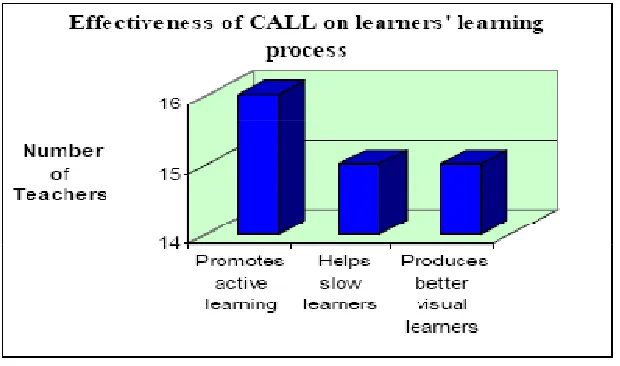
Figure 1: Effectiveness of CALL on learners’ learning process
Based on figure 1 it can be concluded that, CALL promotes active and experiential learners who can learn by doing things themselves. According to Lee (2000), the students become the creators not just the receivers of knowledge in this experiential learning. Furthermore, CALL can also help the slow learners. This is because when teachers prepare interesting activities using computers which are fun and suitable for them it will automatically increase the students’ level of motivation and reduce the anxiety level in them. According to Lee (2000) student motivation will increase, especially whenever a variety of activities are offered, it will make them feel more independent. Additionally, CALL can also provide better visual learners. CALL helps visual learners because; the visual learners will visualize the information in their heads and they can remember things for a long period of time.
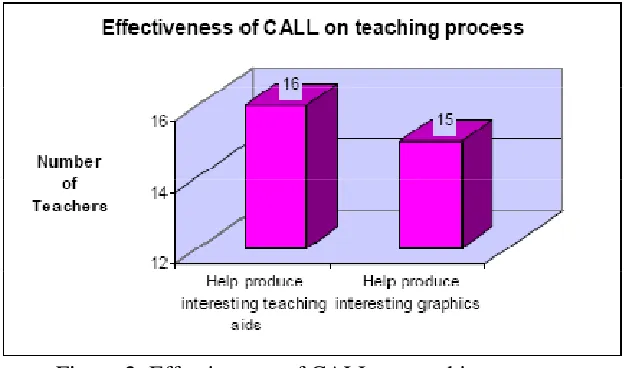
Figure 2: Effectiveness of CALL on teaching process
Figure 2 show that 100% of teachers can produce interesting teaching aids using computers to attract student’s attention. 93.75% of teachers reported that they can produce interesting graphics or multimedia elements to integrate in the teaching.
Figure 3: Effectiveness of CALL in literature lessons
Chart 3 illustrates that 87.5% of respondents stated that the students enjoy literature lessons if the teachers teach it using computers while another 75% of teachers stated that students understand literature lessons better if they are taught using computers.
The statistic above shows that students enjoy and understand the literature lesson better when it is conducted using computers. This is because teachers can prepare a good teaching aid using computers to teach literature components to the students. In addition, it is easy for the teacher to explain short stories using pictures which are taken from the internet or scanned from books. Students can understand literature lesson better when they learn the short stories by looking at the pictures. Besides that, it can produce better visual learners too.
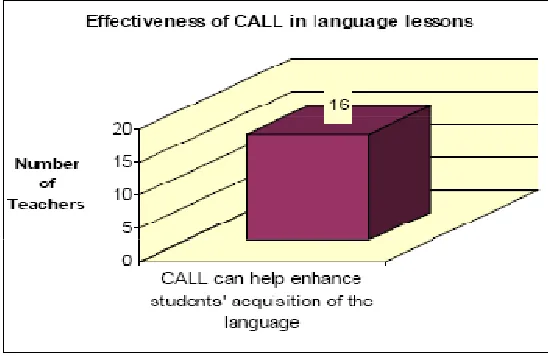
Figure 4: Effectiveness of CALL in language lessons
The graph above shows, 100% of the teachers stated that CALL can help enhance students’ acquisition of the language.
learners’ learning motivation. Through various communicative and interactive activities, computer technology can help second language learners strengthen their linguistic skills, affect their learning attitude, and build their self-instruction strategies and self-confidence.
Conclusion
The findings and discussion in the fourth chapter indeed demonstrated that teachers can perform well if they were supported by good computer equipment in the computer lab and with sufficient technology training to teach the students using computer. Besides that, from the study it can be concluded that teachers have a very positive perceptions on lessons using Computer Assisted Language Learning. Moreover they agree that lessons using Computer Assisted Language Learning can give good effects on students’ understanding. This study contains several constraints which have to be considered and they will be presented in the following section.
References
Blin, F. (1999). CALL and the Development of Learner autonomy. WorldCALL: Global perspectives on computer-assisted language learning. Lisse: Swets and Zeitlinger.
Cheng & William. (2006). The Advantages and Disadvantages of Computer Technology in Second Language Acquisition. In National journal for publishing and mentoring doctoral student research. Retrieved September 25, 2007 from http://www.nationalforum.com
Columbus, O.H. (2000). Research in Vocational Education. New York. Dent, C. (2001). Studier: Classification vs. Categorization. Retrieved September 25, 2007 from http://www.burningchrome.com
Froke, M. (1994). A vision and promise: Distance education at Penn State, Part1- Toward an experience-based definition. The Journal of Continuing Higher Education. 42(2), 16-22. Gelatt, H. B.(1995). Future sense: Creating the future. The Futurist. 3 (2), 35-43.
Hill, M. (1995). What is new in telecommunication? Electronic Learning.
Jonassen, D.H. (1996). Computers in the classroom. Englewood cliffs, NJ: Merrill.
Kincaid, H., McEachron, N. B., & McKinney, D. (1994). Technology in public elementary and secondary education: a policy analysis perspective. Menlo Park, CA: Stanford Research Institute.
Lee, K.W. (2000). “English teachers’ barriers to the use of computer assisted language learning”, The Internet TESL Journal. Retrieved September 25, 2007 from http://www.4english.cn/englishstudy/xz/thesis/barriers
Munn, P & Dreven, E. (1993). Using questionnaire in small scale research-A teachers’ guide. Great Britain: Mac Donald Lindsay Prinder.
Nunan, D. (1992). Research Methods in Language Learning. Cambridge: Cambridge University Press.
Perrett, G.(1995). August Communicative language teaching and second language acquisition theory. Paper delivered at 1993 MLTA Conference. Published in MLTAQ Inc. Newsletter. Roblyer, M. (2003). Integrating educational technology into teaching. Columbus, Ohio: Pearson
Education.
Salaberry, R. (1999). CALL in the year 2000: Still developing the research agenda. Language Learning and Technology, 3(1), 104-107.