ABSTRACT
DRAUT, AMANDA SCHELL. Changes in Bioactive Components of Muscadine Grapes During Microwave Processing and Storage. (Under the direction of Dr. Gabriel Keith Harris).
Muscadine grapes are native to the southeastern United States. Because of their short 6-8 week growing season, it is beneficial for growers to find a use for their produce that is an alternative to fresh sale. A whole muscadine grape puree was formulated to utilize waste products, muscadine skins and seeds in order to maximize its bioactive properties. While processing is required for safety and extended shelf life of such a product, it is desirable to do so by a method that would preserve the bioactive components present within the raw product. In order to investigate this, muscadine grapes were processed both in a model system at 95°C and in a continuous flow microwave system. Processed puree was stored at 37°C after both processes. Samples were analyzed for color on the L a b scale, total phenols by the Folin Ciocalteu assay (FC), total antioxidant capacity by the Oxygen Radical Absorbance assay (ORAC), total monomeric anthocyanins by the pH differential assay, and percent polymeric color by the index for color degradation and browning. Dielectric properties of the whole muscadine grape puree and of muscadine grape skins, pulp, and seeds were measured to assess appropriateness for a continuous flow microwave processing application.
anthocyanin retention in Nesbitt grapes decreased with both processing (91.8%) and storage (18.3% from processed), while percent polymeric color retention decreased with processing (52.0%) and increased with storage (553.0%).
The dielectric constants generally decreased with increasing temperatures, whereas the dielectric loss factors increased with increasing temperature. Similarly, the loss tangent increased with increasing temperature and the depth of penetration decreased with increasing temperature. Results were similar among all varieties of whole muscadine grape puree. For the muscadine grape components, the seeds were different from the other parts, likely due to their lower water content. These results suggest that whole muscadine grape puree is
compatible with microwave processing.
Changes in Bioactive Components of Muscadine Grapes During Microwave Processing and Storage
by
Amanda Schell Draut
A thesis submitted to the Graduate Faculty of North Carolina State University
in partial fulfillment of the requirements for the degree of
Master of Science
Food Science
Raleigh, North Carolina 2012
APPROVED BY:
_______________________________ ______________________________
Dr. Gabriel Keith Harris Dr. Josip Simunovic
Committee Chair
ii DEDICATION
iii BIOGRAPHY
Amanda Schell Draut was born on May 18, 1988 in Cincinnati, Ohio to Jim and Karen Draut. Throughout childhood, she dabbled in soccer, ballet, piano, swim team, flute, and choir before devoting herself to Arthurs Café for her last 2 years of high school. She graduated in 2005 from Walnut Hills High School. A Draut family culture that centered on food, a brief summer cooking class at Johnson and Wales University, and a chance encounter while taking the PSATs pointed her in the direction of food science as a possible future career. Her academic endeavors took her to Knoxville, Tennessee to follow her love of food and football at the University of Tennessee.
During her college career, she used her summers to travel and to gain experience whenever possible. These summers included teaching English at a summer camp at
Tsinghua University in Beijing, China, traveling to learn about the agricultural practices and culture of Thailand, and an internship with Danisco Ingredients in New Century, Kansas, where she learned immeasurable amounts about the food industry and food matrices,
including aiding in the development of a salt replacer that is currently in the Danisco product line. Throughout college, she worked in Marjorie Penfield’s food sensory lab. Amanda graduated in May of 2009 with a Bachelors of Science in Food Science with a Concentration in Science from the University of Tennessee and with a Certificate in Culinary Arts from the Culinary Institute at the University of Tennessee.
v ACKNOWLEDGMENTS
First, I would like to thank Dr. Harris for giving me the opportunity to earn my Master’s degree while working in his lab and to act as the Coordinator for the Kannapolis Scholars Program. Your constant enthusiasm and positivity is infectious and has
significantly improved and enriched my graduate school experience.
I would also like to thank my committee members, Dr. Simunovic and Dr. Lila for their time and for their guidance. Thank you, Dr. Simunovic for helping me to process for countless hours, always while keeping a smile, even when things were not going as planned. Thank you, Dr. Lila for hosting me during my summers in Kannapolis. I very much
appreciate your efficiency, drive, and adventurous stories.
I would like to thank Dr. Odle for his guidance throughout the Kannapolis Scholars Program. Your kindness, curiosity, and knowledge have been very inspiring.
I want to thank Ruth Watkins for your technical expertise, for sharing an office with me, and for your willingness stop what you were doing whenever I needed help.
In terms of a lab group, I really won the potluck lottery. I would like to thank Erica Story, Josh Kellogg, Sanja Cvitkusic, Chad Jordan, Wanida Lewis, Xadeni Ruiz-Villegas, Sara Cohen, and Julie Wasko for their humor, delicious food, trivia prowess, willingness to help when needed, and love for chicken and waffles.
vi for welcoming me into their labs during the summers. In addition, none of my work would be possible without Whit Jones, Ron Cottle, Rudy Mullins, and Hinnant Farms for providing me with muscadine grape samples to study.
Thank you to my family, my parents and Alison, Ashley, and Aaron, for their support, understanding, frozen Mama D spaghetti sauce, delicious holiday foods, and for providing a comfortable refuge.
vii TABLE OF CONTENTS
LIST OF TABLES ...x
LIST OF FIGURES ... xii
CHAPTER 1- Literature Review ...1
1.1 Introduction ...2
1.2 Muscadine Grape Production and Consumption ...5
1.3 Muscadine Grape Compounds of Interest...6
1.3.1 Phenols ...6
1.3.2 Antioxidant Capacity ...9
1.3.3 Anthocyanins ...11
1.3.4 Resveratrol ...18
1.4 Processing of Muscadine Grape Puree ...20
1.5 Alternative Processing for Bioactive Component Retention ...22
1.5.1 High Pressure Processing ...22
1.5.2 Dense Phase CO2 Processing ...23
1.5.3 Copigmentation ...23
1.5.4 Continuous Flow Microwave Processing ...24
1.6 Conclusion ...27
1.7 Literature Cited ...28
CHAPTER 2- Effects of Processing and Storage on Bioactive Components of Muscadine Grapes (Vitis rotundifolia) ...37
2.1 Abstract ...38
2.2 Introduction ...39
2.3 Materials and Methods ...40
2.3.1 Materials ...40
2.3.2 Sample Preparation ...41
2.3.3 Processing Conditions ...41
2.3.4 Storage Condition ...42
2.3.5 Colorimeter Measurement ...42
2.3.6 Extraction Parameters ...43
2.3.7 Total Phenol Content ...43
2.3.8 Total Antioxidant Capacity ...44
2.3.9 Total Monomeric Anthocyanin Content ...44
2.3.10 Percent Polymeric Color ...45
2.3.11 Statistical Analysis ...45
2.4 Results and Discussion ...46
2.4.1 Processing Study ...46
2.4.2 Storage Study ...53
2.5 Conclusions ...60
viii
CHAPTER 3- Dielectric Properties of Muscadine Grapes ...65
3.1 Abstract ...66
3.2 Introduction ...67
3.3 Materials and Method ...69
3.3.1 Materials ...69
3.3.2 Sample Preparation ...69
3.3.3 Dielectric Properties...69
3.4 Results and Discussion ...71
3.4.1 Whole Muscadine Grape Purees ...71
3.4.2 Muscadine Part Purees ...74
3.5 Conclusion ...78
3.6 Literature Cited ...78
CHAPTER 4- Changes in Bioactive Components of Muscadine Grape Puree (Vitis rotundifolia) During Continuous Flow Microwave Processing and Storage ...80
4.1 Abstract ...81
4.2 Introduction ...82
4.3 Materials and Methods ...84
4.3.1 Materials ...84
4.3.2 Sample Preparation ...84
4.3.3 Microwave Processing ...85
4.3.4 Storage Conditions ...87
4.3.5 Colorimeter Measurement ...87
4.3.6 Extraction Parameters ...88
4.3.7 Phenol Content ...88
4.3.8 Antioxidant Capacity ...89
4.3.9 Total Monomeric Anthocyanin Content ...89
4.3.10 Percent Polymeric Color ...90
4.3.11 Statistical Analysis ...91
4.4 Results and Discussion ...91
4.4.1 Microwave Processing Study ...91
4.4.2 Storage Study ...104
4.5 Conclusion ...109
4.6 Literature Cited ...110
SUMMARY AND SUGGESTIONS FOR FUTURE WORK ...115
APPENDIX ...117
APPENDIX A- Changes in Bioactive Components of Whole Muscadine Grape Puree During Processing at 85°C in a Model System ...118
A.1 Abstract ...119
A.2 Introduction ...120
ix
A.3.1 Materials...120
A.3.2 Sample Preparation ...120
A.3.3 Processing Parameters ...121
A.3.4 Extraction Parameters ...121
A.3.5 Total Antioxidant Capacity as Measured by DPPH...122
A.3.6 Total Antioxidant Capacity as Measured by ORAC ...122
A.3.7 Total Phenol Content ...123
A.3.8 Total Monomeric Anthocyanin Content ...123
A.3.9 HPLC Analysis of Bioactive Compounds ...124
A.3.10 Statistical Analysis ...125
A.4 Results and Discussion...125
x LIST OF TABLES
CHAPTER 1- Literature Review
Table 1.1 Total Phenol Content of Muscadine Grape Components ...8 Table 1.2 Phenol Content of Muscadine Grape Components ...8 CHAPTER 2- Effects of Processing and Storage on Bioactive Components of
Muscadine Grapes (Vitis rotundifolia)
Table 2.1 Nesbitt Muscadine Grape Puree L a b Color with Processing Time
at 95°C ...47 Table 2.2 Triumph Muscadine Grape Puree L a b Color with Processing Time
at 95°C. ...47 Table 2.3 Changes in Bioactive Components of Nesbitt Muscadine Grape
Puree During Processing at 95°C ...48 Table 2.4 Changes in Bioactive Components of Triumph Muscadine Grape
Puree During Processing at 95°C ...49 Table 2.5 Nesbitt Muscadine Grape Puree L a b Color with Storage Time
at 37°C ...54 Table 2.6 Triumph Muscadine Grape Puree L a b Color with Storage Time
at 37°C ...54 Table 2.7 Changes in Bioactive Components of Nesbitt Muscadine Grape
Puree During Storage at 37°C ...55 Table 2.8 Changes in Bioactive Components of Triumph Muscadine Grape
Puree During Storage at 37°C ...55 CHAPTER 4- Changes in Bioactive Components of Muscadine Grape Puree
(Vitis rotundifolia) During Continuous Flow Microwave Processing and Storage Table 4.1 Nesbitt Muscadine Grape Puree L a b Color with Microwave Processing
at 95°C ...97 Table 4.2 Frye Muscadine Grape Puree L a b Color with Microwave Processing
at 95°C ...97 Table 4.3 Changes in Bioactive Components of Nesbitt Muscadine Grape Puree
During Microwave Processing at 95°C ...98 Table 4.4 Changes in Bioactive Components of Frye Muscadine Grape Puree During
Microwave Processing at 95°C ...99 Table 4.5 Nesbitt Muscadine Grape Puree L a b Color with Storage Time at 37° ...104 Table 4.6 Frye Muscadine Grape Puree L a b Color with Storage Time at 37°C ...104 Table 4.7 Changes in Bioactive Components of Nesbitt Muscadine Grape Puree
During Storage at 37°C ...105 Table 4.8 Changes in Bioactive Components of Frye Muscadine Grape Puree During
xi APPENDIX A- Changes in Bioactive Components of Whole Muscadine Grape Puree During Processing at 85°C in a Model System
Table A.1 Changes in Bioactive Compounds in Nesbitt Muscadine Grape Puree
xii LIST OF FIGURES
CHAPTER 1- Literature Review
Figure 1.1 Structure of an Anthocyanin ...12
Figure 1.2 pH-Dependent Structural Changes of Anthocyanins ...13
Figure 1.3 Anthocyanin Degradation vs. Time at Various Temperatures ...15
Figure 1.4 Anthocyanin Degradation at pH 1.0 ...16
Figure 1.5 Anthocyanin Degradation at pH 3.5 ...17
Figure 1.6 Structure of trans-resveratrol ...18
Figure 1.7 Simplified Representation of Continuous Flow Microwave Processing System ...25
CHAPTER 2- Effects of Processing and Storage on Bioactive Components of Muscadine Grapes (Vitis rotundifolia) Figure 2.1 Process Flow Diagram ...41
Figure 2.2 Total Phenol Content vs. Processing Time at 95°C for Nesbitt and Triumph Muscadine Grape Puree ...48
Figure 2.3 Total Antioxidant Capacity vs. Processing Time at 95°C for Nesbitt and Triumph Muscadine Grape Puree ...50
Figure 2.4 Percent Retention of Bioactive Components of Nesbitt Muscadine Grape Puree During Processing at 95°C ...50
Figure 2.5 Percent Retention of Bioactive Components of Triumph Muscadine Grape During Processing at 95°C ...51
Figure 2.6 Total Monomeric Anthocyanin Content vs. Processing Time at 95°C for Nesbitt Muscadine Grape Puree...52
Figure 2.7 Percent Polymeric Color vs. Processing Time at 95°C for Nesbitt Muscadine Grape Puree ...53
Figure 2.8 Total Phenol Content with Storage Time at 37°C for Nesbitt and Triumph Muscadine Grape Puree ...55
Figure 2.9 Total Antioxidant Capacity with Storage Time at 37°C for Nesbitt and Triumph Muscadine Grape Puree ...56
Figure 2.10 Percent Retention of Bioactive Components of Nesbitt Muscadine Grape Puree During Storage at 37°C ...57
Figure 2.11 Percent Retention of Bioactive Components of Triumph Muscadine Grape Puree During Storage at 37°C ...57
Figure 2.12 Total Monomeric Anthocyanin Content with Storage Time at 37°C for Nesbitt Muscadine Grape Puree...58
Figure 2.13 Percent Polymeric Color with Storage Time at 37°C for Nesbitt Muscadine Grape Puree ...59
CHAPTER 3- Dielectric Properties of Muscadine Grapes Figure 3.1 Metal Cell for Dielectric Measurement ...70
xiii
Figure 3.3 Dielectric Properties of Whole Supreme Muscadine Grape Puree ...72
Figure 3.4 Dielectric Properties of Whole Tara Muscadine Grape Puree ...72
Figure 3.5 Loss Tangent for Whole Muscadine Grape Purees ...74
Figure 3.6 Depth of Penetration of Whole Tara Muscadine Grape Puree ...74
Figure 3.7 Dielectric Properties of Tara Muscadine Grape Skin Puree ...75
Figure 3.8 Dielectric Properties of Tara Muscadine Grape Pulp Puree ...75
Figure 3.9 Dielectric Properties of Tara Muscadine Grape Seed Puree ...76
Figure 3.10 Loss Tangent of Whole, Skins, Pulp, and Seeds of Tara Muscadine Grape Puree ...77
Figure 3.11 Depth of Penetration of Whole, Skins, Pulp, and Seeds of Tara Muscadine Grape Puree ...77
CHAPTER 4- Changes in Bioactive Components of Muscadine Grape Puree (Vitis rotundifolia) During Continuous Flow Microwave Processing and Storage Figure 4.1 Process Flow Diagram ...85
Figure 4.2 Continuous Flow Microwave Processing Diagram ...87
Figure 4.3 Temperature Profile at 2nd Heater Exit- Whole Microwave Run ...92
Figure 4.4 Temperature Profile at 1st Heater Entry- Muscadine ...93
Figure 4.5 Temperature Profile at 1st Heater Exit- Muscadine ...93
Figure 4.6 Temperature Profile at 2nd Heater Entry- Muscadine ...94
Figure 4.7 Temperature Profile at 2nd Heater Exit- Muscadine ...94
Figure 4.8 Temperature Profile at 3rd Heater Entry- Muscadine ...94
Figure 4.9 Temperature Profile at 3rd Heater Exit/ Hold Tube Entry- Muscadine ...95
Figure 4.10 Temperature Profile at Hold Tube Exit- Muscadine ...96
Figure 4.11 Temperature Profile at Chiller Exit and Filler Entry ...96
Figure 4.12 Total Phenol Content During Microwave Processing for Nesbitt and Frye Muscadine Grape Puree ...99
Figure 4.13 Total Antioxidant Capacity During Microwave Processing for Nesbitt and Frye Muscadine Grape Puree ...100
Figure 4.14 Total Monomeric Anthocyanin Content During Microwave Processing for Nesbitt Muscadine Grape Puree...101
Figure 4.15 Percent Polymeric Color During Microwave Processing for Nesbitt Muscadine Grape Puree ...101
Figure 4.16 Percent Retention of Bioactive Components of Nesbitt Muscadine Grape Puree During Microwave Processing ...102
Figure 4.17 Percent Retention of Bioactive Components of Frye Muscadine Grape Puree During Microwave Processing ...103
Figure 4.18 Total Phenol Content During Storage at 37°C for Nesbitt and Frye Muscadine Grape Puree ...106
Figure 4.19 Total Antioxidant Capacity During Storage at 37°C for Nesbitt and Frye Muscadine Grape Puree ...107
xiv Figure 4.21 Percent Polymeric Color During Storage at 37°C for Nesbitt Muscadine
Grape Puree ...108 Figure 4.22 Percent Retention of Bioactive Components of Nesbitt Muscadine Grape
Puree During Storage at 37°C ...109 Figure 4.23 Percent Retention of Bioactive Components of Frye Muscadine Grape
Puree During Storage at 37°C ...109 APPENDIX A- APPENDIX A- Changes in Bioactive Components of Whole Muscadine Grape Puree During Processing at 85°C in a Model System
Figure A.1 DPPH Total Antioxidant Capacity vs. Processing Time at 85°C for
Muscadine Grape Puree ...125 Figure A.2 ORAC Total Antioxidant Capacity vs. Processing Time at 85°C for
Muscadine Grape Puree ...126 Figure A.3 Total Phenol Content vs. Processing Time at 85°C for Muscadine Grape
Puree ...126 Figure A.4 Total Monomeric Anthocyanin Content vs. Processing Time at 85°C for
Muscadine Grape Puree ...127 Figure A.5 Percent Retention of Bioactive Components of Nesbitt Muscadine Grape
2 1.1 Introduction
Muscadine grapes (Vitis rotundifolia) are native to the southeastern United States. While the majority of muscadine grape production occurs in coastal states between Louisiana and North Carolina, there is over 1,000 acres of land devoted to the growth of these grapes in North Carolina alone1,2. The North Carolina wine and grape industry contributes an annual economic impact of $1.28 billion3. There are two types of muscadine grapes, “bronze” and “black”, that comprise over 300 varieties. In contrast to other grape species (Vitis vinifera), they do not grow in bunches, are much larger, have a thick, leathery skin, and hard,
astringent seeds. These grapes can be attractive to growers and consumers alike for their disease resistance4,5, anti-bacterial activity6-12, potential health benefits13-21, and unique flavor.
The disease resistance of muscadine grapes has made them uniquely fit for production in the southeastern United States in comparison to traditional bunch grapes. Muscadine grapes have a specific resistance to Pierce’s Disease, which is a common issue in Vitis vinifera grapes that are grown in the same region3,4. Phenolic compounds, while thought to confer this disease resistance, also contribute to the anti-bacterial activity of muscadine grapes. Multiple studies have investigated the effect of muscadine grape components and extracts on pathogenicity. Many of these studies worked with gram negative microorganisms including Eschericia coli O157:H7, Enterobacter sakazakii, Cronobacter sakazakii,
3 are affected by issues such as Pierce’s Disease, but due to their low pH, there is no need for severe pasteurization procedures in order to yield a safe product.
In addition to their disease resistance and antimicrobial activity, muscadine grapes have potential to positively affect a wide variety of health issues including Alzheimer’s disease, inflammation, cancer, and diabetes. For example, consumption of muscadine grape wine prevented oligomerization of amyloid beta peptides in mice, which are associated with cognitive decline related to Alzheimer’s disease22
. Additionally, anti-inflammatory effects were reported in one study, conducted in mice, indicating that muscadine grape extracts from skins and seeds attenuated inflammation when topically administered. There was an additive effect when utilizing the whole grape extract, suggesting that multiple components in various parts of the muscadine grape can reduce inflammation23. Similarly, muscadine grape skin extract suppressed edema in rats, displaying anti-inflammatory properties with possible mechanisms including the inhibition of cytokine and superoxide release24.
Anti-inflammatory effects can be relevant to many chronic diseases such as cancer and diabetes. Muscadine pomace has displayed anti-carcinogenic activity in vitro17. One study in prostate cancer cell lines showed that muscadine skin extract induced apoptosis and
decreased cell proliferation through phosphatidylinositol 3-kinase-Akt and mitogen-activated protein kinase survival pathways18. Muscadine grape extracts also attenuated growth of Caco-2 colon carcinoma cells, cell death correlating with presence of ellagic acid
4 potent activity12. While results from these in vitro studies are promising, it is essential to have positive effects in vivo to implicate anti-carcinogenic activities of these grapes.
Muscadine grapes have a high sugar content that lends their characteristic sweetness, but also have displayed anti-diabetic activity. While the brix content of these grapes is highly variable, depending mostly on the weather and the variety, most muscadine grapes have a total soluble sugar content between 9 and 17 °Brix25. Most of the sugars that comprise this total soluble sugar content are glucose and fructose, with some sucrose26. Despite these high levels of sugar, studies have suggested that muscadine grapes can have anti-diabetic activity. One study found that application of muscadine grape extracts inhibited α-glucosidase and pancreatic lipase in vitro, enzymes implicated in diabetes20
. Extracts of muscadine grape and seeds have also prevented formation of advanced glycation end products, in vitro, which have been associated with complications involving diabetes16. In humans, nightly supplementation of 150 ml of muscadine wine and dealcoholized wine both comparably moderated blood glucose, glycated hemoglobin, and insulin in participants with and without Type II diabetes14. Further evidence involving in vivo studies would be required to understand a possible linkage between muscadine grapes and anti-diabetic activity.
The suggested link between muscadine grapes and the suppression of chronic diseases is promising. However, in all of the aforementioned studies, the administered samples came from whole muscadine grape components, as opposed to a single compound. These
5 components, until they may be ingested by consumers. While pasteurization or sterilization of muscadine grape juice or puree is required before distribution to consumers, it is important to observe this process and to try to preserve these components. Alternative processing techniques such as microwave processing, copigmentation, dense phase CO2 processing, and high pressure processing have previously been studied with a goal to attenuate the
destruction of these important compounds. This review will strive to understand the health effects of these bioactive components, the presence of these components in muscadine grapes, and the effects of processing and storage on bioactive components.
1.2 Muscadine Grape Production and Consumption
Consumption of muscadine grapes is currently limited mostly to the southeastern United States due to the short, 4-6 week growing season. This limitation has also been reflected in how the grapes are consumed. In a survey conducted in 2001, researchers found that 93.8% of respondents consumed the grapes in their fresh fruit form. The remaining percentages were attributed to wine, jam or jelly, frozen fruit, and juice.27 Consumption of fresh grapes also tends to result in waste products including the thick, leathery skin and the hard, astringent seeds. By weight, these parts account for over 27% of the grape,
6 Extraction of the bioactive compounds from the skins and seeds has been investigated for use as a supplement, but a water-based extraction resulted in 48-69% losses of phenols and 48-64% losses of anthocyanins31. Supplements are currently being developed, using the skins and the seeds of the grape, but it is appropriate to try to discover ways to incorporate these muscadine grape components into a normal diet in order to deliver the full bioactive potential of the muscadine grape32.
1.3 Muscadine Grape Compounds of Interest
1.3.1 Phenols
Phenols are a class of secondary metabolite compounds that are produced by plants as a stress response. These compounds include phenolic acids, flavonoids, flavonols, flavones, flavanones, flavanols, anthocyanins, isoflavones, and chalcones. Phenols have at least one hydroxyl group attached to an aromatic ring and are generally water soluble. The chemical structure of phenolic acids causes them to have a variety of functions including antioxidant activity, chelating of metal ions, and the formation of hydrogen bonds that can cause
precipitation or an astringent taste. For plants, these compounds have a biological function to protect them against pests, disease, oxidation, and ultraviolet rays and to serve as attractants for pollinating insects. Phenols can also be beneficial for human health and are interesting to the food industry for their use as antimicrobials and antioxidants that can aid in the
7 In muscadine grapes, the health effects of phenol-rich fractions have been
investigated. Phenolic acid fractions of muscadine grapes resulted in a 50% inhibition of growth in HT-29 and Caco-2 cell lines at a concentration of 0.5-3 mg/ml in vitro12. Ellagic acid-rich fractions of black muscadine grape extracts induced apoptosis in Caco-2 colon carcinoma cells in vitro15. While the ellagic acid-rich fractions were effective against these cells, there is evidence to suggest that ellagic acid alone would not have the effect that a combination of phenolic acids would have. Another study investigated effects of ellagic acid, quercetin, and resveratrol upon human leukemia cells (MOLT-4) and found that while the separate compounds were effective in inhibiting cell growth, a synergistic effect occurred when the compounds were combined, displaying more than an additive effect34.
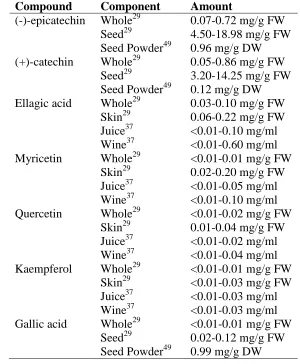
The total phenol content of the component parts of the muscadine grape are reported in Table 1.1. The seeds have the highest total phenol content, followed by the skins, whole grape, and pulp. Muscadine grapes are rich in a variety of phenols including (-)-epicatechin, (+)-catechin, ellagic acid, myricetin, quercetin, gallic acid, and kaempferol (Table 1.2). While the whole muscadine puree includes all of these compounds, (-)-epicatechin, (+)-catechin, and gallic acid tend to be located in the seed, while ellagic acid, myricetin,
8 Table 1.1. Total Phenol Content of Muscadine Grape Components. All values were
determined using the Folin Ciocalteu Assay. GAE= gallic acid equivalents, FW= fresh weight muscadine, DW= dry weight muscadine
Component Amount
Whole Grape29 1.69-4.25 mg GAE/ g FW
Skin29 2.62-5.46 mg GAE/g FW
Seed29 15.36-32.59 mg GAE/g FW
Seed Powder49 32.13 mg GAE/g DW
Pulp29 0.12-0.33 mg GAE/g FW
Juice37 0.33-1.28 mg GAE/ml
Wine37 0.25-1.86 mg GAE/ml
Table 1.2. Phenol Content of Muscadine Grape Components. All values were determined using the HPLC. GAE= gallic acid equivalents, FW= fresh weight muscadine, DW= dry weight muscadine
Compound Component Amount
(-)-epicatechin Whole29 0.07-0.72 mg/g FW Seed29 4.50-18.98 mg/g FW Seed Powder49 0.96 mg/g DW (+)-catechin Whole29 0.05-0.86 mg/g FW
Seed29 3.20-14.25 mg/g FW Seed Powder49 0.12 mg/g DW Ellagic acid Whole29 0.03-0.10 mg/g FW
Skin29 0.06-0.22 mg/g FW Juice37 <0.01-0.10 mg/ml Wine37 <0.01-0.60 mg/ml Myricetin Whole29 <0.01-0.01 mg/g FW
Skin29 0.02-0.20 mg/g FW Juice37 <0.01-0.05 mg/ml Wine37 <0.01-0.10 mg/ml Quercetin Whole29 <0.01-0.02 mg/g FW
Skin29 0.01-0.04 mg/g FW Juice37 <0.01-0.02 mg/ml Wine37 <0.01-0.04 mg/ml Kaempferol Whole29 <0.01-0.01 mg/g FW
Skin29 <0.01-0.03 mg/g FW Juice37 <0.01-0.03 mg/ml Wine37 <0.01-0.03 mg/ml Gallic acid Whole29 <0.01-0.01 mg/g FW
9 In previous research, studies have shown that phenols tend to be relatively stable to processing and storage. One study found a decrease in total soluble phenolics after 60 days of storage at 20°C and 37°C in muscadine juice and wine. Samples that were stored at 37°C generally had lower levels of phenols than the samples that were stored at 20°C, by the end of the 60 day storage period37. In green tea, catechins including (-)-epigallocatechin gallate and (-)-epicatechin gallate followed a first order degradation pattern38. There is evidence to suggest that the presence of lactic acid bacteria can degrade some phenolics, such as tannic acid wherein high molecular weight tannins can be depolymerized and lower molecular weight tannins can be decreased, resulting in an increased gallic acid concentration39. In cell culture, application of lactic acid bacteria has resulted in gallic acid degradation40. Because of the wide variety of phenols, more research would be required to fully understand any mechanisms of phenol degradation during processing or storage.
The bioavailability of phenols has been studied. In one in vitro study, codigestion of raspberry phenol extracts with ice cream and breakfast cereal resulted in a lower uptake, while codigestion with bread and minced beef did not, suggesting that food matrix can be very important for the bioavailability of a compound41. Due to the wide variety of phenols that exist, it would be beneficial for more research to be completed regarding these specific groups of compounds.
1.3.2 Antioxidant Capacity
10 oxygen radicals. Oxygen radicals are molecules that are in an unstable state and can transfer an electron from itself to other molecules. This transfer of electrons can result in a chain reaction that leads to off flavors in foods, cell death, and inactivation of certain molecules. Antioxidants serve as reducing agents that can accept the free electron, but in a more stable state than would occur in other molecules. It is common in the food industry for synthetic antioxidants (such as butylated hydroxytoluene (BHT), butylated hydroxyanisole (BHA), and tert-Butylhydroquinone (TBHQ)) and natural antioxidants (such as ascorbic acid and
tocopherols) to be used in order to prevent oxidation that can lead to off-flavors43. In addition to the benefits of flavor preservation, antioxidants have been used in the food industry to appeal to a consumer’s desire to purchase healthy foods44.
In muscadine grapes, there is an average antioxidant capacity of 17.6±7.1 µM trolox equivalents /g fresh weight muscadine. Similar to phenols, the highest concentration of antioxidant capacity is in the seeds, followed by the skin, whole fruit, and then the pulp29. The predominant compounds that lend antioxidant capacity to muscadine grapes include phenolic compounds, especially anthocyanins for the black varieties. Because of this, antioxidant capacity tends to be positively correlated with both total phenol content and total monomeric anthocyanin content.
11 one study, muscadine wine had a higher antioxidant capacity with storage time than
muscadine juice. The antioxidant capacity also tended to be more dependent upon storage time than upon storage temperature (37°C and 20°C) after 60 days, but all of the 37°C samples decreased, while only one of the 20°C decreased after the given time period37. Antioxidant capacity has been a trendy topic in food marketing in previous years, but phenols and more specifically anthocyanins have received growing attention recently.
1.3.3 Anthocyanins
Anthocyanins are natural compounds that are found in black varieties of muscadine grapes and are useful in terms of health and food quality. Anthocyanins are natural flavonoid pigments that are found in plants as part of the class of secondary metabolites and are
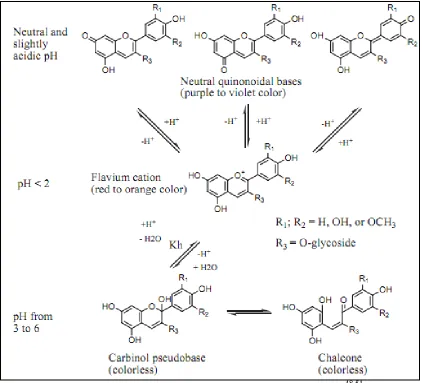
considered to be phenolic compounds. The main structure of an anthocyanin is made up of an A ring that is attached to a pyrilium ring, which is then linked to a B phenolic ring (Figure 1.1). The biological purpose of anthocyanins is as a pigment in the range of red to blue, which can lend color in the grape and can also act as a shield against ultraviolet radiation as a benefit to the plant.
12 natural colorants, such as anthocyanins47. In addition to their practical purpose as colorants for the food industry, anthocyanins have been correlated with health promoting properties relating to cancer, heart disease and diabetes. While positive health effects of anthocyanins have been reported in vitro and in animal models, there is limited evidence in humans to understand any possible connections, especially with respect to dosage48.
13 Figure 1.2. pH-Dependent Structural Changes of Anthocyanins48,51
14 dry weight), peonidin-3,5-diglucoside (0.1 mg/g dry weight), and malvidin-3,5-digluoside (0.2 mg/g dry weight) in the Jumbo variety51. The juice and wine of the Noble variety contains 10.6-606 mg/L delphinidin, 20.2-441 mg/L cyanidin, 9.9-797 mg/L petunidin, 12.0-48.4 mg/L pelargonidin, 32.1-518 mg/L peonidin, and 24.2-526 mg/L malvidin.
In order to preserve these compounds, it is important to understand their degradation patterns. Anthocyanins undergo first order degradation, reported in applications such as blood oranges, black current, strawberry paste, blackberry juice, mangosteen peel, blueberry juice, purple potato, and grape juice, with results depending on °Brix in some cases53-60. Heat-treated blackberry juice (95°C for 3 minutes, hot filled) decreased in total monomeric anthocyanins (up to 65%) and increased in percent polymeric color (7%)61. Anthocyanin degradation increases exponentially at temperatures above 125°C, wherein they are broken down into their aglycone forms and then further degraded50.
During storage anthocyanins degrade, negatively correlating with storage time, as reported in a variety of fruit juices62. Stability of anthocyanins in muscadine grape juice and wine has been studied. Anthocyanin content of decreased in both the juices and wines after 60 days of storage at 20°C and 37°C, a higher temperature generally causing more
anthocyanin degradation. The greatest anthocyanin losses occurred in delphinidin-3,5-diglucoside and petunidin-3,5-delphinidin-3,5-diglucoside37. Another study showed the negative effect of heating upon anthocyanins, most notably in delphinidin-3,5-diglucoside and petunidin-3,5-diglucoside63. The total anthocyanin content of muscadine grape juice decreased
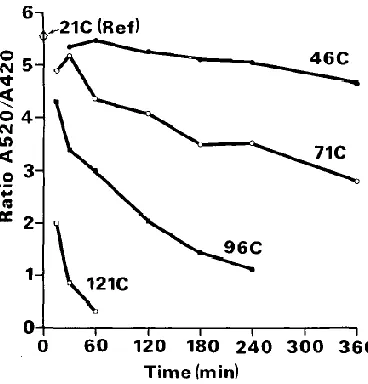
15 After storage of blackberry juice at 25°C for 6 months, total monomeric anthocyanins
decreased by 69-75% and percent polymeric color increased from 14.4-36.2%61.
Figure 1.3. Anthocyanin Degradation vs. Time at Various Temperatures64
Changes to anthocyanins of muscadine grapes during processing and storage can occur in two main forms: the polymerization of monomeric anthocyanin molecules with other anthocyanin or catechin molecules and the degradation of the anthocyanin into its constituent components65. The polymerization of anthocyanins can lead to a brown color, while the degradation of anthocyanins can lead to a lightening in color. These changes are dependent upon a myriad of conditions including sugar content, water activity, pH, and temperature.
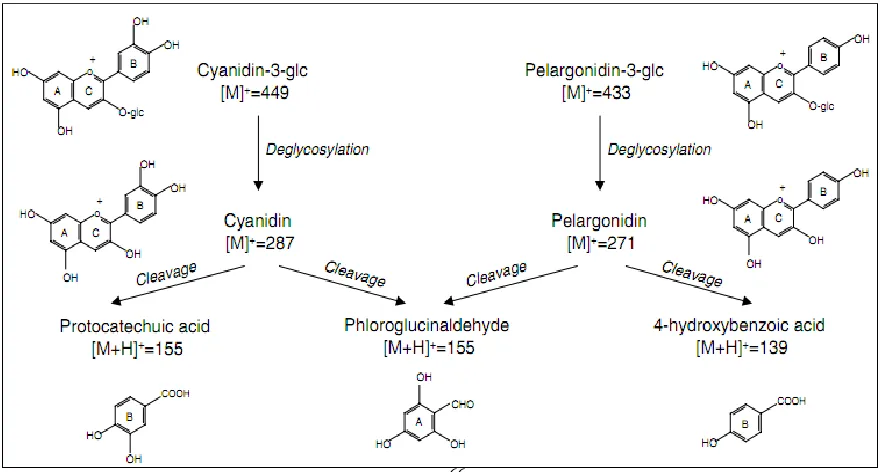
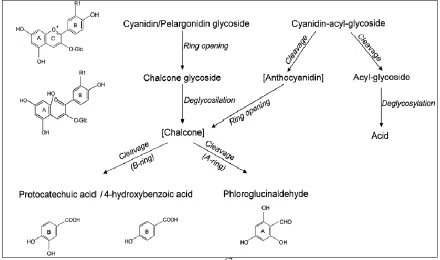
16 for 6 hours at 95°C. Most notably, the half lives of the anthocyanins at a pH of 1.0 were much longer than those at a pH of 3.5. At a pH of 1.0, anthocyanin glycosides were first deglycosylated, before the A and the B rings were split into their phenolic acid and aldehyde constituents (Figure 1.4). In contrast, samples that were heated at a pH of 3.5 first developed into their chalcone glycoside form, with the opening of the pyrilium ring before
deglycosylation and degradation into its phenolic acid and aldehyde constituents (Figure 1.5). The chalcone form of the anthocyanin is highly unstable, readily breaking into its constituents that have an overall lower antioxidant value. Because pH 3.5 is within the pH range of most juices, including muscadine grapes, this is likely a predominant mechanism for the degradation of anthocyanins during processing.
17 Figure 1.5. Anthocyanin Degradation at pH 3.567
While it is extremely important to understand how anthocyanins are degraded in order to try to better preserve them, it is also important to understand how anthocyanins might work in the human body, especially through their bioavailability. Foods that are eaten with a certain compound of interest have the ability to affect its absorption, but digestion of
18 1.3.4 Resveratrol
While the presence and concentration of resveratrol in muscadine grapes has been a point of some contention, background regarding resveratrol and studies relating to resveratrol will be discussed. Resveratrol (3, 4, 5-trihydroxy-trans-stilbene) is a common component of several plants (Figure 1.6). Resveratrol is a type of agylcone stilbene, which is formed as a secondary product in plants and trees, having anti-fungal properties which result in a
phytoalexin quality69. In their natural forms, stilbenes are often difficult to recover from their plant sources to make a pure and high quality extract. It is important to note that resveratrol, in its natural form, will vary not only in food source, but also in the quality of that specific source from plant to plant. Factors such as cultivar, growing conditions, growing season, disease prevalence, and time of exposure to stress will all affect the amount of resveratrol in a plant70.
Figure 1.6. Structure of trans-resveratrol70
19 and mitogen-activated protein kinase survival pathways while resveratrol stopped cells at the G1-S phase transition and decreased expression of cyclin D1 and cyclin-dependent kinase 4 proteins in prostate cancer cell lines in vitro 18. This suggests that there is something beyond the possible stilbene content of muscadine grapes that may lead to its anti-carcinogenic activity.
Literature reporting on the content of resveratrol and its derivatives, including its glucoside form, piceid, in muscadine grapes varies greatly, with some researchers reporting copious amounts of resveratrol and others reporting none. One study found resveratrol in levels between 4.8 and 26.4 mg/g berry in the whole fruit, 2.7-23.5 mg/g berry in the fruit without the seeds, and 27.4-62.2 mg/g seed in the seeds. Values reported for the black varieties were higher than those of the bronze varieties71. In other studies, researchers have found trans-resveratrol to be only at detection limits or not detected completely29. Stilbene content of muscadine juice, including resveratrol, piceid, and their isomers were found to be present in the Noble and Carlos varieties, with extraction best with a hot press method or with cold press from frozen and then thawed berries72. A possible explanation for the wide range of reported values is that resveratrol is produced as a stress-response compound,
meaning that the external conditions and/or weather need to cause the plant stress in order for these compounds to be produced73.
When making a product such as muscadine juice or wine, there are several processing options that could be used to separate the liquid phase from the solid phase. These
20 methods not having any detectable trans-resveratrol72. One study found that grape extracts rich in resveratrol and piceid were stable for 4 years at 40°C without exposure to light74. However, in the presence of light, trans-resveratrol is converted to cis-resveratrol, which is an unstable form and has a different effect on the body75. Absorption of resveratrol has been reported at about 70% of oral dosage (25mg), but most of the dosage was excreted through the urine76. More research is required to understand if there are, indeed, consistent stilbene levels in muscadine grapes and how these stilbenes might affect health.
1.4 Processing of Muscadine Grape Puree
With occurrence of remaining product after saturation of the market during the short growing season, there is an opportunity for products made from frozen muscadine grapes. One such product that could be made to capitalize on the potential of the muscadine grape is a whole muscadine grape puree, designed to utilize the leftover yield, and the potential waste products that can result in a higher total phenol content, antioxidant capacity, and total anthocyanin content. This product would have the potential to be marketed to people across the United States, or even the world. In addition, the sweetness and the distinctive flavor of the muscadine grape would mask the astringency that is contributed by the seeds.
21 accounts for 11.3% of phenolic compounds including hydrolyzable tannins, flavonoids, including anthocyanin 3,5-diglucosides, quercetin, myricetin, and kaempferol glycosides78. The combination of the component muscadine parts would create a cocktail of these
bioactive compounds that could benefit health and food quality. The whole muscadine grape puree can be used as an ingredient to be added to final products including smoothies, ice cream, and popsicles.
While a whole muscadine grape puree can best utilize the bioactive potential of the muscadine grape, there is an FDA mandated requirement of pasteurization in order to confer a 5-log reduction of pathogenic bacteria in juice products and purees79. Further, a
sterilization process is a harsher processing treatment, but could be desirable in order to create a shelf stable product. It is therefore important to understand what changes might occur to the bioactive components of the muscadine grapes during processing and to try to preserve these compounds until they may reach the consumer. While the above
22 1.5 Alternative Processing for Bioactive Component Retention
Alternative forms of processing have been investigated for their potential to preserve flavor and nutrients that are characteristic of the raw material, while still resulting in the necessary microbial death. Several processing techniques have been utilized for this purpose including high pressure processing, dense phase CO2 processing, copigmentation, and
continuous flow microwave processing.
1.5.1 High Pressure Processing
High pressure processing has been employed to improve bioactive compound stability in muscadine grapes. This form of processing uses intense pressure in order to extend shelf life through the destruction of pathogens and spoilage microorganisms. With high
hydrostatic pressure processing in muscadine grapes, greater anthocyanin and antioxidant activity losses occurred at 400 MPa (70% loss) when compared to treatment at 550 MPa (46% loss). The drawback to this form of processing was that it failed to inactivate
23 1.5.2 Dense Phase CO2 Processing
Another alternative to traditional processing, dense phase CO2 processing, has also been applied in muscadine grapes. This form of processing uses pressure and CO2 to inactivate pathogens and spoilage microorganisms. In comparison to traditional thermal pasteurization, dense phase CO2 processing better preserved phenols, antioxidant capacity, anthocyanins, and ascorbic acid through processing and storage. A higher level of CO2 (16%) was more effective in preventing bioactive degradation than the samples that were treated with the lower level of CO2 (8%). Dense phase CO2 processing incurs a comparable flavor to unprocessed samples, but samples processed by traditional thermal pasteurization had lower hedonic scores during sensory testing82-84.
1.5.3 Copigmentation
24 could be attributed to the oxidation of ascorbic acid into H2O2 constituents that then react with anthocyanins to decrease their stability87.
1.5.4 Continuous Flow Microwave Processing
Microwave processing is a promising technique that has not yet been employed in muscadine grapes. All microwave technology utilizes the same concept, whether it is in a home-use microwave or on an industrial scale. Microwave processing is a method of heating, whereby microwaves are sent through a given sample, exciting the polar molecules within the sample. These polar molecules then rotate, resulting in friction that creates heat. The major difference between the two types of microwave systems is the frequency used, with in-home microwaves utilizing a microwave frequency of about 2450 MHz, while industrial microwaves tend to be run at a frequency of 915 MHz, allowing for more even heating.
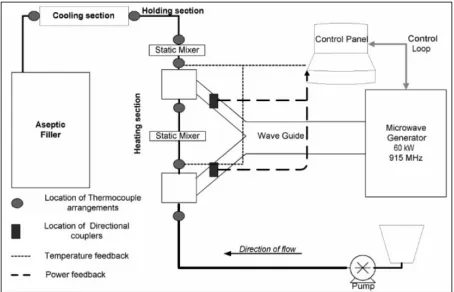
25 Microwave processing on an industrial scale can be done in either a batch system or a continuous flow system. Both of these types of systems are comprised of a microwave source, a waveguide, and an applicator. In an industrial food production system, the
microwave source is usually a magnetron. The magnetron would then be attached to a metal wave guide that would direct the microwaves to go towards the applicator, where the
microwaves would reach a sample (Figure 1.7). In order to understand if a given sample would be appropriate for use in an industrial microwave, it is essential to understand its dielectric properties, which characterize that particular material’s ability to reflect, transmit, or absorb the microwave energy89.
26 Continuous flow microwave processing has been successfully used in a variety of systems including apple juice and sweet potatoes, but efficient microwave processing can be highly dependent upon a given food matrix, parameters that can partially be quantified by the measurement of dielectric properties90-92. These properties can be broken into two
categories: dielectric constant (ε’), being efficiency of energy storage, and dielectric loss factor, being the ability to transfer electromagnetic energy into heat energy and the energy that is dissipated in the system (ε”). Interactions between the dielectric properties and a sample can be described using the loss tangent, utilizing both the dielectric constant and the dielectric loss factor (Equation 1). In addition, depth of penetration, the distance (m) required to dissipate 63% of the microwave energy, can be calculated using these measures (Equation 2). This calculation can be used to understand the potential to achieve uniformity in processing a sample93.
tanδ = ε”/ ε’ [1]
√ [ √ ]
[2]
The dielectric properties of grape juice and wine (Vitis vinifera) have been studied at a temperature of 20°C between 200MHz and 3Gz, finding that at a given frequency, wine might have a higher dielectric constant than juice, while at another frequency there may be an opposite effect94. The frequency is essential for understanding dielectric properties, with smaller frequencies having a higher dielectric constant and a lower dielectric loss factor than larger frequencies95. Temperature of the sample has a similar effect, with higher
27 lower temperatures. The industry standard frequency of 915 MHz has been chosen in order to improve the coupling of microwave energy dependent on these dielectric properties, resulting in a safe product with superior food quality.
Microwave processing results in a microbialy safe product, while yielding higher levels of bioactive components and better flavor preservation than occurs with traditional processing. In a study conducted using apple juice, continuous flow microwave
pasteurization resulted in a more efficient microbial destruction than traditional heat
pasteurization90. Microwave processing can be effective in inactivating polyphenol oxidase in strawberry puree, while only minutely modifying anthocyanin concentrations96. This indicates that it is possible for microwave processing to attenuate the action of polyphenol oxidase, effectively reducing one threat to stability of anthocyanins and other phenols. In red cauliflower, microwave processed samples had a much higher retention of anthocyanins (95.4%) than the traditionally heat treated samples (19.8%)97. Microwave processing also resulted in preservation of quality parameters in purple sweet potato puree including an increase in total phenol content by 5.9%, a decrease in monomeric anthocyanin content by 14.5% and relative stability of antioxidant capacity92. Continuous flow microwave
processing has been shown to have the potential for the preservation of quality parameters, but has not yet been tested in a muscadine grape application.
1.6 Conclusion
28 popsicles. By utilizing the whole muscadine puree, bioactive components that are naturally occurring within the muscadine grape including phenols, antioxidant capacity, and
anthocyanins, may be incorporated to benefit the health of the consumer and product quality in terms of spoilage and safety, flavor, and color. In order to make the most of these labile bioactive components, it is appropriate to utilize alternative processing techniques to avoid overheating and phytochemical degradation. Continuous flow microwave processing is a promising technique that can minimize bioactive compound degradation due to its decreased come up time and efficiency in transferring energy through processing. Research is required to understand the potential for continuous flow microwave processing in the application of muscadine grape puree and its effects upon phenols, antioxidant capacity, and anthocyanin content through processing and storage.
1.7 Literature Cited
(1) Olien, W.C. The muscadine grape: Botany, viticulture, history, and current industry. J. Hortic. Sci. 1990, 25(7), 732-739.
(2) North Carolina Muscadine Grape Association. Statistics. (http://www.ncmuscadine.org/stats.html.) (3/15/2012).
(3) North Carolina Department of Commerce. Wine. (http://www.nccommerce.com/wine.) (3/15/12).
(4) Bouquet, A. Resistance to grape Fanleaf virus in muscadine grape inoculated with Xiphinema index. Plant Dis. 1981, 65(10), 791-792.
(5) Fry, S.M.; Milholland, R.D. Response of resistant, tolerant, and susceptible grape vine tissues to invasion by the Pierce’s Disease bacterium Xylella fastidiosa. Proc. Am.
29 (6) Brown, J.C.; Huang, G.; Haley-Zitlin, V.; Jiang, X. Antibacterial effects of grape extracts on Helicobacter pylori. Appl. Environ. Microbiol. 2008, 77(23), 848-852.
(7) Kim, T.J.; Weng, W.L.; Stojanovic, J.; Lu, Y.; Jung, Y.S.; Silva, J.L. Antimicrobial effect of water-soluble muscadine seed extracts on Escherichia coli O157:H7. J. Food Prot. 2008, 71(7), 1465-1468.
(8) Kim, T.J.; Silva, J.L.; Jung, Y.S. Antibacterial activity of fresh and processed red
muscadine juice and the role of their polar compounds on Escherichia coli O157:H7. J. Appl. Microbiol. 2009a, 107, 533-539.
(9) Kim, T.J.; Silva, J.L.; Weng, W.L.; Chen, W.W.; Corbitt, M.; Jung, Y.S.; Chen, Y.S. Inactivation of Enterobacter sakazakii by water-soluble muscadine seed extracts. Int. J. Food Microbiol. 2009b, 129, 295-299.
(10) Kim, T.J.; Weng, W.L.; Silva, J.L.; Jung, Y.S.; Marshall, D. Identification of natural antimicrobial substances in red muscadine juice against Cronobacter sakazakii. J. Food Sci. 2010, 75(3), M150-M154.
(11) Brown J.C.; Wang, J.; Kasman, L.; Jiang, X.; Haley-Zitlin, V. Activities of muscadine grape skin and quercetin against Helicobacter pylori infection in mice. J. App. Micro. 2010, 110(1), 139-146.
(12) Park, Y.J.; Biswas, R.; Phillips, R.D.; Chen, J. Antibacterial activities of blueberry and muscadine phenolic extracts. J. Food Sci. 2011, 76(2), M101–M105.
(13) Yi, W.; Fischer, J.; Akoh, C.C. Study of anticancer activities of muscadine grape phenolics in vitro. J. Ag. Food Chem. 2005, 53(22), 8804-8812.
(14) Yi, W.; Akoh, C.C.; Fischer, J.; Krewer, G. Effects of phenolic compounds in blueberries and muscadine grapes on HepG2 cell viability and apoptosis. Food Res. Int. 2006, 39(5), 628-638.
(15) Banini, A.E.; Boyd, L.C.; Allen, J.C.; Allen, H.G.; Sauls, D.L. Muscadine grape products intake, diet and blood constituents of non-diabetic and type 2 diabetic subjects. J. Nutr. 2006, 22(11-12), 1137-1145.
(16) Mertens-Talcott, S.I.; Lee, J.H.; Percival, S.S.; Talcott, S.T. (2006). Induction of cell death in Caco-2 human colon carcinoma cells by ellagic acid rich fractions from muscadine grapes (Vitis rotundifolia). J. Agric. Food Chem. 2006, 54(15), 5336-5343.
30 (18) God, J.M.; Tate, P.; Larcom, L.L. Anticancer effects of four varieties of muscadine grapes. J. Med. Food 2007, 10(1), 54-59.
(19) Hudson, T.S.; Hartle, D.K.; Hursting, S.D.; Nunez, N.P.; Wang, T.Y.; Young, H.A.; Arany, P.; Green, J.E. Inhibition of prostate cancer growth by muscadine grape skin extract and resveratrol through distinct mechanisms. Cancer Res. 2007, 67, 8396-8405.
(20) Mertens-Talcott, S.I.; Percival, S.S.; Talcott, S.T. Extracts from red muscadine and cabernet sauvignon wines induce cell death in MOLT-4 human leukemia cells. J. Food Chem. 2008, 108(3), 824-832.
(21) You, Q.; Chen, F.; Wang, X.; Luo, P.G.; Jiang, Y. Inhibitory effects of muscadine anthocyanins on α-glucosidase and pancreatic lipase activities. J. Agric. Food Chem. 2011, 59, 9506-9511.
(22) Ho, L.; Chen, L.H.; Wang, J.; Zhao, W.; Talcott, S.T.; Ono, K.; Teplow, D.; Humala, N.; Cheng, A.; Percival, S.S.; Ferruzzi, M.; Janle, E.; Dickstein, D.L.; Pasinetti, G.M. Heterogeneity in red wine polyphenolic contents differentially influences Alzheimer's disease-type neuropathology and cognitive deterioration. J. Alzheimer’s Dis. 2009, 16(1), 59-72.
(23) Bralley, E.E.; Hargrove, J.L.; Greenspan, P.; Hartle, D.K. Topical anti-inflammatory activities of vitis rotundifolia (muscadine grape) extracts in the tetradecanoylphorbol acetate model of ear inflammation. J. Med. Food, 2007, 10(4), 636-642.
(24) Greenspan, P.; Bauer, J.D.; Pollock, S.H.; Gangemi, J.D.; Mayer, E.P.; Ghaffar, A.; Hargrove, J.L.; Hartle, D.K. Antiinflammatory properties if the muscadine grape (Vitis rotundifolia). J. Ag. Food Chem. 2005, 53, 8481-8484.
(25) Kambiranda, D.; Vasanthaiah, H.; Basha, S.M. Relationship between sugar content and invertase activity in grape species. J. Food Biochem. 2011, 35, 1646-1652.
(26) U.S. Department of Agriculture, Agricultural Research Service. USDA National nutrient database for standard reference, Release 24. Nutrient Data Laboratory Home Page,
http://www.ars.usda.gov/nutrientdata. (12/13/11
(27) Safley, C.D.; Wohlgenant, M.K.; Carpio, C. Williams, R.; Dautlick, T. Why consumers buy fresh muscadine grapes.
(http://www.ncmuscadine.org/FreshMuscadineGrapeReport.pdf.) (3/5/2012).
31 (29) Pastrana-Bonilla, E.; Akoh, C.C.; Sellappan, S.; Krewer, G. Phenolic content and
antioxidant capacity of muscadine grapes. J. Ag. Food Chem. 2003, 51, 5497-5503.
(30) Morris, J.R.; Brady, P.L. The muscadine experience: Adding value to enhance profits. AAES Research Report 2003, 974, 1-78.
(31) Cardona, J.A.; Lee, J.H.; Talcott, S.T. Color and polyphenolic stability in extracts produced from muscadine grape (Vitis rotundifolia) pomace. J. Ag. Food Chem. 2009, 57, 8421-8425.
(32) Nature’s Pearl. Products. (https://www.naturespearlproducts.com/index.asp.) (3/15/12). (33) Parr, A.J.; Bolwell, G.P. Phenols in the plant and in man. The potential for possible nutritional enhancement of the diet by modifying the phenols content or profile. J. Sci. Food Ag. 2000, 80(7), 985-1012.
(34) Mertens-Talcott, S.U. ; Percival, S.S. Ellagic acid and quercetin interact synergistically with resveratrol in the induction of apoptosis and cause transient cell arrest in human leukemia cells. Cancer Lett. 2005, 218(2), 141-151.
(35) Lin, T.Y.; Vine, R.P. Identification and reduction of ellagic acid in muscadine grape juice. J. Food Sci. 1990, 55(6), 1607-1613.
(36) Lee, J.H.; Johnson, J.V.; Talcott, S.T. Identification of ellagic acid conjugates and other polyphenolics in muscadine grapes by HPLC-ESI-MS. J. Ag. Food Chem. 2005, 53, 6003-6010.
(37) Talcott, S.T.; Lee, J.H. Ellagic acid and flavonoid antioxidant content of muscadine wine and juice. J. Ag. Food Chem. 2002, 50, 3186-3192.
32 (42) Xie, B.; Shi, H.; Chen, Q.; Ho, C.T. Antioxidant properties of fractions and polyphenol constituents from green, oolong and black teas. Proc. Natl. Sci. Counc., Repub. China, Part B: Life Sci. 1998, 17(2), 77-84.
(43) Pokorny, J.; Yanishlieva, N.; Gordon, M. Antioxidants in Food - Practical Applications. Woodhead Publishing. 2001. Online version available at:
http://www.knovel.com.prox.lib.ncsu.edu/web/portal/browse/display?_EXT_KNOVEL_DIS PLAY_bookid=545&VerticalID=0.
(44) Wootton-Beard, P.; Ryan, L. Improving public health? The role of antioxidant-rich fruit and vegetable beverages. Food Res. Int. 2011, 44(10), 3135-3148.
(45) Lavelli, V.; Vantaggi, C. Rate of antioxidant degradation and color variations in dehydrated apples as related to water activity. J. Ag. Food Chem. 2009, 57, 4733-4738. (46) Dhuique-Mayer, C.; Tbatou, M.; Carail, M.; Caris-Veyrat, C.; Dornier, M.; Amiot, M.J. Thermal degradation of antioxidant micronutrients in Citrus juice: Kinetics and newly formed compounds. J. Ag. Food Chem. 2007, 55(10), 4209-4216.
(47) McCann, D.; Barrett, A.; Cooper, A.; Crumpler, D.; Dalen, L.; Grimshaw, K.; Kitchin, E.; Lok, K.; Porteous, L.; Prince, E.; Sonuga-Barke, E.; Warner, J.O.; Stevenson, J. Food additives and hyperactive behavior in 3-year-old and 8/9-year-old children in the community: a randomised, double-blinded, placebo controlled trial. J.-Lancet 2007, 370(9598), 1560-1567.
(48) He, J.; Giusti, M.M. Anthocyanins: Natural colorants with health-promoting properties. Ann. Rev. Food Sci. Technol. 2010, 1, 163-187.
(49) Yilmaz, Y.; Toledo, R.T. Major flavonoids in grape seeds and skins: antioxidant capacity of catechin, epicatechin, and gallic acid. J. Ag. Food Chem. 2004, 52(2), 255-260. (50) Yue, X.; Xu, Z. Changes of anthocyanins, anthocyanidins, and antioxidant activity in bilberry extract during dry heating. J. Food Sci. 2008, 73(6), C494-C499.
(51) Houmiers, C., Lima, J.C., Macanita, A.L., Santos, H. (1998). Color stabilization of malvidin 3-glucoside: self-aggregation of the flavylium cation and copigmentation with the Z-chalcone form. Journal of Physical Chemistry, 102, 3578-3585.
(52) Huang, Z.; Wang, B.; Williams, P.; Pace, R. Identification of anthocyanins in muscadine grapes with HPLC-ESI-MS. J. Food Sci. Technol. 2008, 42, 819-824.
33 (54) Harbourne, N.; Jacquier, J.C.; Morgan, D.J.; Lyng, J.G. Determination of the
degradation kinetics of anthocyanins in a model juice system using isothermal and non-isothermal methods. Food Chem. 2008, 111, 204-208.
(55) Verbeyst, L.; Oey, I.; Van der Plancken, I.; Hendrixx, M.; Van Loey, A. Kinetic study on the thermal and pressure degradation of anthocyanins in strawberries. Food Chem. 20010, 123, 269-274.
(56) Jimenez, N.; Bohuon, P.; Lima, J.; Dornier, M.; Vaillant, F.; Perez, A.M. Kinetics of anthocyanin degradation and browning in reconstituted blackberry juice treated at high temperatures (100-180C). J. Agric. Food Chem. 2010, 58, 2314-2322.
(57) Chiste, R.C.; Lopes, A.S.; de Faria, L.J.G. Thermal and light degradation kinetics of anthocyanin extracts from mangosteen peel (Garcinia mangostana L.). Int. J. Food Sci. Technol, 2002, 45(9), 1902-1908.
(58) Kechinski, C.P.; Ramos Guimaraes, P.V.; Zapata Norena, C.P.; Tessaro, I.C.; Ferreira Marczak, L.D. Degradation kinetics of anthocyanin in blueberry juice during thermal treatment. J. Food Sci. 2010, 75(2), C173-C176.
(59) Nayak, B.; Berrios, J.D.J.; Powers, J.R.; Tang, J. Thermal degradation of anthocyanins from purple potato (Cv. Purple Majesty) and impact on antioxidant capacity. J. Am. Chem. Soc. 2011, 59(20), 11040-11049.
(60) Hillmann, M.C.R.; Burin, V.M.; Bordignon-Luiz, M.T. Thermal degradation kinetics of anthocyanins in grape juice and concentrate. Int. J. Food Sci. Technol. 2011, 46, 1997-2000. (61) Hager, T.J.; Howard, L.R.; Prior, R.L. Processing and storage effects on monomeric anthocyanins, percent polymeric color, and antioxidant capacity of processed blackberry products. J. Ag. Food Chem. 2008, 56, 689-695.
(62) Hernandez-Herrero, J.A.; Frutos, M.J. Degradation kinetics of pigment, colour and stability of the antioxidant capacity in juice model systems from six anthocyanin sources. Int. J. Food Sci. Technol. 2011, 46, 2550-2557.
(63) Flora, L.F. Influence of heat, cultivar and maturity on the anthocyanidin-3,5-digluosides of muscadine grapes. J. Food Sci. 1978, 43, 1819-1821.
(64) Flora, L.F. Time-temperature influence on muscadine grape juice quality. J. Food Sci. 1976, 41, 1312-1315.
34 (66) Sadilova, E.; Stintzing, F.C.; Carle, R. Thermal degradation of acylated and nonacylated anthocyanins. J. Food Sci. 2006, C504-C512.
(67) Sadilova, E.; Carle, R.; Stintzing, F.C. Thermal degradation of anthocyanins and its impact on color and in vitro antioxidant capacity. J. Molec. Nutr. Food Res. 2007, 51, 1461-1471.
(68) Mazza, G.; Kay, C.D.; Cottrell, T.; Holub, B.J. Absorption of anthocyanins from
blueberries and serum antioxidant status in human subjects. J. Ag. Food Chem. 2002, 50(26), 7731-7737.
(69) Wenzel, E.; Somoza, V. Metabolism and bioavailability of trans-resveratrol. Molec. Nutr. Food Res. 2005, 49(5), 472.
(70) Burns, J.; Yokota, T.; Ashihara, H.; Lean, M.; Crozier, A. Plant foods and herbal sources of resveratrol. J. Ag. Food Chem. 2002, 50(11), 3337.
(71) Ector, B.J.; Magee, J.B.; Hegwood, C.P.; Coign, M.J. Resveratrol concentration in muscadine berries, juice, pomace, purees, seeds, and wines. Am. J. Enol. Vitic. 1996, 47(1), 57-62.
(72) Leblanc, M.R.; Johnson, .E.; Wilson, P.W. Influence of pressing method on juice stilbene content in muscadine and bunch grapes. J. Food Sci. 2008, 73(4), H58-H62. (73) Jeandet, P.; Douillet-Breuil, A.C.; Bessis, R.; Debord, S.; Sbaghi, M.; Adrian, M. Phytoalexins from the Vitaceae: Biosynthesis, phytoalexin gene expression in transgenic plants, antifungal activity, and metabolism. J. Ag. Food Chem. 2002, 50, 2731-2741.
(74) Prokop, J.; Abrman, P.; Seligson, A.L.; Sovak, M. Resveratrol and its glycon piceid are stable polyphenols. J. Med. Food, 2006, 9(1), 11-14.
(75) Chen, X.; He, H.; Wang, G.; Yang, B.; Ren, W.; Ma, L.; Yu, Q. Stereospecific determination of cis- and trans-resveratrol in rat plasma by HPLC: application to pharmacokinetic studies. Biomed. Chromatogr. 2007, 21, 257-265.
(76) Walle, T.; Hsieh, F.; DeLegge, M.H.; Oatis, J.E.; Walle, U.K. High absorption but very low bioavailability of oral resveratrol in humans. Drug Metab. Dispos. 2004, 32(12), 1377-1382.
35 (78) Sandhu, A.K., Gu, L. (2010). Antioxidant capacity, phenolic content, and profiling of phenolic compounds in the seeds, skin, and pulp of Vitis rotundifolia (muscadine grapes) as determined by HPLC-DAD-ESI-MS. J. Ag. Food Chem. 2010, 58, 4681-4692.
(79) U.S. Food and Drug Administration. 2004. Guidance for industry: Juice HACCP hazards and controls guidance first edition; final guidance,
http://www.fda.gov/Food/GuidanceComplianceRegulatoryInformation/GuidanceDocuments/ Juice/ucm072557.htm.
(80) Del Pozo-Insfran, D.; Del Follo-Martinez, A.; Talcott, S.T.; Brenes, C.H. Stability of copigmented anthocyanins and ascorbic acid in muscadine grape juice processed by high hydrostatic pressure. J. Food Sci. 2007, 72(4), S247-S253.
(81) Cao, X.; Zhang, Y.; Zhang, F.; Wang, Y.; Yi, J.; Liao, X. Effects of high hydrostatic pressure on enzymes, phenolic compounds, anthocyanins, polymeric color and color of strawberry pulps. J. Sci. Food Ag. 2011, 91(5), 877-885.
(82) Del Pozo-Insfran, D.; Balaban, M.O.; Talcott, S.T. Microbial stability, phytochemical retention, and organoleptic attributes of dense phase CO2 processed muscadine grape juice. J. Ag. Food Chem. 2006, 54(15), 5468-5473.
(83) Del Pozo-Insfran, D.; Balaban, M.O.; Talcott, S.T. Enhancing the retention of phytochemicals and organoleptic attributes in muscadine grape juice through a combined approach between dense phase CO2 processing and copigmentation. J. Ag. Food Chem. 2006, 54(18), 6705-6712.
(84) Del Pozo-Insfran, D.; Balaban, M.O.; Talcott, S.T. Inactivation of polyphenoloxidase in muscadine grape juice by dense phase CO2 processing. Food Res. Int. 2006, 40(7), 894-899. (85) Talcott, S.T.; Peele, J.E.; Brenes, C.H. Red clover isoflavonoids as anthocyanin color enhancing agents in muscadine wine and juice. Food Res. Int. 2005, 38, 1205-1212. (86) Talcott, S.T.; Brenes, C.H.; Pires, D.M.; Del Pozo-Insfran, D. Phytochemical stability and color retention of copigmented and processed muscadine grape juice. J. Ag. Food Chem. 2003, 51(4), 957-963.
36 (89) Pascua Cubides, Y.T. Continuous Flow Microwave Sterilization and Aseptic Packaging of Diced Roma Tomatoes. MS thesis, North Carolina State University, Raleigh, 2011, ETD. (90) Tajchakavit, S.; Ramaswamy, H.S.; Fustier, P. Enhanced destruction of spoilage microorganisms in apple juice during continuous flow microwave heating. Food Res. Int. 1998, 31(10), 713-722.
(91) Gentry, T.S.; Roberts, J.S. Design and evaluation of a continuous flow microwave pasteurization system for apple cider. Swiss Soc. Food Sci. Technol. 2004, 38, 227-238. (92) Steed, L.E.; Truong, V.D.; Simunovic, J.; Sandeep, K.P.; Kumar, P.; Cartwright, G.D.; Swartzel, K.R. Continuous flow microwave-assisted processing and aseptic packaging of purple-fleshed sweet potato purees. J. Food Sci. 2008, 73(9), E455-E462.
(93) Sosa-Morales, M.E.; Valerio-Junco, L.; Lopez-Malo, A.; Garcia, A.S. Dielectric
properties of foods: Reported data in the 21st Century and their potential applications. LWT- Food Sci. Technol. 2010, 43, 1169-1179.
(94) Garcia, A.; Torres, J.L.; De Blas, M.; De Francisco, A.; Illanes, R. Dielectric characteristics of grape juice and wine. Biosys. Eng. 2004, 88(3), 343-349.
(95) Nelson, S.O.; Bartley, P.G. Measuring frequency-and-temperature-dependent dielectric properties of food materials. Transac. ASAE 2000, 43(6), 1733-1736.
(96) De Ancos, B.; Cano, M.P.; Hernandez, A.; Monreal, M. Effects of microwave heating on pigment composition and colour of fruit purees. J. Sci. Food Ag. 1999, 79, 663-670. (97) Lo Scalzo, R.; Genna, A.; Branca, F.; Chedin, M.; Chassaigne, H. Anthocyanin
37 CHAPTER 2- Effects of Processing and Storage on Bioactive Components of
38 2.1 Abstract
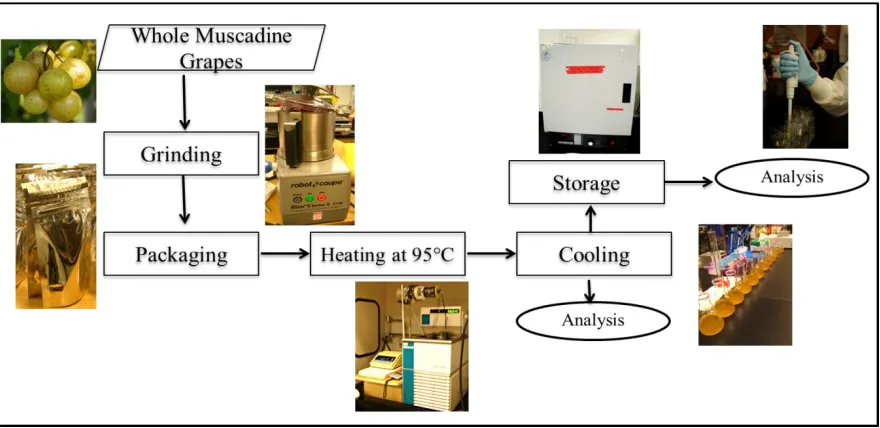
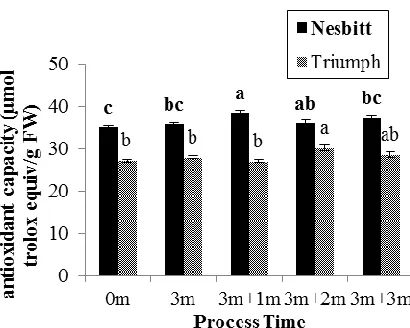
Whole muscadine grape purees (including skin, seed, and pulp) from Nesbitt (a “black” variety and Triumph (a “bronze” variety) were evaluated for color and bioactive component stability during thermal processing and in an accelerated storage model system. Total phenol content was measured by the Folin-Ciocalteau (FC) assay. Total antioxidant activity was measured by the Oxygen Radical Absorbance Capacity (ORAC) assay. For the Nesbitt grapes, monomeric anthocyanin content was also measured by a pH differential method and percent polymeric color was measured by the index for color degradation and browning. Grape purees were heated in a 95°C oil bath for 0, 3, 4, 5, and 6 minutes and then stored at 37°C for up to 8 weeks. After 6 minutes of processing, the Nesbitt and Triumph varieties exhibited 85.8% and 83.8% of their original (FC) values, and 106.1% and 105.1% of their ORAC values, respectively. After 8 weeks of storage at 37°C, Nesbitt and Triumph purees exhibited 88.6% and 110.6% of their original FC values and 83.3% and 77.5% of their original ORAC value, respectively. Monomeric anthocyanin retention in Nesbitt grapes decreased with both processing (91.8%) and storage (18.3% from processed), while percent polymeric color retention decreased with processing (52.0%) and increased with storage (553.0%). Based on the data, muscadine grape puree was robust throughout processing and storage in terms of bioactive component and color stability.
39 2.2 Introduction
Muscadine grapes (Vitis rotundifolia) are native to the southeastern United States and are non-bunch grapes that are unique due to their large size, characteristic flavor, thick skin, and numerous seeds. These grapes contain high levels of phenols, antioxidant capacity, and anthocyanins1, which can result in the grapes’ disease resistance2,3, antibacterial activity4-10, and positive health effects11-19. In addition, phenols can serve as natural antimicrobials, antioxidants as natural flavor preservers, and anthocyanins as natural colorants that can contribute to quality in a food product. More than 93% of muscadine grapes are consumed as fresh grapes and the leathery skin and the hard seed are often discarded20. While the skins and the seeds of the muscadine grape are often considered to be waste products, they
comprise over 27% by weight of the grape21 and are the most valuable grape components in terms of bioactive compounds1. Therefore, a whole muscadine grape puree may be an ideal way to utilize these valuable waste products and to increase health parameters and food quality.
In order to understand the type and levels of bioactive components that might be ingested by the consumer of such a product it is important to investigate the chemical
changes that occur during processing and storage. Previous studies have reported changes in bioactive components including phenols, antioxidant capacity, ascorbic acid, and