4(23): 4090-4104, 2014
SCIENCEDOMAINinternational www.sciencedomain.org
A Placebo-controlled Trial of Folate with B12 in
Patients with Schizophrenia with Residual
Symptoms in Ethiopia Using a Sequential
Parallel Comparison Design
Christina P. C. Borba
1,2*, Abebaw Fekadu
3,4, Solomon Teferra
3,
Desalegn Bekele
3, Teshome Shibre
3, Claire E. Oppenheim
1,
Silenat Biressaw
3, Anwar Mulugeta
3, David A. Schoenfeld
1,2and David C. Henderson
1,2 1Massachusetts General Hospital, The Chester M. Pierce, M.D., Division of GlobalPsychiatry, and the Schizophrenia Research and Clinical Program, Boston, Massachusetts, United States.
2Harvard Medical School, Boston, Massachusetts, United States. 3Department of Psychiatry, School of Medicine, College of Health Sciences, Addis Ababa
University, Addis Ababa, Ethiopia.
4Department of Psychological Medicine, King’s College London, Institute of Psychiatry,
London, UK.
Authors’ contributions Authors DCH, TS, AF, DB, ST and CPCB conceived the trial question and have been involved in all stages of the study design. These individuals also participated in writing the grant and study protocol, submitting to the funding body, and applying to the ethics committee. They are responsible for trial management, staff training and supervision. Authors CEO, SB and AM are clinical research coordinators involved in developing and operationalizing the trial procedures at the study site. Author DAS is the statistician who developed the study design. All authors have read and approved the final manuscript.
Received 29thMarch 2014 Accepted 1stMay 2014 Published 23rdMay 2014
ABSTRACT
Background: Approximately 30% of patients with schizophrenia suffer from treatment-resistant psychotic symptoms, which can produce substantial distress, result in
hospitalization and disrupt school or work functioning. Studies have found low blood folate concentrations in psychiatric populations and recent reports have consistently linked schizophrenia to low folate levels. We aim to examine the efficacy of a four-month trial of folate with B12 supplementation for reducing symptoms of schizophrenia.
Methods:This study is a randomized, sequential parallel comparison design (SPCD) for double-blind phase fixed dose, 4-month trial of folate plus B12 as add-on therapy to reduce symptoms of schizophrenia. Participants will be adults (ages 18 to 65 years) diagnosed with schizophrenia, any subtype, who are psychiatrically and medically stable, but have residual positive or negative symptoms of moderate or greater intensity, despite antipsychotic treatment. The study is divided into 2 double-blind phases of 56 days each. Two hundred total participants will be randomized to adjunctive treatment with either folate with vitamin B12 (n=50) or placebo (n=150), with a 2:3:3 ratio for random assignment to the treatment sequences drug/drug (DD; n=50), placebo/placebo (PP; n=75), and placebo/drug (PD; n=75), while all continue to receive their current antipsychotic agent for the duration of the study. Diagnosis will be established using the Structured Clinical Interview for DSM-IV for clinical trials (SCID-CT). The primary outcome measure will be change in symptom severity measured by the change from baseline in Positive and Negative Syndrome Scale (PANSS) total score. Secondary outcome measures will include change in severity of psychotic symptoms as measured by the PANSS psychosis subscale score; and change in severity of negative symptoms as measured by the modified Scale for Assessment of Negative Symptoms (SANS) total score. Key assessments for primary and secondary outcomes will be conducted at baseline, week 8, and week 16.
Trial Registration:Clinicaltrials.gov identifier: NCT01724476.
Keywords: Folate; vitamin B12; schizophrenia; negative symptoms; sequential parallel comparison design; Ethiopia.
ABBREVIATIONS
SPCD: Sequential Parallel Comparison Design; MTHFR: methylenetetrahydrofolate reductase; PANSS: Positive and Negative Syndrome Scale; SANS: Scale for the Assessment of Negative Symptoms; CGI: Clinical Global Impression Scale; SF-36: Modified Medical Outcomes Study Short Form-36;SEQ: Side Effect Questionnaire; C-SSRS: Columbia Suicide Severity Rating Scale; AIMS: Abnormal Involuntary Movements Scale; SAS: Simpson Angus Scale for Extrapyramidal Symptoms; BAS: Barnes Akathisia Scale; EPHI: Ethiopian Public Health Institute.
1. INTRODUCTION
fruits; so lower intakes can be expected where the staple diet consists of unfortified wheat, maize, or rice, and when the intake of legumes and folate-rich vegetables and fruits is low. There are few data on folate intakes in different locations, but one would anticipate that status is poorer in populations who rely on unfortified wheat or rice as a staple, and consume low amounts of legumes and green leafy vegetables [1]. Consequently, micronutrient intakes are often inadequate [2]. Hence, coexisting deficiencies of iron, zinc, vitamin A, vitamin B-12, and folate have often been reported [3]. Fortification of grains with folic acid has increased folate intake in several developed countries [4] but these foods are generally not available in Ethiopia.
In Ethiopia, protein and nutrient deficiencies are common and malnutrition is a concern [5, 6]. To date, studies of nutrient deficiencies have been conducted only in select regions of this country. One study of women’s nutritional status in Ethiopia found that of the 970 women participating in this study, nearly half of the sample (46.1%) had severe folate deficiency and 21.2% of the sample had marginal folate deficiency, while only 32.7% had optimal levels of serum folate [7]. All regions were significantly affected with folate deficiency except the Dire-Dawa, Tigray and Afar regions [7]. Nonetheless, another study confirmed that the Addis Ababa, Amhara and southern Ethiopia regions have among the lowest prevalence of folate deficiency within the country, yet even in these regions the prevalence of folate deficiency is substantial with only 58% or women achieving optimal folate levels in Addis Ababa, 42% in Amhara and 26% in southern Ethiopia. Thus, folate deficiency is clearly a concern throughout Ethiopia and related to diet [7].
1.1 Folate
1.2 Cobalamin (B12)
Cobalamin is bound to protein in the diet and requires gastric hydrochloric acid and intrinsic factor for release and absorption from the gut. B12 serves as a co-factor with 5-MTHF in the conversion of homocysteine to methionine, which results in the production of a methyl group used for methylation reactions in several pathways, including synthesis of neurotransmitters and DNA. B12 deficiency can result from disorders of gastric absorption (celiac disease, Crohn’s disease, surgical gastric resection), dietary insufficiency (including vegetarian diets) or from medications that interfere with B12 absorption (proton pump inhibitors, H2 receptor antagonists or metformin). B12 deficiency most commonly presents with cognitive impairment, but can also result in anemia, fatigue, paresthesias, or depression. No upper limit has been defined for B12 supplementation since no adverse effects of B12 have been identified.
1.3 Preliminary Folate Studies in Schizophrenia
Although the evidence for a relationship between blood folate concentrations, MTHFR status and schizophrenia is strong, it remains unclear if folate supplementation will improve negative or psychotic symptoms, and whether B12 will enhance the therapeutic effect. Additionally, there is little data on folate supplementation in schizophrenia for developing countries such as Ethiopia. Food products in Ethiopia are not supplemented with folate, which suggests that the effects of folate supplementation may be even more pronounced. The nutrient deficiency and malnutrition experienced by the Ethiopian population, in addition to the high rates of folate deficiency found in preliminary studies, suggests that folate with vitamin B12 supplementation could represent a safe and inexpensive approach that could significantly improve outcomes for patients with schizophrenia with residual symptoms in Ethiopia. The current study, with its pioneering study design, will be a significant step towards understanding the role of folate supplementation in regulating the symptoms of schizophrenia, specific to a folate-deficient population.
The primary aim of the trial is:
1. To examine the efficacy of a four-month trial of folate supplementation with B12 for reducing symptoms of schizophrenia as measured by the change from baseline in Positive and Negative Syndrome Scale (PANSS) total score.
The secondary aims of the trial are:
1. To examine the efficacy of folate supplementation with B12 for psychotic symptoms as measured by the PANSS psychosis subscale score.
2. To examine the efficacy of folate supplementation with B12 for negative symptoms as measured by the modified Scale for Assessment of Negative Symptoms (SANS) total score.
3. To examine the relationship among response of PANSS total score, negative and positive symptoms and baseline serum and plasma folate, RBC folate, homocysteine and B12 concentrations, tobacco intake, and MTHFR C677T status. 4. To examine the relationship between response of negative and positive symptoms
and the change in folate concentrations, RBC folate, and change in plasma homocysteine concentrations.
We hypothesize that persons with schizophrenia with residual symptoms who are given folate with B12 supplementation will show greater reduction of negative and/or psychotic symptoms of schizophrenia and greater reduction of serum homocysteine concentration compared with those taking standard antipsychotic medication alone.
2. METHODOLOGY
2.1 Research Design
and efficacy often relies on somewhat subjective clinical interviews and assessments. Unlike a conventionally designed single phase trial, SPCD utilizes two sequential, double-blind phases, which enables one to account for placebo non-responders during efficacy analyses. Participants in an SPCD trial will be randomized to one of three treatment sequences: 1) drug during Phase 1, drug during Phase 2 (Drug/Drug sequence), 2) placebo during Phase 1, placebo during Phase 2 (Placebo/Placebo sequence), or 3) placebo during Phase 1, drug during Phase 2 (Placebo/Drug sequence). While all subjects from Phase 1 will typically enter Phase 2, only placebo non-responders during Phase 1 will be included in the Phase 2 efficacy analysis thereby allowing researchers to statistically control for the detrimental effect of high placebo response. In the current trial, the signal detection of a drug-placebo difference will be enhanced in the second phase of the study, where only non-responders to placebo in the first phase will be included in the analyses of the second phase (thereby including only a sample of prospectively-defined placebo non-responders).
A further benefit of the SPCD paradigm is its ability to achieve an equivalent power as in conventional, single-phase trials, while utilizing a smaller sample size. An SPCD trial with a sample size of n will achieve a power that is 10-25% higher than a conventional single-phase trial with the samen. Alternatively, if a specific power is specified, an SPCD paradigm will require 20-50% fewer participants to achieve that power as compared with the number of subjects that would be required in a single-phase trial. This design is particularly valuable in global clinical trials such as the current trial, as it provides the greatest power to detect an effect of the intervention within the limits of the sample sizes that can be realistically achieved through the collaborative and funding limitations[33]. In the current trial, the efficiency of the sequential parallel comparison design will allow us to reduce the sample size requirements by 50%. Preliminary studies in psychiatric populations have demonstrated these various benefits of utilizing the SPCD design. Boessen et al. [34] compared the sample size requirements of a 8-week randomized controlled trial (RCT) scenario to sequential parallel comparison design scenarios of equivalent length or longer. For the comparative scenarios utilizing antidepressant clinical trial data, the 8-week SPCD scenarios required 50-53% fewer participants than the 8-week RCT scenario.
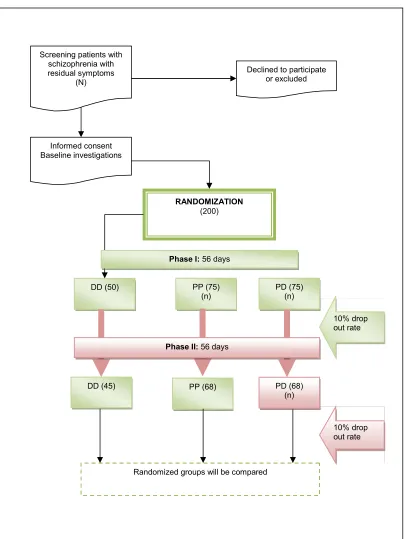
In accordance with the sequential parallel design, the 112-day, double-blind adjunctive treatment with folate and vitamin B12 is divided into two phases of approximately 56 days each, with assessments performed every 14 to 28 days. During the first phase of double-blind adjunctive treatment, eligible patients (n=200) are randomized to adjunctivetreatment with folate plus vitamin B12 or placebo, with a 2:3:3 ratio for random assignment to the treatment sequences drug/drug (n=50), placebo/placebo (n=75), and placebo/drug (n=75). Assuming a 10% drop-out rate during the first phase, 136 patients on placebo will complete the first day phase, and 45 patients on folate and vitamin B12 will complete the first 56-day phase (See Fig. 1 Schematic Diagram of Study Flow).
Fig. 1. Schematic diagram of study flow
Diagram displays the flow of study participants from initial screening; through randomization to drug/drug treatment sequence, placebo/placebo treatment sequence, and placebo/drug treatment
sequence; to study completion
Declined to participate or excluded Screening patients with
schizophrenia with residual symptoms
(N)
DD (45) Informed consent Baseline investigations
RANDOMIZATION (200)
PD (75) (n)
Randomized groups will be compared
DD (50) PP (75)
(n)
PP (68) PD (68)
(n) Phase II:56 days
10% drop out rate
The pre-randomization to the drug-drug, placebo-placebo, or placebo-drug sequences is designed to decrease placebo-response and to facilitate a smooth transition between phases. The overall odds of receiving placebo or folate plus vitamin B12 at any point during the study will be reflected in the consent form, which will not mention two phases to minimize the risk of a change in treatment outcome expectations at the beginning of the second phase.
2.2 Research Setting and Participants
The study will be conducted at Amanuel Psychiatric Hospital. This hospital has a 360 bed capacity in-patient unit and has remained to be the only psychiatric referral hospital for the whole nation for decades. On average about 400 patients attend the outpatient clinic daily, 39% of which are patients suffering from schizophrenia, and most of whom receive conventional antipsychotic medications.
Approximately 240 consecutive outpatients with schizophrenia from Amanuel Psychiatric Hospital will be enrolled and screened for eligibility. The goal is to randomize and complete 200 subjects. Inclusionary and exclusionary criteria are designed to identify a sample of psychiatrically and medically stable patients with schizophrenia, any subtype, with residual positive or negative symptoms of moderate or greater intensity, despite antipsychotic treatment.
The inclusion criteria for this study are: male or female; age 18-65 inclusive; a clinical diagnosis of schizophrenia, any subtype; treated with an antipsychotic medication for at least 6 months and at a stable dose for at least 6 weeks; and a Positive and Negative Syndrome Scale (PANSS) total score of at least 60, with at least a 3 (moderate) on one negative symptom item or on one positive symptom item. Exclusion criteria are: inability to provide informed consent or do not have a guardian to consent; serum B12 concentration less than 300ng/L and CBC results suggestive of megaloblastic anemia in the clinical judgment of the investigator; current use of folate or B12 or other multivitamin with B12 supplementation; current use of any of the following medications: phenobarbital, phenytoin, carbamazepine, valproic acid, fosphenytoin, primidone or pyrimethamine; antimalarial drugs; current history of alcohol abuse or dependence or other substance abuse (nicotine allowed); unstable medical illness; unstable psychiatric illness; seizure disorder; pregnancy or nursing; and known allergy to folate, vitamin B12, multivitamin, or B-complex vitamin.
2.3 Sample Size
2.4 Intervention Schedule
All participants will be maintained on their pre-study antipsychotic medication and usual treatment will continue under the treating physician. All medication changes made by the participant’s clinical team will be recorded throughout the study. The active intervention, folate with B12, will be given at a dose of 2mg folate with 400µg B12 per day. The comparison group will receive an inactive placebo compound of identical color, texture and taste. The treatments will be given for the full 16 week duration of the study. Trial medication will be dispensed every four weeks: baseline, and weeks 4, 8 and 12. Medication compliance will be assessed at weeks 4, 8, 12, and 16. To assess compliance, participants will be instructed to return all empty medication bottles and any left-over tablets to the study staff at each follow-up visit coinciding with medication resupply.
2.5 Outcome Measures
The primary outcome measures for this study will be measured by the change from baseline in Positive and Negative Syndrome Scale (PANSS) total score. The following clinical rating scales will comprise the clinical efficacy assessment battery: 1) Positive and Negative Syndrome Scale (PANSS) [35]: includes three primary symptom subscales (positive symptoms, negative symptoms, and general psychopathology); 2) Scale for Assessment of Negative Symptoms (SANS) [36]: which is more sensitive than the PANSS negative symptom subscale to assess negative symptom changes over time; 3) the Clinical Global Impression Scale (CGI) [37]: a three-item scale that assesses treatment response in psychiatric patients. Categories include severity of illness, global improvement, and efficacy index; the goal is to provide a summary score of the person’s overall functioning; 4) The Modified Medical Outcomes Study Short Form-36 (SF-36) will be used to measure general health status and functioning in six domains[38]; and 5) the LIFE-Satisfaction item will be used to assess quality of life through overall satisfaction rating. This item is intended to convey the subject’s contentment with the various areas of functioning in his/her life, and not his/her actual level of functioning. This includes the gratification received from these activities and the degree to which the subject thinks his/her needs and desires are fulfilled. Subject’s average level of satisfaction will be rated on a 5 point Likert scale ranging from 1 (very good) to 5 (very poor).
For the nutrition assessments, subjects will complete a 24-hour food intake recall to assess their dietary intake. Food records will be reviewed for completeness and analyzed by the Ethiopian Public Health Institute (EPHI). However, in addition to the 24-hour food intake recall, the Ethiopian Food Habit Questionnaire will be also completed, which is an assessment designed to capture Ethiopian-specific dietary intake and habits.
and DNA. Additional medical evaluations will include the collection of vital signs (weight, and standing and supine pulse and blood pressure) and consumptive habits (nicotine use, alcohol use, caffeine use, and khat use), which will be assessed at every visit.
2.5.1 Safety assessments
Safety assessments will be conducted at every study visit to document the presence of any spontaneously reported side effect or adverse events. The Side Effect Questionnaire (SEQ) and Side Effect Questionnaire–Abbreviated (SEQabrv) will be the primary instruments used to detect side effects. The SEQ was developed to capture the presence and severity of possible side effects specific to the study medication. The SEQabrv is an open ended inquiry about “any physical or health problems experienced during the past 2 weeks,” and the severity of those physical or health problems. Subjects are encouraged to contact the principal investigator or his designee at any time between visits concerning adverse events or worsening of symptoms. Suicidal ideation is assessed at each visit through the Columbia Suicide Severity Rating Scale (C-SSRS) [39]. Subjects who are felt by the rater or study psychiatrist to be at high risk for suicide will be discontinued from the study and referred for hospitalization and further treatment as clinically indicated. The Abnormal Involuntary Movements Scale (AIMS)[40], Simpson Angus Scale for Extrapyramidal Symptoms (SAS) [41], and Barnes Akathisia Scale (BAS) [42] will be used to assess extrapyramidal side effects.
2.5.2 Rater training and inter-rater reliability
All ratings will be performed by a team of three raters who have extensive experience with all clinical rating scales used in this study. Additional training for raters will be conducted by Addis and MGH investigators. Inter-rater reliability will be re-established before the start of this project and will be repeated every three months by use of taped interviews. When assessing inter-rater reliability, the participant’s responses are independently and simultaneously rated by two observers. The assessments will be conducted by two research psychiatrists and Cohen’s kappa [43] will be calculated to show the degree of agreement. In our training and monitoring sessions, any difference of greater than one point results in a careful review of the item with both members of the team. Additionally, in order to conduct a reliability analysis on the stability of the PANSS and the SANS, every consented individual will complete the measures within approximately 2 weeks and prior to receiving study drug [44]. First, estimates of internal consistency using Cronbach’s alpha will be calculated. This method will provide an indication of the interrelatedness of the items. Second, Pearson correlations will be calculated on the responses from those participants who completed the questionnaire on two occasions to examine the scale’s test-retest reliability.
2.6 Assessment Schedule
The study will be comprised of eight study visits total with the full battery of assessments conducted at three key time points: baseline (before the initiation of trial medication), week 8, and week 16 (end of intervention).
2.6.1 Screening assessments
Informed consent will be obtained after a diagnosis of schizophrenia, any subtype, is determined by the SCID-CT, which will be completed by a research psychiatrist/clinician using all available clinical data. A medical and psychiatric history and physical examination will be obtained by a physician or research nurse to assess inclusionary and exclusionary criteria, including current medications and an assessment of Consumptive Habits (caffeine, tobacco, alcohol, and substance use). A trial physician will administer the PANSS and SANS to determine whether symptom severity inclusionary criteria are met. The C-SSRS will be administered by a site study psychiatrist to assess suicidality. A fasting blood sample will be obtained to perform the full battery of laboratory assessments and a pregnancy test will be done for women of child bearing potential. All pregnancy tests must be negative for a female patient to continue participating in the study. Vital signs will be obtained at the screening visit, which will include height (screening only), weight, blood pressure (standing and sitting), and pulse (standing and sitting).
2.6.2 Baseline assessments
The baseline visit will be comprised of the clinical efficacy assessment battery (PANSS, SANS, CGI, SF-36, and LIFE-Satisfaction item), nutrition assessments (24-hour food intake recall and Ethiopian Food Habits Questionnaire), medical evaluations (laboratory assays, vital signs and consumptive habits), and safety assessments (SEQ, SEQabrv, C-SSRS, AIMS, SAS, BAS). After the completion of all screening and baseline assessments, subjects will be randomized, double-blind, to receive adjunctive folate 2mg and B12 400 µg/day (n=50) or placebo (n=150), with a 2:3:3 ratio for random assignment to the treatment sequences drug/drug (n=50), placebo/placebo (n=75), and placebo/drug (n=75).
2.6.3 Follow-up assessments
Subjects will meet with a research assistant or another member of the research team in the hospital at weeks 2, 4, 8, 10, 12, and 16. Weeks 2 and 10 study visits will consist of vital signs, the C-SSRS, Consumptive Habits assessment and the SEQabrv. Weeks 4 and 12 study visits will consist of the PANSS, SANS, LIFE-Satisfaction item, SEQabrv, C-SSRS, vital signs, Consumptive Habits assessment. Weeks 8 and 16 study visits will include all baseline clinical, nutritional, medical, and safety assessments. In addition, during weeks 8 and 16 a fasting blood draw and repeat pregnancy test will be completed. Subjects will take the study medication during the entire 4 months (16 weeks) of study participation. Study drug will be dispensed at baseline, weeks 4, 8 and 12. Medication compliance will be assessed at weeks 4, 8, 12, and 16.
2.7 Statistical Analysis
2.7.1 Power analysis and primary aim analyses
values on the response variable replaced by predicted values from linear or generalized linear models of the longitudinal data over time.Subjects will be randomized to one of three treatment sequences: 1) drug during Phase 1, drug during Phase 2 (Drug/Drug sequence), 2) placebo during Phase 1, placebo during Phase 2 (Placebo/Placebo sequence), or 3) placebo during Phase 1, drug during Phase 2 (Placebo/Drug sequence). Based on this design we will run 3 sets of analyses. We assumed the following drop-out rates: 10% in stage one and 10% in stage 2. The probability of seeing a significant result at a two sided p=0.05 level will be 86%, under the following assumptions: The probability of response for the treated group will be 50% and the probability of response in the placebo group will be 35% in the first phase of the study and the probability of response in the treated group will be 30% and the probability of response in the placebo group will be 10% in the second phase where placebo non-responders are randomized between drug and placebo.
3. DISCUSSION
As evidence for the potential role that blood folate concentrations may play in schizophrenia continues to grow, folate supplementation has become an important area of research within this psychiatric population. Its availability, low cost, and low side effect profile make folate supplementation an attractive area of potential intervention, particularly in low and middle income countries such as Ethiopia where vitamins and supplements are more easily accessible than drug interventions, and their low side effect profile do not necessitate close medical monitoring, which may not be consistently available to this patient population in developing countries.
Though to date no studies on folate supplementation in schizophrenia have been conducted in Ethiopia, preliminary studies have found high rates of folate deficiency across the country and pervasive malnutrition is linked to general nutrient deficiency. Furthermore, the fact that the government of Ethiopia does not supplement folate in its food products suggests that the effects of folate supplementation may be even more pronounced in this population. For all these reasons, folate with vitamin B12 supplementation could represent a safe and inexpensive approach that may significantly improve outcomes for patients with schizophrenia with residual symptoms in Ethiopia. Participants will begin to enroll in the trial in July 2014 and recruitment will continue for approximately 12 months.
4. CONCLUSION
The significance of the current study is further bolstered by the use of the Sequential Parallel Comparison Design (SPCD) which allows a trial to utilize a smaller sample size while maintaining equivalent power to a conventional single-phase trial. This benefit of SPCD is particularly valuable when conducting global clinical trials in developing countries where large sample sizes may be difficult to realistically recruit and manage. The efficiency of the sequential parallel comparison design will allow us to reduce the sample size requirements in this trial by 50%. The current study represents a significant step towards understanding the role of folate supplementation in regulating the symptoms of schizophrenia, specific to a folate-deficient population.
CONSENT
ETHICAL APPROVAL
The study has been reviewed and approved by both the Massachusetts General Hospital Institutional Review Board (Protocol #2011-P-002667) and the Addis Ababa University College of Health Science Institutional Review Board (Protocol #040/12/SPH). All authors hereby declare that all experiments have been examined and approved by the appropriate ethics committee and have therefore been performed in accordance with the ethical standards laid down in the 1964 Declaration of Helsinki.
ACKNOWLEDGEMENTS
This study is funded by a grant from the Stanley Medical Research Institute (SMRI).
COMPETING INTERESTS
Authors have declared that no competing interests exist.
REFERENCES
1. Allen LH. Causes of vitamin B12 and folate deficiency. Food Nutr Bull. 2008;29(2Suppl):S20-34;discussion S35-7.
2. Huddle JM, Gibson RS, Cullinan TR. The impact of malarial infection and diet on the anaemia status of rural pregnant Malawian women.Eur J Clin Nutr. 1999;53(10):792-801.
3. van den Broek NR, Letsky EA. Etiology of anemia in pregnancy in south Malawi.Am J Clin Nutr. 2000;72(1 Suppl):247S-256S.
4. Cusick SE, et al. Unexplained decline in the prevalence of anemia among US children and women between 1988-1994 and 1999-2002.Am J Clin Nutr. 2008;88(6):1611-7. 5. Gibson RS, et al. Zinc, gravida, infection, and iron, but not vitamin B-12 or folate
status, predict hemoglobin during pregnancy in Southern Ethiopia. J Nutr. 2008;138(3):581-6.
6. Haidar J, Nekatibeb H, Urga K. Iron deficiency anemia in pregnant and lactating mothers in rural Ethiopia.East Afr Med J. 1999;76(11):618-22.
7. Haidar J, Melaku U, Pobocik RS. Folate deficiency in women of reproductive age in nine administrative regions of Ethiopia: an emerging public health problem. S Afr J Clin Nutr. 2010;23(3):132-137.
8. Bailey LB. Folate status assessment.J Nutr. 1990;120(Suppl 11):1508-11.
9. James SJ, et al. Abnormal folate metabolism and mutation in the methylenetetrahydrofolate reductase gene may be maternal risk factors for Down syndrome.Am J Clin Nutr. 1999;70(4):495-501.
10. Boris M, et al. Association of MTHFR gene variants with autism.J Am Physicians and Surgeons. 2004;9:106-108.
11. Alpert JE, et al. Nutrition and depression: Focus on folate.Nutrition. 2000;16:544-546. 12. Clarke R, et al. Folate, vitamin B12, and serum total homocysteine levels in confirmed
Alzheimer disease.Arch Neurol. 1998;55(11):1449-55.
13. Riggs KM, et al. Relations of vitamin B-12, vitamin B-6, folate and homocysteine to cognitive performance in the Normative Aging Study. Am J Clin Nutr. 1996;63:306-314.
15. Kim YI. Folate and cancer prevention: A new medical application of folate beyond hyperhomocysteinemia and neural tube defects.Nutr Rev. 1999;57(10):314-21. 16. Goff DC, et al. Folate, homocysteine, and negative symptoms in schizophrenia. Am J
Psychiatry. 2004;161(9):1705-8.
17. Joober R, et al. Association between the methylenetetrahydrofolate reductase 677C-->T missense mutation and schizophrenia.Mol Psychiatry. 2000;5(3):323-6.
18. Crellin R, Bottiglieri T, Reynolds EH. Folates and psychiatric disorders: Clinical potential. Drugs. 1993;45:623.
19. Hutto BR. Folate and cobalamin in psychiatric illness.Compr Psychiatry. 1997;38:305. 20. Koren G, et al. Use of atypical antipsychotics during pregnancy and the risk of neural
tube defects in infants.Am J Psychiatry. 2002;159:136-137.
21. Godfrey P, et al. Enhancement of recovery from psychiatric illness by methylfolate.
Lancet. 1990;336:392-395.
22. Herran A, et al. Folate levels in psychiatric outpatients. Psychiatry Clin Neurosci. 1999;53:531-533.
23. Levine J, et al. Homocysteine reducing strategies improve symptoms in chronic schizophrenic patients with hyperhomocysteinemia. Biol Psychiatry. 2006;60:265-269. 24. Roffman JL, et al. Randomized multicenter investigation of folate plus vitamin B12
supplementation in schizophrenia.JAMA Psychiatry. 2013;70(5):481-9.
25. Roffman JL, et al. Genetic variation throughout the folate metabolic pathway influences negative symptom severity in schizophrenia. Schizophr Bull. 2013;39(2):330-8.
26. Henderson DC, et al. Dietary intake profile of patients with schizophrenia. Ann Clin Psychiatry. 2006;18(2):99-105.
27. Roffman JL, et al. Contribution of methylenetetrahydrofolate reductase (MTHFR) polymorphisms to negative symptoms in schizophrenia. Biol Psychiatry. 2008;36(1):42-48.
28. Reynolds EH, Preece J, Chanarin I. Folic acid and anticonvulsants. Lancet. 1969;1:1264-1265.
29. Reynolds EH, Preece J, Johnson AL. Folate metabolism in epileptic and psychiatric patients.J Neurol Neurosurg Psychiat. 1971;34:726-732.
30. Herbert V. Experimental nutritional folate deficiency in man. Trans Assoc Am Phys. 1961;75:307.
31. Reynolds EH, et al. Folate deficiency in depressive illness. Br J Psychiatry. 1970;117:287-292.
32. Fava M, Borus JS, Alpert JE. Folate, B12 and homocysteine in major depressive disorder.Am J Psychiatry. 1997;154:126.
33. Fava M, et al. The problem of the placebo response in clinical trials for psychiatric disorders: culprits, possible remedies, and a novel study design approach.Psychother Psychosom. 2003;72(3):115-27.
34. Boessen R, et al. Increasing trial efficiency by early reallocation of placebo nonresponders in sequential parallel comparison designs: Application to antidepressant trials.Clin Trials. 2012;9(5):578-87.
35. Kay SR, Opler LA, Lindenmayer JP. The positive and negative syndrome scale (PANSS): Rationale and standardisation.Br J Psychiatry Suppl. 1989;(7):59-67. 36. Andreasen NC. Negative symptoms in schizophrenia. Definition and reliability. Arch
Gen Psychiatry. 1982;39(7):784-8.
38. Ware JE Jr, Sherbourne CD. The MOS 36-item short-form health survey (SF-36). I. Conceptual framework and item selection.Med Care. 1992;30(6):473-83.
39. Posner K, et al. The Columbia-suicide severity rating scale: Initial validity and internal consistency findings from three multisite studies with adolescents and adults. Am J Psychiatry. 2011;168(12):1266-77.
40. Rey JM, Hunt GE, Johnson GF. Assessment of tardive dyskinesia in psychiatric outpatients using a standardized rating scale.Aust N Z J Psychiatry. 1981;15(1):33-7. 41. Janno S, et al. Validity of Simpson-Angus Scale (SAS) in a naturalistic schizophrenia
population.BMC Neurol. 2005;5(1):5.
42. Barnes TR. A rating scale for drug-induced akathisia.Br J Psychiatry. 1989;154:672-6. 43. Cohen J. A coefficient of agreement for nominal scales. Educ Psychol Meas.
1960;20:37-46.
44. Dilorio CK. Measurement in Health Behavior: Methods for Research and Evaluation, San Francisco: Jossey-Bass; 2005.
© 2014 Borba et al.; This is an Open Access article distributed under the terms of the Creative Commons Attribution License (http://creativecommons.org/licenses/by/3.0), which permits unrestricted use, distribution, and reproduction in any medium, provided the original work is properly cited.
Peer-review history:
The peer review history for this paper can be accessed here: