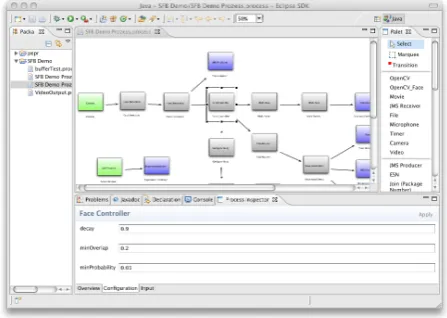
Figure 7: Photo of the pepr SFB Demo Booth
Camera
Receive from Network
Fusion
Correlated Graph Output Receive from
Network
Smile Output Haar
Detection
Sent to
Network Video Output
Movement Tracking
Sent to
Network Graph Output
Figure 8: Simplified Diagram of the SFB Demo Process
over the network and could be used as additional input in each process. Thus, enabling correlation of movement and indication of emotions of the user in front of the other ma-chine, e.g. a smiling user. In order to achieve this, two distinct feature sets were distributed. First, a sole bit to in-dicate if the process detected a smile in the users face and second the current movement of the user sitting in front of the local machine. The process running on the other machine received this data and displayed a smiling- / non-smiling icon based on the received features. Additionally, it
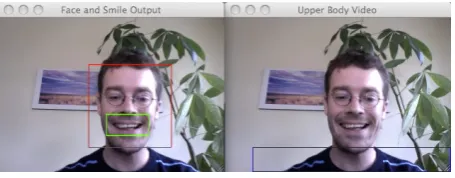
Figure 9: Screenshot of Face and Upper Body Tracking Video Output
Figure 10: Screenshot of Graphical Plotters and Smiley
correlated the received movement data with the local com-puted movement data to measure some kind of synchronous movement of both users, which is an indication for engage-ment of the participant in the conversation or for active listening. In order for this to work, input of two differ-ent starter nodes had to be merged. Therefore, time based fusion was selected and proved to be more then accurate, given the rather small network and the real-time environ-ment.
5.
Conclusions
The goal set for this work, to create a process engine frame-work suitable for pattern recognition and information fu-sion tasks has been reached, as the public demonstrations, and feedback from test users have shown. Thepepr frame-work in combination with the graphical process builder form a robust and expandable foundation that helps to solve tasks in this field in a simple and timely manner. While being easy to use, the engine scales well over multiple cores and machines, thanks to the initial design. Therefore, even computationally intensive tasks can be solved with the framework.
The Graphical Process Builder, although not initially planned to be part of this framework, helps to further cut down process development time and is a great help to demonstrate and explain processes, thanks to its graphical modeling capabilities.
The flexibility in process design and adaption to differ-ent scenarios has been proven in the use-cases and public demonstrations. It is possible to adjust existing processes to changed guidelines and environments within minutes. Even the creation of working processes from scratch could be demonstrated live in a timely manner.
Acknowledgment
The presented work was developed within the Tran-sregional Collaborative Research Centre SFB/TRR 62 “Companion-Technology for Cognitive Technical Sys-tems” funded by the German Research Foundation (DFG).
6.
References
Gul Agha. 1986. Actors: a model of concurrent computa-tion in distributed systems. MIT Press, Cambridge, MA, USA.
Stefan Scherer, Volker Fritzsch, and Friedhelm Schwenker. 2009a. Multimodal real-time conversation analysis us-ing a novel process engine. Inin Proceedings of Interna-tional Conference on Affective Computing and Intelligent Interaction 2009 (ACII ’09), pages 253–255.