Embryonic stem cell differentiation and the analysis of
mammalian development
STEPHEN J. RODDA, STEVEN J. KAVANAGH, JOY RATHJEN and PETER D. RATHJEN*
Department of Molecular Biosciences and ARC Special Research Centre for the Molecular Genetics of Development, Adelaide University, South Australia.
ABSTRACT Molecular and cellular analysis of early mammalian development is compromised by the experimental inaccessibility of the embryo. Pluripotent embryonic stem (ES) cells are derived from and retain many properties of the pluripotent founder population of the embryo, the inner cell mass. Experimental manipulation of these cells and their environment in vitro provides an opportunity for the development of differentiation systems which can be used for analysis of the molecular and cellular basis of embryogenesis. In this review we discuss strengths and weaknesses of the available ES cell differentiation methodologies and their relationship to events in vivo. Exploitation of these systems is providing novel insight into embryonic processes as diverse as cell lineage establishment, cell progression during differentiation, patterning, morphogenesis and the molecular basis for cell properties in the early mammalian embryo.
KEY WORDS:
Embryonic Stem cells, Primitive ectoderm, Embryonic development, Differentiation, Morphogenesis
0214-6282/2002/$25.00 © UBC Press
Printed in Spain
www.ijdb.ehu.es
*Address correspondence to: Dr. Peter Rathjen. Department of Molecular Biosciences, Adelaide University, Adelaide, 5005, South Australia, Australia. Fax: +61-8-8303-4348. e-mail: [email protected]
Abbreviations used in this paper: d.p.c., days post coitum; EB, embryoid body;
ECM, extra cellular matrix; EMT, epithelial to mesenchymal transition; EPL, early primitive ectoderm-like; ES, embryonic stem; ICM, inner cell mass; LIF, leukaemia inhibitory factor.
Pluripotent Cells and Early Mouse Development
One of the distinguishing features of early mammalian develop-ment is the maintenance of a population of developdevelop-mentally plastic, pluripotent stem cells which give rise to all cells that constitute the mature organism. Around 10-20 cells, which appear to be devel-opmentally equivalent, make up the inner cell mass (ICM), located at one end of the 3.5 d.p.c. (days post coitum) blastocyst. Mamma-lian development entails the regulated proliferation of these cells and allocation of descendants to specific cell lineages following differentiation.
Around 4.0 d.p.c., ICM cells lining the blastocoelic cavity differentiate to extraembryonic primitive endoderm. Pluripotence is retained by internal ICM cells, referred to as the ‘epiblast’, now surrounded by extraembryonic endoderm and trophectoderm. At about the time the embryo implants into the uterine wall these pluripotent cells begin to proliferate rapidly such that the 20-25 cells present at 4.5 d.p.c. expand to give rise to about 660 cells by 6.5 d.p.c. and 8060 cells by 7.5 d.p.c. (Snow, 1977). Concurrent with pluripotent cell proliferation, primitive endoderm cells migrate along the pluripotent cell surface and differentiate into one of two cell types. Primitive endoderm cells that remain in contact with the pluripotent cells differentiate into visceral endoderm while those primitive endoderm cells that migrate onto the blastocoelic surface of trophectoderm differentiate into parietal endoderm (Hogan et al., 1994).
Formation of the proamniotic cavity within the pluripotent cell population is first visible at 5.0 d.p.c. and is accompanied by reorganisation of the cells into a pseudostratified columnar epithe-lial sheet. Concomitant with this process, the pluripotent cells become polarised, and undergo changes in gene expression (Pelton et al., 2002) and developmental potential (Beddington, 1983a; Lake et al., 2000) suggesting that this morphologically distinct pluripotent cell population, termed primitive ectoderm, is derived from the ICM by differentiation. Primitive ectoderm pro-vides the substrate for gastrulation, which is initiated at around 6.5 d.p.c.. This process transforms the pluripotent monolayer into a multi-layered embryo consisting of the 3 primary germ layers, mesoderm, endoderm and ectoderm.
ES ICM EPL
Primitive
ectoderm +
+ + +
+
+
low
-+
+
-+
+
-+
+
-+ +
-+ +
Oct4 Rex1 Gbx 2
Psc1 CRT
R-1
Fgf5 PRC E ES cells
EPL cells EPL cells (Fgf5) MEDII,
suspension culture MEDII,
adherent culture A
B
embryo, results in deterioration of the pluripotent cells around 5.0 d.p.c. (Spyropoulos and Cappechi, 1994) and increased apoptosis of the primitive ectoderm by 6.5 d.p.c. (Duncan et al., 1994) respectively. These observations identify visceral endoderm as a source of signals that mediate formation and maintenance of the primitive ectoderm. Recombination of Hnf4-/- embryos with Hnf4+/+
visceral endoderm rescues this defect resulting in formation of a normal embryo capable of gastrulation (Duncan et al., 1997), thereby confirming that the cellular defect in Hnf4-/- embryos is associated
with extraembryonic cell lineages. Expression of the paired-like homeobox gene, Hesx1, in the anterior visceral endoderm at day 6-6.5 d.p.c. is followed by expression in the adjacent primitive ectoderm within 24 hours (Thomas and Beddington, 1996). This apparent patterning of the anterior primitive ectoderm is induced
from Hesx1 expressing visceral endoderm and is required for
appropriate specification since Hesx1-/- embryos show forebrain
deficiencies (Martinez-Barbera et al., 2000).
While the role of visceral endoderm as a source of inductive signals for pluripotent cells is emerging from close analysis of gene expression and knockout phenotypes, the molecular identity of these signals has proven elusive, probably due to experimental limitations associated with the early mouse embryo.
Embryonic Stem (ES) Cells: Their Origin, Properties and
Uses
Pluripotent embryonic stem (ES) cells are derived from out-growths of the pluripotent cells of the pre-implantation mouse embryo (Evans and Kaufman, 1981; Martin, 1981) and can be maintained as a homogeneous population of undifferentiated cells indefinitely in culture. ES cells share many properties with the pluripotent cells of the ICM, including expression of the pluripotent cell marker, Oct4, and expression of the more restricted markers Rex1, which is expressed by the ICM but not later embryonic pluripotent cell populations, and uvomorulin, which is not ex-pressed by pluripotent cells of the primordial germ cell lineage
(Rathjen et al., 1999). Further, ES cells retain the pluripotent
developmental potential of the ICM, as demonstrated in vivo by contribution to all tissues of the embryo and adult after reintroduc-tion to mouse blastocysts (Bradley et al., 1984), and in vitro by the formation of embryoid bodies (EBs), in which a broad range of differentiated cell types representative of the three germ layers of the mouse embryo are formed (Doetschman et al., 1985; Lake et al., 2000). ES cells differ from their founding population in their cytokine requirements. Maintenance of pluripotence in mouse ES cells is reliant on activation of the gp130 receptor subunit, normally achieved by addition of members of the IL-6 family of cytokines to the culture medium (reviewed in Rathjen and Rathjen, 2001). As yet, no role for gp130 signalling has been determined in the establishment or maintenance of the pluripotent cell population in vivo (Yoshida et al., 1996), although a role for gp130 activation in embryonic diapause has been described (Nichols et al., 2001).
As a highly proliferative cell population that maintains, in culture, the properties of a normal pluripotent cell, ES cells provide a unique experimental resource for the analysis of mammalian develop-ment. In this review we discuss exploitation of the ES cell system to investigate cellular properties associated with pluripotent cells, and to model cellular events that occur in vivo, such as differentia-tion and cell fate specificadifferentia-tion.
Modelling Embryonic Differentiation: Formation of
Primi-tive Ectoderm from ES Cells
Modelling the first embryonic differentiation event, formation of a population of pluripotent cells analogous to primitive ectoderm, can be achieved through differentiation of ES cells as embryoid bodies (EB) (Shen and Leder, 1992) or by co-culture of ES cells with MEDII, a medium conditioned by the human hepatocellularcarcinoma cell line, Hep G2 (Rathjen et al., 1999). Within EB, primitive ectoderm exists transiently as a differentiation intermediate which arises during the spontaneous differentiation of ES cells, and coexists with a number of other cellular lineages, including derivatives of the ex-traembryonic endodermal lineage and populations representative of the embryonic germ lineages. The resulting differentiation environ-ment is complex and deregulated, precluding maintenance, analysis or controlled differentiation of the primitive ectoderm.
Fig. 1. Formation of EPL cells from ES cells.(A) ES cells form EPL cells
3.5 4.5 4.75 5.0 5.25 5.5
Oct4
Epiblast Primitive Ectoderm
Rex1
CRTR-1
Cavitation
ES 2+ 4-/6+
EPL Cells
ICM
4.0 5.75
PRCE
Fgf5
?
Polarisation/ reorganisation Accelerated
Proliferation
2-/4+
Psc1
6-/8+
lowing spontaneous differentiation and the generation of effec-tively homogeneous populations of differentiated derivatives by directed differentiation (Lake et al., 2000; Rathjen et al., 1999; Rathjen et al., 2002). ES cells also differentiate to EPL cells when cultured as cellular aggregates in suspension in medium supple-mented with MEDII (Fig. 1A; Rathjen et al., 2002). The formation of EPL cells occurs in the presence or absence of exogenous LIF, but as would be predicted from in vitro and in vivo experiments (Conquet et al., 1992; Shen and Leder, 1992), the acquisition of primitive ectoderm characteristics is delayed in the presence of gp130 signalling.
Formation and maintenance of EPL cells in culture is dependent on the continued presence of MEDII, which can be separated into two distinct biological activities, a high molecular weight compo-nent of greater than 100 kDa and a low molecular weight activity of less than 3 kDa (Rathjen et al., 1999). Analysis of the fractions reveals that the low molecular weight activity is a small peptide while the high molecular weight fraction has been identified as a component of the ECM. In the absence of other signalling sources, withdrawal of MEDII from EPL cells results in loss of pluripotence and differentiation. However, when EPL cells are cultured in the absence of MEDII in medium supplemented with LIF, pluripotence is maintained and an ES cell morphology, gene expression and developmental potential is established. The ability to revert to an ES cell phenotype has been proposed to be a common feature of pluripotent cells in culture (Matsui et al., 1992; Rossant, 1993).
Visceral endoderm and the liver share similarities with respect to function and gene expression, despite their diverse embryologi-cal origin (Rossant, 1995). Formation of primitive ectoderm from ES cells in response to medium conditioned by a liver derived cell line is therefore not unexpected, and suggests a functional similar-ity between MEDII in vitro and visceral endoderm signalling in vivo. Consistent with this, the small and large active components of
MEDII are expressed respectively by the visceral endoderm-like cell line END-2, and within the basement membrane supporting the pluripotent cells during primitive ectoderm formation (Bettess, 2001).
As a population of cells equivalent to embryonic primitive ectoderm, EPL cells represent an important obligate intermediate cell population in the differentiation of ES cells in culture. Establish-ment of EPL cells in culture appears to follow closely the generation of primitive ectoderm in vivo and represents an important first step in the development of protocols for controlled, lineage specific differentiation of pluripotent cells in culture. EPL cell formation and differentiation therefore provides a system for the identification of differentially expressed genes and transient intermediate cell populations during pluripotent cell progression in vivo, and the investigation of germ layer selection, differentiation, and patterning of somatic lineages.
Distinct Subpopulations of Pluripotent Cells are Formed
during Developmental Progression of Pluripotent Cells
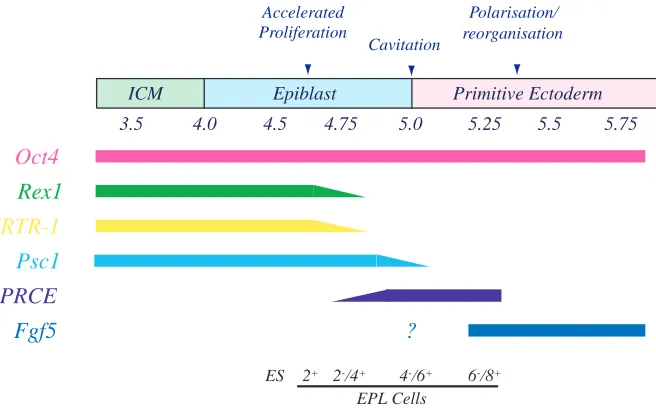
Although cellular criteria have been used to identify two pluripo-tent cell populations within the early embryo (ICM and primitive ectoderm), other evidence suggests that primitive ectoderm forma-tion from ICM proceeds via temporally distinct intermediate pluri-potent cell populations (Pelton et al., 1998). Utilising the ES to EPL transition as an in vitro model for ICM to primitive ectoderm formation, it has been possible to correlate differential gene ex-pression in pluripotent cells in vitro and in vivo to provide a molecular basis for the definition of transient pluripotent cell sub-populations, and identify genes that may play important roles in pluripotent cell developmental progression.
Differential display PCR on ES cells and EPL cells maintained in culture for up to 8 days was used to identify novel differentially
Fig. 2. Summary of pluripotent cell gene expression in vivo and in vitro. The pluripotent cell
populations present within the early mouse embryo are aligned with approximate time points in days post coitum (d.p.c.), the embryonic events characteristic of this developmental stage and gene expression in pluripotent cell populations in vivo. ES cells and EPL cells grown for 2, 4 or 6 days in MEDII in the presence (+) or absence (-) of LIF are aligned on the basis of gene expression in vitro. Fgf5 expression was not determined in 5.0 d.p.c. embryos.
fol-regulated genes expressed in synchronous fashion throughout the population. Expression of CRTR-1 appeared to be coordinately regulated with expression of Rex1, a zinc finger protein regulated by Oct4 expression (Ben-Shushan et al., 1998). Both genes are expressed in ES cells and ICM, and downregulated in vitro in EPL cells cultured for 2 days and in vivo between 4.5 d.p.c. and 4.75 d.p.c. This is a time associated with the onset of accelerated pluripotent cell division in the embryo. Down regulation of CRTR-1 and RexCRTR-1 coincided with up regulation of PRCE expression. Both in vitro and in vivo PRCE expression was transient and down regulated in EPL cells cultured past day 4, and after 5.25 d.p.c. of embryonic development. Psc1 was expressed in ES cells and ICM and down regulated in vitro in EPL cells cultured for 4 days and in vivo between 5.0 and 5.25 d.p.c.. Fgf5, which is not expressed in ES cells or ICM, is up-regulated to high levels in EPL cells cultured for 4 days and throughout the embryonic primitive ectoderm, although the exact timing of Fgf5 up-regulation has not been established. Fgf5 expression is maintained in the pluripotent cells before down-regulation associated with loss of pluripotence at gastrulation.
All transcripts were expressed throughout the pluripotent cell populations and no evidence was found for spatial heterogeneity within this pool. Molecular homogeneity of pluripotent cells in the pre-gastrulation embryo is consistent with the fate of heterotopic transplanted primitive ectoderm from pre-streak or early primitive streak embryos, which assumes a fate appropriate to the trans-planted location (Beddington, 1983b; Parameswaran and Tam, 1995; Tam and Zhou, 1996). In the absence of spatial heterogene-ity within the pluripotent population, patterning of the embryo must therefore be established by signals originating from extraonic cell types, consistent with the results emerging from embry-onic analysis (Beddington and Robertson, 1999).
While the availability of differentially expressed pluripotent cell markers within embryonic populations refines knowledge of the temporal progression of pluripotent subpopulations in vivo (Fig. 2), it is not clear whether these represent distinct cell types which can be maintained stably in appropriate conditions. An alternative explanation is that they represent transient intermediates which are developmental equivalents of transformed EC cells isolated from teratocarcinomas. Changes in gene expression may reflect alterations in the competence of the pluripotent cells to respond to embryonic signalling, a possibility consistent with the temporal correlation between changes in gene expression and cellular events in vivo such as proliferation and cavitation. Analysis of the promoters of differentially expressed genes may allow definition of downstream signalling pathways operating in the embryo at these times.
EPL Cell Differentiation In Vitro provides a Model for
Formation of the Primary Germ Layers of the
Mamma-lian Embryo
The aggregation of EPL cells, in a manner analogous to embry-oid body formation by ES cells, results in differentiation as evi-denced by loss of pluripotence and formation of differentiated cell populations (Lake et al., 2000). However, unlike ES cell EBs, in which cell populations representative of all three primary germ layers and the extraembryonic endoderm can be detected, the repertoire of cells produced from EPL cells EBs is more restricted
(Fig. 3). Brachyury, a marker of nascent mesoderm is detected earlier and at a much higher level in EPL cell EBs compared to ES cell EBs, but Sox1, a marker for the neural precursor population, is not detected at any stage of differentiation. These differences in the formation of progenitor cell populations are reflected in the forma-tion of terminally differentiated cell populaforma-tions, with the formaforma-tion within EPL cell EBs of high levels of beating cardiocytes, a mesodermal derivative, but not neurons, an ectodermal derivative. The lack of ectoderm formation within EPL cell EBs does not reflect a restricted differentiation potential as neurectoderm/neu-ron formation from EPL cells can be induced by differentiation within an ES cell EB environment, the potent neural inducer retinoic acid or supplementation of the differentiation environment with MEDII (Lake et al., 2000; Rathjen et al., 2001). The most notable difference between ES cell EBs and those formed from EPL cells is in the extraembryonic endoderm lineage, in particular a defi-ciency of the primitive endoderm derivative visceral endoderm in EPL cell EBs (Lake et al., 2000). It has been suggested that this deficiency may be responsible for the lack of ectodermal lineage formation in EPL cell EBs (Rathjen et al., 2001; Rathjen et al, 2002). In vivo, mesoderm differentiates from primitive ectoderm posi-tioned along the posteriodistal axis. These cells detach from the epithelial monolayer and transverse the primitive streak, an area of localised ECM breakdown. EPL cell EBs, formed from a single cell suspension of EPL cells differentiated in the absence of visceral endoderm, therefore simulate the loss of pluripotent cell:cell and
early primitive ectoderm late primitive ectoderm visceral endoderm parietal endoderm
beating cardiocytes
surface ectoderm* neurons glia neural crest
endoderm neurectoderm mesoderm progenitors
blood
pluripotent cells
extraembryonic endoderm mesoderm
ectoderm endoderm
* surface ectoderm induced from EBM by addition of BMP4 (J.Rathjen and C.Long, personal communication.)
not determined not observed
ES cell EB EPL cell EB EBM
Fig. 3. Lineages formed during differentiation in ES cell EB, EPL cell EB
and EBM. Cell populations were determined on the basis of the following:
cell:ECM contacts which accompanies mesoderm formation. The possibility that this simulated epithelial to mesenchymal transition (EMT) underlies enhanced mesoderm formation is consistent with studies of the behaviour of cells ablated in the Fgfr1 receptor during gastrulation. Fgfr1-/- cells are unable to enter the primitive streak
during gastrulation and fail to contribute to the mesodermal lin-eage, suggesting that primitive ectoderm EMT is required for formation of mesoderm (Ciruna and Rossant, 2001; Ciruna et al., 1997). Differentiation within EPL cell EBs therefore appears to provide a model for the investigation of mesoderm lineage forma-tion during gastrulaforma-tion.
Within the embryo, the ectodermal lineage differentiates from anteriodistal primitive ectoderm, a population of pluripotent cells that maintains cell:cell and cell:ECM interactions and remains in close contact with the visceral endoderm during gastrulation. Maintenance of cell:cell and cell:ECM contacts and visceral endo-derm signalling during EPL cell differentiation can be achieved by formation and differentiation of EPL cells within cellular aggregates in suspension culture in the presence of MEDII (EBMs). Differen-tiation of EPL cells in this environment results in suppression of both visceral endoderm and mesoderm lineage formation, and formation of a homogeneous population of neurectoderm (Fig. 3; Rathjen et al, 2002). The resulting neurectoderm population com-prises a stratified epithelium with morphology, gene expression
trolled fashion provides an opportunity to dissect the roles of individual signalling pathways during differentiation, and to dis-criminate between the activity of soluble signalling molecules, ECM and the cellular environment in both the induction and suppression of alternate cell fates.
Pluripotent Cell Differentiation and
Specification/Pat-terning of Somatic Lineages
Allocation of ectodermal cells to the surface ectoderm or neurectoderm lineages appears to be determined by respective activation or suppression of BMP signalling pathways (Hemmati-Brivanlou and Melton, 1997). In lower vertebrates this appears to be mediated via antagonists of the BMP family of signalling molecules, emanating from Spemann’s organiser. Although an analogous structure is formed during embryogenesis in birds (Henson’s node) and mammals (node), increasing evidence sug-gests that these organiser structures and BMP antagonists in higher vertebrates do not play an equivalent role in neural induction (Blum et al., 1992; Cho et al., 1991; Rivera-Perez et al., 1995;
Yamada et al., 1995; Streit et al., 2000; Streit et al., 1998;
Klingensmith et al., 1999). While direct analysis of ectodermal
specification in the mammalian embryo has not yet been achieved, BMP4 treatment of ectodermal precursors derived by directed
ES cell aggregate
*
*
*
*
*
*
*
FGF signalling
BMP4 signalling
? visceral endoderm
signalling
*
ES cellstransient pluripotent cell primitive ectoderm primitive endoderm visceral endoderm ECM
ECM contact/survival
basement membrane deposition pluripotent cell death
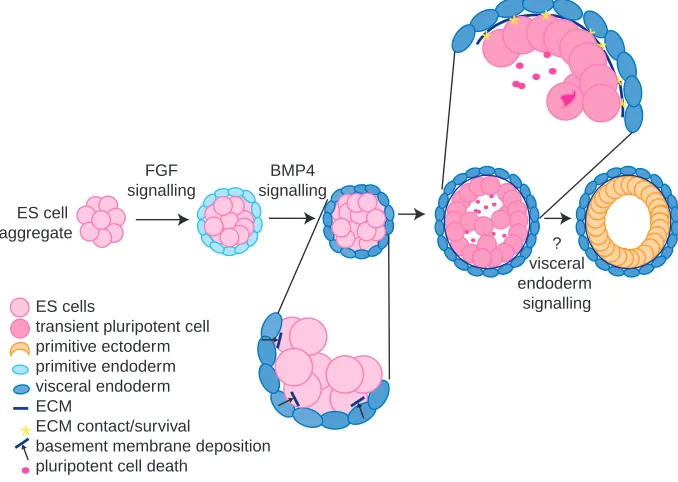
Fig. 4.Proposed mechanism of cavitation in ES cell embryoid bodies. After aggregation of ES
cells, outer cells differentiate to primitive endoderm followed by visceral endoderm, events that require FGF and BMP signalling respectively. While visceral endoderm is shown here as homoge-neous, parietal endoderm has also been demonstrated to form during this stage of EB differentiation. With establishment of the extraembryonic endoderm lineage, a basement membrane is deposited between the pluripotent cells and the endoderm. Basement membrane is proposed to induce an alteration in the pluripotent cell state such that pluripotent cells in contact with the basement membrane survive and reorganise to a columnar epithelium of primitive ectoderm, whereas those cells centrally located and separate from the ECM undergo cell death, forming a cavity. It is unclear if the acquisition of gene expression characteristic of primitive ectoderm within the pluripotent cells occurs in response to signalling from the ECM or requires additional signals from the visceral endoderm.
and differentiation potential consistent with embryonic neural tube. Expression analysis of the marker genes Oct4, Rex1, Sox1 and Gbx2 during formation of neurectoderm in these aggregates suggests that differentia-tion recapitulates formadifferentia-tion of this lineage in the embryo, with the sequential elaboration of primitive ectoderm, definitive ectoderm, neu-ral plate and neuneu-ral tube (Rathjen et al, 2002). The correspondence between ectoderm/ neurectoderm induction in vivo and in vitro, both in morphology and sequential elabora-tion of developmental intermediates, suggests that directed differentiation of EPL cells pro-vides a model system for analysis of the establishment of the ectodermal and neurectodermal lineages.
con-differentiation of ES (Kawasaki et al., 2000) or EPL (C. Long, personal communication; Rathjen et al., 2002) cells has been shown to promote surface ectoderm formation at the expense of neurogenesis. This suggests that while the cellular basis of ecto-dermal specification in the mammalian embryo may differ from equivalent events in lower vertebrates, the molecular regulation of neural induction may be conserved.
During embryogenesis the neural tube acquires a complex pattern of gene expression along the anterior/posterior and dorsal/ ventral axes in response to positional information emanating from neighbouring cell populations such as the notochord and visceral endoderm, and signalling centres such as the node and anterior visceral endoderm (AVE) (Echelard et al., 1993; Liem et al., 1997; Thomas and Beddington, 1996). Expression of diverse positionally restricted genes can be detected within ES cell EBs, despite the lack of positional organisation or establishment of anterior/poste-rior and dorsal/ventral axes, presumably as a result of signalling from the visceral endoderm and potentially from exposure of cells to inappropriate cell populations and signalling molecules gener-ated as a consequence of the chaotic environment. (Rathjen and Rathjen, 2001). In contrast, formation of neurectoderm from EPL cells results in a population of cells which do not express markers characteristic of fore- or hind-brain, trunk neural tube, or dorsal/ ventral patterning, but do express markers characteristic of early midbrain (Rathjen et al., 2002). The general lack of positional specification within EBM, which is perhaps not unexpected given the lack of visceral endoderm within these aggregates, suggests that rather than midbrain, EBM comprise a population of naive, or unpatterned, neurectoderm characterised by the expression of pan-specific neural markers and the broadly expressed early midbrain markers. The formation of neurectoderm by EBM differ-entiation therefore separates neural induction from the manifesta-tion of posimanifesta-tional specificamanifesta-tion, processes which during embryo-genesis occur concomitantly and have not been uncoupled experi-mentally.
Pluripotent Cell Differentiation can be used as a Model
of Morphogenesis
Establishment of the primitive ectoderm in both the embryo and EBs occurs concurrently with the formation of a cavity, termed the proamniotic cavity during embryogenesis, in the pluripotent cell
mass. The mechanism of cavity formation has been studied in vitro using the differentiation of pluripotent cells as EBs, a system more tractable to analysis than the embryo. Although cavitation in vivo occurs when the epiblast comprises less than 120 cells (Snow, 1977), many less than are present in an EB at cavitation, the mechanism of cavity formation is suggested to be conserved between these systems (Coucouvanis and Martin, 1995). Cavity formation in EBs is initiated with the formation of multiple foci of cell death which merge to a single, centrally located cavity surrounded by a monolayer of primitive ectoderm cells. EB cavitation has been suggested to result from integrated action of a diffusible ‘death’ signal secreted by the visceral endoderm and a survival signal associated with the ECM separating the endoderm and primitive ectoderm cell populations (Coucouvanis and Martin, 1995). Con-sistent with this, disruption of FGF signalling in EBs, by expression of a dominant negative FGF receptor, resulted in both loss of the extraembryonic endodermal lineage and disruption of cavitation
(Chen et al., 2000). Further, the expression of Bmp2 and Bmp4 by
pluripotent cells at the time of visceral endoderm formation and cavity formation was shown to be required for both processes, as disruption of BMP signalling inhibited expression of visceral endo-derm markers and prevented cavity formation (Coucouvanis and Martin, 1999).
Although the above experimental approaches demonstrate a requirement for extraembryonic endodermal lineages in EB cavi-tation, the role of a death signal in this process has been ques-tioned. EBs formed from LAMC1-/- ES cells, which fail to establish
a basement membrane, are deficient in cavitation despite the formation of extraembryonic endoderm. Cavitation can be restored in these aggregates by addition of ECM components to the differentiation environment (Murray and Edgar, 2000). The failure of cavitation, but not the deficiency in extraembryonic endoderm, in EB formed from ES cells expressing the dominant negative FGF receptor can also be restored by supplementation of the differen-tiation environment with ECM (Li et al., 2001). Cavitation and formation of primitive ectoderm is observed during the differentia-tion of ES cells as EBM, despite these aggregates being deficient in the extraembryonic lineage (Rathjen et al., 2002). Within EBM, cavitation proceeds via the formation of a single, centrally located cavity rather than the formation of multiple, discrete foci of death as seen in EB. MEDII is proposed to provide a source of visceral endoderm-like signalling and has been demonstrated to contain
ICM
D
G
P
A
B
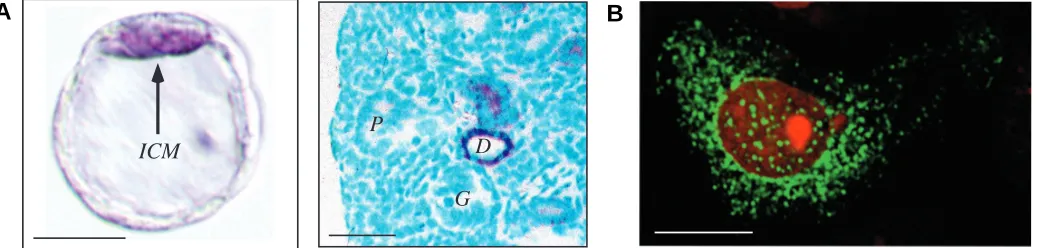
Fig. 5. Molecular analysis of genes differentially expressed by pluripotent cells. (A) Whole mount in situ hybridisation of a 4.5 d.p.c. mouse blastocyst
ECM components, such as cellular fibronectin (Bettess, 2001), suggesting that the role of visceral endoderm in cavitation is deposition of a basement membrane.
The ability of ECM components to reconstitute cavitation in pluripotent cells in the absence of extraembryonic endoderm suggests that both pluripotent death and survival are induced by the basement membrane (Fig. 4). The role of ECM deposition may be to alter the pluripotent state such that direct association with ECM components within the basement membrane is required for cell survival. It is unclear if differentiation of the surviving cells to primitive ectoderm is also induced by the basement membrane as establishment of the identity of the pluripotent cells at the time of the formation of a columnar epithelial of cells has only been estab-lished in EB and EBM, in which additional visceral endoderm-like signalling may be present.
Functional Analysis of Genes Differentially Expressed
during Pluripotent Cell Differentiation
ES cells provide a valid model system for investigation of the properties associated with pluripotent cells. In vitro manipulation of ES cells has been used to investigate the molecular basis of pluripotence (Niwa et al., 2000), unusual regulation of cell cycle progression (Savatier et al., 1996), telomere maintenance (Armstrong et al., 2000), the cellular basis of nuclear reprogram-ming (Tada et al., 2001) and signalling pathways associated with loss of pluripotence (Burdon et al., 1999). The close relationship between EPL cells and embryonic primitive ectoderm suggests that ES cell differentiation can also be used to analyse the de-velopmental progression of embryonic cells, with the function of differentially expressed pluripotent cell specific genes providing novel insight into the molecular and cellular basis of alterations in cell biology during differentiation.
CRTR-1 is a Developmentally Regulated Transcriptional
Repressor
The CRTR-1 cDNA encodes a 481 amino acid open reading frame homologous with the CP2 family of transcription factors (Rodda et al., 2001). Conservation between CRTR-1 and other mammalian family members is extensive and includes regions implicated in DNA binding and protein oligomerisation but not transcriptional activation.
Members of the CP2 family are generally expressed ubiqui-tously (Jane et al., 1995). By contrast, CRTR-1 is expressed specifically in the pluripotent cells of the 3.5-4.75 d.p.c. mouse embryo and at high levels in the epithelial monolayer lining the embryonic and adult kidney distal convoluted tubules (Fig. 5A). While both pluripotent cells and the DCT lining are epithelial in origin, CRTR-1 expression is not a general property of such cells as other epithelial cells including the lining of kidney proximal convoluted tubules do not express detectable CRTR-1. Both sites
of CRTR-1 expression in vivo are associated with cavitation
(Horster et al., 1997) suggesting a role for the protein in precursor cell survival or apoptosis (Coucouvanis and Martin, 1995). Addi-tional sites of lower level expression have been identified by ribonuclease protection and include embryonic intestine, limb, lung, skin and adult placenta, testis, stomach and small intestine. These have not been resolved at the cellular level.
Members of the CP2 family bind a consensus DNA sequence
consisting of a direct bipartite repeat, CNRG-N6-CNRG, and
acti-vate transcription (Lim et al., 1993). CRTR-1 is the first member of the family shown to repress transcription when bound to a heterolo-gous promoter in a variety of cell lines including kidney (293T and COS-1 cells) and ES cells. The transcriptional repression activity was found to be localised to the N-terminal 52 amino acids which are both necessary and sufficient for CRTR-1-mediated transcrip-tional repression (Rodda et al., 2001).
CRTR-1 has also been demonstrated to interact with other family members including CP2 and LBP-1a by yeast two hybrid and GST-pull down analysis (S. Rodda and P. Rathjen, unpublished data). Inter-family interactions between CP2 family members such as CP2 and LBP-1a (Yoon et al., 1994) suggest the formation of multiprotein complexes which regulate gene expression. The properties of CRTR-1 are therefore consistent with a role as a developmentally regulated, dominant repressor of target genes activated by CP2 family members, associated with embryological events such as differentiation and cavitation.
Psc1 is a Developmentally Regulated SR Protein with a
Novel Role in RNA Metabolism
The 1,005 amino acid open reading frame of Psc1 contains an RNA binding domain and an arginine, serine rich region of 25 amino acids including four RS dipeptide repeats, identifying it as a member of the SR-like family of proteins. Psc1 is expressed temporally throughout the pluripotent cell pool within the early embryo and at elevated levels in embryonic brain and adult lung and placenta (Schulz, 1996).
SR proteins contribute to spliceosome formation and have been implicated in both constitutive splicing and alternate splice site selection (for review see Caceres et al., 1998). Consistent with this, SR proteins localise to 20 to 50 discrete regions within the nucleus termed nuclear speckles, which contain snRNPs, non snRNP’s and other splicing factors (Mintz and Spector, 2000). The SR protein SC35 (Fu and Maniatis, 1990) colocalises with GFP-Psc1 to nuclear speckles in transiently transfected Cos-1 cells. In addition, GFP-Psc1 localises to a large number of discrete, punc-tate regions throughout the cytoplasm, termed cytospeckles, which do not contain SC35 (Fig. 5B). Although nuclear-cytoplasmic shuttling has been reported for SR proteins such as SF2/ASF, SRp20 and 9G8 (Caceres et al., 1998) and U2AF (Gama-Carvalho et al., 2001), these proteins do not show punctate cytoplasmic localisation of the kind associated with cytospeckles. Psc1 there-fore differs from other SR proteins with respect to its developmental regulation and regionalised cytoplasmic distribution.
Psc1 containing cytospeckles are reminiscent of RNA granules which traffic via the cytoskeleton (Bassell et al., 1999), colocalise with microtubules and contain translational machinery such as ribosomal sub units and elongation factors (Hazelrigg, 1998). Consistent with this, real time analysis of GFP-Psc1 transfected cells shows that Psc1 containing cytospeckles are motile within the cytoplasm. In contrast to RNA granules however, cytospeckles undergo nuclear import although nuclear export has not been observed (Kavanagh, 1998).
Developmental regulation of Psc1 expression suggests that regionalised cytoplasmic localisation and/or nuclear transport of specific RNA and/or protein cargo’s is likely to be of developmental significance. While the cellular relevance of cytospeckles is un-known, cytoplasmic localisation of RNA might allow transcripts to be targeted for site specific localisation, degradation or translation, which could be used to establish asymmetry within the cell. Similar localisation of the D. melanogaster neuroblast transcript, prospero, (Li et al., 1997) and the S. cerevisaie transcript ASH1 (Long et al., 1997) provide a mechanism for differentiation in the developing embryo.
PRCE functions as a Developmentally Regulated
Mam-malian Separin
The PRCE cDNA encodes a 2118 amino acid open reading frame
(Pelton, 2000) that shares C terminal homology with the separin domain (Leismann et al., 2000) of three fungal separin proteins, ESP1 from S. cerevisiae (Baum et al., 1988; McGrew et al., 1992), cut1 from S. pombe (Uzawa et al., 1990), and bimB from A. nidulans (May et al., 1992). These proteins are members of the CD group of cysteine proteases, a class that also includes caspases (Uhlmann et al., 2000), which mediate chromosome segregation at the onset of anaphase through cleavage of the cohesin subunit complex.
Expression of PRCE is developmentally regulated. It is expressed specifically in the pluripotent cells of the mouse embryo from 4.75 to 5.25 d.p.c. and later in mouse adult tissues including bone marrow, testis and intestine (Pelton, 2000; Pelton et al., 2002). These tissues contain stem cell and/or progenitor cell pools and are associated with rapid cell proliferation. Biochemical properties of the PRCE protein are consistent with the proposed function in cell division. In fungi, separin activity is confined to anaphase in two ways: via sequestation of the protein in the cytoplasm before mitosis and by the formation of tight inhibitory complexes with securin proteins. Cohesin cleavage at the onset of anaphase is achieved by activation of separin proteases following APC mediated ubiquitination and degradation of the securins. Consistent with this, GFP-PRCE sub-cellular localisation is cytoplas-mic within the majority of transfected cells, but also observed at the centrosome, the site of microtubule nucleation required for mitotic spindle formation. Furthermore, PRCE interacts with and colocalises the mouse securin PTTG, and over expression of PRCE inhibits cell cycle progression in somatic cells (T. Pelton and P. Rathjen, unpub-lished data). PRCE therefore appears to be a novel developmentally regulated mammalian separin.
Manipulation of separin/securin function can lead to aneuploidy (Jallepalli et al., 2001). In this regard, it is interesting that PRCE is expressed in pluripotent cells which exhibit unusual genomic stability in vitro (Pera et al., 2000). Further, regulated expression of a separin protease in rapidly dividing cells suggests that progression through an anaphase checkpoint in the cell cycle can be used to accelerate cell division in a developmental context. Differential expression of cell cycle regulators may therefore provide opportunities to alter the properties of embryonic cell populations such as pluripotent cells which have an unusual cell cycle structure (Savatier et al., 1996).
Summary
Understanding the events of early mammalian embryogenesis at the molecular and cellular level is hampered by difficulties associated with experimental inaccessibility of the embryo.
Fur-thermore, unlike many developmental processes which can be investigated using analogy with the development of more tractable experimental models, early mammalian embryogenesis involves the elaboration and differentiation of a unique population of pluri-potent cells which are not present in embryos of lower vertebrates. In vitro, model systems for early development exploiting pluripotent cells in culture have been available for more than 15 years, but until recently difficulties in controlling the differentiation of these cells has limited their application to the questions of mammalian devel-opment. Utilising conditioned medium that appears to recapitulate the signalling activities of extraembryonic endoderm in culture, we have demonstrated the homogeneous differentiation of ES cells to a second, pluripotent cell population, EPL cells, which show equivalence to embryonic primitive ectoderm. EPL cell formation in vitro provides a model system for characterisation of pluripotent cells, which has led to the identification of discrete transient cell states formed during establishment of primitive ectoderm in vivo. Further, the availability of a homogeneous population of primitive ectoderm, the immediate precursor population of the three primary germ layers, has allowed the development of model systems for directed differentiation and cell fate specification during gastrulation. Analysis of EPL cell differentiation has facilitated the uncoupling of events that occur concomitantly during embryogenesis, such as induction and patterning of the neural lineage, and dissection of the signalling environments that control pluripotent cell differentiation, allowing the relative roles of soluble signalling molecules, ECM associated activities and cellular environment to be assessed. The ability to generate essentially homogeneous populations of cells representing differentiation intermediates provides a unique oppor-tunity to study both the developmental potential and gene expression profile of cells that exist only transiently in the embryo.
Acknowledgments
We would like to thank Dr. Tricia Pelton, Dr. Michael Bettess, Catheine Long and Philippa Davey for helpful discussions regarding pluripotent cell gene expression, factors contained within MEDII, ectodermal differentia-tion and Psc1 localisadifferentia-tion. The intellectual and technical contribudifferentia-tions made by past and present members of the Rathjen laboratory is also gratefully acknowledged. We would also like to acknowledge the support of Raymond Ryce for research into embryonic stem cells in our laboratory. Research was supported by the Australian Research Council and the National Health and Medical Research Council.
References
ARMSTRONG, L., LAKO, M., LINCOLN, J., CAIRNS, P. M., and HOLE, N. (2000). mTert expression correlates with telomerase activity during the differentiation of murine embryonic stem cells. Mech Dev 97: 109-16.
BASSELL, G. J., OLEYNIKOV, Y., and SINGER, R. H. (1999). The travels of mRNAs through all cells large and small. Faseb J 13: 447-54.
BAUM, P., YIP, C., GOETSCH, L., and BYERS, B. (1988). A yeast gene essential for regulation of spindle pole duplication. Mol. Cell. Biol. 8: 5386-5397.
BEDDINGTON, R. S. P. (1983a). The origin of foetal tissues during gastrulation in the rodent, Volume 5, M. H. Johnson, ed. (Amsterdam: Elsevier).
BEDDINGTON, R. S. (1983b). Histogenetic and neoplastic potential of different regions of the mouse embryonic egg cylinder. J Embryol Exp Morphol 75: 189-204. BEDDINGTON, R. S., and ROBERTSON, E. J. (1999). Axis development and early
asymmetry in mammals. Cell 96: 195-209.
BETTESS, M. D. (2001). Purification, Identification and Characterisation of Signals Directing Embryonic Stem (ES) cell differentiation. In Department of Molecular Biosciences (Adelaide, South Australia: Adelaide University).
BLUM, M., GAUNT, S. J., CHO, K. W., STEINBEISSER, H., BLUMBERG, B., BITTNER, D., and DE ROBERTIS, E. M. (1992). Gastrulation in the mouse: the role of the homeobox gene goosecoid. Cell 69: 1097-106.
BRADLEY, I., EVANS, M., KAUFMAN, M. H., and ROBERTSON, E. J. (1984). Formation of germ line chimeras from embryo-derived teratocarcinoma cell lines. Nature 309: 255-256.
BURDON, T., STRACEY, C., CHAMBERS, I., NICHOLS, J., and SMITH, A. (1999). Suppression of SHP-2 and ERK signalling promotes self-renewal of mouse embryonic stem cells. Dev Biol 210: 30-43.
CACERES, J. F., SCREATON, G. R., and KRAINER, A. R. (1998). A specific subset of SR proteins shuttles continuously between the nucleus and the cytoplasm. Genes Dev 12: 55-66.
CHAPMAN, G., REMISZEWSKI, J. L., WEBB, G. C., SCHULZ, T. C., BOTTEMA, C. D., and RATHJEN, P. D. (1997). The mouse homeobox gene, Gbx2: genomic organization and expression in pluripotent cells in vitro and in vivo. Genomics 46: 223-33.
CHEN, Y., LI, X., ESWARAKUMAR, V. P., SEGER, R., and LONAI, P. (2000). Fibroblast growth factor (FGF) signaling through PI 3-kinase and Akt/PKB is required for embryoid body differentiation. Oncogene 19: 3750-6.
CHO, K. W., BLUMBERG, B., STEINBEISSER, H., and DE ROBERTIS, E. M. (1991). Molecular nature of Spemann’s organizer: the role of the Xenopus homeobox gene goosecoid. Cell 67: 1111-20.
CIRUNA, B., and ROSSANT, J. (2001). FGF signaling regulates mesoderm cell fate specification and morphogenetic movement at the primitive streak. Dev Cell 1: 37-49.
CIRUNA, B. G., SCHWARTZ, L., HARPAL, K., YAMAGUCHI, T. P., and ROSSANT, J. (1997). Chimeric analysis of fibroblast growth factor receptor-1 (Fgfr1) function: a role for FGFR1 in morphogenetic movement through the primitive streak. Development 124: 2829-41.
CONQUET, F., PEYRIERAS, N., TIRET, L., and BRULET, P. (1992). Inhibited gastrulation in mouse embryos overexpressing the leukemia inhibitory factor. Proc Natl Acad Sci U S A 89: 8195-9.
COUCOUVANIS, E., and MARTIN, G. R. (1999). BMP signaling plays a role in visceral endoderm differentiation and cavitation in the early mouse embryo. Development 126: 535-46.
COUCOUVANIS, E., and MARTIN, G. R. (1995). Signals for death and survival: a two-step mechanism for cavitation in the vertebrate embryo. Cell 83: 279-87. DOETSCHMAN, T. C., EISTETTER, H., KATZ, M., SCHMIDT, W., and KEMLER, R.
(1985). The in vitro development of blastocyst-derived embryonic stem cell lines: formation of visceral yolk sac, blood islands and myocardium. J Embryol Exp Morphol 87: 27-45.
DUNCAN, S. A., MANOVA, K., CHEN, W., HOODLESS, P., WIENSTEIN, D. C., BACHAROVA, R. F., and DARNELL JR, J. E. (1994). Expression of transcription factor HNF-4 in the extraembryonic endoderm, gut and nephrogenic tissue of the developing mouse embryo: HNF-4 is a marker for primary endoderm in the implantating blastocyst. Proc. Natl. Acad. Sci. USA 91: 7598-7602.
DUNCAN, S. A., NAGY, A., and CHAN, W. (1997). Murine gastrulation requires 4 regulated gene expression in the visceral endoderm: tetraploid rescue of HNF-4-/- embryos. Development 124: 279-287.
ECHELARD, Y., EPSTEIN, D. J., ST-JACQUES, B., SHEN, L., MOHLER, J., MCMAHON, J. A., and MCMAHON, A. P. (1993). Sonic hedgehog, a member of a family of putative signaling molecules, is implicated in the regulation of CNS polarity. Cell 75: 1417-30.
EVANS, M. J., and KAUFMAN, M. H. (1981). Establishment in culture of pluripotential cells from mouse embryos. Nature 292: 154-6.
FU, X. D., and MANIATIS, T. (1990). Factor required for mammalian spliceosome assembly is localized to discrete regions in the nucleus. Nature 343: 437-41. GAMA-CARVALHO, M., CARVALHO, M. P., KEHLENBACH, A., VALCARCEL, J.,
and CARMO-FONSECA, M. (2001). Nucleocytoplasmic shuttling of heterodimeric splicing factor U2AF. J Biol Chem 276: 13104-12.
HAZELRIGG, T.B (1998). The destinies and destinations of RNAs. Cell 95: 451-60. HEMMATI-BRIVANLOU, A., and MELTON, D. (1997). Vertebrate embryonic cells will
become nerve cells unless told otherwise. Cell 88: 13-7.
HOGAN, B., BEDDINGTON, R., CONSTANTINI, F., and LACY, E. (1994). Manipu-lating the Mouse Embryo: A Laboratory Manual, (2nd. Edn.) Edition (Cold Spring Harbour, NY: Cold Spring Harbour Laboratory Press).
HORSTER, M., HUBER, S., TSCHOP, J., DITTRICH, G., and BRAUN, G. (1997). Epithelial nephrogenesis. Pflugers Arch 434: 647-60.
JALLEPALLI, P. V., WAIZENEGGER, I. C., BUNZ, F., LANGER, S., SPEICHER, M. R., PETERS, J. M., KINZLER, K. W., VOGELSTEIN, B., and LENGAUER, C. (2001). Securin is required for chromosomal stability in human cells. Cell 105: 445-57. JANE, S. M., NIENHUIS, A. W., and CUNNINGHAM, J. M. (1995). Hemoglobin
switching in man and chicken is mediated by a heteromeric complex between the ubiquitous transcription factor CP2 and a developmentally specific protein [pub-lished erratum appears in EMBO J 14: 854]. EMBO J 14: 97-105.
KAVANAGH, S.J. (1998). The pluripotent stem cell marker Psc1 localises to nuclear speckles. In Department of Biochemistry (Adelaide, South Australia: Adelaide University)
KAWASAKI, H., MIZUSEKI, K., NISHIKAWA, S., KANEKO, S., KUWANA, Y., NAKANISHI, S., NISHIKAWA, S. I., and SASAI, Y. (2000). Induction of midbrain dopaminergic neurons from ES cells by stromal cell-derived inducing activity. Neuron 28: 31-40.
KLINGENSMITH, J., ANG, S. L., BACHILLER, D., and ROSSANT, J. (1999). Neural induction and patterning in the mouse in the absence of the node and its derivatives. Dev Biol 216: 535-49.
LAKE, J., RATHJEN, J., REMISZEWSKI, J., and RATHJEN, P. D. (2000). Reversible programming of pluripotent cell differentiation. J Cell Sci 113: 555-66. LEISMANN, O., HERZIG, A., HEIDMANN, S., and LEHNER, C. F. (2000).
Degrada-tion of Drosophila PIM regulates sister chromatid separaDegrada-tion during mitosis. Genes Dev 14: 2192-205.
LI, P., YANG, X., WASSER, M., CAI, Y., and CHIA, W. (1997). Inscuteable and Staufen mediate asymmetric localization and segregation of prospero RNA during Drosophila neuroblast cell divisions. Cell 90: 437-47.
LI, X., CHEN, Y., SCHEELE, S., ARMAN, E., HAFFNER-KRAUSZ, R., EKBLOM, P., and LONAI, P. (2001). Fibroblast growth factor signaling and basement mem-brane assembly are connected during epithelial morphogenesis of the embryoid body. J Cell Biol 153: 811-22.
LIEM, K. F., JR., TREMML, G., and JESSELL, T. M. (1997). A role for the roof plate and its resident TGFbeta-related proteins in neuronal patterning in the dorsal spinal cord. Cell 91: 127-38.
LIM, L. C., FANG, L., SWENDEMAN, S. L., and SHEFFERY, M. (1993). Character-ization of the molecularly cloned murine alpha-globin transcription factor CP2. J Biol Chem 268: 18008-17.
LONG, R. M., SINGER, R. H., MENG, X., GONZALEZ, I., NASMYTH, K., and JANSEN, R. P. (1997). Mating type switching in yeast controlled by asymmetric localization of ASH1 mRNA. Science 277: 383-7.
MARTIN, G. R. (1981). Isolation of a pluripotent cell line from early mouse embryos cultured in medium conditioned by teratocarcinoma stem cells. Proc Natl Acad Sci USA 78: 7634-8.
MARTINEZ-BARBERA, J. P., RODRIGUEZ, T. A., and BEDDINGTON, R. S. (2000). The homeobox gene Hesx1 is required in the anterior neural ectoderm for normal forebrain formation. Dev Biol 223: 422-30.
MATSUI, Y., ZSEBO, K., and HOGAN, B. L. (1992). Derivation of pluripotential embryonic stem cells from murine primordial germ cells in culture. Cell 70: 841-7. MAY, G. S., MCGOLDRICK, C. A., HOLT, C. L., and DENISON, S. H. (1992). The bimB3 mutation of aspergillus nidulans uncouples DNA replication from the completion of mitosis. J. Biol. Chem. 267: 15737-15743.
MCGREW, J. T., GOETSCH, L., BYERS, B., and BAUM, P. (1992). Requirement for ESP1 in the nuclear division of Saccharomyces cerevisiae. Mol. Biol. Cell 3: 1443-1454. MINTZ, P. J., and SPECTOR, D. L.B (2000). Compartmentalization of RNA
process-ing factors within nuclear speckles. J Struct Biol 129: 241-51.
MURRAY, P., and EDGAR, D. (2000). Regulation of programmed cell death by basement membranes in embryonic development. J Cell Biol 150: 1215-21. NICHOLS, J., CHAMBERS, I., TAGA, T., and SMITH, A. (2001). Physiological
rationale for responsiveness of mouse embryonic stem cells to gp130 cytokines. Development 128: 2333-9.
PARAMESWARAN, M., and TAM, P. P. L. (1995). Regionalisation of cell fate and morphogenetic movement of the mesoderm during mouse gastrulation. Dev. Genet. 17: 16-28.
PELTON, T. A., SHARMA, S., SCHULZ, T.C., RATHJEN, J. and RATHJEN, P.D. (2002). Transient pluripotent cell populations during primitive ectoderm formation: Correlation of in vivo and in vitro pluripotent cell development. J Cell Sci. 115: 329-339. PELTON, T. (2000). Expression and function of genes identifying pluripotent cell sub-populations in the early mouse embryo. In Department of Biochemistry (Adelaide, South Australia: Adelaide University)
PELTON, T. A., BETTESS, M. D., LAKE, J., RATHJEN, J., and RATHJEN, P. D. (1998). Developmental complexity of early mammalian pluripotent cell popula-tions in vivo and in vitro. Reprod Fertil Dev 10: 535-49.
PERA, M.P., REUBINOFF, B. and TROUNSON, A. (2000). Human embryonic stem cells. J Cell Sci 113: 5-10.
RATHJEN, J., LAKE, J. A., BETTESS, M. D., WASHINGTON, J. M., CHAPMAN, G., and RATHJEN, P. D. (1999). Formation of a primitive ectoderm like cell population, EPL cells, from ES cells in response to biologically derived factors. J Cell Sci 112: 601-12.
RATHJEN, J., and RATHJEN, P. D. (2001). Mouse ES cells: experimental exploitation of pluripotent differentiation potential. Curr Opin Genet Dev 11: 587-94. RATHJEN, J., DUNN, S., BETTESS, M. D., and RATHJEN, P. D. (2001). Lineage
specific differentiation of pluripotent cells in vitro: a role for extraembryonic cell types. Reprod Fertil Dev 13: 15-22.
RATHJEN, J., HAINES, B.P., HUDSON, K.M., NESCI, A., DUNN, S., and RATHJEN, P.D. (2002). Directed differentiation of pluripotent cells to neural lineages: homo-geneous formation and differentiation of a neurectoderm population. Develop-ment (in press).
RIVERA-PEREZ, J. A., MALLO, M., GENDRON-MAGUIRE, M., GRIDLEY, T., and BEHRINGER, R. R. (1995). Goosecoid is not an essential component of the mouse gastrula organizer but is required for craniofacial and rib development. Development 121: 3005-12.
RODDA, S., SHARMA, S., SCHERER, M., CHAPMAN, G., and RATHJEN, P.D. (2001). CRTR-1, a developmentally regulated transcriptional repressor related to the CP2 family of transcription factors. J Biol Chem 276: 3324-32.
ROSSANT, J. (1993). Immortal Germ Cells? Current Biology 3: 47-49.
ROSSANT, J. (1995). Development of the extraembryonic lineages. Semin. Cell Dev. Biol. 6: 237-47.
SAVATIER, P., LAPILLONNE, H., VAN GRUNSVEN, L. A., RUDKIN, B. B., and SAMARUT, J. (1996). Withdrawal of differentiation inhibitory activity/leukemia inhibitory factor up-regulates D-type cyclins and cyclin-dependent kinase inhibi-tors in mouse embryonic stem cells. Oncogene 12: 309-22.
SCHULZ, T. C. (1996). A system for the isolation of markers for subpopulations of murine pluripotent cells. In Department of Biochemistry (Adelaide, South Austra-lia: Adelaide University).
SHEN, M. M., and LEDER, P. (1992). Leukemia inhibitory factor is expressed by the preimplantation uterus and selectively blocks primitive ectoderm formation in vitro. Proc Natl Acad Sci USA 89: 8240-4.
SNOW, M. H. L. (1977). Gastrulation in the mouse: Growth and regionalisation of the epiblast. J. Embryol. exp. Morph. 42: 293-303.
SPYROPOULOS, D. D., and CAPPECHI, M. R. (1994). Targeted disruption of the even-skipped gene, evx1, causes early post-implantation lethality of the mouse conceptus. Genes & Dev. 8: 1949-1961.
STREIT, A., BERLINER, A. J., PAPANAYOTOU, C., SIRULNIK, A., and STERN, C. D. (2000). Initiation of neural induction by FGF signalling before gastrulation. Nature 406: 74-8.
STREIT, A., LEE, K. J., WOO, I., ROBERTS, C., JESSELL, T. M., and STERN, C. D. (1998). Chordin regulates primitive streak development and the stability of induced neural cells, but is not sufficient for neural induction in the chick embryo. Development 125: 507-19.
TADA, M., TAKAHAMA, Y., ABE, K. NAKATSUJI, N., and TADA, T. (2001). Nuclear reprogramming of somatic cells by in vitro hybridization with ES cells. Curr Biol. 11:1553-8.
TAM, P. P. L., and ZHOU, S. X. (1996). The allocation of epiblast cells to ectodermal and germ-line lineages is influnced by the position of the cells in the gastrulating mouse embryo. Dev. Biol. 178: 124-132.
THOMAS, P. Q., and BEDDINGTON, R. S. P. (1996). Anterior primitive endoderm may be responsible for patterning the anterior neural plate in the mouse embryo. Curr. Biol. 6: 1487-1496.
UHLMANN, F., WERNIC, D., POUPART, M. A., KOONIN, E. V., and NASMYTH, K. (2000). Cleavage of cohesin by the CD clan protease separin triggers anaphase in yeast. Cell 103: 375-86.
UZAWA, S., SAMEJIMA, I., HIRANO, T., TANAKA, K., and YANAGIDA, M. (1990). The fission yeast cut1+ gene regulates spindle pole body duplication and has homolgy to the budding yeast ESP1 gene. Cell 62: 913-925.
YAMADA, G., MANSOURI, A., TORRES, M., STUART, E. T., BLUM, M., SCHULTZ, M., DE ROBERTIS, E. M., and GRUSS, P. (1995). Targeted mutation of the murine goosecoid gene results in craniofacial defects and neonatal death. Development 121: 2917-22.
YOON, J. B., LI, G., and ROEDER, R. G. (1994). Characterization of a family of related cellular transcription factors which can modulate human immunode-ficiency virus type 1 transcription in vitro. Mol Cell Biol 14: 1776-85. YOSHIDA, K., TAGA, T., SAITO, M., SUEMATSU, S., KUMANOGOH, A.,