Scholarship@Western
Scholarship@Western
Electronic Thesis and Dissertation Repository
7-24-2012 12:00 AM
It's Complicated: Romantic Breakups and Their Aftermath on
It's Complicated: Romantic Breakups and Their Aftermath on
Veronika A. Lukacs
The University of Western Ontario Supervisor
Dr. Anabel Quan-Haase
The University of Western Ontario
Graduate Program in Media Studies
A thesis submitted in partial fulfillment of the requirements for the degree in Master of Arts © Veronika A. Lukacs 2012
Follow this and additional works at: https://ir.lib.uwo.ca/etd
Part of the Communication Technology and New Media Commons
Recommended Citation Recommended Citation
Lukacs, Veronika A., "It's Complicated: Romantic Breakups and Their Aftermath on Facebook" (2012). Electronic Thesis and Dissertation Repository. 645.
https://ir.lib.uwo.ca/etd/645
This Dissertation/Thesis is brought to you for free and open access by Scholarship@Western. It has been accepted for inclusion in Electronic Thesis and Dissertation Repository by an authorized administrator of
ROMANTIC BREAKUPS AND THEIR AFTERMATH ON FACEBOOK
(Spine title: It’s Complicated)
(Thesis format: Monograph)
by
Veronika A. Lukacs
Graduate Program in Media Studies
A thesis submitted in partial fulfillment of the requirements for the degree of
Master of Arts
The School of Graduate and Postdoctoral Studies The University of Western Ontario
London, Ontario, Canada
ii
THE UNIVERSITY OF WESTERN ONTARIO School of Graduate and Postdoctoral Studies
CERTIFICATE OF EXAMINATION
Supervisor
______________________________ Dr. Anabel Quan-Haase
Supervisory Committee
______________________________ Dr. Jacquelyn Burkell
Examiners
______________________________ Dr. Diane Rasmussen Neal
______________________________ Dr. Alison Hearn
______________________________ Dr. Juan-Luis Suárez
The thesis by
Veronika Anne Lukacs
entitled:
It’s Complicated: Romantic Breakups and Their Aftermath on Facebook
is accepted in partial fulfillment of the requirements for the degree of
Master of Arts
______________________ __________________________________________
iii
Abstract
Little research examines the ways in which Facebook affects breakups. This exploratory
study aimed to determine the prevalence of breakup practices unique to Facebook; to gain an
understanding of the relationship between Facebook use and distress following a breakup;
and to determine what strategies people use to cope with romantic breakups in the Facebook
era. This topic was examined using a mixed methods approach that included a survey and
semi-structured interviews. Findings show that content on Facebook can be a source of
distress for individuals who have recently experienced a romantic breakup. People who
engaged in high levels of interpersonal electronic surveillance experienced more breakup
distress and Facebook breakup distress than people who did not. Coping mechanisms for
dealing with distress caused by content on Facebook following a breakup are complex, as
many coping mechanisms can create new distressing situations.
iv
Acknowledgments
I am grateful for those who supported me throughout the process of writing this
thesis. I would like to thank my supervisor, Dr. Anabel Quan-Haase, for her enthusiasm and
support. She met with me frequently and helped me set reasonable milestones and stay
organized. This project would not have been possible without her direction, encouragement
and overwhelmingly positive attitude. I would also like to thank her research assistant
Michael Haight for helping me with the statistical analysis, as well as my second reader Dr.
Jacquelyn Burkell for her assistance with my thesis proposal and survey instrument. Special
thanks to my close friends who proofread and pilot tested the survey and interview questions
for me. Thank you to Senning Luk for designing beautiful posters to advertise my study.
I would also like to acknowledge my family’s support. Thanks to my mom and dad
for sending me care packages to improve morale and for driving all the way to London to
make me soup when I was sick. Thanks to my brother Mark for his patience and for listening
to me vent my frustrations. Thanks to my brothers Chris and Paul for showing me what work
ethic and initiative are all about; failure is impossible with such incredible role models.
I would also like to thank all of my peers at Western, the faculty members with whom
I have worked closely and the students in my tutorials for making my Master’s such a
rewarding experience.
Finally, I would also like to thank everyone who participated in this study. Thank you
for taking the time to share your experiences and stories with me. This thesis would not have
v
Table of Contents
Certificate of Examination... ii
Abstract………. ... iii
Acknowledgements... iv
Table of Contents... v
List of Tables…. ... vii
List of Figures… ... ix
Table of Appendices ... x
Chapter 1 Introduction ... 1
1.1. Background of the Study ... 1
1.2. Purpose of the Study ... 5
1.3. Research Questions... 6
1.4. Research Approach ... 9
1.5. Significance of the Study ... 10
Chapter 2 Literature Review... 12
2.1. The Impact of Romantic Breakups on Individuals' Lives... 12
2.1.1. Negative Outcomes... 14
2.1.2. Positive Outcomes ... 20
2.1.3. Neutral Outcomes ... 25
2.1.4. Conclusion ... 29
2.2. The Effects of Social Media on Romantic Breakups... 31
2.2.1. Ettiquette ... 31
2.2.2. Surveillance... 34
2.2.3. Self-Presentation ... 37
2.2.4. Digital Footprints ... 40
vi
Chapter 3 Research Methods ... 44
3.1. Research Questions and Hypotheses ... 44
3.1.1. Facebook Use, Surveillance, Breakup Distress and Facebook Breakup Distress... 44
3.1.2. Time Since the Breakup, Initiation Status and Hope for Renewal ... 46
3.2. Research Design... 48
3.2.1. Mixed Methods Approach ... 48
3.2.2. Surveys... 48
3.2.3. Semi-Structured Interviews ... 50
3.3. Data Collection Process ... 51
3.3.1. General Overview ... 51
3.3.2. Survey Tool... 52
3.3.3. Semi-Structured Interview Technique ... 53
3.4. Description of Sample... 54
3.4.1. Description of Survey Sample ... 54
3.4.2. Description of Interview Sample ... 55
3.5. Measures ... 56
3.5.1. Interpersonal Electronic Surveillance ... 57
3.5.2. Breakup Distress ... 57
3.5.3. Facebook Breakup Distress... 57
3.5.4. Facebook Use... 58
3.5.5. Access to Ex-Partner’s Facebook Account... 58
3.5.6. Breakup Initiation Status... 58
3.5.7. Time Since the Breakup... 59
3.5.8. Hope for Romantic Renewal... 59
3.5.9. Behaviour on Facebook Following the Breakup ... 59
3.5.10. Demographics ... 59
3.6. Data Analysis ... 59
3.6.1. Quantitative Data Analysis ... 59
3.6.2. Qualitative Data Analysis ... 60
3.7. Summary ... 60
Chapter 4 Study Results... 62
4.1. Facebook Usage ... 62
vii
4.3. Prevalence of Facebook Breakup Practices ... 65
4.4. Sources of Distress on Facebook Following a Breakup ... 68
4.5. Facebook Use, Surveillance, Breakup Distress and Facebook Breakup Distress. 73 4.6. Breakup Initiation Status, Time Since the Breakup and Hope for Romantic Renewal... 74
4.7. Coping Strategies ... 75
4.8. Summary ... 81
Chapter 5 Conclusions ... 84
5.1. Discussion ... 84
5.2. Limitations and Future Research ... 93
References …... 96
Curriculum Vitae ... 162
viii
List of Tables
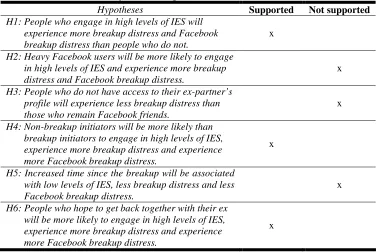
Table 3-1 Summary of hypotheses ... 47
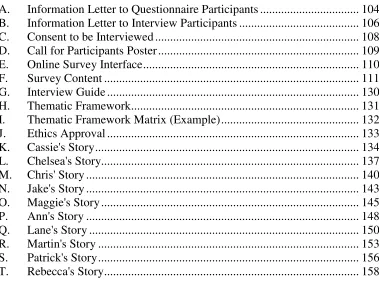
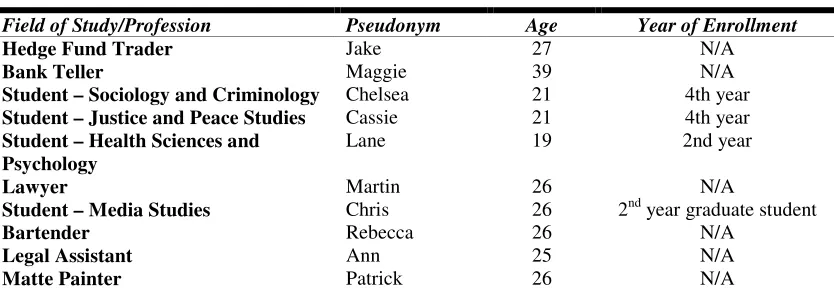
Table 3-2 Description of interview sample... 56
Table 4-1 Communication on Facebook... 64
Table 4-2 Breakup initation status ... 65
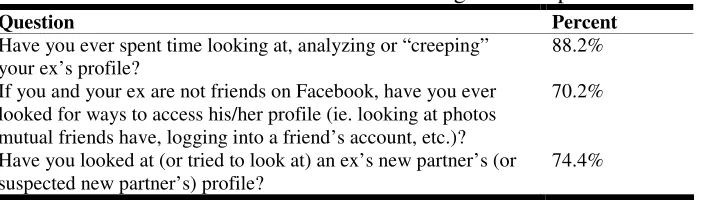
Table 4-3 Facebook surveillance following a breakup ... 66
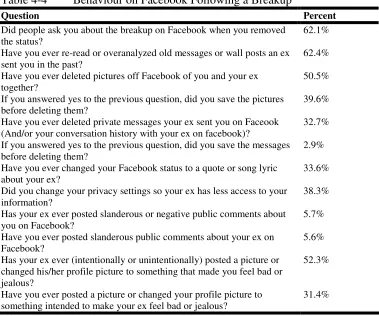
Table 4-4 Behaviour on Facebook following a breakup... 67
ix
List of Figures
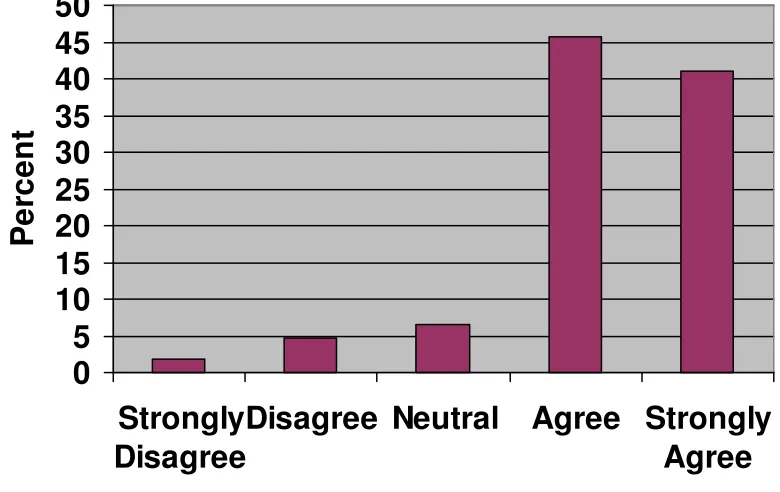
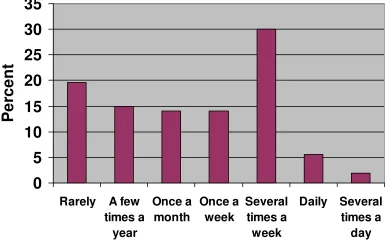
Figure 4-1 “Facebook has become part of my daily routine”... 62
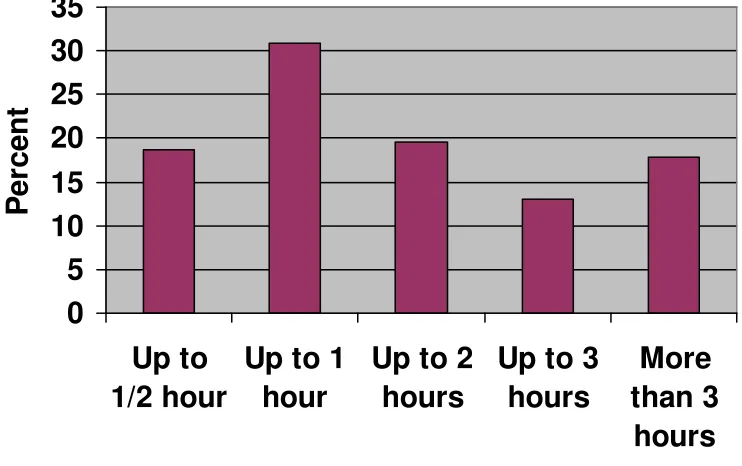
Figure 4-2 Facebook use per day last week ... 63
x
Table of Appendices
Appendix A. Information Letter to Questionnaire Participants ... 104
Appendix B. Information Letter to Interview Participants ... 106
Appendix C. Consent to be Interviewed ... 108
Appendix D. Call for Participants Poster ... 109
Appendix E. Online Survey Interface... 110
Appendix F. Survey Content ... 111
Appendix G. Interview Guide ... 130
Appendix H. Thematic Framework... 131
Appendix I. Thematic Framework Matrix (Example)... 132
Appendix J. Ethics Approval ... 133
Appendix K. Cassie's Story... 134
Appendix L. Chelsea's Story... 137
Appendix M. Chris' Story ... 140
Appendix N. Jake's Story ... 143
Appendix O. Maggie's Story ... 145
Appendix P. Ann's Story ... 148
Appendix Q. Lane's Story ... 150
Appendix R. Martin's Story ... 153
Appendix S. Patrick's Story... 156
CHAPTER 1
INTRODUCTION
1.1. BACKGROUND OF THE STUDY
With more than 901 million users worldwide as of March 2012, Facebook is the
most popular social networking site worldwide (Facebook, 2012). Social networking sites
are online community services or platforms that facilitate social interactions and the
building of social networks among people who share interests, backgrounds or who know
each other in real life. Social networking sites typically consist of a representation of each
user in the form of a profile, his or her social connections, and means for users to interact
with one another online, such as through direct messaging systems akin to email, instant
messaging or friend testimonials (Hogan & Quan-Haase, 2010). Social networking sites
are part of a broader trend of user-generated content that has emerged on Web 2.0
environments, and such sites have shifted the ways in which individuals communicate
with one another (Brown & Quan-Haase, 2012). Facebook can be used for one-to-one
communication among close friends, but it can also be used for one-to-many
communication, since Facebook users are able to share photos with and send messages to
large groups of acquaintances.
Sixty-five percent of American adult internet users are members of social
networking sites; email and search engines are the only two online tools used more
frequently (Hampton et al., 2011). The number of Facebook members has doubled since
2008 and, for many people, Facebook has become an important part of daily life
(Hampton et al., 2011). While Facebook was initally only available to Harvard University
up), the website quickly expanded and began to allow students from other universities
and finally anyone with an email address to sign up in 2006 (boyd & Ellison, 2007).
Gross and Acquisiti (2005) claim that Facebook has “moved from niche phenomenon to
mass adoption (p. 1).
Although there are many social networking websites, none have acquired the
popularity or scale of Facebook. Other popular social networking sites launched prior to
Facebook, such as Friendster and MySpace, but these sites have peaked in popularity,
whereas Facebook has grown substantially since its launch and continues to grow (boyd
& Ellison, 2007). Of Facebook’s 901 million members, 398 million logged in at least six
days a week in March 2012 (Facebook, 2012).
Social networking sites are particularly popular among adults aged 18 to 49.
Eighty-three percent of internet users aged 18 to 29 use social networking sites, compared
with 70 percent of internet users aged 29 to 49 (Hampton et al., 2011). Social networking
sites, and Facebook in particular, have become an important aspect of social life for most
adults within these age groups. Indeed, Raynes-Goldie (2010) argues that there are
significant social costs to not having a Facebook account. Facebook has become a
ubiquitous and default mode of communication, and those who are not on the site risk
being left out.
Facebook members primarily use the site to maintain existing social ties with
friends and family members and to connect with old friends (Ellison et al., 2007; Smith,
2011). Boyd and Heer (2006) describe social networking sites as a “medium for ongoing
conversation in multiple modalities” (p.10). Facebook is a space where people can
individuals to converse with many social contacts in one place, and members describe
Facebook as “useful,” “convenient,” and “informative” (Madden & Zikhur, 2011).
Indeed, Facebook use has been linked to a number of positive outcomes. People use
social networking profiles to display their personalities, which assists in identity
formation (boyd, 2007). Additionally, Facebook usage is associated with measures of
psychological well-being and the formation and maintenance of social capital (Ellison et
al., 2007; Young & Quan-Haase, 2010).
Another social trend is an increase in the number of young adults who experience
romantic breakups from long-term relationships. While in the 1970s, the median age at
first marriage was 21 years for brides and 23 years for grooms, in 2001, this increased to
28 and 30, respectively (Beaujot & Kerr, 2004). Common-law unions often delay or
replace marriage (Beaujot & Kerr, 2007) and, according to Statistics Canada (2002), 63
percent of first unions among women aged 20 to 29 were common-law. Common-law
unions are twice as likely to end in separation as first marriages (Beaujot & Kerr, 2007).
As such, many individuals are experiencing romantic breakups from relationships that are
— except for formal union — indistinguishable from marriage, and thus have similar
negative psychological and emotional repercussions.
Romantic breakups have been linked to a number of negative psychosocial
outcomes, such as distress (Moller et al., 2002; Field et al., 2009), depression, (Monroe et
al., 1999; Zimmer-Gembeck & Vickers, 2007) and lack of self-concept clarity
(Lewandowski et al., 2006; Slotter et al., 2009). Breakup withdrawal symptoms, such as
irritability, trouble concentrating, and depression are similar to withdrawal symptoms
2000). Studies have shown that keeping in touch may inhibit one’s ability to move on
(Sbarra & Emery, 2005; Kross et al., 2007). What, then, are the ramifications when one
has unprecedented access to information about an ex-partner’s life through social media?
While Facebook may make it easy to maintain contact with one’s friends and stay
informed about their lives, Facebook may also present challenges in breaking off contact
with others. Because Facebook has become so ingrained in daily life and it has many
social benefits, there is little incentive for users to delete their Facebook accounts.
Additionally, many Facebook users maintain Facebook “friendships” with very casual
acquaintances (boyd 2006). As such, unfriending someone on Facebook can be perceived
as very insulting, which may make people reluctant to unfriend an ex-partner on
Facebook after the relationship has ended, even if it may be in their best interest to do so
(Holmes 2010; Gershon 2010). Furthermore, unfriending an ex-partner on Facebook does
not guarantee that one will no longer receive updates on Facebook about the ex-partner’s
life through a mutual friend’s Facebook profile.
Numerous studies exist on the ways in which social networking sites mediate and
complicate romantic relationships (Andrejevic, 2005; Muise et. al, 2009; Tokunaga,
2010). Andrejevic (2005) argues that social media enable romantic partners to monitor
one another and that this constant monitoring, which would have been considered
excessive in the past, is now becoming normalized. Tokunaga (2010) found that the
amount of time a person spends on Facebook and whether or not it is part of this person’s
daily routine are associated with greater amounts of surveillance of a romantic partner on
Facebook. Additionally, Muise et al. (2009) found evidence that Facebook contributes to
ways in which Facebook affects breakups, except for Ilana Gershon’s book The Breakup
2.0 (2010). Through 72 interviews with research participants, Gershon identifies
problematic breakup practices unique to Facebook: changing one’s relationship status on
Facebook, re-reading and overanalyzing Facebook messages and information posted on
an partner’s Facebook wall, online stalking practices, and decisions to unfriend an
ex-partner. However, Gershon does not determine the prevalence or severity of these
practices. Furthermore, she deals primarily with practices occurring immediately after a
breakup and thus does not acknowledge long-term issues or coping strategies.
1.2. PURPOSE OF THE STUDY
While Gershon identifies some of the ways in which Facebook complicates
romantic breakups, much about this topic is still unknown. Because Gershon uses a
qualitative approach, there are no existing statistics to determine how frequently the
practices she identifies occur. Additionally, while Facebook use has been linked to
jealousy among partners in romantic relationships (Muise et al., 2009), it is unknown
whether or not Facebook use and surveillance of an ex-partner’s Facebook page are
related to distress, a potential negative outcome of romantic breakups (Moller et al.,
2002; Field et al., 2009). Furthermore, there is no research examining why it is that some
people participate in surveillance of an ex-partner’s Facebook page following a breakup
while others do not. There is also no research examining how individuals cope with
romantic breakups when they and their ex-partner both have Facebook accounts. This
1.3. RESEARCH QUESTIONS
Facebook’s structure enables several breakup practices that are unique to this
social networking site. For instance, Facebook gives members the option of publicly
listing their relationship status on their profiles. Facebook members can choose their
status from a drop-down menu which includes options such as “single,” “in a
relationship,” “married,” “engaged,” “in an open relationship,” and “in a domestic
partnership.” Additionally, Facebook members may chose not to post a relationship status
at all. Facebook members who list their relationship status as “in a relationship,”
“married,” “engaged,” “in an open relationship,” or “in a domestic partnership” also have
the option of listing who they are in a relationship with if their partner also has a
Facebook account. The relationship status appears prominently on a Facebook member’s
profile, directly underneath their name. If either of the people in the relationship decides
to remove their relationship status or change their status to “single”, news that the couple
is no longer together will appear on each ex-partner’s Facebook wall as well as in the
news feeds of the couple’s Facebook friends. Consequently, the breakup becomes
considerably more public than if a relationship status had never been posted. One way to
circumvent this publicity of the breakup is if both partners delete the news of the breakup
from their news feeds. It is unknown how many people have the foresight or desire to
prevent this publicity on Facebook following a breakup.
Facebook’s structure also enables members to go back and re-read and
overanalyze wall posts, chat logs and comments on photographs. Additionally, Gershon
(2010) found that people often communicated with their ex-partners on Facebook
ex-partners feel jealous or by posting a quote or a song lyric about their exes. As
Andrejevic (2005) and Tokunaga (2010) point out, Facebook makes it easy to monitor
others, but it is unknown how common this behaviour is among ex-partners. In order to
prevent an ex-partner from prying into one’s life or to prevent oneself from monitoring an
ex-partner, Facebook members may choose to unfriend their ex-partners, change their
privacy settings or block their exes from appearing in their news feeds, but it is unknown
how common these post-breakup behaviours are. Even if an individual does unfriend an
ex-partner or if they were unfriended, they may still continue to monitor their ex-partner
by logging into a mutual friend’s account and looking at the profile that way.
Additionally, it is possible for people to monitor an ex-partner’s new partner’s profile.
We know little about how prevalent these behaviours are. The present study expanded
research on Facebook and breakups by gathering data about these behaviours.
Research Question 1: How prevalent are breakup practices unique to Facebook?
The present study investigated how Facebook use and surveillance of one’s
ex-partner on Facebook are related to breakup distress, a potential negative outcome of
romantic breakups (Moller et al., 2002; Field et al., 2009). The present study also
developed the Facebook Breakup Distress Scale, a scale adopted from Field et al.’s
(2009) Breakup Distress scale, to measure breakup distress caused by content on
Facebook. Facebook use has been linked to jealousy among partners in romantic
relationships. Muise et al. (2009) found that there was a significant association between
time spent on Facebook and jealousy-related feelings and behaviours on Facebook.
Similarly, Tokunaga (2010) found that time spent on Facebook and whether or not
surveillance of one’s romantic partner on Facebook. The present study expanded the
current research on Facebook and surveillance as these pertain to romantic breakups by
investigating how time spent on Facebook and surveillance of one’s ex-partner on
Facebook are related to breakup distress among individuals who experienced a romantic
breakup in the past year.
Research Question 2: How is Facebook use and surveillance of one’s ex-partner
associated with breakup distress?
The present study also sought to determine which variables are associated with
high levels of surveillance of one’s ex-partner, breakup distress and Facebook breakup
distress. Breakup initiation status, time since the breakup, and hope for romantic renewal,
were all examined. Field et al. (2009) found that non-initiators of the breakup
experienced more distress than breakup initiators, and Villella (2007) found that
non-initiators of the breakup were more emotionally distraught at the time of the breakup.
Villella also found that increased time since the breakup was related to greater
adjustment following the breakup, but this is the first study to examine whether or not
time since the breakup is related to high levels of surveillance of one’s ex-partner,
breakup distress, and Facebook breakup distress. Lanutti and Cameron (2002) developed
a scale for examining the variable of hope for romantic renewal in their study on
postdissolutional friendships; this scales were included in this study.
Research Question 3: To what extent are breakup initiation status, time since the
breakup and hope for romantic renewal associated with interpersonal electronic
While Gershon (2010) identifies behaviour that can occur on Facebook following
a breakup, she does not discuss whether or not these behaviours are related to distress or
how individuals cope with distress related to content on Facebook following a breakup.
This study expanded the current research on Facebook and breakups by examining
individuals’ coping mechanisms in detail.
Research Question 4: How do people cope with breakups when they and their
ex-partner both have a Facebook account?
1.4. RESEARCH APPROACH
The research questions outlined above were examined using a mixed methods
approach comprised of a survey instrument and semi-structured interviews. In order to
participate in the study, participants had to have experienced a romantic breakup within
the past twelve months and have been Facebook friends with their ex-partner while they
were in the relationship. Additionally, all participants had to be at least 18 years old.
The survey instrument was designed to measure the prevalence of the breakup
practices unique to Facebook identified by Gershon (2010). Participants were asked to fill
out a survey that asked them to keep in mind a person with whom they have recently
(within the past year) experienced a breakup. Keeping this person and this specific
breakup in mind, they were asked to answer a series of questions about the relationship,
the breakup, and their interactions on Facebook with the person following the breakup.
Participants were also asked questions about whether or not they feel Facebook makes
breakups more challenging.
One-on-one interviews took place with research participants in order to capture
mechanisms were most effective from the interviewees’ personal experience and whether
or not they had additional suggestions for people who were experiencing distress related
to an ex-partner’s content on Facebook.
A mixed methods approach was ideal for this study for several reasons. First,
there are no existing statistics on post-breakup behaviour on Facebook, so performing a
quantitative study filled this research gap. Second, the interview component allowed for
the coping mechanisms that individuals employ to be discussed in greater detail than
would have been possible with a survey. Surveys and quantitative analysis allow for
greater measurement sophistication than qualitative analysis, but increasing
quantification narrows the types of research questions that can be addressed (Wimmer &
Dominick, 2011). By using both qualitative and quantitative analyses in this study,
research depth and breadth were achieved, and the weaknesses that would have been
present if only one type of analysis was used were offset (Axinn & Pearce, 2006).
1.5. SIGNIFICANCE OF THE STUDY
This study examined the ways in which Facebook affects romantic breakups.
While a body of literature has started to emerge in the area of Facebook and interpersonal
relationships, little is known about how Facebook affects romantic breakups. By
gathering statistics on individuals’ behaviour on Facebook following romantic breakups
and investigating the link between Facebook use, surveillance and distress, this study
added concrete quantitative data to the current research on Facebook and breakups. Prior
to this study, Facebook and breakups had only been examined qualitatively. Moreover,
this study also developed a scale for measuring Facebook breakup distress, which can be
Futhermore, this study also examined the strategies that individuals employ to
cope with romantic breakups in the Facebook era. Previous research on Facebook and
breakups looked at breakups that occurred on Facebook (i.e., breakups where the breakup
message was communicated through Facebook) (Gershon, 2010), rather than breakups
which may have occurred face-to-face or through another medium. Consequently, the
longer term issues surrounding the way Facebook affects breakups had not been
addressed, nor had the mechanisms that individuals use to cope with distress caused by
content posted on Facebook following a breakup. This study was the first to address these
issues. By discussing coping strategies, my research may serve as a resource for
counsellors and educators who are unfamiliar with this relatively new issue.
Breakups can be deeply distressing events, and Facebook has changed the
breakup process. This research will contribute to scholarly debates about the cultural
change associated with new media tools such as Facebook, and their impact on young
CHAPTER 2
LITERATURE REVIEW
Very little academic literature directly discusses the relationship between social
media and romantic breakups. That being said, there is a great deal of literature that
discusses the emotional and psychological impact that romantic breakups can have on
individuals. There is also a great deal of literature that discusses how social media can
give rise to communication breakdowns and increased monitoring of interpersonal
behaviour. As such, the first section of this literature review focuses specifically on the
impact that romantic breakups have on individuals, and the second section of this
literature review discusses aspects of social media that give rise to problematic behaviour
following a breakup.
2.1. THE IMPACT OF ROMANTIC BREAKUPS ON INDIVIDUALS’ LIVES
Romantic breakups are often colloquially discussed in a way that suggests that
they have little to no bearing on personal well-being. Breakups are commonly viewed as
simply a part of growing up, and individuals experiencing romantic breakups are
sometimes told by individuals that “there are other fish in the sea” or that he or she will
“get over it” (Martin, 2002). For the past several decades, extensive research has been
conducted on the personal impact of divorce but, prior to the 2000s, research on
non-marital romantic breakups was sparse. The reasons for this trend are unclear. One
speculation is that this is related to the fact that premarital sex and cohabitation have
become increasingly common (Beaujot & Kerr, 2007). In Canada, the median age at first
marriage increased from 21 years for brides and 23 years for grooms in the 1970s to 28
or replace marriage (Beaujot & Kerr, 2007). According to Statistics Canada (2002), 63
percent of first unions among women aged 20 to 29 were law, and
common-law unions are twice as likely to end in separation than first marriages. As such, many
individuals are experiencing romantic breakups from relationships that are — save for
the paperwork — indistinguishable from marriage. This may offer some explanation as
to why breakups are now being taken seriously in academic literature.
The purpose of this section of the literature review is to determine how adults’
breakups affect their well-being. I do this by outlining the breakup outcomes (i.e. the
dependent variables) examined in the peer-reviewed literature, including an explanation
of the methodologies used in the field. First I outline the negative outcomes associated
with breakups. For the sake of organization and because the largest amount of literature
exists in this area, the negative outcomes have been split into three separate categories:
distress, lack of self-concept clarity, and depression. Second I explore what I have
termed neutral breakup outcomes of adjustment and recovery. These outcomes were not
considered positive or negative because they do not necessarily better an individual, but
rather return them to a healthy emotional state. Finally, I discuss the positive outcomes
that can arise from a breakup, including personal development and the redefinition of the
relationship into a close friendship. This section concludes with a discussion of the
independent variables examined in the studies. I determine which factors have the
potential to make a breakup more challenging, what sorts of mechanisms individuals
employ to cope with grief following a romantic breakup, and which factors are
associated with individual resilience in handling a stressor like a breakup. I also discuss
2.1.1. Negative Outcomes
Romantic breakups have been associated with a number of negative psychosocial
outcomes. For the sake of organization, these have been organized into three
sub-categories: distress, lack of self-concept clarity and depression.
a. Distress
One negative outcome which has been associated with breakups is distress.
Distress does not have one standard operational definition, so each study measures it in a
different way. Moller et al. (2002) seek to determine whether or not current and
childhood attachment security are related to distress and coping resources following a
breakup. They are interested in determining whether or not there is a difference between
what they term continuously secure individuals (those who rate secure on both tests)
versus those who have earned secure attachment (they were insecure during childhood
but secure in adulthood). The researchers used two scales to measure attachment: the
Parental Bonding Instrument and the Attachment Style Questionnaire. These results were
used to group their participants into four groups: earned secure, continuously secure,
continuously insecure and currently insecure (those with a history of secure). They used
four different scales to measure distress in their study: The UCLA Loneliness Scale,
Hopelessness Scale, Hopkins Symptom Checklist, and Perceived Stress Scale. Coping
resources were measured using the Coping Resources Inventory and the Negative Mood
Rating Scale. The study included a sample of 250 college students who experienced a
breakup in the past year. At 96 percent, most of the participants were heterosexual, and
62 percent of the participants were female and 38 percent were male. Moller et al. (2002)
the continuously secure group in terms of coping resources and distress. However, those
in the earned secure group and those in the continuously secure group had lower levels of
distress and higher levels of coping resources than those in the continuously and currently
insecure groups.
Field et al. (2009) developed the Breakup Distress Scale, which was adapted from
the Inventory of Complicated Grief (Prigerson et al., 1995). Field et al. (2009) argue that
symptoms of grief are distinct from symptoms of depression and thus require a unique
measurement. Items on the scale measure factors such as preoccupation with thoughts of
the breakup, crying, not accepting the breakup and being stunned by the breakup. Field et
al. (2009) examined the relationship between distress measurements to gender,
participants answers to questions about the breakup, anxiety, depression, sleep
disturbance, intrusive thoughts, difficulty controlling intrusive thoughts and the
participants’ ratings of the relationship. These measurements were each assessed using
established scales from previous research. The study was composed of 192 psychology
students who had experienced a breakup within the past six months. The group was
divided into a high and low distress group based on their scores. It was found that
females scored higher on the breakup distress scale. High breakup distress was also
related to having less time since the breakup occurred, feeling rejected and betrayed, not
initiating the breakup, not having yet found a new relationship and the suddenness of the
breakup. The high distress group also scored higher on the Intrusive Thoughts, Difficulty
Controlling Intrusive Thoughts, Sleep Disturbance, Depression and Anxiety scales.
rating of the relationship prior to the breakup and a shorter time since the breakup
occurred were the most important predictors of breakup distress.
In a 2010 study, Field et al. examined the relationship between breakup distress
and reasons for the breakup. Using the same scale as in their 2009 study, the 156
participants recruited for this study were divided into high and low distress groups.
Congruent with the findings in the previous study, females scored higher on the Breakup
Distress Scale than did males. To categorize reasons for the breakup, they created a
Breakup Reasons Scale, which was based on qualitative research from a study of high
school students (Connelly & McIsaac, 2009). The items in the scale were coded to
correspond with four different breakup reasons: affiliation, intimacy, sexuality and
autonomy. Participants were also administered a scale designed to test ratings of the
relationship before the breakup, how much they missed their partner and what they
viewed as the ideal relationship. Field et al. (2010) found that low intimacy, high
relationship ratings and high ratings for missing the person were related to high breakup
distress. In this study, low intimacy was marked by poor communication, distrust,
unreciprocated love, non-caring behaviour, diminishing empathy, arguments, infidelity
and hypersensitivity. Affiliation, sexuality and autonomy had no predicting power over
breakup distress.
b. Depression
Monroe et al. (1999) found that romantic breakups were a risk factor for the first
onset of major depressive disorder. They conducted the study using a large sample of
older adolescents who were assessed at two time points. Though the students were in
students or at least old enough to attend university at the second time point. The sample
included 1,470 students who were recruited from the senior classes of urban and rural
high schools in Oregon. The students were given diagnostic interviews to assess whether
or not they were depressed or had experienced depression. They were also administered
two scales: The Centre for Epidemiologic Studies-Depression Scale and the Beck
Depression Inventory. The students were asked whether or not they had experienced a
romantic breakup. Additionally, they were asked if they had experienced any other recent
major life events, such as the loss of a family member. The students were given similar
interviews and administered the same scales one year later. The event of a recent breakup
was a strong predictor of depressive episodes, and 46 percent of the first onsets of major
depressive disorder were preceded by a recent breakup, even when other stressful life
events were controlled for. However, a recent breakup did not predict recurrence of
depression. No significant differences were found between genders.
Similar to Monroe et al.’s (1999) study, Zimmer-Gembeck and Vickers (2007)
used the Beck Depression Inventory to test for depressive symptoms among individuals
who had recently experienced a breakup. However, their study did not access clinical
depression, so it did not include the many other measurements that were included in the
Monroe et al. (1999) study. The main goal of the study was to determine whether or not
breakups and relationship satisfaction were correlates of depression over time and
whether or not rejection sensitivity and relationship commitment played a role. The first
half of the study was administered to 179 first-year students who were in a relationship of
at least one month at the start of the study. The second half of the study took place six
broken up after six months. In addition to the Beck Depression Inventory, the Rejection
Sensitivity Questionnaire was administered. Relationship satisfaction was assessed using
the Relationship Assessment Scale, and relationship commitment was rated by asking the
respondents to self-rate their level of commitment to their partner and to predict the
likelihood that they will be with their partner for the rest of their life. No gender
difference was found between those who exhibited signs of depression and those who did
not. Zimmer-Gembeck and Vickers (2007) found that when earlier depressive symptoms
were accounted for, breakups did not predict depression. They found that students high in
rejection-sensitivity were more likely to report depressive symptoms.
c. Lack of self-concept clarity
A number of research studies suggest that breakups have implications for
self-concept clarity, or sense of self. This means that following a breakup, individuals may
not have a clear idea of who they are. Lewandowski et al. (2006) examine how the
self-expansion model affects post breakup self-concept. The self-self-expansion model states that
individuals use romantic relationships as a means to expand their resources, and that they
often treat their partner’s resources as their own. To test for this, they performed three
separate studies with three different samples of psychology undergraduate students who
each experienced a breakup within the past six months. Each sample was given a
self-expansion questionnaire, and a measure of pre-dissolution closeness scale. Each study
used a separate measure of self-concept. Study 1 participants were instructed to answer
the open-ended question “How were you affected by the breakup of your relationship?”
Reponses were coded and scored. Study 2 participants were to answer the open-ended
self-concept. Higher self-expansion during the relationship was strongly correlated with a lack
of self-concept clarity following a breakup for all three groups, even when controlling for
pre-dissolution closeness.
Slotter et al. (2009) also examined how breakups affect self-concept clarity. They
also assessed whether or not lack of self-concept clarity would be related to depression.
Research participants were 72 undergraduate students who experienced a breakup in the
past six months, and they were each given three separate scales. The first scale measured
five domains of change that may have occurred following the breakup: appearance,
activities, social circle, future plans and values. The second scale measured self-concept
clarity, and the third scale measured depression. The Beck Depression Inventory, the
same scale which was used to measure depression in Monroe et al.’s (1999) study and
Zimmer-Gembeck and Vickers’ (2007) study was also used here. Individuals experienced
self-concept change following a breakup, and self-concept change predicted emotional
depression.
Summary of Negative Outcomes
The negative outcomes that have been associated with romantic breakups include
distress, depression and lack of self-concept clarity. Moller et al. (2002) found that high
levels of breakup distress were related to insecure attachment. Securely attached
individuals had lower levels of distress and had more coping resources than insecure
individuals. Field et al. (2009) found that women experienced more distress than men and
that more time since the breakup and breakup initiation were related to lower levels of
distress. Monroe et al. (1999) argued that breakups are a risk factor for depression, but
rejection were more depressed. Lewandowski et al. (2006) found that breakups can cause
a lack of self-concept clarity, especially if the individuals treated their partner’s resources
as their own during the relationship. Slotter et al.’s (2009) findings suggest that lack of
self-concept clarity and depression following a breakup were correlated.
2.1.2. Positive Outcomes
Some researchers have argued that romantic breakups can lead to positive
outcomes, such as growth and personal development or the redefinition of a relationship
into a close friendship. Through a study of 92 undergraduate students, Tashiro and
Frazier (2003) determine how personality, gender, initiator status and reasons the
relationship ended affect personal growth following a romantic relationship breakup.
They define growth as “positive changes that may lead to increased competence and
satisfaction in subsequent romantic relationships” (p. 113).
In order to measure growth, Tashiro and Frazier (2003) first asked participants to
qualitatively describe any positive changes they may have experienced as a result of their
breakup that could help them in future relationships. These results were then coded into
four categories: (1) Person, which refers to personal traits and characteristics; (2) Other,
which refers to traits of the other person in the relationship; (3) Relational, or the
interaction between Person and Other; and (4) Environment, which refers to factors
which are external to the individuals, such as a stressful job or physical distance between
partners. For example, if a participant answered “I will choose a better partner,” the
answer was coded as Other, because improved relationships results from a better fit from
the other person rather than changing one’s own traits. Growth was also assessed using a
The original scale included items related to general crises, so these were changed to
pertain specifically to breakups. An example of an item is “I discovered that I’m stronger
than I thought I was” (p. 119). These were rated on a scale of zero to four, with zero
being “I did not experience this change” and 4 being “I experienced this change to a great
degree” (p. 119). Reasons the relationship ended were assessed with a 40-item scale. The
items were each related to the four categories. Personality was assessed using a 40-item
scale intended to measure the Big Five personality traits.
Tashiro and Frazier (2003) found that self-reported growth following a breakup
was common. On average, participants reported five positive changes that may assist
them with future relationships. Person types of growth, or a focus on how one can
improve their own traits, was the most common type. The second most common type of
growth was Environment. In terms of reasons why the relationship ended, individuals
who reported that the relationship ended due to environmental causes were the most
likely to experience growth. The personality trait of Agreeableness was also related to
growth, and women were more likely to experience growth than men.
While Tashiro and Frazier’s (2003) study uses a detailed methodology, one of the
shortcomings is that there were three times the number of female participants than there
were male participants. Tashiro and Frazier (2003) also point out that participants had to
retrospectively report on information, so it was difficult to ensure accuracy on some
measures. Additionally, it is difficult to assess whether or not growth is long-term.
Another potential positive breakup outcome is the redefinition of the romantic
relationship into a platonic friendship. Villella (2010) explores this process through a
the breakup process. Villella cites a study by Felmlee et al. (1990), which suggests that
social exchange theory is at the heart of redefining a romantic relationship into a
friendship after a breakup. The concept of social exchange theory is that, in relationships,
people seek to maximize benefits and minimize cost. A study by Schneider and Kenney
(2000) showed that the costs of friendship are often high among ex-partners, which is
why many people to choose to break off contact following a breakup.
Villella (2010) examines the relationship between several variables: gender, who
initiated the breakup and current relationship status to see if these affect satisfaction,
adjustment (both immediately following the breakup as well as at the time of the survey),
communication with a former partner following the breakup, and friendship with a
former partner. Villella found that breakup initiators experienced greater levels of
satisfaction in non-dissolutional relationships than non-initiators. Non-initiators of the
breakup were more emotionally distraught at the time of the breakup but, after time had
passed, breakup initiators and non-initiators have the same level of difficulty adjusting.
Current involvement in a romantic relationship led to greater adjustment, and was also a
barrier to friendship. Women experienced a more difficult time adjusting immediately
following a breakup, but men took longer to adjust in the long-term.
To measure the dependant variables of satisfaction, adjustment and
communication, Villella (2010) used scales from previous studies. To measure
satisfaction, she used the Quality of Marriage Index (Norton, 1983), but adapted the items
to pertain to non-marital post-dissolutional relationships. To measure adjustment, she
used a scale developed by Kellas et al. (2008). This scale had six items: 3 items related to
communication, she added two questions to her survey pertaining to how frequently one
communicates with their former partner and who initiates the communication.
Villella’s (2010) study was distributed throughout various undergraduate classes:
communication studies, chemistry, business and Spanish, which helps to keep it free from
biases that might exist had it only been distributed to one faculty. However, the study was
conducted in a private college, so the students are likely of a higher socio-economic
status than most college or university students. There was also a considerably larger
amount of female participants than males, with 155 females in the study versus 85 males.
Villella’s (2010) research shows that gender and breakup initiation did not affect
communication following a breakup. However, those who were not currently involved in
a new relationship communicated with their ex-partners more frequently than those who
were in a new relationship. Those who were not involved in a new relationship were
more likely to initiate communication or have communication initiated by their exes. This
makes me curious, then, as to what the motivations for communicating with an ex are. If
friendship was the motivation, one would think that relationship status should not be a
factor.
Like Villella (2010), Lannutti and Cameron (2002) acknowledge the fact that
breakups can often be defined into friendships. Through a sample of participants who
were involved in same-sex and opposite sex relationships, they examine the degrees to
which ex-partners experience interpersonal contact, emotional and sexual intimacy, and
satisfaction in their dissolutional relationships. In the heterosexual sample,
post-dissolutional relationships contained moderate amounts of satisfaction, moderate amounts
Conversely, same-sex post-dissolutional relationships contained high amounts of
satisfaction, moderate amounts of emotional intimacy and interpersonal contact, and low
amounts of sexual intimacy. Sexual intimacy was more likely to occur in each group if
one hoped to renew the relationship. The more time that passed since the breakup and the
more that the participant liked his or her ex-partner predicted satisfaction in
post-dissolutional relationships between same-sex partners. The longer the relationship and the
higher the extent to which the participant hoped to renew the relationship were associated
with less satisfaction in a post-dissolutional relationship. For heterosexual ex-partners,
contrary to what was found in same-sex ex-partners, increased time since the breakup
was associated with decreased satisfaction with the post-dissolutional relationship.
Lannutti and Cameron (2002) also found that, as time passes, ex-partners contact
one another less and that ex-partners who hope to renew the romantic relationship
attempt to communicate more frequently. Personal variables, such as the amount of liking
for one’s ex-partner, uniqueness of the relationship and hope for romantic renewal were
the strongest predictors as to whether or not a post-dissolutional relationship would
remain. Lannutti and Cameron (2002) also examined structural variables, such as the
degree to which the former partners had overlapping social networks. Former partners
with overlapping social networks were less likely to redefine the relationship into a
friendship.
The two samples were obtained in different ways. While the heterosexual sample
contained university students, as do the rest of the samples in this review, the homosexual
sample was obtained at a gay pride festival. As such, the two samples may have
number of participants would have been difficult, had the researchers solicited
participants solely from the university community.
Summary of Positive Outcomes
The positive outcomes that have been associated with romantic breakups include
personal growth and the redefinition of the relationship into a friendship. According to
Tashiro and Frazier (2003) personal growth following a romantic breakup is common;
many of their participants reported that they focused on improving their own traits
following their romantic breakups. Villella (2010) found that breakup initiators have an
easier time redefining a romantic relationship into a friendship than non-initiators.
Lannutti and Cameron (2002) found that individuals who hoped to get back together with
their ex-partners experienced less satisfaction in their friendships with their ex-partners.
2.1.3. Neutral Outcomes
Recovery and adjustment are two breakup outcomes which cannot be easily
classified as either positive or negative. If recovery were to occur quickly and include a
growth component as discussed in the first section, it could be positive, but if it occurred
slowly, recovery could negatively impede a person’s ability to function in daily life. Only
one study operationalizes post-breakup recovery; Sbarra (2006) defines emotional
recovery as “an event in time based on the level of sadness and anger typically expressed
within an intact relationship” (p. 299). This study was also unique because the sample
had experienced an extremely recent breakup; each breakup occurred less than two weeks
prior to the start of the study. Participants were administered two scales at the start of the
study: an Acceptance of Relationship Termination Scale and a Relationship Style
study, participants were to answer a 33 question scale called a Daily Diary, which was
intended to assess the participants’ love, sadness and anger. The participants were
instructed to wear a beeper, which would go off at a random time each day, and would
instruct them to complete the daily diary exercise. In order to measure anger, Sbarra
(2006) had a second sample of students who were in intact relationships complete the
daily diary for seven days. These results were averaged, and used as a baseline against
which to measure whether or not individuals had recovered from their breakup. Sadness
and anger recovery were two types of recovery identified by Sbarra (2006). When the
students who had experienced a breakup had three consecutive days where their sadness
and anger levels were the same as those of the control group, they were considered
recovered. However, students would relapse if this behaviour did not continue, and they
would not be considered covered unless they experienced another three consecutive days
of recovery prior to the completion of the study. Sbarra (2006) found that 62 percent of
participants experienced sadness recovery, and 67 percent experienced anger recovery.
Breakup initiator status was not related to recovery rates, but attachment preoccupation,
self-reported love for an ex-partner and mean rates of anger decreased sadness recovery.
It is interesting that this is the only study examined in this review that found no
correlation between initiator status and the outcome being measured.
In Helgeson’s (1994) study of adjustment following the breakup of long-distance
relationships, she sought to determine whether men or women adjusted better to
breakups. Additional variables she assessed included initiation status and
interdependence between the partners. Helgeson’s (1994) study initially was intended to
that many of her participants broke up during the second half of her study, and thus the
direction of the research shifted. To measure adjustment, she administered a distress scale
at the start of her study. She then administered the same scale three months later. She
found that women adjusted better than men to breakups. Unlike Sbarra’s (2006) study on
recovery, she found that there was a relationship between initiator status and adjustment;
men, but not women, adjusted better to the breakup if they initiated it.
Moller et al. (2003) examine the relationship of attachment and social support to
adjustment following a breakup. The main goal of the study was to determine whether or
not attachment and social support independently contribute to adjustment or if they offer
similar predicting power. Moller et al. (2003) recruited 262 undergraduate students who
had experienced a breakup in the past year from educational psychology classes. The
participants were given four different scales each intended to measure a different
dimension of attachment: general attachment, attachment to peers, attachment to parents,
and attachment to romantic partners. They were then given two different scales intended
to measure different dimensions of social support: perceived support from friends and
family and connectedness to the social environment. Four scales intended to measure
different levels of adjustment were also administered: The UCLA Loneliness Scale,
Hopelessness Scale, Hopkins Symptom Checklist, and Perceived Stress Scale. It is
interesting to note that in their 2002 study, Moller et al. use these same scales to measure
distress. Those who scored high on the questionnaires were considered distressed (2002)
and those who scored low were considered adjusted (2003). Moller et al. (2003) found
that general secure attachment was related to all four measures of adjustment. However,
to greater levels of adjustment. In particular, secure peer attachment was related to lower
levels of loneliness and hopelessness. The researchers suggest that this may be due to the
fact that 98 percent of the participants did not live at home, so parental attachment was
not as relevant as peer attachment. Additionally, connectedness to the social environment
predicted adjustment above and beyond dimensions of attachment.
Lepore and Greenberg (2002) explore how expressive writing affects mood,
cognitive processing and social adjustment following a breakup. Undergraduate students
who had experienced a breakup in the past year were recruited for the study. In total,
there were 145 participants: 72 males and 73 females. Participants were given a scale to
assess five dimensions of mood. Cognitive processing was measured using the Impact of
Events Scale, which assesses intrusive thoughts and avoidance related to the breakup,
which are indicative of unsuccessful cognitive processing. Feelings and attitudes
surrounding the ex-partner were also measured in a scale. The participants were separated
into two groups. One control group was given three writing assignments pertaining to
general relationship topics, such as attitudes toward professors and students dating,
whereas the other group was given three writing assignments related to their specific
breakup. The participants were then given the scale tests again. Lepore and Greenberg
(2002) found that there was no change in intrusive thoughts or mood between the two
groups. However, creative writing was related to less resentment, caring, and guilt
surrounding an ex-partner. As such, creative writing may have some ability to assist with
adjustment following a breakup. This is the only study in this literature review to involve
adjustment as an outcome use very different scales, so there is clearly no standardized
operationalization of what exactly adjustment entails.
Summary of Neutral Outcomes
Recovery and adjustment are two neutral outcomes that have been associated with
romantic breakups. Sbarra (2006) found that self-reported love for an ex-partner and
anger toward the ex-partner were related to lower levels of recovery from sadness, and
Helgeson (1994) found that women adjust better to romantic breakups. Moller et al.
(2003) discovered that secure peer attachment was related to higher levels of adjustment.
2.1.4. Conclusion
While commonly held breakup views suggest that romantic breakups are
insignificant, academic literature on the topic shows that romantic breakups can be
traumatic life events for some individuals, and that they can lead to a number of negative
outcomes. Few studies suggest that breakups provide opportunities for personal growth
and development, and although friendship is a potential positive breakup outcome,
friendships following a breakup can be unsatisfying if one’s motivation for the friendship
is to get back together with the person and these feelings are unreciprocated. A wide
range of variables have been analyzed to see which are most strongly correlated with
negative outcomes, positive outcomes, and adjustment and recovery, but it would take far
more studies than have currently been conducted on the topic to definitively argue which
are the most influential. Factors related to negative breakup outcomes and poorer
adjustment and recovery include greater feelings of liking, anger, rejection or betrayal for
the ex-partner (Field et al., 2009; Field et al., 2010); greater self-expansion during the
high rejection sensitivity (Zimmer-Gembeck & Vickers, 2007). The following factors
were related to higher levels of adjustment, growth and recovery: the personality trait of
Agreeableness (Tashiro & Frazier, 2003), general secure attachment and secure peer
attachment, increased social support (Moller et al., 2003), being in a new relationship,
and increased time since the breakup (Villella, 2010). Variables that provided
confounding results in the studies were gender and breakup initiation status. Women
exhibited more signs of depression and distress in all of the studies, save for one which
found that women had a harder time adjusting at the time of the breakup but, over time,
men had a more difficult time adjusting (Villella, 2010). Villella (2010) found that
breakup initiators were more satisfied in their post-breakup relationships, and Helgeson
(1994) found that women, but not men, adjust better if they initiate. Sbarra (2006) found
no relationship between initiation status and recovery.
The literature on the effects of romantic breakups is limited in that it tends to use
convenient samples that are not representative of most young adults. For instance, many
of the studies involved students from psychology classes, and thus the results cannot be
generalized. Nearly all of the studies had a far greater number of female participants than
males. Researchers do not use the same methods to evaluate distress or adjustment, which
demonstrates that these terms are subject to interpretation. Future research should
incorporate better sampling methods, and more research needs to include recovery over
2.2. THE EFFECTS OF SOCIAL NETWORKING SITES ON ROMANTIC BREAKUPS
Social networking sites can complicate romantic breakups and make an already
distressing experience even more emotionally challenging. The purpose of this section of
the literature review is to examine what aspects of social media might present challenges
when coping with a breakup. I do this by outlining four topics of study examined in the
literature: Etiquette, Surveillance, Self-Presentation and Digital Footprints. Each section
includes an explanation and comparison of the methodologies used in the studies. I
conclude by discussing gaps in the literature.
2.2.1. Etiquette
One feature of social media that may present challenges in a breakup stems from
the newness of the technology. Because social media have not been around for a long
time, and they are constantly evolving, there is little established etiquette surrounding
appropriate social behaviour. This issue has been addressed by boyd (2006) and Gershon
(2010). Boyd (2006) discusses the ways in which the meaning of adding someone as a
friend on a social networking site (what she terms Friending) differs from traditional
notions of friendship offline. Decisions about whether or not to accept someone’s
friendship request on a social networking site are varied, and social etiquette regarding
Friending is not yet widely established. As such, many people have friends on their
Facebook pages with whom they are only casual acquaintances. There are also several
reasons for linking strangers, so there is little incentive to be selective about Friendship.
Among the reasons she lists for why people choose to accept a friend request even if the
person is not a close friend are “it would be socially inappropriate to say no because you