CHALLENGES IN TEACHING AND LEARNING OF LEARNERS
WITH HEARING IMPAIRMENT IN AN INTEGRATED EDUCATION
PROGRAMME IN PUBLIC PRIMARY SCHOOLS IN NAIROBI
COUNTY, KENYA
EVELYN YABUNGA MURUNGA
E55/CE/10761/08
A RESEARCH PROJECT SUBMITTED TO THE DEPARTMENT OF
EDUCATIONAL MANAGEMENT, POLICY AND CURRICULUM
STUDIES IN PARTIAL FULFILMENT FOR THE REQUIREMENTSOF
THE DEGREE OF MASTER OF EDUCATION OF KENYATTA
UNIVERSITY
DECLARATION
I declare that this research project is my original work and has not been presented in any other university/institution for consideration of any certification. This research project report has been complemented by referenced sources duly acknowledged. Where text and data have been borrowed from other sources including the internet, these are specifically accredited and references cited using the current APA system and in accordance with anti-plagiarism regulations.
EVELYN YABUNGA MURUNGA DATE
E55/CE/10761/08
This project report has been submitted with my approval as university supervisor.
DR. WILFRIDAH ITOLONDO DATE
Lecturer,
Department of Educational Management, Policy and Curriculum Studies,
DEDICATION
ACKNOWLEDGEMENTS
TABLE OF CONTENTS
DECLARATION... ii
DEDICATION... iii
ACKNOWLEDGEMENTS ... iv
TABLE OF CONTENTS ...v
LIST OF FIGURES ... ix
ABBREVIATIONS/ACRONYMS ...x
ABSTRACT ... xi
CHAPTER ONE: INTRODUCTION ...1
1.1 Background to the Study ...1
1.2 Statement of the Problem ...10
1.3 Purpose of the Study ...11
1.4 Research Objectives ...11
1.5 Research Questions ...12
1.6 Significance of the Study ...12
1.7 Delimitation and Limitations of the Study...13
1.7.1 Delimitations of the Study ...13
1.7.2 Limitations of the Study...14
1.8 Assumptions of the Study ...14
1.9 Theoretical and Conceptual Framework ...15
1.9.1 Theoretical Framework ...15
1.9.2 Conceptual Framework ...17
1.10 Definition of Operational Terms ...18
CHAPTER TWO: LITERATUREREVIEW ...19
2.1 Introduction ...19
2.2 Challenges in Relation to Instruction Strategies ...19
2.3 Teacher Preparedness...22
2.4 Provision of Teaching and Learning Resources ...26
2.5 Challenges in Relation to the Curriculum Content Delivery ...30
CHAPTER THREE: RESEARCH METHODOLOGY ...33
3.1 Introduction ...33
3.2 Research Design...33
3.3 Location of the Study ...34
3.4 Target Population ...34
3.5 Sampling Technique and Sample Size ...35
3.5.1 Sampling Techniques ...35
3.5.2 Sample Size ...35
3.6 Research Instruments ...36
3.6.1 Questionnaires...36
3.6.2 Interview Schedules ...36
3.6.3 Observation Guide ...37
3.7 Pilot Study ...38
3.7.1 Validity ...38
3.7.2 Reliability ...39
3.8 Data Collection Procedure ...39
3.9 Method of Data Analysis ...40
3.10 Logistical and Ethical Considerations ...41
CHAPTER FOUR: DATA ANALYSIS, INTERPRETATION OF FINDINGS AND DISCUSSION ...42
4.1 Introduction ...42
4.2 Respondents‟ Demographic Information ...42
4.2.1 Respondents‟ Gender ...43
4.2.2 Head teachers and Teachers‟ Teaching Experience ...43
4.2.3 Head Teachers and Teachers Highest Professional Qualifications...44
4.2.4 Duration in the Current School ...45
4.2.5 Number of Pupils with Hearing Impairment ...46
4.3 Challenges in Relation to Instruction Strategies ...47
4.3.1 Instruction Strategies used by teachers ...48
4.3.2 Reasons for Use of Instructional Strategies ...50
4.3.3 Specific Challenges as a Result of Instruction Strategies ...51
4.4.1 Head Teachers and Teachers Training in SNE ...55
4.4.2 Head teachers and teachers Experience Teaching Hearing Impaired Learners...56
4.4.3 Challenges as a Result of Teacher Preparedness ...58
4.5 Challenges in Relation to Provision of Teaching and Learning Resources ..59
4.5.1 Availability of Assistive Devices ...60
4.5.2 Assistive Devices Available in Schools ...61
4.6 Challenges facing Content Delivery ...63
4.6.1 Challenges as a result of inappropriateness of the Current Curriculum Content ...66
CHAPTER FIVE: SUMMARY, CONCLUSION AND RECOMMENDATIONS ...68
5.1 Introduction ...68
5.2 Summary of the Findings ...69
5.3 Conclusions of the Study ...70
5.4 Recommendations of the Study ...71
5.5 Suggestions for Further Research ...72
REFERENCES ...73
APPENDICES ...78
APPENDIX I: INTERVIEW SCHEDULE FOR HEADTEACHERS ...78
APPENDIX II: QUESTIONNAIRE FOR TEACHERS ...80
APPENDIX III: QUESTIONNAIRE FOR PUPILS ...83
APPENDIX IV: OBSERVATION GUIDE TO BE USED FOR TEACHING/LEARNING ACTIVITIES...85
LIST OF TABLES
Table 4.1: Instruction Strategies used by Teachers ...48
Table 4.2: Reasons for Use of Instructional Strategies ...50
Table 4.3: Challenges facing teachers teaching learners with hearing impairment ...51
Table 4.4: Teachers‟ Preparedness in Curriculum Implementation ...54
Table 4.5: Challenges as a Result of Teacher Preparedness ...58
Table 4.6: Availability of Assistive Devices...60
Table 4.7: Assistive Devices Available in Schools ...61
Table 4.8: Challenges facing Content Delivery ...64
LIST OF FIGURES
Figure 1.1: Conceptual Framework ... 17 Figure 4.1: Respondents‟ Gender ... 43 Figure 4.2: Head teachers and Teachers‟ Teaching Experience ... 44 Figure 4.3: Head Teachers and Teachers Highest Professional Qualifications... 45 Figure 4.4: Duration in the Current School ... 46 Figure 4.5: Number of Pupils with Hearing Impairment ... 47 Figure 4.6: Head teachers and Teachers Training in SNE ... 55 Figure 4.7: Head teachers and Teachers Experience Teaching Hearing Impaired
ABBREVIATIONS/ACRONYMS
ECDE Early Childhood Development Education
FPE Free Primary Education
EFA Education for all
H.I Hearing Impairment
IEDC Integrated Education Program for the Disabled Children
MDG Millennium Development Goals
NCERT National Council for Educational Research and Training SEEP Special Education Expenditure Programme
SNE Special Needs Education
SPSS Statistical Package for Social Sciences
U.S United States
UNESCO United Nations Educational, Scientific and Cultural Organization
UPE Universal Primary Education
ABSTRACT
CHAPTER ONE
INTRODUCTION
This chapter describes the background of the study, statement of the problem, purpose of the study, objectives of the study, research questions, significance of the study, delimitations and limitations of the study, assumptions of the study, theoretical and operational definitions of terms.
1.1 Background to the Study
Including deaf children in mainstream schools has been an extremely complex, controversial and contentious issue across the globe. Many have campaigned for the rights of deaf children to be educated separately in special schools in which they can access information through their most natural first language, Sign Language, the language of the deaf community. The question has always been whether special needs educators and regular classroom teachers can work in an equal partnership to provide children with hearing impairment with relevant and adequate education within the regular classroom. Further, to what extent can the classroom practice be modified to optimize child‟s academic and social integration, considering that the idea of integrated education programme is to produce a student who is well integrated both academically and socially. The basic problems faced when deaf and hearing students are educated together according to Antia and Stinson (1999) are lack of mutual access to communication.
Moores (1996) have reported deaf children in integrated settings experiencing a number of problems some of which include; rapid rate at which tasks in the classroom are discussed, abrupt and quick turn taking in the discussions, rapid change of the conversational theme or topic, the high numbers of speakers involved in a group discussion. These may create difficulties in the control of the communication and may result in the deaf not benefiting from the group discussion. Although a section of hearing- impaired students (especially the post-lingual deaf and those who are hard of hearing) can be educated with their hearing counterparts in public schools, Antia & Stinson (1999) have empirically documented that the outcomes of the academic and social integration are not satisfactory. It has been pointed out that there are some difficulties that are inherent in inclusive practices such as the regular classroom teachers who possess negative attitude towards integration.
According to Jones (2006), although the rationale of integration is to foster friendship and provide access to full curriculum, this only works for some hearing impaired groups of children where there are viable groups to support and befriend one another and where they are nurtured in communicating naturally in signs. It has also been noted that placing a hearing-impaired child in a regular classroom requires increased instructional, collaboration and management demands on the part of the regular classroom teacher.
must ensure that all children no matter their difficulty or disability, or severity of disability are given the kind of education that is relevant for them. Such an education must be adjusted to enable the children maximize their potential and needs, and these can only be given through a relevant system. The special needs educator should not only focus on a child‟s level of functioning, but more on the child‟s whole world situation including the community where he grows up and develops.
Research in special education has found out that teaching and learning of hearing-impaired children has been faced with many challenges throughout Europe for many years, both for the learners and for the teachers. Different organizations and government bodies (United Nations, European Parliament, European Commission) have expressed their concerns about learners with special educational needs and the policies in most EU countries are directed to integrating deaf persons in the mainstream education, with more deaf entitled to receive a bilingual education, which includes both the signed and the spoken language of the country, and in the upper secondary education they also study foreign spoken languages (FSL). In her research Signed Languages in Education in Europe – a preliminary exploration, Language Policy Division, Council of Europe, Michael (2005) points out that in many countries, Deaf schools are exempted from teaching certain subjects, and in the mainstream, deaf and hard of hearing children were exempted from learning languages. Michael, (2005) notes that often such exemptions were based on the false assumption that hearing impairment is a learning disability.
residual hearing and the hearing aid brings their hearing almost to a normal level, through the amplification process. Some students may require lip reading to reach a normal level of comprehension and these will need preferential seating arrangements (Chimedza and Peterson, 2003). In an environment which is unsympathetic in acoustic terms, the hearing aids will pick up and amplify every detail of sound, irrespective of its relevance (Kalanje, 2002). The noisier the environment is, the more likely it is that the undesired noises will be amplified to the detriment of more important sounds, such as the teacher„s voice, (Booth and Ainscow, 2003). Kapp (1991) points out that secondary school buildings and classrooms should be designed and equipped in such a way as to harmonize with the personal and didactical needs of students they are to accommodate. The existing infrastructure at regular secondary schools offering integrated education programme needs to be adjusted to accommodate all learners‟ needs. Chakuchichi, et al (2003) notes that the content of the least restrictive environment should be in the perspective of accessing the curriculum.
The purpose of the various accommodations is to level the „playing field (Someth and Lewin, 2005). Decisions as to which supplementary aids and services, accommodations, modifications or supports are appropriate for a particular student, are to be made on an individualized basis, even at secondary school level (Adoyo, 2008). According to Moores and Martins (2006), a certain level of working noise is tolerated particularly where students are using a variety of resources or working on group tasks.
In a study by Mushoriwa and Gasva (2008) in Zimbabwe, few classrooms were carpeted and low level of working noise in regular schools can cause problems for students who rely on hearing aids because all sounds are picked up and amplified by an aid. Mushoriwa et al (2008) recommended that parents and teachers should try to understand the problem of the students and try to cooperate with them in helping their navigation of the learning process and work output. In class, a teacher should try to speak slowly and clearly so that they can easily understand the lesson. While teaching, a teacher should stand at one place, so that he or she engages the attention of students with hearing disabilities so as not to distract them with constant movement.
encouraged to express themselves freely in the class. Teachers should try to develop activities that involve all the children together. This helps to keep a healthy and collaborative interaction of students with hearing impairment with their peers in the classroom. It also helps in creating a better social adjustment for them in daily classroom interactions. With the proper care and instruction, children with hearing disabilities can have a positive and productive experience in any learning environment.
in the integration of hearing impaired students in regular secondary schools is resource mobilization (Chimedza and Peters, 2001). Starting with the recognition that many students with hearing impairment are still excluded from education for reasons based on lack of resources there is need to ensure that adequate resources are made available (Chakuchichi et al, 2003). Resources does not only refer to teaching methods and materials but also to time available for instruction and to the knowledge and skills of teachers acquired through training and experience (Pijl, Meijer and Hergarty, 2007).
Attending to the needs of various students with hearing impairment implies that there should be profound changes in the curriculum, methodology and organization of the schools in order to accommodate the needs of all learners (Hergarty, 2008). Curriculum includes structures, practices and organization within schools and the social relationship which students foster and sustain as well as what is taught, the way teaching takes place and the way in which pupils are organised for learning (Adoyo, 2008). The curriculum needs to be integrated. Although hearing impaired students follow the same curricular as their hearing counter parts. They have extra subjects they do in order to help them access the co-curricular.
adaptive curriculum, collaboration between parents, teachers and administrators. There is need to provide sufficient funding so that schools would be able to develop programmes for students based on student need instead of the availability of funding. The challenge of integration without support is that it may amount to “child dumping” and can be more frustrating than segregated services (Chakuchichi et al, 2003).
The integration of children with hearing impairment does not depend solely on whether the child is severely or profoundly deaf, or the level of intelligence or the ability to lip read, language development, or availability of resources but also on teachers‟ attitudes (Booth and Ainscow, 2002). Sacks (2001) reports of a study which revealed that the regular teachers were least prepared for integrated education programme of children with disabilities. The teachers had little training in dealing with individual differences and specific instructional processes developed for special needs students. The roles and responsibilities of regular education teachers were never clearly defined in this process. These teachers and their regular education students were not prepared for the integration of children with disabilities.
reduces their retention of material learnt, thereby contributing to the learners poor performance (Makokha, 2013).
In addition, it was observed that there were very few assistive technologies available at the school. At the time the research was conducted, there were only two cassette players that were used by teachers to carry out speech training, no group hearing aids were available, and the few individual hearing aids available were not fully utilized. In addition, only twenty teachers out of thirty-six were competent in speech training as well as in KSL. Subsequently, the researcher concluded that the educational resources available in the school were not enough to cater to the needs of the entire school (Makokha, 2013).
1.2 Statement of the Problem
learn to communicate with their hearing peers, they may feel less physically and socially isolated from other children, and they may have more access to certain academic or vocational opportunities When determining whether integration is the ideal option for a hearing-impaired student, parents, teachers, and school administrators need to consider factors such as the availability of trained support aides, the district's access to assistive technological devices, the student's linguistic and academic levels, and the potential for effective peer and teacher communication. Taking into consideration the sensitivity of the issue, the researcher conducted this study to identify the challenges faced by students with hearing impairment in an integrated educational programme in public primary schools in Nairobi County where in this study challenges and inclusion are mutually inclusive.
1.3 Purpose of the Study
The purpose of the study was to investigate on the challenges to teaching/learning of the hearing-impaired learners in integrated educational program in five public primary Schools in Nairobi County.
1.4 Research Objectives
The study was guided by the following research objectives:
i) To establish challenges in relation to instruction strategies used to teach learners with hearing impairment in an integrated education programme in Nairobi County.
ii) To determine teacher preparedness to teach learners with hearing impairment in an integrated education programme.
iv) To find out challenges in relation to the curriculum content delivery for learners with hearing impairment in integrated education programme.
1.5 Research Questions
The study sought to answer the following research questions:
i) In which way are instructional strategies used to teach learners with hearing impairment in an integrated education programme in Nairobi County affecting their academic achievement?
ii) How prepared are teachers in teaching of learners with hearing impairment in the integrated education programme?
iii) What are the levels of provision of teaching and learning resources facing teaching of learners with impairment in an integrated education programme? iv) How is the current curriculum content delivery affecting teaching of learners
with hearing impairment in integrated education programme?
1.6 Significance of the Study
The study may also assist education planners and enable Quality Assurance Officers during their visits to schools to give proper guidance to the schools‟ managers on the best approaches of handling the emerging challenges while implementing on the challenges to teaching/learning of the hearing-impaired learners in integrated educational program. Study findings may assist the donors and other well-wishers in assessing the level of needs in the implementation of the programme. The study may also add to the body of knowledge of primary education management and education change management besides filling gaps in research which could prompt other researchers to do similar studies in other regions or levels of education.
1.7 Delimitation and Limitations of the Study
1.7.1 Delimitations of the Study
The study was carried out in public primary schools in Nairobi County. It investigated challenges to teaching/learning of the hearing - impaired learners in integrated education programme. Head teachers and teachers participated in the study. Data were collected using questionnaires, interview schedule and observation checklist.
1.7.2 Limitations of the Study
The study was limited by the fact that it is not possible to control some intervening variables. For example, there might have been variation in the capacity of the head teachers‟ due to experience and training. Some had more work experience and can handle the challenges better than others and therefore the generalization of findings to all schools might need to be considered basing on this possible diversity.
In data collection, the study relied on questionnaires, which include self-assessment measures for head teachers. As pointed out by Sharma (2008), research has shown that individuals tend to over-rate themselves on desirable traits and under-rate themselves on undesirable traits. This means that some head teachers may have overrated their competence in some areas of school management, which may have led to the wrong conclusion that there are no challenges to teaching/learning of the hearing-impaired learners in integrated educational program. During the interview session with the head teachers the researcher addressed the possible limitations that might have arose which could have affected validity and accuracy of the data collected.
1.8 Assumptions of the Study
This study was based on the following assumption:
i) That there are challenges to teaching/learning of the hearing-impaired learners in integrated education programme in public primary schools.
1.9 Theoretical and Conceptual Framework
1.9.1 Theoretical Framework
This study was guided by Vygotskys theory on how knowledge is acquired. Vygotskys Theory is a social learning theory which emphasizes that children learn through interaction with environment. Vygotsky views the child as an apprentice who learns through interacting with others and things in their environment rather than as a scientist acting alone. According to him, acquisition of knowledge is active and socially constructed rather than just a passive conditioning. Vygotsky proposed that social interaction extremely influences cognitive development. Vygotsky believes that development is a lifelong process that should be analyzed. Instead a product should be obtained which is dependent on social interaction which promotes social learning and cognitive development.
support offered so that it's best suites the child's level of development. Children with hearing impaired, require social interaction more than anyone else. Since the rate of development depends on the experiences that the child is exposed to.
Because of his or her impairment, the hearing impaired child tends to be isolated right from an early age. This child needs more adult guidance during ZPD than the hearing child to compensate for what he missed out due to his impairment of his learning capacity, with this extra guidance offered by through a special education teacher, peers, the gap between the hearing, the learner with the hearing impairment, what she/he knows and what she or he can learn can be bridged as easily as that of a hearing child guided by this, the study will investigate how the teachers manage the learners with hearing impairment in the special unit and the challenges they face in an attempt to identify the forms of guidance to provide to the learners with hearing impairment so as to achieve their highest academic potential.
base of knowledge. Vygotsky further explains that human beings use tools that develop from a culture, such as speech and writing to mediate their social environment, known as culturally specific mediators. Initially children develop these tools to serve exclusively for social functions; as a means of internalization of this tools leads to higher thinking skills. According to Vygotsky language is an important mediator including sign language, although below the age of 2 years it is used merely to communicate with the others. However after this time speech is used to solve problems, in or in others words to transform elementary mental functions (communication) into higher mental functions that form shapes and regulate thoughts. Vygotsky believes that language is important for the internalization of concepts. With the use of Kenya sign language as a medium of instruction this study will be asking what is the most suitable teaching/learning strategy to be used in the classroom of the hearing impaired and how challenging is it to the teachers?
1.9.2 Conceptual Framework
Figure 1.1: Conceptual Framework
Source: Researcher, 2015
Implementation of the integrated
education curriculum for pupils with hearing impairment.
Academic achievement of learners with hearing impairment in an integrated education programme.
Challenges in relation to; • Instruction strategies. • Teacher preparedness. • Provision of teaching
and learning resources. • The curriculum content
delivery.
The conceptual framework presents the interaction between dependent and independent variables. The independent variables are the challenges facing curriculum implementation of learners with hearing impairment in the integrated education programme in public primary schools in Nairobi County. These challenges include instruction strategies, teacher qualification, provision of teaching and learning resources and challenges in relation to the curriculum content. This affects the implementation of the integrated education curriculum which in the end impact on the pupils ‟academic achievement.
1.10 Definition of Operational Terms
Challenge: refers situation that is difficult because you must use a lot of effort, determination, and skill in order to be successful
Hearing Impaired: refers to someone who is hard of hearing or who has no hearing
Integrated Education: refers to teaching students with disabilities in special classes
or units in mainstream schools.
Learning: refers to gain knowledge or information
Programme: refers to a scheme; a prospectus; especially, a brief outline or explanation of the order to be pursued, or the subjects embraced.
CHAPTER TWO
LITERATUREREVIEW
2.1 Introduction
This chapter presents the related literature on challenges facing the implementation of the integrated education curriculum for learners with hearing impairment. The chapter is organized under the following sub-sections: Challenges in relation to instruction strategies, challenges in relation to teacher qualification, challenges in relation to provision of teaching and learning resources and challenges in relation to the curriculum content. The chapter also gives a summary and gaps identified.
2.2 Challenges in Relation to Instruction Strategies
According to Johnson (2003), when teaching learners with hearing impairment teachers should use instruction strategies and teaching and learning resources that provide learners with practical experiences so that these learners can easily understand the lesson. Teachers should also make diagrams on the chalkboard for explaining the things. In a study by Adoyo (2008) on ways of educating deaf children in an inclusive setting in Kenya it was revealed that teachers were not using latest techniques and materials for instruction when working with children with hearing impairment. The mode of content delivery was majorly theoretical with practical experiences being limited to technical subjects.
According to Moores and Martins (2006) the practice in the USA demands that if a student with hearing impairment asks a question, the teacher should remain calm and answer the question slowly and clearly to provide clarity. Students should be encouraged to express themselves freely in the class. Teachers should also try to develop activities that involve all the children together. This helps to keep a healthy and collaborative interaction of students with hearing impairment with their peers in the classroom. It also helps in creating a better social adjustment for them in daily classroom interactions. Mulonda (2013) in a situational analysis on the use of sign language in the education of the deaf in Zambia, teachers encouraged pupils to participate actively in the instruction process. It was however, observed that in classroom learners with hearing impairment were mostly not involved in oral discussion.
hearing impaired students to be successful, providing individual instructions such as planning for one-on-one sessions, providing extra time for skill reinforcement and breaking down instruction material into smaller segments. Reed (2008) asserts that hearing impaired students are more likely to succeed in regular education classrooms if they receive targeted support services in the classroom. Collaboration between general and special education teachers is of necessity, especially considering that integration of hearing impaired students may be stalled by an education system that is not fit to include them because of the barriers of lack of knowledge, lack of will, lack of vision and lack of resources, (Hodkinson and Vickerman,2009).
According to a study by Naanda (2005) on the Development of an Inclusive Approach in Early Childhood Education in Namibia revealed that teachers‟ most preferred method of teaching was demonstration. Only one teacher employed Total Communication, whereas no teacher at all used Individualized Education Program (IEP), which is the most highly recommended method of teaching learners with hearing impairment. On the other hand, learners preferred learning through finger spelling, story-telling, signing and writing. They did not rank learning by observation as highly, showing a disparity in the learning methods preferred by pupils and the teaching methods preferred by teachers. Stinson and Whitmire (2010) notes that in order to optimize pupils‟ learning, it is important that teaching and learning methods align so as to carter for pupils‟ needs and abilities.
adopting learning styles of majority of learners hence any learners with a different learning style could not learn optimally thus slowing the learning process for them. Teachers also complained of learners being at different levels academically hence difficulty to coordinate them in one class.
2.3 Teacher Preparedness
According to Pearson (2007), the body of knowledge and skills in education is ever changing and thus teachers knowledge need to be changing constantly to meet the challenges caused by changes in the society in which it provides services. There is a belief that teacher development leads to change in teacher behaviour which in turn positively influences teacher classroom practices and hence improves the teaching and learning practices (Pearson, 2007). In that case a need to develop teachers‟ knowledge for the purpose of enhancing teaching and learning in the classroom is imperative. For changes to happen in the teaching and learning process there is a need to have a constant delivery of knowledge and skills to teachers through on the job training before introducing a new innovation in education.
such as educational audiologists, paramedics, social-workers, psychologists and psychiatrists helped to get rich source of expertise in educating learners with hearing impairment, where inadequate staff needs for learners with hearing impairment was addressed.
A study by Mbassa (2004) on teachers‟ views on disabled learners in inclusive classrooms in Primary Education in Tanzania revealed that teachers said they do not have knowledge and skills in handling classes accommodating pupils with hearing impairment. The special education trained teachers on the other hand said they were initially trained to teach ordinary pupils at certificate level and later on they went into training as special education teachers. When they come into class they fail to choose which strategies to use. This shows that including pupils with disabilities into their classes needed preparation first. According to Mbassa (2004) pupils with hearing impairment are able to interact and participate fully if teachers plan a variety of classroom activities and that a teacher who is trained into more than one profession to serve the same level of learners always becomes in dilemma on what to do. Teachers who had no any training in special education had a similar view that they were working in an environment of which they were not prepared for.
In the student interviews, most HI students concurred with the teachers that available hearing aids were inefficient. One HI student said,
“My hearing aid is faulty so I keep it switched off.” Another said, “The battery is flat so I do not use it.” Another said,
“There is too much noise in the classroom, so I cannot really use it there. But outside, it helps me a lot.”
Most teachers acknowledged that teaching HI children was difficult for them. Some said they were not conversant with appropriate skills and language for use. One said, “I am not a specialist so I cannot do many of the extra things that a specialist would in order to help these children.”
All the teachers said that the specialist skills of teaching HI children were difficult for them as they were not specialists and so did not know how to train the children to listen, lip-read or sign. One teacher said, “I am taught many skills by the specialist teacher during staff development courses and consultation time but I quickly forget the Sign Language alphabet and signs.” (p.112).
done which is more current. The review also indicates that the themes are out dated and may apply only to limited extent in today‟s situation hence a need for an up to date study.
Johnson (1960) observes that curriculum implementation is hampered by the degree to which teacher‟s commitment is constantly interfered with. This comes about when teachers are stressed due to lack of teaching facilities or lack of appropriate time to plan for their work and deliver in time. The researcher supports this view because teachers who have no time to prepare for their work will not carry out teaching process properly.
In a study by Mwenda (2010), the results showed that difficulty in explaining abstract concepts and communication barriers were cited as among the challenges in teaching learners with hearing impairment. The head teachers reported that this was due to teacher‟s inadequate training. Teachers who participated in the study raised a concern that the special education training given in colleges is not enough hence they experience problems when teaching children who are hearing impaired. One teacher noted that the children with hearing impairment are supposed to follow the regular curriculum and if a teacher is not well equipped then it poses a problem to the teachers. The biggest problem or challenge to half of the teachers according the study was that of communication.
with Kenya Institute of Special Education which according to them does not adequately train teachers especially in the area of hearing impairments since the course was intended to train teachers for inclusive purposes and not education of learners with hearing impairment. The study also reported that teachers also rarely attend in-service courses which are very important for keeping teachers abreast with current trends and issues on Sne.
2.4 Provision of Teaching and Learning Resources
Provision of teaching-learning materials and equipment is important. In the U.S.A, Johnson (2009) observes that the use of Formulated Module, (FM) system has made effective learning of learners with HI in deaf schools possible. FM systems allow the educator to wear a microphone that would amplify their voice through speakers placed in the classroom. In Hong Kong, the Otic Foundation (2007) observed that education department provided audiological equipment for the schools under the code of Aid for integrated HI schools (Bilken, Lehr, Searl & Tailor, 2008). In Singapore, the Ministry of Education (MOE, 2010) had carried out a pilot project in educating learners with HI in regular schools, where teachers wear a small microphone which was linked to an FM transmitter device. The device lowered the sign to noise ratio so that the pupils with HI could distinguish the teacher‟s voice from environmental interference (Derseh, 1995).
treatments, or acoustical wall/ ceiling coverings to absorb sound and reduce noise from furniture scrapping on hard surfaces by attaching rubber shoes to the legs of students desks and chairs. The classrooms should also be well lit to enable the HI students to speech read and to read the signing. Besides the acoustically treated classrooms, speech rooms and auditory training centres should be available. These are sound proofed and have special equipment to help in speech and auditory training and conducting audiometric tests at school level. The purpose of the various accommodations is to level the, playing field, (Someth and Lewin, 2005).
Decisions as to which supplementary aids and services, accommodations, modifications or supports are appropriate for a particular student should be made based on an individualized basis, even at secondary school level (Adoyo, 2008). According to Moores and Martins (2006), the study conducted on noise factors and illumination, reported that, a certain level of working noise is tolerated particularly where students are using a variety of resources or working on group tasks. According to the students, few classrooms were carpeted and low level of working noise in regular schools can cause problems for students who rely on hearing aids because all sounds are picked up and amplified by an aid.
school had only two cassette players. No computers and no television sets. Learning activities would be more effective if these technologies were available and put in use.
In a study by Kanyanta (2003) in Zambia, the findings showed that all the teachers interviewed were using classrooms with no acoustic treatment due to lack of funds. The head teachers further expressed the problems which the teachers had reported to them as they teach the children with HI in the school and units. They include lack of hearing devices especially hearing aids which are very important in the learning of children with HI as they amplify the sound in order for pupils who are HI to benefit or to hear.
Kinyanjui (2008) in a study on special primary school and units of Meru North district revealed that the state of teaching and learning resources is inadequate as indicated by 75% of the respondents. This was a major hindrance for effective learning of pupils with HI in the district. All the respondents indicated that available materials and resources were inadequate. The teachers were using classrooms which were not acoustically treated and reported that was due to lack of funds. This posed a hindrance to effective learning of pupils with HI.
effective integrated education programme programme is hampered by a shortage of human and material resources. UNESCO (1994) as the founding document on which integrated education programme is based, is clear that support is an important factor for successful integration.
Okutoyi, Kochung and Kabuka (2012) in a study on support services and resources in regular primary schools with hearing impaired learners in Kenya which adopted descriptive survey design and targeted 121 learners with HI, 1584 hearing learners, 36 teachers and 18 head teachers revealed that teaching-learning materials were used in schools as indicated by 74.7% of respondents. KSL textbooks were inadequate as indicated by 8.9% of respondents and resource rooms with HI compliance were used as indicated by 1.45% of respondents. Hearing aids were acquired mostly through provision by parents as indicated by 59.7% of respondents, while least method of acquisition was provision by donors and voluntary organizations as indicated by 7.45% of respondents.
In addition, it was observed that there were very few assistive technologies available at the school. At the time the research was conducted, there were only two cassette players that were used by teachers to carry out speech training, no group hearing aids were available, and the few individual hearing aids available were not fully utilized. In addition, only twenty teachers out of thirty-six were competent in speech training as well as in KSL. Subsequently, the researcher concluded that the educational resources available in the school were not enough to cater to the needs of the entire school.
2.5 Challenges in Relation to the Curriculum Content Delivery
classes through lecture and assignments are detrimental to integrated education programme.
According to Maina (2009), special institutions in Kenya follow the regular curriculum, which is extensive and demanding, centrally designed and rigid, leaving little flexibility for adaptations for teachers to try out new approaches. The timing for the completion of the curriculum is also unrealistic for the HI learners as the teaching and learning processes are slowed down due to the processes involved. A study by Maundu (2011) noted that the current curriculum does not put into consideration cultural diversities. One of the respondents demanded a curriculum, which takes cognizance of their origin, culture, lifestyle and their values. He further observed that the curriculum should be flexible and be able to facilitate and responds to their children‟s diversities and that it should provide diverse opportunities for practice and performance in terms of content, methods and levels of communication.
2.6 Summary of the Literature Review
CHAPTER THREE
RESEARCH METHODOLOGY
3.1 Introduction
This chapter deals with the methodology that will be used in the study. It comprises of research design, location of the study, target population, sampling technique and sample size, data collection techniques, research instruments, pilot study, data analysis, logical and ethical consideration.
3.2 Research Design
This study adopted a case study design. This is because the design helps a researcher to examine the existing status of variables at a given point of time. It also enables the researcher to collect data for the purpose of describing a population which is scattered in different parts of Nairobi County and therefore not easy to be observed directly. This enables the researcher to obtain pertinent and precise information concerning identifying the challenges to teaching the hearing-impaired learners in an integrated program. According to Patton (1990), a case study seeks to describe a unit in detail, in context and holistically.
research questions and to different research settings. The use of multiple sources of evidence allows triangulation of findings which, according to Yin (2009), is a major strength of the case study design. Case studies also offer the benefit of studying phenomena in detail and in context, particularly in situations where there are many more variables of interest than there are observations. Another potential advantage of case studies is that the format may make the research accessible to wider readership than some other designs.
3.3 Location of the Study
The study was carried in Nairobi County. Nairobi County is one of the 47 counties of Kenya. The smallest yet most popular of the counties, its capital is Nairobi, which is also the capital and largest city of Kenya. Nairobi County also has institutions dealing with learners with hearing impairment. The researcher is also familiar with study locale. The locale is also accessible and familiar to the researcher; hence, data collection could not be hindered by the participants‟ resentment due to suspicion. Familiarity with the research locale helps in gaining acceptance (Karugu & Olela, 1993).
3.4 Target Population
should aim at providing the child with a broad range of learning experiences that will help him to discover his talents and interests. These experiences also include for learners with special needs. The target population comprised of 5 head teacher , 25 teachers who are trained to handle pupils with hearing impairment and 167 pupils with hearing impairment
3.5 Sampling Technique and Sample Size
3.5.1 Sampling Techniques
According to Orodho (2005) sampling means selecting a given number of subjects from a defined population as representative of that population. Any statements made about the sample should also be true of the population. The purposive sampling method under probability sampling was used to select five schools in Nairobi county .The five public primary schools which have deaf units are the only public primary schools which have integrated learners with hearing impairment in Nairobi County. Purposive sampling was also used to select teachers who are trained to teach pupils with hearing impairment and also select students with hearing impairment. Purposive sampling is a non-probability sample that is selected based on characteristics of a population and the objective of the study. Purposive sampling is also known as judgmental, selective, or subjective sampling.
3.5.2 Sample Size
impairment attend their classes with their specially trained teachers. Singleton (1993) advises that the ideal setting for any study should be easily accessible to the researcher and should be that which permits instant rapport with the informants. The sample size comprised of 5 head teachers, 25 teachers and 167 pupils with hearing impairment. The researcher applied the census sampling technique to select the respondents. A census is a study of every unit, everyone or everything, in a study population. It is known as a complete enumeration, which means a complete count.
3.6 Research Instruments
The main tools of data collection for this study were questionnaires, interview schedules and observation guide.
3.6.1 Questionnaires
The questionnaires were used for data collection because it offers considerable advantages in the administration. It also presents an even stimulus potentially to large numbers of people simultaneously and provides the investigation with an easy accumulation of data. Gay (1992) maintains that questionnaires give respondents freedom to express their views or opinion and also to make suggestions. It is also anonymous. Anonymity helps to produce more candid answers than is possible in an interview. They were administered to the teachers.
3.6.2 Interview Schedules
responses. This also gave the researcher room to have any clarifications done. Interviews are characterized by synchronous communication in time and place. Due to this synchronous communication, interviews can take its advantage of social cues. Social cues, such as voice, intonation, body language etc. of the interviewee can give the interviewer a lot of extra information that can be added to the verbal answer of the interviewee on a question. The value of social cues also depends on what the interviewer wants to know from the interviewee. In interviews, there is no significant time delay between question and answer; the interviewer and interviewee can directly react on what the other says or does. An advantage of this synchronous communication is that the answer of the interviewee is more spontaneous, without an extended reflection.
3.6.3 Observation Guide
According to Cohen (1976) classroom observation produces a broad description of the class teachers‟ practices and methods .Kothari& Pals (1993) ,noted that observations are much better in overcoming the weakness of self-reported evidence. Reil (1995) argue that observation includes listening, asking questions and often participating in activities of the group to get firsthand experience of what daily life involves.
Other areas that were also observed included; teaching/learning strategies, availability of teaching and learning resources and equipment and how they were utilized, how the hearing impaired learners interacted with the regular peers, with curriculum and outside the classroom. Many different facets of the problem under the study were observed and noted by the researcher.
The observation guide was also used to enable the researcher to get to the depth of this study because it captured the individuals experiences without the individual knowing that he/she was being studied. It also offered illuminating information which helped the researcher to clarify some information before writing the final report.
3.7 Pilot Study
Pilot study is a distinct preliminary investigation conducted before embarking on the main study (Machin and Campbell, 2008). Before the actual data to be collected, the researcher conducted a pilot study from 3 teachers and 2 students who were not included in the study. The purpose of the pilot study was to enable the researcher to ascertain the reliability and validity of the instruments and to familiarize herself with the administration of the questionnaires therefore improve the instruments and procedures.
3.7.1 Validity
appropriate responses from the respondents. Content validity was established through consultations and discussions with the research supervisors.
3.7.2 Reliability
Mugenda and Mugenda (1999) refer reliability as a measure of the degree to which a research instrument yields same results on repeated trials. Reliability in research is influenced by random error, which is deviation from a true measurement. After the pilot study, the respondents‟ questionnaires were tested using split-half technique. Orodho (2005) refers split-half method as a type of reliability testing based on the co-efficient of internal consistency of a research instrument. The instrument is divided into to two equal halves usually in terms of even and odd numbered items and scored separately after it has been tested. The Spearman correlation coefficient is calculated from the scores on each half of the test which usually fall between 0.0 and 1.0, the closer the answer to 1.0, the more reliable the instrument is. The correlation coefficient obtained was 0.7322 which closer to 1.0 meaning the instruments were significantly reliable. The ambiguities in the questionnaire items were identified and corrected. This method has the ability to measure the internal consistency of the instruments by taking into account changes in time and circumstances.
r =
3.8 Data Collection Procedure
questionnaires were administered to the respondents who were assured that strict confidentiality would be maintained in dealing with the responses. The head teacher and teachers were given about one week prior to the study to prepare. Face-to-face interviews were then conducted to the head teachers who later gave the consent to the researcher to carry out the study in the schools. Ethical considerations demanded the researcher to honestly explain to respondents the purpose of the study and request for their willingness to participate in it.
3.9 Method of Data Analysis
3.10 Logistical and Ethical Considerations
CHAPTER FOUR
DATA ANALYSIS, INTERPRETATION OF FINDINGS AND
DISCUSSION
4.1 Introduction
This chapter presents data analysis and interpretation of findings based on the objectives of the study. The chapter is divided into the following sub-sections: Respondents demographic information, challenges in relation to instruction strategies, teacher preparedness, provision of teaching and learning resources and challenges in relation to curriculum content with hearing impairment in an integrated education programme. This chapter was presented in relation to the following research objectives:
i) To establish challenges in relation to instruction strategies used to teach learners with hearing impairment in an integrated education programme in Nairobi County.
ii) To determine teacher preparedness to teach learners with hearing impairment in an integrated education programme.
iii) To examine challenges in relation to provision of teaching and learning resources for learners with impairment in an integrated education programme. iv) To find out challenges in relation to the curriculum content delivery for
learners with hearing impairment in integrated education programme.
4.2 Respondents’ Demographic Information
4.2.1 Respondents’ Gender
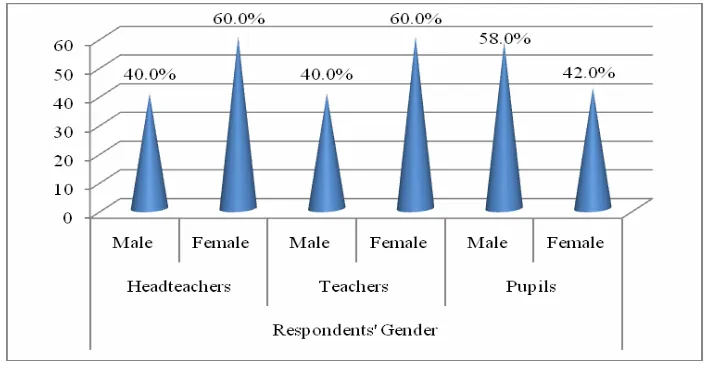
The study sought to establish respondents‟ gender. The results are as presented on Figure 4.1.
Figure 4.1: Respondents’ Gender
The results show that 60.0% of head teachers and teachers were female while 40.0% were male. The study findings also show that 58.0% of pupils were male while 42.0% were female. The findings were an indication that majority of the head teachers and teachers in public primary schools were implementing the integrated education curriculum for hearing impaired learners. Majority of pupils on the other hand were male.
4.2.2 Head teachers and Teachers’ Teaching Experience
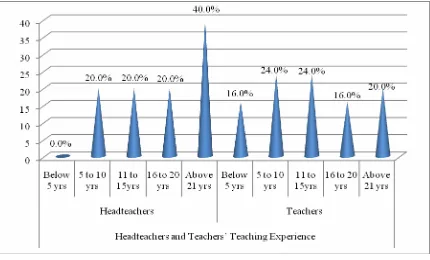
Figure 4.2: Head teachers and Teachers’ Teaching Experience
The study findings showed that 40.0% of head teachers had taught for above 21 years while 20.0% had taught for 5 to 10 years, 11 to 15 years and 16 to 20 years. The study findings also showed that 24.0% of teachers had taught for 5 to 10 years and 11 to 15 years, 20.0% for above 21 years while 16.0% had taught for below 5 years and 16 to 20 years. The findings showed that most head teachers had a substantial teaching experience and therefore are aware of challenges facing curriculum implementation in public primary schools. The study also showed that head teachers had a higher teaching experience than teachers a confirmation that promotion to school headship is tied to a teacher‟s teaching experience.
4.2.3 Head Teachers and Teachers Highest Professional Qualifications
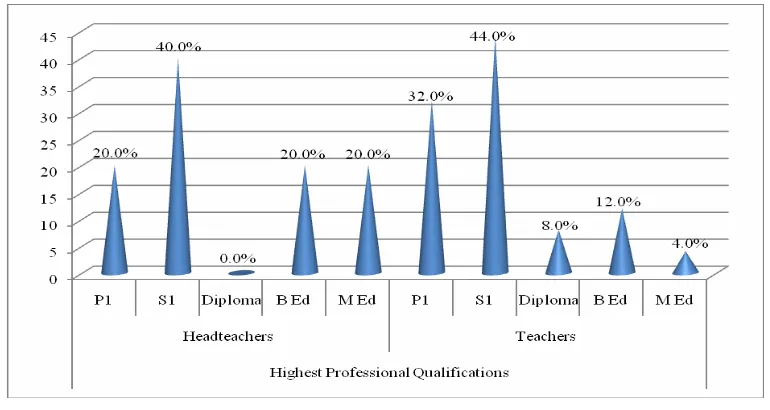
Figure 4.3: Head Teachers and Teachers Highest Professional Qualifications
The findings showed that 40.0% of head teachers and 44.0% of teachers have attained S1 certificate qualification. The study also showed that 20.0% of head teachers and 32.0% of teachers have attained P1 qualifications while 20.0% of head teachers and 12.0% of teachers. The findings are an indication all head teachers and teachers had the required professional qualifications to head and teach in public primary schools. Head teachers noted that most of the teachers had attained the minimum qualification to teach in public primary schools as most of them were employees of Teachers Service Commission.
4.2.4 Duration in the Current School
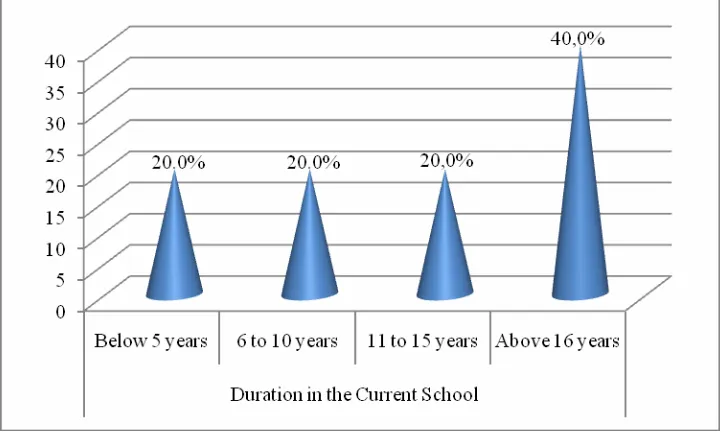
Figure 4.4: Duration in the Current School
The findings show that 40.0% of head teachers have been in the school for more than 16 years while 20.0% have headed the current schools for 6 to 10 years, 11 to 15 years and less than 5 years. The findings are an indication that most head teachers have been in schools long enough to be relied upon to provide accurate information on the challenges facing the implementation of the integrated education programme curriculum for learners with hearing impairment.
4.2.5 Number of Pupils with Hearing Impairment
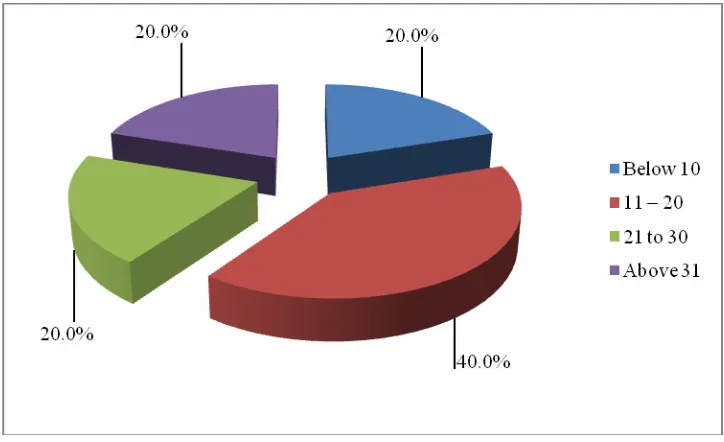
Figure 4.5: Number of Pupils with Hearing Impairment
The study findings on Figure 4.5 showed that 40.0% of head teachers noted that they had between 11 to 20 learners with hearing impairment while 20.0% said they had below 10, 21 to 30 and above 31 pupils. The findings are an indication that the ratio of hearing impaired to hearing learners is low which might negatively affect resource allocation to support hearing impaired learners given that they may be considered as a minority in schools.
4.3 Challenges in Relation to Instruction Strategies
content analysis and presented in narrative. The results that follow are discussed in themes.
4.3.1 Instruction Strategies used by teachers
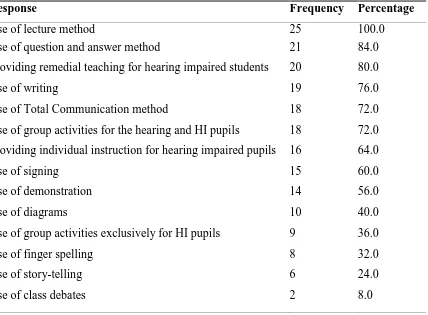
Teachers were asked to state the instruction strategies they use when teachers learners with hearing impairment in integrated education programme. The findings are as presented on Table 4.1.
Table 4.1: Instruction Strategies used by Teachers
Response Frequency Percentage
Use of lecture method 25 100.0
Use of question and answer method 21 84.0
Providing remedial teaching for hearing impaired students 20 80.0
Use of writing 19 76.0
Use of Total Communication method 18 72.0
Use of group activities for the hearing and HI pupils 18 72.0 Providing individual instruction for hearing impaired pupils 16 64.0
Use of signing 15 60.0
Use of demonstration 14 56.0
Use of diagrams 10 40.0
Use of group activities exclusively for HI pupils 9 36.0
Use of finger spelling 8 32.0
Use of story-telling 6 24.0
Use of class debates 2 8.0
N = 25
remedial teaching for hearing impaired students while 76.0% use writing. The least used teaching strategies are use of finger spelling as stated by 32.0% of teachers, use of storytelling as cited by 24.0% of teachers and use of class debates as cited by 8.0% of teachers. The findings show lecture method and question and answer are the most preferred instruction strategies which is an indication that instruction strategies used by teachers are majorly addressing the needs of hearing pupils at the expense those with hearing impairment. Teachers noted that although they incorporate a number of instruction strategies, the method most preferred was the lecture method. They noted that other strategies used are only meant to reinforce the lecture method. Most pupils noted that teachers did pay special attention to them during lessons. They also noted that there were no interpreters to assist them during lessons and that their participation in lessons was minimal. Most pupils however reported that they received assistance from other pupils whenever they were unable to perceive what was being taught.
an Inclusive Approach in Early Childhood Education in Namibia revealed that teachers‟ most preferred method of teaching was demonstration. Only one teacher employed Total Communication, whereas no teacher at all used Individualized Education Program (IEP), which is the most highly recommended method of teaching learners with hearing impairment.
4.3.2 Reasons for Use of Instructional Strategies
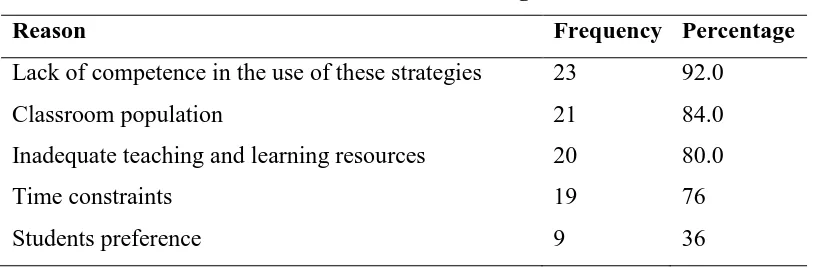
Teachers were asked to state the reasons why they prefer using specific instruction strategies when teaching learners with hearing impairment in an integrated education programme. The findings are as presented on Table 4.2.
Table 4.2: Reasons for Use of Instructional Strategies
Reason Frequency Percentage
Lack of competence in the use of these strategies 23 92.0
Classroom population 21 84.0
Inadequate teaching and learning resources 20 80.0
Time constraints 19 76
Students preference 9 36
N = 25
impairment, availability of teaching and learning resources and time allocated to curriculum delivery. Teachers noted that their choice of instruction strategies was influenced the time allocated for lessons which made the lecture method the most preferred instruction strategy. Teachers also noted that the choice of instruction strategies was influenced by their lack of or inadequate training in SNE and therefore used strategies mostly meant for hearing learners.
4.3.3 Specific Challenges as a Result of Instruction Strategies
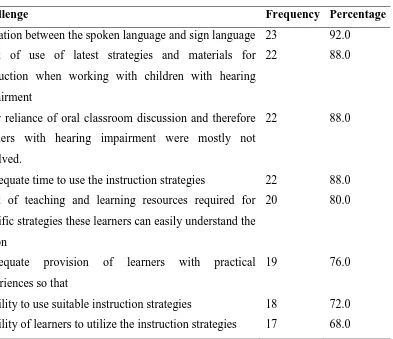
The researcher asked teachers to state the challenges they faced as a result of using the named instruction strategies. The findings are as presented on Table 4.3.
Table 4.3: Challenges facing teachers teaching learners with hearing
impairment
Challenge Frequency Percentage
Variation between the spoken language and sign language 23 92.0 Lack of use of latest strategies and materials for
instruction when working with children with hearing impairment
22 88.0
Over reliance of oral classroom discussion and therefore learners with hearing impairment were mostly not involved.
22 88.0
Inadequate time to use the instruction strategies 22 88.0 Lack of teaching and learning resources required for
specific strategies these learners can easily understand the lesson
20 80.0
Inadequate provision of learners with practical experiences so that
19 76.0
The findings show that 92.0% of teachers noted that instruction related challenges when implementing the integrated education curriculum are the variation between the spoken language and sign language. The findings also show that 88.0% of teachers feel that lack of use of latest strategies and materials for instruction when working with children with hearing impairment and inadequate time to use the instruction strategies are instruction- related challenges they encounter. The findings further showed that 80.0% of teachers cited lack of teaching and learning resources required for specific strategies while 76.0% cited inadequate provision of learners with practical experiences that make them easily understand the lesson. The findings are indication that teachers are facing challenges of use of instruction strategies when teaching learners with hearing impairment in an integrated education curriculum. The challenges range from variation between spoken and sign language, teacher competence in the use of appropriate strategies and lack of facilities that support the instruction strategies.
language and sign language in UK has been found to be a major challenge to teachers dealing with learners with hearing impairment at the elementary level of education. According to Moores and Martins (2006), there have been various constraints in teaching languages to the hearing impaired in as the naturally evolved sign languages have a grammar and vocabulary, which are distinct from the spoken language used in the same country or region. This includes the word order in a sentence, which is generally completely different from the word order in a sentence in the spoken or written language. It is important to stress that hearing impaired persons cannot master spoken languages as easily and comprehensively as sign languages and the spoken language of their country or region will always remain a foreign or second language for them. This therefore poses an instructional challenge as many teachers typically rely heavily on oral methods and students who cannot hear may be deprived the chance to learn at same pace as their hearing counterparts (British Deaf News, Feb 2002).
4.4 Teacher Preparedness in Curriculum Implementation
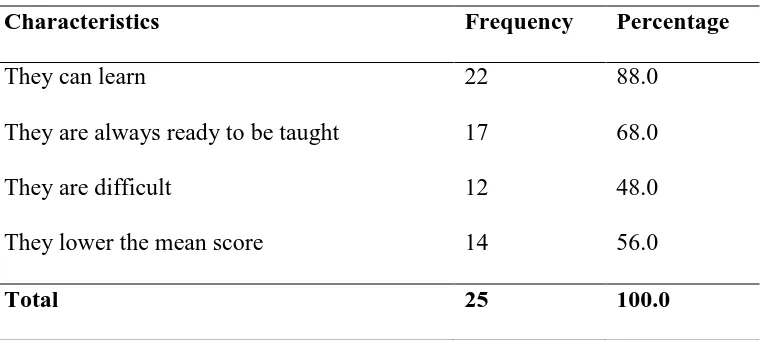
Table 4.4: Teachers’ Preparedness in Curriculum Implementation
Characteristics Frequency Percentage
They can learn 22 88.0
They are always ready to be taught 17 68.0
They are difficult 12 48.0
They lower the mean score 14 56.0
Total 25 100.0
N = 25
4.4.1 Head Teachers and Teachers Training in SNE
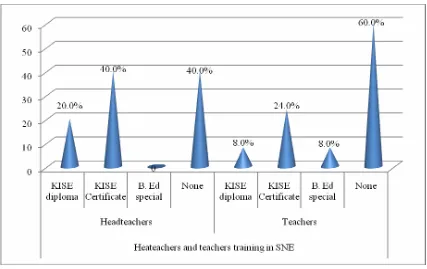
The researcher asked head teachers and teachers to state their levels of professional training in SNE. The results are as presented of Figure 4.6.
Figure 4.6: Head teachers and Teachers Training in SNE
These findings concur with a study by Ogada (2010), in which head teachers questioned the levels of preparations done by teachers who were handling learners with hearing impairment. All of them said that the teachers are not effective due to inadequate training in special education. Majority of the teachers indicated that they had done distance learning programme with Kenya Institute of Special Education which according to them does not adequately train teachers especially in the area of hearing impairments since the course was intended to train teachers for inclusive purposes and not education of learners with hearing impairment. The study also reported that teachers also rarely attend in- service courses which are very important for keeping teachers abreast with current trends and issues on SNE. Raju (1973), in a study on rural schools in Kenya found that most of them lacked properly trained teachers. Since the studies reviewed were done in other parts of Kenya and have indicated a deficiency on the issue of qualification and experience of teachers, there is need for such a study to be done which is more current. The review also indicates that the themes are out dated and may apply only to limited extent in today‟s situation hence a need for an up to date study.
4.4.2 Head teachers and teachers Experience Teaching Hearing Impaired
Learners