Promoting Green Value Creation in
project management through green
purchasing in construction projects
Case :Faveo Prosjektledelse ASFerhat Aydin
Master in Industrial Ecology
Supervisor: John Eilif Hermansen, IØT
Department of Industrial Economics and Technology Management Submission date: June 2014
iii
Preface
This master thesis was completed as a requirement to achieve the international Master of Science degree in Industrial Ecology, with the Department of Industrial Economics and Technology Management (IØT) at the Norwegian University of Science and Technology (NTNU). This thesis is continuation of the project report from the fall of 2013, with the same case company, Faveo Prosjektledelse AS in Trondheim.
I would like to thank my supervisor John Eilif Hermansen whom gave insightful ideas and comments that were valuable. A special thanks to myco-supervisor Sigurd Vildåsen for his guidance and recommendations. I would also like to thank Ole Jonny Klakegg at Faveo Prosjektledelse for using his time to send data and having meetings. A special thanks to Annik Magerholm Fet for the valuable meetings and inputs that made this master thesis possible. I would also thank my good friend Helen Hamilton for valuable input. Thanks my girlfriend Mette Katla Austad for the support and encouragement. Finally I would like to thank my fellow students in the Industrial Ecology program for two exciting years in this program.
iv
Abstract (English)
The goal of the study is to gain understanding of the Green Value Creation (GVC) ambitions in project management and to develop indicators to enable project managers to purchase greener building materials and contracts. To understand GVC, a definition was developed combining concepts such as value creation, the triple-bottom line, and Green Economy. The research questions were made to achieve the main goal. The qualitative and quantitative analysis performed with Faveo Prosjektledelse AS has the purpose to answer these research questions. Both the qualitative and quantitative analysis reveals that the GVC ambitions amongst the project managers are from moderate to low, in addition to the purchasing competences amongst the project managers needs to be elevated in order to promote Green Purchasing and the environmental demands is also from moderate to low. The study reveals that the criteria time, cost and quality from traditional project management can be considered to be a major obstacle to increasing GVC ambitions amongst project managers in Faveo and their customers. Therefore there is a need to move beyond traditional project management frameworks and include environmental perspectives in order to achieve GVC. Green Purchasing indicator set and indicator model is developed to enable the project managers to evaluate the environmental performance of building materials and contracts. With the greener purchasing in construction project the chances to promote GVC increases significantly.
v
Table of Content
Preface ... iii
Abstract (English)... iv
Table of Content ... v
List of Figures ... viii
List of Tables ... viii
List of Abbreviations ... ix
1 Introduction ... 1
1.1 Background ... 1
1.2 Scope and Goal ... 2
1.3 Case Company ... 2 1.4 Challenges ... 3 1.5 Structure of thesis ... 3 2 Methodology ... 5 2.1 Systems thinking ... 5 2.2 Qualitative Research ... 5 2.2.1 Semi-structured interviews ... 5 2.3 Quantitative Research ... 6 2.3.1 Self-completion questionnaire ... 7
2.4 Validity and Reliability ... 7
2.5 Literature review ... 8
2.6 Case study ... 9
2.7 Development of Indicators ... 9
3 Theoretical Framework ... 11
3.1 Green Value Creation ... 11
3.1.1 Introducing Sustainable Value ... 12
3.1.2 Sustainability and Green Economy ... 13
3.1.3 Defining Green Value Creation (GVC) ... 14
3.2 Project Management ... 15
3.2.1 Project Management Institute (PMI) ... 16
3.2.2 International Project Management Association (IPMA) ... 17
3.2.3 New perspectives on Project Management ... 18
3.3 Supply Chain Management ... 20
vi
3.4.1 Green Purchasing ... 25
3.5 Environmental demands and decision-making ... 27
4 Faveo Management ... 29
4.1 Organization ... 29
4.2 Environmental Outlook at Faveo Prosjektledelse ... 29
4.3 Services provided by Faveo Prosjektledelse AS... 29
4.4 Project Management at Faveo ... 30
4.4.1 Faveo Academy ... 32
5 Qualitative Analysis ... 33
5.1 Semi-structured interviews ... 33
5.2 Analysis and Discussion ... 34
5.2.1 Green Value Creation ambitions of the project managers ... 34
5.2.2 The project manager as a purchaser ... 35
5.2.3 Environmental demands from the customers ... 37
5.3 Results and Concluding remarks ... 38
6 Quantitative Analysis ... 41
6.1 Self-completion questionnaire ... 41
6.2 Analysis and Discussion ... 42
6.2.1 Green Value Creation ambitions ... 42
6.2.2 Purchasing at Faveo Prosjektledelse AS ... 46
6.2.3 Environmental demands from the customers ... 48
6.3 Results and concluding remarks ... 49
7 Green Purchasing Indicators ... 53
7.1 Development of indicators ... 53
7.2 The Indicator set for evaluating building materials ... 53
7.2.1 Eco-Labels Type 1, 2 and 3. ... 55
7.2.2 Environmental Product Declaration (EPD) ... 56
7.2.3 ISO 14001, Eco lighthouse and PEFC Norway forest management standard ... 56
7.2.4 Recycling, Take-back policies and Travel distance ... 57
7.2.5 Date collection, targets and objectives ... 58
7.2.6 Guidelines for the use of indicators ... 59
7.2.7 The indicator set ... 60
7.3 The Indicator model for evaluating contracts ... 60
vii
7.3.2 Objectives ... 62
7.3.3 Guidelines for the use of indicators ... 62
7.3.4 The indicator model ... 63
7.4 BREEAM ... 64
8. Discussion ... 65
8.1 The Green Value Creation ambitions of project managers at Faveo ... 65
8.1.1 The influence of traditional project management framework ... 65
8.1.2 Newer project management perspectives in Green Value Creation ... 66
8.1.3 Is Green Value Creation present in Faveo today? ... 66
8.2 The project manager as a purchaser ... 67
8.2.1 Time, cost and quality in purchasing ... 68
8.2.2 The need for purchasing competence and training ... 68
8.3 Environmental demands from customers ... 69
8.3.1 The project manager’s dilemma ... 70
8.4 Adopting Green Purchasing in construction projects ... 70
8.4.1 Proactive Green Purchasing strategies ... 71
8.4.2 Combining the purchasing and project management process with indicators set and model ... 71
8.4.3 Obstacles to Green purchasing ... 75
8.4.4 Benefits of Green Purchasing ... 76
8.5 Evaluation of the qualitative and quantitative analysis ... 76
8.5.1 Validity and Reliability of the qualitative analysis ... 76
8.5.2 Validity and Reliability of the quantitative analysis ... 77
8.5.3 Generalizability of the qualitative and quantitative analysis ... 78
9. Conclusion and Recommendations ... 79
9.1 Conclusion ... 79
9.2 Recommendations for Faveo Prosjektledelse AS ... 81
9.3 Suggestions for further research ... 81
10 References ... 83
Appendix A Interview guide ... 87
Appendix B Interview answers ... 89
Appendix C Self-completion questionnaire ... 94
viii
List of Figures
Figure 1 Structure of thesis ... 3
Figure 2 Sustainable Value Framework (Laszlo 2003) ... 13
Figure 3 Concepts and Elements in GVC ... 15
Figure 4 The life cycle of project (PMI 2008) ... 16
Figure 5 the table of competence elements (IPMA 2013) ... 18
Figure 6 Key areas in SSCM (Cousins et al 2008) ... 21
Figure 7 Key elements and decisions in SCM (Lambert and Cooper 200) ... 23
Figure 8 The purchasing process (Van Weele 2012) ... 24
Figure 9 Green purchasing strategies and trends (Min and Galle 1997) ... 26
Figure 10 The AHP model (Handfield et al 2001) ... 28
Figure 11 Services provided by Faveo (Faveo 2013a) ... 30
Figure 12 Four leaf model from annual report (Faveo 2012) ... 31
Figure 13 Project management process at Faveo (Figure from Faveo annual report 2012) ... 31
Figure 14 Familiarity of Eco-labels and certification amongst respondents ... 43
Figure 15 Response to question 7 ... 44
Figure 16 Response to question 8 ... 45
Figure 17 Response to question 11 ... 46
Figure 18 Most important criteria for purchasing ... 47
Figure 19 The application of indicator set and indicator model ... 74
List of Tables
Table 1 adaptive project management (Shenhar and Dvir 2007) ... 20Table 2 Response to influence from customers in purchasing ... 48
Table 3 Environmental demands from customers ... 48
Table 4 Environmental profile of building materials (Harris 1999) ... 54
Table 5 Indicator set for evaluating building materials ... 60
Table 6 Rating system ... 62
ix
List of Abbreviations
AHP Analytical Hieratical Process CSR Corporate Social Responsibility EMS Environmental Management Systems EPD Environmental Product Declarations
IPMA International Project Management Association GE Green Economy
GP Green Purchasing GVC Green value Creation LCA Life Cycle Assessment PMI Project Management Institute SCM Supply Chain Management
SSCM Strategic Supply Chain Management TBL Triple Bottom Line
1
1 Introduction
The traditional project management frameworks applied by the project managers at Faveo Prosjektledelse AS does not have a significant environmental profile and for this reason there is a lack of environmental awareness and competence in projects. Project management consultancies have the capacity to impact the society and the environment both negatively and positively and the purpose of master thesis is therefore to promote Green Value Creation (GVC) in project management with green purchasing in construction projects. With the implementation of green purchasing the project managers can increase the environmental performance of their project, and at the same time increase the GVC ambitions in project management.
1.1 Background
Building materials use extensive resources, and therefore the construction of buildings causes large environmental impacts. The construction sector is responsible for a significant consumption of material and energy in industrial societies. This industry accounts for one-sixth of the withdrawals of fresh water in the world, in addition to one-quarter of the wood harvest and two-fifths of the earth’s material and energy flows (Guggemose and Horvath 2005). According to the IPCC (2014) human activities can be proven to have an effect on the climate system of the earth. The fifth assessment working group report II from the IPCC reports, climate changes has causes impacts on natural and human systems on all continents and across all oceans. The climate change impacts are the strongest and most comprehensive on the natural systems. Changing precipitation, melting snow and ice is observed in many regions and they are altering the hydrological system and affecting water resources in terms of quantity and quality. The Millennium Ecosystem Assessment (2005) concludes that the world’s ecosystems have been degrading the last 50 years due to human activities. Over 24 ecosystems have been assessed, and the results indicate that over 15 ecosystems have undergone serious damage, while only four were improved and five remained stable. The range of industry sectors in which Faveo, as a project management consultancy operate enables the potential to influence the development a sustainable society. Through Green Value Creation and Green Purchasing in construction projects, the project managers in Faveo Prosjektledelse AS can contribute to reduce climate change and eco systems impacts.
2 1.2 Scope and Goal
The scope in this thesis covers the project managers in Faveo working within the construction sector, the green purchasing indicators are therefore customised for purchasing in construction projects. The interviews and questionnaires are done with respondents working mostly with construction projects. The scope of the theories in this thesis covers the theoretical concepts related to Green Value Creation, Supply Chain Management, Purchasing, Green purchasing, Project management and Environmental demands. The theories are chosen based on the relevance to the study.
The goal of the study is to gain understanding of the GVC ambitions in project management and to develop indicators to enable project managers to purchase greener building materials and contracts. The research questions Q1, Q2 and Q3 addresses the first part of the main goal related to Green Value Creation ambitions, while Q4 addresses the second part related to purchasing greener in construction projects. The research questions are:
Q1: What are the Green value creation ambitions of project managers at Faveo Prosjektledelse AS?
Q2: How does the project manager function as a purchaser in projects? Q3: What are the environmental demands from customers of Faveo? Q4: How can green purchasing be adopted in construction projects?
The goal and research questions are addressed through a qualitative analysis, with semi-structured interviews and a quantitative analysis through self-completion questionnaires. The reasoning behind both a qualitative and quantitative analysis is to both gain rich and deep data, but at the same time provide results that could be generalized to larger population of project managers at Faveo.
1.3 Case Company
Faveo Management is the largest company independently working within project management in Scandinavia. They offer project management, project development and specialist services for both small and large projects across different sectors including both private and public. Faveo assists their customers with all kinds of projects and alteration processes. The case chosen for this study is the Norwegian branch of this company, Faveo Prosjektledelse AS. The interviews are performed in the offices of Faveo in Trondheim, while the self-completion questionnaires were sent out to project managers in several Faveo offices in Norway, further information regarding the case company is provided in chapter 4.
3 1.4 Challenges
There were some challenges that occurred during this study, such as gaining an acceptable response rate on the self-completion questionnaire that was sent out. To increase the response rate, this was dealt with by sending out a reminder one week after the first deadline expired to the respondents that had not replied yet. This reminder increased the response rate to an acceptable rate. Another challenge was to develop the questions for the semi-structured interviews and self-completion questionnaires, with the help of Bryman (2012), R&D director the questions for the interviews were made. The challenge with providing the questions for the questionnaire was solved by using the interviews and Bryman as a foundation. In other words, qualitative data provided as a basis for the quantitative analysis. Developing an indicator set and indicator model that could be applied for purchasing in construction projects was a challenge, but with the help of the project managers at Faveo the chances for proper indicator set and indicator model increased significantly.
1.5 Structure of thesis
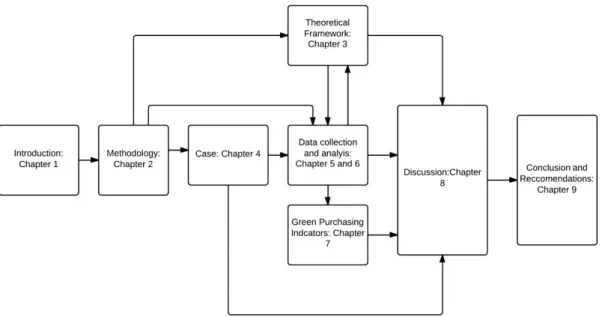
The structure of the thesis is based on systems thinking, in which the whole thesis is considered to be the main system with different subsystems and elements that are interrelated. Figure 1 illustrates the structure of the thesis and shows the relationships between the different chapters or sub-systems.
Figure 1 Structure of thesis
The introduction presents the background, goal and scope, case and the structure of the thesis. Chapter 2 contains methodologies applied in this thesis such as systems thinking,
semi-4
structured interviews, self-completion questionnaire, literature review, case study and indictor development is presented. The theoretical frameworks are found in chapter 3, presenting Green Value Creation, supply chain management, purchasing, green purchasing, project management theories. In chapter 4 the case company Faveo is presented. The qualitative and quantitative analysis is presented in chapter 5 and 6, The green purchasing indicator set and indicator model are found in chapter 7, which were developed as a result of the qualitative and quantitative analysis. The chapters 4, 5, 6 and 7 are the basis of the discussion found in chapter 8, in this chapter the research questions are discussed. Finally in chapter 9 the conclusion and recommendation to Faveo Prosjektledelse is provided.
5
2 Methodology
The methodologies applied in this study are systems thinking, semi-structured interviews, self-completion questionnaire, modified case study and literature review. Systems’ thinking is the framework for the structure of the thesis and the definition of Green value creation. This study applies semi-structured interviews and self-completion questionnaire as methodology for the qualitative and quantitative analysis. The validity and the reliability of the qualitative and quantitative research are also mentioned. Case study research methodology is presented. Finally how the literature review and the development of the indicators are explained.
2.1 Systems thinking
System’s thinking is the methodology used to understand Green Value Creation as a system with interacting elements. System’s thinking involves understanding systems from a holistic perspective, in which subsystems and element are interdependent in order to function properly (Haskins 2006). System’s thinking is applied in the definition of GVC in this thesis, with GVC considered to be the main system, with connecting sub systems such as Green economy, Sustainability and Financial value creation. Together these three sub-systems make the Green Value Creation system. The thesis is also structured after the principles of systems thinking, the figure 1 from section 1.5 illustrates how the thesis is organized as a system consisting of sub systems.
2.2 Qualitative Research
Qualitative research is more occupied with applying words to analyse social life compared to quantitative research. In this kind of research the participant’s point of view is important and the researcher is more involved with the people being investigated. Theories and concepts emerge out of the data collected. According to Bryman (2012) qualitative research is more dynamic and processual, in other words the method is depicted as being aware of the unfolding of events over time. The data collection in qualitative methods is invariably unstructured, which makes getting the actor’s meanings and concepts rising out of data collection is enhanced. Qualitative research requires a contextual understanding, rich and deep data and natural setting.
2.2.1 Semi-structured interviews
The semi-structured interview methodology is based on theory from Alan Bryman (2012). This interview methodology allows a list of questions based on specific topics or research questions considered interesting for the researcher to explore. The interview guide should have specific questions that need to be answered, but the interviewees are given a great
6
leeway in how to reply. The questions should allow the respondents to give answers that are elaborate without any time pressure. The respondents is also given freedom to talk as long as they feel necessary to uncover as much of information as possible. The advantages with the qualitative interview are the possibility of asking probing question, greater breath of coverage, and more rich and deep data. The semi-structured interview has some disadvantages related to small sample, difficulty of generalization and sensitivity of context. Another disadvantage is occurrence of the effect the interviewer might have on the respondents, which could affect the answers.
The semi-structured interviews should be recorded. Recording the interviews can give benefits related to quotation of the respondents if necessary, and also enables the opportunity to hear the interview multiple times, this could uncover new information that were overlooked earlier. Bryman (2012) claims that some respondents may be disconcert by the use of a recorder, and they might become self-conscious or alarmed due to their words being preserved. It is therefore beneficial to make sure that the recording equipment is functioning properly to avoid any unnecessary stops or distraction that might make the respondent unsecure and uneasy. The proper measures to secure the respondents trust and relaxation during the interviews can be accomplished through transparency and careful explanation of the purpose of the study.
The recordings can be transcribed, which means that the researchers listen to the recordings and writes down every word that is uttered in the interview. Bryman (2012) argues, it is beneficial to allow around five-six hours for transcription for every hour of speech. The advantages with transcriptions are the possibilities of quotations from the respondents, keeping intact the words uttered, and it can enhance the analysis. The disadvantages are that it is time consuming, and requires some training to master.
2.3 Quantitative Research
Quantitative research differs from qualitative by being preoccupied with numbers, and applying measurement procedures to social life. It is the researcher’s point of view that is in the driving seat and it is the researcher’s preferences that structure the investigation. In quantitative research theories and concepts are tested in research, and theoretical work precedes data collection. The social reality is depicted more static, with emphasis on the relationships between the variables. Quantitative research is often highly structured and the researchers want the findings to be generalizable to the relevant population. Quantitative
7
research is interested in hard, reliable data and often collects their data in an artificial setting (Bryman 2012).
2.3.1 Self-completion questionnaire
The self-completion questionnaire is based on Bryman (2012), the questionnaire allows the respondents answer questions by completing it themselves. This questionnaire method can come in multiple different formats, and the most prominent of these is the postal or mail questionnaire, such as the name implies is sent through the post to the respondents. The advantages with this kind of questionnaire are it is cheaper and quicker to administer than other methodologies, there is an absence of the interviewer affecting the respondent and finally it is more convenient for the respondents. Some disadvantages are lack of opportunity to probing questions, greater risk of missing data, lower response rate and more challenging to ask the right questions.
According to Ringdal (2007) the variables in quantitative research can be classified in four levels of measurement; nominal scale, ordinal scale, interval scale and ratio scale. In the nominal scale the variables values are exhaustive and mutually excluding categories. If the variables can be meaningfully ranked it is an ordinal scale variable. The distance between variable values in the interval scale can be measured. The ratio scale entails that measurement is the estimation of the ratio between a magnitude of a continuous quantity and a unit magnitude of the same kind. It possesses a meaningful zero value.
2.4 Validity and Reliability
According to Bryman (2012:389) validity refers to whether “you are observing, identifying or
measuring what you say you are”. Bryman divides validity in qualitative research into internal validity and external validity, internal validity involves whether there is a good match between researcher’s observations and the theoretical ideas they develop. External validity involves the degree of which the findings can be generalized across the social setting. The problem in qualitative research related to external validity is the tendency to employ case studies and small samples. Bryman claims that reliability in qualitative research can be divided in internal and external reliability similar to validity. Internal reliability concerns itself with situation where there is more than one observer, whether the members of the research team have an agreement about what they see and hear. External reliability is depended on the degree of which the study can be replicated. The critique of qualitative research is the difficulty to replicate these kinds of studies and therefore a difficult criterion to meet (2012).
8
Bryman (2012:171) argues validity in quantitative research “refers to the issue of whether an
indicators (or set of indicators) that is devised to gauge a concept really measures that concept” and divides validity into the following categories: face validity, concurrent validity, predictive validity, construct validity and convergent validity. Face validity involves that the measures allegedly reflects the content of the concept in question. This can be done by asking other persons if the measure applied seems to be getting at the concept which is the focus of the research. Concurrent validity is established by employing a criterion on which cases are known to be different and that is relevant to the concept in question. Predictive validity is when the researcher applies a future criterion measure, instead of a contemporary one. Construct validity encourages the researcher to deduce hypotheses from a theory that is relevant to the concept. Finally convergent validity involves a measure that should be assessed by comparing it to measures of the same concept developed through other methodologies.
Reliability “refers to the consistency of a measure of a concept” (Bryman 2012:169) and reliability in quantitative research involves three prominent factors to consider whether a measure is reliable. These are stability, internal reliability and inter-observer consistency. Stability entails whether a measure is stable over time, in order to be confident that the results relating to that measure for a sample of respondents does not oscillate. Internal reliability refers to whether the indicators that make up the scale or index are consistent. Inter-observer consistency entails research including more than one observer or researcher, and that one should consider the possibility of that there might be a lack of consistency in their decisions.
2.5 Literature review
Most of the literature review to gain an overview of the concepts and theories compatible with Green Value Creation were performed in the project report from the fall of 2013. This method is very useful to obtain an overview of the latest developments in Green Value Creation. Most of the journal articles are found through resources given by the NTNU database, and their library. An objective was to use articles that was scientifically approved and published. It was also important to use articles that were recognized to have a high quality and published in serious and professional journals. Literature was also found through recommendations from the supervisor and fellow students. The use of search engines Google Scholar and Scopus was capable to provide an extensive range of scientific literature. Some of the literature are from the late 90’s, which might be considered to be old, but the articles are from recognized authors and journals and therefore acceptable. Some of the information about the case
9
company, Faveo, was collected through unstructured interviews with the director of research and development Ole Jonny Klakegg. The interviews with Klakegg could also be considered as conversations, with some pre-made topics developed before the meetings. The annual report and the website of Faveo was also an important source of data.
2.6 Case study
There is no specific formula for using cast study research, and the choices depend on the research questions of the study. The more that the research questions pursue to explain present circumstances, the more this method becomes relevant. If the research questions needs extensive and in-depth description of a social phenomenon the caste study also becomes more relevant. Yin (2009) provides a twofold technical definition of case studies:
“1. A case study is an empirical inquiry that investigates a contemporary phenomenon in depth and within its real-life context, especially when the boundaries between phenomenon and context are not clearly evident. 2. The case study inquiry copes with the technically distinctive situation in which there will be many more variables of interest than data points, and as one results relies on multiple sources of evidence, with data needing to converge in a triangulating fashion, and as another result benefits from the prior developments of theoretical propositions to guide data
collection and analysis. (2009:19) “
This definition indicates how case study research entails an all-encompassing-method, with the coverage of design, data collection, and approaches to data analysis.
2.7 Development of Indicators
Andersen and Fagerhaug (2002:88) provide steps for developing performance indicators. Through five steps they explain sub steps for developing performance indicators. These steps are:
1. Establish the responsible for developing indicators
2. Teach the various indicator design teams how to develop performance indicators 3. Organize a brainstorming session to generate performance indicators
4. Define control limits and target values for each performance indicator 5. Compile the resulting set of developed indicators.
According to Andersen and Fagerhaug (2002) the development of indicators is a creative process and should be tailored to the specific needs of the organization. It is therefore difficult to develop and provide generalized guidelines on how to develop performance indicators. Andersen and Fagerhaug advice the involvement of the people that knows the processes that
10
is to be measured in detail. According to the United Nations Environmental Program (UNEP) indicators are “measures that can be used to illustrate and communicate complex phenomena
11
3 Theoretical Framework
The theoretical framework is developed to reinforce the research questions and discussion. Theoretical ground work for Green Value Creation is provided first in this chapter. Supply chain management, purchasing and Green Purchasing provides the necessary theoretical background. The traditional project management frameworks applied by Faveo from the Project Management Institute and the International Project Management Association are covered in this chapter. Newer perspectives on project management are also included, in order to provide the study proper basis for discussion. The chapter ends with theories from Berry and Rondinelli regarding environmental demands and the Analytical Hieratical Process (AHP) model from Handfield et al.
3.1 Green Value Creation
A necessary step before defining and understanding GVC is to understand the concept of value creation. According to Bowman and Ambrosini (2000), value has two main components. This includes perceived use value and exchange value. Perceived use value is subjective, defined by the customers and is based upon the perceptions of the customers in terms of the usefulness of the product or service. The ‘total monetary value’ is based on the amount the purchaser is willing to pay for the product or service. The other component, called exchange value, is realized when the product is sold. It is the amount paid by the customer to the producer. Bowman and Ambrosini argue that value creation can be defined as
“Inanimate resources purchased as inputs to the production process, whether they be machines, buildings, steel, computers, or flour, are incapable of transforming themselves into anything other than what they are. They need to be activated, worked on before they can contribute to the production of new use values”(Bowman and Ambrosini 2000:5).
Value creation occurs when a firm uses and shapes the resources they have available to develop a product or service that the customers perceives to be valuable for them. This does not mean the inanimate resources have no value; in fact, it has a value for the manager that decided to purchase these items on behalf of the firm (Bowman and Ambrosini 2000). Lepak et al., (2007) introduce three aspects of value creation that is created in three levels; individual, societal and organizational level. These are all important sources of value creation and create values of different scales. At the individual level, individuals create value by developing new and proper tasks, services, product or other contributions that the target user (such as employer, client or customer) perceives to be of value relative to the target user’s needs. The monetary amount gained for this service is larger than what might be gained from
12
alternative sources producing the similar services, tasks and products. . “The value created
may be from any new task, service, or job that provides greater utility or lower unit costs for the user over the closest alternative” (2007:183).
Value creation at the societal level can be seen in terms of programs and incentives for entrepreneurship and innovation. These programs are developed in the interest of encouraging existing organizations and new entrepreneurships to develop, innovate and broaden the values in their organization to society and its inhabitants. In the organizational level, value is created when the company uses or develops new technologies and methods to develop their product or services. Another form of value creation from companies is creating new advantages as the existing ones are worn away due to the changes of the surrounding environment (Lepak et al., 2007). According to Porter (1990), the government creates value by developing laws, regulations and services that establish support, frameworks and guarantees of quality, lawful behavior and the support of the nation.
“The central goal of government policy toward the economy is to deploy a nation's resources (labor and capital) with high and rising levels of productivity ... productivity is the root cause of a nation's standard of living. To achieve productivity growth, an economy must be continually up grading. This requires relentless improvement and innovation “(Porter 1990: 617).
Lepak et al., argues further views: value creation is to some extent subjective and has multiple levels, value creation also depends on the attributes of the stakeholders, whether it is individuals, society or organizations (2007).
3.1.1 Introducing Sustainable Value
According to Chris Laszlo (2003) there is a need to move beyond financial value creation. Sustainable value creation expands the boundaries of value creation to include all the stakeholders of a business, meaning that it not only economic aspects but also social and environmental concerns. Laszlo criticizes the negative and positive stakeholder value created by financial value creation. The negative stakeholder values involve the negative impacts a firm has on the well-being of its stakeholders; in contrast the positive stakeholder value is when the firm has added to the well-being of its stakeholders. In this case, the positive value creation is not created at the expense of financial value creation.
Sustainable value creation involves developing relationships and collaborations with stakeholders to foster mutual benefits. (A stakeholder in this case is anyone who is affected by the economic activities of a certain company such as neighbors, the local community,
13
government and Non-Governmental Organizations). The environment is also considered an important stakeholder. Including sustainability in value creation can promote long term opportunities to reach the social, environmental and economic goals of the company. This can be achieved by exploring the company’s value chain to uncover the areas where the different stakeholders are affected, both positively and negatively. Identifying these areas will create opportunities and value and eliminate issues that are not sustainable (Laszlo 2003).
Figure 2 Sustainable Value Framework (Laszlo 2003)
According to Laszlo (2003) the figure 2 illustrates the framework of sustainable value and how sustainability can be a part of the value creation of a company. Figure 2 shows which strategies that should be implemented internally and externally, such as pollution prevention/clean technology (internal) and product stewardships/sustainability vision (external). It also shows the different drivers of these strategies. Finally the figure indicates a time aspect of what can be done today and what can be done in the future. According to Hart et al., (2003) there are many benefits of sustainable value for companies such as innovation, cost and risk reduction. Other potential benefits can include improving the company’s reputation and increased legitimacy.
3.1.2 Sustainability and Green Economy
However, before one can give a proper definition and understanding of GVC, one needs to understand the concept of sustainability and what being “green” entails. While section
14
3.1.1often mentions sustainability, but does not give a proper definition of this term and how this thesis views sustainability. The definition that can be derived from the triple bottom line (TBL), which includes three different aspects of what being sustainable is, A product or a service can be classified sustainable if social, environmental and economic factors are considered when developing the particular service or product (preliminary definition developed by the study). TBL is emanated from the business world, and is used as framework to measure sustainability (Rogers and Ryan 2001). TBL can be seen as “a concept of
corporate accountability which goes beyond the traditional economic and financial aspects of a business entity. It is an auditing and reporting framework, which requires the measurement of economic, environmental and social performance”(2001:83). Another definition of sustainability worth mentioning: “development that meets the needs of the present without compromising the ability of future generations to meet their own needs” (WBCSD 1987). This definition from the Brundtland report “Our Common Future” is more generic and is still relevant to this day.
As mentioned above, being sustainable means that social, economic and environmental aspects are of equal importance and these aspects are related to each other, meaning that none of them should be left out. What does being green involve? It may help to look at other terms and concepts that might help to define Green Value Creation. Green Economy (GE) is a concept that might be comparable to Green Value Creation. The definition of GE from UNEP is “improved human well-being and social equity, while significantly reducing environmental
risks and ecological scarcities. In its simplest expression, a green economy can be thought of as one which is low carbon, resource efficient and socially inclusive” (UNEP 2011). While the term sustainability has an equal focus on the three aspects mentioned above, it seems that the term “green” has its main focus on the environment.
3.1.3 Defining Green Value Creation (GVC)
Leading to this point, the thesis has discussed value creation, sustainable value, TBL and GE, and most of these terms are elements that fit into GVC. Sustainability is a term that can describe several systems and organizations without considering the environment, unless the definitions above are applied. A company can be economically sustainable, but not socially and environmentally sustainable. In this study the focus is more on the environment and economy, but social factors are included. For that reason the term used in this thesis is Green Value Creation, and not sustainable value creation. It is still worth mentioning that green and sustainability are terms that are very similar and can’t always be differentiated since they
15
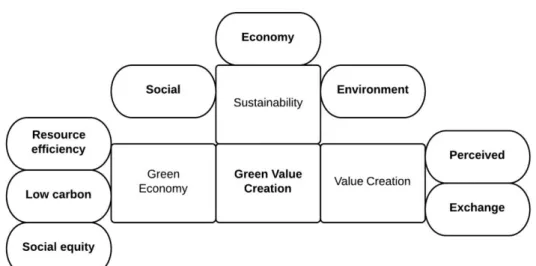
include many of the same concepts. The figure 3 gives an idea of how to define and understand GVC as a term. Green value creation, as it is understood in this thesis, includes elements from other concepts such as TBL, Green Economy, and financial value creation. In this figure, there are three main concepts connected to Green Value Creation, these are: Sustainability, Green Economy and Value creation. Each concept is connected to other elements such as the TBL (Social, Economy and Environment), resource efficiency, perceived use and exchange value. In other words, figure 3 shows the complexity of what GVC entails. It is worth mentioning, that this definition is based on value creation on the organizational level. With the help of the definitions and concepts mentioned earlier in this chapter, I suggest a of definition GVC could be “when a firm uses and shapes the resources they have available
to develop a product or service, by using tools and strategies that promotes social, environmental and economic benefits for all stakeholders involved, but with a stronger focus on the environment”
Figure 3 Concepts and Elements in GVC
3.2 Project Management
Theories from the Project Management Institute (PMI) and the International Project Management Association (IPMA) are presented due the use of this project management methodology in Faveo Prosjektledelse AS. Newer project management perspectives are provided to show other approaches to project management.
16
3.2.1 Project Management Institute (PMI)
“A project is a temporary endeavor undertaken to create a unique product, service, or result. The temporary nature of projects indicates a definite beginning and end. The end is reached when the project’s objectives have been achieved or when the project is terminated because its objectives will not or cannot be met, or when the need for the project no longer exists” (PMI 2008:5).
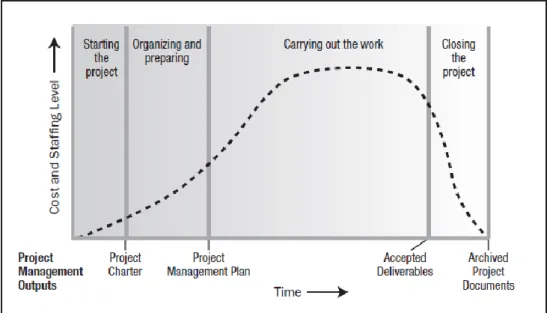
According to the Project Management Institute (PMI), temporary does not mean that the project has a short duration. The PMBOK guide is developed by the PMI to give guidelines and knowledge to project managers based on traditional project management approaches. PMI also offers certifications to project managers at different levels (PMI 2008). This guide is applicable for managing most types of projects across many different industries and is based on the project life cycle. This life cycle consists of four phases; (1) Starting the project, (2) Organizing and preparing, (3) Carrying out the project work and (4) Closing the project (PMI 2008:16).
Figure 4 The life cycle of project (PMI 2008)
The figure 4 illustrates the cost and staffing level on each life cycle stage over time. The life stage cycle that seems to have the highest cost and staffing levels is the third stage of carrying out the work, which indicates that this stage requires the most effort.
According to the PMBOK guide, project management is the use of knowledge, skills, tools and techniques on project activities to meet the requirements of the project. Project Management consists of five process groups (PMI 2013:6);
17
Initiating Planning
Monitoring and Controlling Executing
Closing
Managing a project typically includes identifying requirements and considering the stakeholders needs, concerns, and expectations as the project is planned and carried out. The project manager needs to be aware of the competing project constraints such as scope, quality, schedule, budget, resources and risk. According to PMBOK (PMI 2013) there are ten areas of knowledge, which is developed by PMI, that need to be considered in project management; Integration management, Scope management, Time management, Cost management, Quality management, Human resource management, Communication management, Risk management, Procurement management, and Stakeholder management.
3.2.2 International Project Management Association (IPMA)
The International Project Management Association (IPMA) is another leading project management organization that has its origins in Europe, with headquarters in Switzerland. In contrast to PMI, this is a non-profit association that functions as an authority on project, program and portfolio performance competence (IPMA 2013). IMPA has many functions and initiatives that can be applied to any company across industries.
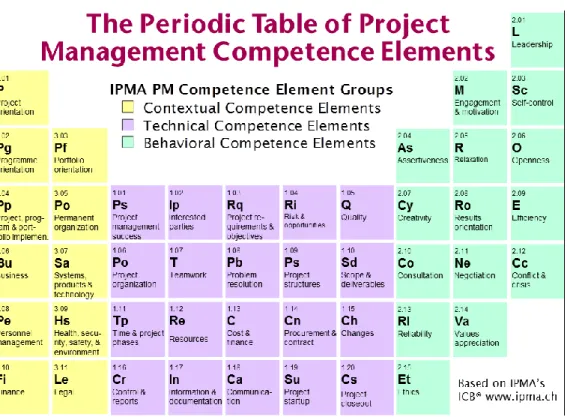
The ICB (IPMA 2006) differs from the PMBOK guide by having more focus on project leadership than the project execution. The ICB is a framework that includes 46 competence elements, divided into three categories (behavioral competences, technical competences and contextual competences) whiles the PMBOK guide focuses on ten knowledge areas. The ICB claims, these 46 competence elements are important for a project manager to consider in project. This framework includes more aspects of what being a project manager entails. Figure 5 includes behavioral competences such as creativity, ethics and openness which the knowledge areas of the PMBOK guide do not include. There is more awareness of the project manager as a person instead of guidelines on how to execute the project in the ICB compared to the PMBOK. The different elements are not developed for specific companies, industries or countries, therefore making it possible to apply this framework on many different projects. Not only can it be tailored to fit specific project needs, but also on cultural differences (IPMA 2013). Figure 5 provides a complete list of the competences divided in three categories.
18
Figure 5 the table of competence elements (IPMA 2013)
3.2.3 New perspectives on Project Management
According to Knut Samset (2008), there is a need of a new approach to project management and new criteria on what constitutes a successful project. He points out three perspectives on how to view a project for a project manager: the user perspective, the supplier perspective and the project owner perspective. The supplier perspective is the view that the project manager and the contractor have on the project, which is based on time, cost and quality (Iron triangle). Samset argues that this is the narrowest view of evaluating a project, and this limits the evaluation of the result of the project. Also, with this perspective, profit is often the most important goal, which can lead to some unfortunate consequences of the project that can create significant reactions from society.
The users are more concerned about the utility of the project rather than the actual execution, which the project manager should be aware of. With this perspective, the results of projects will have a broader evaluation. It is important to consider the needs and priorities of the users after the project is completed. These needs might differ significantly from the supplier and the project owner’s needs and priorities. Samset (2008) claims that the success rate of the project will decrease if only the supplier perspectives are considered, but he points out that the user perspective is more ambitious and time consuming. The last and third perspective is the
19
project owners; the owner’s perspective will usually overshadow the users. The owner has often a more long-term effect on the project. If the owner is a public organization, they will focus on the societal benefits of the project, while a private owner will normally focus on the value creation or the profit.
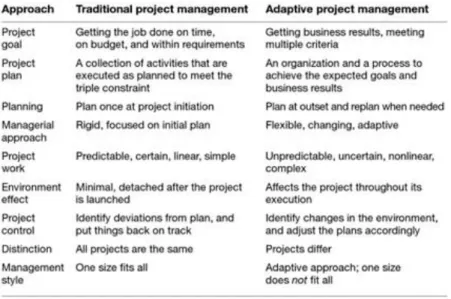
Shenhar and Dvir (2007) argue that a new framework and approach is needed in projects. Executives often believe that the budgets for projects are costs rather than investments. This is a misconception that needs to be dealt with. Project teams often try to follow guidelines that are well-established and that have become standard in the discipline of project management. Although the conventional project management body of knowledge provides a good foundation for basic training and initial training, it might not suffice for dealing with the complex issues of today’s projects. Even if everything is done by the guidelines of the conventional body of knowledge, the project may still fail. Traditional project management often fails due to the two major drivers: the iron triangle which entails time, cost and quality (performance) and the one size fits all. Many managers and executives assume that all projects are the same, and by following the guidelines of conventional project management books, it will bring success.
Shenhar and Dvir (2007), introduce the adaptive project management approach, based on successful, flexible and adaptive framework. Table 1 shows how to make the change from traditional project management to the adaptive approach. In the first column from the left, it shows the different steps and in the second column one can see how traditional project management handles the different steps. Finally, in the third column the solutions from adaptive project management are suggested.
20
Table 1 adaptive project management (Shenhar and Dvir 2007)
3.3 Supply Chain Management
According to Lambert and Cooper the most succinct definition of supply chain management (SCM) is “the integration of business processes from end user through original suppliers that
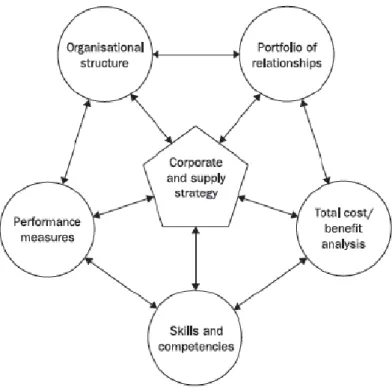
provides products, services, and information that add value for customers” (Lambert and Cooper 2000:66) . The term Strategic Supply Chain Management (SSCM) has gained importance in the strategic planning process in organizations, and SCM should be included in the organizations overall strategies (Handfield et al., 2005). Cousins et al., (2008) argues SSCM is a key strategic business process and that supply is needed to be viewed as a dynamic strategic process, not only as bureaucratic business function. Cousins et al., introduces the strategic supply wheel model, this is used as a framework to discuss the main issues related to supply chain management. The figure 6 illustrates key areas for consideration in SSCM and how these key areas are connected and with feedback loops between them, which indicates the areas are interrelated.
21
Figure 6 Key areas in SSCM (Cousins et al 2008)
According to Cousins et al., (2008) managers should not consider any area in isolation, for example focusing on portfolio of relationships and ignoring cost/benefit analysis. At the centre of this supply chain wheel is the construction of corporate and supply strategy. This key area holds the wheel together, without it the model would fall apart. Cousins et al argue that the key area in the middle requires strategic alignment between supply chain and corporate strategies. This is achieved when the supply chain strategies support and facilitates corporate strategy.
Skills and competencies for strategic supply is the first of five key areas in the wheel model, Cousins et al., (2008) claims that organizations is only as good as the skills and competencies that is provided, which means that supply chain management can be strategic if the personnel in this area possess the necessary skills and competencies. If these skills and competencies are not available the company might not reach its strategic objectives. Organizational structure which support supply strategies is the second key element that needs to be in place, as purchasing and SCM becomes more strategic part of the firm and is expected to become a more significant contributor to its competitive advantage. Therefore organizational structure becomes critical. In other words the shape, location and form of the organizational structures are important for successful SSCM.
22
Performance measurement is vital for a firm’s Supply chain management to be successful, and is an important approach of monitoring and evaluating the performance of the employees within this field. The main objective of a purchasing and supply chain performance measurement system is to assist in strategy implementation through a specific, formal and systemic approach to monitor and evaluate purchasing activities. A cost-benefit analysis is the fourth of the fifth key element in this supply chain wheel, Cousins et al., (2008) argues that traditionally price has been the main focus of the measurement of the performance of purchasing, but this might be too simple when evaluating purchasing and supply chain. All cost along the entire purchasing supply chain should be evaluated, rather than limited to price. This analysis is done to have a clear understanding of their strategy’s cost structure Finally the last element of the wheel is the portfolio of relationships, which deals with the of relationships a company has and how they should be managed. All relationships are important, both inter-and intra-firm relationships.
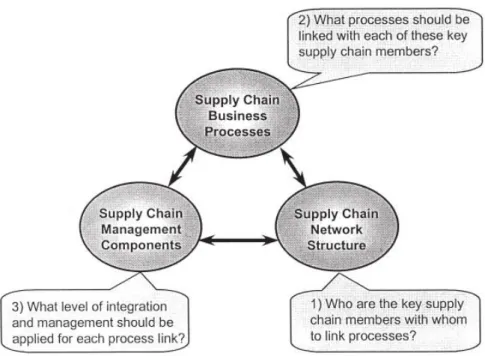
Lambert and Cooper (2000) introduces a conceptual framework for successful SCM, which emphasizes the interrelated nature of supply chain management. This framework consists of three closely related elements:
The supply chain network structure The supply chain business processes The supply chain management components
The member firms and the links between these firms forms a part of the supply chain network structure, while the activities that produce a specific output of value to the customer is related to the business processes. Finally the supply chain management component involves the managerial variables by which the business processes are integrated and managed across the supply chain. The figure 7 illustrates the elements and key decisions in this framework and also illustrates the interrelation which was mentioned earlier in the text. In addition shows the three questions that need to be discussed in this process of SCM.
23
Figure 7 Key elements and decisions in SCM (Lambert and Cooper 200)
According to Lambert and Cooper (2000) supply chain management involves identifying the supply chain members that are critical for the company’s business, and mapping the suppliers is vital for successful SCM. It is also necessary to recognize the importance of corporate culture and its compatibility with the supply chains or supplier. The supplier’s values and business culture should not be conflicted with the company’s interests; there should be at least some common grounds of how to do business. “Successful SCM requires a change from managing individual functions to integrating activities to key supply chain processes”(Lambert and Cooper 2000:72).
3.4 Purchasing
According to Van Weele (2012) purchasing involves:
“managing of the company’s external resources in a certain way that the supplies of all goods, services, capacities and knowledge that is necessary to operate, maintain and manage the company’s primary and supporting activities is secured under the best possible conditions” (Translated from Van Weele 2012:8).
Van Weele introduces the purchasing process to be performed in six steps:
Deciding the purchasing specification (quality and quantity) for the products and services that are necessary to procure.
Choosing the best possible suppliers, and develop procedures and routines to be able to make the best choices.
24
Prepare and carry out negotiations with the supplier with the aim of establishing an agreement and writing and formal contract.
Make an order with the chosen supplier and develop efficient orders and handling routines.
Monitor and control the orders to secure the supplies Follow up and evaluate (Assessment)
The figure 8 illustrates the sequence of each step in the purchasing process model. This is a schematic overview of the main activities in purchasing (Van Weele 2012).
Figure 8 The purchasing process (Van Weele 2012)
Van Weele (2012) claims purchasing is important for business, and that usually the largest part of the costs is related to cost of goods sold (COGS) and sales revenue of a company is due to purchased goods and services.As a consequence the lack of a well-defined purchasing policy and a poor structure on the purchasing process can lead to lack of control. This might cause unexpected financial loss due to extra purchasing costs. Van Weele presents the DuPont-analysis to show the benefits on a company’s rate of return on the net amount property/belongings through proper purchasing. He points out three ways how this might occur:
Through a reduction on all direct material costs. This will lead to immediate improvements in the company’s sales margin, which in return is going to affect the rate of return on the net amount of the company’s property positively. This can be
25
done by decreasing the number of suppliers, improved product standardization and by searching for replacement materials with more benefits.
Through a reduction of the working capital in the company. This might be positive on the capital’s turnover rate in the company/firm. Which can be achieved by improved supplier quality, leasing instead of buying equipment and reducing materials in storage by making “just in time” agreements with the suppliers.
Through improving the company’s income generating potential. A solution to achieve increase income is to challenge suppliers to innovate new products and process improvements, which can lead to new customer values that in return increase the profit margin. Since much of the innovations in many business sectors come from the suppliers, purchasing managers are challenged to mobilise their suppliers expertise and to involve themselves with the suppliers technical experts early in new product development processes.
3.4.1 Green Purchasing
Green Purchasing (GP) is a sequence of considerations in supply chain management. It is to identify the products causing negative impacts and replacing them with more environmental friendly products. GP involves reducing environmental impacts and maximizing resource efficiency. In other situations it might consist of looking at costs beyond purchasing prices and consider the environmental and social impacts of a certain product or service instead (Yeoman 2007). GP can be defined in various ways depending on which objective is to be achieved and in recent years there has been a steady growth of environmental initiatives in corporate practices. This has made it essential to perform more significant academic efforts to develop typologies of motivations and strategies, which has resulted in a larger body of literature (Hamner 2006).
Min and Galle (1997) introduces Green Purchasing strategies, the figure 9 illustrates the different strategies and trends within GP. The first step would be choosing whether if source reduction or waste elimination is goal, but one can also have a holistic approach and choose both strategies. The figure shows that the road towards GP can be travelled through many paths and therefore can be customised to fit each companies own environmental needs. In other words there are no “one size fits all” solutions.
26
Figure 9 Green purchasing strategies and trends (Min and Galle 1997)
According to Min and Galle (1997), the Green Purchasing practices today seems to be “reactive”, what this means is that companies try to avoid violations of environmental regulation, instead of being proactive by integrating environmental goals in their long-term corporate policy. The relationship between green purchasing and supplier quality assurance is weak. Min and Galle propose developing a more aggressive, and proactive environmental audit programs to achieve a greener purchasing policy. They suggest guidelines to an audit program:
1. Identify applicable environmental statutes.
2. Develop standard checklists for environmental compliances.
3. Organize an audit team comprised of both internal management and outside third-party inspectors (e.g., private contracting consultants).
4. Maintain records related to handling, storage, use, and disposal of waste. 5. Assess the nature and degree of potential violations and liabilities. 6. Develop a corrective action plan and monitor its progress (1997:16).
Carter et al., (2000) claims that environmental or green purchasing has a positive effect on firm performance, such as purchasing recycled packaging is a low cost alternative compared virgin material. This is due to development of reverse logistics infrastructure and recycling
27
factories. Purchasing packaging light weighting products does not only reduce costs, but can also reduce transportation cost by increasing the amount of products that can be shipped at the same time. Guinipero et al., (2012) argue that companies that are responsive to eco-oriented issues perform better in the global marketplace. Being green can provide competitive advantages, and by intensifying production through ecological responsiveness companies can reduce environmental impacts, as well lowering the input and waste disposal costs.
3.5 Environmental demands and decision-making
According to Berry and Rondinelli (1998) corporations in North America, Europe, Japan, and in most newly industrializing nations are embracing environmental protection as part of their international competitive strategies. For many companies, the change towards proactive environmental management is compelled by demands and requirements from governments, customers, employees, and competitors. Consumers and investors are starting to acknowledge the relationship between business performance and environmental performance. There is a demand of a more proactive corporate environmental management from several stakeholders and there is no longer an option to ignore these demands. Businesses will have to adapt and embrace these demands. Berry and Rondinelli provides a list of forces driving a proactive corporate environmental management:
Stakeholder forces: Customer demand clean processes and products, Shareholder rejection of environmental risks, Public demand for environmental protection.
Regulatory demands: More stringent regulations, Increasing legal liabilities, More stringent legal enforcement
Cost factors: Increasing costs of pollution control, New technologies for pollution prevention, Cost savings from waste reduction
Competitive Requirements: New business opportunities, International trade agreements, International voluntary standards, Spread of quality management principles (1998: 40).
By implementing a proactive environmental management, these driving forces could be dealt with significant success, and opens the possibilities for new opportunities. Berry and Rondinelli (1998) argues that the companies will have to consider going beyond complying with increasing regulation and that, “they must protect or enhance their ethical images, avoid
serious legal liabilities, satisfy the safety concerns of employees, respond to governmental regulators and stockholders, and develop new business opportunities in order to remain competitive in world markets” (1998:39). The AHP Model from Handfield et al., (2001) can
28
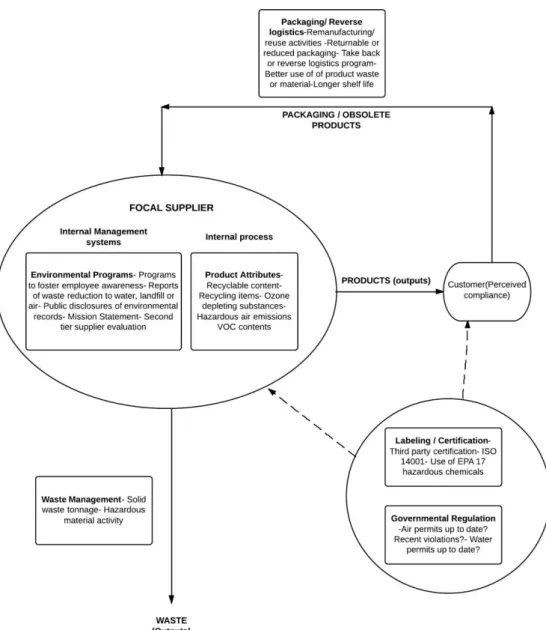
be used to help companies in environmental decision making. This model, is illustrated in figure 10, shows what environmental attributes to include when making environmental decisions. The model can be a framework to choose the most environmental friendly suppliers.
Figure 10 The AHP model (Handfield et al., 2001)
There are three agents involved in this model, the customer, supplier and third parties. Figure 10 illustrates the relationships between these actors and how they can all be included in the decision making process. It also shows what the different actors can contribute to better the environmental performance (Handfield et al., 2001).
29
4 Faveo Management
Faveo Management is the largest company within independent project management in Scandinavia. They offer project management, project development and specialist services for both small and large projects across different sectors including both private and public. Faveo assists their customers with all kinds of projects and alteration processes. Faveo has over 1500 on-going projects, with over 320 employees divided over 9 regional offices in total both in Norway and Sweden. Their revenue is about 420 million NOK (Faveo 2013b).
4.1 Organization
Faveo Prosjektledelse AS is a daughter under the parent company Faveo Management AS. In addition, under Faveo Management there is the Swedish daughter company Faveo Prosjektleding AB. However, the focus of the paper is Faveo Prosjektledelse AS. The organization of employees at Faveo is structured in top-level management, mid-level management, employees and supportive roles. The top-level positions consist of directors, while the mid-level management includes regional directors and section directors. The employees below mid-level management include the project managers, quality managers and project assistants. The supportive roles include: IT, human relations, finance and administration. Faveo has seven office locations in Norway; these are in Bergen, Trondheim, Tromsø, Oslo, Sarpsborg, Kristiansand and Tønsberg (Faveo 2012).
4.2 Environmental Outlook at Faveo Prosjektledelse
Faveo projektledelse considers the environment to be an important issue. Faveo is ISO 14001 certified, and some of their offices are Eco-lighthouse certified. One of their services includes assisting other companies to become ISO 14001 and Eco-lighthouse certified. Faveo has its own work group that focuses on CSR and environmental management that work both internally in the company and with customers. Faveo has also BREEAM expertise amongst their employees and can assist in projects that use the BREEAM assessment methodology (Faveo 2012).
4.3 Services provided by Faveo Prosjektledelse AS
Faveo has three main competency areas that they provide to their customers. This includes: project management, project development and specialist services. Their fields of operations are in the following sectors: Building and Property, Construction and infrastructure, Energy and Industry,Business development, IT and Technology Development.