
UC San Francisco Previously Published Works
Title
Interaction and cross-talk between non-coding RNAs.
Permalink
https://escholarship.org/uc/item/2kr336jw
Journal
Cellular and molecular life sciences : CMLS, 75(3)
ISSN
1420-682X
Authors
Yamamura, Soichiro
Imai-Sumida, Mitsuho
Tanaka, Yuichiro
et al.
Publication Date
2018-02-01
DOI
10.1007/s00018-017-2626-6
Peer reviewed
REVIEW
Interaction and cross‑talk between non‑coding RNAs
Soichiro Yamamura
1,2· Mitsuho Imai‑Sumida
1,2· Yuichiro Tanaka
1,2·
Rajvir Dahiya
1,2Received: 6 January 2017 / Revised: 7 August 2017 / Accepted: 9 August 2017 / Published online: 24 August 2017 © The Author(s) 2017. This article is an open access publication
Introduction
Recent high-throughput deep sequencing has enabled
genomic and transcriptomic sequencing with greater
sen-sitivity and accuracy than the previous technologies.
High-throughput RNA sequencing of whole genomes and
tran-scriptomes have revealed that ncRNAs constitute a majority
(98%) of the transcriptome with protein-coding RNAs
mak-ing up the rest (2%). High-throughput sequencmak-ing has also
enabled us to identify different types of non-coding RNAs
(ncRNAs) and quantify their expression levels in different
tissues, conditions, or developmental stages. ncRNAs have
been demonstrated to have important roles in gene
regula-tion and growing evidence indicates that non-coding RNAs
interact with each other and are co-regulated.
Long non‑coding RNA–microRNA interaction
LncRNAs are transcribed RNA molecules longer than 200
nucleotides and lncRNA transcripts account for a large
proportion of the non-coding transcriptome [
1
–
3
].
LncR-NAs are differentially expressed in various tissues and have
important functions in cellular processes such as cell
pro-liferation, motility, and apoptosis [
4
–
6
]. LncRNAs function
through diverse molecular mechanisms [
7
] and a number
of lncRNAs associate with chromatin-modifying complexes
regulating gene expression [
8
–
12
].
MicroRNAs (miRNAs) are highly conserved, single
stranded, non-coding RNAs of approximately 21–24
nucle-otides that regulate gene expression by post-transcriptional
silencing of specific target RNAs. They repress translation
or cleave RNA transcripts by binding to the 3
′
untrans-lated region (3
′
UTR) of target messenger RNAs (mRNAs)
through miRNA response elements (MREs) by integrating
Abstract
Non-coding RNA (ncRNA) has been shown to
regulate diverse cellular processes and functions through
controlling gene expression. Long non-coding RNAs
(lncR-NAs) act as a competing endogenous RNAs (ceR(lncR-NAs)
where microRNAs (miRNAs) and lncRNAs regulate each
other through their biding sites. Interactions of miRNAs and
lncRNAs have been reported to trigger decay of the targeted
lncRNAs and have important roles in target gene
regula-tion. These interactions form complicated and intertwined
networks. Certain lncRNAs encode miRNAs and small
nucleolar RNAs (snoRNAs), and may regulate expression
of these small RNAs as precursors. SnoRNAs have also
been reported to be precursors for PIWI-interacting RNAs
(piRNAs) and thus may regulate the piRNAs as a
precur-sor. These miRNAs and piRNAs target messenger RNAs
(mRNAs) and regulate gene expression. In this review, we
will present and discuss these interactions, cross-talk, and
co-regulation of ncRNAs and gene regulation due to these
interactions.
Keywords
Long non-coding RNA · Circular RNA ·
MicroRNA · Competing endogenous RNA · Interaction ·
Small nucleolar RNA · PIWI-interacting RNAs
* Soichiro Yamamura
1 Department of Urology, University of California, San Francisco, San Francisco, CA, USA
2 San Francisco Veterans Affairs Medical Center, San Francisco, CA, USA
into the RNA-induced silencing complex (RISC) that
con-tains members of the Argonaute (Ago) family of proteins
which silence the integrated RNAs [
13
–
16
]. MiRNAs also
regulate diverse biological processes such as cell-cycle
pro-gression, proliferation, apoptosis, and development [
17
,
18
].
Competitive endogenous RNA (ceRNA)
It has been reported that miRNAs bind to transcribed
pseu-dogenes and lncRNA through MREs, which compete for
the binding of these miRNAs to their mRNA-binding sites.
These RNAs act as molecular sponges or decoys and
sup-press the targeting of mRNAs by miRNAs and thus are
called competitive endogenous RNAs (ceRNAs). To be able
to act as a ceRNA, an MRE in lncRNA requires
incom-plete complimentary to miRNA binding. Thus, the
inter-actions of lncRNAs with miRNAs do not trigger decay of
the interacting RNAs or trigger only slow decays. CeRNA
activity regulates diverse cellular processes in development
and diseases (Table
1
), and lncRNA-miRNA interactions
form intertwined and complex regulatory networks.
Pio-neering works has been published in plants for (lncRNA),
human cells (pseudogenes), and viruses (small ncRNAs) as
described below.
CeRNA in plants
The first ceRNA reported was lncRNA IPS1 in plants. In
Arabidopsis thaliana
, the lncRNA IPS1 has a binding site
for the phosphate starvation-induced miR-399 [
19
]. The
mismatched sequence at the potential miRNA-binding site
in IPS1 prevents miR-399 from cleaving IPS1. Therefore,
IPS1 acts as a ceRNA for PHO2 that encodes an E2 ubiquitin
conjugase-related protein, a target of miR-399 [
19
].
Pseudogene ceRNA
Pseudogenes are genomic DNA sequences similar to
nor-mal genes but do not express their gene. The non-coding
PTENP1 pseudogene is highly homologous to the tumor
suppressor, phosphatase, and tensin homolog (PTEN).
Poliseno et al. have reported that the 3
′
UTR of PTENP1
is targeted by multiple miRNAs (20a, 19b,
miR-21, miR-26a, and miR-214) that also target the 3
′
UTR of
PTEN. Therefore, PTENP1 functions as a ceRNA (sponge)
for PTEN by preventing its repression by these miRNAs.
Thus, the 3
′
UTR of PTENP1 functions as a tumor
suppres-sor [
20
]. In the normal tissue and prostate tumor samples,
the correlation between PTEN and PTENP1 expression was
found, suggesting ceRNA regulation in these genes [
20
].
This study also describes that the 3
′
UTR of KRAS1P
pseu-dogene has binding sites for miR-143 and the let-7 miRNA
family, and acts as a ceRNA for KRAS, thereby functioning
as an oncogene [
20
]. This was the first study to describe that
pseudogenes have function and act as ceRNAs. However, the
binding sequences in PTENP1 3
′
UTRs perfectly match the
sequences of the miRNA seed regions which are
contrast-ing to ceRNA regulation by IPS1 (1.1.1) and circular RNA
ciRS
-
7
(
CDR1as
) (1.1.5). These binding may also trigger a
decay of PTENP1.
Also PTENP1 decoys oncogenic miRNAs, miR-17,
miR-19b, and miR-20a, and reduces downregulation of
their target gene, PTEN in hepatocellular carcinoma [
21
].
PTENP1 also rescues PH domain and leucine-rich repeat
protein phosphatase (PHLPP, a negative AKT regulator),
autophagy proteins Unc-51 like autophagy activating kinase
1 (ULK1), autophagy-related 7 (ATG7), and sequestosome 1
(p62), from downregulation by the miRNAs [
21
]. The mouse
Pbcas4 pseudogene functions as a ceRNA for human breast
carcinoma amplified sequence 4 (BCAS4) by sponging
miR-185 and suppressing the repression of miR-miR-185 target genes,
Bcl2, Il17rd, Pnpla3, Shisa7, and Tapbp [
22
]. LncRNA H19
and insulin like growth factor 2 (Igf2) are targeted by high
mobility group AT-hook 1 pseudogene 7
(HMGA1P7)-tar-geting miRNAs (miR-15, miR-16, miR-214, and miR-761),
and thus, HMGA1P7 functions as a ceRNA for H19 and
Igf2 in mice [
23
]. In this study, widely used overexpression
and knockdown were also applied, which may lead to
un-physiological conditions. However, HMGA1P7, H19, and
IGF2 expression was found to clearly positively correlate
in human breast cancer samples [
23
], indicating that the
ceRNA regulation may potentially occur under
physiologi-cal condition.
Small ncRNA ceRNA
T cells transformed by Herpesvirus saimiri express small
non-coding RNAs called viral U-rich non-coding RNAs
(HSURs). HSURs 1 and 2 were found to have potential
bind-ing sites for three host-cell miRNAs, miR-142-3p, miR-27,
and miR-16. Coimmunoprecipitation shows that HSURs 1
and 2 interact with these miRNAs in T cells transformed by
Herpesvirus saimiri. HSUR1 induces degradation of
miR-27 in a sequence-specific manner and prevents reduction of
expression of forkhead box 1 (FOXO1), a target of miR-27
[
24
]. This indicates that viral small ncRNAs have
poten-tial to manipulate host cells through ceRNA mechanisms.
These results indicate that triggering decay of miRNA
elic-its ceRNA regulation, which is contrasting to other ceRNA
mechanisms by which lncRNA are claim to only sequester
miRNAs.
lncRNA ceRNA
LincRNA‑RoR ceRNA
LincRNA-RoR was identified as a
lincRNA whose expression was increased in induced
pluripo-tent stem cells (iPSCs) compared with embryonic stem cells
(ESCs) using microarray [
25
]. It may inhibit cellular stress
pathways through the p53 response and promote survival in
iPSCs and ESCs [
25
]. This is the first report which
demon-strates that lincRNAs are capable of reprogramming ESCs to
iPSCs [
25
]. LincRNA-RoR has also been reported to
func-tion as an oncogene [
26
,
27
]. In stem cell field, an important
ceRNA function of linc-RoR was reported. Linc-RoR has
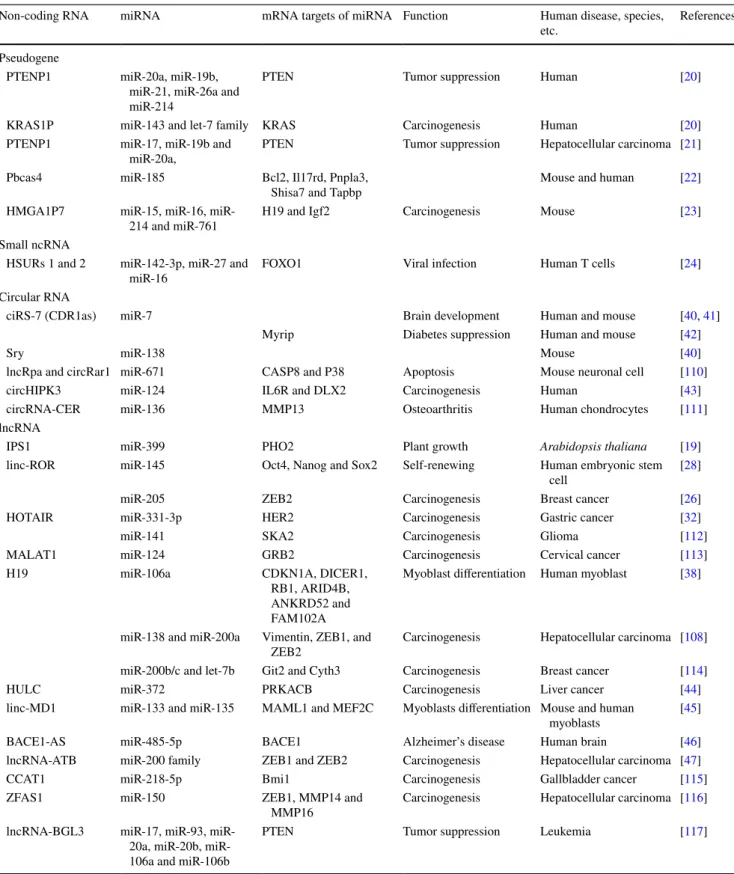
Table 1 Non-coding RNA partners in ceRNA regulatory mechanism
Non-coding RNA miRNA mRNA targets of miRNA Function Human disease, species,
etc. References
Pseudogene
PTENP1 miR-20a, miR-19b, miR-21, miR-26a and miR-214
PTEN Tumor suppression Human [20]
KRAS1P miR-143 and let-7 family KRAS Carcinogenesis Human [20] PTENP1 miR-17, miR-19b and
miR-20a, PTEN Tumor suppression Hepatocellular carcinoma [21] Pbcas4 miR-185 Bcl2, Il17rd, Pnpla3,
Shisa7 and Tapbp Mouse and human [22]
HMGA1P7 15, 16,
miR-214 and miR-761 H19 and Igf2 Carcinogenesis Mouse [23] Small ncRNA
HSURs 1 and 2 miR-142-3p, miR-27 and
miR-16 FOXO1 Viral infection Human T cells [24]
Circular RNA
ciRS-7 (CDR1as) miR-7 Brain development Human and mouse [40, 41] Myrip Diabetes suppression Human and mouse [42]
Sry miR-138 Mouse [40]
lncRpa and circRar1 miR-671 CASP8 and P38 Apoptosis Mouse neuronal cell [110]
circHIPK3 miR-124 IL6R and DLX2 Carcinogenesis Human [43]
circRNA-CER miR-136 MMP13 Osteoarthritis Human chondrocytes [111] lncRNA
IPS1 miR-399 PHO2 Plant growth Arabidopsis thaliana [19]
linc-ROR miR-145 Oct4, Nanog and Sox2 Self-renewing Human embryonic stem
cell [28]
miR-205 ZEB2 Carcinogenesis Breast cancer [26]
HOTAIR miR-331-3p HER2 Carcinogenesis Gastric cancer [32]
miR-141 SKA2 Carcinogenesis Glioma [112]
MALAT1 miR-124 GRB2 Carcinogenesis Cervical cancer [113]
H19 miR-106a CDKN1A, DICER1,
RB1, ARID4B, ANKRD52 and FAM102A
Myoblast differentiation Human myoblast [38]
miR-138 and miR-200a Vimentin, ZEB1, and
ZEB2 Carcinogenesis Hepatocellular carcinoma [108] miR-200b/c and let-7b Git2 and Cyth3 Carcinogenesis Breast cancer [114]
HULC miR-372 PRKACB Carcinogenesis Liver cancer [44]
linc-MD1 miR-133 and miR-135 MAML1 and MEF2C Myoblasts differentiation Mouse and human
myoblasts [45] BACE1-AS miR-485-5p BACE1 Alzheimer’s disease Human brain [46] lncRNA-ATB miR-200 family ZEB1 and ZEB2 Carcinogenesis Hepatocellular carcinoma [47]
CCAT1 miR-218-5p Bmi1 Carcinogenesis Gallbladder cancer [115]
ZFAS1 miR-150 ZEB1, MMP14 and
MMP16 Carcinogenesis Hepatocellular carcinoma [116] lncRNA-BGL3 17, 93,
20a, 20b, miR-106a and miR-106b
binding sites for miR-145 which binds to the 3
′
UTR of
tran-scription factors, Oct4, Nanog, and Sox2 [
28
]. Linc-RoR
func-tions as a ceRNA to prevent degradation of these transcription
factors by miR-145 targeting, and regulates transcriptional and
epigenetic networks in human embryonic stem cell [
28
].
HOTAIR ceRNA
HOTAIR is an lncRNA which is
local-ized in the Homeobox C (HOXC) gene cluster on
chromo-some 12. It interacts with the polycomb repressive complex 2
(PRC2) and lysine-specific demethylase 1 (LSD1) complex,
enhancing H3K27 trimethylation and H3K4 demethylation,
respectively, to suppress expression of multiple genes [
29
].
HOTAIR has been well studied and has been shown to
pro-mote cancer cell invasiveness [
29
,
30
] and to increase cell
proliferation, cell-cycle progression, and reduce apoptosis
[
31
]. HOTAIR acts as a ceRNA for human epithelial growth
factor receptor 2 (HER2) by binding to miR-331-3p to
pre-vent degradation of HER2, a target of miR-331-3p in gastric
cancer [
32
]. In this study, HOTAIR was also shown to be
a target of miR-124 [
32
]. This is the first HOTAIR ceRNA
study and made another milestone in HOTAIR research.
LncRNA H19 ceRNA
LncRNA H19 is one of the most
extensively studied lncRNAs. H19 is highly expressed
maternally in the developing mouse embryo with the
adja-cent insulin like growth factor 2 (Igf2) gene being
tran-scribed from the paternal allele [
33
]. H19 is only abundant
in skeletal muscle after birth [
33
], and H19 is
developmen-tally regulated and is activated very early during muscle cell
differentiation [
34
]. H19 has been reported to be
upregu-lated and promoted various cancers [
35
]; however, tumor
suppressing effects of H19 has also been reported [
36
,
37
].
H19 ceRNA activity in myoblast differentiation has been
reported. MiR-17-5p family members including miR-106a
were found to bind H19 in HeLa cells and myoblasts using
miRNA crosslinking and immunoprecipitation (miR-CLIP)
as described in 1.4. During myoblast differentiation, H19
level increases and level of miR-17-5p family members
decreases, suggesting that H19 acts as a ceRNA for these
miRNAs. Overexpression of miR-106a and H19 RNAi also
supported the ceRNA activities [
38
].
Circular RNA ceRNA
Circular RNA (circRNA) is a non-coding loop RNA in
which the 3
′
and 5
′
ends have been joined together.
CircR-NAs are resistant to endonuclease enzymatic degradation,
since they do not have susceptible 5
′
and 3
′
ends;
there-fore, circRNAs are more stable than linear RNAs. The sex
determining region Y (SRY) ncRNA was the first-reported
mammalian circRNA which was found in mouse testis.
Investigation of circRNAs is an early stage, although SRY
was discovered about 25 years ago [
39
].
Notable ceRNA studies of circRNA were reported for
cerebellar degeneration-related protein 1 (CDR1) antisense
transcript, ciRS-7 (CDR1as). CiRS-7 contains more than 60
selectively conserved target sites for miR-7 [
40
,
41
]. A
mis-match at the central part of the target sites prevents
miRNA-mediated cleavage; thus, ciRs-7 acts as a sponge for miR-7
and increases levels of miR-7 targets (Fig.
1
A) [
40
,
41
].
The high number of miR-7 target sites in ciRS-7 may have
an advantage for eliciting ceRNA regulation. SRY was also
found to function as a miR-138 sponge [
40
]. The ceRNA
functions of CiRS-7 in diabetes have also been examined.
MiR-7 targets myosin VIIA and Rab interacting protein
(Myrip) which stimulates insulin release from plasma
mem-brane and paired box 6 (Pax6), a transcription factor that
activates insulin transcription in pancreatic β cells. CiRS-7
sponges miR-7 to improve β cell function by rescuing Myrip
and Pax6 from their downregulation in diabetes [
42
].
Recent study shows that circHIPK3, circRNA derived
from the HIPK3 gene Exon2, was found to be significantly
abundant in various tissues compared with HIPK3 and
upregulated in liver cancer compared with matched normal
tissues [
43
]. The knockdown of circHIPK3 significantly
inhibits human cell growth. CircHIPK3 was found to bind
to 9 miRNAs with 18 potential binding sites [
43
]. Because
of these high number of binding sites, circHIPK3 may
poten-tially have ceRNA function under natural conditions. In
par-ticular, it has been demonstrated that circHIPK3 functions
as a ceRNA for miR-124 and inhibits miR-124 targeting of
proliferation-promoting genes, IL6R and DLX2 [
43
].
Other lncRNA ceRNA
Computational analysis has shown
that lncRNA HULC contains miR-372-binding sites [
44
].
HULC may act as a ceRNA, downregulating the activity
of miR-372 which downregulates protein kinase C alpha
(PRKACB) translation and induces phosphorylation of
CREB in liver cancer [
44
].
Linc-MD1 was found to be expressed during myoblast
differentiation, host precursors of muscle-specific miRNAs,
miR-206, and miR-133b. Linc-MD1 contains two miR-135
binding sites and one for miR-133. MiR-133 and miR-135
downregulate the expression of their target genes,
master-mind like transcriptional coactivator 1 (MAML1), and
myo-cyte enhancer factor 2C (MEF2C), that activate
muscle-spe-cific genes in mouse and human myoblasts. Linc-MD1 acts
as a ceRNA by binding to miR-133 and miR-135, and
pro-motes muscle differentiation [
45
]. A pre-miR-133b hairpin
structure in linc-MD1 may limit miR-133 accessibility and
the smaller number of the binding sites could limit ceRNA
activity, which is contrasting to ciRS-7 ceRNA activity.
LncRNA has been show to involve in Alzheimer’s
dis-ease. LncRNA BACE1-AS, which is highly upregulated
in brain samples from Alzheimer’s patients, acts as a
ceRNA for beta-Secretase 1 (BACE1) mRNA by binding
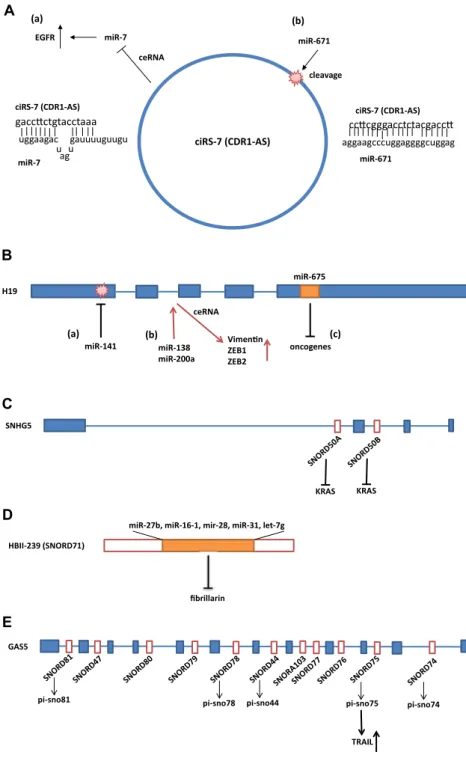
ciRS-7 (CDR1-AS) miR-7 miR-671 EGFR cleavage uggaagac gauuuuguugu gaccctgtacctaaa aggaagcccuggaggggcuggag cccgggacctctacgacc ag miR-7 miR-671 u u
ciRS-7 (CDR1-AS) ciRS-7 (CDR1-AS)
miR-675 H19
miR-141 miR-138 oncogenes miR-200a Vimenn ZEB1 ZEB2
A
B
ceRNA (a) (b) (a) (b) (c) ceRNA KRAS SNHG5C
GAS5pi-sno81 pi-sno78 pi-sno44 pi-sno75 pi-sno74
TRAIL
E
KRAS
HBII-239 (SNORD71)
miR-27b, miR-16-1, mir-28, miR-31, let-7g
fibrillarin
D
Fig. 1 Representative interactions and cross-talk between non-cod-ing RNAs. A Interaction and co-regulation between circular RNA, ciRS-7 (CDR1as), and miRNAs. (a) ciRS-7 (CDR1as) contains more than 60 binding sites for miR-7. A mismatch at the central part of the binding region prevents miRNA-mediated cleavage. Thus, ciRs-7 acts as a sponge for miR-7 and increase levels of miR-7 targets [40,
41]. (b) MiR-671 binds to ciRS-7 in a sequence-specific manner and
suppresses ciRS-7 expression and function [48]. B Interactions and co-regulation between lncRNA H19 and miRNAs. (a) MiR-141 binds to H19 in a sequence-specific manner and suppresses H19 expres-sion and its oncogenic function [107]. (b) H19 functions as a ceRNA for miR-138 and miR-200a, and reduces suppression of their targets Vimentin, ZEB1, and ZEB2 [108]. (c) MiR-675 which is encoded
by H19 targets mRNAs of oncogenes and functions as a tumor sup-pressor [82, 109]. C LncRNA SNHG5 encodes SNORD50A and SNORD50B which inhibit KRAS function. Expression of these snoRNAs may be dependent on the host lncRNA, SNHG5, and expression [90]. D HBII-239 (SNORD71) encodes miRNAs. Expres-sion of these miRNAs may depend on the expresExpres-sion of the host snoRNA, HBII-239 (SNORD71). The C/D box snoRNA HBII-239 (SNORD71)-derived miRNA precursors bind to fibrillarin protein, a component of a nucleolar small nuclear ribonucleoprotein (snRNP) [94]. E LncRNA GAS5 encodes snoRNAs that generate piwi-inter-acting RNAs, piRNAs. Pi-snoRNA 75, a piRNA, activates tumor necrosis factor (TNF)-related apoptosis inducing ligand (TRAIL) [97]
to miR-485-5p. A mismatch at the center of the binding site
prevents downregulation of BACE1 mRNA, a target of
485-5p, which was demonstrated by knockdown of
miR-485-5p and BACE1-antisense overexpression experiments
[
46
].
Transforming growth factor beta (TGF-b)-inducing
lncRNA-ATB functions as a decoy for the miR-200 family,
which upregulates ZEB1 and ZEB2, targets the miR-200
family and induces EMT and invasion in hepatocellular
car-cinoma [
47
]. However, lncRNA-ATB binds to the miR-200
family through the perfect-matched seed regions of the
miR-NAs, which may also decay lncRNA-ATB.
MiRNA targeting of lncRNA
An increasing number of publications demonstrate that
miR-NAs interact with lncRmiR-NAs through MRE, thereby
trigger-ing decay of lncRNA or represstrigger-ing its function (Table
2
).
The first evidence for an ncRNA as a miRNA target was
the finding that MiR‐671 targets and cleaves circRNA, the
cerebellar degeneration-related protein 1 (CDR1) antisense
transcript, and ciRS-7 (CDR1as) in an Ago2‐dependent
manner in human cells [
48
]. CiR-7 (CDR1as) was found
to be formed via non-linear splicing [
48
]. There is positive
correlation between the cerebellar degeneration-related
pro-tein 1 (CDR1) mRNA and ciR-7 (CDR1as) expression levels
[
48
]. The decrease of ciR-7 (CDR1as) levels by miR-671
also reduces the CDR1 mRNA levels [
48
]. As described in
1.1.5, ciRS-7 functions as a ceRNA for miR-7 and also as
a target of miR-671 leading to cleavage, which depends on
the binding sequences between ciRS-7 and these miRNAs.
Cleavage requires perfect or near perfect match of the
bind-ing site, while ceRNA mechanisms require mismatches in
the binding sequences not to cleave the target (Fig.
1
A).
LncRNA metastasis associated with lung adenocarcinoma
transcript 1 (MALAT1) was originally found to be highly
expressed in metastatic non-small-cell lung cancers and is a
highly conserved lncRNA [102]. MALAT1 is upregulated in
various cancers, and promotes proliferation and metastasis
of tumor cells. MiR-9 targets lncRNA MALAT1 through its
binding site in an Ago2-dependent manner in the nucleus
which was revealed by in situ hybridization and confocal
microscopy [
49
]. This study clearly shows that the miRNA
interacts with the lncRNA in the nucleus. MiR-192 and
miR-204 were found to target HOTTIP in a sequence-specific and
Ago2-dependent manner and inhibited proliferation of
hepa-tocellular carcinoma [
50
]. Microarrays identified
glutami-nase (GLS1), whose marked elevation in cancers has been
observed as a downstream gene of HOTTIP [
50
]. In tissue
specimens, miR-192 and miR-204 expressions are low and
HOTTIP is high in hepatocellular carcinoma compared with
normal tissues, showing a negative correlation between these
miRNAs and HOTTIP expression [
50
]. This study indicates
that interaction between lncRNA and miRNA is highly
rel-evant to cancer progression.
In neurodegenerative disorders, interaction between
miRNA and lncRNA has been reported. A CAG repeat
expansion in ATXN7, an essential component of the
mam-malian transcription coactivator complex, STAGA, causes
spinocerebellar ataxia type 7 (SCA7), a neurodegenerative
disorder. STAGA induces miR-124 which binds to the 3
′
UTR
of lnc-SCA7 and ATX7, a component of STAGA, and
sup-presses the expression of these genes in a sequence-specific
manner, showing intriguing feedback regulation [
51
].
Computational analysis of lncRNA–miRNA interaction
There have been a number of reports that demonstrate
lncRNA–miRNA interaction identified by computational
or data analysis (Table
2
). The algorithms for miRNA
tar-get search are based on conserved, six-nucleotide
interac-tions between the 5
′
end of the miRNA, the seed region,
and the 3
′
UTR of the target mRNA. Since the miRNA
tar-get is predicted experimentally and computationally using
various algorithms, the results vary in these different
algo-rithms [
52
]. Bioinformatic prediction of lncRNA-miRNA
and ceRNA interactions depends on the algorithms used for
miRNA target search; therefore, varied predictions are
pro-duced with different algorithms.
Experimental miRNA–lncRNA interactions:
methodology and data base
Experimental validation is indispensable for documenting
miRNA–lncRNA interactions and ceRNA mechanisms.
Crosslinking immunoprecipitation (CLIP) with antibodies
against components of the RNA-induced silencing complex
(RISC), particularly the Argonaute (AGO) family, has been
developed and widely used for RNA interaction studies.
CLIP sequencing (CLIP-Seq) techniques, an application
of high-throughput sequencing methodologies, have been
used extensively to characterize biologically relevant
pro-tein–RNA interactions [
40
].
One of the important methods in miRNA–lncRNA
interaction study, miRNA crosslinking, and
immunopre-cipitation (miR-CLIP), was developed with H19. In this
method, miRNA with psoralen and biotin are transfected
into cells. After photo-crosslinking, Ago2
immunoprecipi-tation is performed, followed by streptavidin affinity
puri-fication of the miRNA-linked RNAs. The captured miRNA
targets are then identified by deep sequencing. MiR-CLIP
with pre-miR-106a, a miR-17-5p family member, was
per-formed and H19 was identified as an miR-106 target.
MiR-106a targets which TargetScan indicated were significantly
enriched by miR-CLIP compared to non-targets, verifying
that the method was effective [
38
].
CLIP-Seq-based approaches have been applied to
different types of cells and tissues in RNA research.
Advanced CLIP-Seq techniques such as (1)
high-throughput sequencing of RNA isolated by
crosslink-ing immunoprecipitation (HITS-CLIP) [
53
,
54
]; (2)
photoactivatable-ribonucleoside-enhanced crosslinking and
immunoprecipitation (PAR-CLIP) [
55
]; and (3)
crosslink-ing, ligation, and sequencing of hybrids (CLASH) [
56
] are
able to identify a large number of Argonaute-bound target
sequences that contain miRNA-binding sites in targeted
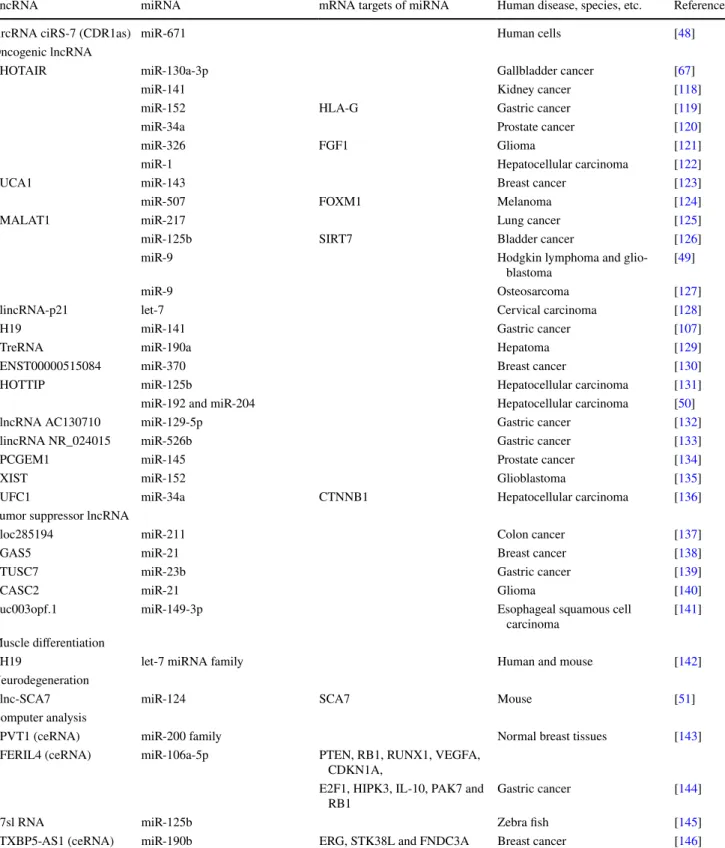
Table 2 MiRNA targeting of lncRNA by direct interaction
LncRNA miRNA mRNA targets of miRNA Human disease, species, etc. References
circRNA ciRS-7 (CDR1as) miR‐671 Human cells [48]
Oncogenic lncRNA
HOTAIR miR-130a-3p Gallbladder cancer [67]
miR-141 Kidney cancer [118]
miR-152 HLA-G Gastric cancer [119]
miR-34a Prostate cancer [120]
miR-326 FGF1 Glioma [121]
miR-1 Hepatocellular carcinoma [122]
UCA1 miR-143 Breast cancer [123]
miR-507 FOXM1 Melanoma [124]
MALAT1 miR-217 Lung cancer [125]
miR-125b SIRT7 Bladder cancer [126]
miR-9 Hodgkin lymphoma and
glio-blastoma [49]
miR-9 Osteosarcoma [127]
lincRNA-p21 let-7 Cervical carcinoma [128]
H19 miR-141 Gastric cancer [107]
TreRNA miR-190a Hepatoma [129]
ENST00000515084 miR-370 Breast cancer [130]
HOTTIP miR-125b Hepatocellular carcinoma [131]
miR-192 and miR-204 Hepatocellular carcinoma [50]
lncRNA AC130710 miR-129-5p Gastric cancer [132]
lincRNA NR_024015 miR-526b Gastric cancer [133]
PCGEM1 miR-145 Prostate cancer [134]
XIST miR-152 Glioblastoma [135]
UFC1 miR-34a CTNNB1 Hepatocellular carcinoma [136]
Tumor suppressor lncRNA
loc285194 miR-211 Colon cancer [137]
GAS5 miR-21 Breast cancer [138]
TUSC7 miR-23b Gastric cancer [139]
CASC2 miR-21 Glioma [140]
uc003opf.1 miR-149-3p Esophageal squamous cell
carcinoma [141]
Muscle differentiation
H19 let-7 miRNA family Human and mouse [142]
Neurodegeneration
lnc-SCA7 miR-124 SCA7 Mouse [51]
Computer analysis
PVT1 (ceRNA) miR-200 family Normal breast tissues [143]
FERIL4 (ceRNA) miR-106a-5p PTEN, RB1, RUNX1, VEGFA, CDKN1A,
E2F1, HIPK3, IL-10, PAK7 and
RB1 Gastric cancer [144]
7sl RNA miR-125b Zebra fish [145]
RNAs. The databases have been developed by
integrat-ing these data and the public data resources for
interac-tions between lncRNA and miRNA and ceRNA as listed in
Tables
3
and
4
, respectively.
Overlapping of ceRNA regulatory mechanisms
and downregulation of lncRNA by direct miRNA–
lncRNA interactions
The interactions between lncRNAs and miRNAs which
mediate ceRNA mechanisms may trigger silencing of
lncR-NAs under certain conditions, since lncRlncR-NAs may be
inte-grated into the RISC complex and potentially cleaved by
Argonaute proteins. The cleavage requires perfect or near
perfect match of the binding site. CeRNA mechanisms
require mismatches in the binding sequences to avoid
imme-diate cleavage of the target. If the binding is long enough, it
may trigger decay, although no information about
require-ment for binding duration is available. The majority of
ceRNA studies show perfect or near perfect matches of
bid-ing sequences between lncRNAs and miRNAs. Therefore,
these reported ceRNA interactions may also lead to cleavage
of lncRNAs in addition to ceRNA regulation. In fact, viral
small ncRNA HSUR1 induces degradation of miR-27 in a
sequence-specific manner and functions as a ceRNA [
24
].
Every interaction between miRNA and lncRNA may trigger
decay of lncRNA or inhibit lncRNA function and also may
function as ceRNA. Therefore, these two mechanisms may
overlap each other.
Indirect interaction and co‑regulation between lncRNA
and miRNA
A number of reports indicate that inverse expression
lev-els between miRNA and lncRNA may occur without direct
binding, suggesting cross-talk between these ncRNAs
(Table
5
).
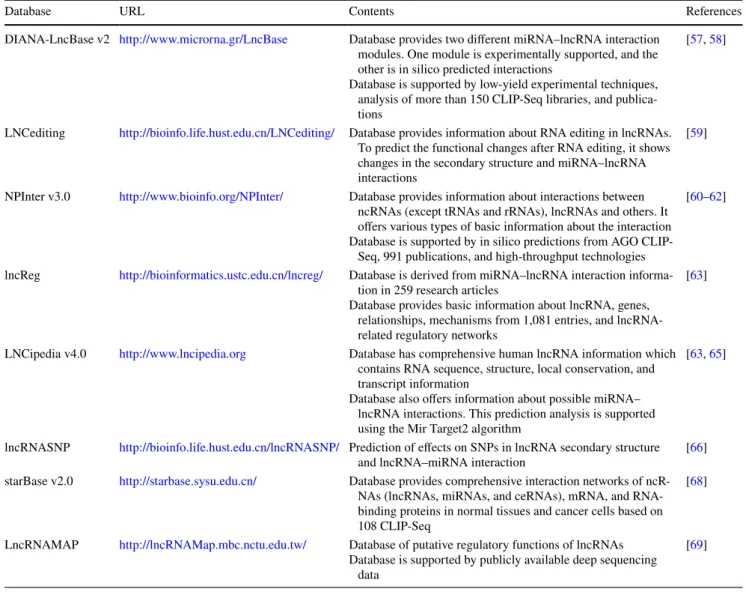
Table 3 LncRNA–miRNA databases
Database URL Contents References
DIANA-LncBase v2 http://www.microrna.gr/LncBase Database provides two different miRNA–lncRNA interaction modules. One module is experimentally supported, and the other is in silico predicted interactions
Database is supported by low-yield experimental techniques, analysis of more than 150 CLIP-Seq libraries, and publica-tions
[57, 58]
LNCediting http://bioinfo.life.hust.edu.cn/LNCediting/ Database provides information about RNA editing in lncRNAs. To predict the functional changes after RNA editing, it shows changes in the secondary structure and miRNA–lncRNA interactions
[59]
NPInter v3.0 http://www.bioinfo.org/NPInter/ Database provides information about interactions between ncRNAs (except tRNAs and rRNAs), lncRNAs and others. It offers various types of basic information about the interaction Database is supported by in silico predictions from AGO
CLIP-Seq, 991 publications, and high-throughput technologies
[60–62]
lncReg http://bioinformatics.ustc.edu.cn/lncreg/ Database is derived from miRNA–lncRNA interaction informa-tion in 259 research articles
Database provides basic information about lncRNA, genes, relationships, mechanisms from 1,081 entries, and lncRNA-related regulatory networks
[63]
LNCipedia v4.0 http://www.lncipedia.org Database has comprehensive human lncRNA information which contains RNA sequence, structure, local conservation, and transcript information
Database also offers information about possible miRNA– lncRNA interactions. This prediction analysis is supported using the Mir Target2 algorithm
[63, 65]
lncRNASNP http://bioinfo.life.hust.edu.cn/lncRNASNP/ Prediction of effects on SNPs in lncRNA secondary structure and lncRNA–miRNA interaction [66] starBase v2.0 http://starbase.sysu.edu.cn/ Database provides comprehensive interaction networks of
ncR-NAs (lncRncR-NAs, miRncR-NAs, and ceRncR-NAs), mRNA, and RNA-binding proteins in normal tissues and cancer cells based on 108 CLIP-Seq
[68]
LncRNAMAP http://lncRNAMap.mbc.nctu.edu.tw/ Database of putative regulatory functions of lncRNAs Database is supported by publicly available deep sequencing
data
Interestingly, lncRNA HULC was found to regulate
lipid metabolism. HULC upregulates the
transcrip-tional factor peroxisome proliferator-activated receptor
alpha (PPARA) which increases acyl-CoA synthetase
long-chain family member 1 (ACSL1), leading to
tri-glycerides and cholesterol production and proliferation
of hepatoma cells [
74
]. Cholesterol upregulates HULC
expression through the retinoid receptor RXRA, which
also increases HULC expression by activating the HULC
promoter, indicating a positive feedback [
74
]. HULC also
increases methylation of CpG islands in the miR-9
pro-moter and suppressed miR-9 targeting of PPARA. Thus,
HULC promotes lipogenesis and malignancy in hepatoma
cells [
74
].
Single-nucleotide polymorphisms (SNP) in lncRNA
were reported to affect its function. LncRNA CCAT2
which contains the colorectal cancer-risk-associated
rs6983267 SNP transcriptionally upregulates MYC,
miR-17-5p, and miR-20a by physically interacting with
TCF7L2. This activates the WNT signaling pathway and
causes metastatic progression and chromosomal
instabil-ity in colon cancer [
75
]. CCAT2 is also a WNT
down-stream target, suggesting the existence of a feedback loop
[
75
]. The rs6983267 G allele was found to produce more
CCAT2 transcript than T allele [
75
].
Non‑coding RNA as precursors for shorter
non‑coding RNA
High-throughput deep sequencing of transcriptomes shows
that certain lncRNAs encode miRNAs and other ncRNAs
encode shorter ncRNAs which is discussed below. The
expression of these ncRNAs may be correlated.
Table 4 CeRNA databases
Database URL Content References
spongeScan http://spongescan.rc.ufl.edu Database predicts miRNA response elements in lncRNAs and pre-sumes lncRNA function as miRNA sponges
Sequence complementarity underlies this database
[70]
SomamiR 2.0 http://compbio.uthsc.edu/SomamiR Database contains functional analysis of expected miRNA–ceRNA (including mRNAs, circular RNAs and lncRNA) interaction/ changes caused by somatic mutations in cancer
[71, 72]
ceRNABase http://starbase.sysu.edu.cn/mrnaCeRNA.php Part of starBase v2.0 [68]
lnCeDB http://gyanxet-beta.com/lncedb/ Database of human lncRNAs that act as ceRNAs. This database
assesses lncRNA–mRNA interactions which are potentially con-trolled by common miRNAs
[73]
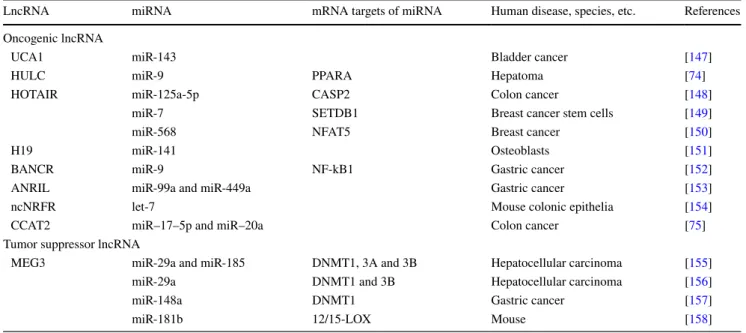
Table 5 Indirect interaction between lncRNA and microRNA
LncRNA miRNA mRNA targets of miRNA Human disease, species, etc. References Oncogenic lncRNA
UCA1 miR-143 Bladder cancer [147]
HULC miR-9 PPARA Hepatoma [74]
HOTAIR miR-125a-5p CASP2 Colon cancer [148]
miR-7 SETDB1 Breast cancer stem cells [149]
miR-568 NFAT5 Breast cancer [150]
H19 miR-141 Osteoblasts [151]
BANCR miR-9 NF-kB1 Gastric cancer [152]
ANRIL miR-99a and miR-449a Gastric cancer [153]
ncNRFR let-7 Mouse colonic epithelia [154]
CCAT2 miR–17–5p and miR–20a Colon cancer [75]
Tumor suppressor lncRNA
MEG3 miR-29a and miR-185 DNMT1, 3A and 3B Hepatocellular carcinoma [155]
miR-29a DNMT1 and 3B Hepatocellular carcinoma [156]
miR-148a DNMT1 Gastric cancer [157]
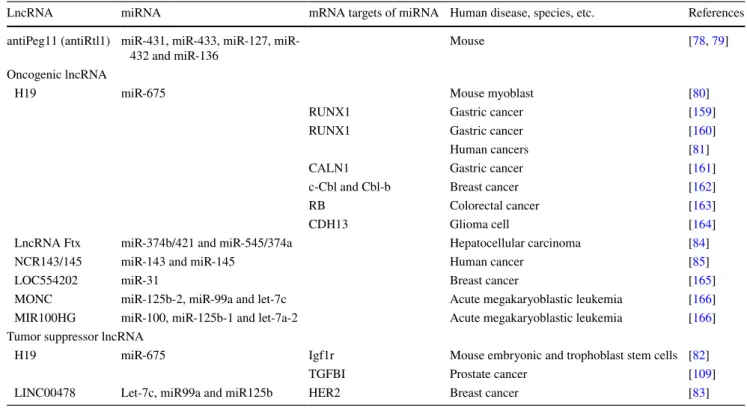
LncRNA encoding miRNA
Microarray profiling of miRNAs has demonstrated that
miR-NAs are frequently coexpressed with their host genes [
76
].
In addition, miRNAs have been found to be located in the
exons of ncRNAs and the introns of protein-coding genes
[
77
]. For example, antiPeg11 (antiRtl1) encodes miR-431,
miR-433, miR-127, miR-432, and miR-136 [
78
,
79
]. Thus,
lncRNAs may regulate their encoding miRNAs as
precur-sors (Table
6
).
LncRNA H19 encodes miR‑675
H19/miR-675 function has been well studied and
estab-lished. H19 exon1 encodes miRNAs, 675-3p, and
miR-675-5p, which are induced during skeletal muscle
differen-tiation [
80
]. Reintroduction of miR-675-3p and miR-675-5p
rectifies abnormal skeletal muscle regeneration after injury
in H19-deficient mice [
80
]. miR-675-3p and miR-675-5p
promote skeletal muscle differentiation and regeneration by
targeting the anti-differentiation Smad transcription factors
[
80
]. This study clearly demonstrated the H19/miR675 role
in vivo.
H19/miR-675 has been reported to be an oncogene.
TGF-β and hypoxia were shown to induce H19, miR-675,
and EMT markers such as Snail and Slug. TGF-β induces
Slug, H19, and miR-675 through the PI3K/AKT pathway,
while H19 induces Slug and suppresses E-cadherin in cancer
cells [
81
]. H19/miR-675 has also been reported to be a tumor
suppressor. The release of miR-675 from H19 is inhibited
by the stress-response RNA-binding protein, ELAV Like
RNA-Binding Protein 1 (HuR) [
82
]. MiR-675 potentially
targets growth-promoting Igf1r and inhibits proliferation of
embryonic and extra-embryonic cell lines [
82
]. Both tumor
suppressor and oncogenic functions have been reported for
H19/miR-675, suggesting that its function depends on cell
type.
Other lncRNAs which encode miRNAs
MiRNA profiling shows that let-7c and miR125b are encoded
in an intron of the lncRNA LINC00478, and are found to
be elevated in the estrogen-dependent human breast cancer
cell line compared with its estrogen-independent derivative
[
83
]. In breast cancer cell lines, miR125b and let-7c directly
target the HER2 3
′
UTR, downregulating HER2, an oncogene
which has been shown to play an important role in the
pro-gression of breast cancer [
83
]. LncRNA Ftx hosts the
374b/421 and 545/374a clusters in its intron. The
miR-545/374a cluster was found to be upregulated in Hepatitis
B virus (HBV)-related hepatocellular carcinoma tissues in
comparison to matched non-cancerous liver tissue specimens.
Overexpression and knockdown of miR-545/374a show that
the miR-545/374a cluster may promote tumorigenesis of
HBV-related hepatocellular carcinoma [
84
]. DEAD-box
RNA helicase 6, DDX6 (p54/RCK), which is accumulated
in processing bodies (P-bodies), promotes the
degrada-tion of lncRNA NCR143/145 RNA, a host gene of tumor
Table 6 LncRNA encoding miRNA
LncRNA miRNA mRNA targets of miRNA Human disease, species, etc. References antiPeg11 (antiRtl1) 431, 433, 127,
miR-432 and miR-136 Mouse [78, 79]
Oncogenic lncRNA
H19 miR-675 Mouse myoblast [80]
RUNX1 Gastric cancer [159]
RUNX1 Gastric cancer [160]
Human cancers [81]
CALN1 Gastric cancer [161]
c-Cbl and Cbl-b Breast cancer [162]
RB Colorectal cancer [163]
CDH13 Glioma cell [164]
LncRNA Ftx miR-374b/421 and miR-545/374a Hepatocellular carcinoma [84]
NCR143/145 miR-143 and miR-145 Human cancer [85]
LOC554202 miR-31 Breast cancer [165]
MONC miR-125b-2, miR-99a and let-7c Acute megakaryoblastic leukemia [166] MIR100HG miR-100, miR-125b-1 and let-7a-2 Acute megakaryoblastic leukemia [166] Tumor suppressor lncRNA
H19 miR-675 Igf1r Mouse embryonic and trophoblast stem cells [82]
TGFBI Prostate cancer [109]
suppressors miR-143/145. The post-transcriptional
down-regulation of miR-143/145 promotes malignancy in cancer
cells [
85
]. These studies including H19/miR-675 indicate that
the miRNAs encoded in lncRNA have functional roles.
LncRNA encoding small nucleolar RNA
Small nucleolar RNAs (snoRNAs) are non-coding RNAs
of approximately 60–200 nucleotides, which chemically
modify other RNAs, ribosomal RNAs (rRNAs), transfer
RNAs, and small nuclear RNAs, and are primarily required
for maturation of rRNAs. Two main classes, box C/D
snoR-NAs and box H/ACA snoRsnoR-NAs, have been identified. The
box C/D snoRNAs and H/ACA snoRNAs guide by base
pairing 2
′
-O-ribose methylation and pseudouridylation of
specific rRNAs, respectively (reviewed in [
86
]). In addition
to these functions, snoRNAs have been reported to have
non-canonical functions such as splicing and editing (reviewed in
[
87
]). Dysregulation of snoRNA expression has been
dem-onstrated in various diseases including cancer (reviewed in
[
88
]). LncRNAs have also been found to encode snoRNAs
(Table
7
).
LncRNA small nucleolar RNA host genes (SNHGs)
encode snoRNAs, as indicated in Table
7
. SNHG4 hosts
small nucleolar RNA (snoRNA) U19 (SNORA74A) in
intron 3 [
89
]. SNHG5 hosts snoRNAs, SNORD50A, and
SNORD50B which were found to be deleted in various
cancers, also bind KRAS protein, and inhibit RAS-ERK1/
ERK2 signaling (Fig.
1
C) [
90
]. In this study, the hosting and
function of SNHG5 was not studied; however, significant
tumor suppressing effects of SNORD50A and SNORD50B
were demonstrated [
90
]. ZFAS1 which encodes SNORD12,
SNORD12B, and SNORD12C functions as a tumor
sup-pressor and is potentially a marker for breast cancer [
91
].
The expression level between ZFAS1 and the encoded
snoR-NAs was found to be not correlated [
91
]. There has been
no report regarding functional interaction between lncRNA
and its encoding snoRNA as far as we know. However, long
ncRNAs with snoRNA ends (sno-lncRNAs) were discovered
[
92
]. Sno-lncRNAs are intron-derived and have snoRNAs
on both ends. The genomic region encoding one abundant
class of sno-lncRNAs is specifically deleted in Prader–Willi
Syndrome (PWS). SnoRNAs are known to localize to Cajal
bodies or nucleoli; however, sno-lncRNAs are localized in
subnuclear sites near their sites of synthesis in the PWS
region. Thus, these sno-lncRNAs interact with Fox2 splicing
factor and modify splicing [
92
]. These results indicate that
cooperation of snoRNA and lncRNA enables this function.
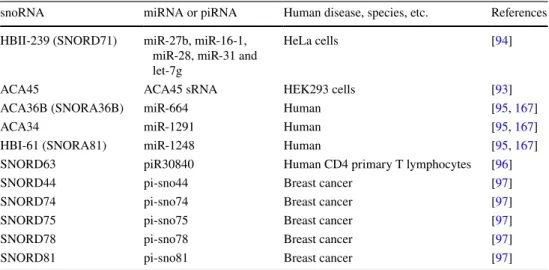
SnoRNA encoding miRNA
Deep sequencing has identified short RNAs derived from
snoRNAs. H/ACA box snoRNAs generate RNAs of 17–19
nt in length and C/D box snoRNAs generate RNAs longer
than 27 nt. SnoRNAs have been found to encode miRNAs
and their expression is likely to be dependent on the host
snoRNAs. A combination of deep sequencing and
bioin-formatics has discovered snoRNA-generated miRNAs
(sno-miRNAs) (Table
8
).
Generation of miRNA AKA45S from the H/ACA box
snoRNA ACA45 was found to be DICER-dependent and
AKA45S potentially targets the mRNA of Cyclin-Dependent
Kinase 19 (CDC2L6) in HEK293 cells [
93
]. This suggests
that AKA45S functions as an miRNA [
93
]. Computational
analyses also identified 84 miRNAs that box C/D snoRNAs
or their precursors encode, and have similarity to box C/D
snoRNAs. Of these miRNAs, C/D box snoRNA HBII-239
(SNORD71)-derived miRNA precursors, miR-27b,
miR-16-1, mir-28, miR-3miR-16-1, and let-7g were found to bind to
fibrilla-rin protein, a component of a nucleolar small nuclear
ribonu-cleoprotein (snRNP), suggesting that these miRNAs evolved
from the snoRNA (Fig.
1
D) [
94
]. Deep sequencing revealed
that C/D box snoRNAs generated sno-miRNAs [
95
].
Experi-mental analysis shows that C/D snoRNAs, ACA36b,
HBI-61, and ACA34, encode sno-miRNAs, miR-664, miR-1248,
and miR-1291, respectively, which function in gene
silenc-ing [
95
]. These studies indicate that miRNAs may have
evolved from snoRNAs and gained their functions.
SnoRNA encoding Piwi‑interacting RNA
Piwi-interacting RNAs (piRNAs), 24–31 nucleotides in
length, are the largest class of small non-coding RNA
mol-ecules expressed in animal cells. PiRNAs form silencing
complexes by interacting with piwi proteins, a subfamily of
the Argonaute proteins, and the complexes repress
transpo-sons and other genetic elements in germ line cells, especially
genetic elements in spermatogenesis through transcriptional
or post-transcriptional mechanisms. A combination of deep
sequencing and bioinformatics also has discovered
snoRNA-generated piRNAs (sno-piRNAs) (Table
8
).
Two studies have notably demonstrated that
snoRNA-derived piRNAs are functional in human cells. Deep
sequencing has identified 20 C/D snoRNAs-derived
piR-NAs (sno-piRpiR-NAs) in human CD4 primary T lymphocytes
[
96
]. One sno-piRNA, piR30840, downregulates the
expres-sion of IL-4 by binding to the pre-mRNA intron of IL4 in
a sequence-specific manner [
96
]. This downregulation was
found to be associated with Piwil4 and Ago4, which further
interacts with Trf4–Air2–Mtr4 Polyadenylation (TRAMP)
complex [
96
]. Another study has shown that lncRNA GAS5
hosts several snoRNAs and some of them generate
sno-piR-NAs. One of these, pi-sno75 upregulates the transcription
of tumor necrosis factor (TNF)-related apoptosis inducing
ligand (TRAIL), a proapoptotic protein, by binding to its
promoter. Pi-sno75 interacts with the PIWIL1
/
4 proteins and
Table 7 LncRNA encoding snoRNA and miRNA
Based on University of California, Santa Cruz (UCSC) Genome Browser
LncRNA snoRNA and miRNA Human
dis-ease, species etc.
References
SNHG1 SNORD22, SNORD25, SNORD26, SNORD27, SNORD28, SNORD29, SNORD30, and SNORD31
GAS5 (SNHG2) SNORD44, SNORD47, SNORD74, SNORD75, SNORD76 SNORD77, SNORD78, SNORD79, SNORD80, SNORD81, and SNORA103
SNHG3 SNORA73A and SNORA73B
SNHG4 snoRNA U19 (SNORA74A) and SNORA74 Human [89]
SNHG5 SNORD50A and SNORD50B Human cancer [90]
SNHG6 SNORD87
SNHG7 SNORA17, SNORA17A, SNORA17B and SNORA43 SNHG8 SNORA24
SNHG9 SNORA78 SNHG10 SCARNA13
SNHG11 SNORA60 and SNORA71E
SNHG12 SNORA16A, SNORA44, SNORA61, and SNORD99 DANCR SNORA26
SNHG14 SNORD115 cluster, SNORD116 cluster, SNORD109A, and SNORD109B SNHG15 SNORA9
SNHG16 SNORD1A, SNORD1B, and SNORD1C
SNHG17 SNORA71, SNORA71A, SNORA71B, SNORA71C, and SNORA71D SNHG18 SNORD123
SNHG19 snoR1 and SNORD60 SNHG20 SCARNA16 and miR-6516 SNHG21 SCARNA15
SNHG22 SCARNA17 and SCARNA18
SNHG23 SNORD113 cluster and SNORD114 cluster SNHG24 SNORD114 cluster
SNHG25 SNORD104, SNORA50, SNORA50C, and SNORA76C
MEG8 SNORD112, SNORD113-1, SNORD113-2, SNORD113-3, and miR-370
ZFAS1 SNORD12, SNORD12B, and SNORD12C Breast cancer [91]
Table 8 SnoRNA encoding
miRNA and piRNA snoRNA miRNA or piRNA Human disease, species, etc. References HBII-239 (SNORD71) miR-27b, miR-16-1,
miR-28, miR-31 and let-7g
HeLa cells [94]
ACA45 ACA45 sRNA HEK293 cells [93]
ACA36B (SNORA36B) miR-664 Human [95, 167]
ACA34 miR-1291 Human [95, 167]
HBI-61 (SNORA81) miR-1248 Human [95, 167]
SNORD63 piR30840 Human CD4 primary T lymphocytes [96]
SNORD44 pi-sno44 Breast cancer [97]
SNORD74 pi-sno74 Breast cancer [97]
SNORD75 pi-sno75 Breast cancer [97]
SNORD78 pi-sno78 Breast cancer [97]
recruits the MLL3/hCOMPASS complex to the promoter
region of TRAIL which leads to H3K4 methylation and
H3K27 demethylation and induces TRAIL mRNA (Fig.
1
E)
[
97
]. Interestingly, pi-sno75 upregulates TRAIL by
bind-ing to its promoter; however, it may also have suppression
effects on other genes.
The other study has shown that small RNA sequencing of
breast cancer and normal breast tissues revealed snoRNAs
which were potential biomarkers for overall survival and/or
recurrence-free survival. Six snoRNAs were found to host
miRNAs and 48 snoRNAs were found to host piRNAs that
potentially target oncogenes in breast cancer [
98
]. These
studies have indicated that piRNAs are generated from
snoRNA and these snoRNA-derived piRNAs are functional.
Study in sno-piRNA is in an early stage and further
investi-gations are awaited.
Conclusion and perspectives
RNA sequencing of whole genomes has revealed that
ncR-NAs constitute 98% of the human genome. Originally, the
majority of DNA and ncRNAs were thought to be
non-functional. The discovery of functional roles for these
ncR-NAs has been remarkable. Networking between ncRncR-NAs
has opened a complex regulatory world, adding to their
sig-nificance in the regulation of diverse biological functions.
Integration of networks of protein, non-coding, and coding
RNA is of great importance requiring further investigation.
Here, we described some of the interactions and cross-talk
between ncRNAs.
MiRNA–lncRNA interaction including ceRNA
stud-ies has been done using overexpression or knockdown of
lncRNA or miRNA. These methods disrupt
physiologi-cal conditions in cells. Any overexpressed lncRNA may
trigger ceRNA regulation or serve as a target of miRNAs
because of high copy numbers. In siRNA knockdown, the
high concentration of siRNA could bind to off-targets and
also perturb the RISC complex. The CRISPR/Cas9-gRNA
complex system, a recently developed genome editing
sys-tem, could disrupt miRNA-binding sites and be used for
miRNA–lncRNA interaction studies with a precise targeting,
although no experimental method is without its drawbacks.
It has been reported that changes in ceRNAs are too small
to influence miRNA-mediated repression, since the number
of MREs is too high for the number of targeting miRNAs
using miR-122 targets in hepatocytes and livers as a model
[
99
,
100
]. It is questionable that a single miR-122 study may
be used to generalize to ceRNA regulation. Another study
using Ago2 individual-nucleotide resolution UV
crosslink-ing and immunoprecipitation (iCLIP) has demonstrated that
highly expressed miRNA families such as miR-294 and let-7
are likely not function in ceRNA mechanisms because of
the high miRNA and target concentrations [
101
]. In
con-trasted to miR-294 and let-7, high-affinity lncRNA targets
of miRNAs of low abundance such as miR-92/25 may
func-tion as ceRNAs physiologically [
101
]. This study is more
likely applicable to ceRNA regulation. The ratio between the
number of miRNA-binding sites and miRNA molecules is
essential for ceRNA regulation and changing the ratio could
trigger ceRNA regulation. Since the expression of ncRNAs
is specifically regulated with regard to time and location, the
changes in cellular status such as disease incidence,
devel-opment, or stimulation from extracellular sources cause the
changes in ncRNA expression and trigger ceRNA regulation.
A number of reports using clinical samples demonstrate
that inverse expression levels between lncRNAs and
miR-NAs which may interact with each other, which suggest that
these interactions and targeting take place at
physiologi-cal levels, although no direct evidence has been presented.
Various studies with clinical samples also indicate that
ceRNA regulation may occur physiologically, which also
has not been directly proven. As discussed in “
Overlap-ping of ceRNA regulatory mechanisms and downregulation
of lncRNA by direct miRNA–lncRNA interactions
”, the
interactions between lncRNAs and miRNAs which
medi-ate ceRNA mechanisms may partially overlap with those of
miRNAs and lncRNAs triggering lncRNA decay of or
inhib-iting lncRNA function. This possible overlap may prevent
precise explanation of these experimental data.
MiRNAs are generated in the cytoplasm, bind to the
3
′
UTR of mRNAs in a sequence-dependent manner, and
trigger decay of the mRNAs. In addition to this cytoplasmic
activity, miRNAs have been shown to interact with lncRNAs
in both the cytoplasm and nucleus. The interaction between
miRNA and lncRNA may depend on the concentration of
these non-coding RNAs in specific subcellular
compart-ments. These interactions need to be investigated in mouse
models for resolving these unsolved issues at physiological
levels. Identification of miRNA–target interactions in
spe-cific cellular compartments using techniques such as
HITS-CLIP and PAR-HITS-CLIP and integration of these data with
computational analysis would lead to elucidation of ceRNA
function and how the intertwined network is regulated.
There have been studies for other ncRNA types.
Interest-ingly, oncogenic lncRNA MALAT1 yields a small
tRNA-like cytoplasmic RNA by 3
′
end processing [
103
].
tRNA-derived small RNAs have been reported to significantly
silence RNAs by associating with Argonautes 3 and 4 [
104
].
These studies indicate that tRNA may have gene
suppres-sion effects in cancer cells. SnoRNA HBII-52 (SNORD115)
has been shown to regulate splicing by binding to the
sero-tonin receptor 2C mRNA [
105
]. Ultraconserved regions
(T-UCRs) are consistently and significantly altered at the
genomic level in leukemias and carcinomas, and miRNAs
may interact with T-UCRs with significant antisense
com-plementarity [
106
]. Other small RNAs such as Y RNA,
spliced leader RNA (SL RNA), etc. may target other mRNAs
and ncRNAs, regulate their expression, and form
regula-tory networks. Further investigation in the expanding field
of ncRNA interaction will reveal its biological function and
regulation, and may lead to therapeutic strategies for cancers
and other diseases.
Acknowledgements We thank Dr. Roger Erickson for the support and assistance with the preparation of the manuscript.
Compliance with ethical standards
Conflict of interest The authors declare no conflict of interest.
Grant support Mitsuho Imai-Sumida was supported by the Astellas Foundation for Research on Metabolic Disorders fellowship funded by Astellas Pharma, Inc. This work was supported by National Insti-tutes of Health Grant R01CA196848, RO1CA138642, RO1CA160079, RO1CA199694, and RO1CA184966. This study was also supported by Veterans Affairs Program Project BX001604 and Veterans Affairs Merit Review grants.
Open Access This article is distributed under the terms of the Creative Commons Attribution 4.0 International License (http://crea-tivecommons.org/licenses/by/4.0/), which permits unrestricted use, distribution, and reproduction in any medium, provided you give appro-priate credit to the original author(s) and the source, provide a link to the Creative Commons license, and indicate if changes were made.
References
1. Bertone P, Stolc V, Royce TE, Rozowsky JS, Urban AE et al (2004) Global identification of human transcribed sequences with genome tiling arrays. Science 306:2242–2246
2. Kapranov P, Cawley SE, Drenkow J, Bekiranov S, Strausberg RL et al (2002) Large-scale transcriptional activity in chromosomes 21 and 22. Science 296:916–919
3. Rinn JL, Euskirchen G, Bertone P, Martone R, Luscombe NM et al (2003) The transcriptional activity of human Chromosome 22. Genes Dev 17:529–540
4. Rinn JL, Kertesz M, Wang JK, Squazzo SL, Xu X et al (2007) Functional demarcation of active and silent chromatin domains in human HOX loci by noncoding RNAs. Cell 129:1311–1323 5. Huarte M, Rinn JL (2010) Large non-coding RNAs: missing
links in cancer? Hum Mol Genet 19:R152–R161
6. Esteller M (2011) Non-coding RNAs in human disease. Nat Rev Genet 12:861–874
7. Wang KC, Chang HY (2011) Molecular mechanisms of long noncoding RNAs. Mol Cell 43:904–914
8. Khalil AM, Guttman M, Huarte M, Garber M, Raj A et al (2009) Many human large intergenic noncoding RNAs associate with chromatin-modifying complexes and affect gene expression. Proc Natl Acad Sci USA 106:11667–11672
9. Wang KC, Yang YW, Liu B, Sanyal A, Corces-Zimmerman R et al (2011) A long noncoding RNA maintains active chromatin to coordinate homeotic gene expression. Nature 472:120–124
10. Guttman M, Amit I, Garber M, French C, Lin MF et al (2009) Chromatin signature reveals over a thousand highly conserved large non-coding RNAs in mammals. Nature 458:223–227 11. Tsai MC, Manor O, Wan Y, Mosammaparast N, Wang JK et al
(2010) Long noncoding RNA as modular scaffold of histone modification complexes. Science 329:689–693
12. Guttman M, Donaghey J, Carey BW, Garber M, Grenier JK et al (2011) lincRNAs act in the circuitry controlling pluripotency and differentiation. Nature 477:295–300
13. Bartel DP (2009) MicroRNAs: target recognition and regulatory functions. Cell 136:215–233
14. Fabian MR, Sonenberg N (2012) The mechanics of miRNA-mediated gene silencing: a look under the hood of miRISC. Nat Struct Mol Biol 19:586–593
15. Friedman RC, Farh KK, Burge CB, Bartel DP (2009) Most mam-malian mRNAs are conserved targets of microRNAs. Genome Res 19:92–105
16. Lewis BP, Burge CB, Bartel DP (2005) Conserved seed pairing, often flanked by adenosines, indicates that thousands of human genes are microRNA targets. Cell 120:15–20
17. Croce CM (2009) Causes and consequences of microRNA dys-regulation in cancer. Nat Rev Genet 10:704–714
18. Kent OA, Mendell JT (2006) A small piece in the cancer puz-zle: microRNAs as tumor suppressors and oncogenes. Oncogene 25:6188–6196
19. Franco-Zorrilla JM, Valli A, Todesco M, Mateos I, Puga MI et al (2007) Target mimicry provides a new mechanism for regulation of microRNA activity. Nat Genet 39:1033–1037
20. Poliseno L, Salmena L, Zhang J, Carver B, Haveman WJ et al (2010) A coding-independent function of gene and pseudogene mRNAs regulates tumour biology. Nature 465:1033–1038 21. Chen CL, Tseng YW, Wu JC, Chen GY, Lin KC et al (2015)
Sup-pression of hepatocellular carcinoma by baculovirus-mediated expression of long non-coding RNA PTENP1 and MicroRNA regulation. Biomaterials 44:71–81
22. Marques AC, Tan J, Lee S, Kong L, Heger A et al (2012) Evi-dence for conserved post-transcriptional roles of unitary pseudo-genes and for frequent bifunctionality of mRNAs. Genome Biol 13:R102
23. De Martino M, Forzati F, Marfella M, Pellecchia S, Arra C et al (2016) HMGA1P7-pseudogene regulates H19 and Igf2 expres-sion by a competitive endogenous RNA mechanism. Sci Rep 6:37622
24. Cazalla D, Yario T, Steitz JA (2010) Down-regulation of a host microRNA by a Herpesvirus saimiri noncoding RNA. Science 328:1563–1566
25. Loewer S, Cabili MN, Guttman M, Loh YH, Thomas K et al (2010) Large intergenic non-coding RNA-RoR modulates repro-gramming of human induced pluripotent stem cells. Nat Genet 42:1113–1117
26. Hou P, Zhao Y, Li Z, Yao R, Ma M et al (2014) LincRNA-ROR induces epithelial-to-mesenchymal transition and contributes to breast cancer tumorigenesis and metastasis. Cell Death Dis 5:e1287
27. Huang J, Zhang A, Ho TT, Zhang Z, Zhou N et al (2016) Linc-RoR promotes c-Myc expression through hnRNP I and AUF1. Nucleic Acids Res 44:3059–3069
28. Wang Y, Xu Z, Jiang J, Xu C, Kang J et al (2013) Endogenous miRNA sponge lincRNA-RoR regulates Oct4, Nanog, and Sox2 in human embryonic stem cell self-renewal. Dev Cell 25:69–80 29. Gupta RA, Shah N, Wang KC, Kim J, Horlings HM et al (2010)
Long non-coding RNA HOTAIR reprograms chromatin state to promote cancer metastasis. Nature 464:1071–1076
30. Kogo R, Shimamura T, Mimori K, Kawahara K, Imoto S et al (2011) Long noncoding RNA HOTAIR regulates
polycomb-dependent chromatin modification and is associ-ated with poor prognosis in colorectal cancers. Cancer Res 71:6320–6326
31. Kim K, Jutooru I, Chadalapaka G, Johnson G, Frank J et al (2013) HOTAIR is a negative prognostic factor and exhibits pro-oncogenic activity in pancreatic cancer. Oncogene 32:1616–1625 32. Liu XH, Sun M, Nie FQ, Ge YB, Zhang EB et al (2014) Lnc
RNA HOTAIR functions as a competing endogenous RNA to regulate HER2 expression by sponging miR-331-3p in gastric cancer. Mol Cancer 13:92
33. Bartolomei MS, Zemel S, Tilghman SM (1991) Parental imprint-ing of the mouse H19 gene. Nature 351:153–155
34. Pachnis V, Brannan CI, Tilghman SM (1988) The structure and expression of a novel gene activated in early mouse embryogen-esis. EMBO J 7:673–681
35. Matouk IJ, DeGroot N, Mezan S, Ayesh S, Abu-lail R et al (2007) The H19 non-coding RNA is essential for human tumor growth. PLoS One 2:e845
36. Hao Y, Crenshaw T, Moulton T, Newcomb E, Tycko B (1993) Tumour-suppressor activity of H19 RNA. Nature 365:764–767 37. Yoshimizu T, Miroglio A, Ripoche MA, Gabory A, Vernucci M
et al (2008) The H19 locus acts in vivo as a tumor suppressor. Proc Natl Acad Sci USA 105:12417–12422
38. Imig J, Brunschweiger A, Brummer A, Guennewig B, Mittal N et al (2015) miR-CLIP capture of a miRNA targetome uncovers a lincRNA H19–miR-106a interaction. Nat Chem Biol 11:107–114 39. Capel B, Swain A, Nicolis S, Hacker A, Walter M et al (1993)
Circular transcripts of the testis-determining gene Sry in adult mouse testis. Cell 73:1019–1030
40. Hansen TB, Jensen TI, Clausen BH, Bramsen JB, Finsen B et al (2013) Natural RNA circles function as efficient microRNA sponges. Nature 495:384–388
41. Memczak S, Jens M, Elefsinioti A, Torti F, Krueger J et al (2013) Circular RNAs are a large class of animal RNAs with regulatory potency. Nature 495:333–338
42. Xu H, Guo S, Li W, Yu P (2015) The circular RNA Cdr1as, via miR-7 and its targets, regulates insulin transcription and secretion in islet cells. Sci Rep 5:12453
43. Zheng Q, Bao C, Guo W, Li S, Chen J et al (2016) Circular RNA profiling reveals an abundant circHIPK3 that regulates cell growth by sponging multiple miRNAs. Nat Commun 7:11215 44. Wang J, Liu X, Wu H, Ni P, Gu Z et al (2010) CREB
up-reg-ulates long non-coding RNA, HULC expression through inter-action with microRNA-372 in liver cancer. Nucleic Acids Res 38:5366–5383
45. Cesana M, Cacchiarelli D, Legnini I, Santini T, Sthandier O et al (2011) A long noncoding RNA controls muscle differentiation by functioning as a competing endogenous RNA. Cell 147:358–369 46. Faghihi MA, Zhang M, Huang J, Modarresi F, Van der Brug MP
et al (2010) Evidence for natural antisense transcript-mediated inhibition of microRNA function. Genome Biol 11:R56 47. Yuan JH, Yang F, Wang F, Ma JZ, Guo YJ et al (2014) A long
noncoding RNA activated by TGF-beta promotes the invasion-metastasis cascade in hepatocellular carcinoma. Cancer Cell 25:666–681
48. Hansen TB, Wiklund ED, Bramsen JB, Villadsen SB, Statham AL et al (2011) miRNA-dependent gene silencing involving Ago2-mediated cleavage of a circular antisense RNA. EMBO J 30:4414–4422
49. Leucci E, Patella F, Waage J, Holmstrom K, Lindow M et al (2013) microRNA-9 targets the long non-coding RNA MALAT1 for degradation in the nucleus. Sci Rep 3:2535
50. Ge Y, Yan X, Jin Y, Yang X, Yu X et al (2015) MiRNA-192 [corrected] and miRNA-204 directly suppress lncRNA HOTTIP and interrupt GLS1-mediated glutaminolysis in hepatocellular carcinoma. PLoS Genet 11:e1005726
51. Tan JY, Vance KW, Varela MA, Sirey T, Watson LM et al (2014) Cross-talking noncoding RNAs contribute to cell-specific neuro-degeneration in SCA7. Nat Struct Mol Biol 21:955–961 52. Singh NK (2017) miRNAs target databases: developmental
meth-ods and target identification techniques with functional annota-tions. Cell Mol Life Sci 12:2239–2261
53. Chi SW, Zang JB, Mele A, Darnell RB (2009) Argonaute HITS-CLIP decodes microRNA–mRNA interaction maps. Nature 460:479–486
54. Thomson DW, Bracken CP, Goodall GJ (2011) Experimental strategies for microRNA target identification. Nucleic Acids Res 39:6845–6853
55. Hafner M, Landthaler M, Burger L, Khorshid M, Hausser J et al (2010) Transcriptome-wide identification of RNA-binding pro-tein and microRNA target sites by PAR-CLIP. Cell 141:129–141 56. Helwak A, Kudla G, Dudnakova T, Tollervey D (2013) Map-ping the human miRNA interactome by CLASH reveals frequent noncanonical binding. Cell 153:654–665
57. Paraskevopoulou MD, Georgakilas G, Kostoulas N, Reczko M, Maragkakis M et al (2013) DIANA-LncBase: experimentally verified and computationally predicted microRNA targets on long non-coding RNAs. Nucleic Acids Res 41:D239–D245 58. Paraskevopoulou MD, Vlachos IS, Karagkouni D,
Georgaki-las G, Kanellos I et al (2016) DIANA-LncBase v2: indexing microRNA targets on non-coding transcripts. Nucleic Acids Res 44:D231–D238
59. Gong J, Liu C, Liu W, Xiang Y, Diao L et al (2017) LNCediting: a database for functional effects of RNA editing in lncRNAs. Nucleic Acids Res 45:D79–D84
60. Hao Y, Wu W, Li H, Yuan J, Luo J et al (2016) NPInter v3.0: an upgraded database of noncoding RNA-associated interactions. Database (Oxford) 2016:baw057
61. Wu T, Wang J, Liu C, Zhang Y, Shi B et al (2006) NPInter: the noncoding RNAs and protein related biomacromolecules interac-tion database. Nucleic Acids Res 34:D150–D152
62. Yuan J, Wu W, Xie C, Zhao G, Zhao Y et al (2014) NPInter v2.0: an updated database of ncRNA interactions. Nucleic Acids Res 42:D104–D108
63. Volders PJ, Helsens K, Wang X, Menten B, Martens L et al (2013) LNCipedia: a database for annotated human lncRNA transcript sequences and structures. Nucleic Acids Res 41:D246–D251
64. Zhou Z, Shen Y, Khan MR, Li A (2015) LncReg: a reference resource for lncRNA-associated regulatory networks. Database (Oxford) 2015:bav083
65. Volders PJ, Verheggen K, Menschaert G, Vandepoele K, Martens L et al (2015) An update on LNCipedia: a database for annotated human lncRNA sequences. Nucleic Acids Res 43:D174–D180 66. Gong J, Liu W, Zhang J, Miao X, Guo AY (2015) lncRNASNP:
a database of SNPs in lncRNAs and their potential functions in human and mouse. Nucleic Acids Res 43:D181–D186
67. Ma MZ, Li CX, Zhang Y, Weng MZ, Zhang MD et al (2014) Long non-coding RNA HOTAIR, a c-Myc activated driver of malignancy, negatively regulates miRNA-130a in gallbladder cancer. Mol Cancer 13:156
68. Yang JH, Li JH, Shao P, Zhou H, Chen YQ et al (2011) starBase: a database for exploring microRNA–mRNA interaction maps from Argonaute CLIP-Seq and Degradome-Seq data. Nucleic Acids Res 39:D202–D209
69. Chan WL, Huang HD, Chang JG (2014) lncRNAMap: a map of putative regulatory functions in the long non-coding tran-scriptome. Comput Biol Chem 50:41–49
70. Furio-Tari P, Tarazona S, Gabaldon T, Enright AJ, Conesa A (2016) spongeScan: a web for detecting microRNA bind-ing elements in lncRNA sequences. Nucleic Acids Res 44:W176–W180
![keylogger[kissmefox] pdf](data:image/gif;base64,R0lGODlhAQABAIAAAP///wAAACH5BAEAAAAALAAAAAABAAEAAAICRAEAOw==)