FIU Electronic Theses and Dissertations University Graduate School
11-12-2014
Assessing Organizational Image: Triangulation
Across Different Applicant Perceptions, Website,
and Facebook Features
Alejandra Matamala
Florida International University, [email protected]
Follow this and additional works at:http://digitalcommons.fiu.edu/etd
Part of theIndustrial and Organizational Psychology Commons
This work is brought to you for free and open access by the University Graduate School at FIU Digital Commons. It has been accepted for inclusion in
Recommended Citation
Matamala, Alejandra, "Assessing Organizational Image: Triangulation Across Different Applicant Perceptions, Website, and Facebook
Features" (2014).FIU Electronic Theses and Dissertations.Paper 1740.
FLORIDA INTERNATIONAL UNIVERSITY Miami, Florida
ASSESSING ORGANIZATIONAL IMAGE: TRIANGULATION ACROSS DIFFERENT APPLICANT PERCEPTIONS, WEBSITE, AND FACEBOOK
FEATURES
A dissertation submitted in partial fulfillment of the requirements of the degree of
DOCTOR OF PHILOSOPHY in PSYCHOLOGY by Alejandra C. Matamala 2014
To: Interim Dean Michael R. Heithaus College of Arts and Sciences
This dissertation, written by Alejandra C. Matamala, and entitled Assessing Organizational Image: Triangulation Across Different Applicant Perceptions, Website, and Facebook Features, having been approved in respect to style and intellectual content, is referred to you for judgment.
We have read this dissertation and recommend that it be approved.
_______________________________________ Valentina Bruk-Lee _______________________________________ Paulette Johnson _______________________________________ Jesse Michel _______________________________________ Chockalingam Viswesvaran, Major Professor Date of Defense: November 12, 2014
The dissertation of Alejandra C. Matamala is approved.
_______________________________________ Interim Dean Michael R. Heithaus
College of Arts and Sciences
_______________________________________ Dean Lakshmi N. Reddi University Graduate School
DEDICATION
I dedicate this dissertation to my mom and my sisters. I thank them for their encouragement, love, and support, without which the completion of this work would not have been possible.
ACKNOWLEDGMENTS
I would like to thank my committee members for their assistance, support, and advice. I would especially like to thank my major professor, Chockalingam
Viswesvaran, whose guidance enabled me to accomplish this study successfully. Also, a special thanks to Vicky Pace for her contributions to the early stages of this study. Lastly, I am indebted to my colleagues and friends who offered unconditional support throughout the process.
ABSTRACT OF THE DISSERTATION
ASSESSING ORGANIZATIONAL IMAGE: TRIANGULATION ACROSS DIFFERENT APPLICANT PERCEPTIONS, WEBSITE, AND FACEBOOK
FEATURES by
Alejandra C. Matamala
Florida International University, 2014 Miami, Florida
Professor Chockalingam Viswesvaran, Major Professor
This study examined the role of corporate websites and company Facebook profiles in shaping perceptions of organizational image in the recruitment context. A primary purpose of this research was to determine whether or not perceptions of organizational image vary across different web-based recruitment methods, specifically examining corporate websites and social networking (SNW) sites, such as company Facebook profiles. A secondary goal was to determine how these perceptions of image are shaped by the objective components of websites and Facebook profiles. Finally, this study sought to determine the most influential components of websites and Facebook profiles, in terms of impacting image, to better understand how organizations can maximize their web-based recruitment efforts.
A total of 102 companies selected from Fortune Magazine’s 2011 top 500 were chosen for the study. Perceptions of organizational personality as well as objective assessments of personality were gathered for each organization in a two phase approach. Results indicate that exposure to corporate websites and company Facebook profiles do
influence perceptions of image in different ways. Furthermore, individual components of the websites were identified as key drivers for influencing specific image dimensions, particularly for company Facebook pages. Findings are beneficial for advising practitioners on how to best manage their web-based recruitment sources in order to maximize efficiency. The present study serves to further our understanding of the process through which perceptions of organizational image are influenced by new recruitment sources.
TABLE OF CONTENTS CHAPTER PAGE Chapter I: Introduction ... 1 Organizational Image ... 2 Importance of Image ... 4 Recruitment ... 5
Image and Recruitment ... 7
Person-Organization Fit... 7
Organizational Attraction ... 9
Image and Recruitment Sources ... 10
Image and Corporate Websites ... 12
Image and Facebook ... 14
Differences in Image across Web-based Recruitment Media ... 16
Website Indicators of Organizational Image ... 17
Current Study... 18
Summary... 19
Chapter II: Literature Review ... 21
Image ... 21
Internally-Focused Conceptualizations of Image ... 23
Construed External Image. ... 23
Projected Image. ... 24
Desired Future Image. ... 24
Externally-Focused Conceptualizations of Image ... 25
Transient Impression. ... 25
Corporate Reputation. ... 25
Image Conceptualizations in the Business Literature ... 26
Corporate Identity. ... 26
Employer Branding. ... 26
Unifying Conceptualizations of Image ... 27
Organizational Image. ... 27
Organization Personality. ... 29
Consequences of Image ... 32
Image and Applicant Attraction ... 34
Person-Organization Fit and Attraction... 35
Image Congruity Theory and Attraction ... 38
Self-Continuity and Attraction ... 39
Recruitment and Image ... 40
Recruitment Overview... 41
Web-Based Recruitment ... 42
Web-Based Recruitment Methods ... 43
Current Study... 48
Website Design and Perceptions of Image ... 50
Signaling Theory ... 50
Websites and Perceptions of Organizational Culture ... 51
Websites and Perceptions of Individual Personality ... 53
Research Questions and Hypotheses ... 55
Identifying Objective Indicators ... 55
Congruence between Subjective and Objective Image ... 62
Divergence across Sources of Image ... 63
Relative Predictive Validity of Objective Indicators ... 64
Chapter III: Methodology ... 66
Company Database ... 66
Phase One: Perceptions of Organizational Personality ... 67
Phase One Procedures ... 67
Phase One Measures ... 69
Name Recognition. ... 69
Prestige. ... 69
Self-Report Organizational Personality. ... 70
Demographics. ... 71
Test Items. ... 71
Phase Two: Developing Objective Ratings of Organizational Personality ... 71
Phase Two Procedures ... 71
Step One: Indicator Ratings... 72
Step Two: Content Validation. ... 73
Step Three: Empirical Validation. ... 74
Measures for Phase Two ... 75
Website Indicators of Organizational Personality. ... 75
Facebook Profile Indicators of Organizational Personality. ... 77
Plan of Analysis ... 78
Chapter IV: Results ... 80
Creating Aggregate Perceptions of OP Scores ... 80
Student Sample ... 80
Preliminary Confirmatory Factor Analyses ... 81
Website Condition CFA. ... 82
Facebook Condition CFA. ... 83
No Exposure Condition CFA. ... 84
Aggregating Individual Responses ... 85
Research Questions 1-5: Development of Objective Indicators for OP ... 88
Step One: Indicator Ratings... 88
Step Two: Content Validation ... 89
Step Three: Empirical Validation ... 90
Facebook Indicator CFA. ... 93
Hypothesis 1 and 2: Testing Convergence between Self-Report and Objective Scores ... 96
Hypothesis 1: Website Condition Convergence ... 96
Supplementary Analysis for Hypothesis 1 ... 97
Hypothesis 2: Facebook Condition Convergence ... 98
Supplementary Analysis for Hypothesis 2 ... 99
Hypothesis 3 and 4: Source Differentiation Analyses across Recruitment Media ... 101
Hypothesis 3: Perceptions of OP Source Differentiation ... 101
Supplementary Analyses for Hypotheses 3 ... 103
Hypothesis 4: Objective OP Scores Source Differentiation ... 105
Objective Indicator Predictive Validity ... 106
Research Question 6: Website Indicator Predictive Validity Regressions ... 107
Research Question 7: Facebook Indicator Predictive Validity Regressions ... 109 Chapter V. Discussion ... 113 Practical Implications ... 123 Limitations ... 126 Future Directions ... 128 Conclusion ... 131 REFERENCES ... 132 APPENDICES ... 144 VITA... 163
LIST OF TABLES
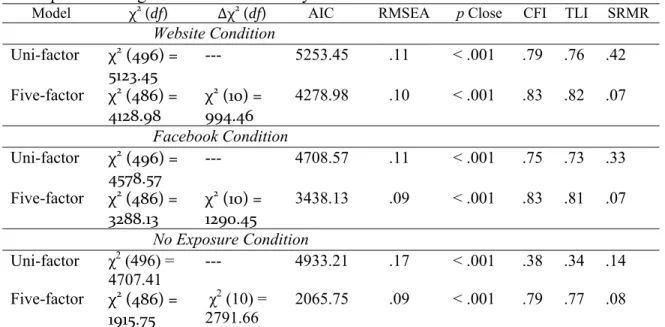
TABLE PAGE Table 1. Comparison of Alternative Confirmatory Factor Analysis Models for
Perceptions of Organizational Personality ... 85 Table 2. Means, Standard Deviations, and Correlations of Perceptions of
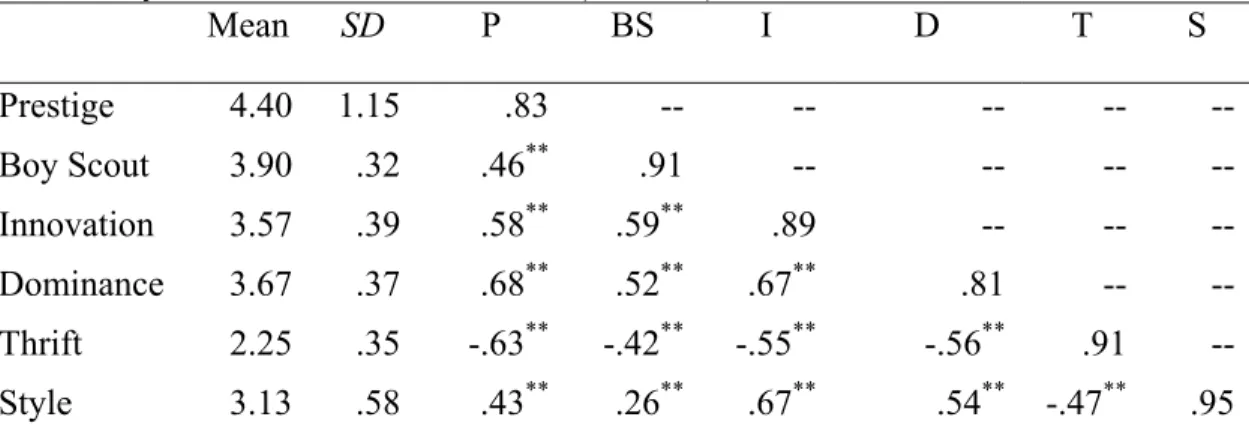
Organizational Personality for the Website Condition ... 87 Table 3. Means, Standard Deviations, and Correlations of Perceptions of
Organizational Personality for the Facebook Condition (N = 102) ... 87 Table 4. Means, Standard Deviations, and Correlations of Perceptions of
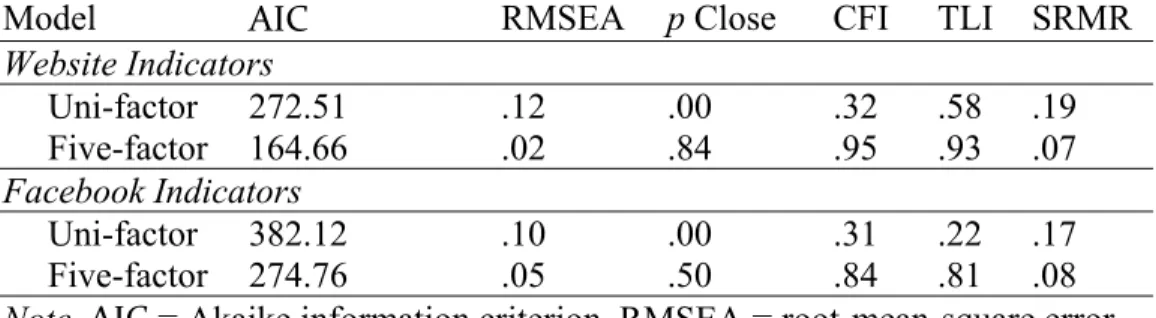
Organizational Personality for the No Exposure Condition (N = 50) ... 88 Table 5. Summary of Sort Task Results for Website Indicators ... 90 Table 6. Summary of Sort Task Results for Facebook Indicators ... 90 Table 7. Comparison of Alternative Confirmatory Factor Analysis Models for
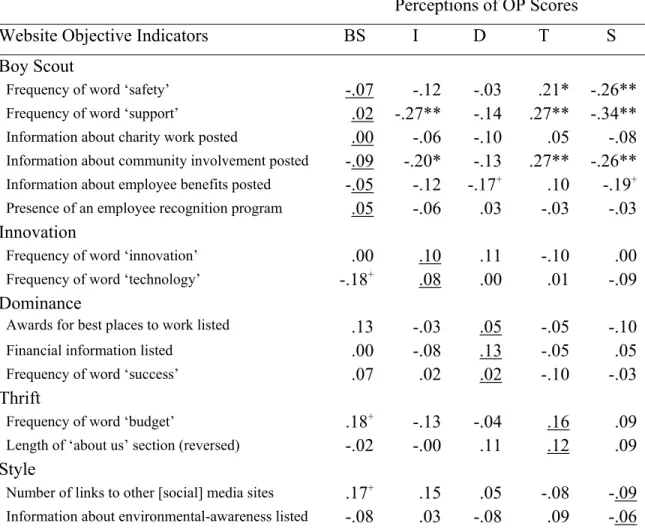
Objective Indicators of Organizational Personality ... 93 Table 8. Summary of Convergent Analysis for the Website Condition (N = 102) ... 97 Table 9. Summary of Supplementary Convergent Analysis for the Website Condition
(N = 102) ... 98 Table 10. Summary of Convergent Analysis for the Facebook Condition (N = 102) ... 99 Table 11. Summary of Supplementary Convergent Analysis for the Facebook
Condition (N = 102) ... 100 Table 12. Means and Standard Deviations of OP dimensions across the Three
Recruitment Methods (N = 50) ... 102 Table 13. Means and Standard Deviations of OP dimensions across the Two
Recruitment Methods (N = 102) ... 104 Table 14. Multiple Linear Regression for Objective Website Indicators Predicting
Perceptions of Boy Scout (N = 102) ... 108 Table 15. Multiple Linear Regression for Objective Website Indicators Predicting
Table 16. Multiple Linear Regression for Objective Website Indicators Predicting
Perceptions of Dominance (N = 102) ... 108 Table 17 Multiple Linear Regression for Objective Website Indicators Predicting
Perceptions of Thrift (N = 102) ... 108 Table 18. Multiple Linear Regression for Objective Website Indicators Predicting
Perceptions of Style (N = 102) ... 109 Table 19. Multiple Linear Regression for Objective Facebook Indicators Predicting
Perceptions of Boy Scout (N = 102) ... 110 Table 20. Multiple Linear Regression for Objective Facebook Indicators Predicting
Perceptions of Innovation (N = 102) ... 111 Table 21. Multiple Linear Regression for Objective Facebook Indicators Predicting
Perceptions of Dominance (N = 102) ... 111 Table 22. Multiple Linear Regression for Objective Facebook Indicators Predicting
Perceptions of Thrift (N = 102) ... 112 Table 23. Multiple Linear Regression for Objective Facebook Indicators Predicting
Perceptions of Style (N = 102) ... 112 Table 24. Key Objective Components Related to Image for Website and Facebook ... 125
Chapter I: Introduction
Organizational image has long served as a way for organizations to communicate their core values and goals to internal and external members. Although organizational image impacts many different business processes, it plays a pivotal role in the recruitment phase of employee selection systems. It is important for organizations to relay
information to applicants during the recruitment phase that will aid them in their job search process. An organization’s image conveys information about its values, culture, and goals, which in turn allows the job seeker to become more familiar with the
personality of the organization. Recent technological advances have impacted the manner through which organizations can communicate their image to external members. Companies are now able to reach potential applicants through web-based recruitment platforms faster and easier than they ever have before. It is vital that organizations understand the intricacies of new web-based recruitment methods, as compared to traditional recruitment methods, when it comes to communicating information with possible job applicants. Unfortunately, limited research exists regarding how potential applicants form perceptions of image from web-based recruitment media (e.g., Braddy, Meade, & Kroustalis, 2006; Braddy, Meade, Michael, & Fleenor, 2009).
A primary purpose of the present research is to determine whether or not perceptions of organizational image vary across different web-based recruitment
methods, specifically examining corporate websites and social networking (SNW) sites, such as company Facebook profiles. For example, do job seekers perceive an
web-based recruitment materials? More so, do perceptions of image vary depending on exposure to corporate websites of company Facebook profiles? A secondary goal of the research is to determine how these perceptions of image are shaped by the objective components of websites and Facebook profiles. In other words, how do the objective features and content on the webpages influence perceptions of organizational image? A final goal of the study is to determine the most influential components of websites and Facebook profiles, in terms of impacting image, to better understand how organizations can maximize their web-based recruitment efforts.
Organizational Image
According to Dutton, Dukerich, and Harquail (1994), organizational image can be described through two broad concepts: (1) an organization’s image is partly determined by what members of the organization believe are “distinctive, central, and enduring” characteristics of the organization; (2) image is also partly dependent on members’ views concerning how outsiders think about the company (Allen, Mahton, & Otondo, 2007; Billsberry, 2007; Gioia, Shultz, & Corley, 2000; Lievens, Van Hoye, & Anseel, 2007). For the purpose of recruitment, the latter conceptualization is of particular interest since this reflects the importance of image perceptions from the perspective of job seekers.
In line with Dutton and colleagues’ second conceptualization, Berg (1985) defined organizational image as the public’s perception of an organization that is often linked to a given action or event. Similarly, Frombrun (1996) described organizational reputation as the collective evaluation (by non-members) of an organization’s actions and accomplishments. It is important to highlight that Frombrun’s conceptualization implies
a more global, broad appraisal of image compared to that of Berg’s. Recent research by Lievens (2006) supports Frombrun’s definition and views organizational image as people’s global impression of an organization, derived from loose structures of knowledge and beliefs of an organization. Lievens (2006) argues for two general components of organization image stemming from brand equity theory: (1) instrumental attributes represent a group of objective attributes that people associate with an
organization (e.g., organization policies); and (2) symbolic attributes are comprised of trait-related inferences concerning an organization (e.g., intangible perceptions) (Aaker, 1997). Furthermore, scholars believe that symbolic attributes serve as a way to describe organizations in terms of personality traits (e.g., honest, prestigious, etc.) (Lievens & Highhouse, 2003).
Also stemming from Aaker’s brand equity theory, Slaughter, Zickar, Highhous, and Mohr (2004) developed the construct of organizational personality, defined as the “set of human personality characteristics perceived to be associated with an organization (p.86).” The five dimensional construct consists of five personality dimensions: Boy Scout, Innovation, Dominance, Thrift, and Style. The first dimension, Boy Scout,
represents an organization’s honesty, helpfulness, family-orientation, and attentiveness to people. Innovation refers to how exciting, unique, or creative an organization is. The Dominance factor relates to the extent to which an organization is considered successful, popular, or active. Thrift relates to an organization being viewed as low budget, simple, or sloppy. Lastly, Style encompasses organizational characteristics seen as stylish, trendy, and contemporary (Slaughter et al., 2004). Researchers assert that outsiders are
limited exposure to the organization (Lievens & Highhouse, 2003; Slaughter et al., 2004). Based on research findings, potential applicants would be able to form perceptions of organizational personality from limited exposure to recruitment material. Furthermore, these perceptions of personality are shown to influence applicant attraction, job pursuit intentions, and reputation perceptions (Slaughter et al., 2004).
Importance of Image
In order for an organization to successfully market themselves to a target audience, they must be able to distinguish themselves from competitors. A key way organizations can differentiate themselves is through their organizational image (Aaker, 1997; Cable & Turban, 2003; Lievens, 2006; Siguaw, Mattila, & Austin, 1999; Scott & Lane, 2000). Image can have lasting impressions on a number of different stakeholders, such as internal employers, investors, customers and clients, and prospective job
applicants. Although the business processes that image impacts depend on the role of the stakeholder, image has consistently been linked to significant organizational outcomes.
In the context of employee selection, an organization’s image impacts job seekers’ feelings and attraction towards the organization as a desirable place to work. According to marketing research, organizational image, or brands, can profoundly influence the attraction of job applicants to organizations (Allen et al., 2007). More so, image’s impact on perceptions is most prevalent in the early phases of recruitment when the applicant’s possess limited knowledge of the job or organization. Since the early recruitment phase is instrumental in building the applicant pool for future selection steps,
perceptions of image can have lasting effects on the duration of the selection process (Lievens, 2006).
The impact of organizational image in the recruitment process has become even more salient than before as a consequence of a growing shift towards web-based
recruitment methods (e.g., Lloren & Kellough, 2007; Maurer & Liu, 2007). These recent technological advancements have made the need for differentiation more prominent because of the widespread reach and immediate impact offered by web-based recruitment media. Organizational websites, for example, are becoming an increasingly popular recruitment method (Allen et al., 2007; Cappelli, 2001). Websites offer reduced costs and can reach a large number of potential applicants quicker, compared to traditional recruitment methods (Rynes & Cable, 2003). More so, compared to traditional recruitment media, websites provide a richer and more appropriate medium, through which organizations can promote their core image (Chapman & Webster, 2003). Given their pressing popularity and increased benefits, it is essential that scholars better understand how to project image efficiently through web-based recruitment methods.
The following sections provides a more detailed examination of current trends in recruitment, as well as how these new trends impact organizational image and subsequent applicant perceptions.
Recruitment
Despite the many changes and advancements over the decades, companies still face many of the same hurdles in terms of attracting high quality applicants. Statistics indicate that the average U.S. company spends between $1,000 and $8,000 on
recruitment costs per applicant (Greenburg, 1998). With proper planning, this cost can prove to be highly beneficial for organizations in terms helping them gain, and maintain, a competitive advantage in the war for talent.
Barber (1998) defines recruitment as “those practices and activities carried on by an organization with the primary purpose of identifying and attracting potential
employees” (Barber, 1998, p.5). More specifically, a primary goal of recruitment is to attract future employees by actively reaching out and inviting applicants to become an organizational member (Barber, 1998; Breaugh & Starke, 2000). Barber (1998) outlines three phases to the recruitment process: generating applicants, maintaining applicant interest in the organization, and influencing job choice. The present study focuses on applicant attraction in the earliest stages of the generating applicants phase. It is essential to note that the attraction phase is particularly crucial for determining the success of the subsequent recruitment phases since this is when the initial pool of applicants is shaped (Allen et al., 2007).
Recruitment activities involve many activities, such as defining the target
population, deciding the type of advertisement to be used, and determining the source and content of the recruitment tool. Ultimately, these activities should be used as a way to persuade job seekers to pursue employment with the organization (Barber, 1998). As such, recruitment serves as the first stage of a selection system and allows companies to effectively target individuals appropriate for specific needs and goals (Cooper,
Robertson, & Tinline, 2003). These targeted recruitment efforts allow companies to eliminate applicants that would not be a good fit for the organization early on in the
selection process. Without this crucial step, time and resources could be spent hiring and training applicants that ultimately would not remain with the organization for long. The selection-focused approach, which entails investing money in planning and recruitment, is more cost effective than spending money on turnover costs (Cascio & Aguines, 2005).
Image and Recruitment
Organizational image is arguable one of the most influential factors in the early phases of employee recruitment. Perceptions of image have been consistently link to both applicant attraction and subsequent job-choice decision making (e.g., Lievens, 2007; Lievens & Highhouse, 2003; Uggurslev, Fassina, & Kraichy, 2012). More specifically, research has found that higher levels of person-organization fit are associated with greater attraction to organizations (e.g., Chapman, Uggerslev, Carroll, & Jones, 2005; Judge & Cable, 1996, 1997; Turban & Keon, 1993) as well as higher job acceptance intentions (Bretz & Judge, 1994; Judge & Bretz, 1992), compared to individuals with lower person-organization fit. We now examine one such mechanism through which image leads to increased attraction, followed by a detailed look at the image-attraction link.
Person-Organization Fit
One of the most common things that potential applicants assess during the recruitment phase is the extent to which they “fit” with an organization, or person-organization (P-O) fit. Kristof (1996) defines P-O fit as the “compatibility between people and the organization in which they work” (Kristof, 1996, p.1). Studies by Schneider and other researchers suggest that P-O fit represents the similarities, or congruence, between organizational work values and those of the organization’s
employees (Chatman & Jehn, 1994; Kristof, 1996; Schneider, Goldstein, & Smith, 1995). Similarly, it can be viewed as the goal congruence between the organization and the individual.
According to theory, both through the Attraction-Selection-Attrition (ASA) framework (Byrne, 1971) and the Social Identity perceptions (Tajfel & Turner, 1985), individuals are attracted to and seek employment with organizations that exhibit characteristics similar to their own (Schneider et al., 2006). The ASA framework suggests that individuals prefer to work for an organization whose attributes align with their personal characteristics (Cable & Judge, 1996; Kristof, 1996; Schneider, 1987). Similarly, the social identity theory proposes that individuals seek to join organizations in an attempt to strengthen their self-concepts. According to research on social psychology, an organization’s values are reflected into those who work there (Dutton & Dukerich, 1991), in a sense linking the organization to the individual’s social identity (Ashforth & Mael, 1989). Consequently, organizations that are similar to the job seeker will in turn be more attractive and satisfying (e.g., Cable & Judge, 1986; Kristof-Brown, Zimmerman, & Johnson, 2005).
Subjective P-O fit, sometimes referred to as perceived P-O fit, denotes an
individuals’ direct judgments regarding the extent to which they fit with an organization. In terms of recruitment, subjective P-O fit refers to an overall perception of how well the applicant feels he or she would fit with the organization. In this light, subjective P-O fit assessments can be markedly influenced by the nature of the information provided to applicants while seeking employment. More specifically, research shows that subjective
P-O fit assessments are greatly affected by both the amount and type of information that organizations are willing to share with applicants (Breaugh & Starke, 2000; Cable & Judge, 1996; Judge & Cable, 1997; Kristof-Brown et al., 2005). Consequently,
recruitment material should not only offer job-relevant information, but also information that will help potential applicants assess their relative fit with the organization.
Organizational Attraction
Since organizational image contributes to an individual’s perception of P-O fit, it is understandable that organizational image also impacts job choice attitudes and
behaviors which may stem from this initial perception of fit. In other words, organizational image has considerable impact on an applicant’s perception of
organizational attractiveness and subsequent job choice behavior. Research shows that symbolic attributes, associated with an image, brand, or organizational personality, impact perceptions of attraction (Chapman et. al., 2005; Lievens & Highhouse, 2003; Slaughter et al., 2004). Similarly, meta-analytic research shows that image is also a strong predictor of job pursuit intentions and job acceptance intentions (Chapman et. al., 2005).
Recent research has even explored the link between image, fit and attraction, showing that organizational personality impacts subjective perceptions of P-O fit, which in turn affects organizational attraction (Gregory, 2010). Such findings suggest that the link between organizational personality and attraction is largely driven by an individual’s P-O fit perception with an organization (Gregory & Viswesvaran, 2009). In other words, organizational personality information allows applicants to make inferences about the
organization, which then allows them to assess the congruence with their own personality, in terms of values, goals, needs, and desires (Highhouse, Thornbury, & Little, 2007; Kristof, 1996). For example, an individual who is cheerful, friendly, and cooperative will likely search for an organization with similar characteristics, such as organizations high in the Boy Scout dimension. These organizations, such as Disney, place a strong emphasis on being pleasant, attentive to the needs of others, and being family-oriented (Slaughter et al., 2004). On the basis of research, it is likely that this individual would perceive a high congruence with the organization, which would lead them to have a high perception of P-O fit, and ultimately be more attracted to the organization.
Given the clear impact of image on potentially favorable application reactions, practitioners should strive to tailor their recruitment media in a way that clearly projects an accurate and favorable image of the organization. The next section examines the various methods that organizations can choose from when selecting recruitment mediums.
Image and Recruitment Sources
Given the considerable impact of recruitment throughout the selection process, researchers have devoted considerable attention to the effectiveness of various
recruitment methods. These methods, aimed at making individuals aware of job openings, traditionally consisted of newspaper job ads, job fairs, college placement offices, and employee referrals (e.g., Breaugh, Greising, Taggart, and Chen, 2003; Fernandez & Weinberg, 1997; Rafaeli, Hadomi, & Simons, 2005). Recently, however,
there has been a substantial increase in recruitment research (Billsberry, 2007; Breaugh, Macan, & Grambow, 2008), especially relating to on-line recruitment (e.g. Dineen, Link, Ash, & DelVecchio, 2007).
Web technology has revolutionized human resource management, particularly in the area of employee recruitment (e.g., Chapman & Webster, 2003; Lievens, van Dam, & Anderson, 2002). With over 40 million people turning to the Internet for job searching and over 70% of organizations practicing Web-based recruitment (Row, 2005), it is clear that Web-based recruitment has become a leading avenue for recruitment efforts
(Chapman & Webster, 2003; Foster, 2003; Hu, Su, Chen, 2006; Zusman & Landis, 2002). Organizational websites, for example, are becoming a popular recruitment
method (Cappelli, 2001) and, therefore, have received a notable amount of attention (e.g., Allen et al., 2007). From the HR practitioner’s perspective, websites are viewed as a highly effective recruitment method (e.g., Chapman & Webster, 2003; Stone,
Lukaszewski, & Isenhour, 2005). Furthermore, organizations are able to easily, and quickly generate a large number of job applicants at a relatively low cost compared to traditional recruitment methods (Rynes & Cable, 2003).
In addition to organizational websites, companies are now able to communicate with audiences through a variety of other internet-based mediums, specifically Social Networking (SNW) sites. Some of the more commonly used web platforms include Facebook, LinkedIn, Twitter, and interactive blog postings (Jue, Marr, & Kassotakis, 2010; Shih, 2009). Facebook, a popular SNW, has over 800 million users
2009; Haefner, 2009; Kluemper, Rosen, Mossholder, 2012). Within the Facebook platform, companies are able to create corporate user-profiles to communicate and interact with other users. According to Clara Shih, author of “The Facebook Era”, there are over 1.4 million organizations actively using their Facebook page. Similarly, many organizations have openly embraced Twitter, a SNW which allows users to communicate with one another through a series of 140-character long, real-time ‘tweets’. The
prevalence of organizations using SNW sites to communicate with external members will only continue to grow as technology develops. It is essential the organizations better understand how they can maximize the effectiveness of these web-based interactions towards employee recruitment.
Image and Corporate Websites
Given the clear benefits of using internet-based methods for recruitment efforts, research on the role of company websites in applicant attraction has become increasingly popular (Anderson, 2003; Cober, Brown, Levy, Keeping, Cober, 2003; Cober, Brown, Keeping, & Levy, 2004; Thoms, Chinn, Goodrich, & Howard, 2004; Williamson, Lepak, & King, 2003). Just as with any communication medium, web pages offer a variety of ways through which organizations can deliver their desired message. For example, websites can vary not only in terms of the content they provide, but also in the manner through which the webpage is designed (e.g., layout, aesthetics, etc.). Previous research shows that an organization’s ability to successfully generate qualified applicants, relies heavily on their ability to effectively communicate employment information (Cappelli, 2001). Therefore, organizations need to be well-advised on how different website
features may impact applicant choices. Accordingly, there has been a recent increase in research investigating how web pages can be maximized as a recruitment tool (e.g., Braddy, Thompson, Wuensch, & Grossnickle, 2003; Cober, Brown, Levy, & Keeping, 2003).
Within this body of literature, researchers have focused on website design features and content-related variables that influence job-seekers’ perceptions of an organization’s recruitment image, its image as an employer, and job seekers’ person-organization (P-O) fit perceptions (e.g., Braddy et al., 2003; Cober et al., 2003). Much of the early research on website design has focused the impact of content, usability, and aesthetics, in terms of predicting applicant attractions (e.g., Cobe et al., 2003; Lyons & Marler, 2011). Website design features that have been examined include perceptions of attractiveness of
recruitment websites in terms of their colors, fonts, pictures, and bulleted versus
paragraphs of text (Braddy et al., 2003; Cober et al., 2003; Thoms et al., 2004; Zusman & Landis, 2002), as well as P-O fit assessment tools (Dineen, Ash, & Noe, 2002). In terms of website content, previously studied variables include information relating to
organizational culture, compensation, and training opportunities (Braddy et al., 2006; Cober et al., 2003).
More recently, researchers have further examined how viewer’s impressions of an organization can be changed by viewing an organization’s recruitment website (Braddy, Meade, and Kroustalis, 2008). Often, job applicants are limited in their knowledge about the organizations with which they are seeking employment (Rynes & Miller, 1983). According to signaling theory (Spence, 1973, 1974), when an individual has insufficient
data, or is undecided in terms of their stance towards a target, he or she will draw
inferences on the basis of cues from available information. In the context of recruitment, signaling theory suggests that any information that a job seeker views, may impact his or her impression of the target organization. In this light, Braddy et al. (2008) found that viewing organizational recruitment websites impacted individual’s perceptions of organizational favorability, image as an employer, and organizational attractiveness. Furthermore, their results suggest that color, font, and image influence job seekers’ perceptions of organizations. However, they acknowledge a need to further investigate these website components in order to be able to provide organizations with clear website design guidelines in order to maximize the Internet as a recruiting tool.
Image and Facebook
Within the technology revolution, a new form of communication between organizations and individuals is taking place through social media. Jue et al. (2010) define social media as “the many relatively inexpensive and widely accessible electronic tools that evoke anyone to publish and access information, collaborate on a common effort, or build relationships,” (p.4). This social media umbrella covers a variety of different SNW mediums such as discussion forums, blogs, wikis, and podcasts. In recent years, SNW use has quickly become the fourth most popular online activity, even
surpassing the use of e-mail (Nielsen.com, 2009). Accordingly, organizations have embraced SNW as a means to both communicate with individuals and expand their employee selection efforts.
Facebook, developed in 2004, recently became the largest SNW site with over 800 million active users across the globe (Treadway & Smith, 2010). Although the majority of profiles belong to individual users, Facebook also offers the option of creating profile pages for non-personal use such as interests groups, causes, and organizations. As part of this feature, companies are able to create Facebook Pages (distinct from individual profiles) as a way to communicate information about their company with other Facebook users. These Facebook Pages allow companies to extensively-customize their profile with a variety of different components such as interactive dialogue (i.e.,‘wall’ postings and comments), pictures, videos, business applications, and link to both internal and external sites. Many organizations used Facebook as a recruiting tool as a way to both target potential applicants and to communicate up-to-date information about employment opportunities.
Just as researchers have begun exploring Facebook as a source to assess
individuals’ personality (e.g., Kluemper et al., 2012; Marcus, Machilek, & Shultz, 2006), it seems likely that potential applicants could infer an organization’s personality through their Facebook presence. According to Funder’s (1995) realistic accuracy model (RAM), rating accuracy is enhanced when information is conveyed in a rich, dynamic manner that allows raters to assess behavior over time. In line with the tenets of RAM theory, it is likely that applicants would be able to obtain personality-related information from the SNW profile of an organization in order to form a schema for their corporate personality (Foti & Lord, 1987). In other words, job seekers could be able to infer the organizational personality of a company by viewing the target organization’s Facebook page.
Differences in Image across Web-based Recruitment Media
With regards to Web-based recruitment, perceptions of an organization are partly determined by an applicant’s ability to infer beliefs about an organization’s culture, values, and visions through the company Web site (e.g., Chen, Lin, & Chen, 2012; Cho & Lee, 2011). Additionally, research shows that the type and amount of information presented to applicants affects perceptions of P-O fit (Breaugh & Starke, 2000; Cable & Judge, 1996; Judge & Cable, 1997; Kristof-Brown et al., 2005). Accordingly, it likely that variations in the amount and type of information provided to applicants would alter perceptions of organizational image. In other words, applicants could form different perceptions of organizational personality depending on the method of recruitment the individual views (e.g., websites, SNW sites, etc.).
Within this body of literature, researchers have attempted to better understand applicant reactions to organizational websites through content analyses studies. For example, research shows that aesthetics, content, and functionality are all rated as being key components of websites (e.g., Cober, Brown, Keeping, & Levy, 2004; Allen et al., 2007; Braddy et al., 2006; Williamson, Lepak, & King, 2003). More specifically, webpages are rated favorably if they include pictures or unique fonts, if they address important job-related attributes, and if they are easy to navigate.
Ultimately, the need to understand differences across communication platforms has become more salient with the increasing popularity of web-based recruiting through both corporate webpages and social media sites. On the basis of this need, scholars should strive to examine how differences in communication media affect pre-hire
outcomes such as attitudes, intentions and behavior, through differences in organizational personality portrayal. It is clear that job applicants’ image perceptions can influence attraction to recruiting organizations, however, little is known about how these perceptions are formed in the web-based context. Given the increasing prevalence of web-based recruitment efforts, it is essential that we further examine the mechanisms through which different internet recruiting methods impact perceptions of organizational personality.
Website Indicators of Organizational Image
There is a growing body of research examining how aesthetic properties and the content of the information provided in recruitment websites affects applicant reactions (e.g., Dineen, Ash, & Noe, 2002; Dineen, Ling, Ash, & Delvechio, 2007; Goldberg & Allen, 2008; Williamson, King, Lepak, & Sarma, 2010) and attraction to the organization (e.g., Chen et al., 2012; Cober et al., 2003). However, research in this area is primarily focused on applicant attraction, leaving many unanswered questions about how website components impact applicant perceptions of image.
Recently, a few researchers have shed some light into the new web-based
recruitment literature by examining how website features influence applicant perceptions of organizational culture (e.g., Braddy et al., 2006; Braddy et al., 2009). Although distinct from organizational image, research on websites and perceptions of
organizational culture has introduced the concept of website components influencing an individual’s perception of a company’s climate and values. The fundamental idea that applicant perceptions of image could be influenced by website features stems from
research on signaling theory (Spence, 1974). Rynes (1991) argues that applicants will call on whatever information is available to make inferences about unknown
organizational attributes when faced with limited information. For example, characteristics pertaining to website content, layout and pictures could be used as indicators of the organization’s image as a whole. Furthermore, researchers have found that both website features and content pertaining to organizational values, policies, awards, and goals affected viewers’ perceptions of organizational culture (Braddy et al., 2006; Braddy et al., 2009).
Current Study
Given the surge of technological advancements, there is a need for research exploring how potential applicants form perceptions of image from web-based recruitment media. Early research in this area has focused on the impact of website features on attraction (e.g., Braddy et al., 2006; Braddy et al., 2009) with little attention given to how perceptions of image are affected. A goal of the present dissertation is to identify aspects of web-based recruitment media that influence viewer perceptions of image, specifically operationalized as organizational personality. The present research examines objective components of corporate websites and organizational Facebook profiles that shape perceptions of organizational personality dimensions. Specifically, we examine how objective indicators of image impact perceptions of image in web-based recruitment materials. These objective indicators will be key to having a better
Given the tremendous impact of image in the recruitment process, in terms of perceived fit and attraction to an organization, it is essential that organizations project accurate and consistent depictions of their organizational image across all of their recruitment methods. Consequently, the current research also examines whether image assessments vary by different web-based recruitment methods, both through subjective and objective assessments.
Lastly, it is beneficial for organizations to be aware of, not only what image they are projecting, but also how they can best manage and modify these image projections. Therefore, a final goal of this dissertation will be to identifying which objective
indicators are most influential for projecting specific image dimensions.
Summary
In sum, given the lasting impact of image on potential applicants and the rising popularity and use of web-based recruitment media, it is necessary for scholars to
examine how these new recruitment methods impact perceptions of organizational image. The present research seeks to extend the literature by identifying objective components in recruitment media, specifically corporate websites and company Facebook profiles that indicate a particular organizational personality dimension. Furthermore, the subjective perceptions and objective assessments of image are examined across different types of recruitment media. Lastly, website characteristics are assessed in terms of relative impact on image perceptions in an effort to inform organizations on how to best manage image projections in the recruitment context. The following section will provide a
comprehensive review of organizational image, trends in web-based recruitment, and viewer perceptions of and reactions to web-based recruitment media.
Chapter II: Literature Review
The second chapter of this dissertation will provide a comprehensive review of the organizational image literature. First, a review of the many, and often overlapping, conceptualizations of image are presented. Second, the mechanisms through which image affects business outcomes are discussed, particularly in the realm of employee recruitment. Third, recruitment is examined in further detail, including a general overview, current trends in web-based recruitment methods, and how these methods impact perceptions of organizational image. Finally, details pertaining to the present study taken from relevant empirical and theoretical findings are provided, culminating in the research questions and hypotheses under study.
Image
At its core, organizational image refers to people’s overall impressions of an organization. Lievens (2006) describes it as the “net cognitive reactions and associations (p. 569)” of individuals which together form bodies of knowledge and opinions about an organization. Many researchers agree that an organization is not associated with a single image, but rather multiple images from different stakeholders that may not always coincide. Employees, investors, customers and potential applicants will each form their perceptions of an organization’s image on the basis of their unique experience with and exposure to the organization. For example, a customer’s perception of a company’s image as a provider of goods and services will likely differ from the image perceptions of a current employee at the same company.
Dutton et al. (1994) provide a framework of image as two complementary, but distinct components. The framework is built on the underlying assumption that insiders and outsiders of an organization have access to different information about the
organization. Additionally, because of the inherent differences in the nature of the relationship with the organization, each group evaluates the information on the basis of their own goals and values. The first component operationalizes image as what the organizational member believes is “distinctive, central, and enduring” (p. 239) characteristics of the organization (Dutton et al., 1994). This conceptualization is frequently associated with terms such as perceived organizational identity (Albert & Whetten, 1985; Dutton et al., 1994) and organizational culture (O’Reilly, Chatman, & Caldwell, 1991; Schein, 1990). In the second component, image represents the way members of an organization believe outsiders view the organization (Dutton & Dukerich, 1991). Recently, the operationalization of organizational image has shifted from
members’ opinions of outsiders’ image perceptions, to simply outsiders’ image perceptions of the organization (e.g., Allen et al., 2007; Lievens et al., 2007). The present study will focus exclusively on the second component of image, which views image as a function of the external members’ perceptions of image.
Over the years, researchers have offered numerous variations on the specific scope and definition of outsider-focused image, such as construed external image (Dutton et al., 1994), projected image (Bernstein, 1984, Whetten, Lewis, & Mischel, 1992), desired future image (Goia & Thomas, 1996), transient impression (Berg, 1985; Grunig, 1993), corporate reputation (Fombrun, 1996), corporate identity (Olins, 1989; van Riel &
Balmer, 1997), employer branding (Schneider, 2003), organizational image (Lievens & Highhouse, 2003; Lievens, 2006), and organizational personality (Slaughter et al., 2004).
The following section covers specific details, similarities, and discrepancies across each of the image conceptualizations listed above. First, conceptualizations formed primarily on internal perceptions are presented, followed by definitions emphasizing external perceptions of image, then a brief discussion of conceptualizations stemming from the business and marking literature, lastly unifying conceptualizations providing frameworks for assessing image components are introduced.
Internally-Focused Conceptualizations of Image
Construed External Image. As mentioned above, construed external image
refers to an internal members’ own assessment and beliefs of how external members view an organization (Dutton et. al., 1994). An example of this concept is how an employee thinks an external client perceives the organization. This type of image evaluation not only provides information about the social evaluation of the organization as a whole, but also sheds light on how external members perceive internal members who are affiliated with the organization. A key element of this conceptualization is the notion that internal members may possess distorted perceptions of how external members view the
organization. Inaccurate, or distorted, perceptions may be particularly prevalent within upper-management when dealing with unforeseen changes in the market, ethical dilemmas, and issues relating to organizational integrity (e.g., Ginzel, Kramer, and Sutton, 1993).
Projected Image. Contrary to the notion that upper-management is susceptible to
distorted image perceptions, Whetten et. al. (1992) argue that projected image is the way “organizational elites” would like external members to view the organization. Whetten bet al.’s viewpoint highlights upper-management’s desire to project an image that stems from the organizations’ identity. More specifically, an organization’s identity refers to core and enduring organizational characteristics that distinguish it from other
organizations (Albert & Whetten, 1985). By aligning the projected organizational image with the internal identity, the projected image serves as a way to relay vital features of an organization to outside members. At the same time, it is possible that
upper-management’s projected image may be influenced by social desirable-driven impression management techniques, over-emphasizing the positive features and even intentionally disguising an organizations’ true identity (Gioia et al., 2000). This idea is consistent with Bernstein’s (1984) idea that image should be defined as a product of public impressions generated to appeal to outsiders. According to this, in fact, the projected image could not only be a slightly tailored projection of reality, but an entirely fabricated entity.
Desired Future Image. As with projected image, desired future image is also
characterized as being driven by top management. A key distinction is that this image is developed on a genuine future vision of the organization (Goia & Thomas, 1996) as opposed to methodically, and possibly deceptively, selected features of the current organization’s identity. This conceptualized image also serves as a way to communicate the desired future vision to internal members of the organization.
Externally-Focused Conceptualizations of Image
Transient Impression. Berg (1985) was the forerunner of exploring image as a
product of how outsiders perceive the image of organization—omitting the component of how internal members think the external members to perceive it to be. More specifically, Berg believed external members shape their image impressions mainly in response to a particular action or event associated with the organization. As implied by the name, transient impression is characterized as a more temporary, event-focused
conceptualization of image compared to other definitions. Closely related to this conceptualization, Grunig (1993) explains image as the impression constructed by external members through direct observation or interpretation of a message, often including symbols, provided by the organization.
Corporate Reputation. In line with the conceptualization of image as purely
focused on outsiders’ perceptions, Fombrun (1996) defines corporate reputation as the collective impressions of an organization’s actions and accomplishments, as perceived by members external to the organization. Corporate reputation is in sharp contrast to
transient impression, in the sense that reputation is characterized by enduring,
comprehensive judgments over an extended period of time (Gioia, et. al., 2000). It is necessary to note, however, that the term ‘corporate reputation’ spans numerous disciplines and academic subject areas (e.g., economics, marketing, organizational
behavior, etc.), each with their slight nuances in terms of definition (Fombrun & van Riel, 1997). In recent years, researchers have tried to integrate these different areas of research to create a more unified understanding of corporate reputation. One of these more
contemporary definitions, for example, defines it as “observers’ collective judgments of a corporation based on assessments of the financial, social, and environmental impacts attributed to the corporation over time” (Barnett, Jermier, & Lafferty, 2006, p. 34). Ultimately, despite slight definitional inconsistencies across disciplines, the elements of externally-formed perceptions and global assessments remain core to the definition.
Image Conceptualizations in the Business Literature
Corporate Identity. Outside of the realm of organizational behavior research,
the field of public relations and marketing often refer to image in terms of corporate identity. In this business-focused body of literature, researchers concentrate on the idea of companies projecting information to stakeholders as a way to achieve strategic goals (Olins, 1995). As such, the term corporate identity is closely tied to visual
representations of the organization, specifically through the design and use of corporate symbols and logos (Hatch & Schultz, 1997; Olins, 1989). Unlike projected image, van Riel and Balmer (1997) and Hatch and Schultz (1997) maintain that this projection is important for internal and external constituents, thus spanning a broader audience.
Employer Branding. Based on marketing research, a brand refers to “a name,
term, sign, symbol, or design, or combination of them which is intended to identify the goods and services of one seller or group of sellers and to differentiate them from those of competitors” (Schneider, 2003). In traditional brand management research, Park, Jaworski, and MacInnis (1986) conceptualize brands as mapping onto three categories of the consumer needs they fulfill: (a) functional needs, (b) symbolic needs, and (c)
characteristics of a product. Symbolic aspects describe the product in terms of subjective, abstract, and intangible features. Lastly, experiential brand concepts refer to the
product’s effect on sensory satisfaction or cognitive stimulation. This marketing framework, with a primary focus on functional and symbolic needs, has been applied to an employee selection context.
Recently, employer branding has emerged from applying traditional marketing brand principles to the field of employee recruitment (Cable & Turben, 2001; Capowski, 1997; Maurer, Howe, and Lee, 1992). Early adopters of employer branding, Ambler and Barrow (1996), suggest that employer brand relays critical information about the
organization such as personality and differentiation for potential applicants. Backhous and Tikoo (2004) define employer branding as the process of building an identifiable and unique employer identity in an effort to highlight the organization’s unique employment offerings and environment. In other words, it can be described as an organization’s efforts to project the organization as a desirable place to work for both existing and prospective employees (Lloyd, 2002). More recently, researchers have begun forming multidisciplinary frameworks to achieve a better understanding of image and its components.
Unifying Conceptualizations of Image
Organizational Image. Embracing the idea of image as a long-lasting,
perception of an organization, and influenced by the fundamentals of brand management, Lievens (2006), defines organizational image as people’s global impressions of an organization, comprised of “loose structures of knowledge and beliefs about an
organization (p. 569).” In addition to representing overall perceptions, it also serves as a way for external members (e.g., customers, investors, employees, applicants, etc.) to categorize, store, and recall relevant information about an organization. These impressions are not only shaped by communication from the organization itself (e.g., advertising, sponsorships, etc.) but also by other sources such as media coverage and general societal perceptions. Although it changes slowly over long periods of time, an organization’s image is dynamic and capable of evolving, generally at the discretion of the internal members. For instance, if an organizations wishes to modify their image, it would be necessary to first identify which factors are contributing to the current image perceptions across all of the stakeholders. Once the organization is able to identify how the image is being shaped, internal members can work to either highlight or tailor these factors in order to project the desired image.
Stemming from brand equity theory (Aaker, 1997), Lievens and Highhouse (2003) introduced the Instrumental and Symbolic Framework for describing image, which appropriately states that an organization’s image can be organized into two types of attributes, instrumental and symbolic. Instrumental attributes refers to objective features, or characteristics, individuals associate with an organization. These attributes may range from factual or historical aspects of an organization, to more specific
organizational practices or guidelines. Research shows that applicants, for example, may know some instrumental attributes, such as size of the organization, benefits offered, and career development options, prior to applying to a specific job (Lievens & Highhouse, 2003; Lievens, 2006). Symbolic attributes, on the other hand, refer to trait-related
of attributes. First, in sharp contrast to objective instrumental attributes, symbolic attributes are subjective, abstract, and intangible attributes associated with an
organization. Second, they express symbolic information through imagery that can be associated with the organization. Symbolic attributes, for example, refers to using words such as trendy and honest to convey human-like personality characteristics on the
organization. Research has shown that applicants are able to meaningfully and reliably assign symbolic attributes to organizations (Lievens & Highhouse, 2003; Lievens et al., 2005).
Organization Personality. In line with the instrumental-symbolic framework for
organizational image, scholars further developed the idea of organizations being associated with trait-like personality characteristics. Slaughter et al. (2004) define organization personality (OP) as “the set of human personality characteristics perceived to be associated with an organization (p. 86).” In previous personality research, the term personality has often referred to two distinct conceptualizations: one referring to a person’s internal processes, usually to explain why he or she acts a certain way; the second concerned with how one is perceived by family, friends, and coworkers, or social reputation (Hogan, 1991). Slaughter and colleagues specifically operationalize
personality as the manner in which the organization is perceived by outsiders (i.e., ‘social reputation’) as opposed to referring to its internal processes. More so, organization personality is shaped by the different ways the organization presents itself as well as how other entities present the organization to the public. Examples of these possible channels for organization personality projections include television and radio advertisements,
organization’s place of business or clientele, and company-related information gathered from ones’ friends and family (Slaughter et al., 2004). A key feature of organization personality is the notion that outsiders are able to make an assessment of personality, regardless of the amount of exposure they have had to the organization—assuming there is at least some, even if it is very limited (Lievens & Highhouse, 2003; Slaughter et al., 2004).
Lieven et al.’s (2006) study sought to not only capture the structure of organization personality, but also to develop and validate a self-report measure of organization personality perceptions. The research was conducted under the assumption that, just as individuals ascribe personality traits to themselves (Ashforth & Mael, 1989), to other people (Hogan, 1991; Norman & Goldberg, 1966; Watson, 1989), and product brands (Aaker, 1997; Siguaw, Mattile, & Austin, 1999), organizations could also be described in trait-terms. Brand personality, defined as “the set of human characteristics associated with a brand” (Aaker, 1997, p. 347), is accepted by marketing researchers and consumers as an effective way for describing brands (Siguaw et al., 1999). Aaker’s research suggests that brand personality encompasses five broad dimensions of personality: Sincerity, Excitement, Competence, Sophistication, and Ruggedness. Research shows, for example, that people generally view Coca-Cola as cool and all-American (Pendergrast, 1993), while Pepsi is perceived as being young and exciting (Plummer, 1985). Lievens and Highhouse (2003) also organized symbolic attributes (see above) into similar dimensions. Specifically, they expanded on Aaker’s (1997) brand framework for a total of five dimensions: Sincerity, Innovativeness, Competence, Prestige, and Robustness.
Together, these two streams of research shaped the foundation for the five
dimensions of perceived organization personality (Slaughter et al., 2004), which consists of Boy Scout, Innovation, Dominance, Thrift, and Style. The Boy Scout dimension refers to perceptions of an organization’s honesty, helpfulness, attentiveness, friendliness and family-orientation. Organizations perceived to be strong on the Boy Scout dimension are Target, Disney, and Johnson & Johnson. The second dimension, Innovation relates to how unique, interesting, or creative an organization is viewed. Organizations found to be perceived as highly innovative include IBM, PepsiCo, and Microsoft. The Dominance dimension corresponds to an organization being associated with success, popularity, or high-activity levels. Organizations perceived to be strong on the Dominance dimension include Coca-Cola, general Motors, Disney, and AT&T. Thrift refers to organizations that are seen as low budget, small, or sloppy. Organizations perceived as being strong in this dimension include K-Mart, Kroger, Wal-Mart, Subway, and J. C. Penney. Lastly, perceptions of “hipness,” contemporary, or trendy are indicative of the Style dimension. Past research indicates that Nike, Reebok, Pepsi, and Motorola are rated highly on this dimension (Slaughter et al., 2004). It is important to note that organizations are not perceived as depicting only a single OP dimension, but rather varying levels of each OP dimension.
Scholars generally agree that image is an impression that develops from a loose combination of facets and feelings (e.g., Belt & Paolilo, 1982; Gatewood, Gowan, & Lautenschlager, 1993). Accordingly, organizational personality perceptions are one source of these feelings about an organization and can be viewed as one component of an
because of the comprehensiveness of the conceptualization, the present research operationalizes organizational image using Slaughter et al.’s (2004) definition of organizational personality. The next section of this dissertation will discuss the importance of organizational image, particularly in terms of how it impacts business processes.
Consequences of Image
Given the extensive amount of research on defining and conceptualizing organizational image, it is evident that an organization’s image has the potential to influence a number of organizational outcomes. The nature of these outcomes is largely determined by who is doing the perceiving. In other words, the business processes that are impacted depend on the role of the image-receiving stakeholder. For example, image perceptions may invoke different responses depending on whether the external member is an investor, customer, or potential applicant (Lievens, 2006). Some of the various, potentially favorable, consequences for organizations are discussed below.
One of the ways image can impact business processes is through image perceptions by current and potential investors. If investors perceive an organization’s image to be desirable, the organization will likely see positive outcomes such as
continued or increased investments from existing investors, and an increase in interested new investors. As such, organizations may gain competitive leverage, which contributes to the competitive ability of the firm in the general market (Lievens, 2006; Lyons & Marler, 20111).
Customer image perceptions are another way that organizations can see positive results. More specifically, an abundance of marketing research shows that an
organization’s image affects consumers’ product choices (Deephouse, 2000; Howard & Sheth, 1969). Such findings suggest that perceptions of image for the overall
organization may signal to customers, information relating to product quality, cost, or customer-services skills (Deephouse, 2000; Lievens, 2006).
Lastly, image perceptions can have monumental implications for potential applicants, specifically relating to how attracted applicants feel towards an organization as a desirable place to work (Lievens & Highhouse, 2003; Turban & Cable, 2003). The impact on perceptions of attraction is particularly true for the early stages of recruitment when applicants have the least amount of knowledge about the job, or the organization itself. At this point, potential applicants are forced to rely heavily on their limited knowledge in order to shape their overall impressions of the organization. These initial impressions, or image, have a large impact on whether or not the potential applicant will actually pursue employment with the organization. At its core, applicant perceptions of organizational image impact levels of attraction to the organization, which in turn impact employment decisions during the recruitment process. As such, organizations with more favorable perceptions are able to attract more, and potentially better qualified applicants, than their less favorable counterparts (Lievens, 2006). It is important to highlight that image perceptions impact applicants during the duration of the recruitment process, not simply in the early stages (Uggurslev et al., 2012). Research shows that impressions of organizational image at the early stages of recruitment were strong predictors of
applicants’ attraction to the organization at later phases, such as on-site interview and final job acceptance decisions (Lievens, 2006).
The present research is primarily focused on how image perceptions are formed from the perspective of potential applicants during the early phases of the recruitment process. The following sections cover relevant theories that help explain how image perceptions influence potential job applicants, specifically relating to organizational attraction.
Image and Applicant Attraction
By applying the instrumental-symbolic framework to organizational image, research has shown that symbolic attributes (i.e., trait-related inferences about an organization) impact feelings of attraction towards an organization above and beyond instrumental attributes (Lievens, 2007; Lievens & Highhouse, 2003). Furthermore, applicants are better able to differentiate among employment opportunities when symbolic images are considered than if symbolic images are not present (Lievens & Highhouse, 2003; Slaughter et al., 2004).
In a 2004 study, Slaughter et al. found that organizational personality was
significantly related to perceived organizational attractiveness, job pursuit intentions, and the likelihood that applicants would accept job offers. When examining differences among the personality dimensions, they found that Dominance and Thrift (negative relationship) were the factors most strongly, and consistently, related to organizational attraction.
Recently, Uggurslev et al. (2012) conducted a meta-analysis to examine the relative strength and incremental variance accounted for by seven different recruiting predictors (e.g., job characteristics, organizational characteristics, recruiter behaviors, recruitment process characteristics, fit perceptions, hiring expectancies, and perceived alternatives) on applicant attraction. On the basis of 232 studies, results showed that characteristics of the organization, such as organizational image, accounted for unique variance in applicant attraction at multiple stages of the employee selection process. More importantly, applicant perceived fit with the organization was the strongest predictor of applicant attraction.
Research on organizational image suggests that job seekers prefer companies with favorable images, even over a company who may be offering a similar job but yields a less favorable image perception (Lievens & Highhouse, 2003; Turban & Cable, 2003). Yet, how exactly does an individual determine whether the perceived image of an organization is favorable or unfavorable? The next section covers theories and
frameworks to help clarify how individuals determine whether or not an organization's image is ‘favorable’ for them.
Person-Organization Fit and Attraction
Potential applicants consider features beyond just salary and benefits when determining whether or not an organization would be a desirable place to work. Beyond tangible features of the job, it is crucial that individuals feel a level of congruence
between their values and beliefs, and those of the organization. Research has consistently shown the impact of applicant personality and organization image similarity on