A Guide to Designing and
Implementing Grievance
Mechanisms for Development
Projects
The Office of the Compliance Advisor/Ombudsman for the International Finance Corporation (IFC) Multilateral Investment Guarantee Agency (MIGA)
Members of the World Bank Group
Compliance Advisor/Ombudsman 2121 Pennsylvania Avenue NW Washington, DC 20433 USA Telephone: (202) 458-1973 Facsimile: (202) 522-7400 e–mail: [email protected] www.cao-ombudsman.org
MEMBERS OF THE WORLD BANK GROUP
This publication is printed on process-chlorine-free paper, 100% post-consumer waste fiber.
The paper was manufactured using non-polluting, wind-generated energy. Printed with soy-based inks.
Acknowledgments
Principal author:Susan Wildau (CDR Associates)
Contributing authors:David Atkins (Watershed Environmental), Christopher Moore (CDR Associates), Elizabeth O’Neill (Four Elements Consulting)
Peer reviewers:Natalie Bridgeman (Independent Consulting Attorney), Aidan Davy (ICMM), Maria Morgan (formerly with BP), Bill Rahill (IFC), Caroline Rees (Harvard University)
Editor:Nancy Morrison, Falls Church, VA
Design:Studio Grafik, Herndon, VA
CAO Washington, DC staff:Amar Inamdar, Kate Kopischke, Meg Taylor
Photos (cover):Listening to forest community perspectives in West Kalimantan, Indonesia.
directly to the President of the World Bank Group. The CAO reviews complaints from communities affected by development projects undertaken by the private sector lending and insurance members of the World Bank Group, the International Finance Corporation (IFC) and the Multilateral Investment Guarantee Agency (MIGA). The CAO works to respond quickly and effectively to complaints through mediated settlements headed by the CAO Ombudsman, or through compliance audits that ensure adherence with relevant policies. The CAO also offers advice and guidance to IFC and MIGA, and to the World Bank Group President, about improving the social and environmental outcomes of IFC and MIGA projects.
The CAO’s mission is to serve as a fair, trusted, and effective independent recourse mechanism and to
improve the environmental and social accountability of IFC and MIGA.
For more information about the CAO, please visit www.cao-ombudsman.org
About the CAO Advisory Role and Advisory Notes
In its advisory capacity, the CAO provides advice to the President of the World Bank Group and to the management of IFC and MIGA relating to broader environmental and social policies, guidelines, procedures, resources, and systems. This advice is often based on the insights and experience gained from investigations and audits in the CAO’s Ombudsman and Compliance roles. The objective in the advisory function, and in preparing this Advisory Note, is to identify and help address systemic issues and potential problems early.
A Guide to Designing and
Implementing Grievance
Mechanisms for Development
Projects
Telephone: 202-458-1973
Internet: www.cao-ombudsman.org e-mail: [email protected] All rights reserved.
Compliance Advisor/Ombudsman (CAO) 2121 Pennsylvania Avenue NW
Washington, DC 20433 USA
The findings, interpretations, and conclusions expressed herein are those of the author(s) and do not necessarily reflect the views of the Executive Directors of the International Bank for Reconstruction and Development /the International Finance Corporation or the governments they represent.
The CAO does not guarantee the accuracy of the data included in this work. The boundaries, colors, denominations, and other information shown on any map in this work do not imply any judgement on the part of the CAO concerning the legal status of any territory or the endorsement or acceptance of such boundaries.
Rights and Permissions
The material in this publication is copyrighted. Copying and/or transmitting portions or all of this work without permission may be a violation of applicable law. The Compliance Advisor/Ombudsman (CAO) encourages dissemination of its work and will normally grant permission to reproduce portions of the work promptly.
For permission to photocopy or reprint any part of this work, please send a request with complete information to the Compliance Advisor/Ombudsman (CAO), 2121 Pennsylvania Avenue NW, Washington, DC 20433, USA; fax: 202-522-7400; e-mail: [email protected].
All other queries on rights and licenses, including subsidiary rights, should also be addressed to the Office of the Compliance Advisor/Ombudsman (CAO), 2121 Pennsylvania Avenue NW, Washington, DC 20433, USA; fax: 202-522-7400; e-mail: [email protected].
Foreword
Executive Summary
Part I. Overview
Chapter 1. The Need for Grievance Mechanisms Chapter 2. Understanding Grievance Mechanisms Chapter 3. Initiating a Grievance Mechanism
Part II. The Four Phases of Designing and Implementing Effective Grievance Mechanisms
Chapter 4. Define Scope and Determine Goals (Phase 1) Chapter 5. Design (Phase 2)
Chapter 6. Implement and Operate (Phase 3) Chapter 7. Monitor, Report, and Learn (Phase 4)
Appendixes
Appendix A. Individuals Interviewed for this Guide Appendix B. Interview Questions
Abbreviations and Acronyms Notes Glossary Bibliography v 1 5 7 17 21 27 29 33 51 57 61 63 65 68 69 70 74
Some Definitions for This Guide
GRIEVANCE– An issue, concern, problem, or claim (perceived or actual) that an individual or community group wants a company or contractor to address and resolve.
COMPANY-COMMUNITY GRIEVANCE MECHANISM– A locally based, formalized way to accept, assess, and resolve community complaints concerning the performance or behavior of a company, its contractors, or employees.
Foreword
Grievance mechanisms are increasingly important for development projects where ongoing risks or adverse impacts are anticipated. They serve as a way to meet requirements, prevent and address community concerns, reduce risk, and assist larger processes that create positive social change. Today, many companies employ ad hoc or exclusively internal processes to address grievances. Unfortunately, these systems often produce less than satisfactory outcomes from the perspective of the company and/or the community. Recognizing this, and noting a lack of effective alternatives, companies and communities are becoming more proactive in their efforts to design and build more effective strategies for addressing community grievances.
Yet it is often challenging for companies to design and implement successful grievance mechanisms that suit the project context. Recognizing the challenge, the Office of the Compliance/Advisor Ombudsman (CAO) offers this guide to help groups develop project-level grievance resolution mechanisms. This guide also emphasizes the importance of
communication and coordination among companies, communities, and other stakeholders directly affected by large development projects. We have learned from many years of experience that open dialogue and collaborative grievance resolution simply represents good business practice—both in managing for social and environmental risk and in furthering company and community development objectives.
This guide is offered as a companion to Performance Standards and accompanying Guidance Notes published by the International Finance Corporation (IFC) and Multilateral Investment Guarantee Agency (MIGA) of the World Bank Group. These standards set forth a role for grievance mechanisms for projects financed or assisted by IFC and MIGA.
Against the backdrop of the IFC and MIGA Performance Standards, this guide consolidates knowledge and lessons regarding grievance resolution from various sources, including on-the-ground experiences of the CAO, findings from studies on grievance resolution in the workplace and in environmental conflict resolution, and from practical experience in establishing peace accords and procedures in postconflict disputes over land and property. Our methodology also included an extensive review of existing information on grievance mechanisms from the field of conflict resolution.
In addition, we obtained first-hand accounts through interviews with industry personnel, academics, nongovernmental organizations (NGOs), international financial institutions,
consultants, and others with experience of grievance mechanisms. These interviews focused on the challenges involved in designing and implementing grievance mechanisms and the practical strategies and steps required for an effective system, regardless of its form.
As grievance resolution mechanisms are increasingly adopted, companies and communities must learn how to design and implement these systems cooperatively and more effectively for their potential to be realized. We hope this guide will equip people interested in initiating a grievance resolution program with the practical steps and tools they need to be successful in efforts to address community concerns and promote improved relationships, fair remedies, and just procedures.
Meg Taylor
Vice President, Compliance Advisor/Ombudsman, CAO June 2008
Executive Summary
Grievance mechanisms provide a way to reduce risk
for projects, offer communities an effective avenue for
expressing concerns and achieving remedies, and promote a
mutually constructive relationship.
Local people need a trusted way to voice and resolve concerns linked to a development project, and companies need an effective way to address community concerns.1A locally based
grievance resolution mechanism provides a promising avenue by offering a reliable structure and set of approaches where local people and the company can find effective solutions together. A well-functioning grievance mechanism:
• Provides a predictable, transparent, and credible process to all parties, resulting in outcomes that are seen as fair, effective, and lasting
• Builds trust as an integral component of broader community relations activities
• Enables more systematic identification of emerging issues and trends, facilitating corrective action and preemptive engagement.
Demand for effective grievance mechanisms is increasingly underpinned by investor policies— such as those of the World Bank Group's International Finance Corporation (IFC)—and international initiatives such as the United Nations Human Rights Council.
This Advisory Note offers practical guidance to assist in the design and implementation of effective project-level grievance mechanisms.2
The Four Phases of Designing and Implementing Grievance Mechanisms
Developing and implementing a grievance mechanism can be broken down into four phases, each with its own set of activities.
• Phase 1. Define scope and determine goals. The design team develops the overarching purpose and goals for the grievance mechanism and makes sure that design decisions flow from its purpose.
• Phase 2. Design. The design team assembles a preliminary plan that outlines the purpose, goals, scope, resolution approaches, structure, and specifics about how the grievance mechanism will function. This preliminary plan is tested and refined through consultation with employees and community members and presented to senior management for their approval.
• Phase 3. Implement. The company and the community work together to introduce, refine, and institutionalize the grievance mechanism.
• Phase 4. Monitor, report, and learn. Information is gathered on the effectiveness of the mechanism in particular and, more generally, on the company’s ability to prevent and address grievances. This information is used to refine the system.
Good Practice Markers
Problems are often resolved more easily, cheaply,
and efficiently when they are dealt with early and locally.
The experience and research compiled for this guide indicate that there is a core set of practices that mark effective, credible company-community grievance mechanisms. These practices are offered as good practice markers for effective grievance resolution systems.
Refine core company values.To improve their community relations in general and grievance resolution in particular, companies can adopt certain critical values or attitudes. These include:
• Commitment to fairness in both process and outcomes
• Freedom from reprisal for all involved parties—within the company and in the community • Dedication to building broad internal support for the grievance mechanism across project lines • Mainstreaming responsibility for addressing grievances throughout the project, rather than
isolating it within a single department
• Willingness by senior management to visibly and sincerely champion the grievance system.
Start early in the project cycle.The most successful grievance mechanisms are put in place as early as possible—ideally, during the project feasibility phase—and are modified for later project phases. Problems are often resolved more easily, cheaply, and efficiently when they are dealt with early and locally.
Involve the community in the design.Stakeholders from the community and company should be involved in the grievance mechanism design. Indeed, some experts feel that imposing a company-designed system could be worse than having an ad hoc system. The company should engage community representatives to identify key factors, such as the kinds of disputes that could arise during the project life, how people in the community actually want to raise concerns, the effectiveness of current company procedures for resolving complaints, and the availability of local resources to resolve conflicts. Based upon this assessment, community representatives should help shape both the design and future improvements.
Ensure accessibility.An effective grievance mechanism should be accessible to diverse members of the community, including more vulnerable groups such as women and youth. Multiple points of entry should be available, including face-to-face meetings, written complaints, telephone conversations, or e-mail. Confidentiality and privacy for complainants should be honored where this is seen as important.
Maintain a wide scope of issues.The grievance mechanism should be open to a wide range of concerns: both those based in factual data and those arising from perceptions or misperceptions. Perceived concerns can be as critical to address as actual hazards. The mechanism should also be able to address multi-party and multi-issue complaints.
Develop culturally appropriate procedures.The mechanism should be responsive, respectful, and predictable—clearly laying out an expected timetable for key process milestones. The grievance mechanism should be capable of bridging deep divides, including cultural divides. The design and operation of the grievance mechanism should consider cultural differences, such as communities’ preferences for direct or indirect negotiation; attitudes toward competition, cooperation, and conflict; the desire to preserve relationships among complainants; authority, social rank, and status; ways of understanding and interpreting the world; concepts of time management; attitudes toward third parties; and the broader social and institutional environment.
Incorporate a variety of grievance resolution approaches.To accommodate differences in personal and cultural preferences, the grievance mechanism should offer a variety of grievance resolution approaches—not just a single grievance procedure. The complainant should have influence over which approach to select. Some complaints may be managed in an informal way solely by those directly involved, such as a company representative and the complainant. Others may rely on more formal independent redress, such as arbitration using a neutral third party. Some mechanisms may rely on an interest-based approach, such as responding to the stated legitimate and perceived needs of the complainant. Others may rely on a rights-based approach, based on legal, contractual, or other rights. Where possible, local, customary ways of grievance resolution should be evaluated and incorporated into the system.
The grievance mechanism should offer a variety of approaches,
not just a single grievance procedure. The complainant should
have influence over which approach to select.
Identify a central point for coordination.A well-publicized and consistently staffed position, held by an individual or team, should be maintained. This central coordinator facilitates the development and implementation of the grievance mechanism, administers some of its resources, monitors internal and external good practice, ensures coordination among access points, and makes certain that the system is responsive to the information it manages.
Maintain and publicize multiple access points.Expanding access beyond those individuals who have the primary responsibility to receive grievances can significantly reduce barriers to entering the system and encourage community members to address problems early and constructively. Individuals serving as access points are most effective if they are trustworthy, trained, knowledgeable, and approachable regardless of the ethnicity, gender, or religion of the complainant.
Report back to the community.The company should provide regular feedback to relevant stakeholders to clarify expectations about what the mechanism does and does not do; to encourage people to use the mechanism; to present results; and to gather feedback to improve the grievance system. Information reported back might include types of cases and how they were resolved, and the way the grievance has influenced company policies, procedures, operations, and the grievance mechanism itself.
Use a grievance log to monitor cases and improve the organization.In addition to resolving individual or community disputes, the grievance mechanism is an opportunity to promote improvements in the company. A grievance log (or register) can be used to analyze information about grievance and conflict trends, community issues, and project operations to anticipate the kinds of conflicts they might expect in the future, both to ensure that the grievance mechanism is set up to handle such issues and to propose organizational or operational changes. Sometimes, enacting policies or other types of structural change can resolve grievances around a common issue, rather than continuing to settle individual complaints on a case-by-case basis.
Evaluate and improve the system.The company should periodically conduct an internal assessment of the grievance mechanism to evaluate and improve its effectiveness. Important elements of evaluation include: general awareness of the mechanism; whether it is used and by whom; the types of issues addressed; the ability of the mechanism to resolve conflicts early and
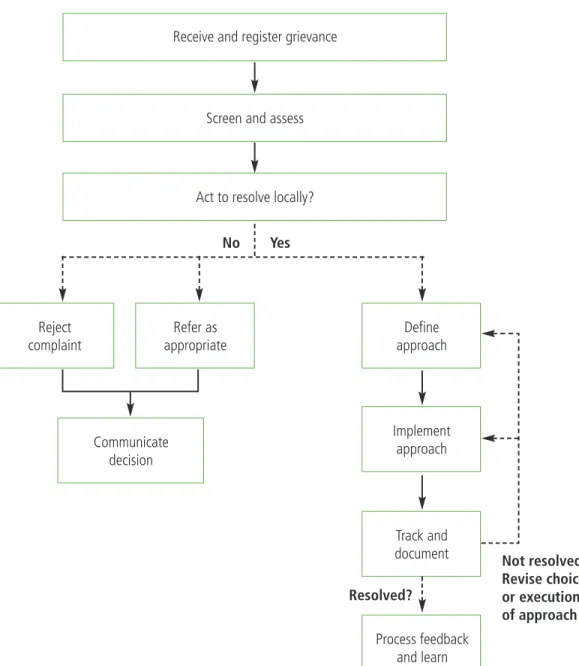
Figure 0.1. The Typical Steps of a Grievance Mechanism
Receive and register grievance
Screen and assess
Act to resolve locally?
Reject complaint Refer as appropriate Communicate decision Define approach Implement approach Track and document Process feedback and learn No Yes Not resolved? Revise choice or execution of approach Resolved?
constructively; the actual outcomes (impacts on project operations, management systems, and benefits for communities); its efficiency; and, most fundamentally, the ability to accomplish its stated purpose and goals. At certain times, the company should also solicit and include the views of stakeholder representatives to see how the mechanism is proving effective in practice.
A good grievance mechanism should be simple to understand, but not simplistic in its dealings with people and issues. Clarity and a user-friendly approach are certain to yield positive results. An example of a basic grievance mechanism structure is provided in figure 0.1 below.
Part I.
Overview
A locally based grievance resolution mechanism offers
a reliable structure and set of approaches whereby
local people and the company can find effective
solutions together.
Chapter 1. The Need for Grievance
Mechanisms
Companies are being called upon to lead and work with their
host communities to find nontraditional approaches for
preventing and addressing community grievances.
Large-scale development projects represent dramatic change for communities (see box 1.1). While change may lead to opportunity for some, it may put others at risk, despite project efforts to be socially and environmentally responsible, and despite genuine attempts to engage communities and create project safeguards. Risk and change work hand in hand to create conditions where community conflicts arise.
Consider the following examples:
• In a small Andean town of clustered adobe dwellings, contractors leave a local restaurant without paying for their lunches. Indignant community members block the road to the project so no vehicles can pass.
• A local resident reports the presence of mercury in her teakettle. She insists it came directly from her kitchen faucet. While this is scientifically impossible, the story makes headlines in the local and national media and escalates ongoing tensions between the company and the local population.
• Villagers undergoing resettlement repeatedly raise complaints with the company, ranging from eligibility criteria and rates of compensation to the location of resettlement sites and quality of services at those sites. The company struggles to find a way to deal with the increasing number of disputes in the face of the growing impacts of resettlement.
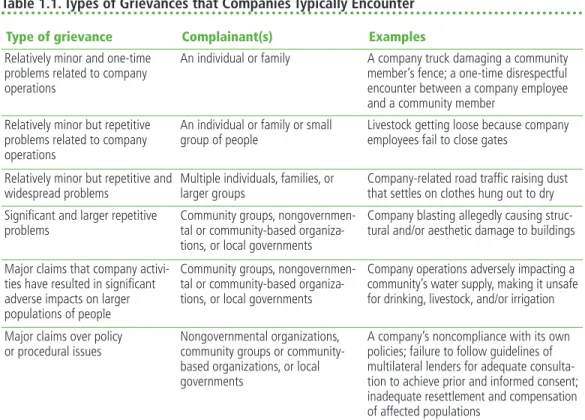
Companies in the business of developing large-scale projects must find effective ways to fairly and respectfully address community disputes to reduce their risk and protect local people who may become exposed to some form of harm (see table 1.1). A thoughtful response is all the more urgent for companies operating in countries with poor governance structures and an inadequate judiciary. Companies may be particularly at risk when it comes to community grievances in places where the government is not able to mediate between different societal interests. In
environments with an inadequate means to voice and resolve grievances, communities may turn to other venues to protest where the risk level for companies is dramatically higher, including the streets, an unpredictable court system, or the international press. Alternatively, they may feel powerless to act, while their grievances—unresolved, ignored, or scorned—accumulate over time, eventually erupting into intractable community opposition (see box 1.2).
Box 1.1. Defining “Community”
For some types of projects, the definition of community is complex. For example, pipeline projects can impact people along a corridor thousands of miles long. In this instance, the “community” may include people of different ethnic groups as well as different countries. The communities along the pipeline may experience short-term impacts during construction, but typically fewer and different impacts during operation. On the other hand, the community surrounding a mining project is more limited spatially. For this example, the community may experience more localized but longer-term impacts.
To address these challenges, companies are being called upon to lead and work with their host communities to find nonjudicial, dialogue-based approaches for preventing and addressing community grievances.
Traditional Ways Companies Handle Grievances
All companies use some approach to address conflicts with local people, but it is more rare to find a well-constructed, systematic approach. Interviewees for this guide cited three common ways companies handle grievances.
Trust is not a substitute for a grievance mechanism,
and a grievance mechanism is not a substitute for trust.
Blind trust: Rely on reputation to avoid disputes
Proponents of the trust approach advise that a grievance mechanism is not necessary as long as the company has established sufficient trust with the community. Relying upon a purely preventive approach is not recommended, however. Inevitably, complaints arise that trust alone cannot avert. While trust will likely make the resolution process easier, it is not a substitute for a grievance mechanism—and a grievance mechanism is not a substitute for trust.
Ad hoc: Hope for the best
Individual managers apply their own idiosyncratic version of grievance resolution on a case-by-case basis as specific disputes arise. Each case-by-case is handled as an individual event, without a basis in conscious policy or established practice. The approach is pragmatic, flexible, and inconsistent. The tactics and techniques used depend upon the specific circumstances of each case. Senior management often is not involved.
Ad hoc approaches pose several limitations for companies:
• Transparency is lacking. Complainants do not know where to find assistance with their grievance.
• Successful resolution is too dependent upon the skills of the particular project personnel who happen to receive the complaint.
• The approach is too reactive to address conflicts of any complexity.
Box 1.2. Community Expectations When Grievances Arise
When local people present a grievance, they generally expect to receive one or more of the following: • Acknowledgment of their problem
• An honest response to questions about company activities • An apology
• Compensation
• Modification of the conduct that caused the grievance • Some other fair remedy.
In voicing their concerns, they also expect to be heard and taken seriously. Finally, the company, contractors, or government officials must convince people that they can voice grievances and work to resolve them without retaliation.
• Only a limited number of grievances can be handled, as grievance management is viewed as taking time away from the “real” work of the business.
• The structure impedes the company’s ability to provide equitable, efficient, and consistent responses across the project, since staff resolve complaints independently without knowing how others are addressing similar situations.
Investigate, decide, and announce: Control the process and the outcome
Most companies that have developed a more formal grievance mechanism subscribe to some variation of an “investigate, decide, and announce” approach.
More formal than the ad hoc approach, this model offers an internal, multi-step procedure with specific time frames. Complaints are received through designated channels, and investigated to establish their validity or to determine that the complaint is without basis. If the complaint is deemed eligible for further investigation, it is referred to management for action and a formal company response is prepared and presented to the complainant. If the complainant does not accept the response, there may be an appeals process through successive levels of the company management hierarchy.
Type of grievance Complainant(s) Examples Relatively minor and one-time
problems related to company operations
An individual or family A company truck damaging a community member’s fence; a one-time disrespectful encounter between a company employee and a community member
Relatively minor but repetitive problems related to company operations
An individual or family or small group of people
Livestock getting loose because company employees fail to close gates
Relatively minor but repetitive and widespread problems
Multiple individuals, families, or larger groups
Company-related road traffic raising dust that settles on clothes hung out to dry Significant and larger repetitive
problems
Community groups, nongovernmen-tal or community-based organiza-tions, or local governments
Company blasting allegedly causing struc-tural and/or aesthetic damage to buildings Major claims that company
activi-ties have resulted in significant adverse impacts on larger populations of people
Community groups, nongovernmen-tal or community-based organiza-tions, or local governments
Company operations adversely impacting a community’s water supply, making it unsafe for drinking, livestock, and/or irrigation Major claims over policy
or procedural issues
Nongovernmental organizations, community groups or community-based organizations, or local governments
A company’s noncompliance with its own policies; failure to follow guidelines of multilateral lenders for adequate consulta-tion to achieve prior and informed consent; inadequate resettlement and compensation of affected populations
These models also encounter many criticisms. Experience has shown that internally based mechanisms:
• Reinforce power inequities by leaving companies in a position of power and communities in a position of dependency
• Significantly limit procedural choices available for solving the problem
• Emphasize investigations and formal responses based upon internal discussions over face-to-face dialogue and problem solving
• Prevent the complainant from having much influence in crafting a solution • Omit stakeholders from involvement in the design of the grievance mechanism • Rely upon individuals without specific training or capacity in grievance resolution to
manage the system
• Adapt through trial and error.
A Better Approach: Grievance Resolution Mechanisms
An effective grievance mechanism enhances the ability of a
company to justly address community concerns.
Local people need a trusted way to voice and resolve concerns linked to a project’s operations (see box 1.3). A locally based grievance resolution mechanism provides a promising avenue by offering a reliable structure and set of approaches where local people and the company can find effective solutions together. A well-functioning grievance mechanism:
• Increases the likelihood that small disputes can be brought to a conclusion relatively quickly before they become deep-seated grievances
• Keeps ownership of the dispute in the hands of local people • Offers an early, efficient, and less costly way to address concerns
• Promotes a more stable business climate for companies that reduces risk and enhances accountability to the host community.
Box 1.3. A Community Perspective on Grievance Resolution
Communities affected by development projects need a means to have their grievances addressed. They may seek a system that provides access to influence decisions that affect their lives, access to a fair hearing and procedural justice, access to information, and access to a fair remedy—without fear of retaliation.
Communities may also believe that an effective grievance mechanism can result in a more equitable allocation of benefits, costs, and risks during the life of the project. Notably, grievance mechanisms can:
• Give affected communities the leverage to negotiate mutually acceptable agreements under which their concerns can be addressed
• Enhance the ability of a company to justly address community concerns
• Ensure that even the poor and most marginalized get their concerns heard and addressed. Some suggest that well-designed systems not only resolve individual complaints, but also change project policies and operations for the better.
A well-functioning grievance mechanism can also provide valuable feedback to companies by: • Serving as an early warning system for wider problems
• Yielding insights from individual grievances that spotlight changes that might be needed to company operations or management systems
• Indicating possible systemic changes that might be needed to ensure that particular grievances do not recur.
Without the feedback loop that a good grievance mechanism can provide, the company may miss crucial opportunities to identify ways to improve operations. (For more on the business case for grievance mechanisms, see box 1.4.)
In addition to serving as a platform to resolve grievances, an effective grievance mechanism can help achieve the following goals:
• Open channels for effective communication
• Demonstrate that a company is concerned about community members and their well-being • Mitigate or prevent adverse impacts on communities caused by company operations • Improve trust and respect
• Provide structures for raising, addressing, and resolving issues that reduce imbalances in power • Promote productive relationships
• Build community acceptance of a company’s “social license” to operate (see box 1.5).
Box 1.4. The Business Case for Grievance Mechanisms
“There is only one chance to make a good first impression. It’s difficult
to get back on track after a project has problems.”
—General Manger, mining project, Peru The general manager at a large copper mining project under development in Peru makes a powerful case for the practical benefits a grievance mechanism offers a company and the community. A veteran to community complaints and grievances, and with extensive experience working in the conflicted mining sector in Peru, he has seen first hand what conflict can do to a project. He describes the motivation behind their grievance resolution mechanism like this: “It’s part of a process of engaging constructively with communities. We see it as an opportunity to share information. With a more formal system, we can identify issues early that could become big problems in the future. There is only one chance to make a good first impression. It’s difficult to get back on track after a project has problems. We have seen what happened with other mining projects in Peru. Creating a grievance mechanism at the beginning of a project sends a message to the community and NGOs that you want to engage productively. Developing a process early allows you to do a substantial amount of learning that you can apply when the project becomes a full-scale development in the future…Much of the work is done by contractors and this is one of the few ways to offer consistency between company and contractor responses, as well as control behavior of contractors. It also is a chance to instill our corporate ethic in our contractors. We think grievance mechanisms also make affected people part of the solution, which is a good practice.”
IFC and MIGA's Policies and Guidance on Grievance Mechanisms
Recognizing both the community development and the business case for managing grievances, the International Finance Corporation (IFC) and Multilateral Investment Guarantee Agency (MIGA), the private sector components of the World Bank Group, already have policy commitments that contain provisions relating to grievance mechanisms.
IFC and MIGA’s Policy and Performance Standards on Social and Environmental Sustainability were introduced to manage social and environmental risks and impacts and to enhance development opportunities of their projects.3The Performance Standards are the basis of
the Equator Principles, adopted worldwide by private sector banks and financial institutions, and also serve as good practice standards for development projects around the world. With respect toclient requirements, Performance Standard (PS) 1 presents the most significant reference to grievance mechanisms. The section on Social and Environmental Assessment and Management Systems (pp. 5–6) states: “The client will respond to communities’ concerns related to the project. If the client anticipates ongoing risks to or adverse impacts on affected communities, the client will establish a grievance mechanism to receive and facilitate resolution of the affected communities’ concerns and grievances about the client’s environmental and social performance.” Further references to grievances mechanisms are associated with the Performance Standards on Labor and Working Conditions (PS2); Community Health, Safety and Security (PS4); Land Acquisition and Involuntary Resettlement (PS5); and Indigenous Peoples (PS7).
With respect to their owninstitutional commitments, IFC and MIGA’s Policy on Social and Environmental Sustainability recognizes that both Bank members are held accountable to the Compliance Advisor/Ombudsman (CAO), which is the independent recourse mechanism available to project-affected peoples. The question of how a project-level grievance mechanism interacts with the CAO is dealt with below.
IFC has also prepared a set of Guidance Notes that correspond to each standard to explain requirements.4Box 1.6 summarizes the principles and good practice measures described
in the Performance Standards and Guidance Notes.
Taken together, the Policy, Performance Standards, and Guidance Notes of the IFC and MIGA form a robust foundation upon which the rationale and design of project-level grievance mechanisms—as elaborated in this document—rest.
Box 1.5. A Company’s “Social License” to Operate
Just as a company must secure permits and licenses from local, regional, and national governments, it must secure a “social license” from the local and wider community to function as a legitimate and respected operator in their midst.aTo obtain a social license, companies are realizing that it is good
business practice to take the level of social and environmental performance “beyond compliance” with basic legal requirements; they are finding it necessary to meet and sometimes exceed societal expectations. This, in turn, requires companies to align their operations with local needs, values, and concerns. For an increasing number of companies, grievance mechanisms form an integral part of this effort.
How Grievance Mechanisms Fit into Project-level Stakeholder
Engagement
Actively anticipating potential problems and initiating
preventive strategies and actions should be integral activities
for companies and communities.
Stakeholdersare persons or groups that are directly or indirectly affected by a project, as well as those that may have interests in a project and/or have the ability to influence its outcome either positively or negatively.Stakeholder engagementencompasses a range of activities and interactions between a company and community over the life of a project that are designed to promote transparent, accountable, positive, and mutually beneficial working relationships. Stakeholder engagement includes identifying and analyzing stakeholders, disclosing information through community consultation, anticipating and preventing conflicts, forming partnerships,
Box 1.6. Principles and Good Practice Measures on Grievance Resolution Derived from IFC and MIGA’s Performance Standards and Guidance Notes
IFC and MIGA’s Performance Standards and Guidance Notes present various principles and good practice measures on grievance mechanisms:
• Establish a procedure for receiving, recording/documenting, and addressing complaints that is easily accessible, culturally appropriate, and understandable to affected communities. • Inform the affected communities about the mechanism during the company-community
engagement process.
• Consider when and how to seek solutions to complaints in a collaborative manner with the involvement of the affected community.
• Scale the grievance mechanism to the potential risks and adverse impacts of the project. • Address concerns promptly, using an understandable and transparent process that is readily
accessible to all segments of the affected communities—and at no cost and without retribution. • Ensure full participation of both genders and vulnerable groups.
• Take into consideration customary and traditional methods of dispute resolution when designing the system.
• Assign consistent, experienced, and qualified personnel within the client organization with responsibility for receiving and responding to grievances.
• Establish a redress mechanism so those who feel their grievances have not been adequately addressed have recourse to an external body for reconsideration of their case.
• Document grievances received and responses provided and report back to the community periodically.
• Provide periodic reports on issues that the grievance mechanism has identified as of concern to those communities.
• Be aware of judicial and administrative mechanisms available in the country for resolution of disputes and do not impede access to these mechanisms.
The Performance Standards and Guidance Notes emphasize that a grievance mechanism should help the client understand the community’s perception of project risks and impacts so as to adjust its measures and actions to address the community concerns.
and involving the community in project monitoring. Stakeholder engagement can prevent conflicts by building rapport, positive relationships, and trust between the company and a community. Grievance resolution mechanisms are one component of an effective stakeholder engagement program.
One of the most effective forms of prevention a company can encourage is the active participation of employees at all levels in their host community’s civic, social, or religious life (see box 1.7). Such participation can provide a means to build positive personal relationships, establish connections with community groups and leaders, promote open and informal communication and information exchange, and demonstrate concern by the company and its employees for the community’s well-being. It can also offer informal access to information about community concerns and provide early warnings about any conflicts in the making. Such alerts are valuable; they give the company plenty of time to prepare an adequate response and address escalating tensions.
Sometimes, prevention through well-formulated stakeholder engagement can be seen as an unnecessary frill in project development. Companies are often reluctant to make necessary expenditures of effort, funds, time, and personnel when it is not clear that they are needed. Neglecting prevention, however, is often detrimental to both companies and communities. Prevention is good management, and benefits typically outweigh costs.
How Grievance Mechanisms Fit into the Larger Context of Project
Accountability
In addition to being part of an effective stakeholder engagement program, grievance mechanisms also fit into the larger world of corporate accountability that goes beyond the project level. Grievance mechanisms often are used as a first resort. If the grievance cannot be resolved, the complainant may refer to an external party such as the court system or an independent recourse mechanism such as the CAO to hear the case. Various accountability mechanisms exist at the industry, national, regional, and international level.5
Nonproject–level accountability mechanisms do have limitations, however:
• Thejudiciary—often the institution of choice for resolving conflicts in some countries— is not trusted by either companies or communities in many parts of the world.
• Traditional systems of justicemay be preferred by some community members; however, project developers may not fully understand or trust these forums. It is unlikely that companies would be willing to abide by their process or decisions.
Box 1.7. The Importance of Community Engagement to Avoid Conflicts
“Community engagement is a core strategy to know what our problems are before a grievance arises. Our local staff is involved in local chambers of commerce, church organizations, festival committees, and many other civic activities. [We] also have a foundation—with local people on the board—and they decide where community development funds go. The most proactive mechanisms have been active locally in civic life.”
• Independent recourse mechanisms, such as the CAO or the World Bank’s Inspection Panel, can play a valuable role, but are available to complainants only when the financial institution has an interest in the project, and are often subject to several other jurisdictional limitations. Nonproject recourse mechanisms present a reasonable alternative in some circumstances, but do not replace a working project-level grievance mechanism.
Chapter 2. Understanding Grievance
Mechanisms
A grievance mechanism should be in place
throughout the entire project cycle.
A project-level grievance mechanism is a locally based, formalized way for a company to accept, assess, and resolve community complaints related to company activities. It offers a package of widely understood and effective procedures for solving problems that are culturally appropriate, in combination with specially trained personnel, and aims to help parties reach speedy, efficient, and acceptable resolutions with dignity, justice, and finality.
The grievance mechanism draws upon conflict resolution resources from several areas—those inside the company, traditional and customary systems, and private systems (mediation, conciliation, arbitration).6These approaches complement one another and act together in a coordinated way.
Sometimes a company representative and a community member sit together informally and work out an agreement on their own. Other times, a trusted third party—possibly a mediator, technical expert, local authority, ombudsman, or wise person—may help the parties talk or suggest ways in which they can resolve their dispute fairly.
A grievance mechanism should be in place throughout the entire project cycle, beginning with the planning phases and continuing through construction and operations, until the end of the project life. While the grievance mechanism may evolve as the project moves through various phases, the dual goals of accountability to stakeholders and risk reduction remain constant.
Some Guiding Principles
Some of the approaches to grievance resolution advocated in this Advisory Note are grounded in principles of mediation and interest-based negotiation common to the field of alternative dispute resolution (ADR). ADR approaches emphasize creating an enabling environment for inclusive decision making and generation of locally owned decisions. Ultimately, ADR approaches focus on empowering parties to participate in a process that is fair, principled, and robust. There are circumstances when interest-based conciliation approaches are not appropriate or desirable to one or the other party in a dispute. Under these circumstances, arbitration or judicial recourse may be more appropriate after careful consideration. Some observers are concerned that interest-based approaches can encourage one party (usually the weaker) to compromise or negotiate away its fundamental human rights. Clearly, any grievance mechanism incorporating mediation or other interest-based processes must be grounded in a framework of ethics and principles that should not be violated. A report from the UN Special Representative on business and human rights suggests that grievance mechanisms should be:
• Legitimate. A mechanism must have clear, transparent, and sufficiently independent governance structures to ensure that no party to a particular grievance process can interfere with the fair conduct of that process.
• Accessible. A mechanism must be publicized to those who may wish to access it and provide adequate assistance for aggrieved parties who may face barriers of access, including language, literacy, awareness, finance, distance, or fear of reprisal.
• Predictable. A mechanism must provide a clear and known procedure, with time frames for each stage; clarity on the types of process and outcome it can (and cannot) offer; and means of monitoring the implementation of any outcome.
• Equitable. A mechanism must ensure that aggrieved parties have reasonable access to sources of information, advice, and expertise necessary to engage in a grievance process on fair and equitable terms.
• Rights-compatible. A mechanism must ensure that its outcomes and remedies accord with internationally recognized human rights standards.
• Transparent. A mechanism must provide sufficient transparency of process and outcome to meet the public interest concerns at stake and should presume transparency wherever possible. Nonstate mechanisms in particular should be transparent about the receipt of complaints and the key elements of their outcomes.7
As one example, in the case of the CAO, the Ombudsman “will not support agreements that would be coercive to one or more parties, are contrary to IFC/MIGA policies, or that would violate domestic laws of the parties or international laws.”8
Components of a Grievance Mechanism
Grievance resolution mechanisms include several elements, including some or all of the following: • A transparent grievance receipt and registration systemto provide ways for community
members to register complaints and confirm they have been received
• Grievance eligibility assessmentto determine if the issues raised in the complaint fall within the mandate of the grievance mechanism and the complainants have standing
• Grievance evaluationto clarify the issues and concerns raised in the complaint, to gather information on how others see the situation, and to identify whether and how the issues might be resolved
• Several choices for solving problems, with or without the assistance of independent, third parties:
– Internal decision-making processes, whereby issues are handled by designated company officials, using stated standards and criteria, to develop and propose a company response to the grievance and to allow for an appeals process
– Joint problem solving, in which the company and the complainant engage in direct dialogue – Third-party decision makingto offer a solution when a voluntary agreement is not possible • Grievance tracking, monitoring, and reporting to the community
• Company-community feedback and information sharingto strengthen grievance resolution processes
• Organizational learningand identification of systemic problems and the need for changes to policies and procedures to prevent recurrent future disputes.
There is no ideal model or one-size-fits-all approach to grievance resolution. Indeed, the best solutions to conflicts are generally achieved through localized mechanisms that take account of the specific issues, cultural context, local customs, and project conditions and scale. Nonetheless, the CAO’s experience—together with research undertaken for this study, which solicited the views of a wide range of practitioners—suggest that these basic components are especially helpful.
Chapter 3. Initiating a Grievance
Mechanism
Grievance resolution is everybody’s business,
from the company’s core business operations,
to production, to environmental management.
Grievance mechanisms start somewhere and with someone. It is common practice for the company’s community relations, external affairs, human resources, or legal department to be charged with initiating the effort. These offices, however, are not the backbone for resolving community grievances. Grievance resolution is everybody’s business, from the company’s core business operations, to production, to environmental management. As one regional director commented: “You need to view inside and outside the fence as part of the same system. Otherwise, Environmental and Operations folks will look at grievance handling as Social’s job, dismissing a complaint as something that has nothing to do with them. The reality is that grievances often materialize as a result of perceptions by community members related to environmental and operations issues and performance.”
Identify and Engage Key Actors
When starting out, it is important to recruit support and leadership for building the new system: from within the company, from the community, and from a range of stakeholders. To develop needed support:
• Identify a promoter within the company.9These individuals are rarely experts on grievance
mechanisms. Nonetheless, they are important change agents who:
– Maintain momentum through the early stages, addressing skepticism and resistance – Garner support inside the company and the community
– Build the business case and articulate it to gain acceptance from senior management – Contribute ideas that strengthen how the grievance mechanism will work
– Critically assess results once the grievance mechanism is up and running.
• Identify promoters within the community. It is also important to locate key champions within the community who can help build support for the use of the system and address concerns. The mechanism should ensure that promoters represent the community (such as elected, selected, or traditional leaders), and are not a self-promoting individual or group with a political agenda.
• Cultivate leadership within the company and community. Leadership commitment is critical for deciding whether or not to move forward with developing a grievance mechanism. The initiative should not proceed until such support can be raised.
Establish a Design Team
Building a core design team is especially
important for large, controversial projects.
The design team serves as a strategy team, sounding board, designer, and promoter. The team normally provides technical and political capability to move the process forward, enhances acceptance during the initial introduction, and ensures that implementation is effective.
Building a core design team is especially important for large, controversial projects. Effective design teams:
• Comprise individuals of mixed levels and functions from the company (such as operations, environmental affairs, community relations, legal affairs, contractors). Staffing the design team from just one function such as community relations or human resources is unwise. • Include a balanced group of representatives from the community, representing the range
of constituencies and demographics that will be using the grievance mechanism, while keeping the team small enough to be responsive.
• Are representative and manageable in terms of their size (8 to 12 members).
• Rely upon clear terms of reference and a work plan that outlines team goals, roles and responsibilities, level of decision-making authority, reporting lines, tasks, time frame, and products.
• Use the services of a professional design consultant or facilitator with experience in developing community/company grievance mechanisms to help the team get started.
Understand the Current Environment
The first task for the design team is to conduct an assessment of the types of grievance that are likely to arise, local capacity to handle grievances, and, if the project is already operating, the nature of any community grievances that have been presented so far.
This type of assessment forms an integral part of any stakeholder identification and engagement planning process. Much of the necessary information could be available in project documents, such as the Social and Environmental Impact Assessment (SEIA), or in the archives of the project sponsor or various government agencies.
Some specific questions related to grievance mechanisms may not have been addressed by previous work. To fill these gaps, the assessment process should involve a range of approaches, including interviewing and consulting with the community and company, and reviewing documents. When approaching a community, the design team must respect cultural sensitivities. Based on data collection and analysis, the design team can develop an overarching goal and direction for the grievance mechanism that recognizes the needs of both the community and the company and that responds to the question of what you want the grievance mechanism to accomplish. The analysis also guides the team in its decision about which specific design features to select to ensure compatibility with context and culture.
Stakeholder feedback is part of any design team’s education. To address doubts, gather valuable input, and build support, those leading the initiative should develop a plan for gathering input from local company and community people at the front end of the planning process, as follows:
• Before designing the grievance mechanism, reach out to a broad group of stakeholders (employees, contractors, managers, community leaders, local officials) through public meetings or a series of focus groups.
• Use outreach meetings to receive information and understand people’s doubts, objections, expectations, and perceptions related to a grievance mechanism.
• Help people understand why the system is being put in place, what it will look like in broad terms, and how it might benefit local people and those connected to the company. • Use such conversations to gather valuable input about traditional ways that members in
the community handle conflict. Identify some of the cultural differences the complaints system will need to address if people are to use it.
• Survey existing dispute resolution capacity in the community and consider how it might play a role in the grievance resolution mechanism.
An effective outreach process engages all stakeholders to: help shape what the grievance resolution mechanism looks like; increase transparency by presenting the company’s preliminary thinking about the grievance resolution mechanism (why the company wants to put one in place and ways in which it will benefit local people); and build understanding and support for the initiative among diverse stakeholders.
Assessing a project that is new (a greenfield project) will identify different issues than a project that has been in operation for some time.
Greenfield Projects
An assessment for a greenfield project will often be simpler than for an existing project because no grievances have yet occurred (see box 3.1).
Existing Projects
When a project has been operating for some time, the company, contractors, and the community may be resistant to switching from their current way of handling disputes to using a formal grievance mechanism. On one hand, company employees may protest that a more formal approach to managing complaints will undermine a supervisor’s authority, increase workload, or open the floodgates to complaints from local people and increase the risk of litigation. On the other hand, community members may be wary that such an initiative is little more than a public relations scheme. Both groups will have doubts about the ability of the mechanism to prevent retaliation.
An information-gathering exercise can help identify concerns and suggest ways to develop and implement a grievance mechanism that will be accepted and used by stakeholders (see box 3.2).
Box 3.1. Information Needed to Develop a Grievance Mechanism for Greenfield Projects
Characterize existing community systems for handling grievances and locate local dispute resolution capacity.
• How does the community typically handle conflicts? (Consider traditional systems based on clan, religious, or other customary institutions; government systems, such as an office of human rights; or privately created systems, such as centers for mediation, arbitration, or conciliation.) • Are trusted institutions within the community engaged in resolving grievances, and might they
play a role in the grievance mechanism?
Evaluate dynamics working for or against the introduction of a grievance mechanism inside and outside the company.
• Are there existing mechanisms that could be viewed as competing? • Does the company have the support of senior management?
Box 3.2. Information Needed to Develop a Grievance Mechanism for Existing Projects Characterize grievances, key actors, causes, and costs.
• What are the current types of grievances related to company operations? What additional issues do people anticipate? What are possible causes of these grievances? How often do they seem to arise?
• Whom do the community members blame for the issues (the company, one particular employee, a subcontractor, or others)?
• Whom do the issues being raised typically affect? Individuals? Whole families or communities? • Why are these grievances arising?
• Are there structural problems that could be changed to reduce conflict, such as different policies, rules, roles, decision-making processes, communication systems, or a better division of labor? • What are the costs of these conflicts for the company and the community? (Costs should be discussed not only in monetary terms but also in broad terms, such as relationship costs, time, and reputation.) How severe is the impact?
• Who will use the grievance mechanism? How do users differ? Are they from different ethnic, tribal, language, or religious groups? Do they have different levels of education? Are some rural and some urban? Are some women and some men? Based on any of these differences, do they maintain different assumptions about conflict and its resolution that will affect how they feel about a new grievance resolution mechanism?
• Who will have standing to bring a complaint (local individuals, local community groups, local or national NGOs, international NGOs, local governments, regional-national governments)? Characterize the current system for handling complaints.
• How are complaints handled now? Identify formal, informal, and ad hoc approaches inside the company for addressing grievances.
• Are there mechanisms for early intervention or resolution so cases do not escalate? • How well are any of these systems working? Are the existing channels for dealing with
community complaints able to handle future grievances? • Why are particular procedures being used or not used? • Where are the gaps?
• What are the existing barriers for those who might want to complain? Identify existing preventive measures.
• What form of stakeholder engagement does the company have in place? • How does the company communicate with the community?
• Does the company have methods for anticipating potential conflicts?
Characterize existing community systems for handling grievances and locate local dispute resolution capacity.
• How does the community typically handle conflicts? (Consider traditional systems based on clan, religious, or other customary institutions; government systems such as an office of human rights; or privately created systems such as centers for mediation, arbitration, or conciliation.) • Are trusted institutions within the community engaged in resolving grievances, and might they
play a role in the grievance mechanism?
Evaluate dynamics working for or against the introduction of a grievance mechanism inside and outside the company.
• Are there existing mechanisms that could be viewed as competing? • Does the company have the support of senior management?
Once the information has been gathered, it is important to consider what to do with the results. For example, is this the time to check back with senior management? Is it valuable to report back to the community and the company, to build support and acceptance of the analysis, diagnosis, and broad purpose? Does the design team have the authority to proceed directly to the design stage?
This is also the time for the design team to build its own capacity and knowledge about grievance mechanisms. Design teams should become familiar with:
• Models and features of effective grievance mechanisms
• Good practice markers employed by the company, industry, and financiers (see the Executive Summary)
• Common pitfalls to avoid
• What other projects are doing. Consider making on-site visits or holding interviews with companies and their community stakeholders where a grievance mechanism has been implemented.
Once these and related tasks have been accomplished, it is time to for the design team to develop a detailed design.
Part II.
Developing and
Implementing Effective
Grievance Mechanisms
There is no ideal model or one-size-fits-all approach to
grievance resolution. The best solutions to conflicts are
generally achieved through localized mechanisms that
take account of the specific issues, cultural context,
local customs, and project conditions and scale.
Chapter 4. Define Scope and
Determine Goals (Phase 1)
Phase 1. Define Scope and Determine Goals
• Define the scope of grievances to be handled • Determine the purpose and goals
In this phase, the design team determines the scope of grievances to be handled by the system and the purpose and goals. These elements form the foundation upon which the grievance mechanism will be assembled. They are crafted from the subjective assumptions and values of team members and a more objective analysis presented in the situation assessment.
Define the Scope of Grievances
Using the information gathered through the situation assessment, the design team’s next step is to review the type of grievances that are likely to arise or, in the case of an operating project, that have arisen so far. Generally, grievance mechanisms should be open to a wide range of concerns: both those based in factual data and those arising from perceptions or misperceptions. Perceived concerns can be as critical to address as actual hazards. They often arise when people do not have adequate information. The mechanism should also be able to address multi-party and multi-issue complaints. The design team then prioritizes those types of complaints that the mechanism will primarily target.
Define the Purpose and Goals
If a design team cannot reach consensus on
a statement of purpose—or if it does so superficially—
its future work may be in jeopardy.
The design and implementation of a grievance mechanism must respond directly to the purpose and goals defined. In turn, the purpose and goals must respond to some fundamental questions: “Why is a grievance mechanism being established?” “What do we hope to achieve in both the short term and the long term?”
If a design team cannot reach consensus on a statement of purpose—or if it does so superficially— its future work may be in jeopardy. Consensus sometimes can be difficult to reach, however, because diverse stakeholders come to the “design table” with very different life experiences, values, and assumptions about grievance mechanisms. These differences may create tension during discussions about a mechanism’s fundamental purpose and goals. While all can appreciate that a primary goal revolves around resolving specific grievances in a manner that meets both company and community needs, it is important to uncover more unconscious assumptions related to the system’s purpose to ensure agreement and commitment by all.
Discussions about the purpose of the grievance mechanism
go to the very heart of matters underlying power relationships
between a company and a community.
Discussions about the system’s purpose go to the very heart of matters underlying power relationships between a company and a community. It is hard to imagine a comprehensive approach to understanding conflict between companies and communities that does not address how power is wielded and distributed. If these discussions fail to occur, grievance mechanisms run the risk of becoming just another tool by which the company wields power. Consequently, in articulating the purpose and goals for the grievance mechanism, questions such as the following should be considered:
• Will the grievance mechanism be oriented primarily around concerns of the community or around joint concerns of the company and community?
• Is the grievance mechanism oriented toward identifying root causes of conflict and addressing them through systemic change or is it exclusively focused on the resolution of individual complaints?
• Is the grievance mechanism primarily oriented toward company investigation and internal redress or toward a more comprehensive set of options for resolution and the provision of justice?
• How can the grievance mechanism be structured in a way that does not reinforce power inequities?
Chapter 5. Design (Phase 2)
Phase 2. Design• Prepare a preliminary design
• Choose ways to receive, register, assess, and respond to grievances • Select grievance resolution approaches
• Design a means to track and monitor grievances • Develop the grievance mechanism infrastructure • Review and refine the design.
Prepare a Preliminary Design
The way a grievance resolution mechanism is designed is as
important as what form it finally takes, because the process
establishes credibility and trust.
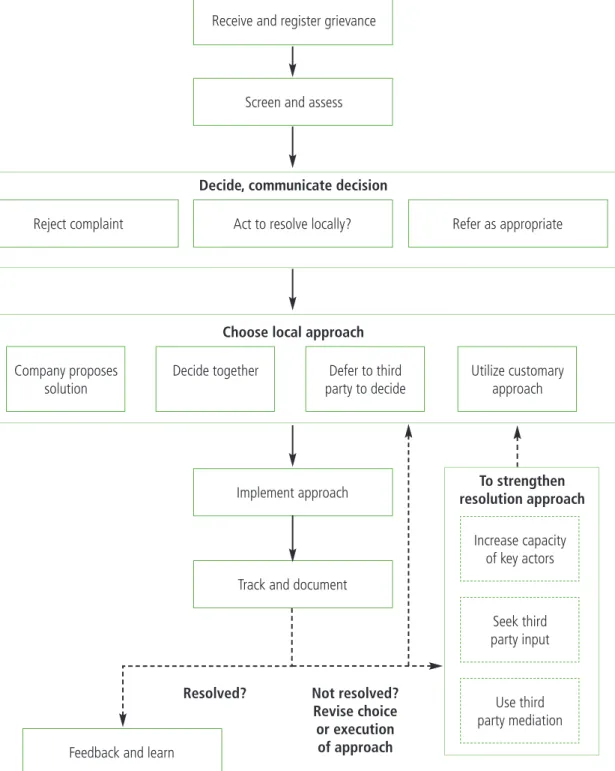
In this phase, the design team develops a plan or blueprint for what the grievance mechanism will look like. In its simplest form, a grievance mechanism can be broken down into the following primary components (see figure 5.1).
• Receive and register a complaint. • Screen and assess the complaint. • Formulate a response.
• Select a resolution approach. • Implement the approach. • Settle the issues.
• Track and evaluate results.
• Learn from the experience and communicate back to all parties involved.
Choose Ways to Receive, Register, Screen, Assess, and Respond to
Grievances
Receive and Register a Complaint
Receiving and registering complaints is a simple process where local people can inform the company about concerns directly and, if necessary, anonymously or through third parties. Reception procedures are most effective if they are convenient, culturally appropriate, simple to understand, and easy to use (see box 5.1).
Box 5.1. Culturally Appropriate Grievance Receipt and Registration
In some cultures, senior managers may be the most appropriate people to solicit and accept community complaints. As the general manager of a gold mine explains, “Rural Mongolia is an oral, face-to-face type of culture. Attending to relationship is crucial. Here, relationships go a long way toward project understanding and to addressing problems. Our procedures are simple and straightforward and ones that invest a lot of face time. Much of the face time is that of the general director, who is out meeting and greeting on a regular basis.”
Figure 5.1. A Grievance Mechanism with Multiple Local Approaches to Resolving Complaints
Receive and register grievance
Screen and assess
Act to resolve locally?
Implement approach
Track and document
Feedback and learn
Refer as appropriate Reject complaint
Decide together Defer to third party to decide Utilize customary approach Company proposes solution Increase capacity of key actors Seek third party input Use third party mediation Decide, communicate decision
Choose local approach
To strengthen resolution approach Not resolved? Revise choice or execution of approach Resolved?