Twice Exceptionality: A case study of educational experience of a gifted hyperactive child through the perspective of the child, his teachers and his parent.
Dinara Shaimakhanova
Submitted in partial fulfillment of the requirements for the degree of Master of Science
in
School Leadership
Nazarbayev University Graduate School of Education
June, 2016
AUTHOR AGREEMENT
By signing and submitting this license, you Dinara Shaimakhanova (the author(s) or copyright owner) grant to Nazarbayev University (NU) the non-exclusive right to reproduce, convert (as defined below), and/or distribute your submission (including the abstract) worldwide in print and electronic format and in any medium, including but not limited to audio or video.
You agree that NU may, without changing the content, convert the submission to any medium or format for the purpose of preservation.
You also agree that NU may keep more than one copy of this submission for purposes of security, back-up and preservation.
You represent that the submission is your original work, and that you have the right to grant the rights contained in this license. You also represent that your submission does not, to the best of your knowledge, infringe upon anyone's copyright.
If the submission contains material for which you do not hold copyright, you represent that you have obtained the unrestricted permission of the copyright owner to grant NU the rights required by this license, and that such third-party owned material is clearly identified and acknowledged within the text or content of the submission.
IF THE SUBMISSION IS BASED UPON WORK THAT HAS BEEN SPONSORED OR SUPPORTED BY AN AGENCY OR ORGANIZATION OTHER THAN NU, YOU REPRESENT THAT YOU HAVE FULFILLED ANY RIGHT OF REVIEW OR OTHER OBLIGATIONS REQUIRED BY SUCH CONTRACT OR AGREEMENT.
NU will clearly identify your name(s) as the author(s) or owner(s) of the submission, and will not make any alteration, other than as allowed by this license, to your submission.
I hereby accept the terms of the above Author Agreement.
__________________ Author’s signature:
_________________ Date:
Declaration
I hereby declare that this submission is my own work and to the best of my knowledge it contains no materials previously published or written by another person, or substantial proportions of material which have been submitted for the award of any other course or degree at NU or any other educational institution, except where due acknowledgement is made in the thesis. This thesis is the result of my own independent work, except where otherwise stated, and the views expressed here are my own.
Signed: Date:
NUGSE RESEARCH APPROVAL DECISION LETTER
The NUGSE Research Committee reviewed the project titled Twice Exceptionality: A case study of educational experience of a gifted hyperactive child through the perspective of the child, his teachers and his parent by Dinara Shaimakhanova and decided:
☐To grant approval for this study
To grant approval for this study subject to minor changes, to be signed off by supervisor ☐To request additional information/clarification to determine approval
☐To refer the application for IREC review
Approval: This approval is effective for the life of the study. However, any time you change any aspect of your project (e.g., recruitment process, administering materials, collecting data, gaining consent, and changing participants) you will need to submit a request for modification to the NUGSE Research Committee. Make sure to address all of the information requested on the request for modification form(s). Please be advised that in some circumstances, changes to the protocol may disqualify the project from approval.
Sincerely,
Acknowledgement
I dedicate this thesis to my parents who played a great role in my development as a professional teacher and to my sister and her son who showed encouraged me during my writing of this thesis.
My special gratitude to my thesis supervisor Professor Rita Kasa and to NU GSE faculty staff including Deborah Brown, Alfred Burns, Philip Montgomery, Robyn Bantel and Kuralay Bozymbekova for their constant support and for the hard work they did to inspire me. My special thankfulness is to the students of 2-year program of Graduate School of Education for their true friendship and inspiration in our research way.
Finally, my deepest gratitude is to my participant of the study, a twice exceptional child, his mother and teachers for being the key factor of my interest in this research and their patience and willingness to be a part of my study.
Abstract
Key words: Twice Exceptionality, Giftedness, ADHD, Inclusive Education, Case study
The main focus of this study is to explore the phenomenon of twice exceptionality in one of Kazakhstani mainstream schools. One of the main educational strategies of the development of educational system in Kazakhstan till 2020 is connected with improving inclusive education in Kazakhstani mainstream schools. That is why the phenomenon of twice exceptionality is becoming a hot topic for both practitioners and researchers.
The purpose of the qualitative research is to explore the educational experience of a twice exceptional child identified as GADHD (gifted/ attention deficit hyperactivity
disorder) studying in a mainstream school in Kazakhstan within the context of inclusive education.
The study is aimed to investigate the educational characteristics of a gifted hyperactive child through the perspectives of the child, his teachers and his parent.
Firstly, the study analyzed teachers’ awareness of, attitudes about, and experience with twice exceptional children; and the ways how such children are usually identified. Secondly, the research investigated the effects of school and home environments on educational experience of a twice exceptional child followed by examining the inclusive education strategies to accommodate gifted hyperactive students’ needs.
This study was based on a case study method of qualitative research approach. The main participants of the study were a twice exceptional primary school child and his mother, as well as two of his current teachers and one possibly future teacher, who were both interviewed and observed during the study.
The results of the study showed that twice exceptionality is a problem in
Kazakhstani schools. It was concluded that educational experience of twice exceptional children in Kazakhstan depends on several factors and there are no universal strategies to accommodate the unique needs of gifted hyperactive children.
List of contents
Declaration... iii
Acknowledgement ... v
Abstract ... vi
List of contents ... vii
List of tables ... x Chapter 1. Introduction ... 1 Research Problem ... 3 Research questions ... 4 Significance ... 4 Thesis outline ... 5
Chapter 2. Literature Review... 7
Introduction ... 7
Identification of twice exceptional gifted hyperactive children ... 8
Teachers' awareness, perceptions and experience with twice-expceptional children ... 13
Educational experience of twice exceptional gifted children with attention deficit hyperactivity disorder ... 16
Twice exceptionality in the context of inclusive education ... 19
Conclusion ... 23
Chapter 3. Methodology ... 25
Research site and study participants ... 25
Research site. ... 25
Study participants. ... 26
Research Methods and Instruments ... 29
Data Analysis ... 31
Ethics ... 32
Conclusion ... 33
Chapter 4. Findings ... 34
Introduction ... 34
Teachers' awareness of, attitudes about, and classroom experience with twice exceptional children ... 35
What is really happening to twice exceptionals at school?... 37
Identification of twice-exceptional students ... 39
The effect of school environment on the twice exceptional child ... 43
The effect of home environment on the twice exceptional child ... 45
Strategies on inclusive education for twice-exceptional children ... 47
Conclusion ... 49
Chapter 5. Discussion ... 50
Teachers' awareness and perceptions, experience on twice exceptionals (Gifted students with ADHD) and the phenomenon of twice-exceptionality in Kazakhstan ... 50
The impact of identifying a child as twice exceptional or the lack of such identification on academic educational experience of a child... 54
The impact of identifying a child as twice exceptional or the lack of such identification
on educational experience of a child in the family ... 56
Inclusive Education strategies to accommodate the needs of twice exceptional gifted children with attention deficit hyperactivity disorder ... 58
Conclusion ... 62
Chapter 6. Conclusion ... 64
Major findings of the research ... 64
Recommendations and future research directions ... 65
Limitations of the study ... 66
Final reflections on the study ... 67
List of References ... 68
Appendix A: Informed consent form ... 73
Appendix B: Interview questions ... 84
Appendix C: Observation Protocols ... 85
List of tables
Chapter 1. Introduction
This research is about educational experience of a gifted hyperactive child (or GADHD child) of a mainstream primary school in Kazakhstan which is analyzed through the perspectives of the child, his current and possibly future teachers and his parent. The research is highlighting the idea of educating gifted children with some other learning barriers, specifically for the study of Attention Deficit Hyperactivity Disorder, who are called Twice Exceptional Students in educational literature (Pfeiffer, 2008).
Giftedness has been considered as one of the most difficult topics in the
development of global education. Sternberg (2011) discussed some of the main theories of giftedness throughout the history of educational experience in the world. Among those theories they highlighted the theories and concepts related to the IQ identification (Gallagher and Courtright, 1986, Robinson, 2005), and to other qualities of students (Gardner, 2006, Renzulli, 2009; Sternberg and Zhang, 1995).
On the other hand, Borland, the Professor at Teachers College, Columbia
University advocates that giftedness is nothing but a “chimera” or a not real life concept which is more about social status of a student rather than intellectual or other abilities (Borland, 2005). As he explains categorizing students into gifted and non-gifted is not scientifically proven and that is why giftedness is a “myth rather than something real” (Borland, 2005, p.24). However, the researchers in the field of giftedness as well as practitioners try to identify gifted students among their peers by several criteria such as “the excellence criterion, the rarity criterion, the productivity criterion, the demonstrability criterion and the value criterion” (Sternberg et al, 2011).
The topic of giftedness is being researched from different angles. One of such angles is the studies on twice exceptionality, where the phenomenon of twice
exceptionality means possessing the characteristics of a gifted child along with having some other learning barriers (physical, emotional or social).
A more specific definition of a twice-exceptional child was provided in a research work of Wormald (2009):
Twice exceptional learners are students who give evidence of a potential for high achievement capability in areas such as specific academics, general intellectual ability, creativity; leadership; and/or visual, spatial, or performing arts and also give evidence of one or more disabilities; speech and language disorders;
emotional/behaviourial disorders; physical disabilities; autism spectrum; or other health impairments, such as ADHD. (p.19)
Research and policy on twice exceptional children is expanding globally, but it is yet to be explored in Kazakhstan. The researchers study different types of
twice-exceptional learners. Gifted hyperactive children (GADHD) are being identified and researched more as the characteristic features of a regular gifted child resemble the features of a child who has attention deficit hyperactivity disorder in some cases. When a gifted student has a learning barrier such as ADHD, teachers as well as other educational
stakeholders find it difficult to identify giftedness in a timely manner as ADHD masks the talents of a learner. As the result of late identification or non-identification of a gifted child may lead to inability of a gifted student to contribute the society (Sternberg, 2011). Vice-versa, as giftedness and attention deficit hyperactivity disorder can be characterized with the same set of features such as hyperactivity, impulsivity, or symptoms of inattention or boredom that learners possess , most of the students are misdiagnosed as being either gifted or having ADHD (Pfeiffer, 2008). However, there is possibility that the learner is a dual exceptional student who must be treated and educated differently than other gifted children or ADHD learners. Both giftedness and ADHD disorder could be considered as
learning barriers and in turn such erroneous perception may lead to failures in student's educational experience (Shavinina, as cited in Pfeiffer, 2008). That is why discussion of this issue is relevant for not only teachers, but also parents and other stakeholders such as teacher trainers, school leadership, psychologists, policy makers, and wider community. Inclusive education can be considered as the best approach for educating GADHD learners as schools for exclusively gifted children cannot fully accommodate the learning challenges that such students face. Such learners also would be disadvantaged if their schooling is determined by their learning disability only. Their whole educational experience, including both academic and non-academic participation, can be negatively affected due to confusion in identifying their strengths and weaknesses properly. However, Kazakhstani mainstream schools can offer little on provision of appropriate inclusive education for such students.
Research Problem
Inclusive education is an important step in educational system change in Kazakhstan. Inclusive education is education for all, regardless any backgrounds
(UNESCO, n.d.) . However, students are still excluded for a variety of factors concerning their physical, intellectual, emotional, social and other characteristics and (dis)abilities. They are placed into the special schools where students with similar characteristics are studying instead of being part of mainstream schooling. The phenomenon of twice exceptionality is not always taken into account while developing school programs or preparing educators to work with them in the context of mainstream school (Omdal, 2015). The lack of or limited knowledge of teachers and families leads to misdiagnosing or lack of identification of twice exceptional gifted hyperactive children taking into consideration either their strength or disorder. That is why, usually gifted hyperactive children are not accepting proper educational service at mainstream schools which can meet both
conditions of twice exceptional students, giftedness and hyperactivity, simultaneously. Purpose of the study
The purpose of this qualitative study is to explore the educationalexperience of a twice-exceptional child identified as GADHD studying in a mainstream school in Kazakhstan within the context of inclusive education. It leads to investigating the following research questions.
Research questions
Central RQ: What are the characteristics of educational experience of a twice exceptional child in a general educational institution in Kazakhstan through perspectives of the child, his teachers and his parent?
Sub RQ1: What are teachers' awareness and perceptions, experience on twice exceptionals (Gifted students with ADHD) and the phenomenon of twice-exceptionality in Kazakhstan?
Sub RQ2: How does identifying a child as twice exceptional or the lack of such identification influence academic educational experience of a child?
Sub RQ3: How does identifying a child as twice exceptional or the lack of such identification influence educational experience of a child in the family?
Sub RQ4: What strategies can be used to improve providing inclusive education for twiceexceptional gifted children with attention deficit hyperactivity disorder?
Significance
The research is important for understanding teachers' awareness and perceptions of twice exceptionals. Teachers are the first and main professionals who the students meet with. Therefore, lack of or limited understanding of the phenomenon of twice exceptionals
by teachers may lead to negative academic and non-academic effects on twice exceptional students.
Moreover, this topic is not widely discussed among teachers and school community in Kazakhstani secondary schools.
Identifying giftedness and admitting other learning barriers like ADHD of students in early stages can contribute to the appropriate implementation of inclusive education at secondary schools in Kazakhstan. Different educational stakeholders may find this study valuable in the context of planning, organizing, implementing, developing, reflecting, monitoring and further improving secondary education in Kazakhstani mainstream schools. That is why, policy makers, educational community, teachers, psychologists, classroom teachers, school administration, parents and researchers in this field can find the research practically valuable.
Thesis outline
The introduction part provides the information on the research background of the topic, the problem and the purpose of the study, the list of research questions which will be discussed in the present chapter and mentions the significance of the study to the
stakeholders and overall educational practice in inclusive education environment. The literature review chapter provides the information on overview of twice exceptionalty and the strategies how inclusive education is implemented for twice exceptional students. Methodology chapter describes how the case study approach is used for the purpose of this research. In the Findings chapter I will presents the analysis of the collected data of the research. It is followed by a chapter on discussions of the findings with reference to the literature on twice-exceptionality that will reveal the answers to the research questions. In the conclusion the limitations and findings' implications are provided together with
recommendations and strategies for better providing the inclusive education for twice-exceptional students in Kazakhstani mainstream schools. Finally the researcher reflects on the ways for further research on this topic.
Chapter 2. Literature Review Introduction
Researchers across the globe are investigating the phenomenon of “twice- exceptionals” (Gallagher, 2002, Wellisch, 2012). According to Wellisch (2012) “twice- exceptionals” are gifted students who have some learning barriers or disabilities. This population of students struggles because either giftedness or other exceptionalities “mask each other” (Wellisch, 2012). It is important to mention that in most cases giftedness cannot be distinguished as other
learning barriers hide the giftedness. However, if an impairment masks giftedness and the latter goes unacknowledged, this can result in negative future progress of the child’s education (Gallagher, 2002).
In the first part of this chapter, I will present the overview of twice-exceptionality focusing on giftedness and attention deficit hyperactivity disorder. The ways in which gifted hyperactive students are usually identified will be analyzed. In the second section, teachers’ awareness and perceptions of twice exceptional children and the educational experience of such children will be presented. This is necessary for my study because the analysis of twice exceptionality can help to deepen understanding if this phenomenon is acknowledged and treated appropriately by the educational environment. Thirdly, I will focus on how the needs of gifted hyperactive children are accommodated by analyzing the strategies which are used with twice exceptional children. It is important to me to find appropriate ways of improving the provision of the inclusive education to twice-exceptional gifted hyperactive children. Finally, overall limitations of this study and recommendations for further research will be presented.
Identification of twice exceptional gifted hyperactive children
This section provides information on the characteristics and specific features of twice-exceptional children who have both characteristics of giftedness and attention deficit hyperactivity disorder. The educational instruments and methods the teachers use in order to identify twice-exceptional students are analysed.
According to Hua, Shore and Makarova (2014) the characteristics of gifted students are, in most cases, reminiscent of the characteristics of students who have attention deficit hyperactivity disorder (ADHD). If the student shares both giftedness and ADHD
chracteristics he has "unique individual needs" (Hua et al., 2014 p.74) and such children can be called twice or dual exceptional gifted hyperactive students. Foley-Nicpon, Rickels, Assouline and Richards (2012) agree that gifted students with ADHD "face unique
challenges" (p.221) explaining that even if gifted hyperactive students are recognized to be intellectually strong, they find academics challenging and, moreover, interation with peers can be a struggle for them. This idea is supported by the research of Lee and Olenchak (2015) who state that there are similarities in behaviors of gifted children and children with ADHD, which are usually confused by most practitioners and teachers. That is why, when the child is sharing both characteristics, ADHD may be "over-diagnosed" while the potential of giftedness is, in most cases, "misdiagnosed" (p. 186). Thus, in order to understand twice exceptionality it is important to provide an overview each kind of exceptionality of a twice exceptional student separately.
First, giftedness is a strength which is usually hidden or not properly identified in a twice exceptional idividual. Today, there are different interpretations of what giftedness is. For instance, according to Kokot (2011) a gifted child is one that is different from his/her peers because of his/her talents in special areas. Barger, in her research, identified gifted children as not being the same as talented or high-achieving ones (Barger, 2009). Baldwin
(2005) noted that the difference between gifted and talented children is that gifted children are usually distinguished by their academic achievements, while talented children are those who have exceptional achievements in different spheres like sports, arts and so on.
However, there are still hot debates on the phenomenon of giftedness. Researchers as well as educators suppose that giftedness takes its roots from the theory of multiple
intelligences (Gardner, 1983), alongside other ideas on creativity and divergent thinking skills (Gallagher, 2002), and the seminal model of competing intelligences: neural, experiential or reflective, according to Perkins (1995).
Researchers all over the world explore the issue of giftedness from the perspectives of intelligences people have. Gardner (1986) as cited in Gallagher (2002) proposed
different intelligences that people possess. Among them, he differentiated logical, mathematical, spatial, bodily kinesthetic, musical, interpersonal, and intrapersonal intelligences. Gardner explained that these kinds of intelligences lead to the development of different abilities. As a result, they turn out to make a person gifted in various aspects of life like music, arts, science, communication, leadership, and writing (Gallagher, 2002).
From a different perspective, there was a research study which revealed three main kinds of intelligences existing in the world. Perkins (1995) distinguished them as neural, experiential, and reflective intelligences. These kinds of intelligences give information on where giftedness may appear. Either by a genetic system/neural system, or through academic and non-academic knowledge, we gain while studying or at home/by experience. Moreover, giftedness can emerge because of “thinking strategies” we use or by reflection (Gallagher, 2002).
According to Spearman (1904), intelligence starts with a person’s mental ability, as he called it later, the G factor, which stands for general or common intellectual factor.
This factor measures the ability of people to think and consecutively assesses the level to what extent the person is gifted or not (Baldwin, 2005).
Researchers from South Africa, Kokot and Kruger (2011), identified that gifted students usually have common characteristic features such as the abilities to concentrate, to learn new things fast, to think critically and to solve intellectual tasks quickly. Besides, such students are usually perfectionists or emotionally sensitive. “Extreme curiosity and excellent memory” are their particular features (Kokot & Kruger, 2011, p. 235).
According to Renzulli (2000), a gifted child can be characterized by a three-ring conception of giftedness. Above average ability, task commitment and creativity are the main features of a gifted learner. These components cannot show that a learner is gifted if there is no interrelationship between them (Renzulli, 2000).
Apart from common characteristics gifted children usually possess, they also have common needs, because of which they are considered to be disadvantaged in some areas. From the academic side, gifted learners may experience reluctance to do tasks during the lesson, may even become lazy, and their perfectionism may cause problems with managing time. Such learners may be stubborn about their ideas without any wish to change their direction (Kokot, 2011). From the perspective of social relationships with peers, gifted learners are challenged in making good contacts with peers which can lead to over criticism or frustration about the things which do not go the way they wish (Kokot, 2011). As Hua et al.’s (2015) studies showed, gifted students share the characteristics of having poor attention due to boredom and being less challenged. At the same time, gifted students can be highly sensitive and preoccupied with their own ideas, which is not usually well accepted by other students and teachers (Hua et al., 2015).
Wellisch and Brown (2012) in their article about an intervention model for gifted children, found that gifted children “who do not achieve often” (p. 88) could be
disadvantaged in their social interactions and level of motivation. Wellisch and Brown (2012) admit that giftedness is also a learning barrier. “Gifted and Misunderstood” is the notion that demonstrates giftedness as a learning barrier due to several reasons (Wellisch, 2012, p. 48). Such learners face difficulties in their communication with same-aged peers and their peers could misinterpret their behavior. As a result, it can lead to
misunderstandings in the home environment. Moreover, teachers are often unresponsive to such children’s needs and the education system does not always support gifted students if they study with other students of average knowledge and level of abilities. Having been educated in such conditions, gifted learners can become “underachievers” in their society, which leads to the demotivation of gifted learners (Wellisch, 2012, p. 50).
In a different light, the proper identification of ADHD is also very important for twice-esceptional students. A number of researchers as well as school and medical
practitioners are studying the topic of attention deficit hyperactivity disorder. According to the American Psychiatric Association (2013), ADHD children are usually characterised by inattention and hyperactive/impulsive behavior. These characteristics can vary from just having features of inattention or hyperactivity/impulsivity separately or having all the characteristics in combination. Lee and Olenchak (2015) highlighted this kind of disorder as "the diagnosis of the decade" explaining that attention deficit hyperactivity disorder is increasing its popularity among school children in recent years (p.186). According to Foley-Nicpon et al. (2012) children with ADHD have "significantly poorer social skills" than their non-ADHD peers (p.222). As such fact usually influences the self-esteem and self-concept of students identified with ADHD characteristics. As concluded in their research, the reason was directly connected to low social support for ADHD learners
(including Gifted /ADHD learners), the main resource of which was being the families of those students (Foley-Nipkon et al., 2012).
Attention deficit hyperactivity disorder which a child experiences is currently a challenge for not only the school and the student but also for the family and the whole society (Rafalovich, 2001). Researchers have suggested that inappropriate psychological and academic functioning can be the result of the existence of ADHD disorder, which influences both the student's academic experience at school and in the family (Riccio, Gonzalez and Hynd, 1994). Aguair, Eubig and Schantz (2012) acknowledged that genetics can play a role if a child has or does not have any type of attention deficit hyperactivity disorder. However, they did not deny that such kind of disorder can be caused by the environmental situation and the child’s upbringing. As the researchers explained, the environment in which a child is raised directly influences that way the child behaves. This brings to light the fact that depending on the way the child is treated and brought up, he/she will respond accordingly. This is revealed in the research of Aguair et al. (2012).
Rafalovich (2001) while exploring the notion that ADHD is connected to the environment of a child, developed the idea that children having ADHD disorder are “driven by the moment” rather than “by words” (Rafalovich, 2001, p. 377). Parents and family situations influence whether ADHD children are able or unable to control themselves in any aspect of their life including their studies. The research revealed that contact with a child while doing some activities together and always offering encouragement to them was the most helpful way for parents to control the behavior of their ADHD children. Just talking to children either by reproaching or saying some words of wisdom was not so effective for children with that kind of disorder (Rafalovich, 2001).
As Ronskley-Pavia (2015) highlighted, twice exceptional students who have the characteristics of ADHD are mostly diagnosed only by their attention deficit hyperactivity
disorder, which leads to negative educational experiences. Thus, the features of increased anger, anxiety, depression, hyperactivity, low self-efficacy and feeling to failure become more vivid and prevent the educators from identifying their giftedness (Ronskley-Pavia, 2015).
Overall, teachers and other educational stakeholders use different ways and methods to identify whether a child shares the characteristics of giftedness and attention deficit hyperactivity disorder. That is why it is important to investigate teachers'
awareness, perceptions and experience with twice-expceptional gifted hyperactive children.
Teachers' awareness, perceptions and experience with twice-expceptional children During recent times, school practice in many countries shows that the number of twice exceptional gifted hyperactive students is increasing; therefore, teacher exposure and interaction with this kind of student is increasing. However, are the teachers aware of this fact? How do they percieve and what attitude do they have toward twice exceptional students?
Aswering these questions, Omdal (2015) acknowledged that "individuals planning for and teaching students with twice exceptionalities need specialised training in both gifted and special education" (p. 246). He explained that practitioners not only at
mainstream schools but at other levels of education do not always recognize whether they are working with twice exceptional students. The masking conditions of giftedness and ADHD which are usually confused by teachers lead pratitioners to a gap in the appropriate identification of twice exceptionality. Because of this, students may end up cognitively handicapped and/or discriminated against in the context of educational opportunities. (Omdal, 2015).
Lee and Olenchak (2015) agreed that misdiagnosis of twice exceptionality appears when either the strength or the disability of a child "hides or masks other diagnosis"
(p.188). Through their research, Lee and Olenchak found that 132 school teachers were not able to identify the giftedness of gifted hyperactive children, because "teacher's first
impulse was toward pathology rather than talent" (p.188). Reis et al. (2014) supported the findings of Omdal and Lee and Olenchak saying that teachers perceptions on twice exceptionals depend on both "the depth of educator's understanding about giftedness and disabilities and their intersection" (p.218).
In contrast, Foley-Nicpon, Allmon, Sieck and Stinson (2011) stated that teachers' and other practitioners' lack of awareness of twice exceptionality could be the consequence of under-development of psycho-educational assessment tools for assessing the twice-exceptional profile. This statement was also supported by Omdal (2015) who said that the lack of specialized academic training and professional development in the sphere of twice exceptionality can be the reason why educators are not fully aware of this fact. However, Reis, Baum and Burke (2014) contradicted these ideas by noting that some teachers
themselves are reluctant to accept the phenomenon of twice exceptionality in their practice at schools. They believe that if a child has some challenges or disabilities, there is no possibility that such child can be gifted (Reis et al., 2014).
Turk and Campbell (2002) analyzed case studies on gifted hyperactive students and came to the conclusion that usually it is not easy to meet either one of these needs of twice-exceptional students. Moreover, if the students share both characteristics then it becomes much more difficult for both teacher and student (Turk and Campbell, 2002). They explained that while gifted hyperactive students are misdiagnosed and, therefore, are not treated properly, the teachers' educational practice is also end up being challenging, as they are not able to find appropriate educational strategies and techniques to work with such
students. Overall, all the participants of such an educational process suffer because of this situation. To solve this problem, Kennedy, Higgins and Pierce (2002) suggested that collaborative partnership among teachers who are working with twice exceptional students become one of the main goals for schools. Working as one team, teachers who are
experiencing educational practice with gifted students with other learning barriers would find it beneficial in terms of planning their work to deal with twice exceptional students' unique individual needs (Kennedy et al., 2002). A more recent study on teachers’
experience with twice-exceptional children confirmed that a collaborative teaching culture plays a great role in developing integrated individualized plans for twice exceptional students to address students' strengths, academic needs and social and emotional needs (Baldwin, 2015). This researcher also emphasized that such plans need constant
monitoring by all teachers which would lead to a flexible “continuous improvement cycle” of the program for twice exceptional students (p.223). Moreover, according to Zentall, Moon, Hall and Grskovic (2001), collaboration with parents is also vital for twice-exceptional students to be treated appropriately. The researchers noted that the teachers should constantly work with parents of twice exceptionals and make them aware that attention from parent side is important to their children (Zentall et al., 2001).
To conclude, we can see that teachers' attitudes towards twice-exceptional students vary from the facts of the misdiagnosing of such students to a deep awareness of their unique needs, which directly impact on the educational experience of gifted hyperactive children. The more thoroughly teachers are aware of the phenomenon of twice
Educational experience of twice exceptional gifted children with attention deficit hyperactivity disorder
The educational experience of a twice exceptional child is not fully the same as the educational experience of only a gifted child or a child who just has a learning barrier. According to the results of research by Lee and Olenchak (2015) gifted hyperactive children have a similar educational experience in terms of intellectual ability with their gifted peers, but at the same time perform poorly in academic areas where they have a resemblance with their learning disabled peers.
As different research studies show, gifted hyperactive children face numerous challenges in their educational experience both at school and in the home environment (Turk and Campball, 2002; Abramo, 2015; Lee and Olenchak, 2015; Baldwin et al., 2015).
Baldwin et al. (2015) revealed a list of challenges the gifted hyperactive child might experience at school. He related all these challenging conditions mainly to the
consequences of inappropriate behaviour of twice exceptional children caused by attention deficit hyperactivity disorder. Problems with learning, with acquiring and developing different skills like reading, organization skills, observational skills, critical-thinking or problem-solving skills, low ability to concentrate and frequently losing attention or interest in a topic are some of the main possible indicators of a negative impact of twice
exceptionality on a gifted hyperactive child (Baldwin et al., 2015). Lee and Olenchak (2015) agreed with their colleagues highlighting that one of the main challenges gifted hyperactive children usually face in their educational experience is the potential to be underachievers. They explained it using almost the same list of challenges presented in Baldwin's research. Lee and Olenchak (2015) also emphasized that the overall life happiness and satisfaction of gifted/ADHD students is much lower than their peers'. The reason for this is connected with the students' challenges in relationships with other peers,
teachers and at home, which lead to behaviour problems of twice exceptional students (Lee and Olenchak, 2015).
Examining this further, Chae, Kim and Noh (2003) acknowledged that gifted hyperactive children may be academic underachievers and, moreover, have problems with their peers. However, they are able to compensate these problems with their intellectual abilities (Chae et al., 2003). Reis et al. (2014) supported this idea by showing examples of how intellectual abilities of twice exceptional students positively influenced the
development of students' creativity, artistic and leadership potential, which, as a result, became beneficial to the educational experience of a gifted hyperactive child (Reis et al., 2014).
The researchers do not deny that such combinations of twice exceptionality can have some advantages for a gifted hyperactive child. However, in order to lessen the negative sides of ADHD and to take advantage of giftedness, teachers, as well as parents, should be aware of the needs of such twice exceptional children. As already mentioned the awareness of twice exceptionality by teachers and parents places a crucial role in the educational experience of gifted hyperactive children (Omdal, 2015). Omdal (2015) as well as Abramo (2015) agreed that whether a twice exceptional child is successful or not depends on what kind of educational services are provided to gifted hyperactive children. The researchers came to the conclusion that twice exceptional students can benefit from inclusive educational opportunities in situations where practitioners work in collaboration and show constant support of such students taking into account both strong and weak sides of gifted hyperactive children (Omdal, 2015, Abramo,2015). This idea is also supported by Kennedy et al. (2015) who state that collaborative partnerships help to better identify the profile of twice exceptional students. Further, this facilitates the educational experience of teachers of twice exceptional students and at the same time scaffolds the learning
experience of children themselves as the two sides of their personal needs are accommodated properly (Kennedy et al., 2015).
The home environment also plays a great role in students’ experience as a twice exceptional child. Neumeister, Yssel and Burney (2013) reveal that primary caregivers play a vital role in the academic success of a twice exceptional child. If parents are able to recognize both the giftedness and learning barriers of their children and at the same time to acknowledge their responsibilities for fostering such children then the students will
perform better in academic studies. At the same time, the parental support can help to raise the level of satisfaction in the students’ lives and the potential to develop their talents more (Neumeister et al., 2013). Rafalovich (2001) highlighted that it is important for parents never to forget about their children’s characteristics of attention deficit hyperactivity disorder as domestic management and control of ADHD of a child may develop self-regulation, time-management, responsibility and independence, which are useful for the whole life of a twice exceptional child. The researcher noted that parents should possess patience but still be strict with child's ADHD, moreover, parents should devote their time to educational lessons and conversations with their children in order to understand their needs and to be able to help them to overcome the educational and non-educational challenges their children might have (Rafalovich, 2001). Omdal (2015) further develops these ideas by analyzing the importance of the constant collaboration between school, a twice exceptional child and the child's family which can finally result in the academic and social success of a twice exceptional child.
Overall, the educational experience of twice exceptional students depends on both their school and family conditions. Thus, if some practitioners or parents find it difficult to work with gifted hyperactive children, researchers and experienced educators all over the
world suggest strategies to provide better conditions for the inclusive education of twice exceptional children.
Twice exceptionality in the context of inclusive education
Being aware of twice exceptionality and having properly identified gifted hyperactive students are not the only important parts of educating twice exceptional children. School and family of twice exceptionals must be ready to address the needs of such students effectively. This is one of the main tasks of inclusive education, the main purpose of which is to provide suitable education for all, regardless background
(UNESCO, n.d.). Gifted hyperactive children are in the category of learners who require a special “dual-emphasis approach that focuses on strength and talents while supporting and addressing the disability” (Baldwin et al., 2015, p. 219). As researchers highlighted it is necessary to address both areas using different educational and instructional strategies in order to provide appropriate educational service to gifted hyperactive children (Baldwin et al., 2015).
Before Baldwin et al. (2015) started to explore the opportunities of a dual-emphasis approach which they call “whole-child approach” (p.219), the researchers Kennedy et al. (2002) and later Reis et al. (2014) studied this topic from the same perspectives. Kennedy et al. (2002) were concerned about collaborative partnerships of teachers who are teaching twice exceptionals. The researchers investigated that usually teachers do not have enough professional training or education on how to work with twice exceptionals. That is why this topic is becoming crucial in the academic learning experiences of twice exceptional students designed by their teachers, even if teachers are not academically trained in the area of twice exceptionality they can still be able to address gifted hyperactive students' needs properly if they work in one big supportive team. The inclusion of twice exceptional students in general classrooms requires more collaborative work by teachers to achieve the
same goals of education, such as “to support one another, develop appropriate instructional plans, and differentiate instructions for the students with unique needs” (Kennedy et al., 2002, p. 37). Developing this idea, Reis et al. (2014) discussed that an individual
educational plan for twice exceptional students or “an accommodation plan with goals and strategies” (p.223) can be the solution to inclusive education for gifted hyperactive
children. As the researchers explained such kind of comprehensive educational plan should be developed in collaboration with policy makers, practitioners and researchers the main aim of whom will be to include objectives to develop students' talents as well as strategies to accommodate students' social and emotional needs (Reis et al., 2014).
A number of research studies revealed that not only collaboration and developing special educational plans would have a successful result in serving gifted hyperactive students, but just everyday classroom techniques and methods could also have a positive influence on the twice exceptional children's academic and non-academic development (Abramo, 2015, Barger, 2009, Lee and Olenchak, 2015, Omdal, 2015, Rafalovich, 2001, Turk and Campbell, 2002).
According to Rafalovich (2001) practitioners should not forget that the academic achievements of gifted hyperactive children directly depend not only on the school environment but also the home environment of a child. The researcher suggested that teachers should constantly negotiate and have contact with parents of twice exceptionals and scaffold them in how to respond to their children's unique needs in home conditions (Rafalovich, 2001). Turk and Campbell (2002) agreed with the recommendations of Rafalovich saying that gifted hyperactive students must have constant support from their parents in doing homework or just have emotional and social family support in order to be successful in their academic studies. Teachers should also play a role in setting a good relationship between parents and a child by providing a gifted hyperactive child with
projects or critical-thinking, problem-solving, enough challenging homework activities (Turk and Campbell, 2002). Abramo (2015) supported this idea by saying that gifted hyperactive children usually have low self-efficacy and self-regulation which result in their low abilities to manage their time and organize their work appropriately. However, adults who believe in twice exceptional students can “identify their talents, mitigate areas of challenge, and serve as a source of support” (p. 67).
Lee and Olenchak (2015) explained this homework approach by showing the facts that gifted hyperactive children prefer to be challenged and involved in higher-order creative thinking activities rather than just doing repetitive homework. Further to this, such kind of activities can help parents to establish a better relationship with their children. As parents are supposed to help in academics of their twice exceptional children at home they can become easily stressed by their children's hyperactivity and lose their patience.
However, the homework which makes gifted hyperactive students be very interested in completing the tasks and finding extraordinary solutions lessens their hyperactivity and rises up their giftedness (Lee and Olenchak, 2015).
Abramo (2015) agrees that twice exceptional gifted hyperactive students are usually very good at problem solving and are able to “generate creative solutions and make connections between ideas that are seemingly unrelated” (p.63). That is why the researcher suggests challenging and motivating twice exceptional students also in the classroom. The researcher explains that gifted hyperactive children typically have strong task commitment if they are doing something meaningful to them. Therefore, they can spend a lot of time and energy in completing such challenging but creative activities (Abramo, 2015). As a result, teachers are able to encourage students' talents and to be sure that their attention deficit hyperactivity disorder is treated appropriately.
Several researchers in the sphere of giftedness state that gifted students with or without any disabilities should be encouraged by incentives as they require their talents to be noticed. Moreover, if the abilities of talented students are ignored it can lead to
demotivation to study anything new. Thus, Barger (2009) and Omdal (2015) concluded that encouraging twice exceptional students' participation, pursuing their interests in an individualized, creativity-focused manner, and applying incentives to twice exceptional students have a positive impact on the development of their gifts and talents and on the control of their attention deficit hyperactivity disorder.
Another classroom strategy that also has a positive influence on the academic success of twice exceptionals is connected with organizing the interaction of twice exceptionals with other students in the classroom. As Barger (2009) explains the differentiation techniques and skillful grouping of the twice exceptional students in the classroom can be beneficial for not only gifted hyperactive children but also for their peers. Allowing twice exceptional students to help their peers who are not strong in some subjects can be an effective strategy which “maximize the potential of giftedness and provide opportunities to learn and advance each and every day” (p.161).
On the contrary, Abramo (2015) revealed that skillful grouping techniques can eliminate the differences between twice exceptional students and their
non-twice-exceptional peers, so that it contributes to the personal relationship of gifted hyperactive students with their peers. Abramo (2015) highlights that twice exceptional students “deserve an environment that values and supports their individual needs and talents by utilizing strengths and supporting areas of challenge to meet their full potential” (p.67).
One more important intervention is connected with extra-curricular activities which can provide the twice exceptional students with both development of their academic and
non-academic talents and improvement of life-long skills such as self-regulation, time-management, communicative/social skills, attention, curiosity, organization and
observation skills, critical thinking and problem-solving skills, creativity, leadership, and focused interests (Baldwin et al., 2015). As researchers observe, the development of gifted hyperactive students in these kind of skills is much lower than the development of skills in gifted only students. However, it could be the consequence of masking them by attention deficit hyperactivity disorder. That is why parents and teachers should support students in participating in different extra-curricular activities, clubs and sections in order to facilitate the development of those important skills of the twice exceptional children (Baldwin et al., 2015).
In summing up, we can conclude that appropriate interventions and techniques which are used both at school and at home of twice exceptional gifted hyperactive children can result in raising their academic experience at school and at home as well as bring beneficial outcomes for the students’ social and emotional areas of life. As Reis et al. (2014) emphasized such interventions and techniques should be “tailored to the unique strengths and needs of the individual” (p.226). That means there are no universal ways of working with all gifted hyperactive children as all of them have individual path of
development featuring both characteristics they possess, giftedness and hyperactivity. That is why, if some of the strategies can be successfully applied to positively impact with some gifted hyperactive children, they might have a negative impact on the development of other gifted hyperactive children.
Conclusion
To sum up, the phenomenon of twice exceptionality is widely researched all over the world. However, all the research studies reviewed above was conducted in the non-Kazakhstani primary and secondary mainstream schools where the school community is
more aware of the phenomenon of twice exceptionality. The inclusive education model of delivery at their schools differs from that of Kazakhstani mainstream schools. The field of inclusive education as well as the phenomenon of twice exceptionality are not fully researched in Kazakhstan yet; however, it is becoming a widely encountered problem by researchers and practitioners in Kazakhstani mainstream schools.
That is why the researcher finds it important to undertake the research in Kazakhstani context. The case study qualitative research design will show how the analyzed studies of the researchers across the globe could be addressed to the
implementation of inclusive education in Kazakhstani mainstream schools. The researcher will see what areas of the practice with twice exceptional children have to be explored thoroughly.
Chapter 3. Methodology Research design
The purpose of this qualitative study was to explore general educational experience of Inclusive Education in the context of a case study of a twice-exceptional child. The study examined the main central phenomena – giftedness and Attention Deficit
Hyperactivity Disorder . The study was based on qualitative case study research design. Creswell (2014) explained that instrumental case study is used when there is “a specific issue with a case used to illustrate the issue”. The chosen research design included the interviews with teachers (from a mainstream school) on their knowledge and awareness of twice exceptionality. Secondly, the case study involved an observation of a twice
exceptional 4th grade student. The observations were conducted both at school and at the student’s home. Also, the interview with the student's parent was conducted.
Research site and study participants
Research site. The research site for this study included the primary school inclusive classroom at a mainstream Kazakhstani school as well as the home of the twice exceptional child of this research. It was necessary because the reseacher intended to explore educational experience of the child at school and how it was also followed through at home. The child is raised in a single-parent family by his (a mother). The student is a 10-year old boy who studies in the 4th grade.
As the research was concerned with the experience and perspectives of a young child and the sensitivity of the research subject, the research found it reasonable not to mention the location of the main participant’s family and the school he attends. Children living in the designated district are enrolled in this school. There are no special criteria or entrance examinations to be enrolled in that school. The school follows the state
the child had been studying at that mainstream school from the 1st grade and had the same classroom teacher throughout those 4 years. There were 25 children in his class, 10 of them were males and the rest were female students.
Study participants. The participants of this study were chosen purposefully in order to explore the issues of twice exceptional students and inclusive education from various perspectives. The research found that purposeful sampling was a useful approach since it would help to investigate the central phenomenon of twice exceptionality
thoroughly and deeply. As Cresswell (2014) noted such type of sampling is beneficial in terms of qualitative research design.
Taking into account the advantages of purposeful sampling the researcher chose a primary school student who shared the characteristics of a gifted hyperactive child
expected to be the main subject of this case study. The child as well as the child's parent (a mother) paricipated in the research study both by being observed (a participant
observation) and interviewed by the researcher. It was valuable for the research since it provided the researcher with more explicit account of the existence of twice exceptionality as well as helped to answer the research questions. As the family (a single-parent family) was considered to be a vulnerable group of participants, the researcher did not provide much information on research site to keep the identity of the family confidential and anonimous.
The case study was of a gifted hyperactive child Eldar. Eldar is a 10-year old boy, who lives with his mother and her extended family with his grandmother, aunts and uncles. Initially Eldar's mother had no idea that her child was gifted. She experienced her son's hyperactivity as a challenging part of upbrinning process but tried to refer his behavior to his age. When Eldar entered the school his teachers were also mainly paying too much
attention to his hyperactivity. At grade three of his primary school Edar started to participate in dfferent Olympiads on different academic subjects like Maths, Languages and so on. It turned out that he got the first place in several Olympiads among the students of his school and the other schools of this district. Apart from studies, the child is keen on playing chess, computer games and dancing. Eldar is also very good at drawing and his picture dedicated to the New Year celebrartion was nominated as the best picture of the school. The attention deficit hyperactivity disorder became a probem for the child when he finished his second grade at school and teachers started to complain about his behaviour. Eldar and his mother attended individual meetings with the school psychologist twice. The result of those meetings and trainings showed that a child had attention deficit
hyperactivity disorder; however, it is not so severe to send a child to a special school for children with disruptive behaviour.
A second main participant of a study is the mother of the twice exceptional child. Eldar's mother is a single woman in her late thirties, who works at nine-to-five job. She tries to spend her free time with her only son assisting him in doing homework or enjoying his hobbies together.
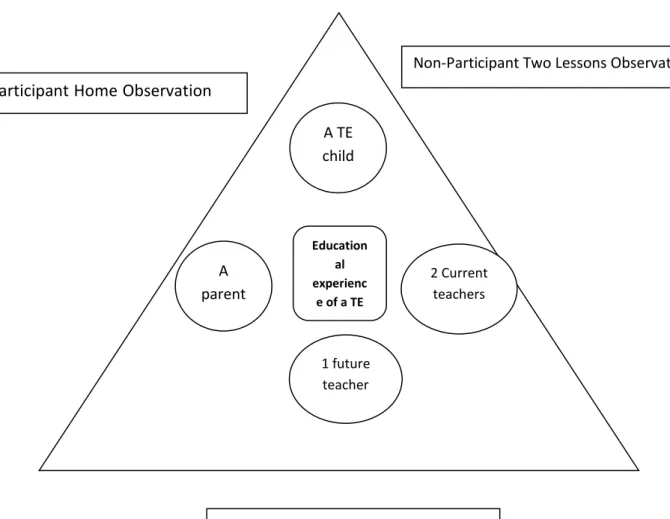
The second group of participants in this study included three teachers of the school where the twice exceptional child studies. The first two teachers were the current teachers of the child: one of them was teaching almost all subjects and was the classroom teacher of the child during 4 years of Eldar's studies at primary school. The second teacher was the teacher of the second language subject, who has been teaching Eldar for two years. Those participants were valuable for the research as they had practical experience of working with the gifted hyperactive child.
The third participant from school is a teacher of the middle school who would probably teach the child in the future. The participation of the secondary school teacher was important for the research to see the future perspective of the educational experience of the case study twice exceptional child at secondary school. The teachers in the research were interviewed by the researcher. Moreover, one lesson of each teacher who the student in class was observed (a non-participant observation); the objective of the observation was to see the interaction between the teacher and the child during the lesson.
Table 1 Research participants and methods
Education al experienc e of a TE child A TE child A parent 2 Current teachers 1 future teacher Interviews
Non-Participant Two Lessons Observation
Research Methods and Instruments
This section reveals the procedures and methods of data collection used for the study. Two types of instruments were used in the case study research. Both observations and interviews were used deliberately to investigate the research problem from various perspectives. Furthermore, the collected data from both instruments was triangulated in order to increase the validity and reliability of the results. Mathison (1998) described triangulation as an effective strategy which would “provide a rich and complex picture of a phenomenon being studied” (p. 15).
Initially, face-to-face semi-structured interviews were conducted with all the participants of the research separately. Prior to teachers' interviews, the researcher conducted a semi-structured face-to-face interview with the parent and the child in the presence of the parent. The main purpose of these interviews was to investigate the
answers to the research questions from the perspective of a twice exceptional child and his parent. The face-to-face semi-structured interviews with teachers were held to provide the researcher with the evidence on the research questions from the teachers' experience and perceptions of the existence of twice-exceptionality at school.
In order to explore the central phenomena of giftedness and hyperactivity of
twice-exceptional children the interview questions for all the participants included the following categories of questions:
1. Questions related to the general experience with, the awareness of and attitudes to twice-exceptionality from the participants' own perspectives;
2. Questions related to the identification of twice-exceptionality and its influence on educational experience of the twice-exceptional child at school and at home;
3. Questions related to inclusive strategies to accommodate the twice exceptional student's needs.
The researcher made a set of interview questions for each category of research questions. Once the interview questions were approved, they were translated into Russian to suit the language needs of the participants. Also the questions (Appendix B) were constructed in accordance with the age of participants simplifying them in the interview with a child. According to the agreed timing and site, the interviews with adult participants lasted for about 20-30 minutes, while the interview with the twice exceptional child was conducted in the presence of a parent for approximately 15 minutes. All the interviews were held only after the consent forms (Appendix A) were signed by the participants.
Furthermore, the researcher used observations. As Merriam (2015) explains
observation “takes place in the setting where the phenomenon of interest naturally occurs” (p. 137) which helps the researcher to explore the research problem deeply and to
contribute the understanding of the presence of twice-exceptionality at a mainstream school. I observed two lessons prior to the home observation. The main focus of the lesson observations was a teacher-student interaction; however, the teachers were not informed about the identity of the child. The first lesson I observed were the 40 minutes lessons of the literature. The second lesson was a non-traditional lesson in the form of concert dedicated to the celebration of Mother’s day. The duration of the lesson was about half an hour. While the first lesson gave me an opportunity to observe the twice exceptional child from the academic side, the second traditional lesson revealed the picture of non-academic social life of a child in the class and at school. The home observation took place on the day of the parent and child interviews. The main focus of home observation was also connected to the interaction of this child and his parent. The duration of home observation lasted for approximately 3.5 hours. I observed the case study child’s
educational experience at home, preparing homework, playing logical games and interacting with a parent.
The school and home observations were agreed with the participants beforehand and the participants were provided with consent forms for observations. The observation protocol was filled by the memory and field notes of the researcher taken during the observation. The home observation
Data Analysis
The interviews were firstly recorded on the recorder and then transcribed to word document. The recorded text of the interview (sample of an interview transcription in Appendix C) was coded in accordance with the common characteristics which were further identified by general themes. The field notes from the lesson observations and home observation were also transcribed, codified and labeled by the common themes for further analysis. The participants of the research were indicated by special unique codes (Teacher 1, Teacher 2 for current teacher of a twice-exceptional child; Teacher 3, Teacher 4 – for future middle school teachers of a twice-exceptional child; a parent, a twice-exceptional child (or a student/ a learner)). A table which indicated the participants, their quotes, codes and themes (in 4 different columns respectively) was formulated. Some information from the interviews and observation was translated into English in order to provide the research with necessary information for further analysis. The analysis of the data also included the triangulation of interviews of all the participants, the participant observation of the home educational experience of a child and the non-participant observations of two lessons of a child. It helped me to analyze the whole deep picture of the characteristics of educational experience of a twice exceptional gifted hyperactive child from different perspectives.
Ethics
After submitting the research proposal according to template provided by the NUGSE Research Committee, the study officially started. Research Approval Application Form included the purpose and the research questions of the study as well as research design and methods. Confidentiality and anonymity issues were also reflected in the ethical approval application form. NUGSE Research Committee granted approval for the research on condition of adding minor changes with supervisor’s further approval.
Participation of a parent and a child was based on preliminary agreement. All participants involved in this study (a single-parent family with a twice-exceptional child and teachers of the school) were provided with sufficient information about the research. Each participant was provided with a Consent Form translated into Russian, which was developed under the direction of the research supervisor.
Once the participants showed interest in the study they were advised on all appropriate aspects of the study: the language suitable to participants’ age, proposed timing for interviews and lessons, the anonymity and confidentiality of the information. All the participants were informed about the research benefits and risks. The confidentiality of the participants of the research was ensured by not mentioning the exact location of the research site, and by protecting the identity of the vulnerable group from the school.
All collected information was collated and kept only by the researcher. The information was stored in the researcher’s personal computer which was protected by a password. Having analyzed the data, the researcher sent the information to the supervisor. The collected data was to be kept for a certain period of time in accordance with the research progress. Once research analysis and findings have been reported, the research sought to delete the data records. Finally, the confidentiality was ensured by not
mentioning the exact location of the research site and by deleting audio recordings of the interviews.
Conclusion
This chapter revealed the overall research design of the case study. The chosen research design and its instruments and operationalization allowed exploring the
educational experience of a twice exceptional child at school and in the family. Moreover, I tried to examine the main central phenomena – Giftedness and Attention Deficit
Hyperactivity Disorder through several qualitative research instruments (interviews, observations, and triangulation). The following chapter provides the results of the collected data on educational experience of a gifted hyperactive child studying in a mainstream primary school in Kazakhstan, which were analyzed through the perspectives of the child, his current and possibly future teachers and his parents.
Chapter 4. Findings Introduction
The findings, displayed in this chapter, revealed five themes of twice exceptionality:
1. teachers' awareness of, attitudes about, and classroom experience with twice exceptional children;
2. identification of twice exceptional students;
3. the effect of school environment on the educational experience of a twice exceptional child;
4. the effect of home environment on the educational experience of a twice exceptional child;
5. inclusive education strategies to accommodate twice exceptional children. The main research question concerns the characteristics of educational experience of a twice exceptional child in one Kazakhstani mainstream school. This experience is analyzed through the perspectives of the child, his family and his teachers. The raw data sheds light on the five themes listed above. As findings showed, twice exceptionality is a problem in Kazakhstani schools, but the topic has not yet been fully explored by the practitioners and researchers. Admitting the fact that a gifted child may have various learning barriers is challenging for school teachers. From the interviews conducted and case study observations, it can be concluded that it is very important to pay attention to how teachers perceive and experience twice exceptional children.