Inserting RFID systems into the Software
Information Technology course
∗
Tibor Radványi, Emőd Kovács
Eszterházy Károly CollageInstitute of Mathematics and Informatics
[email protected] [email protected]
Submitted November 4, 2013 — Accepted December 19, 2013
Abstract
In this article we would like to introduce you to the educational struc-ture of the program design and informatics course at the Eszterházy Károly College. We will also mention the new fields of RFID system usage and the importance of this system in winning a spectacular tender. Furthermore you will get some details about the extra competencies our students gain by taking part in the RFID project. In order to familiarize them with the ap-pliances and their features used in the RFID technology we have established a lab which serves more functions. First of all we find essential for students to take part in tender-related projects. Moreover, it is also important for our students to get the chance of learning the technology, using the appliances in practice, and examining them while they are working.
The lab is continuously being updated with gadgets, this way students get the opportunity of taking parts in group or individual projects beside their “guided tour” and the theoretical class.
Keywords:RFID, education, program design and informatics, project work MSC:68U35, 97Qxx
∗This research was supported by the European Union and the State of Hungary, co-financed
by the European Social Fund in the framework of the TÁMOP-4.2.2.C-11/1/KONV-2012-0014, title: The developing possibilities of RFID/NFC technology by the conception of “Internet of Things”.
http://ami.ektf.hu
1. Introduction
The aim of the program is training informatics experts capable of elaboration, introducing, operating, maintaining, developing, and applying software-oriented information technology equipments and systems either in groups or individually. Furthermore, the acquired theoretical knowledge will ensure graduates to continue their studies in second cycle M.A. programs.[7] Their education is separated to the following fields.
1.1. Basic classes
Mathematical and Scientific basics (Introduction to informatics, Discrete Mathe-matics, Calculus, Numeral MatheMathe-matics, Searching Operation, Combinatory and Probability Theory, Computer Statistics) Theory of Computing (Logical basics of Informatics, Theory of Computing, Automata and Formal Languages, Data Struc-tures and Algorithms, Design and Examine algorithms, Basics of the Artificial Intelligence, Introduction to Computer Graphics)
1.2. Profession-related classes
Software technology module: (Advanced programming languages, Translation pro-grammes, Programming technologies, Programming environments, Assembly lan-guages) Information systems module: (Database systems, Managing database sys-tems, System design, Technology of system design)
1.3. Facultative profession-related classes
Computerised word and publication processing, Spreadsheet systems, History of Informatics, Descriptive Geometry
1.4. Majors, specializations
Our students are capable of choosing specialization in the second half of the course. The theses written about the following subjects have to be justified at the fi-nal examination. Data models (Managing database systems 2, Advanced DBMS) Networks (Examining the effectiveness of networks, Server administration, Dy-namical WEB programming) Computer graphics and geometry (Computer graph-ics, Graphical systems, Geometry modelling, Multimedia) Mathematical methods within Informatics (Neural networks, Computer Statistics 2, Searching Operation 2, Cryptography, Computer algebraic systems)
1.5. Inserting Research & Development and Talent
Develop-ment into the course
We put a high pressure on seeking students, who are looking for a great academic career, succeed at TDK competitions, or seem to be the future generation of lec-turers and researchers. Students who turn out to be curious or talented in the first term are attending lectures for two months held by the college’s researchers to pique their interest. The common work gets started at the end of the second term and might bring fruitful results in the second and third year. The college runs three RFID and a Robotics lab, where students can learn some teamwork. Prob-lems they solve in the labs are partly everyday programming issues, but sometimes they work on tasks that might occur in the industrial sphere.
2. The RFID lab and the connecting projects
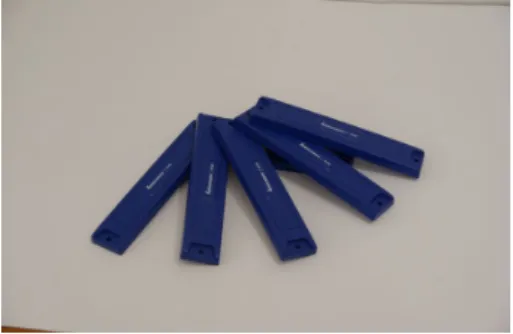
The lab was established in the Institute of Mathematics and Informatics in one room in 2009. The inventory was partly ensured by the Institution like the fur-niture, three workstations, and a server. The appliances of the lab were donated by an industrial company. These appliances include a power-type industrial tag printer, an RFID writer, and mobile RFID reader, installed with a compatible PDA. These gadgets were expanded with a fix installed gate, and an RFID reader. The mobile reader provides us to be able to take through examinations out of the lab. We have expanded the tools with numerous passive RFID tags. They include the paper-based tag used by the printer, and the industrially capable hardtag as well. After the difficulties at the beginning, three enthusiastic students helped with starting to run the lab.
We achieved the following results in the period 2009-2013:
Figure 2: industrial hardtags
2.1. Thesis
All together 14 thesis have been written based on the topic
• Usage of RFID in the library
• Temperature allowance of RFID tags
• Examining efficiency issues
• Attack possibilities and cryptography • Stock registration with the help of RFID
• Possibilities of following the products manufacturing
2.2. Academic results
• 2 articles
• 2 conference articles
• 7 conference lectures and posters • 1 submitted article
We began the examinations with using UHF passive tags.[6] Its reason roots in the fact that the projects’ specification starting or running now requires it. Moreover, they are absolutely capable of learning, taking examinations, coming to know the system, and their price is more affordable, than active tags’.[3]
To sum up in this period approximately 15-18 students got in touch with the RFID technology. Furthermore, with the help of projects and theses we have managed to acquire the basics and pique the interest.
The TÁMOP-4.2.2.C-11/1/KONV-2012-0014 The developing possibilities of RFID/NFC technology by the conception of “Internet of Things” tender has started
on January 1st 2013. This tender is providing appreciable financial sources, and the support of the engineers of the Bay Zoltan Institute also means a lot of help for us. The number of the RFID labs has grown to three. The former lab contains the appliances, antennas, and readers which are capable of examining the UHF frequency interval. These tools have been expanded with more mobile readers and industrial readers, ready to be installed.[5, 6]
Another examining room has been set up with tools to examine the features of the electro-magnetic space and the active (33 MHz) technology.
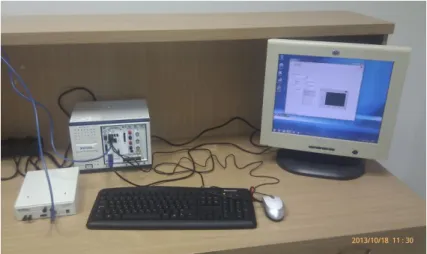
Figure 3: National Instruments examining set
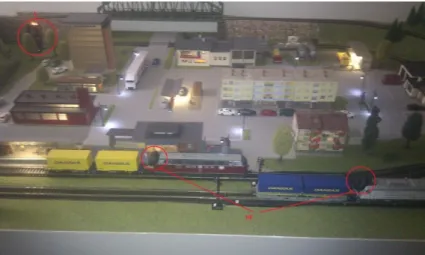
The most amazing item of the third lab is the plotting board which is controlled with RFID tags and readers working in the HF interval (13,56 MHz). Beside it the lab contains readers, cards and tags which are necessary to learn about and work with the HF/NFC technology.
The teachers of the Institute of Mathematics and Informatics are already work-ing in the set-up labs, and under their control students can work on this technology. In the first three years one teacher and 15-18 students were dealing with the RFID technology. Winning the tender has given us such a boost that today 16 teachers control 20 students’ job in the labs.
3. Part-tasks connected to the tender
The tender project is separated into part-tasks, which are joined by our students as well. These are the following:
• Digital proprietary rights
• Unionisation
• Localisation, tasks of the softwares and the middle layer
• Sensors, energy harvesting, data safety
• Hybrid technologies
Meanwhile the project was processing the basic research fields were expanded with applied research and development projects. More projects are also joined by en-thusiastic and wholehearted students:
• Entering and work-time registration systems supported with RFID
• Automatic library
• Selective waste collection using RFID
• Registering living animals and their health condition
• The effect of micro climate changes on the fauns, collecting physical data automatically with the help of sensor networks
• Using RFID in food safety projects
The Institute of Mathematics and Informatics creates the RFID research institution in order to continue the arrangement and coordination of the common work of students and teachers in the above mentioned widespread basic and applied research fields.
Managing to insert the Automatic identification subject into the course is con-sidered to be a great success. This subject includes two lectures and two practices a week. During the lecture the following topics are discussed:
• Review of the automatic identification, standards, and organisations
• The function, structure, mathematical background, and types of the 1D and 2D barcodes
• Security issues in the barcode technology, typical appliances and solutions,
steps of development
• Physical bases of the RFID system, dynamic EM spaces, and their description • Basics of the RFID, standards, frequencies, physical bases
• Items of the system, tags, readers and their types
• Describing the RFID communication algorithm
• Data security and cryptographic opportunities in the field of automatic
iden-tification
• Smartcards, chip cards, and their usage
• Social and judicial environment, expectations
Furthermore advantages can be made from the opportunities provided by the labs and the programming competencies students have gained during the former terms.
• Using the plotting board
• Programming the plotting board. Signals.
• Programming the plotting board. Switches. • Programming the plotting board. Mixed access.
• Mobile readers, type Intermec and Alien, passive tags.
• Chance of reading and programming on the mobile readers. Passive reading and writing.
• Usage of active tags and readers
Figure 4: Plotting board with trains and HF tags
Figure 5: Plotting board with HF readers
4. Summarize
All in all increasing the role of practice in the course is inevitable. This field could be strengthened with projects generated by tenders. Students are unquestionably eager to join the projects, work on them diligently, and profit from these experi-ences during their latter work. Another highlighted aspect is that these students own a vantage with their new and notable competency within the labour power. According to our former experiences our graduated students are pleased to use this vantage.
References
[1] Kovács Emőd, Kusper Gábor, Web-programozó felsőfokú szakképzés kialakítása az Eszterházy Károly Főiskolán,Informatika a felsőoktatásban(2008).
[2] Szűcs László, Schwirg Laszló, Deploying an automaton warehouse system with RFID technology,GINNT Budapest, (2009).
[3] Az oktatási miniszter 15/2006. (IV. 3.) OM rendelete az alap- és mesterképzési szakok képzési és kimeneti követelményeiről.
[4] Klaus Finkenzeller, RFID HANDBOOK Fundamentals and applications in con-tactless smart cards, radio frequency identification and near-field communication, third edition,WILEY, ISBN: 978-0-470-69506-7.
[5] Qinghan Xiao1 Thomas Gibbons Herve Lebrun, RFID Technology, Security Vulnerabilities, and Countermeasures.
[6] EPCglobal Inc., Class-1 Generation-2 UHF RFID Conformance Requirements Specification v. 1.0.2.(2005).
[7] Tibor Radványi, Emőd Kovács, Infiltration of RFID technological knowledge in teaching of informatics teacher MA,Romanian Journal of Education Kolozsvar, ISSN: 2067-8347 Vol.1 (2010) 49–54.