INTEGRATION OF CULTURALLY RELEVANT
PEDAGOGY INTO THE SCIENCE LEARNING PROGRESSION FRAMEWORK
Cyntra Bernardo
Submitted in partial fulfillment of the requirements for the degree of Doctor of Philosophy under the
Executive Committee of the Graduate School of Arts and Sciences
© 2017 Cyntra Bernardo
ABSTRACT
INTEGRATION OF CULTURALLY RELEVANT PEDAGOGY INTO THE SCIENCE LEARNING PROGRESSION FRAMEWORK
CYNTRA BERNARDO
This study integrated elements of culturally relevant pedagogy into a science learning
progression framework, with the goal of enhancing teachers’ cultural knowledge and thereby creating better teaching practices in an urban public high school science classroom. The study was conducted using teachers, an administrator, a science coach, and students involved in science courses in public high school. Through a qualitative intrinsic case study, data were collected and analyzed using traditional methods. Data from primary participants (educators) were analyzed through identification of big ideas, open coding, and themes. Through this process, patterns and emergent ideas were reported. Outcomes of this study demonstrated that educators lack knowledge about research-based academic frameworks and multicultural education strategies, but benefit through institutionally-based professional development. Students from diverse cultures responded positively to culturally-based instruction. Their progress was further manifested in better communication and discourse with their teacher and peers, and increased academic outcomes. This study has postulated and provided an exemplar for science teachers to expand and improve multicultural knowledge, ultimately transferring these skills to their pedagogical practice
TABLE OF CONTENTS
LIST OF TABLES AND FIGURES ... vii
ACKNOWLEDGEMENTS...viii
DEDICATION...ix
CHAPTER ONE ... 1
INTRODUCTION ... 1
Rationale for Research ... 2
Ongoing evolution of educational needs ... 2
Pilot study...7
Focus of research...8
Research Questions ... 12
CHAPTER TWO ... 13
THEORETICAL FRAMEWORKS AND LITERATURE REVIEW ... 13
Learning Progressions in Science Education ... 13
Multicultural Science Education ... 18
Constructivism ... 23
Routines and Rituals ... 26
Science Teacher Education Programs and Professional Development ... 30
Biology Science Education ... 32
CHAPTER THREE...34
PILOT STUDY AND METHODOLOGY ... 34
PILOT STUDY...34
METHODOLOGY FOR CURRENT STUDY...37
Research Approach ... 38
Setting and Participants ... 39
Data Collection ... 40
Semi-structured interviews. ... 40
Development of guidelines SLP and multicultural PD sessions. ... 41
Professional development effectiveness ... 42
Data Analysis Methods ... 47 RQ 1. ... 47 RQ 2. ... 48 RQ 3. ... 49 Rigor ... 50 Ethics ... 51
Role of the Reseacher...52
Expected contributions of proposed research ... 53
CHAPTER FOUR………... 54
RESULTS………..54
RQ1………..54
Quotations from semi-structured interviews from adult participants...……….54
Emergent themes………65
RQ2………..70
RQ3………..77
The new visions living environment curriculum...….…...……...……....….…...79
Emergent themes...82
CHAPTER FIVE...97
DISCUSSION...97
Teacher education programs and multicultural education...97
Focus is on evaluations rather than instructional frameworks...100
Professional development...103
Academic engagement with SLP-CRP...110
Routines and rituals increases motivation...113
Use of CRP elements...114
The SLP-CRP exemplar maintained rigor...116
Implications...117
Limitations...118
Next steps...118
APPENDIX A: PILOT STUDY ... 138 APPENDIX B: SEMI-STRUCTURED INTERVIEW QUESTIONS FOR TEACHERS ... 153 APPENDIX C: PROFESSIONAL DEVELOPMENT QUESTIONNAIRE FOR TEACHER PARTICIPANT ... 156 APPENDIX D: QUOTES FROM RESEARCH STUDY ADULT PARTICIPANTS ... 158 APPENDIX E: REPRODUCTION UNIT ADAPTED FROM THE NEW VISIONS LIVING ENVIRONMENT CURRICULUM. ... 166 APPENDIX F: NEW YORK STATE LIVING ENVIRONMENT CORE CURRICULUM, STANDARD 4, KEY IDEA 4: REPRODUCTION ... 169 APPENDIX G: REPRODUCTION UNIT WITH ELEMENTS OF CULTURALLY
RELEVANT PEDAGOGY ADAPTED FROM THE NEW VISIONS LIVING
ENVIRONMENT CURRICULUM ... 171 APPENDIX H: TEACHER PARTICIPANT'S UNIT PLAN...175
LIST OF TABLES AND FIGURES
Table 3.1: Summary Table………46
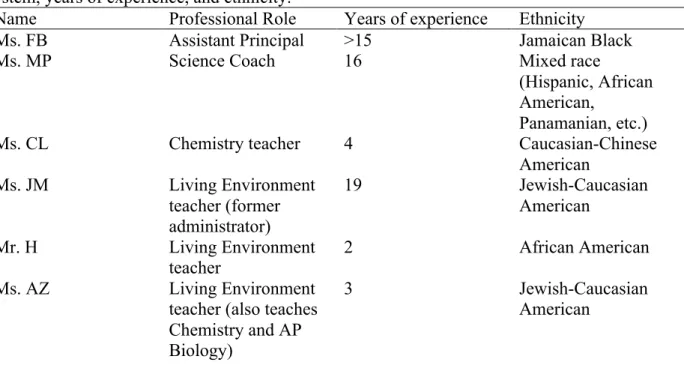
Table 4.1: Description of interview participants...55
Table 4.4: Emergent Themes, Reactions and Responses ...………….……….…90
Table 4.5: Emergent Themes related to Science Instruction that arose during Classroom Observations...96
Figure 1.1: Progression of Science Learning Integrated with Multiculturalism (PSLIM)...10
Figure 2.2: Learning Progressions and Multicultural Education...23
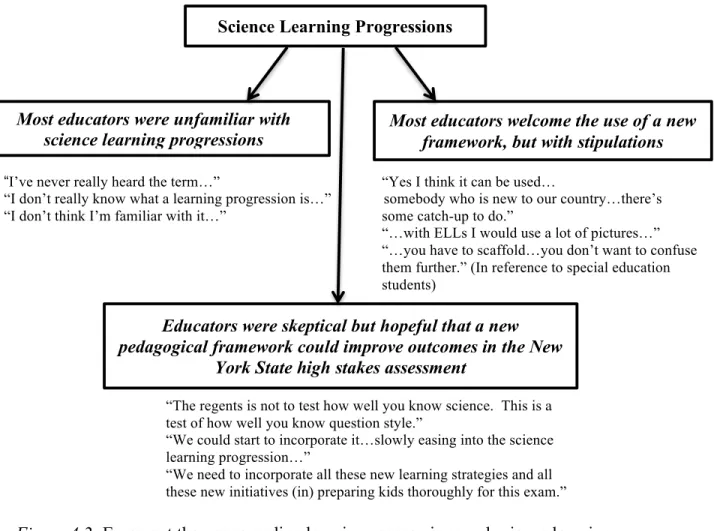
Figure 4.2: Emergent Themes, Science Learning Progressions………….………...…67
Acknowledgements
Firstly, I would like to express my deepest and sincerest gratitude to my advisor and friend Dr. Christopher Emdin, urban researcher and educator extraordinaire. Throughout this journey, he has been my inspiration, motivation, and a source of continuous support. My path to success was essentially guaranteed with Dr. Emdin guiding me from the beginning.
Along with Dr. Emdin, I’d like to especially thank Dr. Felicia Moore Mensah, who has been a strong, level-headed source of support and guidance. My eternal gratitude to her for always willing to meet and talk about my progress and offer advice.
My sincerest thanks go out to the rest of my committee: Dr. O. Roger Anderson, the ultimate educator role model, Dr. Gillian Bayne, present from the beginning of my education career, and Dr. Maria Rivera Maulucci, for taking the time to learn about my research.
Lastly, I would like to acknowledge the people who have supported me along this journey. My co-workers, friends, and family members who provided words of inspiration and encouragement throughout this adventure.
Dedication
To my loving husband, Travis. Thank you for helping me through this exciting and challenging journey. I cherish your support and encouragement above all.
To my mother, Naza. You are and always will be my source of strength, and the one I turn to for advice. Thank you for being an angel in my life.
CHAPTER ONE
INTRODUCTION
With eight years spent as a New York City public high school teacher, I have gained much experience with students, teachers, and administrators in an economically disadvantaged, diverse school. The connections I have made with my students over the years have brought passion to my life, as well as a strong desire to improve the education of at-risk children.
According to the New York City Department of Education (2013), the student body of the public school in the Bronx is predominantly Hispanic (63%) and African American/Black (34%), populations often burdened by chronic poverty and high drop-out rates. In addition, English Language Learners (ELLs) and Special Education students comprise a substantial portion (30% and 20%) of the student population. While the dropout rates for Hispanic and Latino high school students have dropped, the numbers are still significantly higher than those of their White
counterparts (Fry, 2003). US Census data (2012) also shows that by the year 2043, the nation will be described as majority-minority, and all minority groups together are predicted to make up about 57% of the total population by the year 2060. As I have gained new insight into the
circuitous world of public education in this great city, I realize that nondominant students are not being offered the same opportunities and resources that are available to public schools in more economically advantaged localities. According to Walters (2001), “access to public education is a social good” (p.37) suggesting availability of equal resources for all social classes is vital for societal progress. While I believe this is partly due to political malfeasance, another major contributing factor is a lack of communication between educations and students.
multicultural backgrounds. This problem extends into the science classroom, where science teachers are expected to facilitate the learning of complex scientific concepts and terminology but are unaware of how to proceed when students speak a different language or suffer from a disability. Lee (2001) states that while science educators must teach Western science to all students, they must also be aware of differences in meanings, definitions, symbolisms, and practices from other cultures; otherwise, they risk diminishing the overall quality of the
educational experience. Thus, in order to achieve equitable instruction for all students, each must be allowed to express their linguistic and cultural identities while making connections to the immediate environment. It is also vital for students in the United States to be scientifically literate as the most recent data from the Program for International Student Assessment (PISA)
ranks American fifteen year olds near the bottom of the list in scientific literacy (PISA, 2012). It is my hope that teaching institutions will extrapolate from the research data to create professional development (PD) programs for in-service professionals that train educators on becoming multicultural while using academic frameworks, especially in the science classroom. In chapter two’s literature review, I address the conceptual framework of learning progressions specific to science and biology, speak about multicultural education in the classroom, and address how professional development can ameliorate deficiencies in teacher knowledge. Rationale for Research
Ongoing evolution of educational needs
For one to think of education without thinking about culture would be counterintuitive. Education, as it has been recorded and studied throughout history, has afforded individuals the opportunities to make a meaningful impact on life, regardless of status in society.
An influential figure surrounding ideas of power and education was Antonio Gramsci, best known for his theory of cultural hegemony, describing how capitalist States use cultural institutions to maintain power. For Gramsci, hegemony meant leadership, both moral and
intellectual in nature, of one group in society over a subordinate group. Education’s purpose was to develop working class individuals who could maintain and improve existing intellectual beliefs. Gramsci believed that all individuals had the capacity for acquiring knowledge and constructing new knowledge. He also believed that students should learn science as a means of dispelling misconceptions about the world, and they must learn how to be proper citizens through civic duties. Students would also learn the differences between natural laws of the world, which cannot be tampered with by man and state laws, which are fluid and can be
manipulated as necessary (Gramsci, 1971). Gramsci’s writings are significant in the educational community for addressing the importance of providing equal educational opportunities for all individuals, regardless of social status.
How can one describe an educated individual or subject? Fendler (1999) attempts to analyze how the educated person has been socially constructed throughout history, beginning in ancient Greece with Plato. The Greek Philosopher’s description of an educated subject was one who attempted to cultivate their true nature and was aligned to reason and the aesthetics. In the thirteenth century, with the advent of science, the educated individual had working knowledge of the sciences and theology. In a somewhat contradictory paradigm to modern beliefs, to be educated in medieval times meant reconciling religious doctrines and theology with scientific reasoning, experimentation, logic, reasoning, and empirical evidence. During the seventeenth century, the philosopher Descartes began discourses on the idea of “cognition” as being an important element of the educated subject. He postulated that a person’s thought processes are
abstracted from the body but not separated. His construction of rationality assumed that an educated subject possessed a rational identity, while using methodological experimentation and empirical elements to discover truths.
Immanuel Kant, in the eighteenth century shifted the idea of the educated self as being both the investigator and the investigated. His writings held great significance in the evolution of education and the educated subject as now, the focus changed from the subject to the object. Instead of an individual using intangible explanations and imperceptible reasoning to explain phenomena, demonstrated, empirical evidence was now necessary and became widely accepted as valid and reliable. Importantly, we see a shift from subjective knowledge focused on the individual as educated to objective knowledge focused on society as the basis for justifying the educated subject’s capacities. Social contexts, not individual ones became the standard by which to describe and resolve questions, ideas, and issues. Arguments regarding race and gender began to take form and the problem of diversity in society had to be addressed. These were all ideas identified in history was the period of modernity (Fendler, 1999).
With the advent of technology came the need for disciplines such as statistics and psychology. With such major advances being made in the realm of the human population, new problems began to take shape in the form of social and political issues. Psychology became the new benchmark used to identify and describe the educated subject. Statistics such as correlation and probability was used to verify social events. Psychological normalcy was the desire of all individuals because to be normal, meant being able to control one’s knowledge, and by
extension, to possess power. It is here that we see a major paradigm shift from the idea of power as being separated from the self in the past to the idea of power as being self-regulated by each individual (Fendler, 1999).
Towards the end of the nineteenth century and the beginning of the twentieth century, many educational reformers such as Horace Mann and Jane Addams were influential in establishing the Common Schools, the New York City Public Schools. While the system eventually failed in its goals of promoting democracy, equality, and efficiency, this reformation laid the foundations for the American school system. Though far from perfect, getting an education did provide a means for people coming from all socio-economic backgrounds to be financially successful and independent. The availability of education also saw a rise in economic success for the country as a whole (Nasaw, 1979).
Educators in today’s classrooms are now being asked to recognize that for students to become educated subjects, academics and discipline are not enough. Additionally, students must feel encouraged, motivated, and have an urgent desire to learn. Thus, theoretical frameworks such as constructivism seeks to use social interactions of students and teachers to construct new knowledge using prior formulations as guides and making connections to create interest for concepts being taught. For social mobility, students with good communication skills, and abilities to work in cross-functional teams with flexibility are the ones who are exceptional candidates for employment, especially in high-wage white-collar employment (Fendler, 1999).
To further address why modern science educators must consider using academic
formulations of instructional frameworks combined with the tenets of multicultural frameworks, an examination of learning theory is warranted to show that modern students from diverse cultures will increase motivation when topics are relatable. Glaser and Bassok (1989) detailed a psychological cognition approach to learning, which outlines strategies of acquiring skills, comprehension, and knowledge as integral parts of learning. The authors discuss how important it is for individuals to acquire and become proficient in certain skills but also stress that unless
these new skills are applied to relevant, familiar situations, depth of understanding at a cognitive level will not occur. Practicing said skills or proceduralization encourages cognitive changes and results in successful use and practice of learned knowledge. How do students become
cognitively interested in their own learning? One idea presented by the authors is that students experience conceptual change through their own intrinsic motivation and interest to acquire understanding of their surroundings. When presented with fundamental knowledge, students will attempt to create explanations for events, sometimes failing in these endeavors. This struggle directs them to initiate mental experimentation (Gelman & Brown, 1986), and proceed to inquiry-driven testing.
Another important consideration of learning is the idea of internalization, which has been discussed by both Piaget (1926) and Vygotsky (1978) as being a significant cognitive event occurring in social settings. Vygotsky’s zone of proximal development is an important construct for students to practice learning through prolonged struggle. Here teachers provide guidance through scaffolding and activities supportive of students’ competency levels and students access higher performance levels (Vygotsky, 1978).
Instructionally, Glaser and Bassok (1989) discuss the role of the teacher in the learning process. They describe an approach where a sequence of instruction follows a progressive path of building skills, which are then utilized in appropriate tasks. Another role allows the learner to construct his or her own paths through careful guidance from the teacher. The common thread in both stances described is the need for a strong relationship to exist between the teacher and learner(s). Human performance encompasses problem-solving skills, cognitive skills, and metaconceptual strategies. To become a highly effective teacher/instructor, knowledge of how your students learn based on culture is vital. This knowledge is the buy-in that teachers need
when they encounter diverse student populations. The initial establishment of trust will pave the way for learning and creating conceptual knowledge through education.
Science learning progressions and culturally relevant pedagogy are two major frameworks used in education. SLPs has been defined by Duncan and Rivet (2013) as,
“research-based cognitive models of how learning of scientific concepts and practices unfolds over time” (p.396). The learning progression is a newly proposed set of ideas, having only been
proposed in 2005 by the National Research Council. By contrast, the multicultural framework of CRP was made popular by Gloria Ladson-Billings in the early 1990s and in her paper, towards a theory of culturally relevant pedagogy from 1995, expressing the importance of using a student’s cultural norms in his or her educational experiences.
Both frameworks address important yet distinct aspects of education. Yet to date, the literature presents no attempts to merge these two divergent frameworks into an elegant set of ideas that can be applied to the urban public school curriculum. It is well known and well documented that many students attending public schools in the United States come from
different cultural and linguistic backgrounds. Howard (2003) mentioned that about one-third of all students in U.S. schools were minorities, and by the year 2050, that percentage would
increase to approximately fifty-seven percent. It is because of a growing culturally-diverse student population that there is an urgent need for multiculturally-trained science teachers. This study will address an initial attempt at creating an instructional tool that incorporates these differing ideas.
Pilot study
A pilot study that I conducted (See chapter three and Appendix A) in the Fall of 2013 as part of the requirement for completing a science education course highlights the need for a
unified conceptual framework that combines principles of both science LPs and culturally relevant pedagogy. In the study, I interviewed three high school science teachers on their
knowledge of science LPs and multicultural education, and how knowledge of students’ cultures might enhance students’ engagement and learning in the classroom. The findings described the deficiencies faced by experienced science and new science teachers with respect to the two theoretical frameworks. However, the majority of teachers interviewed agreed that it is beneficial to be knowledgeable in diverse cultures to help build student-teacher relationships, which are vital for motivating students in the classroom. Notwithstanding the fact that these are not the only two theoretical or conceptual frameworks on the educational spectrum, but when faced with problems surrounding student culture and poor test results from students of color, it makes sense that leaders and administrators would search for a resolution that addresses how to encourage diverse students to learn.
Focus of research
With new standards being introduced into schools across the nation, it is imperative for schools to adapt curricula, while ensuring equity for all students. Although some science teachers, such as my pilot study participants are currently unfamiliar about the use of new techniques to enhance their pedagogical skills, there are steps to be taken to solve this problem. I argue that the creation of targeted professional development opportunities either in-house or through outside consultants focused on science LPs and multicultural education will provide the knowledge and training that is required by teachers for successful outcomes in urban public high schools. Addressing educational institutions that provide teacher-preparation programs requires more research and expertise into the policies that control these organizations. However, much change is necessary in order to re-shape the ideas of how to teach children.
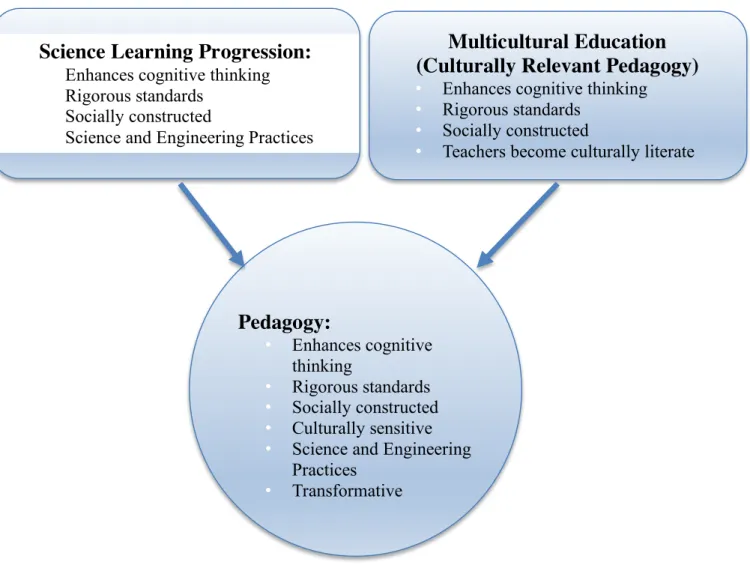
This dissertation study focused on teacher-student interactions in multicultural science classrooms where the teacher participant was asked to implement a science LP specifically designed with multicultural elements for that classroom as well as teacher-student interactions in a classroom utilizing teaching methods with no interventions. The teacher participant was required to use inquiry-based pedagogical techniques in the implementation of lessons, such as introducing a big idea and an essential question for a unit, which was constantly referred to during the unit being taught. My findings are described using constructivist theory ((Piaget, 1926; Vygotsky, 1978) to interpret my data since the guiding principles behind constructivism focuses on people learning through constructing meaning from prior experiences and knowledge, as well as through stimuli from the surrounding environment. As can be seen in figure 1.1, science LPs, CRP, and inquiry approaches can all be linked as effective pedagogy in classrooms as having overlapping elements. I argue that through observations and analyses of data collected in this study, specific deficiencies can be identified, addressed, and resolved; giving science teachers the knowledge, skills, and techniques to be successful in diverse classrooms, while allowing students from different cultures to feel welcome. This will create an environment where students are interested and engaged in learning science.
An important question that arose during the development of this study was how can stakeholders in education consider all aspects of students when creating frameworks for practitioners to apply to their classrooms, and making these guides fully accessible to
practitioners? According to Ching (2013), it can be difficult for teachers to link the theory that is learned in teacher preparation programs and training workshops to actual practice in classrooms.
Science Learning Progression:
• Enhances cognitive thinking• Rigorous standards
• Socially constructed
• Science and Engineering Practices
Multicultural Education
(Culturally Relevant Pedagogy)
• Enhances cognitive thinking• Rigorous standards
• Socially constructed
• Teachers become culturally literate
Pedagogy:
• Enhances cognitive thinking • Rigorous standards • Socially constructed • Culturally sensitive• Science and Engineering Practices
• Transformative
Figure 1.1: Progression of Science Learning Integrated with Multiculturalism (PSLIM). This figure links aspects of Science Learning Progressions (NRC, 2005) and Culturally Relevant Pedagogy (Ladson-Billings, 1995). By combining SLP and CRP principles, it is possible to inform pedagogy that follows relevant links to science and engineering practices that meets the standards for socially constructed, transformative learning.
However, it is necessary to ensure a relationship exists between theoretical concepts and the practical nature of pedagogy (Shulman, 1992). The focus of this study therefore provides a novel attempt to combine traditionally divergent frameworks by introducing formal elements of a multicultural framework (CRP) into an instructional framework (SLP) and providing directed training for a teacher to immediately implement in the classroom.
The assembling of these two sets of principles does not currently exist in the literature thus my study represents an example of how to align prominent ideas that are perceived as being disparate, but not necessarily conflicting. It seems almost obvious that when in-service teachers practice in diverse school populations where they encounter unfamiliar cultural and linguistic practices, they should be trained not only in instructional strategies and methods, but also in culturally appropriate ways to approach students from diverse cultures. Through personal experiences and from interview responses with other educators, it has been determined much of the professional development they experience focuses mainly on pedagogical techniques and standards rather than multicultural training. Hence, this study serves to fill a gap in the literature that has not yet been addressed.
Research Questions
1. How knowledgeable are educators about the use and implementation of Science Learning Progressions and Multicultural Education methods?
2. How through professional development do we integrate Culturally Relevant Pedagogy with parts of a Science Learning Progression for teacher learning?
3. What does the use of a science learning progression integrated with elements of culturally relevant pedagogy look like in a science classroom?
The above questions are based on an ongoing need for science teachers to be fully knowledgeable regarding their content specialties and their students. It is urgent for current school officials to reflect on current literature regarding methods for success in science, student learning abilities, teacher-student relationships, multiculturalism, and relevant PD workshops.
In the next chapter, I will discuss the literature that has informed my research study. I will present principles of Science Learning Progressions and Culturally Relevant Pedagogy as well as Constructivist theory, which will be used as an analysis tool. Other classroom
considerations will be presented including the establishment of routines and rituals to create a positive environment for all students and how professional development will inspire teacher practices.
CHAPTER TWO
THEORETICAL FRAMEWORKS AND LITERATURE REVIEW Theoretical Frameworks
Learning Progressions in Science Education. For several decades, policy-makers, researchers, and educators have been proposing new ideas, frameworks, and models to improve science education in the United States. Reforms in standards, curriculum, and assessments are needed to improve both pedagogy and student learning in science in the nation’s public schools. In New York State, the current curriculum standards consist of key ideas and performance indicators that are a mile wide, and an inch deep (University of the State of New York, 1999). Reforms are necessary to rein in these numerous, shallow concepts into a few core ideas that can serve as the main focus of instruction, where students can develop rich, deep understanding and be able to analyze, predict, and create based on their knowledge (Corcoran, Mosher, & Rogat, 2009). Reforms of current science standards are driven by students becoming more sophisticated when understanding concepts, practicing science, and science epistemology (Duncan & Rivet, 2013).
The learning progression (LP) is a relatively new framework designed to help students gain success in school and become informed critical thinkers. The term ‘learning progression’ was first coined in 2005 by the National Research Council in the publication Systems for state science assessments. The concept of a LP has been given several somewhat similar definitions. It has been described as“a carefully sequenced set of building blocks that students must master en route to mastering a more distant curricular aim (Popham, 2007, p.83), and “a theoretical model of how learners develop expertise in a domain over extended periods of time” (Shea & Duncan,
successively more sophisticated ways of thinking about an idea that follow one another as students learn” (p.48) while Nichols (2010) defines LP as a way of using words and examples to achieve expert understanding over a period.
Science LPs are slightly different in designation. Science LPs have been developed as a
method to improve the cognitive and learning skills in children, with the hope of achieving competence and mastery in the science disciplines (NRC, 2005). A science LP is guided by research data that is used to inform the overall sequence of the proposed model. The framework can be defined as “empirically-grounded and testable hypotheses about how students’
understanding of, and ability to use, core scientific concepts and explanations and related
scientific practices grow and become more sophisticated over time, with appropriate instruction” (Corcoran, Mosher, & Rogat, 2009, p.15). Duncan and Rivet (2013) define science LPs as “research-based cognitive models of how learning of scientific concepts and practices unfolds over time” (p.396). These definitions point to a theoretical framework that, when used correctly, allows students to participate in constructive learning, using inquiry-based models and
practicing/improving critical-thinking skills. For this study, the SLP unit used builds upon initial simple concepts, getting progressively more complex and utilizing different modes to allow students to learn about different topics.
According to Duschl, Maeng, and Sezen (2011), designing a learning progression on a topic that has been well researched can be initiated by using existing literature that describes how students learn the concept(s) best and can be designed in a theory-driven manner. For example, Duncan, Rogat, and Mosher (2009) developed a science LP to help 5th through 10th grade students understand genetic concepts. Although their proposed model was conjectural and not empirically grounded, it suggested that LPs consisting of a few core ideas taught at a deep level
will produce improved understanding and construction of knowledge in students. Furtak, Morrison, Iverson, Ross, & Heredia (2011) designed a science learning progression focused on teaching concepts of evolution to high school students. This LP was postulated and designed to address the issue of high school students finding difficulty in
understanding the concepts behind the process of evolution even though the theory has been well defined through the years (Bishop & Anderson, 1990; Ferrari & Chi, 1998). Additionally, students have many misconceptions regarding evolutionary theory and how populations of organisms change over time (Anderson, Fisher, & Norman, 2002; Rudolph & Stewart, 1998; Shtulman, 2006). The authors went about designing the project by collecting initial responses from students and linking them to Mayr’s ‘five facts and three references’, which was used as the main description of evolution (Mayr, 1980, p 479-490). Through analyses of students’ responses and assessment results, the theoretical LP generated was iteratively refined to represent the initial construct. The assessment given served the dual purpose of informing teachers about students’ ideas on natural selection before administering the unit, and measuring changes of these ideas after administering the unit using the LP methodology. Initially, a four-step, hypothetical LP was created and used to explain Natural Selection in the first year of this project. This construct included big ideas, descriptions, and samples of students’ descriptions. Students were given a pre-test, which consisted of a 20-item formative assessment aligned to Mayr’s facts and inferences. After the unit was taught, only 2 schools participated in administration of the post-test to students. Through analysis of these results, changes and revisions were made to the assessments. Although this project was a multi-year effort, the ideas can be altered for use in a shorter period with a smaller sample set of students (Furtak, Morrison, Iverson, Ross, & Heredia,
Through a careful review of the published LP models available at the time, Corcoran, Mosher, and Rogat (2009) arrived at five essential elements of an effective LP. First, the learning goals of the model must be created based upon discipline, social connections, and preparation for the next logical step in education. Second, measures of progress must be grounded in application and practice, and checked throughout the process. Third, steps in achievement must express student thinking and progress. Fourth, opportunities must exist for students to demonstrate their knowledge appropriately. Finally, assessment(s) must be attached to measure student progress.
Science LPs include the above elements and are similar to other fields in that they are empirically tested and dependent on instruction provided to the students participating in the framework. However, they differ from other disciplines mainly because they are developed through research in science education, psychology, and other social science fields. A science LP begins with research into relevant literature and data pertinent to the domain or concept being taught. From this, a few elements or components that comprise the central ideas of the sequence are developed. Next, sets of initial assessments are developed to determine students’ prior knowledge on the topic, followed by frameworks to compare and contrast levels of students’ knowledge. Finally, hypotheses are designed to be tested at different levels of achievement, where students can transition from lower-level thinking into complex, analytical thought processes (Mohan, Chen, & Anderson, 2009).
Science LPs can last from upper elementary school into high school (Hess, 2008; Mohan, Chen, & Anderson, 2009; & Duncan, Rogat, & Yarden, 2009). Based on the research, a LP sequence describing the concept of genetics that would span one year of high school, specifically a 10th grade biology class would begin with the teacher implementing a pre-assessment to
determine how much prior knowledge students have about the topic. Using this information, lessons would be designed to cover the overarching ideas of genetics, both classical and modern and the teacher would also outline how much knowledge students should attain by the end of the course. Lessons would include introduction to new vocabulary, diagrams, schematics, and involve laboratory practice as well. The biology teacher would also create a set of targeted goals students should achieve throughout the year that are aligned to the students’ learning levels and abilities, along with methods to measure their progress through formative assessments including projects, presentations, quizzes, and exams. Finally proper summative assessments to validate the sequence of learning would be administered and analyzed (Duncan, Rogat, & Yarden, 2009).
The framework for science LPs was created out of a desperate need for the reliability, advancement, and success of students in the scientific disciplines, and the ability of U.S. students to compete on the world stage in science. Data show that U.S. students are still far behind many other developed countries in both science and mathematics (Gonzales, Williams, Jocelyn, Roey, Kastberg & Brenwald, 2008). High achievement in these fields is necessary for our students to pursue scientific careers, drive innovation and technology, and participate in worldwide agendas such as climate change, environmental issues, and genetics. At the very least, our students must be scientifically literate to become informed citizens when they enter the workforce and family life (Corcoran, Mosher, & Rogat, 2009).
LPs can be applied to teacher education and the way in which teachers learn. For teachers to successfully create and implement a LP sequence, much preparation and professional
development is required. Teachers must understand how to recognize the signs that express how students learn, and to develop appropriate learning goals and assessments for knowledge
and PD workshops (in-service teachers) primarily focused on the intricacies of science LPs will allow teachers to attain more knowledge in their specific discipline, while becoming more sophisticated and robust pedagogues (Schneider & Plasman, 2011). This study takes one unit of a SLP that has been written and adapts key elements of the unit, including the objectives,
learning goals, lesson sequence, formative, and summative assessments and combines it with elements of CRP to create a culturally-relevant biology exemplar for use in a high school classroom.
Multicultural Science Education. The United States is built upon the strengths of peoples who have immigrated here for the last several hundred years, and continue to immigrate. By this fact alone, it is clear that American educators must not only be academically proficient but also open to learning about different cultures represented in their school. If an educator enters a classroom with a closed mind and an unwillingness to accommodate students, he/she might be considered obstinate, intolerant, or worse, a bigot. To eliminate these perceived misrepresentations, therefore, it is vital for educators in all disciplines to be exposed to
multiculturalism as it relates to education. Students, in turn, will feel respected and appreciate someone who demonstrates knowledge of their native culture and uses it to guide them in their academic pursuits.
What does it mean to be a multicultural educator, and even more, a multicultural science educator? In contemporary urban public school systems there exists a disconnect between the culture of educators and the indigenous cultures of their students (Proweller & Mitchener, 2004). Many new educators lack the basic skills in their content disciplines to effectively impart
knowledge, and just as importantly they lack the cultural expertise needed to connect with their students (Proweller & Mitchener, 2004). The need for science teachers to become experts in not
only content but also diverse cultural backgrounds is evident from the racial makeup of students in urban school districts. In New York City, for example, the most recent 2010 census shows 85% of students are categorized as non-White (New York City School Construction Authority, 2013). This is in sharp contrast to the United States teacher population, which is 83.5 % White and consists of only 6.7 % African American and 6.9 % Hispanic teachers (National Center for Education Statistics, 2008).
To understand the role of multiculturalism in the classroom, a definition of culture is necessary. D’Andrade (1990) provided a comprehensive yet succinct definition of culture:
Culture consists of learned and shared systems of meaning and understanding, communicated primarily by means of natural language. These meanings and understandings are not just representations about what is in the world; they are also directive, evocative, and reality constructing in character. (p.65)
Teaching science to nondominant students requires knowing how to achieve success in the context of the social and cultural aspects of both students and teachers. Some of the elements suggested for success include availability of current and reliable resources, accessibility to the scientific community, and culturally relevant teaching, which is a very vital tool for success in diverse settings (Emdin, 2011; Ladson-Billings, 1995). It requires that science teachers delve into the diverse cultures of their students and connect aspects of these cultures to classroom teaching. While students still learn Western science, teachers encourage them to use native ways of thinking, knowing, and interpreting to fully grasp scientific concepts (Barton, 1998; Gondwe and Longnecker, 2015). Something as simple as using an example of an animal from a student’s country can improve engagement and encourage excitement.
offers a conceptual framework to that guides the incorporation of teaching into culture. CRP requires that academic institutions and teachers prepare for, and fully participate in, learning about and using aspects of their students’ cultures. CRP addresses these detrimental factors and provides a formalized tool for reconciling the standards to include students’ native cultures (Emdin, 2011). To become culturally relevant pedagogues, pre-service and in-service science teachers should be fully educated on using appropriate ways to prepare for engaging diverse students such as reflective thinking, meeting with students’ and their families, and appreciating diversity (Richards, Brown, & Forde, 2006). The current curriculum for science is “culture free” and thus does not address the needs of culturally diverse students, essentially negating any input from outside its margins.
For a long time, literature has shown that if educators found ways and means of using native language in instruction, students would be more successful in the classroom (Gee,1989; Ladson-Billings, 1995; Dong, 2013). Teachers could find opportunities to give students social power in the classroom, and facilitate use of this power to create academic spaces where students discuss academic interests in student-centered settings. Teachers who utilize students’ culture as a vessel for holding and teaching new concepts are also promoting a culturally relevant
classroom. For example, using song lyrics to teach poetry in an English class is a very
successful way of using something students are culturally connected to (Ladson-Billings, 1995). Even more recently, Christopher Emdin has collaborated with others to create a model called Hip-Hop Education, where students use the genres of rap and hip-hop to describe scientific concepts, thereby using the cultural capital of African American and Hispanic students in an academically positive way (Leland, 2012).
where students look at social norms occurring all around them, analyzing them, and
constructively criticizing them (Ladson-Billings, 1995). For example, students might be shown a video clip of political commentary on a scientific phenomenon that represents a complete
misconception of the facts. Students can then write letters to the network and the politician involved after investigating through literature or experimentation and collecting evidence rejecting what was stated in the video clip. This gives them a socially relevant platform while also building conceptual knowledge through the use of inquiry-based practices like carry out experiments and analyzing literature.
One aspect of becoming a culturally relevant pedagogue is for educators to self-reflect on their own racial and cultural identities (Howard, 2003). Many modern educators recognize that multicultural education is necessary to address elements of racism, diminished self-esteem, and language barriers encountered by disadvantaged and disenfranchised students. Saint-Hilaire (2014) believes that “culturally relevant pedagogy should help close the gaps between students and teachers, students and students, students and curriculum,” and considers herself a strong proponent of using multicultural education to teach students in diverse urban schools. Borrero, Flores, and de la Cruz (2016) interviewed several new teachers of diverse students regarding their understanding and use of CRP in the classroom. Teachers identified a few vital themes in their journey. Importantly, understanding themselves in terms of feelings towards being educators, feelings towards their diverse students, and self-confidence in the classroom was mentioned. These teachers also expressed that to enact CRP strategies successfully,
communication with fellow educators and with experts in the field is of great advantage. Hodson (1998) suggests that educators must learn to appreciate and embrace diversities and to arm members of ethnic minorities with the knowledge to defend their cultures and languages in
positive ways. Becoming a multicultural science educator will ensure equity for all students in urban public schools. Thus, educators must pinpoint their own science identities, their students’ science identities, work with administrators to prevent suppression of these identities, and use knowledge of multiculturalism to teach scientific concepts through methods that resonate with students (Fraser-Abder, Atwater, & Lee, 2006).
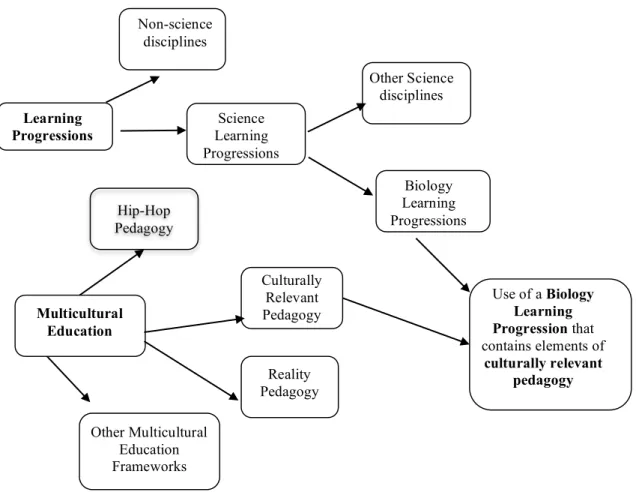
Figure 2.2 describes a visual representation of how one can link multicultural education frameworks (specifically CRP) with learning progression frameworks, namely the science learning progression framework, as this study does. As shown, learning progressions exist in all disciplines (National Research Council, 2005), and there are many proposed frameworks to describe ways of integrating cultural knowledge into pedagogy such as critical race theory (Larkin, Maloney, and Perry-Ryder, 2016) and hip hop pedagogy (Emdin, Adjapong, and Levy, 2016). Over many years, researchers have addressed issues of cultural differences that occur between students and teachers in classrooms, and have thus developed conceptual and theoretical frameworks that, when implemented in pedagogy, educate teachers into becoming more
culturally-knowledgeable pedagogues. The figure also demonstrates the separation that exists between a traditional, academic instructional framework like the Learning Progressions and the more socio-multicultural frameworks. I argue that coupling science LPs and CRP, two well-developed but divergent frameworks, can result in culturally-sensitive and knowledgeable science teachers who will create an enhanced learning environment for culturally diverse students.
Constructivism. There are numerous definitions of constructivism. Lamanauskas (2010) describes constructivism as an epistemology, which argues that humans construct meanings from current knowledge structures; while Tahir (2010) states that constructivism emphasizes that a learner must make sense of science through an existing conceptual structure. Matthews (2002) adds that while constructivism began as a theory of learning, it has expanded its dominion to become a theory of teaching, education, origin of ideas, and a theory of both personal and scientific knowledge. Confrey (1990) describes constructivism as essentially a theory about the limits of human knowledge, a belief that all knowledge is necessarily a product of our own cognitive acts. Liu and Matthews (2005) used a more philosophical approach to
Reality Pedagogy Learning Progressions Multicultural Education Non-science disciplines Science Learning Progressions Culturally Relevant Pedagogy Pedagogy Biology Learning Progressions Other Science disciplines Use of a Biology Learning Progression that contains elements of culturally relevant pedagogy Hip-Hop Pedagogy Other Multicultural Education Frameworks
Figure 2.2: Learning Progressions and Multicultural Education. This figure links learning progression frameworks with multicultural education frameworks and shows the combining of a science learning progression with culturally relevant pedagogy.
analyze constructivism: that knowledge is not mechanically acquired, but is actively constructed within the constraints and offering of the learning environment. These many definitions
converge on one essential theory: constructivism proposes that humans learn by deriving meaning from their prior experiences and preexisting ideas.
Through the course of the last several decades, numerous educational researchers and scientists have examined and probed the closely intertwined relationship between critical thinking and deep questioning. These researchers have used different approaches and analyzed many distinct theoretical backgrounds in their case studies and reviews. A particularly important background examines how students’ questions change as teachers transition from a teacher-centered classroom environment (transmission model) to a more student-teacher-centered classroom environment (constructivist model). In the field of science education, there is a plethora of literature that focuses and addressed the importance and benefits of inquiry in the science classroom, which focuses on students constructing new knowledge through a mixture of activities in a student-centered classroom (Akerson, Abd-El-Kahlick, 2000; Crawford, 2007; Roehrig and Luft, 2004). Yet, measurements of inquiry are often noticeably absent in said classrooms (Kirschner, Sweller, & Clark, 2006; Marshall, Horton, & Smart, 2009; Alfieri, Brooks, Aldrich, and Tenenbaum, 2011).
Many consider Jean Piaget, the French Swiss Psychologist, to be the father of cognitive constructivism. Piaget believed that young children can learn and build information by
constructing knowledge and making conceptual changes. As they grow even older, their thought processes mature and become higher-level in nature and they begin to have abstract thoughts, which adds to their overall perceptions of the world around them (Powell and Kalina, 2009). In contrast to the emphasis on the student, social constructivism emphasizes the role of the
environment. Vykotsky is the pioneer of this particular stream of thought where the emphasis now shifts to the environment of the individual. Modern social constructivists have chosen to take more practical approaches to their study of the relationship between environment and
knowledge. They draw on the influences of race, gender, socioeconomic status, and other factors that directly influence one’s environment (Liu & Matthews, 2005).
Derry (1996) discussed some of the learning environments that must be created to practice constructivist theory. Here, Derry proposed that questions, which activate cognitive processes and understandings or are successful in different learning environments, should be designed appropriately and address cognition as well as learning outcomes. Derry also believed that researchers must realize that all individuals learn in different ways and under different conditions, thus it would be prudent to analyze the strengths and weaknesses of a variety of instructional practices and the learning that occurs in varying learning environments.
Throughout the literature on science and biology, the main theoretical underpinning on how students’ learn/develop scientific knowledge is Lev Vygotsky’s model of social
constructivism, where students participate in social interactions to construct, understand,
troubleshoot, and validate scientific knowledge (Driver, Asako, Leach, Mortimer, & Scott, 1994; Chin, 2006). The reasons and descriptions above justify why I will use constructivism to guide
my analysis and interpretation of the data that is collected using an SLP combined with CRP. The methodologies surrounding the sequence of lessons will follow a student-centered classroom where the students participate in activities and are made to feel responsible for creating the content of the subject using rigorous cognitive exercises.
Literature Review
Routines and Rituals. One of the biggest challenges faced by teachers in urban science classrooms is developing an effective student-teacher relationship. Science teachers (and teachers in general) frequently come from very different cultural and educational backgrounds than their charges in the classroom. Sometimes, this can result in a wonderful atmosphere in which the teacher and students learn about one another’s culture, and the teacher is successful in stimulating student achievement. In many cases, though, a large disconnect instead forms between teacher and students, resulting in classroom conflicts, tension, and misuse of teacher authority. Ultimately, the classroom fails to become a proper learning environment, and both the teacher and students are short-changed. To avoid such a negative outcome, it is therefore
essential to consider: How do teachers perceive students? How do teacher rituals and routines influence student behavior, and how do these phenomena affect learning in the science
classroom? A ritual can be defined as a pattern that is practiced consistently over the course of the school term. Thus, by avoiding negative rituals and practicing positive ones, teachers can facilitate student success. In fact, strong teacher-student relationships are significant in promoting positive outcomes related to academic engagement and achievement for disadvantaged and at-risk students (Roorda, Koomen, Split, & Oort, 2011).
Before discussing perceived behaviors in classrooms, I would like to examine the concept of deviant behavior as explained by Howard S. Becker in the book, Outsiders, studies in the sociology of Deviance (1963). Becker describes ‘outsiders’ in a few ways. An outsider may simply be an individual who doesn’t subscribe to what is considered ‘normal behavior’ by society. This individual has deviated from the norm; thus, other members of society recognize and define this as deviant behavior (Becker, 1963). Taking the young adult student as the
outsider in this instance, the question arises: why do students practice deviant behavior in the classroom? According to Becker, many factors contribute to a person’s mentality, and for students these factors can be highly influential and far-reaching. One example looks at cases of juvenile delinquents. Do these young people reside in non-traditional homes? Do they live in low-income neighborhoods? Do their academic and intelligence factors play a role in their deviant behavior? Becker suggests that there is a pattern that develops; a ‘sequential model of deviance’ made up of variables that push an individual into particular modes of deviant behavior.
It is vital for urban educators to be aware of the labels given to students who commit initial acts of deviance. Becker stresses that if an individual makes one mistake, commits a ‘crime’, and is subsequently caught, processes are set in motion that can impact future behavior. A student may be pushed into future deviancy if administrators describe him or her as such, resulting in serious consequences to the student’s personal image and social interactions. For example, a student’s peers may become immediately apprehensive about associating with the student, forcing him or her into seeking out a new social group that might encourage future deviant acts (Becker, 1963). It is therefore imperative for educators and administrators in urban high schools to be aware of their treatment of students who have strayed from the correct path, and find ways to guide them back towards success.
The prevention of deviant behavior among students can be achieved in part by the appropriate use of rituals in the classroom.
Traditionally, classroom dynamics called for the teacher as an indomitable authoritative figure, with students as subordinates. This dynamic has begun to shift with the realization that this approach does not offer a conducive learning environment for all students (Tobin, 2006). While research has been published about the ineffectiveness of this mentality, such naïve
thinking persists among pre-service teachers, as many are not familiar with the literature on this subject and teacher-centered continues to persist in many science classrooms (Felder and Brent, 2005). As another example, teachers may unwittingly display preferential treatment towards students who are in better academic standing without realizing the effect elicited on other students. Research has shown this type of behavior can cause serious psychological effects in students, and lead to classroom conflict between teacher and students (Chiu, Lee, & Liang, 2003).
One approach to ameliorating the damage of negative rituals is to assign a mentor to provide guidance to new teachers. An effective mentor would function as a coach, helping novice teachers not only academically but also to help them improve their relationship to students and to find effective rituals and routines for each individual class setting (Carver & Katz, 2004). While such rituals may not be effective for every student, the teacher must develop a few simple routines and guide students early on how to follow them, thereby creating an organized classroom dynamic (Sterling, 2009). Developing a measure of routines at the
beginning of one’s teaching career is necessary to ensure that classroom management issues are minimal, and that instruction takes place (Kagan, 1992).
In addition to avoiding negative rituals, through self-reflection, experienced science teachers can create ritualistic practices with students to reward positive behavior and promote engagement. One effective ritual for teachers to encourage positive attitudes among students is to show them praise and encouragement, and express a friendly attitude. This also helps students in science classrooms become more engaged and receptive towards learning (She & Fisher, 2002). Moreover, as science teachers gain more practical experience using routines, they can adjust their format when the norm fails to work (Levin, Hammer, & Coffrey, 2009).
Another example is the encouragement of all students, even less-expressive students, to partake in class discussions by creating a ritual whereby each student answers questions
sequentially or alphabetically. This approach ensures that each and every student participates in the lesson. In another simple ritual, the science teacher may perambulate the room to create a comfortable atmosphere, rather than standing at attention in the front of the classroom or sitting at the teacher’s desk. Byrd-Blake et al. (2010), in describing the low morale and high pressures faced by many teachers in high-risk schools, suggest allowing science teachers to create modules of student-centered activities. These activities could serve as positive rituals replacing the normal standardized test-preparation sequences forced upon teachers.
Science teachers face a slew of uncertainties, issues, fear, and deficiencies when they choose to practice their art in high-poverty public schools. However, by taking the initiative to turn perceived negative behaviors into positive outcomes, and by creating positive routines and rituals in the classroom without becoming strict authoritarians, they can succeed in helping these underprivileged students construct scientific knowledge and become excited about science. Through continuous critical self-reflection of their teaching practice and various stylistic traits, in-service science teachers can fine-tune the benefits of certain routines and rituals in their own classrooms and use this information as a positive influence, especially amongst students who are considerably less motivated than others. Creating a safe, comfortable, constant environment for students will ensure feelings of equality from all and encourage all students to try their best. By combining elements of CRP with routines and rituals in the science classroom, students will feel a sense of appreciation and value in an equitable learning environment.
Science Teacher Education Programs and Professional Development. An approach to teaching science in a multicultural setting involves using examples from diverse backgrounds to empower students, create settings for social construction of knowledge, facilitate development of higher-order thinking skills to predict, analyze, and justify conclusions, and suggest projects that involve social and personal pursuing related to the scientific issues being studied (Bianchini, Johnston, Oram, & Cavazos, 2002; Mensah, 2011).
Pre-service teacher preparation. Student-teaching opportunities should allow pre-service science teachers to interact with culturally-diverse students as a means of being exposed to the cultural and social norms of the society they are about to encounter that will support their science teaching and interactions with students (Gunning and Mensah, 2010; Suriel & Atwater, 2012; Windschitl, Thompson, Braaten, & Stroupe, 2012; & Yerrick, Schiller, & Resifeld, 2011). In this way, they can create situations for discourse where students contribute to their learning by sharing their experiences, and where teachers can deeply reflect on their practices, and readjust to fit the needs of students first (Yerrick, Schiller, & Reisfeld, 2011).
Another important factor for pre-service science teacher education involves providing opportunities for individuals to create professional identities and teaching philosophies using theories of culturally responsive/relevant pedagogy and social justice. Here, the goal is to integrate diverse student cultures and languages as a means to aid students in learning science (Furman, Barton, & Muir, 2012). Ladson-Billings (1995) states, “culturally relevant pedagogy must provide a way for students to maintain their cultural integrity while succeeding
academically” (p. 476). Teachers hold such a meaningful role in the lives of students that pre-service science teacher education must succeed in preparing teachers to understand their beliefs about teaching, epistemology, student learning, culture, race, and class as it affects aspects of
their pedagogy and practice (Bryan & Atwater, 2002; Mensah,2009).
In-service teacher professional development. With respect to aiding in-service teachers in their quest to become proficient multicultural science educators, forms of professional development (PD) must focus on equipping teachers with the knowledge and skills needed to serve diverse cultural populations. For example, a high percentage of ELLs live in low socioeconomic groups and have difficulty learning English while trying to live up to high academic expectations. Teachers who participate in PDs that use instructional techniques aimed at reaching ELLs not only help these students progress academically, but give them hope and encourage to keep progressing (Johnson, 2011).
The literature related to teaching science to culturally diverse students in equitable ways focuses mainly on using the theory of CRP, which describes methods for all science teachers, at all levels of teaching to learn, adopt, and implement in their classrooms, making it a routine practice. A study conducted by Grimberg and Gummer (2013) using CRP as the theoretical framework demonstrated that providing PDs which made teachers aware of cultural points of intersection and their students’ views on the world helped them tailor more culturally-sensitive lessons and increase learning and engagement. Teachers should also be encouraged to question and make sense of issues of diversity and equity where a knowledgeable PD leader can explain nuances to them (Bianchini & Solomon, 2003).
For future study and consideration, it is vital for consistency to become a leading factor for pre-service and in-service science teachers. Multicultural education must be made available during science teacher preparation courses, and multicultural education-based PDs must be offered to current teachers. Teachers should be kept informed regarding reforms and policies related to their fields, especially when new standards and new instructional frameworks are being
thrown at them. They must also be allowed the opportunity to enact, in practice, the kinds of instruction that are required of them by those in charge. Professional development workshops must focus on providing biology teachers with the ammunition to facilitate the construction of knowledge in biology classrooms
Biology Science Education. Traditionally, biology teachers focus on high-stakes test preparation strategies as the template for instruction. While this can increase student
performance in the test, it does not expand overall knowledge of concepts or give students the high-level skills needed to answer complex scientific questions (Popham, 2001). A more effective method is for biology teachers to be immersed in sustained PD workshops that
demonstrate the use of inquiry-based practices as a technique for achieving socially-constructed biology knowledge. Greenleaf, et al. (2011) also stresses the necessity of high literacy
proficiency in biology to allow reading and writing using complex terminology. Biology
teachers must also have strong content knowledge base for effective teaching, thus PD designers must provide occasions for teachers to enhance/expand their content knowledge (McConnell, Parker, & Eberhardt, 2013).
To successfully assist biology teachers to become experts at creating, implementing, and facilitating inquiry-based lessons, PD opportunities need to be relevant, consistent, and intensive (Baker et al., 2004). Workshops must cater to teacher-student relationships as defined by
specific school setting and address diversity and equity. Biology teachers should be able to immerse themselves in developing questioning techniques, increasing content knowledge, and practicing experiments as students would. Allowing teachers to demonstrate elements of the skills learned has been shown to give them the driving force to use inquiry in their biology classrooms, and teachers agree that these skills increase students’ abilities to practice
higher-order thinking skills while constructing scientific knowledge (Hasson & Yarden, 2012;
Jeanpierre, Oberhauser, & Freeman, 2005; Lotter, Harwood, & Bonner, 2007; Luketic & Dolan, 2013; Supovitz & Turner, 2000; & Taylor & Bilbrey, Jr., 2011).
Coupled with opportunities to enhance multicultural science education practices, PDs that aid biology teachers to implement and facilitate inquiry-based lessons will ensure these teachers are equipped with an arsenal of knowledge, skills, techniques, and ideas towards their efforts of bringing biology and other sciences into the lives of students.
Using the theoretical frameworks presented in this chapter as well as the principles surrounding routines and rituals, pre-service and in-service teacher education, and specifically applied to a high school biology classroom, this study will use traditional qualitative research methods to gather data regarding the use of a biology unit of a science learning progression that has been modified to include culturally relevant pedagogical elements in an urban high school classroom. While I mentioned modifications to pre-service teacher preparation programs are needed to ensure substantial multicultural course offerings are provided, the major focus of my study will be on observations of an in-service science teacher implementing the SLP-CRP unit. The next chapter discusses a brief pilot study conducted, which provided initial responses concerning the depth of knowledge carried by science teachers regarding science and multicultural frameworks, and also describes my methodology for the current study.
CHAPTER THREE
PILOT STUDY AND METHODOLOGY Pilot study
Previously, I conducted a pilot study as part of the requirements for a science education course where I interviewed three science teachers about their knowledge and preparation for teaching not only diverse students, but utilizing available frameworks developed through education research. The following is a narrative of the results obtained from this brief study. Results
Data collected and analyzed from the pilot study indicated five major themes among the three science teachers who participated. Firstly, all science teachers were unfamiliar with the theoretical frameworks of science learning progression and culturally relevant pedagogy. None of the three had ever heard of a learning progression, but they all attempted to discern meaning from the name. One mentioned scaffolding as an element of a science LP, another mentioned using pre- and post-assessments to gauge student understanding, and the third science teacher discussed building upon fundamental knowledge and going deeper as a progression to learning.
The second interview question was an attempt to elicit a response from my interviewees regarding how a science LP could be a successful framework for teaching science to students at all learning levels. While they were still unsure of the exact nature of a LP, the idea of
scaffolding concepts and information from simple to complex was mutual. Ms. JM’s response was the most aligned to how a LP would be implemented. In her answer, she mentioned that “in any discipline, whether it’s math a student needs to know how to add before he can learn how to multiply and learn how to subtract before they really can conceptualize division.” Her
material was evident when she said, “a lot of the ‘what’ type questions take me to my ‘why’ and ‘how’ questions.”
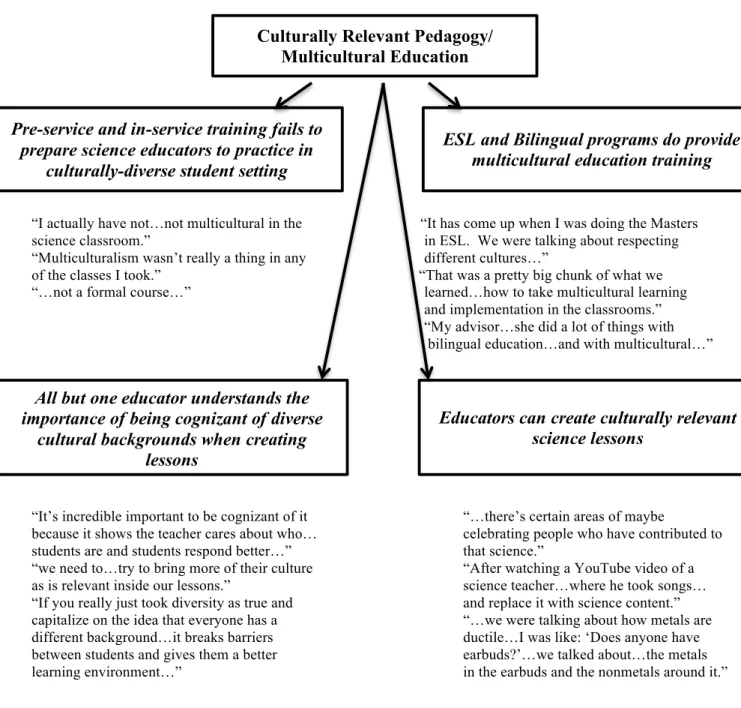
The interview questions then took a turn away from LPs and towards multicultural education and how well science teachers were educated to teach in a multicultural environment. I inquired specifically about each person’s teacher-preparation experiences, and all three had either no formal experiences or could not remember being educated to apply multicultural education. For this question, the newest science teacher, who was still working on her graduate degree at the time, stated that “it was implied that we knew we would be working with students of different cultures but we were never really taught how to teach them.” All training was gained from experiences in the classroom, learning as she went along. One response was a little
startling. Ms. JM said:
I’m going to answer that really honestly. I remember seeing a course name that said ‘multiculturalism’ but I don’t remember anything about it and even to this day I wouldn’t know what that really means. Because I don’t know that learning is cultural. I feel that a lot of learning issues are socioeconomic. I don’t think that there’s any particular ethnic group that doesn’t value education, and one that does.
This response is a reason why science teachers must continue to participate in ongoing teacher education opportunities where they can become familiar with theoretical frameworks that are being developed and used in education research, and to learn how to engage with students from diverse backgrounds in meaningful ways that will enhance learning. It is astounding that a seasoned science educator who has been in an urban school setting for most of her seventeen-year career believes that students’ cultural upbringing plays no part in their learning. Her