. ;,· r . ' '
By Natasha Chopra Master of Arts in Art Therapy
Herron School of Art and Design
Indiana University-Purdue University oflndianapolis
Advisor
Accepted: May 2020
Greg Hull
Interim Dean of Herron School of Art and Design
Art Therapy Programs in Museums and Art Galleries: A Program Proposal for Adolescents
Natasha Chopra
Submitted to the faculty of Herron School of Art and Design in partial fulfillment of the requirements for the degree
Master of Arts in Art Therapy Herron School of Art and Design
Indiana University-Purdue University of Indianapolis May 2020
ABSTRACT
Art therapy, museums, and art galleries are in their beginning stages of collaboration, but they share common goals such as improving their surrounding communities and providing services to increasingly diverse audiences. Existing art therapy programs in museums and art galleries currently serve a variety of populations with various mental health needs; however, adolescents are underserved in these settings. The present study used methodology provided by the Memphis Brooks Museum of Art’s Program Resource Guide to create an art therapy program model for adolescents to be used in museums and/or art galleries in Indianapolis, Indiana. The program model includes the following components: mental health treatment needs for
adolescents that can be met in the museum or art gallery setting; a recommended treatment approach, including feminist and compassion-based leadership and art therapy interventions; guidelines for educating museum staff about art therapy and for working with adolescents in these settings; ethical and multicultural issues; and potential museum and community partners in Indianapolis, Indiana. This model expands and redefines art therapy treatment options for
adolescents and provides museum access for an underserved population. Keywords: art therapy, museums, art galleries, adolescents.
DEDICATION
I would like to dedicate this thesis to my father Vivek, my mother Angie, my stepfather Randy, my brother Zach, my partner Matt, and other family members (both chosen and
biological) who always encouraged me to keep making art. Over the years, they helped me find my calling as an art therapist, and I am forever grateful for their influence, guidance, and compassion. I would not be where I am today without them. Thank you.
ACKNOWLEDGEMENTS
I would like to acknowledge the people who have knowingly or unknowingly supported me through my graduate program. To my father Vivek, my mother Angie, and my stepfather Randy: I cannot put into words how thankful I am to have you as my biggest cheerleaders. Thank you for believing in me, and for supporting me throughout my life. I am the person I am today because of you, and I love you all dearly. To my brother Zach: Thank you for always being there when I need a friend. I would not be the same person without you, and I will always look up to you. To my sister-in-law Sarah and nephews Aaron and Eli: You made me smile through some of the toughest days, and laugh through the even tougher ones. To my partner Matt: You have made me a better artist, therapist, and person. Thank you for choosing to exist alongside me. To my professor and supervisor Eileen: Thank you for challenging me, making me laugh, and helping me through the past two chaotic years. I appreciate your time and guidance more than you know. To my professor and thesis advisor Heather: Thank you for your gentleness, and for helping me believe in my work (and myself) even when it was difficult to see any end in sight. To my professor Megan: Thank you for making me smile, and for challenging me to grow in and out of the classroom. Finally, to my cohort, Ashleigh, Hannah, Ilene, Kaitlyn, Katy, Keaton, Lexie, Libby, and Valeria: I am blessed to have met each and every one of you. I feel like fate brought us all together in this program at the same time, and I could not imagine my graduate school experience without you. I look forward to seeing your names in art therapy textbooks some day.
TABLE OF CONTENTS ABSTRACT...ii DEDICATION...iii ACKNOWLEDGEMENTS...iv TABLE OF CONTENTS...v LIST OF TABLES...x CHAPTER I: INTRODUCTION...1
A. Problem Statement and Research Questions...4
B. Operational Definitions...5
CHAPTER II: LITERATURE REVIEW...9
A. Art Therapy in Museums and Art Galleries...9
B. Existing Art Therapy Programs in Museums and Art Galleries...11
1. Program goals and anticipated outcomes...14
2. Theoretical approaches...15
a. Attachment-based approach...15
b. Mentalization-based approach...16
c. Compassion-focused approach...16
d. Feminist approach...17
e. Other theoretical approaches...17
4. Program evaluation...19
C. Museums and Art Galleries Benefitting Art Therapy...19
1. Therapeutic factors of museums and art galleries as physical spaces...20
a. Therapeutic factors of museums and art galleries as public spaces...22
b. Therapeutic factors of museums and art galleries as social spaces...23
2. Therapeutic factors of viewing museum and gallery objects...25
D. Museums and Art Galleries Benefitting from Art Therapy...27
E. Ethical Considerations for Art Therapy in Museums and Art Galleries...30
F. Multicultural Considerations for Art Therapy in Museums and Art Galleries...32
G. Adolescents and Community Engagement in Museums and Art Galleries...34
H. Art Therapy with Adolescents...36
1. General treatment needs and theoretical approaches...39
2. Art material considerations...39
3. Stages of art therapy with adolescents...40
CHAPTER III: METHODOLOGY...42
A. Program Development...42
CHAPTER IV: RESULTS...44
A. Step 1: Group Identification...44
1. Intended population...45
2. Local museums and art galleries for program partnership...47
a. Newfields...48
c. The Children’s Museum of Indianapolis...48
d. The Indiana State Museum...49
e. The Eiteljorg Museum...49
f. Conner Prairie...49
3. Local organizations for potential partnership...50
a. TeenWorks...50
b. Outreach...50
c. The Children’s Bureau, Inc...51
d. Girls Inc. of Greater Indianapolis...51
e. Indiana Youth Group...52
f. Trinity Haven...52
B. Step 2: Program Purpose, Goals, and Design...53
1. Program design and structure...53
2. Screening clients for services...55
3. Single session structure...55
4. Program materials...56
5. Program directives...57
6. Program leadership...58
a. Influence of theoretical therapeutic approach on leadership style...58
b. Integrating compassion-focused and feminist theories...59
7. Program location...60
1. In-service structure...61
D. Step 4: Training Guidelines for Docents and Other Staff...62
1. Guidelines and expectations...63
E. Step 5: Program Evaluation...64
F. Step 6: Program Funding...65
G. Step 7: Ethical Considerations...65
H. Step 8: Multicultural Implications...67
I. Additional Tools for the Proposed Program...68
CHAPTER V: DISCUSSION...69
A. Program Proposal Strength...69
1. Adaptability of plan...69
2. Community involvement...69
B. Areas of Concern...70
1. Transportation...70
2. Other accessibility barriers in Indianapolis...70
3. Sustainability of programming...70
C. Implications of the present study...71
1. Addressing gaps in art therapy literature...71
2. Theoretical integration...71
3. Redefining art therapy treatment options...71
4. Reducing stigma...72
D. Intentions for Program Proposal...73
CHAPTER VI: CONCLUSIONS AND RECOMMENDATIONS...74
A. Recommendations for Future Studies...74
CHAPTER VII: REFERENCES...77
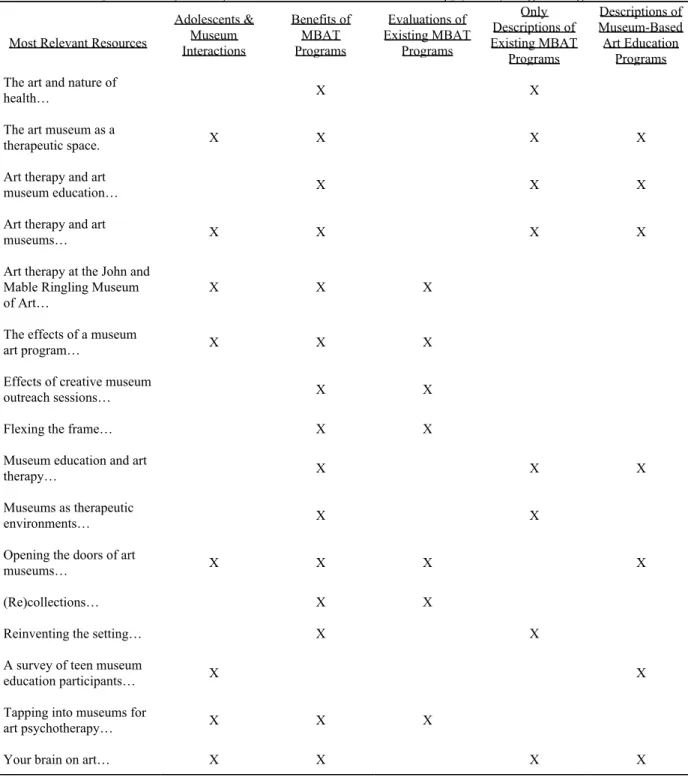
APPENDIX A:ThematicMatrixofRelevantReferencesforAdolescentMuseum-Based(MBAT) Art Therapy Programming...89
APPENDIX B: Adolescent Treatment Needs with Complementary Museum Setting Factors...90
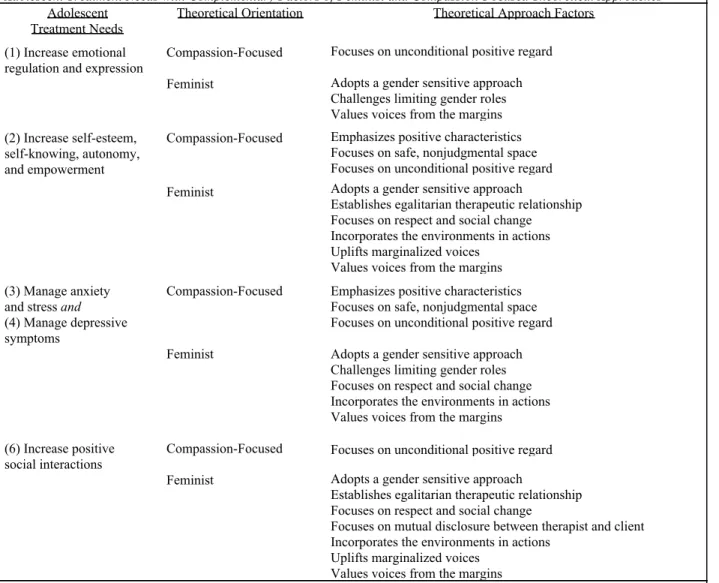
APPENDIX C: Adolescent Treatment Needs with Complementary Factors of Feminist and Compassion-Focused Theoretical Approaches...91
APPENDIX D: Museum-Based Art Therapy Program Disclosure Statement...92
APPENDIX E: Proposed Program Outline...94
LIST OF TABLES
Table 1. Thematic Matric of Relevant References for Adolescent Museum-Based
Art Therapy (MBAT) Programming...89
Table 2. Adolescent Treatment Needs with Complementary Museum Setting Factors...90 Table 3. Adolescent Treatment Needs with Complementary Factors of Compassion-Based and
CHAPTER I: INTRODUCTION
Museums have always been places of education and wonder in my life. I fondly remember family vacations spent exploring history museums and school field trips wandering through art galleries. They seem to carry a kind of magic within them, but it appears as though this magic is not extended to all populations. As an art therapist in training, I have interacted with adolescents often in my internship locations, and I have always thought of this age group as routinely undervalued and underserved in society at large. Moreover, within the museum setting, I believe adolescents are routinely presumed to be disinterested in museum and gallery
exhibitions and programming; due to this assumption, adolescents are often underserved by museum exhibitions and public offerings (Hornby & Bobick, 2016). In fact, a 2014 survey of 220 museums revealed that only one third of them have adolescent-specific programming (Hornby & Bobick, 2016).
My personal experience through visiting museums regularly as an adolescent and young adult, however, contrasts greatly with this notion, as I have seen adolescents willingly, joyfully, and consistently participating in museum culture throughout the years. Adolescents have more autonomy in their daily decisions as opposed to younger children due to generally looser parental restrictions and greater access to personal transportation. I have seen them taking advantage of this freedom by engaging with museums and art galleries at their own volition. They walk around the galleries, excited to see specific pieces. They have in-depth discussions with their peers about the art around them, gesturing toward various pieces across art galleries. They choose to spend their time at museums, and they choose to keep returning. As I started noticing
the enthusiastic way adolescents interact with museums in general, I began thinking about how accessible museums and art galleries are to adolescents. Even though I personally believe that adolescents are some of the more outwardly enthusiastic guests in museums, they comprise a very small portion of overall museum patrons. I began to wonder whether granting adolescents better access to museums could benefit community mental health, in light of my art therapy career. I further wondered how an innovative art therapy approach in a museum setting could impact the need for access to mental health care among adolescents, especially in the
Indianapolis community.
In recent years, it has been estimated that one in four to five adolescents in the United States meets criteria for at least one mental health disorder (Merikangas et al., 2010). Whitney and Peterson (2019) reported that about 20 to 26 percent of adolescents living in Indiana meet criteria for at least one mental disorder; this means that Indiana falls in the highest quartile of prevalence of mental disorders in adolescents, outranking thirty-eight other states. Of these Hoosier adolescents, only about 47 to 53 percent seek mental health treatment, showing a great disparity in prevalence and actual treatment (Whitney & Peterson, 2019). These numbers
indicate that there are many barriers stopping adolescents from receiving the treatment they need to navigate their mental health hardships. I started considering actions that I might take as an art therapist to help improve access to mental health care for adolescents in my community.
Rochford (2017b) stated that art therapy and museums have common goals, as they both use art as an educational method to engage participants in reflection about “art, themselves, the world, and difficult life experiences” (p. 3). According to Hamil (2016), museums’
transformation to healing through the creative process] by inviting an exploration into diverse perspectives through art” (p. 10). That is to say, mental and social health resources in museums help their patrons to engage in and benefit from the creative process. King (2018) stated that art therapy initiatives in museums and galleries can decrease maladaptive behaviors and improve social inclusion, self-esteem, attention, and concentration. While various museums and art therapy programs differ in their specifically-stated missions, they commonly share the same general goals. For example, Newfields (2019), an art museum and expansive garden space in Indianapolis, Indiana, adopted the following as its mission statement: “To enrich lives through exceptional experiences with art and nature” (p. 1). This mission seems to mirror many
museums’ and art galleries’ intentions in serving their local communities. The American Art Therapy Association (2017a), or AATA, stated, “Art therapy is an integrative mental health and human services profession that enriches the lives of individuals, families, and communities through active art-making… and human experience” (p. 1). Hamil (2016) claimed that, “collaborations between museums and art therapists serve as a catalyst for healing and
transformation by using collective resources to enrich communities through creative expression” (p. 12). It does not feel coincidental that these aforementioned statements all explicitly mention the notion of enriching lives; integrating art therapy into museums feels like a natural and exciting pairing.
According to Hamil (2016), when art therapists and museum staff collaborate with one another, they actively work to increase empathy among social groups, improve general public health, and increase museum accessibility to a variety of populations within their community. Hamil (2016) also stated that art therapy in a community context provides “timely [responses] to
public health needs and social injustices,” and an “ethically responsible step [forward] in fostering improved community relationships” (p. 15). I believe that an art therapy program for adolescents would add another opportunity to fulfill museums’ missions in Indianapolis, Indiana by creating a more approachable environment to adolescents, a commonly underserved
population in museums. In examining this relationship further, collaboration between the two seems inevitable and necessary in order to provide more accessible art therapy services and museum programming to more communities.
Problem Statement and Research Questions
The purpose of the present study is to understand how museums, art galleries, and art therapy programs intersect with one another in order to benefit their communities. I studied how museums and art galleries can incorporate art therapy programming for adolescents in these settings. I believe that art therapy within museum or art gallery settings would benefit the mental health needs of adolescents who are generally underserved by these settings. Additionally, I believe that such a program would benefit art galleries and museums by enhancing their community outreach in a novel way and supporting their mission and vision.
The overarching research question for this study is as follows: How can museums and art galleries use art therapy to enrich the lives of adolescents? Sub-questions include: (1) How would a museum as a setting benefit adolescents through art therapy programming? (2) How would a museum benefit from an art therapy program for adolescents? and (3) What would an art therapy program at a museum entail?
Operational Definitions
Adolescence – A period in human development typically considered to span the ages of
10-18 (APA, 2002); “adolescence is a complex, multi-system transitional process involving progression from the immaturity and social dependency of childhood into adult life with the goal and expectation of fulfilled developmental potential, personal agency, and social accountability” (Curtis, 2015, p. 1).
Art therapy – An “integrative mental health profession that enriches the lives of
individuals… and communities through active art-making, creative process, applied
psychological theory, and human experience;” art therapy combines art-making processes with psychological bases in order to evoke a more thorough understanding of its participants (AATA, 2017a). “Clients… use the art form as a way of communicating about experiences, expressing and regulating emotions, developing creative potential and other competencies and interacting with the therapist in a healing way. Talking is also involved and the balance between talking and communicating via the art form depends on the needs of clients and develops collaboratively” (Cobbett, 2016, p. 404). The art itself is able to act as a form of nonverbal communication, to express difficult life events without using words or to gain insight through its symbols and themes. Art therapy can fulfill a variety of treatment needs, including but not limited to fostering emotional resilience, promoting self-esteem understanding, developing social skills, and
reducing conflict and distress; art therapists provide art therapy services in both clinical and nonclinical settings to diverse populations (AATA, 2017a).
Art therapists –Mental healthcare professionals that attended masters or doctoral level
2017b). Art therapists hold certification as registered art therapists (ATR) or board-certified art therapists (ATR-BC); art therapists can also hold state licenses as mental health counselors, marriage and family therapists, or other similar titles. Art therapists are trained to help their clients cope with trauma, illness, stress, relationship difficulties, mental illnesses, and other circumstances across the lifespan (Rochford, 2017b). Similar to other mental health
professionals, art therapists can specialize in certain populations, psychological disorders, and/or theoretical orientations. Art therapists are committed to cultural proficiency, accessibility, and inclusion of individuals of all identities and backgrounds (AATA, 2017b).
Best practice – “Concerns the application of optimal counseling practices – those
supported by the best available scientific evidence as well as clinical expertise” (Marquis, Douthit, & Elliot, 2011, p. 397).
Cultural attendance – “Intensive engagement with creative and cultural activities
through art therapy and workshops led by artists” (O’Neill, 2010, p. 22); “engaging in museum visits, viewing or handling artifacts, active engagement in creative expression, and
museum-based art therapy” (Hamil, 2016, p. 31).
Curators –“[Curators] carefully shape, manipulate, and orchestrate learning encounters
by mediating collections of objects, materials, and ideas with their constructions, provoking audiences’ cultural and reflective exchange and personal meaning-making” (Fountain, 2019, p. 15).
Directives –Art activities used by art therapists that may include specific prompts and
curated materials, and aim to contribute to a therapeutic goal. Kahn (1999) stated that art therapists can design and employ directives to compliment the present state of the therapeutic
process. Throughout the directive and/or upon its completion, the art therapist will engage in processing, e.g. talking, questioning, etc., with the client.
Docents – “[Docents are] trained, volunteer teacher- guides who bridge the museum
object and the visitor” (Grenier, 2009, p. 143).
Empathy – “The ability to accurately understand the position of others and to imagine
the experiences of other groups from a compassionate perspective” (Hamil, 2016, p. 238).
Formal elements – “Formal elements of art products such as line, color and shape are
often used in art therapy observation in youth as well as adult mental health care” (Pénzes, van Hooren, Dokter, & Hutschemaekers, 2018, p. 1)
Museum-based art therapy – Art therapy that “actively involves multiple community
partners providing access to programs that integrate the arts and expressive therapies as a meaningful way to address the health and social needs of individuals and groups across the lifespan” (Hamil, 2016, p. 10).
Processing –The practice in which art therapists facilitate their participants through
discovering, exploring, and resolving their various life experiences (Kahn, 1999). Processing, e.g. talking, questioning, etc., is a method often used in other mental health professions, but in art therapy, the art itself becomes an object or catalyst of said processing (Kahn, 1999).
Rapport – A relationship between therapist and client (Leach, 2005); “as a component of
a treatment package, [rapport] has been effective in reducing problematic behavior” (Lugo, King, Lamphere, & McArdle, 2017).
Response art – “Response art is artwork created… in response to material that arises in… therapy work. Art therapists use response art to contain difficult material, express and examine their experiences, and share their experiences with others” (Fish, 2012, p. 138).
Therapeutic factors – Factors that influence identification of issues, change, and
recovery in therapy (Yalom & Leszcz, 2005).
Therapeutic relationship – “a trusting connection and rapport established between
therapist and client through collaboration, communication, therapist empathy, and mutual understanding and respect” (Leach, 2005, p. 262).
Therapeutic theoretical approach – “A particular philosophical standpoint. It
represents a particular type of discourse, position or standpoint from which to make sense of the world. This kind of theory is not an explanation of anything in particular but rather a set of epistemological assumptions that set a framework for and define the limits of what is knowable” (Trevillion, 2008, p. 444); therapeutic theoretical approaches “provide counselors with unique lenses through which they may view the problems that clients bring to them” (Gehart, 2016, p. 445).
Visual Thinking Strategies (VTS) – “Viewers are asked to only consider the visual
information provided by the artworks, without receiving any information, such as the titles of the works or the names of the artists. In such educational interventions, viewers consequently look carefully at the works in an attempt to make sense of them” (Ishiguro et al., 2019, p. 1).
CHAPTER II: LITERATURE REVIEW
In the following review, I will discuss literature pertaining to general art therapy in museums, existing museum-based art therapy programs, benefits of partnerships between
museums and art therapists, engagement between adolescents and museums, and art therapy with adolescent clients.
Art Therapy in Museums and Art Galleries
Art therapy, museums, and galleries are only in their beginning stages of collaboration, but their partnership has been growing quickly in recent decades. Museums were once
institutions that only allowed access to specific, elite members of society (Ioannides, 2017). Silverman (2010) stated that while museums have long been considered beneficial institutions to society, they only recently have been considered as “agents of well-being and vehicles for social change” for populations of all identities and backgrounds (p. 3). Over time, museums have become more focused on community-based efforts and social justice endeavors. Sloan (2013) also states, “The museum environment has evolved dramatically within the past decade, moving towards a more social and inclusive space with greater emphasis placed on education and public programming” (p. 7). The conceptual model of museums first shifted to places of “healing and transformation” when museum educators explored endeavors to more meaningfully engage their audiences (Hamil, 2016, p. 19). Currently, museums work to improve the lives of their
community members and respond to societal issues responsibly (King, 2018; Sloan, 2013). These intentions led to the early partnerships between educators and art therapists.
However, art therapy is unique to art education in museums, in that art therapists consciously design curriculums aimed to fulfill therapeutic goals (Canas, 2011). Art educators, on the other hand, instruct on artistic skill and inspiration, with no intention of eliciting
emotional or mental change in the client. Art therapists are also trained to become attuned to participant needs, to create therapeutic goals, to empathize with participants and their
experiences, to develop rapport, and to establish a sense of trust with their clients (Canas, 2011). The relationship is much more intentional, and art therapists can change their approach in order to fulfill their therapeutic intent. Art therapists also create and alter directives that challenge participants’ perceptions, behaviors, and social dynamics (Canas, 2011). According to Hamil (2016) and Sloan (2013), art therapists serve their surrounding communities in a variety of ways, complementing existing programs or offering an additional form of psychological education, stress management, social engagement, and/or self-exploration and affirmation, altogether. These provided services are offered on a case-by-case basis, depending on what the community as a whole needs. Art therapists provide unique programming that museums and art galleries could not provide otherwise, working to fulfill the newly-emphasized roles of museums in their community.
Rochford (2017b) used a Feminist Systems Thinking (FST) approach to evaluate similarities between museums, art galleries, and the practice of art therapy. As a change-driven and community-focused profession, art therapy and the institutions of museums and art galleries have many common goals involving artistic engagement and social justice work. King (2018) mentioned that both museums and art therapists encourage their patrons or clients to engage in “visual processing, detailed processing, and interpretation” of artwork and artifacts (p. 10).
Kaufman et al. (2014) and Rochford (2017b) both stated that art therapy programs in museum settings help art therapists and museums reach more diverse audiences, contribute to museum membership, and improve morale of museum staff and volunteers. Without collaboration, both entities miss the opportunity to reach populations that may not have been otherwise engaged. Additionally, Rochford (2017b) claimed that art therapy and museum collaboration can lead to economic benefits for the museum, granting more sustainable funding for art therapy.
Existing Art Therapy Programs in Museums and Art Galleries
The formative link between museums, art galleries, and therapeutic action lies in the assumption that museum environments and objects have “transformative and educational potential” (Hamil, 2016, p. 22). Museums often partner with art therapists to increase their cultural relevance within their communities and to encourage new community members to attend museum programming (Hamil, 2016). At first, it can be difficult to imagine art therapy sessions taking place in such a public community space, as this greatly contrasts environments considered to be traditionally therapeutic. Although existing programs vary greatly in all aspects, Coles and Harrison (2018) provide a general framework for art therapy sessions in museum settings that can serve as a starting point. Researchers identified four parts of a museum-based art therapy session: (1) meeting in a private studio space to introduce session themes, share thoughts, and express emotions; (2) exploring museum objects and exhibitions; (3) reconvening in studio space to participate in art-making, in response to museum exploration; and (4) discussing experience of museum exploration, discussing the process of art-making, and sharing artwork with one another (Coles & Harrison, 2018). This framework provides a starting point in understanding how art therapy practices and museum settings can naturally integrate with one another.
Art therapy programs are able to use common strategies that already exist in museum programming. Many museums that do not offer art therapy services currently offer tours or events that educate guests on visual thinking strategies (VTS). When engaging in VTS, guests look at the formal elements of gallery pieces, without knowing their historical contexts, titles, or artists (Ishiguro et al., 2019). In doing so, guests develop a personal understanding of the
artworks without outside influence, allowing them to connect their personal lives to artworks. Additionally, engaging in VTS and generally viewing art helps to improve observational skills (King, 2018; Sloan, 2013).
One of the first partnerships between museums and art therapists occurred 45 years ago and involved video-making with psychiatric patients in a group hospital. Through this
partnership, McNiff and Cook (1975) were able to help their patients safely integrate into a public setting while freely engaging with the museum, the creative process, and other
individuals. Facilitators stated that their programming allowed patients to, “progress in positive self-regard, creative expression, and improved socialization” (Hamil, 2016, pp. 20-21; McNiff & Cook, 1975).
The Memphis Brooks Museum of Art, considered one of the forerunners in
museum-based art therapy, aims to “enrich the lives of a diverse community through dynamic programming” (Hornby & Bobick, 2016, p. 154), including art therapy programs. One program specifically designed for adolescents took place after school and allowed participants to socialize amongst their peers actively providing feedback for museum proceedings. This further promoted feelings of comfort and mutual respect in the museum (Hornby & Bobick, 2016). The program’s purpose was for adolescents to “take charge of their own learning and to perceive the museum as
a place where they were welcome and respected as creative individuals with valuable
contributions” (Hornby & Bobick, 2016, p. 154). This program utilized ongoing evaluation from the adolescent participants in order to influence its evolution over time (Hornby & Bobick, 2016). A survey, distributed to participants and their parents upon completion of the pilot program, revealed three main themes in its responses: (1) socializing and fostering friendships; (2) exercising individual autonomy and group collaboration in regards to program proceedings; and (3) engaging with the museum more regularly upon completion of the program (Hornby & Bobick, 2016). The Brooks Museum’s art therapy program is made of many moving parts, including docent-led tours, art therapist-led sessions, and exhibitions of work made by participants (Rochford, 2017b).
The Russian Museum’s art therapy program serves children living with physical and mental issues that predispose them to social isolation (Peacock, 2012). This program allows these children to connect with fellow community members in their age group while engaging in the art-making process. In 2006, the Museum of Modern Art began a program for individuals with Alzheimer’s called “Meet Me at MoMA” that featured “guided tours and interactive discussion in its galleries” (Rosenberg, 2009, p. 93). The Museum of Art and Archeology at the University of Missouri-Columbia also offers a program in which adults with Alzheimer’s disease make art with the guidance of an art therapist and then display their creations as part of a rotating exhibit as a visual reminder of the group during future museum visits (Peacock, 2012).
According to Baddeley, Evans, Lajeunesse, and Legari (2017), the Montreal Museum of Fine Arts partners with experts in order to provide a safe space for clients with eating disorders to “make art and create healthy body images,” using the museums’ facilities (p. 345). Physicians
in Montreal are also able to prescribe museum visits to patients who they believe could benefit from the social interaction and exhibit-viewing that museums have to offer (Mercer, 2018). Additionally, the Holocaust Memorial Museum held a program for some of their participants to create response art, or artwork created as reaction to material explored in therapy sessions, after navigating the museum, in an attempt to increase historical understanding and empathy (Betts, Potash, Luke, & Kelso, 2015). Researchers found an increased empathy score for those who had participated in art-making as opposed to those who had not. These and other existing programs continue to create new, innovative ways in which art therapy as a profession and museums and art galleries as institutions can benefit one another. Other museums and galleries with previous art therapy programming or similar events include the Addison Gallery of American Art, the Amon Carter Museum, the Contemporary Art Museum of Barcelona, the Hirshhorn Museum and Sculpture Garden, the Museum of the City of New York, the Museum of Tolerance, the National Vietnam Veterans Art Museum, the New Orleans Museum of Art, the Phillips Collection, the Queens Museum of Art, and more (Hamil, 2016; Ioannides, 2017; King, 2018; Peacock, 2012).
Program goals and anticipated outcomes. Existing museum-based art therapy
programs range in geographic location, museum type, structure, purpose, and goals. Despite this variation, in order for museums to have successful art therapy programs, their goals must be clearly defined and considered throughout every aspect of the program. For example, Coles and Harrison (2018) identified the following goals for their program: (1) helping participants understand themselves better; (2) fostering the ability to form and sustain positive relationships with others; (3) encouraging social inclusion; and (4) inspiring creativity (p. 115). Alternatively, Morse et al. (2015) sought “to facilitate positive opportunities for participants and develop new
museum audiences” (p. 234). Morse et al. (2015) found that their program also increased
“participant levels of confidence, sociability, and well-being” (pp. 244). Hamil (2016) stated that some museum-based art therapy programs aim to evoke “personal transformation in health and wellbeing, community development, social action or social justice, and education” (p. 19). Having these goals and anticipated outcomes in mind, researchers were able to formulate their programs, measure their success in achieving them, and offer recommendations for similar programs in the future.
Theoretical approaches. A therapeutic theoretical approach is a framework by which a
mental health practitioner provides therapy to clients (Trevillion, 2008). There are a variety of therapeutic theoretical approaches, and they vary greatly based on their core beliefs of human traits, human interactions, and definitions of wellness and pathology (Corey, 2017; Gehart, 2016). In general, when following a specific theoretical approach, therapists embody these varying factors in order to provide services that align to their chosen approach, their work setting’s chosen approach, and/or their current client’s treatment needs (Corey, 2017; Gehart, 2016). Their chosen approach affects identification of treatment needs, techniques, and outcomes, which will thereby influence program creation and implementation (Gehart, 2016). Therapeutic theoretical approaches are crucial to program development, as they guide program goals, methods, and outcomes. Art therapists practice through numerous theoretical approaches when providing services in museums, art galleries, and other settings. Some commonly used approaches in museum-based art therapy are outlined below.
Attachment-based approach. Coles et. al (2019) used “psychodynamic process… and a
the potential therapeutic value of the creative process in itself” (p. 57). Attachment styles are an individual’s different ways of behaving in interpersonal relationships (Gehart, 2016). Paying attention to participants’ attachment styles can help leaders understand clients’ emotional expression and regulation, their sense of autonomy, and symptoms of anxiety and depression (Gehart, 2016). Attachment-based approaches also allow the art therapist to act as a “secure base” and the museum to become the unexplored unknown, helping participants safely navigate the setting knowing that the art therapist is a stable resource to which they can refer back (Coles et al., 2019, p. 65).
Mentalization-based approach.Mentalization is, “the mental activity that enables us to
perceive and interpret human behaviour in terms of intentional, motivational and emotional mental states” (Griffiths et al., 2019, p. 2).Mentalization-based therapy (MBT), which utilizes mentalization, focuses on building healthy relationships, establishing behavioral control, and regulating emotions (Coles et al, 2019; Griffiths et al., 2019). Museum objects can act as “something external to relate to and project meaning onto,” helping with reflective and mentalization processes involved in MBT (Coles et al., 2019, p. 65).
Compassion-focused approach. A compassion-focused approach to therapy seeks to
establish a safe, nonjudgmental space for participants to explore difficult experiences and emotions. Compassion-focused approaches emphasize unconditional positive regard, regardless of material shared during sessions, likely decreasing symptoms of anxiety and depression and increasing self-esteem and positive social experience (Coles et al., 2019). Therapists working through a compassion-focused approach help the client to feel validated, capable, and worthy of evoking positive change in their lives.
Feminist approach. As mentioned prior, Rochford (2017b) used an feminist systems theoretical approach to analyze museum-based art therapy. Rochford (2017b) identified the following as a few FST-specific principles: “(1) adopting a gender sensitive approach; (2) valuing voices from the margins; and (3) incorporating the environments in actions” (p. 7). A feminist theoretical orientation, where FST originates, also focuses on: (1) uplifting marginalized voices; (2) challenging gender roles and inequality; (3) establishing egalitarian relationships between client and therapist; and (4) viewing therapy as “a process that occurs in and out of counseling sessions with attention to mutual respect, social change, and empowerment, rather than pathology” (Otting & Prosek, 2016, p. 78). When combined, feminist theory’s principles and focuses create a more comprehensive concept of treatment. In utilizing this comprehensive feminist lens, therapists gain additional therapeutic tools to address clients’ treatment needs. According to Otting and Prosek (2016), feminist therapy with adolescents “support[s] empowerment, increases self-awareness, and… [enhances] adolescent development” (p. 80). Especially when viewed through the context of feminist theory, shared goals begin to emerge between art therapists and museums
Other theoretical approaches.Other possible theoretical approaches in museum-based
art therapy include but are not limited to object relations theory, developmental theory, and group-based theory. Object relations theory works to understand how a person relates to “objects of [their] desire [or] attention” (Gehart, 2016, p. 50). It heavily focuses on conceptualization of relationships and how experiences in infancy affect those in adulthood. Developmental theory focuses on an individual’s personal needs according to their abilities and developmental stage (Gehart, 2016). It considers how an individual’s needs, preferences, and abilities change
throughout the lifespan, and commonly uses developmental stages as frameworks, such as Erik Erikson’s psychosocial stages (Salom, 2011). Group-based theory “provides an arena for patients to interact freely with others, …identify and understand what goes wrong in their interactions, and ultimately… change those maladaptive patterns” (Yalom & Leszcz, 2005, p. xiv).
Group-based theory centers heavily on interpersonal interactions. It is important to understand theoretical approaches commonly used in museum-based art therapy programs, due to their heavy influence on program development, implementation, and application.
Program art materials and art-making spaces. Little to no research lists appropriate
art materials to be used in museum-based art therapy programming. Despite this gap in the literature, art therapists working in museums and art galleries must take into consideration the art materials they will use and the spaces in which they will create art (King, 2018). Art therapists in museums and art galleries must follow rules, regulations, and safety standards for material and use of space within their setting. Between these settings, standards also vary. However, due to concerns with artwork conservation and cleanliness standards, it can safely be assumed that only resistive materials should be used around fine art and artifacts (King, 2018). Resistive materials, like colored pencils and collage materials, “require application of pressure and provide resistance to [this applied] pressure” (Hinz, 2009, p. 30; King, 2018). It can also be safely assumed that fluid materials should not be used around museum art and artifacts. Fluid materials, such as watercolor paints and oil pastels, have “less inherent structure” and “flow quickly and easily during the creative process” (Hinz, 2009, pp. 30-32; King, 2018). Depending on the specific setting, art therapists would have more freedom in choosing fluid and/or resistive materials in designated art-making spaces separate from museum artworks or artifacts. Art therapists must
also adhere to their profession’s ethical models that provide information on safe use of space and materials (AATA, 2013; Art Therapy Credentials Board (ATCB), 2018).
Program evaluation. Similarly to how they vary in purpose and goals, art therapy
programs also vary greatly in evaluation methods. Despite these differences, all program evaluations must appropriately measure intended goals in order to accurately support program effectiveness. Program evaluations can involve qualitative and/or quantitative data from a variety of sources and measures. For example, Coles and Harrison (2018) collected quantitative data to evaluate the effectiveness of their program, including the University College London Museum Wellbeing Measure, the PSYCHLOPS Measure, and the Rosenberg Self-Esteem Scale (RSES) (Rosenberg, 1965; Thomson & Chatterjee, 2013). Coles and Harrison (2018) also gathered qualitative data from; (1) therapists’ clinical session notes; (2) care coordinators’ reported perceptions of program effectiveness; (3) participants’ reported feelings before and after
sessions; (4) post-intervention interviews with participants; and (5) audio-image recordings made with select participants. Program evaluations that collect both qualitative and quantitative data have richer, more varied support of program effectiveness, as opposed to studies with support from one type of data, alone.
Museums and Art Galleries Benefitting Art Therapy
According to Hamil (2016), “both art therapists and museums face the challenge of identifying culturally relevant ways” to address their communities’ needs (p. 17). By partnering, art therapists can greatly benefit from utilizing the museum or art gallery’s unique characteristics and resources in order to provide best practice to their communities. The particular setting in which art therapy takes place may add to or enhance its benefits as a mental health profession.
Coles and Harrison (2018) stated that a museum setting enhances the art therapy experience, a claim which they supported through both qualitative and quantitative data. In a partnership between museums and art galleries, the museum becomes the actual “setting for art therapy sessions, whether involving the collection of exhibitions as the point of discussion and/or
including artmaking activities that respond to issues present in the art exhibited” (Canas, 2011, p. 31). Researchers have found a positive correlation between cultural attendance, or active
engagement with the arts, and improved overall self-reported health (O’Neill, 2010). Social stimulation and interactions may have influenced the positive effects of cultural attendance on physical and mental health, as well. Kaufman et al. (2014) reported that some museum-based art therapy program participants reported improvements in self-expression and available coping mechanisms to manage their physical and mental health symptoms. By implementing art therapy programming into museums and galleries, clients can experience combined benefits to mental and physical health, by receiving art therapy aimed at their specific needs and engaging cultural attendance.
Therapeutic factors of museums and art galleries as physical spaces. The physical
space that museums and art galleries offer can positively impact the practice of art therapy. Museums, galleries, and their displayed objects are considered present, stable, and worldly; these factors help to provide a safe and reliable location for art therapy services (King, 2018; Salom, 2011). Program participants tend to view museums and art galleries as “safe, comfortable, and non-traditional learning [environments]” (Hornby & Bobick, 2016, p. 156). Art therapists often practice in offices, hospital rooms, or other smaller, more limited spaces. As a setting, the museum provides much more space for art therapy clients to move about and explore. Museums
and art galleries provide “a sense of space and freedom” for their patrons (Coles & Harrison, 2018, p. 116). The milieu of museums and art galleries have natural factors that benefit the practice of art therapy. According to Coles and Harrison (2018):
[A non-art therapist mental health professional involved with a museum-based art therapy program] expressed her belief that it is more [normalizing] to [hold] the [therapy] group [apart] from mental health service buildings, [and instead in a] more socially inclusive [setting] with fewer worries about stigma. (p. 122)
Community-based services allow for more social integration into the community and help to alleviate stigma associated with mental health struggles and services. Museum attendees naturally engage in self-exploration while roaming the galleries and viewing their offerings, as they tend to relate objects on display to their personal beliefs, emotions, and experiences (Coles & Harrison, 2018). Clients are able to physically move their bodies around the museum’s galleries, and greater space allows for more mobility with wheelchairs or other assistive equipment. Additionally, Salom (2011) claimed that the way in which clients interact with the museum’s ample space can influence their self-discovery. Noticing the ways in which one’s body navigates larger spaces can provide insight into their personalities, pathologies,
relationships with their bodies, and relationships with boundaries. In noticing the ways they navigate the space, individuals can learn and implement interpersonal and spatial skills into their outside contexts (King, 2018). Morse, Thomson, Brown, and Chatterjee (2015) stated that museums, as physical spaces:
Provide a positive social experience, reducing social isolation; provide opportunities for learning and acquiring new skills; are calming and reduce anxiety; [encourage] positive
feelings such as optimism, hope, and enjoyment; promote self-esteem and a sense of identity and community; and provide new experience which may be novel,
[inspirational], and meaningful. (pp. 231-232)
If the art therapy setting naturally elicits these factors, clients may be more likely to have rich, productive experiences in art therapy sessions. Additionally, according to Coles and Harrison (2018), holding art therapy in a community-based arts space allows for clients to physically and mentally distance themselves from previous treatment centers, and it serves as a depathologizing, neutral space. This deinstitutionalization of art therapy services allows participants to experience a sense of autonomy and provides a venue for a physically and emotionally safe reentry into society (Coles et al., 2019).
Therapeutic factors of museums and art galleries as public spaces. Museums and art
galleries are a type of community-based setting in which art therapy is not readily provided, and they therefore offer opportunities for adolescent guests to connect with other community
members, to enrich understanding in regards to historical events, and to engage in career exploration.
Art therapy, museums, and art galleries may all aim to increase empathy amongst participants and help them to navigate sensitive topics within their communities, such as the Holocaust Memorial Museum’s program mentioned prior. In creating response art and processing it within a group, museum guests were able to more thoroughly reflect on their emotions and experiences after interacting with the museum’s content (Rochford, 2017b). Participants completed empathy measures before and after the art therapy component, and
researchers found that participants’ empathy increased from pre-measure to post-measure (Betts et al., 2015).
Within museum and gallery settings, adolescents can interact with artists, curators,
gallery attendants, exhibit installers, and other individuals associated with museums and galleries during a time where they are exploring viable career options (Hornby & Bobick, 2016). For adolescent participants, this could be extremely formative to the development of their career conceptualization, allowing them to explore options not readily visible to them elsewhere, especially if they are of marginalized identities. Since marginalized populations are more likely to experience barriers in attending museum and art gallery exhibitions and events, they may not come into contact with individuals in the museum studies field; however, with an accessible art therapy program, they could interact with museum workers (Hornby & Bobick, 2016).
Encountering adults in this career field can open up new possibilities for the adolescents’ futures.
Therapeutic factors of museums and art galleries as diverse social spaces. Art
therapists partner with museums to provide services to more diverse populations, believing that their work will improve psychosocial difficulties, increase accessibility to community resources, and accommodate other needs of diverse populations (Hamil, 2016). According to Overgaard and Sørensen (2015), art-based group museum programming helped combat participants’ loneliness and social isolation. Morse et al. (2015) stated that loneliness and social isolation can have a negative impact on health, so therefore museum programming can have a positive impact on overall health. Similar to interacting with the physical space, clients participating in
museum-based art therapy also have the opportunity to explore interpersonal space. Salom (2011) suggested that clients are able to naturally interact with other participants due to the
socially-oriented nature of the museum setting. According to Coles et al. (2019) and Coles and Harrison (2018), objects on display at museums serve as conversation starters between clients; mutual relation to and discussion about a single museum object can lead to interpersonal
connections. These interpersonal interactions allow for individuals to better understand how they relate to others. Clients in museum-based art therapy programs also begin to befriend and
provide support for one another before and in-between sessions, assisting with group cohesion (Coles & Harrison, 2018). These social interactions can allow someone to explore and to
understand how they relate to other people in a safe environment (Salom, 2011). Specifically for adolescents, museums and art galleries provide opportunities to interact with people within their age group who have common interests in art. Due to accessibility and geographic challenges, adolescents in museum-based art therapy programs may never have met otherwise (Hornby & Bobick, 2016).
Museums allow individuals to interact with people of identities other than their own and artwork made by people of varying identities and backgrounds. According to Hamil (2016), through collaboration between museums and art therapists, museums transform into inclusive settings for groups of all identities and backgrounds within their communities. Museums become places for “sanctuary and restoration, as well as [connections through] creativity, explorations, and learning” (Hamil, 2016, p. 12). Museum-based art therapy programming helps bridge gaps between groups in communities and assists in forming meaningful relationships between them (Hamil, 2016). Museum objects operate as “essential tools in sharing life experiences and gaining insight into multiple perspectives” for art therapy participants (Hamil, 2016, p. 123).
Additionally, research shows that art therapy administered in community settings works to empower underprivileged groups that would not be engaged otherwise. When partnering with museums, art therapists can play a crucial role in serving at-risk persons in their communities, based on their evolving needs (Hamil, 2016) Marginalized populations participating in
museum-based art therapy programs report appreciating opportunities “[to] partake of a common heritage rather than being seen as members of a disadvantaged group” (Froggett, Farrier,
Poursanidou, Hacking, & Sagan, 2011, p. 63).
Therapeutic factors of viewing museum objects. Studies have demonstrated the
therapeutic value of viewing museum objects in a variety of populations, including both
cognitive and affective responses (King, 2018; Morse et al., 2015). Museums contain objects that demonstrate the overarching similarities between humans across time and geography (Ioannides, 2017; Salom, 2011). Ioannides (2017) states that viewing an expansive assortment or artwork and artifacts can serve as a reminder to museum patrons that they are not alone in their emotions and life experiences. Viewing artwork or artifacts can reduce hesitation in engaging with the creative process, and positively influence self-esteem, self-awareness, self-reflection, personal pride, socialization skills, identity formation, creativity, and personal meaning-making (Hamil, 2016; Henry, Parker, & Legari, 2019; Ioannides, 2017; King, 2018). According to Coles, Harrison, and Todd (2019) and Silverman (2010), museum-goers instinctually take part in self-exploration and self-discovery by engaging with exhibits and individual pieces. Museums and art galleries, as settings that naturally encourage personal reflection, act as appropriate and beneficial settings for art therapy which as a practice encourages self-exploration and personal meaning-making due to their collections of art and/or artifacts. According to Coles and Harrison
(2018), individuals can apply a wide variety of personal interpretations and responses to museum objects, meaning that they can see themselves in said objects. In relating to these objects, an individual naturally begins to reflect on their personal experiences (Coles & Harrison, 2018).
Museums and art galleries can also contribute their collection of fine art, the history of their exhibited artists, and their knowledgeable curators and docents, all of which can be utilized in art therapy sessions (Morse et al., 2015). Participants in wellness-based programs in art museums report an increased ability to recognize details in items around them (Coles &
Harrison, 2018). This natural tendency, combined with visual thinking strategies, can be used as a tool to increase self-awareness.
Art therapists are uniquely equipped to bring an additional, therapeutic use to VTS, as they are able to assist participants in exploring and better understanding their emotions and experiences in relation to the artwork in museums and galleries. Art therapists can help participants feel safe and comfortable in the space, connect their personal lives to displayed objects, and provide emotional support for any type of difficult emotions or experiences that arise as a result. This process is completed solely through personal reaction and resonance, not with the pressure to learn about the objects themselves (Coles et al., 2019). Rustin (2008) used Outsider Artists, their stories, and their work to influence their art processes with clients, stating that “the paintings [served] as a point of embarkation for therapy sessions” (p. 1). In addition to artworks that museums and art galleries offer that art therapists can utilize in the therapeutic purposes, past museum-based art therapy programs have used objects based in, “local history and prehistory, natural history, and decorative arts” (Coles et al., 2019, p. 57). Salom (2011) stated that a participant in her museum art therapy program identified with the thematic elements of a
specific exhibit, identifying its components that related to their personal experience. Keeping this unique opportunity of personal identification in mind, art therapists can curate their own tours for individual or group sessions, allowing clients to view and respond to specific pieces while
reflecting on the works’ resonance with their own life experiences.
Salom (2011) also claimed that the museum pieces themselves act as inspiration for creative projects, adding to their therapeutic usefulness. Both general patrons and participants in museum programming use museum artwork and artifacts as “inspiration for creative expression” (Coles & Harrison, 2018, p. 116). Through personal resonance with artwork and artifacts,
individuals may feel more inspiration in the creative process (Coles & Harrison, 2018).
Individuals may experience relief of fear and apprehension toward the creative process by using museum objects as starting points for their art-based projects.
Museums and Art Galleries Benefitting from Art Therapy
Silverman (2010) stated that as museums become more conscious of their roles in social change, a more “purposeful bond” between museums and social work becomes necessary (p. 26). Since social work and art therapy are closely related through their histories and ideologies, partnership is also needed between museums and art therapy. Museums often choose to partner with art therapists to increase museum community outreach and audienceship (Hamil, 2016). Additionally, the American Alliance of Museums, the accrediting body for museums, requires that institutions “[provide] education, public service, and connections with local communities” (Rochford, 2017a, p. 210). Art therapy programming could help compliment these requirements for accreditation.
According to Jensen (1982), museums must engage with and understand the personal experiences of its attendees in order to captivate and maintain their audiences. Hamil (2016) and Rochford (2017a) stated that museums can better understand the needs of their well-served and underserved populations and develop more inclusive solutions from partnering with other professions, including art therapy. In instituting an art therapy program, museums and art galleries could gain more personal and intimate insight into their adolescent attendees’
experiences, providing an opportunity routinely unavailable for all demographic groups. In doing so, they could learn how to better serve this age group, helping increase accessibility to an
underserved population. According to O’Neill (2010):
[Small group] projects benefit the individuals involved and play a crucial role in helping institutions like museums to understand the needs and interests of target groups,
especially excluded or vulnerable people who might experience social and psychological barriers to visiting traditional museums and similar cultural institutions. (p. 23)
Art therapy can become a method by which museums and art galleries become more aware of community needs, even in populations that are not able to attend museum exhibitions and events on a regular basis, due to a variety of barriers (Hamil, 2016). In doing so, museums and art galleries would be able to create programming that is both accessible and aimed at fulfilling the wider community’s needs.
According to O’Neill (2010), taking part in art-making or related creative activities as facilitated by art therapists or cultural professionals is associated with positive physical and mental well-being. Regular attendance at cultural events is correlated with lower mortality rates, lower death by cancer rates, better social functioning, higher perceived overall health, and higher
physical and mental health (O’Neill, 2010). In a review of over 900 published studies, Fancourt and Finn (2019) found that the arts have a positive effect on both physical and mental health. Additionally, Fancourt and Finn (2019) reported that art-based interventions may also be more cost-effective than other possible health interventions, meaning that art therapy can be a financially beneficial investment. If this is indeed true, and holistic health is related to cultural engagement, it becomes cultural institutions’ responsibility to provide accessible programming that allows diverse populations to participate (O’Neill, 2010). In other words, in order to better support their communities, museums and art galleries must provide services to their diverse populations.
Museums and art galleries have evolved in nature over time. Once exclusively visual in nature, museums are more readily becoming centers for interactive and hands-on education (Treadon, Rosal, & Wylder, 2006). In addition, as museums and art galleries are becoming increasingly concerned with conservation efforts, a necessity in preserving cultural history, making physical interactions with art pieces nearly impossible. Museums and art galleries are tasked with creating interactive experiences without threatening the integrity of their prized art pieces; they must be “perceived as having more to offer than preservation and display of objects” (Treadon et al., 2006, p. 290). Art therapy provides a unique opportunity to interact with and respond to art without risking the art’s safety. Art therapy clients are welcome to examine the art more thoroughly and personally than the average visitor, recreate fine art pieces, and/or respond to these pieces through their own art-making processes, all while remaining respectful of
museum property. This type of engagement could create a more in-depth understanding, personal connection, and appreciation for the art available at museums and art galleries. Canas (2011)
claimed that art therapy can provide a link between museums, art galleries, and their audiences, providing “necessary insights, perspectives and methodology,” to make museum community engagement more “meaningful and long-lasting” (p. 30). Art therapy programs may give guests a more personal experience with the museum, which will make them feel more connected to and cared for by the institution.
Ethical Considerations for Art Therapy in Museums and Art Galleries
Art therapists working in museum and art gallery settings must consider ethical implications of their work, as art therapists, as practitioners in public spaces, and as agents of community-based change. Art therapists must prepare for differences in ethical guidelines and standards in museums and galleries because these settings are not as clinically standardized as traditional locations for art therapy (Mangione, 2018). Community-based art therapy takes place in non-clinical community settings, such as museums and art galleries. Currently, there are no training programs or guidelines for practicing art therapy within these public settings, which may pose a risk for potential practitioners and their clients. However, according to Hamil (2016), art therapists can help drive ethical practice forward when working in community settings because through their work, they become integral to improving relationships between individual
community members, groups, and local agencies. These art therapists must consider ethical implications of their work in order to reduce potential harm and provide best practice.
Art therapy as a practice comes with risks of which clients must be made aware before participating in museum-based art therapy programs. Since these programs involve the viewing, discussion, and creation of artwork within a rather public setting, clients should know of
therapy, with its use of imagery, has the potential to broach emotionally difficult topics, emotions, and experiences. In museum settings, this emotional vulnerability also extends to viewing preexisting artwork and potentially discussing it in a public space. Hamil (2016) pointed out that viewing artwork or artifacts associated with trauma can broach difficult emotions and experiences that clients are not emotionally ready to express. Additionally, crisis management during these potential situations may be difficult in a public setting. Therapists should discuss these potential issues with clients prior to starting services.
Art therapists should inform clients of any physical risks associated with art materials, processes, and settings (Moon, 2015). Art therapists must adhere to ethical guidelines for providing a safe and useful space for their clients to make art and participate in discussions (AATA, 2013; ATCB, 2018). According to AATA (2013), these guidelines include:
Proper ventilation; adequate lighting; access to water; knowledge of hazards of toxicity of art materials, and the efforts needed to safeguard the health of clients; storage space for artwork and secured areas for any hazardous materials; allowance for privacy and confidentiality; and compliance with any other health and safety requirements according to state and federal agencies that regulate comparable businesses. (p. 3)
These standards exist to best protect the client’s privacy, physical and mental health, and physical and mental safety.
Clients in museum-based art therapy programs should be informed of any risks of navigating and making art in the museum and/or art galleries, specific to their individual location. Another risk of museum-based work is establishing confidentiality, or protection against “unauthorized disclosures of information given in the therapeutic relationship” (Corey,
Corey, & Corey, 2019, p. 208). Due to the public nature of the museum or art gallery setting, it may be difficult to navigate protecting the client’s right to confidentiality. Additionally, storing clients’ artwork at the museum can pose a threat to confidentiality, if private and secure
in-setting storage is not available. When discussing their program at a local museum, Coles and Harrison (2018) stated:
It was necessary to store participants’ artworks on [the museum’s] premises, for confidentiality reasons, and transporting very wet paintings or fragile sculptures was sometimes [challenging. We] dried artwork with a hair dryer and carried sculptures in boxes. Because of the transportation [difficulties,] we did not bring previous artwork back to subsequent sessions, as we would usually do, apart from to the midway group review session, and the final group session. (p. 117)
Storage and transportation of art materials and client artwork may pose an ethical concern, as artwork is the client’s personal property (AATA, 2013; ATCB, 2018). Additionally, material drying times should influence material selection in museum or art gallery settings that do not provide proper storage for client artwork. In this circumstance, materials with long drying times may need to be temporarily stored at the museum or gallery, in a potentially non-secure location. The art therapist should discuss these limitations to confidentiality and artwork storage with the client prior to beginning services, and should obtain the client’s express written consent, in consideration of these limitations.
Multicultural Considerations for Art Therapy in Museums and Art Galleries
Art therapists working in museum settings must also consider multicultural issues that affect their client populations, especially as many such programs intend to reach more diverse
audiences as opposed to general museum programming, so working in regards to this intention, art therapists must be prepared to work with clients of all identities and backgrounds in these settings. Art therapists working in community settings such as museums and art galleries must actively and continually work to understand their clients and communities in order to provide best practice, as communities are constantly evolving. It is important for art therapists in museum settings to view multicultural competence as a continual practice, rather than a defined,
achievable set of knowledge and experience. According to Corey et al. (2019):
Practitioners who counsel people in diverse groups without an awareness of their own stereotypical beliefs, cultural biases, and faulty assumptions can cause harm to their clients… Culturally competent counselors are engaged in an aspirational practice and are continually developing attitudes and beliefs, knowledge, and skills that enable them to work effectively with diverse clients. They realize that they can never say they have arrived at a final state of competency. (p. 117)
In taking this evolving view of multicultural competence, counselors and art therapists can stay up-to-date with current events and multicultural development, especially within their immediate communities’ diverse populations (Corey et al., 2019). Practicing multicultural competence will allow art therapists to sensitively serve their clients of varying identities and backgrounds.
In order to effectively and respectfully support their diverse populations, art therapists working in museums must recognize their own beliefs, values, and cultural biases (Moon, 2015). Cultural biases are positive or negative assumptions about other cultures in relation to one’s own personal opinions and cultural values. When unchecked, cultural biases can negatively impact any therapeutic progress, the therapeutic relationship, and the clients themselves. According to