DEVELOPMENT OF A CLIENT-DRIVEN HEALTH AND
SAFETY MODEL FOR MEASURING HEALTH AND SAFETY
PERFORMANCE OF CONSTRUCTION PROJECTS IN
SOUTH AFRICA
By
Joseph D. Khoza
Student number: 217075663
Dissertation submitted in fulfilment of the academic requirements of
Doctor of Philosophy
In Construction Management
School of Engineering
College of Agriculture, Engineering and Science
University of KwaZulu-Natal
Howard
South Africa
PREFACE
The research contained in this dissertation was completed by the candidate while based in the Discipline of Construction Studies, School of Engineering of the College of Agriculture, Engineering and Science, University of KwaZulu-Natal, Howard, South Africa.
The contents of this work have not been submitted in any form to another university and, except where the work of others is acknowledged in the text, the results reported are due to investigations by the candidate.
_________________________
Signed: T. C Haupt (Supervisor)
DECLARATION : PLAGIARISM
I, Joseph D. Khoza, declare that:(i) the research reported in this dissertation, except where otherwise indicated or acknowledged, is my original work
(ii) this dissertation has not been submitted in full or in part for any degree or examination to any other university
(iii) this dissertation does not contain other persons’ data, pictures, graphs or other information, unless specifically acknowledged as being sourced from other persons
(iv) this dissertation does not contain other persons’ writing, unless specifically acknowledged as being sourced from other researchers; where other written sources have been quoted, then:
a) their words have been rewritten but the general information attributed to them has been referenced
b) where their exact words have been used, their writing has been placed inside quotation marks and referenced
(v) where I have used material for which publications followed, I have indicated my role in the work in detail
(vi) this dissertation is primarily a collection of material, prepared by myself, published as journal articles or presented as a poster and oral presentations at conferences; in some cases, additional material has been included
(vii) this dissertation does not contain text, graphics or tables copied and pasted from the Internet, unless specifically acknowledged, with the source being detailed in the dissertation and in the References section.
______________________ Signed: Joseph D. Khoza Date: February 2020
ABSTRACT
The construction industry plays a vital role in the world economy. A labour-intensive sector creates the most employment opportunities for unskilled and semi-skilled workers from impoverished local communities. The activities of the construction industry affect all aspects of the economy and drive the economic growth of many countries; it makes use of materials procured from other industries – making it one of the sectors indirectly contributing to employment creation in other sectors.
Despite its vital role and contribution to economic growth, the construction industry remains a hazardous sector where the most vulnerable (unskilled and semi-skilled) workers are continually involved in serious construction accidents. Although there have been interventions by various stakeholders to deal with this problem, the results remain unacceptable with accidents persisting in the industry. Notwithstanding significant effort by business associations, researchers, construction clients and contractors to deal with the unsatisfactory health and safety (H&S) performance in the construction industry, the situation has not improved.
There is consensus amongst researchers that the involvement by clients throughout all of the project phases can lead to improvement in the health and safety performance of construction projects. Over the past few years various studies dealing with client influence in construction project health and safety performance have reported several methods in which construction clients can improve this aspect on project sites; however, very few studies have developed models to assist the industry in improving health and safety of these projects. Lack of effective involvement by clients has contributed to the construction industry’s extremely high number of accidents that occur on a daily basis, resulting in medical treatment cases, lost time incidents, fatalities and damage to property.
The objective of this study was to develop a client-driven health and safety rating model (CHSRM) for the measurement of health and safety performance that can be used by construction clients to improve project health and safety performance. The relationship between involvement of clients in construction projects and health and safety performance was investigated and the extent to which South African construction clients are involved in projects was examined. Results from the literature reviewed identified the attitudes by clients towards health and safety overall, the communication attitudes by clients towards health and safety, the selection of contractors, the involvement of clients before and during construction, contractual health and safety arrangement and monitoring of health and safety performance by contractors, as critical factors associated with involvement of clients in construction
projects and health and safety improvements. It was conceptualised that these critical factors can be used as building blocks for the CHSRM.
Using the framework of factors from previous studies, a survey method was adopted for this study. A questionnaire was designed for respondents to assess the extent to which construction clients were involved in construction project health and safety in projects they had managed and to evaluate the health and safety performance of those projects. Results from data collected across 135 large-size construction projects in South Africa were analysed using descriptive statistics. The first results from the questionnaire relate to the degree to which construction clients are involved in the project health and safety. They show that the attitudes of clients and their communication attitudes towards health and safety, selection of contractors, contractual health and safety arrangement and the monitoring of health and safety performance of contractors were found to be satisfactory and common in the construction industry. However, involvement by clients before and during construction was found to be unsatisfactory.
The second results relate to whether there is a relationship between client involvement and project health and safety performance. A survey was designed for respondents to assess the performance of projects they had participated in and to evaluate their performance by providing data using lagging indicators. The relationship between the six constructs with each of the project health and safety performance indicators was tested using correlation analysis. The results show that all of the constructs have a high significant positive correlation at p<0.001. Furthermore, they show that the first aid incident rate and all incident frequency rate indicators of project health and safety performance are not influenced by any of the research variables. The medical treatment incident frequency rate, lost time incident frequency rate and recordable case rate indicators of project performance are all influenced by selection of contractors and contractual health and safety arrangement. Based on the results of the study, the client-driven occupational health and safety measurement model seemed to be justifiable.
The results from previous studies provided a theoretical basis to construct a model for this study using the critical health and safety factors. It was hypothesised that attitude of clients towards health and safety, their communication attitude towards health and safety, their involvement before and during construction, selection of contractors, contractual health and safety arrangement and the monitoring of health and safety performance of contractors, have a direct influence on project health and safety performance. These hypotheses were tested and verified using Covariance-Based Structural Equation Modelling (CB-SEM). Contrary to the findings of the previous studies, the final CB-SEM results
suggested that the contractual health and safety arrangement is the only construct which has a direct effect on project health and safety performance.
Mediation hypothesis was performed revealing that the attitude, communication and selection of contractors based on their historical health and safety performance have an indirect effect of project health and safety performance. The final model was validated by CHS experts who were asked to review the proposed model and to rate the extent to which they agree/disagree with the statements that described the model in terms of its applicability, effectiveness and adaptability in the construction industry. The key finding was that CHSRM was acceptable.
The study has contributed to knowledge by deepening the understanding of the critical elements to health and safety beyond those considered in previous studies. The significance of the study was that construction clients could use CHSRM before and during the construction process. It has also highlighted the urgent need for construction clients to change the traditional mind-set that health and safety is only the responsibility of construction contractors. The results of the study have confirmed that involvement by clients throughout the phases of the project could lead to improvement in project health and safety. Future studies should be conducted using a larger sample size to improve the application of the model in the construction industry. The survey instrument indicator variables may be refined to suit specific project environments.
ACKNOWLEDGMENTS
Firstly, I give thanks to Almighty God for giving me the strength throughout this journey. Without Him, it was not going to be possible for to complete this research; when I got tired along the way, He gave me the power to press on.
I would like to acknowledge the following for supporting and motivating me to complete my thesis:
•
My Supervisor Professor TC Haupt for his patience, motivation and guidance during my research.•
My wife Gugu Khoza and my daughter Amanda Khoza for their moral support, encouragement andfor being a source of strength.
•
My employer Group Five Construction (Pty) Ltd for the financial support and allowing me to take time off for my research.•
My Group SHEQ team for their encouragement and assistance with data gathering, without them, it would not have been easy.•
My PhD classmates at UKZN for being there during PhD workshops and for their contribution during the presentations.LIST OF ABBREVIATIONS
ANOVA Analysis of VarianceACEC/MA American Council of Engineering Companies of Massachusetts AGFI Adjusted Goodness-Of-Fit Index
AIFR All Incident Frequency Rate ASM1 Alternative Model 1
ASM2 Alternative Model 2
AVE Average Variance Extracted BLR Business and Legal Resources
CB-SEM Covariance-Based Structural Equation Modelling CDM Construction Design and Management
CIDB Construction Industry Development Board CFA Confirmatory Factor Analysis
CFI Comparative Fit Index CIH Certified Industrial Hygienist CR Construction Regulation CSP Certified Safety Professional
CHSA Construction Health and Safety Agent CHS Construction Health and Safety
CHSRM Client-Driven Health and Safety Rating Model CTE Critical to Expectation
CTHS Critical to Health and Safety CTS Critical to Safety
DoL Department of Labour
EFA Exploratory Factor Analysis
EJCDC Engineers Joint Contract Documents Committee EPC Engineering, Procurement and Construction FAI First Aid Injury
FEMA Federated Employers Mutual Assurance
FIDIC The International Federation of Consulting Engineers (Fédération Internationale Des Ingénieurs-Conseils)
GCC General Conditions of Contract GDP Gross Domestic Product
GFI Goodness-Of-Fit Index
H&S Health and Safety
HSE Health, Safety and Environment IFI Incremental Fit Index
LISREL Software for Structural Equation Modelling JBCC The Joint Building Contracts Committee JCT Joint Contracts Tribunal Forms of Contract
KMO Kaiser-Meyer-Olkin
KPIs Key Performance Indicators
LTIFR Lost Time Incident Frequency Rate MANOVA Multivariate Analysis of Variance MSA Measure of Sampling Adequacy
MSV Maximum Shared Variance
MTI Medical Treatment Injury
MTIFR Medical Treatment Incident Frequency Rate NEC Engineering and Construction Contract
NFI Normed Fit Index
OHS Occupational Health and Safety ORRM Owner’s Role Rating Model
OSHA Occupational Safety and Health Administration PAF Principal Axis Factoring
PARAFAC Parallel Factor Analysis
PCA Principal Components Analysis
PCFI Parsimony Adjusted Comparative Fit Index
PM Project Management
PPE Personal Protective Equipment
Q3 Quarter Three
RCR Recordable Case Rate RFI Relative Fit Index
RMSEA Random Measures of Sample Error Approximation RIFR Recordable Incident Frequency Rate
SACPCMP South African Council for Project and Construction Management Professions SAS Statistical Analysis System
SEM Structural Equation Model S/M Specification/Measurement
SHEQ Safety, Health, Environment and Quality
SMEIPP Structural Steel, Mechanical, Electrical, Instrumentation, Piping and Platework SPSS Statistical Package for The Social Sciences Version 25
SPSS AMOS Statistical Package for the Social Sciences Analysis of Moment Structures Version 25
SRMR Standard Root Mean Square Residual STD. ERROR Standard Error
TLI Tucker Lewis Index
TRIR Total Recordable Incident Rate
UK United Kingdom
USA United States of America
TABLE OF CONTENTS
PREFACE ... ii
DECLARATION : PLAGIARISM ... iii
ABSTRACT ... iv
ACKNOWLEDGMENTS ... vii
LIST OF ABBREVIATIONS ... viii
TABLE OF CONTENTS ... xi
LIST OF TABLES ... xv
LIST OF FIGURES ... xviii
CHAPTER 1 : RESEARCH BACKGROUND ... 1
1.1 Introduction ... 1 1.2 Problem Statement ... 7 1.3 Research Questions ... 8 1.4 Research Objectives ... 9 1.5 Hypotheses ... 9 1.6 Research Methodology ... 10
1.7 Research Scope and Limitations ... 11
1.8 Assumptions ... 11
1.9 Contributions of the Findings to Knowledge ... 12
1.10 Ethical Considerations during the Study ... 12
1.11 Structure of the Study ... 13
1.12 Chapter Summary ... 14
CHAPTER 2 : LITERATURE REVIEW ... 15
2.1 Introduction ... 15
2.2 Health and Safety Roles and Responsibilities ... 15
2.3 Review of Previous Client-Related Studies ... 20
2.4 Comparative Analysis of Client-Related Health and Safety Studies ... 31
2.6 Chapter Summary ... 41
CHAPTER 3 : CONCEPTUAL FRAMEWORK ... 43
3.1 Introduction ... 43
3.2 Conceptual Framework ... 43
3.3 Involvement of the Client in the Health and Safety of Construction Projects ... 44
3.4 Hypothesis Development ... 48
3.5 Chapter Summary ... 50
CHAPTER 4 : RESEARCH METHODOLOGY ... 51
4.1 Introduction ... 51
4.2 Research Definitions ... 51
4.3 Research Methodology ... 53
4.4 Research Onion Model ... 53
4.5 Research Justification ... 81
4.6 Research Process Summary ... 87
4.7 Chapter Summary ... 89
CHAPTER 5 : CHSRM MODEL DEVELOPMENT ... 90
5.1 Introduction ... 90
5.2 Determining the Critical Elements of CHSRM ... 90
5.3 Questionnaire Development ... 95
5.4 Questionnaire Measurement Scale ... 99
5.5 Project Performance Measurement ... 104
5.6 Operationalising the Survey Instruments ... 109
5.7 Summary of the Model Development Process Steps ... 111
5.8 Chapter Summary ... 112
CHAPTER 6 : RESEARCH RESULTS ANALYSIS ... 113
6.1 Introduction ... 113
6.2 Survey Questionnaire Results Analysis ... 113
6.3 Response Rate ... 114
6.4 Data Preparation ... 116
6.5 Descriptive Statistics ... 127
6.6 Exploratory Factor Analysis (EFA) ... 132
6.7 Structural Equation Modelling (SEM) ... 166
6.9 Direct and Indirect Effect ... 193
6.10 Client-Driven Health and Safety Measurement Rating Model ... 196
6.11 Chapter Summary ... 201
CHAPTER 7 : RESULTS FROM THE MODEL VALIDATION SURVEY ... 202
7.1 Introduction ... 202
7.2 Selection of Health and Safety Experts... 202
7.3 Target Population and Sample Size ... 203
7.4 Model Validation Process ... 203
7.5 Questionnaire Development Process ... 204
7.6 Response Rate ... 207
7.7 Reliability and Validity ... 207
7.8 Analysis of the Overall Rating of CHSRM ... 210
7.9 Frequency Analysis of CHSRM Rating Results ... 211
7.10 Chapter Summary ... 219
CHAPTER 8 : DISCUSSION OF RESULTS ... 220
8.1 Introduction ... 220
8.2 Literature Review Results ... 220
8.3 Results from Correlation Analysis ... 227
8.4 Results from Hypotheses Testing ... 228
8.5 Results from Structural Equation Model ... 230
8.6 CHSRM Validation Results ... 231
8.7 Chapter Summary ... 232
CHAPTER 9 : CONCLUSION AND RECOMMENDATION ... 234
9.1 Introduction ... 234
9.2 Research Questions ... 234
9.3 Research Objectives ... 237
9.4 Research Contributions ... 240
9.5 Assessing the Contribution of the Study ... 244
9.6 Recommendation for Future Research ... 248
9.7 Limitations ... 249
9.8 Chapter Summary ... 249
APPENDIX A: ETHICAL CLEARANCE LETTER ... 261
APPENDIX B: QUESTIONNAIRE SURVEY INSTRUMENT ... 262
LIST OF TABLES
Table 2.1 Duties of Construction Stakeholders under the Construction Regulations 2014 ... 16
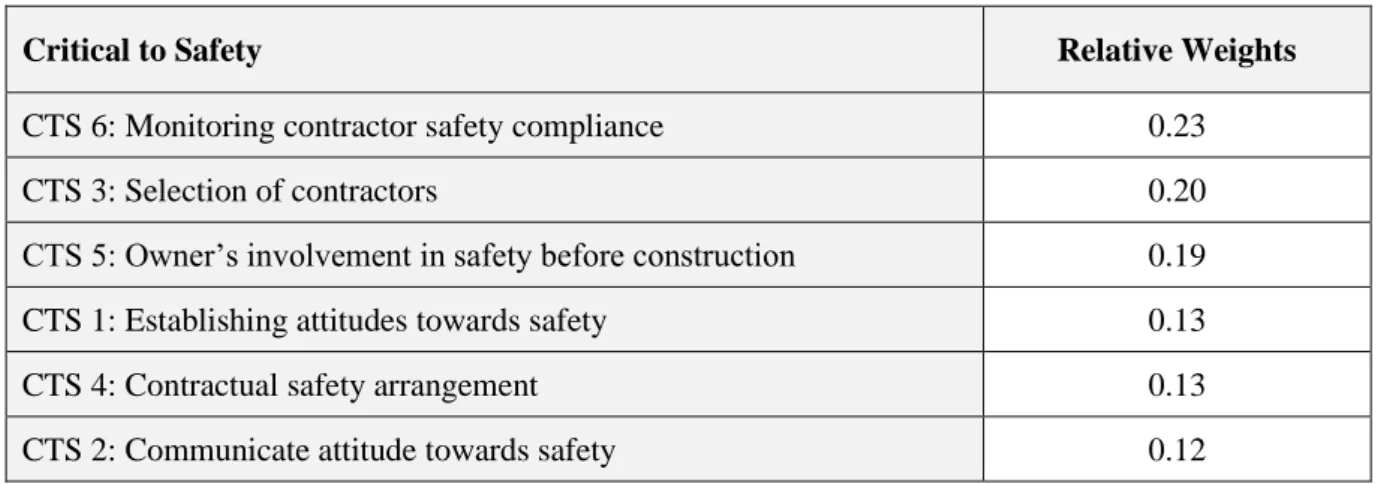
Table 2.2 Opinion of Construction Safety Experts on the Relative Importance of CTS Elements ... 30
Table 2.3 List of Health and Safety Features Derived from Previous Client-Related Studies ... 32
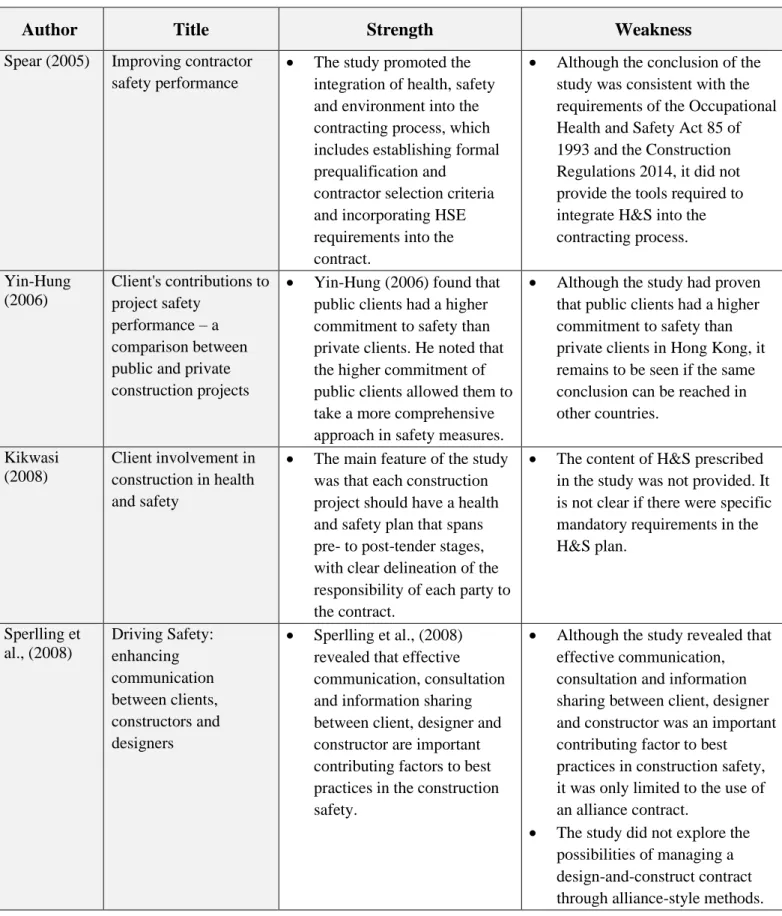
Table 2.4 List of Strengths and Weaknesses of Previous Client-Related Studies ... 37
Table 3.1 Summary of Critical Health and Safety Factors ... 48
Table 4.1 Definitions of the Three Attributes of Reliability ... 76
Table 4.2 Justification of the Methods Used in the Current Study ... 81
Table 5.1 Summary of Description of Various CHSRM Constructs ... 91
Table 5.2 Constructs and Attributes/Indicators ... 93
Table 5.3 The Number of Attributes/Indicators per CTHS ... 95
Table 5.4 Survey Questionnaire ... 96
Table 5.5 First Data Set Rating Scale ... 99
Table 5.6 Survey Instrument (Questionnaire) – First Data Set ... 100
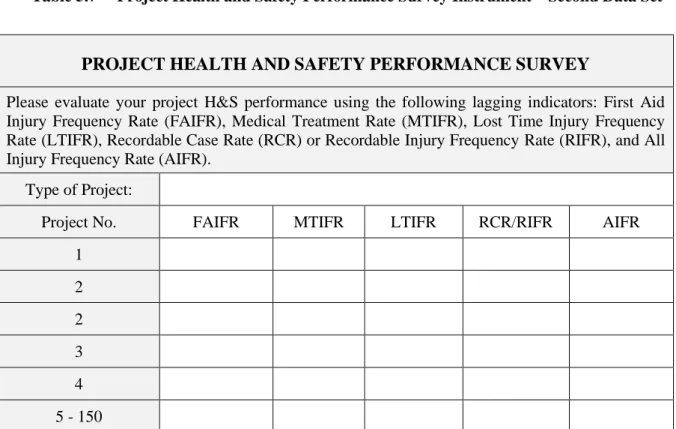
Table 5.7 Project Health and Safety Performance Survey Instrument – Second Data Set ... 107
Table 5.8 Project Health and Safety Performance Likert Scale ... 108
Table 5.9 Instrument for Recording Project Health and Safety Performance ... 109
Table 6.1 Project Demographic and Percentage of Response ... 115
Table 6.2 An Overview of Missing Values for the Current Study ... 116
Table 6.3 Descriptive Statistics of the Constructs and Performance Variables ... 121
Table 6.4 SPSS Output for all Constructs Showing Skewness and Kurtosis ... 126
Table 6.5 Results of Testing of Normality with Kolmogorov-Smirnov and Shapiro-Wilk ... 127
Table 6.6 CTHS1 Survey Results ... 127
Table 6.7 CTHS2 Survey Results ... 128
Table 6.8 CTHS3 Survey Results ... 129
Table 6.9 CTHS4 Survey Results ... 129
Table 6.10 CTHS5 Survey Results ... 130
Table 6.11 CTHS6 Survey Results ... 131
Table 6.12 CTHS7_RCR: Recordable Case Rate ... 132
Table 6.13 Constructs Processing Summary ... 134
Table 6.14 First Output of SPSS Explore: Statistics for Constructs ... 136
Table 6.15 F1_1 Stem-and-Leaf Output Client Attitude towards Health and Safety ... 139
Table 6.17 F3_3 Stem-and-Leaf Plot SPSS Output ... 142
Table 6.18 F4_4 Stem-and-Leaf Plot SPSS Output Showing Outliers and Extreme Values ... 144
Table 6.19 F5_5 Stem-and-Leaf Plot SPSS Output ... 146
Table 6.20 F6_6 Stem-and-Leaf Plot SPSS Output ... 147
Table 6.21 F7_7 Stem-and-Leaf Plot SPSS Output ... 148
Table 6.22 Descriptive Statistics for Data Set without Missing Values ... 150
Table 6.23 Descriptive Statistics for Data Set without Missing Values ... 151
Table 6.24 Results of Kolmogorov-Smirnov and the Shapiro-Wilk Tests ... 151
Table 6.25 KMO and Bartlett's Test for the Current Study ... 152
Table 6.26 Anti-image Matrices for all Constructs ... 153
Table 6.27 Communalities of All Variables ... 155
Table 6.28 Total Variable Explained ... 158
Table 6.29 Pattern Matrix Showing Zero Cross-Loading ... 159
Table 6.30 Results of Reliability Analysis of Factors that were Retained during EFA ... 163
Table 6.31 F7_7 Cronbach's Alpha when Item CTE7.3.1 is Dropped ... 165
Table 6.32 Inter-Constructs Correlation ... 166
Table 6.33 Criteria for Assessing the Measurement Model ... 170
Table 6.34 Reliability of All Constructs from the CFA Process ... 171
Table 6.35 Requirements for Validity ... 172
Table 6.36 Model Validity Measures ... 173
Table 6.37 Model Fit Indices with their Acceptable Thresholds ... 174
Table 6.38 Adopted Model Fit Indices Cut-off Criteria ... 176
Table 6.39 Summary of Measurement Model Fit Indices ... 176
Table 6.40 Model Fit Indices Cut-off Criteria for the Structural Model ... 179
Table 6.41 Model Fit Measures for the Structural Equation Model ... 179
Table 6.42 Structural Model Regression Weights ... 180
Table 6.43 Alternative Structural Model 1 Fit Indices ... 183
Table 6.44 Alternative Structural Model 1 Regression Weights ... 184
Table 6.45 Alternative Structural Model 2 – Model Fit Measures ... 187
Table 6.46 Alternative Structural Model 2 Regression Weights ... 188
Table 6.47 Correlation Analysis of Constructs and Performance Indicators ... 189
Table 6.48 Final Structural Model Constructs Relationships ... 191
Table 6.49 Total Effect Hypotheses Results ... 194
Table 6.50 Indirect Effect Hypotheses Results ... 195
Table 6.51 CHSRM as a Rating Tool ... 198
Table 7.2 Health and Safety Experts Composition by Years of Experience ... 207
Table 7.3 Reliability and Validity Statistics ... 210
Table 7.4 Descriptive Statistics of the Overall Rating of CHSRM by Health and Safety Experts ... 211
Table 7.5 AP1-CHSRM Applicability Rating Results ... 212
Table 7.6 AP2-CHSRM Applicability Rating Results ... 212
Table 7.7 AP3-CHSRM Applicability Rating Results ... 213
Table 7.8 EF1-CHSRM Effectiveness Rating Results ... 214
Table 7.9 EF2-CHSRM Effectiveness Rating Results ... 214
Table 7.10 EF3-CHSRM Effectiveness Rating Results ... 215
Table 7.11 AD1-CHSRM Adaptability Rating Results ... 216
Table 7.12 AD2-CHSRM Adaptability Rating Results ... 216
Table 7.13 AD3-CHSRM Adaptability Rating Results ... 217
Table 7.14 Summary of Comments from CHSA ... 218
Table 7.15 Actions from CHSA Comments ... 218
LIST OF FIGURES
Figure 1.1 Number of Accidents and Lost Time in South Africa Between 2007 and 2017 ... 3
Figure 1.2 Number of Lost Days and Average Cost of Accidents Per Annum in South Africa ... 4
Figure 3.1 Theorised Client-Driven Occupational Health and Safety Model ... 49
Figure 4.1 The Research Process Steps – Adapted from Vincze (2013) ... 52
Figure 4.2 Research Process Onion (Saunders et al., 2012) ... 54
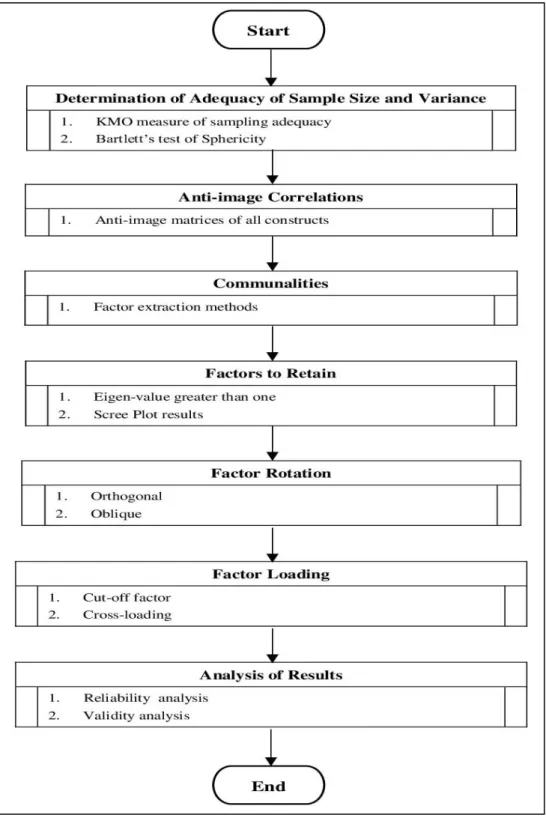
Figure 4.3 EFA Process Flow ... 75
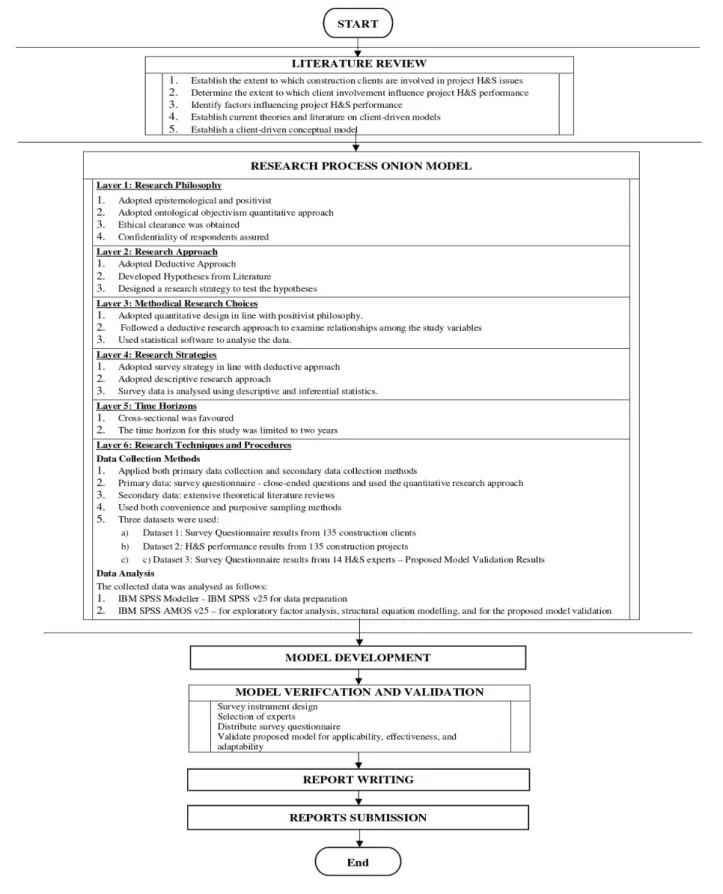
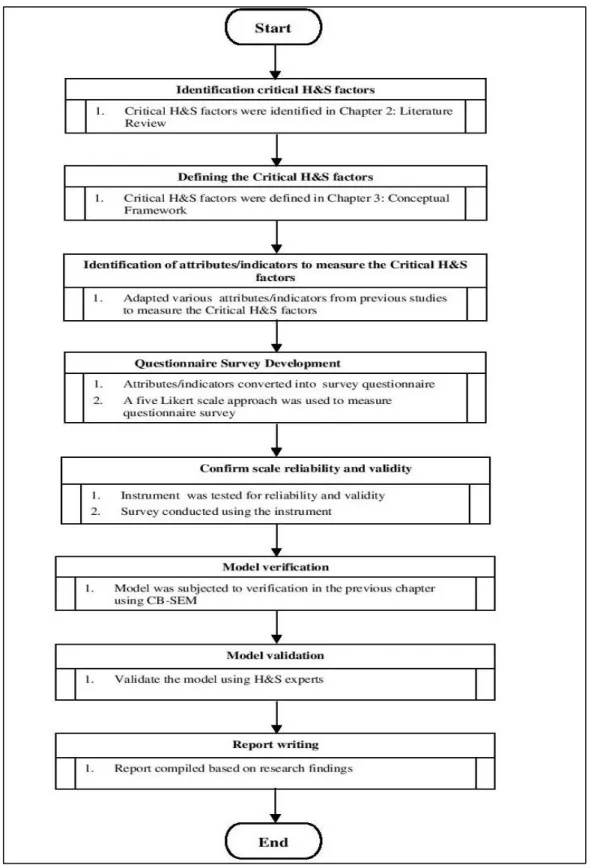
Figure 4.4 Research Process ... 88
Figure 5.1 Model Development Process Steps ... 111
Figure 6.1 CTHS1 Showing Zero Outliers and Zero Extreme Values ... 117
Figure 6.2 CTHS2 Showing Zero Outliers and Zero Extreme Values ... 118
Figure 6.3 CTHS3 Showing Three Outliers and Zero Extreme Values ... 118
Figure 6.4 CTHS4 Showing One Outlier and Zero Extreme Values ... 119
Figure 6.5 CTHS5 Showing Zero Outliers and Zero Extreme Values ... 119
Figure 6.6 CTHS6 Showing Zero Outliers and Zero Extreme Values ... 120
Figure 6.7 CTHS7 Showing Zero Outliers and Zero Extreme Values ... 120
Figure 6.8 CTHS1 is Skewed to the Right ... 122
Figure 6.9 CTHS2 is Slightly Skewed to the Right ... 123
Figure 6.10 CTHS3 is Slightly Normal but is Slightly Skewed to the Right ... 123
Figure 6.11 CTHS4 is Slightly Skewed to the Right ... 124
Figure 6.12 CTHS5 is Slightly Normal but is Slightly Skewed to the Right ... 124
Figure 6.13 CTHS6 is Slightly Normal but is Slightly Skewed to the Right ... 125
Figure 6.14 CTHS7 is Skewed to the Right ... 125
Figure 6.15 F1_1 Boxplot Output with Zero Outliers and Zero Extreme Values ... 140
Figure 6.16 F2_2 Boxplot Output with Zero Outliers and Zero Extreme Values ... 141
Figure 6.17 F3_3 Boxplot Output with Zero Outliers and Zero Extreme Values ... 143
Figure 6.18 F4_4 Boxplot Output with Zero Outliers and Zero Extreme Values ... 145
Figure 6.19 F5_5 Boxplot Output with Zero Outliers and Zero Extreme Values ... 146
Figure 6.20 F6_6 Boxplot Output with Zero Outliers and Zero Extreme Values ... 147
Figure 6.21 F7_7 Boxplot Output with Zero Outliers and Zero Extreme Values ... 149
Figure 6.22 Scree Plot Results from Sixteen Factors Extracted ... 159
Figure 6.23 Hypothetical Model Showing Relationship Between Client Involvement and Project Health and Safety Performance ... 167
Figure 6.25 Structural Model ... 178
Figure 6.26 Alternative Structural Model 1 ... 182
Figure 6.27 Alternative Structural Model 2 ... 186
Figure 6.28 Final Structural Model for the Study ... 192
Figure 6.29 Final Structural Model Interrelationships ... 193
CHAPTER 1 :
RESEARCH BACKGROUND
1.1
Introduction
1.1.1 Challenges in the Construction Industry
The construction industry plays a vital role in the world economy and offers employment to approximately seven per cent of the global work force. According to Nieuwenkamp (2016), construction is estimated to account for approximately thirteen per cent of gross domestic product by 2020. The Construction Industry Development Board (CIDB) Employment Quarter Three Report (Construction Monitor, 2017) states that the construction industry in South Africa accounts for eight per cent of total formal employment and sixteen per cent of total informal employment. The Global Construction 2030 study (Global Construction Perspectives and Oxford Economics, 2015) estimates that the volume of construction output will grow by eighty-five per cent to $15.5 trillion worldwide by 2030 – with three countries(China, the United States of America (USA) and India) – leading the way and accounting for fifty-seven per cent of all global growth. This indicates an average global construction growth of approximately four per cent per annum to 2030.
The construction industry is one of the sectors that creates the most employment opportunities for unskilled and semi-skilled workers from impoverished local communities due to its relatively labour-intensive nature (Phoya, 2012). According to the Construction Industry Development Board (CIDB) Employment Quarter Three Report (Construction Monitor, 2017), around seventy per cent of labour employed in the industry in South Africa, is unskilled or semi-skilled. The construction industry is the driving force behind the economic growth due to its operations having an impact on most sectors of the economy (Oladinrin, Ogunsemi and Aje, 2012). In addition, it contributes indirectly to employment creation in other sectors as most materials used are sourced from these sectors of the economy (Ngandu, Garcia and Arndt, 2010).
Notwithstanding its important role and contribution to economic growth, the construction industry remains a risky sector where the most vulnerable (unskilled and semi-skilled) workers are continually involved in serious construction accidents. Although there were interventions by various stakeholders to deal with this problem, the results remain unacceptable as accidents continue to persist in the construction industry.
Despite the programmes implemented by government authorities and other relevant stakeholders to improve the standard of health and safety (H&S) at construction project sites, the construction industry in South Africa still has an unacceptably high level of incident rates. This causes extensive human suffering – and despite measures introduced by the contractors themselves, construction workers continue to be fatally injured and exposed to occupational health hazards (Lopes, Haupt and Fester, 2011). A study by Saïdani (2012) has found that developing countries have a very high number of construction-related fatalities and the construction industry in these countries continues to lag behind most other industries in this regard.
In South Africa, between 2007 and 2017, the records of the Federated Employers Mutual Assurance (FEMA) indicated that 153,780 incidents occurred. These incidents resulted in 1 316 fatalities, 8 870 permanent disabilities not resulting in a pension, 650 permanent disabilities resulting in a pension and 1 560 687 lost workdays (Figure 1.1). On average, this indicates an accident frequency rate of 3.9 and seventy-three fatal incidents per annum. In the same period, the average cost of accidents per year increased from R8 137 in 2000 to R32 794 in 2017 (Figure 1.2). It must be noted, however, that the accuracy of these statistics remains questionable, as it does not include the construction sector covered by the Department of Labour (DoL) Compensation Commissioner.
Source: Data provided by FEMA
Source: Data provided by FEMA
1.1.2 Efforts to Improve Health and Safety in the Construction Industry
Despite significant efforts by industry associations, researchers, construction clients and contractors to improve H&S in the construction industry, overall construction H&S performance has not improved and continues to contribute an unacceptably high level of injuries and fatalities. The construction industry continually fails to comply with construction regulations (CR 2014) in South Africa. To address the unacceptably high level of incident rates in the construction industry, many countries have developed laws and regulations that govern the processes in which construction clients must manage H&S on construction sites. Client influence in construction projects has been cited by numerous researchers as a lasting solution for reducing the number of H&S accidents on sites.
Huang (2003) stated that there is a legal and moral responsibility on owners to ensure that their contractors comply with H&S requirements. From the construction process perspective, there are three key issues that affect the project owner (The Hartford Loss Control Department, 2002) namely, moral obligation, legal obligation and potential cost savings. In terms moral obligation, employers are generally expected to provide and maintain a safe working environment that is without risk to the health of employees. This moral obligation goes beyond the employees of contractors and includes other stakeholders. In terms of legal obligation employers have a duty to inform and warn their employees, contractors and other stakeholders about any potential hazardous situation on sites. The clients could be held liable for injuries to any of the project stakeholders caused by their failure to enforce strict H&S requirements on a site that is under their control. In terms of potential cost savings, any effort shown by clients for H&S on site has the potential to bring down construction costs as the number of injuries reduce.
1.1.3 Legislative Framework
Globally, health and safety regulations have been developed to be observed by employers and contractors. Construction clients are required by labour departments to enforce H&S requirements in respect of contractors; therefore, contractors persevere in implementing H&S measures on site to avoid being liable for injuries arising from failure to adhere to legal and other requirements (van Heerden, Musonda and Okoro, 2018).
In South Africa, the Construction Regulation (CR) 2014 imposes a clear obligation on all stakeholders. According to Smallwood, Haupt and Shakantu (2009), the CR 2014 has redirected the duties for H&S from the contractors only, to include all stakeholders (including the end user). In the United Kingdom
(UK), Construction Design and Management (CDM) 2015 identifies the client as a major influencer over the way a project is procured and managed. In terms of CDM 2015, it requires clients to appoint contractors and designers that can demonstrate capability in term skills, experience and knowledge of the work that they are being employed to execute. In terms of the process, safety standards the USA, construction clients are obligated to be more involved in H&S on project sites (Hartford Loss Control Department, 2002). According to Lurie, Ilchert, MacDonnell and Ryan (2017), New York’s workplace safety laws require construction clients and contractors to follow H&S regulations and to provide workers with Personal Protective Equipment (PPE).
Throughout the world, most countries have adopted standard forms of contract – for engineering and construction works contracts – as a standard uniformity for construction procurement. In this country, although these standard forms of contract make explicit (or implicit) reference to the fact that the forms of contract are subject to the laws of the land and therefore to South African legislation impacting on construction H&S, they lack direct references to CR 2014 (Smallwood et al., 2009).
Smallwood et al. (2009) argue that there is scope for the standard form contracts to include a more direct reference to construction H&S, construction regulations and the obligations of contractors, as well as providing for additional client-driven H&S requirements. Mzyece, Ndekugri, Ankrah and Hammond (2012) examined H&S contractual provisions in four standard form contracts that are widely used in the UK construction industry. Mzyece et al., (2012) compared the H&S contractual provisions with key features of the Construction (Design and Management) Regulations 2007 (CDM 2007) with a standard form of contracts, and concluded that there is a need for greater clarity and uniformity in standard form contracts – particularly in the area of H&S.
Haywood (2004) noted that H&S culture starts when the client decides to embark on a construction project. H&S performance can only be realised by the active involvement of construction clients throughout all of the project phases (Haywood, 2004) Client influences in driving H&S is important when compared to legal and regulatory influences (Diugwu and Baba, 2014). Diugwu and Baba (2014) point out that if construction clients assume the responsibility of controlling and coordinating H&S improvement programmes, the potential of achieving effective H&S programmes on sites can be realised. This is due to the clients being the final decision-makers in the supply chain process.
1.1.4 Influence of Clients on Project Health and Safety Performance
Jazayeri and Dadi (2017) revealed that various researchers have conducted studies in the construction industry on client influence on construction project H&S performance, identifying factors causing poor performance in construction projects and critical success factors influencing safe programme implementation.
Musonda, Pretorius and Haupt (2012) investigated the influence of clients on construction project H&S performance in Botswana and South Africa. The findings of the study were that H&S performance was better when factors associated with client health and safety culture were observed. Musonda et al., (2012) argued that in most instances the role of construction clients is ignored by researchers as they place most of the emphasis on contractors. A study by Huang and Hinze (2006: 171) found that H&S performance is improved when construction clients strictly enforce H&S compliance for contractors.
Liu, Jazayeri and Dadi (2017) conducted a study to evaluate the degree to which owners are involved in site safety issues. They developed a model – Owner’s Role Rating Model (ORRM) – to test the extent to which construction clients participate in health and safety and presented a survey instrument to assess the level of participation by owners in site safety management. Liu et al., (2017) conducted an evaluation of twenty projects by using ORRM to verify its applicability in the construction environment; the study concluded that owners with little involvement in construction projects could use the ORRM to identify the critical points for better performance.
1.2
Problem Statement
Although there is consensus amongst researchers that client participation throughout the phases of construction projects can lead to improvements in the H&S performance of these projects, very few studies have developed models to assist the industry to improve health and safety in this area. Lack of effective participation of clients in health and safety has left the construction industry with a very high number of accidents every day, resulting in medical treatment cases, lost time incidents, fatalities and damage to property that occur on construction sites.
While previous studies provided various ways on how construction clients could improve the H&S performance of construction projects, few studies have produced models that can be used as a framework to assess clients overall performance and which could help identify gaps that construction clients can focus on to improve performance in health and safety.
This study builds on Liu et al., (2017) and uses an alternative method to develop a model, the Client-Driven Health and Safety Rating Model (CHSRM), aimed at assisting clients to influence contractors in improving the health and safety performance of construction projects effectively. Contrary to Liu et al., (2017), the study was conducted in a developing country where the maturity of the health and safety culture lags when compared to the developed country where the survey was conducted. Structural Equation Modelling (SEM) was applied in displaying how clients could assist contractors to improve H&S performance on project sites.
To avoid compromising (and to verify the effectiveness and efficiency of the model), a sample size of 135 construction projects was used to represent the general situation in the construction industry. Additional Critical to Expectations (CTE) elements were added to ensure that the model covers all legal requirements and does not produce inaccurate results. Further, the study included all types of construction projects so that a comparative analysis between different project categories could generate constructive and insightful results.
Contrary to Liu et al., (2017), the study used various H&S performance indicators, including First Aid Incident Frequency Rate (FAIFR), Medical Treatment Incident Frequency Rate (MTIFR), lost time Incident Frequency Rate (LTIFR) and Recordable Case Rate (RCR) (also known as Recordable Incident Frequency Rate (RIFR). Furthermore, this study analysed the extent to which construction clients use leading indicators to prevent unfavourable events before they occur.
1.3
Research Questions
To address the purpose of the study, the following research questions were developed:
• Does the attitude of construction clients towards health and safety influence project health and safety performance?
• To what extent do communication attitudes of construction clients towards health and safety lead to improvements in health and safety performance?
• To what extent do construction clients select contractors based on a proven health and safety track record?
• To what extent do health and safety arrangements of construction clients stipulate the health and safety duties for all participants on the construction project?
• How involved are construction clients in health and safety before construction?
• Is there a relationship between involvement of clients in construction health and safety processes and overall project health and safety performance?
1.4
Research Objectives
The key objectives of this study were to provide answers to the research questions and to the hypothesis. Study objectives are to:
• investigate the impact of the attitude of clients towards H&S and project H&S performance
• to establish whether the ability of clients to communicate H&S requirements lead to better project H&S performance
• establish if there is a relationship between selecting contractors based on their historical H&S performance and improvement in project H&S
• establish whether stipulating H&S requirements in the contract enhances compliance to H&S by contractors
• establish whether client involvement before and during construction leads to better project H&S performance
• establish whether the extent to which clients monitor the H&S compliance of contractors leads to improvement project H&S
• develop, verify and validate a client-driven H&S model for measuring health and safety performance of construction projects in South Africa
1.5
Hypotheses
Based on the conclusions made by previous studies (that client involvement in all phases of the construction project could lead to improvements in the health and safety performance of construction projects), the following hypotheses were tested by this study:
H1: The attitude of construction clients towards H&S has direct influence on project H&S
performance.
H2: The ability of clients to communicate their H&S requirements could directly improve project
H3: Selection of contractors by construction clients based on proven H&S track records could lead
to improved project H&S performance.
H4: Stipulation of H&S duties for all participants on the construction project by construction clients
in the contractual arrangement could improve project H&S performance.
H5: Involvement of construction clients before and during construction directly improves project
H&S performance.
H6: Monitoring of contractor H&S compliance by construction clients could directly improve the
project H&S.
1.6
Research Methodology
For the purpose of this study, the target population includes construction clients of building, housing, civil construction, petrochemicals, roads and earthworks, and structural, mechanical, electrical, instrumentation, piping and platework (SMEIPP). The data was gathered directly from clients, professionals representing client health and safety agents, construction managers, construction health and safety managers and officers.
A thorough and extensive literature review was conducted to identify critical health and safety elements that could be applied by construction clients to improve project health and safety performance. A list of Critical to Safety (CTS) factors, Critical to Expectation (CTE) elements and measurements were developed from previous studies. SEM was used to analyse the structural relationship between measured variables (CTEs) and latent constructs (CTS). Statistical Package for the Social Sciences Analysis of Moment Structures Version 25 (SPSS AMOS) was used in the structural equation modelling and path analysis and in the confirmatory factor analysis of the study.
A survey instrument adapted from the ORRM developed by Liu et al., (2017) was adopted to measure the extent to which construction clients are involved in their own construction projects. A total of 135 projects, with a value of more than R40 million, were targeted for this study.
The study was limited to construction projects that started during the period 2014 – 2017 and excluded projects that involve maintenance work. Descriptive statistical methods (SPSS AMOS) of analysis were
used to analyse the collected data to achieve the objectives of the study. Data from the 135 construction projects was used to validate the effectiveness and efficiency of the proposed model.
1.7
Research Scope and Limitations
The scope of data gathering for the study was limited to the Republic of South Africa (RSA). The study was limited to a sample size of 135 construction clients and 135 large construction projects that were implemented from 2014 – 2017. For the construction project to be considered, its value needed to be R40 million or more and was not to be managed by the same health and safety agent. Construction projects performed in the mining sector were excluded from the study. (The mining sector operates under the Mining Act and construction projects outside of the mining environment operate under the Construction Regulation (CR 2014)).
The study focussed on the extent to which construction clients were involved in the health and safety of construction projects. An analysis between the variables, involvement of construction clients in the projects, and health and safety performance was established through structural equation modelling using SPSS AMOS software.
1.8
Assumptions
The following assumptions were made:
• The selected projects used for the study were not managed by the same client or client health and safety agent.
• All parties involved in the selected projects were construction professionals who were aware of all project procedures, processes, and had full access to the project information for the project that they were working on.
• All construction professionals were knowledgeable and capable of answering the questionnaire without any difficulty, using the survey instrument provided.
• All questionnaires were completed honestly and were a true reflection of what was happening on site.
• Clients were actively involved in the health and safety of construction projects.
• Project health and safety performance influenced the active involvement of construction clients.
1.9
Contributions of the Findings to Knowledge
Few studies have developed models to assist the construction industry in improving health and safety of construction projects. The study provides a framework for gaining a deeper understanding of factors that influence the health and safety performance of construction projects. It identified key areas of improvements that can only be influenced by effective involvement of construction clients. It was hypothesised that the attitude of clients towards health and safety, their communication attitude towards health and safety, selection of contractors, involvement of clients before and during construction, contractual health and safety arrangement and monitoring of health and safety performance of contractors have a direct influence on project health and safety performance. These hypotheses were tested and verified using CB-SEM. Contrary to the findings of previous studies, the final CB-SEM results suggested that the contractual health and safety arrangement is the only construct that has a direct effect on project H&S performance.
Mediation hypotheses was performed and revealed that the attitude, communication and selection of contractors based on their historical health and safety have an indirect effect of project H&S performance. The final model was validated by CHS experts, who were asked to review the proposed model and to rate the degree to which they agreed/disagreed with the statements that described the proposed model in terms of its applicability, effectiveness and adaptability in the construction industry. The key finding was that CHSRM was acceptable.
The study highlighted the urgent need for all stakeholders to work together in the interest of improving health and safety performance on construction sites. The research contributed to knowledge by deepening the understanding of the critical elements to H&S beyond those considered in previous studies. The significance of this is that critical H&S factors that must be taken into consideration by construction clients during the construction process have been identified. It has highlighted to construction the urgent need to change the traditional mind-set that health and safety is the responsibility of construction contractors only.
1.10
Ethical Considerations during the Study
Strict ethical principles were observed in this study by ensuring that respondents understood that they would withdraw from participation if they felt that they were not in agreement with the direction of the study. Participants were informed of their rights to withdraw from the study at any stage. The participants were asked to participate voluntarily in the study, and they were assured that their participation or
information they provided was not going be used against them. Names of participants were not included so that anonymity was maintained. Confidentiality was ensured by excluding the names of companies, project names, project-specific locations and project price.
1.11
Structure of the Study
The structure of this dissertation consists of nine chapters. The establishment of the CHSRM and the empirical validation are both presented in a structured manner.
1.11.1 Chapter 1: Research Background
This chapter introduces the background, problem statement and overview of this research – including research motivations, purposes, scope and methodology.
1.11.2 Chapter 2: Literature Review
This chapter presents the preparation work for the in-depth exploration of the main research objective – that primarily includes the collection and summary of previous relevant studies through an extensive literature review of existing client-related H&S models. A comparative analysis of a client-driven health and safety model is conducted, and theoretical issues related to H&S models are discussed.
1.11.3 Chapter 3: Conceptual Framework
This chapter presents the conceptual model of the research. The conceptual model is described and the key concepts that constitute the building blocks of the conceptual model are explored.
1.11.4 Chapter 4: Research Methodology
This chapter presents a methodology that explains the data-collection process, analysis procedures and methods that were applied during the research.
1.11.5 Chapter 5: Client-Driven Health and Safety Model Development
This chapter presents a detailed description of the model development process. The process followed in developing the measurement instrument used to assess the constructs is presented. A description of the measurement instruments, measurement items, and the choice of the selected measurement scale are presented. The Critical to Health and Safety (CTHS) factors and their attributes/indicators are explained. The final CHSRM is presented.
1.11.6 Chapter 6: Survey Questionnaire Results
This chapter presents the research findings. The research findings and analysis of the extent to which hypothesised multiple factors driven by a client are acting concurrently, and by their combined influence lead to improvement in the project H&S performance are discussed.
1.11.7 Chapter 7: Model Validation Results
This chapter presents the results, analysis and empirical validation of the proposed model by H&S experts. The validation process was undertaken to ensure that the proposed model was built correctly and to check whether it meets the actual requirements of the construction industry.
1.11.8 Chapter 8: Discussion of the Overall Research Results
This chapter discusses the research results and the extent to which research objectives and hypotheses have been met. The validity of the developed client-driven occupational health and safety measurement model is presented.
1.11.9 Chapter 9: Conclusion and Recommendation
This chapter discusses the research findings in detail and presents the overall conclusion of the study, recommendations, contribution to knowledge and suggestions for future research.
1.12
Chapter Summary
This chapter outlines the research background, problem statement, research questions and objectives. The role played by the construction industry in the world economy and the challenges facing the construction industry are discussed. The scope and limitations of the study are outlined. The contribution and justification of the study are also explained. The chapter concludes by summarising the structure of the dissertation report. The next chapter discusses the review of literature.
CHAPTER 2 :
LITERATURE REVIEW
2.1
Introduction
This chapter presents the preparatory work for the in-depth exploration of the main research objective; it primarily includes the collection and summary of previous relevant studies through an extensive literature review of existing models. The health and safety roles and responsibilities of major participants in construction projects and theoretical issues related to the H&S client improvement models are discussed. A comparative analysis of client-related health and safety studies is conducted.
2.2
Health and Safety Roles and Responsibilities
The construction industry plays an important role in the development of the South African economy. Regardless of its vital role and contribution to economic growth, the level of incident rates in the South Africa construction industry remain unsatisfactory, requiring the participation of all stakeholders to improve health and safety performance (Smallwood, 1999). The lack of H&S compliance does not only affect contractors, but the sustainability of the country as whole (Smallwood, 1999). According Smallwood (2004) the negative health and safety performance by contractors also has an impact on customer satisfaction.
Various stakeholders (including clients, designers, principal contractors, subcontractors, suppliers, employees and government agencies), participate during the construction phases of the project (Xiaohua et al., 2017). According to Xiaohua et al., (2017), although they may have different approaches of how to mitigate health and safety risks, these stakeholders have the ability to ensure that improvement in this area is not compromised on site. A study by Heravi, Coffey and Trigunarsyah (2015) found that clients, designers and project managers were the only stakeholders that were heavily involved with project planning while contractors were left out. An earlier study by Kumaraswamy and Wong (2014), also found contractors, subcontractors and suppliers only focussed on project completion to satisfy the clients.
Donkoh and Aboagye-Nimo (2017) explored the role of stakeholders in improving Ghana’s construction safety through a qualitative study. The study uncovered lapses in regulations currently being used in Ghana regarding workplace health and safety – particularly in construction. It was found that the current laws do not adequately ensure effective health and safety in the construction industry. Donkoh and Aboagye-Nimo (2017) argue that collaboration between all parties involved in the process is essential;
and that potential contractors must be encouraged to participate and contribute during the design phase to improve overall project safety.
In South Africa, a clear obligation to all parties is imposed by the Construction Regulation 2014 on construction projects and owners of assets – clients, their agent, the designers, the principal contractors, contractors, and owners of the structure. According to Smallwood, Haupt and Shakantu (2009), CR 2014 has redistributed responsibility for construction health and safety away from the contractor (who was previously solely responsible) to include all participants in the construction process – from the client through to the final end user. Table 2.1 (below) provides a summary of the duties of the key participants in construction projects:
Construction Stakeholder
Duties
Client • prepare a baseline risk assessment for the intended construction project
• prepare suitable, sufficiently documented and coherent site-specific health and safety specifications based on the baseline risk assessment
• provide the designer with the health and safety specification
• ensure that the designer takes safety specification into consideration during the design stage
• ensure that the designer carries out all responsibilities in construction regulation six
• include the safety specification in the tender documents
• inspect the site at least once in every thirty days
• issue a copy of the safety audit report to the principal contractor within seven days of the audit
• ensure that the contractor reports any on site fatality or permanent disabling injury to DoL and that the report includes measures taken by the contractor to make the site safer
• where more than one principal contractor is appointed, the client must ensure cooperation between contractors
• The client may appoint a competent person as the agent where
notification other than the Construction Work Permit application to DoL is required (i.e. under CR 4(1).
Client Health and Safety Agent
• assume responsibility for legal safety obligations of the client
• agent must manage on site health and safety for the client
• agent must be registered with the South African Council for Project and Construction Management Professions (SACPCMP)
Designer • incorporate all applicable safety standards into design
• take health and safety specifications into consideration
• in a report and before a tender, make available to the client:
➢ all health and safety information of the design that may affect pricing of the construction work
➢ the geotechnical-science aspects
➢ the loading that the structure can withstand
• inform the client in writing of any anticipated dangers or hazards relating to construction, and make available all information for safe execution of work during design or during design alterations
• exclude dangerous procedures or materials which are hazardous to people
When mandated by the client:
• carry out inspections at appropriate stages to verify construction is carried out, as per design
• stop works not in accordance with health and safety aspects of design
• in final inspection of completed structure, include health and safety aspects, declare structure safe for use, and issue completion certificate
• take ergonomic-related hazards into account in the design Designer of
Temporary Works
• ensure all temporary works are adequately designed so that they are capable of supporting all of the anticipated vertical and lateral loads that may be applied
• the designs of temporary works are done with close reference to the structural design drawings issued by the contractor – and in the event of uncertainty the contractor is consulted
• all drawings and calculations pertaining to the design of temporary works are kept at the office of the temporary works designer and are made available on request by an inspector
• the loads caused by the temporary works and any imposed loads are clearly indicated in the design
Principal Contractor • provide and demonstrate to the client a suitable, sufficiently documented and coherent site-specific health and safety plan
• a health and safety file opened and kept on site
• on appointing any other contractor, to ensure compliance with the provisions of the Act No 85 of 1993:
➢ provide those contractors who tender to perform construction work for the principal contractor with relevant sections of the health and safety specifications contemplated in regulation 5(1)(b) pertaining to the construction work required
➢ ensure that potential contractors submitting tenders have made sufficient provision for health and safety measures during the construction process
➢ ensure that no contractor is appointed to perform construction work unless the principal contractor is reasonably satisfied that the contractor to be appointed has the necessary competencies and resources to perform the construction work safely
➢ prior to work commencing on the site, ensure that every contractor is registered and in good standing with the compensation fund or with a licensed compensation insurer as contemplated in the Compensation for Occupational Injuries and Diseases Act, 1993
➢ appoint each contractor in writing for the part of the project for the contractors are that he will be working in the construction site ➢ take reasonable steps to ensure that the health and safety plan of each
contractor contemplated in sub-regulation (2)(a) is implemented and maintained on the construction site
➢ ensure that the periodic site audits and document verification are conducted at intervals mutually agreed on between the principal contractor and any contractor – and at least once in every thirty days
➢ stop any contractor from executing construction work that is not in accordance with the health and safety specifications of the client and the health and safety plan of the principal contractor for the site, or which poses a threat to the health and safety of persons
➢ where changes are brought about to the design and construction, make available sufficient health and safety information and appropriate resources to the contractor to execute the work safely ➢ discuss and negotiate with the contractor the contents of the health
and safety plan contemplated in sub-regulation 7(1)
Contractor • provide and demonstrate a suitable and sufficiently documented health and safety plan to the principal contractor
• review and update the health and safety plan as the work progresses
• open and keep a health and safety file (which must include all
documentation required in terms of the Act and these Regulations (OHS Act No. 85 of 1993 and Regulations) on site
• before appointing another contractor to perform construction work, be reasonably satisfied that the contractor to be appointed has the necessary competencies and resources to perform the construction work safely
• cooperate with the principal contractor as necessary to enable them to comply with the provisions of the Act
• as far as is reasonably practicable, provide the principal contractor with any information promptly that might affect the health and safety of any person at work carrying out construction work on the site, any person who might be affected by the work of such a person on site, or which might justify a review of the health and safety plan
• where a contractor appoints another contractor to perform construction work, the duties determined in sub-regulation (1)(b) to (g) that apply to the principal contractor apply to the contractor, as if he or she were the principal contractor
• a principal contractor must take reasonable steps to ensure cooperation between all contractors appointed by the principal contractor, to enable each of those contractors to comply with the required regulations
• no contractor may allow any employee or person to enter any site, unless they have undergone health and safety induction training pertaining to the hazards prevalent on the site at the time of entry
• a contractor must ensure that all visitors to a construction site undergo health and safety induction pertaining to the hazards prevalent on the site, and must ensure that such visitors have the necessary personal protective equipment
• a contractor must, at all times, keep records of the health and safety induction training contemplated in sub-regulation (6) on their
construction site, and such records must be made available on request to an inspector, the client, their agent or the principal contractor
• a contractor must ensure that all their employees have a valid medical certificate of fitness specific to the construction work to be performed (this must be issued by an occupational health practitioner)
2.3
Review of Previous Client-Related Studies
A review of literature was conducted using available frameworks, models and studies that have been developed to improve the health and safety performance of construction projects from the perspective of construction industry clients. The results are discussed in the following subsection.
2.3.1 Safety Responsibilities of Owners
Chunxianga (2012) considers how owners could assume safety responsibilities with a focus on safety management, and presents a model that suggests ways in which the owner can assume safety responsibilities by assisting contractors to concentrate on:
• safety management
• competitive bidding
• construction period
• construction budget
• clarification of safety requirements
• subcontracting
• safety production margin system
Emphasis is placed on the owner promoting the establishment and improvement of a safety production margin system. This system was adopted in areas where conditions permit. The owner is required to deposit the safety cost into the designated bank account (as the production safety margin); this is used for safety production work, solutions in relation to safety production accidents and reward and punishment for safety production.
Although the model recommends that higher legal standards should be set for public work to promote and develop construction industry safety and health, its application at a wider community level could have limitations due to the nature of contracts that dictate how costs incurred on construction projects must be paid.
2.3.2 Improving Contractor Health and Safety Performance
Spear (2005) argues that successful contracting management requires the involvement of various owners and contractor representatives. Key to improving Health, Safety and Environment (HSE) performance, according to them, is the integration of these into the contracting process; this includes establishing formal prequalification and contractor selection criteria and incorporating HSE requirements into the contract.
Spear (2005) maintains that since designing and planning with construction safety in mind provides the greatest opportunity to minimise incidents in the field, formal HSE reviews should be performed during the design and planning phases of the project. He further proposes that the performance of the contractor should be evaluated during, and on completion of the project – not only to provide feedback to the contractor so they can work to improve their performance as needed, but also to determine if the contractor should be considered for future projects. The main features of the study are:
• prequalification and selection of contractors
• planning of design
• assessing and verification of work in progress
The conclusion of the Spear (2005) study is consistent with the requirements of the Occupational Health and Safety Act 85 of 1993 and the Construction Regulations 2014.
2.3.3 Enhancing Health and Safety Communication
The theory behind the framework of Sperlling et al., (2008), is that it seeks to develop a guide to best practice for safer construction in the Australian construction industry, investigates the communication relationship between the client, designer and constructor, and identifies the conditions under which effective communication takes place (Sperlling et al., 2008). It is based on the idea that if there is effective communication between the client, designer and constructor, excellence in occupational health and safety can be easily achieved.
Sperlling et al., (2008) revealed that effective communication, consultation and information sharing between client, designer and constructor was an important contributing factor to best practice in construction safety. According to Sperlling et al., (2008), the following strategies can improve communication between the client, designer and constructor:
• collaborative engagement of all stakeholders
• face-to-face engagement
• ensuring effective communication
• an open-door policy
• ensuring an overlap between the design and construction aspects
• alliance contracting
• top-down management approach
• feedback to designers
Although the study by Sperlling et al., (2008) revealed that effective communication, consultation and information sharing between client, designer and constructor was an important contributing factor to best practice in construction safety, it was only limited to the use of an alliance contract. The study did not explore the possibilities of managing a design-and-construct contract through alliance-style methods.
2.3.4 Engineer Health and Safety Risks on Site
The American Council of Engineering Companies of Massachusetts (ACEC/MA) Risk Management Forum (2014) explains that project participants (owner, design professional and contractor), for the construction site have been well established in contracts and case law. ACEC/MA (2014) argues that as
contractors assume control of the site, they become strictly liable for any injuries sustained by workers or other parties on the site. ACEC/MA