W&M ScholarWorks
W&M ScholarWorks
Dissertations, Theses, and Masters Projects Theses, Dissertations, & Master Projects 2019Student Interactions, Connectedness, and Retention in an Online
Student Interactions, Connectedness, and Retention in an Online
MBA Program: An Exploratory Study
MBA Program: An Exploratory Study
Karen G. ConnerWilliam & Mary - School of Education, [email protected]
Follow this and additional works at: https://scholarworks.wm.edu/etd
Part of the Business Administration, Management, and Operations Commons
Recommended Citation Recommended Citation
Conner, Karen G., "Student Interactions, Connectedness, and Retention in an Online MBA Program: An Exploratory Study" (2019). Dissertations, Theses, and Masters Projects. Paper 1563898859.
http://dx.doi.org/10.25774/w4-13ec-zg09
This Dissertation is brought to you for free and open access by the Theses, Dissertations, & Master Projects at W&M ScholarWorks. It has been accepted for inclusion in Dissertations, Theses, and Masters Projects by an authorized administrator of W&M ScholarWorks. For more information, please contact [email protected].
STUDENT INTERACTIONS, CONNECTEDNESS, AND RETENTION IN AN ONLINE MBA PROGRAM: AN EXPLORATORY STUDY
___________________________________
A Dissertation Presented to
The Faculty of the School of Education The College of William and Mary in Virginia
___________________________________
In Partial Fulfillment
Of the Requirements for the Degree Doctor of Philosophy
___________________________________
by Karen G. Conner
STUDENT INTERACTIONS, CONNECTEDNESS, AND RETENTION IN AN ONLINE MBA PROGRAM: AN EXPLORATORY STUDY
By Karen G. Conner ___________________________________ Approved February 2019 by _______________________________________ James P. Barber, Ph.D. Chairperson of Committee Associate Professor of Education College of William & Mary
_______________________________________ David M. Long, Ph.D.
Committee Member
Associate Professor, Raymond A. Mason School of Business College of William & Mary
_______________________________________ Eugene A. Roche, Ed.D.
Committee Member
Executive Professor of Education College of William & Mary
Dedication
In loving memory and in honor of my wonderful parents who instilled in me a strong work ethic and the value of education. Thank you. I miss you dearly. I hope I have made you proud.
Table of Contents
Acknowledgments ... xi
List of Tables ... xiii
List of Figures ... xiv
Abstract ... xv
Chapter One ... 2
Problem Statement ... 3
Conceptual Framework ... 4
Research Questions ... 5
Significance of the Study ... 6
Definition of Terms ... 7
Conclusion ... 9
Chapter Two: Review of Literature ... 11
Social Constructivist Theory ... 11
Social presence ... 12
Community of inquiry ... 13
Professional networking and communities of practice ... 15
Interactions: Quality and type ... 15
Online student connectedness ... 18
Adult Learning Theories and Working Professionals ... 20
Course design ... 20
Related Theories: Social Network, Student Engagement, and Connectivism ... 21
Conclusion ... 22
Chapter Three: Method ... 24
Research Questions ... 24
Study Design ... 25
Participants ... 25
Data sources ... 28
Online Student Connectedness Survey (OSCS) ... 28
Qualitative interview protocol ... 30
Document analysis and faculty interviews ... 31
Data collection ... 32
Data analysis ... 34
Coding ... 36
Research Questions, Sources, and Analyses ... 40
Mixed methods ... 40
Ethical Considerations ... 41
Assumptions, Delimitations, and Limitations ... 42
Positionality ... 43
Conclusion ... 44
Chapter Four: Findings ... 45
Survey Findings and Participant Selection ... 45
Anita ... 53 B.J. ... 54 Bob ... 55 Clint ... 56 Fred ... 57 Hunter ... 59 Jennifer ... 60 Jessica ... 62 Justin ... 63 Tony ... 64 Professor Linda ... 64 Professor Oscar ... 66 Professor Robert ... 67 Professor Wally ... 68
RQ1: To What Extent Do Current Students and Did Alumni Feel Connected in Their Online MBA Program at William & Mary? ... 70
RQ2: What Were the Students’ Experiences of Connectedness and the Quality of Those Connections? ... 71
Connectedness - RQ2a: What in the students’ experience of those learning activities were consequential to them that made them feel connected? ... 71
Faculty responses ... 73
Community ... 75
Interaction and collaboration within the coursework ... 75
Connecting outside of coursework ... 78
Collaborative work and learning activities - RQ2b: How and to what extent did collaborative work and other learning activities influence student connectedness in the Online MBA Program? ... 81
Facilitation of learning ... 81
Structure of collaborative work ... 81
Instructor presence and responsiveness ... 83
Interaction and collaboration ... 86
High-quality interactions ... 90
Low-quality interactions ... 91
Retention - RQ2c: How and to what extent did opportunities for students and/or alumni to connect with others in the program influence their intention to persist in a course or the program? ... 95
Summary ... 98
Chapter Five: Interpretation of Findings ... 100
Overview of the Study ... 100
RQ1: To what extent do current students and did alumni feel connected in their
Online MBA Program at William & Mary? ... 103
RQ2: What were the students’ experiences of connectedness and the quality of those connections? ... 103
Connectedness - RQ2a: What in the students’ experience of those learning activities were consequential to them that made them feel connected? ... 103
Collaborative work and learning activities - RQ2b: How and to what extent did collaborative work and other learning activities influence student connectedness in the Online MBA Program? ... 105
Retention - RQ2c: How and to what extent did opportunities for students and/or alumni to connect with others in the program influence their intention to persist in a course or the program? ... 107
Interpretation of the Findings ... 108
Comfort and community in promoting connectedness ... 109
Collaborative work and its structure, tool options, and instructor presence ... 110
Sharing information through collaborative and group work ... 112
Retaining students through the management of expectations, connection to the institution, and support from others ... 116
Intersection of Student Connectedness framework and Community of Inquiry framework ... 117
Implications for Practice ... 119
Program structure and flexibility ... 120
Effectiveness of the learning management system and overall course design ... 120
Policies for requiring group work ... 120
Admissions standards ... 122
Teaching standards ... 122
Students’ connections to the institution ... 122
Student support network ... 123
Considerations for course developers and instructional designers ... 123
Considerations for course facilitators ... 125
Considerations for students ... 128
Strengths and Limitations ... 130
Recommendations for Future Research ... 131
Longitudinal study ... 132
Expanded study ... 132
Personality type study ... 133
Optional collaborative work study ... 133
Mixed-methods study with a quantitative focus ... 134
Conclusion ... 134
Appendix A Online Survey for Faculty ... 136
Appendix B Online Survey for Students and Alumni ... 138
Appendix D Initial Semi-structured Interview Questions for Faculty ... 143 Appendix E Codes ... 146 Appendix F Follow-up Semi-structured Interview Questions for Students and Alumni 147 References ... 149 Vita ... 160
xi
Acknowledgments
It is with gratitude and humility that I thank my committee, Dr. James Barber, Dr. Gene Roche, and Dr. David Long for their unwavering support and direction throughout this journey. My chair, Dr. Barber provided exceptional guidance and feedback from the beginning when I first considered applying to the program and throughout the process until I completed the final edits. Dr. Long, always supportive and willing to discuss my topic, encouraged me along the way. I thank Dr. Roche, in particular, for without his continued questioning years ago, “Karen, when are you going to get your Ph.D.?” I may never have embarked on this journey.
I would also like to thank the faculty and staff in the School of Education and in the School of Business who have provided encouragement and support. Their random words of encouragement made the process more enjoyable. I especially wish to thank Dr. Pamela Eddy who shepherded me through comprehensive exams while Dr. Barber was on sabbatical. I also want to thank the supervisors I have had during this process
including Todd Mooradian and Jackie Ferree. Their understanding and support helped me balance the demands of work and my academic pursuits. In addition, I wish to thank Pam Suzadail for granting me access to potential participant data and to Diane Fogel for gathering and organizing it. I want to thank Terry Trojak for his creativity and support in developing just the right visual imagery for displaying the data. I am also grateful for the work of Dr. Randy Garrison on the Community of Inquiry theoretical framework and for the work of Dr. Doris Bolliger and Dr. Fethi Inan on the Online Student Connectedness Survey and their willingness for me to use and reference their work in this study.
xii
Thank you to the fellow students whom I have had the honor of being in class with. Your insights and support have enriched my experience. I especially wish to thank Ali Blankinship for her help in reviewing my coding, and to John Drummond, Tiffany Ferrari, Amanda Johnson, and April Lawrence for their kindness, encouragement, and support through the years. I also wish to thank the students and faculty members who participated in this study, in particular, those who gave me their time in interviews. Without them, the study would not have been possible.
Lastly, my heartfelt gratitude goes to my family: to my daughters, Chasity and Alysha, for their patience and contributions to my academic pursuits; to my sister, Myra, who offered daily encouragement and sisterly laughter; and to my loving husband, Larry Munnikhuysen; I could not have done this without your patience, devotion,
xiii List of Tables
Table 1. Ranges for Average Subscale Scores for Students and Alumni ... 34 Table 2. Research Questions, Data Sources, and Data Analysis ... 40 Table 3. Average Online Connectedness Scores for Students in Thirds ... 47 Table 4. Demographic Data for Students and Alumni Who Participated in Interviews ... 48 Table 5. Data from OSCS for Students and Alumni Who Participated in Interviews ... 49 Table 6. Average Online Connectedness Scores for Faculty in Thirds ... 50 Table 7. Average Survey Scores for Faculty ... 51
xiv List of Figures
Figure 1. Online Student Connectedness conceptual framework. ... 4
Figure 2. Community of Inquiry theoretical framework (Garrison, 2016). ... 14
Figure 3. Average connectedness score statistics ... 46
Figure 4. Average connectedness score histogram ... 46
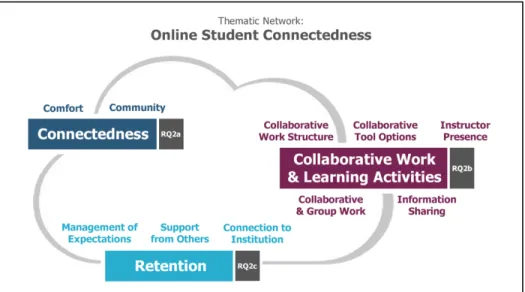
Figure 5. Thematic network: Online student connectedness ... 109
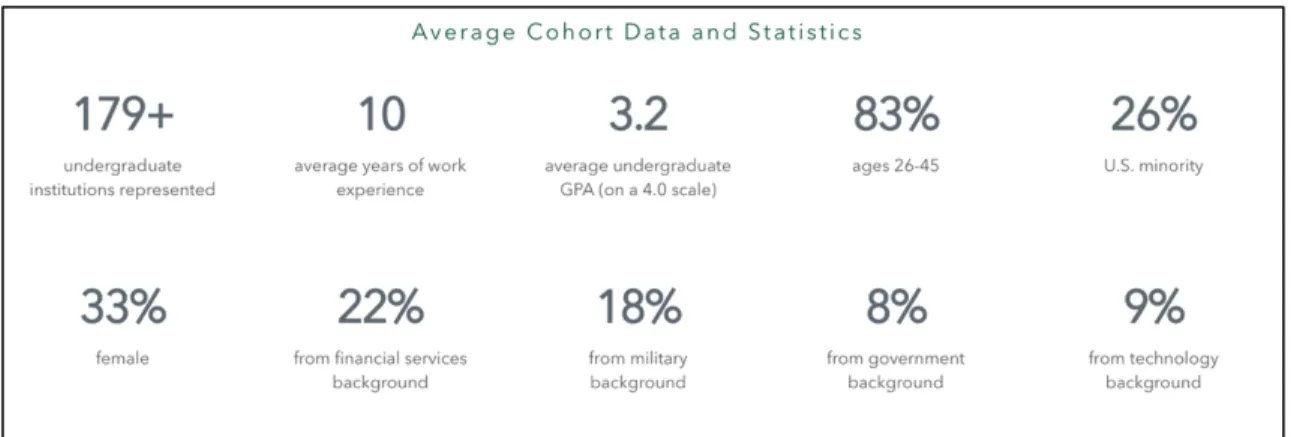
Figure 6. Average cohort data and statistics ... 111
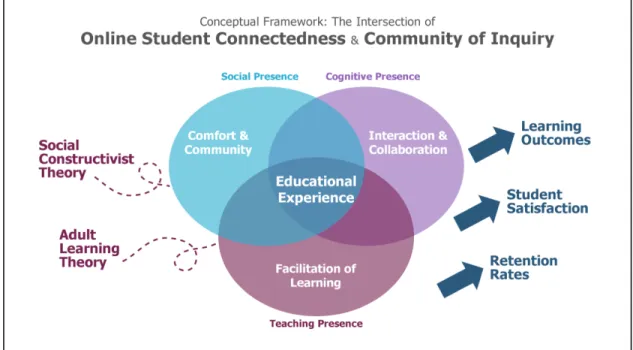
Figure 7. Conceptual Framework: The Intersection of the Online Student Connectedness Framework and the Community of Inquiry Framework. ... 118
xv Abstract
The market for online education is competitive, especially for graduate programs such as the Master of Business Administration (MBA). Attrition rates vary widely, and educators must understand the needs of online students and create engaging quality programs to be competitive. Social interaction and student connectedness are particularly important in online MBA programs where one of the expected benefits is the opportunity for students to build strong professional networks. This mixed methods study explores the student interactions, connectedness, and retention in the Online MBA Program at William & Mary. While previous research has explored building community in an online educational environment, a gap remains in the literature regarding the quality and type of student connections in a part-time online graduate program tailored to working professionals. In addition to surveying faculty who taught in the program, I attempted to survey all
students of the program and used the results of the Online Student Connectedness Survey (Bolliger & Inan, 2012) to inform the student participant selection process for the
qualitative case study. Rooted in the social constructivist paradigm, I created the Online Student Connectedness conceptual framework and sought to determine the extent to which students and alumni of the program felt connected. I also wanted to determine what the students’ experiences of connectedness were and the quality of those
connections. The results of the quantitative survey revealed a moderately high perception of connectedness among students in the program. The results of the qualitative data indicated that several factors influenced the students’ experiences of connectedness. In addition to carefully planned collaborative and group work, a feeling of comfort and perception of community were key factors. Managing students’ expectations, support
xvi
from others, and connection to the institution contributed positively to the high retention rate enjoyed by the program. The results of the study offer a number of implications for practice that may be beneficial to program administrators, professors, course developers, instructional designers, and to students. Through appropriate application of social
constructivist theory and adult learning theory, educators can create learning activities that promote student connectedness and thereby, increase student satisfaction and retention rates.
STUDENT INTERACTIONS, CONNECTEDNESS, AND RETENTION IN AN ONLINE MBA PROGRAM: AN EXPLORATORY STUDY
2 Chapter One
Demand in the higher education market continues to shift as it chases equilibrium, and educators struggle to take advantage of new opportunities to meet students’ needs. While the Online Master of Business Administration (OMBA) market grew between 2015 and 2017 (Graduate Management Admission Council [GMAC], 2017), it has now stabilized overall; but over the past year, more OMBA programs reported declining application volumes (58%) than those that reported growth (36%) (GMAC, 2018). Overall enrollments in higher education (Seaman, Allen, & Seaman, 2018) and retention rates for online courses (Bawa, 2016) have not fared as well; they continue to decline. With overall enrollments shrinking and the OMBA market at least stable for now, educators must look for new opportunities. On a positive note, as of Fall 2016,
enrollments in distance education courses increased steadily each year from 2012 to 2016 for both the undergraduate and graduate level (Seaman et al., 2018), offering new
opportunities for educators who are willing to teach online. Twenty percent of the OMBA programs surveyed expected growth in the number of students who receive employer sponsorships (GMAC, 2017). With the anticipated growth in employer sponsorships and the shift in applications that has caused some programs to experience gains while others have suffered losses, it is likely that the OMBA market will remain competitive as students look for quality programs. One measure considered an important indicator of
3
program quality is attrition rates (Gabrielle, 2001). Thus, educators must learn how to develop and teach courses in ways that improve online student satisfaction and retention rates.
Problem Statement
With an increasing number of students who desire online courses, it is essential that educators understand the needs of online students to ensure the quality of their programs and to remain competitive in the online space. Reported attrition rates in online learning varied between 20-80% and were a major challenge for many who taught online (Rostaminezhad, Mozayani, Norozi, & Iziy, 2013). Two factors, social interaction (Boston et al., 2009) and student satisfaction of course delivery (Weber & Farmer, 2012) were found to be especially important for retaining students in distance education (see “Definition of Terms” for further explanation). Social interaction helps students to build community and offers opportunities for students to support one another. Research suggested a positive correlation between a sense of community or student connectedness and perceived learning engagement and course satisfaction (Liu, Magjuka, Bonk, & Lee, 2007).
Student connectedness is particularly critical in an OMBA program where an expected benefit of the program is the professional network that results from connecting and building relationships with other working professionals. Ninety percent of the prospective students interviewed in the Flex (part-time, evening) MBA Program at the William & Mary Raymond A. Mason School of Business indicated that one of the main reasons for pursuing their MBA was a desire to cultivate a professional network (K. R. Mallory, personal communication, January 31, 2018). Both online and traditional
4
face MBA students who are working professionals may wish to move up in their
organization or transition to a new job, and a strong professional network can help them do that. It may appear to be relatively easy to meet fellow students and build those professional networks in traditional face-to-face programs where students come together in the same physical space. However, it is also quite possible to build equally effective professional networks in an online environment. While previous studies have focused on building community in a digital learning environment (Conrad, 2005; Liu et al., 2007; Shackelford & Maxwell, 2012), there is a gap in the literature with regard to student connectedness as it relates to a part-time OMBA program tailored to working professionals and the type and quality of those connections should they exist. Conceptual Framework
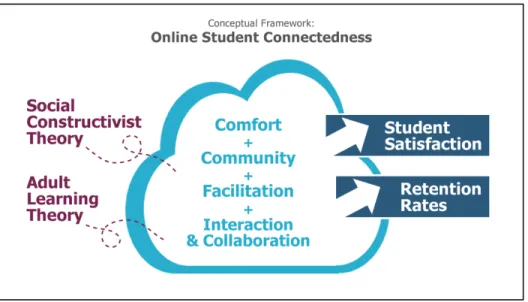
For this study, I used a conceptual framework which I referred to as the Online Student Connectedness conceptual framework (see Figure 1).
Figure 1. Online Student Connectedness conceptual framework. Adapted from
“Development and Validation of the Online Student Connectedness Survey (OSCS)” by D. U. Bolliger and F. A. Inan, 2012, The International Review of Research in Open and Distributed Learning, 13, p. 41. CC BY 3.0. Adapted with permission.
5
Central to the framework was student connectedness and its four factors from the Online Student Connectedness Survey: (a) comfort, (b) community, (c) facilitation, and (d) interaction and collaboration (Bolliger & Inan, 2012). Social constructivist theory (Dewey, 1938; Palloff & Pratt, 2007; Piaget, 1969; Rovai, 2004; Vygotsky, 1978, 1986) and adult learning theory (Knowles, 1992; Knowles, Holton, & Swanson, 2015) when applied appropriately can positively influence the four factors and foster online student connectedness.
As students connect and begin to develop a sense of community, three positive outcomes might emerge: (a) greater student satisfaction, (b) higher retention rates, and (c) improved learning outcomes. Retention rates correlated positively with the students’ perceived level of social presence and the quality of interactions and feedback to the students (Ivankova & Stick, 2007; LaBarbera, 2013; Rovai, 2002). Research by Arbaugh (2010) suggested that collaborative learning in online courses had a positive impact on learning outcomes while another study showed a positive relationship between a sense of community and perceived learning engagement, learning outcomes, and course
satisfaction in an OMBA program (Liu et al., 2007) Research Questions
Through applying adult learning theory and using teaching strategies that helped build online community and connectedness among students, this study sought to answer the following research questions:
1) To what extent do current students and did alumni feel connected in their Online MBA Program at William & Mary?
6
2) What were the students’ experiences of connectedness and the quality of those connections?
a. What in the students’ experience of those learning activities were consequential to them that made them feel connected?
b. How and to what extend did collaborative work and other learning activities influence student connectedness in the Online MBA Program?
c. How and to what extent did opportunities for students and/or alumni to connect with others in the program influence their intention to persist in a course or the program?
Significance of the Study
Student satisfaction is considered one of the five pillars of quality online education, and one of the best indicators of student satisfaction in online learning is a program’s retention rates (Lorenzo & Moore, 2002). Institutions that can increase student satisfaction and maintain high retention rates in the highly competitive OMBA market are more likely to be perceived as having quality programs. While some traditional and OMBA programs were struggling with enrollments, 36% of OMBA programs reported an increase in applications (GMAC, 2018). Regardless of whether applications are up or down for a particular business school, with the competition in the OMBA market, educators must look for strategies to retain their enrolled students.
Often faculty were hesitant to teach online because they were uncertain of how to design and teach online courses, and they were not yet comfortable teaching in the online space (Keengwe & Kidd, 2010). The techniques and strategies that faculty used
7
successfully in the traditional face-to-face classroom may not have translated well to the online environment (Chiasson, Terras, & Smart, 2015). As demand for face-to-face and online offerings shift in the higher education market, educators must prepare to meet the needs of the 21st-century student. Perceived online program quality, student satisfaction, and retention rates are more likely to improve within an institution as educators create programs and deliver courses that foster online student connectedness and help students build community. The results of this study offer several considerations for how faculty members and program administrators can positively influence student connectedness in an OMBA program. Learning from the successful practices within one program will contribute to the knowledge base to assist the field to improve.
Definition of Terms
For the purposes of this research, I consider the terms “adjunct professor,” “course facilitator,” “educator,” “faculty member,” “instructor,” “professor,” and “teacher” to all be college educators as they have a similar level of interaction with students. Participants used those terms (with the exception of “educator”) during the interview process. The following are additional terms and definitions used in this research.
Connected: “having social, professional, or commercial relationships” (Connected, 2019)
Distance education: “education that uses one or more technologies to deliver instruction to students who are separated from the instructor and to support regular and substantive interaction between the students and the instructor synchronously or
8
asynchronously” (National Center for Education Statistics [NCES], 2017, p. 8). In this research, “distance education” and “online education” are synonymous.
Executive partners: A network of active, semi-retired, and retired senior business executives unique to the Raymond A. Mason School of Business community who work with and mentor students, sharing their business expertise across a range of industries and in every functional area. Almost one-third have international career experience
(Executive Partners, 2019).
Learning management system: “a software application that automates the
administration, tracking, and reporting of training events” (Ellis, 2009). In this document, “learning management system,” “online learning environment,” and “Canvas” are used interchangeably.
Master teacher: the instructor of record for a particular course in the OMBA Program. The master teacher may or may not facilitate the course but supervises the section leader/s who facilitate and grade one or more sections of the course in which the master teacher is the instructor of record.
Residency: a requirement of the OMBA Program where students come to campus for one weekend during their two-year program. They expand their knowledge during the Friday-Sunday events that include speakers and offer team-building activities and
networking functions. They meet their cohort peers and faculty face-to-face and grow their professional network.
Retention rate: a measure of the rate at which students persist in their educational program at an institution, expressed as a percentage. For four-year institutions, this is the percentage of first-time bachelor’s (or equivalent) degree-seeking undergraduates from
9
the previous fall who are again enrolled in the current fall. For all other institutions, this is the percentage of first-time degree/certificate-seeking students from the previous fall who either re-enrolled or successfully completed their program by the current fall (NCES, 2017).
Section leader: An instructor who facilitates and grades one or more sections of a course in the OMBA Program and who is supervised by a master teacher.
Student connectedness: Students have a sense of inclusion and a feeling of belonging to the program group (including faculty, fellow students, program staff, and the university), where group members care about one another, support one another, and share the common goal of supporting students as they pursue their degrees.
Satisfaction: “the perception of enjoyment and accomplishment in the learning environment” (Sweeney & Ingram, 2001, p. 57)
Wicked problem: A concept woven throughout the OMBA coursework where students choose to apply what they learn to solve a complex problem of their choice (William & Mary Online MBA, n.d.).
Conclusion
In this chapter, I have established the challenges that institutions of higher education currently face with the dynamics of a changing market, particularly in online education, and the role that student connectedness may play in satisfaction and retention rates in OMBA programs. I outlined the conceptual framework for this study, the
research questions that drove the study, and listed the terms and definitions that I used. In the next chapter, I explore the theoretical basis of the study and the existing literature as it
10
relates to social constructivism, adult learning theory, and OMBA students who are working professionals.
11
Chapter Two: Review of Literature
As I explored online student connectedness and how MBA students made
meaning in a predominantly asynchronous learning environment, I examined two theories that helped to support the development of community and foster connectedness in adult learners: social constructivist theory (Dewey, 1938; Palloff & Pratt, 2007; Piaget, 1969; Rovai, 2004; Vygotsky, 1978, 1986) and adult learning theory (Knowles, 1992; Knowles et al., 2015). Rooted primarily in social constructivism, this study considered social presence as it relates to teachers and learners and how it influences the building of community and student connectedness in an online learning environment. I also
considered the importance of the andragogical model and adult learning theory and their influence in the design and creation of effective adult learning environments.
Social Constructivist Theory
Social constructivist theory purports that students learn from each other and make meaning through social interaction. The origins of social constructivism lie in the works of Piaget (1969) and Vygotsky (1978) who suggested that learning was an active process involving the construction of knowledge rather than acquiring it. In applying a social constructivist lens, students were viewed as peer educators who contributed to the learning experience by sharing their valuable experiences and diverse expertise (Rovai, 2004). John Dewey (1938) emphasized the importance of making connections between
12
lived experiences and learning. Social constructivist theory aligns well with the MBA academic experience where students seek to develop professional networks to learn from others and support their careers. Whereas the traditional, teacher-centered didactic methods of teaching have the educator exercising an authoritative role, social
constructivist theory is more student-centered and broadens the range of people from whom the student might learn.
Social presence. The concept of social presence originated in the work of Short, Williams, and Christie (1976) who focused initially on the quality of the communication medium between two people. As the concept evolved, later researchers such as
Gunawardena (1995) examined how people used and adapted to the communication medium. Social presence is now considered to be the ability to present oneself as a real human-being in an online environment (Picciano, 2002; Richardson & Swan, 2003; Rovai & Barnum, 2003) and is a critical component in building online community (Palloff & Pratt, 2007). Research has suggested that social presence was positively correlated with increased student satisfaction and improved retention rates and learning outcomes (Liu et al., 2007).
Although social constructivism encourages student-centered learning, online instructors can positively influence students’ perception of interpersonal interactions, student motivation, satisfaction, and learning outcomes by practicing immediacy and helping to bridge the psychological and physical gap between student and instructor in the online space (Schutt, Allen, & Laumakis, 2009). Immediacy refers to the perceived physical and psychological closeness between individuals (Mehrabian, 1967). The instructor played a critical role in the student’s perception and satisfaction of a course
13
(Schutt et al., 2009). Gallien and Oomen-Early (2008) suggested that students performed better academically and were better satisfied when they received personalized feedback from the instructor rather than collective feedback. However, their research did not indicate that students who received personalized feedback perceived that they were more connected to the professor than those who received collective or group feedback (Gallien & Oomen-Early, 2008).
An earlier study by Korenman and Wyatt (1996) suggested that personal interactions contributed to the development of a public personae within the online environment and helped to create a “sense of community” among group members. Kim, Glassman, and Williams (2015) further indicated that student connectedness positively influenced a blog-centered, web-infused course, showing a highly significant correlation between connectedness and the students’ motivation to share knowledge. The greater the students’ perception of connectedness, the greater the likelihood that they would share knowledge. “When developers are creating online educational platforms they need to take into account strategies and technologies that increase both the social space and
possibilities for shared, interest driven, goal directed activities” (Kim et al., 2015, p. 341). Similarly, LaBarbera (2013) recommended that online course designers consider student satisfaction when developing courses and provide opportunities for social interaction within the online learning environment in an effort to increase student connectedness.
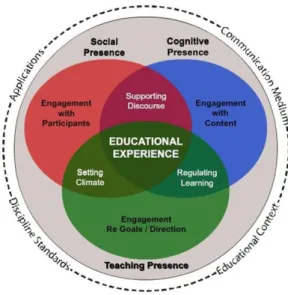
Community of inquiry. The Community of Inquiry theoretical framework (Garrison, Anderson, & Archer, 2000) offered three interdependent elements that worked together to create meaningful collaborative learning experiences for students: (a)
14
of the framework was to “define, describe and measure the elements of a collaborative and worthwhile educational experience” (Garrison, Anderson & Archer, 2010, p. 6). In addition to outlining the three core elements (social, cognitive, and teaching presences), the framework was a process model that also outlined the dynamics of working
collaboratively in an online environment (Garrison et al., 2010).
Figure 2. Community of Inquiry theoretical framework. Reprinted from Thinking Collaboratively: Learning in a Community of Inquiry, by D. R. Garrison, 2016, p. 59, New York, NY: Routledge. Copyright 2016 by Taylor & Francis. Reprinted with permission.
The most basic element of the Community of Inquiry framework is cognitive presence which refers to the extent to which members of the community can make meaning through sustained communication. It is an important element in critical thinking which is often considered the goal of higher education. Social presence and teaching presence complete the three elements of the framework. Encapsulating the design of the educational experience and how the experience is facilitated, teaching presence supports and enhances social and cognitive presence to achieve the desired educational outcomes (Garrison et al., 2000).
15
Professional networking and communities of practice. An important component of any MBA program is the network that can develop as students connect with and learn from one another. One of the main reasons students pursue an MBA is to gain the benefit of a professional network (Princeton Review, n.d.), and it is often a factor in program choice. More than 80% of professionals think that networking is important to the success of their careers (LinkedIn Corporate Communications Team, 2017). In 2016, of those professionals who were hired by a company, 70% already had a connection there.
MBA students have rich and varied experiences and in sharing those with their classmates, they provide additional opportunities for learning. Students may share their experiences as they work collaboratively. Studies indicated that in online courses, collaborative work improved learning outcomes (Arbaugh, 2010). The online learning environment should be designed in ways that students have opportunities to share their experiences, connect, and learn from one another.
Interactions: Quality and type. Interactions among students do little to promote connectedness and foster community if they lack quality. Several studies have focused on student connectedness and fostering online community, and many studies have explored student interactions with group work in discussion fora and other collaborative
assignments (e.g., Barbarick, 2013; Bull, 2016; Koh, & Hill, 2009; Oliphant & Branch-Mueller, 2016; Rovai & Barnum, 2003; Waltonen-Moore, Stuart, Newton, Oswald, & Varonis, 2006). Few, if any, studies have examined interaction types and the resulting quality of those interactions that are required for completing group projects with varying levels of intensity.
16
Slagter van Tryon and Bishop (2009) proposed a framework for systematic course design to enhance the development of group social structure and online student
connectedness. They suggested that instructors design interactions that allow for observation of dynamic social behaviors and provide more interactions that offer opportunities for observing individuating social characteristics among students. While their framework proposed strategies for fostering community and increasing student connectedness, it did not consider the quality of the connections that might stem from those interactions nor their level of intensity.
High-quality connections have three characteristics. They result in a feeling of positive regard (where people observe the best in us), of mutuality (feeling that the person is responding to and open to us), and of vitality (feeling energized by the connection; Dutton & Heaphy, 2016). By developing high-quality connections, employees can increase opportunities for growth and learning, both within their
organization and outside of their professional life. The connections may not be lengthy; and according to Dutton and Heaphy (2016), they may not endure. However, they can lead to increased learning and growth (Dutton & Heaphy, 2016) whether they are fostered within a professional organization or are developed within an online educational
experience.
The type of interaction that transpires between two people may influence the quality of that interaction. Thompson (1967) outlined three types of interdependence that described the intensity of interactions within organizations: (a) pooled, (b) serial, and (c) reciprocal. Pooled interactions within groups require less interaction among members than do serial or reciprocal. With pooled interactions, group members are likely to work
17
independently, accomplishing their goals without interacting extensively with others. Serial interactions may require a bit more interaction among group members than do pooled. As one group member completes a task, she then passes the project to the next person in sequence; and then that person completes his portion of the project, passes it to the next person, and so forth. Reciprocal interactions typically require more interaction than do serial or pooled interactions and are often needed to complete complex or ambiguous projects (Thompson, 1967).
Sharbrough and Fekula (2014) created experiential activities as teambuilding exercises for MBA students and included an exercise of loading and firing a canon. While the loading of the canon required serial interactions among team members, the safety aspect of the activity required reciprocal interactions among members. Reciprocal interdependence created the need for trust as all members were responsible for the safety of the group and could stop the loading or firing process at any time.
Despite reciprocal interdependence having been closely tied to project complexity since it was originally defined by Thompson (1967), Skilton, Forsyth, and White (2008) sought to decouple project complexity from reciprocal interaction in their study.
Although Skilton et al.’s (2008) study suggested that while it is more likely that complex projects will require reciprocal interaction, they purport that reciprocal interaction can also happen when the project tasks can be divided easily. The study was limited, however, by the confounding of project complexity and the age and experience of the subjects. If indeed reciprocal interdependence varies wildly within a team and has little to do with project complexity as Skilton et al. (2008) purport, then the online environment
18
will offer opportunities for students to engage in all types of interactions, including reciprocal, as course developers design group projects.
Online student connectedness. Online student connectedness takes time to evolve, but four factors can positively influence the perception of connectedness in the online learning environment: (a) comfort, (b) community, (c) facilitation, and (d)
interaction and collaboration (Bolliger & Inan, 2012). As students work together, struggle with new material, work through conflict, and make meaning by learning new ways to learn, coalescence happens which fosters student connectedness and learning community (Palloff & Pratt, 2007). Some academic programs create a “shared ordeal,” particularly within cohorts, where students work through challenges together or support each other in what might be considered a rite of passage (Howey & Zimpher, 1989). Sharing an ordeal, whether face-to-face or online, can help to foster student connectedness among those who persevere and succeed in their endeavors.
Within the online environment, however, use of online components alone will not guarantee student connectedness. A study by Oguz and Poole (2013) of online student connectedness and employment indicated that students who had a high degree (75-99%) of online components in their educational program but had limited face-to-face
interaction with only weekend-long meetings or hybrid courses did not develop a sense of community that supported them emotionally and professionally and sustained them during their educational experience and beyond graduation. This speaks to the challenges of developing online community and a need to understand the factors that influence it.
As one of the four factors that contribute to online student connectedness (Bolliger & Inan, 2012), comfort relates to the student’s feeling of ease in expressing
19
herself, communicating with others, asking for help, and feeling safe in the online environment. If students are comfortable and feel safe in the learning environment, they are more likely to interact with instructors and peers and less likely to miss learning opportunities (Shin, 2003). Community is related to the student feeling emotionally attached to other students, spending time with peers, getting to know others, and the student feeling that others depend on her. Instructors facilitate the course and foster connectedness by integrating collaborative tools into online course activities, promoting interaction and collaboration between students, participating in online discussions, being responsive, and offering frequent feedback. Lastly, Bolliger and Inan (2012) suggested that online student connectedness was promoted by the students relating their work to others’ work, discussing ideas with other students, collaborating and working with others, and sharing information with other students.
As students collaborate and share information, they inevitably make social connections. These might be considered high-quality or low-quality connections. Dutton and Heaphy (2016) purported that high-quality connections at work helped individuals to broaden their thinking and absorb knowledge more quickly. High-quality connections induce feelings of positive regard, mutuality, and vitality while low-quality connections produce feelings of inadequacy, defensiveness, and lack of safety. High-quality
connections often elicit positive emotions, but they can also elicit negative emotions such as frustration or anger. More importantly, high-quality connections foster growth and development, are able to withstand setbacks and are a safe place for expressing new and creative ideas (Dutton & Heaphy, 2016).
20
Adult Learning Theories and Working Professionals
Adults learners who are working professionals have different needs than do children, teenagers, undergraduate, or full-time graduate students. Adult learning theory has six core principles: (a) Adults prefer to know the what, how, and why they need to learn about a topic before they learn it, (b) As learners mature and become adults, they increasingly become self-directed in their learning and accept more responsibility for their learning, (c) As they grow, their experiences become a rich learning resource, (d) They are open to learning when the need arises and when learning is applicable to the task or problem at hand, (e) As adults learn, they tend to be task or problem-centered and learn better when learning is organized around their life experiences, and (f) Although adults respond to extrinsic motivators for learning, intrinsic motivators are more powerful as they grow and develop (Knowles et al., 2015).
Course design. Equipped with knowledge of the factors that influence students’ intentions to collaborate in the online environment, course developers can design
appropriate means for students to manage group projects (Cheng, 2017) and consequently further promote online student connectedness. By considering Bolliger and Inan’s (2012) four factors that influence student connectedness, course developers can create learning activities that promote comfort and foster community while providing opportunities for collaboration. Thoughtful consideration of the types of interdependence (pooled, serial, and reciprocal) in collaborative interactions as outlined by Thompson (1967) may help course developers as they create group assignments that can potentially promote constructivist learning, online student connectedness, and building of community. The different types of interdependence in collaborative interactions may influence the quality
21
of connections made. While Dutton and Heaphy (2016) suggested that connections could result from a brief encounter and may not necessarily endure; in this study, I considered the influence of high-quality connections, regardless of duration, on perceived online student connectedness, satisfaction, and retention.
Facilitation. In addition to course design, course facilitation plays an important role in how quickly and how well online community develops. As facilitation is one of the subscales for measuring online student connectedness (Bolliger & Inan, 2012), instructors can use it in ways that promote collaboration and interaction between
students. Additionally, being responsive to questions and offering frequent feedback are two ways instructors can develop online presence and support students in their learning through the facilitation of their course.
Related Theories: Social Network, Student Engagement, and Connectivism
This study was rooted in the social constructivist paradigm and considered adult learning theory as it related to working professionals, but three other theories are worthy of mention: social network theory, student engagement theory, and connectivism. Although the three theories have similar elements to social constructivism, I did not use them as a basis for this study. Regarding social network theory, a network is often
considered a cast of actors or nodes linked by a certain set of ties (such as friendship) that form a structure of interconnected ties. It is characterized by the ties that “interconnect through shared end points to form paths that indirectly link nodes that are not directly tied” (Borgatti & Halgin, 2011, p. 1169). While social network theory considers the interconnection of actors within the network, this study focused on social constructivism, student connectedness, and the building of online community.
22
Student engagement theory considers how much time and effort students devote to learning activities such as thinking, talking, and interacting with course content and others in the course (Dixson, 2015). The National Survey of Student Engagement focuses on the entire collegiate experience and how the institution deploys its resources to
support academic learning (About NSSE, 2019). While it focuses on how undergraduates spend their time at college, this study considered student connectedness in an online graduate program.
Lastly, connectivism (Siemens, 2005), described as a learning theory for the digital age, emphasizes the role of technology in the learning process by connecting specialized nodes or sources of information. It also recognizes that learning may reside in non-human devices. In comparison, technology plays a less prominent role in social constructivism. While this study recognized technology as a vehicle that online students used to connect with others, it did not view technology in the same manner as
connectivism where connections between people and databases or other information sources may be important for learning. Rather, this study, rooted in social constructivism, considered the development of online social presence and its influence on student
connectedness and building community in an online learning environment where students often made meaning through social interaction.
Conclusion
As online learning continues to be an important sector in adult education and in particular OMBA programs, educators must understand how to use technology
effectively and design courses that meet the needs of the 21st century. A number of studies have examined online learning and social constructivist theory (Joyner, Fuller,
23
Holzweiss, Henderson, & Young, 2014; Liu et al., 2007; Rovai & Barnum, 2003;
Shackelford & Maxwell, 2012; Su, Bonk, Magjuka, Liu, & Lee, 2005), but a gap remains in the literature about the types of interdependence required in collaborative interactions online, the potential quality of connections that result from those interactions, and the influences that instructors may have in creating opportunities for those interactions to foster online student connectedness and promote high-quality connections as defined by Dutton and Heaphy (2016). This study sought to measure online student connectedness in an OMBA Program that enjoyed a high retention rate, and it sought to explore from the students’ perspectives how student connectedness influenced their program satisfaction and desire to persist in the program. In the next chapter, I describe the methodology I used to answer the research questions for this study.
24
Chapter Three: Method
The purpose of this study was to determine the extent to which student connectedness existed in the Online MBA (OMBA) Program at William & Mary; participants’ perceptions of the experiences that were consequential in creating any connections among students, alumni, and faculty within the program; and the perceived quality of those connections.
Research Questions
This study was driven by the following research questions:
1) To what extent do current students and did alumni feel connected in their Online MBA Program at William & Mary?
2) What were the students’ experiences of connectedness and the quality of those connections?
a. What in the students’ experience of those learning activities were consequential to them that made them feel connected?
b. How and to what extent did collaborative work and other learning activities influence student connectedness in the Online MBA Program?
c. How and to what extent did opportunities for students and/or alumni to connect with others in the program influence their intention to persist in a course or the program?
25 Study Design
This mixed-methods study employed a quantitative survey to aid in the selection of participants for a qualitative case study. Using the validated Online Student
Connectedness Survey (OSCS; Bolliger & Inan, 2012), I measured the perceived level of connectedness among current students with other students, with faculty, and any alumni whom they may have interacted with. I also measured the perceived level of
connectedness among OMBA alumni, the students and alumni with whom they interacted with while in the program, and faculty. I developed six survey items which I added to the end of the OSCS and used all survey items for screening applicants who wished to participate in the interviews. The six additional items also informed the interview
questions. This qualitative case study was bound in the OMBA Program which launched in 2015 at William & Mary and sought to answer the research questions outlined above.
Participants. Participants in this study consisted of students and alumni of the program, including those who did not persist, and faculty who were teaching or who had previously taught in the program. I invited all students and alumni of the OMBA Program at William & Mary to participate in the quantitative portion of the study and complete a 31-item survey. I asked the faculty to complete a 16-item survey. I also asked each respondent to indicate whether they wished to be considered as a candidate to participate in the qualitative case study.
The survey for faculty and the survey for students and alumni informed the selection process for the qualitative portion of this study. After reviewing the results of the survey for students and alumni, I chose 10 respondents who indicated that they wished to participate in the qualitative case study and who formed a sample which
26
included responses across the continuums (least-, moderately-, most-connected) of perceived level of connectedness, inclination to leave a course and/or the program, overall program satisfaction, and importance of developing a professional network. In selecting participants for the qualitative portion of the study, I first looked for a
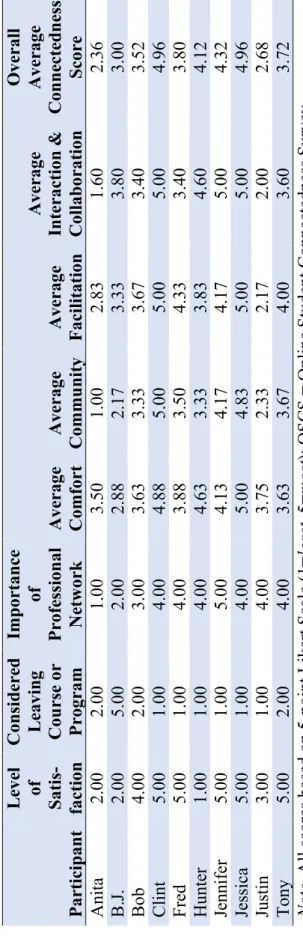
representative group with scores across the continuum of least-, moderately-, and most-connected levels of most-connectedness. I intended to interview 10 participants initially and select two or three participants who represented each level of connectedness scores (least-, moderately-, most-connected). Within the group of 10, I also wished to include at least two or three participants who scored two or higher on Question #27 regarding whether they had considered leaving a course or the program. I chose three participants who scored two and one participant who scored five which indicated that he had left the program.
Lastly, as I made my final participant selections, I considered scores regarding overall program satisfaction and importance of developing a professional network as I wished to include a variety of scores (low, medium, high) on those two dimensions. However, my first priority was to include an even distribution of connectedness scores (least-, moderately-, and most-connected) and to include two or three participants who had considered leaving the program. My intention was to initially interview 10
participants. If new information or additional questions had emerged from those interviews that warranted further analysis, I would have considered interviewing an additional 10 participants. However, I found the data from the initial 10 interviews sufficient for this case study.
27
In addition to the responses to the faculty survey, the student and alumni
interviews informed the faculty selection process. Early in the data collection process, I began to record my reflections in a reflexive journal. In doing so, I had the opportunity to further process the data (Bazeley, 2014). A few faculty members and courses stood out in the interviews as exceptional in promoting student connectedness. My reflections
regarding the students’ comments about their courses helped to inform my selection of faculty to interview.
I invited four faculty members who were willing to participate in the qualitative portion of the study. They represented two hard skill courses (courses that are easy to quantify such as Accounting, Business Analytics, or Finance) and two soft skill courses (courses that require less tangible interpersonal skills such as Leadership or
Organizational Behavior). The four faculty members also formed a sample across the continuum (least-, moderately-, most-connected) of perceived level of student
connectedness within their courses based on the 5-point Likert scale survey. As I reviewed the data to determine which students to invite to participate in the qualitative portion of the study, I also considered those who had extreme responses on each of the four subscales of the OSCS. For example, I wished to interview a diverse group of students that included those with high and low scores within the range for perceptions of comfort in the program in an attempt to understand which activities or course structures helped to create a safe environment where students were comfortable expressing
themselves. Conversely, I wished to understand what contributed to a student’s feeling of discomfort and/or unwillingness to express opinions or ask for help. In considering the four OSCS subscales, I averaged the individual’s 5-point Likert scores for each subscale
28
and applied the ranges of low, medium, and high for each subscale of the faculty and student surveys.
Data sources. Using the quantitative data from the OSCS (Bolliger & Inan, 2012), the 16-item survey for faculty, and the qualitative data from participant interviews, I sought to answer the above research questions. The online survey for students and alumni included 31 items, of which 25 items came from the OSCS (Bolliger & Inan, 2012). Similarly, I invited faculty who were teaching or who had taught in the program to respond to a 16-item survey, of which most items mimicked those from the OSCS but reworded from the faculty’s perspective. For example, I reworded item #19 on the OSCS from: “I receive frequent feedback from my online instructors” to: “I give frequent feedback to my online students” (see Appendix A for the 16-item faculty survey).
Online Student Connectedness Survey (OSCS). I used the OSCS developed by Bolliger and Inan (2012) which is considered a reliable (a = .98) and valid measure of perceived online student connectedness. In examining construct validity, Bolliger and Inan (2012) used confirmatory factor analysis with oblim rotation which revealed four dimensions resulting in eigenvalues of greater than 1. The four factors explained 83.95% of the variance. Their survey consisted of 25 items and the four factors or subscales: comfort (eight items), community (six items), facilitation (six items), and interaction and collaboration (five items). Each item was rated using a 5-point Likert scale ranging from 1 to 5 (strongly disagree to strongly agree). (Please see Appendix B for the OSCS items and the complete survey.) Sample items from the OSCS included:
• “I feel comfortable expressing my opinions and feelings in online courses.” • “I feel that students in my online courses depend on me.”
29
In addition to the 25 OSCS items, I asked respondents to complete six items that measured perceived importance of developing a professional network, overall program satisfaction, and retention. The six items included:
1. Overall, how satisfied or dissatisfied are you with the Online MBA Program? (Extremely dissatisfied, somewhat dissatisfied, neither dissatisfied nor satisfied, somewhat satisfied, extremely satisfied)
2. Have you considered leaving a course or the program? If so, how often have you considered it?
(Never or almost never, sometimes, about half the time, most of the time, I have left a course or the program)
(If left the program) What was your reason for leaving the program?
3. How important or unimportant to you is developing a professional network within the Online MBA Program?
(Not at all, slightly, moderately, very, or extremely important) 4. To what extent did you consider attending William & Mary as an
undergraduate student?
a. I did not consider attending William & Mary as an undergraduate b. I considered but did NOT attend William & Mary as an undergraduate c. I attended William & Mary as an undergraduate
5. Are you willing to participate in a one-hour personal online or in-person interview (and possibly one 20-minute follow-up interview) with the
researcher at a time that is mutually convenient for you to further explore your perceptions of the Online MBA Program? If you are chosen to participate and agree to be interviewed, you will receive a $30 Amazon gift card as a token of appreciation.
(Yes/No)
6. Please share any additional information that might be helpful regarding how you connect or do not connect with other students, professors, and staff in the Online MBA Program and how collaborative work influences your
30
Questions #1, #2, and #3 above aided in the selection of participants for the interview process as I looked for a diverse sample of students across the continuums as explained in the “Participants” section above. The first three questions also informed the semi-structured interview questions, allowing me to frame questions more specifically to each student. For example, if I knew that a student was very dissatisfied with the
program, I mentioned that they indicated on the survey that they were dissatisfied with the program and asked: “What has contributed most to your dissatisfaction in the
program?” The data from the quantitative survey helped streamline the interview process. Question #4 above also aided in the selection process as I intended to give preference to those students who did not attend William & Mary as an undergraduate since they would have a connection to the university prior to enrolling in the OMBA Program. Question #5 was necessary to determine who would be interested in participating in the second phase of the research study, the interview process. Lastly, Question #6 was an open-ended question that allowed respondents to express any additional thoughts or concerns that were not covered in other portions of the survey.
Qualitative interview protocol. The students, alumni, and faculty who were invited and who agreed to be part of the study participated in individual 1-hour initial interviews, and students and alumni also participated in a follow-up interview of approximately 20 minutes. I conducted the interviews via Zoom, a video conferencing platform, or by telephone if the participant preferred. To reduce bias, I attempted to appear naïve about the topic as I interviewed the participants and allowed them to express in their own words their perceptions of the topic (Yin, 2014). Guided by the responses to the 31-item survey, I first conducted semi-structured initial interviews with students and
31
alumni which informed the faculty selection process. I asked participants what had influenced their perception of each subscale within the program. For example, I asked participants what features or activities within the program contributed to their perception of comfort. (Please see Appendix C for the interview protocol for students and alumni.)
I then interviewed four faculty members individually in one-hour interviews. All of the faculty interviews were in-person, and I used Zoom and Audacity to record the conversations. The 16-item survey which faculty completed prior to the interview informed their interview questions. Lastly, the faculty interviews informed the questions for the students’ follow-up interviews which I conducted last. (Please see Appendix D for the interview protocol for faculty.)
Document analysis and faculty interviews. I reviewed assignments (but not submissions) in four of the OMBA courses and asked faculty to identify group
assignments that they considered to be complex and/or ambiguous and that might require frequent or high levels of interactions among group members. I also asked them to identify more straightforward assignments that might require fewer interactions. This allowed me to understand the assignments where complexity might have driven the intensity of interactions required of students as they collaborated to complete group assignments. For example, I attempted to identify the types of group assignments that required either pooled, serial, or reciprocal interactions as described by Thompson (1967) and made note of how the assignment design might have influenced the type of group interdependence needed to successfully complete the assignment.
I was aware that some assignments may have evolved since the launch of the program as faculty had updated their courses. However, my intention was to understand
32
the different structures of assignments where students collaborated with one another rather than work individually. Instead of looking for identical assignments, I was interested in the common characteristics among assignments, including those with components that required different types of interactions (pooled, serial, or reciprocal). The information was helpful as I interviewed the participants and learned more about how students interacted with each other and with faculty as they worked to complete their assignments. I also considered how the different types of interactions may have
influenced the quality of connections made between students and students, and students and faculty.
Data collection. After receiving approval to conduct the research study from the Education Internal Review Committee (EDIRC) of William & Mary, I asked the OMBA Program Office to provide me with a list of all students and alumni of the program, including those who did not persist in the program, their gender, number of courses completed, and geographic location. I also requested a list of faculty members (master teachers and section leaders) who had taught in the program and the name and number of courses that they had taught. Using a panel within Qualtrics, an online survey tool, I emailed approximately 300 students who were enrolled in the program and
approximately 100 alumni who had graduated and invited them to participate in a confidential online survey. I also invited those students who had participated in the program but who did not persist. Additionally, I emailed the faculty members using a Qualtrics panel and invited them to participate in a confidential online survey regarding the courses they were teaching or had taught in the OMBA Program. I sent two
33
reminders, one week apart, from within Qualtrics to the faculty members, alumni, and students who had not yet completed the survey.
On the introductory page of each survey, I explained the purposes of the study, that participation was voluntary, and that responses would remain confidential. I then indicated that choosing “Yes” on the first page of the survey constituted informed consent. At the end of the survey, I asked the respondent to indicate whether they would like to be considered as a candidate to participate in the second phase of the research study which would include personal interviews with myself. The students or alumni respondents who desired to participate and who were chosen for interviews were to receive a $30 Amazon gift card as a token of appreciation. However, one participant requested a gift card from the William & Mary bookstore instead, and another requested a William & Mary branded t-shirt of equal value, to which I complied.
With the exception of two students who preferred to speak by telephone, all student and alumni interviews were recorded using the video-conferencing platform, Zoom. I also used Audacity to capture the audio recording for all interviews. I recorded all faculty interviews in-person, also using Zoom and Audacity. During the transcription process, I first imported each audio file into Descript, an automatic transcription
application which generated a transcript of the interview. I also imported each audio file into ExpressScribe, a transcription software application that allowed me to listen to the audio file and start and stop as needed using a foot pedal. While listening to the audio file using the ExpressScribe software, I simultaneously edited and corrected the previously (automatically) transcribed document within the Descript application. Once I had completed the editing process, I reviewed the transcript for accuracy by listening to the
34
entire audio file a second time, making any final corrections. Lastly, I imported the text file into Dedoose, an online application for analyzing qualitative and mixed-methods research.
Data analysis. As I collected data for this study, I created a chronology of events and chain of evidence (Yin, 2014), organized the qualitative data within Dedoose,
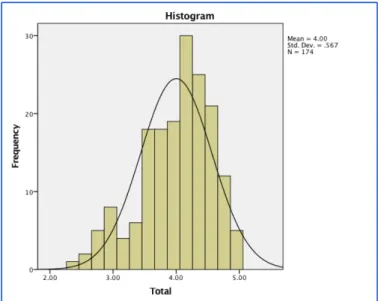
captured my reflections in a reflexive journal (Bazeley, 2014), and prepared the quantitative data for analysis. Using the data from the 31-item survey for students and alumni, I performed descriptive analysis, calculating the mean, median, and mode, standard deviation, and the minimum and maximum values of the OSCS and its subscales. As I analyzed the data from the OSCS and its subscales, I calculated the average score for connectedness by averaging the responses to Questions 1-25 of the OSCS for each survey respondent. I calculated the respondent’s average for each
subscale by averaging the responses to the relevant questions: Questions 1-8 for comfort, Questions 9-14 for community, Questions 15-20 for facilitation, and Questions 21-25 for interaction. Table 1 shows the low, medium, and high ranges for the subscale averages. Table 1
Ranges for Average Subscale Scores for Students and Alumni
Low Medium High
>=1.00 and <2.33 >=2.33 and <=3.67 >3.67 and <=5.00
I realized after the initial interviews with students that my original calculations for the ranges for average subscale scores were incorrect. Rather than using four as the dividend and dividing by three to calculate the ranges from the 5-point Likert scale, I had
35
used five as the dividend to calculate the low, medium, and high ranges for the subscales. Consequently, I had told two students during their initial interviews that their subscale averages for comfort and facilitation were either high or low when I should have reported that they were in the medium range. I gave the two students the corrected information during their follow-up interviews. Neither student seemed concerned, and the error appeared to be inconsequential to the study.
In addition to analyzing the data from the student and alumni surveys, I performed a similar descriptive analysis using data from the 16-item survey offered to faculty. I calculated the respondent’s average for each subscale by averaging the responses to the relevant questions for each. I calculated the average connectedness score by averaging the responses to Questions 1-13.
During the data analysis stage, I used Yin’s (2014) four principles of data
collection: (a) collecting multiple sources of evidence, (b) creating a case study database, (c) establishing a chain of evidence, and (d) exercising care with data from electronic resources. I collected data from students and faculty to gain the perspectives of both groups. Using Dedoose, I created a case study database, and I established a chain of evidence that increased the reliability of the study. Lastly, I used care as I gathered data and used electronic resources. I relied on the digital recordings of the interviews to provide accurate data.
In preparing the qualitative data for analysis, I transcribed the interviews verbatim. I captured the following information for each document: name of document, place of storage, type of data, date and time of collection, place of collection, and from whom collected (Bazeley, 2014). After transcribing the interviews, I employed member