UKnowledge
UKnowledge
Theses and Dissertations--Curriculum and
Instruction Curriculum and Instruction
2013
The Effect of Augmented Reality Treatment on Learning, Cognitive
The Effect of Augmented Reality Treatment on Learning, Cognitive
Load, and Spatial Visualization Abilities
Load, and Spatial Visualization Abilities
Nedim SlijepcevicUniversity of Kentucky, [email protected]
Right click to open a feedback form in a new tab to let us know how this document benefits you. Right click to open a feedback form in a new tab to let us know how this document benefits you.
Recommended Citation Recommended Citation
Slijepcevic, Nedim, "The Effect of Augmented Reality Treatment on Learning, Cognitive Load, and Spatial Visualization Abilities" (2013). Theses and Dissertations--Curriculum and Instruction. 4.
https://uknowledge.uky.edu/edc_etds/4
This Doctoral Dissertation is brought to you for free and open access by the Curriculum and Instruction at UKnowledge. It has been accepted for inclusion in Theses and Dissertations--Curriculum and Instruction by an authorized administrator of UKnowledge. For more information, please contact [email protected].
I represent that my thesis or dissertation and abstract are my original work. Proper attribution has been given to all outside sources. I understand that I am solely responsible for obtaining any needed copyright permissions. I have obtained and attached hereto needed written permission statements(s) from the owner(s) of each third-party copyrighted matter to be included in my work, allowing electronic distribution (if such use is not permitted by the fair use doctrine).
I hereby grant to The University of Kentucky and its agents the non-exclusive license to archive and make accessible my work in whole or in part in all forms of media, now or hereafter known. I agree that the document mentioned above may be made available immediately for worldwide access unless a preapproved embargo applies.
I retain all other ownership rights to the copyright of my work. I also retain the right to use in future works (such as articles or books) all or part of my work. I understand that I am free to register the copyright to my work.
REVIEW, APPROVAL AND ACCEPTANCE REVIEW, APPROVAL AND ACCEPTANCE
The document mentioned above has been reviewed and accepted by the student’s advisor, on behalf of the advisory committee, and by the Director of Graduate Studies (DGS), on behalf of the program; we verify that this is the final, approved version of the student’s dissertation including all changes required by the advisory committee. The undersigned agree to abide by the statements above.
Nedim Slijepcevic, Student Dr. Gary J. Anglin, Major Professor Dr. Mary C. Shake, Director of Graduate Studies
_________________________________ DISSERTATION
_________________________________
A dissertation submitted in partial fulfillment of the requirements for the degree of Doctor of Education in the
College of Education at the University of Kentucky
By
Nedim Slijepcevic Lexington, Kentucky
Director: Dr. Gary J. Anglin, Professor of Education Lexington, Kentucky
2013
ABSTRACT OF DISSERTATION
THE EFFECT OF AUGMENTED REALITY TREATMENT ON LEARNING, COGNITIVE LOAD, AND SPATIAL VISUALIZATION ABILITIES
This study investigated the effects of Augmented Reality (AR) on learning, cognitive load and spatial abilities. More specifically, it measured learning gains, perceived cognitive load, and the role spatial abilities play with students engaged in an astronomy lesson about lunar phases. Research participants were 182 students from a public university in southeastern United States, and were recruited from psychology research pool. Participants were randomly assigned to two groups: (a) Augmented Reality and Text Astronomy Treatment (ARTAT); and (b) Images and Text Astronomy
Treatment (ITAT). Upon entering the experimental classroom, participants were given (a) Paper Folding Test to measure their spatial abilities; (b) the Lunar Phases Concept
Inventory (LPCI) pre-test; (c) lesson on Lunar Phases; (d) NASA-TLX to measure participants’ cognitive load; and (e) LPCI post-test. Statistical analysis found (a) no statistical difference for learning gains between the ARTAT and ITAT groups; (b) statistically significant difference for cognitive load; and (c) no significant difference for spatial abilities scores.
KEYWORDS: Cognitive Load, Augmented Reality, Spatial Visualization Abilities, Learning, Tactile
Nedim Slijepcevic Student’s Signature
05/02/2013 Date
THE EFFECT OF AUGMENTED REALITY TREATMENT ON LEARNING, COGNITIVE LOAD, AND SPATIAL VISUALIZATION ABILITIES
By
Nedim Slijepcevic
Gary J. Anglin Director of Dissertation
Mary C. Shake Director of Graduate Studies
05/01/2013 Date
iii
ACKNOWLEDGMENTS
This dissertation would never have been written without the guidance of several people. First, I would like to thank my advisor, Dr. Gary Anglin, who tirelessly and patiently worked with me and guided me with his insightful observations. I would also like to thank my committee, Dr. Doug Smith, Dr. Gerry Swan, and Dr. Melody Carswell, who through their influence shaped my scholastic career and helped me gain a broader world perspective. My gratitude goes the Applied Statistics Laboratory (Dr. Bathke and Dr. Zephyr), who helped me with the research design and statistical analysis, and to Mandy Eppley who let me use her computer lab for data collection. I would also like to thank Wanju Huang and Socorro Zaragoza for moral support and numerous suggestions.
In addition to the contributions of my dissertation committee, I would like to thank my mother Amira, and grandma Munira. Without your constant pushing to achieve more, this dissertation would not even be considered in the first place. You made me who I am today, and I will never forget that.
I would also like to thank my mentor at Buffalo State, Dr. Jean Gounard, who helped me adjust to life in the United States and steered me in the right direction. And lastly, I would like to thank the Quider and Zukancic families, who became my family away from home.
iv
TABLE OF CONTENTS
Acknowledgments... iii
List of Tables ... vi
List of Figures ... vii
Chapter One: Introduction ... 1
Background ... 1
Introduction to Augmented Reality... 1
Memory Limitations and Cognitive Load Theory ... 2
Spatial Visualization Abilities ... 3
Tactile and Kinesthetic Sensory Input ... 5
Overview of Augmented Reality Research in the Areas of CLT and Learning, Spatial Visualization Abilities, and Tactile and Kinesthetic Sensory Input ... 6
Purpose of the Study and Research Questions... 10
Definition of the Terms ... 12
Affordances ... 12
Augmented Reality ... 13
Cognitive Load / Mental Workload ... 13
Fiducial Marker ... 13
Haptic ... 14
Head Mounted Display (HMD) ... 14
Kinesthetic ... 14
Liquid Crystal Display (LCD) ... 14
Spatial Cognition ... 15
Spatial Visualization Ability ... 15
Spatial Knowledge ... 15
Tactile ... 16
Virtual Reality (VR) ... 16
Chapter Two: Review of Literature ... 17
Introduction to Augmented Reality ... 17
Review of Literature ... 22
Memory Limitations and Cognitive Load Theory ... 22
Augmented Reality Interface Comparison, Learning with Augmented Reality, and Learner’s Attitudes toward Virtual Reality ... 24
Spatial Visualization Abilities ... 48
Tactile and Kinesthetic Sensory Input ... 68
General Summary of the Review of the Literature ... 80
General Conclusions ... 86
Research Implications ... 89
Hypothesis ... 91
Chapter Three: Methodology ... 92
Population and Sample ... 92
Instrumentation ... 93
v
Paper Folding Test ... 93
LPCI ... 94
NASA-TLX ... 95
Instrument Reliability ... 95
Paper Folding Test ... 95
LPCI ... 96
NASA-TLX ... 96
Instructional Treatment ... 96
Augmented Reality and Text Astronomy Treatment (ARTAT) ... 97
Images and Text Astronomy Treatment (ITAT) ... 100
Procedure ... 100
Research Design ... 103
Experimental Validity ... 104
Data Analysis Procedures ... 105
Summary of Methodology ... 105
Chapter Four: Results ... 107
Demographics Data ... 107
Descriptive Statistics ... 108
Primary Data Analysis ... 113
Hypothesis Testing ... 113
Summary of Data Analysis ... 117
Chapter Five: Discussion and Conclusions... 119
Discussion by Hypothesis ... 120
Comparison of Learning Gains Between ARTAT and ITAT Groups ... 120
Comparison of Cognitive Load Scores Between ARTAT and ITAT Groups ... 122
Comparison of Spatial Ability Scores Between ARTAT and ITAT Groups ... 125
Limitations and Suggestions for Future Research ... 126
Study Limitations ... 126
Implications for Future Research ... 129
Summary ... 130
Appendix A: Survey of Research Studies in Augmented Reality ... 131
Appendix B: Survey of Research Studies in Augmented Reality and Cognitive Load .. 137
Appendix C: Survey of Research Studies in Augmented Reality and Spatial Abilities . 145 Appendix D: Survey of Research Studies in Augmented Reality and Tactile Sensory Input ... 161
Appendix E: Marker Training ... 170
Appendix F: ARTAT Treatment ... 172
Appendix G: ITAT Treatment ... 177
References ... 183
vi
LIST OF TABLES
Table 3.1 Research Design ...103
Table 4.1 Research Participants by Gender, Age, and Academic Area ...108
Table 4.2 Mean and Standard Deviation scores for Pre-test, Post-test, and Difference Scores, by Treatment, Gender, Age, and Academic Area ...109
Table 4.3 Mean and Standard Deviation Scores for Cognitive Load and Spatial Abilities, by Treatment, Gender, Age, and Academic Area ...112
Table 4.4 T-test and One-Way ANOVA Scores for Scores Difference by Treatment, Gender, Age, and Academic Area ...114
Table 4.5 T-test and One-Way ANOVA Scores for Cognitive Load by Treatment, Gender, Age, and Academic Area ...116
Table A1 Research studies that focus on augmented reality ...131
Table B1 Research studies that focus on augmented reality and cognitive load ...137
Table C1 Research studies that focus on augmented reality and spatial abilities ...145
vii
LIST OF FIGURES
Figure 2.1 Milgram’s Virtuality Continuum ...17
Figure 2.2 An example of printed fiducial marker ...20
Figure 2.3 Map of spatial cognition, spatial abilities and spatial knowledge ...49
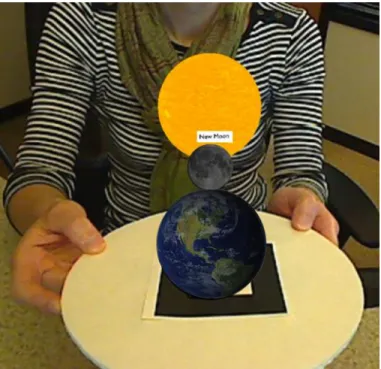
Figure 3.1 Fiducial marker with augmented 3D model being held by one of the research participants...98
Figure 3.2 Participant in ARTAT group, interacting with fiducial marker during the learning lesson ...99
Figure 3.3 Study procedures ...102
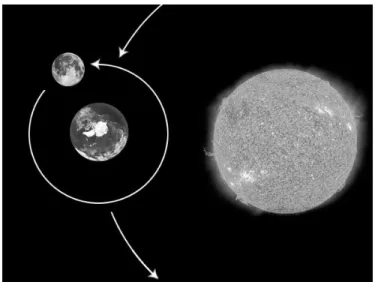
Figure G1 Moon and Earth rotation around the Sun ...177
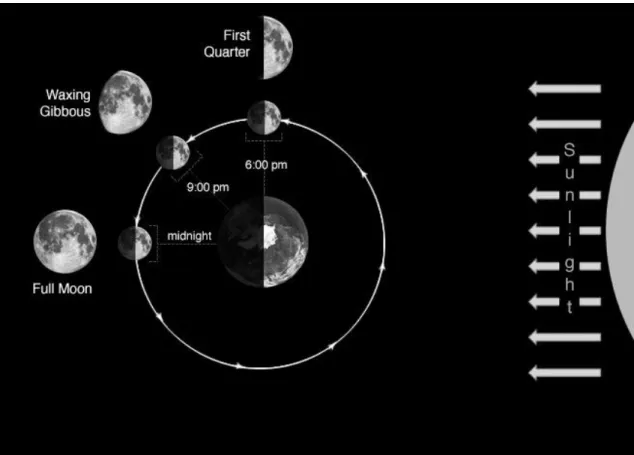
Figure G2 First Quarter ...179
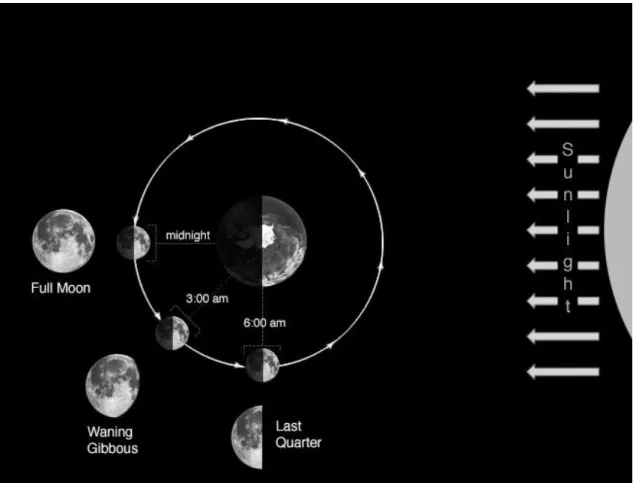
Figure G3 Second Quarter ...180
Figure G4 Third Quarter ...181
1
CHAPTER ONE: INTRODUCTION Background
Introduction to Augmented Reality
Augmented reality (AR) is a relatively new concept that was first mentioned by Ivan Sutherland in 1965, who was developing the first head-mounted display (HMD) at that time (Billinghurst & Kato, 2002). Azuma (1997) defines AR as a technology that is closely related to Virtual Reality (VR) that supplements reality by superimposing virtual objects into it. Examples of AR in popular culture can be seen during broadcasted games of American football in the form of yellow "first down" lines and team logos that appear on the turf. In this scenario, AR enhances reality by augmenting virtual objects over the real world (Azuma, 1997).
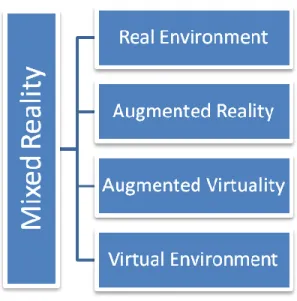
Milgram, Takemura, Utsumi, and Kishino (1994) place AR in-between reality (real world) and virtuality (virtual environment) on Milgram’s virtuality continuum. With its ability to superimpose virtual objects in real world, AR has the potential to be used in many fields - but especially in education for training purposes. An example of an
educational application of AR would be real-time training for car mechanics. In this training scenario, trainees would wear a see-through HMD and they would be able to see a car engine with augmented step-by-step 2D or 3D instructions on how to replace a particular car part. With this type of training, a novice would be able to gain expertise in a relatively short period of time.
As an amalgam of real and virtual environment, AR has several unique properties: (a) it is excellent at representing spatial information (Shelton, 2003); (b) depending on the interface (fiducial marker based AR), AR can add a tactile sensory modality to learning
2
experience; and (c) AR can eliminate split attention effect by integrating multiple bits of visual information into one view. With these three properties, AR could potentially reduce the learner’s working cognitive load that is created by the mental rotations required to process spatial information; and introducing tactile sensory modality would help spread the cognitive load.
The literature review of the AR field reveals numerous constructs that must be considered when discussing AR in educational context, and research in each of these constructs is limited. To examine this area further, this researcher will discuss research concerning AR from the perspective of working memory limitations and Cognitive Load Theory (CLT), and general AR research that pertains to learning, human spatial abilities, and tactile sensory input.
Memory Limitations and Cognitive Load Theory
According to Paas, Renkl, and Sweller (2003), Paas, Tuovinen, Tabbers, and Van Gerven (2003), and Van Merrienboer and Sweller (2005), human cognitive infrastructure, particularly working memory, is limited. This limitation can represent a barrier to more effective learning. One way to work around this barrier is to study the inner workings of the working memory and design instructional content around it. One theory that considers the limitations of working memory, with respect to the amount of information it can hold and the number of operations it can perform, is the CLT (Gerven et al., 2003; Sweller, 1994).
The CLT recognizes three types of cognitive load: extraneous, intrinsic, and germane (Sweller, Van Merrienboer, & Pass, 1998). Extraneous cognitive load is generated by the inadequate design of the instructional materials; intrinsic load is
3
generated by the difficulty of the learning materials; and germane load is generated by the amount of invested mental effort (Plass, Moreno, & Brünken, 2010). With properties such as superb depiction of spatial information and the ability to deliver tactile modality in a multimedia lesson, AR has the potential to enhance learning materials, reduce extraneous cognitive load, and promote intrinsic and germane cognitive loads.
Spatial Visualization Abilities
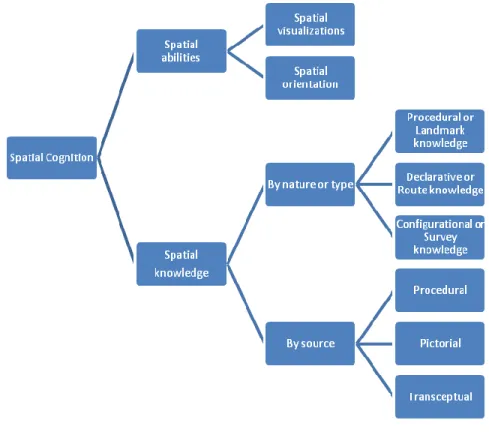
Spatial ability is a component of human spatial cognition that AR can utilize to promote deeper learning and conceptual understanding by learners with high and low spatial visualization abilities. Spatial abilities literature is broad and applies to numerous fields (human-computer interaction, geography, cognitive psychology, human factors, and so on). Review of the spatial abilities literature reveals the following hierarchical list: (a) spatial cognition; (b) spatial abilities with spatial orientation and spatial visualization; and (c) spatial knowledge.
Spatial cognition is a crucial component of human intelligence, and it is a component of Baddeley and Hitch’s (1974) model of working memory. This model indicates that working memory consists of the phonological loop, episodic buffer, and the visual-spatial sketchpad. The focus of this study will be on the visual-spatial sketchpad. The visual-spatial sketchpad is responsible for remembering and processing information such as colors, shapes, location, movement, navigation through complex environments (buildings, outdoors), as well as kinesthetic information (movement).
Further down the hierarchy are spatial abilities with two main subcategories: (a) spatial orientation; and (b) spatial visualization (Strong & Smith, 2001). This study will focus only on spatial visualization. McGee (1979) described spatial visualization as the
4
ability to mentally rotate, manipulate, and twist two-dimensional (2D) and three-dimensional (3D) stimulus objects.Eliot (2002) asserted that spatial intelligence is needed for almost every activity in everyday life, and Wickens and Hollands (2000) noted that spatial visualization abilities are important because they translate and mentally integrate 2D images into 3D objects.
Spatial knowledge categorized by its nature or type, and sources of spatial
information are the last two spatial constructs that are briefly discussed in this study. The nature of spatial knowledge, as outlined by Mark (1993), Golledge and Stimson (as cited in MacEachren, 1991), and Wickens and Hollands (2000), consists of declarative
knowledge or knowledge about objects (landmark knowledge in Wickens & Hollands, 2000), procedural or wayfinding knowledge (route knowledge in Wickens & Hollands, 2000) and configurational or “map like” (survey knowledge in Wickens & Hollands, 2000) spatial knowledge.
According to Shelton and Hedley (2004), AR interfaces most likely constitute some combination of procedural or configurational knowledge. AR may constitute procedural knowledge because its interface allows learners to “fly into” the 3D display and experience it as if they were standing or moving inside of a virtual world. AR may constitute configurational knowledge due to the interaction experienced by learners in which they hold a 3D model in their hands and view the geographical space (Shelton & Hedley, 2004).
Spatial knowledge that is categorized by sources of spatial information is divided into haptic space, pictorial space, and transperceptual space (Mark 1993). Haptic spaces are defined by tactile and kinesthetic sensory input; pictorial spaces are understood
5
through visual perception; and transperceptual spaces are learned mostly through
interface during wayfinding (Mark, 1993). Out of these three spaces, Mark (1993) noted that sensory-motor and haptic perception are the most important early forms of spatial information that reach the mind.
AR uses all three sources of spatial information compared to most other technologies, which predominately operate in pictorial sources. Shelton and Hedley (2004) noted that this combination of strong pictorial and strong haptic spatial knowledge acquired from the interaction and manipulation offered by AR may result in more rapid and more accurate perception.
Tactile and Kinesthetic Sensory Input
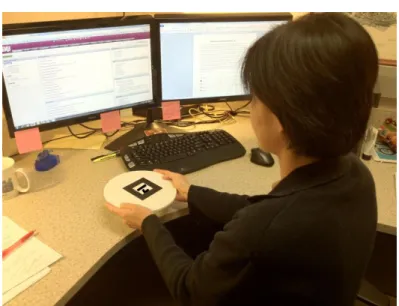
Nojima, Sekiguchi, Inami, and Tachi (2002) asserted that the feeling of touch is an intuitive human sensation that often does not need interpretation. Jones, Minogue, Tretter, Negishi, and Taylor (2006) described touch as an active discovery sense and several researchers claimed that handling objects is an effective way for students to learn complex and abstract science concepts (Druyan, 1997; Glasson, 1989; Vesilind & Jones, 1996). Tactile and kinesthetic sensory inputs are key features of fiducial-based AR that is used in this study. This is because fiducial marker-based AR requires active user
involvement, or physical manipulation of fiducial markers.
Like spatial visualization abilities, tactile and kinesthetic sensory information is also processed in visuo-spatial sketchpad (Baddeley, 2007). Logie (1995) classified visuo-spatial sketchpad into two components: (a) the visual cache, which stores
information about color and form; and (b) the inner scribe, which processes spatial and movement information. Baddeley (2007) described the visuo-spatial sketchpad as a
6
“subsystem that has evolved to provide a way of integrating visuo-spatial information from multiple sources, visual, tactile and kinesthetic, as well as from both episodic and semantic long-term memory” (p. 101).
Since auditory and visual modalities have their own working memories
(phonological loop and visuo-spatial sketchpad) with the ability to integrate information from multiple sources (Baddeley, 2007), Mousavi, Low, and Sweller (1995) claimed that using multiple modalities during instruction can help individuals learn better and reduce their cognitive load overall. Since AR can be described as a technology that utilizes multiple modalities, using tactile in addition to visual and/or auditory information during a lesson could potentially reduce a learner’s cognitive load.
Overview of Augmented Reality Research in the Areas of CLT and Learning, Spatial Visualization Abilities, and Tactile and Kinesthetic Sensory Input
There is limited research on the impacts of AR on cognition, learning, perception, spatial visualization abilities, and the importance of tactile modality on learning. As Kerawalla, Luckin, Seljeflot, and Woolard (2006) noted that the use of AR in education is still in its infancy. The following three sections will briefly discuss the current state of research of AR in education.
Augmented reality interface comparisons, learning with augmented reality and learner’s attitudes toward virtual reality. The literature reviewed in this section offers many insights into the effectiveness of AR during learning. The reduction and effects on cognitive load was a main topic of six studies (Tang, Owen, Biocca, & Mou, 2003; Haniff & Baber, 2003; Wang & Dunston, 2006; Klatzky, Wu, Shelton, & Stetten 2008; Chen, Wang, & Chiang, 2009; Kim & Dey, 2009). Research findings indicate that
7
HMD-based AR reduced mental effort more than other interfaces, such as paper instruction, Computer Assisted Instruction (CAI) on a Liquid Crystal Display (LCD) monitor, and AR on LCD monitor (Tang, 2006; Haniff & Baber, 2003; Wang & Dunston, 2006). Klatzky et al. (2008) found that AR reduced the need for spatial visualizations, which translated into reduced cognitive load. Kim (2009) reported that AR display resulted in better driving performance and fewer issues with divided attention, which can be interpreted as reduced cognitive load, as well.
Literature that examined user satisfaction with the AR treatments reports mixed results. Juan, Beatrice, and Cano (2008) and Haniff and Baber (2003) reported that study participants liked and appreciated the AR interfaces that were presented to them during the experiment, but Leblanc et al. (2010) reported that participants appreciated the real physical treatment more than the equivalent AR interface.
Literature that focused on learning with AR showed that AR can more positively influence learning as opposed to traditional classroom materials (Vilkoniene, 2009). Yim and Seong (2010) found that the best AR lessons should have sequential steps with four to five informational chunks in each sequence for ideal learning and retention. Yim and Seong (2010), Tang et al. (2003), and Klatzky et al. (2008) reported increased learning and task accuracy during interactions with AR lessons. For collaborative learning, Dunleavy, Dede, and Mitchell (2009) reported that students viewed learning with AR as an authentic and novel way to learn science.
In the area of learner interest, Huang, Rauch, and Liaw (2010) reported that learner motivation increases in a 3D environment, while Dunleavy, Dede, and Mitchell (2009) and Yim and Seong (2010) reported that physical interaction with the AR lesson
8
made learning authentic, motivating, and efficient. In the area of collaborative learning, Dunleavy, Dede, and Mitchell (2009) and Huang, Rauch, and Liaw (2010) both found that collaboration with AR increased student interest, motivation, and problem solving.
Spatial visualization abilities. Spatial visualization abilities literature reviewed in this study focuses on the influence of 2D, 3D, instructional video, VR, animation, and problem solving on learners’ visual spatial abilities. Research performed by Huk , Steinke, and Floto (2003), Kozhevnikov, Motes, and Hegarty (2007), Yang et al. (2003), and Cohen (2005) reported that the mode of representation had an impact on learners spatial visualization abilities, and generally, high spatial visualization ability learners preferred 3D and animation-based instructional materials over 2D images and graphs. On the contrary, Chen (2006) and Chen et al. (2009) reported that spatial abilities did not play a significant role in learning. However, Chen (2006) did find that guided AR instruction leads to better learning. Similar finding was reported by Yang et al. (2003) who found that instructor-led animations gave better learning results than static diagrams. From the CLT research, Moreno and Mayer (2005) and Rieber (2005) reported similar findings and they noted that guidance through each learning activity is required.
Shelton and Hedley (2002), Shelton (2003), and Hedley (2003) explored how AR influences the human understanding of spatial phenomena. Shelton and Hedley (2002) found that AR reduced misinterpretations during learning and improved student conceptual and factual understanding. Shelton (2003) reported that AR holds the following unique advantages for teaching and learning: (1) the ability to effectively communicate with reference to dynamic 3D objects; (2) the ability to regard virtual objects as both real and fake; and (3) that the “virtualness” of the objects affected how
9
students experienced the content and therefore changed the way they learned it. And lastly, Hedley (2003) found that AR interfaces provide advantages over desktop
interfaces (for example, 3D on a PC) in a range of perceptual and task-based activities for users such as: task performance, task speed, completeness, and level of detail. From the cognitive load theory perspective, Hedley (2003) suggests that through multisensory interaction, AR interfaces may spread cognitive load for users, thereby reducing cognitive inertia.
Tactile and kinesthetic sensory input. Tactile and kinesthetic sensory input research studies are categorized into studies that focus on influence of tactile sensory modality on learning with AR, haptics, physical hands-on learning, and user perceptions and interactions with the tactile AR interfaces.
Research by Fjeld, Schar, Signorello, and Krueger (2002) compared AR lessons with traditional instructional methods, such as cardboard and physical models in a spatial laser-positioning problem, and concluded that AR treatment offered the same cognitive support as physical models. Hornecker and Dunser (2009) explored children’s perception and interaction with AR 3D models and found that children who worked collaboratively took less time to complete the task and showed more signs of enjoyment.Perception of AR tangibility was researched by Shelton (2003), who found that AR often requires physical (tactile) interaction among participants for increased knowledge acquisition. In addition, Shelton (2003) found that visuo-motor activity offered by an AR interface led to expert knowledge of seasonal variation of light and temperature. This finding ties to the previously mentioned research by Peruch, Vercher, and Gauthier (1995), Yim and Seong
10
(2010), and Dunleavy, Dede, and Mitchell (2009), who found that more learning took place when participants physically engaged with the learning materials during the lesson.
In the area of haptics research, Minogue et al. (2006) and Jones et al. (2006) found significant differences in student learning when haptics were used during instruction. A study by Persson et al. (2007) found no obvious advantage from adding force feedback during pre-test and post-test analysis, but researchers did report that haptics successfully conveyed the key constructs during a biomolecular lesson
In the area of physical hands-on research, the Triona and Klahr (2003) and Klahr, Triona, and Williams (2007) studies compared physical learning materials with their software equivalents on a PC and found no significant differences in student learning.
Purpose of the Study and Research Questions
Clearly, research of educational applications of AR can be divided into three major areas: (a) effects of AR on working memory and consequently on learning; (b) effects of AR on spatial visualization abilities; and (c) implications of tactile sensory input on learning process. Each area is a crucial component of research that needs to be conducted on the effectiveness of AR as an instructional technology in education. Due to the difficulty of measuring the effects tactile sensory input has on learning, this study focused only on the effects of AR on learning, cognitive load, and spatial abilities. Therefore, the primary purpose of this study is (a) to examine how AR performs as a learning tool when compared to other instructional treatments, such as printed text with images instruction; (b) to determine if AR can decrease learner cognitive load; and (c) to determine if AR can supplement spatial visualization abilities of learners with low spatial abilities during learning.
11
Examining how AR affects cognitive load is in line with research performed by Tang et al. (2003), who compared the effectiveness of AR as an instructional medium to three other instructional methods (printed media; CAI on LCD monitor, computer assisted instruction on a through HMD; and spatially registered AR by way of a see-through HMD) in a computer-assisted assembly task from the cognitive load perspective. Improperly designed instructional materials can increase cognitive load and diminish learning (Van Merriėnboer et al., 2002; Tabbers, Martens, & Merriënboer, 2004; Chandler & Sweller, 1991). Early research of AR indicated that when used in certain conditions, AR can potentially reduce cognitive load, but this research must to be expanded to include new topics, such as molecular interactions, solar system configurations and geographical land formations (Shelton, 2003). Additionally,
integration of AR into the classroom or instructional settings either from a pedagogical or technological aspect should be examined (Chen et al., 2009).
Researching how AR can supplement spatial visualization abilities during learning is in line with research conducted by Shelton (2003), who examined how learners change the way they come to understand topics that involve dynamic spatial relationships while interacting with virtual objects (AR). This is an especially fertile area for research, as few studies that directly examine the impacts of AR on learners with low spatial visualization abilities exist. Since spatial visualization abilities vary among learners, it would be beneficial to determine if AR can help the individuals with low spatial visualization abilities with learning of spatial content (geography, astronomy, biology, and so on).
12
To examine the effects of (a) AR on working memory and learning; (b) on spatial visualization abilities; and (c) implications of tactile sensory input on learning process, this study used quantitative research methods. Data was collected with the following instruments: (a) Paper Folding Test for assessment of spatial visualization abilities (Paper Folding Test), which was developed by Ekstrom et al. (1976); (b) Lunar Phases Concept Inventory astronomy pre-test and post-test (LPCI) developed by (Lindell, 2001); and (c) NASA-TLX: Task Load Index (NASA TLX), which is an instrument for subjective measurement of cognitive load. The research questions that guided the inquiry were as follows:
1. Is there any difference in learning gains for learners exposed to AR instructional treatment (AR and text lesson) compared to more traditional instructional treatment, such as text with images lesson?
2. Can AR lesson significantly reduce the cognitive load of learners when compared to more traditional instructional treatment, such as text with images lessons? 3. Can AR aid learners with low spatial visualization abilities and help them perform
as well as learners with high spatial visualization abilities?
Definition of the Terms
This section defines the terms used throughout this research study.
Affordances
Norman (1988) describes affordance as perceived and actual properties of an object, especially fundamental properties that determine just how the thing could possibly be used. Norman (1988) gives several examples of affordances: a chair affords support and therefore affords sitting, but it can also be carried.
13
Augmented Reality
Azuma (1997) defined augmented reality (AR) as a variation of Virtual Reality (VR), and technology that supplements reality by superimposing virtual objects into it. An example of AR in culture can be seen during the broadcasted games of American football games in the form of yellow "first down" lines. These yellow “first down” lines depict the line that the offensive team must cross in order to receive a first down or a gain of 10 yards or more which would allow them to attempt another series of “first downs”. In this case, AR enhances reality by mixing real views with virtual objects (Azuma, 1997).
Cognitive Load / Mental Workload
Cognitive load may be viewed as the level of “mental energy,” required to process a given amount of information (Cooper, 1990). This concept is used throughout this study to describe the amount of mental processing required to process a particular learning task.
Fiducial Marker
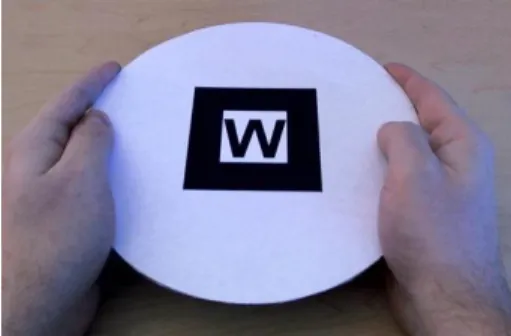
A fiducial marker consists of patterns that are mounted in the environment (for example, printed on a paper) and automatically detected by a digital camera with accompanying detection mechanism (Fiala, 2005). This detection mechanism is usually software that monitors the incoming video stream from the camera and actively searches for the fiducial marker pattern within the stream. After the pattern is detected, a
previously defined event is triggered. In an AR system, this event can be an augmentation of 2D, 3D, animation, or audio signal over the fiducial marker.
14
Haptic
Haptic means relating to or based on the sense of touch (Haptic, 2012). In this study, the term haptic refers to a technology that offers force feedback or the feeling of touch when interacting with virtual environments. Several research studies that examine the effects of force feedback or haptic technologies have been summarized in Chapter two of this study.
Head Mounted Display (HMD)
A Head Mounted Display (HMD) is a type of headgear, which is often used for training and in virtual environments. An HMD is operated by superimposing a visual information display (3D stereoscopic image) over a viewer’s field of view (Liu et al., 2010).
Kinesthetic
The term kinesthetic in this study is used along with the term tactile to describe the sense of touch that is generated while interfacing various AR systems. McCloskey (1978) described kinesthetic sensation as:
Perceived sensations about the static position or velocity of movement (whether imposed or voluntarily generated) of those parts of the body moved by skeletal muscles and perceived sensations about the forces generated during muscular contractions even when such contractions are isometric (p. 763).
Liquid Crystal Display (LCD)
An LCD is an electronic display that consists of segments of a liquid crystal whose reflectivity varies according to the voltage applied to them (Liquid Crystal
15
Display, 2012). This type of electronic display has replaced cathode ray tube (CRT) displays as the most common way to display information electronically.
Spatial Cognition
Spatial cognition is fundamental to human life itself and it is an important component of Baddeley’s and Hitch’s (1974) model of working memory. Spatial
cognition falls under the visuo-spatial sketchpad that is responsible for remembering and processing information, such as colors, shapes, location, movement, navigation through complex environments (buildings, outdoors), as well as the kinesthetic information (movement).
Spatial Visualization Ability
Spatial visualization ability is the ability to mentally rotate, manipulate, and twist 2D and 3D stimulus objects (McGee, 1979).Wickens and Hollands (2000) also pointed out that spatial visualization abilities are important as they translate 2D images into 3D objects and mentally integrate them.
Spatial Knowledge
Spatial knowledge is a spatial construct that resides independently outside of the human spatial cognition infrastructure and spatial abilities. Examples of spatial
knowledge include everyday physical objects, such as buildings, paths, trees, etc. According to Shelton and Hedley (2002), humans acquire knowledge about spatial phenomena by viewing 3D objects (landscapes).
16
Tactile
Tactile refers to perception that is perceptible by touch (Tactile, 2012). Tactile modality is one of the unique properties of AR and its influence on learning will be further explored in this study.
Virtual Reality (VR)
Virtual reality (VR) is an artificial environment that is experienced through
sensory stimuli such as visual or auditory stimuli, which is provided by a computer and in which one's actions partially determine what happens in the environment (Virtual Reality, 2012). VR is not the focus of this study, but it shares similar properties with AR, such as presence, spatial properties, and the ability to present tactile modality through the use of haptic devices.
17
CHAPTER TWO: REVIEW OF LITERATURE Introduction to Augmented Reality
Augmented reality (AR) is a relatively new technological concept. It was first mentioned in 1965 when Ivan Sutherland developed technology that made it possible to overlay virtual images on the real world (Billinghurst & Kato, 2002). Azuma (1997) defined AR as a variation of Virtual Reality (VR), and a technology that supplements reality by superimposing or superimposing virtual objects into it. An example of AR in daily life would be use of a mobile device that enables its user to see the nearest point of interest, by utilizing live camera view. When pointed at certain direction, mobile device would display relevant information above point of interest, such as name of the object, distance, and other type of pertinent information. In this case, AR enhances reality by mixing real views with virtual objects (Azuma, 1997).
Figure 2.1 Milgram’s Virtuality Continuum
Milgram et al. (1994) placed AR in the realm of mixed reality, the middle ground between reality and virtuality. As depicted on Figure 2.1, AR falls very close to the real
18
world on the Milgram’s virtuality continuum. With this unique property, various industries and academic fields are trying to find the best fit for AR among familiar modalities, such as images, VR, and instructional video. In addition, certain
implementations of AR allow the addition of tactile sensory input to multimedia learning and it is excellent at representing spatial information.
As an amalgam of the virtual and real environment, AR has several unique properties: it is excellent at representing spatial information and, with some interfaces such as fiducial-based AR systems, AR allows the learner to add tactile sensation to their learning experience. These two properties combined can potentially offload the learner’s working memory load and introduce another sensory input to the learning process. Due to its unique properties, such as superb representation of spatial information and the
possibility of adding a tactile modality to AR content, AR should be examined as a viable instructional technology from an educational and learning perspective.
There are many of constructs to consider when discussing AR in the context of instruction and limited research has been conducted in these areas. According to Kerawalla et al. (2006), the use of AR in education is still in its infancy.In order to examine this area further, AR research will be discussed from the perspective of working memory limitations and Cognitive Load Theory (CLT), and general AR research that pertains to learning, human spatial abilities, and tactile sensory input.
Two discussions of the literature that pertain to AR were identified: the first by Yu et al. (2010) and the second by Chen et al. (2009) Van Krevelen and Poelman (2010). Both discussions focus on the general overview of the AR field and act as a starting point for anyone interested in AR. Education and learning are briefly covered in both literature
19
discussions. Literature discussion by Yu et al. (2010) reviews the following areas of AR: trackingsystems, medical applications, mobile applications, visualizations and AR, industrial applications, “edutainment”, and hardware requirements for AR systems.
A literature discussion by Van Krevelen and Poelman (2010) went into more technical details and explains various components of AR systems such as displays, tracking, user interface and applications of AR. AR displays are one of the most
important components of AR systems. According to Van Krevelen and Poelman (2010), there are three ways to visually present AR: video see-through, optical see-through, and projective displays. Video see-through interfaces are the most common and inexpensive AR interface and they are created by digitally altering a live video feed captured by the camera and augmenting visual objects within it. Optical see-through displays leave the real-world resolution intact while they augment the virtual objects over it. Projective displays are the last kind of visual displays and they do not require eyewear and they can cover large surfaces for a wide field of view.
AR displays can also be classified into three categories based on their position between the viewer and the real environment: head-worn, hand-held, and spatial (Van Krevelen and Poelman, 2010). Head-worn AR display devices include video and optical see-through displays (HMD), virtual retina displays (VRD), and head-mounted projective displays (HMPD). Hand-held AR displays include hand-held video and optical see-through displays, as well as hand-held projectors. These types of devices offer the most cost-effective way to introduce AR commercially. Spatial displays are the last category of visual AR displays and they are often placed statically within the environment and can
20
include screen-based video see-through, spatial optical see-through, and projective displays. These interfaces are usually LCD computer monitors and televisions.
Tracking systems in AR are essential because AR systems need to know the position of the user relative to their environment to create an accurate 3D rendering view. Tracking systems can be sensor-based, vision-based, or a hybrid. Sensor-based systems can be mechanical, ultrasonic, magnetic, global positioning system (GPS) based, radio-based, or inertial. Vision-based trackers include a fiducial marker tracker, which relies on image recognition to track the position of the object that is to be augmented. This is the type of marker that will be used in this research study. A fiducial marker is usually a printed pattern (Figure 2.2) that can be physically manipulated by the user and it is used as a point of reference for the vision-based trackers.
Figure 2.2 An example of printed fiducial marker
Vision-based trackers track the marker on the X, Y, and Z axis of the Cartesian coordinate system and augment virtual objects over the fiducial marker. Van Krevelen and Poelman (2010) noted that there is a growing body of research on “markerless AR” for tracking physical positions in real-world environments. Hybrid tracking systems use the combination of visual-based and sensor-based tracking.
21
User interfaces in AR are numerous and include, but are not limited to: tangible user interface (TUI), 3D pointing, haptic user interface and gesture recognition, visual user interface and gesture recognition, gaze tracking, aural user interface and speech recognition, hybrid user interface, and context awareness.
There are countless applications of AR, but Van Krevelen and Poelman (2010) categorized them as follows: personal information systems that focus on wearable computing devices, industrial and military applications, medical applications, entertainment, office applications, and education. Each of these areas has many interesting examples of AR applications, which make this field exciting and ripe for research.
In summary, Yu et al. (2010) and Van Krevelen and Poelman (2010) agree that the current AR systems are limited, but both predict a bright future for AR. Both literature discussions agree that hardware is the biggest limitation of AR, as image processing for AR often means processing vast amounts of information. For example, in markerless AR, each frame of a live 29.97-frames-per-second video stream must be processed for pattern recognition. This requires powerful workstations and the portability of such systems is often reduced to the wired connection from the processing computer to the display device, such as HMD. Both reviews noted that portability and outdoor use need improvement, as most AR systems are too cumbersome to be used in an outdoor environment or carried by a user. Powering such systems creates another barrier, as these are processor-intensive computers that require a lot of power. Both reviews also agreed that tracker accuracy in current and future AR systems should be improved. Yu et al. (2010) asserted that occlusion detection, as well as analysis of various tracking methods,
22
should be further researched, which would allow researchers to effectively capitalize on the knowledge of video frames analysis or integration of vision-based tracking with other types of sensors in a novel way. Another venue for further research is the area of
intelligent recognition systems, which will be able to acquire references or extract patterns from the real world in real time, and then augment them with real-time information.
Review of Literature
In the context of this literature review, three areas pertinent to the study of AR in education will be reviewed. In particular, literature that examines (a) AR interface comparisons, learning with AR and learner’s attitudes toward virtual reality; (b) spatial visualization abilities; and (c) tactile and kinesthetic sensory input will be reviewed. Prior to these discussions, working memory limitations and Cognitive Load Theory will be briefly discussed to prime the reader on some of the concepts that will be discussed in subsequent chapters.
Memory Limitations and Cognitive Load Theory
Human cognitive infrastructure, particularly working memory, is limited (Paas, Renkl & Sweller, 2003; Paas, Tuovinen, Tabbers, & Van Gerven, 2003; Van Merrienboer & Sweller, 2005). Several researchers have attempted to explain the limits of human cognition. For example, Baddeley and Hitch (1974) developed a model of working memory in an attempt to describe a more accurate model of short-term memory. Cowan (1998) developed an integrated framework of attention and memory. Additionally, Miller (1956) described the capacity limit of working memory. However, theories that focus
23
only on the limitations of the cognitive infrastructure are sufficient for explaining how learning takes place.
One theory that successfully explains the relationship between learning and human cognitive architecture is Cognitive Load Theory (CLT) (Sweller, 1994). Plass, Moreno, and Brünken (2010) asserted that the objective of CLT is to allow researchers to predict learning outcomes by taking into consideration the capabilities and limitations of human cognitive architecture. It has been designed to provide guidelines intended to assist in the presentation of information in a manner that encourages learner activities that optimize intellectual performance (Sweller, Van Merrienboer, & Paas, 1998). In general, CLT recognizes three types of cognitive load: extraneous, intrinsic, and germane
(Sweller, Van Merrienboer, & Paas, 1998). Extraneous cognitive load is generated by the inadequate design of instructional materials; intrinsic cognitive load is generated by the difficulty of the learning materials; and germane cognitive load is generated by the amount of invested mental effort (Plass, Moreno, and Brünken, 2010). With its unique properties, such as superb depiction of spatial information and the ability to deliver tactile modality to a multimedia lesson, AR has the potential to enhance learning materials, reduce extraneous cognitive load, and promote intrinsic and germane cognitive loads.
Memory limitations during learning and CLT are the two concepts that are used to evaluate the impacts of AR on human cognition, and are often referred to in this literature review.
24
Augmented Reality Interface Comparison, Learning with Augmented Reality, and Learner’s Attitudes toward Virtual Reality
One of the reasons it took nearly 40 years for AR to become viable and
widespread technology is because technological demands for AR are much higher than for the virtual environments (Van Krevelen & Poelman, 2010). AR systems require several components for them to be considered AR system: spatial displays, position trackers, and user interfaces. Spatial displays such as head-mounted displays (HMD), see-through HMDs, and monitors are required to combine the real and virtual worlds (Van Krevelen & Poelman, 2010; Bimber & Raskar, 2005). AR systems also require tracking sensors that can sense the environment and track the viewer’s (relative) movement for correct registration of the virtual with the real (Van Krevelen & Poelman, 2010). Lastly, the user interface in AR is what makes AR so attractive for use in a wide variety of industries for training and learning, and this interface usually allows haptic manipulation of virtual objects (mostly 2D and 3D images, animation, sound, etc.). User interface in AR includes TUI, haptic interfaces, gesture recognition, gaze tracking, aural user
interface, and hybrid systems. Almost all of these technologies began to flourish over the past two decades, but even today, most of them are not perfected. Spatial displays are often bulky and require a wired connection to an AR processing workstation or a mobile device; trackers often rely on environment analysis, which is processor-intensive to augment virtual objects in the real world; and user interfaces are still somewhat rudimentary or unavailable commercially to end users.
Over the past 10 years, most of the technologies associated with AR have become available commercially, which in turn made them available to a broader spectrum of
25
researchers, and resulted in an increase of AR literature. El Sayed, Zayed, and Sharawy (2011) pointed out that AR made good steps towards becoming a mainstream technology. Gartner’s (2011) Hype Cycle Special Report, which provides strategists and planners with an assessment of the maturity, business benefit, and future direction of over 1,900 technologies, concluded that there have been great advances in the areas of human interface and computer analytics, which will directly contribute to future development of AR systems. However, much of the literature on AR applications in education is limited to argumentative or exploratory papers. What the field of AR applications in education is lacking are empirical research studies.
Review of literature related to augmented reality interface comparison. As a promising technology with the ability to offer tactile interface, AR in literature has been often compared to other already-established physical and digital interfaces and display technologies. For example, Haniff and Baber (2003) compared HMD-based AR with printed, textual instructions, while Tang et al. (2003) compared paper-based instructions with computer-assisted instruction (CAI) and LCD monitors. Juan, Beatrice, and Cano (2008), Wang and Dunston (2006), and Chen, Wang, and Chiang (2009) compared two types of AR interfaces: computer LCD monitors and HMDs. Vilkoniene (2009)
compared LCD monitor-based instruction with classroom lecture and CAI. Finally, in medical training, Leblanc et al. (2010) compared human cadaver with AR-based training simulator and Klatzky et al. (2008) compared the ultrasound visualization technique with “Sonic Flashlight” which is also an AR-based interface. In addition to interface
comparison, the following three studies that pertain to affordances, scaffolding, and learning-by-doing are identified and described.
26
Haniff and Baber’s (2003) study (n=10) evaluated the appropriateness and performance of the AR system for a given task. To do this, the researchers compared a Water Pump Augmented Reality Tool (WART), which is a pump assembly system, to a paper version of the same assembly system. Three comparison dimensions were used to assess this appropriateness: analysis of a verbal protocol, since the participants were required to verbalize their experiences during the task; performance time; and a follow up questionnaire which inquired about student feelings towards AR instruction (the
questionnaire was not solicited for paper treatment).
Statistical analysis concluded that paper-based WART instructions led to faster performance than the AR system. However, analysis of the verbal protocol indicated that the participants who used the paper version of WART uttered more words during the treatment. Haniff and Baber (2003) noted that the paper diagrams may have required the participant to translate the instructions mentally more than the representation associated with the real-world objects in the augmented reality system, thereby increasing the cognitive load. This was not the case with AR treatment, as AR treatment offered a more complete representation of the task, thereby eliminating the need for additional spatial visual representations. Study participants also reported that they appreciated the AR version of the treatment more that paper version, but also pointed out technical flaws associated with it. Some of technical issues reported were system lag caused by the computational intensity of the AR system; image disparity which is the offset of a camera view from the user’s view of the real world; low image resolution; slow rendering; low maneuverability; and environmental conditions, such as improper lighting and
27
was performed in 2003 when the speeds of processors were still rather slow, one can assume that most of the technical issues, such as system lag, slow rendering, and low resolution, would be nonexistent with modern processors.
Similar to Haniff and Baber’s (2003) study, Tang et al. (2003) tested the relative effectiveness of AR as an instructional medium in a computer-assisted assembly task, but from a cognitive load perspective. The study included 75 participants (university
undergraduates) who were divided into four groups: printed media (n=19), CAI on LCD monitor display (n=18), CAI on a see-through HMD (n=19), and spatially registered AR via see-through HMD (n=19). Instructional materials were comprised of 56 steps in a single assembly task, and for each step subjects had to acquire a specific color and size part and orient it to the current subassembly according to the assembly instructions. Researchers wanted to do the following: (a) measure if AR can improve human performance during an assembly task when compared to other media (printed media, CAI, HMD); (b) determine a theoretical basis for cognitive support that AR provides; and (c) find any weaknesses in current AR interface design methodologies. To measure these three research objectives, researchers analyzed the participants’ task performance (time for completion and accuracy of the task), and perceived mental workload using the NASA TLX cognitive load test.
Study results indicate that there was no significant advantage for AR treatment over CAI and HMD treatments in terms of time of completion. However, a significant statistical difference was observed between paper and AR treatment as participants completed the AR treatments on an average of several minutes before the paper instruction group. Tang et al. (2003) expected that the task performance would be
28
increased due to a reduction of head and eye movement between the workplace and the attached medium, which in turn would explain the differences between the paper and AR treatments. In the printed media group, participants had to look at the paper instructions and then back at the assembly task, thus dividing their attention and creating a split attention effect. Split attention effect is one of the categories of CLT and it occurs when learners are required to split their attention between at least two spatially or temporally separated sources of information (Ayers & Sweller, 2005; Sweller, Ayers, & Kalyuga, 2011). During the AR treatment, participants did not have to divide their attention, as the instructions were augmented over the physical blocks and they never had to look away to see where the next part would go. The AR group effectively reduced or eliminated the split attention effect and they completed the task quicker than the printed media group. In terms of the accuracy of the task, participants in the AR treatment were more accurate during the assembly task when compared to the other three treatments, as the researchers observed 82% error reduction for the AR assembly task.
The third hypothesis that assumed that the instructional material does have an effect on mental workload was supported as researchers found statistically significant differences in participants’ cognitive loads between all four treatments. Using the NASA TLX to measure mental workload, participants in this study reported that the AR
treatment was mentally less demanding. Tang et al. (2003) claimed that this finding is consistent with their hypothesis that AR reduces cognitive load by reducing the amount of mental manipulation of object location. An example of this could also be observed in the previously discussed elimination of the split attention effect between AR and paper treatments. To summarize, Tang et al. (2003) did find enough evidence to support the
29
notion that AR instructional systems can reduce mental workload and improve task performance.
Juan et al. (2008) compared traditional spatial display (LCD monitor) with an HMD device during the summer school of the Technical University of Valencia in Spain with 40 participants (ages 8-10). The AR system was designed to teach anatomical structures of the human body and it allowed tactile interaction with the users. Students were divided into two groups and administered two AR treatments. Upon completion of the task and subsequent statistical analysis, the researchers did not find any significant statistical differences between the two interfaces. Additionally, the order of the exposure to the treatment (HMD and LCD monitor) did not affect the test results. However, Juan et al. (2008) found that children considered both systems useful for learning about the human body.
Similar to Juan et al. (2008), Wang and Dunston (2006) also compared two AR interfaces (HMD and LCD monitor) and analyzed the feasibility of augmenting human vision with an AR interface during a construction task from the perspective of cognitive engineering. The researchers wanted to quantitatively assess the perceptual
incompatibility caused by the improper selection of an AR interface (HMD and LCD monitor). The study participants were 16 engineering graduate students who attended both treatment sessions (HMD and monitor) and completed two possible sequences of two treatments. Treatments were comprised of orienting a fiducial marker to match a position of 3D virtual model of piping. Researchers hypothesized that (a) when compared to traditional monitor, using HMD would reduce the amount of time to complete a task; (b) when compared to an LCD monitor, using HMD should improve accuracy; and (c)
30
when compared to an LCD monitor, HMD should reduce the cognitive load. Similar to Tang et al. (2003), researchers measured task performance (time of completion and accuracy of the task) and perceived mental workload.
Study findings confirmed all three hypotheses. For the time of completion
hypothesis, p value was <0.0001, which confirmed that the HMD treatment was superior to LCD monitor. Like the findings of Tang et al. (2003), this effect can be contributed to the reduction of the split attention effect, since the HMD treatment eliminated eye and head movements between the fiducial marker and the LCD monitor.
The second hypothesis (HMD improved accuracy over LCD monitor) was also confirmed as a statistically significant improvement in task precision. Wang and Dunston (2006) contributed this difference to the addition of mental rotations that learners must perform to accommodate for the mismatch of reference frames presented on the monitor and in their real world (fiducial marker). This effect can be explained from the spatial ability and cognitive load perspectives. This additional mental manipulation potentially burdened the working memory of learners with the low spatial abilities, and caused cognitive overload, which resulted in errors during precision placement. In addition, the mismatch for reference frames on the monitor and in real world may have caused the learners to look between the two interfaces, thus again causing the split attention effect. An interesting extension to this study would be if Wang and Dunston (2006) measured the spatial abilities of the study participants to compare if the learners with high spatial abilities were as cognitively overwhelmed during the CLT monitor treatment as their colleagues with low cognitive abilities.
31
The third hypothesis (HMD users should have experienced decrease in cognitive load) was also supported by the statistical analysis (p< 0.0001). Explanations for this result can also be drawn from individual spatial abilities and integration of the fiducial marker and 3D model with HMD, which practically eliminated the split attention effect. Wang and Dunston (2006) point out that learners who used the LCD monitor over an HMD had to engage in more perceptual activities, such as deciding, remembering, looking, and searching to complete the demanding orientation task. In summary, using HMD rather than an LCD monitor as an AR interface resulted in shorter task completion time, reduced orientation displacement, and reduced cognitive load.
The last study that compares HMD and LCD monitor type interfaces is by Chen et al. (2009), who explored how newer instructional technology, such as AR, can be used to facilitate student learning of chemistry concepts through analysis of effects of presence on learners’ cognitive load and learning performance. Chen et al. (2009) described presence in virtual environments as a degree of attention shifted from the real world to virtual environments as if the users were situated in the artificial setting. The researchers hypothesized that the increased presence would translate into reduced cognitive load and increased learning performance. Fifty-eight study participants were divided into two groups (webcam and HMD group, n=29 each), and were given an AR-based interactive book (Protein Magic Book-PMB), which helped introduce basic concepts of protein structures.
Study results indicated the following: (a) students did not perform differently under different AR conditions (HMD and LCD monitor); (b) students with lower cognitive load did not perform differently from students with high cognitive load; (c)
32
spatial ability played no role during the learning process; and (d) the perception of presence did indeed affect student learning (Chen et al., 2009). One interesting finding that Chen et al., (2009) reported was that the students who interacted more with the learning materials, as well as the students with higher spatial abilities, had a higher presence, which in turn lowered their cognitive load. Physical interaction with the
learning materials has been shown to positively increase participant performance (Peruch, Vercher, & Gauthier, 1995), and this area is covered in detail in the tactile and kinesthetic sensory input section of this review.
A study by Vilkoniene (2009) analyzed the influence of AR technologies on student knowledge about the human digestive system. This study encompassed 110 seventh grade students from a school in Lithuania. Vilkoniene (2009) divided the students into three groups: AR, computer program, and lecture group. They each
delivered the same lesson about the human digestive system. Statistical analysis showed that the only statistically significant difference on the pre-test scores in all three groups was between the AR and lecture groups and the difference was in the knowledge of the organs of digestive system. Post-test analysis (Mann-Whitney test) yielded statistically significant differences (p<0.05 and p<0.01) between scores for AR and computer program groups. In summary, Vilkoniene (2009) found that the AR lesson, when used with traditional verbal and printed teaching materials, positively influenced student learning acquisition of human digestive system.
Leblanc et al. (2010) examined an alternate interface by comparing a human cadaver model with an AR simulator for straight laparoscopic colorectal skills
33
and a human cadaver group (n=7) and were compared according to their technical skills and event scores, as well as their satisfaction with the training model. Researchers
assessed study participant performance based on generic and specific technical skills, and events using the Objective Structured Assessment Technical Skills forms completed independently by trainers and trainees. Researchers reported several findings: technical skills scores for trainers and trainees were better on the AR simulator than on the cadaver. Generic events score for the trainers was also considerably better using the simulator than using the cadaver, but an overall higher satisfaction was observed for the human cadaver over the AR simulator. This is understandable, as the real tissue (with its physical
properties) offers unique tactile sensory information that could be difficult to achieve with any haptic device. Researchers concluded that AR simulator training could be integrated into the laparoscopic colorectal skills training by offering the AR training prior to cadaver training so that the benefits of both trainings are maintained.
Another study that investigate the influence of AR on medical training was performed by Klatzky et al. (2008), who examined the impacts of the AR visualization tool when compared to the conventional ultrasound procedure of guided needle insertion. This was another interface comparison study in which two interfaces were compared and cognitively assessed.
Klatzky et al. (2008) examined the conventional ultrasound system (CUS) first. CUS is often used during laparoscopic surgery and enables its users to perform medical procedures without direct sight of the affected issue through a small incision while viewing a remote screen. The remote screen is the screen that displays the real time image of the procedure in progress and surgeons need to gaze at it during the surgery.
34
The second interface (“Sonic Flashlight”) is an AR-based system that augments the real-time image of the operation over the object that is being operated on, thus eliminating remote viewing. According to Klatzky et al. (2008), remote view presents problems because the surgeons are disconnected from the action itself. Similar to the Wang and Dunston (2006) study, remote viewing can cause displaced hand-eye coordination, as users must keep their attention focused on the remote display instead of the site of operation. Klatzky et al. (2008) asserted that additional cognitive processes are required in order to normalize the metric of the display, align multiple frames of reference, and form a representation of the target for planning and guiding the action. This is also in line with the causation of the split attention effect since surgeons must split their attention between the two sources of information: tactile input at the site of the operation and the visual input at the remote display monitor.
Three experiments were conducted in this study to examine the impacts of AR visualizations. The first experiment (n=12) examined learning through plane needle insertions, which were guided by two interfaces, CUS and Sonic Flashlight. The second experiment was similar to the first experiment, but the needle insertion points were differently positioned. The third experiment utilized in-plane needle insertions (in-plane refers to an ultrasound field of view) to further reduce the need for cognitive mediation to represent target location. In all three experiments, and especially in the third experiment with in-plane insertions, the Sonic Flashlight showed higher accuracy and lower
variability in needle aiming than CUS did. Study participants did not have to cognitively mediate visual and spatial representations because the Sonic Flashlight eliminated the need to do so. AR treatment proved better than the CUS interface because it eliminated
35
the need to build spatial visualizations, thereby relieving the cognitive load (Klatzky et al., 2010). Results of this study were similar to the results in Wang et al. (2006), who also found that interfaces (HMD) that were spatially integrated with the task being performed, can reduce orientation displacement and reduce cognitive load.
Summary of augmented reality interface comparison studies.Research in this section indicates that when compared with other instructional materials, systems, or methodologies, AR tends to lower cognitive load (Haniff & Baber, 2003; Tang et al., 2003; Klatzky et al., 2008), reduces assembly errors and improves performance and accuracy (Tang et al., 2003; Wang & Dunston, 2006; Klatzky et al., 2008 ), and positively influences learning (Vilkoniene, 2009).
When comparing AR interfaces such as an LCD monitor and HMD, Wang and Dunston (2006) found that that the HMD interface reduces cognitive load over an LCD monitor, while Chen et al. (2009) and Juan et al. (2008) found no significant difference. In addition, Wang and Dunston (2006) found that the HMD interface reduces the time it takes to complete a task while Tang et al. (2003) found no significant difference in the time to complete a task between the four treatments.
User satisfaction varies and it depends on the AR system itself. Haniff and Baber (2003) found that participants preferred paper instruction over AR treatment. A reason for this may lie in the fact that AR technology in 2003 was “buggy” and unreliable when compared to paper instruction, which is always consistent and does not suffer from technological flaws like AR did. The study participants in Leblanc et al. (2010) also preferred non-AR interface instruction (cadaver), but in overall test scores, AR treatment