COMPUTING APPLICATIONS SINGLE SYSTEM IMAGE (SSI)
SINGLE SYSTEM IMAGE (SSI)
Rajkumar BuyyaMONASH UNIVERSITY, AUSTRALIA
Toni Cortes
UNIVERSITAT POLITECNICA DE CATALUNYA, SPAIN
Hai Jin
HUAZHONG UNIVERSITY OF SCIENCE AND TECHNOLOGY, CHINA
1 Introduction
A single system image (SSI) is the property of a system that hides the heterogeneous and distributed nature of the available resources and presents them to users and appli-cations as a single unified computing resource. SSI can be enabled in numerous ways, ranging from those provided by extended hardware to various software mechanisms. SSI means that users have a globalized view of the re-sources available to them irrespective of the node to which they are physically associated. Furthermore, SSI can ensure that a system continues to operate after some failure (high availability) as well as ensuring that the sys-tem is evenly loaded and providing communal multipro-cessing (resource management and scheduling).
SSI design goals for cluster-based systems are mainly focused on complete transparency of resource manage-ment, scalable performance, and system availability in supporting user applications (Buyya, 1999; Pfister, 1998; Hwang et al., 1999; Walker and Steel, 1999a; Popek and Walker, 1996). A SSI can be defined as the illusion (Buyya, 1999; Pfister, 1998), created by hardware or soft-ware, that presents a collection of resources as one, more powerful unified resource.
2 Services and Benefits
The key services of a single-system image cluster include the following (Buyya, 1999; Hwang et al., 1999; Hwang and Xu, 1998):
• Single entry point:A user can connect to the cluster as a virtual host (e.g., telnet beowulf.myinstitute.edu), al-though the cluster may have multiple physical host nodes to serve the login session. The system transpar-ently distributes the user’s connection requests to dif-ferent physical hosts to balance the load.
• Single user interface:The user should be able to use the cluster through a single GUI. The interface must have the same look and feel as the one available for workstations (e.g., Solaris OpenWin or Windows NT GUI).
• Single process space:All user processes, no matter on which nodes they reside, have a unique cluster-wide process ID. A process on any node can create child processes on the same or different node (through a UNIX fork). A process should also be able to commu-nicate with any other process (through signals and pipes) on a remote node. Clusters should support glob-alized process management and allow the manage-The International Journal of High Performance Computing Applications,
Volume 15, No. 2, Summer 2001, pp. 124-135 2001 Sage Publications, Inc.
ment and control of processes as if they are running on local machines.
• Single memory space:Users have an illusion of a big, centralized main memory, which in reality may be a set of distributed local memories. Software DSM approach has already been used to achieve single memory space on clusters. Another approach is to let the compiler dis-tribute the data structure of an application across multi-ple nodes. It is still a challenging task to develop a single memory scheme that is efficient, platform independent, and able to support sequential binary codes.
• Single I/O space (SIOS):This allows any node to per-form I/O operations on local or remotely located pe-ripheral or disk devices. In this SIOS design, disks asso-ciated to cluster nodes, network-attached RAIDs, and peripheral devices form a single address space. • Single-file hierarchy:On entering into the system, the
user sees a single, huge file system image as a single hi-erarchy of files and directories under the same root di-rectory that transparently integrates local and global disks and other file devices. Examples of single-file hi-erarchy include NFS, AFS, xFS, and Solaris MC Proxy. • Single virtual networking:This means that any node can access any network connection throughout the clus-ter domain even if the network is not physically con-nected to all nodes in the cluster. Multiple networks support a single virtual network operation.
• Single job management system: Under a global job scheduler, a user job can be submitted from any node to request any number of host nodes to execute it. Jobs can be scheduled to run in either batch, interactive, or paral-lel modes. Examples of job management systems for clusters include GLUnix, LSF, and CODINE.
• Single control point and management:The entire clus-ter and each individual node can be configured, moni-tored, tested, and controlled from a single window us-ing sus-ingle GUI tools, much like an NT workstation managed by the task manager tool.
• Checkpointing and process migration:Checkpointing is a software mechanism to periodically save the pro-cess state and intermediate computing results in mem-ory or disks. This allows the rollback recovery after a failure. Process migration is needed in dynamic load balancing among the cluster nodes and in supporting checkpointing.
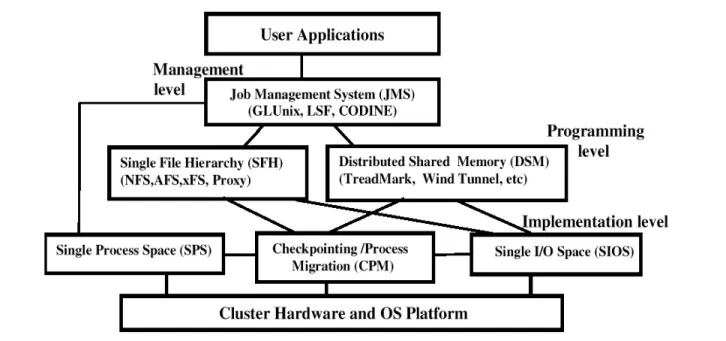
Figure 1 shows the functional relationships among vari-ous key middleware packages. These middleware pack-ages are used as interfaces between user applications and
“A single system image (SSI) is the property of a system that hides the heterogeneous and distributed nature of the available resources and presents them to users and applications as a single unified computing resource.”
cluster hardware and OS platforms. They support each other at the management, programming, and implementa-tion levels.
The most important benefits of SSI include the follow-ing (Buyya, 1999):
• It provides a simple, straightforward view of all system resources and activities from any node in the cluster. • It frees the end user from having to know where in the
cluster an application will run.
• It allows the use of resources in a transparent way irre-spective of their physical location.
• It lets the user work with familiar interface and com-mands and allows the administrator to manage the en-tire cluster as a single entity.
• It offers the same command syntax as in other systems and thus reduces the risk of operator errors, with the re-sult that end users see improved performance, reliabil-ity, and higher availability of the system.
• It allows one to centralize/decentralize system manage-ment and control to avoid the need of skilled adminis-trators for system administration.
• It greatly simplifies system management and thus re-duced cost of ownership.
• It provides location-independent message communication. • It benefits the system programmers to reduce the time,
effort, and knowledge required to perform the task and allows current staff to handle larger or more complex systems.
• It promotes the development of standard tools and utilities.
3 SSI Layers/Levels
The two important characteristics of SSI (Buyya, 1999; Pfister, 1998) are the following:
1. Every SSI has a boundary.
2. SSI support can exist at different levels within a system—one able to be built on another.
SSI can be implemented in one or more of the following levels:
• hardware,
• operating system (so-called “underware”) (Walker and Steel, 1999a),
• middleware (runtime subsystems), • application.
A good SSI is usually obtained by cooperation between all these levels as a lower level can simplify the implementa-tion of a higher one.
3.1 HARDWARE LEVEL
Systems such as Digital/Compaq Memory Channel and h a r d wa r e d i s t r i bu t e d s h a r e d m e m o r y ( D S M ) (http://www.digital.com/info/hpc/systems/symc.html) of-fer SSI at the hardware level and allow the user to view a cluster as a shared-memory system. Digital’s Memory Channel is designed to provide a reliable, powerful, and ef-ficient clustering interconnect. It provides a portion of global virtual shared memory by mapping portions of mote physical memory as local virtual memory (called re-flective memory).
Memory Channel consists of two components: a PCI adapter and a hub. Adapters can also be connected directly to another adapter without using a hub. The host interfaces exchange heartbeat signals and implement flow control timeouts to detect node failure or blocked data transfers. The link layer provides error detection through a 32-bit CRC generated and checked in hardware. Memory
Chan-“A good SSI is usually obtained by cooperation between all these levels as a lower level can simplify the
nel uses point-to-point, full-duplex switched 8× 8 cross-bar implementation.
To enable communication over the Memory Channel network, applications map pages as read- or write-only into their virtual address space. Each host interface con-tains two page control tables (PCT), one for write and one for read mappings. For read-only pages, a page is pinned down in local physical memory. Several page attributes can be specified: receive enable, interrupt on receive, re-mote read, and so on. If a page is mapped as write-only, a page table entry is created for an appropriate page in the interface’s 128 Mbytes of PCI address space. Page attrib-utes can be used to store a local copy of each packet, re-quest acknowledgment message from the receiver side for each packet, and define the packets as broadcast or point-to-point packets.
Broadcasts are forwarded to each node attached to the network. If a broadcast packet enters a crossbar hub, the arbitration logic waits until all output ports are available. Nodes, which have mapped the addressed page as a read-able area, store the data in their local pinned-down mem-ory region. All other nodes simply ignore the data. There-fore, once the data regions are mapped and set up, simple store instructions transfer data to remote nodes without OS intervention.
Besides this basic data transfer mechanism, Memory Channel supports a simple remote read primitive, a hard-ware-based barrier acknowledge, and a fast-lock primi-tive. To ensure correct behavior, Memory Channel imple-ments a strict in-order delivery of written data. A write invalidates cache entries on the reader side, thus providing cluster-wide cache coherence.
Digital provides two software layers for Memory Channel: the Memory Channel services and universal message passing (UMP). The first is responsible for allo-cating and mapping the individual memory page. UMP implements a user-level library of basic message-passing mechanisms. It is mainly used as a target for higher soft-ware layers, such as MPI, PVM, or HPF. Both layers have been implemented for the Digital UNIX and the Windows NT operating systems.
Memory Channel reduces communication to the mini-mum—just simple store operations. Therefore, latencies for single data transfers are very low. This also enables the Memory Channel to reach the maximal sustained data rate of 88 Mbytes/s with relative small data packets of 32 bytes. The largest possible configuration consists of eight 12-CPU Alpha server nodes, resulting in a 96-CPU cluster.
3.2 OPERATING SYSTEM LEVEL
Cluster operating systems support an efficient execution of parallel applications in an environment shared with se-quential applications. A goal is to pool resources in a clus-ter to provide betclus-ter performance for both sequential and parallel applications. To realize this goal, the operating system must support gang scheduling of parallel grams, identify idle resources in the system (such as pro-cessors, memory, and networks), and offer globalized ac-cess to them. It should optimally support proac-cess migration to provide dynamic load balancing as well as fast interprocess communication for both the system- and user-level applications. The OS must make sure these fea-tures are available to the user without the need for addi-tional system calls or commands. OS kernel-supporting SSI include SCO UnixWare NonStop Clusters (Walker and Steel, 1999a, 1999b), Sun Solaris-MC (http://www. cs.umd.edu/~keleher/dsm.html), GLUnix (Ghormley et al., 1998), and MOSIX (Barak and La’adan, 1998).
SCO UnixWare. UnixWare NonStop Clusters is SCO’s high-availability software. It significantly broad-ens hardware support, making it easier and less expbroad-ensive to deploy the most advanced clustering software for Intel systems. It is an extension to the UnixWare operating sys-tem in which all applications run better and more reliably inside a SSI environment that removes the management burden. It features standard IP as the interconnect, remov-ing the need for any proprietary hardware.
The UnixWare kernel has been modified via a series of modular extensions and hooks to provide single clus-ter-wide file system view, transparent clusclus-ter-wide device access, transparent swap-space sharing, transparent clus-ter-wide IPC, high performance internode communica-tions, transparent cluster-wide process migration, node down cleanup and resource fail-over, transparent clus-ter-wide parallel TCP/IP networking, application avail-ability, cluster-wide membership and cluster time sync, cluster system administration, and load leveling.
UnixWare NonStop Clusters architecture offers built-in support for application fail-over usbuilt-ing an n + 1 ap-proach. With this approach, the backup copy of the appli-cation may be restarted on any of several nodes in the cluster. This allows one node to act as a backup node for all other cluster nodes.
UnixWare NonStop Clusters also supports active pro-cess migration, which allows any application propro-cess to be moved to another node between instruction steps. This allows continuation without disruption to the application.
Active process migration allows dynamic removal and addition of nodes within the cluster.
With the SSI capability of UnixWare NonStop Clus-ters, both applications and users view multiple nodes as a single, logical system. SSI also provides automatic pro-cess migration and dynamic load balancing. Depending on the workload and available resources in the cluster, the system automatically reassigns processes among avail-able nodes, delivering optimal overall performance. The cluster offers a single UNIX system name space and ap-pears to the application as a very largen-way SMP server. The cluster services maintain the standard service call in-terface, so upper levels of the operating system do not need to be changed. Applications access clustered ser-vices through standard UNIX system libraries, which in turn access clustered services through the service call in-terface. Applications do not need to be cluster aware and may run unmodified in the cluster.
The cluster service determines whether a request can be handled locally or must be forwarded to another node. If the request is passed to another node, it uses an inter-node communication system over ServerNet to commu-nicate to the service peer on another node. The request is then handled by the standard UNIX system service on the targeted node.
Sun Solaris MC.Solaris MC is a prototype extension of the single-node Solaris kernel. It provides single sys-tem image and high availability at the kernel level. Solaris MC is implemented through object-oriented techniques. It extensively uses the object-oriented programming lan-guage C++, the standard COBRA object model, and its interface definition language.
Solaris MC uses a global file system called Proxy File System (PXFS). The main features include single system image, coherent semantics, and high performance. The PXFS makes file accesses transparent to process and file locations. PXFS achieves this single system image by in-tercepting file access operations at the vnode/VFS inter-face. When a client node performs a VFS/vnode opera-tion, Solaris MC proxy layer first converts the VFS/vnode operation into an object invocation, which is forwarded to the node where the file resides (the server node). The in-voked object then performs a local VFS/vnode operation on the Solaris file system of the server node. This imple-mentation approach needs no modification of the Solaris kernel or the file system.
PXFS uses extensive caching on the clients to reduce remote object invocations. PXFS uses a token-based co-herency protocol to allow a page to be cached read-only by multiple nodes or read-write by a single node.
Solaris MC provides a single process space by adding a global process layer on top of the Solaris kernel layer. There is a node manager for each node and a virtual pro-cess (vproc) object for each local propro-cess. The vproc maintains information of the parent and children of each process. The node manager keeps two lists: the available node list and local process list, including migrated ones. When a process migrates to another node, a shadow vproc is still kept on the home node. Operations received by the shadow vproc are forwarded to the current node where the process resides.
Solaris MC provides a single I/O subsystem image with uniform device naming. A device number consists of the node number of the device, as well as the device type and the unit number. A process can access any device by using this uniform name as if it were attached to the local node, even if it is attached to a remote node.
Solaris MC ensures that existing networking applica-tions do not need to be modified and see the same network connectivity, regardless of which node the application runs on. Network services are accessed through a service access point (SAP) server. All processes go to the SAP server to locate in which node a SAP is on. The SAP server also ensures that the same SAP is not simulta-neously allocated to different nodes. Solaris MC allows multiple nodes to act as the replicated SAP server for net-work services.
GLUnix. Another way for the operating system to support a SSI is to build a layer on top of the existing oper-ating system and to perform global resource allocations. This is the approach followed by GLUnix from Berkeley (Ghormley wt al., 1998). This strategy makes the system easily portable and reduces development time.
GLUnix is an OS layer designed to provide support for transparent remote execution, interactive parallel and se-quential jobs, load balancing, and backward compatibil-ity for existing application binaries. GLUnix is a multi-user system implementation at the multi-user level so that it can be easily ported to a number of different platforms. It is built as a protected user-level library using the native sys-tem services as a building block. GLUnix aims to provide cluster-wide name space and uses network PIDs (NPIDs) and virtual node numbers (VNNs). NPIDs are globally unique process identifiers for both sequential and parallel programs throughout the system. VNNs are used to facili-tate communications among processes of a parallel pro-gram. A suite of user tools for interacting and manipulat-ing NPIDs and VNNs is supported.
GLUnix is implemented completely in the user level and does not need any kernel modification; therefore, it is
easy to implement. GLUnix relies on a minimal set of standard features from the underlying system, which are present in most commercial operating systems. So it is portable to any operating system that supports interprocess communication, process signaling, and ac-cess to load information. The new features needed for clusters are invoked by procedure calls within the applica-tion’s address space. There is no need to cross the hard-ware protection boundary and no need for kernel trap or context switching. The overhead for making system calls is eliminated in GLUnix. Using shared-memory segments or interprocess communication, primitives can do the co-ordination of the multiple copies of GLUnix, which are running on multiple nodes.
The main features provided by GLUnix include coscheduling of parallel programs; idle resource detec-tion, process migradetec-tion, and load balancing; fast user-level communication; remote paging; and availability support.
MOSIX.MOSIX (Barak and La’adan, 1998) is an-other software package specifically designed to enhance the Linux kernel with cluster-computing capabilities. The core of MOSIX is adaptive (online) load balancing, mem-ory ushering, and file I/O optimization algorithms that re-spond to variations in the use of the cluster resources (e.g., uneven load distribution or excessive disk swapping due to lack of free memory in one of the nodes). In such cases, MOSIX initiates process migration from one node to an-other to balance the load, move a process to a node that has sufficient free memory, or reduce the number of remote-file I/O operations.
MOSIX operates silently, and its operations are trans-parent to the applications. This means that you can exe-cute sequential and parallel applications just like you would do in an SMP. You need not care about where your process is running or be concerned about what the other users are doing. Shortly after the creation of a new pro-cess, MOSIX attempts to assign it to the best available node at that time. MOSIX then continues to monitor the new process, as well as all the other processes, and will move it among the nodes to maximize the overall perfor-mance. All this is done without changing the Linux inter-face. This means that you continue to see (and control) all your processes as if they run on your node.
The algorithms of MOSIX are decentralized—each node is both a master for processes that were created lo-cally and a server for (remote) processes that migrated from other nodes. This means that nodes can be added or removed from the cluster at any time, with minimal dis-turbances to the running processes. Another useful
prop-erty of MOSIX is its monitoring algorithms, which detect the speed of each node, its load and free memory, and the IPC and I/O rates of each process. This information is used to make near-optimal decisions about where to place the processes.
The system image model of MOSIX is based on the home node model, in which all the user’s processes seem to run at the user’s login node. Each new process is cre-ated at the same site(s) as its parent process. Processes that have migrated interact with the user’s environment through the user’s home node but, where possible, use lo-cal resources. As long as the load of the user’s login node remains below a threshold value, all the user’s processes are confined to that node. However, when this load rises above a threshold value, then some processes may be mi-grated (transparently) to other nodes.
The Direct File System Access (DFSA) provision ex-tends the capability of a migrated process to perform some I/O operations locally in the current node. This pro-vision reduces the need of I/O-bound processes to com-municate with their home node, thus allowing such pro-cesses (as well as mixed I/O and CPU propro-cesses) to migrate more freely among the cluster’s node (e.g., for load balancing and parallel file and I/O operations).
Currently, the MOSIX File System (MFS) meets the DFSA standards. MFS makes all directories and regular files throughout a MOSIX cluster available from all nodes while providing absolute consistency as files are viewed from different nodes (i.e., the consistency is as if all file accesses were done on the same node).
3.3 MIDDLEWARE LEVEL
Middleware, a layer that resides between OS and applica-tions, is one of the common mechanisms used to imple-ment SSI in clusters. They include cluster file system, programming environments such as PVM (Geist and Sunderam, 1990), job management and scheduling sys-tems such as CODINE (Ferstl, 1999) and Condor (Litzkow, Livny, and Mutka, 1988), and cluster-enabled Java Virtual Machine (JVM) such as JESSICA (Ma, Wang, and Lau, forthcoming). SSI offered by cluster file systems makes disks attached to cluster nodes appear as a single large storage system and ensure that every node in the cluster has the same view of the data. Global job-scheduling systems manage resources and enable the scheduling of system activities and execution of applica-tions while offering high-availability services transpar-ently. Cluster-enabled JVM allows execution of Java threads-based applications on clusters without any modi-fications.
CODINE is a resource management system targeted to optimize utilization of all software and hardware re-sources in a heterogeneous networked environment (Ferstl, 1999). It is evolved from the Distributed Queuing System (DQS) created at Florida State University. The easy-to-use graphical user interface provides a single sys-tem image of all enterprise-wide resources for the user and also simplifies administration and configuration tasks.
The CODINE system encompasses four types of dae-mons. They are the CODINE master daemon, the sched-uler daemon, the communication daemons, and the exe-cution daemons. The CODINE master daemon acts as a clearinghouse for jobs and maintains the CODINE data-base. Periodically, the master receives information about the host load values in the CODINE cluster by the CODINE execution daemons running on each machine. Jobs, submitted to the CODINE system, are forwarded to the CODINE master daemon and then spooled to disk. The scheduler daemon is responsible for the matching of pending jobs to the available resources. It receives all nec-essary information from the CODINE master daemon and returns the matching list to the CODINE master daemon, which in turn dispatches jobs to the CODINE execution daemons.
The CODINE master daemon runs on the main server and manages the entire CODINE cluster. It collects all necessary information and maintains and administers the CODINE database. The database contains information about queues, running and pending jobs, and the available resources in the CODINE cluster. Information to this da-tabase is periodically updated by the CODINE execution daemons.
The CODINE master daemon has a critical function, as the system will not operate without this daemon run-ning. To eliminate this potential point of failure, CODINE provides a shadow master functionality. Should the CODINE master daemon fail to provide service, a new CODINE master host will be selected, and another CODINE master daemon will automatically be started on that new host. All CODINE ancillary programs providing the user or administrator interface to CODINE directly contact the CODINE master daemon via a standard TCP port to forward their requests and to receive an acknowl-edgment or the required information.
The CODINE scheduler daemon is responsible for the mapping of jobs to the most suitable queues. Jobs are sub-mitted to the CODINE master daemon together with a list of requested resources. A job that cannot be dispatched immediately waits in a pending queue until the CODINE
scheduler daemon decides that the requested resources for this job are available. The result of the mapping is communicated back to the CODINE master daemon to update the database. The CODINE master daemon noti-fies the CODINE execution daemon on the corresponding machine to start the job.
The CODINE execution daemon runs on every ma-chine in the CODINE cluster where jobs can be executed. It reports periodically the status of the resources on the workstation to the CODINE master daemon. The CODINE execution daemon is also responsible for start-ing and stoppstart-ing the jobs. For each job, the CODINE exe-cution daemon starts a subordinate shepherd process, which is responsible for running and monitoring its job.
One or more CODINE communication daemons have to run in every CODINE cluster. These daemons are re-sponsible for the communication between the other CODINE daemons. This allows asynchronous communi-cation between the various CODINE daemons, speeding up the system and increasing efficiency. The communica-tion daemons control the whole communicacommunica-tion via a standard TCP port.
3.4 APPLICATION LEVEL
Finally, applications can also support SSI. The applica-tion-level SSI is the highest and, in a sense, most impor-tant because this is what the end user sees. At this level, multiple cooperative components of an application are presented to the user as a single application. For instance, a GUI-based tool such as PARMON (Buyya, 2000) offers a single window representing all the resources or services available. The Linux Virtual Server (Zhang, 2000) is a scalable and high-availability server built on a cluster of real servers. The architecture of the cluster is transparent to end users as all they see is a single virtual server. All other cluster-aware scientific and commercial applica-tions (developed using APIs such as MPI) hide the exis-tence of multiple interconnected computers and coopera-tive software components and present themselves as if running on a single system.
The Linux Virtual Server (LVS) (Zhang, 2000) directs network connections to the different servers according to scheduling algorithms and makes parallel services of the cluster to appear as a virtual service on a single IP address. Linux Virtual Server extends the TCP/IP stack of Linux kernel to support three IP load-balancing techniques: NAT, IP tunneling, and direct routing. It also provides four scheduling algorithms for selecting servers from the cluster for new connections: round-robin, weighted round-robin, least connection, and weighted least
con-nection. Client applications interact with the cluster as if it were a single server. The clients are not affected by interac-tion with the cluster and do not need modificainterac-tion. Scalability is achieved by transparently adding or remov-ing a node in the cluster. High availability is provided by detecting node or daemon failures and reconfiguring the system appropriately.
Linux Virtual Server is a three-tier architecture. • Load balanceris the front end to the service as seen by
the outside world. The load balancer directs network connections from clients who know a single IP address for services to a set of servers that actually perform the work.
• Server poolconsists of a cluster of servers that imple-ments the actual services, such as Web, Ftp, mail, DNS, and so on.
• Back-end storage provides the shared storage for the servers, so that it is easy for servers to keep the same content and provide the same services.
The load balancer handles incoming connections using IP load-balancing techniques. Load balancer selects serv-ers from the server pool, maintains the state of concurrent connections, and forwards packets, and all the work is per-formed inside the kernel, so that the handling overhead of the load balancer is low. The load balancer can handle a much larger number of connections than a general server; therefore, a load balancer can schedule a large number of servers, and it will not be a bottleneck of the whole system.
Cluster monitor daemons run on the load balancer to monitor the health of server nodes. If a server node cannot be reached by ICMP ping or there is no response of the ser-vice in the specified period, the monitor will remove or dis-able the server in the scheduling tdis-able of the load balancer. The load balancer will not schedule new connections to the failed one, and the failure of server nodes can be masked.
To prevent the load balancer from becoming a single point of failure, a backup of the load balancer is set up. Two heartbeat daemons run on the primary and the backup; they heartbeat the health message through heartbeat channels such as serial line and UDP periodically. When the heart-beat daemon on the backup cannot hear the health message from the primary in the specified time, it will use ARP spoofing to take over the virtual IP address to provide the load-balancing service. When the primary recovers from its failure, then the primary becomes the backup of the functioning load balancer, or the daemon receives the health message from the primary and releases the virtual IP
“The application-level SSI is the highest and, in a sense, most important because this is what the end user sees. At this level, multiple cooperative components of an application are presented to the user as a single application.”
address, and the primary will take over the virtual IP ad-dress. The fail-over or the takeover of the primary will cause the established connection in the state table lost, which will require the clients to send their requests again. 3.5 PROS AND CONS OF EACH LEVEL
Each level of SSI has its own pros and cons. The hard-ware-level SSI can offer the highest level of transparency, but due to its rigid architecture, it does not offer the flexi-bility required during the extension and enhancement of the system. The kernel-level approach offers full SSI to all users (application developers and end users). However, kernel-level cluster technology is expensive to develop and maintain, as its market share is or will be probably limited, and it is difficult to keep pace with technological innova-tions emerging into mass-market operating systems.
An application-level approach helps realize SSI par-tially and requires that each application be developed as SSI aware separately. A key advantage of application-level SSI compared with the kernel level is that it can be realized in stages, and the user can benefit from it immediately, but in the kernel-level approach, unless all components are specifically developed to support SSI, it cannot be used or released to the market. Due to this, the kernel-level proach appears as a risky and economically nonviable ap-proach. The middleware approach is a compromise be-tween the other two mechanisms used to provide SSI. In some cases, such as in PVM, each application needs to be implemented using special APIs on a case-by-case basis. This means that there is a higher cost of implementation and maintenance; otherwise, the user cannot get any bene-fit from the cluster. The arguments on the so-called “under-ware” versus middleware level of SSI are presented in Walker and Steel (1999a).
4 Conclusions
SSI can greatly enhance the acceptability and usability of clusters by hiding the physical existence of multiple inde-pendent computers by presenting them as a single, unified resource. SSI can be realized either using hardware or soft-ware techniques; each has its own advantages and disad-vantages. The middleware approach appears to offer an economy of scale compared with other approaches, al-though it cannot offer full SSI like the OS approach. In any case, the designers of software (system or application) for clusters must always consider SSI (transparency) as one of their important design goals in addition to scalable perfor-mance and enhanced availability.
“Each level of SSI has its own pros and cons. The hardware-level SSI can offer the highest level of transparency, but due to its rigid architecture, it does not offer the flexibility required during the extension and enhancement of the system.”
BIOGRAPHIES
Rajkumar Buyyais a research scholar at the School of Com-puter Science and Software Engineering, Monash University, Melbourne, Australia. He was awarded the Dharma Ratnakara Memorial Trust Gold Medal for his academic excellence in 1992 by Kuvempu/Mysore University. He is coauthor Mastering C++andMicroprocessor x86 Programming. Recently, he has edited a two-volume book on high performance cluster comput-ing:Architectures and Systems(Vol. 1) andProgramming and Application(Vol. 2). He served as guest editor for the special is-sues of the following international journals:Parallel and Dis-tributed Computing Practices, Informatica: An International Journal of Computing and Informatics,Journal of Supercom-puting, and Future Generation Computing Systems. He is a speaker in the IEEE Computer Society Chapter Tutorials Pro-gram and foundation co-chair of the IEEE Computer Society Task Force on Cluster Computing. He has contributed to the de-velopment of HPCC system software environment for the PARAM supercomputer developed by the Centre for Develop-ment of Advanced Computing, India. He has lectured on ad-vanced technologies such as parallel, distributed, and multi-threaded computing; client/server computing; Internet and Java; cluster and grid computing; and Java and high performance computing in many international conferences held in Korea, In-dia, Singapore, United States, Mexico, Australia, Norway, China, Canada, Germany, and France. His research papers have appeared in international conferences and journals.
Toni Cortes is an associate professor at Universitat Politècnica de Catalunya, Barcelona, Spain. He obtained his Ph.D. degree in computer science in 1997 from Universitat Politècnica de Catalunya. He is currently the coordinator of the single system image technical area in the IEEE CS Task Force on Cluster. Besides working in many academic projects, he has been cooperating in European industrial projects such as Paros, Nanos, and Dimemas. He organized (along with Rajkumar Buyya) the Cluster Computing Technologies, Environments, and Applicationssession organized as part of the PDPTA’99 Conference. He has also been a reviewer for important tional conferences such as ISCA, ICS, and SCCC and interna-tional journals such asIEEE Transactions on Computers, Paral-lel and Distributed Computing Practices, and Software-Practice & Experience. He has also published more than 20 pa-pers in international journals and conferences (most of them about parallel I/O). He has also published a chapter on parallel I/O inHigh Performance Cluster Computing(1999). His re-search interests cover computer architecture, parallel I/O, RAID architecture design, high performance storage system, cluster computing, and operating systems.
Hai Jinis a professor of computer science at Huazhong Uni-versity of Science and Technology (HUST) in China. He re-ceived his Ph.D. in computer engineering from HUST in 1994. In 1996, he was awarded the German Academic Exchange Ser-vice (DAAD) fellowship for visiting Technical University of
Chemnitz in Chemnitz, Germany. He has worked at the Univer-sity of Hong Kong, where he participated in the HKU cluster project. Presently, he works as a visiting scholar at the Internet and Cluster Computing Laboratory at the University of South-ern California. He is a member of IEEE and ACM. He chaired the 2000 Asia-Pacific International Symposium on Cluster Computing (APSCC’00) and the First International Workshop on Internet Computing and E-Commerce (ICEC’01). He serves as program vice chair of the 2001 International Symposium on Cluster Computing and Grid (CCGrid’01). He has coauthored four books and published more than 30 papers. His research in-terests cover parallel I/O, RAID architecture, fault tolerance, and cluster computing.
REFERENCES
Barak, A., and La’adan, O. 1998. The MOSIX multicomputer operating system for high performance cluster computing (ftp).Journal of Future Generation Computer Systems [On-line]. Available: http://www.mosix.cs.huji.ac.il/.
Buyya, R., ed. 1999.High Performance Cluster Computing: Ar-chitectures and Systems. Vol. 1. Englewood Cliffs, NJ: Prentice Hall.
Buyya, R. 2000. PARMON: A portable and scalable monitoring system for clusters.Journal of Software: Practice & Experi-ence[Online]. Available: http://www.csse.monash.edu.au/ ~rajkumar/parmon/.
Ferstl, F. 1999.Job and Resource Management Systems, High Performance Cluster Computing: Architectures and Sys-tems. Vol. 1. Englewood Cliffs, NJ: Prentice Hall.
Geist, A., and Sunderam, V. 1990. PVM: A framework for paral-lel distributed computing.Journal of Concurrency: Practice and Experience[Online]. Available: http://www.epm.ornl. gov/pvm/.
Ghormley, D., Petrou, D., Rodrigues, S., Vahdat, A., and Ander-son, T. 1998. GLUnix: A global layer Unix for a network of workstations.Journal of Software Practice and Experience
[Online]. Available: http://now.cs.berkeley.edu/Glunix/ glunix.html.
Hwang, K., Jin, H., Chow, E., Wang, C. - L., and Xu, Z. 1999. Designing SSI clusters with hierarchical checkpointing and single I/O space.IEEE Concurrency7 (1): 60-69.
Hwang, K., and Xu, Z. 1998.Scalable Parallel Computing: Technology, Architecture, Programming. New York: McGraw-Hill.
Litzkow, M., Livny, M., and Mutka, M. 1998. Condor: A hunter of idle workstations.Proceedings of the 8th International Conference of Distributed Computing Systems [Online]. Available: http://www.cs.wisc.edu/condor/.
Ma, M., Wang, C., and Lau, F. Forthcoming. JESSICA: Java-en-abled single-system-image computing architecture.Journal of Parallel and Distributed Computing.
Pfister, G. F. 1998.In Search of Clusters. 2nd ed. Englewood Cliffs, NJ: Prentice Hall.
Popek, G., and Walker, B., eds. 1996.The Locus Distributed System Architecture. Cambridge, MA: MIT Press.
Walker, B., and Steel, D. 1999a. Implementing a full single sys-tem image UnixWare cluster: Middleware vs. underware.
Proceedings of the International Conference on Parallel and Distributed Processing Techniques and Applications (PDPTA’99), Las Vegas, NV.
Walker, B., and Steel, D. 1999b. Implementing a full single sys-tem image UnixWare cluster: Middleware vs. underware.
Proceedings of the International Conference on Parallel and Distributed Processing Techniques and Applications ( P D P TA ’ 9 9 ) [ O n l i n e ] . Ava i l a b l e : http://www.sco.com/products/clustering/nscwhtpaper/. Zhang, W. 2000. Linux virtual servers for scalable network
ser-vices.Ottawa Linux Symposium 2000, Canada [Online]. Available: http://www.LinuxVirtualServer.org/.