Guidebook for Recruiting,
Developing, and Retaining
Transit Managers for Fixed-Route
Bus and Paratransit Systems
PROGRAM
TCRP
REPORT 139
Sponsored by
the Federal
Transit Administration
CHAIR:Michael R. Morris, Director of Transportation, North Central Texas Council of Governments, Arlington
VICECHAIR: Neil J. Pedersen, Administrator, Maryland State Highway Administration, Baltimore EXECUTIVEDIRECTOR:Robert E. Skinner, Jr., Transportation Research Board
MEMBERS
J. Barry Barker, Executive Director, Transit Authority of River City, Louisville, KY
Allen D. Biehler,Secretary, Pennsylvania DOT, Harrisburg
Larry L. Brown, Sr.,Executive Director, Mississippi DOT, Jackson
Deborah H. Butler,Executive Vice President, Planning, and CIO, Norfolk Southern Corporation, Norfolk, VA
William A.V. Clark, Professor, Department of Geography, University of California, Los Angeles
Eugene A. Conti, Jr., Secretary of Transportation, North Carolina DOT, Raleigh
Nicholas J. Garber, Henry L. Kinnier Professor, Department of Civil Engineering, and Director, Center for Transportation Studies, University of Virginia, Charlottesville
Jeffrey W. Hamiel, Executive Director, Metropolitan Airports Commission, Minneapolis, MN
Paula J. Hammond,Secretary, Washington State DOT, Olympia
Edward A. (Ned) Helme, President, Center for Clean Air Policy, Washington, DC
Adib K. Kanafani, Cahill Professor of Civil Engineering, University of California, Berkeley
Susan Martinovich, Director, Nevada DOT, Carson City
Debra L. Miller, Secretary, Kansas DOT, Topeka
Sandra Rosenbloom, Professor of Planning, University of Arizona, Tucson
Tracy L. Rosser, Vice President, Corporate Traffic, Wal-Mart Stores, Inc., Mandeville, LA
Steven T. Scalzo, Chief Operating Officer, Marine Resources Group, Seattle, WA
Henry G. (Gerry) Schwartz, Jr.,Chairman (retired), Jacobs/Sverdrup Civil, Inc., St. Louis, MO
Beverly A. Scott, General Manager and Chief Executive Officer, Metropolitan Atlanta Rapid Transit Authority, Atlanta, GA
David Seltzer, Principal, Mercator Advisors LLC, Philadelphia, PA
Daniel Sperling, Professor of Civil Engineering and Environmental Science and Policy; Director, Institute of Transportation Studies; and Interim Director, Energy Efficiency Center, University of California, Davis
Kirk T. Steudle, Director, Michigan DOT, Lansing
Douglas W. Stotlar,President and CEO, Con-Way, Inc., Ann Arbor, MI
C. Michael Walton, Ernest H. Cockrell Centennial Chair in Engineering, University of Texas, Austin EX OFFICIO MEMBERS
Peter H. Appel, Administrator, Research and Innovative Technology Administration, U.S.DOT
J. Randolph Babbitt, Administrator, Federal Aviation Administration, U.S.DOT
Rebecca M. Brewster, President and COO, American Transportation Research Institute, Smyrna, GA
George Bugliarello, President Emeritus and University Professor, Polytechnic Institute of New York University, Brooklyn; Foreign Secretary, National Academy of Engineering, Washington, DC
Anne S. Ferro, Administrator, Federal Motor Carrier Safety Administration, U.S.DOT
LeRoy Gishi, Chief, Division of Transportation, Bureau of Indian Affairs, U.S. Department of the Interior, Washington, DC
Edward R. Hamberger,President and CEO, Association of American Railroads, Washington, DC
John C. Horsley, Executive Director, American Association of State Highway and Transportation Officials, Washington, DC
David T. Matsuda,Deputy Administrator, Maritime Administration, U.S.DOT
Victor M. Mendez, Administrator, Federal Highway Administration, U.S.DOT
William W. Millar, President, American Public Transportation Association, Washington, DC
Robert J. Papp(Adm., U.S. Coast Guard),Commandant, U.S. Coast Guard, U.S. Department of Homeland Security, Washington, DC
Cynthia L. Quarterman, Administrator, Pipeline and Hazardous Materials Safety Administration, U.S.DOT
Peter M. Rogoff, Administrator, Federal Transit Administration, U.S.DOT
David L. Strickland, Administrator, National Highway Traffic Safety Administration, U.S.DOT
Joseph C. Szabo, Administrator, Federal Railroad Administration, U.S.DOT
Polly Trottenberg, Assistant Secretary for Transportation Policy, U.S.DOT
Robert L. Van Antwerp(Lt. Gen., U.S. Army), Chief of Engineers and Commanding General, U.S. Army Corps of Engineers, Washington, DC
Ann August
Santee Wateree Regional Transportation Authority MEMBERS
John Bartosiewicz McDonald Transit Associates Michael Blaylock
Jacksonville Transportation Authority Linda J. Bohlinger
HNTB Corp. Raul Bravo
Raul V. Bravo & Associates Gregory Cook
Veolia Transportation Terry Garcia Crews StarTran
Angela Iannuzziello ENTRA Consultants John Inglish Utah Transit Authority Sherry Little Spartan Solutions, LLC Jonathan H. McDonald HNTB Corporation Gary W. McNeil GO Transit Michael P. Melaniphy Motor Coach Industries Bradford Miller
Des Moines Area Regional Transit Authority Frank Otero
PACO Technologies Keith Parker
VIA Metropolitan Transit Peter Rogoff
FTA
Jeffrey Rosenberg Amalgamated Transit Union Richard Sarles
Washington Metropolitan Area Transit Authority Michael Scanlon
San Mateo County Transit District Marilyn Shazor
Southwest Ohio Regional Transit Authority James Stem
United Transportation Union Gary Thomas
Dallas Area Rapid Transit Frank Tobey
First Transit Matthew O. Tucker North County Transit District Pam Ward
Ottumwa Transit Authority Alice Wiggins-Tolbert Parsons Brinckerhoff EX OFFICIO MEMBERS William W. Millar APTA Robert E. Skinner, Jr. TRB John C. Horsley AASHTO Victor Mendez FHWA TDC EXECUTIVE DIRECTOR Louis Sanders APTA SECRETARY Christopher W. Jenks TRB *Membership as of July 2010. *Membership as of June 2010.
T R A N S P O R T A T I O N R E S E A R C H B O A R D
WASHINGTON, D.C. 2010 www.TRB.org
TCRP
REPORT 139
Research sponsored by the Federal Transit Administration in cooperation with the Transit Development Corporation Subscriber Categories
Public Transportation • Administration and Management
Guidebook for Recruiting,
Developing, and Retaining
Transit Managers for Fixed-Route
Bus and Paratransit Systems
Lance AndersonCandace Blair Cronin Daniel Fien-Helfman Michelle Pohl Brian Cronin ICF INTERNATIONAL, INC. Fairfax, VA Ream Lazaro Valerie Lazaro Anne Singleton
BOYD, CATON& GRANTTRANSPORTATIONGROUP Earlysville, VA
Project F-14 ISSN 1073-4872 ISBN 978-0-309-15491-8
Library of Congress Control Number 2010932352 © 2010 National Academy of Sciences. All rights reserved.
COPYRIGHT INFORMATION
Authors herein are responsible for the authenticity of their materials and for obtaining written permissions from publishers or persons who own the copyright to any previously published or copyrighted material used herein.
Cooperative Research Programs (CRP) grants permission to reproduce material in this publication for classroom and not-for-profit purposes. Permission is given with the understanding that none of the material will be used to imply TRB, AASHTO, FAA, FHWA, FMCSA, FTA, or Transit Development Corporation endorsement of a particular product, method, or practice. It is expected that those reproducing the material in this document for educational and not-for-profit uses will give appropriate acknowledgment of the source of any reprinted or reproduced material. For other uses of the material, request permission from CRP.
NOTICE
The project that is the subject of this report was a part of the Transit Cooperative Research Program, conducted by the Transportation Research Board with the approval of the Governing Board of the National Research Council.
The members of the technical panel selected to monitor this project and to review this report were chosen for their special competencies and with regard for appropriate balance. The report was reviewed by the technical panel and accepted for publication according to procedures established and overseen by the Transportation Research Board and approved by the Governing Board of the National Research Council.
The opinions and conclusions expressed or implied in this report are those of the researchers who performed the research and are not necessarily those of the Transportation Research Board, the National Research Council, or the program sponsors.
The Transportation Research Board of the National Academies, the National Research Council, and the sponsors of the Transit Cooperative Research Program do not endorse products or manufacturers. Trade or manufacturers’ names appear herein solely because they are considered essential to the object of the report.
The nation’s growth and the need to meet mobility, environmental, and energy objectives place demands on public transit systems. Current systems, some of which are old and in need of upgrading, must expand service area, increase service frequency, and improve efficiency to serve these demands. Research is necessary to solve operating problems, to adapt appropriate new technologies from other industries, and to intro-duce innovations into the transit industry. The Transit Cooperative Research Program (TCRP) serves as one of the principal means by which the transit industry can develop innovative near-term solutions to meet demands placed on it.
The need for TCRP was originally identified in TRB Special Report 213—Research for Public Transit: New Directions,published in 1987 and based on a study sponsored by the Urban Mass Transportation Administration—now the Federal Transit Administration (FTA). A report by the American Public Transportation Association (APTA), Transportation 2000, also recognized the need for local, problem-solving research. TCRP, modeled after the longstanding and success-ful National Cooperative Highway Research Program, undertakes research and other technical activities in response to the needs of tran-sit service providers. The scope of TCRP includes a variety of trantran-sit research fields including planning, service configuration, equipment, facilities, operations, human resources, maintenance, policy, and administrative practices.
TCRP was established under FTA sponsorship in July 1992. Pro-posed by the U.S. Department of Transportation, TCRP was autho-rized as part of the Intermodal Surface Transportation Efficiency Act of 1991 (ISTEA). On May 13, 1992, a memorandum agreement out-lining TCRP operating procedures was executed by the three cooper-ating organizations: FTA, the National Academies, acting through the Transportation Research Board (TRB); and the Transit Development Corporation, Inc. (TDC), a nonprofit educational and research orga-nization established by APTA. TDC is responsible for forming the independent governing board, designated as the TCRP Oversight and Project Selection (TOPS) Committee.
Research problem statements for TCRP are solicited periodically but may be submitted to TRB by anyone at any time. It is the responsibility of the TOPS Committee to formulate the research program by identi-fying the highest priority projects. As part of the evaluation, the TOPS Committee defines funding levels and expected products.
Once selected, each project is assigned to an expert panel, appointed by the Transportation Research Board. The panels prepare project state-ments (requests for proposals), select contractors, and provide techni-cal guidance and counsel throughout the life of the project. The process for developing research problem statements and selecting research agencies has been used by TRB in managing cooperative research pro-grams since 1962. As in other TRB activities, TCRP project panels serve voluntarily without compensation.
Because research cannot have the desired impact if products fail to reach the intended audience, special emphasis is placed on dissemi-nating TCRP results to the intended end users of the research: tran-sit agencies, service providers, and suppliers. TRB provides a series of research reports, syntheses of transit practice, and other support-ing material developed by TCRP research. APTA will arrange for workshops, training aids, field visits, and other activities to ensure that results are implemented by urban and rural transit industry practitioners.
The TCRP provides a forum where transit agencies can cooperatively address common operational problems. The TCRP results support and complement other ongoing transit research and training programs.
Published reports of the
TRANSIT COOPERATIVE RESEARCH PROGRAM
are available from:
Transportation Research Board Business Office
500 Fifth Street, NW Washington, DC 20001
and can be ordered through the Internet at
http://www.national-academies.org/trb/bookstore Printed in the United States of America
CRP STAFF FOR TCRP REPORT 139
Christopher W. Jenks, Director, Cooperative Research Programs
Crawford F. Jencks, Deputy Director, Cooperative Research Programs
Dianne S. Schwager, Senior Program Officer
Rachel Kirkland, Senior Program Assistant
Eileen P. Delaney, Director of Publications
Margaret B. Hagood, Editor
TCRP PROJECT F-14 PANEL Field of Human Resources
Marion Colston, Los Angeles County Metropolitan Transportation Authority, Los Angeles, CA(Chair)
Doran J. Barnes, Foothill Transit, West Covina, CA
Janice M. Baroody, Pee Dee Regional Transportation Authority, Florence, SC
Adrienne Bunney, King County (WA) Metro Transit, Seattle, WA
Darrel M. Feasel, Virginia Department of Rail & Public Transportation, Richmond, VA
Thomas Jackson, Michigan DOT, Lansing, MI
Robert Kingsbury, First Transit Inc., New Bern, NC
Prim LaCapra,New Jersey Transit Corporation, Newark, NJ
Michael Setzer,Veolia Transportation, Cincinnati, OH
Donnie R. Thompson, Dallas Area Rapid Transit, Dallas, TX
Patricia Weaver, University of Kansas, Lawrence, KS
Doug Birnie, FTA Liaison
Susan Clark,FTA Liaison
Harold Morgan, Taxicab, Limousine & Paratransit Association Liaison
Kelly Shawn,Community Transportation Association of America Liaison
Peter Shaw, TRB Liaison
AUTHOR ACKNOWLEDGMENTS
The recommendations reported herein were developed under TCRP Project F-14 by ICF International (ICF) in collaboration with Boyd, Caton & Grant (BCG) Transportation Group. ICF was the prime con-tractor for this study, with BCG Transportation Group serving as the subconcon-tractor.
Dr. Lance Anderson, Vice President of ICF International, was the Project Director. The other authors of this report are Dr. Candace Blair Cronin, Manager at ICF International; Ms. Michelle Pohl, Associate at ICF International; Dr. Brian Cronin, Manager at ICF International; Mr. Ream Lazaro, Senior Consul-tant at BCG Transportation Group; Ms. Valerie Lazaro, Senior Analyst at BCG Transportation Group; and Ms. Anne Singleton, Senior Analyst at BCG Transportation Group.
TCRP Report 139: Guidebook for Recruiting, Developing, and Retaining Transit Managers for Fixed-Route Bus and Paratransit Systemsprovides fixed-route bus, general public demand response, and ADA paratransit systems resources to assist in the recruitment, development,
and retention of managers. The Guidebookis accompanied by CRP-CD-77 that provides
Model Job Descriptions for 32 broad job titles that indicate the structure and content for job descriptions for manager jobs. This Guidebook will be of interest to transit providers and their governing boards.
The Guidebookis designed primarily to address the needs of rural and smaller urban bus transit systems; however, large and mid-sized urban bus and rail transit providers may find
suggestions in this Guidebookhelpful and are welcome to modify guidance to meet their
needs. Brief descriptions of related practices within transportation and other industries are also included.
The Guidebook is organized into three major sections: Recruitment Recommendations; Training and Development Recommendations; and Retention Recommendations. Each sec-tion provides strategies that have been effective in transit agencies and other types of organi-zations. Effective implementation of the strategies assumes skill and knowledge in human resources management and will require adjustment to unique organizational circumstances.
There are four appendices to the Guidebook. Appendix A contains figures which support
Guidebookrecommendations. Appendix B is a checklist for transit manager recruitment, training and retention excellence. Appendix C contains summaries for 20 case studies of transit systems that provide examples of practices. Appendix D includes a glossary of
com-monly used acronyms from the Guidebook.
The accompanying CRP-CD-77 is a useful tool for the development of job descriptions. It provides information on what should be included in job descriptions to ensure legal defensibility of hiring practices and to promote retention of managers. A job matching matrix has been created to help transit systems select the Model Job Description Guide that best suits their needs. Five sample job descriptions are provided as well. These job descrip-tions were created for transit systems and provide real-world examples of how final job descriptions should appear once the Model Job Description Guides have been utilized.
A separate report presenting the research methodology, the results of a literature review, and the results from focus groups held with 15 other non-transit public and private sector organizations is available on the TRB website at www.TRB.org.
By Dianne S. Schwager
Staff Officer
1
Chapter 1
Introduction
3
Chapter 2
Recruitment Recommendations
3 2.0 Recruitment Overview
4 2.1 Advertise Job Openings Through Transit-Specific Channels
6 2.2 Use Online Recruitment Techniques
10 2.3 Match Recruitment Source to the Type of Candidate Desired
13 2.4 Conduct a Compensation Study
16 2.5 Highlight Employee Benefits
18 2.6 Recruit Internally for Management Positions
21 2.7 Recruit Nontraditional Applicants
25 2.8 Use a Panel or Multiple Interviewers
28 2.9 Utilize Structured, Behavioral-based Job Relevant Interview Protocols
31 2.10 Incorporate Realistic Job Previews (RJPs)
34
Chapter 3
Training and Development Recommendations
34 3.0 Training and Development Overview
36 3.1 Leverage Existing Training and Development Opportunities
39 3.2 Explore Available Funding for Training
41 3.3 Identify Online Training Resources
44 3.4 Make Training Easy to Access
47 3.5 Institute Mandatory Training for Managers
50 3.6 Address Training Needs in Conjunction with Performance Appraisals
53 3.7 Offer Tuition Reimbursement
56 3.8 Emphasize Ongoing Professional Development at All Levels
60 3.9 Implement Succession Planning
64
Chapter 4
Retention Recommendations
64 4.0 Retention Overview
65 4.1 Offer Competitive Benefits
68 4.2 Offer Flexible Work Schedules
71 4.3 Implement a Rewards Program for High Performers
73 4.4 Spend Time Up Front Hiring High Quality Managers
75 4.5 Establish Person-Organization Fit
78 4.6 Provide Training and Development Opportunities
81 4.7 Engage Managers in Developing and Supporting the Mission
84 4.8 Build a Culture of Ownership
87 4.9 Create a Positive Organizational Culture
94 Figure 2: Competencies
95 Figure 3: Training Skills Matrix
96 Figure 4: Safety and Security Training Curriculum
100 Figure 5: Certified Community Transit Manager: Examination Topics and
Training Outline
101 Figure 6: Performance Evaluation Form
106 Figure 7: Additional Effective Practices from Transportation and Other Sections (from ICF International’s data files)
131
Appendix B
Checklist for Transit Manager Recruitment,
Training and Retention Excellence
142
Appendix C
Transit Case Studies
142 Introduction to Transit Case Studies
143 1 AMTRAN
146 2 Atomic City Transit
150 3 Cache Valley Transit District
153 4 Capital Transit
155 5 Coast Transit Authority
158 6 Delmarva Transit
160 7 Golden Empire Transit
162 8 Havasu Area Transit
165 9 Jefferson Transit
168 10 Mass Transportation Authority
171 11 OATS
174 12 OCCK, Inc.
177 13 Palace Transit
179 14 Pee Dee Regional Transportation Authority
182 15 Port Authority of Allegheny County
186 16 Souris Basin Transit
188 17 South Lane Wheels
191 18 Transfort
193 19 UMass Transit
195 20 Virginia Regional Transit
199
Appendix D
Glossary
This research project was initiated to provide fixed-route bus, general public demand response, and Americans with Disabilities Act (ADA) paratransit systems with resources to assist in the recruit-ment, developrecruit-ment, and retention of managers. Creative new approaches to human resource man-agement are needed because public transportation system challenges are changing and evolving, and many managers in transit systems are “Baby Boomers” who will retire during the next 10 years.
This Guidebook provides practical, strategic recommendations that will enhance existing transit system human resource management practices or provide guidance for adopting new practices. The Guidebook is designed to serve transit systems that have found it difficult to fill management positions and have limited human resource management resources. While the Guidebook was designed primarily to address the needs of rural and smaller urban transit sys-tems, large and mid-sized urban bus and rail transit providers may find suggestions in this Guidebook helpful and are welcome to modify guidance to meet their specific needs. Brief descriptions of parallel practices within transportation and other industries are also included.
Supporting materials have been provided in the form of the following documents.
CRP-CD-77: Model Job Description Guides. These documents include 32 Model Job Descrip-tion Guides and one file with Employer InformaDescrip-tion. These documents provide informaDescrip-tion on what should be included in job descriptions to ensure legal defensibility of hiring practices and to promote retention of managers. A job matching matrix has been created to help managers select the Model Job Description Guide that best suits their needs. Five sample job descriptions have been pro-vided as well. These job descriptions were created for transit systems and provide examples of how final job descriptions should appear once the Model Job Description Guides have been utilized
Research Report. The research report provides a brief overview of the research methodology used to collect information and program examples used in developing the Guidebook. The research report also includes results and guidance from the literature review conducted on behalf of this project, all article references for literature reviewed, and documents created to conduct the study (e.g., interview protocols). Finally, the research report includes the results of focus groups conducted with 15 other industry (other than bus transit) public and private sector organizations. The organizations included local government agencies (e.g., Charleston County Government), communications organizations (e.g., Time Warner), package delivery services (e.g., FedEx Express), utility companies (e.g., Sempra Energy), and other transportation orga-nizations (e.g., Metro-North Commuter Railroad). These files can be accessed via the TRB website, www.TRB.org.
The Guidebook is organized into three major sections: Recruitment Recommendations; Train-ing and Development Recommendations; and Retention Recommendations. There are four appen-dices to the Guidebook. Appendix A contains figures that support Guidebook recommendations.
1
dix C contains summaries for 20 case studies of transit systems. Transit system case study partici-pants ranged in size and type with a special emphasis placed on small and medium-sized systems. It is important to remember that the case studies are examples of practices, specific to the context within each transit system. Appendix D includes a glossary of commonly used acronyms from the Guidebook.
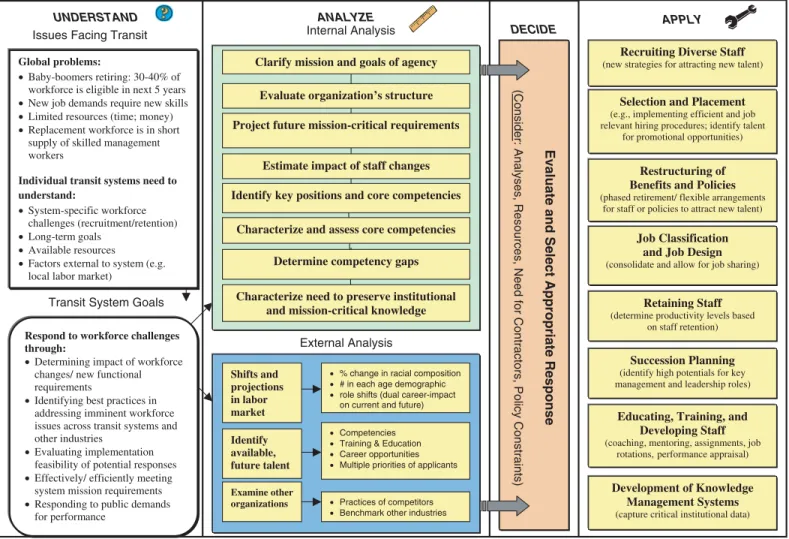
Users of the Guidebook are first encouraged to conduct a thorough review of their current recruitment, training and development, and retention practices as well as an organizational analy-sis of their existing resources, staffing, and strategic direction prior to implementing any one specific practice. Figure 1 in Appendix A is an example of the framework transit systems should institute prior to selecting the workforce strategy appropriate for their system. While the Guidebook is designed to serve all types and sizes of transit systems, one size does not fit all and thus systems may need to implement the alternate approaches provided or some variation of the recommendations.
This Guidebook provides an overview of human resource management strategies that have been effective in transit agencies and other types of organizations. For each strategy, this docu-ment provides an outline of broad steps rather than detailed instructions. As such, the Guide-book is likely to be an effective aid in selecting a strategy, but not sufficient to fully implement a strategy. Effective implementation of these strategies assumes skill and knowledge in human resources management. Each strategy will need to be adjusted to the unique organizational cir-cumstances, so an analysis of the organization is critical. Entire textbooks have been devoted to many of the strategies discussed in this Guidebook [e.g., Assessment, Measurement and Predic-tion for Personnel Decisions(Guion 1998); Applied Measurement Methods in Industrial Psychology (Whetzel and Wheaton 1997); Understanding Performance Appraisal: Social, Organizational, and Goal-Oriented Perspectives(Murphy and Cleveland 1995); Creating, Implementing, and Managing Effective Training and Development(Kraiger, 2002); and Online Recruiting and Selection: Innovations in Talent Acquisition(Reynolds & Weiner, 2009)]. The authors of this Guidebook recommend that organizations consult these textbooks and/or human resources professionals prior to implement-ing a strategy listed in this Guidebook.
2.0 Recruitment Overview
Fixed-route bus, general public demand response, and ADA paratransit systems are finding it challenging to fill managerial positions with individuals who have the appropriate combination of transit experience and leadership skills. This challenge is only expected to increase with impend-ing Baby Boomer retirements.
This section provides strategic recommendations in the area of recruitment. While these rec-ommendations focus on recruitment techniques and enhancements, the extent to which recruit-ment efforts are strategic and targeted impacts not only the quality of managers selected but also the extent of training and development new hires will require and the ease with which these man-agers will be retained. The influence of recruitment on training and development as well as reten-tion should be considered in implementing any of the recommendareten-tions presented in this Guidebook. In determining managerial recruitment strategies to be undertaken, it is critical for the transit system to decide whether specific transit or general leadership experience is more important to managerial success, especially when candidates with both strong transit back-grounds and leadership skills cannot be found. Recruitment strategies may vary greatly based on the outcome of this decision making process.
While many of the recommendations presented in this Guidebook can be effective for bus transit systems of all sizes and types, prioritizing the recommendations will be based on the tran-sit system’s specific needs and organizational model. In recruitment, one size does not fit all so transit systems are advised to thoroughly analyze their existing resources, competency and skill gaps, and internal talent pool prior to modifying their recruitment strategy (see Figure 1 in Appendix A for the analysis that should be conducted prior to the selection of a human resource management strategy).
The recruitment strategic recommendations are presented in the following tables:
• 2.1: Advertise Job Openings through Transit-Specific Channels
• 2.2: Use Online Recruitment Techniques
• 2.3: Match Recruitment Source to the Type of Candidate Desired
• 2.4: Conduct a Compensation Study
• 2.5: Highlight Employee Benefits
• 2.6: Recruit Internally for Management Positions
• 2.7: Recruit Nontraditional Applicants
• 2.8: Use a Panel or Multiple Interviewers
• 2.9: Utilize Structured, Behavioral-based Job Relevant Interview Protocols
• 2.10: Incorporate Realistic Job Previews (RJPs)
3
Table 2.1: Advertise Job Openings Through
Transit-Specific Channels
Description:Some transit agencies use transit-specific publications and websites in addition to, or instead of, using general, non transit-specific methods and mass job sites for posting manager job openings.
How to Implement this Recommendation
• Advertising via transit-only publications and websites allows agencies to focus on the appli-cants with relevant experience who may require less post-hire training with respect to the tran-sit aspects of the job.
• Consider how broad the applicant pool needs to be. The broader the applicant pool, the more resources that will have to be applied to screening applicants.
– For instance, if a system believes there is significant transit talent within its state, advertis-ing openadvertis-ings with the state’s transit association or the system’s own website may suit recruitment needs.
– However, if the system seeks experience from a broader applicant pool, advertising via a nationally circulated transit magazine or website may prove more effective (e.g., APTA Pas-senger Transportand CTAA Community Transportationmagazines).
• Systems typically use national publications to recruit for upper level manager jobs, but often use more local resources to fill bus operator/driver, maintenance, dispatcher, and supervisor positions.
• Many transit systems receive assistance from State Departments of Transportation (DOTs) in spreading the word about managerial vacancies.
• Some transit systems mail out managerial job announcement recruitment letters to peer tran-sit systems, either nationally or regionally, as a way of soliciting candidate response.
Examples of Innovative and Effective Transit Practices
• The Port Authority of Allegheny County, Jefferson Transit, Golden Empire Transit, and Capital Transitall use Passenger Transport to advertise manager job openings. Passenger Transportis a bi-weekly magazine published by American Public Transportation Association (APTA) that offers classified advertising and display advertising (e.g., full page, 1⁄
4page).
Classi-fied ads are published in the print and online versions of the magazine.
• Capital Transit and Transfortadvertise openings via Community Transportation(CT) mag-azine which is published bi-monthly by the Community Transportation Association of Amer-ica (CTAA). CT offers classified and display advertising; classified ads also are posted to the CTAA website.
• Many transit systems advertise job openings through their state’s transit organization. The Port Authority of Allegheny Countyhas used the Pennsylvania Public Transit Association’s (PPTA) website (www.ppta.net) to recruit managers. Similarly, Transforthas advertised manager jobs via the Colorado Association of Transit Agencies (CASTA). CASTA features employment opportunities on its website (www.coloradotransit.com) and in its quarterly newsletter CASTA Connection.In addition, Jefferson Transituses the Washington State Transit Association web-site (www.watransit.com) and Atomic City Transitmakes use of the New Mexico Passenger Transportation Association website (www.nmpta.com) to recruit managers.
• Transit agencies also make use of their own transit websites to advertise job openings and recruit applicants. As part of a municipality, Capital Transit’sjobs are posted directly to the city’s job listings webpage (www.juneau.org/personnel/jobs.php). Jefferson Transitposts job openings directly on the front page of its website (www.jeffersontransit.com). This high visibility location ensures that site visitors see the postings. OATS, Inc.advertises job opportunities along with a video about the services that OATS, Inc.provides on its website at www.oatstransit.org/ job_opportunities.php.
Potential Barriers Potential Facilitators
• Leverage city, state, and regional resources to advertise job openings.
• Communicate with system administrators about how to use transit resources to adver-tise managerial jobs to recruit the type of applicants the system wants to hire.
• Cost is one barrier some agencies face when advertising job openings.
Alternative Approaches to Practice
Alternative Approach 1:A classified advertisement in a widely circulated publication could be costly while advertising via the system or city website can be much more cost effective. Other agencies may be willing to post job vacancy information on their internal intranet site.
Alternative Approach 2:Larger transportation associations often offer advertising discounts for members, so ask about any discounts a system may be eligible to receive.
Impact of the Practice
• Advertising jobs solely to the transit community allows for a narrower applicant pool consist-ing of individuals interested in transit and likely with some transit-related skills and experi-ence. Research has found that applicants are more attracted to jobs that have a website that provides interactive information to help potential applicants identify how well they will “fit” with the organization (Breaugh, 2008). For example, websites may include employee profiles where an existing employee participates in an interview and describes the type of job he/she performs and the advantages and challenges of the job.
Basic Steps for Transit Implementation of this Strategic Recommendation
1. Determine the importance of transit-specific experience in filling managerial job openings. 2. Determine the practicality of and need for national versus regional or local advertising for
managerial candidates.
3. Based on the above two determinations, advertise in transit-specific media such as CTAA and APTA magazines, through the state transit association and state DOT, or any appropriate transit websites.
4. Consider alternate means of advertising managerial job openings, such as mailing recruit-ment letters to peer transit systems.
Table 2.2: Use Online Recruitment Techniques
Description:Most organizations and a majority of the general public use the Internet as a part of their daily activities. Use of the Internet also extends to recruitment strategies. Transit systems are leveraging job search sites of various types to reach a broader audience including those located in other regions of the country. Some transit systems also are using their own websites to post job openings, submit resumes and/or applications online, provide videos that showcase specific jobs, conduct Question and Answer sessions for interested applicants, host chat-rooms where applicants can join conversations with managers, and communicate the organization’s mission, goals and accomplishments.
How to Implement this Recommendation
There are many different online websites that transit systems can use to recruit managers, such as:
• Job Search Websites.These are websites that allow applicants to search for open positions that are posted to the sites by employers. Typically, job seekers are able to post resumes to the web-site which allows employers to search among those potential applicants. Job Search webweb-sites range in size and may be industry specific. Some popular industry and non-industry specific job search sites include:
– Monster.com – CareerBuilder.com – HotJobs.Yahoo.com
– Craigslist.org (This site is free and allows systems to advertise to individuals located in spe-cific regions of the country.)
– TransitJobFinder.com (This is a transit specific job search website.)
• Job Aggregator Websites.Job Aggregator Websites collect job postings from other websites and aggregate them into one database. Job aggregators often include jobs from popular job search websites (e.g., Monster.com, CareerBuilder.com) as well as other large and smaller job sites, and may even include unadvertised jobs from employer websites. Employers can often sub-mit job postings directly to job aggregator websites. Some examples are:
– Indeed.com – SimplyHired.com – TheLadders.com – LinkUp.com
• Social Networking Websites.A growing trend in recruiting is using social networking websites to recruit managers and employees. While mainly used to facilitate connections and interact with friends, family and colleagues, many social networking websites allow employers to advertise open positions on their sites. In addition, sites that cater to professionals (e.g., LinkedIn.com) allow users to type keywords into a search engine to find highly qualified job seekers and passive candidates (individuals who are not actively seeking a new job).
• The following are some popular social networking sites in the United States: – MySpace.com
– Facebook.com – Twitter.com – LinkedIn.com
• Intranets/System Websites.The intranet is a private network, typically limited to employees of an organization, that allows administrators and employees to securely share information
within the organization. Intranets can be used to collaborate on projects, share policies, and advertise job openings internally. Intranets typically operate separately from organization websites, which can be used to advertise open positions externally since these are accessible to people outside the organization. Employee referrals are one of the most effective means of recruitment and the intranet allows employees to be easily informed of job vacancies.
• Transit-Specific Websites.Many transit organizations and associations allow transit systems to advertise job openings on their websites. These are discussed in Table 2.1.
• Some transit systems advertise through a variety of other media to attempt to reach manage-rial candidates who do not have transit experience but who have strong leadership skills. These include non-transit industry publications, non-transit industry associations, contacts through the local business community, and word-of-mouth communications involving other public agencies, non-profits, and the private sector.
Examples of Innovative and Effective Transit Practices
• OCCK, Inc.OCCK, Inc. uses a popular local radio station’s website to publicize system job openings within the Salina, Kansas region. RadioWorksJobLink.com allows the system and other local organizations to post job notices for a low weekly fee.
• Pee Dee Regional Transportation Authority.Pee Dee Regional Transportation Authority utilizes www2.scnow.com/scp/jobs to advertise job openings, which is Florence, South Car-olina’s local newspaper website and is linked with Yahoo’s HotJobs. The system also uses the South Carolina State Job Board via www.jobs.sc.gov to post job vacancies.
• Mass Transportation Authority.Mass Transportation Authority uses Monster.com to recruit applicants for some of its vacant management positions. After posting vacancies internally, the Port Authority of Allegheny County uses its own website, job search websites, and social net-working sites to recruit external applicants. The authority’s website, www.portauthority.org/ PAAC/CompanyInfo/JobOpportunities/tabid/70/Default.aspx, provides available positions and job descriptions with job requirements and preferred qualifications. When the authority advertises via local Pittsburgh newspapers, the advertisements are also sent to Monster.com. CareerBuilder.com is another job search website used to recruit applicants. The system uses LinkedIn to advertise open positions and has also advertised via Twitter tweets for hard-to-fill positions in addition to providing service and route updates.
• South Lane Wheels.South Lane Wheels has a very limited recruitment budget and uses Craigslist as one of its primary recruiting sources because the system can post job openings on the website for free. For one recent vacancy, the system received nine applicants within 24 hours of posting the advertisement on Craigslist, despite having the one of the lowest compensation and benefits packages among competitors in the area.
• Capital Transit.To fill manager positions at Capital Transit, the system uses the Juneau City website to recruit applicants. Because the system is part of the City of Juneau, Alaska, Capital Transit and other city departments advertise job openings on www.juneau.org/personnel/ jobs.php.
• Coast Transit Authority.Coast Transit also uses its website, www.coasttransit.com, to recruit applicants. The site lists open positions along with brief descriptions of the jobs, information about where and when to apply, and a contact for additional information.
• Cache Valley Transit District.Cache Valley uses several Internet based recruitment strate-gies. The system uses its own website, www.cvtdbus.org/aboutus/careeropportunities.php, to provide information about job openings, where and when to apply for positions, and to pro-vide a contact for more information about openings.
Table 2.2: Use Online Recruitment Techniques
(Continued) Examples of Innovative and Effective Non-Transit Practices• Focus group participants from the utilities and package delivery industries stated they use social networking websites to recruit managers. One organization uses both LinkedIn and Craigslist to recruit for many positions, including management jobs. Another organization is currently working to establish a larger presence on the Internet with an emphasis on social networking websites. The participant stated that the organization signed up and posted director positions on LinkedIn in March 2009. The next day they had 23 candidates for the director jobs.
• Online social networks could also be used internally, as with one organization that was part of the focus group. The participant stated that his organization established an internal social network to increase the visibility of opportunities to move within the organization. Employ-ees voluntarily describe their career interests, geographical interests, and other factors, and a forum facilitates communication between employees and the organization about internal opportunities.
Potential Barriers Potential Facilitators
• Basic knowledge of the Internet and websites that can be used for recruitment of managers.
• Personnel available to screen many poten-tial applications and resumes.
• Inexperience with job search and social net-working websites.
• Not enough staff, time, or resources to use all of these recruitment strategies.
Alternative Approaches to Practice
Alternative Approach 1:Systems that are inexperienced in using online recruitment tools should visit a few of these websites to become acquainted with them. Most have an explanation of how the service works and a range of service fees. Once different websites have been explored, sys-tems can choose the website or websites that best suit their recruitment needs.
Alternative Approach 2:If a system is uncomfortable advertising on job search websites directly, many newspapers also post job openings to these websites for free with a paid advertisement in their newspaper.
Alternative Approach 3:Start by using only one or two of the online recruitment strategies. Then systems can gauge the personnel, time, or resources required to maintain those techniques and also if they will need to use additional online recruitment tools. A system may find that one online tool is all they need to recruit qualified management applicants.
Impact of the Practice
• The benefit of online recruitment tools for transit systems is that they can easily reach a large audience at a relatively low cost. Further, social networking may be especially useful for agen-cies that are having trouble recruiting because they can target job postings to specific indus-tries, job functions, and geographic areas.
Basic Steps for Transit Implementation of this Strategic Recommendation
1. Determine if the transit system will view candidates as acceptable for future vacancies if these candidates were previously managers and have strong leadership skills but do not have transit-specific experience.
2. If it is determined that the transit system desires to recruit candidates with no transit experi-ence but with strong leadership skills, consider utilizing general, non transit-specific job search, job aggregator and social networking websites to advertise managerial vacancies. 3. In addition to using general job websites to reach potential candidates, consider using other
media as well as involving local or regional government, nonprofit, and private sector orga-nizations.
Table 2.3: Match Recruitment Source
to the Type of Candidate Desired
Description:Utilizing a wide variety of different recruiting techniques is an important element in building a deep and diverse applicant pool. Both traditional (e.g., newspaper advertisements, job fairs) and nontraditional (e.g., transit-specific websites, social networking websites) recruitment techniques are used to provide transit systems with qualified and diverse managerial candidates. The sources used for recruiting potential candidates can be tailored to the type of applicants sought.
How to Implement this Recommendation
• The type of recruitment efforts a transit system should use depends upon the position it is recruiting for and the kind of managers they wish to attract.
– Minorities.If the transit system wishes to have a greater representation of minorities in the workforce, marketing job opportunities to minority-represented associations and partner-ing with community organizations that have a connection with minority groups would be strategic recruitment approaches.
– Long-Term Managers.If a transit system is part of a city, municipality, or county, they could consider promoting this relationship. Since many local and state governments are perceived as stable and good places to work, it may be advantageous to promote a system’s link to these entities. This is likely to attract individuals to the system who are looking for a stable and long-term career.
– Candidates’ Educational Background.Transit systems seeking candidates with a particu-lar educational background could advertise job openings at technical schools, colleges, or universities that offer related programs. Advertising at academic institutions can attract new graduates as well as more experienced alumni. Alumni often search for new opportunities at their alma mater when seeking a career move, and many schools have an active alumni network to facilitate communication with graduates about news, events, and opportunities.
– Retirees/Seniors.Some workers retire from their career but would still like to work after retirement. Transit systems can recruit retirees and seniors by advertising job openings via organizations for retired persons (e.g., AARP), senior centers, retirement communities, and job fairs that target this population.
– Transit Experience.Transit systems seeking applicants with transit experience can recruit via several transit sources including magazines (e.g., Community Transportation, Passenger Transport), transit-specific websites (e.g., transittalent.com), national transit associations (e.g., CTAA, APTA), state transit organizations, and systems’ own websites. This will ensure that individuals who see the advertisement are interested in transit, and are more likely to have transit experience.
– Leadership Skills.Transit systems seeking applicants who may not have transit experience but have demonstrated strong leadership skills can recruit via general, or non transit-specific sources (e.g. newspapers, social websites, Chambers of Commerce, local management asso-ciations and groups, local business and industry, local or state government entities, local or regional nonprofit agencies).
• For all types of candidates desired, transit systems can tailor recruitment materials to describe a successful person or job that would interest potential applicants.
• Transit systems can also sponsor career orientation activities for individuals from particular populations. This can help individuals understand how they would fit in a transit career.
• Develop messages about how certain populations fit within transit systems. Using retirees and seniors as an example, messages could include:
– Our transit system has retirees/seniors as managers
– Our transit system wants retirees/seniors to enrich our workforce – Our transit system welcomes retirees/seniors
– Retirees/Seniors are leaders in our transit system
Examples of Innovative and Effective Transit Practices
• Palace Transit.Palace Transit partners with other city departments to participate in job fairs and career expos. This increases the visibility of transit to potential applicants who are inter-ested in working for the city and also promotes the transit system to job fair participants.
• Transit systems including The Port Authority of Allegheny County, Capital Transit, Trans-fort, and Jefferson Transituse transit-specific sources to recruit managers from the transit industry.
Examples of Innovative and Effective Non-Transit Practices
• Several benchmarking focus group participants target minority conferences and other minor-ity organizations to diversify their recruitment of managers. One participant from an energy company noted that his organization has partnered with the National Black MBA Association to recruit its members at the association’s annual conference. The energy company also col-laborated with the Black MBA Association to host an industry panel discussion.
Potential Barriers Potential Facilitators
• Transit systems that are willing to put extra effort into recruiting the applicants their system is missing.
• Transit systems may be unable to revise recruitment materials due to cost or other restrictions.
• The applicant pool in a system’s region does not include individuals from a particular demographic (e.g., few minorities in the region).
Alternative Approaches to Practice
Alternative Approach 1:If a transit system is unable to change their job postings to target specific populations for recruitment, they could consider adding descriptions of successful employees who are from the population the system would like target (e.g., graduates from a particular university or with a certain certification, individuals who retired then came to work for the system).
Alternative Approach 2:Transit systems that lack a diverse local applicant pool could benefit from using Internet-based recruitment strategies to target specific groups, as well as nationally distributed magazines and newsletters from organizations that cater to certain populations.
Impact of the Practice
• Using job fairs, employment centers and workforce development programs, community bul-letin boards and local newspapers geared toward special populations (e.g., seniors or retirees) to advertise positions have been successful recruitment strategies in transit systems (KFH Group, Inc. 2008; TCRP RRD 88 2008).
Table 2.3: Match Recruitment Source
to the Type of Candidate Desired
(Continued) Basic Steps for Transit Implementationof this Strategic Recommendation
1. Consider utilizing a wide variety of different recruiting techniques to build a deep and diverse applicant pool.
2. Initiate diverse recruiting in order to fill managerial vacancies using both traditional and non-traditional recruitment techniques.
3. Target recruitment efforts to the kind of manager the transit system wishes to attract, be that based on woman or minority status, educational background, transit experience, or leader-ship skills.
4. Consider incorporating into recruitment materials any aspect of transit system employment that promotes the possibility of a stable and long-term career, such as the system’s relation-ship with city or county government.
Table 2.4: Conduct a Compensation Study
Description:Compensation surveys (salary surveys) allow agencies to determine how the salary and benefits they offer compare to other organizations (determining external equity).
How to Implement this Recommendation
• To determine external equity, a job’s worth is compared to the external market (e.g., other transit systems or organizations) (Aamodt 2004). External equity is important for agencies to attract and retain managers.
• Transit systems can conduct a benchmarking study through the use of a compensation sur-vey to determine external equity; the sursur-veys can be conducted in various ways:
– A system can send a survey to other transit systems and organizations. This survey could ask how the system or organization compensates staff in various positions, and may include questions about benefits.
– A transit system could also use the results of a salary survey conducted by a trade group or other firm. These survey results are often available for a fee.
– The Bureau of Labor Statistics conducts the National Compensation Survey, which provides measures of wages, cost trends, and benefits rates. The survey provides data for localities, broad geographic regions, and the nation for civilian workers, those in private industry, and state and local government employees.
• Once the transit system has obtained compensation information, the system can choose how to evaluate its own compensation practices with respect to the benchmarks.
– For example, a transit system might choose to offer compensation at the high end of the market range to attract the best applicants and retain current managers.
– Another system could choose to offer the “going rate” (i.e., the average) for a position to remain in the competition, though they may miss out on the best candidates (Aamodt 2004).
• If pay is adjusted for external manager recruits, make sure that it is comparable to current managers’ compensation rates. If the rates are not comparable, current managers may feel slighted and decide to leave.
• Research indicates that improving compensation practices such as the structure and timing of wages can increase employee retention (KFH Group, Inc. 2008).
• Peterson (2007) suggests that transportation systems should, where possible, adopt a grade and salary structure. This includes a grade structure, salary ranges for each grade, and a sys-tem for advancing employees through the salary range based on their increased value to the organization.
Examples of Innovative and Effective Transit Practices
• Port Authority of Allegheny County.In order to remain competitive, the Port Authority of Allegheny County conducted a benchmarking survey of compensation practices. Opera-tionally related jobs were benchmarked with other transit systems for compensation compari-son, and jobs in non-transit specific disciplines were compared to the local market and existing internal positions. Based on the study’s results, the Authority’s compensation package for external candidates was revised and internal manager compensation was reviewed for salary compression and internal equity and appropriate adjustments were made. This initiative was conducted using reputable salary survey instruments, total rewards trends, and a point factor to determine fair and equitable offers.
Table 2.4: Conduct a Compensation Study
(Continued)• Transfort.Before posting job ads for its Assistant General Manager position, Transfort con-ducted a salary survey. The system used a job analysis questionnaire consisting of 12 questions about responsibilities and authority in the position and Transfort’s compensation manager produced a pay range that the position should fall within. This led to a competitive salary when compared with comparable systems.
• Atomic City Transit.Atomic City Transit is in the middle of a market survey to assess the competitiveness of their salary and benefits package. The study is assessing the salaries of sim-ilar management positions locally and nationally.
• Golden Empire Transit.Golden Empire Transit conducted a salary and benefits survey in 2007 to ensure competitiveness with other transit systems. As a result, salary and benefits are not a challenge to recruitment as their compensation package is comparable to the industry and the local area.
Examples of Innovative and Effective Non-Transit Practices
• One benchmarking participant from a large state DOT acknowledged that engineers, espe-cially at management levels, are often enticed away by private sector organizations. The agency frequently conducts external market salary surveys to ensure they remain aware of what com-petitors are paying engineers. The agency then uses this information in combination with internal statistics that show which jobs are suffering the greatest losses to identify where salary increases or other forms of compensation enhancements (e.g., benefits) are needed. The agency also extends the survey to surrounding counties since much of their competition comes from counties that offer $5,000–10,000/yr more.
Potential Barriers Potential Facilitators
• Established relationships and contacts with other transit agencies will help facilitate a system-driven salary survey.
• Gaining support from top management
and administrators that determining and providing equitable compensation for jobs is an important recruitment and retention strategy.
• Agencies may not have formal connections withotheragencies to facilitate a home-grown salary survey.
• Other agencies may not be willing to pro-vide compensation information to a “com-petitor.”
• The cost of conducting a salary survey or purchasing the results of a trade group’s sur-vey may be too high for some transit systems.
Alternative Approaches to Practice
Alternative Approach 1:If agencies do not currently have connections with transit systems locally or nationally, they can contact their state transit/transportation association for contact information of other systems.
Alternative Approach 2:As incentive for other transit systems’ participation in a salary survey, offer participants the results of the salary survey. The system may be more willing to share com-pensation information if they receive the final study report.
Alternative Approach 3:Instead of conducting a large-scale survey, agencies can focus on the local or regional labor market for its survey. Asking a few agencies in the surrounding area about their compensation rates and benefits would take much less time, and could still glean impor-tant information.
Impact of the Practice
• The results of these surveys inform transit systems about the competitiveness of their com-pensation so the system can consider making changes. Competitive comcom-pensation can help manager recruitment efforts and retention. For example, wage progression that is tied to longevity creates an incentive for employees to stay with a system since their wages can increase over time (KFH Group, Inc. 2008) and the opportunity to earn more with increased tenure could be a significant attractor for job applicants.
Basic Steps for Transit Implementation of this Strategic Recommendation
1. Conduct a formal or informal salary and benefits survey to compare how the compensation your system offers to managerial candidates compares to other organizations.
2. Survey peer transit systems, either nationally and/or regionally, along with other local non-transit public and private organizations.
3. Evaluate how your transit system’s compensation practices compare to surveyed organizations. 4. If possible and necessary, adjust your transit system’s compensation rates to ensure
Table 2.5: Highlight Employee Benefits
Description:Discussing and promoting transit system benefits packages in job advertisements may make potential applicants more motivated to apply for the job. Emphasizing benefits in recruitment literature can give potential applicants a better idea of the total compensation they will receive if they are hired.
How to Implement this Recommendation
• Transit systems could conduct a compensation study, as outlined in Table 2.4, to determine which benefits are standard in similar systems and industries or the local area.
• Agencies should then review their benefits packages and choose the benefits they would like to highlight in recruitment materials. For example, these benefits could be annual or sick leave amounts, whether insurance is provided and how much the system pays, retirement plans, training opportunities, employee development programs, tuition reimbursement, on-site child care, and commuter benefits. Benefits should include anything that is of most value and addresses the needs of applicants the system wishes to attract.
• Think about all the ways a system could advertise its job openings. Review all current job post-ing material includpost-ing advertisements, website content, brochures, posters, etc., for benefits information.
• Where recruitment material is lacking key benefits information or missing benefits data alto-gether, include the benefits highlights.
– Add a paragraph or sentence or two to job advertisements and other materials (e.g., classi-fied advertisements in newspapers, advertisements on popular job search websites) to feature key benefits.
• Update the transit system website to include current benefits information. Examples of Innovative and Effective Transit Practices
• Atomic City Transit.Atomic City Transit’s managerial candidates report that the transit sys-tem’s benefits package is a major draw for them. Atomic City offers: health insurance with no deductible; dental and vision care; 2 mandatory pension plans (Los Alamos County and Pub-lic Employee Retirement Association) and an optional 457 plan in which employees defer compensation on a pre-tax basis; up to 3 weeks of annual leave that begins to accrue from work start; life insurance; long-term disability; and an employee program where the county subsi-dizes YMCA and fitness center costs, offers reduced prices for a golf course, and an outdoor skating rink free to employees.
• Pee Dee Regional Transit Authority.Pee Dee Regional Transit Authority in Florence, South Carolina is able to offer job candidates a benefits package that is consistent with what is offered by the state of South Carolina. This makes the system very competitive with regard to its retire-ment plan, 401(k), and health insurance.
• Souris Basin Transportation.Souris Basin Transportation mitigates its recruitment chal-lenges (e.g., competitors offer higher salaries, low unemployment in the area) by offering a very competitive benefit package. Transit system benefits follow state guidelines and include 100% employer paid health care, dental and vision premiums for employee coverage, and a smaller percentage paid for family coverage.
Examples of Innovative and Effective Non-Transit Practices
• One benchmarking participant from the telecommunications industry reported that his organization studies the types of benefits offered by local and state government agencies and offers benefits that rival those (e.g., health comprehensive, pension plan, 401k matching, edu-cation reimbursement, robust life insurance (short and long), employee discount program through relationship with retail travel and other industries). Every manager in the organiza-tion is also offered a base salary and the opportunity to receive short term incentives (annual bonus) based on the organization’s performance. Other benefits offered include split of cash and stock options (stock options accrue over a 3-year cycle but employees must hold for a year before viable).
Potential Barriers Potential Facilitators
• Knowing what benefits attract the kind of candidates the transit system wants to hire is important.
• Current management could help define the benefits that they perceive as most important to highlight in order to attract applicants.
• Transit systems have established advertise-ments, brochures, and posters, and it would be too costly to replace them.
• Systems have a limited advertising budget and cannot afford extensive job advertisements.
Alternative Approaches to Practice
Alternative Approach 1:Always make sure recruitment materials list the transit system website for further information about things that may change from time to time, such as benefits pack-ages. This way, recruitment materials do not need to be revised each time benefits change; the transit system can simply make the changes to its website.
Alternative Approach 2:If, for example, a classified advertisement is short on space, make sure to provide a website where potential applicants can learn more about the transit system’s bene-fits package and the job itself.
Alternative Approach 3:Transit agencies could use their managers to determine which benefits should be highlighted in advertising materials if conducting a compensation survey is not possible.
Impact of the Practice
• Highlighting benefits, flexible scheduling, and working with special need populations can motivate potential applicants to apply for positions in transit agencies (KFH Group, Inc. 2008).
Basic Steps for Transit Implementation of this Strategic Recommendation
1. Identify the target applicant pool for manager jobs and determine what personal needs those individuals are likely to have which might otherwise deter them from the jobs due to per-ceived work-life conflict.
2. Review your transit system’s benefit package in order to identify those benefits that would be most attractive in recruiting these managerial candidates.
3. Highlight the benefits that have been determined to be attractive recruitment tools in all modes of advertising for managerial job openings.
Table 2.6: Recruit Internally for Management Positions
Description:Internal recruitment is the process of filling vacancies in transit systems with cur-rent employees who have the knowledge, skills, and abilities and relevant experience to perform the job.
How to Implement this Recommendation
The reasoning behind hiring internal applicants within a transit system is that employees will have risen through the ranks and, as a result, they understand many facets of their organization and their new position. Internal hiring also saves the system money that is usually associated with the training and orientation process for new hires.
• Research notes that internal career paths should be fair with only qualified applicants consid-ered for vacant positions, and in-house applicants should not expect or receive special con-siderations over external applicants (KFH Group, Inc. 2008).
• Even if an internal candidate is not immediately apparent, post manager job openings that list minimum qualifications within the system or as appropriate in city government. This will ensure that all employees are aware of the opening and can apply if they believe they are qualified.
• Job openings can be posted on system bulletin boards, websites or intranets as well as adver-tised in employee newsletters, staff meetings, or emails. It is important that the postings are available to everyone.
• If a manager position will soon be available (e.g., a current manager is retiring), systems can take steps to develop high potential employees who are interested in the position, but who may not yet be qualified to be a manager.
• Systems can also make use of succession plans to identify employees to fill future vacancies for manager jobs.
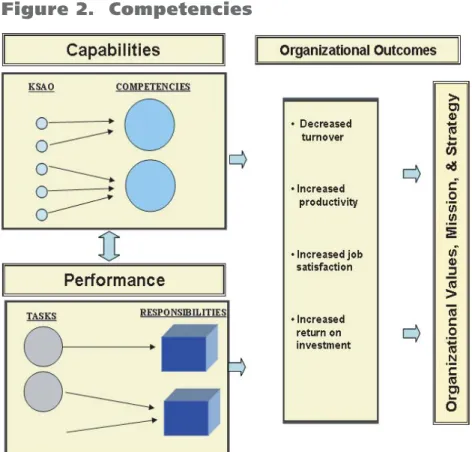
• Implementing an organizationwide competency model with competency profiles by job will allow hiring managers to easily move individuals from one job into another based on an assessment of employee competencies and the match between the competency profile of an employee’s current job and the competency profile of the vacant manager job. Competency profiles state the level of proficiency and relative importance of each competency for the spe-cific job. Thus, while the competencies may be the same across jobs, the profiles will differ. (See Appendix A Figure 2 for an illustration of competencies.)
Examples of Innovative and Effective Transit Practices
• Virginia Regional Transit.Virginia Regional Transit proactively recruits internal candidates for management jobs. The system identifies high potential employees and supervisors and offers them training and development opportunities to increase their likelihood of promotion into management positions. Training often includes Certified Community Transit Supervi-sory (CCTS) and Manager (CCTM) Training through the CTAA.
• Altoona Metro Transit.Altoona Metro Transit has had success with a program where it pro-motes high potential employees to supervisory positions in transportation and maintenance. Individuals are able to step down without penalty if the position does not work out.
• OCCK, Inc.OCCK, Inc. recruits managers from other departments within the agency (sit is one agency component) who have strong leadership skills but who lack technical tran-sit skills.