R E S E A R C H
Open Access
Statistical wavelet-based anomaly detection in
big data with compressive sensing
Wei Wang
*, Dunqiang Lu, Xin Zhou, Baoju Zhang
*and Jiasong Mu
Abstract
Anomaly detection in big data is a key problem in the big data analytics domain. In this paper, the definitions of anomaly detection and big data were presented. Due to the sampling and storage burden and the inadequacy of privacy protection of anomaly detection based on uncompressed data, compressive sensing theory was introduced and used in the anomaly detection algorithm. The anomaly detection criterion based on wavelet packet transform and statistic process control theory was deduced. The proposed anomaly detection technique was used for through-wall human detection to demonstrate the effectiveness. The experiments for detecting humans behind a brick wall and gypsum based on ultra-wideband radar signal were carried out. The results showed that the pro-posed anomaly detection algorithm could effectively detect the existence of a human being through compressed signals and uncompressed data.
Keywords:Anomaly detection; Big data; Through-wall human detection; Compressive sensing 1 Introduction
Anomaly detection refers to finding inconsistency with the desired pattern in data, which is also known as novelty detection, anomaly mining, and noising mining. Anomaly detection has many applications, such as credit card fraud detection, medical diagnostics information anomaly detec-tion, industrial equipment fault detection and structural defect detection, network intrusion detection, and a novel theme of text mining. Currently, anomaly detection methods include anomaly detection based on classifica-tion, anomaly detection based on the nearest neighbor method, anomaly detection based on clustering, statistical anomaly detection, anomaly detection based on informa-tion theory, spectral theory anomaly detecinforma-tion, and so on [1]. All the anomaly detection techniques can operate in one of the three modes: supervised anomaly detection which assumed the availability of a training data set that labeled instances for normal as well as anomaly class, semi-supervised anomaly detection which only assumed the availability of a normal data set, and unsupervised anomaly detection which did not require training data.
‘Big data’refers to large, diverse, complex, longitudinal, and distributed data sets generated from instruments,
sensors, internet transactions, email, video, click streams, and other digital sources available today and in the future. Some core technologies are needed to solve the problem in big data, such as effective data collection and storage and data mining techniques and anomaly detection method. However, the existing anomaly detection algo-rithms are mainly based on the complete data. It greatly limits the application of anomaly detection algorithms in big data [2,3]. The main reason is that big data acquisition and storage become increasingly difficult with the increas-ing amount of data because of the samplincreas-ing bandwidth and storage space constraints. Meanwhile, anomaly detec-tion based on the complete data would inevitably expose some sensitive data which the data owner did not want to be leaked, so the effective privacy protection is the prob-lem needed to be overcome currently.
Compressive sensing (or compressed sampling, CS) the-ory suggested that a high-dimensional signal can be pro-jected into a low-dimensional space with a random measurement matrix when the signal was sparse or com-pressible which was proposed by Donoho and Candès in 2006 [4,5]. Then, the original signal can be reconstructed from the low-dimensional information by solving an optimization problem. In other words, the low-dimensional signal contained the main features of the original signal, so * Correspondence:[email protected];[email protected]
College of Electronic and Communication Engineering, Tianjin Normal University, Tianjin 300387, China
© 2013 Wang et al.; licensee Springer. This is an Open Access article distributed under the terms of the Creative Commons Attribution License (http://creativecommons.org/licenses/by/2.0), which permits unrestricted use, distribution, and reproduction in any medium, provided the original work is properly cited.
CS theory can provide an effective method for anomaly de-tection in big data.
Usually, the number of normal data instances is more than the number of anomaly data instances. This just meets the sparsity requirements of compressive sensing theory. In [6], a compressed sensing-based clone identifica-tion scheme for sensor networks has been proposed ac-cording to the sparsity of clone appearance in the network. The data was recovered at the data base station, and then the safety of sensor networks was monitored. The algo-rithm achieved the lowest communication overhead. In [7], the compressed sensing theory was used for wireless net-work data acquisition and achieved the anomaly detection during a signal recovery procedure based on the modified BP reconstruction algorithm. Moreover, considering the asymmetry of anomaly and energy consumption, an im-provement was made by giving a distributed detection al-gorithm. However, the main purpose of compressive sensing theory in the above research was to reduce the pressure of data storage and transmission, but it did not realize the anomaly detection in the compressed domain and cannot overcome the large amount of data calculation and privacy protection issues. Saha used the compressed sensor network data for anomaly detection based on the spectrum theory method and obtained satisfactory detec-tion results in the light of residual analysis of compressed data [8,9]. In [10,11], random projection in conjunction with principal component analysis (PCA) was imple-mented for anomaly detection in the compressed domain. An application of this proposed methodology to detect IP-level volume anomalies in the computer network traffic suggested a high relevance to practical problems. Although this type of methodologies can achieve the anomaly detec-tion in the compressed domain and has privacy protecdetec-tion features, the algorithms were complex, computationally in-tensive, and insufficient in real-time detection.
According to the problem in anomaly detection of big data, an anomaly detection algorithm in the compressed domain is proposed which makes full use of the advan-tages of compressive sensing technology. The experi-ment for through-wall human detection with the provided algorithm is carried out to test the effectiveness of the algorithm. The remainder of the paper is orga-nized as follows. In Section 2, the criterion and proced-ure of anomaly detection are deduced base on wavelet packet transform and statistical method. The compres-sive sensing theory is then introduced. Experimental re-sults for the detection of a human being will be shown in Section 3. Conclusion and discussion are in Section 4. 2 Background and anomaly detection procedure 2.1 Anomaly detection procedure
The conventional signal frequency spectrum analysis is built on the basis of Fourier transform (FT) which is a
global transform. However, FT has a low-frequency reso-lution and cannot recognize the subtle changes of the frequency spectrum. Wavelet transform (WT) may be viewed as an extension of the traditional FT with adjust-able window locations and sizes. Compared with the Fourier-based analyses that use global sine and cosine functions as bases, the basis wavelets are local functions, each of which is defined by two parameters: its scale (re-lating to frequency) and its position (re(re-lating to time). One possible drawback of the WT is that its frequency resolution is quite poor in the high-frequency region. The wavelet packet transform (WPT) is one extension of the WT that provides a complete level-by-level decompos-ition. The WPT enables the extraction of features from signals that combine stationary and nonstationary charac-teristics with an arbitrary time-frequency resolution.
The wavelet packet transform of a time-domain signal x(t) can be calculated using a recursive filter-decimation operation. After the signal x(t) is decomposed into j levels of decomposition and the node signals are recon-structed asxi
jð Þt , the signalx(t) can be expressed as
x tð Þ ¼X 2j
i¼1
xijð Þt ð1Þ
The node signal energiesEijcan be defined as
Eij¼∫∞−∞xijð Þt
2
dt¼∑xijð Þt
2 ð
2Þ According to the theory of WPT, each node signal contains information of the original signal in a specific time-frequency window. Hence Equation 2 illustrates that the node signal energyEi
jis the energy stored in the
corresponding frequency band. Obviously, the frequency components will be varied when anomaly occurs in the original signal. Thus, the anomaly detection can be achieved by investigating the changing trend ofEij.
The wavelet packet components with small energy magnitudes are easily jammed by the measurement noise. Thus, in this paper, instead of directly observing node signal energies on an individual basis, the criterion for anomaly detection is designed as
ADC¼X m i¼1 jΔEi j−ΔEij — j ΔEi j — ð3Þ
whereΔEijis the node signal energy ratio in the total signal
energy andΔEij
—
is the reference baseline of node signal en-ergy ratio which is the mean value of node signal enen-ergy by measuring some subsequent signals. In order to eliminate the noise effect, the firstmdominant nodes are retained. It can be deduced that anomalies in the signal would affect the wavelet node signal energies and subsequently alter the
criterion‘ADC.’ However, the anomalies are not the only factor that can affect the criterion which also can be influ-enced by measurement noise. It is essential to establish threshold values for the anomaly detection criterion so that the criterion can be used to extract anomalies from meas-urement noise with a large probability [11]. In this paper, the threshold values would be fixed based on statistical process control (SPC) and statistical process control charts which are used to describe the output characteristics of the process in a coordinate graph.
SPC was proposed by Dr. W.A. Shewhart, and the stat-istical process control charts described the output char-acteristics of the process in a coordinate graph. The algorithm was proposed to monitor the manufacturing process so as to reduce variation and guarantee quality into the product. The control chart includes center line, upper control limit (UCL), and lower control limit (LCL). For anomaly detection applications, the core of the technique is to establish the control limits that can enclose variation of the extracted criterion due to meas-urement noises with a large probability.
Assume continuous measuring of m sets of
time-domain signals under the same status. In other words, there are no anomalies during the measurements.
Ac-cording to Equations 1, 2, and 3, a total of pADCs can
be acquired using the average node energies as the refer-ence baseline. Furthermore, the mean values and the
standard deviation ofp ADCs can be obtained as μADC
and SADC. On the basis of SPC theory, an X-bar control
chart is used to determine threshold values of ADC.
Suppose that the pADCs are divided into subgroups of
size q. Then, the one-side 1−α upper confidence level for average ADCs of a subgroup can be defined as
UCLα¼μADCþZα SADC ffiffiffi q p ð4Þ
where Zα is the value of a standard normal distribution
with zero mean and unit variance such that the cumula-tive probability is 100 (1−α)%. The level UCLα can be regarded as the threshold value of the criterion. There-fore, if no anomalies happen, the average criterion ADC
of a followed subgroup would be in the range of UCLα
with a high probability of 100 (1−α)%. On the other hand, when the average criterion ADC of a consecutive sub-group is beyond the limit, it shows that there are some anomalies. However, it should indicate that the SPC is a statistical principle of hypothesis testing. So, there are two types of hypothesis testing errors. Usually, the confidence
limit can be improved by increasing the sizes p and
q. From the anomaly detection procedure, it can be seen that no training data is required to construct a mathemat-ical mode for anomaly detection. That is to say that the proposed algorithm belongs to unsupervised anomaly de-tection and can achieve online anomaly dede-tection.
2.2 Compressive sensing theory
Although the proposed algorithm can overcome the noise interference and achieve anomaly detection with high probability, this algorithm is based on the complete data which greatly limits the application in the big data field. Compressive sensing theory overwhelms the limita-tion of Nyquist sampling theory and can acquire and compress data simultaneously. The theory provides a feasible basis for the proposed anomaly detection algo-rithm in the big data field.
For signalx∈RN, it can be expressed as
x¼X
N i¼1
φiθi or x¼Φθ ð5Þ
whereΦis theN×Northonormal transform basis andθ
is the expansion coefficient vector under the orthonormal basis. If signalxis aKsparse signal, that is,Kelements in
the average criterion value
1 2 3 4 5 6 7 8 9 10 11 12 2 4 6 8 10 12 14 16 18 20 22 Number of subgroup
without human being with human being
UCL
αof a subgroup
vectorθare not zero andKis far less thanN, the signalx can be collected with a small set of nonadaptive, linear measurements according to compressive sensing theory. Then, it can be described as follows [12-18]:
y¼Ψx¼ΨΦθ ð6Þ
whereΨis aM×Nrandom measurement matrix andM
<N. Here, (Φ, Ψ) is a pair of orthobases which followed the incoherence restriction.
When the above condition holds, the expansion
coeffi-cients θ can be reconstructed by solving the following
l0-norm constrained optimization problem:
θ
⌢
¼ arg mink kθ 0 s:t: y¼ΦΨθ ð7Þ
where the ‖θ‖0 norm counts the number of nonzero
components ofθ. However, solving Equation 7 was both
numerically unstable and NP complete. Instead of
solv-ing the l0 minimization problem, the nonadaptive CS
theory seeks to solve the ‘closest possible’ tractable minimization problem, i.e., thel1minimization:
θ
⌢
¼ arg mink kθ 1 s:t: y¼ΦΨθ ð8Þ
If x is termed as K sparse in the orthonormal basis,
then we only need to collectM=O(Klog(N/K)) random
measurements to recover the signal by l1-norm
algo-rithm. Many recovery algorithms based on linear pro-gramming, convex relaxation, and greedy strategies have
been proposed to solve Equation 8, such as matching pursuit (MP), orthogonal matching pursuit (OMP), StOMP, subspace pursuit (SP), and CoSaMP. Finally, the reconstruction signalxcan be given by^x¼Φ^θ.
According to compressive sensing theory, the acquired low-dimensional signal contained the main features of the signal under the premise of appropriate measurement matrix. So, the frequency component features would be included in the gathered low-dimensional signal. There-fore, the proposed anomaly detection procedure for big data could be carried out in the compressed domain. 3 Experiment results
The performance of our approach was evaluated by using experiments of through-wall human detection. 3.1 Through-wall human detection based on UWB radar Through-wall human detection is of great interest for many applications, such as military reconnaissance, anti-terrorism, and medical and natural disaster ambulance, which can penetrate non-metallic media to detect life sig-nal in far-off areas. Due to the strong anti-interference ability, high-resolution performance, and good target rec-ognition capabilities, the ultra-wideband (UWB) radar has emerged as one of the most optimal choices for through-wall human detection which can emit very short duration pulses to penetrate walls, bulkhead, and other obstacles. The through-wall detection of a human being is based on
the average criterion value
with human being
UCL Number of subgroup 1 2 3 4 5 6 7 8 9 10 11 12 0 2 4 6 8 10 12 14 of a subgroup
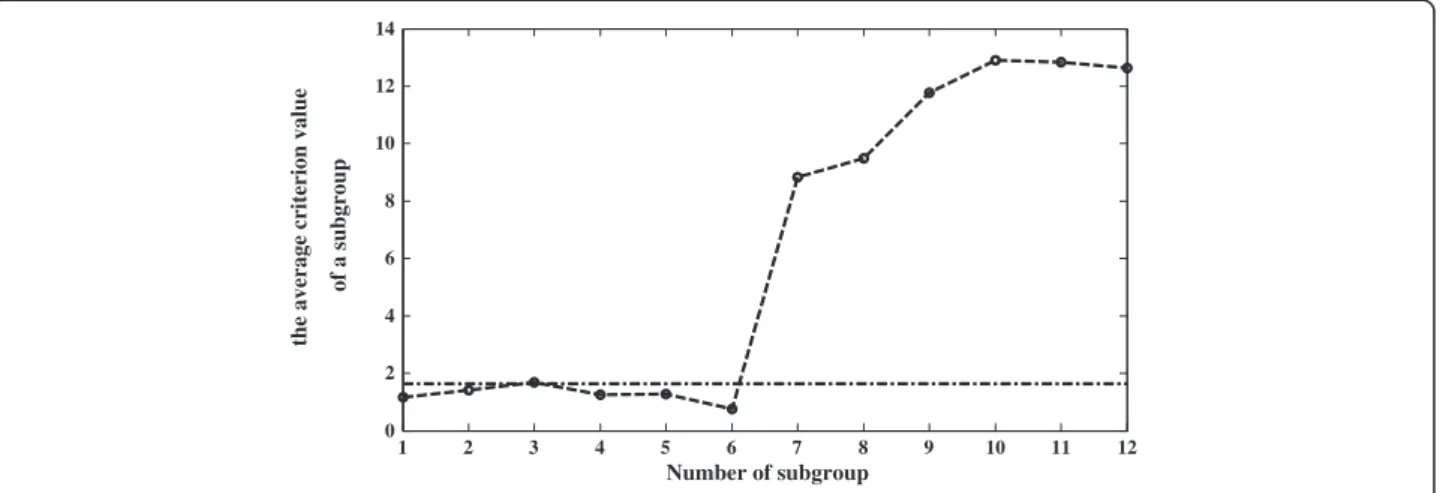
Figure 2Through-wall human detection with complete data for gypsum wall.
Table 1 Through-wall human detection with compressed data for gypsum wall
Average criterion value of a subgroup
Compressive ratio 1:5 UCLα= 0.973 Without a human being 0.9231 0.7760 0.6595 0.6153 0.5798 0.6996
With a human being 128.205 128.433 133.584 134.44 133.735 131.339 Compressive ratio 1:3 UCLα= 1.289 Without a human being 1.256 0.9657 0.7574 0.7075 0.9152 0.9624
the fact that the human body is always in a state of motion even if it sleeps or is trapped because of breathing. These tiny human motions would cause the scattering and reflec-tion changes of an electromagnetic wave which is emitted by the UWB radar and passes through walls to reach the human body target. Furthermore, human target detection, location, and tracking can be achieved through signal ex-traction and analysis of human characteristics from the radar echo signal [19-21]. Qilian Liang from the University of Texas at Arlington has investigated these topics deeply [22-29].
However, the UWB echo signals usually are the big data which increase the burden of data sampling and storage, and it is difficult for anomaly detection or through-wall human detection with complete UWB echo signal data. In this paper, we would use the proposed anomaly detection procedure in the compression domain for through-wall human detection to verify its feasibility.
3.2 Experimental results and analysis
In the experiments, we used the P220 UWB radar of Time Domain Company as the detection tool, and it worked in monostatic mode wherein the waveform pulses were transmitted from a single omnidirectional antenna and scattered waveforms were acquired by a collocated omni-directional antenna. In the project, the P220 UWB radar was working with a center frequency of 4.3 GHz. In this project, data were collected at three different locations with different types of walls which were brick wall and gypsum wall. The radar parameters were the same and were as follows: hardware integration = 512, software inte-gration = 2, pulse repetition frequency 9.6 MHz, step size 13 bin, and window size 10 ft. The echo signals were col-lected at two statuses: no person behind the wall and a still human being standing behind the wall.
To verify the feasibility of the proposed algorithm, each of the 30 sets of echo signals having a status of without a human being and with a human being was ac-quired. The signals were decomposed by an eight-layer wavelet packet with a ‘db10’ wavelet. The first 20 node signals were used to construct the criterion ADC. The
length of subgroup is q= 5. The upper confidence level
is 1−α= 0.95. The random Gaussian measurement
matrix was chosen for anomaly detection in the com-pression domain based on compressive sensing.
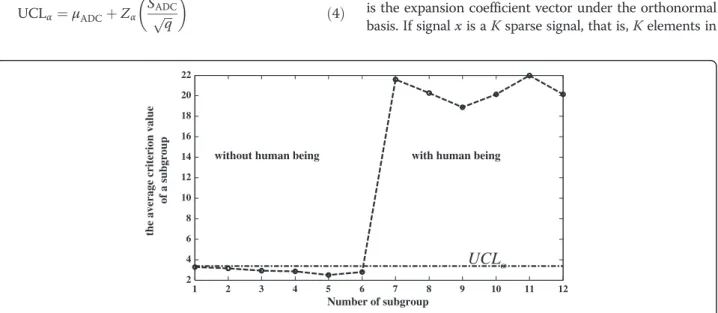
The experimental results of through-wall human detec-tion for complete data and compressed data with com-pression ratios of 1:3 and 1:5 were shown in Figures 1 and 2 and Tables 1 and 2.
According to the proposed anomaly detection proced-ure, from the experimental results, it can be seen that the identification method could effectively detect the existence of a human being in complete data and compressed data with a high probability of 95%. Meanwhile, the results showed that the difference of the average criterion of a subgroup between without a human being and with a hu-man being became more obvious in the compressed do-main. It is mainly because more features of the original signal have been eliminated in the compressed domain and affected the reference baseline of the node signal en-ergy ΔEij. Otherwise, due to the random feature of the
measurement matrix, we got the average criterion value of a subgroup by calculating three times and acquired the mean value as the criterion value.
4 Conclusions
Big data is a collection of data sets which are too large and complex to be processed using traditional data pro-cessing methods. Anomaly detection is an important problem that has been researched within diverse re-search areas and application domains. However, trad-itional anomaly detection techniques based on complete data are confronted with many difficulties for big data.
According to the principle that the frequency compo-nents would vary because of the existence of anomaly, the paper proposed an anomaly detection algorithm based on wavelet packet transform and statistic process control theory. Due to the sampling and storage bur-den of anomaly detection in big data, compressive sensing theory was used in the proposed anomaly de-tection method. Subsequently, we proved that through-wall human detection using compressed data could achieve equivalent performance as it did using the ori-ginal uncompressed data and reduced the computa-tional cost significantly based on the proposed anomaly detection technique.
Competing interests
The authors declare that they have no competing interests. Table 2 Through-wall human detection with compressed data for brick wall
Average criterion value of a subgroup
Compressive ratio 1:5 UCLα= 1.1419 Without a human being 1.1109 0.9593 0.8095 0.8438 0.9436 0.7276
With a human being 42.7864 43.0531 44.7161 45.0177 44.9143 44.9054 Compressive ratio 1:3 UCLα= 1.1938 Without a human being 1.1035 1.0675 1.1122 1.0067 0.8548 0.9219
Acknowledgment
The authors would love to thank Professor Qilian Liang from the University of Texas at Arlington for providing the UWB radar data. This research was supported by the Tianjin Younger Natural Science Foundation
(12JCQNJC00400) and National Natural Science Foundation of China (61271411).
Received: 25 September 2013 Accepted: 1 November 2013 Published: 17 November 2013
References
1. V Chandola, A Banerjee, V Kumar, Anomaly detection: a survey. ACM Comput. Surv.41(3), 1–72 (2009)
2. CT Chou, R Rana, W Hu, Energy efficient information collection in wireless sensor networks using adaptive compressive sensing, inIEEE 34th Conference on Local Computer Networks, Zurich, Switzerland, 20–23 October 2009, pp. 443–450
3. J Wang, S Tang, B Yin et al., Data gathering in wireless sensor networks through intelligent compressive sensing, inProceedings IEEE INFOCOM, Orlando, FL, 25–30 March 2012, pp. 603–611
4. DL Donoho, Compressed sensing. IEEE Trans. Inf. Theory52(4), 1289–1306 (2006) 5. E Candès, Compressive sampling, inProceedings of International Congress of Mathematicians(European Mathematical Society Publishing House, Madrid, 2006), pp. 1433–1452
6. CM Yu, CS Lu, SY Kuo, CSI: compressed sensing-based clone identification in sensor networks, in8th IEEE International Workshop on Sensor Networks and Systems for Pervasive Computing 2012, Lugano, 9–23 March 2012, pp. 296–301
7. Y Xia, Z Zhao, H Zhang, Distributed anomaly event detection in wireless networks using compressed sensing, inProc IEEE ISCIT 2011, Hangzhou, 12–14 October 2011, pp. 250–255
8. S Budhaditya, DS Pham, M Lazarescu, S Venkatesh, Effective anomaly detection in sensor networks data streams, in9th IEEE International Conference on Data Mining, Miami, FL, 6–9 December 2009, pp. 722–727 9. DS Pham, S Venkatesh, M Lazarescu, S Budhadity, Anomaly detection in
large-scale data stream networks. Data Min. Knowl. Discov. (2012). doi: 10.1007/s10618-012-0297-3
10. Q Ding, ED Kolaczyk, A compressed PCA subspace method for anomaly detection in high-dimensional data. IEEE Trans. Inf. Theory59(11), 7419–7422 (2012)
11. DS Pham, B Saha, M Lazarescu, S Venkatesh,Scalable network-wide anomaly detection using compressed data, Technical report(Institute for Multisensor Processing and Content Analysis, Department of Computing, Curtin University of Technology, 2009)
12. Z Sun, CC Chang, Statistical wavelet-based method for structural health monitoring. J. Struct. Eng.130(7), 1055–1062 (2004)
13. E Candès, M Wakin, An introduction to compressive sampling. IEEE Signal Process Mag.25, 21–30 (2008)
14. L Xu, Q Liang, X Cheng, D Chen, Compressive sensing in distributed radar sensor networks using pulse compression waveforms. EURASIP J. Wirel. Commun. Netw. (2013). doi: 10.1186/1687-1499-2013-36
15. L Xu, Q Liang, Zero correlation zone sequence pair sets for MIMO radar. IEEE Trans. Aerosp. Electron. Syst.48(3), 2100–2113 (2012)
16. L Xu, Q Liang, Orthogonal pulse compression codes for MIMO radar system, inIEEE Globecom, Miami, FL, 6–10 Dec. 2010
17. L Xu, Q Liang, Waveform design and optimization in radar sensor network, inIEEE Globecom, Miami, FL, 6–10 Dec. 2010
18. Q Liang, JM Mendel, Design interval type-2 fuzzy logic systems using SVD-QR method: rule reduction. Int. J. Intell. Syst.15(10), 939–957 (2000) 19. S Singh, Q Liang, D Chen, L Sheng, Sense through wall human detection
using UWB radar. EURASIP J. Wirel. Commun. Netw.2011, 20 (2011) 20. D Kocur, J Rovňáková, MŠvecová, Through wall tracking of moving targets
by M-sequence UWB radar. Stud. Comput. Intell.243, 349–364 (2009) 21. W Wang, X Zhou, B Zhang, J Mu, Anomaly detection in big data from UWB
radars. Secur. Comm. Network (2013). doi: 10.1002/sec.745 22. L Xu, Q Liang, Radar sensor network using a set of new ternary codes:
theory and application. IEEE Sensors J.11(2), 439–450 (2011)
23. Q Liang, Situation understanding based on heterogeneous sensor networks and human-inspired favor weak fuzzy logic system. IEEE Syst. J.5(2), 156–163 (2011)
24. Q Liang, Biologically-inspired target recognition in radar sensor networks. EURASIP J. Wirel. Commun. Netw.2010, 523435 (2010)
25. Q Liang, X Cheng, S Samn, NEW: network-enabled electronic warfare for tar-get recognition. IEEE Trans. Aerosp. Electron. Syst.46(22), 558–568 (2010) 26. Q Liang, X Cheng, KUPS: knowledge-based ubiquitous and persistent sensor
networks for threat assessment. IEEE Trans. Aerosp. Electron. Syst44(3), 1–7 (2008). 1060–1069
27. Q Liang, Automatic target recognition using waveform diversity in radar sensor networks. Pattern Recogn. Lett.29(2), 377–381 (2008)
28. Q Liang, Radar sensor networks: algorithms for waveform design and diversity with application to ATP with delay-doppler uncertainty. EURASIP J. Wirel. Commun. Netw. 1–9 (2007)
29. Q Liang, Waveform design and diversity in radar sensor networks: theoretical analysis and application to automatic target recognition, inIEEE Third Annual Conference on Sensor, Mesh and Ad Hoc Communications and Networks (SECON 2006), Reston, VA, 28–28 September 2006
doi:10.1186/1687-1499-2013-269
Cite this article as:Wanget al.:Statistical wavelet-based anomaly detec-tion in big data with compressive sensing.EURASIP Journal on Wireless Communications and Networking20132013:269.
Submit your manuscript to a
journal and benefi t from:
7 Convenient online submission 7 Rigorous peer review7 Immediate publication on acceptance 7 Open access: articles freely available online 7 High visibility within the fi eld
7 Retaining the copyright to your article