Rhode Island College
Digital Commons @ RIC
Master's Theses, Dissertations, Graduate Research and Major Papers Overview
Master's Theses, Dissertations, Graduate Research and Major Papers 2013
Teachers Developing Exemplary Inquiry Practices
Sara Berry SweetmanRhode Island College
Follow this and additional works at:https://digitalcommons.ric.edu/etd
Part of theEducational Assessment, Evaluation, and Research Commons, and theEducational Methods Commons
This Dissertation is brought to you for free and open access by the Master's Theses, Dissertations, Graduate Research and Major Papers at Digital Commons @ RIC. It has been accepted for inclusion in Master's Theses, Dissertations, Graduate Research and Major Papers Overview by an authorized administrator of Digital Commons @ RIC. For more information, please [email protected].
Recommended Citation
Sweetman, Sara Berry, "Teachers Developing Exemplary Inquiry Practices" (2013).Master's Theses, Dissertations, Graduate Research and Major Papers Overview. 66.
TEACHERS DEVELOPING EXEMPLARY INQUIRY PRACTICES: THREE LONGITUDINAL CASE STUDIES
BY
SARA BERRY SWEETMAN
A DISSERTATION SUBMITTED IN PARTIAL FULFILLMENT OF THE REQUIREMENTS FOR THE DEGREE OF DOCTOR OF PHILOSOPHY
IN EDUCATION
UNIVERSITY OF RHODE ISLAND AND
RHODE ISLAND COLLEGE
DOCTOR OF PHILOSOPHY DISSERTATION
OF
SARA SWEETMAN
APPROVED:
Dissertation Committee:
Major Professor Dr. Betty Young Dr. Jay Fogleman Dr. Patricia Cordeiro Dr. Rudolf Kraus
RIC: Alexandar Sidorkin
Dean, Feinstein School of Education – RIC
URI: Nasser H. Zawia
ABSTRACT
If students are to be successful in the ever-changing scientific world they need to be taught how to think critically, to manipulate materials, and to gather evidence to build knowledge. Most teachers fall short in providing students the inquiry instruction
described in the Next Generation Science Frameworks (National Research Council, 2011). This study examined three elementary science teachers’ processes as they developed inquiry practices over time. The Electronic Quality of Inquiry Protocol
(EQUIP) was used to gather quantitative and qualitative evidence of the teachers’ inquiry practices in terms of four factors, Curriculum, Instruction, Discourse, and Assessment. A chronological analysis was used to examine the teachers’ professional development and curriculum experiences in relation to their teaching practices. The results showed that all three teachers did change their practice, although the changes varied among cases. For each case, multiple factors influenced the teachers’ development. There was a strong positive correlation between the quality of the teachers’ inquiry practices and the time spent in curriculum-contextualized professional development. This research indicates that when teachers are supported with curriculum and professional development over
extended periods, they develop exemplary inquiry practices. Three recommendations are provided for those interested in implementing science education reform.
ACKNOWLEDGEMENTS
Over the past six years I have received support and encouragement from a great number of individuals. Dr. Betty Young, my major professor, has been and will continue to be an inspiration in so many areas of my academic career. Her ability to defy the improbable and truly create effective and lasting change in public schools not only motivated my research but also has allowed me to believe in my goals as an educator. I would like to thank my dissertation committee of Dr. Patricia Cordeiro, Dr. Jay
Fogleman, and Dr. Rudolf Kraus and my outside examiner Dr. Barbara Sullivan Watts for the support over the past two years. My committee’s encouraging words, thoughtful criticism, and time during busy semesters has helped me to grow as a scholar and a writer.
I would like to thank the classroom teachers who took part in this study for opening their classroom doors and generously sharing their time and their honest thoughts with me. I have learned much though our interactions.
It is a pleasure for me to thank my co-workers at the University who supported me physically, mentally, and emotionally throughout the entire PHD experience. My success can be attributed to these colleagues who read and edited papers, who willing engaged in ‘turn and talk’ so that I could organize and develop my thinking aloud, and who patiently allowed me to take a lot of left turns before finding my way.
This dissertation would not have been possible without my loving family. My parents, William and Marsha Berry, taught me to believe in myself, to push through life’s challenges, and to seek opportunities with amazing possibilities. They have been my cheering squad, my drill sergeant, my manager, my reviewer, my child-care provider and
my confidant. My husband, Richard, reinforced all my efforts with his love, his sacrifice, and his never waving belief that I would succeed. Finally, my children, Daizy and Roxy, as babies they kept me company in the wee hours of the night while I worked, as toddlers they reminded me about the joy of discovery and learning, as young children beginning their own adventure into formal schooling they are a critical reminder about the value in studying education.
TABLE OF CONTENTS
Abstract ... ii
Acknowledgments ... iii
Table of Contents ...v
List of Tables ... xi
Table of Figures ... xii
Chapter 1 INTRODUCTION AND OVERVIEW OF THE STUDY ...1
Statement of the Problem ...2
Purpose ...5
Research Questions ...5
Significance of the Study ...6
Definitions of Terms ...6
Overview of the Dissertation ...8
Chapter 2 REVIEW OF THE LITERATURE ...10
Inquiry Teaching ...11
Components of Inquiry Teaching ...13
Inquiry Teaching Summary ...16
Professional Development’s Effects on Teacher Practice ...16
Professional development formats ...17
Time spent in professional development ...22
Professional Development Content ...23
Curriculum Effects on Teacher Practices ...24
Kit-based curriculum ...26
Science Writing Approach ...29
Summary of the Literature ...35
Research Questions and Propositions ...35
Questions ...35
Propositions ...36
Chapter 3 METHODS AND PROCEDURES ...38
Selection of case study method ...38
Participants ...39
Case selection ...39
Case I: Danielle ...41
Case II: Mary-Ann ...41
Case III: Hayley ...41
The Setting ...41
Human Subjects’ Research Protocol ...43
Sources of Data ...43
Videotaped lessons ...44
Database ...44
Interviews ...44
Archived interview transcripts ...46
Archived lesson reflections ...46
Variables ...46
Time and experience ...47
Professional development ...47
Curriculum ...50
The Instrument: EQUIP ...52
Validity and reliability ...52
Inquiry factors and constructs ...53
Levels of inquiry ...55
Time usage ...56
Data Collection and Analysis Procedures ...56
Data Analysis and Reporting Techniques ...58
Thick descriptions ...58
Visual analysis ...58
Pearson’s correlation coefficient ...58
Pattern matching ...59
Reliability, Validity, and Bias ...59
Chapter 4 Case I: Danielle ...62
Descriptive Narrative ...63
Initial professional development opportunities 2006 to 2007 ...63
Danielle’s professional develop experiences November 2007 to October 2009 ...68
Description of Danielle’s lesson 2009 ...69
Danielle’s professional development experience from October 2009 to May 2012 ...73
Description of Danielle’s lesson 2012 ...74
Change in Inquiry Practices and Beliefs ...78
Change in Curriculum ...80
Change in Instruction ...82
Change in Assessment ...82
Change in time usage indicators ...85
Danielle’s self-reflection of her perceived change over time ...88
Descriptive Narrative ...92
Initial professional development opportunities 2006 to 2007 ...93
Description of Mary-Ann’s Lesson in 2007 ...94
Mary-Ann’s professional development experiences November 2007 to October 2009 ...98
Description of Mary-Ann’s Lesson 2009 ...99
Mary-Ann’s professional development experience from October 2009 to May 2012 ...104
Description of Mary-Ann’s lesson 2012 ...105
Change in inquiry practices and beliefs ...110
Change in Curriculum ...112
Change in Instruction ...114
Change in Assessment ...115
Change in Discourse ...117
Change in time-usage indicators ...118
Mary Ann’s self-perception of her change over time. ...121
Chapter 6 Case III: Hayley ...124
Descriptive Narrative ...125
Initial Professional Development Opportunities ...125
Hayley’s professional development opportunities 2006 to 2009 ...126
Description of Hayley’s lesson 2009 ...128
Hayley’s professional development experience from October 2009 to May 2012 ...131
Change in Inquiry Practices and Beliefs ...137
Change in Curriculum ...139
Change in Instruction ...140
Change in Discourse ...141
Change in Assessment ...142
Change in time-usage indicators ...144
Hayley’s self-reflection of her change over time ...147
Chapter 7 FINDINGS: CROSS-CASE ANALYSIS ...150
How have individual teachers shifted their inquiry science practices over a five-year time frame? ...151
How has ongoing professional development influenced teachers’ inquiry-based practices? ...155
Number of Hours in Professional Development ...156
Professional Development Content ...156
Professional Development Format ...157
How has the addition of an expository writing program to an existing kit-based curriculum influenced teachers’ inquiry science practices? ...158
Kit-Based Curriculum ...158
Writing in Science ...160
Conclusion ...163
Chapter 8 DISCUSSION AND IMPLICATIONS ...164
Discussion Point 1: ‘Teacher Change’ takes time. Teachers need time and experience to develop their practices. ...165
Discussion Point 2: ‘Teacher Change’ is complex. Teachers need comprehensive support systems to develop their practices. ...167
Discussion Point 3: Professional development is more effective when it is structured on what teachers do in the classroom rather than what they need to know. ...169
Limitations ...171 Implications for future research ...173 Bibliography ...175
List of Tables
Table 1. The constructs that compose the four factors of EQUIP ...53
Table 2 An example of one (of the 19 total) construct's rubric descriptors and
Table of Figures
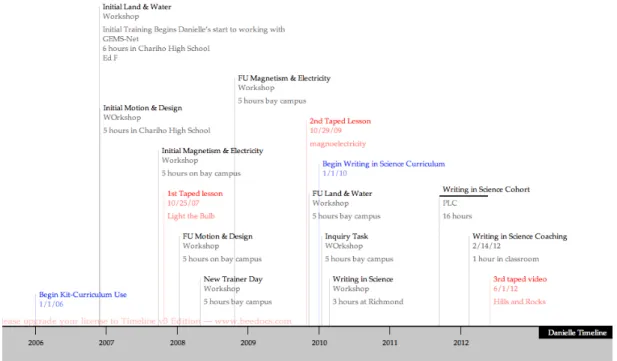
Figure 1. Timeline of Danielle's professional development, curricula use, and
videotaped lessons ...65
Figure 2. Danielle’s inquiry scores over time ...79
Figure 3. Danielle's inquiry scores on the constructs in the Curriculum factor ...81
Figure 4. Danielle's inquiry scores on the constructs in the Instruction factor ...82
Figure 5. Danielle's inquiry scores on the constructs in the Assessment factor ...83
Figure 6. Danielle's inquiry scores on the constructs in the Discourse factor ...84
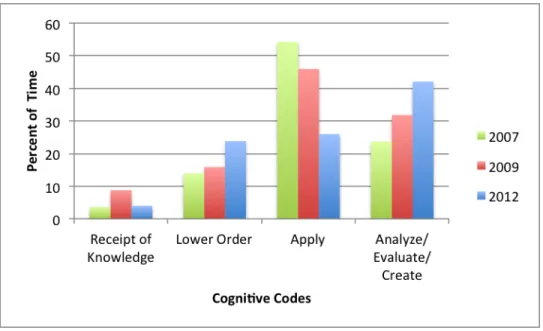
Figure 7. Students’ levels of cognitive functions during Danielle’s lessons ...86
Figure 8. The time Danielle spent on different assessment strategies during her lessons ...87
Figure 9. Danielle’s time spent on different phases of each lesson ...88
Figure 10. Danielle’s perceptions of teacher talk time versus students’ interaction time ...89
Figure 11. Danielle’s response to “How comfortable were you with the science content you were teaching?” ...90
Figure 12. Timeline of Mary-Ann's professional development experiences ...94
Figure 13. Mary-Ann’s levels of inquiry teaching and how they changed over time ...111
Figure 14. Mary-Ann’s inquiry scores on the constructs in the Curriculum factor ...113
Figure 15. Mary-Ann’s inquiry scores on the constructs in the Instruction factor ...114
Figure 16.Mary-Ann’s inquiry scores on the constructs in the Assessment factor ...116
Figure 17. Mary-Ann’s inquiry scores on the constructs in the Discourse factor ...117
Figure 18. Time Mary-Ann’s students spent on different levels of cognition ...119
Figure 19. Time Mary-Ann spent using different Assessment strategies ...120
Figure 20. The amount of time Mary-Ann’s class spent on each phase of the lesson...121
Figure 21. A timeline of professional development experiences and videotaped
lessons ...127
Figure 22.Hayley's Composite EQUIP Rubric Scores ...138
Figure 23 . Hayley’s inquiry score on the constructs in the Curriculum factor ...140
Figure 24. Hayley's inquiry scores on the constructs in the Instruction factor ...141
Figure 25. Hayley's inquiry scores on the constructs in the Discourse factor ...142
Figure 26. Hayley’s inquiry scores on the constructs in the Assessment factor ...143
Figure 27. The time students spent at different levels of cognitive thought in Hayley’s lessons ...145
Figure 28. Amount of time Hayley spent using different assessment strategies ...146
Figure 29. Amount of time Hayley’s class spent in different phases of each lesson...147
Figure 30. The teachers total inquiry scores over all three data collection periods ...152
Figure 31. Three teachers composite inquiry scores over three data collection periods in five years ...153
CHAPTER 1
INTRODUCTION AND OVERVIEW OF THE STUDY
If students are to be successful in the ever-changing scientific world they need to be taught how to think critically, to manipulate materials, and to gather evidence to build knowledge. Most teachers fall short in providing students the inquiry instruction
described in the Next Generation Science Frameworks (National Research Council, 2011). This study examines the teaching practices of three elementary science teachers as they attended professional development and used supportive curricula over a five-year time. The case study illustrated the teachers’ change processes as they developed their
beliefs and skills to teach science inquiry.
Inquiry based teaching includes “the creation of a classroom where students are engaged in (essentially) open-ended, student-centered, hands-on activities” (Colburn, 2006, para. 6).Learning to teach through inquiry requires a transformation from
traditional teaching practices, in which the teacher transmits knowledge to the student, to constructivist methods, in which the teachers and students engage in social and physical experiences to build knowledge (Yerrick, Parke, & Nugent, 1998). The practices associated with inquiry teaching involve complex interactive experiences for both the teacher and the student with materials and language (NRC, 2011). The dynamic nature of the inquiry teaching process has made it difficult to develop common operational
definitions (Akerson & Hanuscin, 2007; Colburn, 2006; Windschitl, 2009). The absence of a clear understanding of inquiry is considered one of the challenges associated with implementation (Anderson, 2007; Minner, Levy, & Century, 2010;Saad & BouJaoude,
Marshall, Smart, and Horton (2010) reported the need for a comprehensive measure of inquiry because of the confusion in the literature about inquiry practices. They deduced from the literature that, “the essence of scientific inquiry is clear— students critically and systematically engage in examining, interpreting, and analyzing questions regarding the world around them and then communicate their findings, providing convincing arguments for their conclusions” (p. 301). Marshall, Horton, and White (2009) write that a proficient use of inquiry is when:
a teacher has demonstrated a student-centered inquiry learning environment that actively engages students in investigations, questioning, and explanations. The role of the teacher remains vital, but he or she now functions more as a facilitator who scaffolds learning experiences than as a giver of facts and knowledge. (p. 53)
Statement of the Problem
The Next Generation Science Standards (NGSS) (NRC, 2011), due to be released in 2013, is yet another call for reform in the content and teaching of science in American schools. The over reaching goal of NGSS is to attain deep, systemic, and sustained improvement of science teaching and learning. The authors of the NGSS Framework (2011) also recognized that reform efforts should be focused on classroom practice. The document stated, “Ultimately, the interactions between teachers and students in
individual classrooms are the determining factor in whether students learn science successfully. Thus, teachers are the linch-pin in any efforts to change K–12 science education” (pp. 9–10). It is logical that reform goals will not be met unless a skilled teacher is in every classroom.
Past reform efforts, in all instructional areas, have had little affect on the practices of teachers and the learning outcomes of students (Hargreaves & Goodson, 2006). Elmore (1996) described that most attempts at reform only engaged schools in superficial changes, such as changes in the time structures of the school day, the types of curriculum, or the class sizes. He expresses that these changes rarely affect how the teachers use and apply their knowledge to develop student thinking. Elmore said teachers may, “change the language they use, modify superficial structures around practice but without changing the practice itself” (p.15). He explained that the “core” of schooling, “how teachers understand the nature of knowledge and the student’s role in learning,” is rarely the focus of change efforts (p.2). Elmore proposed that reform efforts should focus on developing teachers’ practices rather than applying superficial changes.
However, recent research has identified supports that may move teachers along the professional continuum from novice to expert (Windschitl, 2009). The key areas of support posited by science education researchers include: (a) cohesive and ongoing professional development, (b) educative curricula, and (c) adequate time for teachers to adapt and reflect on changes in their practice (Bybee, et al., 2006; Heck & Weiss, 2005; Minner, Levy, & Century, 2010; Weiss, Pasley, Smith, Banilower, & Heck, 2003).
Effective professional development includes a direct relationship between the content and materials to the classroom application, a focus on student achievement, and an opportunity of continued support through classroom coaching and long-term open communication with colleagues (Blank, de las Alas, & Smith, 2007; Garet, Porter, Desimone, Birman, & Yoon, 2001; Weiss & Pasley, 2009). Curricula that increases
the students, strategies for methods of teaching, lessons that build over time, knowledge of how students learn, and suggestions for relating the curriculum to life outside of school (Ball & Cohen, 1999). Professional development and curricula effects on teaching
practices have been explored extensively by educational researchers. What remains to be explored, however, is how time and sustained learning opportunities influence teachers’ growth and development.
Few studies reveal the processes of how teachers’ knowledge and skills evolve over time. Of the 91 articles used in Schneider and Plasman’s (2011) review of science teachers’ evolution of pedagogical content knowledge, the authors found only five studies that followed teachers for more than one year. Schneider and Plasman pieced together a teacher professional continuum based on inferences from connecting multiple cross-sectional studies. Inferences made about the teacher professional continuum without empirical evidence can mislead curricular decisions and reform movements (Feiman-Nemser, 2008).
The scarcity of longitudinal research that documents teachers’ growth over time has created a gap in the understanding of teacher development. The lack of longitudinal research has left the educational community to speculate on how teachers progress over time (Schneider & Plasman, 2011). The lack of longitudinal research has allowed policy makers and change agents largely to ignore the teachers’ learning progression (Feiman-Nemser, 2008). The authors of the NGSS Framework implored researchers to examine teachers’ learning in order to inform plans for implementation, saying, “The typical learning trajectory for teachers and how it changes with learning opportunities requires empirical investigation” (NRC, 2011, p. 13–7).
Purpose
The purpose of this multiple case study was to describe how the science teaching practices of three elementary teachers develop over time. The study explained how professional development and curricula influenced the changes in each teacher’s inquiry practices over a five-year period. Inquiry-based practices involve social and physical relationships between the students, the teacher, and the materials (Colburn, 2006;
Minstrell & Kraus, 2005; NRC, 1996). By tracking three teachers’ cases for a five-year
period, we can examine the complexity of the change process.
The three teachers’ inquiry practices were measured through the observations of videotaped lessons conducted over multiple years. An observation tool, Electronic Quality of Inquiry Protocol (EQUIP), provided quantitative and qualitative results from a rating of multiple inquiry practice descriptors that were grouped into four factors:
Curriculum, Instruction, Discourse, and Assessment (Marshall et al., 2010). Qualitative data from interviews and from archived lesson reflections were used to support and extend the quantitative findings on observed teacher practices. The time-series analysis uncovered trends and patterns in individual teacher’s inquiry practices. A cross-case analysis provided evidence to build theory about time and supports teachers need to develop exemplary inquiry practices in the teaching of science.
Research Questions
This study was guided by three research questions:
• How have individual teachers shifted their inquiry science practices over a five-year time frame in terms of Curriculum, Instruction, Discourse, and Assessment?
• How has ongoing professional development influenced teachers’ inquiry-based practices?
• How have the time and experience with common curricula influenced teachers’ inquiry based practices?
Significance of the Study
This research provides an in-depth analysis of the development over time of teachers’ inquiry practices. The use of data from a previously conducted research project allowed for the longitudinal study to be completed in a reasonable time frame, thus, adding to the limited body of literature on teachers’ professional learning trajectories (Feiman-Nemser, 2008; NRC, 2011; Schneider & Plasman, 2011).
Unlike previous studies that rely on teachers’ self reporting of attitudes and teaching behavior changes (Anderson, 2007; Lederman & Abell, 2007; Saad, & BouJaoude, 2012; Supovitz & Turner, 2000), this investigation used classroom
observations and existing records of professional development experiences to augment the teachers’ perceptions of changes in their science teaching. This study was based in the realities of classroom practice and, therefore, may reform future practice more easily than much of the previous single-variable studies (Darling-Hammond & Richardson, 2009; Opfer & Pedder, 2011).
Definitions of Terms
Change knowledge: Sahlberg (2006) said that change knowledge in education involves understanding the process of curriculum change and the agents that are needed to successfully move curriculum implementation into practice.
Educative curricula: Ball and Cohen (1999) posited five components of educative curricula: (1) support for content knowledge above the level of the students’ knowledge, (2) strategies for teaching, (3) lessons that build over time, (4) developmental knowledge of how students learn, and (5) suggestions relating content to life outside of school.
Inquiry learning: The National Science Education Standards (NRC, 1996) described inquiry as:
Multifaceted activity that involves making observations; posing questions; examining sources of information; planning investigations; reviewing evidence; using tools; proposing answers, explanations, and predictions; and communicating results. Inquiry requires identification of assumptions, use of critical and logical thinking, and consideration of alternative explanations (p. 23).
Inquiry teaching: Marshall et al. (2009) wrote that a proficient use of inquiry is when:
a teacher has demonstrated a student-centered inquiry learning environment that actively engages students in investigations, questioning, and explanations. The role of the teacher remains vital, but he or she now functions more as a facilitator who scaffolds learning experiences than as a giver of facts and knowledge. (p. 53) Pedagogical Content Knowledge (PCK): Teacher’s PCK involves a complex development of understanding: “from being able to comprehend subject matter for themselves, to becoming able to elucidate subject matter in new ways, reorganize and partition it, clothed it in activities and emotions, in metaphors and exercises, and in examples and demonstrations, so that it can be grasped by students” (Shulman, 1987, p.
Teacher change: Richardson and Placier (2001) described teacher change in terms of “learning, development, socialization, growth, improvement, implementation of
something new or different, cognitive and affective change, and self-study” (p. 905). Richardson (1990) compared the literature on “teacher change”, in which change is initiated and imparted to teachers by an outside source, verses “learning to teach”, in which teachers initiate the change as a personal mental process. She suggested that a hybrid of the two theories in which “the practical knowledge and value premises held by the teachers, and the empirical premises derived from research” is needed for
“worthwhile and effective change” (p.14).
Overview of the Dissertation
The following chapters present this study on how elementary teachers develop their inquiry practices over time. The Review of the Literature (Chapter 2) reports on the research in inquiry practices, professional development, science curriculum, and teacher growth. The Methods and Procedures (Chapter 3) outlines the research design and describe the participants and settings involved in the case studies. In addition, it will present the methods of analysis used to examine each teacher’s profile and to determine patterns across cases.
Each teacher case is presented in the following chapters: Case I: Danielle (Chapter 4), Case II: Mary-Ann (Chapter 5), Case III: Hayley (Chapter 6). These chapters illustrate each teacher’s professional development timeline, curriculum experience, and classroom lessons through richly detailed written descriptions. The chapters also report changes in each case’s science teaching practices related to
Cross-Case Analysis (Chapter 7) examines the patterns that emerge by comparing the three cases.
The final chapter, Discussions and Implications, discusses the conclusions related to each of the three theories that were initially posed in this study: teacher change takes time; teacher change is complex; and professional development is more effective when related to actual practice. The final chapter also provides specific recommendations for moving teachers along the professional continuum in preparation for the upcoming release of the Next Generation Science Standards.
Chapter 2
REVIEW OF THE LITERATURE
The literature in this chapter covers four main areas. It begins with issues in inquiry teaching including a brief history, current definitions of the term, and descriptions of the multiple components. The research provides evidence on how professional
development has influenced teachers’ inquiry practices. Next, literature is presented that describes theories and research on how science curriculum has affected the development of inquiry practices. Finally, the literature is presented on teacher professional growth.
The science education literature includes many studies that describe the use of science inquiry by classroom teachers (Harlen & Qualter, 2004; Weiss et al., 2003).
Additionally, there has been extensive research relating professional development experiences and teachers’ use of inquiry (e.g., Blank et al., 2007; Borko, 2004; Mouza, 2009; Penuel, Fishman, Yamaguchi, & Gallagher, 2007; Supovitz & Turner, 2000; Weiss & Pasley 2009). A smaller amount of research exists on the effects of curricula on teachers’ development of inquiry (e.g. Anderson, 2007; Ball & Cohen, 1996; Erickson, 2006; Pine et al., 2006; Stokes, Hirabayashi, & Ramage, 2003), an even smaller amount
of research has looked at how experienced teachers’ practice shifts over multiple years with both professional development and educative curriculum (Hargreaves, & Goodson, 2006; Weiss et al., 2003). This review of the literature will begin with a wide base of
inquiry practices and funnel toward the few studies that attempt to map out teachers’ learning trajectories toward the use of inquiry.
Inquiry Teaching
History of Inquiry. Inquiry pedagogy has appeared as a variable of interest in the research of teaching and learning as well as instructional design since the 1960s (Barrow, 2006). Barrow (2006) described the shifts in the definitions of inquiry over time. In the
1960s, the term inquiry was akin to activity-based science, in which just by “doing” students were learning. In the 1980s, research revealed that activity alone was not enough to develop scientific literacy. Theorists and researchers decided that teachers needed to guide, challenge, and bring light to the students’ metacognitive process. Moving into the 1990s, inquiry was considered in terms of the physical activity as well as opportunities for mental struggles and teachers’ abilities to scaffold student thinking (Barrow, 2006).
More recently, inquiry has been referred to as “practice-based science,” indicating yet another transformation (NRC, 2011). The following excerpt from the Next
Generation Science Standards Frameworks explains both the recent shift in thinking about inquiry and the concern for the ambiguity of the term.
We use the term ‘practices’ instead of a term such as ‘skills’ to emphasize that engaging in scientific investigation requires not only skill but also knowledge that is specific to each practice. Similarly, because the term ‘inquiry,’ extensively referred to in previous standards documents, has been interpreted over time in many different ways throughout the science education community, part of our intent in articulating the practices in Dimension 1 is to better specify what is meant by inquiry in science and the range of cognitive, social, and physical practices that it requires. As in all inquiry-based approaches to science teaching,
merely learn about them secondhand. Students cannot comprehend scientific practices, nor fully appreciate the nature of scientific knowledge itself, without directly experiencing those practices for themselves. (pp. 2–5)
The physical and mental activities of inquiry are joined by a new emphasis on the students written and oral interpretations of their experiences (Duschl, Schweingruber, & Shouse, 2007).
Defining Inquiry. Inquiry, as an application to science education, refers to the teaching and learning activities that build scientific content through the practiced skills of scientists and engineers (NRC, 2011).
The National Science Education Standards (1996) described inquiry as a: multifaceted activity that involves making observations; posing questions; examining sources of information; planning investigations; reviewing evidence; using tools; proposing answers, explanations, and predictions; and communicating results. Inquiry requires identification of assumptions, use of critical and logical thinking, and consideration of alternative explanations. (p. 23)
The use of inquiry practices is emphasized nationally by the reform
initiatives. The National Science Education Standards (NSES) included the constructs of inquiry in the description of what children should know and be able to do. The National Research Council (1996) valued inquiry as central to learning science, stating, “School science education must reflect science as it is practiced.” (p. 11). The NSES (1996) reported:
Students at all grade levels and in every domain of science should have the opportunity to use scientific inquiry and develop the ability to think and act in ways associated with inquiry, including asking questions, planning and
conducting investigations, using appropriate tools and techniques to gather data, thinking critically and logically about relationships between evidence and explanations, constructing and analyzing alternative explanations, and communicating scientific arguments. (p. 105)
Components of Inquiry Teaching
The complex nature of teaching inquiry has lead many researchers to break down the skills into more manageable components (Harlen & Qualter, 2004; Marshall et al.,
2010; Russell & Martin, 2007, Sullivan-Watts, Nowicki, Shim, & Young, 2012). Through the validation of a tool that would help determine the degree to which teachers effectively facilitated inquiry, Marshall et al., (2010) deciphered nineteen constructs that were grouped into four factors. The factors were originally determined from an analysis of the research and then were aligned to the tightly grouped constructs. The following review of the research on the components of inquiry is organized by the four factors determined by Marshall et al (2010) for the development of The Electronic Quality of Inquiry Protocol (EQUIP).
Curriculum. Curriculum components related to inquiry included depth of content knowledge, flexibility for student-led investigations, integration of process and content, and expectations of student communication (Bybee et al., 2006; Dewey, 1938; Fosnot, 2005). Fosnot’s (2005) description of curriculum resembled that of this inquiry factor:
An approach to teaching that gives learners the opportunity for concrete,
contextually meaningful experience through which they can search for patterns; raise questions; and model, interpret, and defend their strategies and ideas. The classroom in this model is seen as a mini-society, a community of learners engaged in activity, discourse, interpretation, justification, and reflection. (p. ix)
Instruction.Instruction, as related to the EQUIP, has five constructs based on fundamental beliefs of constructivist-learning theory. If students are to develop lasting knowledge, then they need to be actively involved in learning both the content and the process through a deep personally meaningful experience (Abell, 2007; Bybee et al., 2006; NRC, 2011). Light and Cox (2009) describe the teacher’s role as bringing in materials, highlighting issues for discussion, commenting on and comparing different student views and data, and building on gap areas of content by “adding more
sophisticated and critical perspectives on the topic” (p. 84). The authors explained the tricky balance of the teacher’s role in teaching through inquiry, stating “Power is typically relinquished as much as possible to the group- whilst realizing that
responsibility for structuring activities cannot be completely delegated” (p.77). The teachers’ and the students’ roles are intertwined as teachers facilitate learning experiences in which the students are active participants in the mental and physical construction on knowledge.
Discourse.Discourse includes reflecting, communicating, and questioning to develop knowledge and skills in the science classroom (Ball & Cohen, 1999; Kuhn, 1999; Norris & Phillips, 2003; Osborne, 2007). Russell and Martin (2007) said, “In contrast to the typical question-and-answer interchanges focused on ‘right’ answers,
discussion needs to be based on supporting and evaluating differing views in the light of evidence” (p. 1154). An evaluator on the team from Horizon Research who reviewed the Local Systemic Change initiatives observed and described the discourse in a
high-inquiry-use math classroom:
At the highest level of questioning practices observed in both elementary and secondary classrooms, there was an almost seamless discourse between teacher and students that advanced mathematics instruction to the level of unrestricted intellectual mathematics exploration. In a fourth grade classroom, the teacher and students discussed angles and lines for a full 20 minutes. Students, as well as the teacher, posed questions, offered proofs, considered hypotheses. It was the students’ questions that shaped the discussion, placing the teacher in the role of the facilitator. (Banilower, Boyd, Pasley, & Weiss, 2006, p.58)
Assessment. Assessment within the inquiry lessons involves the embedded
instructional dialogues throughout the learning activity (Black & William, 1998; Ruiz-Primo & Furtak, 2007). Research on formative assessment suggests that teachers’ use of students’ ideas to guide science instruction could improve learning outcomes; yet, this remains a rare instructional practice in most classrooms (Ruiz-Primo & Furtak, 2007). Black and William (1998) remarked that all teachers make assessments in every class they teach. Some assessment strategies are more useful in student learning and
developing teacher practices than others. Teachers should engage in conversations with students, listen to students’ ideas and adjust instruction in response. The dialogue between teachers and students should be reflective. Teachers should ask questions that
do not have one correct answer so that students feel confident in revealing their knowledge (Black & William, 1998).
Inquiry Teaching Summary
The components of curriculum, instruction, discourse, and assessment, are described above for the purpose of reflecting on teaching practices (Marshall et al., 2010). The dynamic interactions of teaching and learning through inquiry are rarely linear or precise. “Children draw understanding from the messy world around them. As a result, it’s a messy exploration, and it takes place within the context of the child and the adults around that child” (NSF, 1999, p. 27). This messiness creates challenges for helping teachers understand and develop the intricate components of inquiry. Professional development and educative curricula are two supports that research has identified as supportive in this learning process.
Professional Development’s Effects on Teacher Practice
In recent years, there has been a call for creative professional development programs to fit the educational needs, budgets, and continually shifting personnel of the school systems (Duschl et al., 2007; NRC, 1996). Considerable research has been
conducted on the format, the amount of time, and the content of professional
development sessions. First, the different formats of professional development (e.g., workshops, institutes, classroom coaching, and collaborative learning communities) will be described. Then the research will report on the number of hours of professional development and the corresponding effects on teacher practices. Finally, a review of research that highlights professional development content and the professional development effects on teacher practices will be presented.
Professional development formats
Professional development is presented to teachers in many formats (Desimone, 2009; Little, 2007; Loucks‐Horsley & Matsumoto, 1999). Often teachers attend one-day
workshops, in which they go to an outside site or have an outside presenter come to their school for fixed number of hours in a day (Garet et al., 2001). Fewer teachers are
afforded the opportunity to attend extended learning opportunities in the form of
professional development institutes (Borko, 2004). Coaching, on the other hand, is more personalized professional development that occurs in short segments in teachers’
classrooms (Knight & Cornett, 2009). Collaborative leadership professional
development occurs in schools and involves learning through communication with other practitioners (Little, 2007).
Workshops. The majority of professional development sessions in the last thirty years have been based on the one-day workshop model (Garet et al., 2001). Research has
found that one-day professional development workshops often do not consider the schools’ goals for student learning, the teachers’ previous knowledge, and/or the context of the specific school; thus, the workshops do not reliably lead to change in practice (Penuel et al., 2007). Smylie (1989) conducted a study that had teachers rank the impact of fourteen different methods for gaining professional growth in teaching. The research found that teachers listed district-sponsored one-day professional development
workshops as the least effective professional development strategy (Smylie, 1989). In another study of 1500 randomly selected schools, Pritchard and Marshall (2002) researched, “How do healthy and unhealthy districts differ in their approaches to
observations, and student essays from 18 districts in 11 states to determine how “healthy” the schools were. They judged school health on a number of factors including school climate and strategic plans, student attitude, teacher commitment, and administrator support. Their findings showed that the professional development in healthy districts had
a more strategic long-range plan rather than “hot spot” workshops. The negative feedback on one-day workshops was expanded by Klingner’s (2004) review of professional development research reported workshop models “were insufficient in duration or depth to bring about sustained, substantive change in practice” (p. 249). On the other hand, Weiss and Pasley (2009) stated that workshops could be effective in changing teacher practice, if the workshops included modeling teachers’ practices with classroom materials and engaging the teachers in “explicit discussion of how and why this pedagogy helps students learn the concepts” (p. 31). In addition, many workshops were found to have positive effects on changing teacher practice and eliciting student outcomes when combined with in school follow-up sessions of classroom
coaching or professional learning community activities (Banilower et al., 2006; Weiss & Pasley, 2009).
Institutes. Teacher institutes allow large groups of teachers to come together and focus on a specific learning goal for an extended period of time. They are often held in the summer when teachers can take time without negatively affecting their classrooms. Weiss and Pasley (2009) said, “The advantages of this approach include maintaining quality control and establishing a shared experience for teachers. Intensive professional development at summer institutes extending over a period of days or weeks provides teachers with “immersion” experiences” (p.17).
The research on institutes’ effectiveness in changing teacher practice indicates mixed findings. The following studies demonstrated both the positive and inconclusive effects that institutes have on teachers’ use of reform-based practices. In a study of the Exploratorium’s Institute for Inquiry (IFI), St. John (2001) stated that the institute was focused on modeling professional development practices, offering curricular resources, and connecting education leaders across the nation who are implementing elementary science education reforms in their home schools and districts. The evaluative report from surveys, interviews, and a triple-blind study of ten school districts concluded that the Institute “makes a significant and visible difference. That is, the reform projects and districts that IFI works with are clearly distinguishable from otherwise similar districts and projects” (p. 6). The report also claimed that because the institute is designed for district leaders, the institute has a positive influence on many more educators then just those who attend.
Not all research on the effectiveness of institutes showed change in teacher practices. Yerrick et al. (1998) researched the beliefs and practices of eight science teachers during a 2-week summer course. The institute intended to prepare teachers to implement an inquiry-oriented science curriculum. The authors reported that teachers “began to use different ways of speaking about students and content…without changing fundamental views of science and teaching“ (Yerrick et al., 1998, p. 14).
Classroom coaching. Coaching refers to learning that occurs as educators engage in their daily work activities with a more experienced or knowledgeable colleague. Ball and Cohen (1996) commented, “The most effective professional development model is
coaching in teachers’ classrooms, or ongoing interactions with colleagues” (pp. 501– 502). Classroom coaching is one type of job embedded in professional development. A number of researchers asserted that learning in the context of the teacher’s classroom is very powerful (Cohen & Hill, 2001; Garet et al., 2001; Penuel et al., 2007). Teaching occurs in specific interactions of individual students with certain teachers concerning unique ideas under particular circumstances. Therefore, teachers need to learn “in and from practice” (Ball & Cohen, 1999). Coaching often occurs one-on-one, with the coach modeling new strategies or supporting existing strategies through co-teaching or critically observing classroom lessons. Coaching provides opportunities for teachers to practice and to reflect on newly emerging concepts (Garet et al., 2001; Knight & Cornett, 2009; Supovitz &Turner, 2000).
Few studies have collected data on classroom coaching and the data have been primarily drawn from reports from coaches or classroom teachers themselves (Knight & Cornett, 2009). Even with the lack of research there are qualitative statements from teachers and researchers that do support the use of coaches. One example is the TI MathForward™ program that includes many elements of effective professional
development, including ongoing coaching. In the implementation study of this program, teachers reported that they valued the continued coaching and the coaches’ constructive feedback. The teachers reported that it helped them develop new approaches to solving mathematical problems (Penuel, et al., 2007).
Collaborative teacher leadership. Darling-Hammond (1996) described a vision for the restructuring needed to improve the quality of teaching stating, “All teachers will have access to high-quality professional development, and they will have regularly
scheduled time for collegial work and planning” (p. 5). Collective work in trusting
environments provides a basis for inquiry and reflection, allowing teachers to raise issues, take risks, and address shortcomings in their own practice (Ball & Cohen, 1999; Little, 2007).
Little (2007) studied teachers engaged in ‘joint work’ signifying the time teachers spent in “thoughtful, explicit examination of practices and their consequences” (p. 520). She observed that teachers change their practice through working together on curriculum development, problem solving concerning students and their learning, and peer
observations. Parke and Coble (1997) studied science teachers from seven schools involved in working together on curriculum development activities. The teachers communicated continuously with colleagues and university staff on an intentional and thoughtful task. Parke and Coble concluded that their professional learning community approach “supported teachers to become architects for change through building upon their current conceptions instead of attempting to remediate them” (Parke & Coble, 1997, p. 785).
Format Conclusions. This review of professional development format types supplied evidence of the effectiveness of workshops, institutes, coaching, and
collaborative. The majority of the research led toward a mixed- format approach as being most effective. It seems that teachers need time to focus on new strategies or content in a controlled environment, such as, in a workshop, course, or institute followed by
additional support for direct application and reflection within the context of their classroom from coaching and/or collaborative teacher leadership.
Time spent in professional development
Many researchers have claimed that “ongoing professional development” is an essential element to developing teacher practices (Klingner, 2004; Weiss & Pasley, 2009). It is thought that teachers who had more hours of professional development in inquiry-based science were significantly more likely to use inquiry-based science instruction (Lederman & Abell, 2007; Supovitz & Turner, 2000). Research is only
beginning to gather evidence on how sustained professional development effects the change in teacher practices over long periods of time.
The capstone report of the effect of National Science Foundation (NSF) funded Local System Change (LSC) initiatives was able to link the number of hours teachers spent in professional development to shifts in their inquiry practices (Banilower et al., 2006). The researchers concluded that lessons taught by teachers with at least eighty hours of professional development were more than twice as likely to receive a high rating on science inquiry lessons as the lessons of teachers with little to no professional
development.
Another LSC project evaluation showed a relationship between the teachers’ hours of professional development and their perceived frequency of inquiry practices (Heck, Rosenberg, & Crawford, 2006). The results of survey data found that teachers who experienced more hours of professional development perceived they were using more inquiry practices. The relationship between the professional development hours and the perceived use of inquiry only increased up to eighty hours of professional development. Additional research is needed to examine the factors affecting teacher
growth after eighty hours of professional development and to examine the match between teacher perceptions and their actual practice.
Professional Development Content
To be effective, professional development should also be based on curricular and instructional strategies related to student learning rather than solely on theoretical
teaching methods. Penuel et al. (2007) reported that university-led professional development that afforded active learning environments with “proximity to practice,” were essential for reform. The researchers claim that professional development is about “helping teachers to prepare for their classroom practice [that] yields results directly translatable to practice” (p. 928).
The National Commission on Mathematics and Science Teaching for the 21st Century (2000) highlighted five effective focuses for successful professional
development. They explained that professional development should deepen teachers’ knowledge of the subjects being taught and allow teachers to practice the reform-based teaching skills desired in classroom practice. Professional development sessions should be based on up-to-date research and practices that have proven to be effective. The professional development providers should understand the knowledge level of the participants so the professional development session provides new skills and content for the participants. Finally, the professional development should offer strategies for teachers to assess how they are doing with the new practices when they are back in the classroom.
A large body of research debated the effectiveness of professional development focused on the development of content knowledge versus pedagogy. Tsai (2006)
teachers. The courses included the nature of science, science activities, and some reflection on conceptual change. Data collected through teacher questionnaires, short essays, and interviews revealed that both in-service and pre-service teachers’ view of the nature of science had changed throughout the coursework. When Tsai compared in-service and pre-in-service teachers, he found that in-in-service teachers learned to value constructivist learning, but their practices were less likely than pre-service teachers actually to change. Science content courses that focus on the memorization of facts rather than on the nature and culture of science do not support the teachers’ development of inquiry practices (Akerson & Hanuscin, 2007; Blank et al., 2007; Harlen, 1997; Lederman & Abell, 2007).
Therefore, professional development should involve both content and pedagogy and the direct relation of the content and materials to classroom practices (Blank et al., 2007; Garet et al., 2001). Professional development is most effective if teachers are able to see how to change their practices in the classroom.
Curriculum Effects on Teacher Practices
Science is a dynamic field of study based on our human experience and capacity to think. We rely daily on the benefits from scientists’ innovative thinking and reliable research in medicine, industry, transportation, agriculture, electronics, and technology. Inquiry: thoughts, views and strategies for the K-5 classroom (NSF, 1999), posits that students should approach learning through curricula that allow them to demonstrate the mental and physical behaviors of scientists. Equipping students with knowledge and skills to be productive citizens of the twenty-first century requires a curriculum that
actively involves students in their learning, challenges students to think critically, and explores scientific concepts deeply and coherently.
Since curricula are only effective if teachers implement them as they are intended (Cuban, 1992), they must include appropriate materials for student learning as well as offer support for teacher learning (Schneider & Krajcik, 2002). A National Research Council report (2007) articulated that, “the current organization of science curriculum and instruction does not provide the kind of support for science learning that results in deep understanding of scientific ideas and an ability to engage meaningfully in the practices of science” (p. viii).
Research-based science communities, such as the National Science Foundation, the American Association for the Advancement of Science, the National Science Teachers Association, and the National Research Council have all constructed new documents and policies that are meant to guide reform-based curricula as to what and how students should learn. In July of 2011, the National Research Council released A Framework for K-12 Science Education: Practices, Crosscutting Concepts, and Core Ideas. This framework, based on current research, is meant to guide the development of future science standards and curriculum. The researchers suggested that to build a scientifically literate society, curricula should focus student learning on the following four strands of science proficiency:
1. knowing, using, and interpreting scientific explanations of the natural world; 2. generating and evaluating scientific evidence and explanations;
Therefore, reform-based science instruction requires curriculum that encourages students to ask questions, investigate, and find evidence to construct a deep level of understanding about science content.
Kit-based curriculum
Kit-based curricula provide teachers with a sequence of lessons and classroom materials to engage students in learning scientific content and practices (Pine et al, 2006). Three to four curriculum units are recommended across the course of a year that focuses on the hands-on learning of physical, earth, and/or life science. Fewer science content topics are covered in greater depth as compared to the multitude of briefly addressed topics covered in a traditional textbook approach. Research-based instructional units in the form of kits or modules are obtained from such sources as: Science and Technology for Children (STC) developed by the National Science Resource Center (NSRC, 1985) at the Smithsonian Institute supported by the National Academy of Sciences and Full Option Science System (FOSS) developed at the Lawrence Hall of Science, University of California, Berkeley.
The data from many small-scale recent studies have supported the use of a hands-on, minds-on inquiry-based curriculum in the classroom. Lynch, Kuipers, Pyke, and Szesze, (2005) studied over 2,000 eighth graders in a large, diverse middle school in Maryland. These researchers found that with an inquiry-based chemistry curriculum, students were more engaged and motivated in class and outperformed their peers who were using a traditional text-based program.
Geier et al. (2008) observed gains in middle school students and their
three science inquiry units, each 6 to 9 weeks in length, scored significantly higher on the earth, life, and physical science portions and the process skill subtests from the Michigan Educational Assessment Program. The students’ scores on this test increased
cumulatively with more inquiry experiences. These research studies support the use of inquiry-based science curriculum in the classroom.
Pine et al. (2006) compared the science achievement and attitudes of almost 1000 fifth graders who received either textbook or activity-based kit curricula. The authors found that students in both curricular groups performed poorly on the multiple-choice tests. The authors did find that students in the kit-based classes had a more positive attitude about science, including about a 20 percent increase in the number of students who ranked science as their favorite subject. The authors pointed out that the similar outcomes between textbook use and kit-based curricula might be an effect of the type of assessment, the abilities of the teachers, or the curriculum itself.
While reviewing 81 pre-service and in-service elementary teacher videos,
Nowicki, Sullivan-Watts, Shim, Young, & Pockalny (2012) found that teachers using
kit-based curriculum with professional development were more likely to teach accurate content than teachers using non-kit approaches. The use of kit-based curricula was the most significant indicator of highly content accuracy.
Sullivan-Watts et al. (2012) found that teachers who used kit-based curriculum were more likely to use reform-based inquiry practices than teachers who taught science using a textbook or other curricular approaches. These researchers evaluated 81
following year during student teaching. A multiple regression analysis revealed that for in-service teachers, the use of a kit-based curriculum was the most significant predictor of using inquiry-based practices, explaining 27 percent of the total variance in inquiry lesson scores. In addition, pre-service teachers were found to increase their use of inquiry practices as they gained more experience with the kit-based curriculum. The comparison over time showed that the students increased their use of inquiry if they spent both years in a kit-based program or changed from a non-kit-based classroom into a kit-based classroom during student teaching. But the students’ use of inquiry practices decreased when the students were removed from a kit-based program in their student teaching year.
Critics of a kit-based approach are focused on the challenges associated with the implementation of the curricula. Weiss et al., (2003) researched teachers using variations of kit-based curricula and found “only 18 percent of mathematics and science lessons nationally provide experiences for students that clearly depict mathematics/science as investigative in nature” (p. 44). The National Research Council report titled Taking Science to School (2007) articulated that, “the current organization of science curriculum and instruction does not provide the kind of support for science learning that results in deep understanding of scientific ideas and an ability to engage meaningfully in the practices of science” (p. viii).
Banilower et al. (2006) observed 1,620 classroom lessons, gathered 75,000 teacher questionnaires, and conducted 1,782 interviews to analyze how high quality curriculum and professional development effected classroom practice. They found that hands-on instruction associated with kit-based curriculum required more management and support then teaching through a traditional textbook approach. The researchers
suggested “that lack of content knowledge, lack of confidence and experience in using the investigative model and/or the materials, and resistance to forsaking teacher-directed approaches were among the factors that limited teachers’ capacity” (p. 69).
The kit-based curricula have the components of an educative curriculum, yet the results from research provide an unsettled conclusion as to the effectiveness of the curricula. The results of research on kit-based curricula with the addition of an
expository writing component have had a different outcome (Ramage, Accurso, Mitchell, Carroll, and St. John, 2006).
Science Writing Approach
The Frameworks (NRC, 2011) remind us that language is essential to inquiry practices saying, “A major practice of science is thus the communication of ideas and the results of inquiry—orally, in writing, with the use of tables, diagrams, graphs, and
equations, and by engaging in extended discussions with scientific peers” (p. 3–31).
Language and learning theories. The development of the literature on writing within the science classroom has been guided by knowledge of how children learn through language and on the need for teachers to understand what children know (Norris & Phillips, 2003; Vygotsky, 1978). This review of literature on curricula that includes the science writing approach begins with general research on language use and learning. Then more specific studies are presented that look at science writing curricula and the curricular effects on teacher practices.
Attaining scientific literacy is more than just having the knowledge and skills to define words and locate information. Rather, it requires an active construction in the
knowledge. (Norris & Phillips, 2003). Bruner (1977) said, “We know how to do those things long before we can explain conceptually what we are doing” (p. 151). Language without experience or content development is symbols or sounds without meaning. In the quote below, Hawkins (1978) portrays a conversation that might occur in a traditional classroom where empty vocabulary is developed instead of scientific thinking and
concepts:
And she said, ‘No, I don’t mean that. I want you to notice this and tell me what’s happening. ‘Finally he looked at the pendulums and he saw what she was asking. He looked at it, and he looked at her, and he grinned and said, ‘Well, I know the right words but I don’t understand it either.’ (p. 64)
The theoretical rationale behind the inclusion of writing and oral language in students’ proficiency of science comes from an understanding of how students learn. Social constructivists recognize that language is a social product learned through social experiences and is a foundational instrument in learning (Bruner, 1977; Dewey, 1938; Duckworth, 1987; Piaget and Inhelder, 1969; Vygotsky, 1978). Oral and written
communication helps students work through the complex subject of science and, in turn, science provides the experiences and content knowledge that aids the development of language. Yore, Bisanz, & Hand (2003) reported the importance of language in learning science:
[Language] is an integral part of science and science literacy—language is a means to doing science and to constructing science understandings; language is also an end in that it is used to communicate about inquiries, procedures, and
science understanding to other people so that they can make informed decisions and take informed actions. (p. 691)
Language and science research. There is a small, but growing body of evidence on successful integration of writing, speaking, and science. Stokes et al. (2003)
researched the effectiveness of the Seattle Public Schools Expository Writing and
Science Notebooks Project. Through expert review and analysis of student notebooks and a teacher survey, they found positive results in student learning, teacher enhancement, and implementation of curriculum. A qualitative study was done that looked at the relationship between teacher participation in over seven hours of professional
development on using notebooks and students’ test scores. The researcher found that the students who had teachers who had professional development scored significantly higher than their peers on the Washington Assessment of Student Learning. The researcher admitted that the sample of teachers with the required hours of professional development was too small to make a powerful statistical analysis. This challenge to the research is important not only in that it weakens the research findings, but also it brings light to the challenges of implementation.
Ramage, Accurso, Mitchell, Carroll, and St. John (2006) reported another qualitative study of 45 teacher interviews and a dozen classroom observations. The researchers collected evidence that writing can help develop scientific understanding. The research found “the evidence showed that science notebooks provided a place for students to make the link from the hands-on activity to the science concept, making their investigations authentic and purposeful” (p. 4). They also realized that teachers did not
initially know how to teach expository writing to support science, and they were successful in doing so only after professional development.
Teacher Growth
Change theories. Most research studies, especially those that evaluated the
effectiveness of an intervention, reinforced the notion of teacher change. Teacher change is often thought of as something done to teachers, an intervention that fixes teacher practices (Richardson, 1990). In contrast, teacher growth theories presume that change is a personal and social process that occurs in the context of multiple variables associated with education. Opfer and Pedder (2011) explained that learning occurs within and between professional development events, learning community contexts, personal
experience, and individual characteristics. They conclude professional learning should be considered an individual experience involving observable patterns of interactive, non-linear successions of events over time.
Teacher professional growth assumes that over the course of a teacher’s career, she or he has the capacity to develop the pedagogical content knowledge necessary for reform-based science instruction (Schneider & Plasman, 2011). The teacher’s learning process is often reported as a continuum in which teachers move from novice to expert through a series of processes. In the National Research Council report How People Learn (2000), the authors identified five steps in the continuum: developing awareness, building knowledge, translating knowledge into practice, practicing teaching, and using reflection to renew practices. The teacher continuum is said to be both a personal and social journey (Ball & Cohen, 1999; Borko, 2004).
Cuban (1992) reported that innovations fail to move teachers across the professional continuum because teachers do not fully embrace intervention strategies. Instead, educators alter the strategy by fitting it into their current practice. But what we know about the process of student learning theories is that prior knowledge plays a role in learning new material. Teachers as learners, similar to student learners, are going to assimilate new teaching strategies into existing schema. Coburn (2004) found that teachers reacted to innovation by moving through a continuum beginning at rejection and ending with accommodation. This process he calls sense making occurs when teachers take in certain learning opportunities from their environment, decipher them, and then resist or accept to change their practice. Researchers may develop different terms for how teachers’ practices grow, but researchers agree that the teacher learning process must involve intensive support structures, experience, and time (Louks-Horsley & Matsumoto, 1999).
Professional learning research. Not many studies have provided the educational community with knowledge on how experienced teachers’ practices progress over multiple years. In fact, Schneider and Plasman (2011) reviewed research published on teacher development between 1986 and 2010 and only found five articles that studied teachers for 2 or more years. The researchers examined a total of 91 studies to find patterns in teachers’ development process of their pedagogical content knowledge. The research was framed with an understanding that learning is “continuous and coherent, an incremental sequence from novice to expert” (p. 532). The researchers found that teachers thought in more sophisticated ways about teaching overtime but that