Private versus public strategies for
health service provision for improving
health outcomes in resource-limited
settings
by Dominic Montagu, Andrew Anglemyer,
Mudita Tiwari, Katie Drasser,
George W. Rutherford, Tara Horvath,
Gail E. Kennedy, Lisa Bero, Nirali Shah,
Heather Kinlaw
July 2011
Private versus public strategies for
health service provision for improving
health outcomes in resource-limited
settings
by Dominic Montagu, Andrew Anglemyer,
Mudita Tiwari, Katie Drasser,
George W. Rutherford, Tara Horvath,
Gail E. Kennedy, Lisa Bero, Nirali Shah,
Heather Kinlaw
July 2011
i The EPPI-Centre reference number for this report is 1912.
This report should be cited as: Montagu DD, Anglemyer A, Tiwari M, Drasser K, Rutherford GW, Horvath T, Kennedy GE, Bero L, Shah N, Kinlaw HS (2011) Private versus public strategies for health service provision for improving health outcomes in resource-limited settings. San Francisco, CA: Global Health Sciences, University of California, San Francisco.
ISBN: 978-1-907345-18-0
© Copyright
Authors of the systematic reviews on the EPPI-Centre website
(http://eppi.ioe.ac.uk/) hold the copyright for the text of their reviews. The EPPI-Centre owns the copyright for all material on the website it has developed, including the contents of the databases, manuals, and keywording and data
extraction systems. The centre and authors give permission for users of the site to display and print the contents of the site for their own non-commercial use, providing that the materials are not modified, copyright and other proprietary notices contained in the materials are retained, and the source of the material is cited clearly following the citation details provided. Otherwise users are not permitted to duplicate, reproduce, re-publish, distribute, or store material from this website without express written permission.
ii
Contents
List of abbreviations ... iii
Abstract ... 1
Executive summary ... 3
1 Background ... 7
1.1 Aims and rationale for current review ... 7
1.2 Definitional and conceptual issues ... 9
1.3 Research background ... 10
1.4 Objective ... 11
2. Methods used in the review ... 12
2.1 User involvement ... 12
2.2 Identifying and describing studies ... 12
2.3 Quality assurance ... 14
2.4 Data extraction ... 14
2.5 Quality assessment ... 14
2.6 Methods for synthesis ... 15
2.7 Deriving conclusions and implications ... 16
3. Search results ... 17
4. Synthesis results ... 19
4.1 Further details of studies included in the synthesis ... 19
4.2 Synthesis of evidence ... 24
4.3 Synthesis: quality assurance results ... 33
4.4 Summary of the results of the synthesis ... 33
5. Strengths and limitations ... 35
6. Conclusions and recommendations ... 37
7. References ... 38
Appendices ... 45
Appendix 1.1: Authorship of this report ... 45
Appendix 2.1: Search strategy ... 46
Appendix 3.1: Study details ... 48
Appendix 4.1: Forest Plots ... 58
Appendix 4.2: GRADE summary of evidence ... 67
iii
List of abbreviations
BLDS British Library of Development Studies BMJ British Medical Journal
CBA Controlled before-and-after CCT Controlled clinical trial
CENTRAL Cochrane Central Register of Controlled Trials
CI Confidence interval
DFID Department for International Development (UK) DHS Demographic Health Survey
EPOC Effective Practice and Organisation of Care Group GAVI The Global Alliance for Vaccines and Immunization
GNI Gross national income
GTZ Deutsche Gesellschaft für Technische Zusammenarbeit
HIV/AIDS Human immunodeficiency virus/acquired immune deficiency syndrome ICU Intensive care unit
IDS Institute of Development Studies IFC International Finance Corporation
IMCI Integrated Management of Childhood Illnesses IPAR Kenya Institute of Policy Analysis and Research IPS Institute of Policy Studies Sri Lanka
ITS Interrupted time series
LLMICs Low- and low-middle-income countries LMICs Low- and middle-income countries MSH Management Sciences for Health NGO Non-governmental organization
NOQAS Newcastle-Ottawa Quality Assessment Scale
NSA Non-state actor
NTP National treatment program
OR Odds ratio
PAHO Pan American Health Organization
PPM-DOTS Public-private mix for directly observed treatment short-course PPP Public-private partnership
RCT Randomized controlled trial(s)
RR Risk ratio
SES Socio-economic status
TB Tuberculosis
USAID United States Agency for International Development WHO World Health Organization
1
Abstract
BackgroundPrivate healthcare providers deliver a significant proportion of healthcare services in low- and middle-income countries (LMIC). Poorer patients get sick and go without care more frequently, and spend more of their incomes on private healthcare than the wealthy.
This review is focused on comparing health outcomes in private versus public care settings. It seeks to summarize what is known regarding the relative morbidity or mortality outcomes that result from treatment by public or private providers in LMIC.
Methods
We conducted a systematic review of studies evaluating the impact of public and private healthcare provision. We performed meta-analyses on data within
identified studies, in order to estimate the effects of type of healthcare provision on identified health outcomes.
Results
Twenty-one studies met our inclusion criteria and explicitly compared health outcomes between the public and private sectors. Of those, 17 were cohort studies, from 9 countries. Eleven studies were conducted in lower-middle-income countries ($996–$3,945 GNI per capita) and 10 studies from upper-middle-income countries ($3,946–$12,195 GNI per capita). Eighteen studies were conducted in urban settings. Fifteen of the 21 studies provided mortality for a health outcome, and studies examined a wide range of diseases, with tuberculosis (TB) being the most represented.
A meta-analysis of all studies exploring the impact of healthcare type and mortality showed that patients in a private healthcare setting are less likely to die than patients in a public healthcare setting (OR 0.60; 95% CI 0.41–0.88). The pooled analysis showed that patients in a private healthcare facility are more likely to have unsuccessfully completed TB treatment than patients in a public healthcare facility (OR 2.04; 95% CI 1.07–3.89).
Regardless of outcomes, the quality of evidence is rated, by objective measures, as either low or very low.
Conclusions
More evidence is needed to compare health outcomes between the public and private sectors. Governments and researchers can play a critical role in improving the evidence base for decision making about the contributions of the public and private sectors in a given country’s health system.
Governments should encourage data collection in both public and private settings that would permit ongoing comparison of clinical data. When government facilities are absent or insufficient, contracting with private-sector facilities or providers would appear to be an acceptable option. Governments must consider appropriate profit margins, regulations and training for private providers.
Further research is needed in this area, and should include low-income countries and rural settings. Diseases of the poor – notably malaria and childhood illnesses –
2 are largely absent from the current literature, with the exception of one study on HIV/AIDS and six on TB.
3
Executive summary
BackgroundBased on evidence from demographic health surveys (DHS), private healthcare providers deliver a significant proportion of healthcare services in low- and middle-income countries (LMIC). Some of the reasons for seeking care from private
providers cited by patients include better and more flexible access to providers, shorter waiting times, greater sensitivity to patient needs, and greater
confidentiality. In many cases, governments fail to create systems to remove or penalize publicly funded staff who offer low-quality services to patients. As a result, patients seeking quality care may turn to private care.
For the purpose of this review, we have used the definitions of ‘private’ providers given within the surveyed literature so long as it approximates the more formal definitions. In contrast to services offered by government employees, private healthcare services involve a spectrum of providers and institutions, including non-profit or religious institutions. Private-sector services vary by country and range from sophisticated tertiary care facilities comparable to the highest of
international standards, to individual doctors and nurses practicing out of one-room clinics and unqualified providers offering services that are neither regulated nor monitored. Private providers – institutions or individuals – are distinguished in economic terms from the public sector by their ownership characteristic. As such, a private provider’s profits or losses accrue to the owner, rather than to the government or society. In practice, ‘private’ providers are often described as health practitioners who are not directly controlled by government authorities and regulations.
The private sector is particularly important for the poor. Poorer patients get sick and go without care more frequently, and spend proportionately more of their incomes on private healthcare than the wealthy. What this means for public health, and for the health of the poor in particular, depends upon the quality of care and the affordability of care provided – two topics which have been the subject of many studies, often with conflicting results.
This review will be of value to stakeholders both inside and outside the research community, helping public health practitioners, policy makers, donor agencies and global health institutions in making evidence-based decisions on healthcare and healthcare policy. Should private-sector doctors, clinics or hospitals provide better care than their government counterparts, then the focus of quality assurance must initially be within government and private providers could be considered for hire or contracting as a means of expanding government-funded care. If private providers have worse outcomes than government alternatives, then training, regulation or suppression of private practice should be considered.
Objective
We have focused in this review upon comparable health outcomes. The objective of this study is to determine the health outcomes from services delivered to the poor by private for-profit, private non-profit and public-sector providers, and the trade-offs between private for-profit, private non-profit and public-sector sources of care for low and middle-income countries (LMIC). The review asks what is known regarding the relative morbidity or mortality outcomes that result from treatment by public or private providers in LMIC.
4
Methods
This is a systematic review and meta-analysis using both Cochrane Collaboration and GRADE methods. The Cochrane Collaboration is an international network of healthcare professionals, researchers and consumers committed to developing and maintaining comprehensive, regularly updated systematic reviews of healthcare interventions. The GRADE approach is a systematic method of assessing the quality of studies included in a systematic review and developing recommendations or guidelines based upon the evidence. It has been adopted by the British Medical Journal (BMJ), the Infectious Diseases Society of America (IDSA), the World Health Organization (WHO), and numerous other agencies and organizations for use in assessing evidence quality and developing guidelines.
We included randomized controlled trials (RCTs), other types of controlled
intervention studies, and observational studies that explored the impact of public and private healthcare provision in LMIC for this analysis. We limited the analysis to studies which reported on direct measures of improved health/health
status/survival such as mortality or morbidity, lifestyle factors where evidence indicates an effect on the above, and/or adverse health effects of use of public or private healthcare.
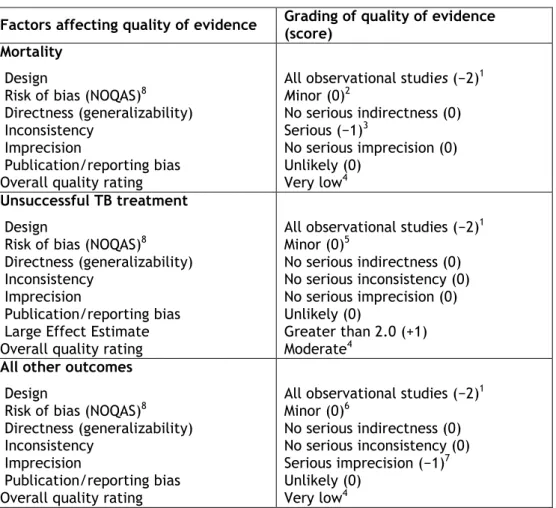
Risk of bias in the included observational studies was assessed using the Newcastle-Ottawa Quality Assessment Scale (NOQAS). An overall assessment of the quality of evidence (high, moderate or low) was assigned to each main outcome in all included studies using the GRADE approach.
A meta-analysis for some outcomes was carried out, because we identified a sufficient number of studies to provide an acceptable body of evidence to examine the intervention. We assessed the extent of heterogeneity in results across
comparable studies using forest plots, the I2 statistic and the Chi2 test.
Where there was evidence of heterogeneity, a random-effects model was applied. Data synthesis was performed using RevMan 5. We provided a summary estimate and 95% confidence interval and generated a forest plot for each meta-analysis. We performed subgroup analyses by stratifying studies by factors that might be a source of bias or potentially added substantially to heterogeneity between studies for any outcome for which we found multiple comparable studies.
Details of the included studies
Twenty-one studies met our inclusion criteria and explicitly compared health outcomes between the public and private sectors. Of those, 17 were cohort studies, coming from 9 countries – Brazil, China, India, Jamaica, Jordan, Nigeria, South Africa, Thailand and Vietnam. Eleven studies were conducted in lower-middle-income countries ($996–$3,945 GNI per capita) and 10 studies in upper-middle-income countries ($3,946–$12,195 GNI per capita). Eighteen studies were conducted in urban settings. Fifteen of the 21 studies provided mortality for a health outcome, and studies examined a wide range of diseases.
No study examined health outcomes across primary, secondary and tertiary levels of care. Ten studies evaluated care in outpatient settings, nine in inpatient settings and two considered both inpatient and outpatient. Nine studies examined infectious diseases (TB, HIV and sepsis) and eight looked at chronic diseases
(cardiovascular and respiratory diseases, rheumatoid arthritis, eye care, end-stage renal disease, hypertension and diabetes). Two studies evaluated end-of-life care and two reported on inpatient mortality. TB was the most represented disease area among included studies, and each TB study presented mortality data.
5
Synthesis results
Pooled analyses showed a significant reduction in mortality in patients in private care compared to public care (OR 0.60; 95% CI 0.41–0.88). The pooled analysis also showed that patients in private healthcare facilities were more likely to have unsuccessfully completed TB treatment than patients in public healthcare facilities (OR 2.04; 95% CI 1.07–3.89). Regardless of outcomes, the quality of evidence is rated low or very low by NOQAS and GRADE scoring measures, limiting the inferences that can be drawn from these findings.
Conclusions and recommendations
More evidence is needed to compare health outcomes between the public and private sectors. This is particularly true in low-income countries where we found no eligible studies meeting our inclusion criteria. By some measures, the majority of healthcare services in Asia and Africa are provided by the private sector.
Without evidence to demonstrate whether this care is better or worse than publicly provided services, regulators and policy makers are challenged to define
appropriate roles for private providers within broader health system planning. The evidence found in this review offers foundations upon which to develop further research; however, the conclusions that can be drawn today are limited: the small number of studies and diverse range of services and settings evaluated constrain extrapolation.
Limitations
The qualitative results, e.g., effectiveness and quality of care, are only
generalizable in the context of the included studies. Therefore, the overall picture of the qualitative results on the impact of private versus public healthcare
provision in LMIC may be substantially different from our results. Because all of the studies identified were conducted in middle-income countries, the results within this review cannot be extrapolated to public and private facilities in low-income countries. While we are aware from the Demographic Health Surveys (DHS) and other sources that the majority of medical care occurs in outpatient settings, half of the studies we found compare inpatient care. Among outpatient illnesses addressed, only treatment for TB was represented in multiple studies.
In the present analysis, selection bias is a pervasive threat that we made every attempt to obviate. This bias, however, is likely an ever-present factor in our analysis of only observational studies, thus yielding probably invalid results. Specifically, we were unable to definitively describe to what extent selection bias may have influenced our results. It is possible that private medical providers are selecting richer and healthier patients, though it is also possible that these patients are seeking care with public medical providers. Information concerning the wealth, education or baseline health of the patients attending either
healthcare setting may have provided a better picture of the role of selection bias in the present study.
In an attempt to address a source of substantial confounding, we aimed to perform a subgroup analysis comparing the odds of mortality by studies that adjusted for socio-economic status (SES) of the included study participants. Unfortunately, measures of SES were either not standardized, precluding our ability to combine them, or not available. Specifically, we know the proportion of patients who were poor in five studies, but we were not able to correlate outcomes to that wealth stratification. Furthermore, no studies adjusted for SES in their mortality or unsuccessful TB treatment analyses.
6
Policy implications
The outcomes from privately provided clinical services appear to be broadly equivalent to or better than government-provided services in middle-income countries. In areas where government clinics or hospitals do not exist, or are insufficient to provide care for the population in need, governments should
consider both legal and fiscal support for the development of private facilities, and contracting of services from private facilities as an acceptable alternative to public provision.
It is not clear, from this study, the extent to which there may be segmentation in medical care along the lines of cost and quality: private clinics may cost more per service and treat a wealthier population than government-equivalent services. The studies included suggest that this is often, but not always, the case. The conclusion for policy makers is that the viability of contracting from or encouraging the
expansion of private providers must be examined on a case-by-case basis because local contexts vary widely.
The lack of data, particularly in low-income countries, makes clear that greater emphasis should be placed upon measurement of health outcomes within service programs implemented in both public- and private-sector facilities. Furthermore, these measurements should be conducted using equivalent metrics in both public and private settings. Knowing the quality level of private pharmacies, clinics or hospitals provides limited policy direction unless one also knows the quality level of the government-provided alternative sources of care.
Support is needed for studies and study methodology development to permit the comparison of state and non-state providers of primary care and outpatient care. Support for studies in low-income countries is particularly important.
Research implications
There is a striking lack of data comparing public and private healthcare providers, particularly in low-income countries. There is an urgent need for high-quality studies addressing childhood illnesses, as they constitute a large proportion of the mortality in low-income countries.
7
1 Background
1.1 Aims and rationale for current review
Based on evidence from Demographic Health Surveys (DHS), private healthcare providers deliver a significant proportion of healthcare services in low- and middle-income countries (LMIC) (Castro-Leal et al. 2000, Rutebemberwa et al. 2009, Zwi et al. 2001). Some of the reasons for seeking care from private providers cited by patients include better and more flexible access to providers, shorter waiting times, greater sensitivity to patient needs, and greater confidentiality (Zwi et al. 2001). With an abundance of private healthcare facilities in many LMIC, patients also seek care in the private sector due to shorter travel times as compared to travel times to government facilities (Castro-Leal et al. 2000, De Costa et al. 2008, Rutebemberwa et al. 2009, WHO). Meanwhile, in the public sector, governments often struggle to create systems to remove or penalize public providers offering low-quality services to patients.(Hanson et al. 2008). As a result, patients seeking quality services may turn to private care.
In contrast to services offered by government employees, private healthcare services include a variety of providers and institutions. These services vary by country and range from sophisticated tertiary care facilities comparable to the highest of international standards, to individual doctors and nurses practicing out of one-room clinics, to unqualified ‘quacks’ selling Western or traditional
medicines and offering services that are neither regulated nor monitored (Hanson et al. 2008). Private healthcare institutions may also include non-profit or religious institutions. Private providers – institutions or individuals – are distinguished in economic terms from the public sector by their ownership characteristic: profits or losses accrue to the owner, rather than to the government or society. In practice, ‘private’ providers are often described as health practitioners who are not directly controlled by the government.
Available evidence indicates that across developing countries, private healthcare is significant in both rural areas and urban areas, and for lower-income groups as well as the wealthy (De Costa and Diwan 2007a, Goodman et al. 2007, Hanson and Berman 1998, Levesque et al. 2006, Meng et al. 2000). According to estimates by Hanson and Berman in the mid-1990s, based on a sample of LMIC, nearly 40% of doctors practice privately and 24% of the total numbers of hospital beds available are private (this includes for-profit and non-profit) (Hanson and Berman 1998). In Asia, private providers supply nearly 26% of all beds available, compared to 33% in Africa (Hanson and Berman 1998). In African countries, non-governmental
organizations (NGO) provide a vast majority of all private services available (Hanson and Berman 1998). Though limited, evidence over time suggests an
increased use of private healthcare services in LMIC (Boone and Zhan 2006, Hanson et al. 2008, International Finance Corporation 2008). The private sector is
particularly important for the poor; poorer patients get sick and go without care more frequently, and spend proportionately more of their incomes on private healthcare than the wealthy (DHS MEASURE, Filmer 2005, Marek 2008, Zwi et al. 2001).
The implications of this for health systems are important: there are large
quantities of privately provided care across a range of service levels, serving both the wealthy and the poor. What this means for public health, and for the health of the poor in particular, depends upon the quality of care provided and the
affordability of this care – two topics which are not the focus of this systematic review but that have been the subject of many studies, often with conflicting
8 results (De Costa and Diwan 2007b, Floyd et al. 2006, Marseille et al. 2006,
Patouillard et al. 2007, Smith 2009, Tuan et al. 2005, Voeten et al. 2001).
Quality care in developing countries has been defined most commonly based upon the Bruce-Jain framework (Bruce 1990). Developed initially as a structure for describing the quality of family-planning services, the Bruce-Jain Framework has been expanded to describe both a broader range of services (Mora G 1993) and a broader scope of healthcare, encompassing both socio-economic and environmental context (Das and Hammer 2007, Hardon 1997, Peabody and Luck 2002).
Alternatively, the Donabedian quality of care framework based on the three dimensions of structure, process and outcomes is used and appropriate for comparisons between health sectors, because it considers a patient’s frailty and behavioral compliance – two factors critical to health outcomes(Donabedian 1988). Quality care is now most commonly defined to include both clinical quality and patient perceptions of quality – important elements for ensuring continuation of care and health outcomes. In very few studies, however, is quality of care linked to health outcomes; the norm has been that quality – perceived or clinical or both – is studied as an independent attribute of care rather than as a predictor of biological outcomes. Studies that use the Donabedian framework are more likely to capture the linkages between quality of care and health outcomes, but evidence remains limited.
In the past decade, these quality studies have ranged from assessments of hospital-based inpatient care (Adisasmita et al. 2008, Andaleeb 2000a, Zonato et al. 2004) to outpatient services provided by formal, trained clinicians (Agha and Do 2009, Levesque et al. 2006). A large number of studies have examined quality aspects of delivery services, focusing in particular on rates of cesarean sections and/or rates of unrequested cesarean sections in hospitals (Almeida et al. 2008, d'Orsi et al. 2005, Dhar et al. 2009, Mandarino et al. 2009, Potter et al. 2001, Potter et al. 2008).
Much of the literature exploring quality studies in LMIC has been focused on family-planning services (Agha and Do 2009, Montagu and Graff 2009, Walker et al. 2001), patient perceptions of quality in inpatient services (Andaleeb 2000b, 2000a, Costa et al. 2006, Meng et al. 2000, Pongsupap and Van Lerberghe 2006) and maternity care (Baraidi et al. 2007, Giglio et al. 2005, Mandarino et al. 2009, Mendoza-Sassi et al. 2010, Perini et al. 2005, Victora et al. 2010). A small number of studies examine the quality of general medical care in outpatient clinics (Bhatia and
Cleland 2004, Bos 2007, Gomez-Jauregui 2001, Levesque et al. 2006, Nordyke 2002, Sauceda-Valenzuela et al. 2010, Teng et al. 2006) and drug sellers or pharmacy outlets (Goodman et al. 2007, Jankovic et al. 2001, Maiga et al. 2003, Siddiqi et al. 2002, Syhakhang et al. 2004, Wijesinghe et al. 2007), while often they compare the quality of inpatient and outpatient services. Informal providers are not well
studied, and a recent systematic review of informal providers(Ingram 2010) presented findings on provider quality inferred from publications of operations research designed to improve quality among these providers: baseline data on the quality of informal providers were non-existent.
The published literature is similarly inconclusive about the quality of care provided by the formal private sector. Private care at both tertiary and primary levels was documented as both better (Coimbra et al. 2003, Gomez-Jauregui 2001) and worse (Martins et al. 2004, Tayyem et al. 2008) than public alternatives, with qualitative and perceived quality measures often intermixed with clinical quality measures and outcomes with quality implications (e.g. provision of cesarean sections) reported with no attempt to measure or adjust for whether the interventions were clinically
9 appropriate (Leal Mdo et al. 2004). Most importantly, of the many studies
identified in which private quality was measured, only six articles assessed whether there was a correlation between the quality assessment indicators and some form of clinical outcome (Coimbra et al. 2003, Gomez-Jauregui 2001, Leal Mdo et al. 2004, Martins et al. 2004, Sauceda-Valenzuela et al. 2010, Tayyem et al. 2008). Financing of healthcare provides a similarly inconclusive collection of outcome measures across the public and private sectors. Depending upon the setting and the diseases being treated, private providers are more expensive or less expensive than public alternatives (Das and Hammer 2007, Waters et al. 2003). Few studies
provided comprehensive details on clinical necessity for treatment provided, the quality of services, or the outcomes following treatment, making an understanding of the cost-effectiveness of treatment impossible. The exception to this is for retail sale of pharmaceuticals, where studies in Africa and Latin America found that private pharmacies had significantly higher prices than state drug sellers, along with a higher likelihood of having medicine in stock (Pinto et al. 2010,
Twagirumukiza et al. 2010). While the high cost of medicines in private pharmacies places these medicines out of the reach of the poor (Russo and McPake 2010), the evidence available also makes clear that government alternatives are often lower priced but lack needed medicines. Policy conclusions cannot be made based on these limited data. A systematic review of the quality of private pharmacies(Smith 2009) led to similarly dichotomous conclusions: many private formal and informal pharmacies in LMIC deliver low-quality care, and a substantial percentage of medical care in developing countries is delivered by these providers because of the lack of alternative sources of care.
As David Gwatkin wrote in a review of the Integrated Management of Childhood Illnesses (IMCI), ‘an intervention cannot help the poor unless it gets to them’ (Gwatkin 2006). IMCI and many other initiatives have been successful at ensuring quality of care but have seldom been implemented effectively at a national scale (Ahmed et al. 2010). Quality and cost are not relevant if patients are not served. We have focused in this review upon comparing health outcomes. We seek to confirm what is known about the relative benefits to health – to morbidity or mortality – of being treated by public or private providers in LMIC.
This review will be of value to stakeholders both inside and outside the research community, helping public health practitioners, policy makers, donor agencies and global health institutions to make evidence-based decisions on healthcare and healthcare policy.
1.2 Definitional and conceptual issues
The authors consistently used the following terms throughout the review process and in this paper.
Low- and middle-income countries: According to the World Bank, economies are divided according to 2009 GNI per capita, calculated using the World Bank Atlas method. The groups are: low income, $995 or less; lower-middle income, $996-$3,945; upper-middle income, $3,946-$12,195; and high income, $12,196 or more.
Private providers: In contrast to services offered by government employees, private healthcare services include a variety of providers and institutions.
10 These services vary by country and range from sophisticated tertiary care facilities comparable to the highest of international standards, to individual doctors and nurses practicing out of one-room clinics, to unqualified
‘quacks’ selling Western or traditional medicines and offering services that are neither regulated nor monitored. Private healthcare institutions may also include non-profit or religious institutions. Private providers – institutions or individuals – are distinguished in economic terms from the public sector by their ownership characteristic: profits or losses accrue to the owner, rather than to the government or society. In practice, ‘private’ providers are often described as health practitioners who are not directly controlled by the government. For the purpose of this review, we have used the definitions of ‘private’ providers given within the surveyed literature so long as it approximates the more formal definitions above.
Quality of care: Quality care in developing countries has been defined most commonly based upon the Bruce-Jain framework (Bruce 1990). Developed initially as a structure for describing the quality of family-planning services, the Bruce-Jain framework has been expanded to describe both a broader range of services (Mora G 1993) and a broader scope of healthcare, encompassing both socio-economic and environmental context (Das and Hammer 2007, Hardon 1997, Peabody and Luck 2002). Alternatively, the Donabedian quality of care framework, based on the three dimensions of structure, process and outcomes, is used and appropriate for comparisons between health sectors, because it considers a patient’s frailty and
behavioral compliance – two factors critical to health outcomes(Donabedian 1988). Quality care is now most commonly defined to include both clinical quality and patient perceptions of quality – important elements for ensuring continuation of care and health outcomes. In very few studies, however, is quality of care linked to health outcomes; the norm has been that quality – perceived or clinical or both – is studied as an independent attribute of care rather than as a predictor of biological outcomes. Studies that use the Donabedian framework are more likely to capture the linkages between quality of care and health outcomes, but evidence remains limited.
1.3 Research background
While a number of systematic reviews have been conducted or are being conducted on specific areas of working with the private sector, these reviews have been primarily intervention focused. Recently, Patouillard et al. conducted a systematic review of 52 studies that assessed working with private for-profit providers in LMIC; these studies focused on interventions (such as social marketing, pre-packaging drugs, provision of vouchers, contracting out services, franchising, regulation and accreditation) to improve utilization of healthcare by the poor (Patouillard et al. 2007). While some of the studies showed an increase in the utilization of services and improvement in the quality of care, impact on equity could not be assessed because of data limitations. Because most of these interventions were not designed as research projects, the review was not able to explain what services were
utilized by the poor and who provided these services (Patouillard et al. 2007). Currently, a large body of literature documents the role of private for-profit and not-for-profit sectors in the provision of health services and commodities for the poor in developing countries. Much of this documentation exists in the form of grey literature: program reviews, program evaluations and summaries of experience from donor-supported interventions that support NGOs and/or private-sector
11 delivery of health services. A much smaller collection of peer-reviewed articles exists that documents the scale of private for-profit and not-for-profit provision of healthcare to poor populations in developing countries, and, in rare cases, the quality or affordability of those services.
1.4 Objective
The review seeks to answer the following question: what difference exist in health outcomes following treatment in public or private settings in low- and middle-income countries?
12
2. Methods used in the review
2.1 User involvementThis is a systematic review and meta-analysis using both Cochrane and GRADE methods. DM oversaw the process at each step. MT developed the search terms and searched the grey literature. TH performed the searches of peer-reviewed
literature. MT and AA reviewed all abstracts that fit the parameters of the review. AA and KD reviewed the full texts for all articles subsequently selected. AA
performed the analyses and wrote the quantitative results. AA, KD and DM wrote the report. The authors sought the opinions and advice of colleagues through informal interviews, conversations and communications. In particular, faculty at the University of California San Francisco involved in past Cochrane Reviews provided both formal and informal peer review, and the research advisory team at the DFID provided formal peer review and comments. External review was also sought and received from experts in the field, including Roger England, David Bishai, Birger Forsberg, and April Harding. Advisors helped refine the question and search methods.
2.2 Identifying and describing studies
2.2.1 Inclusion criteria Study designs
We included the following studies in our search: 1. Randomized controlled trials (RCTs) 2. Controlled clinical trials (CCTs)
3. Controlled before-and-after studies (CBAs) with a minimum of two study and two control sites
4. Interrupted time series (ITS) with a minimum of three points both before and after the intervention.
Given the paucity of studies, we also considered observational studies, including cohort, cross-sectional and case-control studies. We examined grey literature, and took into account the limited number of specialized reviews that have been
conducted for particular areas of health service or health service provision. We only included studies published in 2000 or later to ensure that the review reflects the most up-to-date findings.
Study focus
To be included, a study had to report at least one of the following primary outcomes:
1. Direct measures of improved health/health status/survival such as mortality or morbidity
2. Lifestyle factors where evidence indicates that these have an effect on the above
3. Adverse effects (e.g., undesirable impacts on any of the above outcomes or on existing public or private services, distortions in provision of services, inappropriate use of services).
13 If any title, abstract, or full study did not meet the above criteria, study design and study focus, they were not included. See further exclusion criteria in Figure 3.1.
Upon meeting the primary inclusion criteria, we extracted the following data, if available:
1. Equitable access or utilization (distribution of access across socio-demographic characteristics)
2. Patient satisfaction (e.g., intent to return, level of service from a societal perspective or the perspective of the franchiser, franchisee or patients) 3. Measure of access (e.g., affordability, utilization, client volume,
attendance)
4. Quality of care (e.g., compliance with guidelines, case notification for specific diseases such as TB)
5. Economic evaluations.
2.2.2 Search strategies
In order to retrieve studies, the Global Health Group (GHG) developed search terms and strategies, following the recommendations of EPOC. These can be found in Appendix 2.1.
2.2.3 Search sources
A comprehensive search was performed in all languages in order to avoid both selection bias of published articles and language bias of publications. Abstracts, academic journals (peer-reviewed) and grey literature (non-published/internal or non-reviewed papers, reports) were searched:
Bibliographic databases: PubMED, EMBASE, Web of Knowledge. The
Cochrane Central Register of Controlled Trials (CENTRAL), and the Database of Abstracts of Reviews of Effectiveness were also reviewed.
Development studies databases: ELDIS database – database of development references developed by the Institute of Development Studies (IDS); British Library of Development Studies (BLDS) – a database on economic and social issues in developing countries; IDS21 – database on international
development research from the UK; The Antwerp Institute of Tropical Medicine database.
Organizations and websites: we searched websites of organizations likely to be active in the field, including: the World Bank; the United States Agency for International Development (USAID); Management Sciences for Health (MSH); PSP One; Centre for Global Development, World Health Organization (WHO); Swiss Tropical Institute; Deutsche Gesellschaft für Technische Zusammenarbeit (GTZ); KfW Entwicklungsbank; DFID; The Global Alliance for Vaccines and Immunization (GAVI); the Global Fund to Fight AIDS, Tuberculosis and Malaria; Asian Development Bank; Pan American Health Organization (PAHO); Partnerships for Health Reform; Save the Children; and Oxfam.
Academic institutions: we also searched websites of academic institutions active in this field, such as the London School of Hygiene and Tropical Medicine, the Harvard School of Public Health, the University of Cape Town, the Institute of Policy Studies Sri Lanka (IPS), the Kenya Institute of Policy
14 Analysis and Research (IPAR), and the Institute of Tropical Medicine,
Belgium.
We searched ISI Web of Science for papers that cited studies included in the review. We also used Google Scholar for studies meeting our criteria.
Country websites: databases and websites of the governments of India, Brazil, Namibia, Uganda and South Africa were also searched.
Reference lists of key authors/papers.
References on key web sites.
We checked references from included studies and related articles and documents to identify other relevant studies that met the inclusion criteria.
A database system was set up to keep track of studies found during the review. Titles and abstracts were imported and entered manually into this database.
2.3 Quality assurance
Two authors independently reviewed abstracts to identify all studies that potentially met the inclusion criteria for retrieval. Two authors independently assessed each full-text article that was retrieved to determine whether it met all of the selection criteria. Any disagreements and uncertainties were resolved by discussion and the involvement of a third author. KD and AA both independently extracted data and merged results. In the case of any discrepancy in extracted data, DM refereed. The quality assessment was jointly prepared by KD, AA, and DM to ensure transparency and agreement.
2.4 Data extraction
The following elements were extracted independently from each included study by two review authors:
1. Study references:
a. Name of the first author and date of publication b. Date of the study
c. Location of the study d. Health outcomes
2. Described intervention(s) and context: a. Nature of intervention
b. Intervention (exposure) group c. Control group
d. Broader context/reforms in place if mentioned in the article 3. Study characteristics and inclusion criteria:
a. Type of study: ITS, Before-After Case Series (BACS) or RCT (or non-randomized study)
b. Quality assessment (see below) 4. Results:
a. Main outcomes measured b. Effect
2.5 Quality assessment
Risk of bias in observational studies was assessed using the Newcastle-Ottawa Quality Assessment Scale (NOQAS) and other guidance outlined in Chapter 13 of the
Cochrane Handbook for Systematic Reviews of Interventions (‘Non-Randomized Studies’) (Higgins et al. 2008). Specifically, the NOQAS helps in identifying which studies are especially prone to bias and in assessing methodological quality by
15 systematically posing questions in the most objective manner possible. For
example, the NOQAS asks questions about selection of the study participants, comparability of the study groups within studies (e.g. is confounding addressed?), and measurement of the outcome (measured the same way for both exposed and unexposed?) An overall assessment of the quality of evidence (high, moderate or low) was assigned to each main outcome in all included studies using the GRADE approach (Guyatt et al. 2008).
2.6 Methods for synthesis
Studies were included for data synthesis if they met the inclusion criteria and reported the outcomes of interest, and provided breakdowns between the public and private sectors. For the purposes of this review, the private sector is any healthcare delivered by a non-state actor.
For all studies, we recorded outcomes for each comparison. Where possible we recorded risk ratios (RRs) and odds ratios (ORs) for dichotomous outcomes and weighted mean differences (WMDs) for continuous outcomes. When adjusted analyses were reported (adjusting for potential confounders in non-randomized studies), we recorded the estimates of effect together with the standard error. For random effects meta-analysis, we recorded the number of events and total number in each group (for risk ratio), or mean and standard deviation in each group (for weighted mean difference). All outcome effects were shown with their associated 95% confidence intervals.
We assessed selective outcome reporting using the approach described in Chapter 8 of the Cochrane Handbook for Systematic Reviews of Interventions (Higgins et al. 2008). The Cochrane Collaboration recommends assessing publication bias
qualitatively based on the results and characteristics of the included studies, including the extent to which only small effects in favour of the intervention were reported, the extent to which funders or investigators had vested interest in the results, and the extent to which the authors’ interpretations of the results were supported by the actual results.
A meta-analysis for some outcomes was carried out, when we identified a
sufficient number of studies to provide an acceptable body of evidence to examine the intervention. We assessed the extent of heterogeneity in results across
comparable studies using forest plots, the I2 statistic and the Chi2 test for heterogeneity.
A random-effects model was applied due to the level of heterogeneity within our data. Data synthesis was performed using RevMan 5. We provided an estimate and 95% confidence interval and generated a forest plot for each meta-analysis and discussed the extent of evidence against homogeneity.
In cases where the unit of analysis was on a different scale from other studies, we standardized our estimates.
Additionally, we performed subgroup analyses by stratifying studies by factors that might be a source of bias or potentially added substantially to heterogeneity between studies for any outcome for which we found multiple comparable studies. Sources of heterogeneity, such as TB/non-TB studies in mortality outcomes, can bias the meta-analysis results. For example, if patients with TB are more likely to die than patients with any other illness (i.e. non-TB mortality outcomes) then these TB studies will have a greater impact on the summary estimate than non-TB studies. Similarly, if patients in upper-middle income countries are less likely to die than patients in lower-middle income countries, irrespective of their health
16 care status, then the results will likely add heterogeneity between studies and necessitate exploration.
2.7 Deriving conclusions and implications
The health systems models used by the World Health Organization (WHO) and the World Bank/International Finance Corporation (IFC) provide a model for
understanding the role of the private sector within the larger health system, and for analyzing the best role for governmental stewardship of the private sector according to the size and scope of private healthcare provision while balancing cost, quality and access (WHO). Study results that increase the understanding of the relative health outcomes of public versus private health delivery are
interpreted in the context of a health systems model that makes various trade-offs between cost, quality and access. These findings can guide policy makers to decide which service delivery methods to support and where additional regulations are needed. Where results are lacking, targeted research is called for in order to inform policy and funding decisions as described above. Finally, the authors have built upon health systems models and the theoretical proposals for private-sector engagement put forward by others, adding evidence to improve the conceptual discussions to date (Bennett et al. 2005, Patouillard et al. 2007, Zwi et al. 2001).
17
3. Search results
Figure 3.1 gives a description of how papers were filtered from searching to mapping to synthesizing. Twenty-one studies met our inclusion criteria and explicitly compared health outcomes between the public and private sectors Appendix 3.1 gives a complete list and details of studies included in the review.
18
Figure 3.1: Process for filtering papers
3,067 citations selected
141 studies provide non-health outcomes such as quality, cost and utilization (will be used for background analysis only)
452 studies on non-health-related studies removed
Stage One Screening – Grey Literature
Papers identified through review of organizational databases and the Internet
2 citations selected
624 citations selected
Stage Two Screening
Title and Abstract Screening
31 citations selected
Stage Three Screening
Full Document Acquisition
Stage One Screening – Peer Reviewed
Papers identified through electronic database search
23 animal studies removed
643 studies prior to year 2000 removed
71 studies from developed countries removed
263 duplicates removed
63 descriptive studies (case studies, focus group results) removed
1,382 non-health-related studies removed (such as policy, political, historical, school related studies)
Total studies removed = 2,445
11 studies did not offer outcomes data that compared the public and private sectors
1 study identified through cross-reference from a selected study
19
4. Synthesis results
4.1 Further details of studies included in the synthesis
Twenty-one studies met the inclusion criteria. Of those, 17 were cohort studies. Overall nine countries were represented – Brazil, China, India, Jamaica, Jordan, Nigeria, South Africa, Thailand and Vietnam. Eleven studies were conducted in lower-middle-income countries ($996–$3,945 GNI per capita) and 10 studies from upper-middle-income countries ($3,946–$12,195 GNI per capita). Eighteen studies were conducted in urban settings. Fifteen of the 21 studies provided mortality for a health outcome, and studies examined a wide range of diseases, with TB being the most represented. Table 4.1 provides an overview of the included studies. For more details, please see Appendix 3.1.
A comparison of health outcomes in public vs private settings in low- and middle-income countries 20 Table 4.1: Overview of included studies
A u th or , Ye ar Loc at ion P rim ar y Ou tc om e Me asu re d Dise as e Le ve l of Ca re Ou tp at ie n t or in pa tie n t U rba n , Ru ra l, Mixe d Cou n tr y In co m e SES L e ve ls of S tu dy Su bj e ct s P riv at e Se ct or Ou tc om e *
Ambe, 2005 Mumbai, India Mortality TB Primary Secondary Outpatient Urban Lower Middle NGOs targeted poor and slum dwellers Lower
Arora, 2003 Delhi, India Mortality TB Primary Outpatient Urban Lower Middle Less than 3% were low income = Chengsorn,
2009 Thailand Mortality TB Primary Secondary Outpatient Urban Lower Middle Unknown Lower Eggleston, 2010 Guangdong, China Mortality n/a Secondary Inpatient Urban Lower Middle Unknown Lower
Ferreira, 2009 Bahia, Brazil Mortality Heart Secondary Inpatient Urban Upper Middle 70% of public and 19% of private healthcare
patients had low income Lower Gidado, 2009 Kaduna State, Nigeria Mortality TB Primary Secondary Outpatient Urban Lower Middle Research conducted in high-poverty area = Hutayanon
2007 Thailand Mortality Heart Secondary Inpatient Mixed Lower Middle Unknown Lower
Iucif, 2004 Sao Paulo State, Brazil Mortality End of life Secondary Inpatient Urban Upper Middle
Higher income patients within private healthcare and lower income patients within public healthcare
Lower
Kapadia, 2005 Mumbai, India Death in ICU among
hospitalized End of life
Secondary
Tertiary Inpatient Urban Lower Middle Unknown Higher
Martins, 2004 Brazil Mortality Cardiovascular and respiratory
diseases Secondary Inpatient Mixed
Upper
Middle Unknown Higher
Lonnroth, 2003 Ho Chi Minh City, Vietnam Mortality TB Secondary Tertiary Outpatient Urban Lower Middle
Public patients had 28% unemployment and 9% of private patients unemployed
A comparison of health outcomes in public vs private settings in low- and middle-income countries 21 A u th or , Ye ar Loc at ion P rim ar y Ou tc om e Me asu re d Dise as e Le ve l of Ca re Ou tp at ie n t or in pa tie n t U rba n , Ru ra l, Mixe d Cou n tr y In co m e SES L e ve ls of S tu dy Su bj e ct s P riv at e Se ct or Ou tc om e * Panaratto,
2009 Brazil A1C and Cholesterol Diabetes Primary Outpatient Urban Upper Middle Unknown Lower
Quy, 2003 Ho Chi Minh City, Vietnam Mortality TB Tertiary Outpatient Urban Lower Middle
8% of public healthcare patients had high income and 24% of private healthcare patients had high income
=
Rosen, 2008 South Africa Mortality HIV Primary Secondary Outpatient Mixed Upper Middle Unknown Higher
Silva, 2004 Brazil Mortality Sepsis Secondary Tertiary Inpatient Urban Upper Middle Unknown Lower
Singh, 2000 Mysore, India Blindness Eye care Secondary Mix Urban Lower Middle
In the rural areas, 65% of the sample were low income; in urban areas, 55% of the sample were low income.
=
Sogayar, 2008 Brazil Mortality Sepsis Secondary Inpatient Mixed Upper Middle Unknown Lower
Solomon, 2005 Johannesburg, South Africa Disability from rheumatoid
arthritis RA Secondary Outpatient Urban
Upper Middle
Public healthcare patients were more likely to be less educated than private healthcare patients
Higher
Tavares, 2004 Niteroi, Brazil Mortality Heart Secondary Inpatient Urban Upper Middle
10% of private healthcare patients and 57% of public healthcare patients make less than minimum wage
=
Tayyem, 2008 Jordan Severe malnourishment ESRD Secondary Tertiary Mix Urban Lower Middle Unknown =
Wilks, 2000 Jamaica Blood pressure control Hypertension Primary Tertiary Outpatient Urban Upper Middle Unknown Lower *Health outcome risk within the private sector as compared to the public sector.
22
4.1.1 Study designs
All 21 included studies were observational in design, with 17 cohort studies (Ambe et al. 2005, Arora et al. 2003, Chengsorn et al. 2009, Ferreira et al. 2009,
Hutayanon et al. 2007, Kapadia et al. 2005, Lonnroth et al. 2003, Martins et al. 2004, Panarotto et al. 2009, Quy et al. 2003, Rosen et al. 2008, Silva et al. 2004, Singh et al. 2000, Sogayar et al. 2008, Solomon et al. 2005, Tavares et al. 2004, Wilks et al. 2000) and four cross-sectional studies (Eggleston et al. 2010, Gidado and Ejembi 2009, Iucif and Rocha 2004, Tayyem et al. 2008).
4.1.2 Characteristics of settings and levels of care
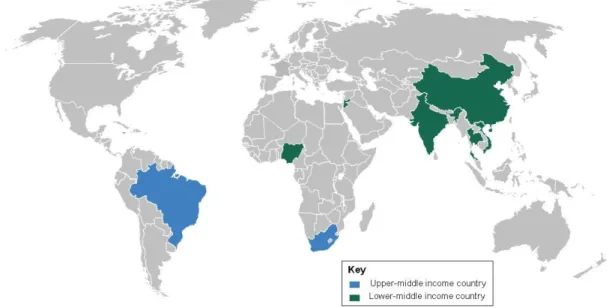
All 21 included studies were conducted in middle-income countries. Eleven studies were set in lower-middle-income countries (Ambe et al. 2005, Arora et al. 2003, Chengsorn et al. 2009, Eggleston et al. 2010, Gidado and Ejembi 2009, Hutayanon et al. 2007, Kapadia et al. 2005, Lonnroth et al. 2003, Quy et al. 2003, Singh et al. 2000, Tayyem et al. 2008) and 10 in upper-middle-income countries (Ferreira et al. 2009, Iucif and Rocha 2004, Martins et al. 2004, Panarotto et al. 2009, Rosen et al. 2008, Silva et al. 2004, Sogayar et al. 2008, Solomon et al. 2005, Tavares et al. 2004, Wilks et al. 2000). Seven studies were set in Brazil (Ferreira et al. 2009, Iucif and Rocha 2004, Martins et al. 2004, Panarotto et al. 2009, Silva et al. 2004, Sogayar et al. 2008, Tavares et al. 2004), four in India (Ambe et al. 2005, Arora et al. 2003, Kapadia et al. 2005, Singh et al. 2000), two in South Africa (Rosen et al. 2008, Solomon et al. 2005), two in Thailand (Chengsorn et al. 2009, Hutayanon et al. 2007) and two in Vietnam (Lonnroth et al. 2003, Quy et al. 2003). Single studies were conducted in Jamaica (Wilks et al. 2000), Nigeria (Gidado and Ejembi 2009), Jordan (Tayyem et al. 2008) and China (Eggleston et al. 2010). See Figure 4.2 for a map of countries represented in the included studies differentiated by income. The socio-economic status (SES) of study participants is described in Table 4.1. In summary, of the 21 included studies, 10 studies detailed the SES of included study participants.
Figure 4.2: Countries represented in the 21 included studies, differentiated by income
None of the included studies evaluated health outcomes in rural settings; however, four studies were conducted in mixed settings that included rural environments (Hutayanon et al. 2007, Martins et al. 2004, Rosen et al. 2008, Sogayar et al. 2008). Of these, only Rosen et al. (2008) provided an evaluation across urban and rural
23 settings by comparing the following settings: 1) urban public hospital; 2) network of private providers in a small city; 3) rural HIV/AIDS clinic run by an NGO; and 4) a primary care clinic run by an NGO and located in an informal settlement.
No study examined health outcomes across primary, secondary and tertiary levels of care. Arora et al. (2003) and Panarotto et al. (2009) each authored a study that focused on primary care, while four other studies considered primary and
secondary care (Ambe et al. 2005, Chengsorn et al. 2009, Gidado and Ejembi 2009, Rosen et al. 2008) and one study examined primary and tertiary care (Wilks et al. 2000). Nine studies focused exclusively on secondary care (Eggleston et al. 2010, Ferreira et al. 2009, Hutayanon et al. 2007, Iucif and Rocha 2004, Martins et al. 2004, Singh et al. 2000, Sogayar et al. 2008, Solomon et al. 2005, Tavares et al. 2004). Four studies evaluated outcomes across secondary and tertiary settings (Kapadia et al. 2005, Lonnroth et al. 2003, Silva et al. 2004, Tayyem et al. 2008) and one focused on tertiary care (Quy et al. 2003).
Ten studies evaluated care in outpatient settings (Ambe et al. 2005, Arora et al. 2003, Chengsorn et al. 2009, Gidado and Ejembi 2009, Lonnroth et al. 2003, Panarotto et al. 2009, Quy et al. 2003, Rosen et al. 2008, Solomon et al. 2005, Wilks et al. 2000). Nine studies examined outcomes from in-patient settings
(Eggleston et al. 2010, Ferreira et al. 2009, Hutayanon et al. 2007, Iucif and Rocha 2004, Kapadia et al. 2005, Martins et al. 2004, Silva et al. 2004, Sogayar et al. 2008, Tavares et al. 2004). Two studies considered both outpatient and in-patient care (Singh et al. 2000, Tayyem et al. 2008).
4.1.3 Characteristics of outcomes
Outcome types varied among the included studies, with 15 studies reporting mortality outcomes (Ambe et al. 2005, Arora et al. 2003, Chengsorn et al. 2009, Eggleston et al. 2010, Ferreira et al. 2009, Gidado and Ejembi 2009, Hutayanon et al. 2007, Iucif and Rocha 2004, Lonnroth et al. 2003, Martins et al. 2004, Quy et al. 2003, Rosen et al. 2008, Silva et al. 2004, Sogayar et al. 2008, Tavares et al. 2004). The remaining studies reported outcomes for hypertension management (Wilks et al. 2000), cataract surgery (Singh et al. 2000), cholesterol control (Panarotto et al. 2009), end-of-life care (Iucif and Rocha 2004, Kapadia et al. 2005), rheumatoid arthritis disability (Solomon et al. 2005) and severe malnutrition (Tayyem et al. 2008).
Nine studies examined infectious diseases (HIV, TB and sepsis),(Ambe et al. 2005, Arora et al. 2003, Chengsorn et al. 2009, Gidado and Ejembi 2009, Lonnroth et al. 2003, Quy et al. 2003, Rosen et al. 2008, Silva et al. 2004, Sogayar et al. 2008) and eight looked at chronic diseases (cardiovascular and respiratory diseases,
rheumatoid arthritis, eye care, end-stage renal disease, hypertension and diabetes) (Ferreira et al. 2009, Hutayanon et al. 2007, Panarotto et al. 2009, Singh et al. 2000, Solomon et al. 2005, Tavares et al. 2004, Tayyem et al. 2008, Wilks et al. 2000). Two studies evaluated end-of-life care (Iucif and Rocha 2004, Kapadia et al. 2005) and two reported on inpatient mortality (Eggleston et al. 2010, Martins et al. 2004).
TB was the most represented disease area among included studies, and each of those studies presented mortality data (Ambe et al. 2005, Arora et al. 2003, Chengsorn et al. 2009, Gidado and Ejembi 2009, Lonnroth et al. 2003, Quy et al. 2003).
24
4.2 Synthesis of evidence
4.2.1 Quantitative synthesis
There was no disagreement regarding inclusion/exclusion of all 21 included studies. All available data from each study were pooled and analyzed as listed below. Subgroup analyses based on upper-middle/lower-middle income countries, TB/non-TB studies, and inpatient/outpatient settings were performed for the mortality outcomes as well.
Mortality (See Figure 4.2)
Fifteen studies reported mortality in general. Ten of the 15 studies found
significant effects (Ambe et al. 2005, Chengsorn et al. 2009, Eggleston et al. 2010, Ferreira et al. 2009, Hutayanon et al. 2007, Iucif and Rocha 2004, Martins et al. 2004, Rosen et al. 2008, Silva et al. 2004, Sogayar et al. 2008). Of these 10 studies, eight showed evidence suggesting that private care was protective against
mortality when compared to public healthcare (Ambe et al. 2005, Chengsorn et al. 2009, Eggleston et al. 2010, Ferreira et al. 2009, Hutayanon et al. 2007, Iucif and Rocha 2004, Silva et al. 2004, Sogayar et al. 2008), while two studies suggested that public healthcare was protective against mortality when compared to private care (Martins et al. 2004, Rosen et al. 2008). Pooled analyses showed a significant reduction in mortality in patients in private care rather than public care (OR 0.60; 95% CI 0.41–0.88). Heterogeneity in results between studies was significant (I2 = 88%). Other specific mortality outcomes not pooled included mortality adjusted by the Charlson comorbidity index, severe septic mortality, septic shock mortality, death in an intensive care unit (ICU), cardiac-specific death, non-cardiac death, and systemic inflammatory response syndrome (SIRS)-related mortality within 28 days of ICU admission (Hutayanon et al. 2007, Iucif and Rocha 2004, Kapadia et al. 2005, Silva et al. 2004).
25
Figure 4.2: Forest plot of comparison: public versus private: mortality
______________________________________________________ = Weighted effect estimates from individual studies.
= Subtotal and total summary estimates.
TB studies versus non-TB studies (See Figure 4.3)
Among the 15 studies that reported mortality, six were in a TB treatment setting. Only two of these six studies found a significantly lower risk of mortality among patients in private care than in public care (Ambe et al. 2005, Chengsorn et al. 2009). Among the nine studies set in non-TB treatment settings, eight found a significant effect of type of care and mortality (Eggleston et al. 2010, Ferreira et al. 2009, Hutayanon et al. 2007, Iucif and Rocha 2004, Martins et al. 2004, Rosen et al. 2008, Silva et al. 2004, Sogayar et al. 2008). The pooled subgroup analysis for the TB setting studies yielded a non-significant protective effect of private care (OR 0.50; 95% CI 0.17–1.43), and the pooled subgroup analysis for the non-TB setting studies found a borderline significant protective effect of private care (OR 0.66; 95% CI 0.43–1.00). Tests for heterogeneity between TB studies and non-TB studies showed substantial heterogeneity (I2 = 89% and 87%, respectively). Comparisons of subgroup differences show that mortality in private care versus public care in TB studies is not significantly lower than it is in non-TB studies.
26
Figure 4.3: Forest plot of comparison: public versus private, TB or non-TB studies subgroups: mortality
______________________________________________________
= Weighted effect estimates from individual studies. = Subtotal and total summary estimates.
Upper-middle income versus lower-middle income countries (See Figure 4.4)
Among the 15 studies that reported mortality outcomes, seven studies were in an upper-middle-income country. Four of these seven studies found a significantly lower risk of mortality among patients in private care than in public care (Ferreira et al. 2009, Iucif and Rocha 2004, Silva et al. 2004, Sogayar et al. 2008). Among the eight studies set in a lower-middle-income countries, four found a significant effect of type of care and mortality (Ambe et al. 2005, Chengsorn et al. 2009, Eggleston et al. 2010, Hutayanon et al. 2007). The pooled subgroup analysis for the upper-middle income country studies yielded a non-significant protective effect of private care (OR 0.77; 95% CI 0.47–1.25), and the pooled subgroup analysis for the lower-middle-income countries studies showed a significant protective effect of private care (OR 0.44; 95% CI 0.21–0.91). Tests for heterogeneity between upper-middle-income studies and lower-upper-middle-income studies showed substantial heterogeneity (I2 = 87% and 86%, respectively). Comparisons of subgroup
differences show that mortality in private care versus public care in upper-middle-income countries is not significantly higher than mortality in private care versus public care in lower-middle-income countries studies.
27
Figure 4.4: Forest plot of comparison: public versus private, upper-middle- or lower middle-income countries subgroups: mortality
______________________________________________________
= Weighted effect estimates from individual studies. = Subtotal and total summary estimates.
Inpatient versus outpatient settings (See Figure 4.5)
Among the 15 studies that reported this outcome, seven studies were in outpatient settings. Only two of these seven studies found a significantly lower risk of
mortality among patients in private care versus public care (Ambe et al. 2005, Chengsorn et al. 2009). Among the eight studies set in an inpatient setting, six found a significant effect of type of care and mortality (Eggleston et al. 2010, Ferreira et al. 2009, Hutayanon et al. 2007, Iucif and Rocha 2004, Martins et al. 2004, Silva et al. 2004, Sogayar et al. 2008, Tavares et al. 2004). The pooled subgroup analysis for the outpatient setting studies yielded a non-significant protective effect of private care (OR 0.71; 95% CI 0.24–2.06), and the pooled subgroup analysis for the inpatient studies yielded a significant protective effect of private care (OR 0.57; 95% CI 0.38–0.85). Tests for heterogeneity between
outpatient studies and inpatient studies showed substantial heterogeneity (I2 = 90% and 86%, respectively). Comparisons of subgroup differences showed that mortality in private care versus public care did not significantly differ between study
28
Figure 4.5: Forest plot of comparison: public versus private, outpatient or inpatient settings subgroups: mortality
______________________________________________________
= Weighted effect estimates from individual studies. = Subtotal and total summary estimates.
Charlson Comorbidity Scale Adjusted (see Appendix 4.1 sections 5-10)
One study in Brazil examined the effect of type of healthcare, public or private, on mortality by adjusting by comorbidities using the Charlson Comorbidity Index.(Iucif and Rocha 2004) Among patients with no comorbidities (index=0), the odds of dying were significantly higher among patients in a private healthcare setting than
among patients in a public healthcare setting (OR 1.34; 95% CI 1.24–1.45). The odds of mortality decreased, however, among patients with between one and three comorbidities when comparing private healthcare patients to patients in a public healthcare setting (OR 0.75; 95% CI 0.67–0.83). With four or more comorbidities, the mortality risk remains lower among private healthcare patients than among public healthcare patients, but this effect is not significant (OR 0.84; 95% CI 0.62– 1.15).
After adjusting for age, the authors found similar results using the Charlson comorbidity index, though statistical significance among the group with the most comorbidities was improved. Specifically, the age-adjusted mortality among patients with six or more comorbidities was significantly lower among patients in a private healthcare setting than among patients in a public healthcare setting (OR 0.78; 95% CI 0.66–0.93).
Sepsis-related mortality (see Appendix 4.1 sections 11-12)
Another study in Brazil explored the effect of type of healthcare, private or public, on sepsis-related mortality.(Silva et al. 2004) The authors found that patients in a private healthcare setting were significantly less likely to die from severe septic mortality than patients in a public healthcare setting (OR 0.45; 95% CI 0.36–0.58).