doi.org/10.26434/chemrxiv.7962851.v1
Metal-Organic Frameworks (MOFs) as Fuels for Advanced Applications:
Evaluating and Modifying the Combustion Energy of Popular MOFs
Hatem M. Titi,
Mihails Arhangelskis
, Athanassis Katsenis, Cristina Mottillo, Ghada Ayoub, Jean-Louis Do,
Athena M. Fidelli, Robin Rogers,
Tomislav Friscic
Submitted date:
06/04/2019
• Posted date:
08/04/2019
Licence:
CC BY-NC-ND 4.0
Citation information:
Titi, Hatem M.; Arhangelskis, Mihails; Katsenis, Athanassis; Mottillo, Cristina; Ayoub,
Ghada; Do, Jean-Louis; et al. (2019): Metal-Organic Frameworks (MOFs) as Fuels for Advanced
Applications: Evaluating and Modifying the Combustion Energy of Popular MOFs. ChemRxiv. Preprint.
Systematic investigation of combustion energies for popular metal-organic frameworks (MOFs) reveals
energy content comparable to conventional energetic materials and can be further modified and dine-tuned by
polymorphism and isostructural ligand replacement to yield materials with energy densities comparable to
Diesel or kerosene.
File list
(2)
download file
view on ChemRxiv
ChemRxiv_1.pdf
(732.71 KiB)
download file
view on ChemRxiv
ChemRxiv_SI_1.pdf
(2.55 MiB)
Metal-organic frameworks (MOFs) as fuels for advanced applications:
evaluating and modifying the combustion energy of popular MOFs
Hatem M. Titi,
aMihails Arhangelskis,
aAthanassios D. Katsenis,
aCristina Mottillo,
a,bGhada Ayoub,
aJean-Louis Do,
a,cAthena M. Fidelli,
aRobin D. Rogers*
d,eand Tomislav Fri
ščić*
,aa) Department of Chemistry, McGill University, 801 Sherbrooke St. W. H3A 0B8 Montreal, Canada; b) ACSYNAM, Inc. Montreal, H1P 1W1, Canada; c) Department of Chemistry & Biochemistry, Concordia University, 7141 Sherbrooke Street West, Montreal, Quebec H4B 1R6, Canada; d) 525 Solutions, Inc., PO Box 2206, Tuscaloosa, AL 35403, USA; e) College of Arts & Sciences, The University of Alabama, Tuscaloosa, AL 35487, USA.
ABSTRACT: Systematic investigation of combustion energies for popular metal-organic frameworks (MOFs) reveals energy content comparable to conventional energetic materials, that can be further modified and fine-tuned through polymorphism or isostructural ligand replacement to yield materials with energy densities comparable to Diesel or kerosene.
Introduction
Metal-organic frameworks (MOFs) have emerged over the past two decades as readily designable microporous mate-rials that can be functionalized for a wide range of applica-tions, from catalysis and selective gas separation, to differ-ent types of conduction or light harvesting.1-10 Recently,
MOF formation was reported as a route to generate new en-ergetic materials, by using enen-ergetic molecules as ligands. 11-16 Our group17 has demonstrated a MOF-based strategy for
generating new hypergolic solid fuels, i.e. fuels that ignite simultaneously upon contact with an external oxidizer.18
Such hypergolic MOFs, being developed as advanced, safer alternatives to toxic hydrazine fuels in aerospace industries (e.g. for in-orbit propulsion),19,20 are based on using suitably
functionalized imidazolate ligands as linkers in the synthe-sis of zeolitic imidazolate frameworks (ZIFs).17,21,22
Im-portantly, while the resulting MOFs exhibit ultrashort igni-tion delays, they do not involve explosive, heat- or impact-sensitive components. Instead, the energetic effect upon ig-nition results solely from aerobic combustion of the frame-work.17 Similarly, the Matzger group has shown how a
con-ventional MOF can be rendered explosive via inclusion of
explosive guests, also taking advantage of the framework material as a fuel for explosive combustion.23 While the
de-scribed materials open new uses for MOFs as cleaner fuels or safer explosives, these advanced applications will de-pend on the still poorly explored thermochemical proper-ties of conventional MOFs,24-26 especially energy density (Ev,
in MJ/dm3 or kJ/cm3) and specific energy (Eg in MJ/kg or
kJ/g).
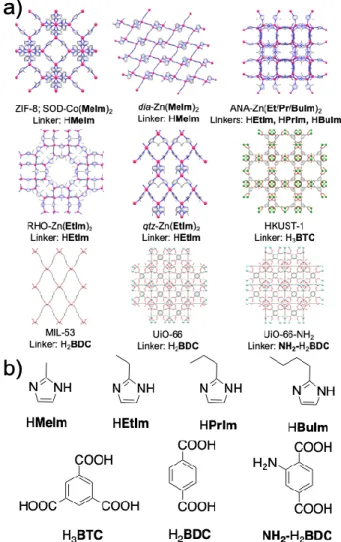
In order to evaluate the potential of conventional MOFs as components of advanced fuel systems, we have now used combustion calorimetry to measure experimental specific energies, and determine energy densities and combustion enthalpies (cH) for representative examples of the most
popular classes of MOFs (Figures 1a,b). This systematic study on MOFs that are either commercially available
Figure 1. a) Structures of herein studied MOFs, with hydrogen atoms omitted for clarity. Atoms of Zn, Cu, Zr, N, O and C are shown in red, green, cyan, blue, oxygen and grey, respectively. b) Organic ligands used in the herein explored MOFs.
or readily synthesized reveals that Eg for several
carbox-ylate-based MOFs is close to that of the energetic compound trinitrotoluene (TNT),27 whereas the specific energies of
ZIFs can be significantly higher. Importantly, we show how Eg and Ev of ZIFs can be readily modified through
polymor-phism and/or engineered by chemical functionalization of the MOF, leading to materials with energy densities compa-rable to those of Diesel or kerosene fuels.28,29
Results and Discussion
The HKUST-1,30 MIL-53(Al)31 and ZIF-832 MOFs were
pur-chased from Sigma-Aldrich, with a sample of ZIF-8 also ob-tained from ACSYNAM. The UiO-6633 and UiO-66-NH234
frameworks, as well as a series of ZIFs35-38 based on
2-sub-stituted imidazolate ligands were synthesized following re-ported procedures (Figure 1, also see SI).39-41 All materials
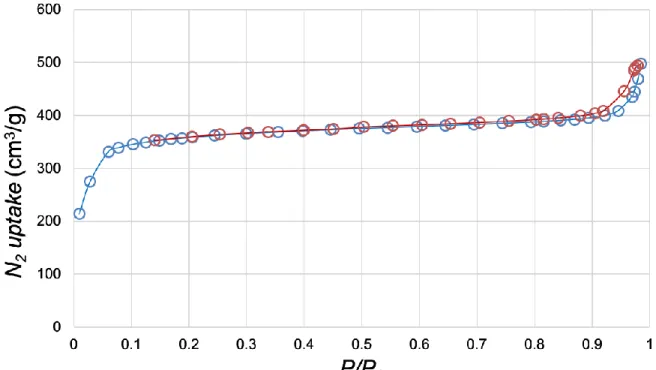
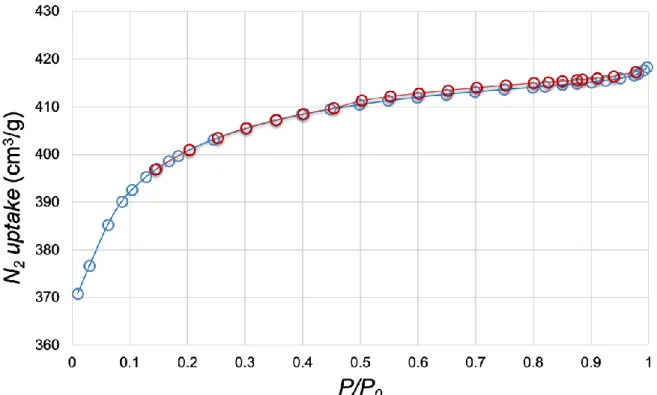
were washed with methanol, evacuated and stored in argon before use. The identity and purity of all explored MOFs was confirmed by powder X-ray diffraction (PXRD) and thermo-gravimetric analysis (TGA) in air, with Brunauer-Emmet-Teller (BET) and Langmuir surface areas for all materials established by nitrogen sorption measurements (see SI). All combustion measurements were carried on a 6200 Isoperi-bol Calorimeter using ca. 0.5 gram of the MOF material. The
herein reported Eg value for each MOF is an average of three
measurements, and the corresponding Ev was calculated
from it by taking into account the density and molecular weight calculated from the reported structural data and chemical composition, respectively. The combustion en-thalpy cH was calculated from Eg by considering the change
in number of moles of gas in the combustion reaction (see SI) to form metal oxides ZnO (for explored zinc-based ZIFs), Co3O4 (for ZIF-67), CuO (for HKUST-1), Al2O3 (for MIL-53)
and ZrO2 (for UiO-66 and UiO-66-NH2) (see SI).
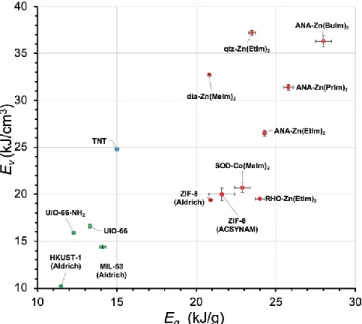
Results of combustion calorimetry and selected relevant structural information for all MOFs studied here are shown in Table 1, and the corresponding plot of Eg and Ev is shown
in Figure 2. The data reveals high Eg values, nearing 15 kJ/g
for zirconium-based UiO-frameworks and MIL-53(Al), along with Ev values ranging from 14 kJ/cm3 to 17 kJ/cm3.
Whereas these Eg values are close to that reported for the
energetic compound TNT (Table 1), the Ev values are
signif-icantly lower than for most popular fuels or energetic com-pounds, consistent with the microporous nature of the MOFs. The Eg is the lowest for the copper(II)- based
HKUST-1, which can tentatively be related to a difference in linker structure and oxidation state of the metal, compared to
Table 1. Unit formula, relative molecular weight of unit formula (Mr), decomposition temperature (Td), calculated
density (ρc), BET and Langmuir surface areas, Cambridge structural database (CSD) codes, specific energy (Eg),
en-ergy density (Ev) and combustion enthalpy (cH) of herein explored MOFs, compared to those for TNT.
MOF Unit formula Mr Td [a] (C) (g/cmc 3) surface area (m2/g) CSD code Eg[b] (kJ/g) (kJ/cmEv 3) cH (kJ/mol) BET Langmuir SOD-Zn(MeIm)2 (ZIF-8) [c],32 C8H10N4Zn 227.9 498 0.925 1350 1760 VELVOY 20.9(1) 19.4(1) -4769(19) SOD-Zn(MeIm)2 (ZIF-8) [d],32 C8H10N4Zn 227.9 656 0.925 1350 1780 VELVOY 21.6(8) 20.0(7) -4919(175) dia-Zn(MeIm)235 C8H10N4Zn 227.9 498 1.579 - - OFERUN01 20.76(3) 32.7(1) -4722(10)
SOD-Co(MeIm)2
(ZIF-67)36 C8H10N4Co 221.1 397 0.903 1510 1990 GITTOT01 22.9(5) 20.7(5) -5068(119)
RHO-Zn(EtIm)232 C10H14N4Zn 255.6 471 0.814 1210 1620 MECWOH 24.0(3) 19.5(3) -6132(81)
ANA-Zn(EtIm)232 C10H14N4Zn 255.6 461 1.091 610 700 MECWIB 24.3(1) 26.5(1) -6218(28) qtz-Zn(EtIm)237 C10H14N4Zn 255.6 492 1.590 - - EHETER 23.5(2) 37.2(3) -5988(55)
ANA-Zn(PrIm)238 C12H18N4Zn 283.7 484 1.221 440 520 GUPFAZ 25.8(3) 31.4(3 -7307(78)
ANA-Zn(BuIm)2 C14H22N4Zn 311.8 566 1.295 70 100 this work 28.0(5) 36.3(6) -8726(152)
HKUST-1[c],30 C6H2CuO4 201.6 350 0.879 1340 1780 FIQCEN 11.5(1) 10.1(1) -2324(10)
MIL-53(Al)[c],31 C8H5AlO5 208.1 618 1.019 950 1270 SABVUN01 14.1(2) 14.4(1) -2937(29)
UiO-6633 C8H4.67O5.33Zr 277.4 584 1.246 870 1149 RUBTAK 13.3(1) 16.6(2) -3691(45)
UiO-66-NH234 C8H5.67NO5.33Zr 292.4 449 1.295 960 1275 SURKAT 12.26(1) 15.87(2) -3584(13)
TNT27 C7H5N3O6 227.1 28341 1.655 - - ZZZMUC01 15.0 24.8 -3399
[a] Measured by DSC in air, at a heating rate of 10 K/min; [b] Measured by combustion calorimetry; [c] Obtained from Sigma-Aldrich; [d] Obtained from ACSYNAM, Inc.
other herein explored carboxylate MOFs. Specifically, HKUST-1 is based on 1,3,5-benzenetricarboxylate linkers (Figure 1b), exhibiting three metal-ligand connection sites per molecule, unlike terephthalate linkers in MIL-53(Al) and UiO-systems (Figure 1b), which exhibit only two
metal-ligand connection sites. At the same time, the oxidation state of the metal node in HKUST-1 is lower (Cu2+)
com-pared to other herein explored carboxylate MOFs (Al3+,
Zr4+). These parameters dictate a 1:1.5 ratio of organic
than in MIL-53(Al) and UiO-MOFs, which are all expected to contain one linker per metal ion in the formula unit. A lower ligand-to-metal ratio is expected to lead to lower enthalpy of combustion, which is consistent with the observed cH
values for HKUST-1. Overall, cH for carboxylate MOFs
in-creases in the order HKUST-1 < MIL-53(Al) < UiO-66 UiO-66-NH2, which might also be related to stabilities of the
re-sulting oxides.
Significantly larger Eg, EV and cH are observed for ZIFs.
Using an in-house synthesized sample, we have reported17
that the highly popular sodalite (SOD) topology framework ZIF-8, based on zinc nodes and 2-methylimidazole (HMeIm, Figure 1b) linkers, exhibits cH of ca. 4,800 kJ/mol. This cH
value translates to Eg and Ev of ca. 21 kJ/g and 20 kJ/cm3,
which exceeds the values for TNT and is close to values re-ported for hydrazine-based rocket fuels. These observa-tions are here confirmed using ZIF-8 samples obtained from two commercial sources, Sigma-Aldrich and ACSYNAM (Ta-ble 1). The Eg, Ev and cH are further increased by ca. 5% in
ZIF-67, a SOD-framework isostructural to ZIF-8, but based on cobalt(II) nodes. The increase in cH might be associated
to additional oxidation of metal nodes to form Co3O4,42
which does not take place in case of zinc frameworks. Alt-hough small, the difference in cH between 8 and
ZIF-67 illustrates change in choice of metal node as a means to control combustion energy content of a MOF.
A different route to modify fuel properties of a ZIF is re-vealed by comparing ZIF-8 to its non-porous diamondoid (dia) topology polymorph. Whereas the cH values for the
two polymorphs are expected to be very similar due to their identical chemical composition, the higher density of close-packed dia-Zn(MeIm)2 leads to a significant increase in Ev,
to ca. 32 kJ/g. Such energy density is close to values re-ported for conventional hydrocarbon fuels such as gasoline, kerosene or Diesel.28,29
Figure 2. Comparison of energy density (Ev) and specific
en-ergy (Eg) for herein explored MOFs, calculated from experi-mentally measured ΔcH values.
The significant effect of polymorphism on energy density is also evident from comparing the three polymorphs of zinc 2-ethylimidazolate Zn(EtIm)2 framework with zeolite rho
(RHO), analcime (ANA) and quartz (qtz) topology. The cH
values for all three polymorphs are comparable, as ex-pected, and are around 6-6.2 kJ/mol. Similarly, the corre-sponding Eg values are mutually similar, and are around 24
kJ/g. However, due to density increasing in the order RHO < ANA < qtz, the corresponding Ev differs greatly between the
materials and ranges from 19.5 kJ/cm3 for the low-density
RHO-Zn(EtIm)2 to a high value of 37.5 kJ/cm3 for
non-po-rous qtz-Zn(EtIm)2. The Eg for qtz-Zn(EtIm)2 is on par with
values for gasoline, kerosene or Diesel.28 The comparison of
combustion energy for polymorphs of Zn(MeIm)2 and
Zn(EtIm)2 clearly demonstrates control over framework
to-pology and polymorphism as potential tools to increase or decrease the energy density of a ZIF.
The comparison of cH reveals a higher value for
Zn(EtIm)2 compared to Zn(MeIm)2 systems. This
differ-ence, which is readily explained by the presence of an addi-tional CH2 fuel group in the Zn(EtIm)2 framework (see SI for
the analysis of combustion energy with respect to content of C, H, metal, N or O), illustrates a potential strategy to de-liberately manipulate the combustion energy properties of ZIFs by introducing additional hydrocarbon groups. Switch-ing from a 2-ethyl-substituted linker in RHO-, ANA- or qtz-Zn(EtIm)2 frameworks to an analogous but more fuel-rich
2-propylimidazolate linker, yields the previously reported ANA-topology Zn(PrIm)2 framework, which is isostructural
to ANA-Zn(EtIm)2. The measured cH for ANA-Zn(EtIm)2
was found to be -7,300 kJ/mol, which is ca. 1,100 kJ/mol higher from its 2-ethyl-substituted homologue, providing a MOF material exhibiting both a high specific energy (31 kJ/g) and a microporous surface area of 440 m2/g.
In order to effect a further increase in energy density, we used 2-butylimidazole (HBuIm) as the ligand. To the best of our knowledge, the Zn(BuIm)2 framework has so far not
been reported. Mechanochemical synthesis provided a ma-terial that, based on PXRD analysis (see SI), was isostruc-tural to ANA-topology Zn(EtIm)2 and Zn(PrIm)2
frame-works (Table 2). The composition Zn(BuIm)2 for the new
material was confirmed by TGA in air, and the crystal struc-ture was elucidated through strucstruc-ture solution and Rietveld refinement based on PXRD data. By analogy to ANA-Zn(EtIm)2, the structure of ANA-Zn(BuIm)2 was refined in
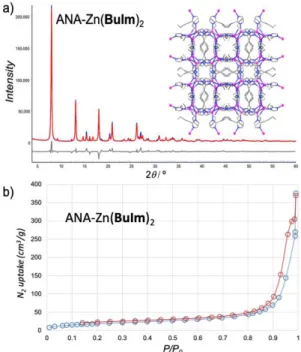
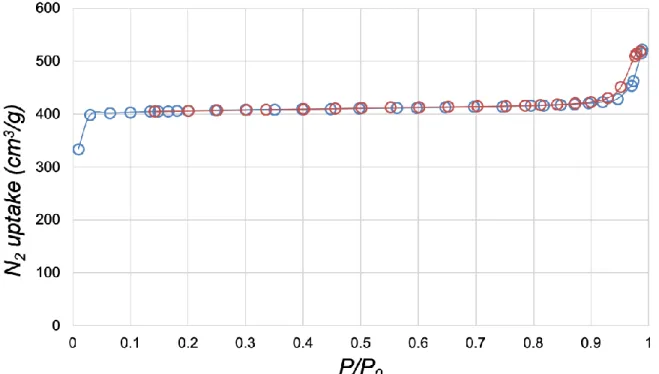
the cubic space group Ia-3d (Figure 3a), with the unit cell parameter a=26.765(2) Å. Investigation of space available to a ball of radius 1.2 Å in the ANA-Zn(BuIm)2 structure
re-vealed non-interconnected pores amounting to a total of only 3.8% of unit cell volume, indicating that the material should not exhibit high microporosity. This was confirmed by nitrogen sorption analysis, which revealed a low BET surface area of 70 m2/g. Combustion enthalpy
measure-ment for ANA-Zn(BuIm)2 revealed a cH value of -8,700
kJ/mol, with Eg and Ev values of 28 kJ/g and 36.3 kJ/cm3,
re-spectively. These values are well within the range of popu-lar hydrocarbon fuels.28
Figure 3. (a) The final Rietveld fit and an illustration of the crystal structure of ANA-Zn(BuIm)2 along the crystallographic
(100) direction. (b) BET isotherms (N2, 77 K) for
ANA-Zn(BuIm)2 with BET surface area of 70 m2/g. Adsorption and
desorption are shown by blue and red circles, respectively. As ANA-Zn(EtIm)2, ANA-Zn(PrIm)2 and ANA-Zn(PrIm)2
frameworks are isostructural, increasing the length of the 2-hydrocarbon chain substituent on the linker effectively in-creases the energy released in the combustion with almost no impact on the overall structure or network density (i.e. the number of tetrahedral centers per unit volume, T/nm3,
Figure 4) of the material. To the best of our knowledge, such ability to engineer Ev without introducing any significant
change in structure of the material is unique to MOFs and has so far not been reported in the design of fuel materials.
Figure 4. Dependence of Ev on framework density
(ex-pressed as number of tetrahedral nodes per unit volume, T/nm3) for selected ZIFs.
The network density of the ANA-Zn(EtIm)2 framework
(2.57 T/nm3) is very close to that of ZIF-8 (2.45 T/nm3).
Consequently, the herein explored ANA-topology ZIFs and ZIF-8 reveal the ability to fine-tune the fuel properties of a MOF across almost 20 kJ/cm3, with little or no change in
net-work density.
Conclusions
In summary, we presented the first systematic investiga-tion of combusinvestiga-tion energies, including energy density, spe-cific energy and combustion enthalpy for a range of conven-tional and mostly commercially available MOFs. In contrast to traditional microporous materials such as zeolites, MOFs can be considered as potential fuels which, upon combus-tion, are able to generate energy comparable to popular hy-drocarbon fuels. This is particularly true for ZIFs based on nitrogen-containing heterocycles, whose specific energies are on par and may even exceed those of kerosene or Diesel fuel. Potential for polymorphism and modular design offers a means to control energy content of ZIFs in a way that is not accessible to conventional fuels. Switching between dif-ferent ZIF polymorphs enables tuning of energy density without changes to the chemical composition, as illustrated by qtz-, ANA- and RHO-topology frameworks of zinc 2-ethylimidazolate. Conversely, modular design of ZIFs ena-bles the introduction of increasingly fuel-rich substituents without changing the overall structure of the material, as il-lustrated by the isostructural series of ANA-topology zinc 2-ethyl-, 2-propyl- and 2-n-butyl-substituted ZIFs.
Overall, these results provide a so far missing overview of combustion energy properties of conventional MOFs, and demonstrate that different classes of frameworks, and in particular ZIFs, can exhibit both high and tunable energy density and specific energy. In combination with intermedi-ate-to-high microporosity, these results indicate ZIFs as suitable materials for the development of advanced, tunable fuels and hypergols.
Experimental section
More details on experimental procedures and calculations are provided in the Supplementary Information
Combustion calorimetry
The combustion calorimetry measurements were carried out on a 6200 Isoperibol Calorimeter (Parr Instrument Company, Moline, IL), which is a microprocessor controlled, isoperibol oxygen bomb calorimeter. The combustion calo-rimeter was calibrated by benzoic acid. All measurements were carried out on a scale of 0.5 g of the sample and re-peated three times.
Thermal analysis
Simultaneous thermogravimetric analysis (TGA) and differ-ential scanning calorimetry (DSC) were conducted on a TGA/DSC 1 (Mettler-Toledo, Columbus, Ohio, USA), with samples (2 mg to 10 mg) placed in open 70 L volume alu-mina crucibles. All measurements were done in a dynamic atmosphere of air (25 mL/min), in the range heated up to 800 °C at a constant rate of 10 °C/min.
Sample activation
All samples were washed with methanol (30 mL) and cen-trifuged for 20 minutes at 4500 rpm, and the supernatant separated. This process was repeated two times to assure
the absence of any residual starting materials in the sam-ples. The MOF samples were placed in vacuum oven at 80 C - 120 C overnight and kept under argon. The nitrogen iso-therms of the activated MOFs were measured on TriStar 3000, and the experiments were conducted at 77 K of liquid nitrogen container.
Powder X-ray diffraction (PXRD)
Powder X-ray diffraction data were collected on a Bruker D2 Phaser diffractometer equipped with a LYNXEYE linear position sensitive detector (Bruker AXS, Madison, WI, USA), using Ni-filtered CuKα radiation. The PXRD pattern of ANA-Zn(BuIm)2 was collected on a Bruker D8 Advance
diffrac-tometer equipped with a LYNXEYE-XE linear position sen-sitive detector, using Ni-filtered CuKα radiation.
Rietveld refinement of the structure ANA-Zn(BuIm)2
(Ta-ble S1) was performed using the software TOPAS Academic v. 6 (Coelho Software). The ANA-Zn(BuIm)2 structure was
refined in the cubic Ia-3d space group. Diffraction peak shapes were described by a pseudo-Voigt function, while the background was modelled with a Chebyshev polynomial function. The linker geometry was defined by a rigid body, which was given rotational and translational degrees of freedom, subject to the space group symmetry constraints.
Fourier-transform infrared attenuated total reflec-tance spectroscopy (FTIR-ATR)
Spectra were recorded using a Bruker Alpha FT-IR (Bruker Optics Ltd., Milton, ON, Canada) decorated by diamond crys-tal in the range of 4000-450 cm-1 and with resolution of 4
cm-1.
ASSOCIATED CONTENT
Supporting Information. Further details of experimental pro-cedures and calculations, as well as PXRD, FTIR/ATR and TGA/DSC data. This material is available free of charge via the Internet at http://pubs.acs.org. Crystallographic data for ANA-Zn(BuIm)2 structure in CIF format was deposited with the
Cambridge Crystallographic Data Centre, deposition code CCDC 1906483.
AUTHOR INFORMATION
Corresponding Author
* Assoc. Prof. Tomislav Friščić, Department of Chemistry,
McGill University, 801 Sherbrooke St. W. H3A 0B8 Montreal, Canada. E-mail: [email protected]
* Prof. Robin D. Rogers, 525 Solutions, Inc. P.O. Box 2206, Tus-caloosa, AL 35403, USA. E-mail: [email protected]
Author Contributions
The manuscript was written through contributions of all au-thors. All authors have given approval to the final version of the manuscript.
Funding Sources
NSERC Discovery Grant (RGPIN-2017-06467)
NSERC E. W. R. Steacie Fellowship (SMFSU 507347-17) NSERC Strategic Grant (STPGP 521582-18)
Canada Research Excellence Chair program (grant 240634) AFOSR (FA9550-14-1-0306).
Notes
CM and TF are co-founders, and RDR is the scientific advisory board member of ACSYNAM, Inc., which has provided one of the materials for the study.
ACKNOWLEDGMENT
We thank Dr. A. Djuric, McGill University, for help in acquiring BET data. We acknowledge funding from the NSERC Discovery Grant (RGPIN-2017-06467), NSERC E. W. R. Steacie Fellowship (SMFSU 507347-17), NSERC Strategic Grant (STPGP 521582-18), Canada Research Excellence Chair program (grant 240634) and AFOSR (FA9550-14-1-0306).
ABBREVIATIONS
HMeIm, 2-methylimidazole; MeIm-, 2-methylimidazolate; H
E-tIm, 2-ethylimidazole; EtIm-, 2-ethylimidazolate; HPrIm,
2-propylimidazole; PrIm-, 2-propylimidazolate; HBuIm,
2-bu-tylimidazole; H3BDC, 1,3,5-benzenetricarboxylic (trimesic)
acid; H2BDC, 1,4-benzenedicarboxylic (terephthalic) acid;
H2BDC-NH2, 2-amino-1,4-benzenedicarboxylic
(2-aminoter-ephthalic) acid.
REFERENCES
1 Rimoldi, M.; Howarth, A. J.; DeStefano, M. R.; Lin, L.; Goswami, S.; Li, P.; Hupp, J. T.; Farha, O.K. Catalytic zirconium/hafnium-based metal–organic frameworks. ACS Catal.2016, 7, 997-1014. 2 Zhu, L.; Liu, X. Q.; Jiang, H. L.; Sun, L.B. Metal–organic frameworks for heterogeneous basic catalysis. Chem. Rev. 2017, 117, 8129-8176.
3 Jiao, L.; Wang, Y.; Jiang, H. L.; Xu, Q. Metal–organic frameworks as platforms for catalytic applications. Adv. Mater.2018, 30, 1703663. 4 Banerjee, D.; Simon, C.M.; Plonka, A.M.; Motkuri, R.K.; Liu, J.; Chen, X.; Smit, B.; Parise, J. B.; Haranczyk, M.; Thallapally, P. K. Metal–or-ganic framework with optimally selective xenon adsorption and separation. Nat. Commun. 2016, 7, 11831.
5 Lin, R. B.; Xiang, S.; Xing, H.; Zhou, W.; Chen, B. Exploration of po-rous metal–organic frameworks for gas separation and purifica-tion. Coordinapurifica-tion. Chem. Rev.2019, 378, 87-103.
6 Adil, K.; Belmabkhout, Y.; Pillai, R. S.; Cadiau, A.; Bhatt, P. M.; As-sen, A. H.; Maurin, G.; Eddaoudi, M. Gas/vapour separation using ultra-microporous metal–organic frameworks: insights into the structure/separation relationship. Chem. Soc. Rev.2017, 46, 3402-3430.
7 Joarder, B.; Lin, J.B.; Romero, Z.; Shimizu, G.K. Single crystal pro-ton conduction study of a metal organic framework of modest wa-ter stability. J. Am. Chem. Soc. 2017, 139, 7176-7179.
8 Wang, J.L.; Wang, C.; Lin, W. Metal–organic frameworks for light harvesting and photocatalysis. ACS Catal.2012, 2, 2630-2640. 9 Yang, F.; Xu, G.; Dou, Y.; Wang, B.; Zhang, H.; Wu, H.; Zhou, W.; Li, J.R.; Chen, B. A flexible metal–organic framework with a high den-sity of sulfonic acid sites for proton conduction. Nat. Energy2017,
2, 877.
10 So, M. C.; Wiederrecht, G. P.; Mondloch, J. E.; Hupp, J.T.; Farha, O. K. Metal–organic framework materials for light-harvesting and en-ergy transfer. Chem. Commun. 2015, 51, 3501-3510.
11 Zhang, Y.; Zhang, S.; Sun, L.; Yang, Q.; Han, J.; Wei, Q.; Xie, G.; Chen, S.; Gao, S. A solvent-free dense energetic metal–organic framework (EMOF): to improve stability and energetic perfor-mance via in situ microcalorimetry. Chem. Commun. 2017, 53, 3034-3037.
12 Tang, Y.; He, C.; Mitchell, L.A.; Parrish, D. A.; Shreeve, J. M. Potas-sium 4, 4′‐Bis (dinitromethyl)‐3, 3′‐azofurazanate: A Highly Ener‐ getic 3D Metal–Organic Framework as a Promising Primary Explo-sive. Angew. Chem. Int. Ed.2016, 55, 5565-5567.
13 Zhang, S.; Yang, Q.; Liu, X.; Qu, X.; Wei, Q.; Xie, G.; Chen, S.; Gao, S. High-energy metal–organic frameworks (HE-MOFs): Synthesis,
structure and energetic performance. Coord. Chem. Rev.2016, 307, 292-312.
14 Wang, S.; Wang, Q.; Feng, X.; Wang, B.; Yang, L.; Explosives in the Cage: Metal–Organic Frameworks for High‐Energy Materials Sens‐ ing and Desensitization. Adv. Mater.2017, 29, 1701898.
15 Qu, X. N.; Zhang, S.; Wang, B.Z.; Yang, Q.; Han, J.; Wei, Q.; Xie, G.; Chen, S. P. An Ag (I) energetic metal–organic framework assembled with the energetic combination of furazan and tetrazole: Synthesis, structure and energetic performance. Dalton Trans. 2016, 45, 6968-6973.
16 Wang, Q.; Wang, S.; Feng, X.; Wu, L.; Zhang, G.; Zhou, M.; Wang, B.; Yang, L. A heat-resistant and energetic metal–organic frame-work assembled by chelating ligand. ACS Appl. Mater. Interfaces 2017, 9, 37542-37547.
17 Titi, H. M.; Marrett. J. M.; Dayaker, G.; Arhangelskis, M.; Mottillo, C.; Morris, A. J.; Rachiero, G. P.; Friščić T.; Rogers R. D. Hypergolic Zeolitic Imidazolate Frameworks (ZIFs) as Next-Generation Solid Fuels: Unlocking the Latent Energetic Behavior of ZIFs. Sci. Adv.,
2019, 5, eaav9044.
18 Rachiero, G. P., Titi, H. M.; Rogers, R. D. Versatility and remarka-ble hypergolicity of exo-6, exo-9 imidazole-substituted nido-deca-borane. Chem. Commun.2017, 53, 7736-7739.
19 Zhang, Q.; Shreeve, J. M. Energetic ionic liquids as explosives and propellant fuels: a new journey of ionic liquid chemistry. Chem. Rev. 2014, 114, 10527-10574.
20 Li, S.; Gao, H.; Shreeve, J. M. Borohydride Ionic Liquids and Bo-rane/Ionic‐Liquid Solutions as Hypergolic Fuels with Superior Low Ignition‐Delay Times. Angew. Chem. Int. Ed. 2014, 53, 2969-2972. 21 Park, K. S.; Ni, Z.; Côté, A. P.; Choi, J. Y.; Huang, R.; Uribe-Romo, F. J.; Chae, H. K.; O’Keeffe, M.; Yaghi, O. M. Exceptional chemical and thermal stability of zeolitic imidazolate frameworks Proc. Natl. Acad. Sci. U.S.A.2006, 103, 10186-10191.
22 Zhang, J. P.; Zhang, Y. B.; Lin, J. B.; Chen, X. M. Metal azolate frameworks: from crystal engineering to functional materials.
Chem. Rev.2011, 112, 1001-1033.
23 McDonald, K. A.; Bennion, J. C.; Leone, A. K.; Matzger, A.J. Ren-dering non-energetic microporous coordination polymers explo-sive. Chem. Commun.2016, 52, 10862-10865.
24 Hughes, J. T.; Bennett, T. D.; Cheetham, A. K.; Navrotsky, A., Ther-mochemistry of zeolitic imidazolate frameworks of varying poros-ity. J. Am. Chem.Soc.2012, 135, 598-601.
25 Akimbekov, Z.; Navrotsky, A. Little Thermodynamic Penalty for the Synthesis of Ultraporous Metal Organic Frameworks. Chem-PhysChem, 2016, 17, 468-470.
26 Wu, D.; Navrotsky, A. Thermodynamics of metal-organic frame-works. J. Solid State Chem.2015, 223, 53-58.
27 Kuhl, A. L.; Reichenbach, H. Combustion effects in confined ex-plosions. Proc. Combust. Inst.2009, 32, 2291-2298.
28 Demirel, Y. Energy: production, conversion, storage, conserva-tion, and coupling. Springer Science & Business Media, 2012. 29 Annamalai, K.; Puri, I. K. Combustion science and engineering. CRC press, 2006.
30 Chui, S. S.-Y.; Lo, S. M.-F.; Charmant, J. P. H.; Orpen, A. G.; Wil-liams, I. D. A chemically functionizable nanoporous material [Cu3(TMA)2(H2O)3]n. Science1999, 283, 1148.
31 Boutin, A.; Springuel-Huet, M.-A.; Nossov, A.; Gédéon, A.; Loiseau, T.; Volkringer, C.; Féréy, G.; Coudert, F.-X.; Fuchs, A. H.
Breathing transitions in MIL-53(Al) metal-organic framework upon xenon adsorption. Angew. Chem. Int. Ed.2009, 48, 8314-8317.
32 Huang, X. C.; Lin, Y. Y.; Zhang, J. P.; Chen, X. M. Ligand‐directed strategy for zeolite‐type metal–organic frameworks: zinc (II) imid-azolates with unusual zeolitic topologies. Angew. Chem. Int. Ed. 2006, 45, 1557-1559.
33 Katz, M. J.; Brown, Z. J.; Colón, Y. J.; Scheidt, K. A.; Snurr, R. Q.; Hupp, J. T.; Farha, O. K. A facile synthesis of UiO-66, UiO-67 and their derivatives. Chem. Commun.2013, 49, 9449-9451. 34 Hafizovic Cavka, J.; Jakobsen, S.; Olsbye, U.; Guillou, N.; Lamberti, C.; Bordiga, S.; Lillerud, K. P. A new zirconium inorganic building brick forming metal organic frameworks with exceptional stability.
J. Am. Chem. Soc.2008, 130, 13850-13851.
35 Shi, Q.; Chen, Z.; Song, Z.; Li, J.; Dong, J. Synthesis of ZIF‐8 and ZIF‐67 by Steam‐Assisted Conversion and an Investigation of Their Tribological Behaviors. Angew. Chem. Int. Ed.2011, 123, 698-701. 36 Phan, A.; Doonan, C.J.; Uribe-Romo, F. J.; Knobler, C. B.; O'Keeffe, M.; Yaghi, O. M. Synthesis, structure, and carbon dioxide caprture properties of zeolitic imidazolate frameworks. Acc. Chem. Res. 2010, 43, 58-67.
37 Beldon, P. J.; Fábián, L.; Stein, R. S.; Thirumurugan, A.; Cheetham, A. K.; Friščić, T. Rapid room‐temperature synthesis of zeolitic imid‐ azolate frameworks by using mechanochemistry. Angew. Chem. Int. Ed. 2010, 122, 9834-9837.
38 Tian, Y. Q.; Yao, S. Y.; Gu, D.; Cui, K. H.; Guo, D. W.; Zhang, G.; Chen, Z. X.; Zhao, D. Y.; Cadmium imidazolate frameworks with polymor-phism, high thermal stability, and a large surface area. Chem. Eur. J. 2010, 16, 1137-1141.
39 Mottillo, C.; Lu, Y.; Pham, M.-H.; Cliffe, M. J.; Do, T.-O.; Friščić, T. Mineral neogenesis as an inspiration for mild, solvent-free synthe-sis of bulk microporous metal-organic frameworks from metal (Zn,Co) oxides. Gree Chem.2013, 15, 2121-2131.
40 Užarević, K.; Wang, T. C.; Moon, S.-Y.; Fidelli, A. M.; Hupp, J. T.; Farha, O. K.; Friščić, T. Mechanochemical and solvent-free assembly of zirconium-based metal-organic frameworks. Chem. Commun. 2016, 52, 2133-2136.
41 Zhang, J.; Shreeve, J. M. Time for pairing: cocrystals as advanced energetic materials. CrystEngComm2016, 18, 6124-6133. 42 Seth, S.; McDonald, K. A.; A. J. Matzger. Metal Effects on the Sen-sitivity of Isostructural Metal–Organic Frameworks Based on 5-Amino-3-nitro-1 H-1, 2, 4-triazole. Inorg. Chem. 2017, 56, 10151-10154. 44 45 46 47 48 49 50
download file
view on ChemRxiv
1
Supporting Information
Metal-organic frameworks (MOFs) as fuels for advanced
applications: evaluating and modifying the combustion
energy of popular MOFs
Hatem M. Titi,
aMihails Arhangelskis,
aAthanassios D. Katsenis,
aCristina Mottillo,
a,bGhada Ayoub,
aJean-Louis Do,
a,cAthena M. Fidelli,
aRobin D. Rogers*
d,eand Tomislav
Friščić*
,aaDepartment of Chemistry, McGill University, Montreal, QC, H3A 0B8, Canada; bDepartment of
Chemistry & Biochemistry, Concordia University, 7141 Sherbrooke Street West, Montreal, Quebec H4B 1R6, Canada; c ACSYNAM, Inc. Montreal, H1P 1W1, Canada; d525 Solutions, Inc., PO Box 2206,
Tuscaloosa, AL 35403, United States; eCollege of Arts & Sciences, The University of Alabama,
Tuscaloosa, AL 35487, United States.
E-mail: [email protected]; [email protected]
Table of contents
S1. Materials and methods
2
S2. Synthesis
4
S3. Surface area measurements
5
S4. Thermal analysis data
10
S5. Powder X-ray diffraction
17
S6. Infrared spectroscopy
22
S7. Analysis of E
vvs framework density and composition
23
2
S1. Materials and methods
The
compounds
2-butylimidazole,
2-propylimidazole,
2-ethylimidazole,
2-methylimidazole, terephthalic acid, 2-aminoterephthalic acid, zirconium(IV) isopropoxide,
methyacrylic acid, zinc oxide, ammonium acetate, ammonium sulfate, triethylamine, and
cobalt(II) chloride hexahydrate were obtained from Sigma-Aldrich (St. Louis, MO, USA)
and used as received. ZIF-8, MIL-53 and HKUST-1 were obtained from Sigma-Aldrich,
and an additional sample of ZIF-8 was obtained from ACSYNAM. All MOFs were
activated ahead of use.
S1.1. Activation and surface area measurements
All samples were activated by washing with MeOH (30 mL), followed by centrifugation for
20 minutes at 4500 rpm, after which the supernatant was separated from the solid. The
process was performed a total of three times, and the samples placed in a vacuum oven
at 120 C (85 C for UiO-66 and UiO-66-NH2) overnight. All samples were stored under
argon. Nitrogen sorption isotherms of the activated MOFs were measured on a TriStar
3000 instrument, and the experiments were conducted at 77 K.
S1.2. Fourier-transform attenuated total reflectance infrared (FTIR-ATR)
spectroscopy
The spectra were recorded using a Bruker Alpha FT-IR spectrometer (Bruker Optics Ltd.,
Milton, ON, Canada) decorated by diamond crystal in the range of 4000-450 cm
-1and
with resolution of 4 cm
-1.
S1.3. Thermogravimetric analysis (TGA) and differential scanning calorimetry
(DSC)
Simultaneous thermogravimetric analysis (TGA) and differential scanning calorimetry
(DSC) were conducted on a TGA/DSC 1 thermal balance (Mettler-Toledo, Columbus,
Ohio, USA), with samples of size 2 mg to 10 mg placed in open 70 L alumina crucibles.
All measurements were done in a dynamic atmosphere of air (gas flow of 25 mL/min), by
heating up to 800 °C at a constant heating rate of 10 °C/min.
S1.4. Powder X-ray diffraction (PXRD)
Powder X-ray diffraction (PXRD) data were collected on a Bruker D2 Phaser
diffractometer equipped with a LYNXEYE linear position sensitive detector (Bruker AXS,
Madison, WI, USA), using Ni-filtered Cu
K
α radiation. A PXRD pattern of ANA-Zn(
BuIm
)2
suitable for structure elucidation was collected on a Bruker D8 Advance diffractometer
equipped with a LYNXEYE-XE linear position sensitive detector (Bruker AXS, Madison,
WI), using Ni-filtered Cu
K
α radiation.
Rietveld refinement of the ANA-Zn(
BuIm
)2 structure (
Table S1
) was performed using the
software TOPAS Academic v. 6 (Coelho Software). The structure was refined in the cubic
3
Ia
-3
d
space group, with diffraction peak shapes described by a pseudo-Voigt function,
and the background modelled using a Chebyshev polynomial function. The linker
geometry was defined by a rigid body, which was given rotational and translational
degrees of freedom, subject to the space group symmetry constraints. Final refinement
parameters were
R
wp = 0.097,R
p = 0.139,R
Bragg = 0.076 and χ2= 9.325. Crystallographic
data for ANA-Zn(
BuIm
)2 structure in CIF format was deposited with the CCDC (deposition
code 1906483).
S1.5. Combustion Calorimetry
The combustion calorimetry measurements were carried out on a 6200 Isoperibol
Calorimeter (Parr Instrument Company, Moline, IL), which is a microprocessor controlled,
isoperibol oxygen bomb calorimeter. The combustion calorimeter was calibrated by
benzoic acid and all measurements were carried out on a scale of 0.5 grams and repeated
three times. The combustion calorimetry experiment is conducted at constant volume,
providing a measurement of changes in internal energy. Enthalpies were calculated from
internal energies measured by combustion calorimetry by taking into consideration the
difference in the amount of gaseous components (n) between reactants and products of
the combustion reactions.
U
º =
H
º -
nRT
The combustion reactions for each MOF are provided below:
Zn(MeIm)2: Zn(C8H10N4)(s) + 11 O2(g) → ZnO (s) + 8 CO2(g) + 5 H2O(l) + 2 N2(g) (n = -1)
Co(MeIm)2: Co(C8H10N4)(s) + 11.16 O2(g) → 0.33Co2O3(s) + 8 CO2(g) + 5 H2O(l) + 2 N2(g) (n = -1.16) Zn(EtIm)2: Zn(C10H14N4)(s) + 14 O2(g) → ZnO(s) + 10 CO2(g) + 7 H2O(l) + 2 N2(g) (n = -2)
Zn(PrIm)2: Zn(C12H18N4)(s) + 17 O2(g) → ZnO(s) + 12 CO2(g) + 9 H2O(l) + 2 N2(g) (n = -3) Zn(BuIm)2: Zn(C14H22N4)(s) + 20 O2(g) → ZnO(s) + 14 CO2(g) + 11 H2O(l) + 2 N2(g) (n = -4) HKUST-1: Cu3(C18H6O12)(s) + 15 O2(g) → 3 CuO(s) + 18 CO2(g) + 3 H2O(l) (n = +3) MIL-53: Al(C8H5O5)(s) + 7.5 O2(g) → 0.5 Al2O3(s) + 8 CO2(g) + 2.5 H2O(l) (n = +0.5) UiO-66: Zr6(C48H28O32)(s) + 45 O2(g) → 6 ZrO2(s) + 48 CO2(g) + 14 H2O(l) (n = +3)