WORLD PROGRAMME
FOR THE CENSUS
OF AGRICULTURE 2020
VOLUME 1
Programme, concepts and definitions
FAO STATISTICAL
DEVELOPMENT
FOOD AND AGRICULTURE ORGANIZATION OF THE UNITED NATIONS Rome, 2015
WORLD PROGRAMME
FOR THE CENSUS
OF AGRICULTURE 2020
VOLUME 1
Programme, concepts and definitions
FAO STATISTICAL
DEVELOPMENT
The designations employed and the presentation of material in this information product do not imply the expression of any opinion whatsoever on the part of the Food and Agriculture Organization of the United Nations (FAO) concerning the legal or development status of any country, territory, city or area or of its authorities, or concerning the delimitation of its frontiers or boundaries. The mention of specific companies or products of manufacturers, whether or not these have been patented, does not imply that these have been endorsed or recommended by FAO in preference to others of a similar nature that are not mentioned.
The views expressed in this information product are those of the authors and do not necessarily reflect the views or policies of FAO.
ISBN 978-92-5-108865-4 © FAO, 2015
FAO encourages the use, reproduction and dissemination of material in this information product. Except where otherwise indicated, material may be copied, downloaded and printed for private study, research and teaching purposes, or for use in non-commercial products or services, provided that appropriate acknowledgement of FAO as the source and copyright holder is given and that FAO’s endorsement of users’ views, products or services is not implied in any way.
All requests for translation and adaptation rights, and for resale and other commercial use rights should be made via www.fao.org/contact-us/licence-request or addressed to [email protected].
FAO information products are available on the FAO website (www.fao.org/publications) and can be purchased through [email protected].
iii
TABLE OF CONTENTS
Paragraph Page Acknowledgements vi Acronyms vii Foreword ix Executive summary xPART ONE The census of agriculture in context 1
CHAPTER 1 Introduction 3
What is a census of agriculture? 1.1 3
Background to the world programme for the census of agriculture 1.2 – 1.4 3
Objectives of the census of agriculture 1.5 – 1.8 4
The census of agriculture in an integrated agricultural statistics system 1.9 – 1.15 4
Main features of WCA 2020 1.16 – 1.22 5
Main changes in WCA 2020 1.23 – 1.27 6
CHAPTER 2 The census of agriculture in the 21st century: statistical policy and development issues 11
Introduction 2.1 – 2.2 11
Post-2015 and the sustainable development goals 2.3 – 2.5 11
The busan action plan for statistics 2.6 – 2.10 12
Global strategy to improve agricultural and rural statistics 2.11 – 2.17 12
CHAPTER 3 Importance of the census of agriculture 15
Introduction 3.1 – 3.3 15
Stakehoders’ needs 3.4 – 3.28 15
Statistical needs 3.29 – 3.46 19
CHAPTER 4 Methodological considerations 23
Introduction 4.1– 4.3 23
The classical approach 4.4 – 4.5 24
The modular approach 4.6 – 4.8 24
Use of registers and administrative records as a source of census data 4.9 – 4.12 24
The integrated census and survey programme 4.13 – 4.16 25
Main types of frames for the census of agriculture 4.17 – 4.28 25
Sampling for the census of agriculture 4.29 – 4.35 27
Quality assurance 4.36 – 4.37 28
Methods of enumeration 4.38 – 4.47 28
CHAPTER 5 Relationship to other censuses 31
Introduction 5.1 31
A. Collecting agriculture data in the population and housing census 5.2 – 5.18 31
B. Combining the census of agriculture with the census of aquaculture 5.19 – 5.33 34
C. Relationship with economic censuses 5.34 – 5.39 37
D. Collecting additional agricultural data for households that are not agricultural producers 5.40 – 5.57 37
E. Fisheries module 5.58 – 5.61 39
PART TWO The world programme for the census of agriculture 2020 41
CHAPTER 6 Concepts and definitions 43
Statistical unit 6.1 43
The agricultural holding 6.2 – 6.14 43
iv
WORLD PROGRAMME FOR THE CENSUS OF AGRICULTURE 2020
Agricultural holder 6.17 – 6.21 46
Scope of the census of agriculture 6.22 – 6.25 46
Coverage of the census of agriculture 6.26 – 6.29 47
Cut-off threshold 6.30 – 6.32 47
Agricultural census reference period 6.33 – 6.34 48
Timing of the census of agriculture 6.35 – 6.37 48
Steps in developing the census of agriculture 6.38 49
CHAPTER 7 List of items for the census of agriculture 51
Introduction and changes from the earlier programme 7.1 – 7.8 51
Essential items 7.9 – 7.10 52
Frame items 7.11– 7.12 53
Items for consideration by theme 7.13 – 7.15 53
Community-level items 58
CHAPTER 8 Description of themes and items for the census of agriculture 61
Introduction 8.1 – 8.4 61
Theme 1: Identification and general characteristics 8.1.1 – 8.1.31 61
Theme 2: Land 8.2.1 – 8.2.56 66
Theme 3: Irrigation 8.3.1 – 8.3.29 75
Theme 4: Crops 8.4.1 – 8.4.52 80
Theme 5: Livestock 8.5.1 – 8.5.24 87
Theme 6: Agricultural practices 8.6.1 – 8.6.40 91
Theme 7: Services for agriculture 8.7.1 – 8.7.17 98
Theme 8: Demographic and social characteristics 8.8.1 – 8.8.14 101
Theme 9: Work on the holding 8.9.1 – 8.9.50 104
Theme 10: Intrahousehold distribution of managerial decisions and ownership
on the holding 8.10.1- 8.10.19 112
Theme 11: Household food security 8.11.1 – 8.11.35 114
Theme 12: Aquaculture 8.12.1 – 8.12.21 119
Theme 13: Forestry 8.13.1 – 8.13.13 122
Theme 14: Fisheries 8.14.1 – 8.14.21 124
Theme 15: Environment/greenhouse gas (GHG) emissions 8.15.1 – 8.15.46 127
CHAPTER 9 Community-level data 135
Introduction 9.1 – 9.7 135
Methodological considerations 9.8 – 9.17 136
Community-level items 9.18 – 9.21 137
Concepts and definitions for community-level items 9.22 – 9.34 139
CHAPTER 10 Tabulation, dissemination and archiving 141
A. Tabulation 10.1 – 10.35 141
B. Dissemination and archiving 10.36 – 10.55 151
ANNEX 1 The agricultural census within the framework of the system of national accounts 155
The SNA/ISIC framework 155
Scope of the agricultural census 155
The agricultural holding as an establishment 156
Aquaculture 157
Other economic activities (Item 0108) 157
ANNEX 2 International standard industrial classification of all economic activities (isic): scope of the
agricultural census 158
ISIC Group 011: Growing of non-perennial crops 158
ISIC Group 012: Growing of perennial crops 159
ISIC Group 013: Plant propagation 160
ISIC Group 014: Animal production 160
v
TABLE OF CONTENTS
ANNEX 3 International standard industrial classification of all economic activities (isic): aquaculture 162
ISIC Group 032: Aquaculture 162
ANNEX 4 Classification of crops 163
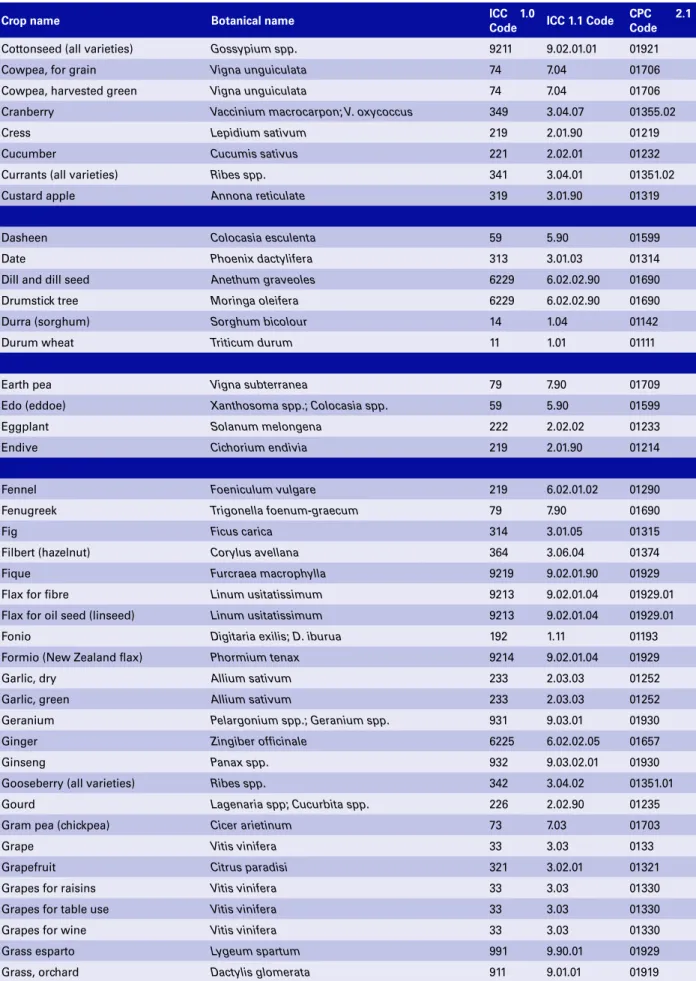
ANNEX 5 Alphabetic list of crops with botanical name and crop code (icc and cpc) 170
ANNEX 6 Classification of livestock 178
ANNEX 7 Classification of machinery and equipment 179
ANNEX 8 Correspondence between basic land use classes recommended by wca 2020
and basic seea land use classes 181
Glossary of terms 182
References and further readings 189
List of figures
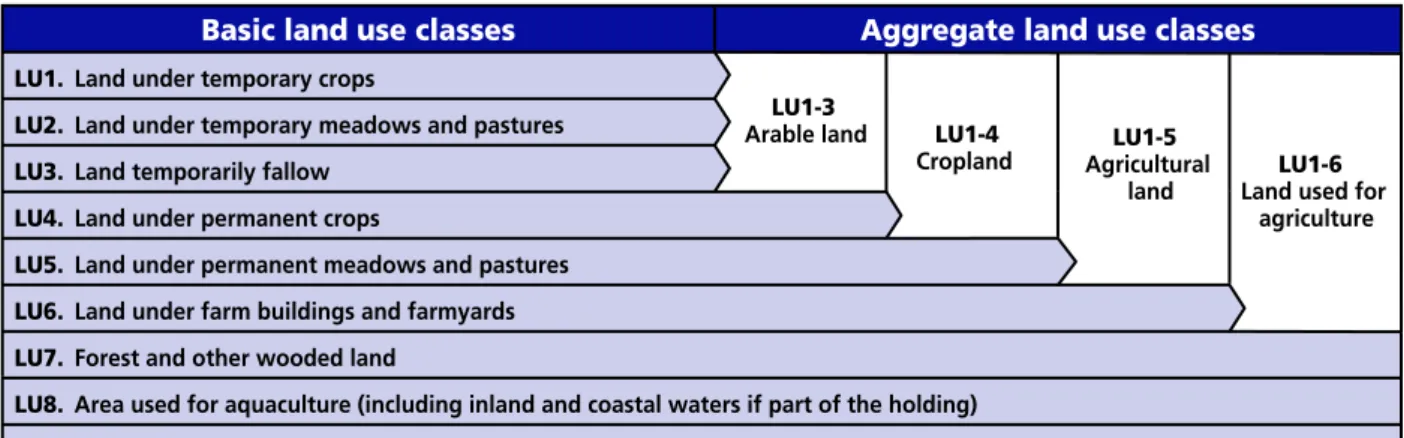
Figure 1 - Classification of land use (LU) for the agricultural census 68
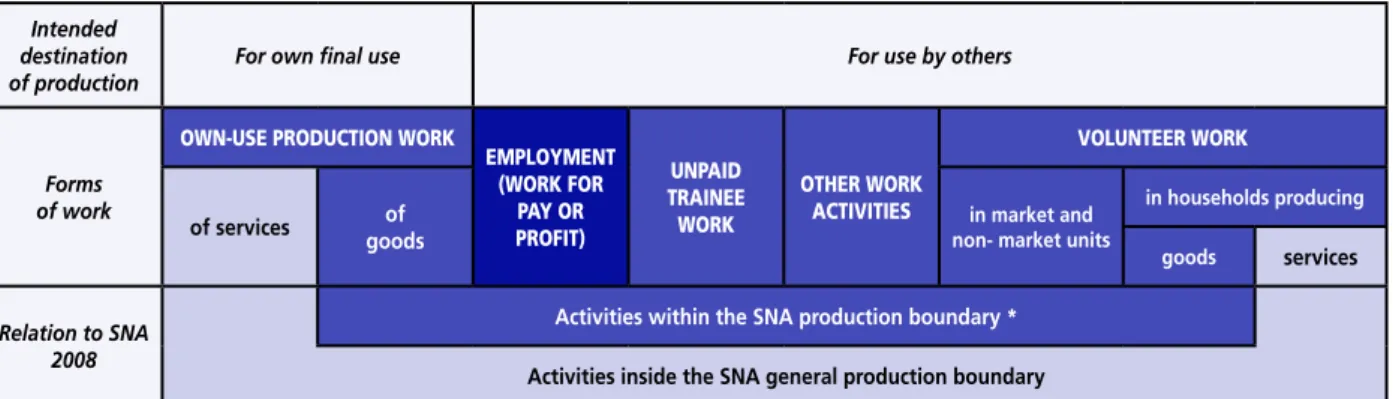
Figure 2 - Conceptual framework for work statistic 105
List of tables
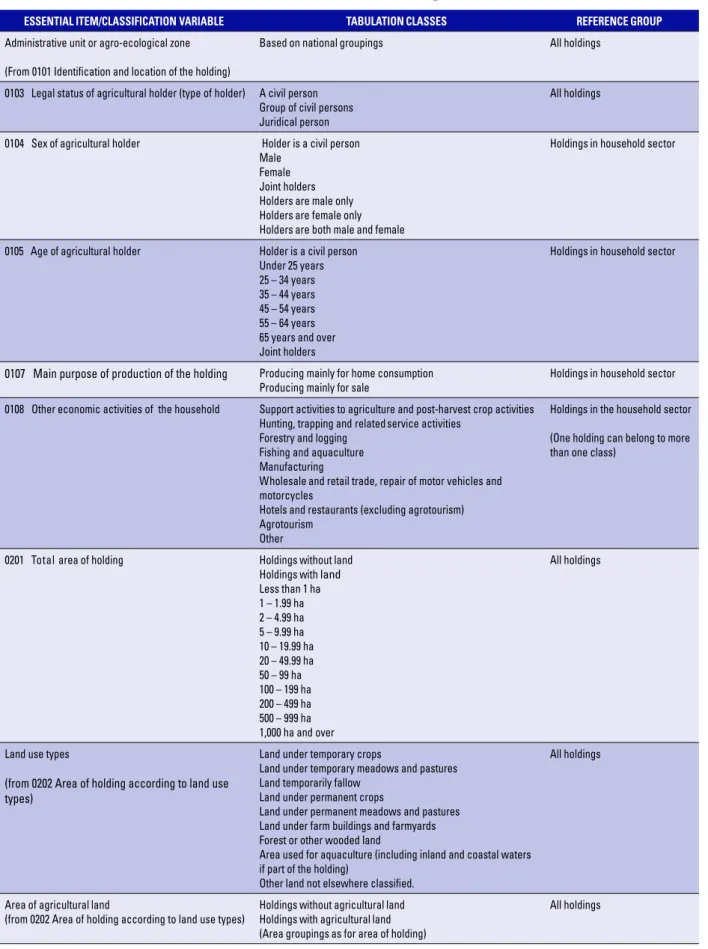
Table 1: Agricultural census essential items: tabulation classes 143
vi
WORLD PROGRAMME FOR THE CENSUS OF AGRICULTURE 2020
ACKNOWLEDGEMENTS
This publication was prepared by Oleg Cara, Nancy Chin, Neli Georgieva, Giorgi Kvinikadze and Adriana Neciu of the Agricultural Censuses and Surveys Team of the Statistics Division of the Food and Agriculture Organization of the United Nations (FAO), under the leadership of Jairo Castano. The team received significant technical input from David Marshall and Miguel Galmés.
The team wishes to acknowledge the contributions of colleagues from the FAO technical divisions, including the Statistics Division, and the FAO regional statisticians. Special thanks go to the participants in the Technical Review Meeting, held on 7-8 November 2014 at FAO headquarters in Rome, who provided valuable comments and suggestions for improving the document. The publication also benefited from the advice of senior experts from FAO member countries who participated in meetings of the FAO Regional Commissions on Agricultural Statistics in 2013 and 2014 (APCAS, AFCAS and FAO-OEA/CIE-IICA).
The document was edited by Brett Shapiro. Mark Eghan provided assistance in updating the draft, while Tomaso Lezzi and Marianne Sinko carried out the layout of the publication.
vii
ACRONYMS
AFCAS African Commission on Agricultural Statistics
AGRIS Agriculture Integrated Survey
APCAS Asia and Pacific Commission on Agricultural Statistics
CAPI Computer-Assisted Personal Interview
CASI Computer-Assisted Self Interviewing
CATI Computer-Assisted Telephone Interview
CPC Central Product Classification
DDI Data Documentation Initiative
EA Enumeration Area
EEZ Exclusive Economic Zones
FAO Food and Agriculture Organization of the United Nations
FAO-OEA/CIE-IICA Working group on agricultural and livestock statistics for Latin America and the Caribbean
FIES Food Insecurity Experience Scale
GDP Gross Domestic Product
GHG Greenhouse Gas
GIS Geographical Information Systems
GM Genetically Modified
GMCCs Green Manure/Cover Crops
GPS Global Positioning System
HS Harmonized Commodity Description and Coding System
ICC Indicative Crop Classification
ICLS International Conference of Labour Statisticians
ICSE International Classification of Status in Employment
IFOAM International Federation of Organic Agricultural Movements
IHSN International Household Survey Network
IIA International Institute of Agriculture
ILO International Labour Organization
ISCED International Standard Classification of Education
ISIC International Standard Industrial Classification of All Economic Activities
ISSCFG International Standard Statistical Classification of Fishing Gears
LSMS Living Standards Measurement Survey
viii
LULUCF Land Use, Land Use Change and Forestry
MAPS Marrakech Action Plan for Statistics
MDG Millennium Development Goal
MSF Master Sampling Frame
NSDS National Strategies for the Development of Statistics
PAPI Paper and Pen Interview
PES Post Enumeration Survey
PGS Participatory Guarantee Systems
PUF Public Use Files
RAF Remote Access Facilities
SDC Statistical Disclosure Control
SDG Sustainable Development Goals
SDMX Statistical Data and Metadata eXchange
SDS Statistical Development Series
SEEA System of Environmental-Economic Accounting
SMS Short Message Service
SNA System of National Accounts
SPARS Strategic Plan for the Development of Agricultural and Rural Statistics
UN United Nations
UNESCO United Nations Educational, Scientific and Cultural Organization
UNFCCC United Nations Framework Convention on Climate Change
UNFPA United Nations Population Fund
UNSC United Nations Statistical Commission
VoH Voices of the Hungry
WCA World Programme for the Census of Agriculture
WHO World Health Organization
ix
FOREWORD
The census of agriculture is one of the key pillars of a national statistical system, and in many developing countries it is often the only means of producing statistical information on the structure and other relevant aspects of the agriculture sector. Moreover, it is the only data collection instrument that produces statistical information on farms at the lowest geographical level and therefore it is an essential source of information for governments and decision-makers in member countries.
One of the most important elements of FAO’s statistical work is the development and promotion of the decennial World Programme for the Census of Agriculture. Since the founding of FAO in 1945, it has supported countries to carry out their national agricultural censuses using standard international concepts, definitions and methodologies. The World Programme for the Census of Agriculture 2020 (WCA 2020) is the tenth decennial programme, and is expected to provide the basis for implementation of agricultural censuses in FAO member countries between 2016 and 2025. The use of these guidelines by member countries ensures that the census results are harmonized and internationally comparable, and allows countries to benchmark their performance against others.
These guidelines are unique because they not only build on past experiences and lessons learned, but they also look forward and take the emerging data needs of users into consideration. They address requirements of both developed and developing countries, and provide the foundation for countries to develop an integrated census and survey programme, to use innovative and cost-effective methodologies, and ultimately to make better informed strategic decisions.
In this publication, close linkages have been established with the “Global Strategy to Improve Agricultural and Rural Statistics”, in terms of contribution to the minimum set of core data and the establishment of master sampling frames. The increased importance of integrating agricultural statistics in national statistical systems is also underlined. In addition, the guidelines examine alternative census methodological approaches, and the growing use of innovative methods and information technologies for data collection, processing and dissemination.
The WCA 2020 has been carefully reviewed by countries and key stakeholders, including internal users at FAO, external users in the regions and national and international experts on agricultural statistics. These reviews and consultations have provided critical feedback for development of the guidelines in terms of methodology and content. Consultation with member countries has been particularly important, and has helped to ensure that the guidelines are tailored to country needs.
The WCA 2020 has been prepared by the Statistics Division of FAO, in collaboration with many other divisions and census experts from all over the world. The hope is that member countries will find that these guidelines provide a strong foundation for conducting their national censuses of agriculture, and that this harmonized approach will ultimately lead to improved understanding of the agricultural sector in the future.
Pietro Gennari Chief Statistician and Director, Statistics Division
x
EXECUTIVE SUMMARY
The Food and Agriculture Organization of the United Nations (FAO) is the leading United Nations agency providing guidelines for the conduct of agricultural censuses worldwide. This publication provides updated guidelines to countries for the conduct of agricultural censuses in the 2020 census round, which covers the period between 2016 and 2025. It is the tenth round in the decennial programme of agricultural censuses, which started in 1930.
It is recognized that countries use a range of census methodological approaches according to their circumstances, development levels and needs. A review of experiences and lessons learned in the 2010 census round showed that the census of agriculture can be conducted in many different ways. This publication
features the discussion of four modalities for conducting a census of agriculture: the classical (one-off)
approach, which is still widely used; themodular approach, which was introduced in the World Programme for the Census of Agriculture (WCA) 2010; the integrated census/survey modality, involving rotating survey
modules over the years between two censuses; and the combined census modality, which uses administrative
data. The distinguishing features are in the design of these four modalities and not in whether complete or sample enumeration is used.
Another important feature of the WCA 2020 is the reintroduction of the notion of “essential” items, and a clear distinction between “essential” items and “frame” items. It is recommended that all countries collect the essential items regardless of the census modality. The frame items are intended primarily for inclusion in the core module of a census using the modular approach, to provide data for the frames for the supplementary modules or follow-up surveys. In addition to the essential and frame items, other items, referred to as “additional” items, are presented in the census programme. These are provided for countries wishing to collect more in-depth (supplementary) data on specific themes and are suitable for inclusion irrespective of the approach adopted for the census.
The new WCA 2020 programme maintains key features introduced in the previous programme, namely the close relationship between the population and housing census and the agriculture census, the possibility of collecting community-level data on the infrastructure and services available to agricultural holdings, and the collection of sex-disaggregated data in the agricultural census. For this latter, the WCA 2020 has improved the approach for assessing the distribution of managerial decisions and introduced the identification of ownership within the household. The new programme also provides a revised list of themes and data items to better address emerging data needs, including two new themes: “Fisheries” (capture fisheries activities conducted at household level) and “Environment/Green House Gases (GHG)” (basic agro-environmental data on GHG and ammonia emissions).
There is an increased use of information technology not only in data collection and processing but also in dissemination. The publication emphasizes that the increasing use of technology in census operations such as computer-assisted personal interviewing (CAPI) has the potential to lead to improvements in data quality and reduces the time lag between data collection and data analysis. Similarly, the use of interactive outputs and web-based data (tables, graphs, maps), as well as access to anonymized micro-data, has brought new opportunities for census dissemination. User-friendly dissemination tools support informed decision-making, unleash the analytical creativity of users and elevate the value of census data for agricultural policy purposes, research and business, in addition to the usual statistical uses.
Countries are expected to adopt the WCA 2020 guidelines for conducting their national census of agriculture. The use of the standards, concepts and definitions proposed by these guidelines will ensure the international comparability of the data collected, and the possibility for countries to benchmark their performance against other countries. Adopting the guidelines will also help countries to develop an integrated census and survey programme, use innovative and cost-effective methodologies, and broaden the dissemination of census data for informed strategic decisions.
1
CHAPTER 1. INTRODUCTION
PART ONE
The census of agriculture
in context
3
CHAPTER 1
INTRODUCTION
This chapter provides historical background on the World Programme for the Census of Agriculture 2020 (WCA 2020) and presents the objectives of the agricultural census. The programme considers four modalities for conducting a census of agriculture, namely, the classical approach which is still widely used, the modular approach which was introduced in the 2010 census round, the integrated census/survey modality and the combined census modality with use of administrative data. The programme highlights the synergies with the “Global Strategy to Improve Agricultural and Rural Statistics” (2010) which underlines the importance of the census for the integration of agriculture into a country’s national statistical system. Thus, the integration of the census of agriculture into the overall system of agricultural statistics is further emphasized. The main features and changes from earlier agricultural census programmes are also highlighted.
What is a census of agriculture?
1.1 A census of agriculture is a statistical operation for collecting, processing and disseminating data on the structure of agriculture, covering the whole or a significant part of a country. Typical structural data collected in a census of agriculture are size of holding, land tenure, land use, crop area, irrigation, livestock numbers, labour and other agricultural inputs. In an agricultural census, data are collected at the holding level, but some community-level data may also be collected.
Background to the world programme for the census of agriculture
1.2 This publication presents guidelines for the World Programme for the Census of Agriculture (WCA)
2020, covering agricultural censuses to be carried out by countries between 2016 and 2025. It is the tenth round in the decennial programme of agricultural censuses, which started in 1930. The 1930 and 1940 rounds were sponsored by the International Institute of Agriculture (IIA). The six subsequent rounds – in 1950, 1960, 1970, 1980, 1990, 2000 and 2010 – were promoted by the Food and Agriculture Organization of the United Nations (FAO), which assumed the responsibilities of IIA following its dissolution in 1946. 1.3 The first two rounds of the agricultural census sought to provide comprehensive agricultural statistics, including on production. For the 1930 round, countries were asked to carry out a national agricultural census during 1929 in the northern hemisphere and during 1930 in the southern hemisphere. The objective was to obtain global data referring to the same time period. A similar request was made for the 1940 round. These first two rounds were undertaken at a time when there was a large gap in agricultural information and data sources for agricultural statistics were not well organized, even in developed countries. The agricultural censuses were expected to help fill this gap. However, many countries found it difficult to conduct the census. Adequate resources for maintaining a large field staff were not easily obtained, recruitment and training were major concerns when professional staff members were limited in number and completing long questionnaires was a burden for both enumerators and respondents. It was difficult to guarantee data quality, and data processing in the pre-computer era was very time-consuming. For these and other reasons, the first two census rounds proved to be beyond the capacity of many countries.
1.4 The 1950 round provided for more restricted content, concentrating on the structural aspects of
agriculture such as farm size, land use, crop areas and numbers of livestock. Later rounds retained this focus on structural data, but gradually expanded the census content to reflect current areas of concern;
4
WORLD PROGRAMME FOR THE CENSUS OF AGRICULTURE 2020
the 2000 round, for example, gave special emphasis to aquaculture, employment and the environment. The requirement to undertake censuses in all countries in the same year was also relaxed. To help countries meet the need for a wider range of data from the agricultural census, while minimizing the cost of census-taking, the 2010 census round introduced the modular approach. This approach consisted of a core module carried out on a complete enumeration basis to provide key structural data, in conjunction with one or more sample-based census supplementary modules to provide more in-depth data. A list of 16 items was recommended for the core module (as a minimum set of data) not only for collecting key structural data but also for use in creating sampling frames for the census supplementary modules or for the programme of agricultural surveys. In developing the series of agricultural census programmes, FAO recognizes that countries are at different stages of economic and statistical development. Each country has therefore been encouraged to develop and implement its census of agriculture tailored to its unique situation, but to be mindful of the need to collect a minimum set of data for international comparison purposes.
Objectives of the census of agriculture
1.5 Historically, the census of agriculture has aimed to provide data on the structure of agricultural
holdings, with attention given to providing data for small administrative units. Agricultural censuses have also been used to provide benchmarks to improve current crop and livestock statistics and to provide sampling frames for follow-up agricultural sample surveys. Previous agricultural censuses have focused on the activities of agricultural production units – that is, holdings or other units operating land or keeping livestock. They have not been seen as censuses of rural households.
1.6 Since agricultural censuses are usually undertaken only every ten years, it is natural to associate
them with those aspects of agriculture that change relatively slowly over time. Some national censuses of agriculture, however, are conducted at five-year intervals, which can provide more up-to-date structural data for agricultural policy purposes. Thus, agricultural censuses are mainly concerned with data on the basic organizational structure of agricultural holdings, such as size of holding, land tenure, land use, crop area, irrigation, livestock numbers, labour, use of machinery and other agricultural inputs. Agricultural censuses have not normally included data that change from year to year, such as agricultural production or agricultural prices.
1.7 The basic objectives of the census of agriculture have remained relevant over the past few agricultural census rounds. For WCA 2020, the objectives of the agricultural census are:
To provide data on the structure of agriculture, especially for small administrative units, and to
enable detailed cross-tabulations;
To provide data to use as benchmarks for and reconciliation of current agricultural statistics;
To provide frames for agricultural sample surveys.
1.8 One development since the 2010 agricultural census programme has been the “Global Strategy to
Improve Agricultural and Rural Statistics” (see Chapter 2). An additional objective of the WCA 2020 is to contribute significantly to the Global Strategy’s objectives, in particular to pillars 1 and 2, both as a source for the minimum set of core data and for the development of a master sampling frame (MSF).
The census of agriculture in an integrated agricultural statistics system
1.9 In recent years, increasing efforts have been made towards achieving better integration of statistical
activities. Integration, in a statistical sense, means that each statistical collection is carried out, not in isolation, but as a component of the national statistics system.
1.10 The data requirements for food and agriculture are extensive and include information on the structure of agricultural holdings, agricultural production, farm management, agricultural inputs, food consumption, household income and expenditure, labour force and agricultural prices. These data could come from agricultural censuses, agricultural sample surveys, population censuses and surveys, administrative records or other sources. An integrated agricultural statistics system involves a multi-year programme of statistical activities, including an agricultural census and agricultural surveys, to provide all the data required.
5
CHAPTER 1. INTRODUCTION
This approach is being promoted by the “Global Strategy to Improve Agricultural and Rural Statistics” (see paragraphs 2.11-2.17 and 4.13 - 4.16)
1.11 The main advantages of an integrated statistics system are:
It is possible to plan and develop a comprehensive statistical programme without duplication of
statistical activities or the release of conflicting statistics, while ensuring the efficient and balanced use of available statistical resources;
Concepts, definitions and classifications used in the different statistical activities can be made
compatible, making it easier to interpret and analyse related data from different sources;
Any statistical collection, such as the census of agriculture, can be restricted to a coherent and
manageable set of items, in the knowledge that other related data are available in a comparable form from other sources.
1.12 Agricultural censuses and agricultural surveys are closely related in that both involve the collection of data about agricultural production units. Therefore, the agricultural census has a key role to play in the system of integrated agricultural censuses and surveys. This system can be viewed as having two elements: (i) the agricultural census, which is the nucleus of the system; and (ii) the programme of agricultural sample surveys, based on the agricultural census. In an integrated agricultural statistics system, the census of agriculture provides: (i) certain types of data as part of an integrated set of data on food and agriculture, needed for decision-making in food, agriculture and rural development; and (ii) sampling frames for the agricultural surveys (that are part of the system) which are conducted more frequently to provide in-depth and timely data.
1.13 Planning and implementing an integrated agricultural statistics system requires an efficient organization, trained personnel at various levels, and secured budgetary allocations over a period of years. Efficient organization implies strong cooperation between producers and users of agricultural statistics. Different statistical activities are not always all under the jurisdiction of a single government institution – for example, the national statistics office is often responsible for the agricultural census, whereas the ongoing agricultural production surveys are carried out by the relevant ministry. In these circumstances, establishing coordination between the various agencies is paramount. However, this is sometimes difficult because each agency may have a different mandate regarding the purpose, scope and timing of its work. 1.14 Many countries experience a shortage of trained statistical personnel and/or insufficient funds for statistical development and will require time to achieve an integrated statistics system. Nevertheless, it is recommended that all statistical development efforts support the long-term goal of providing a continuous flow of timely and accurate data covering all aspects of food, agriculture and rural development. Conducting an agricultural census using the modular approach (see paragraphs 4.6 – 4.8) could be an important step in this direction because the modular approach can be seen as a transition to the integrated system of the agricultural census and surveys.
1.15 In WCA 2020, as in the previous programme, emphasis has been given to developing the agricultural census within the overall framework of the system of integrated agricultural censuses and surveys. Countries with an established system of agricultural surveys may choose the classical approach (see paragraphs 4.4 – 4.5) for obtaining benchmark structural data and updating frames for the surveys, while countries with no such system and limited budget may choose the modular approach as the first step towards creation of a system of integrated agricultural censuses and surveys.
Main features of WCA 2020
1.16 The WCA 2020 has been envisaged in two volumes to clearly separate two distinct aspects of the census. Volume 1, “Programme, Concepts and Definitions”, deals with the methodological and conceptual aspects of the census of agriculture, while Volume 2, will deal with the practical details on the steps involved in actually conducting an agricultural census. Volume 2 is a revised and updated edition of Conducting Agricultural Censuses and Surveys (FAO, 1996a).
6
WORLD PROGRAMME FOR THE CENSUS OF AGRICULTURE 2020
1.17 One of the main features of the new programme is the role it plays in supporting the “Global Strategy to Improve Agricultural and Rural Statistics” (2010). The census of agriculture is one of the key elements of the Global Strategy, as a source for the minimum set of core data and information (first pillar of the Global Strategy) and for the integration of agriculture into the national statistical system through a master sample frame and an integrated survey system (second pillar).
1.18 The programme further emphasizes the integration of the agricultural census within the overall framework of the system of integrated agricultural censuses and surveys through the approach to be taken. It is recognized that countries use a range of methodological approaches to the census according to their circumstances, development levels and needs. In this light, the WCA 2020 features discussion of four modalities for conducting a census, including the two most common census methodological approaches – namely, the classical approach, which is still widely used, and the modular approach introduced in the previous census round as a cost-effective approach to collecting a wider set of data. In addition, two new modalities are introduced: the integrated census/survey modality and the combined census modality with use of administrative data.
1.19 A new feature of the WCA 2020 is the re-introduction of the notion of essential items, making a clear distinction between “essential” items and “frame” items. It is recommended that all countries collect the essential items regardless of their approach to the agricultural census. The frame items are intended primarily for inclusion in the core module of a census using the modular approach, to provide data for the frames for the supplementary modules or follow-up surveys. In addition to the essential and frame items, other items, referred to as “additional” items, are presented in the census programme. These are provided for countries wishing to collect more in-depth (supplementary) data on specific themes and are suitable for inclusion irrespective of the approach adopted for the census. The programme includes some new themes and items to cover the data needs expressed by countries and users (see paragraph 1.26).
1.20 Another feature of the WCA 2020 guidelines is an increased emphasis on the use of information technology in data collection, processing and dissemination. The increasing use of technology in census and surveys operations results in significant efficiencies and reduces the time lag between data collection and data analysis. This includes the use of computer-assisted personal interviewing (CAPI), internet-based data collection methods and geo-referencing. Similarly, the use of interactive outputs and web-based data (tables, graphs, maps), as well as access to anonymized micro-data, has brought new opportunities for census dissemination. Novel and user-friendly dissemination tools support informed decision-making, unleash the analytical creativity of users and ensure greater sustainability of agriculture statistics and their integration into the broader national statistical system.
1.21 The programme has retained three key features introduced in the previous programme. Firstly, the relationship between the population and housing census and the agriculture census is re-emphasized. The integration of these two operations is further elaborated in a joint publication by FAO and the United Nations Population Fund (2012). Secondly, the possibility to collect community-level data remains in the programme due to the strong demand for, and increased use of, this kind of data vis-a-vis the marginal field cost. Community-level data is collected with a view to building an information base on the infrastructure and services available to agricultural holdings. Thirdly, the recommendation to collect sex-disaggregated data in the census is retained. At the same time, the approach has been improved to facilitate the collection of such data.
1.22 The main features of Volume 1 of the census guidelines highlighted above are the result of a review of countries’ experiences under the WCA 2010 round, through extensive consultations with countries as well as global and regional experts and the recognition of new and emerging needs. As in the past, it is expected that countries will adapt the guidelines given in this publication to meet national needs.
Main changes in WCA 2020
1.23 WCA 2020 has been developed after a review of countries’ experiences with the 2010 programme and an assessment of changing data needs in the light of developments in agricultural practices.
7
CHAPTER 1. INTRODUCTION
The main methodological differences between the 2010 and 2020 programmes are highlighted in the previous section (see paragraphs 1.16-1.22). Specific changes to statistical units, concepts and definitions, data content and classifications are summarized below:
1.24 Statistical unit
The statistical unit for the agricultural census, the agricultural holding, remains the same as used in previous programmes (see paragraph 6.1).
The concept of an aquacultural holding remains the same as used in the previous programme
(see paragraph 5.21). 1.25 Concepts and definitions
The definition of an agricultural holder remains the same as in the previous programme
(see paragraphs 6.17-6.21). Some clarification has been provided in the definition.
Two concepts introduced in the 2010 census programme – the subholding and the subholder – have
been omitted, as the approach to measuring the role of household members, especially women, in the management of the holding has been revised (see paragraphs 8.10.5 – 8.10.19).
Forest and other wooded land has been re-defined to bring them into line with the System of
Environmental-Economic Accounting (SEEA) Central Framework adopted by the United Nations Statistical Commission (UNSC) in 2012 (see paragraph 8.2.28 – 8.2.31).
Work concepts have been updated to be consistent with the resolution adopted by the International
Labour Organization (ILO) in 2013 (ILO, 2014) (see paragraphs 8.9.6 – 8.9.14). 1.26 Data content
In the 2010 programme, FAO provided a list of items under two headings, according to their
suitability for the core and supplementary modules of the modular approach. As noted earlier, the 2020 programme discusses four modalities for conducting a census of agriculture and introduces three categories of census items: essential, frame and additional. The essential items are those that are imperative for national purposes and international comparability, which all countries are recommended to collect, regardless of their approach to the census. The frame items relate primarily to the modular approach and are those items collected in the core module and deemed necessary for the establishment of frames for supplementary census modules or follow-up surveys. Other more detailed items in the census programme are referred to as additional items, which can be collected with any census modality.
A number of changes to the list of census items are included in the 2020 agricultural census
programme. Some of the items are new, some are reintroduced and some are components of existing items (see Chapter 7 for more details):
• Identification and general characteristics: respondent for the agricultural holding (reintroduced);
proportion of income from holding’s agricultural production; main agricultural activity of the holding; presence of hired manager (reintroduced); sex of the hired manager; age of the hired manager.
• Land: land use (for each parcel).
• Irrigation: area of land actually irrigated (component); area equipped for irrigation in working
order.
• Crops: presence of nurseries (component); presence of cropped land under protective cover
(component).
• Livestock: number of female breeding animals (component).
• Agricultural practices: use of genetically modified seeds (component); type of seed for each
major crop type; source of seed inputs for each major crop type; types of tillage practices; presence of conservation agriculture; presence of soil conservation practices.
• Demographic and social: agricultural training/education of holder.
8
WORLD PROGRAMME FOR THE CENSUS OF AGRICULTURE 2020
• Intrahousehold distribution of decision-making and ownership: sex of household members
making managerial decisions; area of crops by sex of the person managing them; number of livestock by sex of the person managing them; area of land owned by sex of the owner; number of livestock owned by sex of the owner.
• Household food security: the food insecurity experience scale (Item 1101).
• Fisheries: a new theme (Items 1401-1407)
• Environment/greenhouse gas (GHG) emissions: a new theme (Items 1501-1509)
• Community-level data: communal area under water used for aquaculture.
Several items from the 2010 programme have been modified in the 2020 programme:
• Identification: A number of existing items related to the identification and location of the
agricultural holding have been conveniently combined in this theme.
• Land: The item “land tenure types on the holding” was modified as 0203 “area of holding
according to land tenure types”; and the item “presence of shifting cultivation” was modified as 0209 “use of shifting cultivation“.
• Irrigation: The following items were reworded: “presence of irrigation on the holding”
as 0301 “use of irrigation on the holding”; “area of land irrigated according to land use type” as 0303 “area of land actually irrigated according to land use type”; “area irrigated according to method of irrigation” as 0304 “area of land actually irrigated according to method of irrigation”; “area irrigated for each crop type” as 0305 “area of crops actually irrigated for each crop type”; “other types of water management practices” as 0308 “use of other types of irrigation”.
• Crops: “number of permanent crop trees in compact plantation and scattered plantings”
as 0407 “number of permanent trees in scattered plantings”
• Livestock: “type of livestock production system” as 0501 “type of livestock system”.
• Agricultural practices:“use of genetically modified crops according to crop type” as 0603 “use
of genetically modified seeds according to crop type”.
• Services for agriculture: “sources of agricultural extension services” as 0706 “sources of
agricultural extension services used”; “travelling time to nearest periodic or permanent agricultural produce market” as 0707 “travelling time to nearest periodic or permanent agricultural produce market for selling products”.
• Demographic: “household size” as 0801 “household size by sex and age groups”.
• Work on the holding (formerly “farm labour” The item “activity status” was modified
as 0904 “labour force status” in line with ILO (2013); item “time worked on the holding” as 0902 “working time on the holding”; “number of employees on the holding: time worked and sex” as 0903 “number and working time of employees on the holding by sex”.
• Forestry: The item “presence of forest and other wooded land on the holding” was modified
as 1301 “presence of woodland on the holding”; items “area of forest and other wooded land as primary/secondary land use” were modified as 1302 “area of woodland” in line with SEEA 2012; and item “main purpose of forest and other wooded land” as 1303 “purposes of woodland”.
Several items from the 2010 programme have been omitted from the 2020 programme; namely:
• Agricultural practices: item “use of good agricultural practices” was replaced by a breakdown
of items on sustainable agricultural practices (see new items above).
• Demographic and social: item “whether holding is part of an agricultural household”.
• Work on the holding: items “occupation of main job” and “time worked in main job”.
• Intrahousehold distribution of managerial decisions and ownership (formerly “management
of the holding”): items “identification of subholdings”; “identification of subholders”; “sex of subholder”; “age of subholder”; “area of crops managed for each crop group”; and “number of livestock managed for each livestock group”. These items were replaced by an improved approach to assess the distribution of decisions and ownership within the household (see new items above).
9
CHAPTER 1. INTRODUCTION
• Household food security: food shortage subitems (a) “whether household members could
not afford to eat what they normally eat at any time”; (b) “months in which food shortage occurred”; (c) “reasons for food shortage”; (d) “how the household’s eating patterns were affected by food shortage”; and (e) “steps taken to alleviate food shortage”, as well as items “whether the household fears a food shortage”; “frequency of normally eating selected food products”; and “height and weight”. These items were replaced by an innovative approach developed by FAO’s “Voices of the Hungry” (VoH) to appraise in a more straightforward way the severity of food insecurity as experienced by individuals in the population (see new items above).
1.27 Classifications
The land use classification has been updated to be consistent with the SEEA Central Framework
adopted in 2012 by UNSC (see paragraphs 8.2.8 – 8.2.34).
The areas of economic activity have been updated to be consistent with the International
Standard Industrial Classification of all Economic Activities (ISIC) Rev. 4 (UN, 2008) (see paragraphs 8.1.21 – 8.1.23).
The Indicative Crop Classification and Classification of Livestock have been updated to be consistent with the Central Product Classification (CPC) Version 2.1 (UN, 2015a) (see Annexes 4 and 6).
The classification of machinery and equipment (see Annex 7) has been updated based on the
11
CHAPTER 2
THE CENSUS OF AGRICULTURE IN THE 21
stCENTURY:
STATISTICAL POLICY AND DEVELOPMENT ISSUES
This chapter focuses on the new international development agenda (Post-2015 and Sustainable Development Goals, the Busan Action Plan for Statistics, the Global Strategy to Improve Agricultural and Rural Statistics) addressing the growing importance of data needed for measuring the impact of development policies and programmes as well as other emerging policy issues (environment and food security, increasing volatility of agricultural markets, etc.).
Introduction
2.1 WCA 2020 was developed at a crucial time for the international statistical agenda, in the context of the Post-2015 Development Agenda and the Busan Action Plan for Statistics. These highlight new and emerging needs for statistics, including the interaction between agriculture and the environment, known as Green Growth, food security and sustainable agricultural development, increased volatility in the agricultural markets, and the increasing call by the international community and national governments to measure the impacts of development policies and programmes. Structural data on agriculture remains crucial, with emerging needs pointing to data on climate change, environment, land and water use, as well as data on rural poverty.
2.2 In this context of an increased need for reliable and timely statistical data, concerns about the general decline in the overall quality and availability of agricultural statistics meant that this issue needed to be addressed in a comprehensive manner. The main stakeholders developed a “Global Strategy to Improve Agricultural and Rural Statistics” to provide a blueprint for a coordinated and long-term initiative to address the decline in national agricultural statistics systems and WCA 2020 is a critical component of this Global Strategy.
Post-2015 and the sustainable development goals
2.3 In the United Nations (UN) Millennium Declaration of 2000, governments around the world committed
themselves to promoting sustainable economic growth, focusing on the poor and with human rights at the centre of the effort. To help track progress in meeting these commitments of the Declaration, a set of Millennium Development Goals (MDGs) was developed, comprising a framework of 8 goals, 18 targets and 48 indicators to be used to assess progress between 1990 and 2015. While the census of agriculture was not considered a primary data source for monitoring the MDGs, it had the potential to provide valuable data, particularly in the absence of other data sources, in support of the monitoring of 5 of the 8 goals.
2.4 As a follow-up to the Millennium Declaration, a Post-2015 Sustainable Development Agenda has
been developed under UN auspices with a specific set of goals and targets. Some 17 goals are proposed, each with its own set of targets and indicators. The work of FAO supports many of the goals, in particular Goal 2 –“end hunger, achieve food security and improved nutrition, and promote sustainable agriculture”. A set of targets and indicators for priority themes in the Post-2015 Sustainable Development Agenda has been developed in areas in which FAO has unique expertise and abundant experience as the leading specialized UN agency committed to food security and sustainable development. These areas include: ending hunger, food insecurity, malnutrition and rural poverty; better managing natural resources; and ensuring more sustainable ecological processes for a healthier environment for all.
12
WORLD PROGRAMME FOR THE CENSUS OF AGRICULTURE 2020
2.5 The indicators to monitor progress towards these targets by the international community come from
a variety of sources including FAOSTAT, FAO assessments, surveys and reports. As with the MDGs, the census of agriculture is not considered to be a primary data source for monitoring the Sustainable Development Goals (SDGs) but again has the potential to provide valuable data, particularly in the absence of other data sources. The census of agriculture underpins the statistical system which monitors the SDGs, providing the sampling frame for the agricultural survey programme and a benchmark for the national agricultural statistics system.
The Busan action plan for statistics
2.6 The demand for improved statistics to monitor the MDGs and the parallel effort to support a culture
of results-based management has stimulated a decade-long effort to improve statistics. The results have been impressive, but much work remains to be done.
2.7 Based on this ongoing need, the Busan Action Plan for Statistics was adopted in 2011. The Busan
Action Plan draws on the experience gained since the launch of the 2004 Marrakech Action Plan for Statistics (MAPS). Focusing on country capacity development through country-owned and country-led development strategies, it recognizes the interdependence of national and international statistical activity. It proposes a manageable number of actions that can be adapted in a flexible manner to meet country circumstances and encourages a coordinated, system-wide approach to capacity development. Like MAPS, it recognizes the complementary roles of developing countries, bilateral development partners and international agencies and encourages a coordinated, system-wide approach to capacity development aligned with countries’ statistical development strategies. It stresses that improvements in country statistical systems will improve international statistics, while a more effective international system will provide more consistent advice and better support for national activities.
2.8 Providing the direction for the decade ahead, it supports three principal objectives:
Fully integrate statistics in decision-making through improvements in statistical production process, relevance, quality and effective use by policy-makers;
Promote open access to statistics by providing timely and reliable statistical data which increases
government effectiveness and public confidence;
Increase resources for statistical systems through coordinated donor assistance strategies consistent with countries’ national priorities. Financial support to national statistical systems should be integrated in development assistance programmes, with developing countries providing in-country leadership.
2.9 In adopting a system-wide approach to capacity development to integrate national statistical activities within the requirements of planning, budgeting, monitoring and results, the implementation of the Busan Action Plan will help fill statistical gaps of relevance to critical policy issues. In this light, it recognizes the important synergies between survey and census data, administrative data and vital statistics and it explicitly supports greater transparency and encourages the use of new methods and technologies to increase the reliability and accessibility of official statistics.
2.10 WCA 2020 reflects these priority areas by emphasizing the need for a national integrated census and survey programme prepared in close consultation with users, thus improving its relevance and the effective use of statistical data by policy-makers. It promotes the use of new technologies as a way to improve the timeliness, quality and accessibility of statistics.
Global strategy to improve agricultural and rural statistics
2.11 An evaluation of FAO in 2008 argued that the most pressing need in national statistical systems was to improve the capacity for agricultural statistics. The decline in the priority level and in the resources (including financial resources to collect data) faced by national agricultural systems assigned to collecting and reporting reliable agricultural statistics was paralleled by a decline in donor support to such statistical activities. A number of reasons contributed to this decline. One reason was the lack of country-level capacity
13
CHAPTER 2. THE CENSUS OF AGRICULTURE IN THE 21
STCENTURY:
STATISTICAL POLICY AND DEVELOPMENT ISSUES
in public statistical agencies, while a second was that many countries had failed to adequately include agricultural statistics in the National Strategies for the Development of Statistics (NSDS). Several international partners, including FAO, concluded that a global approach was needed to improve agricultural statistics and a “Global Strategy to Improve Agricultural and Rural Statistics” (2010) was developed in close consultation with national stakeholders. This Global Strategy was endorsed by the UNSC in 2010. As the first step in the implementation of this Global Strategy, an Action Plan was developed by the FAO in 2012, which is being implemented in cooperation with development partners.
2.12 Policy-makers at the national and international level and those developing investment strategies to enhance economic development face many challenges, given the changing circumstances of agriculture in the 21st century. While agriculture is the primary source to feed, clothe and provide materials for fuel and
housing for a growing world population, the challenge is also to lift millions of people out of poverty and hunger, reduce the impact of agriculture on the environment and global warming, and sustain water and land resources. These are issues that go beyond national boundaries. The purpose of the Global Strategy is to provide the vision for national and international statistical systems to produce the basic data and
information to guide the decision-making required for the 21st century. The Global Strategy is based on a
thorough country assessment of data user needs. 2.13 The Global Strategy is based on three pillars:
Pillar 1: Identifying a minimum set of core data and determining national priorities.
2.14 The Global Strategy proposes a minimum set of 58 core items in three domains – economic, social and environmental – which each country should produce on a regular basis. A core item is defined as one whose data enter into a multitude of indicators needed to monitor and evaluate development policies, including sustainable agriculture and food security policies. With the development of the Post-2015 Sustainable Development Agenda, the minimum set of core data has been aligned accordingly, for monitoring progress toward meeting the Sustainable Development Goals (SDGs). This minimum set of core data will provide national and international policy-makers with necessary information that goes across national boundaries. While the agricultural census is not the primary source for the minimum set of core data, it can contribute to many of them and is specifically important for countries without an established and well-functioning annual survey programme. In the absence of an annual survey programme, the WCA 2020 recommended items can provide about a third of the Global Strategy’s minimum set of core data in the year of the census. In addition, the census can provide a frame for specialized surveys for more than half of the minimum set of core data .
Pillar 2: Integration of agricultural and rural statistics into the national statistical system.
2.15 The Global Strategy provides the framework for integration of the agricultural statistical system into the preparation of the NSDS, putting an emphasis on the census of agriculture as a main pillar of the national programmes. Countries are encouraged to design a Strategic Plan for the Development of Agricultural and Rural Statistics (SPARS) mainstreamed into the NSDS process. The development of a master sampling frame (MSF) for agriculture is viewed as an essential element of this integration, highlighting the census of agriculture as one of the main data sources for building the MSF. One of the important methodological developments under the Global Strategy is the elaboration of an Agriculture Integrated Survey (AGRIS) methodology and toolkit for cost-effective approaches for collection of relevant agricultural and rural data on a regular basis (see paragraphs 4.15-4.16). This will assist countries with underdeveloped agricultural census and surveys programmes to move towards a fully integrated approach. In an integrated census and surveys programme the census of agriculture is broadly used for benchmarking for the subsequent agricultural statistics surveys and is a main reference for reconciliation of data from different surveys and sources.
14
WORLD PROGRAMME FOR THE CENSUS OF AGRICULTURE 2020
2.16 In the same vein, the WCA 2020 argues forcefully for the development of an Integrated Statistical System, which can resolve many problems by avoiding duplications of effort, preventing the release of conflicting statistics, and ensuring the best use of resources. The modular approach discussed in this programme as one of the methodological approaches to the census serves as a transition towards a fully operational integrated agricultural statistics system for countries with underdeveloped agricultural surveys and census programmes. The programme advocates for linking the population and housing census with the agriculture census and stresses the importance of developing an MSF to be used for all censuses and surveys.
Pillar 3: Sustainability of agriculture statistics through governance and statistical capacity building.
2.17 The third pillar of the Global Strategy is to establish governance and capacity that are the foundations of sustainable national statistical systems. Policy-makers and others users of data are more likely to support a system that provides reliable data relevant to their needs. Understanding these needs for statistical information at the national level and what is required to supply that information is, therefore, a key element of the sustainability of an agricultural statistics system. The integration of agriculture into the national statistical system will require countries to develop an adequate governance structure and to build statistical capacity across the different institutions concerned. From this point of view, comprehensive capacity building activities carried out during the census implementation can contribute strongly to the overall goal of building/strengthening capacity in the domain of agricultural statistics.
15
CHAPTER 3
IMPORTANCE OF THE CENSUS OF AGRICULTURE
This chapter discusses the importance of the census of agriculture for both stakeholders and data producers in a country. First, the uses of agricultural census data in a variety of economic and social fields are described. Special emphasis is given to the use of agricultural census data for agricultural planning and policy, as well as business decisions, and examples are provided. Uses of the census data for measuring environmental impact and work in agriculture, and for analysing food security, and gender issues are also examined. Then, the uses of agricultural census data as frames for agricultural surveys and as benchmarks for improving current agricultural statistics are highlighted.
Introduction
3.1 The census of agriculture is the principal means of collecting basic agricultural statistics in a country as part of an integrated programme of data collection and compilation aimed at providing a comprehensive source of statistical information for agricultural policy purposes, as well as for research, business and other uses, in addition to the usual statistical uses.
3.2 The census of agriculture provides a snapshot of agriculture in a country and an opportunity to
identify trends or structural breaks in the sector as well as possible areas of intervention. Census data are used as a basis or benchmark for current statistics but the value of these data is increased when the results are combined with the results of other investigations and used for planning and policy purposes, including areas of investment and informed business decisions. Often, stakeholders see the need for more in-depth studies of specific domains of the agriculture sector and rely on the census as the frame for focused sample surveys.
3.3 The importance of the census of agriculture in satisfying the needs of both stakeholders and data
producers is discussed here. Stakeholders’ needs
Agricultural planning and policy-making
3.4 The agricultural planning and policy-making process is an evidence-based process and heavily
dependent on the statistical system. The agriculture census contributes to this process in a number of key areas, including food security and gender issues which are discussed later in this chapter. Other examples of planning and policy issues for which the agricultural census can contribute directly to this evidence-based process are:
Promoting agricultural production and investments, to stimulate economic growth – census data
on land tenure, labour inputs, area of unutilized land suitable for agricultural production, average area of crops by holding, average number of livestock by holding, access to credit, use of machinery and equipment are all relevant.
Rural development – agriculture census data at low administrative levels and/or by agro-ecological
zones on number of holdings, land tenure, holder’s age and sex, holder’s education, average agricultural area of the holding, average number of livestock by type, type of farm labour inputs, on use of machinery and equipment, and community level data are commonly used for the preparation of rural development programmes and specifically for supporting the market orientation of the agricultural producers and programmes for infrastructure development.
16
WORLD PROGRAMME FOR THE CENSUS OF AGRICULTURE 2020
Access to land and land distribution – the agricultural census collects various items needed for
analyses on how agricultural holders get access to land and on the structure or distribution of the agricultural land in a country. For those analyses the census information about size of holdings, land use and land tenure types is paramount. Analyses could be made from different perspectives – e.g. age and sex of agricultural holders, main purpose of production, legal status of the holder, land use types, crops grown, average total and agricultural area of the holding, agricultural practices used in the holding. This information enables formulation and monitoring of policy measures and programmes addressing the needs of specific target groups – young farmers, subsistence producers, land consolidation measures, etc.
Type of farming system – the agriculture census is the main data source for classifying holdings by type of farming system. For example, holdings can be grouped based on whether they are subsistence- or market-oriented, family or corporate, crop production- oriented, livestock production-oriented or mixed. The essential items recommended in WCA 2020 are an important source of data for the groupings needed. Different policies and programmes can be developed for targeted groups.
Family farms - the analysis of characteristics and importance of family agriculture developed mainly
at household level is greatly facilitated with the data provided by the census of agriculture, using data on total area of holding, size of the household and type of farm labour inputs.
Crop diversification – the agriculture census provides information on types and area of crops
cultivated by region, thus helping to promote diversification and the cultivation of new crops. Support schemes – the agriculture census provides data for a better understanding of the agricultural
inputs used and their geographical distribution. The combination of this information with other economic data is used for subsidy schemes established for economic support, thus helping to achieve better equity between agriculture and other economic sectors.
Research, investment and business decisions
3.5 In addition to serving specific governmental policy purposes, the agriculture census provides
indispensable data for the research and appraisal of the composition, distribution and past and prospective growth of the agricultural sector. Changes in cropping patterns, the emergence of new agricultural activities, geographical distribution of the agricultural population, changes in the sex and age structure of holders, availability of labour and trends in the agricultural labour force are examples of relevant issues for research and assistance in solving practical problems of industrial and commercial growth and management. In-depth agricultural research can be used to support evidence-based planning and policy-making, through the use of specialized statistical methods. By using these methods, it is possible to quantify the relationships among various characteristics, to better understand the reasons why farmers make certain decisions, and their likely response to particular policy actions. Agricultural censuses are often the only source of data for such analysis due to the availability of individual holding data. Research could facilitate the identification of business opportunities. Census data could, for example, help to identify comparative advantages of certain crops or livestock for export purposes and suggest the need for government or private investments to promote export-oriented production.
3.6 An agricultural census is also a valuable source of data for the private sector and the agricultural
industry. The main interest for the private sector is usually in data to help make commercial decisions. A food processing company could use agricultural census data on the number of growers and the area of specific crops in each district to help identify suitable sites for processing plants. An input supplier could use census data on input use to better understand market opportunities. Farm machinery suppliers could make use of data on the area of each type of crop grown and the number of growers to assess the potential demand for their products.
Agriculture and the environment
3.7 Agriculture has an impact on the environment but on the other hand, it is also a source of environmental services. As the Global Strategy to Improve Agricultural and Rural Statistics points out: “The establishment of policies and programmes for mitigating the environmental impacts or to capitalize [on agriculture’s]
17
CHAPTER 3. IMPORTANCE OF THE CENSUS OF AGRICULTURE
potential as a source of environmental services requires extensive information.” Agricultural censuses are sources of structural information that, through comparison at different points of time, contribute to the monitoring of environmental changes. In addition, data on the use of environmentally friendly practices and inputs, collected through the census of agriculture, helps decision- makers and planners when adopting measures to mitigate adverse effects.
3.8 Environmental impacts of agricultural practices such as methods of ploughing, crop rotation or sources of high GHG emissions can be analysed, thus helping countries to improve their ability to plan effective climate change responses and access international funding (see Chapter 8, Theme 6 “Agricultural practices” and Theme 15 “Environment/Greenhouse gas emissions”).
3.9 Information on land use from the census of agriculture is crucial to analyse agriculture sustainability and productivity. The use of land can also have environmental consequences that range from pollution of waterways to global warming and the census of agriculture is the main source of data on the actual land use in a country.
3.10 The Kyoto Protocol, entered into force in 2005, operationalized the objective of the United Nations Framework Convention on Climate Change (UNFCCC) to stabilize greenhouse gas concentrations in the atmosphere “at a level that would prevent dangerous anthropogenic interference with the climate system” (Art. 2). Under this framework, participating states should regularly report their GHG emissions from all sectors, including agriculture. Countries can use data on land use, land use change, and forestry (LULUCF) (sink activities) to monitor the achievement of their targets. Countries are being asked to report their emissions at two-year intervals. These new requirements translate directly into the need for significant increases in capacity development to improve the data collection and analysis related to climate change. In response to this new need, the WCA 2020 introduces the possibility for countries to establish the baseline for such reports and can provide frame information for designing and conducting periodic sample surveys to collect data necessary for estimation of GHG emissions from the agricultural sector and calculation of other agro-environmental indicators.
3.11 Another important use of census information to measure environmental impact is with reference to water management and irrigation. Methods of irrigation, sources of water and final disposal of water used for irrigation are important elements to analyse threats and actual risks to the environment. The theme on irrigation included in this programme is also useful for this analysis.
Food security
3.12 Assessing food security by means of the census of agriculture is challenging. For this reason, WCA 2020 introduces an innovative approach in its census supplementary theme on food security to access valid information on the severity of food insecurity as experienced by individuals in the population. The approach, developed by FAO and known as the Food Insecurity Experience Scale (FIES), aims to measure household food security through experience-based food insecurity. This is based on the premise that the severity of the food insecurity situation of an individual or a household can be inferred from observing typical behaviours and experiences associated with food insecurity. These include, for example, the condition of being worried about not being able to procure food, having to com