Marttunen, Mika and Lienert, Judit and Belton, Valerie (2017) Structuring
problems for Multi-Criteria Decision Analysis in practice : a literature
review of method combinations. European Journal of Operational
Research, 263 (1). pp. 1-17. ISSN 0377-2217 ,
http://dx.doi.org/10.1016/j.ejor.2017.04.041
This version is available at
https://strathprints.strath.ac.uk/61050/
Strathprints
is designed to allow users to access the research output of the University of
Strathclyde. Unless otherwise explicitly stated on the manuscript, Copyright © and Moral Rights
for the papers on this site are retained by the individual authors and/or other copyright owners.
Please check the manuscript for details of any other licences that may have been applied. You
may not engage in further distribution of the material for any profitmaking activities or any
commercial gain. You may freely distribute both the url (
https://strathprints.strath.ac.uk/
) and the
content of this paper for research or private study, educational, or not-for-profit purposes without
prior permission or charge.
Any correspondence concerning this service should be sent to the Strathprints administrator:
[email protected]
The Strathprints institutional repository (https://strathprints.strath.ac.uk) is a digital archive of University of Strathclyde research outputs. It has been developed to disseminate open access research outputs, expose data about those outputs, and enable the
1
Structuring problems for Multi-Criteria Decision Analysis in Practice:
A Literature Review of Method Combinations
Mika Marttunen (corresponding author)
Swiss Federal Institute of Aquatic Science and Technology, Eawag* P.O. Box 611, CH-8600 Duebendorf, Switzerland
Judit Lienert
Swiss Federal Institute of Aquatic Science and Technology, Eawag P.O. Box 611, CH-8600 Duebendorf, Switzerland
Valerie Belton
University of Strathclyde, Business School
199 Cathedral Street Glasgow G4OQU, Scotland, UK [email protected]
* Permanent address:
2 Abstract
Structuring problems for Multi-Criteria Decision Analysis (MCDA) has attracted increasing attention over the past 20 years from both a conceptual and a practical perspective. This is reflected in a significant growth in the number of published applications which use a formal approach to problem structuring in combination with an analytic method for multi-criteria analysis. The problem structuring approaches (PSMs) include general methodologies such as Checkland's Soft Systems Method (SSM), Eden and Ackermann's Strategic Options Design and Analysis (SODA) and other methods that focus on a particular aspect. We carried out a literature review that covers eight PSMs (Cognitive and Causal Maps, DPSIR, Scenario Planning, SSM, Stakeholder Analysis, Strategic Choice Approach, SODA and SWOT) and seven MCDA methods (AHP, ANP, ELECTRE, MAUT, MAVT, PROMETHEE and TOPSIS). We first identified and analysed 333 articles published during 2000-2015, then selected 68 articles covering all PSM-MCDA combinations, which were studied in detail to understand the associated processes, benefits and challenges. The three PSMs most commonly combined with MCDA are SWOT, Scenario Planning and DPSIR. AHP was by far the most commonly applied MCDA method. Combining PSMs with MCDA produces a richer view of the decision situation and enables more effective support for different phases of the decision-making process. Some limitations and challenges in combining PSMs and MCDA are also identified, most importantly relating to building a value tree and assigning criteria weights.
Keywords: Problem Structuring, Multiple Criteria Decision Analysis, methodology, Multi-stakeholder decision-making
3 1 Introduction
In their introduction to “Rational Analysis for a Problematic World Revisited”, Rosenhead and Mingers (2001) state that “Making and taking decisions, solving problems, designing and re-designing systems nowadays all have to take place in conditions of unprecedented complexity and uncertainty”. The book describes in detail a collection of approaches, collectively referred there to as Problem Structuring Methods (PSMs), which have proved to be an effective means for skilled facilitators to support groups facing decision-making challenges.
An important component of complexity is the differing perspectives, values and preferences of those responsible for and impacted by decisions taken. This is a key focus of multi-criteria decision analysis (MCDA), a generic term for a collection of systematic approaches developed specifically to support the systematic evaluation of alternatives in terms of multiple and often conflicting objectives (e.g. Keeney and Raiffa, 1976, Belton and Stewart, 2002, Eisenführ et al., 2010).
Effective problem structuring is critically important for MCDA as the subsequent phases of analysis are strongly influenced by the structuring process. Historically, much of the MCDA literature assumed a well-structured problem as a starting point (Belton and Stewart, 2010). This started to change in the late 1990’s with an increased focus on effective problem structuring for MCDA reflected in the publication of Value Focused Thinking (Keeney, 1992) and applications which sought to integrate PSMs with MCDA (Belton et al., 1997, Ensslin et al., 2000, Bana E Costa et al., 1999). These initial applications were followed by experimental studies to explore how different facilitators/analysts approached problem structuring for MCDA in practice (e.g. French et al., 1998) and, a decade later, by focussed reviews of problem structuring for MCDA (Belton and Stewart, 2010, Franco and Montibeller, 2011). In addition to the integration of MCDA with the “general” PSMs presented in Rational Analysis for a Problematic World, integration of MCDA with more focused approaches such as stakeholder analysis (Grimble and Wellard, 1997), SWOT (Kotler, 1988) and Scenario Analysis (Schoemaker, 1995) has become more common.
The number of published applications of MCDA has rapidly increased since 2000; these describe a wide range of public and corporate decisions, many of which are large-scale and complex (Huang et al., 2011a). Concurrently, the diversity of applied MCDA methods has also increased in part because of a growing trend to combine different MCDA methods and also to integrate MCDA with other methods, particularly for handling uncertainty (Mardani et al., 2015).
This increased attention to problem structuring for MCDA is the motivation for this article. We aim to document the state-of-the-art in combining PSMs and MCDA and to answer the following questions:
4
• How are they combined and how is the information produced by PSMs used in MCDA?
• What are the key benefits of these combinations and what problems have been reported?
• How can MCDA practices be enhanced by using PSMs?
To address these research questions we carried out an extensive literature review, covering eight PSMs and seven MCDA methods. First, we identified and reviewed 333 articles published in 2000–2015. After that, 68 articles selected to cover all PSM-MCDA method combinations were studied in detail to map the experiences from their joint use. This article is the first to comprehensively cover the combined use of a wide variety of PSMs and MCDA methods across different application areas.
The article is structured as follows. In Section 2 the studied PSMs and MCDA methods are presented briefly. Section 3 describes the design of the literature review. Section 4 provides a methodological overview of the articles and then discusses each method combination in more detail. In Section 5, we reflect on key outcomes and discuss the benefits and challenges of the combined use of PSMs and MCDA. We also summarise major research needs. Our conclusions are drawn in Section 6.
2 Problem structuring and Multi-Criteria Decision Analysis methods
2.1 Problem structuring methods
The term problem structuring methods (PSMs), often referred to as “Soft OR” or “Soft Systems” methods, was introduced by Rosenhead (1989) to describe a group of methods that focus on the effective structuring of a problem situation rather than “solving” it (Rosenhead and Mingers, 2001). In using PSMs an analyst seeks to promote an engaged and structured conversation, to encourage problem owners to view the situation from different perspectives and to facilitate the synthesis of information. The emergence of PSMs has been attributed to a perceived failure of traditional optimisation-based methods of Operations Research (OR) to address ill-structured problems (Rosenhead, 2006). Under the PSM umbrella numerous methodologies, methods and techniques have been applied.1 Rosenhead and Mingers (2001) provide a comprehensive overview of the general
problem structuring methodologies with illustrative case studies; (French et al., 2009) cover a broad range of methods and Belton and Stewart (2010) and Franco and Lord (2011) discuss the process of structuring problems for MCDA in detail.
This review focuses on the following PSMs (Tab. 1): Stakeholder Analysis, SWOT, DPSIR (Drivers, Pressures, States, Impacts, Responses), Cognitive and Group Maps (CMs/GMs), Soft Systems Methodology (SSM), Strategic Options Development and Analysis (SODA), Strategic Choice Approach
1 In this paper, we use the abbreviation PSM to refer collectively to all of these approaches, including the broad methodologies
5
(SCA) and Scenario Planning (SP). We selected these because they give a good overview of how PSMs can be linked with MCDA; they cover different phases of problem structuring; they differ greatly in complexity; and they include different types of PSM such as checklists (SWOT), trees and networks (DPSIR, CMs) and broad approaches which incorporate several structuring methods (e.g. SSM). The review covers PSMs which are well known in OR/Management Science (MS, e.g. CMs/GMs) as well as methods which to date have not received much attention in the OR/MS literature (e.g. DPSIR).
There is no clear agreement in the PSM literature on the terminology: tools, techniques and methods are used interchangeably (Howick and Ackermann, 2011). To keep the terminology simple, we use the term methodology when we mean a broad approach, for example, SSM, SODA or SCA, which may incorporate different methods, tools or techniques. The term method is used for structuring procedures which focus on a specific aspect (e.g. DPSIR, CATWOE, SWOT).
Several PSMs were excluded to keep this review manageable; for example, Robustness Analysis, Drama Theory and Viable System models were excluded because their combinations with MCDA are very rare or non-existent. In addition to CMs, there are many other mapping techniques, such as Mind Maps, Causal Loop Diagrams, Strategy Maps, Reasoning Maps, Dialog Maps and Means-ends Networks (see e.g. Montibeller et al., 2008, Schaffernicht, 2010) which were not included into the analysis.
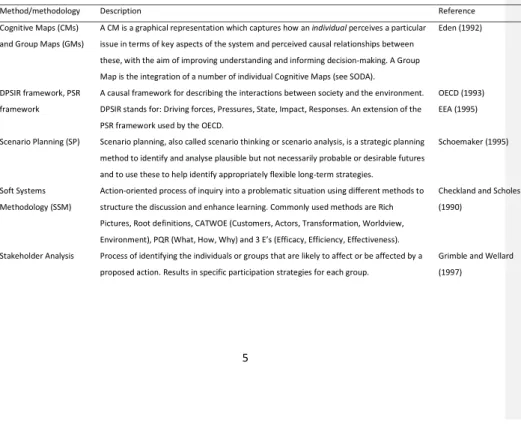
Table 1. Problem Structuring Methods addressed in the study.
Method/methodology Description Reference
Cognitive Maps (CMs) and Group Maps (GMs)
A CM is a graphical representation which captures how an individual perceives a particular issue in terms of key aspects of the system and perceived causal relationships between these, with the aim of improving understanding and informing decision-making. A Group Map is the integration of a number of individual Cognitive Maps (see SODA).
Eden (1992)
DPSIR framework, PSR framework
A causal framework for describing the interactions between society and the environment. DPSIR stands for: Driving forces, Pressures, State, Impact, Responses. An extension of the PSR framework used by the OECD.
OECD (1993) EEA (1995) Scenario Planning (SP) Scenario planning, also called scenario thinking or scenario analysis, is a strategic planning
method to identify and analyse plausible but not necessarily probable or desirable futures and to use these to help identify appropriately flexible long-term strategies.
Schoemaker (1995)
Soft Systems Methodology (SSM)
Action-oriented process of inquiry into a problematic situation using different methods to structure the discussion and enhance learning. Commonly used methods are Rich Pictures, Root definitions, CATWOE (Customers, Actors, Transformation, Worldview, Environment), PQR (What, How, Why) and 3 E’s (Efficacy, Efficiency, Effectiveness).
Checkland and Scholes (1990)
Stakeholder Analysis Process of identifying the individuals or groups that are likely to affect or be affected by a proposed action. Results in specific participation strategies for each group.
Grimble and Wellard (1997)
6
Method/methodology Description Reference
Strategic Assumptions Surfacing and Testing (SAST)1
Aims to surface, map and evaluate underlying assumptions that managers (stakeholders) bring with them (often subconsciously) in relation to an issue of strategic concern and to examine the relationship between these assumptions and potential policies with a view to formulating more robust and potentially novel or previously unforeseen policies.
Mitroff and Emshoff (1979)
Strategic Options Development and Analysis (SODA)
Supports a group to construct a shared graphical representation of a problematic situation as a Causal Map (a Group Map, GM) and to use this to explore potential strategies with respect to a complex system of goals. A GM can be created by merging a number of individual’s Cognitive Maps (CMs) or using Oval Mapping in a workshop environment.
Ackermann and Eden (2010)
SWOT analysis Tool for identifying factors of the external (Strengths, Weaknesses) and internal (Opportunities, Threats) operational environment and for determining strategies.
Kotler (1988)
1 SAST was not used in the search words but was later included in the analysis because it was one of the approaches used in one of the few multi-methodology articles (Petkov et al., 2007).
2.2 Multi-Criteria Decision Analysis methods
Many methods and softwares define the field of MCDA. They are based on different principles and apply different procedures for scoring, weighting and aggregation. They have different theoretical foundations, such as value functions, optimisation algorithms, aspiration based methods, outranking or combinations of these (Linkov et al., 2004). Many recent MCDA applications, do not simply focus on making a choice between alternatives but more broadly on exploring alternatives, facilitating communication, improving learning and supporting joint-solution finding (Belton and Stewart, 2002).
In earlier MCDA literature, the problem structuring phase generally received less attention than the MCDA evaluation. This began to change late 1980’s (Belton and Stewart, 2010, Franco and Montibeller, 2010). A particularly notable development which was to have significant impact on the field was Value-Focused Thinking (VFT, Keeney, 1988). VFT is a holistic approach which incorporates a systematic procedure to support the identification and structuring of the decision-makers’ values and objectives as well as the creative generation and evaluation of alternatives. Other holistic methodologies include: Structured Decision Making (SDM, Gregory et al., 2012) which embeds several tools and practices for supporting a collaborative application of MCDA, combining methods from decision analysis (e.g. MAVT, VFT) and applied ecology with insights from behavioural research; and Social Multi-Criteria Evaluation (SMCE, Munda, 2004a), an extension of MCDA which emphasises the importance of understanding the political and social context of the decision problem and applies both Institutional and Stakeholder Analysis in the problem structuring phase.
As the number of MCDA applications has increased, reviews of application areas, current trends and future research topics are increasingly common. Many cover specific application domains, e.g. natural resource management (Romero and Rehman, 1987), financial decision-making (Steuer and Na, 2003),
7
environmental sciences (Huang et al., 2011b) and energy and environmental modelling (Wang and Poh, 2014). Others focus on applications of specific MCDA methods, e.g. AHP (Ho, 2008), MCDM and MAUT (Wallenius et al., 2008), PROMETHEE (Behzadian et al., 2010), TOPSIS (Behzadian et al., 2012) and VFT (Parnell et al., 2013). In some reviews, combinations of MCDA with other methods were addressed (e.g. Ho, 2008, Wang and Poh, 2014). However, no review covers the joint use of a diverse set of PSMs and MCDA methods.
This study focuses on seven MCDA methods (Tab. 2), which are the most extensively used according to recent reviews (Huang et al., 2011a, Kabir et al., 2014). We included fuzzy modifications of methods (where appropriate) as such applications have increased rapidly (Mardani et al., 2015). We do not describe the principles of these MCDA methods. The interested reader is referred to overview texts such as Belton and Stewart (2002), French et al. (2009) and Eisenführ et al. (2010).
Our study is extensive, but not exhaustive, because the holistic approaches VFT, SDM and also Decision Conferencing (Phillips and Phillips, 1993), were not included. VFT and SDM were excluded because we focus on PSMs which have been developed outside the MCDA field. We refer readers to the recent, comprehensive review of VFT applications (Parnell et al., 2013). Decision conferencing, a structured, facilitated approach for group decision-making using MAVT, was excluded because it is more a process and does not incorporate any unique techniques for problem structuring. However, in some PSM and MCDA combinations, aspects of these methodologies were also applied.
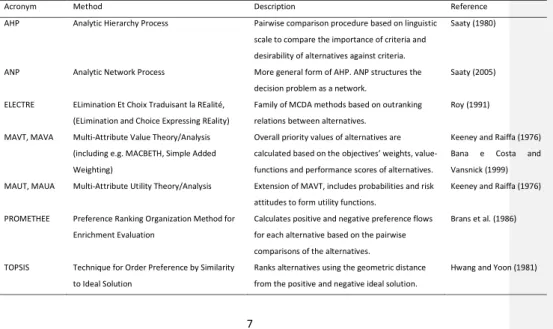
Table 2. MCDA methods addressed in the study.
Acronym Method Description Reference
AHP Analytic Hierarchy Process Pairwise comparison procedure based on linguistic scale to compare the importance of criteria and desirability of alternatives against criteria.
Saaty (1980)
ANP Analytic Network Process More general form of AHP. ANP structures the decision problem as a network.
Saaty (2005)
ELECTRE ELimination Et Choix Traduisant la REalité, (ELimination and Choice Expressing REality)
Family of MCDA methods based on outranking relations between alternatives.
Roy (1991)
MAVT, MAVA Multi-Attribute Value Theory/Analysis (including e.g. MACBETH, Simple Added Weighting)
Overall priority values of alternatives are calculated based on the objectives’ weights, value-functions and performance scores of alternatives.
Keeney and Raiffa (1976) Bana e Costa and Vansnick (1999) MAUT, MAUA Multi-Attribute Utility Theory/Analysis Extension of MAVT, includes probabilities and risk
attitudes to form utility functions.
Keeney and Raiffa (1976)
PROMETHEE Preference Ranking Organization Method for Enrichment Evaluation
Calculates positive and negative preference flows for each alternative based on the pairwise comparisons of the alternatives.
Brans et al. (1986)
TOPSIS Technique for Order Preference by Similarity to Ideal Solution
Ranks alternatives using the geometric distance from the positive and negative ideal solution.
8 3 Literature review
3.1. Description of the process
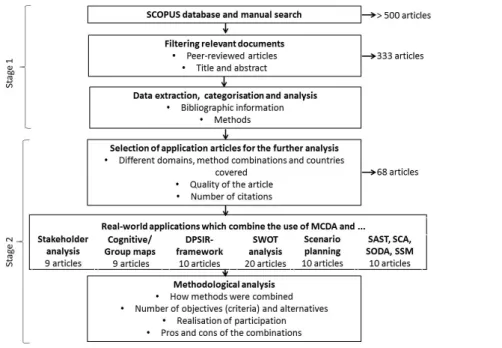
A systematic literature search was realised to find articles published in the period of 2000–2015 (cut-off date 17.9.2015) which combined the identified PSMs and MCDA methods (Fig. 1). Most stem from SCOPUS (http://www.elsevier.com/solutions/scopus/content), which accesses over 34,000 journals. Separate searches were conducted for each PSM; each including a combination of PSM and MCDA keywords (Supplementary material Table S-1). The references in these articles were also investigated. Additionally, the Journal of Multi-Criteria Decision Analysis was searched separately, as SCOPUS does not include articles published there before 2013. This process yielded more than 500 articles. We then narrowed the focus to articles published in peer-reviewed journals, excluding conference papers and similar. All articles were screened by reading the abstracts and irrelevant articles were filtered out, resulting in 333 articles. The main bibliographical information (e.g. publication year, title, journal, type of article and method) together with the PSM and MCDA method combination was recorded (Supplementary material, Tables S-3a-S3f).
Figure 1. Stages of the literature search.
We then identified 68 articles for detailed analysis and 9–20 articles for each PSM was selected. Primarily, we aimed to find a set of articles which provided a good understanding of different ways to
9
use each PSM with MCDA. In addition, we considered the following criteria in the selection: level of detail in the description of the method combination; coverage of different application areas and geographical regions; level of citations, taking into account year of publication; and impact factor of the journals. Although the review mainly covers journal articles, we made three exceptions to increase the number of cases in those method categories which lack illustrative applications. Ventura et al. (2014) was added to increase the number of CM cases, Belton and Stewart (2010) and Cerreta et al. (2012) to complement SSM cases. We also included one VFT article (Neves et al. 2009) which provides an illustrative description of how SSM can support problem structuring for MCDA.
The characteristics of each case are presented in in the supplementary materials (Tabs. 4a – 4f, S-5). In all cases, the number of objectives (criteria) used in the MCDA together with the way in which participation was realised and information specific to the PSM used (e.g. the number of SWOT factors identified, the number of scenarios and time horizons in scenario planning). Although this review cannot claim to be exhaustive, it covers a majority of the articles published from 2000 to 2015, thus providing a good overview of the state-of-the-art of combining PSM and MCDA.
4 Results
In section 4.1 we present an overview of the combined use of PSMs and MCDA. Sections 4.2-4.7 focus on a more in-depth description of each combination of a specific PSM with MCDA, summarising and the pros and cons of each method combination at the end of each section. More detailed information about the selected cases is presented in the supplementary material (Tables S-4a– S-4f).
4.1 General analysis of the articles
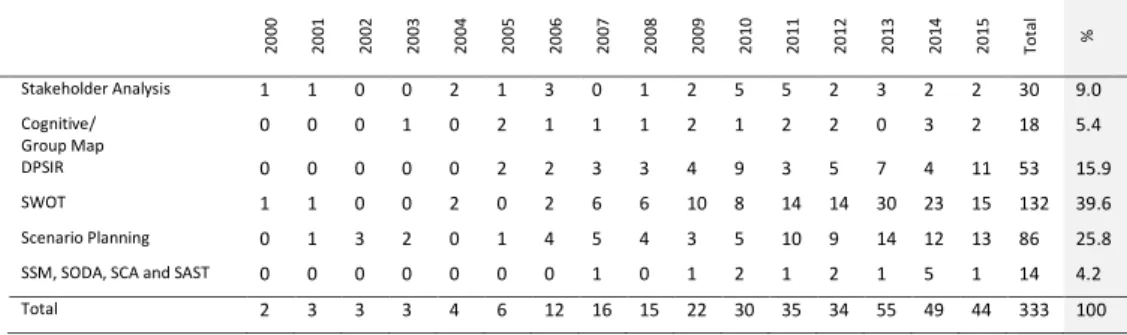
Of the 333 identified articles, 289 were published in 2000–2014 and 44 in 2015 (to 17.9.2015). SWOT and Scenario Planning are most commonly combined with MCDA (Tab. 3). The total number of articles has considerably increased (by a factor of 2.9) during the period of 2010-2014 compared to the previous five years (2005-2009), especially for these two combinations which increased by a factor of 3.7 for SWOT (89/24) and 2.9 for Scenario Planning (50/17).
China, Iran, USA, Italy and Turkey published the most articles combining PSMs and MCDA (Supplementary material, Tab. S-2). Only Italy, the UK and USA have articles in all method categories. A striking feature is the small number of UK articles in some method combinations, particularly taking into consideration the UK's central position in the development of PSMs. The three most common application areas relate to environment (18 % of the articles), energy (13 %) and hydrology and water (11 %). Many environmental applications combine DPSIR or Scenario Planning with MCDA.
10
Table 3. Number of articles combining PSMs and MCDA published in 2000–2015.
2 0 0 0 2 0 0 1 2 0 0 2 2 0 0 3 2 0 0 4 2 0 0 5 2 0 0 6 2 0 0 7 2 0 0 8 2 0 0 9 2 0 1 0 2 0 1 1 2 0 1 2 2 0 1 3 2 0 1 4 2 0 1 5 T o ta l % Stakeholder Analysis 1 1 0 0 2 1 3 0 1 2 5 5 2 3 2 2 30 9.0 Cognitive/ Group Map 0 0 0 1 0 2 1 1 1 2 1 2 2 0 3 2 18 5.4 DPSIR 0 0 0 0 0 2 2 3 3 4 9 3 5 7 4 11 53 15.9 SWOT 1 1 0 0 2 0 2 6 6 10 8 14 14 30 23 15 132 39.6 Scenario Planning 0 1 3 2 0 1 4 5 4 3 5 10 9 14 12 13 86 25.8 SSM, SODA, SCA and SAST 0 0 0 0 0 0 0 1 0 1 2 1 2 1 5 1 14 4.2 Total 2 3 3 3 4 6 12 16 15 22 30 35 34 55 49 44 333 100
1 Includes Balanced Scorecards, Critical System Heuristics, Five Force Field Analysis, Means-ends Network, PESTLE, Porter’s Five Forces
Analysis, Value-Focused Thinking, PQR
The articles were published in over 200 journals and over 90 % were published in applied journals. The five most common journals were Energy Policy, Journal of Environmental Management, Forest Policy and Economics, Ecological Economics and European Journal of Operational Research. (Supplementary material, Tab. S-2). ). The diversity of journals reflects the breadth of the application areas.
In Table 4, MCDA methods are grouped in four “families”: AHP/ANP, MAVT/MAUT, outranking methods and goal and reference point methods. Articles using AHP/ANP dominate, accounting for 49 % of the PSM-MCDA combinations. The most frequent combinations in this group are SWOT and AHP/ANP (110 articles) and DPSIR and AHP/ANP (39 articles). It is noteworthy that in 25 % of the abstracts the used MCDA method was not specified.
In most articles, one PSM was combined with one MCDA method; two PSMs were applied in 11 cases. More than two PSMs were combined with MCDA in only five cases. Petkov et al. (2007) describe the application of a wide variety of PSMs across three cases (Rich Picture, Critical System Heuristics, Interpretive Structural Modeling, stakeholder analysis, and Boundary Judgment Questions of Critical System Heuristics). Bana e Costa et al. (2014)combined decision conferencing with causal mapping, Value-Focused Thinking (Means-Ends Networks) and the Analysis of Interconnected Decision Areas, which is part of the Strategic Choice Approach. Cuozzo (2014) combined Stakeholder Mapping, Rich Pictures, Scenario Planning and two MCDA methods. Lienert et al. (2015) applied several PSMs; Stakeholder and Social Network Analysis, a brainstorming/mapping exercise for objectives, a strategy generation table for alternatives and Scenario Planning.
Table 4. PSM and MCDA combinations. The total number of combinations (365) is higher than the total number of articles (333) because in some cases two or more PSMs/MCDA were applied.
11 Stakeholder Analysis Cognitive/ Group Maps
DPSIR SWOT Scenario
Planning SAST, SCA, SODA, SSM Total Proportion (%) AHP/fuzzy AHP 8 5 36 92 13 2 156 42.7 ANP/fuzzy ANP 0 1 3 18 1 0 23 6.3 MAVT/MAUT 1 4 0 4 7 2 18 4.9 TOPSIS/fuzzy TOPSIS 0 1 6 17 6 0 30 8.2 PROMETHEE 0 0 0 3 1 0 4 1.1 ELECTRE 0 1 2 0 0 3 6 1.6 MULINO DSS 0 0 6 0 0 0 6 1.6
Social Multi-Criteria Evaluation 12 0 0 0 0 0 12 3.3
MCDA/MCA/MCE 10 6 2 9 58 6 91 24.9
Other (e.g. VFT, VIKOR) 0 2 4 7 4 2 19 5.2
Total 31 20 59 150 90 15 365 100
4.2 Stakeholder Analysis and MCDA
MCDA is increasingly seen as a powerful approach to support collaborative processes (e.g. Lennox et al., 2011, Marttunen et al., 2015) and this review indicates that stakeholder involvement in MCDA is now common, particularly in environmental decision-making. Several MCDA approaches emphasise its importance, namely the Decision Analysis Interview approach (Marttunen and Hämäläinen, 1995, 2008), Stakeholder Multi-Criteria Decision Aid (Banville et al., 1998), Social Multi-Criteria Evaluation (SMCE, Munda, 2004a), Deliberative Criteria Evaluation (Proctor and Drechsler, 2006) and Multi-Actor Multi-Criteria Analysis (MAMCA, Macharis et al., 2009).
The search using “stakeholder analysis” and “MCDA“ as keywords yielded 32 articles. This number is surprisingly low considering the large number of participatory MCDA cases. Replacing “stakeholder analysis” with “stakeholder” produced almost 900 articles. This suggests that stakeholder identification in MCDA is often done in a less systematic way or is not fully documented.
We selected nine articles for detailed analysis; three applied SMCE, two MAMCA and four were participatory MCDA projects which paid special attention to identify relevant stakeholders. In all cases, stakeholders were intensively involved in the MCDA process, typically with in-depth interviews, focus groups or workshops. Resources used for the Stakeholder Analysis varied substantially, from light-touch practical approaches (e.g. Geneletti, 2010, Nordström et al., 2010) to an in-depth, research oriented approach (Lienert et al., 2013).
In Social Multi-Criteria Evaluation (SMCE) there is a strong focus on understanding social actors’ needs and their interrelationships in the problem structuring phase (Munda, 2004a) and a careful Stakeholder Analysis is a vital part of SMCE (e.g. Gamboa, 2006, Garmendia et al., 2010, Borzoni et al., 2014). Lienert et al. (2013) combined a thorough Stakeholder Analysis (Grimble and Wellard, 1997) with a Social Network Analysis (Kenis and Schneider, 1991), using the results in a participatory MCDA
12
for water infrastructure planning (Lienert et al., 2015). Linking the Stakeholder Analysis with SNA was fruitful and generated complementary results. A Stakeholder Analysis typically provides an overview of who is important in and affected by a decision, and the interests of these people. It has been criticised because it is often ad hoc and lacks analytic quality (Hermans and Thissen, 2009, Reed et al., 2009). SNA is a more systematic approach to investigate structural patterns between actors and identify, for example, who collaborates with whom and which actors play a central role in a social network. Turcksin et al. (2011) identified stakeholders preliminarily according to the biofuels supply chain; they were later validated in a workshop involving biofuel representatives.
MAMCA involves key stakeholders from the beginning of a decision process. Stakeholder opinions are explicitly included and different viewpoints are visualised separately to highlight differences in alternatives’ performances (Macharis et al., 2012). Every stakeholder group has its own criteria set and each group is equally weighted when the results are aggregated across the stakeholders.
Three good examples of a systematic Stakeholder Analysis, each using a different approach, but still with moderate effort were identified. Nordström et al. (2010) asked members of the steering group to identify potential stakeholders on Post-it notes, which were then grouped according to common interests. The steering group then used a participation ladder individually to place different stakeholder groups on appropriate levels of participation (International Association for Public Participation, 2007); results were later discussed. A snowball sampling approach can be a quick and suitable way to identify stakeholders (Geneletti, 2010; Lienert et al., 2013). Geneletti (2010) first developed a preliminary list of stakeholders based on previous research conducted in the region and then contacted key representatives to solicit more suggestions. The process continued until no further stakeholders were proposed. Lienert et al. (2015) suggest that in most practice-oriented MCDA applications a short questionnaire distributed by email, phone or internet to stakeholders will suffice to better understand the wider stakeholder group and ensure a good representation of views by a smaller group of key stakeholders in the following MCDA. The use of existing networks and email distribution lists can greatly facilitate Stakeholder Analysis (Nordström et al., 2010).
Stakeholder identification and analysis is highly relevant in MCDA because it explicitly recognises multiple actors and their objectives (Tab. 5). MCDA methods do not incorporate any techniques for this task. It is important to be aware that engaging stakeholders always raises an ethical question related to the treatment of the different stakeholders in an MCDA process (Banville et al., 1998).
Table 5. The pros and cons of stakeholder analysis and its combination with MCDA; + positive aspect, - negative aspect.
13
Pros and cons How stakeholder analysis benefits MCDA Challenges and issues to be aware of when combining
+ Easy to use.
+ Systematic if done properly.
- Subject to criticism for lack of academic rigor. - Difficult if little initial knowledge of stakeholders.
Helps to identify key stakeholders to be engaged in MCDA. Encourages consideration of a range of perspectives.
Decision about who should be engaged in MCDA can still be difficult..
4.3 Cognitive Maps, Group Maps and MCDA
Cognitive Maps (CMs) and Group Maps (GMs) have been applied primarily in psychology and the behavioural sciences, management, politics and economics (Kpoumié et al., 2012). They have been increasingly used to structure and help understand complex social and environmental problems and associated decision-making (Tikkanen et al., 2006). In a Management Science context, mapping is central to the PSM known as SODA (Strategic Options Development and Analysis; Eden and Ackermann, 2001). They describe a Cognitive Map as “… a model amenable to formal analysis. It is a model designed to represent the way in which a person defines an issue.” … “It is a network of ideas linked by arrows; the network is coded from what a person says.” The SODA process can begin with developing a CM for each stakeholder; the individual maps are then merged to create an integrated “group map” to be used in the workshop, which is central to SODA. Alternatively, a group map can be created directly in a workshop using the Oval Mapping Technique (Eden and Ackermann, 1998).
CMs/GMs and MCDA methods have typically been deployed alone (Franco and Lord, 2011). We found only nine application articles which integrate CM/GMs and MCDA (Supplementary material, Tab. S-4b). Hence, we also included one book chapter (Ventura et al., 2014). The selected cases relate to business, environmental and social issues, covering both the public and private sector. CM/GMs have been coupled with following MCDA methods: MAVT (e.g MACBETH, SMART; Bana e Costa et al., 2006, Myllyviita et al., 2014), multi-criteria portfolio analysis (Franco and Lord, 2011) and ANP (Wolfslehner and Vacik, 2011).
In two cases, CM/GM was followed by a full MCDA (Bana e Costa et al., 2006, Ferreira et al., 2012). In other cases MCDA (ANP with equal weights, direct rating) was used only to identify the most important indicators (e.g. Wolfslehner and Vacik, 2011, Myllyviita et al., 2014). One case explicitly followed the SODA methodology (Ferreira et al., 2011, 2012).
The most common reason for using CMs/GMs was to facilitate the development of a comprehensive set of indicators (Mendoza and Prabhu, 2003, Adrianto et al., 2005, Bana e Costa et al., 2006, Ferreira et al., 2012, Myllyviita et al., 2014, Marafon et al., 2015). Other motivations were to structure
14
indicators (Wolfslehner and Vacik, 2011), to assess their significance by calculating their centrality and domain (Adrianto et al., 2005), to help the decision-makers to understand, delineate and organize the problem (Longaray et al., 2015), to elicit and structure the stakeholders' knowledge of the problem situation and to stimulate new causal thinking (Franco and Lord, 2011).
The intensity of the participants’ involvement varied from very high to none. Some cases used individual interviews (e.g. Myllyviita et al., 2014), but mostly CMs/GMs were developed in meetings or workshops. Franco and Lord (2011) facilitated two workshops, one focused mainly on mapping and one on MCDA. In some cases, as outlined above, individual CMs were constructed first and later merged to create the group map (e.g. Franco and Lord, 2011, Ferreira et al., 2012). The disadvantage is that aggregating several maps can be difficult due to differences in the terms used and the logic articulated (Ferreira et al., 2012). Directly developing a shared group map, using the Oval Mapping technique, was more common (e.g. Bana e Costa et al., 2006, Marafon et al., 2015). This enables the interaction of all participants, creating learning and directly enriching the map (Ventura et al., 2014).
CMs/GMs and MCDA represent different paradigms and their use requires different skills. In one intervention, two facilitators were involved; one responsible for CM and the other for MCDA (Franco and Lord, 2011). Ferreira et al. (2012) describe how a psychologist and communication technician assisted the facilitator. A precondition for the successful combination is that facilitators are familiar with both methods and are fully involved throughout the whole process (Belton et al., 1997).
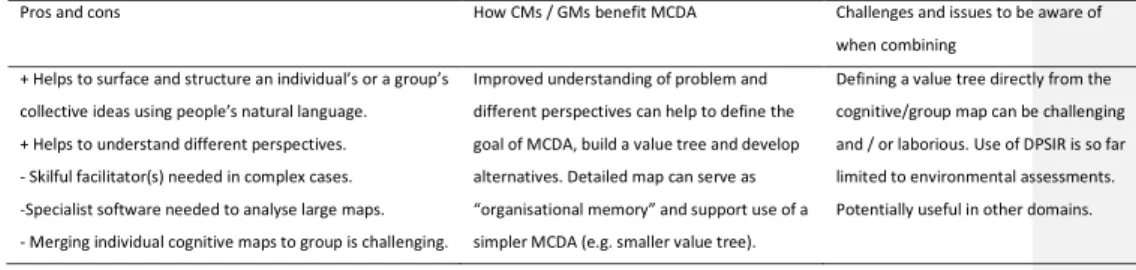
MCDA benefits from CM/GM in several ways (Tab. 6): CMs/GMs stimulate participants to structure their ideas using natural language (Montibeller et al., 2008, Franco and Lord, 2011); they facilitate communication and problem structuring (Wolfslehner and Vacik, 2011); they enable people to voice their views and even to persuade others (Franco and Lord, 2011). CMs/GMs can also reduce framing biases (Hodgkinson et al., 1999, and comments by Wright and Goodwin, 2002, Hodgkinson et al., 2002).
Table 6. The pros and cons of cognitive maps (CMs) / group maps (GMs) and their combination with MCDA; + positive aspect, - negative aspect.
Pros and cons How CMs / GMs benefit MCDA Challenges and issues to be aware of when combining
+ Helps to surface and structure an individual’s or a group’s collective ideas using people’s natural language. + Helps to understand different perspectives. - Skilful facilitator(s) needed in complex cases. -Specialist software needed to analyse large maps. - Merging individual cognitive maps to group is challenging.
Improved understanding of problem and different perspectives can help to define the goal of MCDA, build a value tree and develop alternatives. Detailed map can serve as “organisational memory” and support use of a simpler MCDA (e.g. smaller value tree).
Defining a value tree directly from the cognitive/group map can be challenging and / or laborious. Use of DPSIR is so far limited to environmental assessments. Potentially useful in other domains.
15 4.4 DPSIR framework and MCDA
The Pressure-State-Response (PSR) was firstly proposed by OECD for analysing environmental issues in 1970. Its extension, the Driving forces-Pressure-State-Impact-Response (DPSIR) framework was developed in the 1990s to structure and organise environmental indicators and environment-society inter-connections to policy makers in an understandable way (OECD, 1993, Smeets and Weterings, 1999). DPSIR has been increasingly used for environmental issues and research projects (Meyar-Naimi and Vaez-Zadeh, 2012, Tscherning et al., 2012). Because DPSIR simplifies complex environmental relationships, it has been subject to severe criticisms (Tscherning et al., 2012, Gari et al., 2015). Subsequently, it has been modified in several ways, for instance, by adding a welfare element (Cooper, 2013, Kelble et al., 2013, O'Higgins et al., 2014). Alternatively, DPSIR has been integrated with other methods, such as system dynamic modelling (Lee and Lin, 2014).
Nine DPSIR-MCDA and one PSR-MCDA articles were analysed. Eight evaluate management or planning alternatives (e.g. Petersson et al., 2007, Wolfslehner and Vacik, 2008, Bottero and Ferretti, 2010, Kim et al., 2013), two construct and calculate environmental indices (Shao et al., 2014, Li et al., 2015) and one prioritises instream sites for treated wastewater (Kim et al., 2013). Half of the applications were related to water or wetland management; others concern forest management, urban or land use planning and environmental status assessments. In six of the ten articles, DPSIR was applied together with AHP or ANP (e.g. Wolfslehner and Vacik, 2008, Azarnivand and Chitsaz, 2015).
The MULINO decision support system (mDSS), which supports water management at the catchment scale (Fassio et al., 2005), integrates DPSIR with MCDA in a sequential manner. The DPSIR framework has been implemented in mDSS following three decision process phases (conception, design, choice). Simulation models are used to predict the outcomes of alternatives. The MULINO DSS was applied in three cases (Petersson et al., 2007, Benini et al., 2010, Johnston et al., 2013). DPSIR was first used for problem exploration, defining criteria and alternatives, which were then evaluated using one of four possible MCDA methods (Simple Additive Weighting, TOPSIS, ELECTRE or Order Weighting Average).
DPSIR can easily produce many indicators; they varied from 13 to 77 in the analysed cases (average 21). In five cases the DPSIR indicators were used as such in MCDA modelling with ANP (Wolfslehner and Vacik, 2008, Bottero and Ferretti, 2010), AHP (Chung and Lee, 2009, Shao et al., 2014) and TOPSIS (Kim et al., 2013). Others reduced the number of criteria; e.g. by selecting the six (of 30) most important criteria (Azarnivand and Chitsaz, 2015), by using only the impact indicators (I) to evaluate alternatives (Petersson et al., 2007) or by grouping them into classes (Johnston et al., 2013).
16
The joint use of DPSIR and MCDA has several advantages. The joint framework provides a holistic approach helping to ensure that all relevant impacts are included (Bottero and Ferretti, 2010). This holistic perspective can reveal key data gaps (Li et al., 2015). DPSIR helps to visualise cause-effects and improves communication (Wolfslehner and Vacik, 2008, Bottero and Ferretti, 2010, Johnston et al., 2013). The possibility to check the consistency of judgments in AHP has been considered as important to increase the reliability of the assessment (Azarnivand and Chitsaz, 2015, Li et al., 2015).
However, it may be difficult to categorise a variable because of vague definitions and unclear boundaries of the DPSIR-terms (Bottero and Ferretti, 2010). In a forest management case, strict allocation of indicators to the P-, S-, R-categories was not possible because of their multi-dimensional character (Wolfslehner and Vacik, 2008). To tackle this problem, each of their twelve indicators had three dimensions: state of the system, potential pressures and responses. One of the largest challenges in combining DPSIR and MCDA is the development of a criteria hierarchy from the DPSIR factors. If the DPSIR factors are used as such in MCDA, which often seems to be the case, it can result in double counting because the DPSIR-clusters are interconnected (e.g. Gari et al., 2015). For instance, intensification of agriculture (D) increases nutrient load (P) which in turn affects the chemical state of the water system (S) leading to algae blooms (I). A challenge in the DPSIR-ANP applications is that ANP’s interlinkages are unclear, which makes their quantification problematic.
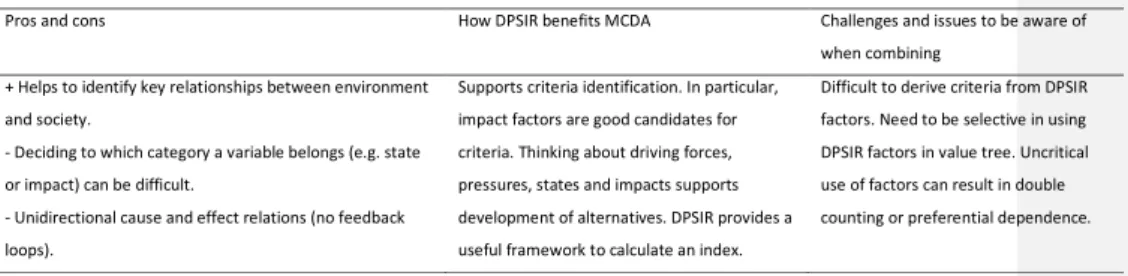
The studied articles suggest that DPSIR provides a powerful framework to aid initial understanding, structuring and communication of a complex environmental issue (Tab. 7). However, it is limited with regard to a rigorous scientific analysis and the integration with MCDA can be challenging because the DPSIR framework as such cannot be used. If the whole framework is used in sustainability assessments, we suggest that the results of different DPSIR categories are presented separately and not aggregated because of double counting risk.
Table 7. The pros and cons of DPSIR framework and its combination with MCDA; + positive aspect, - negative aspect.
Pros and cons How DPSIR benefits MCDA Challenges and issues to be aware of when combining
+ Helps to identify key relationships between environment and society.
- Deciding to which category a variable belongs (e.g. state or impact) can be difficult.
- Unidirectional cause and effect relations (no feedback loops).
Supports criteria identification. In particular, impact factors are good candidates for criteria. Thinking about driving forces, pressures, states and impacts supports development of alternatives. DPSIR provides a useful framework to calculate an index.
Difficult to derive criteria from DPSIR factors. Need to be selective in using DPSIR factors in value tree. Uncritical use of factors can result in double counting or preferential dependence.
17 4.5 SWOT and MCDA
SWOT (Strengths, Weaknesses, Opportunities and Threats) was originally developed to inform the generation of organisational strategies. Our review shows that SWOT and MCDA have been combined in many applications areas including agriculture and forestry (Shrestha et al., 2004), bioenergy (Catron et al., 2013), information technology (Kahraman et al., 2007), tourism (Akbulak and Cengiz, 2014), traffic (Bottero, 2015) and water resources management (Srdjevic et al., 2012).
We identified considerably more SWOT-MCDA applications (149 cases) than any other PSM-MCDA combinations and therefore selected more articles (20) for the detailed analysis. Most cases (118 in total and 18 of the 20 selected ones), used AHP, ANP or their fuzzy versions. Kurttila et al. (2000) suggest in their widely cited SWOT-MCDA article (over 550 citations in Google Scholar) that because of its simplicity, effectiveness and ability to deal with qualitative and quantitative data, AHP combines well with SWOT. The qualitative nature of SWOT and its inability to prioritise the most important issues or to evaluate alternatives were the main impulses for SWOT-MCDA combinations.
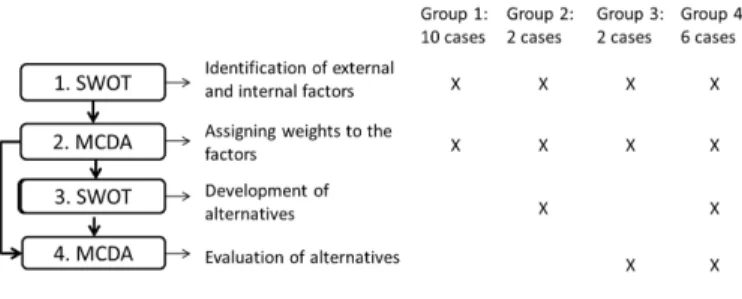
We identified four major ways of combining SWOT and MCDA (Fig. 2): (i) In the most common and simplest combination SWOT analysis is first carried out, relevant internal and external factors are identified and their relative importances are determined using pairwise comparisons (10 cases, e.g. Duchelle et al., 2012, Catron et al., 2013); (ii) In two cases the prioritised SWOT factors were used in the development of ecotourism (Akbulak and Cengiz, 2014) or nature protection management strategies (Öztürk, 2015); (iii) In two cases the SWOT framework was used to evaluate existing alternatives, NATURA 2000 sites (Scolozzi et al., 2014) or potential nuclear power plant sites (Ekmekçioglu et al., 2011); (iv) In six cases the alternatives derived from SWOT were evaluated using MCDA (e.g. Yüksel and Dağdeviren, 2007, Terrados et al., 2009, Sevkli et al., 2012). To include uncertainty, fuzzy AHP/ANP or fuzzy TOPSIS were applied in three cases (Ekmekçioglu et al., 2011, Sevkli et al., 2012, Baykasoğlu and Gölcuk, 2015).
18
The number of criteria used in the MCDA in the selected cases varied from 10 to 31, the average being 19. The four SWOT groups were used as the top level MCDA criteria in all cases except one. Srdjevic et al. (2012) clustered SWOT factors according to the type of influence using PESTLE analysis (Political, Economic, Social, Technological, Legislation, Environmental, Griffiths and Wall, 2004). Bottero (2015) clustered SWOT factors into different topics such as environmental system, society and governance. We observed a tendency towards symmetry; in six of 20 cases, each SWOT group had the same number of factors (Shrestha et al., 2004, Sevkli et al., 2012, Catron et al., 2013). The importance of SWOT groups and factors was defined in different ways, either top-down (SWOT groups first, then factors within group, e.g. Yüksel and Dağdeviren (2007), or bottom-up (SWOT factors first, then SWOT groups, e.g. Catron et al. (2013).
The identification and participation of stakeholders is a vital part of SWOT (Nikodinoska et al., 2015). In most SWOT-MCDA cases, stakeholders were actively engaged through questionnaires (e.g. Nikodinoska et al., 2015), interviews (e.g. Kajanus et al., 2004), focus groups (e.g. Catron et al., 2013), workshops (e.g. Margles et al., 2010) or a survey based Delphi approach (e.g. Terrados et al., 2009).
The combination of SWOT with MCDA is mutually beneficial and provides an effective framework in strategic decision-making (Kurttila et al., 2000). SWOT can benefit MCDA in several ways. Firstly, SWOT can bring added-value to stakeholder involvement, supporting the development of a common language and providing a simple method to improve communication and learning (Kurttila et al., 2000, Kajanus et al., 2004, Margles et al., 2010, Bottero, 2015, Nikodinoska et al., 2015). Secondly, SWOT helps to better understand the decision situation and its underlying structure. Thirdly, it ensures that all relevant aspects are considered through the analysis of all SWOT factors from an internal and external viewpoint. Fourthly, SWOT supports developing new strategies or alternatives using a TOWS matrix (Weihrich, 1982, Dyson, 2004), which confronts the elements of internal quadrants (Strengths/Weaknesses) with those of external quadrants (Opportunities/Threats; (e.g. Terrados et al., 2009, Sevkli et al., 2012). A SWOT-MCDA combination is also useful for visualisation; in the four-quadrant SWOT diagram the x-axis refers to internal factors (strengths, weaknesses) and the y-axis to external factors (opportunities, threats); (e.g. Kurttila et al., 2000).
As SWOT is easy to use and widely known, MCDA experts may feel much more comfortable using SWOT than other PSMs which may be perceived as theoretically and technically demanding (Kangas et al., 2001). Vacik et al. (2014) evaluated 43 collaborative planning methods and identified A’WOT, combining SWOT and AHP (Kajanus et al., 2004), as one of the few approaches which potentially fulfils demands for all planning phases: problem identification, modelling and problem solving.
19
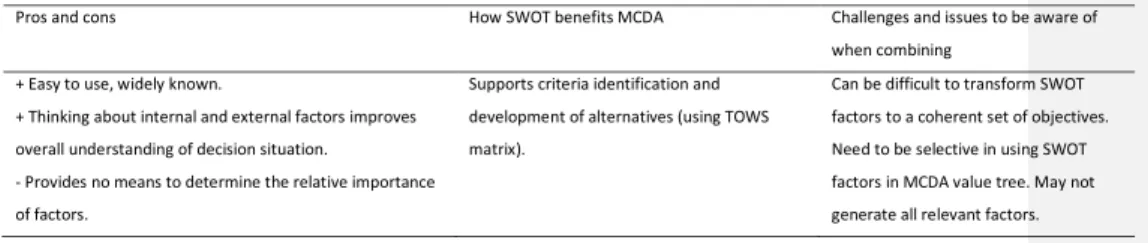
The SWOT-MCDA approach also has shortcomings (Tab. 8). Deciding which SWOT group a factor belongs to can be challenging. Ghazinoory et al. (2007) found that the internal and external factors cannot always be classified as purely positive or negative because they contain both types of effects. These shortcomings of SWOT may have implications for the following MCDA. Another challenge for MCDA is how to operate with a high number of factors identified in SWOT. To avoid double-counting or means objectives in MCDA, SWOT factors should be further processed, e.g. using PESTLE categories (Srdjevic et al., 2012) or a Value-Focused Thinking approach (Kajanus et al., 2004). In several cases, ANP was used to tackle the problem of interlinkages between SWOT factors (e.g. Yüksel and Dağdeviren, 2007, Catron et al., 2013). However, the large number of comparisons required can become too difficult to understand (Yu and Tzeng, 2006, Bottero, 2015). Moreover, the quantification of interlinkages is problematic, as in the DPSIR and ANP combinations.
Table 8. The pros and cons of SWOT analysis and its combination with MCDA; + positive aspect, - negative aspect.
Pros and cons How SWOT benefits MCDA Challenges and issues to be aware of when combining
+ Easy to use, widely known.
+ Thinking about internal and external factors improves overall understanding of decision situation.
- Provides no means to determine the relative importance of factors.
Supports criteria identification and development of alternatives (using TOWS matrix).
Can be difficult to transform SWOT factors to a coherent set of objectives. Need to be selective in using SWOT factors in MCDA value tree. May not generate all relevant factors.
4.6 Scenario Planning and MCDA
Scenario Planning is the process of developing and using a small number of contrasting scenarios to explore the consequences of future uncertainty surrounding a decision (Wack, 1985, Schnaars, 1987, Schoemaker, 1995, van der Heijden, 1996, Peterson et al., 2003). A scenario comprises an internally consistent narrative of one possible future world. The Shell example is presumably the most famous application to business strategy formation (Wack, 1985). Scenario Planning has been applied in environments where deep uncertainties predominate to enhance the understanding of the causal processes in the system, to challenge people’s conventional thinking and to improve decision-making (Ram and Montibeller, 2013, Wright et al., 2013).
The integrated use of Scenario Planning and MCDA has recently gained attention (e.g. Belton and Stewart, 2002, Durbach and Stewart, 2003, Goodwin and Wright, 2004, Montibeller et al., 2006, Ram et al., 2011, Karvetski et al., 2011a, Karvetski and Lambert, 2012, Lambert et al., 2012, Stewart et al., 2013, Scholten et al., 2015). The two approaches are complementary (Wright and Goodwin, 1999, Montibeller et al., 2006) and there are many mutual benefits when applied jointly. For instance, MCDA
20
does not adequately deal with the many uncertainties that arise especially in long term strategic decision-making contexts which, in turn, is the strength of Scenario Planning (Stewart et al., 2013). Stewart (1997, 2005) presents several technical issues and a thoughtful discussion concerning this integration and Stewart et al. (2013) give a good overview of the mutual benefits.
The selected applications cover a wide range of domains from business to sustainable energy production, and differ substantially in how scenarios were built and used. Typically, the integrated analysis aims to evaluate the performance of alternatives in different scenarios. Below, we focus on describing how scenarios were used in the evaluation of alternatives. We also present approaches to assign weights to the criteria and to summarise the results; here MCDA provides several options which deserve more research.
Scenario Planning is normally a participatory process; in nine of our ten applications stakeholders were involved; most extensively, in the case of Bhave et al. (2014) involving 278 participants in 14 workshops. Straton et al. (2011) used citizens’ juries to engage local people. In contrast, Van der Pas et al. (2010) generated a large number of scenarios automatically based on computer simulations.
Most cases combined qualitative participatory methods with quantitative models. Mostly a “full” MCDA was also realised, including assigning weights to the criteria and calculating overall priority values for the alternatives. However, there are large differences in the realisation of these phases and in the choice of MCDA methods. Stakeholder Analysis (Lienert et al., 2015), SWOT (Leskinen et al., 2006) and Value-Focused Thinking (Montibeller et al., 2006) were used to support the structuring phase, and MAVT (Ram and Montibeller, 2013, Scholten et al., 2015, Montibeller et al., 2006), AHP (Leskinen et al., 2006) and PROMETHEE (Kowalski et al., 2009) were used to evaluate the alternatives in different scenarios.
The number of criteria to evaluate alternatives or scenarios varied from three to 44 (Scholten et al., 2015). A small number allows the transparent presentation of the criterion-by-criterion performance of the alternatives within the scenarios (Trutnevyte et al., 2012). The number of alternatives also varied substantially, from three to 24. The number of scenarios varied typically from two to six. However, this number was over 1,000 when scenarios were generated automatically to provide different inputs to a traffic model (Van der Pas et al., 2010).
In most cases the same criteria weights were used for all scenarios (Montibeller et al., 2006, e.g. Kowalski et al., 2009, Straton et al., 2011, Scholten et al., 2015). Scholten (2015) chose this approach because scenario-dependent weights were considered highly hypothetical due to the long time horizon (40 years; discussed in Lienert et al., 2015). In three cases, criteria weights were assigned
21
separately for each scenario (Leskinen et al., 2006, Montibeller et al., 2006, Ram and Montibeller, 2013). Montibeller et al. (2006) used both approaches in the same case and found that using the same weights for all scenarios (following Goodwin and Wright, 2001) is not always adequate because the stakeholders’ preferences and even the criteria can be different for different scenarios.
In five of the ten cases, an uncertainty analysis was performed to analyse how the rankings or priority values of alternatives varied across scenarios (e.g. Kowalski et al., 2009, Scholten et al., 2015). Others used a cost-equivalent technique to compare the performance across scenarios (Ram et al., 2011, Ram and Montibeller, 2013), or calculated aggregate rankings over the scenarios (e.g. Kowalski et al., 2009). This is criticized by Montibeller et al. (2006) as being against the exploratory spirit of Scenario Planning.
Scenario Planning has benefitted MCDA in several ways. Firstly, MCDA does not inherently include techniques that encourage people to think about potential future trends and deep uncertainties, or that challenge their worldviews (Comes et al., 2013). Secondly, scenario building provides a natural, interesting and stimulating way for stakeholder participation (Lienert et al., 2015). Thirdly, it helps to frame stakeholder interactions in a task-oriented manner by focusing on future scenarios, goals and activities (Bizikova and Krcmar, 2015). Fourthly, scenarios, when developed by a heterogeneous team, can enhance and clarify thinking and identify reasons for conflicts (Kowalski et al., 2009, Stewart et al., 2013, Wright et al., 2013).
How does MCDA benefit Scenario Planning? Scenario Planning does not per se provide sophisticated evaluation techniques to assess the relative performance of alternatives (Durbach and Stewart, 2003). MCDA aggregates multi-dimensional information, reducing the complexity of the scenario information in a transparent way (e.g. Kowalski et al., 2009). Explicit introduction of evaluation criteria into Scenario Planning can catalyse creativity and clarify the goals of participants (Stewart et al., 2013). MCDA encourages decision-makers to express their preferences for strategies; considering future scenarios can support developing strategic values (Montibeller et al., 2006). MCDA can also help participants see how conflicting objectives could be balanced (Bizikova and Krcmar, 2015).
The integration of MCDA and scenario analysis is promising, but methodologically challenging (e.g. Kowalski et al., 2009, Ram and Montibeller, 2013). The combination adds an additional dimension to the already extensive preparation required for Scenario Planning (e.g. Bizikova and Krcmar, 2015) and to potentially complex MCDA-analyses (e.g. Lienert et al., 2015). Possible comparisons of the outcomes of alternatives in each scenario may be time-consuming and cognitively demanding (e.g. Montibeller et al., 2006, Ram et al., 2011). One difficulty in assessing the performance of strategies in Scenario Planning is that they consist of sub-options which have to be considered simultaneously (e.g.
22
Montibeller et al., 2006). Inclusion of the different perspectives of multiple decision makers in group negotiation can add to the challenge (Ram et al., 2011). For instance, Scholten et al. (2015) carried out forty independent MCDA calculations, one for each of four scenarios and each of ten stakeholders. To improve the efficiency of MCDA and to reduce the cognitive load of participants, Karvetski et al. (2011a, 2011b) developed an approach which simplifies elicitation of preference weights, as the entire value function is not totally reconstructed per scenario.
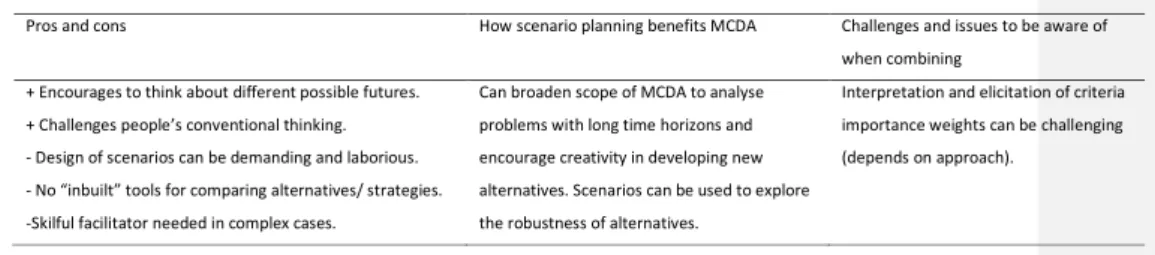
Table 9. The pros and cons of scenario planning and its combination with MCDA; + positive aspect, - negative aspect.
Pros and cons How scenario planning benefits MCDA Challenges and issues to be aware of when combining
+ Encourages to think about different possible futures. + Challenges people’s conventional thinking. - Design of scenarios can be demanding and laborious. - No “inbuilt” tools for comparing alternatives/ strategies. -Skilful facilitator needed in complex cases.
Can broaden scope of MCDA to analyse problems with long time horizons and encourage creativity in developing new alternatives. Scenarios can be used to explore the robustness of alternatives.
Interpretation and elicitation of criteria importance weights can be challenging (depends on approach).
4.7 Problem structuring methodologies and MCDA
Rosenhead and Mingers (2001) present five problem structuring methodologies in their seminal book, three of which were included in this study, namely Strategic Options Development and Analysis (SODA), Soft Systems Methodology (SSM) and Strategic Choice Approach (SCA). These methodologies are generally applicable and the most widely known (Belton and Stewart, 2010). For instance, SSM has been used in a large variety of problems, especially organisational restructuring, information systems development and performance evaluation (Mingers and Rosenhead, 2004). In addition, Strategic Assumptions Surfacing and Testing method (SAST, Mitroff and Emshoff, 1979), which can be applied as a dialectical approach to policy and planning, was included in our study.
We found only fourteen articles where these methodologies and MCDA were combined (Supplementary material, Tab. S-3f). Four of these papers cover a single case where CM/SODA was employed (e.g. Ferreira et al., 2011, see section 4.3). SSM or parts of it was applied in eight articles, SCA in two and SAST in one. Therefore, we included two application papers describing the joint use of SSM and MCDA which were published in books (Belton and Stewart, 2010, Cerreta et al., 2012).
The diversity of applications is high, covering strategic planning in the public sector (Bana e Costa et al., 2014), large road and railway projects (Cerreta et al., 2012, Rolando, 2015), flood management (Suriya and Mudgal, 2013b), information and communication technology (Petkov et al., 2007), energy efficiency (Neves et al., 2009) and physical health (Longaray et al., 2014). The number of PSMs and MCDA methods within one case varied from one (Rolando, 2015) to seven (Bana e Costa et al., 2014).
23
In some cases, the whole methodology was applied (e.g. Neves et al., 2009, Coelho et al., 2010, Suriya and Mudgal, 2013b), others used only parts of it (Petkov et al., 2007, Bana e Costa et al., 2014). The level of use of MCDA varied from a significant contribution to a superficial discussion (Coelho et al., 2010, Rolando, 2015) of its potential merits if combined with soft system approaches. Bana e Costa et al. (2014) give a detailed description of the design and realisation of a negotiation process in which Value-Focused Thinking (VFT) and MACBETH were combined with Causal Mapping and AIDA (Analysis of Interconnected Decision Areas) from SCA. Neves et al. (2009) provide a step-by-step account of how they used SSM and its methods (Rich Picture, CATWOE, conceptual modelling) together with VFT to identify objectives in studying energy efficiency. They describe systematically what new perspectives and objectives different methods brought to the process.
Various reasons motivated the choice of the methods. Coelho et al. (2010) selected SSM because of its flexibility in describing the situation context, the stakeholders’ roles and the interpretation of the inter-related problems, and also because the authors’ background was in systems engineering. Neves et al. (2009) applied SSM to generate a “cloud of objectives” and structure them as a value tree. Suriya and Mudgal (2013b) used SSM in a flood management case because of its usefulness to seek solutions in complex and messy problems. Bana e Costa et al. (2014) preferred a socio-technological multi-methodology approach to reach consensus between multiple stakeholders with potentially opposed interests. Petkov et al. (2007) wanted to bridge past achievements of decision support systems (various software) with recent developments in soft systems thinking.
Combined uses of SSM and MCDA have enabled the analysts/facilitators to handle complex decision problems characterised by many stakeholders, variables and a high level of uncertainty, and to develop dynamic evaluation processes with the aim of identifying joint gains and compromises (e.g. Coelho et al., 2010, Cerreta et al., 2012, Bana e Costa et al., 2014). SSM can be used to model multiple relevant systems, each one potentially bringing a fresh perspective on the elicitation of objectives (Neves et al., 2009). It can offer a framework for participatory planning, help stakeholders to understand and visualise issues holistically (Petkov et al., 2007, Suriya and Mudgal, 2013b), bridge the structuring and the alternative evaluation phases of an intervention (Coelho et al., 2010), and structure learning and debate (Neves et al., 2009). Similar benefits were also reported in the SAST and SCA cases (Petkov et al., 2007, Rolando, 2015). SSM can also be a viable alternative to mapping-based PSMs in helping to reveal objectives for structuring a value tree (Neves et al., 2009).
The main challenges in combining MCDA and the soft systems approaches are related to time and expertise. From practical point of view, the cases where parts of a broader methodology such SSM, SAST, SCA, SODA were applied together with MCDA (Petkov et al., 2007, Bana e Costa et al., 2014) are
24
interesting for a number of reasons. Firstly, using a broader methodology may be especially demanding for MCDA practitioners as MCDA-type analyses which quantify judgments require different skills to the facilitation of group processes (Munro and Mingers, 2002). Using these methods without the support of an experienced facilitator can be challenging and developing confidence in applying a new methodology in its entirety might be considered as too challenging. The small number of documented cases where a generic problem structuring methodology has been applied together with MCDA may be indicative of this. Therefore, it may make more sense from a practitioner’s point of view to select the most promising elements of a methodology. Secondly, the overall cost and efficiency of projects (for example, in terms of the time commitment required of participants and stakeholders) is often important and it may be appropriate to select only those elements of the methodology which are potentially most beneficial. Thirdly, it is important to maintain participants’ engagement, which could be challenged if there is a perception that (even partially) redundant methods are being used. For example, Petkov et al. (2007) noted that because different approaches address the same aspect of a problem such stakeholder identification (albeit in a different manner and with the intention of increasing learning about the issue) this may be perceived as “repetition” unless carefully managed by the facilitator.
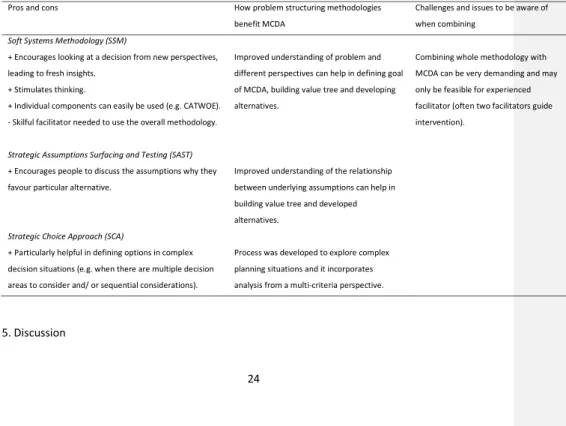
Table 10. The pros and cons of different problem structuring methodologies and of their combination with MCDA; + positive aspect, - negative aspect.
Pros and cons How problem structuring methodologies benefit MCDA
Challenges and issues to be aware of when combining
Soft Systems Methodology (SSM)
+ Encourages looking at a decision from new perspectives, leading to fresh insights.
+ Stimulates thinking.
+ Individual components can easily be used (e.g. CATWOE). - Skilful facilitator needed to use the overall methodology.
Improved understanding of problem and different perspectives can help in defining goal of MCDA, building value tree and developing alternatives.
Combining whole methodology with MCDA can be very demanding and may only be feasible for experienced facilitator (often two facilitators guide intervention).
Strategic Assumptions Surfacing and Testing (SAST)
+ Encourages people to discuss the assumptions why they favour particular alternative.
Improved understanding of the relationship between underlying assumptions can help in building value tree and developed alternatives.
Strategic Choice Approach (SCA)
+ Particularly helpful in defining options in complex decision situations (e.g. when there are multiple decision areas to consider and/ or sequential considerations).
Process was developed to explore complex planning situations and it incorporates analysis from a multi-criteria perspective.
25
In this section we present a synthesis of the findings aiming to provide inspiration and guidance with regard to effective problem structuring for MCDA practice and also to stimulate further research in the synthesis of these complementary approaches to problem resolution.
5.1 Different ways to combine PSMs with MCDA
The methodologies and methods can be combined in several ways, as discussed in the general OR/MS literature (Mingers and Brocklesby, 1997, Kotiadis and Mingers, 2006, Mingers, 2007, Belton and Stewart, 2010).The main distinctions are whether the methodologies come from the same or different paradigms; the number of methodologies/methods used; whether whole methodologies are used or parts; and how they are integrated. The following categorization illustrates the forms of integration exemplified by the cases studied (Fig. 3):
• Sequential: one or more PSMs inform the subsequent MCDA. This is most commonly used and
we found many examples. Examples applying a single PSM with MCDA include: Stakeholder Analysis (Nordström et al., 2010), SWOT (Kurttila et al., 2000), DPSIR (Chung and Lee, 2009) and Cognitive Mapping (Bana e Costa et al., 2006). In 19 articles multiple PSMs were used (Petkov et al., 2007, Bana e Costa et al., 2014, Lienert et al., 2015).
• Embedded: MCDA is embedded within a generic problem structuring process, as illustrated in the cases which combine SODA and MAVA (Belton et al., 1997, Ferreira et al., 2011). The overall process is similar to that of SODA although the nature of the analysis and the outcomes of using the Group Map are differently focused than in a classic SODA intervention.
• Integrated implementation: The combination of scenario analysis and MCDA moves from a
more independent consideration of the two perspectives to an integrated analysis. Initially, the options and the evaluation criteria are identified using MCDA; the scenarios which anticipate potential futures are constructed using scenario analysis. In the subsequent integrated analysis the options are evaluated in the context of each scenario and overall performances across scenarios are compared. Six of the SWOT-MCDA cases also used the two methods in an integrated way (section 4.5, Fig. 3).
Each of the above combinations could be termed “selective” or “complete”. The “selective” approach, in which some elements of the PSM methodology are combined with MCDA, is illustrated by cases where SSM was used with MCDA (Neves et al., 2009, Cerreta et al., 2012, Suriya and Mudgal, 2013a), in one of the three SAST cases (Petkov et al., 2007) and in the use of the AIDA (Analysis of Interconnected Decision Areas) method of SCA (Bana e Costa et al., 2014). Two of the cases which used SSM with MCDA are examples of a “complete” combination in that all of the constituent methods of SSM were used to understand the problem context and inform the development of the MCDA model (Petkov et al., 2007, Belton and Stewart, 2010).