Language: English Original: English
AFRICAN DEVELOPMENT FUND
PROGRAMME: POVERTY REDUCTION AND BUSINESS
ENVIRONMENT SUPPORT PROGRAMME (PRBESP)
COUNTRY: GHANA
APPRAISAL REPORT
May 2011
Appraisal Team
Team Leader: Tilahun Temesgen, Principal Private Sector Specialist, OSGE.2 Team Members: Mothobi Matila, Senior Economist, OSGE.2; Eline Okudzeto,
Macro Economist, GHFO; Owusu Mensah Aygei, Principal Financal
Management Specialist, ORPF2/GHFO; Nanette Derby, Private Sector Specialist, GHFO
Sector Manager: Diko Mukete, OSGE.2 Sector Director: Isaac Lobe Ndoumbe, OSGE Regional Director: Janvier K. Litse, ORWA
Resident Representative: Marie-Laure Akin-Olugbade, GHFO
Peer Reviewers
Korka Diallo (ORWA), Eshetu Legesse Yimer (ORPF2), Richard Doffonsou (ORWA), Kalayu Gebre-Selassie (OSGE1), Mamadou Yaro (ORPF2), Joseph Muvawala (OSHD2), Victor Ndisale (OSGE1), Aka Kouassi (OSGE2), Stephen Olanrewaju (OSGE 1 Consultant)
i
TABLE OF CONTENTS
CURRENCY EQUIVALENTS ... iii
FISCAL YEAR ... iii
ACRONYMS & ABBREVIATIONS... iv
LOAN/GRANT INFORMATION... vi
PROGRAMME EXECUTIVE SUMMARY ... vii
PROGRAMME FRAMEWORK ... viii
I. THE PROPOSAL ...1
II. COUNTRY AND PROGRAM CONTEXT ...1
2.1 Government overall development strategy and medium-term reform prorities ...1
2.2 Recent economic and social development, perspectives, constraints and challenges ...2
2.3 Bank Group portfolio status ...9
III. RATIONALE, KEY DESIGN ELEMENTS AND SUSTAINABILITY ...9
3.1 Link with the CSP, analytical works underpinnings and country readiness assessment ....9
3.2 Collaboration and coordination with other donors ...11
3.3 Outcomes of past similar operations and lessons ...11
3.4 Relationship to other and on-going Bank‟s operations ...12
3.5 Bank‟s comparative advantages and added value ...12
3.6 Application of good practices principles on conditionality ...13
3.7 Application of Bank Group non concessional borrowing policy ...13
IV. THE PROPOSED PROGRAMME AND EXPECTED RESULTS ...13
4.1 Programme‟s goal and purpose ...13
4.2 Programme‟s pillars, operational objectives and expected results ...14
4.3 Financing needs and arrangements ...16
4.4 Beneficiaries of the program ...17
4.5 Impacts on gender ...18
4.6 Environmental impacts ...18
V- IMPLEMENTATION, MONITORING AND EVALUATION ...18
5.1 Implementation arrangements ...18
5.2 Monitoring and evaluation arrangements ...18
VI – LEGAL DOCUMENTATION AND AUTHORITY ...19
6.1 Legal Documentation ...19
6.2 Conditions associated with Bank Group‟s intervention...19
6.3 Compliance with Bank Policies ...19
VII – RISKS MANAGEMENT ...20
ii
APPENDIXES
Appendix 1 : IMF country relations note ... Appendix 2 : Recent macroeconomic and financial indicators ... Appendix 3 : Map of Ghana...
LIST OF TECHNICAL ANNEXES
ANNEX 1 : Letter of development policy ANNEX 2 : Operations policy matrix
ANNEX 3 : A summary assessment of the prerequisite conditions for PRBESP IV
ANNEX 4 : Ghana Business Enabling Environment
ANNEX 5 : Financial management and disbursement arrangement
ANNEX 6 : Ghana governance indicators
ANNEX 7 : AfDB Current Active Portfolio in Ghana
ANNEX 8 : Summary of PFM performance scores based on the 2009 PEFA assessment ANNEX 9 : Ghana – Progress towards Attaining the Millennium Development Goals
Tables
Table 1 : Selected Macroeconomic indicators for Ghana : 2008-20114 ...3 Table 2 : CPIA ratings : 2008-2010 ...8 Table 3 : Financing gap analysis for GSGDA ...17
Boxes
Box 1 : Results of analytic works ...10 Box 2 : Lessons leant from past operations ...12
iii
Currency Equivalents As of April 2011
Currency Unit = Ghana Cedi
1 UA = 2.35 1 US$ = 1.49 1 UA = US $1.59 1 UA = 0.99 GB Pound Sterling 1 UA = 1.12 Euro 1 UA = 9.99 Swedish Krona 1 UA = 1.45 Swiss Franc 1 UA = 1.54 Canadian Dollar 1 UA = 8.32 Danish Kroner 1 UA = 131.80 Japanese Fiscal Year 1 January to 31 December
iv
ABBREVIATIONS AND ACRONYMS
ADF African Development Fund
AfDB African Development Bank
BoG Bank of Ghana
CEPS Customs Excise and Preventive Service
CFA Consolidated Fund Account
COCOBOD Cocoa Board Company of Ghana
CPIA Country Policy and Institutional Assessment
CSO Civil Society Organization
CSP Country Strategy Paper
DB Doing Business
DBSL Development Budget Support Loan
DFID Department for International Development
DPs Development Partners
EC European Commission
EU European Union
EITI Extractive Industries Transparency Initiative
ERPFM External Review of public Finance Management
FAA Financial Administration Act
FAD Fiscal Affairs Department
FAR Financial Administration Regulation
FDI Foreign Direct Investment
FINSSP Financial Sector Strategy Plan
GAS General Audit Service
GDP Gross Domestic Product
GHFO Ghana Field Office
GIFMIS Ghana Integrated Financial Management Information System
GoG Government of Ghana
GPRS Ghana Poverty Reduction Strategy
GRA Ghana Revenue Authority
IAA Internal Audit Agency
IDA International development Association (World Bank)
IMF International Monetary Fund
IPSAS International Public Sector Accounting Standards
ISP Institutional Support Project
IT Information Technology
LTU Large Tax Units
M&E Monitoring and Evaluation
MDAS Ministries, Departments and Agencies
v
MDG Millennium Development Goals
MMDAS Metropolitan Municipal and District Assemblies
MoFEP Ministry of Finance and Economic Planning
MSME Micro Small and Medium Enterprises
MTEF Medium Term Expenditure Framework
NDPC National Development Planning Commission
PAF Progress Assessment Framework
PBO Policy Based Operations
PCR Project Completion Report
PEF Private Enterprise Foundation
PEFA Public Expenditure and Financial Accountability
PFM Public Financial Management
PPA Public Procurement Authority
PPD Public-Private Dialogue
PRSL Poverty Reduction Support Loan
PSDS Private Sector Development Strategy
SEA Strategic Environmental Assessment
SMEs Small and Medium Enterprises
SSA Sub-Saharan Africa
SAI Supreme Audit Institution
TIN Tax Identification Number
TA Technical Assistance
TSA Treasury Single Account
UA Unit of Account
USD Unites States Dollar
WAEMU West African Economic and Monetary Union
WAMZI West African Monetary Zone
WB World Bank
vi
LOAN/GRANT INFORMATION Client’s information
GRANT RECIPIENT: The Government of Ghana
EXECUTING AGENCY: Ministry of Finance and Economic Planning
Financing Plan for 2011-2013
Source Amount (UA) Instrument
ADF/ADB 70.0* Loan and Grant *
(* equivalent to 111.3 million US $) OTHER DPs Amount in US $ AFD 28.70 Grant CIDA 58.06 Grant DANIDA 48.97 Grant DFID 22.22 Grant EC 127.48 Grant GERMANY 52.07 Grant JAPAN 12.62 Grant NETHERLANDS 13.80 Grant SWITZERLAND 8.46 Grant
WORLD BANK 319.00 Loan
TOTAL COST 802.3
* UA 44 million Loan and UA 26 million Grant ADF key financing information
Financing instruments: ADF Grant UA 26 million
ADF Loan UA 44 million
Maturity/Grace Period* 50 years including 10 years of Grace Period
Interest type* NA
Repayment Terms * 1% from 11-20th year, and 3% thereafter
Service Charge * 75 bps
Commitment fee * 50 bps
Grant element** 66 %
*if applicable **It is a measure of concessionality of a loan Programme Timeframe - Main stepping stones (expected)
Progress Assessment Framework (adoption by GoG) Request from GoG for ADF Budget Support
Concept Note approval
July 2010 March 17, 2011 April 2011
Board approval July 2011
Effectiveness August 2011
First Tranche Disbursement Second Tranche Disbursement
Sept. 2011 Sept. 2012
Completion December 2013
vii
Program Executive Summary
Paragraph Topics to cover
Program Overview
Program Name: Ghana – Poverty Reduction and Business Environment Support Programme (PRBESP)
Geographic Scope: Entire Nation of Ghana Overall Timeframe: 2011-2013
Preparation mission: December 2010 Appraisal mission: April 2011
Program Output: The program key outputs will include: (i) Reinstatement of commitment controls in all MDAs to avoid new arrears (ii) Integrated revenue agencies (iii) Financial Sector and private sector development strategies with clearly laid out action plans (iv) and streamlined business registration process and increased number of new businesses registered (v) improved capacity in internal and external audits.
Program Outcomes and Beneficiaries
The direct outcome of the proposed budget support programme is a vibrant private sector through an improved business enabling environment and competitiveness, improved Public Financial Management, particularly credible budget preparation and execution; sound procurement system and process, and improved governance indicators. Thus, the PRBESP will contribute to a greater role of the private sector, improved efficiency and transparency in the use of public resources The direct beneficiaries are the key public sector institutions that provide business support services for private sector and public financial management; while the indirect beneficiaries are all Ghanaians and the private sector agents.
Needs Assessment
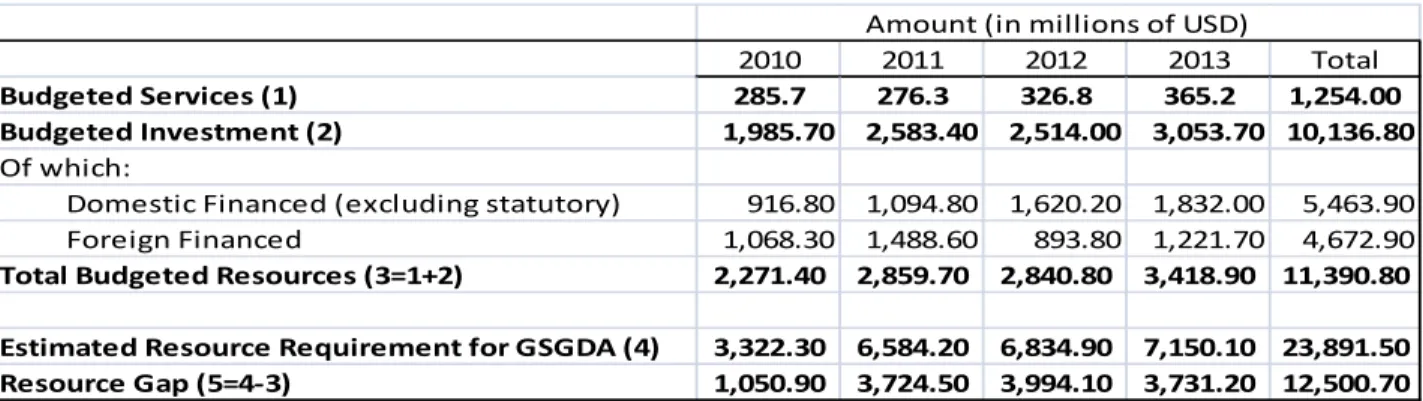
The proposed budget support operation is in line with the GSGDA priorities and resource requirements to implement it. The country has started to produce oil which creates an opportunity for the government to vigorously pursue its growth and poverty reduction agenda. However, for the first years of oil production, there is a relatively high level of financing gap for investment, and thus a higher need for resources to close the financing gap of USD12.5 billion over the GSGDA period. The program, designed to be disbursed within the next two years, is intended to help close such a financing gap. As the country builds upon its growth achievements by continuing its commitment to macroeconomic stability and improved business environment (to create a competitive and diversified economy), it is important that Ghana‟s development partners assist by providing budgetary and capacity building assistance. The program also supports the country to improve its PFM, particularly in the areas of budget preparation and execution, procurement, and enables GoG to deliver on basic social services, including health and education. This ensures an efficient use of public resources. It is also better to provide the assistance in the earlier days of the country‟s development program than later. In the medium to long term, the country is likely to have more resources amid its oil proceeds; and an improved business climate also will help it to attract more FDI.
Bank‟s Added Value
The proposed budget support builds up on previous operations and programs financed by the Bank as well as other DPS, and lessons learned. The proposed operation is the sixth operation in Governance but fourth budget support programme and the Bank has acquired substantial knowledge and experience from these operations in Ghana. Its awareness about the challenges facing Ghana‟s development and its field presence are important assets that allow it to have full engagement in the country‟s development agenda.
Institutional development and Knowledge building
The program contributes further to institutional development and knowledge building in Ghana particularly in the areas of business environment and public financial management (budget preparation and execution, internal and external audits, and procurement). Knowledge from this program will be captured through careful monitoring and evaluation of expected outputs and outcomes, joint MDBS assessments and preparation of a Project Completion Report.
viii
VII. Results Based Logical Framework
Country and project name: Ghana: Poverty Reduction and Business Environment Support Program (PRBESP) IV Purpose of the project : To accelerate economic growth and reduce poverty through an improved business enabling environment to the private sector, and improved Public Financial Management (PFM)
RESULTS CHAIN
PERFORMANCE INDICATORS MEANS OF
VERIFICATI ON
RISKS/MITIGATI ON MEASURES Indicator
(including CSI) Baseline Target
IMPACT
Impact
Accelerated and broad-based
economic growth and poverty reduction with a better diversified economy
Annual growth rate of Real GDP 4.7% in 2009 Average of 10% between 2010 and 2013 IMF report WDI Pove rty Assessment Reports Hum an Development Report AfD B socio-economic indicators Gend er Assessment Reports Risk #1: Macroeconomic instability effects of high expectations related to the commencement of oil production; volatility of revenue and investment due to volatility of oil & other commodity prices;
commencement of oil production may lead away from focus on other productive sectors; Mitigation: Improved diversification of GDP and exports resulting from improved business environment supported by the program contributing to a better performance of the industrial and other non-oil sectors. Risk #2: Despite better global governance Indicators, perceived corruption said to be high; and with the expected increase in the oil sector contribution to GDP, there is a concern that this may create further rent-seeking.
Mitigation:
Commitment to Domestic credit to private
Sector (% GDP)
17.8% (2008) 25% by 2013
Poverty rate (Incidence) as % of population
Gender parity index in junior and senior high schools 28.7% in 2006 2010: JHS: 0.93 SHS: 0.85 20% by 2013 by 2013: JHS: 0.96 SHS: 0.91 O UTC O MES Outcome 1 Improved transparency in public financial management, credible budgeting, procurement, and audits
Credibility of the budget: PEFA score Aggregate expenditure out-turn
PI-1 score C in 2009 Improved to B+ in 2013 - PEFA Reports -Parliament Audit Committee Report. PEFA score: Competition,
value for money
PI-19 score B+ in 2009
Improved to A by 2013
Effectiveness of internal and external audits (PI-21 and PI-26) PI-21=D+ in 2009 PI-26=C+ in 2009 Improved to C by 2013 Improved to B by 2013 Outcome 2 Improved business enabling environment and competitiveness of the private sector
Time and number of procedures to start a business In 2009: Time: 33 days No of proc.:8 In 2013: Time: 6 Days No of proc.:4 -WB DB Reports -Ghana Stat Office -WDI Time and number of
procedures in dealing with construction permit In 2009: Time: 220 days No of procedures: 18 In 2013: Time:110 days No of procedures:8 Trading across border: days to
export and import
In 2010: Days to export: 19 Days to import: 29 In 2013: Days to export: 14 Days to import: 20 O UTPUTS
ix
RESULTS CHAIN
PERFORMANCE INDICATORS MEANS OF
VERIFICATI ON
RISKS/MITIGATI ON MEASURES Indicator
(including CSI) Baseline Target
Efficient and Reliable Public Expenditure Management
* Public expenditure control
Automation of cash system
Public accounts based on harmonization Weak commitment control (2009) Non-automated cash system (2009) Chart of accounts being prepared Commitments controls reinstated and enforced for all MDAs, within the context of the liquidation plan, such that no new arrears over their budget accrue through uncontrolled spending on item 3 and 4*1 by 2010. Automated monthly overview of commitments and outstanding payments for all MDAs enrolled on GIFMIS by 2011
weekly automated cash system established by 2012
Budget and monthly statements of the public accounts based on the harmonized chart of accounts Parliament Audit Committee Report; Joint Review Reports (PAF); Auditor General Report PFM progress report Budget Book and CAGD statement of accounts anti-corruption initiatives is high on the agenda by the government.
Risk #3: Increased
fiduciary risk as revenue collection from oil increases; while expenditure control remains weak and further accumulation of arrears may result.
Mitigation: Support
to capacity building activities in PFM implementation through an upcoming ISP; For the fiduciary risk, credible budget preparation and arrears are high on the agenda. Risk # 4: Unavailability of resources and capacity. Mitigation: Improved revenue collection and income from oil proceeds. Technical assistance and capacity building initiatives by DPs are expected to mitigate these risks. Strengthened and transparent revenue collection system Improved and competitive procurement system Audit functions improved Performance monitoring; Integration of revenue Authorities Level of Public procurement act implementation
Internal audit operations
Recommendations of external audits
Revenue agencies not fully integrated (2009)
TIN testing not completed
Non-satisfactory application of Public procurement act
Internal Audit not yet fully operational for majority of Central Government entities Recommendations by Auditor General not sufficiently followed-up Commencement of integration of revenue agencies by strengthening LTU by 2010
Completion and testing of TIN and registration module of IT system by 2011
Public Procurement Act applied satisfactorily (i.e. Performance monitoring reports adjusted to reflect competitive bids by value)
Internal Audit fully Operational for majority of Central Government entities by 2012 Satisfactory follow-up of Auditor General‟s recommendation by 2012 Revenue Authority Report MoFEP Reports 1
x
RESULTS CHAIN
PERFORMANCE INDICATORS MEANS OF
VERIFICATI ON
RISKS/MITIGATI ON MEASURES Indicator
(including CSI) Baseline Target
Component 2 : Business enabling environment reform
More diversified financial sector and improved access to financial services
Financial Sector strategy development
Second phase of strategy not developed (2009)
Financial sector strategic plan II submitted to cabinet for decision by 2010
FINSIPP II project document
(Implementation Plan) ready for discussion with development partners by 2011
Funding in place for project implementation; commitments from DPs / GoG/ by 2012 BoG Report Ghana Stat Office Continued pursuit of a private sector led growth agenda
Further
improvements in investment climate and business enabling environment through ongoing reforms and removal of
administrative bottlenecks
Governance structures and action plans for PSDS II
Number of new businesses registered PSDS II not developed, and no concrete action plans (2009) Number of registered businesses 45,000 in 2009 PSDS II Launched by 2010 Governance arrangements for PSDS II finalised and Council and Board of Directors of PSDS II inaugurated by 2011
PSDS II action plan/ initiatives have been drawn up and implementation has begun by 2012 Number of businesses registered increased to a total of 50,000 in 2010 Number of businesses registered increased to a total of 55,000 in 2011 Number of businesses registered increased to a total of 65,000 in 2012 Terms of Reference (ToR) of the entire Governance Structure signed by MOTI PSDS II Progress Reports WB DB report KE Y AC T IVI T IE S ACTIVITIES
Improving budget formulation and expenditure, and
procurement system Improving both internal and external audit through capacity building in the audit office
Effective implementation of the PSDS II, PFM and budget and revenue management reforms.
Streamlining Business registration and construction permits; Improvement in time cost and procedures in dealing with imports and exports,; entrepreneurship development and capacity building in the private sector.
INPUTS
Budget support only
ADF Loan/Grant =UA 70 million (approx. 111.3 million USD)
Other donors about 691 million USD
Missions: Appraisal, supervision, policy dialogue, MTR and donor coordination
1
I THE PROPOSAL
1.1 Management submits the following Report and Recommendations on a proposed operation (with a combination of loan and grant) to the Government of Ghana (GoG) for the amount of UA 70 million to finance the Poverty Reduction and Business Environment Support Program (PRBESP). This is a general budget support operation under the Multi Donor Budget Support (MDBS) framework with other development partners. The program results from an identification mission to Ghana in December 2010, and a subsequent request from the Government received in a letter dated April 13 2011in line with a letter of Development Policy to the AfDB dated March 2011. The program is aligned with Ghana Shared Growth and Development Agenda (GSGDA), the Bank Group‟s Medium Term assistance Strategy and its Governance Action Plan (GAP) as well as support programs to Ghana by other Development Partners (DPs).
1.2 The overarching goal of the proposed program is to help Ghana achieve higher and sustained economic growth and poverty reduction outcomes as set out in the GSGDA, while supporting the achievements of the Millennium Development Goals (MDGs). The operation will achieve this goal through two major components: an improved Business Enabling Environment (BEE) to the private sector and improved Public Financial Management (PFM). The Policy objectives are: to support the implementation of GSGDA, the GoG‟s private sector development strategy (PSDS) and continued PFM reforms. The proposed programme is linked to the MDBS framework and aims at reinforcing Government‟s plans to address weaknesses in the business environment (focusing on SMEs, access to finance, as well as removing administrative barriers in obtaining permits, starting a business, and trading across borders). The program also aims at reinforcing Governments efforts in PFM reforms.
II COUNTRY AND PROGRAM CONTEXT
2.1 Government overall development strategy and medium-term reform priorities
2.1.1 The GoG‟s development strategies are produced through consultations with stakeholders to ensure ownership and are well articulated in three strategic documents. The earlier strategies are documented in the Ghana Poverty Reduction Strategy (GPRS-I2 2003 – 2005), and the Growth and Poverty Reduction Strategy (GPRS-II 2006 – 2009). Under these two earlier development strategic programs, substantial results had been achieved in the areas of macroeconomic stabilization and poverty reduction; while structural challenges characterized by large fiscal and Balance of Payments deficits are still causes for concern. Among the main reasons for these deficits were the high levels of expenditures that were not accompanied by corresponding high levels of revenue.
2.1.2 The current medium term development strategy, the Ghana Shared Growth and Development Agenda (GSGDA, 2010-13), was presented and discussed at the Consultative Group meeting with Development Partners in September 2010. The GSGDA aims at pursuing an employment led economic growth strategy that appropriately links agriculture to industry, particularly manufacturing, improving the business environment for private sector competitiveness, and improving transparency and accountability in the use of public funds and other national resources.
2 Ghana Poverty Reduction Strategy is now referred to as GPRS I to distinguish it from Growth and Poverty
2
2.2 Recent economic-social developments, perspectives, constraints and challenges
2.2.1 Recent Macro-economic Performance: Ghana‟s economy has been among the good
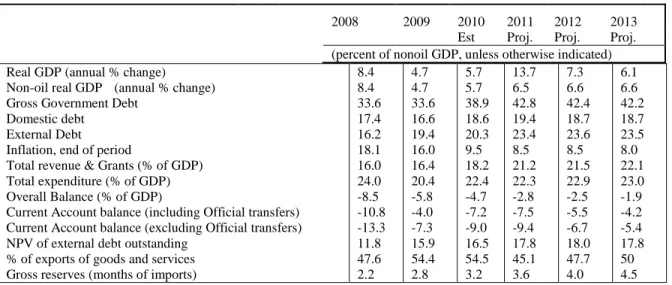
performers in Africa during the last few years. Real GDP growth averaged 5.7% (or 6.5% post rebasing) between 2007 and 2009 though it slowed-down in 2009 due to the global financial crisis and policy tightening by the authorities. Growth in 2010 and 2009 was estimated at 5.7% and 4.7% (or 4.1% pre-rebasing) respectively compared to 8.4% (or 7.0% pre-rebasing) in 2008. However, these growth rates were still higher than the Sub-Saharan African average of 2% during the same periods. The rebasing of Ghana‟s national accounts data in 2010 has led to a significant increase in the size of its formal economy3. This increase reflects the inclusion of a broader array of economic activities in the GDP data, especially in the services sector. With the rebasing, Ghana‟s per capita income for 2009 is now estimated at USD 1,105.6 compared to the previous estimate of USD 658.6, thereby graduating Ghana to a lower middle income country. 2.2.2 The fiscal and current account deficits as well as inflation showed improvement:
Following Government‟s adoption of a multi-year fiscal stabilization plan in 2009, fiscal deficit narrowed to 9.4% of GDP (or 5.9% of rebased GDP) in 2009 and to an estimated 9.6% (or 5.7% of rebased GDP) in 2010 on a cash basis, from 14.5% of GDP in 2008.. Reflecting a depreciating exchange rate, increased international oil prices and adjustments in utility and petroleum product prices, inflation initially accelerated from 10.9% in 2006 (end of period) to 12.8%, 18.1% and 20.7% in 2007, 2008 and mid-2009 respectively. However, by the beginning of the third quarter of 2009, the consumer price index started to decelerate and ended the year at 16.0%, close to the Central Bank target of 14.5%. In 2010, inflation rate maintained its downward slide as a result of relative stability of the cedi and lower food prices. At end of March 2011, year-on-year inflation rate was 9.4%.
2.2.3 Achievements in the Social Context: Significant poverty reduction outcomes have been achieved in Ghana during the last few years. Incidence of poverty went down from 51.7% in 1992 to 28.5% in 2006 and indications from GoG are that poverty has fallen since then. This was accompanied by a strong decline in the prevalence of malnutrition which was halved between 1993 and 20084. However, there have been differences between regions in these achievements. Significant poverty reduction was achieved in the South, where large productivity gains in the agricultural sector (cocoa in particular) occurred; while the incidence of poverty remains high in the northern regions where most of the residents are predominantly rainfall-dependent farmers who are also highly vulnerable to shocks due to limited diversification of income.5 Also, poverty remains very high in the rural areas which did not benefit as much as the cities from the economic expansion. With 51% of the population in the rural areas, this remains a key challenge to the government.
2.2.4 Progress towards the Millennium Development Goals (MDGs) is encouraging: Ghana has achieved good progress in most MDGs, with the exception of sanitation, child and maternal mortality. The MDGs on income poverty, hunger, primary school completion, gender parity at
3
The nominal GDP estimate was rebased using 2006 as the base year. This increased the size of the GDP estimates by about 60.3% and the 2009 nominal GDP is now 36.87 billion Ghana cedi (around USD 25.96 billion) compared to the old series of 21.75 billion Ghana cedi (or around USD 15.42 billion). A major implication of the revision is the ratios of the country‟s key risk indicators including, debt to GDP, current account deficits to GDP, and fiscal balance to GDP ratios will be smaller.
4
Poverty rates are computed using the national poverty line. Estimates using the international poverty line of US$1.25 a day put the poverty rate at 30 percent in 2006, down from 39 percent in 1999
5
3
school and access to water (MDG1a, MDG1b, MDG2, MDG3 and MDG7a respectively) are all on track to be met by 2015. Prevalence of HIV also declined from 2.7 to 2.2 percent of the population between 2005 and 2008. While keeping the momentum on these achievements, the country also needs to focus on achieving better results in the other important MDGs where it is off-track (notably in child and maternal mortality (MDG4 and MDG5).
2.2.5 Progress in terms of access to primary education has been significant. In line with the Education Sector Development Strategy adopted in 2003, gross primary enrolment rates increased from 86% to 95% between 2003/4 and 2008/9, while net primary enrolment rates went up from 56% to 88% over the same period. The supply side of this improvement was due to increased efforts, over the years, at building new schools in deprived districts, and increased attention to gender parity; while the demand side was supported by the introduction of a school feeding program in poor regions.
2.2.6 Medium-term Outlook: Perspectives of the medium term outlook remain generally favourable for 2011 and beyond. Projections by the GoG and the IMF indicate that macroeconomic conditions will continue to improve, with sustained growth underpinned by fiscal consolidation. The IMF data show that economic performance recently improved starting with a recovery of real GDP growth from an estimated 4.7% in 2009 to 5.7% in 2010 and it is projected to be 13.7% (6.5% for the non-oil GDP) in 20116. In order to keep the momentum, as indicated in its GSGDA, major focus areas of GoG‟s spending priorities will be to enhance growth, macroeconomic stability & employment creation; improve public financial management, and enhance business environment. Despite the prospects of increased revenue from oil and possible continued trend (at least in the short run) of buoyant prices for its main exports (Cocoa and Gold), Ghana still will need development assistance due to the existing large deficits in its economic and social infrastructure. The GSDA and the new Aid Policy Paper reiterate Ghana‟s need for continued Official Development Assistance and budget support.
Table 1: Selected Macroeconomic Indicators for Ghana: 2008-2014
2008 2009 2010 2011 2012 2013 Est Proj. Proj. Proj. (percent of nonoil GDP, unless otherwise indicated) Real GDP (annual % change)
Non-oil real GDP (annual % change) Gross Government Debt
Domestic debt External Debt Inflation, end of period
Total revenue & Grants (% of GDP) Total expenditure (% of GDP) Overall Balance (% of GDP)
Current Account balance (including Official transfers) Current Account balance (excluding Official transfers) NPV of external debt outstanding
% of exports of goods and services Gross reserves (months of imports)
8.4 8.4 33.6 17.4 16.2 18.1 16.0 24.0 -8.5 -10.8 -13.3 11.8 47.6 2.2 4.7 4.7 33.6 16.6 19.4 16.0 16.4 20.4 -5.8 -4.0 -7.3 15.9 54.4 2.8 5.7 5.7 38.9 18.6 20.3 9.5 18.2 22.4 -4.7 -7.2 -9.0 16.5 54.5 3.2 13.7 6.5 42.8 19.4 23.4 8.5 21.2 22.3 -2.8 -7.5 -9.4 17.8 45.1 3.6 7.3 6.6 42.4 18.7 23.6 8.5 21.5 22.9 -2.5 -5.5 -6.7 18.0 47.7 4.0 6.1 6.6 42.2 18.7 23.5 8.0 22.1 23.0 -1.9 -4.2 -5.4 17.8 50 4.5 Sources: Official data and IMF staff estimates and projections.
6 Real GDP growth by the GoG is estimated at 7.7% for 2010 which is significantly higher than the IMF estimates, as well as the 6.5% set under the GSGDA and the 2010 budget statement (NDPC, 2011)
4
2.2.7 Key Medium-Term Constraints and Challenges: Major development challenges in the short to medium terms include the following:
M
aintaining sound macroeconomic management and budget governance through improved domestic and external resources management. On the expenditure side, the public sector wage bill still remains high in relation to the tax base and the size of the economy. In addition there is a strong need for improvement in expenditure control to effectively use the fiscal space created by future oil revenues. An improved PFM with strong budget and expenditure systems is necessary to ensure this.
In addition to continued reduction in poverty, tackling income and poverty disparities among the regions and by gender will be a challenge. This needs a clearly defined pro-poor policy and action plans including targeted interventions in order to ensure the sharing of benefits from growth and avoid inequality and unsustainable growth paths. In light of the commencement of oil revenue, there is a need to focus on improved
absorption of large external inflows without compromising competitiveness of the non-oil productive sector, particularly exporters. Removing administrative barriers to reduce the costs of doing business in the whole economy will ensure attractiveness of the non-oil sector for private investment.
Improving the Financial sector further, improving capacity of audit and oversight institutions including in those linked to the management of oil revenues.
2.2.8 Fiscal policy: The Government has recently emphasized the need to review the quality and efficiency of its public expenditures. The major effort in this area started in 2009 through the preparation of the budget and Medium Term Expenditure Framework (MTEF) for 2010-12. The budget preparation guidelines then used emphasized the need to improve expenditure reporting through analyses of needs, cost and benefits, lifecycle costs and affordability as well as implementation readiness. Efforts were also made to contain the growth in the wage bill by reforming the public sector with a view to improve efficiency and productivity as well as right sizing it; and reduce subsidies to utilities through tariff increases. The integration of the revenue agencies under one umbrella entity – the Ghana Revenue Authority (GRA), coupled with the Government strategy to strengthen the Large Tax Units (LTUs) is one key step within the policy framework aimed at improving revenue administration.
2.2.9 With limited improvement in revenue and grants collection, most of the fiscal adjustment took place on the expenditure side, domestic investment in particular. In this regard, the GoG almost stopped financing non statutory domestically financed investment expenditures, which dropped from 3.3 percent of GDP in 2008 to 0.8 percent in 2009 and 2010. The increase in foreign-financed capital expenditures partially cushioned this compression. A second important source of expenditure adjustment was the accumulation of outstanding obligations vis-à-vis statutory funds. With limited financial resources, the authorities deferred payments to the various Statutory Funds in 2009, particularly the National Health Fund, the Social Security, the Ghana Education Trust Fund, and the District Assembly Common Fund. Meanwhile, with increased reliance on domestic financing, domestic debt service rose significantly starting in 2008, and
5
continuing in 2009 and 2010, in spite of declining interest rates on sovereign issuances observed since mid-2009.
2.2.10 On the revenue side, direct tax collection improved, particularly with increases in the levels of personal income and corporate taxes in the 2009 and 2010 budget. The reintroduction of a national stabilization fund, the increase in airport tax rates and mineral royalties also contributed to rise in direct tax revenue. Indirect taxes however suffered from growth and inflation deceleration. Non tax revenue increased with Cocoa, higher user fees and one-off dividends payments. User fees and charges (road tolls notably) were raised in 2010, and the good cocoa harvests allowed Cocoa Board Company of Ghana (COCOBOD) to declare higher dividends to the Consolidated fund in 2010. Grants, which were front-loaded in 2009, declined in 2010 as a proportion to GDP
2.2.11 The cash deficit went down from 8.5 percent of GDP in 2008 to 5.8 percent in 2009 before bouncing back to 7.7 percent in 2010. Arrears in 2008 were estimated at 3.3% of GDP. In 2009, GoG cleared 1.7 percent of GDP worth of these arrears, but it accumulated an additional 2.3 percent of GDP in arrears (vis-à-vis contractors, and Statutory Funds). This resulted in a net arrears accumulation of 0.6 percent of GDP; while in 2010, the GoG cleared the equivalent of 1.0 percent of GDP worth of arrears, and accumulated another 1.0 percent (all vis-à-vis private contractors) – and this resulted into no net accumulation. On a commitment basis, the deficit went down from 12.5 percent of GDP in 2008 to 6.4 percent in 2009 and 7.6 percent in 2010. In an attempt to curtail continued large arrears, the GoG re-introduced in 2010 the requirement for a Commencement Certificate issued by MoFEP to MDAs before they commit any resources to projects.
2.2.12 Business Enabling and Regulatory Environment: The private sector in Ghana is dominated by MSMEs, and is faced with a number of structural and administrative constraints at the policy and institutional level. As a result, Ghanaian enterprises are generally less productive and thus less competitive even compared with most other African countries (see Annex 5D). Therefore, it is imperative that private sector development continues to be at the forefront of the Government‟s development agenda to enhance its competitiveness, growth and efficiency with a focus on improving productivity. The role of the financial sector in contributing to a competitive private sector is also given equal importance. There have been significant developments in the regulatory environment of the financial sector: 18 new laws were passed under Financial Sector Strategic Plan I (FINSSP I) which contained 98 recommendations for reforming and strengthening the financial sector – and 80 % of these recommendations have been implemented. However, the country‟s financial sector has been suffering from massive non-performing loans (NPLs) and thus was unable to extend new credit to the private sector as much as it was needed in 2009 and 2010: NPLs stood at 18.7% as at the end of October 2010 though it inched downwards to17.6% at the end of December.
2.2.13 The Government‟s approach to enhancing the Business Environment also includes: removing administrative barriers to reduce the costs of doing business, addressing infrastructure constraints, improving contract enforcement and land registration. Over the past five years, these objectives were channelled through the National Medium Term Private Sector Development Strategy (PSDS 1) which envisaged improving the investment climate, national markets and competitiveness of Ghanaian exports. There have been some encouraging improvements in Ghana‟s Business Environment as a result: For instance, credit to the private sector (as a share of
6
total domestic credit) improved substantially, reaching more than 80% in 2009, up from around 47% in 2002. A number of key indicators assessed by the World Bank Doing Business Report also registered improvements including substantial reduction in days to start a business, procedures for exports and imports. According to the most recent Doing Business Reports time required for business registration declined from 129 days in 2002 to just 33 days in 2009. However, the business environment in Ghana still has some weaknesses that impede competitiveness of the country‟s private sector and need to be addressed. For example, the country needs to do more to improve efficiency of customs and reduce time cost of imports and exports, particularly given the potential surge in imports and exports due to the oil sector; Further streamlining of business registration and permits will be important to increase the number of new enterprises created and to deal with the high prevalence of informal sector. Also, with the commencement of oil production, the non-oil sector may become even less attractive to investors and thus remain less competitive. Among the immediate focus areas of the government, therefore, will be creating conducive environment for economic diversification. In terms of the Financial Sector, the FINSSP II is expected to improve depth of the sector, enhance its efficiency and improve access to finance for businesses. It is also important to note that a new Industrial Policy which provides guidelines for growth of the industrial sector has been approved by Cabinet. A Competitiveness Bill, which seeks to provide incentives for promoting the processing of local resources into finished products, is also being developed.
2.2.14 Public Financial Management: The institutional framework for PFM in Ghana has improved with the distinct separation of powers that supports a well functioning PFM system, notwithstanding capacity constraints pervading a number of potential high performing institutions. The External Review of the Public Finance Management (ERPFM) and Public Expenditure and Financial Accountability (PEFA) state that Ghana has continued to focus on building strong foundations towards achieving aggregate fiscal discipline, based on positive developments in the following areas: (a) prevalent low levels of unreported extra-budgetary expenditures; (b) timely public access to key fiscal information; (c) adherence to a fixed and coherent budget calendar; (d) comprehensive recording and reconciliation of debt service on the debt portfolio; (e) timely in-year budget implementation reports and annual financial reports on the Consolidated Fund; and (f) improved effectiveness and timely external audit scrutiny. Progress was also achieved in the area of public procurement law, with increased coverage provided by the entity tender committees and the tender review boards; while under the auspices of the new internal audit agency law, the number of MMDAs that submitted internal audit reports rose. Despite these modest achievements, the 2010 Public Expenditure and Financial Accountability (PEFA) concludes that Ghana‟s performance needs strengthening from the perspective of the three main objectives of a sound PFM system: aggregate fiscal discipline, strategic allocation of resources and the efficient delivery of services.
2.2.15 Fiduciary Environment: A Fiduciary Risk assessment was carried out by the appraisal team and concluded that adequate public financial management exist for managing the Poverty Reduction and Business Environment Support Program (Technical Annex 6). Based on the assessments, the PFM system meets the Bank‟s minimum requirements for the proposed budget support operation. The overall fiduciary risk of the operation is rated “moderate”. This is based on the outcome of the latest IMF Safeguards Assessment of the Bank of Ghana (BoG), the improvements already made as well as the demonstrated commitment of Government to implementing wide ranging PFM reforms, including public procurement. Progress has also been made in PFM reforms in recent years. The External Review of the Public Finance Management
7
(ERPFM) and PEFA reports of 2010 confirmed that Ghana enjoys a well grounded and formulated legal and regulatory framework for PFM. Key amongst the established laws and regulations that have been enacted as off-shoots of the 1992 Constitution of Ghana are: Financial Administration Act (FAA, 2003), Financial Administration Regulations (FAR, 2004), Public Procurement Act (2003), Audit Service Act (2000), the Internal Audit Agency Act (2003), Internal Revenue Act (2000) and its successor - the Ghana Revenue Authority Act (2009). Inherent in the application of the key elements of the framework, however, is the weaknesses in uniform compliance with the dictates of the Acts and Regulations. The next round of PEFA is expected to be undertaken in two years time.
2.2.16 The Public Procurement Authority (PPA) is currently working on action plan on the identified areas for improvement which aims at addressing the existing challenges. Establishment of Procurement Units in MDAs is a challenge due to lack of qualified personnel to manage these units. Both GoG and DPs expect that the structural and interim reforms mentioned above will impact the overall PFM performance in the coming years. Indeed it is only when the reforms are completed and implemented over an entire fiscal year that its impact can be measured appropriately.
2.2.17 The Government, in an effort to introduce efficiency and control in PFM, and to reduce budget deviations and arrears, introduced the Ghana Integrated Financial Management and Information System (GIFMIS). This is intended to improve budget comprehensiveness, consolidated cash management, monitoring & control of outstanding commitments, and payroll management.
2.2.18 Despite the efforts and achievements to date, the following PFM related issues need further particular attention:
Successful enforcement of the reinstated commitment controls and liquidations of arrears Improved budget system (integration of different flows under one budget information system
and accounting framework). According to the NDPC, the weak link between budget and policy formulation requires that budget reflects policy priorities of government
Strong inter- and intra-agency coordination (between MoFEP, GRA, BoG, CAGD) Finalisation of the TSA reforms, improving government‟s cash position
Transparency and enactment of regulations and implementing laws regarding expenditures from oil revenues
2.2.19 Recent Development in Governance: The Parliament of Ghana continues to perform its legislative, oversight, deliberative, financial and regulatory functions to deepen democracy, good governance and sound economic development. The Public Accounts Committee of Parliament also continues to hold public hearing on an annual basis to consider the report of the Auditor General on Public Accounts and this has raised public confidence in the ability of Parliament to exercise control over the budgetary process. The Electoral Commission, established by the Constitution, continues to successfully conduct Presidential, Parliamentary and district level elections. Since the return to constitutional rule in 1992, the Electoral Commission has so far conducted five Presidential and Parliamentary, and four district level elections, which were internationally acclaimed to be credible, free and fair. Civil Society Organizations (CSOs) and think-tanks have also continued to make significant inputs into the consolidation of democracy.
8
2.2.20 However, critical challenges exist in the practice of democracy and reform of independent governance institutions. In the case of CSOs, no clear framework or guidelines exist for engagement with Government and their participation in the governance process. Currently, the independent governance institutions are under resourced. To improve this, key policy objectives that have been identified include: strengthening arms of Governance and independent governance institutions; enhancing civil society participation in Governance; promoting coordination, harmonization and ownership of the development process; promoting the participation of state and non-state institutions in governance processes.
2.2.21 Local Governance and Decentralization: Ghana‟s current decentralization and local
government system was instituted two decades ago, and has been accepted as an important governance structure for delivering services to communities. However, the full potential of the decentralization and local governance structure is yet to be derived. There is lack of shared conceptual and political understanding across governments and civil society regarding the overall direction of decentralization. In addition a range of key constraints still persist which needs to be overcome before the benefits of decentralization can be derived.
2.2.22 The 2010 Ibrahim Index of African Governance report ranks Ghana 7th out of a total of 53 African Countries. The ranking is based on the following categories: Safety and Rule of Law; Participation and Human Rights (participation, rights and gender); Sustainable Economic Opportunities (public management, private sector, infrastructure and environment and the rural sector); and Human Development (health and welfare and education). Ghana‟s governance scores are therefore encouraging and demonstrate Government‟s commitment to improve overall governance in the country. (See Annex 7 for details)
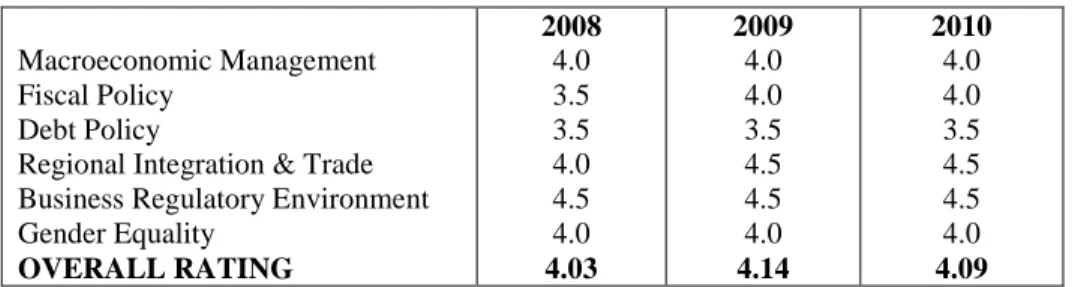
2.2.23 With Ghana‟s improved economic performance in the recent past, the country‟s CPIA ratings also improved from 4.03 in 2008 to 4.14 in 2009, though they fell slightly to 4.09 in 2010.
Table 2: CPIA ratings: 2008-2010 Macroeconomic Management
Fiscal Policy Debt Policy Regional Integration & Trade Business Regulatory Environment Gender Equality OVERALL RATING 2008 4.0 3.5 3.5 4.0 4.5 4.0 4.03 2009 4.0 4.0 3.5 4.5 4.5 4.0 4.14 2010 4.0 4.0 3.5 4.5 4.5 4.0 4.09
2.2.24 Ghana was ranked 62 out of 178 countries on the corruption perceptions index by the Transparency International. It scored 4.1 out of a score range of 0-10. Government of Ghana is committed to reducing corruption in the country. Government has established an anticorruption agency and a National Anti-Corruption Action Plan (NACAP) will be developed from the Anticorruption policy with a view to streamline anticorruption activities. The Commission for Human Rights and Administrative Justice (CHRAJ) has been identified as the lead institution in the fight against corruption and will work with other institutions like, Attorney General, Judiciary, Parliament, Development Partners (DPs), Civil Society Organisations (CSOs), private sector, etc. The objective is to route out corruption and avoid diversion of public resources from public needs to private consumption.
9
2.3 Bank Group Portfolio Status
2.3.1 The current Bank Group portfolio in Ghana consists of thirty (30) ongoing projects with a total approved amount of UA 682.2 million. Transport Infrastructure, with 5 projects, accounts for UA 247.5 million (36%); while power accounts for UA 27.6 million (4%). Agriculture, with 7 projects, accounts for another UA 126 million (18%); and water and Sanitation account for UA 62.74 million (9%). There are four projects in the social sector accounting for a total of UA 80 million (11%). Two private sector operations account for another UA 30 million (5%). In addition, there are six multinational projects that account for UA 110.5 million (16%). The portfolio performance review carried out in February 2011 showed the following: Portfolio-at-Risk (45.7%), Commitment-at-Portfolio-at-Risk (35.84%), problematic projects (8.6%), and Cumulative Disbursement ratio (35.9%).
III RATIONALE, KEY DESIGN ELEMENTS AND SUSTAINABILITY
3.1 Link with the Country Strategy paper (CSP), Analytical Works Underpinnings and Country Readiness Assessment
3.1.1 Linkage with the country’s poverty reduction strategy and Bank’s country strategy
paper: As pointed out earlier, the GoG‟s development strategy is produced through consultations with stakeholders and is well articulated in three strategic documents. Focus areas of the current GoG development strategy (GSGDA) include enhanced competitiveness of Ghana‟s private sector; human development, employment and productivity; and transparency and accountable governance (see paragraph 2.1.1 above).Also, the 2005 – 2009 CSP (and its update (2010-2011) prepared by the Bank had as its overarching thrust the scaling up of development impact, improvement of the quality of life for Ghanaian citizens, and the achievement of the MDGs using two pillars: (i) Improving the Investment Environment; and (ii) Promoting Pro-poor, Pro-gender Equity Policies. The GoG‟s PSDS II emphasizes the centrality of enhancing Ghana‟s private sector competitiveness, SMEs, improved infrastructure development, and job creation. Therefore, the Government‟s GSGDA, PSDS II and the Bank‟s CSP update are strongly linked.
3.1.2 The proposed budget support program therefore is aligned with (i) GSGDA, (ii) PSDS II, iii) the Bank‟s Governance Strategic Action Plan (GAP 2008-2012) as well as iv) the Bank‟s CSP update (2010-11). The two main pillars of the program (Improved Business Environment for private sector development and Improved and Transparent PFM) provide the framework for addressing some of the development challenges discussed earlier. The proposed operation will strengthen the PFM system in the country (focusing on budget preparation and revenue administration), as well as its business environment. In doing so, it improves efficiency in the use of public resources, improves GoG‟s fiscal position, and improves the country‟s tax base by facilitating formalization of private enterprises, and helps address issues related to weaknesses in audit services. An improved business environment creates a vibrant private sector in the non-oil sector thereby preventing loss of competitiveness of the non-oil productive sector.
3.1.3 Analytical Works Underpinnings: The design of the budget support operation has been guided by various analytical diagnostic works and reports including Project Completion and Supervision Reports, IMF reports, MDBS reports and minutes, GoG‟s budget speech and
10
Medium Term strategy reports, PSDS documents, PEFA Assessments, World Bank Doing Business Reports, as well as identification mission assessment reports. Major findings and conclusions from these analytical underpinnings show that Ghana has achieved improvements in both its Business Climate and PFM indicators.7 Other Important conclusions from the analytical reports are outlined in the box below:
Box 1: Results of Analytical works
i) PFM: Budget Preparation and Execution
- By way of comprehensiveness, Ghana‟s central government PFM systems and procedures are fairly sound; but Ghana does not perform very well with respect to the credibility of the budget. Two factors that can undermine the credibility of the budget are significant extra-budgetary activities, and the poor monitoring of fiscal risk, debt and contingent liabilities.
-The PFM systems of Ghana‟s central government score well with respect to some aspects of revenue
administration, debt management, payroll management and procurement, but overall predictability and control in budget execution remains an area of concern.
-Ghana does not yet score well on all key aspects of aggregate fiscal discipline
ii) Business Environment
-Ghana‟s overall ranking in terms of ease of doing business has shown improvement (see paragraph 2.2.10). -The major contributor to improvement in the ease of doing business is the substantial improvement in Ghana‟s ranking in terms of getting credit (from 109th in 2010 to 46th in 2011).
-Ghana, however, still has a lot to do to improve its competitiveness particularly in the areas of access to finance (particularly for MSMEs), dealing with construction permits, trading across borders as well as starting and closing a business. These, together with strengthening the financial sector, will help reduce informality and widen the tax base for the economy.
3.1.4 Previous Bank operations have supported the GoG in its poverty reduction agenda, and results of the PCRs for these operations and discussions with the GoG confirm that. Even though it is difficult to attribute specific outcome to specific operations, it is important to note that implementation of the Bank‟s previous operations have contributed to the satisfactory growth and poverty reduction outcomes in Ghana. GDP growth between 2007 and 2009 was 6.5% (post rebasing), and prevalence of malnutrition has been halved in 2008 compared with its level in 1993. Ghana has been ranked 5th among 75 low income countries and second in Sub-Saharan Africa by Country Policy and Institutional Assessment (CPIA). The country‟s overall CPIA rating has improved recently from 4.03 in 2008 to 4.14 in 2009, though it slightly declined to 4.09 in 2010. There is therefore a strong likelihood that most DPs will continue their Budget support to Ghana through the MDBS framework.
3.1.5 Country Readiness Assessment: Overall, Ghana meets the Bank‟s prerequisite conditions (both general and technical) for General Budget Support Program: Political and economic stability, and government commitment for policy reforms is in place; there are well-designed PRSP or NDP and effective implementation mechanisms; there is a satisfactorily viable macro-economic and financial medium term framework; and a satisfactory fiduciary review of the public financial management system is in place (see Technical Annex 3).
7
11
3.2 Collaboration with other donors
3.2.1 Collaboration with other DPs and implementation: The overall budget support programme in Ghana is supported by eleven Multi-Donor Budget Support (MDBS) members who are signatories of the MDBS Framework Memorandum (FM). The FM describes the common framework for the implementation of grant and loan agreements to support the GoG‟s growth and development agenda under the MDBS framework, but it also provides room for individual arrangements between each DP and the GoG. While the contents in the individual funding arrangements take legal precedence over the FM, DPs have agreed to establish funding arrangements that are compatible with the spirit and provision of the FM and this has helped to increase predictability of budget support operations. The MDBS policy dialogue is based on the common Progress Assessment Framework (PAF) which has agreed indicators and triggers to be monitored and assessed collectively each year. Satisfactory achievement of the agreed triggers assessed by MDBS determines the level of disbursement by the individual DPs and all members are expected to align to the PAF. The African Development Bank has maintained a good track record of collaboration in Ghana‟s Budget Support Operations through the MDBS, and in fact it is among the largest contributors to the MDBS fund. The proposed program, as its predecessors, will use the MDBS framework for general budget support in the form of „pooled resources‟. 3.2.2 Donor coordination in Ghana is mainly carried out in the Sector Working Groups (SWG), made up of Government officials, DPs and in some cases, the private sector. The 2009 Ghana‟s Joint Assistance Strategy G-JAS review found that the coordination at the SWG levels has enabled significant effort by many DPs to improve the selectivity and focus of their programmes as well as in improving the harmonisation of aid delivery. However, while there have been efforts to develop joint monitoring arrangements in a number of sectors, parallel monitoring systems are still common and individual monitoring missions continue to be undertaken, and this pose challenges to further deepen aid harmonization. To this end, the Heads of Cooperation of Development partners in 2011 have embarked on a joint strategy document for Ghana aimed at addressing these challenges. The design of the proposed operation has also benefitted from discussions and consultations with DPs, MDAs, civil society and the private sector through a series of meetings with their representatives and incorporating their views.
3.3 Outcomes of past similar operations and lessons
3.3.1 The PCRs for the previous budget support operations indicate that the objectives and targets envisioned were largely achieved within the expected time frame. The PCR for the third poverty reduction support loan (PRSL III) has confirmed that the operation has successfully supported Government‟s objectives of growth, employment and income generation; good governance and civic responsibility as contained in the Government‟s Growth and Poverty Reduction Strategy (GPRS II) document. The PCRs from the earlier similar operations (PRSL I and PRSL II) also have demonstrated that the operations have enabled the GoG carry out the action plans in its respective medium term development strategies. The outcomes of the Bank‟s past operations can be summarized as: improved operational efficiency, monitoring and evaluation; and response to shocks and crisis. The public finance management reforms as well as the public service reforms have been undertaken and significant progress has been made. During the ADF XI cycle, Ghana performed satisfactorily, and as a result all MDBS partners disbursed on the basis of a satisfactory joint annual assessment. Challenges remain that require more concerted efforts by both the Government and DPs, however.
12
Box 2: Lessons learned from past operations
i)Operational efficiency
There is a need to avoid multiple and unattainable conditions and conditions should be realistic and fall within the limits of the government.
It is important to focus on pillars and components that complement each other in order to enhance success of the program (accordingly Business Environment and PFM issues complement each other).
There is also a need for the Bank to continue to enhance its assistance through the MDBS framework, and dialogue through increased capacity and engagement of its field office.
The design of a budget support operation should take into account government commitment and capacity to deliver so that delays in project start up and implementation can be avoided. There is therefore a need to assess government‟s capacity to effectively implement agreed performance assessment framework targets.
ii) Monitoring and supervision
There is a need for the Bank to closely monitor and supervise its budget support, and participate proactively in dialogues and MDBS SWGs. To this end, the proposed program will use GHFO staff (Macroeconomist, Private sector specialist and PFM specialist) in the monitoring and implementation of each of the program‟s components.
iii) Response to shocks and crisis
In 2009, the Government of Ghana requested the Bank to frontload part of the third tranche amounting UA 20.0 million into the second tranche in order to minimize the effects of the global financial crisis. The frontloading request was approved by the Board on a lapse of time basis. Such flexibility in assisting RMCs during unexpected shocks can help reduce the potential negative impacts of unexpected shocks on poverty reduction outcomes. By focusing on clear and attainable targets and disbursement triggers, the proposed program will ensure flexibility and reduced disbursement time.
3.4 Relationship to other and on-going Bank’s operations
3.4.1 The proposed program complements other ongoing operations in Ghana. These include, for example, the five transport sector (road) projects (with a commitment amount of 247.5 million UA) which would contribute to improvement in the Business Climate and competitiveness of Ghanaian businesses. There are also other multinational infrastructure projects that complement the proposed program. These include the Ghana-Togo-Benin power interconnect project (14.8 million UA) and the UEMOA Ghana Road program (65 million UA). The operation has also complementarities with the Urban Poverty Reduction Project (about 25 million UA) which has components geared towards private sector development in selected municipalities and major towns.
3.4.2 The Bank has a number of other ongoing projects in Agriculture, transport, and energy sectors as well as a number of multinational projects in Ghana. These projects complement the effectiveness of the proposed program through their direct effects of improving productivity in agriculture (and thus better food security), improved flow of goods and services within the country, and with neighbouring countries. In order to enhance policy making and implementation capacity of the GoG, particularly in the areas of business environment and public procurement, the Bank also intends to design a new ISP under ADF 12 to support relevant institutions including those with an oversight responsibility in the areas of auditing, oil revenue management, public procurement and private sector development policy making.
3.5 Bank’s comparative advantages and added Value
3.5.1 The Bank‟s comparative advantages derive from the knowledge it has acquired since its first operations in Ghana. The proposed operation is AfDB‟s fourth budget support programme
13
in Ghana. Building on its previous engagements and taking lessons from them, the Bank has now a better awareness of Ghana‟s development challenges strengthened by its field presence allowing for full engagement in policy dialogue with the GoG and other DPs. The Bank also can link its activities in Ghana with and leverage resources from regional operations and initiatives such as the West African Economic and Monetary Union (WAEMU), the West African Monetary Zone (WAMZI) payment system and the Investment Climate Facility. This ensures that the program offers good value for money to promote private sector led growth, enhance financial sector and improve economic governance in Ghana. Implementation of the Bank‟s program with focus on PFM and private sector development, would also benefit from its field presence in these same areas (PSD and PFM specialists are available in GHFO. Furthermore, the two components of the program will benefit from an envisioned Institutional Support Program (ISP) that identifies and helps institutions in the areas of budgeting, procurement, audits and business environment. The Bank operations also are focused in areas where it has comparative advantages to make a bigger impact. For example, based on committed funding for all ongoing projects (as at March 2010) the sector with the largest amount of funding by Ghana‟s DPs was Governance (with a 27% share), followed by Infrastructure (26%) and Social sectors (20%); while private sector and Regional Integration had a combined share of less than to six percent. During the same period (March 2010), the larger share of AfDB‟s support was allocated to infrastructure (28%), followed by private sector and Regional Integration (with a combined contribution of 21%).
3.6 Application of good practice principles on conditionality
3.6.1 The good practice principles on conditionality already exist in Ghana. The proposed operation will apply the existing good practice principles on good conditionality which include: reinforcement of ownership by beneficiaries; agreed upon coordinated accountability framework; modalities for support by DPs (under the MDBS framework); realistic and achievable conditions; and transparent progress reviews on predictable and performance based financial support (See Technical Annex 4).
3.7 Application of Bank Group non- concessional borrowing policy
3.7.1 The issue of Non Concessional Borrowing (NCB) is not relevant to this budget support program as it is fully concessional. The NCB policy sanction that was imposed on Ghana in 2008 for the ADF-11 period (an application of moderate disincentive measures on new loans that translated to reduction of repayment period from 50 to 40 years) has now been lifted as at end of 2010 and the financing terms applied to this program (and other transactions) in ADF-12 will therefore be the same as those applied to other ADF countries.
IV THE PROPOSED PROGRAMME AND EXPECTED RESULTS 4.1 Program Goal and Purpose
4.1.1 The overarching goal of PRBESP is to accelerate economic growth and reduce poverty through its two components: an improved business enabling environment to the private sector and improved PFM. The proposed programme is linked to the MDBS framework and supports the GoG to address weaknesses in the business environment. The overall strategy is to enhance broad based economic growth with full participation of the private sector. GoG recognises the private sector as an engine of growth and a vehicle to create employment and reduce poverty. The program also supports activities geared towards improved PFM (focusing on budget preparation, and execution, revenue administration, audit as well as commitment control).