2008
The influence of Chinese cultural values on
consumer perceptions and behavioral intention
towards an apparel mass customization website
Kun SongIowa State University
Follow this and additional works at:https://lib.dr.iastate.edu/rtd
Part of theArt and Materials Conservation Commons,Marketing Commons,Other Engineering Science and Materials Commons, and thePolymer and Organic Materials Commons
This Dissertation is brought to you for free and open access by the Iowa State University Capstones, Theses and Dissertations at Iowa State University Digital Repository. It has been accepted for inclusion in Retrospective Theses and Dissertations by an authorized administrator of Iowa State University Digital Repository. For more information, please [email protected].
Recommended Citation
Song, Kun, "The influence of Chinese cultural values on consumer perceptions and behavioral intention towards an apparel mass customization website" (2008).Retrospective Theses and Dissertations. 15875.
The influence of Chinese cultural values on consumer perceptions and behavioral intention towards an apparel mass customization website
by
Kun Song
A dissertation submitted to the graduate faculty in partial fulfillment of the requirements for the degree of
DOCTOR OF PHILOSOPHY
Major: Textiles and Clothing
Program of Study Committee: Ann Marie Fiore, Major Professor
Elena E. Karpova Mary Lynn Damhorst
Roy K. Teas Susan E. Cross
Iowa State University Ames, Iowa
2008
3307043
TABLE OF CONTENTS
LIST OF FIGURES ... iv LIST OF TABLES ... v ABSTRACT... vi CHAPTER 1. OVERVIEW... 1 1.1 Introduction ... 11.2 Objectives of the study ... 5
1.3 Definition of terms ... 5
CHAPTER 2. LITERATURE REVIEW... 7
2.1 Mass customization ... 7
2.1.1 What is mass customization? ... 7
2.1.2 Returns and sacrifices of mass customization... 7
2.1.3 Apparel mass customization ... 8
2.2 Perceived value ... 10
2.2.1 Conceptualization ... 10
2.2.2 Marketing attributes and perceived value dimensions ... 15
2.3 Behavioral intention ... 18
2.4 Cultural values... 20
2.4.1 Culture and cultural values ... 20
2.4.2 Influence of cultural values on consumer behavior ... 20
2.4.3 Dimensionality of cultural values ... 21
2.4.4 Dimensions of Chinese cultural values ... 22
2.4.5 Moderating roles of Chinese cultural values... 25
2.5 Hypotheses ... 32
CHAPTER 3. METHODS ... 35
3.1 Sample ... 35
3.2 Research design ... 35
3.2.1 Standard product treatments ... 37
3.2.2 Mass customized treatments ... 37
3.3 Instrument... 39
3.4 Experimental procedure ... 40
3.5 Analyses... 41
CHAPTER 4. RESULTS ... 45
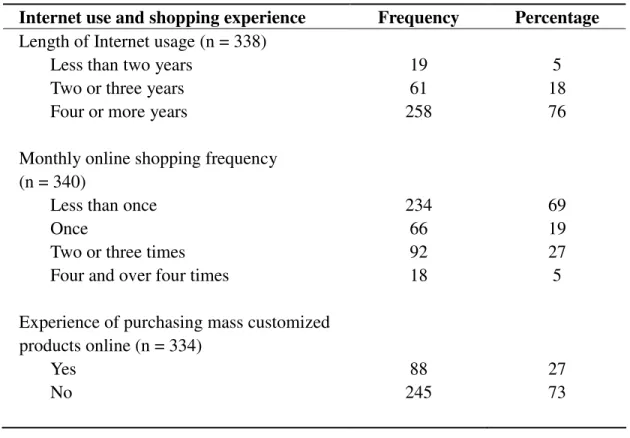
4.1 Demographic characteristics ... 45
4.2.1 Manipulation check... 47
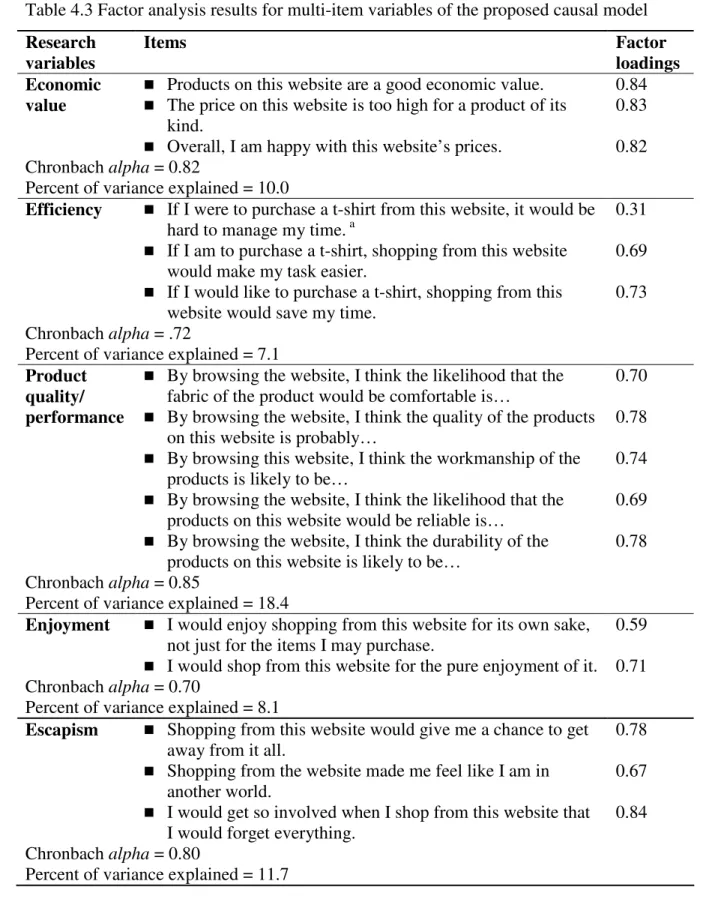
4.2.2 Factor analysis for model constructs... 47
4.2.3 Testing for sub-model 1 ... 53
4.2.4 Testing for sub-model 2 ... 56
4.3 Effects of Chinese cultural values ... 59
4.3.1 Factor analysis for cultural value constructs... 59
4.3.2 Moderating effects of relational orientation... 60
4.3.3 Moderating effects of man-nature orientation ... 64
CHAPTER 5. DISCUSSION AND CONCLUSIONS ... 67
5.1 Summary and discussion ... 67
5.1.1 Relationships between marketing attributes, perceived value, and behavioral intention ... 68
5.1.2 Moderating effects of cultural values... 71
5.2 Conclusions and implications... 74
5.3 Limitations... 77
5.4 Future studies ... 78
APPENDIX A: MAIN STUDY QUESTIONNAIRE ... 80
APPENDIX B: STANDARD PRODUCT AND LOWER PRICE TREATEMENT ... 88
APPENDIX C: STANDARD PRODUCT AND HIGHER PRICE TREATEMENT ... 91
APPENDIX D: MASS CUSTOMIZED PRODUCT AND LOWER PRICE TREATMENT ... 94
APPENDIX E: MASS CUSTOMIZED PRODUCT AND HIGHER PRICE TREATEMENT ... 97
APPENDIX F: APPROVAL OF THE USE OF HUMAN SUBJECTS... 100
REFERENCES ... 102
LIST OF FIGURES
Figure 2.1 Theoretical framework of perceived value………..12
Figure 2.2 Experiential Value Model………...……….13
Figure 2.3 Overall causal model………17
Figure 2.4 Moderating effects of relational orientation……….30
Figure 2.5 Moderating effects of man-nature orientation………..31
Figure 3.1 Sub-model 1……….…43
Figure 3.2 Sub-model 2……….……44
Figure 4.1 Testing for sub-model 1………55
Figure 4.2 Testing for sub-model 2………58
LIST OF TABLES
Table 3.1 Design options for mass customized product treatments………….……….…….38
Table 4.1 Demographic characteristics of the sample………46
Table 4.2 Items of the measurement scales for model constructs………..49
Table 4.3 Factor analysis results for the multi-item variables………52
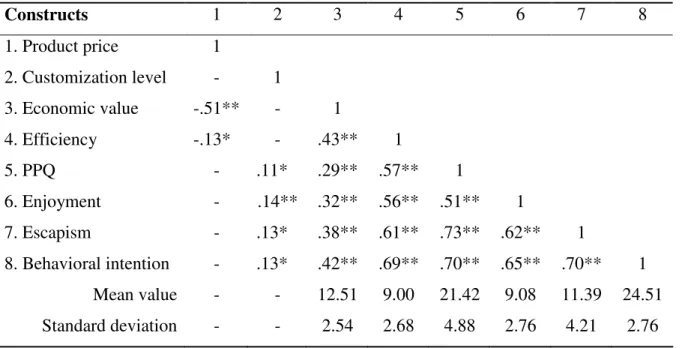
Table 4.4 Correlation coefficients of constructs……….53
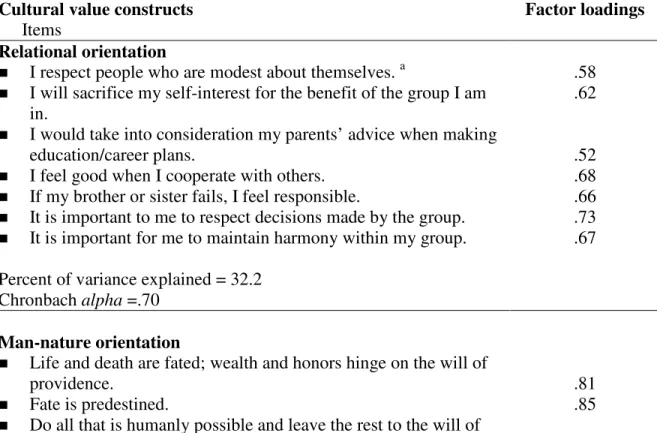
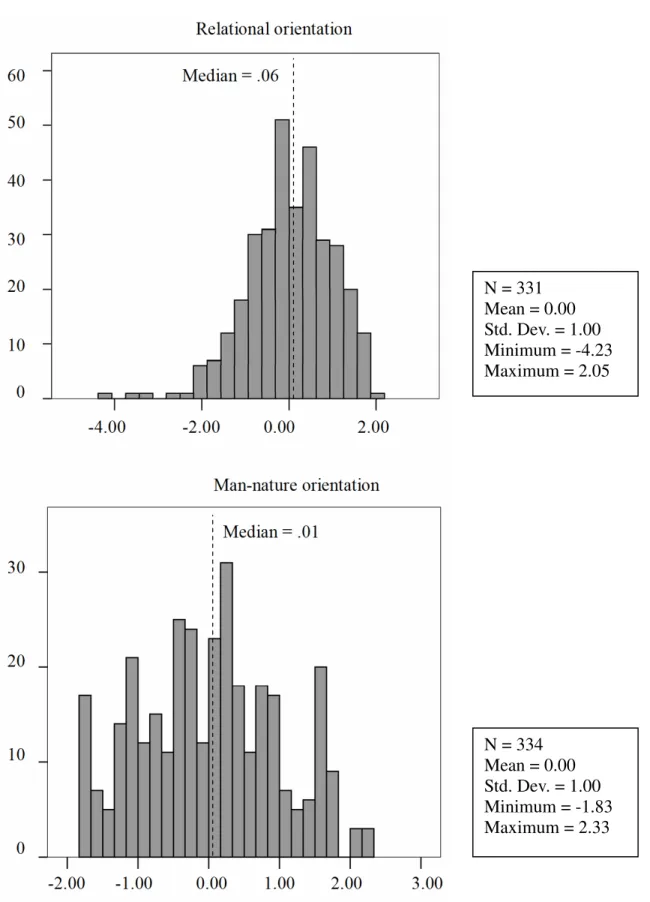
Table 4.5 Measurement items for cultural value constructs………...60
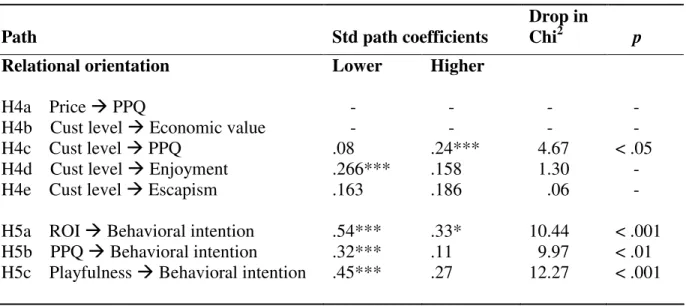
Table 4.6 Testing for moderating effects of relational orientation……….63
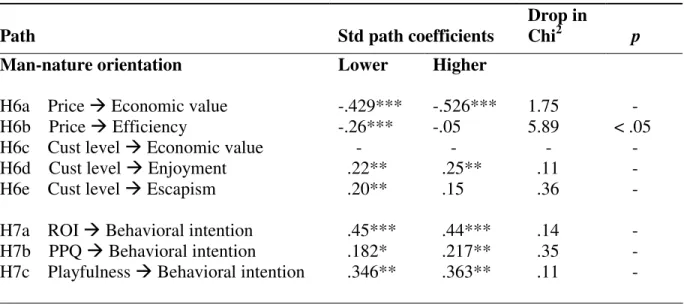
Table 4.7 Testing for moderating effects of man-nature orientation………..65
Table 5.1 Summary of causal model testing………..67
Table 5.2 Summary of testing for moderating effects………68
ABSTRACT
Mass customization may deliver superior value to consumers compared to mass production because it provides personalized products with prices close to mass produced products. This assertion was made under the conditions and assumptions in Western societies where individual needs, rights, and interests are greatly valued. It is not known whether mass customization will deliver similar value to consumers in other societies, where different value systems exist. The purpose of the present study was to examine Chinese consumers’
responses toward mass customization and the influence of Chinese cultural values on these responses.
This study focused on web-based apparel mass customization and investigated a) the effects of product price and customization level on consumers’ perceived value and b) the effects of perceived value on consumers’ behavioral intention. Additionally, this research examined the moderating roles of Chinese cultural values on the relationships between the marketing attributes (price and customization level) and perceived value and between perceived value and behavioral intention.
The study used a between-subject experimental design involving manipulations of price and customization level. Four different treatments of a t-shirt website, resulting from the combination of two price levels and two customization levels, were used as the stimuli. A total of 344 participants from China participated in the study. Each respondent browsed one of the four randomly assigned treatments and completed an online questionnaire. Structural equation models were used to test the hypotheses.
Results showed that higher price significantly reduced Chinese consumers’ perception of economic value and efficiency, as hypothesized. Mass customization significantly enhanced consumers’ perceptions of product quality, enjoyment, and escapism, as hypothesized. However, respondents did not perceive enhanced economic value from the mass
The study also found that two Chinese cultural values, relational orientation and man-nature orientation, significantly moderated the relationships between marketing attributes and perceived value and between perceive value and behavioral intention. These findings provide information needed for decision-making about marketing strategies for companies that would like to implement mass customization in China.
CHAPTER 1. OVERVIEW
1.1 Introduction
The objectives of marketing are to identify wants and needs of target market consumers and to deliver products and services that satisfy these wants and needs more efficiently than competitors (Bardakci & Whitelock, 2003). A traditional marketing approach attempts to identify homogeneous market segments with similar wants and needs and deliver products or services that meet common requirements of the market segments (Bardakci & Whitelock, 2003). However, this approach may no longer be sufficient to satisfy consumers as their wants and needs are rapidly changing and fragmented (Bardakci & Whitelock, 2003; Kotha, 1995, 1996; Pine, 1993). Consumers now demand products and services that provide more precise and complete response to their needs (Kotha, 1995). With the assistance of
information technologies, a new marketing approach, mass customization, has been implemented to cope with the new requirements of products and services from the market.
Instead of identifying homogeneous market segments, mass customization views the individual consumer as a base on which to segment the market (Bardakci & Whitelock, 2003). The implementation of mass customization is enabled by advancements in information and manufacturing technologies. These technologies allow firms to provide customized products and services based on the needs and preferences of individual customers and produce on a large scale (Gilmore & Pine, 1997; Yolovich, 1993).
Along with this market change, Pine and Gilmore (1999) asserted that Western societies are moving into an era of an experience economy. They illustrated that Western societies have evolved from an agrarian economy, to an industrial economy, then to a service economy. Whereas agrarian, industrial, and service economies are based on agrarian commodities, industrial goods, and intangible services respectively, the experience economy stresses consumers’ experiences as the predominant economic offerings (i.e., source of added value
for the consumer) (Pine, 2003). Experiences are distinct economic offerings, as distinct from services as services are from goods (Pine & Gilmore, 1999). Pine (2003) indicated that mass customization could be an effective venue for companies to offer experiences because it automatically turns a transaction into an experience. In order to treat each consumer individually, mass customization integrates the consumer in product/service design and development, which used to be the domain of firms. The role of the customer changes into a co-designer or co-developer of products or services. Customers participate in a series of creative activities that are stimulating and exhilarating (Fiore, Lee, & Kunz, 2004). Thus, mass customization provides an outlet for creative expression and becomes a source of memorable experience from which a consumer perceives value.
One may note that mass customization as a new marketing approach was created under the market realities and assumptions in Western societies, where individual needs, rights, and preferences are emphasized. There has been little information regarding whether mass
customization can be successfully implemented in a non-Western society, where a different value system exists. It is not known whether cultural uniqueness will influence the adoption of mass customization in other societies.
Kroeber and Parsons (1958, p. 583) defined culture as “transmitted and created content and patterns of values, ideas, and other symbolic-meaningful systems as factors in the shaping of human behavior and the artifacts produced through behavior”. As implied in this definition, culture consists of patterns of values that shape human behavior within the culture. Research has found that cultural values can greatly influence many aspects of consumption (e.g., Chan & Lin, 1992; Clarke & Soutar, 1982; Hiu, Siu, Wang, & Chang, 2001; Kacen & Lee, 2002; Tse, Wong, & Tan, 1988).
There has been a consensus among scholars (e.g., Hofstede, 1980; Triandis, 1995; Trompenaars, 1993) that Western societies are divergent in cultural values to many other societies, including Asian societies. For instance, Western societies are generally
collectivism oriented cultures. People in a collectivistic culture view themselves as an integral part of in-groups such as family and co-workers (Triandis, 1995). They tend to emphasize the connection with in-groups, be motivated by the norms or duties imposed by the in-groups, and give priority to the interest of the in-groups (Triandis, 1995). Personal needs, rights, and preferences, which are highly valued in individualistic cultures, may be less important to people in collectivistic cultures. This collectivism-individualism dichotomy leads to a question that has not been answered: will mass customization, founded on the assumptions and market conditions in individualistic cultures, be equally meaningful to consumers in collectivistic cultures?
In this study, I empirically examined perceived value that Chinese consumers may derive from mass customization and the influence of Chinese cultural values on their responses toward mass customization. I chose to investigate Chinese consumers for two reasons. First, China represents a non-Western collectivistic society, whose cultural values differ
significantly in many aspects from those of Western societies. Second, China has become an important emerging market for international businesses because of its rapid economic growth and tremendous number of consumers (Gong, 2003). Thus Chinese consumer behavior warrants research attention. China has experienced dramatic social and economic changes since the adoption of the “Open Door” policy and market economy in 1979. Increased consumerism and similar consumption patterns to Western consumers were observed especially in major cities (Hiu et al., 2001). However, studies of Chinese cultural values found that traditional Confucian and Taoism doctrines are still basic pillars of the Chinese way of life today (Gong, 2003; Yau, 1994). Chinese cultural values form a clear and consistent system throughout generations (Kindle, 1982; Yau, 1994).
Scholars pointed out that the ultimate success of mass customization depends on the superior value that consumers can perceive from mass customization compared to mass production (Broekhuizen & Alsem, 2002). However, aside from the theoretical prediction that mass customization will enhance perceived value, there have been few studies that
empirically examined perceived value of mass customization (Fiore et al., 2004; Franke & Piller, 2004; Kamali & Loker, 2002; Marianna, 2006; Squire, Readman, Brown, & Bessant, 2004). It has not been fully understood what aspects of perceived value will be enhanced by mass customization.
According to Mathwick, Malhotra, and Ridgdon (2001), perceived value is a primary motivation for consumers to perform consumption actions. It is also an essential outcome of marketing activities. Manipulation of marketing attributes (i.e., price, brand name) can enhance (or reduce) consumers’ perception of value, which in turn leads to a behavioral intention such as purchase intention and the intention to return to a retail outlet. Research on mass customization (Bardakci & Whitelock, 2003; Kamali & Loker, 2002; Squire et al., 2004) revealed two important marketing attributes that determine perceived value: product price and level of customization (e.g., standard products and mass customized products). The present study empirically tested the effects of these two attributes on perceived value.
Research showed that cultural values can affect perceived value in two ways. First, cultural values may influence the perceived value that a consumer attaches to a product or an experience (Overby, Gardial, & Woodruff, 2004; Tse, Wong, & Tan, 1988). For instance, some consumers may attach higher economic value to a mass customized product whereas others may not due to different cultural values. Therefore, cultural values may moderate the relationships between customization level and perceived value. Second, cultural values may influence the relative importance of a particular aspect of perceived value in determining behavioral intentions (Kim et al., 2002; Malhotra, & McCort, 2001; Overby, Gardial, & Woodruff, 2004). For instance, economic value may be more important to purchase intention for some consumers than for others depending on their cultural values. Therefore, cultural values may moderate the relationships between perceived value and behavioral intention.
The present study used Mathwick et al.’s (2001) Experiential Value Model as the
theoretical framework for the analysis of perceived value of mass customization. This model provided a broad spectrum of perceived value, which was believed to encompass the aspects
of perceived value delivered by mass customization. An advantage of this model is that it goes beyond the perceived value of products to include the perceived value derived from consumption experiences, which is where mass customization and mass production differ substantially.
Apparel companies were among the early entrants for mass customization (e.g., Lands’ End, Nike). Research showed that consumers have great interests in mass customization of apparel (Fiore, Lee, Kunz, & Campbell, 2001). Mass customization of apparel provides benefits to consumers in many ways. Consumers could a) achieve personalized fit, b) create a unique design based on his/her preferences, and c) enjoy a memorable consumption
experience (Fiore et al., 2001). Most apparel mass customization firms have chosen to approach mass customization on the Internet. The Internet provides a sufficient interactive platform to involve customers in development and design of apparel products (Kamali & Loker, 2002). Therefore the present study focused on web-based apparel mass customization.
1.2 Objectives of the study
The objectives of this study are to understand 1) Chinese consumers’ responses toward mass customization of apparel and 2) the influence of Chinese cultural values on these responses.
1.3 Definition of terms
The following concepts and terms were used throughout the study. Definitions of these concepts and terms are:
Mass customization: Customization and personalization of products and services for individual customers at a price close to mass-produced products. With the aid of interactive technologies such as the Internet, customers can closely interact with a company and specify
unique requirements or modify product design. The products may be then manufactured by automated systems that keep production costs close to mass production level (Gilmore & Pine, 1997; Yolovich, 1993).
Culture: “Transmitted and created content and patterns of values, ideas, and other
symbolic-meaningful systems as factors in the shaping of human behavior and the artifacts produced through behavior” (Kroeber & Parsons, 1958, p. 583).
Culture values: “Learned, relatively enduring, emotionally charged, epistemologically grounded and represented moral conceptualizations that assist us in making judgments and in preparing us to act. In other words, the priorities we set and the choices we make are
significantly based upon the (cultural) values we hold” (Frey, 2005, p. 1).
Perceived value: Utilities, returns, benefits, and meanings derived from products, services, and/or experiences that motivate consumption actions.
CHAPTER 2. LITERATURE REVIEW
2.1 Mass customization
2.1.1 What is mass customization?
Mass customization was first proposed by Toffler in 1970 and then defined by Davis in 1987 in the book Future Perfect. This concept received further attention in the1990s
paralleling the advances in information and manufacturing technologies, which support its actual implementation. Pine (1993) viewed mass customization as a hybrid of mass
production and craft customization. He defined mass customization as the mass production of individually customized goods and services.
Mass customization differs from product-centered mass production in that mass
customization integrates the customer in product design so the customer acts as a designer or co-creator of the product (Bardakci & Whitelock, 2003). In many forms of mass
customization, the product is sold before it is produced, whereas mass production pushes what is already produced into the market. Mass customization differs from traditional craft customization in its rapidness and lower expense compared to craft customization (Boynton, Victor, & Pine, 1993). Another distinguishing element of mass customization is the
application of advanced manufacturing technologies such as flexible manufacturing. These technologies make it possible to adjust production to the demand of individual customers and at the same time produce a large volume, so firms can maintain efficiency close to mass production.
2.1.2 Returns and sacrifices of mass customization
Despite the proposition that mass customization provides superior value to consumers compared to mass production, mass customization may not be the best strategy for all
companies in all cases (Squire et al., 2004; Zipkin, 2001). Although integrating the customer in product design before purchase may lead to products that better match individual needs and preferences, some customers may not find mass customization necessary (Squire et al., 2004).
Scholars regarded perceived value as a trade-off between returns and sacrifices
(Zeithaml 1988, Agarwal & Teas, 2001). Mass customization may cause sacrifices such as higher prices and more complex transactions (Bardakci & Whitelock, 2003; Dellaert & Stremersh, 2005; Squire et al., 2004). Bardakci and Whitelock (2003) pointed out that consumers’ willingness to pay a premium and to spend extra time to design the product are critical to their acceptance of mass customization. Dellaert and Stremersch (2005) studied consumer interactions with the functions of a mass customization website for personal computers. They found a trade-off between product utility (i.e., the utility of a customized product that better fits a user's needs) and process complexity as perceived by the user. If perceived process complexity is high, perceived product utility will be decreased.
2.1.3 Apparel mass customization
Pine (2003) asserted that mass customization makes absolute sense for the apparel industry. Mass customization may substantially change the apparel industry, which has been burdened by a $25 billion annual loss due to unsold products (Pine, 2003). Because each mass customized product is made after an order is placed, firms may substantially reduce inventory. Empirical research showed that consumers are interested in customizing various aspects of apparel such as style, fit, color, fabric texture, and print (Anderson et al., 1997; Lee et al., 2002). An exploratory investigation by TC2 indicated that a substantial proportion of consumers are willing to pay more for mass customized apparel and footwear (Fralix, 2001).
Mass customization of apparel may concentrate on either customer-designed apparel (e.g., Customink.com, Zazzle.com) or providing a customized fit (e.g., Landsend.com, Brooks Brothers). The former involves the customer in the design of aesthetic aspects of the
product and concentrates on providing an outlet for creative expression, whereas the latter concentrates on providing a better match to consumers’ functional needs. These two forms of apparel mass customization are not mutually exclusive as companies often include elements of both. Lands’ End’s “Custom Jeans” program, for instance, offers jeans made to individual customers’ measurements and at the same time involves customers in creative design by letting them select from fabric and style options (Customer Clothing Today, n.d.; Fralix, 2001). Although both types of apparel customization deserve research attention, the present study mainly focuses on the former.
Consumers of mass customized apparel generally encounter sacrifices of both higher prices and more complex transactions. Mass customized apparel is usually higher-priced than mass-produced products, even though it is much lower-priced than craft-customized apparel. For example, Lands’ End charges about $54 for a pair of mass customized jeans, whereas its mass-produced jeans are only $29. Additionally, designing a product may be a complex and challenging task for many customers. Purchasing a pair of mass customized jeans from the Lands’ End website requires far more steps than purchasing a pair of standard jeans.
Despite the anecdotal evidence about the impact of product price and mass customization on perceived value of apparel, few studies (Franke & Piller, 2004; Kamali & Loker, 2002) have empirically tested the effects of these two factors on perceived value and other
consumer responses. Kamali and Loker (2002) studied consumers’ satisfaction and perceived value (measured as willingness to pay) towards customer-designed t-shirts. They found that consumers perceived significantly higher value for t-shirts designed by themselves than standard products. Similarly, Franke and Piller (2004) studied perceived value for
customer-designed watches and found that these products significantly enhanced perceived value. Both studies operationalized perceived value as willingness to pay. This
conceptualization of perceived value as money willing to be paid is insufficient because of the multi-dimensional nature of the concept of value (e.g., Babin & Darden, 1995; Holbrook & Corfman, 1985; Holbrook & Hirschman, 1982; Mathwick et al., 2001; Sweeney & Soutar,
2001). Mass customization may enhance some value dimensions, but fail to enhance or even reduce other dimensions. Therefore, it is necessary to examine the effects of mass
customization on individual dimensions of perceived value. The present study furthers Kamali and Loker’s (2002) and Franke and Piller’s (2004) research on customer-designed apparel by examining various dimensions of perceived value.
2.2 Perceived value
2.2.1 Conceptualization
Perceived value has been shown to affect a broad range of consumer behaviors including behavioral intention (e.g., Agarwal & Teas, 2001; Chen & Dubinsky, 2003; Kim, 2004), satisfaction (e.g., Lee & Overby, 2004; Kim, 2004), loyalty (e.g., Lee & Overby, 2004;
Oppen, Odekerken-Schroder, & Wetzels, 2005), and preferences (e.g., Mathwick et al., 2001). A review of literature showed that this construct has been conceptualized in various ways. A group of studies conceptualized perceived value as value-for-money (i.e., Cravens, Holland, Lamb & Moncrieff, 1988; Zeithaml, 1988). This conceptualization views a consumer’s decision about a product as the result of rational calculations of utilitarian benefits and economic costs (Sweeney & Soutar, 2001). This conceptualization was criticized as too simplistic and neglecting the hedonic and experiential aspects of a consumption experience (Sweeney & Soutar, 2001).
Holbrook and Hirschman (1982) argued that consumers also value experiential aspects, including symbolic, hedonic and aesthetic aspects of a consumption experience. They suggested addition of an experiential value dimension to the conceptualization. Their conceptualization included a utilitarian dimension and an experiential dimension. The utilitarian dimension focuses on the evaluation of extrinsic value such as quality,
value such as fun, feeling, and fantasy (Holbrook & Hirschman, 1982). Following in
Holbrook and Hirschman’s footsteps, several studies (i.e., Babin & Darden, 1995; Mathwick et al., 2001; Holbrook & Corfman, 1985) have also examined extrinsic value and intrinsic value of a consumption experience.
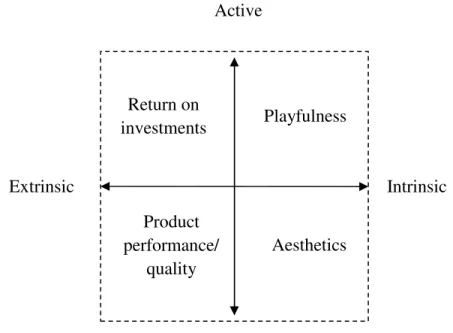
Expanding on the extrinsic-intrinsic value framework, Holbrook (1985) added an active-reactive criterion to the conceptualization of perceived value. The active-reactive criterion suggests a distinction between the value derived from active participation in a consumption experience and the value derived from reactive appreciation of an object or environment (Mathwick et al., 2001). For example, a consumer can perceive value from playing a video game (active value); they can also perceive value from watching a movie (reactive value). Consumers are not only reactive receivers of value but also active
co-producers of value. The extrinsic-intrinsic criterion and active-reactive criterion can be viewed as two axes perpendicular to each other in space (see Figure 2.1). Each quadrant of the diagram represents a dimension of perceived value. Thus, perceived value contains four dimensions: extrinsic-active value, extrinsic-reactive value, intrinsic-active value, and
intrinsic-reactive value (Mathwick et al., 2001). They were named return of investment (ROI), product performance/quality (PPQ), playfulness, and aesthetics respectively.
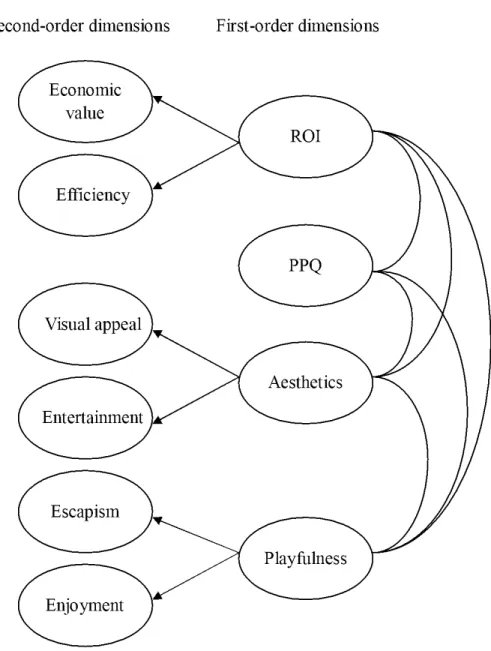
Based on this framework, Mathwick et al. (2001) developed an Experiential Value Model, which consists of two orders of perceived value dimensions (see Figure 2.2). The first-order dimensions include ROI, PPQ, playfulness, and aesthetics. The second-order dimensions (sub-dimensions) include economic value, efficiency, visual appeal,
entertainment, enjoyment, and escapism, which act as indicators of the first-order dimensions.
2.2.1.1 ROI
ROI taps an extrinsic-active category of perceived value. During a consumption experience, a consumer actively invests financial, temporal, and psychological resources in
order to obtain products that better match his/her needs and preferences. ROI reflects the trade-off between perceived returns and investments (Mathwick et al., 2001). Assessment of ROI may be processed in terms of economic value (i.e, a bargain) as well as efficiency of a transaction (i.e., convenience) (Holbrook, 1994; Zeithaml, 1988; Mathwick et al., 2001). Thus, the ROI includes two sub-dimensions: economic value and efficiency (see Figure 2.2). A consumer will derive higher economic value and efficiency from a consumption
experience when his/her needs and preferences are better met and/or when investments of financial, psychological, and temporal resources are reduced. Kim (2002) indicated that Internet shopping could enhance both economic value and efficiency due to increased product variety, extensive price comparison, freedom from travel to the store, and ease of ordering and payment.
Figure 2.1 Theoretical framework of perceived value
Note: Adapted from Mathwick et al. (2001). Reactive Extrinsic Intrinsic Active Playfulness Return on investments Product performance/ quality Aesthetics
Figure 2.2 Experiential Value Model
Note: Adapted from Mathwick et al. (2001).
2.2.1.2 PPQ
PPQ taps the extrinsic-reactive category of perceived value. Consumers’ evaluation of product performance and quality may happen in both pre- and post-purchase stages of a consumption experience. In the pre-purchase stage, a consumer may evaluate a product by trying and testing it as well as referring to external cues such as brand name, price, store
environment, and product description (Richardson, Dick, & Jain, 1994). In an online shopping setting, where trying and testing of products are not possible, reference to the external cues becomes more important. Kim (2002) found that price and website interface significantly affected consumers’ assessment of quality.
2.2.1.3 Aesthetics
Aesthetics taps the intrinsic-reactive category of perceived value. This dimension of perceived value includes two sub-dimensions: visual appeal (the salient visual elements of the retail environment) and entertainment (dramatic aspects of a consumption experience) (Mathwick et al., 2001) (see Figure 2.2). Visual appeal is determined by the design, physical attractiveness, and beauty inherent in the retail environment (Holbrook, 1985; Mathwick et al., 2001). Use of colors, graphics, layout, and photography on a website may yield this value. Whereas visual appeal emphasizes stimulation to the visual sense, the entertainment
dimension reflects an appreciation for the retail “spectacle” (Mathwick et al., 2001), which can encompass stimulation to all senses. Website features such as music, animation, and video would influence entertainment. Both visual appeal and entertainment offer immediate pleasure for its own sake, irrespective of practical considerations (Mathwick et al., 2001).
2.2.1.4 Playfulness
Playfulness taps the intrinsic-active category of perceived value. Playfulness reflects the intrinsic enjoyment that comes from engaging in activities that are absorbing, to the point of offering an escape from the demands of the mundane world (Mathwick et al., 2001). The defining distinction between intrinsic-reactive value and intrinsic-active value is the shift of the customer’s role from a distanced spectator of the aesthetic elements to a participant who co-produces value (Mathwick et al., 2001). This dimension of perceived value includes two sub-dimensions, enjoyment and escapism (see Figure 2.2). Enjoyment is derived from consumers’ participation in playful activities during a consumption experience without
practical considerations (Mathwick et al., 2001). Escapism is yielded when a consumer is absorbed in the activities and temporally feels removed from the day-to-day pressure-filled world. Both enjoyment and escapism can be affected by interactive features of a retail environment (Song, Fiore, & Park, 2005). For instance, allowing the customer to examine, test, and try products can enhance enjoyment and escapism.
The present study adopts Mathwick et al.’s (2001) Experiential Value Model as a theoretical framework for perceived value because this model measures perceived value derived from consumption experiences and stresses consumers’ active participation in value creation. Mass customization of apparel fosters a consumption experience involving activities such as picking out styles, choosing colors, selecting fabrics, and specifying sizes according to one’s preferences or needs. The customer may derive value not only from the utility of the product but also from the stimulating creative experience itself (Fiore et al., 2001; Fiore et al., 2004).
2.2.2 Marketing attributes and perceived value dimensions
This section will discuss how marketing attributes of product price and customization level (e.g., standard products and mass customized products) may affect dimensions of perceived value. Figure 2.3 illustrates the proposed relationships between these two marketing attributes and perceived value dimensions.
2.2.2.1 Economic value
Economic value reflects the trade-off between financial investment and outcome of a transaction. Mass customization of products may enhance economic value because it offers greater value to consumers by providing products that better fit a customer’s personal needs and preferences (Franke & Piller, 2004; Kamali & Loker, 2002). Therefore, I posited that customization level will positively affect economic value (see Figure 2.3). Because a higher product price increases financial investment of a transaction, product price will negatively
affect economic value (see Figure 2.3).
2.2.2.2 Efficiency
Efficiency reflects the trade-off between temporal and psychological investments and outcome of a shopping experience. Although mass customization of products may enhance the shopping outcome by providing products that better fit the preferences and needs of consumers, it will cause greater investment of time and energy due to a more complex transaction. Dellaert and Stremersch (2005) supported that complexity of the mass
customization transaction significantly reduces product utilities. Therefore, I proposed that customization level will negatively affect efficiency (see Figure 2.3). Efficiency may be negatively influenced by product price. High prices may restrain customers from purchasing after putting time and efforts into the consumption process. Customers are not likely to perceive a shopping experience as saving time and energy when they are retrained from purchasing the products by high prices. Therefore, I proposed that product price will negatively affect efficiency (see Figure 2.3).
2.2.2.3 Product performance/quality
Evaluation of product performance/quality (PPQ) could be influenced by product price because of consumers’ use of price as an indicator of quality. Consumers may assume that high quality products generally cost more to produce than low quality products and business competition restrains companies from charging high prices for low-quality products
(Agarwal & Teas 2001). Many studies have empirically supported this price-quality equation (Agarwal & Teas, 2001; Chen & Dunbinsky, 2003; Dodds, Monroe, & Grewal, 1991).
Therefore, I posited that product price will positively affect product performance/quality (see Figure 2.3).
Providing mass customization challenges a firm’s managerial and manufacturing capability. Firms may need to invest more in technologies and dramatically change their managerial system to cope with the higher demands of mass customization (Pine, 1993). Offering mass customization of products signals a firm’s technological and managerial capability. This may enhance customers’ image of the firm’s expertise in its area of specialty and consequently they may have higher confidence on the quality of the products. Therefore, I proposed that customization level will positively affect product performance/quality (see Figure 2.3).
2.2.2.4 Enjoyment and Escapism
For consumers of mass customized apparel, the transaction process is full of trial and error (Franke & Schreier, 2006). Designing apparel on a website involves a close interaction with various design functions on the site. The consumer acts as a designer, creating unique products from an array of design options and sees the creation take shape on the computer screen (Fiore et al., 2004). These activities may provide enjoyment, which is independent of practical considerations (Franke & Schreier, 2006). Engaging in the design activities may also offer the customer an opportunity to escape from the pressure-filled day-to-day world. Research indicated that interaction with the product and the website in an online retail environment creates an absorbing experience, where consumers feel removed from the demands of the mundane world (Song et al., 2005). Therefore, I proposed that customization level will positively affect enjoyment. I also proposed that the customization level will positively affect escapism (see Figure 2.3).
2.3 Behavioral intention
Behavioral intention is often used as a substitute for actual behavior in consumer research. Purchase intention is probably the most frequently researched behavioral intention
regarding consumers. However, it was said to be too narrow for online consumer behavior research (Kim, 2004). Although the ultimate goal of marketers is to persuade consumers to purchase, other behaviors such as browsing and revisiting the website are also critical to web-based businesses. That is, building the “stickiness” of a website is equally important to attracting new purchasers.
Zeithaml, Berry, and Parasuraman (1996) suggested a broader measure of behavioral intention in a study related to perceived service quality. The aspects of intention included were customers’ willingness to a) say positive things about the service provider, b) recommend the service provider to other consumers, c) remain loyal to it, d) spend more money, and e) pay a premium price. Kim (2004) examined behavioral intentions resulting from perceived value and satisfaction with the products and services of Internet apparel websites. Kim’s behavioral intention construct included intentions to purchase, revisit the website, search for information, say positive things, and recommend the website to others. Using exploratory factor analysis, Kim found that these intentions fall into a single
behavioral intention dimension. The present study adopted Kim’s (2004) behavioral intention scale because it was designed specifically for apparel websites. The items of this scale
represent a broad range of behavioral intention aspects essential to web-based apparel businesses.
Figure 2.3 illustrates the proposed causal relationships between perceived value and behavioral intention. Based on theoretical and empirical support for the causal relationships between perceived value and behavioral intention (e.g., Malhotra, & McCort, 2001; Kim, 2004; Chen & Dunbinsky, 2003), I proposed that ROI, PPQ, and playfulness will positively affect behavioral intention. Following Mathwick et al.’s (2001) hierarchical structure of perceived value, the second-order perceived value dimensions (economic value, efficiency, product enjoyment, escapism) were specified as the indicators of the first-order dimensions.
2.4 Cultural values
2.4.1 Culture and cultural values
Among many definitions of culture, Kroeber and Parsons’ (1958) definition is appropriate for the present study because it stresses the relationship between culture and human behaviors. They defined cultural value as “transmitted and created content and patterns of values, ideas, and other symbolic-meaningful systems as factors in the shaping of human behavior and the artifacts produced through behavior” (p. 583). This definition notes that members of a cultural group learn patterns of thinking, feeling, and acting from
experience in a particular defined social environment. Culture represents “mental
programming”, which predetermines a person’s behaviors. Kroeber and Parsons’ definition reinforced that culture consists of values, which serve to guide norms of behavior.
In a human society, there are underlying values, which are retained through generations as part of a culture. At the individual level, many of these values become incorporated as enduring beliefs, which affirm what is desirable by members of the society and which have an impact on behavior (Frey, 2005; Nicosia & Mayer, 1976). These values are called cultural values, referring to normative beliefs that individuals have about how they should behave within their culture.
2.4.2 Influence of cultural values on consumer behavior
Literature shows that cultural values influence a broad range of consumer behaviors such as product choice (e.g., Clarke & Soutar, 1982), impulse buying (e.g., Kacen & Lee, 2002; Shamdasani & Rook, 1989), and complaining (e.g., Le Claire, 1993). Cultural values also influence numerous cognitive constructs that have an impact on these behaviors. These constructs include decision-making strategies (e.g., Chan & Lin, 1992, Hiu et al., 2001; McDonald, 1995), information processing (e.g., Olshavsky, Moore, & Lim, 1988), involvement (e.g., Zaichowsky & Sood, 1987), attitudes (e.g., Tan & Farley, 1987), and
perceived value (e.g., Overby, Gardial, & Woodruff, 2004; Tse, Wong, & Tan, 1988).
Therefore, understanding cultural values allows marketing managers to anticipate consumers’ reactions to marketing practices such as advertising, positioning, and product features in a particular culture (Schutte & Ciarlante, 1998). Sheth and Sethi (1977) indicated that
understanding of cultural values may help one predict the circumstances under which a given product or idea would be accepted in a society.
2.4.3 Dimensionality of cultural values
In order to understand and profile cultural values, many researchers have attempted to develop models for cultural value dimensions. A review of literature identified two bodies of scholarship that explored different dimensions of cultural values. The first body of
scholarship aimed at establishing universal value dimensions that can be applied across cultures. Hofstede’s (1980) and Trompenaars’ (1993) cultural value typology represent this body of scholarship. The second body of scholarship concentrated on a particular culture and attempted to identify unique value dimensions of that culture. Nakamura’s (1960), Van Oort (1970), and Yau’s (1994) studies of Chinese cultural values represent this body of
scholarship.
In consumer behavior studies, the cultural value dimensions identified in the first body of scholarship were usually applied in cultural comparison studies (e.g., Chinese consumers vs. U.S. consumers) due to their universality across cultures. The cultural value dimensions identified in the second body of scholarship were often used in consumer behavior studies that concentrated on a particular culture due to their focus on unique concepts and issues within that culture. Since the purpose of the present study is to investigate consumer behavior in China instead of comparing Chinese consumers with consumers from other cultures, this study adopted the Chinese cultural value framework developed by Yau (1994), which represents the second body of scholarship.
2.4.4 Dimensions of Chinese cultural values
Yau (1994) described five dimensions of Chinese cultural values. These dimensions include relational orientation, man-nature orientation, man-himself orientation, past-time orientation, and personal activity orientation. Whereas all five will be explained here, I selected two cultural values, man-nature orientation and relational orientation, as potential moderators between mass customization and consumer behavior. Literature (e.g., Le Claire, 1992, 1993; Malhotra & McCort, 2001; Schutte & Ciarlante, 1998; Yau, 1994) supports the potential influence of man-nature orientation and relational orientation on consumer behavior, although it appears that the present study is the first attempt to examine their effects on
behavior towards mass customization.
2.4.4.1 Relational orientation
Relational orientation reflects the collectivistic nature of Chinese culture (Le Claire, 1992). Relational orientation includes four aspects: group orientation, interdependence, face, and respect for authority (Yau, 1994). Group orientation underlies the Chinese tradition of collectivism. Hofstede (1980) indicated that the Chinese as well as other Asian people are collectivistic. Collectivistic people view themselves as an integral part of in-groups such as the family and co-workers (Triandis, 1995). They are likely to be motivated by the norms or duties imposed by in-groups, give priority to the interest of the in-group, and emphasize connection with the in-group. In-group members form an interdependent relationship with each other, meaning that opinions of in-group members have a strong influence on one’s personal behavior. Maintaining harmony within an in-group is often regarded as a duty of all group members. An important concept relevant to in-group harmony is face (Mian Zi).
Giving face to others (showing respect) and avoiding losing one’s own face (being humiliated) help maintain in-group harmony. Losing face would make it difficult for a person to function properly within the community (Hu, 1944). Another unique characteristic of the Chinese relational orientation is respect for authority and acceptance of hierarchical social structure.
This emphasis may root in Confucius’ five cardinal relations between sovereign and minister, father and son, husband and wife, old and young, and between friends, which are constructed in hierarchical patterns (Nakamura, 1960). The prescriptions of the relations have been generalized and extended to wider social contexts.
2.4.4.2 Man-nature orientation
The man-nature orientation includes two aspects of Chinese cultural values: harmony with nature and Yuan (Yau, 1994). According to harmony with nature, originating in Taoism, man is perceived as a part instead of the ruler of nature. Taoism believes that man should not try to overcome or master nature but has to learn how to adapt to it so as to reach a harmony. Nature has the Way (Tao) by which all things become what they are (Chan, 1963). Apart from the doctrine of the Way, Yuan is another important belief rooted in the hearts of most Chinese (Yau, 1994). Yuan can be referred to as predetermined relations with other things or individuals, which are far beyond one’s control. The existence or absence of interrelations with the universe is predetermined or governed by powerful external forces (Schutte & Ciarlante, 1998; Yau, 1994).
2.4.4.3 Man-to-himself orientation
The man-to-himself orientation underlies the traditional upbringing of Chinese to understand and follow their legitimate roles (Le Claire, 1992). This dimension of Chinese cultural values includes two aspects: abasement and situation-orientation. Formation of these two aspects is greatly influenced by child-rearing practices of Chinese families. The Chinese believe in modesty and self-effacement, which are two important virtues that a child uses to cultivate his/her mind. In the past, a Chinese individual would call him/herself “the
worthless” before his/her teacher, and “the unfilial1 son” before his parents to show
abasement. The Chinese adopted a pragmatic situation-oriented worldview due to childhood
exposure to many different points of view from extended family members (i.e., parents, uncles and aunts, and other adults). Chinese children learn that circumstances have an important bearing upon what is right or wrong, and compromise in most cases is inevitable. Nakamura (1964) characterized the Chinese way of thinking as practical compared to the Western way of thinking. Similarly, Kahn (1979) suggested that the Chinese developed a pragmatic approach regarding tasks because of their willingness to compromise in order to achieve a goal.
2.4.4.4 Time orientation
Past-time orientation reflects the great respect Chinese have for their past (Yau, 1994; Le Claire, 1992). This orientation is represented by strong family traditions and worship of ancestors. Van Oort (1970) indicated that Chinese people are highly history minded. They have a strong admiration of their culture, which survived several thousand years.
The salient ethnological fact about Chinese culture is that it has been based on a stable agricultural economy, which provided a stable food supply (Yau, 1994). In contrast to nomadic people, the Chinese were averse to taking risks and were less innovative in order to secure a stable food supply; it was safer to follow the traditional proven methods, which have worked for generations (Yau, 1994).
Such a past-time orientation also influences the continuity of personal relations. Chinese believe that once a relation is established, it should not be easily broken. This is evidenced by the Chinese proverb: “If you have been my teacher for a day, I will treat you like my father forever.” Therefore, previous experience with a firm may highly influence Chinese
consumers’ responses toward a firm’s marketing efforts.
2.4.4.5 Activity orientation
The activity orientation suggests an appreciation of moral self-control and avoidance of extreme forms of behavior. An important concept of Chinese activity orientation is the Mean
(Zhong Yong), which according to Confucius was without inclination to either side (Legge, 1960). Confucius did not believe in suppressing passions and impulses, but in regulating them so as to achieve internal harmony (Legge, 1960). The Chinese are taught to avoid complete repression or unrestricted satisfaction of primitive passions and impulses (Yau, 1994).
2.4.5 Moderating roles of Chinese cultural values
2.4.5.1 Moderating roles of relational orientation
Relational orientation reflects the tendency that Chinese would prioritize the interests, demands, and requirements of in-groups over one’s own needs, rights, and preferences. In consumption scenarios, this value may encourage consumers to conform to group norms and suppress the desire to seek unique products. Because of relational orientation, expression of uniqueness in consumption may be interpreted as a deviation from the group norm and incur the risk of being treated as an outsider who does not know how to adjust to the group
(Schutte & Ciarlante, 1998). His/her social acceptability may be at stake. As a result, higher relational orientation consumers may show less interest in using mass customization to create a unique product. Therefore, higher relational orientation consumers may derive less
enjoyment and escapism from participating in product design compared to lower relational orientation consumers. In addition, higher relational orientation consumers, as compared to lower relational orientation consumers, may not regard customer-designed apparel as offering high economic value. Therefore, I proposed that relational orientation will negatively
moderate the effects of customization level on economic value, enjoyment, and escapism (see Figure 2.4). Specifically, the (positive) effects of customization level on economic value, enjoyment, and escapism will be weaker for higher relational orientation consumers than lower relational orientation consumers.
Research showed that using price as a signal of product quality is a universal behavior across cultures (Dawar & Parker, 1994; Probert & Lasserre, 1997; McGowan & Sternquist, 1998). However, the extent to which consumers rely on price for quality assessment may be subject to cultural differences (Dawar & Parker, 1994). Le Claire (1992) studied Chinese consumers in Hong Kong and Singapore and found that those with a higher level of Chinese cultural values rely more heavily on price for purchase decision-making than those with a lower level. A similar finding is found in Tan and McCullough’s (1985) study. Schutte and Ciarlante (1998) argued that the reliance on price for quality assessment is most critical for products that are under review by peer in-group members (i.e., family members, co-workers, and friends). Apparel is a highly visible product to peer group members. Chinese consumers with higher relational orientation are likely to use the price-quality equation to reduce the risk of disapproval by peer group members and to help individuals to stay in line with outside expectations. Therefore, I posited that the (positive) relationship between price and PPQ will be stronger for higher relational orientation consumers than lower relational orientation consumers. Thus, relational orientation will positively moderate the relationship between price and PPQ (see Figure 2.4).
Similar to product price, mass customization may also be used as a signal of quality by consumers when making consumption decisions. Chinese consumers with higher relational orientation are more likely to use mass customization as an indicator of quality in order for them to reduce the risk of disapproval by peer group members and stay in line with outside expectations,. Therefore, I posited that the (positive) relationship between customization level and PPQ will be stronger for higher relational orientation consumers than lower relational orientation consumers. Thus, relational orientation will positively moderate the relationship between customization level and PPQ (see Figure 2.4).
Moreover, I proposed that relational orientation will moderate the effects of extrinsic value (ROI and PPQ) and intrinsic value (playfulness) on behavioral intention. Chinese consumers with higher relational orientation are likely to weigh ROI and PPQ heavily during
a decision-making process regarding apparel. Kim et al. (2002) compared behavioral difference between Korean and Chinese consumers on apparel purchase behaviors. In
comparison to Korean consumers, they found Chinese consumers’ need for product function, which reflects extrinsic value, to be more important in decision-making. They also found a stronger correlation between functional needs and purchase behavior for Chinese consumers than for Korean consumers. Although both cultures are collectivistic, Kim et al. regarded Chinese consumers as more interdependent due to Korean consumers’ higher degree of exposure to Western culture. This exposure may have affected Korean consumers’ more independent behavior towards apparel. These findings support the direction of the proposed moderating effects of relational orientation on the relationship between extrinsic value (ROI and PPQ) and behavioral intention.
Compared to perceived extrinsic value, intrinsic value may be less important in the decision-making process for Chinese consumers with a higher level of relational orientation than for those with a lower level. This negative moderating effect on intrinsic value and behavioral intention is supported by previous research (Kim et al., 2002) that found that experiential needs, which reflect intrinsic value, were more important during the
decision-making process for Korean consumers than for Chinese consumers. They found a weaker correlation between experiential needs and purchase behavior for Chinese consumers than for Korean consumers.
Based on the above discussion, I proposed that relational orientation will positively moderate the relationships between extrinsic value (ROI and PPQ) and behavioral intention and negatively moderate the relationship between intrinsic value (playfulness) and behavioral intention (see Figure 2.4). Specifically, the (positive) relationships between extrinsic value (ROI and PPQ) and behavioral intention will be stronger for higher relational orientation consumers than lower relational orientation consumers. The (positive) relationship between intrinsic value (playfulness) and behavioral intention will be weaker for higher relational orientation consumers than lower relational orientation consumers.
2.4.5.2 Moderating roles of man-nature orientation
Man-nature orientation suggests that everything has its Way (Tao) to become what it is. Man should not try to overcome or master nature but should learn how to adapt to it.
Man-nature orientation also stresses that the predetermined relations among objects and person are beyond one’s control.AChinese consumer with a high level of man-nature orientation may attribute the encounter with a product to be predetermined (Yau, 1994). As a result, a high level of man-nature orientation may limit consumers’ interest and desire in using mass customization to modify the design of a product. Therefore, higher man-nature orientation consumers may derive less enjoyment and escapism from participating in product design in comparison to lower man-nature orientation consumers. In addition, higher
man-nature orientation consumers may attach limited added value to self-designed products compared to lower man-nature orientation consumers. Thus, I proposed that man-nature orientation will negatively moderate the effect of customization level on economic value, enjoyment, and escapism (see Figure 2.5). Specifically, the (positive) effects of customization level on economic value, enjoyment, and escapism would be weaker for higher man-nature orientation consumers than lower man-nature orientation consumers.
Le Claire (1993) found that Chinese consumers were reluctant to complain about products that did not meet their expectations. Yau (1994) argued that Chinese consumers have a great tendency to attribute failure of products to fate or Yuan rather than to the manufacturer or the outlet from which the product was purchased. Likewise, a Chinese consumer who strongly believes in Yuan may attribute a high price to uncontrollable forces. As a result, higher man-nature orientation consumers may be less sensitive to high prices compared to lower man-nature orientation consumers. Therefore, I posited man-nature orientation will negatively moderate the effects of product price on economic value and efficiency (see Figure 2.5). Specifically, the (negative) effect of product price on economic value will be weaker for higher man-nature orientation consumers than lower man-nature
orientation consumers. Additionally, the (negative) effect of product price on efficiency will be weaker for higher man-nature orientation consumers than lower man-nature orientation consumers.
Moreover, I proposed that man-nature orientation moderates the effects of perceived active value (ROI and playfulness) and reactive value (PPQ) on behavioral intention. Due to the reactive nature of man-nature orientation, perceived reactive value may play a more important role in decision making for higher man-nature orientation consumers than lower man-nature orientation consumers. On the other hand, active value (ROI and playfulness) may be less important for higher man-nature orientation consumers than lower man-nature orientation consumers during decision-making processes. Therefore, I proposed that
man-nature orientation will positively moderate the effect of perceived reactive value (PPQ) on behavioral intention and negatively moderate the effects of active value (ROI and
2.5 Hypotheses
Based on the previous discussion regarding the relationships among marketing attributes, perceived value, behavioral intention, and cultural values, I proposed the following
hypotheses.
Relationships between marketing attributes and perceived value (see Figure 2.3) H1a. Price will negatively affect economic value.
H1b. Price will negatively affect efficiency. H1c. Price will positively affect PPQ.
H2a. Customization level will positively affect economic value. H2b. Customization level will negatively affect efficiency. H2c. Customization level will positively affect PPQ. H2d. Customization level will positively affect enjoyment. H2e. Customization level will positively affect escapism.
Relationships between perceived value and behavioral intention (see Figure 2.3) H3a. ROI will positively affect behavioral intention.
H3b. PPQ will positively affect behavioral intention. H3c. Playfulness will positively affect behavioral intention.
Moderating effects of relational orientation (see Figure 2.4)
H4a. The effect of product price on PPQ will be stronger for higher relational orientation consumers than lower relational orientation consumers.
H4b. The effect of customization level on economic value will be weaker for higher relational orientation consumers than lower relational orientation consumers. H4c. The effect of customization level on PPQ will be stronger for higher relational
orientation consumers than lower relational orientation consumers.
H4d. The effect of customization level on enjoyment will be weaker for higher relational orientation consumers than lower relational orientation consumers.
H4e. The effect of customization level on escapism will be weaker for higher relational orientation consumers than lower relational orientation consumers.
H5a. The effect of ROI on behavioral intention will be stronger for higher relational orientation consumers than lower relational orientation consumers.
H5b. The effect of product PPQ on behavioral intention will be stronger for higher relational orientation consumers than lower relational orientation consumers.
H5c. The effect of playfulness on behavioral intention will be weaker for higher relational orientation consumers than lower relational orientation consumers.
Moderating effects of man-nature orientation (see Figure 2.5)
H6a. The effect of price on economic value will be weaker for higher man-nature orientation consumers than lower man-nature orientation consumers.
H6b. The effect of price on efficiency will be weaker for higher man-nature orientation consumers than lower man-nature orientation consumers.
H6c. The effect of customization level on economic value will be weaker for higher man-nature orientation consumers than lower man-nature orientation consumers.
H6d. The effect of customization level on enjoyment will be weaker for higher man-nature orientation consumers than lower man-nature orientation consumers.
H6e. The effects of customization level on escapism will be weaker for higher man-nature orientation consumers than lower man-nature orientation consumers.
H7a. The effect of ROI on behavioral intention will be weaker for higher man-nature orientation consumers than lower man-nature orientation consumers.
orientation consumers than lower man-nature orientation consumers.
H7c. The effect of playfulness on behavioral intention will be weaker for higher man-nature orientation consumers than lower man-nature orientation consumers.
CHAPTER 3. METHODS
This chapter reports the research methods used in the present study. The sample, experimental design, experimental website stimuli development, instruments, experimental procedure, and statistical analyses are discussed.
3.1 Sample
This study recruited participants from three sources: college students at a university in urban South East China, college students at a university in urban Middle China, and participants directed to the research website by these two groups of university participants. College students were tapped because they were appropriate for the products used as stimuli, easy to access, and more computer literate than the general population of China, which makes them potential consumers of web-based mass customization of apparel. U.S.
college-aged samples have been used in mass customization studies for similar reasons (Fiore et al., 2001, 2004).
The participants from the two universities were informed of this research via their instructors. They were asked to participate in the study in their spare time. After completing the study, each participant received an e-mail asking for help to recruit more participants. Cash prizes were used to encourage participation. Ten winners were randomly drawn from all participants and each winner received a 100 RMB ($12.50) cash prize. The non-probability convenience sampling for this study was considered acceptable because the purpose of the study was theory testing rather than describing the characteristics of a general population (Calder, Philips, & Tybout, 1981).
3.2 Research design
websites that sell t-shirts, the experimental treatment websites consisted of combinations of two price levels (lower and higher) and two levels of customization (standard products and mass customized products), forming four cells. T-shirts were selected as an appropriate product category for mass customization of apparel because their design is easy to manipulate. Several commercial websites (e.g., Zazzle.com, Customink.com) offer mass customized t-shirts.
The present study used an existing commercial website (Customink.com) as a template for the experimental treatments to create a realistic website. The experimental website treatments mimicked the functions of the template website but concealed information (e.g., brand name, logo) that would reveal the identity of the original site. The website treatments were created using Flash 8.0 software. I developed these websites with the assistance of a computer science student who helped with programming.
In order to determine acceptable product pricing and design options for mass customized t-shirts (i.e., fabric color, sleeve type, neckline, graphic, and slogan) for Chinese consumers, I conducted a pretest using 20 college students (10 females and 10 males) from the university in urban South East China who were not participants in the main study. Results showed that they had used the Internet for more than four years and had at least purchased a product once via the Internet. Most of them indicated that they browse the Internet for product information.
In order to determine appropriate lower and higher price levels for the experimental treatments, the pretest participants assessed the lowest and highest reasonable price for a mass customized t-shirt on a website by selecting from several price categories. The majority of them selected 20 to 30 RMB ($2.50 to 3.75) as the lowest reasonable price and above 50 RMB ($6.25) as the highest reasonable price for a mass customized t-shirt. The lower and higher prices of the experimental website were set to be 25 and 95 RMB ($3.12 and 11.88) respectively. The higher price level was set high in order to maximize the effect of the manipulation. These prices are much lower than the prices of mass customized t-shirts in the U.S. market (e.g., $25-35 on Customink.com). However, one must consider the much lower
average income of Chinese consumers compared to the U.S. counterparts. China’s gross domestic product per capital was $1,900 in 2006, about one twenty-fifth of that in the U.S (The World Factbook, 2007).
3.2.1 Standard product treatments
The standard products and mass customized product treatments were created using a similar website layout. However, the standard product treatments offered twelve
pre-determined t-shirt designs, which could not be modified by users (see Appendices B and C) whereas the mass customized product treatments allowed users to design a t-shirt by choosing from series of options for style, fabric, and print of a t-shirt (see Appendices D and E). The typical process for purchasing a custom print t-shirt, reflected by the standard product treatment, does include a small amount of customization in the sense that the consumer chooses a print design for a pre-constructed t-shirt. The twelve pre-determined designs of the standard product treatments were created using the design options of the mass customized product treatments.
3.2.2 Mass customized product treatments
Table 3.1 provides a list of the design options of the mass customized product treatments. The options for t-shirt style included two necklines and four types of sleeves. The options for fabric included twelve colors. For designing t-shirt prints, the mass customized product treatments allowed users to choose from 196 images, of which the size and position could be modified. In addition, users could create slogans and modify their color, font, size, and position.
As mentioned previously, the design options were determined based on the findings of the pretest. To determine necklines and sleeve types that consumers would accept, the pretest participants rated their preferences for 12 t-shirt styles created by combinations of four sleeve types (sleeveless, cap sleeve, short sleeve, and long sleeve) and three types of necklines
(crewneck, scoop-neck, and V-neck) using a five-point scale (1 = unfavorable, 2 = slightly unfavorable, 3 = neutral, 4 = slightly favorable, and 5 = favorable). As expected, the
crewneck, short sleeve t-shirt was rated as the most favorable style (M = 4.4). Among all 12 styles, only the four crewneck t-shirts received average ratings close to or above 4.0 (i.e., slightly favorable and favorable) by the pretest participants. Therefore, I adopted only crewnecks in this study. Two variations of crewnecks (regular and wider) and the four sleeve types (sleeveless, cap sleeve, short sleeve, and long sleeve) were used as style options of the mass customized product treatments.
Table 3.1 Design options of the mass customized product treatments Style Two necklines (regular and wider crewneck)
Four types of sleeves (sleeveless, cap sleeve, short sleeve, and long sleeve)
Fabric Twelve colors
Print A hundred and ninety-six images; size and position modifiable Customer-created slogan; color, font, size, and position modifiable
To determine acceptable fabric colors for t-shirts, the participants rated their preferences for 40 fabric colors using the same five-point scales. The 12 colors that had mean ratings above 4.0 (i.e., slightly favorable or favorable) were selected for the mass customized product treatments.
To determine appropriate images for t-shirt designs, the pretest participants rated 60 images using a five-point scale (1 = unfavorable, 2 = slightly unfavorable, 3 = neutral, 4 = slightly favorable, and 5 = favorable). The 15 images that received mean ratings above 4.0 (i.e., slightly favorable or favorable) were used in the mass customized product treatments. Thirteen graphic images with similar themes were added to these 15 images for a total of 28 images. These images