Katri Hautala
The development of visual advertising
in the era of data analytics
Metropolia University of Applied Sciences
Bachelor of Business Administration
European Business Administration
Bachelor’s Thesis
Author Title
Number of Pages Date
Katri Hautala
The development of visual advertising in the era of data analytics
55 pages + 1 appendices April 26, 2020
Degree Bachelor of Business Administration
Degree Programme European Business Administration
Instructor/Tutor John Greene, Business Lecturer
The purpose of this study is to explore and investigate the evolution of visual advertising and how data analytics has impacted these changes. This thesis aims to describe the evolution of visual advertising, what is its role in business, what are the communication theories used in advertising, digital marketing and the development of technology and how it has impacted the creation process of visual advertising. Lastly, the emergence of data analytics will be considered and how it has been used in visual online advertising.
The research method chosen for this study was qualitative research. The empirical study is based on four interviews. More specifically, a combination of two structured interviews and two semi-structured interviews were conducted. The interviewees are each marketing professionals with a lengthy background in the field of advertising. Secondary data was collected and used to support the empirical data.
The findings indicate the role of marketing and advertising in business has shifted to be an integral part and a strategic tool of an organization. Visual advertising or the visual elements in advertising, on the other hand, have not faced significant changes due to the development of technology or data analytics. The only notable changes in pictures are related to colour, presenting people in images, composition and effective usage of text. In addition, the need for personalized, informative content and targeted advertising seems to be most significant changes in advertising. In terms of the research into data analytics use in combination with visual advertising, the results indicate that A/B testing testing, which refers to comparing two versions of a page or an element on a page to see what performs the best, has potential as a tool to measure visual elements in advertising.
Contents
List of Figures Glossary
1 Introduction 1
1.1 Research Question(s) and objectives of the study 2
2 Theoretical background (Definitions) 3
2.1 Marketing defined 3
2.2 Advertising and visual advertising 5
2.3 Digital marketing, digital metrics, and analytics 7
3 How has marketing and advertising evolved throughout the years? 7 3.1 The role of marketing & advertising in business throughout the years 8
3.2 Visual advertising 12
3.3 Communication theories in advertising and visual advertising 18
3.4 Digital marketing and advertising 21
3.5 Visual perspective to online advertising 22
3.6 How digital metrics and data analytics have been used in advertising 27
4 Methodology 32
4.1 Data collection method 34
5 Results 35
5.1 The role of marketing and advertising in business throughout the years 36
5.2 The development of visual advertising 38
5.3 Data analytics and visual advertising 41
6 Discussion and Analysis 43
6.1 Reliability and limitations 46
7 Conclusion 47
8 References 49
Appendices
List of Figures
Figure 1 Marketing mix (Source: (Kotler, P. et al., 2013: 51) 4 Figure 2 Promotion mix (Kotler, P. et al., 2013) 5 Figure 3 Apple advertisement 1979 (Source:
http://www.macmothership.com/gallery/gallery10.html) 9 Figure 4 Advertising response model by Rossiter & Percy (Source: Rossiter, J. R., Percy L.,
1978) 14
Figure 5 The Coca-Coca ad in 1886 (Source: The Coca-Cola Company, 2011) 16 Figure 6 The Coca-Cola ad in mid 1950s (Source: The Coca-Cola Company, 2011) 17 Figure 7 The Coca-Cola Company ad 2013 (Source: Hepburn, M., 2017) 17 Figure 8 Hierarchy of Effects Model (Source: Vaughn, R., 1980) 18 Figure 9 Hierarchy of Effects models (Source: Egan, J., 2007) 19 Figure 10 Schramm Model of Communication (Source: Elkins, A. et.al. 2012) 20 Figure 11 Apple Instagram ad (Source: Schmidt, G., n.d.) 24 Figure 12 The most attention-grapping position of the advertisement in the context of the Internet news portal page (Source: Grigaliūnaitė, V., Pilelienė, L., 2017) 25 Figure 13 Image changed from vector format to pixels (Source: Pohjola, J. 2019) 27 Figure 14 The CPM Model for Advertising (Source: Bolland, E. J., 1989) 28 Figure 15 A/B test example (Source: (Siroker, D., Koomen, P., 2013) 30 Figure 16 A/B test example (Source: (Siroker, D., Koomen, P., 2013) 30 Figure 17 The Research Process (Source: Sreejesh, S., Mohapatra, S., 2014) 32
Glossary
CPM Cost Per Impressions
SEO Search Engine Marketing
CVR Conversion Rate
CTA Call to Action
UX User Experience
1
Introduction
Visual advertising is, without a doubt, an important part of the whole marketing strategy. Visuals have been proven to be a powerful tool in catching the consumers’ attention. According to studies, “people remember pictures better than words, especially over longer periods of time. This phenomenon, as we know it today, is called ‘Picture Superiority Effect’. It refers to the notion that concepts that are learned by viewing pictures are more easily and frequently recalled, than are concepts that are learned by reading their written word form counterparts” (Krum, R. Jan 21, 2015). However, today consumers are exposed to a lot of advertising through multiple different channels almost constantly, and for marketers, this means an ever-increasing competition. Due to the development of technology, advertising has evolved and marketers are trying to find more effective ways to create compelling visuals that would work better in engaging consumers (Nichols, W., 2013). Many research has already been focusing on finding out what elements in visuals are more effective, but how technology and data analytics has impacted visual advertising is not a widely researched topic. While visual advertising has been studied quite a lot from the perspective of human behavior, the evolution of technology and data analytics has been included in the studies only at a minimal level and it is relatively new topic area to discover. For this reason, this study will be undertaken from this perspective.
The research carried out in the field of visual advertising focuses mostly on three perspectives, those being vision science, cognitive psychology, and social psychology. (Wedel, M., Pieters, R., 2008). Most of the research investigates the effectiveness of different visual element and their effectiveness on consumer behavior. Already according to one of the earliest research in the field of visual advertising, “it was shown that visual content in advertising is just as capable of increasing the consumers’ product attitude as is verbal content” (Rossiter, J. R., Percy L., 1980). Pictures have been proven to be an essential part of the advertisements for a long time already.
Measuring the effectiveness of their advertising has a long history. Today, the shift has been towards using the latest technology in finding out which element in advertising
work out the best. The importance of measuring campaign performance and creating the content correctly has been at the center of the interest as the competition has risen tremendously. The latest addition to measure advertising is data analytics. Through data, marketers have an increasing amount of information about how consumers are behaving online. “Data allows these companies to create an ultra-high-definition picture of their marketing performance, run scenarios, and change ad strategies on the fly” (Nichols, W., 2013). But how can visual advertising be measured by using data analytics and have technology and data analytics impacted the development of visual advertising. This is the essence of this study. The theme of this study has emerged from the authors interest in visual advertising and the author believe that a more comprehensive study could bring additional information about how technology has impacted visual advertising and what kind of role data analytics have in this as well.
1.1 Research Question(s) and objectives of the study
Visual advertising has been studied a lot already and different methods for making even more seductive images and advertising have been found. However, in today’s changing landscape of online advertising and visual communication and during these times when technology has radically altered human behaviour and communication, new information is needed to improve the creative process of producing advertising specifically used online. Different data collection methods have been created, but how can these be implemented in visual advertising and digital marketing strategies. Additionally, how in general data analytics have impacted visual advertising. To the best of my knowledge, there is a clear gap in the existing research in the areas of implementing data analytics to visual advertising techniques. This is why this research focuses on finding out: How has visual advertising changed over time and have data analytics impacted these changes?
The purpose of the question and this study is to widen our understanding of this important topic and the aim is also to bring up new perspectives to the already existing studies.
2
Theoretical background (Definitions)
Consumers are exposed to hundreds of images every single day. People are surrounded by advertising through multiple different ways, including newspapers, billboards, television and the Internet, to new a few. Images have been used as a way for communication and persuasion for a long time already, but today visual advertising has exploded to a whole another level (Schroeder, J., 2002). New, more effective ways to communicate through images are needed to better impact the consumers and persuade them to buy. Before the research can be done, the most important terms and definitions need to be clarified so that the research conducted could be fully understood. The definitions of marketing and advertising, visual advertising, digital marketing and digital metrics and analytics used to support this study will be introduced.
2.1 Marketing defined
What is marketing and advertising? Marketing is an extensive topic and is much more than just selling and advertising. Advertising is part of marketing but only a small piece of it, so it is essential to first understand the concept of marketing before diving more in-depth to the topic of advertising and visual advertising. Marketing is about “satisfying consumer needs” and it can be defined as “the process by which companies create value for customers and build strong customer relationships to capture value from customers in return” (Kotler, P. et al., 2013: 5). As marketers want to create value for consumers, the first steps are to understand the consumers and the market where the company operates, meaning a group of potential customers. Understanding human needs, wants and demands are essential for successful marketing. Marketers need to be able to separate the needs (that are essential for physical survival like food and clothing), wants (that are shaped usually by society like traditional foods linked to different cultures) and demands (that are specific products that consumers are willing to buy and that bring more value and satisfaction to customers) from each other. The needs and wants of consumers are fulfilled with market offerings that are a mix of products, services, information and experiences. Simply defined, the idea of marketing is to identify the above-mentioned specifics about what consumers need and want, satisfying these needs
and an attempt to create profitable relationships with customers. (Kotler, P. et al., 2013: 4-7).
Figure 1 Marketing mix (Source: (Kotler, P. et al., 2013: 51)
Once a company has the information about what consumers need, they need to start working towards how to satisfy those needs. Organizations try to implement the information they have gathered and create strategies on how to some value can be delivered for a consumer. A tool that helps organizations to turn the information and ideas into action is the marketing mix (Figure 1). The marketing mix is a combination of the major tools used in marketing and even though the concept is quite old, it is still used today. The combination and mix of the tools of 4Ps forms a solid base for successful marketing. Marketing is about smooth interaction of the marketing mix elements, those being product, price, place and promotion. All of the marketing mix elements support and depend on each other. The elements of product, price, place and promotion explained in short focus on the process of creating a product, how it is made, when to produce it and ensuring its profitable life, tactical pricing decisions, focusing on the movement of goods from a company to consumer through different channels of distribution and finally about focusing on different communication techniques (Brassington F., Pettitt, S., 2013: 27-29).
2.2 Advertising and visual advertising
There are multiple ways how companies try to fulfill the needs, wants and demands of a consumer and to reach out to customers. One way of reaching out to customers is by using advertising techniques. And by advertising, it is meant the usage of “any paid form of non-personal presentation and promotion of ideas, goods or services by an identified sponsor” (Kotler, P. et al., 2013: 447). Advertising as a promotional tool is one part of the marketing mix tool (Figure 1), where “promotion refers to activities that communicate the merits of the product and persuade target customers to buy it” (Kotler, PT, Armstrong, G. 2017).
Promotional methods can support the other elements in the marketing mix tool by communicating the merits of a product to consumers. Promotion can also be split into a collection of tools, a promotion mix, where advertising is one of the mix tools (Figure 2). The promotion mix also consists of other tools such as public relations, personal selling, sales promotion and direct marketing tools. These promotion mix tools, as advertising is one of them, are used in organizations and as part of marketing to communicate the merits of a product to consumers persuasively and to form a lasting consumer relationship (Kotler, P. et al., 2013: 418-422).
The process for creating advertising begins by setting objectives about what the message is to be delivered, to what target group and within what period of time the message need to be delivered. Once these objectives are clear, marketers can decide which type of advertising they need to use. Advertisements can be created either to inform, persuade or to remind. Informative ads can be, for example, telling about new product functions or the benefits of it, whereas reminders are created so that consumers would remember the product and to build a lasting brand relationship. Persuasive advertising techniques are used to stand out in competitive markets and, for example, to make consumers switch from a competitor’s brand to yours. The purpose of advertising is to help customers’ trough the buying process (Kotler, P. et al., 2013: 444-449).
Once the objectives are clear, the advertising strategy can be formulated. The strategy consists of two parts, those being the process of message creation and selection of the media through which the message will be delivered. The primary mediums are television, newspaper, the Internet, direct mail, magazines, radio and outdoor. Today there has been a shift towards the use of digital marketing and online media more frequently (Kotler, P. et al., 2013: 450-457).
Marketers use several different advertising techniques to create seductive ads that are trying to draw consumers’ attention and deliver a particular message. One of the most important techniques used in advertising is the way of using images. More specifically, we can talk about visual advertising, which is a strategic use of images in advertising. Images are designed to highlight the characteristics of the product in advertising. This can be done by using, for example, images of certain elements or colours, so that audience’s attention would be caught and the desire to consume would rise. A good example of this is, beer advertisements, which ”use visuals to suggest the taste and texture of the product, i.e., to call to mind the heat (the consumer’s need or problem) and the refreshing sensation (the consumer’s satisfaction or solution) drinking the beer” (Barroso, P. M., 2019). “Visual marketing covers the role and influence of visual (pictorial and textual) marketing stimuli in consumer behaviour, as well as the visual processing mechanisms underlying consumer behaviour. This is founded in vision science, cognitive psychology, and social psychology, and aims to understand and assess the influence of
visual marketing activity and to improve visual communication design” (Wedel, M., Pieters, R., 2008).
2.3 Digital marketing, digital metrics, and analytics
Due to the development and launch of the Internet, there has been a shift towards digital marketing and advertising. In 1969, the very first computer network was launched together with the US military and multiple research organizations. In 1990, Tim Berners-Lee created the URL protocol, web browser software and the World Wide Wed (Jones, A.T., Malczyk, A., Beneke, J., 2011). It is important to focus on finding ways how to improve advertising produced to be used online or in any other way digitally. Therefore, it is also essential to take a look at what the terms digital marketing and digital metrics mean so that this study could be profoundly understood. Digital marketing which is also known as e-marketing and electronic marketing or interactive marketing, can be defined as “marketing that makes use of any interactive electronic communications technology or media in order to accomplish marketing objectives” (Dacko, S., 2008: 183).
In a broader context of e-commerce, e-marketing emphasizes the set of efforts by a firm that are focused on promoting its offerings and making them accessible to current and prospective customers by means involving electronic interactive communication. (Dacko, S., 2008: 183)
To measure digital marketing, analytics steps into the picture. Analytics refers, for example, to “the process of measuring, collecting, analysing and reporting the behaviour of visitors on a website, in order to understand and optimize web usage.” (Dodson, I, 2016: 287). A word metric, on the other hand, is used to describe the measurement or number collected or tracked, which then will be analysed (Dodson, I, 2016: 290).
3
How has marketing and advertising evolved throughout the years?
Marketing and visual advertising has gained a lot of observation ever since the terms evolved. There is an ongoing discussion about how much visuals and the creative way of using them have imposed opportunities for marketers to make even more effective
advertising. Literature chosen here focuses on as wide perspective as possible about research done in the field of visual advertising, digital advertising and how data has been used to improve advertising to provide a solid base for future study.
3.1 The role of marketing & advertising in business throughout the years
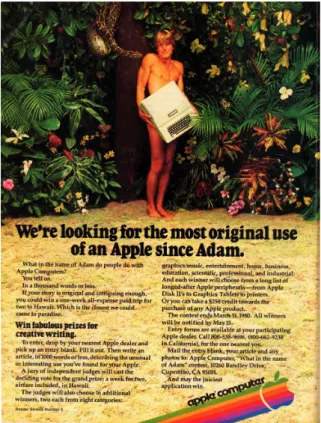
Marketing and advertising were briefly explained in section 2, but to fully understand how those concepts, terms and definitions have evolved to their current form, it is important to take a few steps back and take a look at the history of marketing and advertising. Marketing, as we understand it today, has a long history and its roots reach to the late nineteenth and early twentieth centuries. During the time of the industrial revolution, when mass production techniques started to develop, also marketing began to develop. Before this time, there was no need to advertise products because of the scarcity of products and competitive markets did not really exist yet. But because of technological development, companies began to produce more than it was possible to sell effortlessly, and this led to the sales era where companies tried to find ways to effectively sell goods they had produced. The era of aggressive selling lasted until about the 1960s. After the post-production selling period of time, during the 1970s, marketing began to shape and earn its place in the corporate strategy. Companies started to change the approach towards more of listening to what consumers want and produce based on that. During the period of 1980s, the shift towards more about listening to people’s needs and wants led to a situation where marketing started to formulate into its current form as a strategic concept (Brassington F., Pettitt, S., 2013).
Figure 3 Apple advertisement 1979 (Source:
http://www.macmothership.com/gallery/gallery10.html)
It has been argued that Egyptians and Greeks might have known already the perks of product promotion but Romans knew the best way to get people to buy. Some of the earliest examples that we can call advertising have been seen in the ruins of Pompeii. Besides these, some claim that some forms of advertising were also cave paintings. It seems that it is possible safely to say that advertising, like marketing, is not a new phenomenon and has been used for a long time already. Like marketing in general, at least as long there has been something to sell and some form of medium where to talk about the goods there has been ads. Advertising as we understand it today, started to develop when the printed press was invented. The advertising industry began to shape in the mid-19th century and took a leap forward with the industrial revolution during the period of time when marketing also started to develop. During this period of time also newspapers became popular as a medium for communication. Also, the development of lithography boosted the development of colourful and large prints and posters and these images attained a huge success. The first advertising agency was opened in the United States in 1842. At the beginning of the 20th century, a man called Claude Hopkins
believed that advertising was valuable only if it would lead to sales. Besides Claude Hopkins, a few other names also appeared in the field of advertising, one being Albert Lasker, who began to change the advertising business. Because of some of these influential people and their ideas, the advertising business evolved throughout the years and modern advertising developed (Tungate, M., 2007).
As already described, marketing is about “satisfying consumer needs” (Kotler, P. et al., 2013). And promotion and advertising is about “activities that communicate the merits of the product and persuade target customers to buy it” (Kotler, PT, Armstrong, G. 2017). Throughout history, companies have been trying to do advertising and sell their products. Marketing today is an essential part of all organisations and helps organisations to reach their goals. The crucial question in today’s competitive markets for companies is about how to provide that little extra for a consumer besides the basic functions of a product and how to reach specific groups of buyers. Also, the attempt to predict the future and what consumers may want tomorrow is what marketers try to do today (Brassington F., Pettitt, S., 2013).
Even though a rather old tool as a marketing mix can be applied today, companies need to improve and develop their marketing and advertising strategies all the time. As explained earlier, advertising started to develop into its current form during the time of the industrial revolution. Firms started to create adverts to sell the products they had created. During those times, it was more common to advertise by printing handbills, posters and newspapers. Advertising started to earn its place in business from the mid-19th century onwards because it was more cost-effective than, for example, personal selling. The post-war period of time strengthened the role of advertising in business and the landing of television into consumers’ homes made it possible to advertise to the mass markets. Television made it easier to develop brands and introduce new products to a broader audience. The technological development has had an impact on marketing and advertising. The rise of internet and all kinds of media has boosted the development of advertising to a whole another level. Albeit the development has offered opportunities for marketers, the process has not always been easy. This has forced marketers to also think about new ways of creating ads because consumers are smart and many times can
see the tactics that are used in advertising. This is one of the reason why new ways of creating ads are needed today (McDonald, C., Scott, J., 2007).
Nowadays, the role of marketing and advertising has transformed into a form where they are facing many challenges. Already beginning from the 1990s, marketing has been under a process of transformation due to the rather rapid internationalization. Several global events have impacted the change and made international trade possible. New market opportunities, the changing domestic markets due to international consumer preferences, need to adopt longer-term marketing operations and much more, have had an impact on marketing and advertising strategies (Lazer, W., 1993). Consumers have become much more demanding and are expecting superior quality and reliability from companies. Information technology and development in the communications sector have also brought with them a lot of changes about how companies have started to communicate with consumers and also how products or services are delivered to customers. And these are not the only challenges or changes that companies face (Denison T., McDonald M., 1995). Due to the so-called information overload that consumers face every single day, advertising needs to be created in a way that it reaches the consumers it is targeting. The development of technology has led to a situation where marketing can no longer be separated from the functions of a company and organizations invest a lot in advertising campaigns to reach its audience. The rising expenditures can be explained because of the increasing market segmentation and the wide variety of products and services and small selected target consumer groups. The world wide web as a platform for advertising has taken its place in companies. Its many functions, those being communication and commercial channel and for example entertainment devices, have made it possible for companies to use it as an advertising instrument. The Internet can be said to be the latest channel for commercial communication and advertising and it has shaped organizations in many ways. Marketing and advertising have transformed a lot from them being just a way for companies to sell their stock, to a strategic tool to reach their consumers (Janoschka, A., 2004). Different advertising techniques are created to reach out to consumers today, one being visual advertising into which this study focuses on.
3.2 Visual advertising
As this study focuses on the development of visual advertising, it is important first to take a look on the most important studies and findings that have been made in the topic area. At the end of this section, The Coca-Cola advertisements will be used as an example of how visuals have changed over time. However, first how visual communication and images differ from verbal language and how it is perceived will be considered.
One of the main characteristics of verbal language is that it contains words and sentence structures, whereas visual images do not have a propositional syntax like verbal language. Other than verbal language, visual communication is fluid, indeterminate and open to interpretation and this is what are the main characteristics and attributes of visual syntax and visual persuasion. The observation that we constantly make does not register to our brain just as a value-free data. Each visual sign can be linked to and cause emotional associations, which can not be reached by non-pictorial means. Visual images are many times trying to mimic the real-world and cause associations for consumers so that they can relate to the pictures and visuals they are seeing. Consumers can form connections between pictures and the real-world unconsciously and this is the essence of persuasive communication. Visual images are built by using discreet stylistic choices like colour for example that can attract consumers insidiously. The whole process of interpretation of visual images and communication requires profound mental participation and processing (Messaris, P., 1997). Because of the complexity of visual communication and images and the opportunities it brings with it, it has been an important subject for researchers to study for a long time already.
Around the end of the 20th century, Earnest Elmo Calkins believed that consumers need to be attracted by visuals (Tungate, M., 2007). Advertising has a long and eventful history and besides the above-mentioned name, during the 20th century, several other researchers have studied advertising also from the visual point of view. Based on the studies done, it can be said that the theory developed in the area of visual marketing and advertising focuses mostly on three perspectives, those being vision science, cognitive psychology, and social psychology. Insight from vision science can guide us to
understand better what consumers are most likely to perceive centrally or consciously when looking at advertisements. The science of vision overlaps with cognitive psychology, which has helped on building an understanding of the visual perception of marketing stimuli. Through cognitive psychology, marketers have gained quite a lot of “knowledge about the influence of perceptual characteristics of rudimentary stimuli on attention” (Wedel, M., Pieters, R., 2008).
By first focusing on the science of vision, visual advertising has been studied by using eye-tracking methods. This has been an important part of studying visual advertising because vision is connected to our behavior and decision making. The earliest studies about vision have been done already in 1924 and according to those experiments where visual advertisements or pictures have been shown to subjects, it was claimed that “on the basis of data thus derived we may make the generalization that advertisements having pictures of humans are superior as far as attracting and holding attention are concerned and that the degree of this superiority differs with individuals” (Nixon, H. K., 1924). A much later study done by using eye-tracking methods about the effects of visual complexity in advertising “shows that, as the authors hypothesize, feature complexity hurts attention to the brand and attitude toward the ads, whereas design complexity helps attention to both the pictorial and the advertisement as a whole, its comprehensibility, and attitude toward the ad” (Pieters, R., Wedel, M., Batra, R., 2010). Feature complexity refers to images that are highly detailed and “advertisements that contain more detail and variation in their basic visual features, color, luminance, and edges” (Pieters, R., Wedel, M., Batra, R., 2010). According to Pieters et al. (2010), design complexity on the other hand refers to “variation in terms of specific shapes, object and their arrangements in the advertisement”. The complexity of advertisement has been a subject of study also for Pilelienė, and Grigaliūnaitė who used neuromarketing methods to find how complexity in ads impact consumer’s cognitive processing. The complexity in the layout, according to the study leads to weaker results in affecting consumers because a larger number of items in the picture need to be processed. Therefore, the brand might be left out from enough viewing time and not recalled later on. This on the other hand does not encompass brands to which a consumer has a positive attitude. Nonetheless, it can be said that the ads with lower layout complexity are better recalled later and thus are more effective in marketing communication and for building brand
awareness (Pilelienė, L., Grigaliūnaitė, V., 2016).
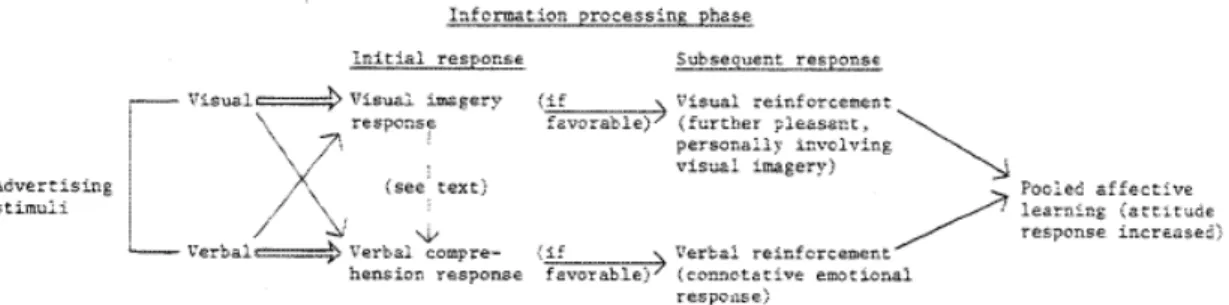
Besides vision science, according to the findings, the earliest studies focusing on the psychological perspective of visual advertising were conducted by Professor John Rossiter and Professor Larry Percy. These two men have been the most important names that stand out in the field of visual advertising theory. They have together published several different studies and books about advertising from the visual perspective and having the angle of psychology in their research. The earliest study from them was done in 1978. Their first study “examines the role of visual imaging ability as a mediating variable in consumer response to advertising” (John R. Rossiter, Larry Percy, 1978). This study has been very important step and boost for future studies. The study was the first research concentrated on demonstrating visual mediation affecting learning. The study also introduced the first theoretical model that would predict visual mediation affecting learning. The model was “proposed in which visual imaging ability is hypothesized to mediate the effects of both visual and verbal stimulus content in advertising through a process which we term visual reinforcement”. Data for the study was collected from a sample group and in the end the data supported dual reinforcement advertising model. The results show that the “combination of verbal and visual stimuli generate strongest affective learning” (Figure 4) (Rossiter, J. R., Percy L., 1978).
Figure 4 Advertising response model by Rossiter & Percy (Source: Rossiter, J. R., Percy L., 1978)
The study conducted in 1978 created an important base for them to continue their studies. The following study was done in 1980 and they created a visual and verbal loop theory and “it was shown that visual content in advertising is just as capable of increasing the consumers’ product attitude as is verbal content” (Rossiter, J. R., Percy L., 1980).
The theory proposed in their second study was based on visual imagery and classical conditioning (Rossiter, J. R., Percy L., 1980). The third study conducted by Rossiter “presents 13 broad applications of visual imagery theory to advertising. It covers guidelines for the effective use of visual content in: general advertising, print advertising, and TV advertising”. The study was supported by psychological experiments and offer perspectives for even more effective advertising (Rossiter J., R., 1982). Other researchers have also studied the effectiveness of visuals in advertising. A study about examining the effects of the visual components of advertisements was created by Mitchell and Olson in 1981. It was an experiment where three advertisements showing photographs and one advertisement with verbal content about hypothetical brands were shown. The result was that the subjects formed significantly different beliefs, so according to their findings there might be multiple variables that affect brand attitudes those being for example visual components that form inferences about the brands advertised (Mitchell, A.A., 1986).
Besides of the studies focusing on vision science and cognitive psychology, advertising professionals have been interested also about the connectedness of emotions and the effectiveness of an advertisement. While people generally remember only a small part of their experiences and multiple factors have an impact on what is remembered and recalled later on, emotions actually play a key role in this. Emotions and its effectiveness has been studied by multiple authors and it has been found out that people are more likely to remember events that are tied to certain emotions (Kensinger, E. A., 2004). For example, it has been stated by Edell and Burke that “feelings responses may influence the nature of the subsequent processing of the ad” and that “feelings generated by the ad explain variance in the brand beliefs that were formed after accounting for that explained by judgments of the ad’s characteristics” (Edell, J. A., Burke, M. C., 1987). So as we can see, also trough emotions visuals can have an impact on consumers.
On top of all these aspects, the researchers have taken a look at the topic still today, advertising and visual advertising has been continuously studied focusing on multiple perspectives. One aspect being for example of how visual communication can enhance the promotion of products that are otherwise hard to advertise like highly complex product design concepts. A recent study suggests that visual stories can enhance
consumers’ mental processing of a product and advertisement and therefore is a useful method (Seifert, C., Chattaraman, V., 2020).
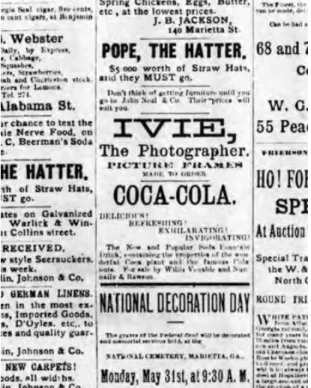
Figure 5 The Coca-Coca ad in 1886 (Source: The Coca-Cola Company, 2011)
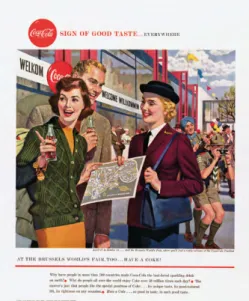
A variety of methods have been used to create even better visual advertising. From the beginning of where the roots of advertising touches, the advertising techniques have changed tremendously. To demonstrate the progress of advertising images, the Coca-Cola Company will be used here as an example. Ever since, the company was founded in 1886, also its advertising campaigns have evolved throughout the years. At the beginning of the company’s journey, the advertisements were mostly using textual elements and for the first time, the brand was promoted in the first newspapers in 1886. At the beginning of the 1900s, “the first advertising for Coca-Cola appears in national magazines” (The Coca-Cola Company, 2011). Most of the advertisements starting from the beginning of the 1900s started to include people in the advertising images. During the year 1950, the company started to advertise also on television. Over the years, some of their television ads have been remembered as the best ads ever in the history of TV advertising. The advertisement and the images used in them have changed a lot over time and it can be seen that the images and visual elements in the ads have evolved quite a lot. The actual images are now in the center of the focus in the ads and the
usage of text have been minimized. The Coca-Cola Company has used many advertising techniques over the years and most of them can also be linked to culture. “In general, advertising is like holding up a mirror to society. Commercials and other creative from a certain year or era typically reflect what is going on in the culture at any given point in time” (The Coca-Cola Company, 2020).
Figure 6 The Coca-Cola ad in mid 1950s (Source: The Coca-Cola Company, 2011)
Figure 7 The Coca-Cola Company ad 2013 (Source: Hepburn, M., 2017)
As stated earlier, processing of pictures differs from verbal communication and that has been a subject of study already for a long time. Furthermore, according to studies, it is evident that understanding human behavior is essential when creating visual advertisements. Researchers have from as early as the beginning of the 19th century,
tried to find out methods that draw consumers’ attention and make them buy. As the examples of the Coca-Cola Company’s advertisements Figure 5, Figure 6 and Figure 7 and the literature about visual advertising show, visual advertising has taken major steps in the creativeness of the ads. Researchers have learned a lot about how to position objects in images, usage of colors, usage of text and much more. To better understand how communication (visual or textual) works in advertising, several theories have been developed to help us to understand the communication process.
3.3 Communication theories in advertising and visual advertising
It has been stated by Vaughn (1980: 27) that “the advertising industry has long been challenged to explain how advertising works. That it does work is not an issue. But how it works and why it works are critical concerns still unresolved”. For this reason, multiple theories have been developed to explore human behavior and how to improve promotional activities. According to Vaughn (1980), most of the models created for advertising can be split into four groups, those being traditional advertising theories, consumer behavior models, development in high/low involvement and right/left brain theories and an FCB model which is about combining advertising effectiveness and strategic planning.
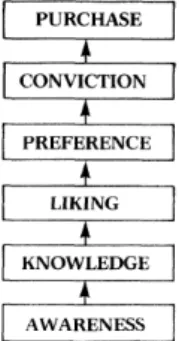
By focusing on Consumer Behavior Models, most of them were developed in the early 1960s. Many different forms of communication models have been invented but perhaps the most famous one after which the rest have been formulated is called the Hierarchy of Effects Model (Figure 8) created by Lavidge and Steiner in 1961 (Vaughn, R., 1980).
The model created had a major impact on how to integrate existing economic, responsive, psychological and social theories. The Hierarchy of Effect Model proposed that a consumer goes through a “sequential hierarchy of events” process in which a consumer steps from awareness, knowledge, liking, preference and conviction before actually purchasing a product. The model has been widely accepted by most marketing professionals (Vaughn, R., 1980). The authors of the model claim that consumers go through multiple steps before actually purchasing anything. How fast a consumer will move through the steps presented in the model, largely depends on the factors affecting the purchase decision. For example, depending on how large the psychological and/or economic engagement relating to the purchase may have an impact on how fast a consumer ends up making a purchase decision. Generally, consumers do not make impulse purchases and need time to go through the process of becoming aware of the product, what the product has to offer, if they like it or not, what their preferences are and if they are convinced that the product offered is a good choice before actually buying or making the final purchase decision. Advertising in general, has different objectives and ad campaigns may be aimed to focus on different results and to different phases in the purchase action. Some advertising may want consumers to become aware of a new product or if the consumer is already aware of the product the next step is to persuade them to purchase. The three main functions of advertising are to provide information or ideas, impact on feelings or attitudes and to produce action. All of the three functions of advertising are closely linked to classic psychology (Lavidge, R. J., Steiner, G. A.. 1961) which were also discussed in the previous section of this research.
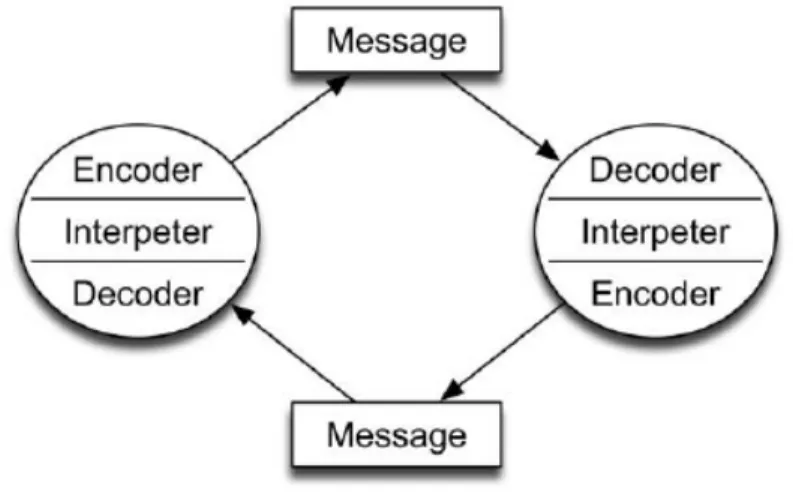
Originally, the Hierarchy of Effects model is based on another model called the AIDA hierarchy of effects model, which was invented St Elmo Lewis back in 1900 to explain how persuasive communication and advertising functioned. He was among the first persons to realize that consumer has to go through a process before purchasing. The AIDA (Figure 9) stands for attention, interest, desire and action. (Egan, J., 2007: 43-44). Besides all the hierarchy of effects models, every marketing and advertising communication can be said to follow the very basic communication model. The basic model of mass communication (Schramm Model of Communication) indicates a two-way connection and interaction between the sender and receiver of a message (Figure 10). The fundamental elements of the model are the message sender, a medium through which the message will be delivered (personal or non-personal) and a receiver of the message, who can also communicate back to sender through giving feedback of the message received. The message can be a combination of words, images or symbols etc. Actually, only 30 percent of our communication is based on words and the rest is based on silent communication methods, those being, for example, movement, smell, touch and color (Egan, J., 2007: 30-31).
Figure 10 Schramm Model of Communication (Source: Elkins, A. et.al. 2012)
As it is possible to see, many researchers have been interested in finding ways for more efficient communication and processes through which the effectiveness of advertising can be measured. However, as we live in an ever-changing world, new approached to advertising are needed, especially in the growing field of digital marketing and advertising, which will be further discussed in the following sections of this research.
3.4 Digital marketing and advertising
As explained earlier, digital marketing can be defined as “marketing that makes use of any interactive electronic communications technology or media in order to accomplish marketing objectives” (Dacko, S., 2008: 183). This section focuses on how digital marketing has developed and how it has impacted visual advertising. The development of the Internet has been one of the most significant development in the 20th century and a major turn point for marketers in the ad-games and an important addition to the marketing toolset. The Internet “is a decentralized, internationally operating network of computers that share a communication protocol which facilitates the exchange of information” (Janoschka, A., 2004). Through the rise of the Internet, websites have been used as advertising instruments and functions as a carrier for the ads as well. Electronic communication and the Web have allowed decentralization of this planet and made it possible to communicate worldwide through the virtual world no matter where people are physically located so it is easy to reach out to a wide audience of consumers (Janoschka, A., 2004: 43-46).
How traditional media differs from digital marketing is that traditional ads can be viewed only at a specific time, to a defined extent and with a predetermined content. The Web provides a much broader options for marketers to advertise since it allows to store a much larger amount of data. Otherwise, web advertising works like traditional advertising, “it is a paid or unpaid form of promotional communication through a medium” to increase the sales of a product (Janoschka, A., 2004: 46-47).
As an advertising platform, the Internet took its place during 1994 when the Internet was commercialized (Zeff, R., Aronson B., 1999). Moreover, ever since its usage has been growing as an advertising medium. According to statistics, worldwide spending on Internet advertising and specially to display advertising has been estimated to rise to over 225 000 million U.S. dollars by the year 2022 (Statista, 2020). Many studies are focusing on how to utilize the Internet as a tool for advertising and how useful the interactivity that the Internet brought with it works with advertising. It has been stated by Yuping, L., and Shrum L. J. (2002) that interactivity may be a good thing because “two-way synchronized communication is potentially more engaging than one-way
unsynchronized communication” and ”two-way communication is positively related to user cognitive involvement” (Yuping, L., Shrum L. J., 2002). Other perspectives to online advertising are, for example, how engaged consumers are to online advertising, creativeness in online advertising, the importance of consumer location, personalization and search engine advertising. From the perspective of personalization, it has been found out that consumers tend to accept personalized advertising better than ads that are not targeted to a specific bigger group of people (Baek, T.H., Morimoto, M., 2012).
The major ways to communicate with consumers online are search engines, display ads, etc. (Nosrati et al., 2013). However, the rise of social media has been an important aspect in the field of online advertising. Facebook, for example, has become one of the most used social media site for marketing and advertising purposes (Guttmann. A., 2018). Factors such as attractive content, communication and interactivity can be seen as impactful factors relevant when using social media as a marketing tool (Mohammadian, M., Mohammadreza, M., 2012). For marketers, the fact that consumers are not anymore just passive message receiver has become a challenge. Consumer decisions are more and more affected by other peoples’ opinions and are a result of social decisions. (Kotler, P., Kartajaya, H., Setiawan, I., 2016: 13).
3.5 Visual perspective to online advertising
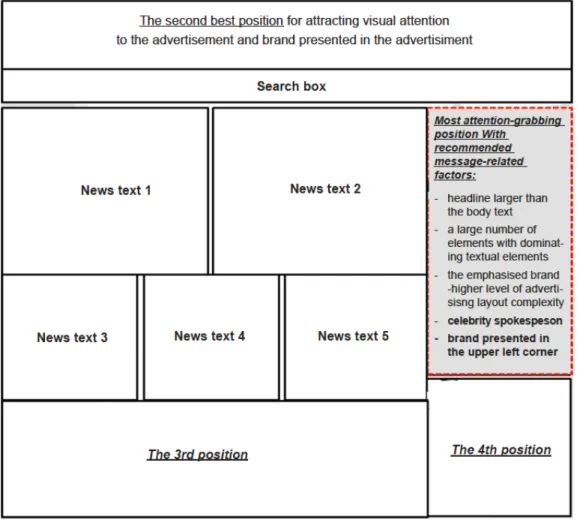
By not forgetting the visual and creative aspect of this study, the effectiveness of online advertising has also been studied from the perspective of message-related factors, because these factors marketers can easily control. Some researchers have studied the effectiveness of online advertising and which factors influence consumer visual attention. As earlier explained, eye tracking has been used to find out answers about how consumers perceive advertising and so it has been used to study online advertising as well. Based on some studies, the content of advertising should follow factors such as larger headline and little bit smaller body text, dominating textual elements, complex layout, positioning the brand in the upper left corner, etc. However, in the context of the Internet, are these valid points for online advertising. (Grigaliūnaitė, V., Pilelienė, L., 2017). It has been found out that the size of digital advertisements can have an impact
on how effective the ad is. Large full-screen ads in interactive formats can enhance brand recall and advertising effectiveness. In addition, the more entertaining and interactive the ad is, then the consumer is more likely to be better engaged (Baron, S. D., Brouwer, C., Garbayo, A., 2014). On the other hand, some claim that the language should be considered more important than images in online advertising. This might be because of the lack of space available for pictures. The message delivered plays an important role in online advertising (Janoschka, A., 2004: 73-74). Some ads can be perceived as annoying; therefore, also in online advertising impacting consumers’ emotions must be considered as an important aspect and an influencer. It has been proven that pleasant emotions lead to higher engagement rates and attention towards the ad and the brand, as well as the possibility of forwarding the message to someone (Eckler, P., Bolls, P., 2011).
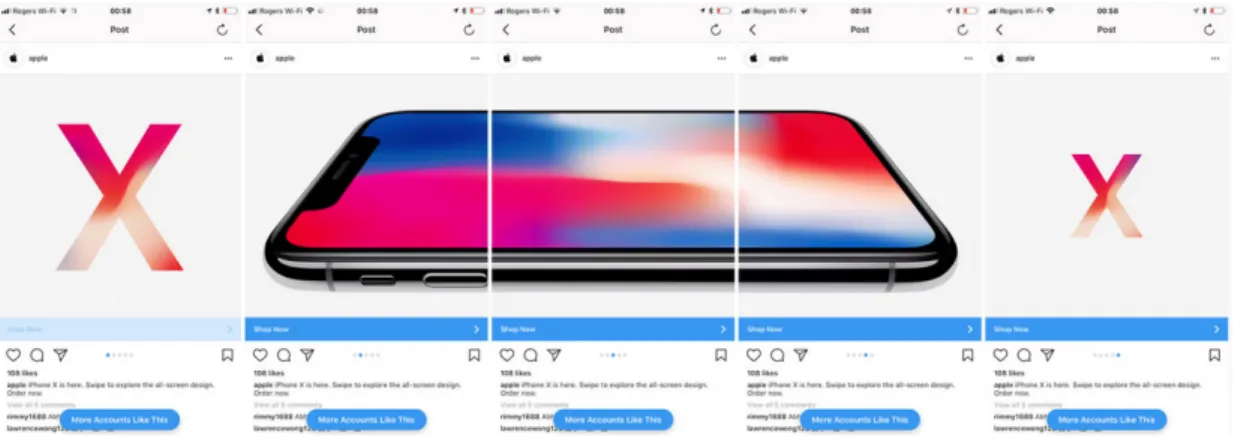
The findings researchers have done about the usage of pictorial elements in advertising has helped marketers to implement these strategies in multiple ways. Before the rise of digital marketing, visual advertising might have been more complex and include much text, as seen in the example of the Apple advertisement (Figure 3) at the beginning of this study. Today professionals are more concerned about the design of the ad than ever before. The ads today are designed by using much knowledge gathered and technology has changed advertising a lot since all of the advertising must be suitable for multiple different mediums like on print, web, or mobile phones. For example, to be able to create an ad for a brand successfully, it is important to first fully understand the strategy behind the brand. All of the visual and verbal elements should support the brand image and work in different platforms. The knowledge about how to use pictorial and textual elements in adverts has changed the adverts to be a bit clearer. “Simple stated, differentiation is what distinguishes one brand from the rest” (Landa, R., 2016). When creating content to digital platforms, it is important to keep in mind, for example, the stylistic choices of typeface, how the content is placed on the ad and keeping graphic elements consistent in the ad, size of the content and much more. The design of the content online must be clear for scrolling and for consumers to use. Also, when websites or any digital advertising is designed, it is important to remember to follow visual hierarchy that ranks pictures and text in the order of importance. The key elements in the ad must be made clearly visible with the help of color and contrast for example
(Landa, R., 2016). This is possible to see also from the Apple advertisements today (Figure 11) as these have become much more simplified than what they used to be before and are easier to even quickly glance online.
Figure 11 Apple Instagram ad (Source: Schmidt, G., n.d.)
Positioning the objects in the images has been considered as an important factor in advertising for a long time already.
Composition is the form, the whole spatial property and structure, resulting from the arrangement of graphic elements (type and images) in relation to one another and to the format (boundary edges and shape of the screen or page, etc.). For each and every composition, you use formal elements (line, shape, color, value, and texture) to visualize images and type, employing basic compositional principles (balance, emphasis, unity, rhythm, and proportion) in the process of composing and creating graphic space (Landa, R., 2016: 53).
Marketers have considered the rule of thirds as an important tool to help to position objects in images correctly. According to Landa, R. (2016) rule of thirds is “an asymmetrical compositional technique often used by filmmakers, photographers, and designers to create harmony, balance and emphasis”. The basic idea is that the image would be created so that the image would not be cut to half or that the focal point would not be in the center of the image (Landa, R., 2016).
By looking at visual advertising from the digital perspective, it has been found out that an advertisement that is positioned on the right side of the Internet news portal page and is in the upper position can attract more from the visual attention perspective. Positioning the advertisement on a web page correctly can increase the ads viewing time
substantially (Figure 12). Also, how the brand is positioned in the online ad can impact the results. Positioning the brand on the upper left corner of the online ad can increase its attractiveness (Grigaliūnaitė, V., Pilelienė, L., 2017).
Figure 12 The most attention-grapping position of the advertisement in the context of the Internet news portal page (Source: Grigaliūnaitė, V., Pilelienė, L., 2017)
The importance of positioning the object correctly has been proven by a study done by using another eye-tracking method study that found out that for example by positioning apparel banner ads next to articles related to fashion causes a consumer to be more interested in the ad. Also, by adding discount information and placing models in the pictures can increase the effectiveness of the ad and be more attention-grabbing (Huang, Y.T., 2018). What has changed to traditional advertising is that some research focusses on finding ways how consumers could have an impact on what is shown in the ads online. The technology could help marketers to define the content and composition already at the time consumer is glancing the ad, not after going through some buying statistics (Dávideková, M., Greguš, M., 2017). Content positioning and the content in
general seems to be an important factor to consider in the ad creation even today, but that can be done with the help of technology.
The differences between traditional visual advertising and visual online advertising are related to the fact that reading habits have changed through the digital tools. The average time a person spends on reading content from the mobile device is much shorter than what it might be when reading a magazine, for example. The importance of visuality as a tool that grabs the attention has increased majorly because of this. Today the same message needs to be designed so that it can be used in different platforms and mediums and so that it attracts as fast as possible. The elements in the message need to be able to bend to multiple different forms, unlike when the positioning or the functionality needed to be considered only for print ads, for example. Also, some visual elements that have changed are the brightness of the colors used on digital platforms. Color usage differs from traditional printed media because of the light intensity. Digital advertising allows us to use stronger and brighter colors than what it is possible in printed communication where a four-color system is used. To be successful, colors need to be used differently than in printed communication (Pohjola, J., 2019). Color has been considered an important part of communication for a long time already. For example, some colors have been used only for religious or governmental bodies and only royalty was allowed to use rare blue and indigo pigments that represent and indicate power and social roles. Today, understanding the usage of colors is a vital part of successful marketing. Technology allows marketers to be even more creative with colors. Advanced electronic devices allow new color choices. According to Gorn et al. (2004), the background color of a website can affect how a consumer perceives the time it takes for the page to download. The color has an impact on the quickness and relaxation. In the study hue, value and chroma dimensions of the color were manipulated and it was found out that the colors that cause more relaxed feelings impact consumers to be more willing to wait for the page to load. Another study found out that when the background color of a computer screen is red, a more favorable interpretation of “visuals representing specific product details” were formed (Mehta, R., Zhu, R.J., 2009). On the other hand, when the color was blue, that was more favorable for visual that contained remotely related associations like road signs or maps (Mehta, R., Zhu, R.J., 2009). These facts about color used in an online environment are important because marketers want
consumers to stop and watch their advertisements.
Some other things that have changed due to the development of technology is that the development of monitors have allowed marketers to use very detailed typography. The overall appearance of images however, has changed to be less detailed because they are then easier to adapt to different display sizes. One other thing that has changed is the fact that the same message transforms into different sizes and shapes when shown in different platforms, which leads to the importance of considering the image resolution and pixels differently. The visual identifier of websites e.g., favicon (16x16 pixels), as seen in Figure 13, demonstrates the way how much an image resolution can change when a picture is transformed from vector format to pixel format. Vector graphics have made it possible to create very accurate images (Pohjola, J., 2019).
Figure 13 Image changed from vector format to pixels (Source: Pohjola, J. 2019)
The above-mentioned factors and possibly many more, demonstrate that the designing process of an advertisement is far more complex and many factors in the visual design need to be considered today. This has led to a situation where detailed information is needed to support marketers in the visual advertising creation process. This is why marketers have started to implement data analytics in their advertising creation processes. This is further considered in the next chapter of this study.
3.6 How digital metrics and data analytics have been used in advertising
As it is possible to see, marketing and advertising has evolved a lot during the years. Today, the focus has been more and more towards digital advertising and more effective ways to reach out to consumers. Marketers are forced to rethink their advertising tactics in order to create the most effective visual ads. One way of doing this has been the
rising attempt to use digital metrics and data analytics in advertising. Marketers might have thought that digitalization could make advertising easier, that it would be easier to create the right content for the right audience at the right time. However, digital advertising is far more complex than that. Already decades ago, marketers have been trying to measure the advertising effectiveness by counting the number of posters on the streets or the number of press runs of magazines. Fortunately, measuring techniques have evolved from that. Even though a lot of effort has been put to measure circulation (actual copies of a magazine sold or read), media audiences (number of people viewing television and listening to radio) and specific advertising audiences, other ways has been formulated as well (Darrell, B. L., Henderson, S. B., 1950). Traditionally, marketers have measured offline advertising, for example, by using reach-and-frequency distribution. “Effective frequency asks how many exposures are needed for an ad to become “effective”, while effective reach addresses the number of people who are exposed at that level” (Cannon, H.M., Riordan, E.A., 1994). Advertising and the effectiveness of the message delivered has also been measured by using cost per impressions (CPM) technique, which is presented in Figure 14 (Bolland, E. J., 1989).
Figure 14 The CPM Model for Advertising (Source: Bolland, E. J., 1989)
Practically, measuring online campaigns has the same purpose as measuring offline advertising. The purpose is to measure the productivity of marketing, assessment of return on marketing investment, calculation of overall satisfaction and participation of consumers and to estimate market share and predict demand (Meyer, K. Wilkins, N., 2015). The rise of online media has forced marketers to find out more appropriate ways to evaluate digital marketing. Data analytics is used to collect data and analysing it to better understand consumers. The content of an ad can be, for example, analysed if it is valuable or not. Data collecting and analytics can give an opportunity to see what kind of content is effective and what consumers are consuming and interacting with. Also, what kind of information users are looking for online can be analysed. With some tools
like Adobe Omniture and Google Analytics, it is possible to measure and test content to find out the ways that lead to the highest user satisfaction. The points of interest on websites, for example, can be seen which is the best way to position content online. To find out answers to how people are behaving online and on digital platforms, a combination of quantitative data and qualitative user feedback can provide answers to these questions (Hemann, C., Burbary, K., 2013).
The tools used to collect such data these days are, in most cases, linked to social metrics. This is because today most of the communication is executed by having a social component on it. The most popular metrics for social media platforms today are the number of likes the page gets, how many people it has reached, engagement of users, how many people are talking about the content, amount of followers, number of clicks, etc. (Hemann, C., Burbary, K., 2013). Whereas, if digital marketing in general is considered, some ways to collect data about the effectiveness of it might be, for example, in the case of search engine marketing (SEO) investigating the visibility of a web page. By calculating the results and data collected, a conversion rate (CVR) can be found which presents a result about how many times the page has been seen and acted upon in the form of clicking on it, for example. Other qualitative ways to measure user behaviour online are A/B testing, Call to Action (CTA), User experience (UX), Rating systems, Surveys and forms and the Flow of Users. A/B testing has started to become a popular way to test the functionality of an advertisement or a web page, for example. A/B testing refers to comparing two versions of a page or an element on a page such as a picture or the heading. By using these methods, it is possible to understand better how users understand a website or an ad on it (Saura et al., 2017). A/B testing can be used to measure visual media and test different types of pictures and their functionality if a static picture works better than a 360 product image or whether it is better to use people or a product in the image, for example. By using A/B testing Disney for example found by comparing two versions of their web pages (seen in Figure 15 and Figure 16) that in one specific case more hierarchical approach worked out better than having a lot of visual and moving images on the screen (Siroker, D., Koomen, P., 2013).
Figure 15 A/B test example (Source: (Siroker, D., Koomen, P., 2013)
Figure 16 A/B test example (Source: (Siroker, D., Koomen, P., 2013)
Also, neurophysiological tools have become more and more popular in investigating visual attention in advertising. Tracking eye-movements, heart variability and brain responses have been part of studying advertising for a long time already but are still today relevant tools. By using these methods, it has been found about, among other things that advertising can impact differently between genders (Guixeres et al., 2017). Eye-movements have also been studied from the perspective that a person forms a certain path, a scan path he or she follows when seen the same picture several times. Some people might follow the same path or order over and over again that he or she used when viewing a picture or web site for the first time. These tools are important because they can provide information about if the company is achieving its organizational goals by using the set strategies (Josephson, S., Holmes, M.E., 2002). Other ways to measure online advertising are bounce rate and cost per click. Bounce rate indicates the amount of people who immediately bounce back to the website where they came from.
A high number usually expresses that the campaign was not successful (Meyer, K. Wilkins, N., 2015).
By going back to the visual point of view, advertising effectiveness can be tested, for example, by using click-through rate (CTR) and conversion rate (CVR). As already mentioned, the spending to display advertising has been on the rise and this is because display advertising can increase the revenue significantly by showing different textual or image ads on multiple mediums. CTR is the main way to measure display advertising effectiveness. (Chen, J. et al., 2016) Using Click through rate is a fast way of measuring how many people have seen the advert and if the ad has been successful. CVR is usually indicating the percentage of viewers who end up completing the desired goals (Meyer, K. Wilkins, N., 2015). According to the findings, there are a minimal amount of studies that quantitatively focus on how the visual or creative elements in the ad affect the response rate. However, one study indicates that visuals having high contrast should be performing better and have a higher rate of CTR. Images having too many objects or textual characters, on the other hand, might not be very effective and have a lower CTR value (Azimi, J. et al. 2012). Besides of the CTR, CVR has also been tested from the visual perspective. Although the amount of research in this area is also limited, the findings indicate that visuals have a potentiality on predicting CVR (Jiang, J., Jiang, H., 2017).
Marketing and advertising have transformed into data-driven advertising, which is used to “leveraging a wide range of delivery channels, as well as creative content that is appropriate to each, in order to establish and grow relationships that benefit marketer and consumer alike”. However, putting that data to work is not always easy and challenges still remain. Collecting and analysing an overwhelming amount of data is a complex process, especially in the perspective of visual advertising. Marketers are relying on technology and are trying to improve the functionality of data-driven marketing and advertising. Digital execution, data management, automation technology and creative development just to name a few are some factors marketers are trying to focus on intensively (Braverman, S., 2015).
4
Methodology
The purpose of this chapter is to introduce the methodology chosen for this topic. The research design, the qualitative research method, and the interview method will be further explained. But first the fundamental idea behind the research should be considered. Basically, why this study has been conducted, is to provide new insight into a topic that has not been that much covered by other researchers yet. The idea is to gain knowledge rather than to solve a particular problem. According to Brassington and Pettitt (2013: 164), “Marketing research links the organisation with the environment in which it is operating and involves specifying the problem, gathering data, then analysing and interpreting those data to facilitate the decision-making process”. The fundamental idea is to support marketing functions by gathering information to identify opportunities for marketers, evaluate their actions, to monitor performance and to help to understand better the whole marketing process (Brassington F., Pettitt, S., 2013: 164).
Figure 17 The Research Process (Source: Sreejesh, S., Mohapatra, S., 2014)
The research process (Figure 17) usually includes the steps that are first defining the research topic by identifying a problem or an opportunity, defining the objectives of the research, reviewing relevant literature, designing the research and deciding what methods to use, collecting and analysing the data and finally reporting the findings (Sreejesh, S., Mohapatra, S., 2014: 14).