University of South Florida
Scholar Commons
Graduate Theses and Dissertations Graduate School
July 2018
Beyond Replicative Technology: The Digital
Practices of Students with Literacy-Related
Learning Difficulties Engaged in Productive
Technologies
Aimee Frier
University of South Florida, [email protected]
Follow this and additional works at:https://scholarcommons.usf.edu/etd
Part of theCurriculum and Instruction Commons, and theSpecial Education and Teaching Commons
This Dissertation is brought to you for free and open access by the Graduate School at Scholar Commons. It has been accepted for inclusion in Graduate Theses and Dissertations by an authorized administrator of Scholar Commons. For more information, please contact
Scholar Commons Citation
Frier, Aimee, "Beyond Replicative Technology: The Digital Practices of Students with Literacy-Related Learning Difficulties Engaged in Productive Technologies" (2018).Graduate Theses and Dissertations.
Beyond Replicative Technology: The Digital Practices of Students with Literacy-Related Learning Difficulties Engaged in Productive Technologies
by
Aimee Frier
A dissertation submitted in partial fulfillment of the requirements for the degree of
Doctor of Philosophy
in Curriculum and Instruction with an emphasis in Special Education and Literacy Studies
Department of Teaching and Learning College of Education
University of South Florida
Co-Major Professor: Dr. Jenifer Schneider, Ph.D. Co-Major Professor: Dr. David Allsopp, Ph.D.
Member: Dr. David Hoppey, Ph.D. Member: Dr. James King, Ed.D.
Date of Approval: June 22, 2018
Keywords: Literacy, Reading Difficulties, Digital Literacies, Writing, Struggling Readers, Struggling Writers
DEDICATION
It is with love and gratitude that I dedicate this dissertation to Aeriauna Blanton and our two beautiful babies, Holland and Hendrix. This work would not have been possible without your love and support. It’s been a long journey – but we made it to the finish line. Always.
Dad- As I listen to you playing with Holland and Hendrix in the background while I write this dedication, I want to acknowledge that without you, this document would have never been finished. Thank you.
ACKNOWLEDGMENTS
As I look back on my path of doctoral experiences, I realize that I have been blessed with the support of a wonderful group of colleagues – many I now consider dear friends. Without your love and support, the path to completion would have been impossible.
Dr. Jenifer Schneider, when I met you, I remember being intimidated by your
straightforward manner and high expectations of any student accepted into the program. To be honest, I wanted to run in the other direction. I’m so glad I didn’t. Over time, that same
straightforward manner and high expectations are two of the many qualities I deeply admire in you. You never compromised on your high expectations, and I appreciate the opportunity to rise to the challenge, even when it was uncomfortable. I am grateful for the hours you spent talking me through my study and reviewing my work. I look forward to a lifetime of friendship now that I’ve made it through the fire!
Thank you, Dr. David Allsopp, for taking me under your wing when I first entered the doctoral program. I appreciate all of the opportunities you provided in both research and teaching. You understood, or took the time to understand, what I wanted to achieve while spanning the fields of special education and literacy studies. Your guidance has instilled the
confidence to be the best I can be as I join the work to improve outcomes for students with learning disabilities.
Dr. David Hoppey, your passion for the profession has been an inspiration. You always treated me as a colleague, instead of just a student. Your actions have helped me see how important it is to form partnerships in collaborative work. Thank you for the mentorship and sharing your insight.
Dr. King, thank you for your thoughtfulness and close reading of my work – on this dissertation and throughout my coursework. You demonstrate your wisdom through your careful feedback and probing questions. I am thankful for the opportunity to work together and hope that there are many more opportunities in the future!
I was blessed with the opportunity to have an amazing Special Education Cohort: Jessica Curtis, Jimmy Caldwell, Kiki Harris, Myriam Lindo, Harold Holmes, Lisa Lockhart, and Mike Riley – Together we have made it through this journey! I’m cheering on the rest of you as you approach the finish line.
Dr. Jennifer Wolgemuth, thank you for serving as an outside chair for both my proposal and dissertation defense. I appreciate your insight and thoughtful questions. I would have loved to have you on my committee but found it more important for you to be a friend and mentor through the process instead. I will never forget walking into class on the first night, and you were barefoot, sitting cross-legged on the table at the front of the room. You are one of the many treasures I’ll take with me from my time at USF.
There are so many other people I could mention here that have helped me along the way in some way, shape, or form. Thank you for the email reminders, conference trip travel, writing groups, late-night texts to complain or ask a question, sharing your work, preparing for job
interviews – “my people” who understand what I’m going through. Stephanie Branson and Csaba Osvath: D.A. for LIFE!!! Rebecca Powell, Lindsay Persohn, Julia Hagge, Patriann Smith, Jessica Curtis, Aisha Holmes, Ann Mickelson, and Anne Anderson: I love you all and couldn’t have done this without your friendship.
TABLE OF CONTENTS
List of Tables ... vi
List of Figures ... vii
Abstract ...x
Chapter One: Introduction to the Research ...1
Guideposts for Learning in the 21st Century ...2
Special Attention to Learners with Disabilities ...4
Purpose of Study, Research Questions, and Theoretical Frames ...5
Literacy learning is social and cultural. ...6
Literacy learning requires navigation of sign systems. ...7
Literacy learning shifts in response to the development of “New Literacies.” ...9
Literacy learning can create challenges and difficulties for students. ...11
Summary ...13
Definition of Terms ...13
Digital literacies ...13
Digital tools ...13
Digital literacy practices ...13
Digital literacy events ...13
Instructional strategies ...14
Integrated digital literacies instruction ...14
Literacy-related Learning Difficulties ...14
Individualized Education Plan (IEP) ...15
Productive technologies ...15
Replicative Technology ...15
Chapter Two: Literature Review ...16
Literacy Learning ...17 “Struggling” readers ...18 Oral Language ...18 Fluency ...19 Vocabulary ...20 Comprehension ...21
Operational definition of reading ability ...22
Planning ...23 Amount/Length of Text ...24 Sentence Construction ...24 Impact of Genre ...25 Revision ...26 Transcription/Spelling ...26 Handwriting ...27 Role of Keyboarding ...27
Operational definition of writing ability ...28
Multimodality, Digital Literacy and Digital Environments ...28
Multimodality ...28 Digital literacy ...30 Digital environments ...33 Increased Participation ...33 Funds of Knowledge ...35 Affective Dimensions ...36
“Struggling” Digital navigators ...38
Defining the population ...38
Competing discourses ...39
Computer Assisted Instruction versus Classroom-based Instruction ...40
Defining and measuring student success ...40
Digital Learning Environments and the Role of the Teacher ...41
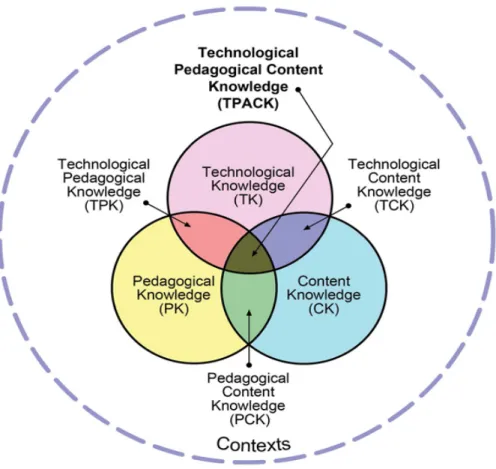
Technological Pedagogical Content Knowledge (TPACK). ...41
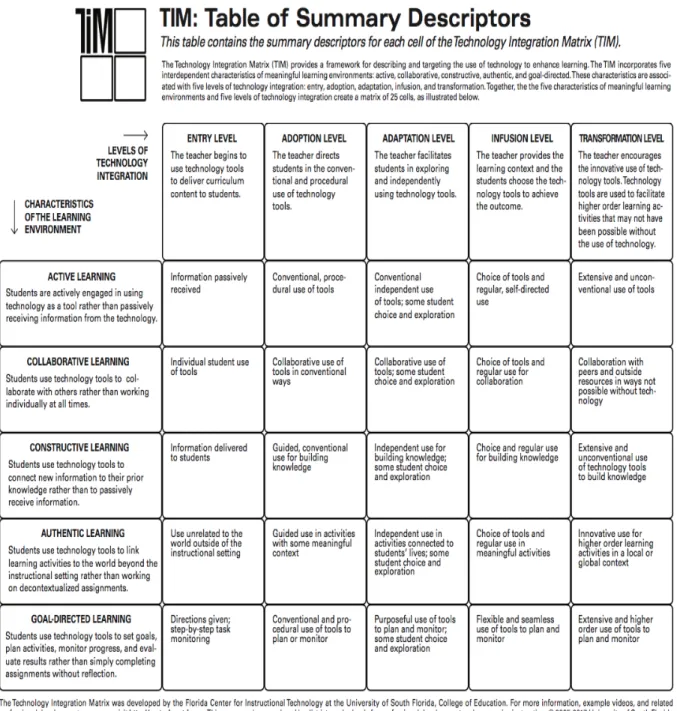
Technology Integration Matrix ...47
SAMR (Substitution, Augmentation, Modification, and Redefinition) Model ...50
Summary ...51
Chapter Three: Methods ...52
Study Design: Case Study ...53
Case Selection ...55 School Context ...55 Participants ...56 Teacher ...56 Students ...58 Ariana ...59 Bella ...60 Devon ...61 Data Collection ...61 Data Sources ...62 Observations ...63 Field Notes ...65
Descriptive field notes ...65
Video/audio recording ...67
Interviews ...69
Documents and Documentation Review ...70
Lesson plans ...72
Digital work samples ...72
Data Organization ...73
Study Design and Data Analysis ...74
Phase I ...74
Digital Tools in the Classroom ...77
Devices ...77
Applications, websites, and software ...79
Phase II ...83
First Cycle Coding ...84
Second Cycle Coding ...85
Phase III ...89
Trustworthiness and Credibility ...90
Extended Engagement ...90 Persistent Observation ...91 Peer Debriefing ...91 Member-checking ...92 Transferability ...94 Thick description ...94 Dependability ...94 Inquiry Audit ...94 Confirmability ...94 Triangulation ...94 Reflexivity ...95 Ethical Considerations ...96 Summary ...97
Chapter Four: Findings ...98
Four Digital Ligeracy Events as Sites of Student Enactment ...99
Instructional Context ...100
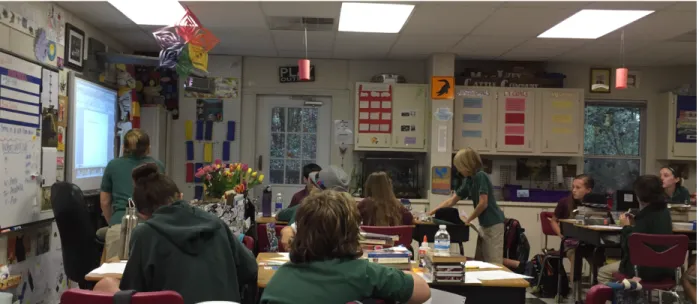
Classroom Space and Setting Descriptors ...100
Digital Literacy Event One: Categorizing Math Shapes to Reinforce Vocabulary Using Storytelling Tools ...102
Learning environment ...103
Situating the lesson within the TIM ...103
Digital literacy instruction and content integration ...103
Digital Literacy Event Two: All About Me Autobiographies as Genre Study Using Multimodal Composing Tools ...111
Learning environment ...111
Situating the lesson within the TIM ...112
Digital Literacy Event Three: Literary Analysis and Novel Study of
Stowaway Using Storytelling Tools ...124
Learning environment ...124
Situating the lesson within the TIM ...125
Digital literacy instruction and content generation ...125
Digital Literacy Event Four: Country Research ...127
Learning environment ...127
Situating the lesson within the TIM ...127
Digital literacy instruction and content generation ...128
Interpretations of the Instructional Environment Across the Four Highlighted Events ... 131
Modeling with Text, Telling Without Touching, and Commingling Directions for Successive Navigation ...133
The Expectations for Tool Vocabulary ...135
Paper/Pencil Supports in Contrast to Bells and Whistles ...136
Go Explore, But Also Check In ...138
Technology as a Tool for Behavior Modification ...138
Summary ...139
Student Use of Digital Tools ...140
Benefit: Persistence and Motivation ...140
Benefit: Turns into expert ...144
Benefit: Provides Additional Resources ...147
Barriers: Individual Accountability ...148
Barrier: Hiding with Technology ...152
Barrier: Technology is hard ...155
Barrier: Inaccuracy of information ...158
Analysis of Composition ...162 Planning ...164 Content Generation ...170 Revision ...174 Text Transcription ...178 Summary ...182
Chapter Five: Discussion and Implications ...183
Discussion ...183
Implications ...184
Knowledge of Technology Does Not Ensure Technological Pedagogical Content Knowledge ...184
Students with Reading Difficulties Still Have Difficulty with Reading, Despite Technology Integration ...188
Change in Writing Tool (Technology) does not Guarantee Change in Writing Performance ...194
Limitations ...198
Future Research ...198
References ...201
Appendices ...220
Appendix A. Sample Interview Code ...221
Appendix B. Full List of Codes ...222
Appendix C. Permission to Reprint Figure from Hutchison &Woodward (2017) ...225
Appendix D. IRB Study Approval ...226
LIST OF TABLES
Table 3.1 Data Collection Timeline ...62
Table 3.2 Data Generation ...63
Table 3.4 Description of Teacher’s Tool Use ...79
Table 3.5 Description of Teacher’s Software Use ...82
Table 3.6 Literacy Events as Sites of Productive Technologies ...83
Table 3.7 Second Cycle: Teacher’s Instructional Strategies ...86
Table 3.8 Second Cycle: Perceived Benefits of Digital Literacies Instruction for Students with Literacy-Related Learning Difficulties ...87
Table 3.9 Second Cycle: Perceived Barriers of Digital Literacies Instruction for Students with Literacy-Related Learning Difficulties ...88
Table 3.10 Discription of Troia’s (2006) Characteristic and Instances of Occurrence within the data ...90
Table 4.3 Characteristics, Description, and Number of Observed Instances of Troia’s (2006) Characteristics ...164
LIST OF FIGURES
Figure 1.1 Shulman’s (1986) Pedagogical Content Knowledge (PCK)
Framework ...42
Figure 1.2 TPACK Model Reproduced by permission of the publisher, © 2012 by tpack.org ...43
Figure 2.3 Technology Integration Matrix (TIM). Florida Center for Instructional Technology at the University of South Florida, College of Education (retrieved from: https://fcit.usf.edu/matrix/matrix/) ...49
Figure 2.4 Puentedura’s (2006) Substitution, Augmentation, Modification, and Redefinition (SAMR) model (retrieved from http://www.hippasus.com/rrpweblog/) ...50
Figure 3.1 Classroom layout ...57
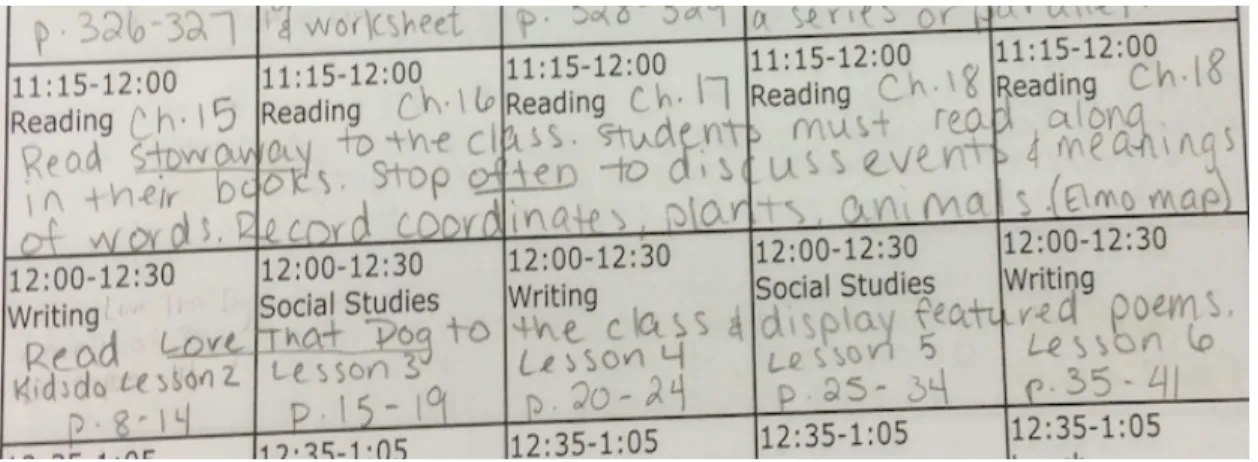
Figure 3.2 Example of basic lesson plan with room to interpret instructional teaching method ...58
Figure 3.3 Field Note Template ...64
Figure 3.4 Sample Field Note ...66
Figure 3.5 MAXQDA Data Analysis Software ...68
Figure 3.6 Sample Evernote Page ...71
Figure 3.7 Digital Work Sample ...72
Figure 3.8 Evernote Data Organziation ...74
Figure 3.9 Three phases of analysis moving from teacher-created context to student composing behavior ...75
Figure 3.10 Example of peer debriefing ...92
Figure 3.11 Example of member checking ...93
Figure 3.12 Triangulation of methods ...95
Figure 4.1 TIM Instructional Setting Descriptors ...101
Figure 4.2 Classroom seating configuration ...102
Figure 4.3 Worksheet used to keep track of the math shapes ...105
Figure 4.4 Ariana and Bella recording notes on paper ...107
Figure 4.5 Regular shape example page from Comic Life ...107
Figure 4.6 “Not regular” shape example page from Comic Life ...108
Figure 4.7 Bella and Ariana label their math shape images ...111
Figure 4.8 Wordle instructions ...113
Figure 4.9 Bella’s Wordle ...117
Figure 4.10 Devon searching for quotes and images in order to create his collage ...120
Figure 4.11 Ariana making edits to her iMovie. There were multiple panes within iMovie to edit, add, or delete content within a project ...124
Figure 4.12 Devon takes a picture to accompany his text with Comic Life ...126
Figure 4.13 List of required information for the Country Research Project ...129
Figure 4.14 Bella writing notes by copying information frm on the Internet ...131
Figure 4.15 Devon attempting to remove flash drive ...142
Figure 4.16 Bella making adjustments to her iMovie ...144
Figure 4.17 Devon showing James how to use the program on iPad ...145
Figure 4.18 Devon searches for a reference material for a drawing ...148
Figure 4.19 Devon waits while is partner reviews his work ...152
Figure 4.20 Ariana is coloring (off the teacher’s task) while her partner searches for the the required information ...154
Figure 4.21 Bella found an appropriate website with information for kids ...158
Figure 4.22 Example of inaccuracies found in the students’ products. The student selected this image to represent Stonehenge ...160
Figure 4.23 Example of inaccuracies found in the students’ products. This dog does not resemble the greyhound described in the novel ...162
Figure 4.24 Image of one of the websites Bella used to copy her information ...166
Figure 4.25 List of required information for the Country Research Project ...167
Figure 4.27 Ariana is recopying her notes to make them look nice ...169 Figure 4.28 Ariana makes her writing neat by using good handwriting and correcting
her mistakes with correcting tape ...170 Figure 4.29 Image of the greyhound from Devon and James’ project ...170 Figure 4.30 Bella found the website with the information on the climate once Anna
helped her decode the work and find an accurate site ...173 Figure 4.31 Example of “revisions” Ariana made to her project ...176 Figure 4.32 Devon adding making final additions to his iMovie ...178 Figure 5.1 The Technology Integration Planning Cycle for Literacy and Language
Arts (Hutchinson & Woodward, 2014) Reprinted with Permission
ABSTRACT
In this dissertation, I present the findings from a qualitative case study of the digital literacy integration of a teacher and the digital literacy practices of three students with literacy-related learning difficulties within her classroom. As a researcher, I was interested in the ways students with literacy-related learning difficulties navigated digital tools in a technology-infused environment created by a teacher who has experience using digital tools for instructional and student-learning purposes. My research was guided by the following questions: (1) What was the context, content, and structure of the teacher’s technology instruction? (2) In what ways did the students use technological tools? (3) How did students with reading difficulties compose during digital literacy events? The data for this case study included classroom observations, interviews, field notes, work samples, and lesson plans. Through the use of both inductive (Phase I and II) and a priori (Phase III) analysis, the data highlight several important findings to inform the research questions: (a) Knowledge of Technology Does Not Ensure Technological Pedagogical Content Knowledge (b) Students with Reading Difficulties Still Have Difficulty with
Reading Despite Technology Integration and (c) Change in Writing Tool (technology) does not Guarantee Change in Writing Performance.
CHAPTER ONE:
INTRODUCTION TO THE RESEARCH
In June 2013, President Obama shared the ConnectED initiative designed to enrich K-12 education for all students by “empowering teachers with the best technology and training to make the most of it, and empowering students through individualized learning and rich, digital content” (ConnectEd Initiative, 2013). Since then, the Office of Educational Technology (OET) has called for increased technology use and mandates that schools need to incorporate 21st -century technology in order to motivate, inspire, and engage all learners to achieve (ConnectEd Initiative, 2013). In order for students to be life-long learners, schools need to change what and
how teachers teach to match “what people need to know, how they learn, and where and when they learn and change our perception of who needs to learn” (ISTE, 2015).
Although the digital funding gap has been largely closed due to increased federal and state funding of varied educational initiatives (U.S. Department of Education, 2017), the U.S. Department of Education Strategic Plan (2017) identified a new kind of digital divide, a “digital use divide” (p. 21). In the digital use divide some students use technology passively through consumption of media or completion of digital worksheets, while other students actively engage in technology through peer collaboration, immersive simulations, media production, interactions
with experts, making global connections, design, and coding, or what has also been referred to as Web 2.0 and as participatory culture (Jenkins, 2006).
For example, literacy in the 21st century is visual, where the screen is the dominant site for text to be read, requiring new dispositions, strategies, and skills on the part of the student (Coiro & Dobler, 2007; Leu, Kinzer, Coiro, & Cammack, 2004; Tierney, 2009). Although traditional literacy has been understood to be a set of skills, processes, and understandings by which we comprehend printed, alphabetic text, within New Literacy Studies, literacy is perceived “as a capacity to utilize symbol systems (e.g. alphabet, musical notation, numbers, etc.) for the purpose of making meaning (Gee, 2008, The New London Group, 1996).” It is not enough to read and write text (Burmark, 2002). Luke (2000) states that “just to get into any basic computer program requires facility with both print rich literacy and any number of symbolic languages so that we know where to click in order to move through menued choices” (p 69-79). New technologies appear continuously and necessitate additional skills to effectively read, write, and learn (Leu et al., 2014).
Although some believe that students are already “digital natives” (Prensky, 2001), and there is very little to teach because most students have grown up with some level of proficiency with texting, video, photography, social networking, and gaming (Alvermann, Hutchins, & DeBlasio, 2012; Zickuhr, 2010), social proficiency does not translate to skilled school literacies. Students must be taught how to locate online information and how to critically analyze media sources and digital texts (Kozdras, Joseph, & Schneider, 2015; Leu, Zawilinski, Forzani, & Timbrell, 2014; Schneider, 2015).
Guideposts for Learning in the 21st Century
In an effort to delineate what is important for K-12 students to know and be able to do, the National Governor’s Association created the Common Core State Standards (National Governors Association Center for Best Practice, 2010). As a set of uniform standards, the CCSS are intended to function as the guideposts for preparing students for college and careers of the 21st century. The new standards contain multiple references to the changing nature of literacy
and the need to be ready for a technological society. One such example is the following standard for research and media skills:
To be ready for college, workforce training, and life in a technological society, students need the ability to gather, comprehend, evaluate, synthesize, and report on information and ideas, to conduct original research in order to answer questions or solve problems, and to analyze and create a high volume and extensive range of print and non-print texts in media forms old and new. The need to conduct research and to produce and consume media is embedded into every aspect of today’s curriculum. (NGACBP, 2010, p. 4) In addition to the development of national standards, many educational organizations are redefining what it means to be literate in the 21st century as well. The International Society for Technology in Education (ISTE) developed standards as a “framework for students, educators, administrators, coaches and computer science educators to rethink education and create
innovative learning environments… (and) re-engineer schools and classrooms for digital age learning, no matter where they are on the journey to effective edtech integration”
(http://www.iste.org/standards).
With a specific focus on literacy, the International Literacy Association (formerly the International Reading Association) and the National Council of Teachers of English developed
the “NCTE Framework for 21st Century Curriculum and Assessment” and, through this framework, they adopted the following definition of 21st century literacies:
Because technology has increased the intensity and complexity of literate environments, the twenty-first century demands that a literate person possess a wide range of abilities and competencies, many literacies. These literacies—from reading online newspapers to participating in virtual classrooms—are multiple, dynamic and malleable. (NCTE, 2013, p. 1)
Even though education experts differ in the exact specifics, all recognize that what students need to know in the 21st century goes beyond the traditional “three R’s of Reading, ‘Riting, and ‘Rithmetic” (ISTE, 2015). Essential competencies such as critical thinking, problem solving, collaboration, and multimedia communication need to be woven into all of the content areas. The Office of Educational Technology suggests that technology be used to reach all learners, with special attention given to learners with disabilities (ConnectEd Initiative, 2013). Special Attention to Learners with Disabilities
Although the Office of Education Technology suggests that special attention should be given to learners with disabilities, “struggling readers are frequently denied access to online experiences because their offline literacy skills are thought to be insufficient to permit success” (Castek, Zawilinski, McVerry, O’Byrne, & Leu, 2011). When technology is used in special education settings, the tools appear in the form of “‘assistive’ (devices that allow learners to access curriculum) or instructional (software programs designed to help learners acquire new skills) and seldom used to produce digital artifacts” (Pandya & Avila, 2017, p. 123). There is little overlap between research on productive technologies such as using iMovie to make digital
stories in mainstream classrooms and research on technology to support literacy learning in special education contexts (Pandya & Avila, 2017).
Purpose of Study, Research Questions, and Theoretical Frames
In this study, I sought to identify and describe how students with literacy-related learning difficulties engaged in productive technologies in the context of integrated digital literacy
instruction. For the purpose of this study, students with literacy-related learning difficulties is a term I use to encompass students with documented disabilities as indicated in an Individualized Education Plan (IEP) or students who perform below grade level expectations as indicated on state-wide testing data. Also, for the purposes of this study, I am using Pandya and Avila’s definition of productive technologies as an act in which ‘textual production must happen via digital technologies, and that there must be a digital product created at some point in the
process.” This term is based on work from Ito, Baumer, Bittanti, Body, Cody, Herr-Stephenson, and Tripp (2010) and Kafai and Peppler (2011) that describe a turn toward “technologies through which children and youth not only consume digital content but also produce it.” (Pandya & Avila, 2017, p. 124).
In this study, I observed the ways students with literacy-related learning difficulties navigated digital tools in a technology-infused environment created by a teacher who has experience using digital tools for instructional and student-learning purposes. Specifically, I asked the following questions:
1. What was the context, content, and structure of the teacher’s technology instruction in this classroom?
2. What were the benefits and barriers of the students’ engagement in productive technologies?
3. How did students with literacy-related learning difficulties compose during digital literacy events?
To address these questions, I observed students with literacy-related learning difficulties during their active creation of digital content across four units of study and their teacher’s solicitation of these products. I observed the students’ interactions and responses to digital literacies integration and carefully documented their production process through observation and interviews. Below, I further outline the theoretical frames that guided my decisions and my overarching framework for conducting this research.
Literacy learning is social and cultural. Sociocultural theories are defined as “a
culturally focused analysis of participation in everyday life, in both formal and informal learning settings, that offers teachers and researchers a way to meaningfully use or analyze students’ practices in the classroom or research project” (Larson & Marsh, 2005, p. 101). An underlying premise of sociocultural theories is that the process of learning is determined by the interactions humans have with other people and society that surrounds them (Lave & Wenger, 1991). Thus, a person’s surrounding community plays a critical role in the development of a child’s way of knowing, understanding, and communication (Charlesworth, 2013). Although the theory of literacy as a social practice does not explain how people learn to read and write, it does help to describe the types of knowledge needed in order to engage in given literacy practices (Perry, 2012).
Sociocultural theory is relevant to my research due to my beliefs about the social nature of the classroom (Street, 1984) in which the teacher and students co-construct literacy practices through shared ideas and social identities and my deployment of corresponding methodologies to capture and interpret social interactions. Sociocultural theorists view the interrelatedness of
language, literacy, and learning to create meaning. This perspective implies that literacy is not an isolated skill (Vygotsky, 1978). Instead, literacy is influenced by cultural, social, linguistic, and historical processes (Gee, 1990; Vygotsky, 1978).
There are a number of research studies that provide evidence to support the assumption that literacy learning is more than learning to read, as well as encompasses a wide range of social practices (Larson & Marsh, 2005; Purcell-Gates, 2007; Edwards et al., 2001). From the
perspective of sociocultural theory, learning is social in nature and is cultivated from participation with others in goal-directed activities (Gibbons, 2002). My study takes a sociocultural approach to the study of literacy, in which literacy is defined as a collection of social practices that are contextual and situational, tied to specific ways of knowing. The social nature of teaching and learning guided my close observation of classroom practices and how the teacher and students engaged in literacy practices.
Literacy learning requires navigation of sign systems. A way to share and make meaning in these social situations is through the use of sign systems. Sign systems are based in the philosophical theory of Saussure’s view of semiotics, which is concerned with how people make meaning through linguistic and non-linguistic ways (Kress, 2003). Sign systems are “all the ways in which humans share and make meaning, including music, art, mathematics, movement, drama, and oral and written language” (Short & Kauffman, 2010, p. 43). Sign systems are used to think about and make meaning for ourselves, as well as communicate with others (Harste, Short, & Burke, 1996). The various sign systems offer different possibilities for meaning making - each sign system making available different potentials for meaning (Eisner, 1994). While schools focus almost exclusively on language, children come to school with a multiplicity of available sign systems.
Literacy learning is a cognitive process. Acts of literacy, such as reading and writing, certainly require the capacity for mental processing (Kucer, 2009). For example, reading and writing requires the ability to process alphabetic codes (Clay, 1986), to plan, organize, and set goals (Bereiter & Scardamalia, 1987; Hayes & Flower, 1980), and in the specific context of writing, to create a message using the skills of transcribing, spelling, and constructing sentences (Graham, 2009).
These acts of communication require cognitive processing and thinking; yet they are acts that exist in the spaces between people. Vygotsky’s (1978) concepts of mediation and
transmediation are helpful constructs for understanding how children are apprenticed into literacy and the ways in which literacy tools change children’s cognition (Vygotsky, 1980). Mediation refers to the shared activity between an adult and a child, which allows the adult to mentor the child’s use of cognitive and psychological tools in order to promote the child’s future independent performance of the shared activity. Vygotsky (1978) explored the role of sign systems during mediation making the claim that “differentiation between tools as a means of labor of mastering nature and language as a means of social interaction become dissolved in the general concept of artifacts or artificial adaptation” (p. 53). Or, communication is a means of communication and an artifact which facilitates the performance of an activity. “Mediation encompasses the use of signs and tools that are socially and culturally meaningful things” (Kozulin, 2005, p. 104). Vygotsky (1981) stated that these signs and tools can include “works of art; writing; schemas; diagrams; maps and mechanical drawings” (p. 137). Mediation is relevant for this study because of the role the teacher plays in guiding and instructing the students in the shared activities of the classroom and the ways they take up and the shared activity.
Transmediation is defined as “the process of taking understandings from one system and moving them into another sign system” (Short, Kauffman, & Kahn, 2000, p. 160). However, meaning is not a direct translation from one sign to another, since each sign system provides different meaning potentials and affordances. When learners transform their understanding between sign systems, they create a connection and map it onto another’s expression plane (Siegel, 1995). Therefore, transmediation allows children to transfer their knowledge from traditional forms of literacy to digital discourses (Cowan & Albers, 2006).
The application of transmediation in this particular study is important because I searched for evidence of the ways in which the students represented their knowledge in text and other forms including multimodal texts and those created with digital tools. When a student engages in transmediation, they demonstrate deeper understanding as they apply their newly acquired knowledge in other ways and beyond the limits of skills-based reading practices such as memorization and paraphrasing (Suhor, 1984).
Literacy learning shifts in response to the development of “New Literacies.” Literacy is defined as a series of social practices (Gee, Hull, & Lankshear, 1996, p.1). Street (1984) posits that literacy “is best understood as a shorthand for the social practices and conceptions of reading and writing.” Literacy is not solely comprised of encoding and decoding a particular script, but involves “applying this knowledge for specific purposes in specific contexts of use” (Scribner & Cole, 1981, p. 236)
The New Literacy Studies are a strand of sociocultural theories of literacy developed from the ethnographic work of Brian Street and focused on the ways in which people use literacy as a part of everyday life (1999). Street (1999) proposed two different theoretical models of literacy: autonomous and ideological. According to Street (1999), an autonomous model, which
is typically found in schools, considers literacy as “a set of neutral, decontextualized skills that can be applied to any situation” (Perry, 2012). For example, this might include skill-based instruction such as phonics, as a neutral skill that can be applied to any reading of text. In contrast, the ideological model proposes literacy as a set of practices that provide cultural
structures and power relations to define the literacy practice contextualized in their social setting (Perry, 2012). Ideological literacies take into account the inclusion of students’ prior knowledge and skills in the context of the learning process.
Researchers who engage in New Literacy Studies (NLS) share a sociocultural lens, believing that literacy is something that people do within a society, as opposed to conceiving of literacy as a mental process. NLS moved the field of literacy studies beyond cognitive issues, to include social, cultural, historical aspects of literacy learning and use. Language, both written and spoken, develop in social contexts of an apprenticeship model, not in isolation (Gee, 2010; Lave, 1996; Lave & Wenger, 1991).
Means of communication in the 21st century are expansive and no longer exclusively rely on print-based activities. They also include signs and symbols to read and write. Students need to be both effective producers and consumers of print and digital technologies. The spread of new technologies require communication that is multimodal: sound, written language, moving images, images, etc. In spite of the shifts in ways people communicate outside of school,
traditional print-based literacies continue to dominate in school-based activities. Reading and writing, however, should consist of both print and non-print materials. They both have the ability to convey meaning through various modes, each carrying a unique set of abilities and constraints to transmit knowledge (Jewitt, 2008).
Leu et. al. (2004) and his colleagues provided the principles that define new literacies as they felt mastering traditional print-based literacies were not sufficient to access the digital texts found online. Students needed to identify important questions, locate information, evaluate usefulness of the information, synthesize the information to effectively answer questions, and communicate the information to others (Coiro, 2003; Leu et al., 2004). As new technologies emerge, new composing and reading processes arise to exploit and accommodate the new technology. Mastering these online skills allows students to be competent in print-based and digital texts.
Digital literacies “enable the bridging of traditional print literacies with other media” (O’Brien & Sharber, 2008). Digitally literate people know how to plan and juxtapose multimodal texts to represent ideas, bridging and complementing print literacies with other media. O’Brien and Scharber (2008) described the definitional challenge related to digital literacies. Digital literacies have been known to be synonymous with any of the above descriptors found within NLS. He defines digital literacies as socially situated practice that is supported by skills,
strategies, and a stance that enables the representation and understanding of ideas using a range of modalities enabled by digital tools.
Literacy learning can create challenges and difficulties for students. Because literacy demands shift over time and across contexts, some individuals may need specific interventions to learn how to engage in or navigate the cognitive and social components of productive literacy tasks. Within this dissertation I use the term students with literacy-relate learning difficulties to encompass students with identified learning disabilities and those who struggle with literacy-related tasks. Although there are a number of ways to define students with learning challenges, there are two major discourses on learning disabilities that stand in contradiction to one another:
the medical model and the socio-cultural model (Reid & Valle, 2004; Dudley-Marling, 2004). The medical model is rooted in a positivistic epistemology, or tradition related to medicine and mainstream psychology, which looks to label ‘children with learning disabilities’ by defining them by their statistical difference from “normality’ and views this difference as pathology (Kowalik-Olubinska, 2012).
In direct contrast, socio-cultural discourse is related to Vygotsky’s understanding of disability as a sociocultural and developmental phenomenon, as opposed to a biological one. Disability cannot be seen and interpreted outside the social and cultural context because it is a product of the social interaction (McDermott, Goldman, & Varenne, 2010). According to this line of thinking, diversity in the human population is naturally occurring, and is to be expected in all aspects of human development. As Dudley-Marling (2004, p. 4) states, “learning difficulties can only be understood within the school environment, because their manifestation requires an institutional framework, which enables one to assign certain meanings to pupils’ behavior.” In this sense, defining learning difficulties in areas such as reading and writing, only make sense in contexts where they are important and also isolated. “Without school and without school-based education, there would be no learning disability” (Dudley-Marling, 2004). From this perspective, instead of asking what is wrong with the student (pathology), the teacher analyzes the
psychosocial situation of the learner and the learning context. Instead of focusing on learning deficits, educators concentrate on the educational context in order to correspond with the different needs and abilities of learnings. Individualized support is not lacking in this
environment, however, contextual environment is also an important piece of understanding the difficulties the learner faces.
Summary
In this study I conceptualize learning difficulties as based in sociocultural epistemology. It is important to understand the environment in which the students are working and to consider how implementing additional sign systems within that environment allows students who have not consistently or fluidly navigated other forms of text processing can represent their knowledge of literacy practices with digital tools.
With the national calls for change in literacy practices to match 21st century requirements, research is necessary to understand what this means for classroom instruction and student
learning. Using the lens of sociocultural theory and New Literacy Studies with an advocacy stance for students with literacy-related difficulties, the current study seeks to identify and describe how students with literacy-related learning difficulties engage in productive technologies in the context of integrated digital literacy instruction.
Definition of Terms
Digital literacies: Digital literacies are “socially situated practices supported by skills, strategies, and stances that enable the representation and understanding of ideas using a range of modalities enabled by digital tools. (O’Brien & Scharber, 2008).
Digital tools: For the purpose of this study, digital tools will refer to technological devices (e.g. computer, iPad), as well as technological apps, websites, and software (e.g. Animoto, YouTube, Evernote).
Digital literacy practice: Communication patterns used by participants to navigate and use digital tools and technologies within specific cultural contexts-- in this case, students and teachers in a classroom.
Heath (1982) developed the idea of literacy events as a tool for examining the forms and
functions of oral and written language and describes a literacy event “as any occasion in which a piece of writing is integral to the nature of the participants’ interactions and their interpretive processes” (p. 93). In this context, digital literacy events are activities in which digital literacies have a role, in order to understand literacy practices of the classroom community.
Instructional strategies: Instructional strategies are the approaches the teacher takes to engage students in learning. Strategies are also used to guide teacher’s instruction to meet learning objectives.
Integrated digital literacies instruction: Instruction that includes the incorporation of digital tools for teaching and learning.
Literacy-related Learning Difficulties: According to Alvermann (2001), the term struggling “can refer to youth with clinically diagnosed reading disabilities as well as to those who are unmotivated, in remediation, disenchanted, or generally unsuccessful in school literacy tasks” (p.679). Given Alvermann’s wide description, the term “struggling reader” has the potential to identify a diverse group of individuals. Triplett (2007) uses a narrower description when describing struggling readers as those students who are unsuccessful with reading tasks. While many descriptions exist of what constitutes a “struggling reader,” for the purpose of this study, students with literacy-related learning difficulties are broadly defined as those students who are not successful with school literacy tasks as determined by historical school performance and/or teacher evaluation. For inclusion in this study, students currently have an Individualized Education Plan (IEP) in reading and/or fall below grade level expectations on annual state-wide mandated testing.
Individualized Education Plan (IEP): The Education for All Handicapped Children Act (Public Law 94-142) gave opportunities to “formerly disenfranchised children with disabilities” by changing the nature of opportunities through the enactment of the Individualized Education Plan (IEP) (Goodman & Bond, 1993, p.408). An individualized education plan is a legal document written with the intent to meet the unique needs of every special education student. The IEP is a lengthy document, but the major goal of the IEP is to: assess students’ current educational levels, set short and long term goals to meet, and review those goals on a predetermined date in the future.
Productive technologies: In their review of research in technology, literacy studies, and special education, Pandya and Avila (2017) defined ‘productive technologies’ as ‘textual
production must happen via digital technologies, and that there must be a digital product created at some point in the process.” This term is based on work from Ito et al. (2010) and Kafai ad Peppler (2011) that describe a turn toward productive technologies, which are “technologies through which children and youth not only consume digital content but also produce it. In this context, productive technologies provided a way of thinking about the types of product the students created and which literacy digital literacy events were closely examined.
Replicative Technology: Technology that directly replaces “paper-pencil” activities, but can be done without the use of technology. For example, completing a digital worksheet versus a physical worksheet. The use of technology to “fill in the blanks” does not change or provide affordances that paper-pencil can afford.
CHAPTER TWO: LITERATURE REVIEW
New information and communication technologies (ICTs), as well as the Internet, are redefining the necessary skills needed to effectively prepare students for active participation in a digital society (International Literacy Association, 2009). As the Internet and digital tools continue to evolve, new technologies will emerge and shape the nature of literacy as well as the purposes and practices of literacy (Coiro, Knobel, Lankshear, & Leu, 2008; Leu, Kinzer, Coiro, & Cammack, 2004; IRA, 2009). This shifting landscape will affect how students, in particular those with challenges, complications, or delays in learning to read and write, are prepared to engage in a digital world (International Reading Association, 2009). Given the evolving nature of literacy, it is important to understand the ways new technologies and digital tools are changing the content and structure of literacy teaching and learning, as well as student navigation,
composition, and use of these new tools. Therefore, the purpose of this study is to identify and describe how students with reading difficulties engaged in digital literacy practices. The specific research questions are as follows:
1. What was the context, content, and structure of the teacher’s technology instruction in this classroom?
2. What are the benefits and barriers of the engagement in productive technologies for students with literacy-related learning difficulties?
3. How did students with literacy-related learning difficulties compose during digital literacy events?
In this chapter I review the characteristics of students who experience challenges, complications, or delays in learning literacy tasks. I analyze the pertinent literature related to digital literacies, then move specifically to the literature for students identified with learning disabilities. I also review frameworks for thinking about technology integration in the classroom in order to investigate how students with reading disabilities engaged in digital literacies in an elementary classroom.
Literacy Learning
Tierney and Pearson (1983) believe “that at the heart of understanding reading and writing connections, one must begin to view reading and writing as essentially similar processes of meaning construction. Both are acts of composing.” During my observations, much of the literacy tasks involved this reciprocal nature of reading and writing. The students would read, then write in response, or write, then read for more information. For this reason, the composing model of reading is an essential construct.
In a composing model, meaning is created as a reader uses his background of experiences together with the author’s cues to come to grips both with what the writer is getting him to do or think and what the reader decides and creates for himself. As a writer, the use of one’s own background and experience is used to generate ideas and, in order to produce a text which is considerate towards the idealized reader, filters drafts through judgments about what the reader’s background experience will be, what they want to say, and what they want to get the reader to think or do. In this sense, “both the reader and writer must adapt to their perceptions about their partner in negotiating what text means” (Tierney & Pearson, 1983, p. 568).
“Struggling” readers
What does it mean to be a struggling reader? There are a variety of characteristics used to describe what represents a struggling reader. According to Alvermann (2001), the term “can refer to youth with clinically diagnosed reading disabilities as well as to those who are
unmotivated, in remediation, disenchanted, or generally unsuccessful in school literacy tasks” (p. 679). Alvermann’s encompassing description has the potential to categorize a diverse group of individuals. In contrast, Triplett (2007) uses a narrower description when describing struggling readers as those students who are unsuccessful with reading tasks. Fawson (2006) identified struggling readers as those students reading below grade level standards. Further, federal legislation describes students with disabilities as “a student who has a physical or mental impairment that substantially limits one or more major life activities, has a record of such an impairment, or is regarded as having such an impairment.”
About 80% of students with learning disabilities have trouble learning to read (Feifer, 2011; Kavale & Reese, 1992). But what does it mean to “read?” There are a multitude of reasons a child may receive the label of a struggling reader. A primary consideration are the various components associated with reading that are common difficulties for struggling readers (Fletcher, Lyon, Fuchs, & Barnes, 2007; Kucan & Palinscar, 2011).
Oral Language. Oral language includes both receptive and expressive language. Receptive language is based on the listener’s ability to hear and comprehend spoken language (Hallahan, Lloyd, Kauffman,Weiss, & Martinez, 2005). Expressive language refers to the production of speech. It is the ability to create sounds in a specific order to create a word, then
phrases, then sentences (Hallahan, et al., 2005). Research indicates that although students with disabilities have difficulties with both expressive and receptive language, most difficulties exist with expressive language (Hessler & Kitchen, 1980).
Children enter school with a wide range of background knowledge and oral language ability as a result of variations in their home environments, their parents’ literacy levels, and their socioeconomic status (Fernald Marchman, & Weisleder, 2013; Hart & Risley, 1995; Neuman & Celano, 2001). Struggling readers often have less experience and interaction with language, resulting in a limited amount of word knowledge (Hallahan, et al, 2005). The resulting gap in academic ability tends to persist or grow throughout their school experience (Fielding, Kerr, & Rosier, 2007; Juel, Biancarosa, Coker & Deffes, 2003).
Fluency. A notable characteristic of children who have difficulty in reading is a lack of fluency. Specifically, students with reading disabilities struggle with the ability to read sight words, decode words, and read phrases and sentences automatically and rapidly (Chard, Vaughn, & Tyler, 2002). Fluency is defined as reading smoothly, without hesitation and with
comprehension (Harris & Hodges, 1995). According to the National Reading Panel, it is a key aspect in successful reading instruction (National Institute of Child Health and Human
Development, 2000). Ransinski (1990) describes a goal for reading instruction to develop decoding to where it becomes an automatic process that requires minimal attention.
Difficulty with fluency is marked by slow and laborious reading, slow or inaccurate decoding, no recognition of punctuation, and lack of voice or articulation while reading (Boardman, Roberts, Vaughn, Wexler, Murray, & Kosanovich, 2008). Nagy, Berninger, and Abbott (2006) note struggling readers may read single-syllable words effortlessly, but have difficulty decoding longer multisyllabic words, may lack knowledge of letter-sound
relationships, have difficulty with syllabication, and often do not use word analysis strategies to break words into syllables. The theory underlying the necessity for fluency is that the reader only has a specific amount of attention to focus on the meaning of text. If attention is diverted from comprehension as a result of poor fluency, comprehension can be impeded (LaBerge & Samuels, 1974). Students who read at delayed levels will experience problems, particularly in the area of comprehension (Hallahan, et al, 2005).
Vocabulary. Knowledge of word meaning is highly related to reading comprehension and academic success in general (Baumann, Kame’enui, & Ash, 2003; NRP, 2000). Stahl (1986) describes three degrees of word knowledge: Associative-definitional knowledge (students can make an association between a word and definition), contextual-conceptual knowledge (the students understands the core concept of the word and how it changes in different contexts), and
generative knowledge (the student have the ability to apply it in speaking and reading appropriately). Nagy and Scott (2000) state that knowing a word is more than being able to provide a definition – it is “being able to do things with it…Knowing a word is more like being able to use a tool than it is like being able to state a fact” (.273).
When students have knowledge of words, they are likely to comprehend what they are reading. Although vocabulary is important in its own right, it is often taught as a way to increase comprehension (Gunning, 2010). Beck and McKeown (1991) state that if comprehension is to be improved “fluency of access to word meaning and richness of semantic network connections” are essential (p. 806). Struggling readers often have limited exposure and experiences to gain deep understanding of new words, lack word consciousness, and do not like reading in general and avoid reading as an independent activity (Boardman, et.al., 2008)
Comprehension. Reading is done for many reasons. Whether learning from nonfiction books or reading a novel for enjoyment, the goal of reading is to comprehend the words on the page – or screen. Comprehension is “seen as an active process in which the reader plays a very active role, constructing meaning based on his or her cultural and experiential background, purpose for reading, and the overall setting” (Gunning, 2010, p. 352). Part of the active process is the activation of our schema – a concept based on our knowledge filed and stored away – ready for use when reading (Rumelhart, 1980) Schemata are based on our prior life experiences and organized around concepts such as place, people, objects, and events. “The richer one’s life experiences (real and vicarious), the more developed and organized are our schema” (Gunning, 2010, p. 352). The ability to comprehend relies heavily on students’ schema for word knowledge and schema for texts. Alexander and Jetton (2000) posit that “existing knowledge serves the foundation of all future learning by guiding organization and representations” (p.291).
“The possibilities for comprehension failure seem to be endless. Comprehension, after all, is a word that we use to cover a range of complex processes involved in language, any of which can fail” (Perfetti, Marroni & Foltz, 1996). Most research on comprehension difficulties is limited to students in grades 3 and up, which poses a significant limitation in the research
(Allington & McGill-Frazen, 2017). Difficulties with reading comprehension are usually noted by lack of metacognitive strategies and awareness of when understanding breaks down, failure to interact with the text during or after reading, limited knowledge and connections between what they know and are learning from the text, and lack of purpose while reading (Denton, et. al., 2007; Pressley, 2006) Another major characteristic of struggling readers is a lack of enjoyment and understanding of the utility of reading, which leads to less exposure to the act of reading in general (Pressley, 2006).
Operational definition of reading ability. The characteristics of effective reading include the fluent processing of text through swift decoding of letters and words, quick recognition and understanding of vocabulary through prior knowledge or context cues, and comprehension of content leading to advanced knowledge learning, intertextual connections, and critical thinking. Although many descriptions exist of what constitutes a “struggling reader,” for the purpose of this study, struggling readers are broadly defined as those students who
experience challenges with cognitive processing, difficulties in understanding content due to restricted life experiences and limited content knowledge, or delays due to a slower
developmental pathway, such as those at least one grade level below expectancy. “Struggling” Writers
Writing permits us to gather, explore, refine, organize, extend, preserve, and transmit information and understandings; make ideas accessible for consideration, evaluation, and future discourse; and demonstrate our knowledge. Writing offers a powerful mechanism for
communication, self-expression, and self-reflection and can be beneficial both psychologically and physiologically (Graham, Harris, & MacArthur, 2004; Smyth, 1998) Composing is a challenging task as it requires coordinating cognitive, linguistic, and physical processes. Some argue that writing instruction should be free of the mechanical aspects of writing, however, the fundamental aspect of writing instruction should not be overlooked as they are essential to competent, clear communication (Graham, 1997). There are common characteristics and
behaviors struggling writers exhibit including: a lack of knowledge of the writing process, use of strategies during writing tasks, and difficulty with mechanics and transposition (Graham, 2006). “Students who struggle with writing, including those with learning disabilities (LD), may not be able to draw on its power to support learning and development” (Harris & Graham, 2009,
p. 66). Writing requires attention to factors that play a role in how effectively one communicates, such as audience and purpose (Troia, 2006). As with reading, there is no clear definition of the term “struggling writer.” According to Fearn and Farnan (2008), struggling writers have been described by the various challenges they have when writing, including limited content
knowledge or transcription skills, a sense of frustration or incompetence, as well as a reluctance to engage in the act of writing. It is typical of struggling writers to have greater difficulty than their grade-level peers and they do not produce the quality of writing expected for age and grade level (Graham, 2009). A variety of students struggle with writing, including general education students, students with learning and language disabilities, and students with limited English proficiency. Holistically, compositions of struggling writers lack development of ideas, lack organization, and contain substantial mechanical and spelling errors (Tompkins, 2002).
Planning. Skilled writing largely depends on the author’s ability to plan and manage the process of composing (De La Paz & Graham, 1997). Graham (2006) states that writing
knowledge, such as process, genre, topic, and audience shape the development of writing. The importance and self-regulation are evident in skilled and professional writers (De La Paz & Graham, 1997). Flower and Hayes (1980) found that adult writers develop a plan to guide their writing process and achieve their goal by managing a variety of strategies for what they plan to do and say.
Struggling writers tend to have less knowledge about the composing process than grade level peers (Saddler & Graham, 2007). Students with learning difficulties employ a “less sophisticated approach to composing – one that minimizes the role of planning and operates largely without metacognitive control” (McCutchen, 1988, p.168). While struggling writers may be able to name the components of the writing process, they lack understanding of the
components and how to effectively use them (Lin, Monroe, & Troia, 2007). In other words, many writers who struggle to produce high-quality texts often engage in non-strategic planning or no planning at all. In his examination of struggling writers, Thompkins (2002) discovered that struggling writers believed that writing is putting words on paper rather than communication and attention to audience, purpose, and form.
Struggling writers’ lack of understanding about writing suggests they do not effectively engage in the writing process. Students who struggle with writing have trouble organizing their texts, do not plan, or do not revise as well as typically achieving peers (McCutchen, 1995). In a study conducted by Saddler, et al (2004) struggling students wrote short, incomplete pieces of writing, planned for less than 24 seconds, and did not make any planning notes prior to the instruction of a planning strategy.
Amount/Length of Text. Writing allows us to gather, explore, refine, organize, extend, preserve, and transmit information and understandings (Harris & Graham, 2009). Skilled writers are able to use writing for writing and to show what they know (Harris & Graham, 2009). In contrast, the products of struggling writers are of lesser quality than their more skilled peers and contain about half as many words when scored holistically (Saddler & Graham, 2007).
Struggling writers tend to stop writing too early, which also influences their quality of texts (Graham, 1990; Thomas, Englert, & Gregg, 1987). When asked to produce more text, the quality improved marginally (Graham, 1990).
Sentence Construction. Skilled writers carefully consider the writing task and engage in knowledge transformation rather than simple knowledge telling (Scardamalia & Bereiter, 1987). Knowledge telling is a more simplified process used by novice writers in which they first
consider the task at hand by defining the topic and function of the text to be produced (Harris & Graham, 2009).
When examining the sentence level of lower quality compositions, students often
demonstrate difficulties with sentence construction. Their sentences are shorter, less syntactically complex, and lack varied vocabulary (Saddler, Asaro, & Behforooz, 2008).
Impact of Genre. Students are required to produce texts across a variety of disciplines. These texts include structural components relevant to different content areas and in keeping with rhetorical purposes. Disciplinary texts reflect the organizational principles of the relevant field (e.g., literary critique, science report, historical analysis) (Shanahan & Shanahan, 2008) and the language of the discipline (Shanahan & Shanahan, 2012). Experienced writers construct texts in keeping with expectations. Disciplinary literacy cuts across both the acts of reading and writing as it refers to the shared ways of reading, writing, thinking, and reasoning (Moje, 2007;
Shanahan & Shanahan, 2008). The use of disciplinary literacy does not attempt to transform students into experts, rather disciplinary literacy helps students read, write, and think in ways that are aligned with experts in the field. (Greenleaf, Schoenbach, Cziko, & Mueller, 2001).
With a growing interest in disciplinary literacy, some worry what that will mean for students with literacy-related difficulties. For example, Faggella-Luby, Graner, Deschler, and Drew (2012) caution against replacing general strategy instruction with disciplinary literacy. While Drew and colleagues agree the disciplinary literacy could be a powerful tool, students who struggle with reading and writing need those basic, transferable strategies as the work to achieve proficiency.
More specifically, when examining struggling writers’ composition of narrative texts, the texts tended to include descriptions and lists, as opposed to showing understanding of story
structure (Graham, 1990) With expository writing, struggling writers relied on telling content rather than showing knowledge of expository text structure in order to form ideas (Thomas, et al, 1987).
Revision. High-quality writing is fully developed, requiring the author to engage in cognitive acts that require the expatiation of thought (Vygotsky, 1986). High-quality writing is also contextualized, allowing the reader to make connections and draw on their previous knowledge to make sense of the new composition. Creating a high-quality text rarely occurs in the first draft. Writers have been documented as using rounds of revision to refine their texts (Graham, MacArthur, & Schwartz, 1995). The process of revision is difficult for writers (McCutchen, 1995). In general, struggling writers spend little time on the process of revision. Graham et al. (1995) found that when struggling writers revise, they mainly focus on mechanical errors rather than making revisions to the content to improve the quality of the composition. One possible reason struggling writers are unable to make substantive revisions is their lack of ability to detect mismatches between what they wrote and what they intended to write (Graham, 1997). A strong emphasis on mechanics by teachers who work with students with disabilities also may serve to bias students’ views of writing, leading them to believe that text appearance is
paramount, resulting in overlooking the importance of content (Englert & Raphael, 1988; Graham, et al., 1995)
Transcription/Spelling. Transcription is the act of transforming what the writer wants to say into written symbols on the page primarily accomplished through spelling or typing.
Handwriting and spelling skills of students with writing difficulties are less developed than the transcription skills of their typically performing classmates (Graham & Weintraub, 1996). Mastery of transcription skills are considered important to writing development because the
execution of these skills consume considerable attentional resources if not carried out fluently and efficiently (Graham & Harris, 2000). In addition, the spelling of words contributes to the comprehensibility of a text. Accurate spelling increases the likelihood of comprehension. Students with learning disabilities often demonstrate difficulty with spelling. Spelling difficulty can result in several issues. Students will spend an excessive amount of time trying to figure out how to spell words and have little cognitive energy let to actually compose and deficiency in the lower-level process of text production can impede higher-level processes of composing a
message or imaginative text (Gunning, 2010). Poor spelling can also lead the struggling writer to settle for words that he or she knows, instead of attempting to use more complex words (Moats, 1995)
Handwriting. Handwriting is a complex task of forming letters, numbers, and other characters, which requires the combination of cognitive functions, and fine and gross motor skills (Dinehart, 2015). Handwriting requires fluency and legibility. Fluency is the rate or speed at which letters are formed and legibility refers to accurate formation of letters or characters. Handwriting is positively associated with length and quality of written compositions (Graham et al., 1997). Handwriting fluency allows the writer to free up working memory to higher-level writing tasks such as composition (Graham et al., 2011).
“Writing makes heavy demands on memory, discrimination, perception, and fine motor skills – areas low-achieving readers are often weak” (Gunning, 2010). Handwriting is often overlooked because of limited amounts of time for classroom instruction, but attention to handwriting can improve students’ ability to write quickly and efficiently.
Role of Keyboarding. Keyboarding provides an additional tool for text transcription and with practice enables the writer to produce letters promptly and accurately (Feng, Linder, Ji, &
Joshi, 2017). With the increased use of technology, keyboarding is seen more often in the classroom. In their meta-analytic review of keyboarding, Feng et al. (2017) found that students with proficiency in handwriting also had increased keyboarding fluency. Additionally, students could write faster and produce larger quantities of writing under the keyboarding mode however, quality of texts did not improve based on writing mode.
Operational definition of writing ability. Although many descriptions exist of what constitutes a “struggling writer,” for the purpose of this study, struggling writers are broadly defined as those students who experience challenges with cognitive processing and production of text, difficulties in developing increasing content complexity due to restricted life experiences and limited exposure to disciplinary knowledge, or delays due to a slower developmental pathway, such as those at least one grade level below expectancy in producing writing traits. Multimodality, Digital Literacy and Digital Environments
In the previous sections on struggling readers and writers, I detailed the research related to students’ abilities to navigate traditional, print-based texts. Given what we know about readers and writers in print-based environments, it is also important to consider their abilities to engage with 21st century literacies. “Digital tools and environments alter what it means to be literate”
(Coiro, Knobel, Lankshear & Leu, 2008; Lankshear & Knobel, 2007). Therefore, does this alteration of literacy differentially impact students who struggle with literacy? According to the New London Group (1996) students must learn how to read and compose within varied semiotic systems in order to be prepared for a multicultural, globally connected society. Digital tools and environments combine multiple modes beyond the modalities of those within print-based texts.
Multimodality. Multimodal texts incorporate two or more modes to communicate