MCCRARY, ANDREA, Ph.D. Making Protest Matter: Bodies, Objects, and Rhetorical Assemblage in Social Justice Movements (2020)
Directed by Dr. Risa Applegarth. 223pp.
Making Protest Matter: Bodies, Objects, and Rhetorical Assemblage in Social Justice Movements considers three historical social movements in the 20th century to examine the rhetorical power of body-object assemblage in protest moments. Focused on three cases in which marginalized people sought to resist long-standing cultural
narratives and create lasting cultural change, this project traces the rhetorical effects of ephemeral embodied performance and protest objects used in concert. In considering the cases of women wearing ribbons during the suffrage movement in the U.S., black bodies raising fists in the 1960s and 1970s, and queer people adopting the rainbow icon during the gay liberation movement of the later decades of the 20th century, I demonstrate the influence of collectivities of bodies and objects, tracing their rhetorical power in the moment, their circulatory possibilities, and their long-standing durability as cultural change occurs. Drawing on new materialist scholarship, performance theories, and circulation studies, the analysis of ephemeral protest rhetoric in this project offers scholars in social movement studies and rhetoric models for examining how these assemblages support agency for people seeking cultural change. Given that protest and injustice continue to be with us, the study of these historical moments of protest offers a critical overview of how objects and bodies function together.
MAKING PROTEST MATTER: BODIES, OBJECTS, AND RHETORICAL ASSEMBLAGE IN SOCIAL JUSTICE MOVEMENTS
by
Andrea McCrary
A Dissertation Submitted to the Faculty of The Graduate School at The University of North Carolina at Greensboro
in Partial Fulfillment
of the Requirements for the Degree Doctor of Philosophy
Greensboro 2020
Approved by
APPROVAL PAGE
This dissertation written by Andrea McCrary has been approved by the following committee of the Faculty of The Graduate School at The University of North Carolina at Greensboro.
Committee Chair____________________________________ Committee Members____________________________________ ____________________________________
____________________________ Date of Acceptance by Committee _________________________ Date of Final Oral Examination
ACKNOWLEDGEMENTS
I would like to begin by thanking my advisor, Dr. Risa Applegarth, for her constant guidance and encouragement. Her insightful comments on drafts of this project and her energetic support of my work have been vital. I also want to thank Dr. Nancy Myers and Dr. Stephen Yarbrough for their willingness to provide feedback and guidance throughout the project, both in writing and in conversation. The support offered by my committee throughout this project has enriched my work.
I am also grateful to be surrounded by a group of colleagues and friends, at both UNCG and at Queens University of Charlotte, whose support has been critical to the completion of this work. I thank Carl Schlachte for his comments on drafts and his encouragement throughout the process. I also thank colleagues, Jennifer Smith Daniel and Diane Mowrey, along with many others, who have offered constant encouragement. Their willingness to talk about social justice and my research, their critical suggestions for my writing, and the essential teaching support they offered, helped me balance the work of writing this dissertation while teaching full time. I am grateful for my entire network of friends and colleagues for the community of encouragement we have built.
Finally, I cannot adequately express my gratitude for my family. My husband, Adam Owensby, and my daughters Lillie and Zuri have provided me with the enduring love, support, and patience that sustained me through this project. I would never have undertaken this work without them, and they are the reason I was able to complete it.
TABLE OF CONTENTS
Page
LIST OF FIGURES ... vi
CHAPTER I. INTRODUCTION: POWER TO THE PEOPLE ... 1
Materialism, Performance, and Embodiment ... 9
Rhetorical Durability and Circulation Studies ... 13
Choosing Cases and a Lens ... 15
Chapter Outlines ... 19
II. WEARING AS A FEMINIST RHETORICAL ACT: BODIES AND WEARABLE EPHEMERA ... 24
What More Can We Learn from Suffrage? ... 26
Gender, the Body, and Rhetoric ... 31
First-Wave Feminism and Visible Bodies ... 40
Embodying Different Tactics: Tie a Yellow Ribbon ... 46
Sashes ... 57
Rhetorical Implications of Wearing ... 58
Conclusions ... 72
III. FISTS AND FIGURES: PERFORMING BLACKNESS, CITIZENSHIP, AND RESISTANCE ... 76
Historical Context of Black Bodies in the U.S. ... 77
Situating the Fist in Theory and History ... 80
Raising Fists as Embodied Protest ... 90
The Fist Materialized, Circulated, and Reenacted ... 108
The Fist as Icon ... 114
The Fist and Memory ... 119
Conclusion ... 126
IV. VISIBILITY AND PRIDE: BODIES ON PARADE ... 132
Historicizing Cultural Beliefs about Homosexuality ... 138
Homophile Organizations and Activism ... 146
Shifting Activist Ephemera and Events ... 151
Rhetorical Resonances and Risks ... 173
V. CONCLUSIONS AND POSSIBILITIES ... 183
Ephemeral Objects Support Agency and Exert Rhetorical Force ... 185
Circulation Extends Time ... 187
Rhetorical Assemblage Creates Benefits and Risks for Social Movements ... 190
Implications and Possibilities for Future Work ... 192
LIST OF FIGURES
Page
Figure 1. Kansas Amendment Ribbon, 1894 ... 51
Figure 2. Woman Suffrage Ribbons from Various State Conventions and Organizations ... 56
Figure 3. Votes for Women Sash, ca 1910 ... 58
Figure 4. 1869 Brooklyn Woman Suffrage Association Ribbon ... 61
Figure 5. Marchers at the 1913 Suffrage Parade ... 63
Figure 6. Collection of Political Cartoons about the 1913 March to Washington ... 67
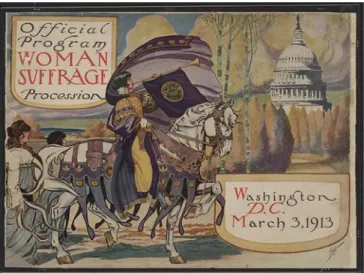
Figure 7. Benjamin Dale Photo of the Official Program for the 1913 D.C. March ... 69
Figure 8. Tommie Smith and John Carlos at the 1968 Olympic Games ... 96
Figure 9. Angry Black Athlete Cover of Newsweek, July 1968 ... 98
Figure 10. Gloria Steinem and Dorothy Pitman Hughes from Esquire, 1971 ... 111
Figure 11. Black Power Buttons ... 115
Figure 12. Afro Comb with Fist Design ... 116
Figure 13. Vietnam Tour Jacket ... 117
Figure 14. Image of Bridge (2014) by Glen Kaino ... 121
Figure 15. Detail from Bridge, by Glen Kaino ... 122
Figure 16. Photograph by Author of NMAAHC Olympic Exhibit, June 2019 ... 123
Figure 17. Donald Trump on Time Magazine, January 30, 2017 ... 128
Figure 18. Image Results from a Google Search of "Pride Parades" in 2019 ... 133
Figure 20. Time Magazine Cover, April 23, 1979 ... 169
Figure 21. Cover of Newsweek, June 21, 1993 ... 170
Figure 22. Cover of Newsweek, May 2012 ...171
Figure 23. Cover of Time Magazine, May 2016 ... 172
Figure 24. Google Version of Rainbow Flag Emoji, Created in 2016 ... 174
Figure 25. Screenshot of Target #takepride Landing Page, 2019 ... 177
Figure 26. ABC News Photo of the White House Covered in Rainbow Lights, July 26, 2015 ...181
CHAPTER I
INTRODUCTION: POWER TO THE PEOPLE
This is not a moment, it’s a movement. —Lin Manuel Miranda, Hamilton
On January 20, 2017, my friend and I listened to President Donald Trump’s Inaugural Speech while driving north on I-85, headed to Washington, D.C. for an event scheduled to speak back directly to that Inauguration. After months of what had become virulent political fighting, both on the national stage and in towns across the country, women organized to gather in the nation’s capital to send a message about misogyny, power, and rights, in what social scientists have called “likely the largest single-day demonstration in recorded U.S. history” (Chenoweth and Pressman). While perhaps as many as half a million people gathered in the streets of Washington, D.C. alone, hundreds of thousands more came together in other spaces, including metropolitan areas, mid-sized cities, and smaller towns across the country and the world, to make visible the political concerns and social power of women.1 While we drove to the March, my friend and I listened to the speech, a dark rhetorical performance that leveraged cultural fear and anxiety in the service of concentrated power and nationalism. Making our way north, we
1 Precise counts of marchers and protesters are impossible, but a number of scholars have attempted to
estimate the size of the crowds. Chenoweth and Pressman offer their method for counting protesters in the Washington Post, conservatively estimating that between 3.2 and 5.2 million people marched in the U.S. alone, representing at least one percent of the country’s population.
wondered what the next day would bring and how the collective gathering might counter the charismatic (and disturbing) rhetorical performance of this speech.
The next morning, the Metro train from suburban Maryland to the L’Enfant Plaza stop in central D.C. was filled with people, mostly women and girls, accompanied by a plethora of objects—signs, buttons, pink knitted caps. Arriving at the station, we joined a crowd brimming with energy, so many bodies in one space that we moved together in a shuffle, chants echoing off the stone of the metro station, signs held aloft, bodies
eventually spilling out onto the street above into a larger crowd still. The mass of people exuding energy and a mix of love, anger, excitement, anxiety, and camaraderie, moved together into the street, finding places to post up for the program about to begin. My friends and I took a stand outside the Air & Space Museum, where we knew a collection of protestors from North Carolina planned to meet. For the next several hours, I stood cheek by jowl with people from across the country. The mass of bodies created an affective experience for me, with sights, sounds, and smells combining, creating an ebb and flow in my own anxiety about the closeness of the bodies in a tight space. Eventually, after watching the crowd respond with generosity and compassion as people needed medical care, assistance moving strollers, or simply a clear pathway to the portable toilets, I settled in to hear the ardent speeches of the (mostly) women chosen to speak to the gathering and the nation, their faces projected onto a giant screen in front of us and their voices magnified into the blocks of people gathered in the symbolic heart of our nation. In the midst of these compelling attempts at discursive protest, I found myself captivated by the bodies and objects gathered in the space as I looked around at
homemade signs, buttons, hats, sashes, costumes. The colorful scene, with people representing all ages, myriad ethnicities, a gender spectrum, reflected the complexities involved in rhetorical moments of protest and embodied acts of resistance. When the march began, the crowd lurched forward slowly, each step a mere shuffle as thousands filled the streets, bumping and jostling. The energy was palpable, a mix of anger and optimism, of possibility and earnestness.
As the mass turned to proceed down 7th street, aiming to cross the Mall and join the march down Constitution Avenue, my attention fell on two women sitting on a wall, watching the group. Young and white, they embodied both the present and the past. While one donned a bright pink, homemade pussy hat popular at the march, the other wore a brown 1920s inspired coat and hat in faux fur that matched the lapels of her coat. Across her torso, she wore a white sash, declaring “Not Going Back” in black letters, an object that in its design and font hearkened back to the Suffrage Movement a century earlier. I began, then, to see the crowd around me as a rhetorical assemblage: bodies, objects, chanting, singing, movement, all working for change in ways connected to movements of the past. As the collection of bodies and objects moved through the streets, finding a bit more space on Constitution Avenue, the fact of collectivity began to take shape. Individuals would begin a chant and, in good call-and-response form, dozens would respond. Chants turned into songs. People commented on the signs and accessories of others, both homemade and mass-produced alike. Hours later, as my group made our way through the then-quieter streets back to the Metro, we saw collections of abandoned
objects, gathered at various spots, hung on fences, leaned against lamp posts, detritus from an ephemeral moment which many hoped would become a lasting movement.
The 2017 Women’s March joins myriad protest events in providing an example of collective citizenry gathering and acting in public spaces, seeking visibility and change. Like other events, these marches were situated in a kairotic moment in which a person in power, in this case the recently inaugurated President of the United States, had spent months using his platform to marginalize and degrade various groups of people, while focusing particular ire on women, people of color, and immigrants. That these were the groups most actively involved in planning the marches and most well-represented in the crowds I saw in Washington, D.C. is no surprise. Like many groups in history, the marchers saw the opportunity to gather, wearing protest objects and carrying signs to make a statement that would counter the offensive and derogatory assessments made by cultural powerbrokers. My own memory of the march, now three years later, includes faint recollections of the speeches by well-known people, but vivid memories of the nameless crowds adorned with various protest accessories. Recalling other moments in history, I began to think about how bodies, objects, and spaces have worked together in other contexts to amplify a message from a marginalized group. Many protest events, ephemeral and contained, continue to exert power beyond the moment, even after the bodies disperse. This power often gets concentrated around objects, which sometimes become symbols, developing their own rhetorical agency. How do protest objects come to be associated with movements? What work do objects and bodies do together in
protest and social movements? How have symbols and ephemeral items contributed to the durability of a rhetorical message? In this dissertation, I consider three historical moments in the 20th century when people marginalized by long-standing cultural beliefs sought to resist those narratives and create lasting change, though change in each case may be defined differently. These cases include wearable items associated with women’s suffrage, the raised fist and black power, and the rainbow flag of gay liberation, each offering a robust example for study. Specifically, my project seeks to theorize how marginalized groups enact embodied and ephemeral protest that contradicts established cultural doxa, creating the possibility of rhetorical agency as they achieve some measure of visibility and amplification for themselves, ultimately working toward durability and circulation of a message seeking change.
In considering protest and the rhetorical work it does in communities, I am invested in the idea of agency in a world dominated by the concentration of power, and I begin by turning a feminist lens on these issues. A number of rhetoric scholars inspire this work. In particular, Marilyn Cooper’s “Rhetorical Agency as Emergent and Enacted” spurred me to consider how protest, including bodies, objects, spaces, and temporal boundaries, serves to support the emergent agency of collectives, particularly collectives of marginalized people. Nedra Reynolds, in her work on interruption as an element of agency for women writers argues that “[i]nterruption might become part of a tactical rhetoric for marginalized speakers and writers—those who are often interrupted routinely as well as those who do not speak or write from a single location” (59). Reynolds’ view of interruption as a tactic for marginalized people applies directly to the notion of
collective protest activities as a tactic for interrupting existing cultural narratives or doxa about marginalized groups. Indeed, protest is often classified in the same way as
interrupting speech—as “rude behavior” (59).2 In this way, seeing protest events and the objects that accompany them as interruptions of the routine functioning of unjust
societies offers a way to classify these same rhetorical protest activities as claiming agency for that marginalized group. Given that protests have different aims in different moments, that agency, of course, may not immediately take the form of political or legal agency, but I argue that in the process of resisting dangerous or limiting doxa, a group can gain some measure of rhetorical agency, specifically aimed at taking control of cultural narratives and the legal and material marginalization those narratives contribute to. Additionally, when ephemeral protest uses actions and objects that can amplify a particular message and readily circulate it to achieve some level of durability, then that rhetorical agency can indeed become more institutionalized in the realms of law and policy.
Repeated protest action and reenactments, and their potential for driving habitual action, can aid in the development of this rhetorical agency. While I do not consider this project deeply tied to phenomenology, by considering the ways that protest objects and performances speak back to cultural doxa, my project is influenced by Sara Ahmed’s notion of queer phenomenology, in that my project “emphasizes the importance of lived experience…and the role of repeated and habitual actions in shaping bodies and world”
2 Among others, Carole Blair and Neil Michel discuss the disruptive nature of civil rights protest, calling
(Ahmed, Queer Phenomenology 2). I agree with rhetorical scholar Jean Bessette’s desire to move toward an “understanding of normativity [that is] more nuanced, flexible, and contextual” (emphasis in original, 151). However, like Ahmed, I see the role of repetition and habitual understandings of people and groups as significant to our understanding of how protest actions both resist some normative understanding of groups and then take hold and become durable elements of a movement. Ahmed discusses the “habitual as a form of inheritance” (129), and in this way, the cultural narratives that activists aim to interrupt in my project have inherited a context in which those narratives define, to some degree, normativity. This context, then, helps determine the rhetorical choices activists make, both in terms of protest ephemera and embodied performances.
As I approach this work, then, from a feminist rhetorical perspective, I see my project intersecting several interdisciplinary and ongoing scholarly conversations and in taking up these topics, my project makes two primary arguments. First, I argue that wide- ranging ephemera, including both ephemeral objects and short-lived actions, created and performed by protestors and movements exert power and generate rhetorical agency in protests, specifically in ways that directly engage and often challenge long-standing narratives or cultural doxa. In order to make this argument, I consider the kairos of each protest moment, tracing dominant narratives about the marginalized group in question. I then consider the development of compelling and ultimately sticky protest objects and symbols and their role in the resistance. This leads to the second argument that arises from my project. I argue that the successful assemblage of bodies and objects in protest, while offering a measure of visibility and agency to marginalized groups, also provides
an easy means for attenuation or appropriation by dominant forces as time passes and cultural discourses shift. Given the dynamic nature of social change and social
movements, this appropriation is not surprising, but recognizing how marginalized groups may achieve a measure of effectiveness and then see their success usurped by powerful forces in a community can offer some clarity on the slow and sometimes stuttering pace of change.
My research, then, explores the ephemeral elements of those rhetorical actions and the means by which that ephemera and the attendant messages may become more durable and recirculated. In particular, this dissertation offers three historical cases, with a focus on three elements: (1) the protest performance, an embodied and ephemeral rhetorical activity aiming at a specific cultural intervention; (2) protest objects, including images, symbols, and wearable objects, which may be more durable than momentary performances but are often discarded or dispersed after the protest act has passed, and (3) the preservation, circulation, and recirculation of both performances and ephemeral objects. By examining these three elements within movements that have experienced some measure of success in achieving their goals, my study seeks to offer some illumination of the effects of an assemblage of bodies and objects in service to social change. This project intersects several ongoing scholarly conversations in the process of investigating these movements.
Materialism, Performance, and Embodiment
Influential scholarship since the last decades of the 20th century—including Foucault’s assertions about power and resistance, Butler’s theories of performativity and gender, and other postmodern approaches to critical theory and scholarship—has focused on upending what may be seen as the essentializing views of human experience related to Enlightenment thinking. These theories certainly inform this dissertation, as it takes on questions of social change, activist rhetoric, and embodied performance. More
specifically, though, my project seeks to interrogate the relationships between bodies, objects, and temporally-bound performative protest. In this way, I am influenced by one of the most significant and provocative turns in scholarship in recent decades, that of new materialist approaches to rhetoric and its relationship to critical posthumanism. As a means of expanding the scope of rhetorical research, this turn is a productive one, as it offers significant and complex sites for considering the development of power, agency, and change.
For my project, the work of political theorist Jane Bennett and rhetorician Laurie Gries has been particularly influential. Bennett, in the significant Vibrant Matter: A Political Ecology of Things, offers two important ideas for a materialist approach to social movement research. In defining thing-power, Bennett provides a specific yet productive definition: “Thing-power gestures toward the strange ability of the ordinary, man-made items to exceed their status as objects and to manifest traces of independence or aliveness, constituting the outside of our own experience” (xvi). Recognizing and seeking to understand objects as agentic in their own right is a hallmark of new
materialism. For this project, though, Bennett’s further discussion of assemblage is most significant. Influenced by Deleuze and Guattari, Bennett takes on the idea of assemblage as a means of exploring the dynamic, vibrant “event-space” in which “stuff happens” (23). Her definition of assemblage creates an ample foundation for my project:
“Assemblages are ad hoc groupings of diverse elements, of vibrant materials of all sorts. Assemblages are living, throbbing confederations that are able to function despite the persistent presence of energies that confound them from within” (23-24). The construct of assemblage is a productive one for my project as it offers space for the bodies, the objects, the space, the context, and the time to interact to create discrete rhetorical effects. Rather than seeing protest events or activists themselves as acting independently and individually, I aim to uncover the effects of the interplay of bodies, objects, time, and space, of creating a shift in that assemblage.
Positioning her argument in a greater critical context, including its relationship to other perspectives like the phenomenological work of Merleau-Ponty and the social criticism of Adorno and others, Bennett ultimately finds the significance of this argument as a way to consider our own actions and contributions to various assemblages in which we participate. One of the assumptions Bennett seems to make is the ongoing
involvement of each of us in various assemblages, and therefore, the importance of our consciousness of the assemblages at play. She ultimately, then, argues that “the ethical responsibility of an individual human now resides in one’s response to the assemblages in which one finds oneself participating” (37). Her argument also helpfully indicates the complexity in these assemblages, as identifying the origin of an event, the causes of an
event, or the most important or strongest influence on an assemblage may be impossible, even as we aim to consider the rhetorical effects of these interactions. Acknowledging the intricacy of the assemblage resists the tendency of analysis to devolve to essentializing, in a way that offers a more productive analysis in the end.
Bennett, ultimately, offers an important reminder, alongside Hallenbeck and others, that post-human theory can enrich our theoretical understandings of the material and political world in which we live. Importantly, this theoretical construct can also provide rich foundation for scholarship and criticism. I am particularly connected to the way Bennett calls us to challenges our own sense of ego as we understand the broader world in which we live. The various actants involved in those contexts both complicate and illuminate the ideas of place and agency. As I consider the case studies at the heart of this project, I ask: who or what are the relevant actors involved in gaining visibility and ultimately a measure of political agency for marginalized groups?
While Bennett offers a clear focus on assemblage and the interaction between human and non-human actants for my project, other materialist scholars, like Laurie Gries, offer important frames for this project. In the preface to Still Life with Rhetoric, Gries turns to the significance of “thinking intuitively about and studying things in a dynamic, consequentialist sense. The last three principles—vitality, agency, and
virality—articulate an ecological disposition toward things that acknowledges their vital, transformative, and often contagious characteristics” (xvi). This ecological disposition describes my orientation toward the movements at the center of my project, as I seek to make sense of the vital and dynamic elements of the contexts in which these protest acts
exist. Gries also influenced this project in the way she seeks to focus on the “materiality of visual artifacts” (11). The material objects in this project range from physical objects like ribbons, sashes, and flags to the visual artifact of a performative stance—a raised fist—acted out in a temporally brief moment. While I have not employed her
iconographic tracking method, Gries’ approach, connecting visual rhetoric with a materialist approach, offers a model for analysis of the protest events in this project. While new materialists have taken on a variety of sites of scholarly significance, less work has turned this approach on the area of social movement or protest studies.
Accordingly, this dissertation aims to bring new materialist and visual rhetorical theories to bear on historical protest events.
In this project, then, I am influenced by materialist scholarship and work that confronts questions of embodiment and performance. In all of this, I take a cultural approach, situating both the power constraints and the resistant action as contextualized in a time and place. Like Gries, who in an interview on the podcast Rhetoricity claimed her interest in “the deep relationality in our entanglement with things,” I find myself most interested in the entanglement—the connection and implication of connection—between bodies, objects, and cultural contexts. My project seeks to find meaning in these
associations, particularly as they occur in public spaces open to public scrutiny. So, while this project does not aim to fully trace the agency and rhetoricity of the protest objects themselves, I am interested in what Barnett and Boyle call “our co-belonging and co- responsibilities with things” (7). What happens when wearable objects, like ribbons and sashes, are worn in public by women seeking suffrage? How does the existing meaning of
a political ribbon shift when attached to a body that exists in that space with a limited sense of agency? What happens when an object, like a rainbow, with pre-existing associations with Biblical hope and optimism, is flown by a group of people who have been associated with danger and shame? These relational entanglements are what draw me into the study of these historical moments of resistance.
Rhetorical Durability and Circulation Studies
Alongside the turn toward a materialism, circulation studies has grown as a central concern for many rhetorical scholars in recent years. This work has focused on many rhetorical sites, genres, and aims. While John Trimbur offered early work on the circulation of writing in composition, more recent work has extended this by engaging with circulation of multimodal and cultural rhetorics. Specifically, recent circulation scholarship has examined material and digital circulation, the means of circulation, the effect of circulation, methods of tracing circulation, and the effect of re-mixing
(Bradshaw; Jenkins, Ford, and Green; Gries; McGreavy, Wells, McHendry, Senda-Cook; Edwards). Those focused on digital contexts, like Ridolfo and DeVoss and Edwards and Lang, offer an expanded notion of delivery to consider the fact of velocity in a
technologically dynamic world. In my work exploring protest rhetoric’s relationship to the creation and maintenance of culture and power, I am influenced by several aspects of this work on circulation. First, in her work analyzing rhetoric in a global context using a transnational feminist lens, Rebecca Dingo argues that “rhetoricians must look not only at static rhetorical occasions like the Beijing conference but they must examine how
rhetorics travel—how rhetoric might be picked up, how rhetorics might become networked with new and different arguments, and then how rhetorical meaning might shift and change as a result of these movements” (2). Like the rhetorical events that Dingo considers, social movements involve protest events that are both temporally bounded and culturally dynamic, heightening the possibility for networked shifts in meaning. While Dingo explores the role of gender mainstreaming in a transnational context, attending to how rhetorics travel is central to the question of how ephemeral protest objects and performances gain durability. Of course, part of this durability is the result of both activists’ decisions to repeat or reenact protest events and public responses to the protest, as media outlets report on the protest and the reporting becomes part of the historical record. Additionally, my project considers the ways in which other individuals and groups pick up those objects and performances, repeat them, and ultimately “shift and change” their meanings along the way.
In this way, this dissertation aims to consider the circulation of ephemeral objects and performances as what Gries and Brooke call “an important constitutive, cultural- rhetorical process” (4). As material objects associated with these protest moments circulate, they gain momentum and additional meaning, creating a more expansive sense of the movement. While the objects themselves (a ribbon, a fist button, a flag) begin as material objects situated in particular spaces, their circulation through other spaces, both material and digital, amplifies the message of the movement and can, I argue, offer a greater sense of agency to individuals and groups previously marginalized by a cultural doxa that these objects interrupt. Simultaneously, the ease with which material (and
digital) rhetorical protest objects and symbols may circulate also presents opportunities for dominant forces, particularly neo-liberal economic forces, to capitalize on the
popularity and subvert those objects for their own gain. We see a similar process in Jenny Edbauer’s “Unframing Models of Public Distribution: From Rhetorical Situations to Rhetorical Ecologies” when adopting the “Keep Austin Weird” campaign became “quasi- civic duty” (16), ironically normalizing weirdness for economic gain. My project, with its multi-protest focus, seeks to theorize how durability and circulation of protest objects and performances support a shift in the culture. By considering the breadth of circulation possibilities, my work intersects in this way with the vision of circulation work as part of mobility studies, as my project works to demonstrate “how bodies, artifacts, words, pictures, and other things flow within and across cultures to affect meaningful change” (Gries and Brooke 7). The circulation of protest objects and embodied protest
performances generate durability for rhetorical performances of protest that were initially conceived of as ephemeral. The implications of this circulation prove both beneficial to and sometimes a threat to the movement in which they originate. In this way, tracing the circulation of this rhetoric can illuminate both the change effected by these movements and the limitations on change that often appear.
Choosing Cases and a Lens
As a scholar, I have been deeply influenced by feminist approaches to critical work, not just in terms of the lens I bring to the work, but also in terms of my
protest by marginalized peoples is fraught. As a young white woman growing up in Appalachian East Tennessee in a town where the divides of race and class were not only theoretical, but also geographical, I have witnessed and sometimes experienced the inequities of society. In fact, it is certainly a result of my upbringing and the visibility of suffering and injustice around me, that I have long been intrigued by the study of social change and protest. However, in the scholarly work of studying marginalization, I must begin with an acknowledgement of my own privilege. As a first-generation, educated, cis-gendered, white woman, I have been on the favored side of many cultural disputes. I turn to the work of examining protest, then, with a clear recognition of my privilege and limitation and a commitment to feminist rhetorical practices. I am particularly influenced by the call of Jacqueline Jones Royster and Gesa Kirsch, reminding myself “to learn how to listen more carefully to the voices (and texts) that [I] study, to critique [my] analytical assumptions and frames, to critique guiding questions reflectively and reflexively”
(Royster and Kirsch 14). Part of this process, for me, has been working to engage primary documents from activists and members of the movements I am investigating, as well as aiming to cite scholars whose own identities offer them a clearer, often first-hand, experience of the circumstances that these groups were protesting. Though challenges exist in accessing primary documents, where possible, I have aimed to consider first the work of people at the center of the issues at hand.
Because the work at the heart of my project is interpretive, as I trace the uptake of iconic protest ephemera, the influence of feminist scholars also requires that I engage this work with what Royster and Kirsch name a critical imagination and strategic
contemplation. As I have gathered material for my study, including delving into archives, both digital and material, I have taken time to acknowledge the challenges of doing this work. The nature of ephemeral objects is that they are often discarded rather than
collected. Archives, then, are imperfect. For instance, in looking for examples of suffrage ribbons crafted and worn by women in the early 20th centuries, I have had to consider the reasons that archival examples are diffuse. Or, in looking through collections of LGBTQ movement ephemeral, I must think through why some objects, like programs and
advertisements, have been retained. Both the disparate nature of texts and materials for this study and the ways in which cultural marginalization continues, creating challenges to accessing the full story via documents and collections that are likely to be influenced by the same inequities that created the need for collective activism in the first place, require that I tread carefully when offering interpretations, leaning on a variety of sources, both archival and in media reports, as neither alone will provide sufficient material.
So, in beginning a study of the relationships between ephemeral protests, bodies, and things, my first recognition, which is of course obvious, is that the number of
movements that could be studied is vast. Even in confining a study to the United States, I recognize the presence of movements focused on rights, justice, or equality from a
variety of subject positions and orientations, including workers’ rights, Indigenous rights, disability rights, and many others. In choosing cases to consider, I recognized the
significance of three movements focused on different identity groups with a history of marginalization in the United States: women, Black people, and members of the
LGBTQ+ community. While other groups certainly have experienced bigotry and a limitation of rights, these three movements have established histories, including a store of public documentation, distinct events and activities, and identifiable protest memorabilia and ephemera available for study. While this study, then, focuses on three distinct movements and events, my focus is clearly not exhaustive of the question of the rhetorical relationships of protestors and protest objects. Rather, my hope is that these cases may offer a set of examples from which to begin to consider these rhetorical tactics and effects.
For each of these case studies, my approach was similar: I began with a study of the origins of the objects or symbols to be considered as a means of orienting myself to the contexts within which these bodies and objects coexisted. For each case, this work included a broad set of historical readings, both primary and secondary, and archival searches for earliest use of the items in question. Having chosen my focus for each movement, I then set to explore archives, primarily digital archives, to find not only examples of the objects themselves, but also discussions of the objects among performers and members of the movement as well as references to these objects in the broader public sphere. These searches led to political texts, media reports, and internal texts related to the movements themselves. This work, while productive, also functioned to remind me of the imperfect nature of this work, in that none of this analysis can be argued as definitive for such broad and varied movements. However, these moments in each movement can be instructive about the rhetoricity of these actions, bodies, and objects functioning in varied historical and political contexts. What objects did activists use in their protests and
why? How did the larger public respond to these choices, and what do these responses tell me? Which objects tend to recur with various bodies in the movement, and how do secondary materials reflect the significance of those objects to the movement? It is my hope that this analysis might provide some broad understandings of the ways that marginalized groups use (or must use) their bodies in relationship with ephemera to create the possibility of visibility and ultimately agency in the societies in which they are marginalized.
Chapter Outlines
In Chapter 2, “Wearing as a Feminist Rhetorical Act: Bodies and Wearable Ephemera,” I turn my focus to the Women’s Suffrage movement of the late 19th and early 20th centuries in the United States. In considering the attempt women made to gain access to the right to vote, this chapter examines the way activists of the early 20th century responded to prevalent notions of separate spheres and the popular angel of the house image as constraining doxa for women. These women subverted the popular notion of women as suited only to domestic, family tasks by publicly protesting in support of women’s suffrage. In this way, the chapter leans on Lindal Buchanan’s scholarship on delivery, seeking specifically to consider wearing as a kind of delivery, a “socially situated public performance” (4). Considering the social context of late 19th-century United States, in which a narrow view of acceptable performances by women in public spaces predominated, also offers me the possibility of seeing collective wearing as a “means of coming to public voice in resistant settings” (9).
While the suffrage movement was long and diffuse, with organizations and individuals operating in states across the country, two symbols—the ribbon and the sash—unified the national movement. This chapter, then, considers the creation and design of these items and their popularity in the movement. While many of these ribbons, ephemeral as they were, have been lost to history, a number of examples exist in various archives, and in an analysis of these, a sense of the collectivity of these women can be deduced. Having considered the development of the ribbons and sashes, the chapter then analyzes the rhetorical effect of these items at a significant public protest event, the 1913 March on Washington, by examining photographic images of the day, political cartoons associated with the event, and some public response to the event.
Chapter 3, “Fists and Figures: Performing Blackness, Citizenship, and Resistance” considers ephemeral and embodied protest related to race in the United States. Scholars have long studied the public events of the Civil Rights Movements, from boycotts and sit-ins to marches and speeches. This chapter focuses on the protest by American athletes at the 1968 Mexico City Olympics as a means to consider how time and place may amplify embodied protest performances, leading ultimately to the powerful and lasting symbol of the fist. Staged in response to the economic and social inequality faced by black people in the United States, this embodied protest by Tommie Smith and John Carlos, specifically the raised, clenched fist, created an indelible image that persisted beyond that particular moment. The action suggested an icon, adopted by the Black Power movement as a symbol of the strength and solidarity of the movement for racial equality in American culture.
Using archival objects and photography, this chapter then traces how, as an easily reproducible image, the fist symbol became the primary visual emblem of the Black Power Movement in the 1970s, finding its way onto buttons, clothing, protest signs, and other ephemera, replicated in both image and performance, as celebrities and activists alike took the stance as a way to align themselves with the social movement for racial justice for Blacks in the United States. In this way, as the fist moves from performance to materiality, it becomes an example of Fred Moten’s assertion that the “history of
blackness is testament to the fact that objects can and do resist” (1).
Looking at more recent public writing surrounding the 1968 event, including retrospective accounts and art installations, the chapter also takes up the question of durability and circulation by examining public memory related to protest events. As the fist icon has moved further from the bodies, time, and space of that 1968 event, a radical act performed by black men has been appropriated by various economic and political forces and adopted into a wider range of resistance movements. That appropriation has worked to create intersectional coalition and allyship in some cases, and it has worked in opposition to racial justice in others, demonstrating the importance of understanding how icons circulate in a dynamic rhetorical ecology.
The third case, discussed in Chapter 4, “Visibility and Pride: Bodies on Parade,” examines the development of the Pride Flag as a part of the Gay Liberation Movement of the 1970s. In order to understand the kairotic nature of the development of the pride flag, this chapter begins with an exploration of the long-held national fear of and disdain for the gay community, specifically how harassment and ostracization of gay men and
lesbian women was reified by Executive Order 10450 in 1953. This document laid the groundwork for the Lavender Scare, during which hundreds of federal employees were forced to testify for a Congressional Panel before ultimately losing their jobs due to the belief that they threatened national security. The historical context of decades of cultural and legal marginalization illustrates the longstanding narrative of fear and distrust, against which lesbian women and gay men, and other queer and trans community members, pushed back during the Stonewall Rebellion of 1969.
To explore how the rainbow flag resists a longstanding cultural doxa associating queer desires with perversity, the chapter then considers how the call for political and social reform led artist and activist Gilbert Baker to create a flag striped with eight colors of the rainbow in 1978 for the San Francisco Pride Parade, with an eye toward crafting a story of hope and positivity for the gay community. This flag offered a vibrant and vivid alternative to the doxa of shame and perversity, creating an opportunity for visibility sorely needed by a community closeted by culture and law for so long. This flag, along with the queer bodies that carried, waved, and wore it, contributed to cultural changes that opened a space for the development of the colorful, joyful exuberance so closely associated with the Pride Movement today. The chapter ends with a look at how the rainbow flag has been co-opted and commodified in ways that both support and weaken the ongoing movement for LGBTQ rights and freedoms. This case, then, calls into question the rhetorical effectiveness of retaining this object as a primary identifying symbol of the ongoing work for LGBTQ rights.
While each chapter focuses on a distinct movement and case, I identify
connections between the tactics and events within each of these protest movements, along with patterns in the rhetorical effects in each context. Consequently, in each of these chapters, my goal is to raise questions about what these bodies and objects can do and how the relationships between bodies and protest objects function rhetorically. In Chapter 5, “Implications and Possibilities,” I suggest that the study of ephemeral protest
assemblages may offer new insights into what protest movements can do. My project, then, aims to use these cases to illustrate significant rhetorical functions specifically related to delivery and amplification, while also considering circulation implications that both support and disrupt protest activities. Protest will likely always be with us, as the nature of human society includes ongoing disparities and disagreements about the nature of justice. In a world in which marginalized groups continue to seek inclusion, justice, and agency, the study of these historical moments of protest may offer both a primer and a warning about how objects and bodies function together.
CHAPTER II
WEARING AS A FEMINIST RHETORICAL ACT: BODIES AND WEARABLE EPHEMERA
If particular care and attention is not paid to the Laidies we are determined to foment a Rebelion, and will not hold ourselves bound by any Laws in which we have no voice, or Representation. –Abigail Adams, to her husband John Adams, 31 March 1776
Is the needle and the kitchen sufficient to employ the operations of a soul thus organized? I should conceive not. –Judith Sargent Murray, 1790
Today the suffrage color is more appropriate than ever, since, it may well stand for the golden dawn of equal suffrage that is now breaking over all the world. —A.S.B. in The Women’s Journal, 16 June 1917
Abigail Adams wrote to her husband, John, on March 31, 1776, offering
something of a warning to him of the implication of concentrating power in the hands of men as those men crafted the foundations of the country. Having claimed that “all Men would be tyrants if they could” in this correspondence, Mrs. Adams encouraged her husband to side with “Men of Sense in all Ages [who] abhor these customs which treat [women] as the vassals of your Sex,” threatening a rebellion if women were not
considered and represented.3
3 I rely here on the digital transcription of Abigail Adams’ letter to John Adams as provided by the
Massachusetts Historical Society at http://www.masshist.org/publications/adams- papers/view?id=AFC01d244.
Often noted as one of the earliest supporters of women’s rights, Abigail Adams, of course, was not alone in the 18th century; plenty of other women called attention to the challenges of gender norms, sexism, and the resulting lack of direct influence women had in the civic life of the young country. While founding documents narrowly focused on the rights of land-owning white men, white women consistently worked to achieve political, economic, and cultural freedom in line with those powerful men. Over the next century, white women continued to work for their own liberation from the narrow constructs of a society that situated them as fundamentally domestic beings, best suited to a life of cooking, sewing, and child-rearing, with limited access to the civic or political life of the United States.
By 1913, several decades into the movement to gain the vote for women, tactics had shifted. For decades, national and local leaders had emerged as women worked to achieve voting rights in various states around the country. Conventions, meetings, and local actions had resulted in limited effect, so a larger-scale protest was planned. After significant planning, on March 3, 1913, nearly 5000 suffragists marched and rode floats through the streets of D.C., wearing sashes and ribbons and carrying banners, embodying a rights movement while thousands of witnesses, many in town for the inauguration of President Wilson scheduled for the next day, looked on. The bodies in the streets that day enacted what Marilyn Cooper calls an “emergent agency” that stemmed not only from the presence of so many individuals in the same space, but also the ways those bodies existed in that space in that moment. Embodied actions, accessories, and in some ways the very bodies themselves challenged traditional discourse about both women’s bodies and
women’s roles in U. S. society. In an attempt to consider how first-wave feminists
enacted an emergent agency by confronting and transgressing traditional discourses about women’s bodies, this chapter will examine how women in the late nineteenth and early twentieth centuries used their bodies collectively and in concert with ephemeral protest objects—especially ribbons and sashes—to become visible as agents of change,
delivering an amplified collaborative message as part of what would become a powerful historical movement.
What More Can We Learn from Suffrage?
This chapter joins a robust and varied body of scholarship related to women’s suffrage in the United States. Feminist rhetorical scholars and historians have long
understood the importance of studying the events, politics, and rhetorics of the nineteenth century both as a means to recount and reclaim histories that overlooked women and potentially to forecast ways that women continued to contribute to national and cultural discourses into the twentieth century. As Cheryl Glenn asserts, feminist historiography provides scholars the opportunity “to consider questions of knowledge…ethics…and power” (389) in order to complicate and challenge histories that have rendered women’s activities (political, rhetorical, and cultural) either invisible or minimal. Though
collaboration and collective meaning-making and action stand as a hallmark of feminist principles today, scholarship on first-wave feminism often focuses on the work of individuals or the collaboration of pairs or small groups of women. Indeed, for many, thepublic work of these individual women constitutes the rhetorical history of the suffragist movement.
Certainly, in the last half century, significant feminist historiography has focused on the rhetorical and political work of a number of first-wave leaders, including well- known women like Alice Paul, Elizabeth Cady Stanton, Ida B. Wells, and other less frequently studied women like Sarah Grimke and Anjelica Grimke Weld.4 Of course, many rhetorical studies have been done on leaders and other significant members of the movement. Certainly, segments of Karlyn Kohrs Campbell’s Man Cannot Speak for Her, Volume 1 (1989), Andrea Lunsford’s Reclaiming Rhetorica (1995), and other important texts offer significant scholarship on the rhetoric of suffragists, situating women’s rhetoric as undervalued in its historical moment and often overlooked in traditional rhetorical scholarship. Other scholars have worked to recover and publish the primary texts produced by various women rhetors in the Suffrage Movement. Published in 2011, Mary Chapman and Angela Mills’ Treacherous Texts: An Anthology of Suffrage
Literature, 1846-1946, gathers texts by both the more well-known women rhetors and a number of anonymous texts. Additionally, Available Means, edited by Joy Ritchie and Kate Ronald highlights the rhetoric of a number of nineteenth-century women, including many listed above. However, like the others mentioned here, the focus in all of these essential texts is discursive, with studies of speeches, letters, and other verbal rhetoric at
4 Scholarship focused on nineteenth-century women’s rhetoric has a long bibliography. In addition to the
texts discussed here, I would point to the work of Belinda Stillion Southard, Kristin Poirot, and Jacqueline Jones Royster, among others, as important examples of work that examines the rhetorical work of individual women leaders and organizations in the history of women’s suffrage as of particular significance.
the center of much scholarship.5 These studies of the rhetorical work of individual women offer a great deal to the project of feminist historiography, including providing visibility for previously unknown women rhetors and offering important critical perspectives on their work.
In addition to analysis and study of written and spoken texts, interdisciplinary scholars consider other elements of nineteenth- and early twentieth-century life, including material and visual culture. However, in much of the literature that does focus on material and visual texts, including The Subversive Stitch: Embroidery and the Making of the Feminine (1996) or The Spectacle of Women: Imagery of the Suffrage Campaign 1907- 1914 (1988), the focus is not on the rhetorical effects of this material work, but rather on the merging of material craft and visual culture and political work. Importantly, more recent texts, like Sarah Hallenbeck’s Claiming the Bicycle, have taken up the project of looking at rhetorical agency and collective performance as it relates to material culture in the nineteenth century. In her work, Hallenbeck considers the interplay between women riding bicycles and persistent nineteenth century gender norms, both those associated with bicycles and not. She concludes that “[a]s the rhetorical-material network of 1890s bicycle culture…expanded, so too did the grid of possibility on which riders plotted their performances of gender. And as it did, these women came to understand themselves as potential agents of cultural change” (168). In many ways, Hallenbeck’s project informs my approach here, as I seek to consider the inherently rhetorical nature of material and
5 Lindal Buchanan’s Regendering Delivery and Carol Mattingly’s Appropriate[ing] Dress are notable
visual rhetoric (in the form of ribbons and sashes) when embodied and performed by women supporting the suffrage movement in the late nineteenth and early twentieth centuries.
Less work has been done to consider the rhetorical contributions of the masses of women, a collectivity, including how those women’s bodies functioned rhetorically to perform the rhetorical canon of delivery and to amplify the rhetoric of the movement for suffrage. Specifically, even as scholarly interest in leaders of the suffrage movement has increased, and expanded to include some lesser known figures, less attention has been paid to the masses of women who acted publicly to amplify the voices of the leaders, delivering alongside those leaders the message of the movement. Those women were less well known, anonymous even, but I aim to consider their contributions to the movement, arguably as important as the more well-known leadership. These contributions include the public subversion of culturally-accepted means of delivery of rhetorical messages and attempts to amplify movement rhetoric and contribute to the circulation of the
movement’s message. Informed by the compelling scholarship on gender and the canon of delivery offered by Lindal Buchanan in Regendering Delivery (2005), this chapter considers the rhetorical significance of suffragists’ bodies acting in concert, both in various locations around the U.S. in the late nineteenth and early twentieth centuries and specifically at the 1913 Suffrage March in Washington, D.C..
While the rhetorical effect of the masses of women gathering in cities across the country is significant, this chapter aims to consider the additional rhetorical effect represented by the wearing of identifiable adornments. Consequently, in considering the
rhetorical effects of the bodies and the material objects in concert, I examine wearing as a rhetorical act. Like feminist historiography, the study of wearables as rhetoric is not new. To be sure, recent scholarship, evidenced by the 2016 special issue of RSQ, Pederson’s Ready to Wear: A Rhetoric of Wearable Computers and Reality-Shifting Media, along with numerous other publications, has turned to the examination of wearable
technological devices as rhetorical, considering various implications of such wearable devices as they relate to data collection and embodiment in particular. This turn in
rhetorical studies signals a growing interest in the increasing use of wearable technology, largely focusing on, as Gouge and Jones state in the introduction to the special issue of RSQ, “technologies, electronic or otherwise, whose primary functionality requires that they be connected to bodies” (201). In much of this scholarship, important questions are being raised, including how the act of wearing intersects with and influences rhetorical choices made by individuals or groups. For instance, Jason Kalin and Jordan Frith, in their article focused on memory, embodied space, and place envision a “rhetoric of wearables” as offering “a conceptual lens through which to analyze the extent to which these technologies become embodied practices, habits, affects, and memories constituting our continued encounter with reality” (224). This suggestion that wearables create shifts in our understanding of spaces, activities, and interactions is a useful lens for my study of first-wave feminist protest wearables.
I argue that while this current line of research related to wearable technology focuses on significant questions for our field, historicizing the notion of wearing as rhetorical offers a productive way to investigate the act of wearing apart from the
influence of the digital and data implications of wearable technologies. To that end, I consider how the wearing of ephemeral objects, namely ribbons and sashes, function as rhetorical acts, with a particular focus on these acts as performance of the rhetorical canon of delivery. In addition to considering wearing as a form of rhetorical delivery, I also consider wearing as a mode of amplification and circulation in a pre-digital
historical movement. In attempting to consider the intersection of embodiment, wearing, and rhetorical agency for politically marginalized women in the late nineteenth and early twentieth centuries, this chapter begins by establishing some of the elements of the dominant doxa about women, namely their confinement to domestic spheres and limitations on the possibility of their becoming rhetors, before considering how the wearing of objects in the public sphere functioned as a political act for individuals and as a collective amplification for a movement.
Gender, the Body, and Rhetoric
Consideration of the ways women resisted or subverted the constraints on their public and political lives in the United States during the nineteenth and early twentieth centuries requires an examination of the those constraints, including how women were isolated from rhetorical activity as a consequence of living in a culture with highly constrained social norms and material regulations governing women’s lives. Of course, historians, rhetoricians, and other scholars, particularly feminist scholars, have
established the long history of discourses reflecting ideologies about gender and the body. In this chapter, I do not aim to revise the understanding of the ways women resisted
these constraints in their work toward suffrage. Instead, I aim to expand our understanding of this resistance. Perhaps one of the most significant challenges for historiography, as Glenn suggests in “Truth, Lies, and Method: Revisiting Feminist Historiography,” resides in the balance between the urge to respond to “intellectual and ethical questions (of evidence, power, and politics) at the same time that we resist received notions of both history and writing history” (388). Just as Glenn suggests that her work to historicize women’s narratives seeks “to investigate a number of deeply contextualized narratives in an attempt to bring a fuller, richer—different—picture into focus” (388), I aim to offer a more expansive picture of women’s protest activities related to suffrage in the United States. In order to situate these embodied protest activities in the context of the nineteenth and early twentieth centuries, I trace a few of the origins of the gendered constraints on women’s bodies and rhetorical activities in the Western tradition and U.S. history.
While the nineteenth century may have seen a significant concentration of these gendered perceptions, rhetorical and historical scholars remind us that these beliefs have a much older origin. Unsurprisingly, many foundational beliefs about the nature and role of women have origins in the traditions and texts of the ancient world. Cheryl Glenn reminds us that “the dominant ideology of most of the ancient world offered women no place in public discourse” (Rhetoric Retold 19). In the context of ancient Greek history, as Western rhetoric and rhetorical practice was developing, women were largely excluded from that practice. Though feminist scholars like Glenn have worked to recover the exceptions, the dominant expectation constructed the realm of rhetoric as one designed
for men, largely founded in a belief about the natures of men and women. For example, though some disagreement exists about the extent to which Aristotle’s Politics directly suggests that women were subordinate, the discussion of the difference in the virtue available to men, women, and slaves in Book I of Politics suggests that women, while not seen as on the level of slaves, were to be seen as separate from men, with men in the superior position. While he sees women as perhaps having access to virtue, it is a
different virtue than that available to men. He asserts “Clearly, then, moral virtue belongs to all of them; but the temperance of a man and of a woman, or the courage and justice of a man and of a woman, are not, as Socrates maintained, the same; the courage of a man is shown in commanding, of a woman in obeying” (Part XII, Book 1). While considering the importance of political action of men in the life and flourishing of the polis and the rule of the household as part of a man’s duty and virtue, Aristotle offers a separate expectation for women, one that primarily sees their importance in their subordination. Of course, as Glenn argues, the “universally subordinate evaluation of women in relation to men has provided the tautology that women were closed out of the rhetorical tradition only because they were women” (Rhetoric Retold, 12). In their distance from the
rhetorical tradition, of course, women have also been kept from the political and public arenas, reinforcing these ancient dogmas.
Alongside what Aristotle sees as their limited capacity for reason, which would preclude them from political participation, women were expected to tend to the daily running of the household, to manage and care for the children and slaves and that which the men provided. Thus, the gendering of the activities in both political and domestic
spaces can be seen as establishing a set of gender expectations that would persist for centuries, laying the groundwork for the gendering of modern Western democracies. While Glenn, Jarratt, and other scholars have offered important recovery work to call our attention to ancient women rhetors like Aspasia and Sappho, the fact remains that these women were the exceptions in a world that largely expected their silence. That silence was accompanied, of course, by an isolation from the activities of the polis, since “women had little contact with males either before or after marriage, not even with their husbands, who were often selected for them by their fathers….women were subordinated to the oikos, while men remained in the polis” (Glenn, Rhetoric Retold 23). Glenn, in fact, focuses her discussion of Sappho and the women around her as working toward the establishment and functioning of a separate space in which women could escape the male-dominated space of political and civic institutions. In this way, the exceptions of women rhetors in the ancient world prove the rule: women and men were consigned to separate spheres. This expectation that women would be sidelined in cultural and political spheres persists, of course, into the modern world. Consequently, as Thomas Jefferson and his colleagues created the guiding principles of a new nation, the discourse of gender finds its way into those documents, asserting that “all men are created equal” and any number of other gendered statements outlining the idealistic goals and rights enumerated in the founding documents of the United States.
While the founding documents of the United States, including the eighteenth- century Jeffersonian truism that “all men are created equal,” remind us of the nature of gender roles pervasive the Western tradition, perhaps one of the most significant
moments in an historical consideration of gender roles can be found in the nineteenth century, the context in which suffrage for women began to gain traction. Important Western thinkers in both the U.S. and the UK held to notions of separate spheres for men and women that both reflected cultural legacies and laid the foundation for ongoing perceptions of men and women as fundamentally different. For instance, we see the lingering of this paradigm in the nineteenth century as John Ruskin pronounces the spheres of men and women:
The man, in his rough work in open world, must encounter all peril and
trial….But he guards the woman from all this; within his house, as ruled by her, unless she herself has sought it, need enter no danger, no temptation, no cause of error or offence. This is the true nature of home—it is the place of Peace, the shelter, not only from all injury, but from all terror, doubt, and division…this, then, I believe to be, --will you not admit it to be, the woman’s true place and power. (Ruskin 158-159)
Reflecting the “angel in the house” trope that has lingered for generations, Ruskin’s divided sense of authority and control reflects the classical idea, reaffirming the
discourse that women have a place, a space where their bodies belong, thrive, and exert a sense of power. These gendered notions of space and spheres, traceable from classical texts through nineteenth century and into the twenty-first century, define for Western cultures, at least, a sense of where it is appropriate for one to live and to act. This ideology separates the world into male and female spheres, public and private, creating the context within which a movement to extend rights, particularly voting rights, grew.
The gendered nature of separate spheres ideology and its effect on individuals and groups living in that ideology is reflected in a good deal of twentieth and twenty-first
century critical scholarship in a variety of disciplines, including Amy Kaplan’s “Manifest Domesticity” and Linda Kerber’s “Separate Spheres, Female Worlds, Woman’s Place: The Rhetoric of Women’s History.” In geography and spatial studies, scholarship
including Jess Enoch’s “A Woman’s Place is in the School: Rhetorics of Gendered Space in Nineteenth-Century America” and Roxanne Mountford’s “On Gender and Rhetorical Space” consider the intersection of separate sphere ideology and institutional and spatial relationships. Of course, scholarship less interested in gendered dynamics continue to focus on the implications of bodily separation. Foucault, for instance, has established that “discipline proceeds from the distribution of individuals in space” (141). While Foucault here considers the ways institutions confine and direct the action of bodies in spaces, we may also consider the social confinement of bodies in spaces related to gender and social norms. With the tradition of women being socially confined to home and private spaces, a movement aiming to encourage women to participate in the public, civic life of the
community would simultaneously resist this construct and require a variety of tactics from activists, including both embodied actions and the knowledge-production necessary to create and sustain a Suffrage Movement.
In fact, while these deep-rooted notions of women’s space have clear implications for their behavior and civic engagement, the influence of Aristotle’s ideas about men and the dichotomies that result from Aristotle’s thinking also influenced epistemologies beyond the discourse of virtue and spheres. While Aristotle’s influence helps structure gendered spatial boundaries in the ancient world, scholars such as Lorraine Code suggest that this way of thinking also, and importantly, contributed to the gendered dimensions of