THE SALIENT CHARACTERISTICS OF MICROFINANCE
INSTITUTIONS IN KENYA : (A Case Study of BIMAS)
Prof R.W Gakure1, Simon Maina Waithaka2, Dr. Ken Wanjau1, Dr. Bernard Omboi31. Lecturer, Jomo Kenyatta University of Agriculture and Technology P.O. Box 62000, 00200 Nairobi Kenya 2. PhD student, Jomo Kenyatta University of Agriculture and Technology P.O. Box 62000, 00200 Nairobi Kenya 3. Lecturer, Kenya Methodist University P.O. Box 267, 60200 Meru Kenya
Email of corresponding Author: [email protected]
Abstract
The purpose of this study was to come up with a profile of the salient socio-economic characteristic of people who seek MFIs’ services. Specifically, the study was to shed light on their poverty status and their demographic characteristics. The research focused on clients of BIMAS operating within the five divisions of Embu district. The research findings gave a general profile of the clients reached by MFIs. The MFI clients are mainly male in the 26-40 age brackets that live in households of between 4 and 6 members which are predominantly male headed. A high proportion of the clients are married and do not suffer from any physical disability. Slightly over half of the clients have attained secondary school education and most have attended other training. In terms of their poverty status, over half of the clients have their children attending school. Majority can afford at least three ordinary meals per day and special meals thrice per week. The clients live in their own houses which have three or fewer rooms. The houses are largely made of brick walls, iron sheet roofs and concrete floors. The main source of energy for client household is firewood and charcoal and majority of them own a television.
Key Words: Socio-economic characteristics,Demographic characteristics,Poverty status
1. Introduction
GOK (2004) recognizes that, MFIs are playing a very key role in the reduction of poverty and employment creation through provision of financial services to the majority of low income households in Kenya. As a result, lately, many MFIs have received financial support from the public in terms of voluntary savings and a lot of donor funding is being channeled through them with the aim of alleviating poverty.
MFIs however, generally face a myriad of challenges ranging from product failure, default and high drop-out rates which have a direct bearing on the characteristics of the client they serve. Wright (2001), for example notes that there is compelling evidence to support the contention that a significant majority of drop-outs occurs because MFIs financial services are inadequate or in appropriate to meet the needs of the very clients they are claiming to serve. Goldberg (2005), cautions that the designers of financial service for the poor people need to recognize that the ‘poor’ are not a homogenous group with broadly similar needs. Aghion and Morduch (2005), concur that clients have many different needs which vary with the season, stage of life, means of gaining livelihoods and a host of contingencies
Similar studies by Mugwanga (1999), Mulyungi (2007),Otto and Milcah (2002), Sajed (2003) , have largely been carried out on the impact of MFIs as well as on the causes of drop-out of the clients. However, none of the studies focuses purely on the characteristics of the MFIs clients. This study was aimed at shedding light on the salient characteristic of the clients of MFIs.
Purpose of the study
The purpose of this study was to generate a profile of MFIs clients based on their socio-economic characteristics, with a view to shedding light on who they really are.
Objectives
The overall objective of this study was to analyze the salient socio-economic characteristics of MFIs’ clients.
Specific objectives:-
The study was specifically set out to determine the salient characteristics of BIMAS clients with particular attention being paid:-
1. To examining the client’s demographic characteristics, 2. To investigating the client’s poverty status.
3. Coming up with a socio-economic profile of the MFIs clients that can be used to screen prospective client, and
4. Coming up with appropriate recommendations to help MFIs improve their operations.
2. LITERATURE REVIEW 2.1 Demographic Characteristics Gender
According to the Kenya Human development report (2001) gender relations are important for human development. In Kenya, there are gross inequalities between men and women. Gender inequalities often manifest themselves in form of differences in access to resources and opportunities. Women are ostensibly preferred because they are usually poorer than men are. Further men are more mobile, have more options and are better positioned to take advantage of other opportunities. Women on the other hand are often forced to stick to whatever is available, even if the conditions are not very favourable.
The gender composition of clients of most popular MFIs in Kenya is heavily tilted towards women. A study by Kimuyu and Omiti (2000) on MSEs in Kenya revealed that there is a greater in incidence of loan application by female proprietors and among enterprises located in urban areas than by male enterprises and those located in rural Kenya. Goldberg (2005) showed that credit programs like those of the Grameen Bank and the Bangladesh Rural Advancement committee (BRAC) did not begin with a focus on women. In 1980-83, women made up 39% and 34% of their respective membership, but by 1991-92, BRAC membership was 74% female and Grameen was 94% female.
This study seeks to establish the gender distribution of clients of MFIs that are not gender focused.
Education
GOK (2004) showed that, in the year 2003, majority of people in Kenya had not gone beyond the primary level of education. It also showed that, generally young persons have attained highest levels of schooling than older people, probably due to the increasingly awareness of the importance of education among the younger people and the general economic development. The survey showed that compared to those in the rural areas 48% of women in urban areas have attended at least secondary school compared to 23% in rural areas. In addition, the study showed illiteracy among the urban men and women respectively was 14% and 25.5%, which was lower than their urban counterparts at 6% and 11% respectively.
Kimuyu and Omiti’s (2000) study on Kenyan MSEs revealed that the entrepreneur’s age and educational achievement affect borrowing. Their research found out that the inclination to borrow increases with the entrepreneurs’ age and educational achievement.
Carolyn Barnes’ (1999) assessment of micro finance programmes in Uganda found the average level of education for clients is to be one year of secondary education.
It would be expected therefore that an entrepreneur with education higher than secondary level will borrow more than those with lower levels of education.
Mullei and Bokea (1999) study on Kenyan MSEs found that almost 40% of the entrepreneurs with high school education or university education had accessed credit in the past compared to 24% of their counterparts with up to four years of education.
Otto et al (2003), found out that KWFT household size comprise of 4.57 members very much the typical number of members to be found in Kenya household. It’s noteworthy though that a small but significant number (18.9%) of them have large families with an average of 7 members. This study will attempt to establish whether there are any observable patterns in the household size and status among clients of MFI clients.
Age
Kenya demographic survey (2003) revealed that the share of population under 15 years accounted for 45% while those aged 25-64 constitutes 52%. The remaining 3% are those aged 65 years and above. The National Census (1999) further showed that the youth aged 15-25 years represent about 22% of the national population.
Mahabub’s (1988) study on clients of Grameen Bank, revealed that compared to the target group in comparison villages Grameen members were found to be younger and better educated than non-members. Carolyn (1999) assessment of micro finance programmes in Uganda found that the average age of clients is 36yrs.Otto et al (2000), study on clients of KWFT age distribution revealed that over half, 57% of clients are fairly young women aged 40 years or below with 15.7% in the age bracket of 21-30 yrs. None of KWFT clients is below 20yrs.
Given that the aged are included in the definition of the poor and the vulnerable and the government’s recent focus on the youth, this study will seek to establish whether their needs are addressed by the MFIs.
Disability
GOK (2001) indicates that people with disabilities in Kenya form 10% of the population which is a significant proportion of the population. Unfortunately, most statistics do not identify people with disability; hence planning with PWDs has largely missed. In terms of national budget allocation, institutions dealing with PWDs have received inadequate budgetary allocations to deliver goods and services to the disabled effectively.
WHO (2001), qualitative evidence suggests that disabled people are significantly poor in developing countries, and more so than their non-disabled counterpart. It is therefore essential that disabled people are included in development efforts in order to improve the economic and human welfare of millions of poor people in the developing world. This study is aimed at establishing the extent of involvement of PWDs in the MFI programmes.
2.2 Poverty Levels
According to the National Poverty Eradication Plan 1999-2005, in Kenya poverty remains a pervasive national problem presenting formidable challenges, which calls for urgent action. The poor constitute more than half of the population.GOK (2001), The welfare monitoring survey of 1997 revealed that the overall incidence of absolute poverty was estimated at 52%.It is estimated that 12.6 million people currently live below the poverty line in Kenya today. The not so poor as those with regular employment income, eat three meals a day, children attend schools. A study done by CGAP (2007) on whom the MFI programs reach found that;
Mugwanga (1999) studies on the East African region’s MFIs show that they target the not-so-poor and (upper) poor micro and small entrepreneurs. They provide limited services to the (lower) poor and none to the very poor. Fuller (2002) study concurs that the rich are said not to join since the loan amounts made available are too small to be worth all the effort. In addition, the weekly meetings are viewed as being too time consuming and onerous for “busy mobile businessmen”. The not-so-poorfind the services useful because they have small businesses that are short of capital and they sometimes have domestic problems and need money to deal with these. These are therefore the main participants in the schemes. This study sought to establish the poverty status of clients reached by MFIs using a set of household characteristics.
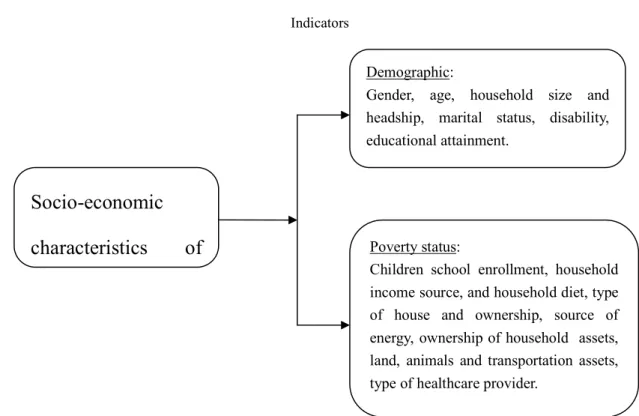
Figure 1: Operational frame work Characteristics
Indicators
3. Research Design and Methodology
The purpose of this study was to determine the salient socio- economic characteristics of MFIs’ clients. The study was descriptive as it sought to portray an accurate profile of the clients of MFIs. Data was obtained from the clients through an interview using a questionnaire that was administered to each respondent with some of the useful data being checked with BIMAS
The target population of the study was all the registered BIMAS clients operating within the Central, Eastern, Southern and Northern regions who were not more than six months old in the programme. The accessible population was the same category of clients operating within the five divisions of Embu District ( Central, Nembure, Kieni, Runyenjes and Manyatta) As at 31st March 2011 there were 79 groups in the Central region with a
Socio-economic
characteristics
of
Demographic:
Gender, age, household size and headship, marital status, disability, educational attainment.
Poverty status:
Children school enrollment, household income source, and household diet, type of house and ownership, source of energy, ownership of household assets, land, animals and transportation assets, type of healthcare provider.
Though slightly over half of the clients have attained secondary school education, most have attended other training. In terms of their poverty status, over half of the clients have their children attending school. Majority can afford at least three ordinary meals per day and special meals thrice per week. The clients mostly live in their own houses with between two and three rooms. The houses are largely made of brick walls, iron sheet roofs and concrete floors. The main source of energy for client household is firewood and charcoal and majority of them own a television set. The clients own an average of 1.64 hectares of land and less than one plot. In addition to owning cattle, goats/sheep and chicken, the clients own bicycle as their main transportation assets. Clients mainly seek healthcare from government facilities. The data however suggests that the MFI clients are not among the poorest of the poor but largely consist of the economically active poor.
REFERENCES
Aghion B. and Morduch J. (2005), The Economics of Microfinance, The Massachusetts Institute of Technology Press , London
Bradley R. (1980), The Economics of poverty and discrimination (3rd Edition), Prentice Hall Inc , Englewood Cliff New Jersey (1980)
Carolyn B ,Gayle M, & Gary G., (1999) , “An assessment of clients of Microfinance programs in Uganda”,
Management systems International, Uganda
CGAP (2003), “About microfinance: frequently asked questions,” CGAP Washington DC.
Central Bank of Kenya, (2007), “Microfinance in Kenya: Institutional profile /Landscape” A presentation by the Bank Supervision department at Mayfair Hotel, Nairobi, Kenya , on 24/09/2007.
CGAP (2007), “Assessing the relative Poverty of microfinance clients : a CGAP operational tool, CGAP”,
Washington Dc
Wright G. (2001), Microfinance systems: Designing Quality Financial Services for the poor, Zed books Ltd .London.
Kimuyu and Omiti, (2000),” Institutional Impediments to access to credit by Micro and Small scale Enterprises in Kenya”,Institute of policy analysis and research discussion paper, PaperNo.DP/026,Nairobi.
Mahabub H. (1988), “Credit for alleviation of rural poverty: the Grameen bank in Bangladesh” Research Report No.55,IFPRI, Washington DC .
Harper M, (1998), Profits for the Poor; Cases in Microfinance, Intermediate Technology publications ltd, London
Morduch J (1999),”The microfinance promise”, Journal of Economic Literature Vol. XXXVII (pgs 1569 to 1571)
Mugwanga (1999): “Use and impact of savings services for poor people in Kenya, Contribution `to Ssavings and the Poor the methods, use and impact of savings by the poor
of East Africa’’, Microsave-Africa, Nairobi
Yunus M. (1999), Banker to the poor: Micro-lending and the Battle against World Poverty, Public affairs, New York.
Mullei A and Bokea C. (1999), Micro and Small Enterprises in Kenya: Agenda for improving the policy Environment, International Centre for Economic Growth, Nairobi
Mulyungi P. M. (2007), “Evaluation of the impact of the Kenya Women Finance Trust Biashara Lending Scheme” a research project submitted for award of a degree of Master of Science of Jomo Kenyatta University of Agriculture and technology (JKUAT), presented on 31/01/2007.
Goldberg N. (2005), “Measuring the impact of microfinance; taking stock of what we know”, Grameen foundation, Washington DC.
Otto H. Muli M. & Milcah O.(2002), “An Evaluation of Microfinance programmes in Kenya as supported through the Dutch Co- financing Programme with a focus on KWFT,” KWFT , Nairobi.
Podell & Lawrence (1986), Families on Welfare in New York City, University of New York Press, New York City.
Government of Kenya, (2001), Poverty Reduction Strategy Paper for the period 2001 – 2004, Government printer, Nairobi.
Sajed A.M Ashok S. & Giorgio T (2003), “Does micro credit reach the poor and vulnerable? Evidence from northern Bangladesh,” Journal of development Economics, Elsevier.
Government of Kenya, (2007), Kenya Vision 2030; a competitive and prosperous Kenya, Government printer, Nairobi
World Bank (1990), World development report 1990, World Bank, Washington DC
World Bank (1997), “The Micro credit Summit Report”, communiqué issued by the council of Heads of State and Government at the Micro credit Summit, Washington DC
Central Bureau of statistics, International Centre for Economic growth and K-rep (1999), ‘National Micro and Small enterprise Baseline survey results’, Nairobi
Carl L. (2004), Small Firms Dynamics: Evidence from Africa and Latin America, World Bank, Washington DC.
Fuller R. (2006), Measuring poverty of Microfinance clients in Haiti http://www.microfinance .com/English/Papers/scoring poverty in Haiti.pdf
Sergio N. and Marks T. (2007), “What make Rural Finance Institutions successful” The World Bank Research Observer, Vol 9 No1, (pgs 49-70)