Decanting and Social Sustainability:
Kenya Slum Upgrading Programme (A Case Study)
by
Anthonia Ogundele
A thesis
presented to the University of Waterloo
in fulfillment of the
thesis requirement for the degree of
Master of Environmental Studies
in
Planning
Waterloo, Ontario, Canada, 2014
© Anthonia Ogundele 2014
ii
Author’s declaration
I hereby declare that I am the sole author of this thesis. This is a true copy of the thesis, including any required final revisions, as accepted by my examiners. I understand that my thesis may be made electronically available to the public.
iii
Abstract
By the year 2030, over half of the global population will reside in cities. The impacts of this trend are most notable among nations within the global south, which are experiencing rapid urbanization, due to forced displacement, political, economic and environmental conditions. The infrastructure deficit, caused by rapid urbanization, experienced by most nations in the global south has created slum conditions for many of their urban residents. All levels of government including international diplomatic bodies have encouraged urban renewal programs that seek to resolve the “slum issue” in the global south. These urban renewal programs have been the subject of much criticism given the methods of redevelopment. The focus on improving the physical environment of slum dwellers and the limited attention to the resulting social consequences of such programs. The Kenya Slum Upgrading Program is a case study by which the method of redevelopment included the use of a decanting site which facilitated the temporary displacement of residents of the Kibera slum, Soweto East Village to a pre-constructed high-rise estate, until the redevelopment of the Soweto East Village is complete.
Using Stren and Polèse’s concept of Social sustainability as a framework, this research seeks to understand the impacts of the use of a decanting site on the targeted community. The decanting site offered a space to understand a community in transition and critically understand the impacts of this method.
The research found that social sustainability was impacted both positively and negatively within the decanting site. In fact, decanting sites are an opportunity to build social
sustainability for a displaced community, instead of seeking to sustain its previous manifestation in Soweto East. The research also found that the driver for this program were international benchmarks, which may have impeded the ability for all stakeholders, at all levels, to consider the impacts of social sustainability.
As we move into a global post- 2015 development framework these findings must be understood as a starting point to understanding the impacts of methods used to support large scale redevelopment programs.
iv
Acknowledgements
This was truly one of the most challenging tasks in my life. It was not without my faith, trust and pure perseverance that I was able to get through this work. It has truly been a journey and I would like to thank all who encouraged me along the way.
Thank you to Dr. Robert Shipley and Dr. Johnson whose unwavering commitment, encouragement and patience brought me through the process. Both of your insightful comments and feedback were invaluable and I appreciate you both.
To all the staff at the University of Nairobi: Dr. Isaac Mwangi and Dr. Samuel Obiero who supported my petition to research in Kenya and to the field support Thank you. Notably, Bernard Kasure, Kennedy Yongo, Herbert Orwa and Mutuaruhiu Kalululwanga and especially to Salome Njeri, whose patience and support was invaluable.
A thank you to all my classmates and life-long learners that encouraged me throughout the process notably Josh, Adriana, JayV, Naomi and Eric. A special thank you to Danielle Huot, who understood the emotional challenges of international research and of telling someone else’s story.
Thank you to Barney Owens, Aileen Cassells and Dan Hefkey for supporting me at the beginning of this endeavor and allowing me to step away from my work for scholastic pursuits.
Thank you so much to all of my family and friends who carried the weight of my thesis with them, so as to lighten my load. Thank you so much to my Mom and Dad, whose fervent prayers could be felt throughout and thank you to Nike, Kemi and Deji for being there for me always. A special thank you to all my friends. And finally a big thank you to Denis for his relentless support over the course of this paper and always reminding me that “my voice should be heard”.
v
Dedication
I press on toward the goal to win the prize for which God has called me heavenward in Christ Jesus
Philippians 3:14
My people will live in peaceful dwelling places, in secure homes, in undisturbed places of rest.
vi
Table of Contents
Author’s declaration... ii Abstract ... iii Acknowledgements ... iv Dedication ... v Table of Contents ... vi List of Figures ... x List of Tables ... xi 1 Introduction ... 1 1.1 Purpose ... 2 1.2 Research Questions: ... 4 1.3 Rationale: ... 4 1.4 Background ... 5 1.4.1 Kenya ... 5 1.4.2 Kibera ... 101.5 Kenya Slum Upgrading Programme ... 12
1.5.1 Overview ... 12
1.5.2 Implementation Strategy ... 14
1.5.3 Institutional Framework ... 15
1.5.4 Soweto East, Kibera ... 15
1.5.5 Soweto East Physical Characteristics ... 17
1.5.6 Soweto East Demographic Information: ... 18
1.6 Decanting Process ... 19 2 Literature Review... 21 2.1 Introduction ... 21 2.1.1 Structure ... 22 2.2 Urbanization ... 22 2.2.1 Understanding urbanization ... 22
2.2.2 Rapid Urbanization and Slum Formation ... 23
2.2.3 Defining Slums ... 27
2.3 Slum Dweller... 29
2.4 Justification for Mass Housing Interventions... 30
vii
2.6 Redevelopment ... 31
2.7 Slum Networking ... 32
2.8 Urban Renewal ... 33
2.9 Consequences of Mass Urban redevelopment strategies ... 34
2.9.1 Development Induced/Forced Displacement and Resettlement ... 34
2.9.2 Deconcentration of Poverty ... 35
2.10 Decanting as a means of facilitating development induced displacement ... 36
2.11 Social Sustainability ... 39
2.11.1 Governance (Civil Society) ... 41
2.11.2 Social and Cultural Policies ... 42
2.11.3 Social Infrastructure and Public Services ... 42
2.11.4 Urban Land and Housing ... 42
2.11.5 Urban Transport and Accessibility ... 43
2.11.6 Employment, Economic Revitalization, and the Building of Inclusive Public Spaces ... 43
2.12 Conclusion ... 43
3 Methods... 45
3.1 Introduction ... 45
3.2 Research Design Process ... 45
3.2.1 Research Question ... 47
3.2.2 Theory and Conceptualization ... 48
3.2.3 Operationalization ... 51
3.3 Research Method ... 54
3.3.1 Field Research ... 54
3.3.2 Questionnaire ... 55
3.3.3 Observation ... 56
3.3.4 Semi-Structured and conversational Interviews ... 57
3.4 Site Selection ... 58
3.4.1 Site Description ... 59
3.5 Population and Sampling ... 61
3.5.1 Population ... 61
3.5.2 Units and Quantitative Sample Size ... 62
3.5.3 Non-Probability Sampling Methods ... 63
3.6 Human Sources of Data Collection ... 64
viii
3.6.2 Block Representatives ... 64
3.6.3 Settlement Executive Committee (SEC) ... 65
3.6.4 Community Based Organizations (CBOs) ... 65
3.6.5 Federal Agencies ... 66
3.6.6 Non-Government Organizations (NGOs) ... 66
3.7 Analysis ... 67 3.7.1 Questionnaires... 67 3.7.2 Interviews ... 67 3.8 Triangulation ... 68 3.9 Limitations ... 68 3.9.1 Accurate Information ... 68 3.9.2 Language barriers... 68 3.9.3 Limited Time ... 69 3.9.4 Appropriate Sampling ... 69 4 Findings... 71 4.1 Introduction ... 71 4.1.1 Survey Results ... 72 4.1.2 Limitations ... 72
4.2 Characteristics of the Sample ... 73
4.3 Civil Society ... 78
4.4 Urban Land and Housing ... 87
4.5 Employment, Economic Revitalization, and the Building of Inclusive Public Spaces ... 90
4.6 Questionnaire Conclusions ... 95
4.6.1 Interviews ... 95
4.6.2 Limitations ... 98
4.6.3 Governance structures ... 103
4.7 Alternative solution to KENSUP ... 111
4.8 Conclusion ... 113
5 Discussion ... 113
5.1 Introduction ... 113
5.1.1 Government Documentation ... 114
5.1.2 Structure of the chapter ... 115
5.2 Civil Society ... 115
ix
5.4 Urban Land and housing ... 121
5.5 Employment, Economic Revitalization, and the Building of Inclusive Public Spaces ... 123
5.6 Summary ... 125
6 Conclusion ... 127
6.1 What drives slum-upgrading programs? ... 127
6.2 What are the necessary conditions to ensure social sustainability is sustained? 129 6.3 Final Thoughts... 130
Bibliography ... 134
Appendix A: Household Questionnaire ... 140
Appendix B: Interview Questions ... 144
x
List of Figures
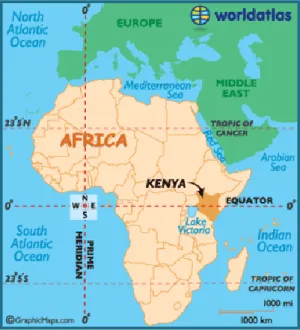
Figure 1.1 Geographic location of Kenya (Graphic Maps, n.d.) ... 6
Figure 1.2 – Nairobi (Nations Online, n.d.) ... 6
Figure 1.3 - Geographic location of Kibera, Langata District Nairobi (Hamminga, 2014) ... 10
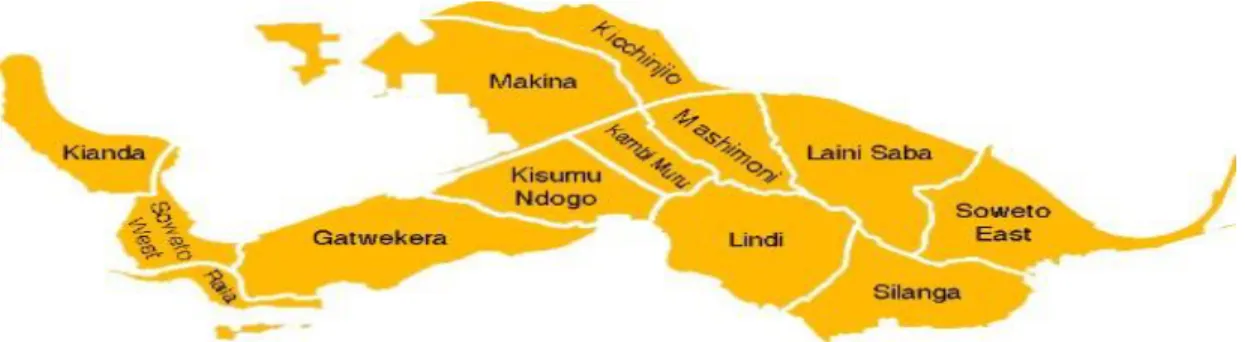
Figure 1.4: Map of Kibera and its villages ... 11
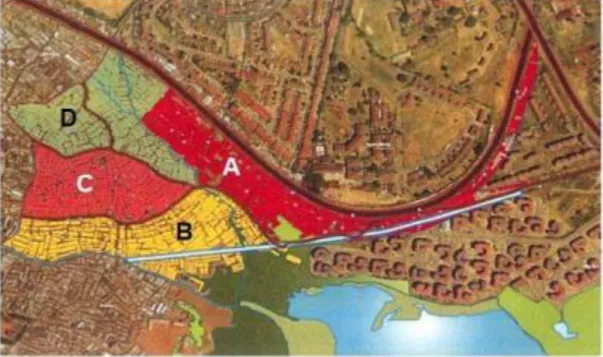
Figure 1.5 Soweto East Zone Divisions ... 16
Figure 1.6 - Access to types of Sanitation ... 18
Figure 1.7 - Professions of the Residents who were not owners (Occupiers) ... 19
Figure 3.1 - Diagram of the Research Process ... 47
Figure 4.1 - Kibera Informal Settlement Villages ... 87
Figure 4.2: Decanting Site ... 89
Figure 4.3: Decanting Site 2 ... 90
Figure 4.4: Local Newspaper ... 103
Figure 6.1: Soweto East Redevelopment in Progress (G, 2013)... 133
xi
List of Tables
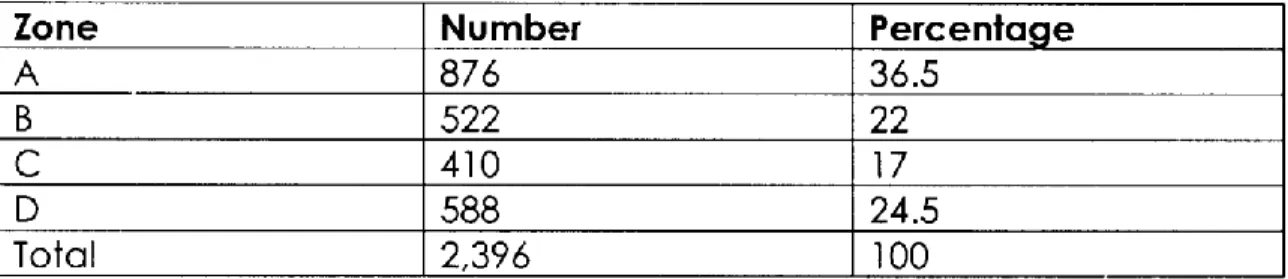
Table 1.1 - Structure distribution by Zone ... 17
Table 1.2 - Types of Structures ... 17
Table 1.3 - Structure Owners and Tenants Distribution ... 18
Table 1.4 - Population Dynamics... 18
Table 3.1 - Indicators for Methods Test ... 53
Table 3.2 Decanting Site Specifications ... 62
Table 3.3 - Human Sources of Data Collection ... 64
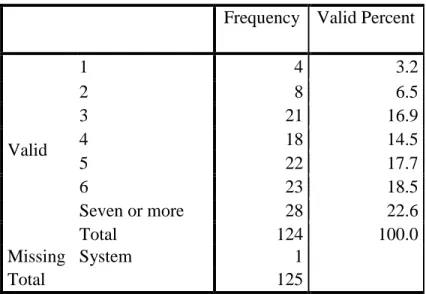
Table 4.1- Household Sizes ... 74
Table 4.2 - Rent paid per month ... 75
Table 4.3 - Marital status of respondent ... 75
Table 4.4 - Household income per month ... 76
Table 4.5 - Ethnic group of respondent ... 77
Table 4.6 - Religious Affiliation of Respondent ... 78
Table 4.7 - Was the relocation justified? ... 79
Table 4.8 - Trust Government will complete the program ... 79
Table 4.9 - Participation in the public consultations... 80
Table 4.10 - Engage in local politics ... 81
Table 4.11 - Increase in desire to participate in local politics ... 82
Table 4.12 - Have the Physical Improvements Positively Influenced the Welfare of the Community? ... 82
Table 4.13 – Primary sources of information ... 83
Table 4.14 - Frequency to which you return to your Soweto East ... 86
Table 4.15 - Stage from which you take a Matatu (Figure 4.1) ... 87
Table 4.16 - Do you wish to make any physical changes to your living environment? ... 88
Table 4.17- Main source of income ... 91
Table 4.18 - Distance of place of employment after relocation ... 92
Table 4.19 - Frequency of receiving income ... 93
Table 4.20 - Are the New Residents worth the amount in Rent? ... 93
1
Introduction
Housing the urban poor has been a foremost challenge for cities over the past century. Governments have been challenged to implement housing programs that would address these often poorly housed populations. In North America governments had implemented programs that saw the replacement of these “slum-like” dwellings with modern public housing schemes. These public housing schemes sought to resolve the immediate problem of urban blight, but did not take into consideration the social, economic and environmental changes that may impact the success of the populations that were impacted by these changes..
Despite the short-term success of these programs, it was clear that there was a lack of understanding in terms of the dynamics of these populations. Most communities impacted by these public housing schemes saw social and economic degradation and the further marginalization from the broader community. To resolve these newly formed issues there has been a number of recent international and domestic initiated urban revitalization programs involving the demolition of the public housing that was built to resolve the initial housing problem and subsequent rebuilding of new housing under a more socially integrated scheme.
Stren and Polèse offer a clear description of the social, economical and environmental factors that are not being considered by international measurement standards (e.g. Millennium Development Goals). They use the concept social sustainability to describe
2
the policies and institutions that have the overall effect of integrating diverse groups and cultural practices in a just and equitable fashion (Stren & Polese, Understanding the New Sociocultural Dynamics of Cities: Comparitive Urban Policy in a Global Context, 2000, p. 3). They go further to define social sustainability for a city as a development (and/or growth) that is compatible with the harmonious evolution of civil society, fostering an environment conducive to the compatible cohabitation of culturally and socially diverse groups while at the same time encouraging social integration with the quality of life for all segments of the population (Stren & Polese, Understanding the New Sociocultural Dynamics of Cities: Comparitive Urban Policy in a Global Context, 2000, p. 3).
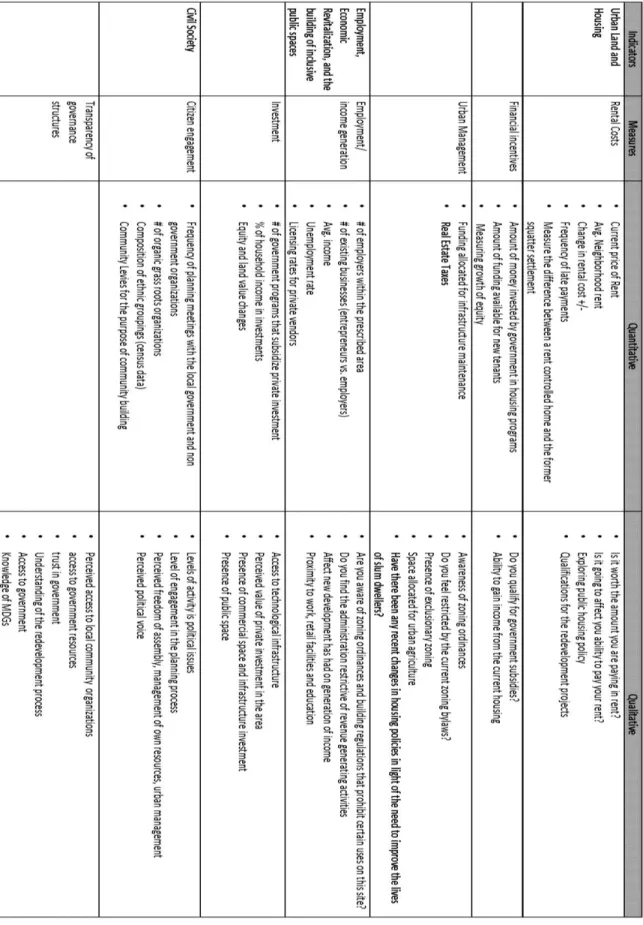
Observing slum formations as a general urban phenomenon this concept is an appropriate measure to fill the gap where housing interventions applied to slum redevelopment programs have been missing. The concept of social sustainability offers 6 areas in which to draw indicators and measurements for social sustainability. They include: governance, employment/economic revitalization, transportation and accessibility, land and housing, social and cultural policies and social infrastructure and public services.
1.1 Purpose
The purpose of this research is to measure the impact on the social sustainability of the Soweto East community by the implementation of the Kenya Slum Upgrading Program. I will explore the correlation between the use of a decanting site (Section 1.6), as a means in supporting the slum redevelopment project, and social sustainability.
3
Through this analysis I will identify the social and economic impacts of Kenya’s housing interventions, key drivers of slum redevelopment programs and address the areas by which social sustainability can be achieved. I will provide some initial observations of the impact with the goal of providing a broader and more inclusive scope to mitigating the impact of housing redevelopment programs on the urban poor.
The primary focus of my research is the development of metrics that will measure the social impacts of the housing intervention programs. Social sustainability is focused on understanding the relationships and networks in a city. It is strongly reflected in the degree to which inequality and social “discontinuity” exists (Stren & Polese,
Understanding the New Sociocultural Dynamics of Cities: Comparitive Urban Policy in a Global Context, 2000). These metrics will be based on the 6 interdependent policy areas of social sustainability, that make up the institutional-territorial nexus: Governance (Civil Society), Employment and Economic Revitalization, Infrastructure and Public Services, Social and Cultural Policy, Urban Land and Housing, and Urban Transportation. In my research I have identified the subset of Civil Society, Employment and Economic Revitalization and Urban Land and Housing as the indicators in which I will be developing measures of social sustainability.
It is my hope that this research will also provide the necessary information for policy makers to harness the vitality of these, though aesthetically unpleasing, vibrant
communities and go beyond the physical improvement of their living conditions but as well suggest further alternatives that can improve the lives of slum dwellers.
4 1.2 Research Questions:
I approached this research with the following questions in mind:
Has the use of decanting sites, as a means in supporting the process of slum upgrading, impacted the social sustainability of a community?
The sub questions that derive from the central research question are:
a) What are the drivers of large slum upgrading programs? (From all levels, International, National and Local)
b) What are the necessary conditions to ensure that social sustainability is sustained?
1.3 Rationale:
The United Nations is projecting that globally the level of urbanization is expected to rise from 50 per cent from 2009 estimates to 69 per cent by 2050 (United Nations, 2010) due to number of factors, primarily rural to urban migration and displacement from political, economical and environmental disruptions. Most of this growth has been reported in the global South, particularly within Sub-Saharan Africa. Associated with rapid urbanization has been the increasing development of slum settlements, due to limited mobilization of state and private resources to provide adequate housing for these growing populations.
Large-scale housing interventions continue to be the response to the “slum issue” around the world (e.g. slum redevelopment programs). The timeliness of this research aligns with the reporting of achievements, to date, of Kenya’s monitoring of the millennium
development goals. It allows us to now add depth to the measurement criteria that has been used to measure the progress of large-scale housing interventions. It is my hope that
5
through this research we can have a more holistic understanding of the true impacts of large scale redevelopment programs being implemented in the global south.
Nairobi, Kenya has been undergoing an urban transformation that has seen variety of methods used for improving the lives of the urban residents, particularly slum dwellers. Nairobi offers a number of United Nation’s measured projects where lives have been improved. Nairobi is also the city where UN-Habitat is located and as such I had access to many of their resources. Kibera, Nairobi, Kenya, offers the perfect case study to observe for the purposes of my research.
1.4 Background
The following provides the detailed context in which the redevelopment program is occurring. Understanding both the national and local geographical, social and economic environment provides greater insights into the conditions that allow this scale of
redevelopment to occur and the description of the population of which it impacted.
1.4.1 Kenya
Kenya is a nation located in East Africa with a population of 43,013,341(Kenya National Bureau of Statistics, 2010).
6
Figure 1.1 Geographic location of Kenya (Graphic Maps, n.d.)
7
The removal of colonial restrictions on freedom of movement at independence, in 1963, meant a rapid increase in rural-urban migration of the local African population (Lee-Smith & Lamba, 2000) into the country’s urban centres. As a nation, Kenya has been experiencing rapid urbanization with the urban population growing from an initial 750,000 to 9.9 million by 1999(Government of Kenya, 2005, p. vii). Kenya’s urban population is approximately 30% of the total population, however 70% of these urban dwellers inhabit informal settlements that have limited access to water and sanitation, housing, employment, social services and secure tenure. These problems of poor
infrastructure and services are further exacerbated by environmental degradation in these informal settlements (UN-Habitat, 2007).
There is no single cause for the persistent reproduction of slums in Kenya. Their
manifestation is a result of complex social, environmental, economic and political factors. UN-Habitat attributes the continued proliferation of illegal slums in Kenya to increased urban poverty and inequality in poor neighborhoods, the high cost of living, the inability of the urban poor to access affordable land for housing, insufficient investment in new low income housing, and poor maintenance of the existing housing stock(UN-Habitat, 2007). The history of social and spatial exclusion in urban planning, both under colonial regimes and democratic governance structures is also an important factor, particularly in the case of Nairobi.
Nairobi (Figure 1.2), the capital city of Kenya, received its name from the Maasi phrase of “Enkare Nairobi”, which means “The place of cold waters”. It is the largest city in
8
Kenya, as well as the only urban province in the country (Medard, 2010). It is the commercial and political capital of the nation and where the concentration of urban poverty resides. The population of Nairobi is approximately over 3 million, however the reason it is difficult to quantify the population is due to the unplanned living areas of Nairobi’s informal settlements (Medard, 2010). Nairobi has a total 183 slums, which accommodate approximately 40% of the city’s population (Shack/Slum Dwellers International , 2010).
The colonial city of Nairobi was formed through exclusionary planning policies and enforced by British laws. The city’s history of social exclusion has structured the way institutions operate as much as, or more than, it has structured physical space (Lee-Smith & Lamba, 2000, p. 269). It is within this context that social norms were also created and borders were formed both legislatively and socially on the premise of ethnic lines(Lee-Smith & Lamba, 2000; Mwangi, 2007). Africans were legally prevented from owning freehold property in the city until 1920s, when the British government prohibited separation of the races. Thereafter the settlers prevented such ownership through zoning and social pressures(Lee-Smith & Lamba, 2000, p. 252).
The proliferation and/or contraction, of Kenya’s slums are a physical representation of government policies that are either moving them towards an era of inclusivity or of social exclusion, by their very presence. The Kibera Slum is the greatest illustration of the social and spatial exclusion.
9
The presence of slums has been attributed to explicit government policy and decades of official indifference by lack of inclusion for the provision of low-income housing in the budgetary process (Amnesty International, 2009, p. 6; Muraya, 2006; Lee-Smith & Lamba, 2000). Historically, policy intentions to house Nairobi’s population were not implemented and the state sponsored initiatives have been falling short of demand(Lee-Smith & Lamba, 2000).
Nairobi’s slums differ from the conventional ad-hoc and owner-builder relationship that is attributed to informal settlements. These informal spaces much more frequently manifest as a landlord-builder tenant relationship, in response to the issue of housing affordability and demand, which is a primary reason why migrants settle into the slums instead of other areas.
Rental accommodation in Kenyan towns has usually been associated with low-income households but it has also become the main form of housing for middle-income
households and new urban residents of all income levels.(Mwangi, 2007, p. 141).
Despite domestic and international political recognition of Nairobi’s rapid and continued proliferation of slums, their continued presence present a challenge and illustrate the need to take an integrated, socially sustainable approach to redevelopment programs.
10 1.4.2 Kibera
Figure 1.3 - Geographic location of Kibera, Langata District Nairobi (Hamminga, 2014)
The informal settlement of Kibera (Figure 1.3) is located in Langata District, which is the Nubian word for “Forest.” Kibera is a physical manifestation of where politics and poverty meet. Kibera is an informal settlement located on a portion of Nairobi’s 13% contested lands. This implies that there are still no clear tenure rights to residents living within the settlement (Shack/Slum Dwellers International , 2010, p. 35). The true ownership of the land has been subject to a long-standing legal debate between the
Nubian community, long-term settlers and the Government of Kenya, due to the length of settlement on the land following service as the King’s African Rifles, the British East African Colonial Forces(Balaton-Chrimes, 2011). Despite the challenges in tenure the settlement has grown beyond the initial Nubian settlement to become a broad multi-ethnic community with a population make up of landlords and tenants. It can be described as a “town within a town” despite its marginalization and roots in territorial exclusion(Medard, 2010; Lee-Smith & Lamba, 2000).
11
Kibera consists of 12 villages namely: Soweto East, Laini Saba, Makina, Kisumu Ndogo, Gatwikra, Soweto West, Lindi, Kianda, Kambi Muru, Mashimoni, Raila, and Salinga.
Figure 1.4: Map of Kibera and its villages
It is the largest slum in Kenya and is approximately 225 hectares (556 acres) in size. Located 7km outside of the Nairobi city centre, it is estimated that the population of Kibera is between 170,000 to 1 million (Integrated Water Sanitation and Waste
Management in Kibera, 2008; UN-Habitat, 2007). Kibera has received notoriety for its density and inflated estimate of the settlement population.
Despite the informal nature of Kibera, it is still subject to the formal institutional structures that govern the city of Nairobi. Accountable to the district of Langata’s governing officers, there is also an educational officer located within the slum and a number of local chiefs that oversee the governance within specific areas throughout the slum. It remains debatable to define Kibera as a squatter settlement and as well as an illegal settlement. The debate comes with the fact that the majority of residents are
12
tenants and are thus paying rent to a landlord, who is presumed to have “legal” rights over the land. In most instances, this is not the case. Amis addresses this “owner/tenant” phenomenon by suggesting that squatting, as it is conventionally defined no longer exists in Nairobi. Instead he suggests that the provision of such low-income shelter is now a commercial activity (Amis, Squatters or Tenants: The Commercialization of
Unauthorized Housing in Nairobi, 1984).
1.5 Kenya Slum Upgrading Programme
1.5.1 Overview
The Kenya Slum Upgrading Programme (KENSUP) is a joint initiative between the Government of Kenya and UN-Habitat with the primary goal of improving the lives of 5.3 million people living and working in informal settlements in urban areas in Kenya by 2020(Government of Kenya, 2005; UN-Habitat, 2007) and to have improved and
sustainable urban living environments in Kenya. The agreement followed the ratification of the Millennium Development Goals, which aspire to Improve the lives of 100 million slum dwellers, under their environmental sustainability mandate Goal 7, target 11. Improvements are to be measured with the following criteria:
Access to improved water
Access to improved sanitation facilities Sufficient-living area, not overcrowded Structural quality/durability of dwellings Security of tenure
Both parties signed a Memorandum of Understanding in 2001 and the implementation of the programme began in 2003. The program is currently focused on selected settlements
13
within the legal boundaries of Nairobi, Mombasa, Kisumu and Mavoko, with the mission to develop and implement policies, programs and strategies to facilitate the reduction and prevention of slums in Kenya(Government of Kenya, 2005). Despite the title description of an upgrading programme, KENSUP indicates that development approaches will range from complete redevelopment to partial redevelopment(Government of Kenya, 2005). The KENSUP programme is part of a broader national Poverty Reduction Strategy, National Housing Policy and National Housing Development Programme
Framework(Government of Kenya, 2005). The program symbolizes a movement away from disruptive housing interventions, which led to the forced displacement of
communities, wide-spread slum clearance and disregard for the role of low income earners in urban development(Government of Kenya, 2005). towards an integrated planning model that offers a strong foundation towards social sustainability.
Both UN-Habitat and the GoK committed both the funding of financial and material resources to the process (Government of Kenya, 2005). As UN-HABITAT’s role in the programme is supplementary, its activities have focused on the provision of technical advice, capacity building of the relevant local authorities and communities, provision of basic infrastructure, and testing of innovative slum upgrading approaches through pilot projects.
What is unique about the KENSUP is that it is a government driven initiative with international support, funding and oversight, with a key focus on engaging the affected population throughout the planning process. This program is a direct response to the
14
establishment of the United Nations Millennium Development Goals, thus it is an important case study to measure the correlation between slum redevelopment and social sustainability. The GoK has indicated that the success of the programme is largely dependent on the how the government coordinates the contributions of key stakeholders, builds consensus, conducts policy reform, and strengthens project implementation within the settlements(Government of Kenya, 2006).
1.5.2 Implementation Strategy
The KENSUP Programme is premised on “enabling slum dwellers and other stakeholders to be fully and actively involved in improving their own livelihoods and neighbourhoods” (Government of Kenya, 2005). The KENSUP programme has conceptually developed a framework on the principles of good governance. This includes (but is not limited to) building partnerships, establishing a decentralized approach and focusing on ensuring that the programme is sustainable (Government of Kenya, 2005).
The implementation strategy details the approaches to slum upgrading for each of the sites that are under the auspices of the programme. With regards to the development of the Kibera Slum, the GoK detailed the following approach(Government of Kenya, 2005):
Socio-Economic and physical mapping Development of a Master plan
Installation of Infrastructure and services by the government and local authority Engagement with the mobilization of communities to agree on:
o Formation of cooperatives
o Service provision and relocation
o Housing development types and approaches
o Forms of tenure
o Housing Construction/development modes
15
In principle the KENSUP program highlighted a number of strategic interventions to support the direction of all of their upgrading programs(Government of Kenya, 2005). These interventions varied between community organization, City/Town development strategies, establishment of microfinance and credit systems and the development of income generating activities.
1.5.3 Institutional Framework
The KENSUP programme is a joint partnership between UN-Habitat and the Government of Kenya. These two bodies have broad oversight over the programme, however they have established a decentralized institutional framework, which focuses on allocating the responsibility for the provision of services and decision making to the closest appropriate level improving responsiveness to the priorities and needs of slum dwellers(Government of Kenya, 2005). This decentralization of responsibility, conceptually, provides the capacity to respond to the needs of the resident population.
1.5.4 Soweto East, Kibera
The Kibera pilot project component of the KENSUP programme commenced in the village of Soweto East (population 19,318), found on the eastern edge of the Kibera slum. The precise population figure is due to the detailed enumeration exercise that was
undertaken by the ministry of lands. Soweto East is characterized as an area with high densities of both people and structures, overcrowding in dilapidated buildings,
congestion, haphazard layouts, non-existent and minimal services( Ministry of Lands & Ministry of Housing, 2008). Soweto East was selected as the site to commence the pilot project for the following reasons ( Ministry of Lands & Ministry of Housing, 2008):
16
Land Ownership: Land Ownership is clear, hence minimal complications regarding acquisition and compensation.
State of infrastructure and social facilities
Community Cohesiveness/ organization: There exists well organized community groupings providing good entry points for community mobilization and minimizing controversy
Population size and Settlement: the size was ideal for a pilot project
Ratio of structure owners to tenants: The existence of a large population of resident structure owners. It is hoped that this will encourage smooth negotiations as they stand to benefit from improved conditions
Condition of housing structures and the presence of other interventions
In order to facilitate the enumeration process, situation analysis, collection of
demographic information and the subsequent relocation of the Soweto East population to the decanting site, the village was divided into four zones; A, B, C and D (Figure 1.5).
17
The Ministry of Lands and the Ministry of housing facilitated the enumeration process of the entire village, which provides a broad illustration of the physical characteristics of the site as well as the demographic composition of the site. It was with this information that the decanting site was planned and the final Soweto East master plan designed for the population following decanting.
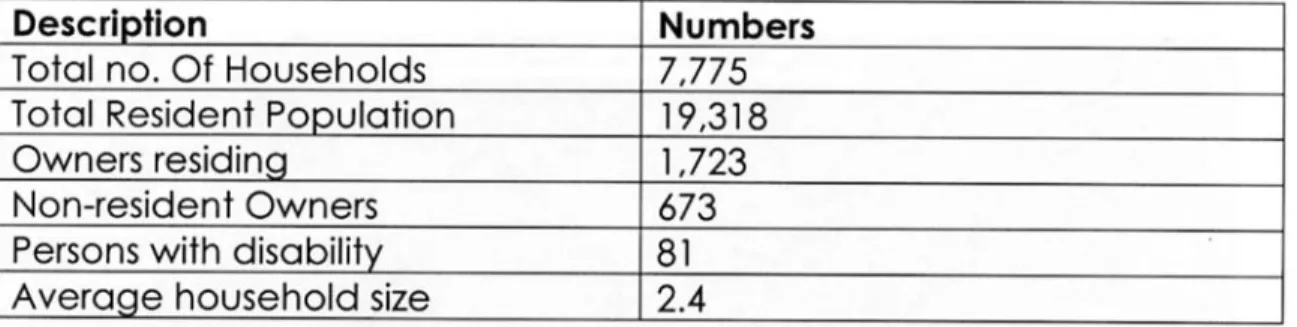
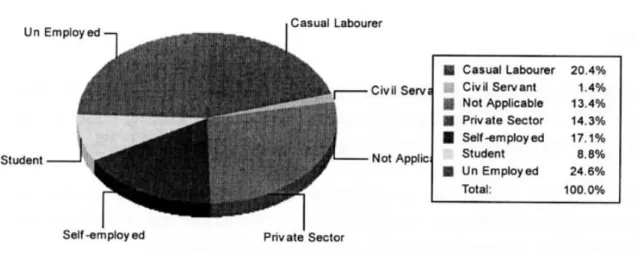
Table 1.1 – Table 1.14 and Figure 1.6 and Figure 1.7 highlight the demographic information of the population that was relocated to the decanting site, as well as the physical characteristics of the Soweto East village(Ministry of Lands, 2008).
1.5.5 Soweto East Physical Characteristics
Table 1.1 - Structure distribution by Zone
18
1.5.6 Soweto East Demographic Information:
Table 1.3 - Structure Owners and Tenants Distribution
Table 1.4 - Population Dynamics
19
Figure 1.7 - Professions of the Residents who were not owners (Occupiers)
1.6 Decanting Process
It is important to note that the Decanting site, of the Kibera Pilot Project, of the KENSUP Program is not intended to be the final destination for the Soweto East population.
Residents are there on a temporary basis and have signed a legal tenancy agreement that ensures their occupation is not for an extended period of time. The final stage of
redevelopment would have the residents returning from the temporary housing of the decanting site to move into high rise blocks (as per the implementation plan). This is identified as the reasonable mode of development for Soweto East due to its ability to accommodate existing densities (Government of Kenya, 2005). To support the upgrading of Soweto East the local government instituted the use of a decanting site as a means of temporarily housing the Soweto. The following are conditions of their tenancy in the decanting site:
There is a standard price for rent and people rent rooms and not entire apartment units. Appendix C: Floor Plan provides the floor plans for each of these units. Individuals were allocated housing accommodations based on affordability and
20
opposite to a family of 2 that could afford the rent of two rooms, thus allocating one of the spaces to a living room.
All the tenants have the option of participating in a housing cooperative and are part of a voluntary savings program in order to buy their unit that is being built in Soweto East
Tenants are to pay a rent of 1000ksh ($12CDN) (minimum) which includes rent, hydro and water.
The ultimate intent is that the land of Soweto East be re-organized with secure tenure arrangements administered under a cooperative body or corporate institution that would have the option of selling, rental or for own occupancy(Government of Kenya, 2005). This would require the removal of all existing structures to accommodate the upgrading.
The Kibera Pilot Project of the Kenya Slum Upgrading Program is a contemporary case study to begin to understand the social sustainability of a diverse community impacted by a national redevelopment program, which is validated by international drivers. Stren and Polèse offer an alternative social perspective to redevelopment that cannot be captured by the millennium development goals. It is with this lens that we can begin measuring the longevity of similar redevelopment programs.
21
2
Literature Review
2.1 Introduction
This literature review chapter provides the foundation upon which my research was conducted. The literature review will address the theory and conceptual foundations for defining and assessing the measurement of social sustainability, as it relates to the use of decanting sites in slum upgrading programs.
An explanation of the complexity of the process of urbanization, particularly in the global south and the impacts on the urban form (slum formation) will be highlighted to provide an understanding of the importance of measuring social sustainability. Planning solutions have been found in government sponsored and internationally endorsed urban housing interventions that have consequently displaced the most vulnerable populations. These programs have been grounded in the concept of environmental determinism.
Environmental determinism has historically been a primary planning concept that has justified the use of large scale urban redevelopment strategies in the west. However within the global south this takes a different form as urban redevelopment strategies are the cause for mass displacement of people.
Anthropologists, ethnographers and urban geographers introduced the concept of development-induced displacement and resettlement to analyze the social consequences of government sponsored redevelopment programs. This group of experts developed a variety of models that illustrate this concept. Social sustainability as a social planning concept offers a complementary perspective on measuring the impacts of large-scale
22
housing interventions, particularly on the use of decanting sites as an intermediary step before complete resettlement.
2.1.1 Structure
The structure of this chapter follows the cause and effect of rapid urbanization to the global proliferation of slums and the consequence of housing interventions. The chapter commences exploring the progression of urbanization from a local concept to a global phenomenon in the form of rapid urbanization. This trend has factored into the
proliferation of slums in many parts of the world, which has triggered the implementation of international targets and government endorsed housing interventions to resolve the “slum problem”. The methods to implement these interventions are then explored to understand the intersections between government initiative and the social sustainability of the impacted populations.
2.2 Urbanization
The populations of the world’s cities are growing at such a rapid pace that the United Nations is reporting that by the year 2030, more people in every region of the world will live in urban centres (Moreno, Oyeyinka, & Mboup, 2008), especially in developing nations (Global South). Nowhere in the world is this trend so prevalent as within the continent of Africa. The recent literature on rapid urbanization has presented a number of critical issues arising, due to rapid urban growth, primarily decreasing health and quality of life amongst urban populations..
2.2.1 Understanding urbanization
23
clear foundation upon which to discuss the formulation of slums and other impacts to the urban form. Urbanization is defined by the Organization of Economic Co-Operation and Development (OECD) as the increase in the proportion of a population living in urban areas; which includes a process by which a large number of people become permanently concentrated in relatively small areas, forming cities (Glossary of Statistical Terms, 2003). The process of urbanization in Western cities is understood to be incremental (Henderson, 2002; Aldrich & Sandhu, 1995) and a process of interstate and
intercontinental emigration. This incremental process coupled with a strong GDP and high education per capita allowed for the necessary governance and economic institutions to adjust to the growing urban centres (Henderson, 2002). Urbanization within the global south has occurred in a completely opposite manner, with urbanization occurring at an extremely rapid pace (Henderson, 2002; Aldrich & Sandhu, 1995; Amis, 1990). In the global south urbanization is a process operating within a post-colonial framework guided by economic growth, resource mobilization and political adjustments. It is within this context that urbanization in the global south cannot be seen solely as a consequence of domestic pressures, but that it is a part of a global momentum towards modernity.
2.2.2 Rapid Urbanization and Slum Formation
The creation of slums is complex. For the first time in history, more than half of the world’s population are living in towns and cities with the populations increasing to almost 5 billion by 2030 with urban growth concentrated in Africa and Asia (United Nation's Population Fund, 2007) with the highest percentage of slum dwellers living in sub-Sahara Africa with 62 per cent of the nations’ urban populations living in
24
assumptions that contribute to how cities develop, which subsequently factor into the creation of slums. Fainstein and Fainstein highlights three key political economic
assumptions on the development of the city, in the case of the development in the United States (Fainstein & Fainstein, 1983, pp. 2-3). They assign the following three
assumptions 1) The city is not a unitary political community, but rather a site for class and racial conflict 2) Class and racial inequality is expressed by the form of the built environment 3) Urban development is generally uneven between and within cities. This inequality and segmentation within the city and the scale at which rapid urbanization has been occurring globally offers a glimpse into the world’s urban future. In the case of Nairobi, the inadequate housing and poor infrastructure in the slum highlight the expression of class inequality expressed in the built form.
Fainstein and Faintein remark that “in capitalist societies the reproduction of the physical, social and economic fabric of cities depends upon the complex interaction of private and public decisions (Fainstein & Fainstein, 1983). It is the combination of these factors, including policy, that have either manifested domestically or been influenced by international influences (Hardoy & Satterthwaite, 1989, p. 40), which highlights the global nature of the phenomenon. The tendency has been for the generalization that simply the process of rapid urbanization and a deficit in available housing is the reason for the development of slums and squatter settlements within the developing world. The reality is, like many other urban issues, the formation of slums is not linearly related to solely rapid urbanization.
25
A land economist describes the presence of slums in terms of supply and demand of the commodity of housing within a capitalist system. Housing is viewed as a consumer product, thus implying that individuals who live in poor-quality housing have a smaller household consumption of the commodity called “housing”. The relative price of slum housing and the proportion of dwelling units which are poor quality relative to good quality also depend upon conditions of supply” (Muth, 1969, p. 128). In an explanation using the ghettoization and decline in American cities, slum housing was not produced so much as it was the subdivision of existing dwellings and the deferring of maintenance.
Aldrich and Sandhu (Aldrich & Sandhu, 1995) present four alternative models of urbanization and housing that contribute to slum or squatter housing formation in the global south. First a basic demographic or population model, which emphasizes the conditions of urban-rural migration, with the pull factor to cities, associated with the limited options presented in rural communities. The second model is premised on the global hegemony of capitalist countries which drain resources from the global south in a one-sided exchange, the third model addresses the interaction of the national economy as a dynamic player in an international market and the final model acknowledges the United Nations Development Programs (UNDP) emphasis on economic development and the significant role of active political elites and their commitment to human development. They suggest that any of these models and/or a combination of these models explain the inadequacy of housing in the global south. These models neglect the influence of exclusionary state policies that create barriers for impoverished communities such as in China where policy has restricted access to urban public housing by the many rural
26
peasants which led to the proliferation of informal settlements (Zhang, Zhao, & Tian, 2003; Solinger, 1996), which illustrates the need to delve into the understanding of spatial policy and its application in the global south, within varying contexts.
Pugh presents a similar view to the development of slum formation through the concept of housing poverty, which relates the presence of inadequate housing provisions with levels of household income generation (Pugh, 1995). He attributes the existence of housing poverty to criteria that mirror Aldrich and Sandhu’s econometric model of slum development. These criteria include: high rent/repayment-to-income ratios, substandard and unfit housing conditions, substantially blocked access to adequate housing” (Pugh, 1995, p. 37). He further broadens the discussion beyond the borders of nation states to question if the international income inequality influences the housing affordability of independent nation states (Pugh, 1995). This illustrates the compounding influence of international markets influencing the proliferation of slums.
It is very difficult to get up to date and reliable estimates of the number of people in the global south that are housed inadequately, due to the variation of statistical data
collection methods and the multiple definitions of housing “inadequacy”. Inadequate housing in African cities ranges from a minimum of 33 percent to a maximum of 90 percent (Aldrich & Sandhu, 1995; Parmar, 1991). The United Nations attributes slum development in Africa to a combination of issues beyond rapid urbanization such as increasing urban poverty and inequality, marginalization of poor neighborhoods, inability of the urban poor to access affordable land for housing, insufficient investment in new
27
low-income housing and poor maintenance of the existing housing stock (UN-Habitat, 2006).
2.2.3 Defining Slums
Despite the continuing evidence of urban deterioration and documented increases in “slum-like” conditions developing across cities in the global south, researchers are challenged to define exactly what is considered to be a slum. The definition varies between the physical characterizations of an area to the socio-cultural composition of a particular area. It also remains a negative physical phenomenon as stressed on the planning profession given the planners aversion to uncontrolled and unplanned growth (Amis, 1990). Given this challenge, the United Nations provides the definition of a slum that offers a starting point to understanding and measuring the urban phenomena. The United Nations describes a slum as a contiguous settlement where the inhabitants are characterized as having inadequate housing and basic services and often not recognized and addressed by the public authorities as an integral or equal part of the city (UN-Habitat, 2003, p. 5). They further describe slums as a physical and spatial manifestation of increasing urban poverty and intra-city inequality (UN-Habitat, 2003, p. 4).
Hardoy and Satterwaithe assert that a slum is not defined by the condition of its houses or the circumstances of its residents but because of the image that this urban phenomenon portrays of the national government (Hardoy & Satterthwaite, 1989, p. 39). This suggests that the presence of slums is a matter of perception, particularly for the social elite or the governing body. This issue of perception, when labeling a slum, is expressed in the Jane Jacobs’ Death and Life of Great American Cities, when she writes about her experiences
28
in a perceived Boston slum (Jacobs, 1961). In a dialogue with a Boston planner she expresses her amazement when he describes the North End of Boston as a “slum”. Jacobs indicates that the social aspects of this area such as interaction in the street and described an “atmosphere of buoyancy, friendliness and good health” (Jacobs, 1961, pp. 7-8) which countered the perceived description that this area of Boston was a slum.
Seeley would add further to the argument of perception stating it as a means to measure the slum problem due to its subjective and relative nature (Seely, 1959, p. 8). Using the United Nations definition, this relative comparison that Seeley suggests implies the conditions of the slum settlement to the conditions of its surrounding communities, which do not express the same slum like qualities. He expands this observation by providing six characteristics of a slum: space, population, a value position of goods and ills, dispersion, correlation and concentration (Seely, 1959, p. 7). He expands that a change in any of these characteristics can affect the nature of the slum. However, he continues to
emphasize that the removal of any one of these realities will not wholly resolve the issue of the slum, as none of these realities operate in the realm of absolutes.
Amis contributes that not all slums are squatter settlements and that they consist combination of subsistence and commercial housing (with subsistence being in the minority). Subsistence housing is described as the builder, the owner and the occupier contained within the same social unit so that there is no monetary exchange or tenancy (Amis, Squatters or Tenants: The Commercialization of Unauthorized Housing in Nairobi, 1984, p. 88). Commercial housing would imply that there is a commercial
29
exchange between a landlord and tenant (though within a slum it is likely illegal, due to precarious land tenure rights). This dynamic changes the nature of slums from destitute squatter settlements to a commercial hub for the exploitation of a limited affordable housing stock.
Again these two illustrations only identify slums based on their physical characteristics. However, given their primary observation as a physical manifestation of urban and intra-city inequality, it is clear that there must be socio-economic characteristics that can be included in the description of a slum. To ignore social and economic factors in the definition will ultimately limit the impact of any slum redevelopment programs that seek to improve this urban condition.
The physical conditions of a slum are of the utmost importance when considering means for the improvement of the lives of slum dwellers, however the challenge with the United Nations definition is that it does not recognize the slum as an integrated part of the urban environment and as such neglects to indicate unique socio-economic conditions that also characterizes the slums. Without consideration for these factors, how can one measure the improvement of the life of a slum dweller?
2.3 Slum Dweller
It is important to note that urban redevelopment strategies are not done in isolation for the sole purpose of improving the physical environment, but also seek to improve the lives of the populations within these settlements. Residents who inhabit the slums have been
30
defined as slum dwellers. In the literature, slum dwellers are defined by the following characteristics:
1) Ownership of property (Amis, Squatters or Tenants: The Commercialization of Unauthorized Housing in Nairobi, 1984)
2) Duration of residence in slum (Seely, 1959)
3) Physical conditions of housing environment(UN-Habitat, 2003) 4) Economic status(Seely, 1959)
5) Motivations(Seely, 1959)
Target 11 does not distinctly define what a slum dweller is but indicates that a slum household is a group of individuals living under the same roof that lack one or more of the following: Access to improved water, Access to improved sanitation facilities, Sufficient-living area, not overcrowded, Structural quality/durability of dwellings and/or Security of tenure(UN-Habitat, 2003). The UN continues to look at the physical condition for the measure of individual well being. Genuine success of the improvement of the slum dwellers life must take into account the changes in socio-economic and
environmental conditions of these slum dweller populations.
2.4 Justification for Mass Housing Interventions
Environmental and architectural determinism provides governments and implementing organizations the theory for which large-scale housing interventions have been justified. It is based upon this theory that physical and policy changes have been designed and enforced to support the urban remediation of sites to support the populations that live within them. Interventions range from, slum upgrading to urban redevelopment, however, these interventions for improvement have produced unintended consequences, which I will explore in this section.
31 2.5 Upgrading
John F.C Turner popularized slum upgrading in his 1972 book Freedom to Build. Slum upgrading operates under assumption that that the solution is not to demolish the housing but to improve the environment (Werlin, 1999, p. 1523). The United Nations supports slum-upgrading programs, however there remains an unclear delineation between slum upgrading and slum redevelopment with regards to the methods used in achieving the millennium development goals. This confusion is manifested through the case of Kenya’s Slum Upgrading Program (KENSUP), which continues the demolition and displacement of a number of slum dwellers.
2.6 Redevelopment
In a broad sense, redevelopment involves the demolition of homes or “blighted” area for the purpose of redeveloping the land to achieve its “highest and best use”. This usually means the development of new housing and retail to replace the “blight” that was
previously on the land. The consequence of redevelopment is the displacement of mature communities. Scudder and Colson suggest that with few exceptions, the large majority of those forced to move by development projects are low-income, low-status people who have very little political power and scant access to national resources (Scudder & Colson, 1982, p. 268). Fainstein and Fainstein assert that redevelopment is the result of economic forces, political action and state policy (Fainstein & Fainstein, 1983, p. 13). Many
Western planners and social scientists criticized this strategy, in the 1960s, as being unethical and unbeneficial to the residents that were displaced. In the case of the United
32
States Housing and Community Development Act (1974) clearance and demolition of existing homes was the practice implemented by developers involved in the program, which led to the displacement of poor and predominantly minority residents (Fainstein & Fainstein, 1983). Keating explores the topic of redevelopment through the case example of Techwood/Clark Howell in Atlanta, Georgia before the 1996 Olympics. Keating argues that despite what the United States had learned in the initial urban renewal programs of the 1950s, there are still policies and political interests in place that are allowing for the similar displacement of poor populations to occur, which will likely beget the same problems of the current public housing issues. In this case, Keating noted that there were numerous gaps in the process and administration of the program particular with its impact to the individuals lives it sought to improve. One of the main issues that translate across cases is the housing replacement after demolition. For the Hope VI public housing program (in the United States) there was not a mandated one-to-one replacement of housing units (Keating, 2000, p. 395), which led to further displacement of the
residents.
2.7 Slum Networking
Slum Networking is a holistic approach to urban improvement in which slums are seen as an integral part of the city – a settlement network that presents an opportunity for change rather than a problem for the city(Verma, 2000, p. 93). This is mainly completed through individual infrastructure development, improvement of the slum environment through landscaping and upgrading slums in the form of a network that is integrated with watercourses aligned with the city’s existing infrastructure (Verma, 2000, p. 93). The
33
application of slum networking has been limited to Indore City, India. It received awards from the Aga Khan award for architecture on its completion; however despite the
integrated nature of this housing intervention strategy the lives of slum dwellers remained the same if not worse and the project model has not been widely replicated.
2.8 Urban Renewal
Urban renewal goes beyond the remediation of urban areas for the purpose of improving the solution to enduring health, social and environmental issues health and life safety. The goal behind urban renewal has commonly been the diversification of a particular neighborhood and the dispersion of poverty (Koenig, 2009). In general terms urban renewal refers to the comprehensive improvement of a poor urban neighbourhood (Koenig, 2009, p. 121). The improvement of health and life safety is a consequence of urban renewal programs, but is ultimately not the primary goal. Since the 1960s urban renewal has transformed from a matter of international concern, rather than only of local or national relevance (Cernea M. M., 1995). Urban renewal programs in the global south have seen the influence of international bodies on the shaping of the urban form
compounded with the interests of the local government. This was the case in the 1960s and 70s when the World Bank funded programs that promoted the upgrading of
unauthorized areas (Rakodi, 1988). The magnitude and volume of projects catalyzed the creation of policy to manage the socio-economic impacts of communities that so many of these projects were having on their displaced populations.
34
The challenge remains that within the positivist tradition of urban planning, where the planner is assumed to be the expert and the community is subject to the expertise of the planner, urban renewal has taken a top down approach to urban upgrading and
redevelopment programs and the unintended (or intended) consequences of this has been dispersed communities the mass displacement of communities and the subsequent challenging resettlement of these communities.
2.9 Consequences of Mass Urban redevelopment strategies
2.9.1 Development Induced/Forced Displacement and Resettlement
Anthropologists, ethnographers, sociologists and geographers who have been studying the social impacts of displaced populations since western industrialization saw the displacement of communities by large infrastructure projects (particularly dams) sponsored by private and government institutions.
The study of displaced populations has further expanded to include populations that have been displaced by natural disasters and political conflict. During the 1960s the discussion regarding population displacement shifted to include western urban renewal ( mainly across Western Europe and the United States).
In light of the growing wealth and infrastructure disparity between the global south and the west the momentum to engage academics on the socio-economic and environmental impacts of development induced displacement and resettlement. This was highlighted in the in the declaration and programme of action on poverty eradication produced at the World Social Summit in Copenhagen (1995), which emphasized that the restoration of
35
livelihoods of displaced populations was necessary for poverty eradication. Literature suggests that urban projects collectively account for greater displacement than large-scale infrastructure projects with about 10 million people annually entering the forced
displacement and relocation in mainly dam (McDowell, 1996, p. 3; Cernea M. M., 1995). Cernea suggests that social and environmental safeguards tend to be cut-short when there is the pressure for investment in large scale infrastructure projects and that it is the
responsibility of government to mitigate against the compounding economic and financial risks of impoverishment, by the impacted populations(Cernea M. M., 2009; McDowell, 1996).
2.9.2 Deconcentration of Poverty
Complementing the literature on development forced displacement is Goetz’s research on the deconcentration of poverty. Goetz’s research into the large scale redevelopment programs in the United States explores the premise that poverty is spatially concentrated and that the justification for these programs was to disperse these populations (Goetz, 2003; Goetz, 2002). The methods of dispersal were both voluntary and involuntary, operating on the policy objective to reduce social problems associated with concentrated poverty, and the improving the living environments for families (Goetz, 2002, p. 107). His observations measured the perception of those that had the option of relocation versus those that were involuntarily displaced. The research concluded that those that were forcibly displaced often moved to areas that were close to their original location, which maintained the same social problems and concentration that were experienced at their previous location and furthermore exhibited “post-move’ issues due to this(Goetz,
36
2002, p. 122). However, when moved to a ‘better’ neighborhood displaced members of the community were able to adjust to their new surroundings (Goetz, 2002).
Conclusively, the outcomes of these programs provided little to no added benefit to the lives of the individuals that were affected and the justification for these programs on that premise are unjustified (Goetz, 2002, p. 123). This research is an example of how despite the intentions to improve the lives of low-income community there remains a correlation between displacement and relative dissatisfaction.
2.10 Decanting as a means of facilitating development induced displacement
For the purposes of this research we must understand the transition period (Cernea M. M., 1995; Scudder & Colson, From Welfare to Development: A conceptual Framework for the Analysis of Displocated People, 1982) in the relocation process. It is within this space that the decanting site exists and must be analyzed. Scudder and Colson found the transition period to be a time of stress and when populations begin to turn inward and behave as though their socio-cultural system were a closed system (Scudder & Colson, From Welfare to Development: A conceptual Framework for the Analysis of Displocated People, 1982). Scudder and Colson developed a descriptive relocation model, which articulates the phases in which relocated populations go through. “Victims of national development policies that serve the interests of more powerful segments of the population are apt to find themselves in unfamiliar habitats with ever increasing tensions between the relocate and host” (Scudder & Colson, 1982, p. 275).
37
The nature, definition and use of decanting housing is not clearly articulated in academic literature. In its nature decanting housing is defined in response to national or
organizational policies that address the requirement to house displaced populations temporarily. Historically, it has been combined with domestic policies regarding compensation for involuntary displacement and rights following displacement due to government land acquisition. The United Kingdom based, One Housing Group (a non-profit organization that specializes in the development of public housing) offers a legal definition of decanting housing as:
Decanting is a legal definition used to explain the process where residents are required to move from their homes when a property is in major repairs work or needs to be refurbished or modernized. They are also necessary when a property needs to be rebuilt or disposed or an authority with compulsory purchase powers has redevelopment plans for their home. These plans may involve demolition or major repair or improvement to the property (resulting in a significant change or character to the property, e.g. building an extra room) and will require to resident to move out, either temporarily or permanently, for the works to be completed. (One Housing Group, 2011).
The implementation of this policy is guided by the United Kingdom Land compensation act, 1973 and Planning and Compensation Act, 1991, which both highlight the rights. Decanting sites offer a temporary holding area that provides some sense of stability to the displaced population, even though they are in the transition process. As previously
described, the nature of displaced and resettled communities is generally homogenous, marginalized and poor (Hartman, 1966; Oliver- Smith, 2009; Koenig, 2009; Cernea M. M., 1995). Sites are governed by tenancy agreements, either issued and directed by government policy or directed by organizational policies (One Housing Group, 2011).
38
A decanting site is a resettlement tool of forced displacement. Using the aforementioned definition of decanting it is clear that the use of a decanting resettlement strategy is not community driven, but the product of government (or organizationally)-sponsored redevelopment programs where the displacement of an identified community is unavoidable. This can either take the form of a local upgrade of a neighborhood to a broader national strategy used in the redevelopment of blighted areas (Government of Kenya, 2005). Where land tenure rights are absent, the statement of an “authority with compulsory purchase powers” indicates that resident’s rights are limited, in the absence of legislative authorities that protect the rights of the citizens similar to the United Kingdom’s Land compensation act, 1973 and Planning and Compensation Act, 1991.
Decanting sites take the form of a familiar environment for those who are being
displaced, thus communities that are displaced in urban centres would inhabit a decanting site that reflects the urban form, either in dense towers or a well-placed sub-division in relative close proximity to the project site. In instances where the development is occurring in a rural setting, the governing body, may redistribute plots of a land to the displaced community to ensure that agricultural activities can continue as it had prior to displacement.
As a displaced community, residents of a decanting site express the characteristics addressed by Scudder and Colson in their description of the stress-risk model of relocation. The forethought of anthropologists and sociologists initiating research on forced population displacements before other disciplines (Cernea M. M., 1995), provide
39
the impetus for further discussion on the impacts of the resettlements process. Furthermore, the purpose of my research is to add to the literature from a planning perspective, particularly examining the social sustainability of these redevelopment programs, looking specifically at the use of decanting in the resettlement process.
2.11 Social Sustainability
The creation of development-induced displacement and resettlement models by sociologists, anthropologists and ethnographers have provided a number of models around the social impacts of development induced displacement and resettlement. These authors further call into question the need to create and research alternative models of development and expansion of research in the area as it evolves (Oliver- Smith, 2009). Social sustainability offers the policy lens in which development induced displacement and resettlement can now be analyzed from the perspective of urban planning. This lens is recognition of the resettled community as a part of a broader urban territorial and policy system that must be analyzed.
The concept of social sustainability is commonly understood within the broader category of sustainable development. Sustainable development is defined as “development that meets the needs of the present without compromising the ability of future generations to meet their own needs” (World Commission on Environment and Development, 1987, p. 43). This is primarily within the context of populations consuming beyond the world’s ecological capacities. The city of Vancouver describes a socially sustainable community as one that meets the basic needs of residents. It hinges on human social and community