Procedia Economics and Finance 23 ( 2015 ) 1321 – 1339
2212-5671 © 2015 The Authors. Published by Elsevier B.V. This is an open access article under the CC BY-NC-ND license (http://creativecommons.org/licenses/by-nc-nd/4.0/).
Selection and/ peer-review under responsibility of Academic World Research and Education Center doi: 10.1016/S2212-5671(15)00567-5
ScienceDirect
2nd GLOBAL CONFERENCE on BUSINESS, ECONOMICS, MANAGEMENT and
TOURISM, 30-31 October 2014, Prague, Czech Republic
The Development of Financial Reporting and the International
Integration Studies in Turkey
Zekeriya Demir
a, Aysun Aktas
b*a Assist. Prof. University of Kırklareli, B Blok Kat : 3 Kayalı Kampüs, Kırklareli,Turkey b Res. Assist. University of Kırklareli, B Blok Kat : 3 Kayalı Kampüs, Kırklareli,Turkey
Abstract
The increase of globalization, competition and corruption, difficulty in organizational controls, latest financial crises that the world has been through and company bankruptcies has recently increased the importance of financial reporting. First regulations related with financial reporting in Turkey first began for Government Business Enterprises at the end of the 1960s. As the business requirements change in time, financial reporting needs have changed either. The main purpose of this study is to provide a chronological data about the development of financial reporting in Turkey and its international integration studies. All the data related with the theme will be investigated in accordance with the main purpose of this study. Within the scope of the subject, articles, related thesis, liabries and data bases are scanned and examined. In this study, information will be given about the developments of financial reporting in Turkey and the studies done on the subject will be discussed and presented. As a result of this study financial reporting developments and integration studies in Turkey have changed in years and it has similar and different features and these features will be detailed further in the content.
© 2014 The Authors. Published by Elsevier B.V.
Selection and/ peer-review under responsibility of Academic World Research and Education Center. Keywords: Financial Reporting in Turkey; International Integration; Reporting Developments in Turkey.
1.Introduction
The increase of globalization, competition and corruption, difficulty in organizational controls, latest financial crises that the world has been through and company bankruptcies has recently increased the importance of financial
* Aysun Aktas. Tel.:+4-345-434-323.
E-mail address: [email protected]
© 2015 The Authors. Published by Elsevier B.V. This is an open access article under the CC BY-NC-ND license (http://creativecommons.org/licenses/by-nc-nd/4.0/).
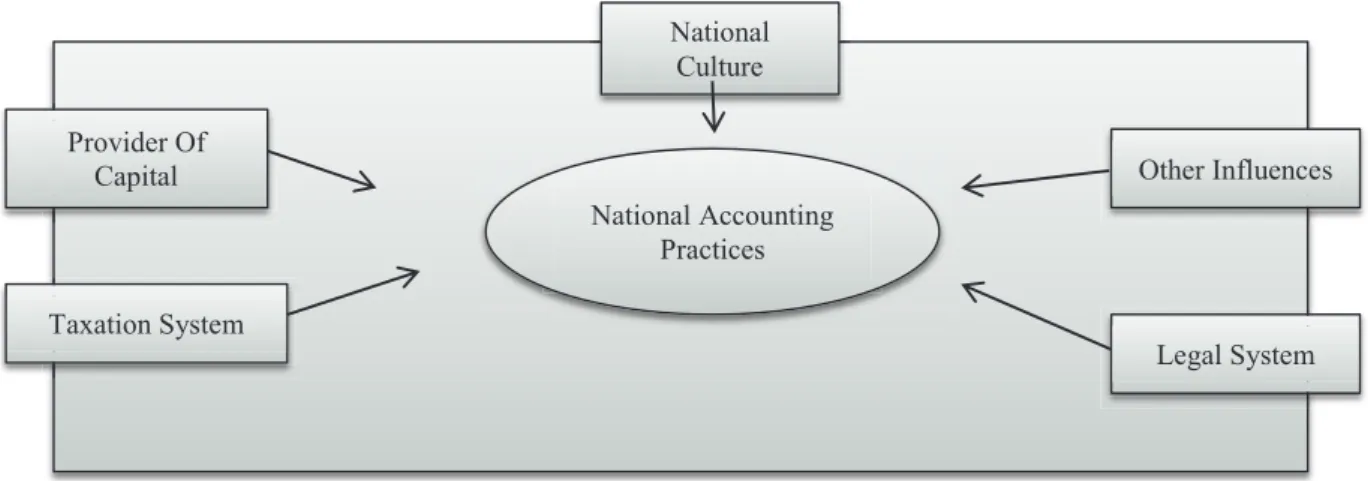
reporting. As the business requirements change in time, financial reporting needs have changed either. Accounting applications for each country differ from each other because of the economic, political, cultural and social features. These differences are collected under four headings. First, determination of the accounting practices by legislation or professional bodies; second, uniform or flexible accounting practices; third, prudence and optimism in evaluation; fourth, transparency and confidentiality in the disclosure of the information (Karapınar, Zaif Ayıkoğlu and Bayırlı, 2008; Çankaya and Aydoğan, 2008). However, latest studies in recent years have shown that the differences in accounting standards between the countries is about to reduce with the changes they made in their accounting applications in according with the International Financial Reporting Standards (IFRSs) (Başpınar, 2004). The causes of the differences in accounting practices can also be seen in the graph shown below (Fritz ve Lämmle, 2003):
Figure 1: Causes of Differences in Accounting Practices
These differences play an important role in bringing international convergence of financial reporting standards in the last few years and primarily discussed by IASB (International Accounting Standards Board) which was the first board that has mentioned international accounting standards and it is also supported by European Union. “A major breakthrough came in 2002 when the European Union (EU) adopted legislation that requires listed companies in Europe to apply IFRS in their consolidated financial statements. The legislation came into effect in 2005 and applies to more than 8,000 companies in 30 countries.” The main reason of this convergence is to provide a worldwide comparability and consistency in financial reporting. As a result, a need has emerged for the global accounting standards. According to one estimate, about 80 countries required their listed companies to apply IFRS in preparing and presenting financial statements in 2008 (Mirza, Holt ve Orrell, 2008; Terzi, 2009). By now, approximately 130 countries has adopted IFRS as the global accounting standards and their jurisdictions have publicly stated that IFRS should be the global accounting standards (Use of IFRS Around the World: What We Have Learned So Far, 2014: 3). The steps that were taken in the area of financial reporting focus on making better predictions and eliminating uncertainty of the future.
2.The Need Of Accounting Standards And Its Importance
The expansion of business activities among countries has led to the emergence of different accounting practices (Güleryüz, 2014). Today’s accounting systems vary on measurement methods, information disclosure practices and audit practices and its methods (Ağca ve Aktaş, 2007). The aim of creating accounting standards is to eliminate the differences in accounting practices, to provide uniformity in accounting principles, to prevent shareholders taking wrong decisions related with the business, to increase efficiency in independent audit firms and to create an internatinally common language during rhe presentation-production of financial information (Eroğlu, 2010). The increase of the multinational companies and globalization of the capital markets (Güney vd., 2012) led to use
National Accounting Practices National Culture Other Influences Legal System Taxation System Provider Of Capital
globally accepted financial reporting standards with high quality and achieving this purpose will bring these benefits
that are listed below (İbiş and Özkan, 2006):
x Additional costs arising from different accounting practices will be eliminated in terms of companies,
x The need to correct for the consolidated financial statements of the enterprises that either has an oversea subsidiary or subsidiary of a foreign parent company will be eliminated,
x Higher interest costs will be reduced due to the risks of investment in terms of investors and lenders,
x The necessity for the conversion of the required financial statements to apply the relevant country will be reduced for companies that aim to borrow or raise funds from international capital markets,
x The consolidation of the financial statements of multinational companies will provide benefits at evaluating the performance of the international activities,
x A major obstacle will be removed in efforts to create economic cooperation,
x Today, many multinational companies which are the audit firms themselves are responsible for the expansion of international standards and the ease of auditing the multinational corporations will also make it easier to transfer the staff (Çiftçi and Erserim, 2008).
Implementation of accounting standards is very important for businesses. This importance can be summarized as follows (Güleryüz, 2014):
x Financial reporting can be used as a good tool for the implementation of corporate governance principles. If all groups related to financial reporting informed correctly, both internal and external conflicts of interest will be avoided and protection of minority rights will be ensured (Pamukçub, 2012).
x It helps to compare the financial performance of the business on the same basis at different periods and depending on the results of this comparison it helps to take accurate decisions on matters that are vital for businesses.
x It helps to make it easier to analyze quarterly business management as well as helping to interpret correctly based on the comparison of the other companies’ financial performance in the same industry (Güleryüz, 2014).
3.The Accounting Standards in the World, Related Organizations and Integration
With the globalization of world trade, accounting systems of all countries are required to use a common accounting language in order to take good decisions about their investments (Güneş et al., 2012). The increase of worlwide international investment which provides understandable and comparable information to third parties is considered as an obligation and requires the association of the countries in a common denominator. These
developments have accelerated the formation of accounting standards all around the world (Eroğlu, 2010; Çiftçi and
Erserim, 2008).
Trends that occurred in better understanding of economic, social and political developments and with an appropriate prediction, a recommendation received to establish as soon as it is possible “International Accounting Standards Committee” at the 10th World Congress of Accountants, 1972 in Sydney-Australia. In 1973; ten
countries’ accounting board agreed to establish “International Accounting Standards Committee- IASC” including
Australia, Canada, France, Germany, Great Britain, Japan, Mexico, The Netherlands, Ireland and USA and they began to work on creating “International Accounting Standards- IAS” (Parlakkaya, 2004).
“In its short life, since 2001, the IASB has vastly reshaped the world map of company financial reporting. But it was the International Accounting Standards Committee (IASC), during its 27 years from 1973 to 2000, that set the stage for the IASB, which in turn emerged from the IASC” (Zeff, 2012). The main objective of establishing the IASC was to harmonize accounting standards throughout the world. In order to achieve this objective, it worked in accordance with national standard setters, particularly those in the Anglo-American countries such as Great Britain, United States of America, Canada etc. The IASC issued 41 IASs in 27 years till its revision by the IASB
(International Accounting Standards Board) in 2001 and all current IASs remain in effect. Since then the new standards issued by the IASB are known as International Financial Reporting Standards (IFRS) (Larson, 2008). The
IASB cannot force any country to use IFRS. “Adoption of IFRS requires an assessment by legislators or regulators
of the public benefit of providing high quality and transparent information to capital providers who make investment, lending and credit decisions. In most cases, assessment has resulted in adoption of IFRS in full and without modification” (Pacter, 2014).
3.1. Related Studies in the European Union
First studies related with harmonization of accounting practices began in the 1970s in the European Union (EU) (Çiftçi and Erserim, 2008). Harmonization of accounting practices in the European Union have been legalised
through directives (Eroğlu, 2010). For this purpose, member states are obliged to incorporate into their legal systems
the principles that set out in the fourth, seventh and eighth directive which were published under the title of the “Company Law Directives” (Çiftçi and Erserim, 2008). With the publication of The Fourth EU Directive in 1978, The Seventh EU Directive in 1983 and with the change of European accounting strategy in 1990, harmonization in the European Union has come to the fore with more active role in the international process (Blake et al., 1998). The Fourth EU Directive published in 1978 involves the contents of the financial statements, the presentation of it, the measurement and evaluation of the financial information contained in the financial statements. The Seventh EU Directive published in 1983 introduced a new approach to European accounting practices and has organized the principles of consolidation (Akman, 2009).
With the reasons like recognition of elective rights to member states on many issues, with developments in the economy and financial markets etc. has begun the lack of such directives to be felt (Çiftçi and Erserim, 2008). The opinion of insufficiency of the directives in the EU has been officially recognized with a document which was published in 1995 by the European Commission (Sakin, 2003). An agreement made between IOSCO and IASC in 1995, the European Commission has agreed to support IASC’s initiative and the proposal to study on EU accounting requirements in connection with IAS. Following these developments, the European Commission has taken the decision to create the European Accounting Standards in 1995 (Haskins et al.,2000 in Çankaya, 2007). The main effect related with accounting standards came in 2002 when the EU implemented the legislation that necessitates listed companies in Europe to apply IFRS in their consolidated financial statements by 2008 (Mirza, Holt ve Orrell, 2008). “As a minimum, the Regulation requires EU companies whose securities are admitted to trading on a regulated market of any member state (publicly traded companies) from 2005 to prepare their consolidated accounts on the basis of International Accounting (Financial Reporting) Standards (IASs/IFRSs) issued by the International Accounting Standards. This requires member states to review their differential reporting frameworks and to decide on the scope of application of IASs/IFRSs” (Eierle, 2005).
Technical deficiency of the EU directives adversely affected the EU member states in their efforts to adapt accounting standards. Harmonization efforts became difficult due to the failure of transferring related directives to national accounting regulations in due time by the member states. In addition to that, the differences among member states’ national accounting standards and related structures that determine standards made harmonization efforts harder (Güney et al., 2012). Therefore, the 4th directive that is in force since 1978 and the 7th directive for consolidated financial statements that is in force since 1983 was combined and converted into a single accounting
directive named “EU Directive: 2013/34/EU- Financial Reporting Requirements For Companies” released on the
26th June 2013 (Demir and Bahadır, 2014).
Since IASs/IFRSs follow mainly an Anglo-Saxon accounting approach (Haller & Walton, 2003, in Eirle, 2005: 280), “countries with a Continental European accounting model (such as Germany) are especially challenged. Restricting the application of IASs/IFRSs to consolidated accounts of specific business entities would lead to a clash of two very different accounting models within one country, which would for many member states imply a completely new dimension of differential reporting” ( Eierle, 2005: 280). IASB has also not remained insensitive to the widespread understanding that costly and cumbersome processes in the EU are unnecessary for small and medium-sized enterprises. Hence in 2012 it has decided to revise IFRS for SMEs which was first issued in 2009
3.2. Related Studies in USA
In the U.S. the valid system generating the accounting standards is based on a combination of private and public regulations. The main regulation related with the accounting standards takes its place within the Securities Act of 1933 and the Security Exchange Act of 1934 that were codified as a reaction to the Great Depression of 1929. The Securities Exchange Commission (SEC) was founded to implement the Act of 1933 and the Security Exchange Act of 1934 provided the SEC authorization of constituting the regulations related to financial reporting represented by both acts. Since its foundation the SEC has generally restricted its role in setting accounting standards to the functions of auditing and oversight. On the other hand the comission published documents named "Accounting Series Releases" and "Staff Accounting Bulletins" on accounting issues. Additionally the SEC has permitted private regulative establishments to be effective in setting the rules for accounting and independent audit. The most important one among those was American Institute of Certified Public Accountants (AICPA) (Başpınar, 2004).
The developments through the process generating accounting standards in the U.S. can be examined by dividing into three period regarding regulative bodies to be effective. In the first period covering the years between 1939-1959 the AlCPA's Committee on Accounting Procedure (CAP) was influential. Then in the second period (1939-1959- (1959-1973) the Accounting Principles Board became the actual actor. In the last period the Financial Accounting Standards Board (FASB) that has undertaken the function of setting accounting standards since its establishment in
1973 has been the valid organization (Başpınar, 2004).
There is a lack of a specific standards or a set of standards that is developed for Small and Medium Enterprises. Besides the fact that only the companies subjected to the SEC are obligated to disclosure the financial statements – though in the EU all the companies with share capital are required to publish financial statements- demonstrates that
transferring standards into domestic law would not be as easy as it is expected (Çelik, 2009 in Bayraktaroğlu, 2012).
In November 2007, the SEC was allowed to prepare financial statements of foreign companies according to IFRS published by IASB without involving the IFRS and US GAAP agreement. This new rule is valid for financial
statements which ended on 15th November 2007 or cover the period after this date (Deloitte UFRS Cep Kitapçığı,
2008). “On November 2008; Canada, United States and Mexico announced that they would adopt IFRSs for all listed entities by 2011, 2014 and 2012” (Barbu and Baker, 2010).
Norwalk Agreement (2002) guaranteed eliminating the differences between IAS/IFRS and US GAAP; generating solutions for possible future problems relevant with accounting issues; and the development of high quality and harmonized accounting standards to be used in national and international financial reporting. This agreement represents a historical milestone with regards to global accounting practices (Aksoy, 2005; Bayraktaroğlu, 2012). The agreement mentioned above was updated on 27th February 2007, while developing qualified and widespread accounting standards to be used in world capital markets was embraced as a common purpose (Çiftçi and Erserim, 2008).
4.Financial Reporting In Turkey
It can be said that the accounting rules in Turkey have developed as a principle of law primarily under the influence of France, and then of Germany, and have been included in Mainland Europe tradition. The facts that the essence of Turkish Code of Commerce attaches importance to commercial relations rather than making regulations with relation to accounting, that the Code does not include accounting principles, and that the Tax Procedural Law was prepared by taking the interests of the state into account have not allowed the accounting and accounting law to
make the desired progress (Altıntaş, 2011).
First studies related to the establishment of national accounting standards in Turkey started after Expert Accountants Association of Turkey (TMUD) translated international accounting standards into Turkish and
published such standards. However, such studies could not go beyond the scope of a scientific study (Karapınar,
2000).
In terms of the change in basic economic preferences in Turkey, the year 1980 is an important milestone, because with resolutions dated 24 January 1980, a liberal Turkey open to the external world was preferred instead of “import substitution” model. It was aimed to pave the way for private sector and entrepreneurship and thus to reduce the
share of state in economy, and the ongoing “Statist Policy” was restricted. Incentive practices towards facilitation of foreign capital inflow and foreign capital were put into effect (Öztürk, 2014).
Such economic change and transformation have called forth the requirements for Turkish companies to open to external world and to provide credit from abroad. Such requirements have necessitated the Turkish companies to comply with international standards (Güney et al., 2012).
Effect of globalisation and activities regarding the process of membership in European Union have entailed preparation of national accounting standards in compliance with IAS\IFRS in Turkey. Turkish Accounting and Auditing Standards Board, established in 1994 for the first time, have carried out various studies in order to establish standards in compliance with IAS/IFRS. Such studies can be specified as follows: issuance and implementation of Regulations on Accounting System Application by BRSA (Banking Regulation and Supervision Agency), issuance of Serial: XI No: 25 Communiqué by Capital Market Board and issuance of Turkish Accounting Standards, in full compliance with International Accounting and Financial Reporting Standards, by Turkish Accounting Standards
Board (TASB) (Koç Yalkın et al., 2006). Such regulations in relation to financial reporting in fragmentary form by
means of different laws and by different authorities have been an issue of criticism in ROSC Report (ROSC Report, 2007: 4). Such fragmentary structure is observed in determination of accounting standards as well as following up compliance with the standards and supervising implementation. Regulatory bodies responsible for the enforcement of accounting standards in their own area of jurisdiction are as follows: Ministry of Finance Revenue Administration for Tax Procedural Law; BRSA for banking and other financial institution regulations; Capital Market Board for publicly traded companies; and the Treasury for insurance companies. Union of Chambers of Certified Public Accountants and Sworn-in Public Accountants of Turkey (TURMOB) has enjoined its members to control the implementation of related accounting standards in companies they audit, within the framework of standards of professional ethics (ROSC Report, 2007).
It is known that there is a trend in Turkey towards dealing with international accounting standards entirely, in parallel with the trend in the world, in regulations made in order to ensure compliance with international accounting standards by various authorities, primarily Capital Market Board, BRSA and TASB (Çiftçi and Erserim, 2012). To this end, Public Oversight Accounting and Auditing Standards Authority was established and put into service under Decree Law no. 660, and the related power has been centralised. In the related Decree, the objective of Public Oversight Authority (POA) has been defined as follows: “to establish and issue Turkish Accounting Standards in compliance with international standards; to ensure unity in implementation in independent auditing, the required reliance and quality; to determine auditing standards, to authorise independent auditors and independent auditing organisations; to audit activities of such organisations and to ensure public oversight in the field of independent auditing” (www.kgk.gov.tr).
4.1.Legislation Related To Financial Reporting In Turkey
4.1.1.Turkish Code of Commerce
In Turkey, Turkish Code of Commerce no. 6762 entered into force in 1957. Although the Code was prepared with inspiration partly by German Law and Swiss Law, it did not follow updates occurring in the foregoing legal systems. Amendments related to developments occurring in the commercial life in years could not be made in the Code, and accordingly, the Code digressed from the original law (Deloitte, 2006). In the ROSC Report, the following considerations were made in the evaluation on Turkish Code of Commerce. The Code stipulates book keeping in minimum; however, preparation and issuance of financial tables are not regulated. The Code includes provisions in relation to “auditors” (comptrollers) of incorporations. As the duty of such auditors is to audit activities of companies by controlling related transactions and accounts, the functions of such “auditors” do not correspond to independent audit of financial tables as can be understood in other fields (such as EU Company Law Directives). Moreover, there is no condition of license, competency or training for such assignments (ROSC Report, 2007).
Tax Procedural Law, with more power of sanction, has been effective in issues related to accounting due to the fact that the Turkish Code of Commerce no. 6762 did not include regulations that ensure implementation of accounting standards; accordingly, the accounting practices in our country have become tax-oriented. In the Turkish Code of Commerce no. 6102, enacted in 2011, attributions are made towards TAS/TFRS (Turkish Accounting
Standards/Turkish Financial Reporting Standards) in the fields related to accounting, and establishments are directed towards TAS/TFRS practices. With the enforcement of Turkish Code of Commerce no. 6102, obligatory power of
laws in implementation of standards has increased (Gençoğlu and Ertan, 2012).
Under the new Turkish Code of Commerce, related establishments are obliged to strictly comply with Turkish Accounting Standards –published by Public Oversight Authority in full compliance with International Financial Reporting Standards– as well as with the interpretations which are an integral part of such standards in the preparation of several and consolidated financial tables. The objective of such obligation includes ensuring unity in the practice and validating financial tables in the international markets (Bilen et al., 2014). In other words, the objective is to ensure comparison of financial tables prepared according to TAS with the financial tables prepared
according to IFRS, and adoption of financial data prepared according to TAS in international markets (Haftacı and
Badem, 2011). In this regard, the new Turkish Code of Commerce puts an end to the practice of regulating book keeping, accounting and financial reporting by Tax Procedural Law, Accounting System based on Unified Accounting System and Turkish Code of Commerce as the current practice in such fields; and regulates the Code to unite the whole legal framework mentioned above (Akgün, 2012). However, tax based regulations included in other laws should be revised in order to ensure benefits of the Code and international unity.
In the New Turkish Code of Commerce no. 6102, book keeping according to Turkish Accounting Standards (TAS) has been included; however, with the New Amended Turkish Code of Commerce, regulations related to book keeping according to TAS were excluded and book keeping according to Tax Procedural Law was stipulated. However, there was no amendment with respect to the preparation of period-end financial tables, to be submitted to
General Assembly, according to TAS (Yeni TTK Yürürlükte Son Değişiklikler, 2012).
One of the important regulations made under Turkish Code of Commerce no. 6102 is related to valuation provisions, because valuation provisions were not clear and integrated in the Turkish Code of Commerce no. 6762, while valuation criteria have been based on TAS in the Turkish Code of Commerce no. 6102. Fixed and current assets are evaluated in accordance with the criteria stipulated by TAS. The same standards are applied for debts and other items (Demir, 2011).
Another important regulation brought by the Code no. 6102 is the independent audit for stock corporations. Determination of companies subject to auditing is made according to company scales under the Turkish Code of Commerce, while the power of determination of such companies has been granted to Council of Ministers in Code no. 6335, which makes amendment in Code no. 6102. Analyzing based on the first criteria specified in the Council of Ministers resolution, only 384 of the first 500 companies of Turkey are subject to auditing according to the data of Istanbul Chamber of Industry (ISO), while we look at the Social Security Institution's (SGK) data on companies employing 500 and more insured employees, this number is only 1018 as of October 2012. From this point forth, the Turkish Code of Commerce, having great expectations in terms of the number of companies subject to independent auditing, has provided inclusion of only 1000-1500 companies in independent auditing mechanism (Karakoç, 2013). With its decision no. 2014/5973, the Council of Ministers determined the criteria related to the companies to be subject to independent auditing in 2014 (Official Gazette, 14.03.2014: 28941). Although the totals of assets and number of employees reduced by half when compared to the previous year, it is estimated that 2.500-2.700 companies will be subject to independent auditing in total.
According to the Resolution of Public Oversight Authority with relation to the Scope of TAS Application, published in the Official Gazette dated 26.08.2014, it has been decided that; companies subject to Capital Market Law and companies considered as publicly traded by the Capital Market Law and carrying out at least two of the following:
• Whose total assets amount fifteen million Turkish Liras or more
• Whose annual net sales revenue amount twenty million Turkish Liras or more • Whose number of employees is fifty or more
Companies operating within the scope of Banking Law, Insurance Law, Personal Pension Savings and Investment System Law, and authorized establishments allowed to carry out activities in Borsa Istanbul markets, precious metals intermediary institutions, incorporated companies that are active in the manufacturing or trading of precious metals,
• are subject to the application of Turkish Accounting Standards for the preparation of several and consolidated financial tables related to account periods on 1/1/2014 and afterwards; the companies other than the above mentioned ones may optionally apply such standards (Official Gazette, 26.08.2014: 29100).
Nevertheless, aiming a transparent and institutional commercial order with the New Turkish Code of Commerce and including provisions related to corporate governance, effective auditing and risk management in order to comply with EU and Basel II regulations can be accepted as the beginning of a different period in terms of commercial life and business world of our country (Aygören and Kurtcebe, 2010).
The Turkish Code of Commerce, adopted in 2011 and entered into force on 1 June 2012 in our country, included the group companies within the scope; brought provisions complying with international standards with relation to auditing of stock corporations; established a structure to promote opening such companies to public; and included regulations to ensure taking of significant steps towards the protection of investors (Ergincan and Yayla, 2013).
4.1.2.Tax Procedural Law
The most important one of basic laws steering the accounting practices in Turkey is the Tax Procedural Law, adopted in 1961 and still used. In the Law, general regulations were made with relation to accounting, including declaration of starting and quitting employment, the persons to keep the books, the type of books, cases of liquidation and bankruptcy, taking inventory and forming balance sheet, depreciation methods and valuation methods. The authority to make regulations with relation to foregoing transactions was granted to the Ministry of Finance (Tax Procedural Law, Duplicated Entry 257).
In our country, practices related to accounting have been directed by the Tax Procedural Law as there was no detailed regulation on accounting in the Turkish Code of Commerce applied until 2011. Due to the facts that the Law included detailed valuation parameters related to determination of tax base as well as provisions regarding accounting records, documents and financial tables to be prepared by the establishments, and that certain penal sanctions were stipulated in case of incompliance with such provisions, accounting practices were carried out within the framework of tax legislation (Gençoğlu and Ertan: 12-13).
In Turkey, there are different regulations with relation to the parameters used in determination of money equivalent of assets or obligations during valuation process. We can specify these regulations as the regulations included in Turkish Accounting Standards Board, Capital Market Board, BRSA and Turkish Tax Legislation (Tokay and Deran, 2008). In Tax Procedural Law, the valuation is carried out on the basis of following criteria: Cost Value, Fair Value, Saving Value, Value in Account, Nominal Value, Tax Value, Current Value, Value of Equal (Pamukçua, 2011). With regard to valuation, a parallelism was ensured between regulations of Turkish Code of Commerce, Capital Market Law and BRSA and the accounting standards. However, variations in valuation bases included in Tax Procedural Law have been continuing. Therefore, differences occur between financial tables prepared according to Tax legislation and financial tables prepared according to accounting standards (Pamukçua, 2011).
For instance, there is a difference between Tax Procedural Law and TAS with respect to accounting of expenses incurred in addition to the purchase price during the purchase of tangible assets. According to Tax Procedural Law, the expenditures made with relation to fixed asset purchase, except for the purchase price, can be included in cost value or can optionally be considered as an expense item. Similarly, according to TAS 23 Borrowing Costs Standards, borrowing costs related to fixed asset acquisition are capitalised until the related asset is available for the intended purpose of usage, and the expenditures made after such period are considered as expense. In Tax Procedural Law, financial expenses until the end of related period are capitalised; the financial costs related to the
following periods are either capitalised or recognised as expense (Kaya, 2007; Karataş, 2010). Another difference
related to valuation is the change made in stock valuation method in 2004 under Law no. 5024. With this change, LIFO method application has been abrogated. However, such method can be applied in the USA; accordingly, related differences make the comparison difficult for countries and increase insecurity and mistakes in investment decisions (Çankaya, 2007).
According to Article 42 of the Communiqué on Principles and Rules related to Financial Tables and Reports in Capital Market (Serial:XI, No:1), establishments subject to Capital Market Law were imposed the conditions of calculating severance payment for each financial year and allocating provision for such payments. It was also ensured that such provisions can be accounted as general administrative expense or operating expense. A regulation
related to tax laws was included, and it was stated that severance payments are a kind of expense not accepted
legally (Kaygusuzoğlu, 2010).
In a study carried out with respect to determination of revenues and related period income/loss according to Unified Accounting System and TAS 18 Revenue Standard, it was determined that significant differences occur
between such two standards in terms of period income (Kalmış and Dereköy, 2010; Kablan, 2013). In the event that
the revenue and period income/loss are determined according to Unified Accounting System, revenue and income figure become greater. This means that the taxpayer pays more tax. Such differences result from the fact that in Turkish Tax Legislation, the revenue is determined according to accrual basis.
The most important regulation in Tax Procedural Law in terms of financial reporting is the transition into useful life application in depreciation of fixed assets. However, determination of useful life by Ministry of Finance creates difference with the international application, because it is stated in the standard that the useful life should be determined by the establishment by considering certain factors and should be reviewed in every period (Akgül, 2005).
As it can be seen in the abovementioned statements, in order to make international comparison of financial tables in a healthy manner, it is required to make changes primarily in Tax Procedural Law and other tax laws in line with the international regulations.
4.1.3.Capital Market Law
In Turkey, an outward-oriented economic model was grounded on in 1980s, and accordingly the Bill on Regulation and Supervision of Capital Market and the Report of Budget – Planning Commission were prepared on March 20, 1982, and the Reasons requiring Regulation of Capital Market have been listed as follows (Capital Market Board Bill):
x Ensuring creation and safe operation of capital market,
x Eliminating long-term and burdensome procedures of Turkish Code of Commerce, prepared under the influence of Mainland Europe law, in terms of public offering of incorporations,
x Withdrawing the savings into capital market and submitting for the use of economic development, and taking the companies public in terms of capital and accordingly generalizing the base of ownership,
x Regulating and supervising public offering and sale of every kind of security,
x Ensuring complete and truthful declaration of information related to securities offered to the public,
x Establishing an institution which can effectively audit the capital market,
x Creating an environment suitable for operation of securities.
On the abovementioned grounds, the Capital Market Law no. 2499 was adopted and entered into force on 28.07.1981 (Capital Market Board Bill). Therefore, it was stipulated that establishments subject to Capital Market Law are obliged to prepare their accounting, financial tables and reporting standards in accordance with generally accepted accounting concepts, principles and standards, and they are also obliged to make their financial tables be analysed by independent auditing institutions in terms of accuracy and correctness of related information, and to get a report in this regard. Moreover, it was also regulated that the independent auditing institutions are legally liable for the loss to occur due to incorrect and misleading information and considerations included in the reports that they prepare with relation to the audited financial tables and reports (Capital Market Board Bill).
To this end, Capital Market Board stated in the communiqué issued in 1987 that the independent auditing would be made by considering related legislative provisions and international standards (Sermaye Piyasasındaki Bağımsız
Dış Denetleme Hakkında Yönetmelik). For this purpose, the following were determined with CMB's Communiqué
No: 1 Serial XI published on 29 January 1989 (Tılhaslı, 2001):
x Basic Concepts of Accounting
x Application Standards related to Financial Tables
x Forms and Principles related to Financial Tables
According to Communiqué No:22 Serial: X issued by Capital Market Board types of companies subject to obligatory independent auditing are as follows (Bozdemir, 2013):
x Companies subject to legislation of Capital Market Law,
x Companies subject to observation of BRSA (Participation Banks, Factoring Companies, Financial Leasing Companies),
x Insurance and Reinsurance Companies, Personal Pension Companies, Investment funds, Housing Finance funds,
x Companies included in the scope of Energy Market Regulatory Authority,
x Other establishments whose financial tables are required under the Law to be subject to independent auditing.
Capital Market Board, as a result of its activities, put the “Project for Full Compliance of CMB Financial Reporting Standards with International Standards” into practice. Within this framework, it prepared accounting standards complying with IFRS, issued in 2003 the “Communiqué on Accounting Standards in Capital Market” with serial XI and No:25; and put such communiqué into force with effect from the date of first interim financial tables
ending after 01.01.2005 (İbiş and Özkan, 2006).
After related communiqué, Capital Market Board issued –with respect to IAS/IFSR– “Communiqué on Principles related to Financial Reporting in Capital Market” with serial: XI, No: 29, prepared considering regulations of European Union on financial reporting and studies carried out by Turkish Accounting Standards Board. According to the regulation under such communiqué, establishments apply International Accounting/Financial Reporting Standards as adopted by European Union, and include in the footnotes that they prepared their financial tables according to respective standards. By related communiqué, Capital Market Board made fair value principle applicable in related establishments (Pamukçua, 2011). Capital Market Board, within the scope of international harmonization activities, prepared Corporate Governance Principles of Capital Market Board and published as an advisory for publicly traded companies in 2003. In 2004, with the Harmonization Declaration of Capital Market Board, publicly traded companies were enjoined to explain their level of compliance with corporate governance principles and the reasons for the non-complying issues in their activity reports. After revision of OECD Corporate Governance Principles in 2004, Capital Market Board made amendments in the principles by means of an additional regulation and published in 2005. Another important development promoting corporate governance in Turkey is the formation of Istanbul Stock Exchange Corporate Governance Index (Pamukçub, 2011).
According to ROSC Report, regulations closer to IFRS in Turkey in terms of objective are the accounting standards issued by Capital Market Board, and such standards are valid for about 600 companies that are subject to the regulations of Capital Market Board. Although Capital Market Board is sure that financial tables of exchange companies are submitted in compliance with IFRS and accordingly they provide equal importance and reliability, the ROSC team asserts that there are differences when compared to “full IFSR” and such differences may result from the following (ROSC Report, 2007):
x Delays in updating translated and “officially published” IFRS-based conditions,
x Intervention of regulators in the application of standards.
However, despite all, we should accept that a serious progress has been made in terms of international harmonization within an approximately thirty-year period in Turkish capital markets and the legislation related to such markets. The importance of such progress can be understood when both real sector and financial sector following the 2008 Global Crisis are taken into consideration.
4.1.4.The Banking Law
Important steps have been taken in terms of compliance of legal and corporate regulations in the banking field in Turkey with the changing conditions and developments in international standards. Within this framework, the Banking Law no. 4389, which entered into force in June 1999, is a significant milestone. Afterwards, with the Banking Law no. 4491 and 4672 amending Law no. 4389, Turkish Banking System has achieved a legal framework in international standards (Gediz, 2002).
Under the accounting and reporting system regulated in the Banking Law and imposed for the banks, by receiving opinion from Public Oversight Authority and organizational unions, the banks are obliged to apply the unified system in their accounting systems in accordance with the principles and procedures to be determined by the Board; to account all their transactions in true nature and in compliance with the published accounting and financial reporting standards; and to prepare their financial reports in time and accurately, in a clear, comparable and reliable manner and content to allow for meeting information needs, and suitable for auditing, analysis and interpretation. In the same law, it was also stipulated that the annual financial reports to be submitted by the banks to their general assemblies should be approved by independent auditing institutions (Banking Law, No: 5411).
Regarding international harmonization in financial reporting in Turkey, in order to achieve the target of increasing competitive power in the Ninth Development Plan covering the period between 2007 and 2013, the following strategic objectives were determined considering all fields in regulation and supervision of financial system, developing accounting and auditing standards on the basis of EU and OECD standards, making regulations to enable establishment of risk management in all financial institutions, complying with transition to Basel II as well as related EU regulations, and adopting and applying corporate governance principles (BRSA, 2006).
Towards achievement of such objectives; Regulation on Principles and Procedures related to Accounting Practices of Banks and Preservation of Documents was published and put into effect in 2006. In this regulation, principles and procedures were determined in relation to ensuring transparency and unified order in accounting and reporting systems of banks, preventing informal transactions, accounting the activities in true nature and in a healthy and reliable manner, preparing, reporting and publishing the financial tables including information about consolidated and unconsolidated financial situation, financial performances and management efficacy in time and accurately, and preserving the related documents. It was also ensured in the same regulation that recognition of accounting transactions in line with TAS is fundamental (BRSA, 2006).
After such regulations, in order to determine principles and procedures related to preparation of consolidated financial tables by banks for enabling acquisition of information about financial state and activity outputs of the banks, Communiqué on Preparation of Consolidated Financial Tables of Banks was issued in 2006. In this communiqué, it was ensured that the consolidation transactions would be carried out in accordance with TAS and consolidated financial tables would be subject to independent auditing (BRSA, 2006).
As a result of studies carried out by BRSA towards international harmonization; principles and procedures related to classification of credits, liquidity adequacy ratio, measurement and evaluation of capital adequacy of banks were reviewed, and in this regard, it was ensured to reflect changes, occurring in international financial reporting standards with relation to illiquid assets and fair value, into national regulations (BRSA, 2008).
4.2.Institutions Related to Financial Reporting in Turkey
Establishment of Commission for Reformation of Public Economic Enterprises under law no. 440 on March 21, 1964 in order to determine accounting methods and techniques to be applied for Public Economic Enterprises can be considered as an important development in terms of activities carried out in Turkey with relation to accounting and financial reporting. This commission carried out activities for standardization of accounting methods and practices for organizations included in its own field. As a result of these activities, Unified Accounting System was established and put into practice in all Public Economic Enterprises as of 1972. In addition, regulations related to transition into cost accounting were made in 1977. Accordingly, unified accounting system can be accepted as a significant development in law of accounting (Uçma, 2005). Another important study is the Standard Account Plan,
which was put into force by Capital Market Board in 1984 (Altıntaş, 2011).
Capital Market Board offered for the financial tables issued by exchange companies and intermediary institutions the alternative of application of either the Regulation complying with IFRS or the original IFRS; however, the practice of issuing financial tables of publicly traded companies other than the exchange companies in accordance with the Communiqué serial XI, No: 1 continued. (Sayar and Okur, 2007). Capital Market Board paid attention to the compliance of issued financial tables with IFRS. Developments towards compliance with accounting standards in the world and reasons such as the objective of our country to be a member of EU require our accounting law to be harmonized with EU directives and international accounting standards. It is observed that such harmonization is prioritized with the regulations made under Capital Market Board communiqués (Çiftçi and Erserim, 2012).
Ministry of Finance has been carrying out regulations related to accounting practices under article 175 and duplicated article 275 of Tax Procedural Law. However, such provisions require comprehension of tax accounting within the scope of Tax Procedural Law. Although Ministry of Finance has authority in the field of tax accounting standards, it does not provide service for public disclosure related to financial reporting. Nevertheless, it must be accepted as an important development that the Ministry of Finance has been preparing a Unified Accounting Plan since 1994 by considering accounting, financial tables and reports issued by Capital Market Board. By this activity, the Ministry of Finance has focused its attention on tax regulations as well as process of establishing accounting standards (Uçma, 2005).
One of the important developments in Turkey in terms of international harmonization is the foundation of Turkish Accounting and Auditing Standards Board (TMUDESK) by Union of Chambers of Certified Public Accountants and Sworn-in Certified Public Accountants of Turkey (TURMOB) on 9 February 1994. The Board has adopted two basic principles in determination of National Standards. The first of them is to make necessary regulations on the basis of international accounting and auditing standards and the second one is to make necessary regulations by considering
the country structure and conditions (Yalkın, 1995). With reference to such basic principles, it has been aimed to
achieve the following targets (Başpınar, 2005):
x Developing and publishing accounting standards to be grounded on during the preparation and submission of financial tables, and ensuring general acceptance and implementation of such standards throughout the country,
x Ensuring compliance of Turkish Accounting Standards with International Accounting Standards,
x Considering structure and requirements of Turkish economy,
x Carrying out activities with relation to legislation regarding preparation and submission of financial tables and harmonisation of accounting standards and methods,
x Benefiting from accounting concepts and terms generally accepted in accounting practices of country during development of accounting standards.
Among the studies carried out in the related fields, Turkish Auditing Standards Board (TUDESK), founded by TURMOB, is included. The objective of this Board is to determine, publish and update “National Auditing Standards” in order for enabling members of professions, which are subject to Law no. 3568, to carry out their auditing activities in a disciplinary manner (Başpınar, 2005).
One of the regulations made to determine the accounting standards in Turkey in legal terms is the Turkish Accounting Standards Board established for determining national accounting standards in 1999 under Capital Market Law (Kocamaz, 2012). The mission of the Board is defined as the compliance with international accounting standards in line with the contemporary approach of Turkey towards using the same accounting standards with developed countries in the world during the process of globalization (İbiş and Özkan, 2006). The objective of TFRS 1 – Turkish Financial Reporting Standard related to Initial Application of Turkish Financial Reporting Standards is to ensure transparency for users, comparability for all periods and high quality content of financial tables and interim financial reports prepared by establishments according to TFRS for the first time (http://www.denetimnet.net/Pages/TMSK.aspx).
The most important transformation included in financial reforms constituting main elements of the programme of 2000 in Turkey is the new Banking Law dated 18 June 1999 and numbered 4389, prepared by considering EU directives and other generally accepted international practices in order to ensure safety and stability of financial system. Basic renovations brought by this Law include establishing an auditing and observation authority, which is completely independent in administrative and financial terms, changing risk follow-up and management approach, taking measures which ensure effective operation of banking sector, and forming the necessary mechanism in this regard. Accordingly, Banking Regulation and Supervision Agency (BRSA), a public entity bearing administrative and financial autonomy, was established in order to enable effective fulfilment of supervision and auditing of banks by an independent authority without any political intervention. Therefore, powers of T.R. Central Bank, Saving Deposit Insurance Fund (TMSF), Undersecretariat of Treasury and Certified Bank Examiners Board were transferred to BRSA.
Under the new Banking Law, banks are obliged to establish internal audit, risk control and management systems in compliance with the scope and structures of activities, in order to follow and control the risk incurred by the banks
as a result of their transactions. In this context, “Regulation on Internal Auditing and Risk Management Systems of
Banks” was issued on 8 February 2001 (Gündoğdu, 2003).
Banking Regulation and Supervision Agency (BRSA) grounds on international accounting standards and EU regulations with respect to regulations related to accounting (Çiftçi and Erserim, 2012). Within this scope, in 2006, the banks were necessitated to apply TAS issued by Turkish Accounting Standards Board and prepare financial tables that fully comply with TAS (ROSC Report, 2007: 14). BRSA directs accounting practices of the banks by means of regulations and communiqués issued by it. For this purpose, the “Accounting Application Regulation”, which includes regulations in parallel with IAS, was issued for compliance of financial tables of banks as of the end of 2002 with IAS; afterwards, 18 communiqués were issued on the basis of such Regulation, and the related Regulation and communiqués directed the accounting practices of the banks until 2006 when the “Regulation on Principles and Procedures related to Accounting Practices of Banks and Preservation of Documents” was issued. Under article 4 of the Regulation, it is a principle for banks to recognize their activities in accordance with TAS/TFRS (Ulusan, 2014).
However, despite all the above mentioned activities, incompliance with international standards was detected in ROSC Report. Such incompliance was criticized as they may cause manipulation of incomes (ROSC Report, 2007).
Turkey has taken important lessons from the financial crises outcropped in 2000s. Therefore, banking sector has developed rapidly, capital structures and profitability have increased and banking approaches have changed as a result of structural changes, activities related to harmonisation with international standards and effective auditing in the banks. Accordingly, transformation of the banking approach, and acting in line with social responsibility concept have resulted in the formation of more realistic and reliable financial reports (Fırat, 2013).
Besides banking sector, similar activities have been carried out in the insurance sector as well. Such activities have been executed by Undersecretariat of Treasury, Insurance Auditing Board (SDK) and Association of the Insurance and Reinsurance Companies of Turkey (TSRSB), and within this scope, Regulation of Insurance Accounting System was issued in 2004 and principle of compliance with IFRS was adopted in insurance accounting system as of 1.1.2005. Under the Regulation, all insurance companies, whether publicly traded or not, are obliged to prepare their financial tables according to Communiqué with Serial No. XI/25 of Capital Market Board until the standards related to insurance sector are published by the Undersecretariat of Treasury. By the communiqué prepared within the framework of the regulation, Insurance Accounting Plan and Prospectus was published and entered into force on 1.1.2005 (Çiftçi and Erserim, 2012).
5.New Era In Turkey: Public Oversight Accounting And Auditing Standards Authority
Scandals in the fields of accounting and auditing both in the world and in our country have led countries to take strict measures in the area of financial auditing. The most concrete example of such developments is the European Union directive no. 2006/43/EC, which asserts formation of quality, reliability and public oversight system in the field of auditing in member states.
Authorities and boards, assigned for regulating and auditing related fields in Turkey, were granted the power of regulating supervision of financial tables to be prepared in their own fields. However, such situation has resulted in the existence of a fragmentary structure in financial reporting and independent auditing areas. The requirement for establishment of a competent authority in order for regulation of such fragmentary structure and elimination of deficiencies in the field of public oversight was met by Decree on Organisation and Duties of Public Oversight, Accounting and Auditing Standards Authority dated 26/11/2011 and numbered 660. Accordingly, Public Oversight, Accounting and Auditing Standards Authority was founded to prepare and publish Turkish Accounting Standards complying with international standards, to determine auditing standards, to authorise independent auditors and independent audition organisations, to supervise activities of such auditors and organisations, and to ensure necessary confidence and quality in independent auditing by executing public oversight in the field of independent auditing (KHK, 2011: 5-6, Kamu Gözetimi, Muhasebe ve Denetim Standartları Kurumu Faaliyet Raporu 2012).
Turkish Accounting Standards Board, assigned for the preparation of accounting standards under Capital Market Law, did not hold a power of sanction towards implementation of the standards by the establishments. However the most significant issue in full compliance with IFRS includes grant of power of sanction to such authorities and training of the personnel of such institutions in the field of IFRS (Alkan, 2009). Therefore, under Turkish Code of
Commerce no. 6102, the power of establishing TAS has been granted to Public Oversight Authority and a power of sanction has been given in terms of compliance with international standards (Kamu Gözetimi, Muhasebe ve Denetim
Standartları Kurumu Faaliyet Raporu 2012: 36-37). However, this is not enough in terms of international
harmonisation, because recognition of the compliance of Turkish Accounting Standards with IFRS is possible only by full compliance with the standards included in IFRS set. International Accounting/Financial Reporting Standards published by IASB are updated or renewed in parallel with the developments experienced in economic and financial areas. In this regard, the Public Oversight Authority carries out important activities towards bringing recently-published standards and the changes in the standards simultaneously in our legislation, in order to ensure full
compliance with IFRS (Kamu Gözetimi, Muhasebe ve Denetim Standartları Kurumu Faaliyet Raporu 2012). As a
result of these activities, our establishments will be competitive, effective and reliable actors of international trade, industry, service, and finance and capital markets thanks to their financial tables prepared according to IFRS and
audited under ISA (Kamu Gözetimi, Muhasebe ve Denetim Standartları Kurumu Faaliyet Raporu, 2012).
One of the 35 chapters within the scope of negotiations of Turkey, which initiated full membership negotiations with European Union in 2005, was “Company Law.” This chapter was submitted for negotiation on 17.06.2008. Company Law of EU is composed of two main constituents; companies and the legislation related to accounting and auditing. Upon the establishment of Public Oversight Authority under Turkish Code of Commerce no. 6102 and Decree no. 660, nearly all of closing criteria of Company Law Chapter has been fulfilled within EU negotiations (Yavuz, 2011). Hence, such situation has been stated as shown marked improvement in the progress report of 2012
(Kamu Gözetimi, Muhasebe ve Denetim Standartları Kurumu Faaliyet Raporu, 2012).
Despite all of these positive experiences, certain deviations have occurred in the objective of establishing a single authorised institution for formation of standards and auditing as targeted in Decree no. 660. Capital Market Board has achieved the power again with relation to independent auditing and auditors by articles 14, 15, 62, 63 and 64 of the Law no. 6362 in independent auditing of companies operating in its own field. BRSA was authorised under article 15, 24, 33, 16, 19, 40 of the Law no. 5411. The conclusion drawn from such regulations is that each institution attains the power related to the independent auditing of companies included in their own activity fields. On the other hand, determination of the scope of companies to be subject to independent auditing by Decree of Council of Ministers should be considered as a deviation from the establishment objective of the Authority (Öncü, 2013).
6.General Assessments And Conclusions
In Turkey, studies related with financial reporting and accounting first issued 1950s and it has been growing rapidly since the 1970s. Despite all of these efforts made, the use of multi-accounting system has not been abandoned literally. One of the main reasons of this problem is to use financial reports in order to determine the tax
lien not to obtain information from it (Gençoğlu and Ertan, 2012). For instance; a bank in Turkey uses the
principles and uniform chart of accounts determined by “General Communiqué on Accounting System Implementation (GCASI) with Serial No 1” in order to give the balance-sheet to the tax office as a taxpayer, uses the “CMB Accounting Standards” to give the balance-sheet to CMB as a brokerage house, uses “ the BRSA Accounting Standards” to give the balance sheet to Banking Regulation And Supervision Agency (BRSA) as a bank and finally uses the “IFRS” to prepare the balance sheet in order to receive a possible international loan from a related credit institution (Başpınar, 2004).
The communiqués and regulations promulgated by the CMB and BRSA with regards to financial reporting can be considered as important applications that direct the financial reporting in Turkey. In some communiqués of CMB, standards has been based on the form that issued by the EU not on the form that published by the IASB. From this aspect, it can clearly be said that financial reporting in Turkey is influenced by the EU implementations (Terzi, 2009: 22-23). In a study which conducted the impact of the culture on accounting applications in Turkey, it has been interpreted that the situation of the EU membership in Turkey’s accounting applications has reduced the cultural effect on accounting applications (Askary et al., 2008).
Studies related with financial reporting which were held in Turkey have demonstrated that professional accountants and employers have a positive thought with regards to the IFRS. In another study related with the IFRS for SMEs, it is thought that the implementation of those standards will provide opportunities for SMEs to prepare
accurate and transparent financial reports in accordance with international implementations in terms of institutionalization and cooperation with foreign companies (Arsoy and Bora, 2012).
With regard to international financial reporting in Turkey, a study conducted by the ROSC team has reached the following conclusions. In this study, adaptation assessments has carrie d out between twelve set of financial statements prepared for the year of 2003 in accordance with IFRS and another twelve set of financial statements prepared in accordance with Turkish accounting requirements. It is expressed that the quality of IFRS financial statements is inconsistent even in cases with an unlimited audit opinion. Another expression in the study has made on non-compliance with certain standards for many companies and this lack of harmony may have resulted from misunderstanding on the IFRS. Detected inconsistencies are listed as follows (ROSC, 2007):
x Overstatement of assets and profits,
x Appreciation of financial assets with cost value not with fair value,
x Understatement of benefit provisions provided for employees,
x Using cliché comments,
x Lack of comparability of company’s operating performance due to incorrect classification of cash flows.
The criticisms made by the ROSC team based on the financial statements of 2003 that were pointing to an early stage of financial reporting in Turkey, should be evaluated cautiously. Because the first inflation adjustment in Turkey was applied to the financial statements of 2003, therefore the risk of error might be higher in these financial statements.
Indeed, in one study, the accounting systems were examined for TURKCELL companies in terms of conservatism-optimism and privacy-transparency by comparing the net profit and total assets items of financial statements that were prepared in accordance with Turkish GAAP and the net profit and total assets items of financial statements that were published on New York Stock Exchange in accordance with US GAAP. Analysis of the results has been shown that the accounting policies related with net profit and total assets applied in Turkey are coherent with US GAAP and it also has shown that the conservatism is not a big issue (Çankaya and Aydoğan, 2008). Yet in an another study, using the net profit of Turkcell Inc.’s year-end financial reports of 2005 that was disclosed in accordance with IFRS and CMB regulations has subjected to conservatism index and the index value was calculated greater than 1. This result indicates that the CMB legislation which is in force in Turkey has a more protective structure. In the same study, the emergence of closer figures that resulted from comparing the results of net profits shows that the harmonization efforts of the CMB legislation with IFRS has significant progress on reducing differences (Çankaya, 2007).
As a summary, the studies related with harmonization of financial reporting in Turkey can be listed in chronological order as follows:
1957: Promulgation of the Turkish Commercial Code 1961: Promulgation of the Tax Procedures Law No. 213
1972: Developing Uniform Accounting System for Public Economic Enterprises,
1981: “Capital Market Law” and the establishment of “the Capital Markets Board” according to Capital Market Law,
1987: Applying to the European Union for full membership,
1989: The Law 3568 on Certified Public Accountancy and Sworn-in Certified Public Accountancy and the establishment of the “Union of Certified Public Accountants and Sworn-in Certified Public Accountants of Turkey (TÜRMOB)”,
1993: Promulgation of “the General Communiqué on Accounting System Implementation (GCASI)” by the Ministry of Finance,
1994: Transition to “Uniform Accounting System” and the establishment of “Turkish Accounting and Auditing Standards Board (TAASB)” founded by TÜRMOB,
1999: Establishing the “Turkish Accounting Standards Board (TASB)” based on the Capital Market Law No. 2499 and creation of “The Banking Regulation and Supervision Agency (BRSA)” based on the Banking Law No 4389,
2005: The start of accession negotiations with the EU for full membership and the beginning work for the harmonization of Turkish legislation with the EU acquis,
2006: Obligation of the Turkish Accounting Standards compliance with IFRS for banks by the BRSA,
2008: Obligation of the Turkish Accounting Standards compliance with IFRS for the insurance and reinsurance companies and private pension companies by Undersecretariat of Treasury,
2009: Obligation of the Turkish Accounting Standards compliance with IFRS for companies that their securities traded on a stock exchange, brokerage houses, portfolio management companies and their affiliated partnerships, affiliates, and business partnerships by Capital Markets Board,
2011: Adoption of “the Turkish Commercial Code No. 6102”, the determination of the implementing the Turkish Accounting Standards in compliance with IFRS for companies with share capital for the first time, and
establishment of “the Public Oversight, Accounting and Auditing Standards Authority (POA)” by the Statutory
Decree No. 660.
2012: Changes made on the Turkish Commercial Code No. 6102 with “the Amendment Law No. 6335” and promulgation of “the Amendment Law No. 6335”,
2013: Making the determination regarding the independent audit with BRSA and the transition to independent audit obligation by the new Turkish Commercial Code.
Consequently, there has been a significant improvement in studies with regard to international harmonization of financial reporting in Turkey since 1950s. Particularly, choices made in the economic field with the 24th January 1980 decisions were necessitated the international harmonization efforts. With this necessity, legal and institutional regulations were carried out for financial markets. These regulations were revised according to national and international developments and political relations and they were made convenient to produce accurate, transparent, reliable and comparable financial reports regarding international capital. Reliability related with financial reporting in Turkey was put forward with the 2008 financial crisis for both real economy and financial sector. The influence of the regulatory and supervisory bodies (CMB, BRSA, EMRA, etc.) formed after the 2001 crisis should not be underestimated in this provided confidence. As a result of this study, promulgation of the new Turkish Commercial Code and necessary implementation of the Turkish accounting Standards in compliance with IFRS for financial reporting should be evaluated as a major development. On the other side, Public Oversight, Accounting and Auditing Standards Authority (POA)’s duty is to set and issue Turkish Accounting Standards compliant with the international standards. Therefore, giving an end to develop accounting standards by different institutions can be considered as a major progress. From now on, it can be said that Turkey has entered a new period which is much more efficient than before with regards to financial reporting and international harmonization.
References
Ağca, A.; Aktaş, R. (2007). Uluslararası Muhasebe/Finansal Raporlama (IAS/IFRS) Standartları İMKB’de Yer Alan Firmaların Finansal Tablolarını Nasıl Etkiledi?, Dumlupinar University Journal of Social Sciences, No: 18, pp. 1-17.
Akgül, B. (2005). Maddi Olmayan Duran Varlıkların İtfasına İlişkin IAS 38 İle IFRS 3 Standardında Yer Alan Düzenlemeler ve Türk Vergi
Mevzuatıyla Karşılaştırılması, Journal of Accounting and Finance, Issue: 25, pp. 41-45.
Akgün, A. İ. (2012). Muhasebenin Uluslararası Harmonizasyonu ve İlke Bazlı Muhasebe Anlayışına Yöneliş, Yönetim Ve Ekonomi Dergisi, Vol: 19, No: 2, pp. 1-16.
Akman, N. (2009). Finansal Açıklama Üzerinde KültürünEtkisi: UFRS Öncesi Ve Sonrası, Başkent University, Institute of Social Sciences, Doctoral Dissertation, Ankara.
Aksoy, T. (2005). Finansal Muhasebe Ve Raporlama Standartlarında Uyumlaştırma Ve Ums/Ufrs Bazında Küresel Muhasebe Standartları Setine Yöneliş Eğilimi, Mali Çözüm Dergisi, Vol: 71, pp. 182-199.
Altıntaş, T. A. (2011). Uluslararası Muhasebe Ve Türkiye’de Muhasebe Hukuku, Sosyal Bilimler Dergisi, No: 1, pp. 162-174.
Arsoy, A. P.; Bora, T. (2012). KOBİ Muhasebe Standartlarının Gelişimi ve Türkiye Uygulaması Üzerine Bir Araştırma, Journal of Accounting and Finance, Issue: 56, pp. 17-28.
Askary, S.; Yazdifar, H.; Askarany, D. (2008). Culture And Accounting Practices In Turkey, Int. J. Accounting, Auditing and Performance Evaluation, Vol. 5, No. 1, pp. 66-88.
Aygören, H.; Kurtcebe, E. (2010). Yeni Türk TicaretKanunu’nun Bağımsız Denetim, Uluslararası Muhasebe Standartları, Uluslararası Finansal Raporlama Standartları Ve Basel II Kriterleri Yönüyle Genel Değerlendirmesi, Pamukkale Üniversitesi Sosyal Bilimler Enstitüsü Dergisi, No: 6, pp. 1-9.