Employee Wellbeing and Performance
Kieran Hart
A thesis submitted in partial fulfilment of the requirements of the University of the West of England, Bristol for the degree of Doctor of Philosophy
This research programme was carried out in collaboration with Bristol City Council
Faculty of Business and Law, University of the West of England, Bristol November 2019
I
Abstract
The association between employee wellbeing and employee performance is a focal point for researchers and local and national governments. This focus has grown rapidly since the end of the Second World War. The research concerned with this relationship is beginning to catch up with the theoretical discussions and debates surrounding the topic, which have been ongoing since Ancient Greece.
Moving beyond the research perspective, the idea that employee wellbeing affects employee performance is beginning to be widely recognised by local and national
governments, as is evidenced by the number of local workplace wellbeing charters that currently exist within the UK in addition to the national health and wellbeing charters in place.
However, the existing literature provides inconsistent results regarding the potential effect of employee wellbeing on employee performance. The purpose of this thesis is to investigate the association between employee wellbeing and employee performance using an original employee-level dataset collected across organisations implementing the Bristol City Workplace Wellbeing Charter (the Charter).
This study originated from Bristol City Council seeking to evaluate their own charter and assess the potential benefit for participating organisations. The Charter is comprised of eight standards; healthy eating, physical activity, tobacco use and cessation, alcohol and substance misuse, leadership, attendance management, health and safety and mental health and wellbeing. The Charter and these eight standards form the foundation of this study, informing the data collection criteria and methods as well as the sample of organisations participating in the study.
An in-depth analysis and review of the literature reveals numerous gaps which have shaped the core research questions of this thesis. These research questions are:
Research Question: Is there a relationship between employee wellbeing and employee performance and, if so, to what extent do employee wellbeing factors affect employee performance?
Sub Question: What impact does an organisation’s engagement with the Bristol Workplace Wellbeing Charter have on its employee’s performance and, if so, what are the policy implications?
II A major issue concerns the measurement and calibration of employee wellbeing and employee performance. Informed by the literature, this thesis grounds its analyses on three measures of employee-level performance: presenteeism, absenteeism (short and long term) and employee turnover. The thesis also extends the literature by capturing and analysing a variety of employee-level wellbeing measures including, but not restricted to, mental health, job satisfaction, engagement, flexible working, healthy eating and physical activity. An unusually comprehensive measure of wellbeing is used that combines typical Human Resource Management (HRM) policies with aspects of individual behaviour.
This thesis has a repeated cross sectional multi-level design for a sample of
organisations participating with the Charter. Design instruments include two questionnaires that capture manager and employee level data. In the absence of panel data, this approach allowed for a discussion regarding possible changes over time at participating organisations, while examining the evolving importance of managers in influencing employee wellbeing and employee performance.
Results suggest that employee wellbeing is associated with employee performance but different aspects of employee wellbeing are associated with different types of employee performance outcomes. Many employee-level behavioural factors were found to be associated with employee performance. These results suggest that health charters should incorporate a wide range of wellbeing issues to better reflect the individual nature of the concept of wellbeing. Moreover, the results suggest that future research needs to broaden its conceptualisation of employee wellbeing and employee performance to include variables that are often omitted. This would allow for more in depth and specific knowledge to be gained which could result in health interventions being better informed and more practical for practitioners.
III
Contents
Chapter 1: Introduction ... 1
1.1 Bristol City Council and the Workplace Wellbeing Charter... 1
1.2 The Debate ... 4
1.3 Employee Performance ... 7
1.4 Data and Methods ... 8
1.5 Policy Relevance ... 9
1.6 Research Questions ... 9
1.7 Structure of the thesis ... 10
Chapter 2: Literature Review ... 10
Chapter 3: Methods ... 11
Chapter 4: Data Description ... 12
Chapters 5: Empirical Chapters ... 13
Chapter 6: Discussion ... 13
Chapter 7: Conclusion ... 14
Chapter 2: Literature Review ... 15
2.1 Introduction ... 15
2.2 The Literature Review Process ... 17
2.3 History of Wellbeing and Health Interventions ... 19
2.3.1 The Ancient World... 20
2.3.2 The 17th, 18th and 19th Century ... 21
2.3.3 The 20th Century... 23
2.3.4 The Modern Day ... 25
2.3.5 Conclusion ... 27
2.4 What Has Been Found? ... 27
2.4.1 Causality ... 35
2.4.1.1 How Can Causality be measured? ... 38
2.4.2 Sectors ... 46
2.4.3 The Role of Management ... 47
2.5 Possible reasons why these issues are present ... 50
2.6 Conclusion ... 56
Chapter 3: Methods ... 61
3.1 Introduction ... 61
3.2 Methodological Approach ... 62
3.2.1 The Chosen Approach – A Holistic Perspective ... 62
IV
3.3.1 Statistical Techniques ... 66
3.3.1.1 Factor Analysis ... 66
3.3.1.2 Ordered Probit Regression ... 66
3.3.1.3 Logit Regression ... 67
3.3.1.4 Negative Binomial Regression ... 67
3.4 Research Design ... 68
3.4.1 Developing the Survey Instruments ... 68
3.4.2 Questionnaire Design ... 70
3.4.2.1 Employee Questionnaire ... 71
3.4.2.2 Managers Questionnaire ... 72
3.5 Pilot ... 73
3.6 Ethical Approval ... 80
3.6.1 The Rationales for Review and Approval ... 80
3.6.2 Feedback and Response ... 82
3.7 Access and Recruitment of Participants ... 85
3.8 Choosing What Size of Organisation to Include ... 87
3.8.1 Large Organisations Only ... 87
3.8.2 All Employees versus a Targeted Sample ... 90
3.9 Data Administration and Collection Methods... 91
3.9.1 Data Administration ... 91
3.9.2 Data Collection Methods ... 92
3.9.3 Methods Discussed Prior to the Data Collection Periods ... 95
3.9.4 Chosen Data Collection Method ... 95
3.10 Sampling Procedure ... 96
3.10.1 Sampling Method ... 96
3.10.2 Selection Bias ... 98
3.10.2.1 Factors Determining Selection Bias ... 100
3.10.2.2 Organisation Level Factors ... 100
3.10.2.3 Employee Level Factors ... 101
3.10.2.4 Can Selection Bias be controlled?... 102
3.10.3 Final Sample ... 103
3.11 Conclusion ... 104
Chapter 4: Descriptive Statistics ... 107
4.1 Introduction ... 107
4.2 Data Management Prior to Modelling ... 108
V
4.3 Demographic Information ... 113
4.4 Healthy Eating ... 114
4.5 Physical Activity ... 117
4.6 Tobacco Use Cessation ... 119
4.7 Alcohol and Substance Misuse ... 123
4.8 Leadership ... 125
4.9 Flexibility ... 128
4.10 Training and Development... 130
4.11 Absence Management ... 132
4.12 Health and Safety ... 136
4.13 Job Satisfaction ... 137
4.14 Engagement and Organisational Citizenship Behaviour (OCB) ... 139
4.15 Commitment to Employer ... 140
4.16 Mental Health and Wellbeing ... 141
4.17 Performance Management – Manager’s Questionnaire ... 145
4.18 Factor Analysis ... 146 4.19 Conclusion ... 149 Chapter 5: Results ... 151 5.1 Introduction ... 151 5.2 Presenteeism ... 153 5.2.1 Literature Review ... 153 5.2.2 Methods ... 157 5.2.3 Results ... 159 5.2.3.1 Factor Analysis ... 159
5.2.3.2 First Collection Period ... 162
5.2.3.3 Second Data Collection Period ... 163
5.3 Absenteeism ... 168
5.3.1 Literature Review ... 168
5.3.2 Methods ... 173
5.3.3 Results ... 176
5.3.3.1 Short Term Absenteeism ... 176
5.3.3.2 Long Term Absenteeism ... 178
5.4 Employee Turnover ... 181
5.4.1 Literature Review ... 181
5.4.2 Methods ... 187
VI 5.5 Conclusion ... 192 Chapter 6: Discussion ... 195 6.1 Introduction ... 195 6.2 Presenteeism ... 195 6.2.1 Discussion ... 195 6.2.2 Policy Implications ... 198 6.3 Absenteeism ... 200 6.3.1 Discussion ... 200 6.3.2 Policy Recommendations ... 203 6.4 Employee Turnover ... 205 6.4.1 Discussion ... 205 6.4.2 Policy Recommendations ... 208
6.5 Limitations of the Study and Future Research Recommendations ... 210
6.6 Contributions to Knowledge ... 215 6.7 Conclusion ... 221 Chapter 7: Conclusion ... 226 7.1 Introduction ... 226 7.1.1 Research Questions ... 227 7.2 The Literature ... 228
7.3 What has been found? ... 231
7.3.1 Policy Implications ... 234
7.4 Contributions to Knowledge ... 236
Bibliography ... 238
Appendix A – Employee Questionnaire ... 273
Appendix B – Manager’s Questionnaire ... 287
Appendix C - Company Data Sheet ... 300
Appendix D – Factor Analysis Results ... 301
Appendix E – Ethical Approval Letter ... 323
Appendix F – Descriptive Statistics ... 326
Appendix G – Full Model Results ... 341
List of Figures
Figure 1: Potential Areas of Selection Bias ... 99Figure 2. Consumption of five portions of fruit and vegetables per week, in the first data collection period... 116
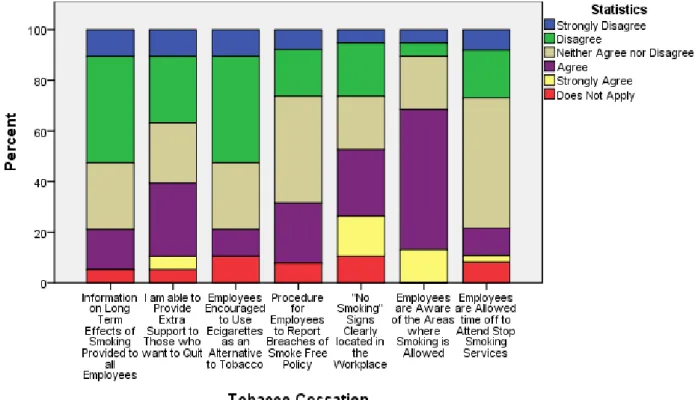
VII Figure 3. Consumption of five portions of fruit and vegetables per week, in the second data collection period... 116 Figure 4. Managers’ behaviour regarding tobacco cessation activities, in the first data
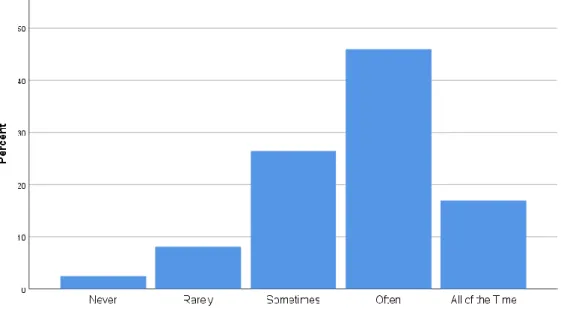
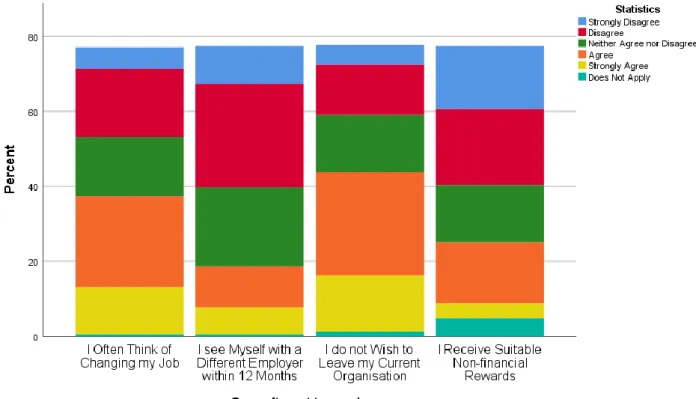
collection period... 121 Figure 5. Managers’ behaviour regarding tobacco cessation activities, in the second data collection period... 122 Figure 6. Employee perception and awareness of return to work procedures and long term health issues, in the first data collection period. ... 134 Figure 7. Employee perception and awareness of return to work procedures and long term health issues, in the second data collection period. ... 135 Figure 8. Commitment to employer in the first data collection period. ... 140 Figure 9. Commitment to employer in the second data collection period. ... 141
List of Tables
Table 3. 1: The Final Sample Breakdown based in Each Organisation based on Identifiable Respondents ... 104
Table 4. 1 An explanation of how wellbeing concepts have been defined for the employee questionnaires ... 111 Table 4. 2: An explanation of how wellbeing concepts have been defined within the
manager’s questionnaire ... 112 Table 4. 3: Final response rate for both data collection periods, with the number of manager and employee responses combined ... 113 Table 4. 4: Healthy eating descriptive statistics in the first data collection period, based on employee responses. ... 115 Table 4. 5: Relationship between physical activity support and regular exercise ... 118 Table 4. 6: Relationship between reducing stigma and offering external support to employees ... 124 Table 4. 7: Relationship between reducing stigma and awareness of link between alcohol misuse and mental health ... 124 Table 4. 8: Wellbeing issues discussed and awareness of the link between alcohol misuse and mental health ... 127 Table 4. 9: Relationship between the rate of wellbeing discussions and awareness of issues that impact employee health ... 127 Table 4. 10: Satisfaction with work and work-home life balance ... 129 Table 4. 11: Relationship between perceived support to do their job and employee satisfaction with work ... 130 Table 4. 12: relationship between being trained to have difficult conversations and the
discussion of wellbeing issues with employees ... 131 Table 4. 13: Relationship between job enjoyment and flexible working ... 138 Table 4. 14: Relationship between job enjoyment and opportunities to progress ... 138 Table 4. 15: Relationship between perceived organisation support and perceived willingness of managers to discuss mental health issues ... 142
VIII Table 4. 16: Perceived organisation support and employee comfortableness to discuss mental health issue ... 142 Table 4. 17: Perceived organisation support for mental health issue and comfortableness discussing physical health issue ... 143 Table 4. 18: The results of the factor analysis for the data collection period, as shown by comparing the number of original variables with the number of factors ... 147 Table 4. 19: The results of the factor analysis for the second collection period, as shown by comparing the number of original variables with the number of factors ... 148
Table 5. 1: General Results from the Factor Analysis in the First Data Collection Period ... 160 Table 5. 2: General Results from Factor Analysis for the Second Data Collection Period ... 161 Table 5. 3 Factor Analysis Statistics in both Time Periods for Healthy Eating ... 162 Table 5. 4: Factor Analysis Components in both Time Periods for Healthy Eating ... 162 Table 5. 5: Presenteeism Starting and Final Model for the First Data Collection Period... 163 Table 5. 6: Presenteeism Starting and Final Model for the Second Data Collection Period . 165 Table 5. 7: Short Term Absenteeism for the First Data Collection Period ... 176 Table 5. 8: Short Term Absenteeism for the Second Data Collection Period ... 177 Table 5. 9: Long Term Absenteeism for the First Data Collection Period, split by Gender . 178 Table 5. 10: Long Term Absenteeism for the Second Data Collection Period... 179 Table 5. 11: Cross-tabulation for intention to leave and actively seeking alternative
employment... 187 Table 5. 12: Cross-tabulation for intention to stay and actively seeking alternative
employment... 188 Table 5. 13: Employee Turnover Results for the First Data Collection Period ... 190 Table 5. 14: Employee Turnover Results for the Second Data Collection Period ... 191
1
C
HAPTER1:
I
NTRODUCTION1.1 BRISTOL CITY COUNCIL AND THE WORKPLACE WELLBEING CHARTER
This study was conducted in collaboration with Bristol City Council who were the main funding body of this study. Bristol City Council had begun implementing their own Workplace Wellbeing Charter (referred to as the Charter) and aimed to use this study to evaluate the Charter and help build the business case to encourage more organisations to participate in the Charter. This broad objective was the initial aim of this study, which sought to accomplish this through the use of qualitative and quantitative methods. However, the broad and far reaching nature of this aim allowed for considerable flexibility in how this was achieved, leading to the aim and scope of the study changing and being refined over time.
Several key aspects of the study changed over time to refine its direction and these mainly concerned the type of data that was to be collected as well as the approach to be taken.
Arguably the greatest change that occurred was the measurement of employee performance as the original intention was to collect data on Gross Value Added (GVA). However, this measure could not be used when conducting the econometric analysis as not all participating organisations were able to provide the required information due to concerns regarding transparency and public opinion.
Additionally, the measurement of wellbeing changed over time to include other factors of employee wellbeing. This change happened to ensure that employee wellbeing was
sufficiently captured within the data and to reduce the potential for omitted variable bias, which is a common concern within the literature and is discussed in further detail in Chapter 5. Furthermore, the scope of the study expanded to also include the role of management. This was due to the substantial amount of qualitative studies examining the role of management within the employee wellbeing and performance relationship and the lack of empirical studies analysing this relationship.
Regarding the research methodology to be taken to evaluate the Charter, as stated the original intention was to use a combination of qualitative and quantitative measures. This was an ideal approach and the original intention was to combine survey results with an interview and/or focus groups. The importance of combining these forms of data is discussed at length throughout this study but it was not possible to implement the qualitative approaches as originally intended. This was due to resource limitations concerning time and personnel as only one researcher actively worked on this study in a full time capacity. This meant there
2 was not enough time to plan, conduct and analyse the qualitative data gained as well as the quantitative data in the detail required for a mixed methods approach.
While some of these changes over time may have limited the scope and breadth of the study they also refined the study and allowed the aims and objectives to become more
focused over time. The refinement allowed for a study that met the original aim of evaluating the Charter and building an effective business case for further participation in the Charter while also discussing other important issues that contribute and build upon the current literature.
Such issues include the role of effective management within the employee wellbeing and performance relationship as well as an evaluation of the employee wellbeing and employee performance relationship when including aspects of employee wellbeing that are usually omitted from broad empirical wellbeing studies. These could be discussed ina more focused evaluation of the Charter as it is now possible to discuss the role of the Charter within a broader employee wellbeing framework, whether or not other aspects of employee wellbeing could be included in the Charter in addition to, or instead of, the current standards of the Charter and the policy implications of these findings.
The role of Bristol City Council was integral to the success of this study and played a key role in many stages of this study. This was most notable when forming the sample to be used within this study. Bristol City Council provided quick access to participating organisations in a number of ways such as providing contact information to facilitate direct contact with organisations about the study, allowing presentations at celebrations events as well as contacting organisations about the study to encourage them to participate.
Bristol City Council also helped review the data collection instruments to ensure the Charter was adequately represented and also provided funding for attendance at conferences and events to help combine the academic and real world knowledge of the topic. Bristol City Council also helped facilitate the pilot process. This all shows that Bristol City Council did more than just fund this study and actively contributed towards the study at critical phases and immeasurably helped towards the success of this study.
Bristol City Council’s Workplace Wellbeing Charter is now a nationally recognised and endorsed charter. Originally, the Charter was produced in Liverpool in 2009 and later
adopted and altered by a variety of city councils, with Bristol City Council being one of these local councils. When first adopted by Bristol City Council the Charter was not in place on a national scale, whereas Wales and Scotland both had a national charter in place. The localised nature of the Charter allowed local councils some flexibility in their adoption of the Charter
3 and were able to augment it to suit their own needs. Since the Charter became a national Charter in 2014 this has changed with a nationally agreed set of standards being applied.
The Charter is made up of eight standards including: 1. Leadership
2. Attendance management, 3. Physical activity,
4. Healthy eating,
5. Tobacco use cessation,
6. Alcohol and substance misuse, 7. Health and safety
8. Mental health and wellbeing.
Three of these standards are core standards (leadership, attendance management and health and safety) meaning any organisation participating in the organisation must seek to attain accreditation for these three core standards at the commitment level of accreditation. It does not appear that this core requirement has been maintained when the Charter moved to a national charter, however it is noteworthy as organisations participating in this study are likely to have been required to meet this minimum requirement. Beyond these core standards, participating organisations are free to choose which of the remaining five standards they wish to pursue meaning organisations can be accredited on between three and eight standards.
The standards are nationally agreed and are measured on 3 scales; commitment,
achievement and excellence. Commitment means the organisation has health and safety and wellbeing policies in place, achievement means the organisation are actively encouraging employees to improve their lifestyles and have some interventions to identify serious health issues and excellence means the organisation is fully engaged in wellbeing and there are a number of intervention programmes and mechanisms in place.
Progression from one level of accreditation to another is based on four options; not applicable, not met, partially met and fully met. An organisation can only progress from one level of accreditation to the next, i.e. from commitment to achievement, when they have been deemed to have fully met the requirements of that standard. This means the organisation must be able to provide documented evidence and practical examples that they have fully met or exceeded every aspect of the chosen standard.
At the time of this study’s inception the Charter in Bristol included 27 organisations, however according to data provided by Bristol City Council, there were 18 Charter accredited organisations with 17 in the process of being accredited, giving a potential sample of 35
4 companies and 38,233 employees. There were eight large accredited organisations (250+ employees) with three more large organisations in the accreditation process, these eleven organisations employ 36,110 employees. There were ten accredited small and medium sized enterprises (SMEs) with fourteen in the accreditation process, these 24 organisations employ 2,123 employees.
1.2 THE DEBATE
As previously discussed, the original purpose of this study had been set out by Bristol City Council who sought to evaluate the effect of an organisation’s participation within the Workplace Wellbeing Charter. The purpose of this evaluation from Bristol City Council’s perspective was to motivate new organisations to participate with the Charter. The Council hoped that the findings of this study would help facilitate this and thereby help grow the presence of the Charter within the City of Bristol, improve the wellbeing of employees in the city and reduce the cost of low wellbeing to the Council.
This type of evaluation means the study’s original overall purpose was to answer a real world question set out by Bristol City Council; have organisations benefited from their participation with the Charter via improved performance? If so, to what extent have they benefited?
From a research perspective, the Charter could also serve as an effective foundation to perform a unique empirical evaluation of the relationship between employee wellbeing and employee performance. The Charter allows this study to challenge, and improve upon, key long term confounding issues that are present within the literature regarding if a relationship exists between employee wellbeing and performance and, if so, what type of relationship this is.
This places the study in a unique position as this study is able to answer a real world question that is growing in national importance and provide policy recommendations while also contributing to a relatively new, and growing, area of research. The importance of these contributions can be seen when examining the cost to national governments of low wellbeing and the prevalence of mental health and general wellbeing issues.
As stated, the relationship between employee wellbeing and employee performance is a relatively new area of research that is complex, varied and one that differs from person to person. This is despite the subject matter being discussed and theorised since Ancient Greece with the first documented workplace change to improve employee health being the use of
5 animal bladders to protect miner’s lungs as suggested by Hippocrates (Health Management, no date).
In the modern day, there are an abundance of workplace charters that seek to
implement changes in organisations with the same aim of Hippocrates’; to improve the health and wellbeing of employees. Although, this subject matter has been the focus of debate and discussion for millennia’s it is now becoming a prominent focus for socio-economic research, with the need for more empirical evaluations of the relationship between employee wellbeing and employee performance.
The importance of improving employee wellbeing can be further outlined by the finding from Mcdaid et al. (2008) that 1 in 4 Europeans will experience a mental health issue in their lives, or 22.3% (Cooper and Dewe, 2008). The severity of this is further emphasised as Biron et al. (2006) found that employees attend work when ill 51.5% of the time.
Further research into the relationship between employee wellbeing and employee performance is needed as various studies outline that between 22.1 million working days and 550 million working days are lost due to ill health, depending on the country that is analysed (NICE, 2012; Hafner et al., 2015; Black, 2008; NICE, 2009; Danna and Griffin, 1999). These days lost, along with other outcomes of poor employee wellbeing and health, can cost
between £15 billion and $576 billion (£427.3 billion1), (Garrow, 2016; CDC, 2013; Hafner et al., 2015; McDaid et al., 2008; Shreeve et al., 2015; Black, 2008). These figures may show a negative affect is present but the substantial range between the figures shows the
inconsistencies present within the literature.
The cost of poor employee wellbeing is even greater when it is considered that presenteeism is said to be between 1.8 and 5 times more costly than absenteeism, however 40% of organisations are experiencing rising stress related absences (NICE, 2009; McDaid et al., 2008). The cost of high presenteeism is outlined by Medibank’s study of Australia (2011) in which it was estimated to be AU$34.1 billion, four times the cost of absenteeism. In the US, Levin-Epstein (2005) found the cost of presenteeism to be $180 billion. The numbers are not insignificant and clearly show that efforts to improve worker wellbeing through reducing presenteeism is worthy of further study.
Employee turnover is the most under-researched outcome measure within the
wellbeing enhancing literature, which is a significant gap within the literature given the costs
1 This figure is for the US only. US Dollar amounts converted into British Sterling for comparison. Exchange
6 to the economy and to individual organisations associated with employee turnover and
replacement. According to Campbell (2014) the average cost of replacing an employee in the UK is over £30,000.This study contributes to the literature by empirically analysing the effect of employee wellbeing on employee turnover, the importance of which is outlined within the literature as depression and stress are associated to between 5 and19% of all employee
turnover (ERS, 2016; Lerner and Henke, 2008; Sainsbury Centre for Mental Health, 2007). In the UK, employee turnover has an annual cost of between £2.4 and £42 billion (Pangallo and Donaldson-Feilder, no date; Sainsbury Centre for Mental Health, 2007)
The amount of research that empirically analyses the relationship between employee wellbeing and employee performance is small but growing and the general consensus is that a relationship does exist. The literature is ambiguous but gravitates toward showing a positive relationship (for example, Datta et al., 2003; Boxall and Macky, 2009; Vandenberg et al., 1999; Mackie et al., 2001). However, there are also a significant amount of studies that reveal a negative relationship or no association (for example, Bloom et al., 2006; Neumark, 2001; Guest et al., 2003; Wright et al., 2005; Godard, 2004).
This inconsistency, combined with a scarcity of empirical research, emphasises the need for more research to examine the extent to which there is a relationship between employee wellbeing and performance. This is a gap within the literature that this study attempts to solve by empirically analysing the effect of employee wellbeing on absenteeism, presenteeism and employee turnover using advanced econometric methods.
Some aspects of wellbeing are so important and complex they form their own strand of literature and when these are studied in isolation the trend of ambiguity and inconsistency is still observed for most wellbeing concepts. For example, job satisfaction has been found to have a positive association with employee performance by various authors (Bajorek et al., 2014; Garrow, 2016; Sparks et al., 2001; Diener and Seligman, 2004) while others have found a negative or no association with performance (Shaw et al., 1998).
This trend is observed across both qualitative and quantitative approaches and is often due to differences in how wellbeing and performance are defined and measured, how
narrowly the terms are conceptualised due to the importance placed on organisation context, the widespread omission of various key wellbeing factors and the over reliance on similar research and sample designs.
These are gaps within the literature that have been addressed by this study as this study gathered data from a wide range of wellbeing concepts (such as job satisfaction,
7 physical activity amongst others) and from a variety of organisations that included all sectors, sizes and various industries within a longitudinal design. This design approach is missing from the literature as this does not narrowly conceptualise employee wellbeing and has enabled a broad analysis of employee wellbeing and employee performance over time that is not limited to one sector or industry.
These limitations, along with the long history of theoretical discussion surrounding the relationship, justify the need for more empirical research to analyse the relationship between employee wellbeing and performance which does not focus on one specific industry or organisation size. Studies should instead focus on analysing this relationship over at least two data collection periods for a sample of organisations based in a variety of sectors, industries and organisation sizes. Such studies also need to be more comprehensive and include many of the widespread omitted variables as a means to resolve some of these conflicting issues.
Once more, this is a gap within the literature that this study has sought to resolve by not focusing on just traditional aspects of employee wellbeing but also including aspects such as physical activity, healthy eating, alcohol misuse, health and safety and smoking. These are aspects of wellbeing that are studied in isolation despite having been found to have an effect on employee performance (Hafner et al., 2015; NICE, 2008; NICE, 2012; Black, 2008; NHS, 2014; CDC, 2013; Baicker et al., 2010). Moreover, this study also includes aspects of
employee wellbeing that are largely omitted from empirical studies despite being studied in-depth theoretically, namely leadership and the role of effective management (Purcell, 2004; Gorman, 2006; Lockwood, 2007; Robinson et al., 2004; Towers Perrin, 2003; Park, 2002).
1.3 EMPLOYEE PERFORMANCE
The literature defines employee performance in two distinct ways. Human Resource
Management (HRM) literature defines employee performance as employee productivity and is often measured via a financial ratio such as net sales divided by employees, log net of sales divided by employees or even Tobins Q (Huselid et al., 1997; Konrad and Mangel, 2000; Koch and Koch and McGrath, 1996). This is in contrast to studies on employee wellbeing where employee performance is often measured via absenteeism, presenteeism and/or
employee turnover (McDaid et al., 2008; Burton et al., 2004, Allen, 2008; Escorpizo, 2008). Despite the literature differentiating between measures of employee performance, there are many similarities between these two literatures with both referring to the same aspects of wellbeing. There is a slight dominance in the literature towards those studies that
8 use productivity based measures and with fewer empirical studies using absenteeism,
presenteeism and employee turnover (Garrow, 2016; Medibank, 2011; Baker-McClearn et al. 2010; Huver et al., 2012; Baba et al., 1998; Ryan, 2011; Paile, 2011; Public Health England, 2013; Unum 2014).
Despite this, both perspectives of employee performance have inconsistencies across empirical results regardless of which performance outcome measure is examined. This may be due to the measures used for employee performance, such as the lack of differentiation between the short and long term despite the possibility that this could affect the results. Often definitions rely on basic assumptions such as using workforce averages rather than individual level data or the assumption that someone who is ill is unable to perform and maintain their normal levels of efficiency.
In this study employee performance is measured via absenteeism, presenteeism and employee turnover. One way this research contributes to the literature is by measuring absenteeism in two ways: short term (i.e. general) and long term absenteeism. This division enables an analysis of the employee wellbeing and performance relationship across both types of absenteeism that could be encountered by all organisations.
This approach, when combined with the inclusion of many omitted variables and a repeated cross-sectional research design, augments the literature by analysing the employee wellbeing-performance relationship using more concepts than is normally included in
empirical employee wellbeing studies. This research contributes to the literature by providing a more complete and rounded analysis of this relationship while showing its nuance and complexity over time in a way that is currently lacking.
1.4 DATA AND METHODS
This study uses the Bristol Workplace Wellbeing Charter as the foundation of the research process as using existing data sources was not possible or suitable. Individual level data were collected using a repeated cross sectional approach via two questionnaires aimed at the employee and the manager level. It is acknowledged throughout this study that in the absence of panel data causality cannot be evaluated and is not being alluded to at any point. That being said, changes over time have been discussed as repeated cross sectional data does allow for this, but not at the individual level.
Questionnaires have been used extensively throughout the literature (Robertson Cooper, 2015; Farquharson et al., 2012) as the main data collection method as they allow for large quantities of data to be collected quickly across a large sample. Several limitations with
9 this approach are recognised, such as selection bias, respondent bias, social desirability bias as well as respondent fatigue.
A common data collection method employed within the current literature is to use secondary sources. These data collection methods are often used as it allows for large amounts of data to be accessed simply and quickly. As these have been used previously in other studies (Whitfield, 2002; White et al., 2003) the data sets and data collection
instruments are likely to have been tested ensuring the internal and external validity of the data.
While these are notable benefits, collecting a new data set allows for the analysis of existing relationships but also the identification of new relationships across a wider set of variables. Furthermore, a study using an existing data set is also subject to the same
limitations and biases of the original study but without the ability to control for and counter these limitations.
1.5 POLICY RELEVANCE
The Bristol City Workplace Wellbeing Charter is a nationally recognised and endorsed Charter and was adopted in Bristol in 2013. The Charter consists of eight standards that organisations can engage with and are accredited using nationally agreed criteria. Thirty-five organisations engaged with the Charter and they vary in terms of their size, sector and industry, which highlights the flexibility and applicability of the Charter.
The use of the Charter as a foundation for this study allowed for many important policy questions to be discussed and analysed. The findings of this research provide an insight into the effect of engaging with health interventions similar to the Charter while also indicating if interventions affect employee performance and, if so, to what extent they have an effect. Specifically, the findings show if the Charter’s current standards are the most effective elements of wellbeing for improving employee performance and if it could be restructured. This study informs future policy decisions across organisations of all sizes and sectors.
1.6 RESEARCH QUESTIONS
Given the gaps within the literature this thesis sought answers to the following research questions:
10 Research Question: Is there a relationship between employee wellbeing and employee
performance and, if so, to what extent do employee wellbeing factors affect employee performance?
This is an important research question as it is unclear from the literature what this
relationship is and to what extent it could exist. This study also allows us to test the different wellbeing factors that can impact employee performance, whether these relationships change over time and whether these relationships are affected by the measurement and the short and long term nature of employee performance.
Sub Question: What impact does an organisation’s engagement with the Bristol Workplace Wellbeing Charter have on its employee’s performance and, if so, what are the policy implications?
Health interventions, such as the Charter, are not often empirically analysed and are instead used as case studies in qualitative approaches. These interventions could be a way to integrate many of the often omitted variables into the literature. The use of the Charter as the
foundation for this study provides a useful opportunity to explore this while also exploring the wider policy implications of engaging with a health intervention such as the Charter.
1.7 STRUCTURE OF THE THESIS
This section details what is included within each chapter while providing an overview of each chapter’s importance.
Chapter 2: Literature Review
The literature review describes and debates the research from the HRM performance literature and the employee wellbeing enhancing literature of the employee wellbeing and performance relationship. These two areas of the literature have been combined as both examine the same aspects of employee wellbeing but define employee performance
differently. This holistic review is important because it shows how under-researched this area of research is, which is emphasised when the focus is on specific outcome measures. It highlights gaps in the literature and justifies the need for more research.
There are various ways in which the literature could be improved. The literature review reveals inconsistencies across the literatures, which are likely to be due to the
11 same concepts are not being measured and comparison is problematic. Methodological design issues also extend to the omission of short and long term measures, meaning that all results are treated as equal even though the outcome measures vary.
The literature review shows the role of management is often neglected from empirical studies, as are many behavioural aspects of wellbeing, despite these being key factors
affecting employee wellbeing and performance. This is likely to be due to the importance placed by studies on the organisational context, studies narrowly conceptualising
performance and only focusing on aspects of wellbeing that are deemed to be relevant to the aims of the study.
The literature review also highlights that due to the use of single cross section analyses, there is a lack of discussion about causality and that presently there is a significant gap regarding the direction of causation within this relationship. Given all of the gaps in the literature, further research is needed to improve the clarity, remove inconsistencies and identify the nuance of the relationship.
Chapter 3: Methods
The methods chapter provides an overview of the methodology that was undertaken, providing a holistic view of the research design and the rationale for the choices made. The chapter also details the research tool design, the data collection process, the potential for self-selection bias and the final sample.
Data are collected across two data collection periods using an employee and manager questionnaire which allows for a large data set to be generated quickly and simply, while also enabling a discussion about any changes observed over time. The questionnaires are detailed along with the eight standards of the Bristol Workplace Wellbeing Charter. In addition to data relating to all eight standards of the Charter, data on other aspects of employee wellbeing that have been identified as being important within the literature were collected, such as job satisfaction, engagement, flexibility, and commitment to employer.
A broad conceptualisation of employee wellbeing is used within this study and suggests that, when compared to the current literature, this could provide a more rounded analysis of employee wellbeing. As well as discussing the alternative data collection methods that were possible, an in-depth review of the final sample is provided which shows that the chosen method did generate a high response rate amongst organisations. Specific measures of employee performance are also outlined and are cross-referenced with the literature.
12 Pilot studies were carried out and the discussion of these outlines the process the employee and manager’s questionnaire went through to ensure that the content of the questionnaires was relevant, understandable and important when analysing the employee wellbeing-performance relationship. The questionnaires went through three pilot processes with common issues concerning the length of the questionnaires, the use of terminology and the clarity of these terms, and the flow and structure of the questionnaires.
This was an important process as this allowed for numerous issues to be highlighted and resolved prior to the questionnaires being used as data collection instruments. This process ensured that the response rate and the completion rate would be as high as possible, which enables the required depth of data to be collected while minimising the drop-out rate.
No negative feedback was received from the questionnaires once they were sent to respondents which indicates that the pilot process was worthwhile and improved upon the original design of the questionnaires.
Chapter 4: Data Description
This chapter focuses on describing the data by comparing the managers and the employee’s data sets across both data collection periods and also outlines the data management steps taken prior to data analysis, including the final sample, and provides a rationale for the use of repeated cross sectional data, factor analysis and the original modelling approach to be used in Chapter 5.
The results outline that there is a significant difference between how managers perceive their own, and the organisations, performance and how employees perceive and experience their manager’s performance. While this is a phenomena that is widely known and experienced in the real world, these results are one of the first set of results that empirically show this gap exists and the extent to which it is present.
The results suggest that it is not enough for an organisation to introduce a wellbeing enhancing policy and expect it to work; it is the nuance of this policy that matters, such as how it is aligned with employees needs and wants, how it is delivered by the organisation and whether or not it improves the feeling of being supported and valued by the organisation.
While these results highlight trends and are not based on an econometric model, they are very important as they not only show the discourse that exists between managers and employees but they also reveal that the type of employee engaged could greatly affect the results gained, which could be driving some of the issues observed within the literature.
13 Chapters 5: Empirical Chapters
Chapters 5 provides the results of the econometric analyses where presenteeism, absenteeism and employee turnover are used to represent employee performance. Absenteeism is
separated into two analyses using general and long term absenteeism to analyse if the aspects of employee wellbeing that affect absenteeism are different based on the type of absenteeism that is experienced by organisations.
Chapter is separated into three sub-chapters for each outcome measure where each sub-chapter is structured in a similar way with each providing a review of the literature associated to that outcome variable. All three literature reviews re-emphasise that despite the outcome measures being different they all suffer from the same limitations which were outlined in the main literature review in Chapter 2.
Chapter 5 also outlines the specific methodological approaches taken for each
measure and re-emphasises that all econometric analyses are based on a factor analysis of the employee wellbeing data. This process allowed for the large amount of data that had been collected to be reduced into a manageable amount by focusing on the underlying trends of each employee wellbeing concept.
Chapter 6: Discussion
The results for each outcome variable are discussed within this Chapter. The discussion is split by the individual outcome measures in order to reflect the different results identified in Chapter 5 for each measure. This discussion is important as each outcome variable showed some results that contrasted with the theory underpinning the employee
wellbeing-performance relationship. These results also justify policy recommendations as they outlined the extent to which omitted variable bias could be dominating the results previously observed in the literature, as well as highlighting various Charter specific outcomes. These
recommendations are discussed in detail within Chapter 6 and are also split by outcome measure.
Chapter 6 also discusses in detail the limitations that exist within the study and how many of these form the basis for recommendations for future research. As employee
wellbeing studies are time intensive and the effects of any policy change or implementation will take time to be felt, future policy evaluations need to commit to a longer longitudinal design than has been observed here but maintain the nuance and breadth of the measures used.
14 Furthermore, many recommendations are informed by the results outlined in Chapter 5 and suggest that future studies should be incorporate broader measures of employee wellbeing, short and long term perspectives for performance measurement and utilise the actionable measure of employee turnover when using self-reported employee turnover data.
Chapter 6 concludes by outlining the potential contributions to knowledge made by this study which ultimately centre on the research design utilised, the sample generated and the finding that employee wellbeing is associated to employee performance but this
relationship has a number of factors that can change the association identified, if identified.
Chapter 7: Conclusion
The conclusion summarises that the current literature is limited in many ways and the possible reasons as to why the current literature is inconsistent and ambiguous towards particular aspects of employee wellbeing is largely due to methodological issues. The various definitions and measurements, along with the narrow conceptualising, of the specific aspects of wellbeing all combine to mean the literature is not measuring the same outcome. This is reinforced by the results that show that many important wellbeing variables have a negative or no association with various elements of employee performance.
The results also show that the current literature is wrong to not differentiate between the short and long term nature of employee performance as the results for absenteeism showed this to be an important factor in what determines which aspects of employee wellbeing affect absenteeism. The results highlight the role of managers in influencing the employee wellbeing and performance relationship with further research required to properly examine the role this has on performance.
The conclusion provides a summary and discussion of the policy implications gained from the results presented in Chapter 5as it was shown that omitted variable bias could be a factor behind the inconsistencies and ambiguities in the literature. Moreover, the results suggested that the Workplace Wellbeing Charter could be reviewed and restructured to include other aspects of wellbeing that have greater effects on employee performance.
The conclusion summarises the contributions to knowledge made by this study based on the methodology and the findings. All contributions are to the best of the author’s
knowledge and outline that this study has added value to an important area of research in a time where it is growing in national importance and focus.
15
C
HAPTER2:
L
ITERATURER
EVIEW 2.1 INTRODUCTIONEmployee wellbeing is very broad, complex, varied and personal to the individual, which makes it hard to measure, quantify and is likely to be why the literature analysing the relationship between employee wellbeing and performance is inconsistent. The literature is separated into studies that use HRM practices and studies that state they are looking at employee wellbeing (wellbeing enhancing studies). This is despite the fact these two classifications of the literature use the same explanatory variables (job satisfaction etc.) and follow the same item structure (questions/statements). The real difference between the two approaches is observed in the employee performance measures as HRM based studies use financial approaches, such as productivity ratios, whereas wellbeing enhancing studies use behaviour outcome measures, such as absenteeism, presenteeism and employee turnover.
The importance of improving employee wellbeing is noted by various studies where it is outlined that between 28 million and 550 million working days are lost due to ill health, depending on the country that is analysed (Hafner et al., 2015; Black, 2008; NICE, 2009; Danna and Griffin, 1999). These days lost, along with other outcomes of poor employee wellbeing and health, can cost between £15 billion and £103.6 billion2, which is noted as
being more than Portugal’s GDP in 2006 (Hafner et al., 2015; McDaid et al., 2008; Shreeve et al., 2015; Black, 2008).
This highlights the negative effect of ill health on the macroeconomy but the magnitude of this effect varies and is inconsistent, suggesting that future studies could standardise such figures for effective comparison across countries. These costs are mainly associated to sickness absence, which means the cost of poor employee wellbeing is even greater when it is considered that presenteeism is said to be between 1.8 and 5 times more costly than absenteeism (NICE, 2009; McDaid et al., 2008).
Within the current literature the wellbeing enhancing approach appears to be a relatively new development as there is a lack of empirical studies that use absenteeism, presenteeism and employee turnover measures. Where these measures have been used, they have been used in isolation to one another, and when combined only one or two of these measures are used. It is only in qualitative studies where case studies or interview data are used, and these tend to focus on all three outcome measures. Not only does this highlight that
2 This is stated to be €118 billion by McDaid et al. (2008) and has been converted to pounds for comparison.
16 within the literature there is a lack of wellbeing empirical studies to base any theoretical expectations upon, there is also a significant gap within the literature regarding an analysis of all three outcome measures contemporaneously.
Despite the separation between HRM and wellbeing studies, the literature suffers from many confounding issues. Due to this, and to the lack of wellbeing empirical studies, the focus of the literature review will be on those confounding issues that are applicable to both HRM and wellbeing enhancing studies as well as the possible reasons why they are present.
The remainder of the literature review is split into two broad sections; what has been found and the possible reasons why these issues are present. The general purpose of the former is to highlight the confounding issues within the literature and to do so this section is separated into four distinct sections: what has been found, causality, sectors and the role of management.
Overall, this discussion focuses on what the literature has found concerning the relationship between broad health and wellbeing interventions and performance as well as specific wellbeing concepts such as satisfaction, job enrichment, health, mental health, work-life balance (WLB), flexible work and employee performance. These are aspects of wellbeing that are consistently included in analyses of employee wellbeing and performance so the literature review also draws upon literature that focuses on omitted variables such as physical activity, healthy eating, alcohol misuse and smoking.
The subsection on causality focuses on the causal relationship between employee wellbeing and employee performance, i.e. does employee wellbeing drive employee
performance or vice versa? This discussion is borne out of the wealth of literature failing to acknowledge, discuss and empirically test this relationship including its direction and the extent to which any relationship is present. This section discusses the potential issues caused by the reliance on studies within the literature in specific sectors and industries, mainly manufacturing, health and/or education. This subsection also discusses why this narrow focus occurs and why empirical studies tend not to include the role of effective management in their empirical analyses.
The four subsections outlined above all present various confounding issues that are present within the literature. The second broad section discusses the possible reasons why these issues are present and includes issues such as the variation in definitions and
measurement, the narrow conceptualisation used by studies, the lack of a discussion about the short and long term nature of wellbeing concepts and the possibility that health interventions
17 follow a product life cycle. These aspects of the literature are not only reasons why so many confounding issues occur but are also gaps as these issues are rarely discussed.
2.2 THE LITERATURE REVIEW PROCESS
The subject of employee wellbeing covers multiple fields of study ranging from economics to psychology and sociology, and even biology depending on the research perspective adopted. Due to this, generating a comprehensive literature review was a difficult task. The initial approach taken to complete this task was to read as much literature as possible with the aim to absorb as much information from as many different perspectives as possible. This enabled the study to present a well-rounded review of the literature but also ensured the study could represent as many perspectives as possible throughout.
Over time the process of building the literature review became more precise as the direction and desired outcome of the study became more refined. The refinement of the study with respect to the direction and overall aims became the main reasons why studies were omitted from the overall literature review. This mainly concerned the employee performance measures that were used as well as the source of the literature.
Absenteeism, presenteeism and employee turnover were chosen to be the employee performance measures to be used in this study. Therefore, studies that focused on these performance measures were to be the main focus of the literature used within this study. Studies that used different measures of performance were included in the study if they served a specific purpose which was usually to show how the literature segments studies based on the performance measure used, to show inconsistencies within the literatures findings and to show the inconsistencies with how employee performance is defined and measured.
The source of the literature was also considered a factor as to what studies were included in the review to ensure the evaluation is based on, and effectively builds upon, previously published academic work. Therefore, the decision was made to mostly use published journal studies and articles throughout the literature review. Where the literature review includes references to websites and other source material it is only done so if the work adds to the debate within the academic and journal literature, rarely have these been included on their own within the literature review.
Overall, it was a conscious decision to have a literature review that was broad and varied regarding the field of research the study is based in, the specific industry the study evaluates and the age of the study. This approach was chosen to facilitate a discussion of the confounding issues at a conceptual level and how these could be the cause of specific gaps
18 that are identified within the literature. Moreover, the age of a study was not considered a reason for omission from the review as the inclusion of older and newer studies shows that what factors of wellbeing are measured, how these factors are conceptualised and what relationship they have with employee performance has seen little change since the 1980s, which provides extra motivation for the changes suggested in Chapter 6.
Throughout this study four key terms are discussed in great detail and are the nucleus of this evaluation between employee wellbeing and employee performance. Therefore, a clear explanation of how these terms have been defined previously and what definitions are to be used in this study is required. These have been outlined below.
Wellbeing: Wellbeing is a broad, complex and nebulous concept with a meaning that is dynamic and varying from person to person. The nuance and complexities of this are discussed in more depth within this chapter, however due to the ongoing debate about what wellbeing means and what constitutes wellbeing a broad definition is required.
For this reason the following definition taken from Carol Black’s 2008 review is to be used as the definition for this study; “The subjective state of being healthy, happy, contented, comfortable and satisfied with one’s quality of life. It includes physical, material, social, emotional (‘happiness’), and development and activity dimensions” (Black, 2008, p.124).
This definition is a far-reaching view of what wellbeing is and encapsulates almost every aspect of what gives a person a sense of wellbeing and value. This allows for a measure of wellbeing that goes beyond a core focus on an employee’s mental and physical health, enabling a comprehensive measure of wellbeing to be evaluated.
Absenteeism: the term is rarely defined within the literature and in some cases the measure to be used is often not explicitly stated (Sparks et al., 2001; Bockerman et al., 2011; Lerner and Henke, 2008; Garrow, 2016; ERS, 2016; Bajorek et al., 2014). However, by examining the studies that have explicitly stated a measure it is clear to see that the most common
measurement of absenteeism is to examine the number of days of work missed over a defined period of time (Farquharson, 2012; Angle and Perry, 1981; Schaufeli et al., 2009; Braun et al., 2014). From these measures it can be inferred that the generally accepted definition of absenteeism within the literature, and the definition to be used within this study, is that absenteeism represents the number of workdays lost due to ill health.
19 Employee turnover: Similar to absenteeism, a definition of the term employee turnover is usually omitted from the literature but a generally accepted definition can be observed via the measurements that have been used. The literature often uses turnover intentions as a self-reported measure for employee turnover in the absence of turnover data, with a specific focus on measuring the employee’s intention to leave their current employer (Chen et al., 2011; Tschopp et al., 2013; Guthrie, 2001; Alfes et al., 2012; Liou, 1998; Singh et al., 2014; Batt and Valcour, 2003; Cho and Lewis, 2011; Joarder and Sharif, 2011; Hemdi and Nasurdin, 2006; Baba et al., 1998).
Therefore, the generally accepted definition for employee turnover, when absent actual or accurate turnover data, is the extent to which employees wish to leave their current form of employment. This is the definition to be used for this study and will be referred to as employee turnover throughout. However, it is acknowledged that this is the definition for employee turnover intentions rather than objective employee turnover.
Presenteeism: In contrast to absenteeism and employee turnover, presenteeism is an outcome measure that is well-defined within the literature. The generally accepted definition is that presenteeism is the productivity loss due to attending work when ill or disabled relative to productivity when well (Demerouti et al., 2009; Cooper and Dewe, 2008; Biron et al., 2006; Holt and Powell, 2015; Garrow,2016). This is the definition to be used for this study, and the nuances and complexities of this definition are discussed further in Chapter 5.
2.3 HISTORY OF WELLBEING AND HEALTH INTERVENTIONS
To understand the current day debate surrounding the effectiveness of workplace health charters and health interventions it is important to understand the history and origins of workplace wellness in the UK. Importantly, to understand and appreciate how the term “wellbeing” was first conceptualised, theorised and practically considered a brief literature review has been generated to understand how this has, and has not, changed over time. The concept of wellbeing is not a new concept with respect to theoretical discussions regarding what is wellbeing and what the term wellbeing constitutes, but research seeking to answer these questions are very recent. Research evaluating the relationship between wellbeing and the workplace, and the effects of workplace health interventions, have only become a main focus for social science researchers since the early 1900s, specifically after the 1950s.
This finding will become clear throughout the following discussion and could explain why there is a lack of empirical studies evaluating the relationship between employee
20 wellbeing and employee performance, as noted in section 2.1 in Chapter 2. The remainder of this discussion focuses on four specific time periods; The Ancient World, the 17th, 18th and 19th century, the 20th century and present day.
2.3.1 The Ancient World
The theoretical discussion about the term wellbeing has been ongoing for several millennia as the first known attempts to theorise the concept of wellbeing go back to ancient Greece, Rome and Asia. From a theoretical perspective, Stoll (2014) describes how in Ancient Greece philosophers would discuss what could constitutes wellbeing and what steps people would need to take in order to obtain this. The general approaches discussed by Stoll (2014) and Dodge et al. (2012) were hedonism, Eudaimonia and Stoicism.
Specifically, it was Socrates who was the first to discuss what was needed for humans to be happy, as did Aristotle, although they did have differing views on the paths taken. Both appear to agree on what constitutes happiness as both state that aspects such as good health, familial love, friendships, learning and wealth accumulation are all required. However, Aristotle accepted that only a fraction of the populace could achieve Eudaimonia (Stoll, 2014).
While, the view of happiness as an emotion that can be achieved or obtained seems slightly dated by modern perspectives on wellbeing, it is clear that little has changed. This brief overview of the discussion had by Socrates and Aristotle highlight that what was considered then to be the pathway to happiness are considered foundational aspects of a person’s wellbeing today. Moreover, the idea that wellbeing is a multidimensional and individual concept was beginning to emerge within these discussions through the discussion of three different general ideas of what wellbeing meant.
From a practical perspective there is also evidence of the beginnings of occupational health in these ancient periods. Hippocrates was one of the main drivers of change as he observed lead poisoning in miners which led to the use of animal bladders for respiratory protection (Health Management, no date). Hippocrates was also the first documented person to try to prevent disease by noting that disease is a result of diet, lifestyle and environmental factors, a perspective that led to the introduction of aqueducts, sewers and public baths (Global Wellness Institute, 2019). Personal approaches to improving wellbeing go back even further as the Global Wellness Institute (2019) state that practices such as yoga, meditation, tai chi and acupuncture were developed between 3000-1500 BC.
21 While the evidence documenting the practices and steps taken by people to improve their health and wellbeing is limited, it is clear that the need to protect and improve one’s health and wellbeing is not a new idea. This need has been known for thousands of years, as has the possible effect of the workplace on a person’s health and wellbeing. This makes the absence of a deep literature base that mirrors established macroeconomic constructs and mechanisms when discussing wellbeing (for example, government funding and its effect on the economy) confusing. This is because it is clear the concept of wellbeing has always promoted debate and theorising and the potential for the workplace to effect a person’s health and wellbeing has always been known.
2.3.2 The 17th, 18th and 19th Century
The concept of workplace wellbeing and occupational health developed little from these ancient world discussions until the 17th and 18th Century. Many studies cite the industrial revolution as the catalyst for this change and making occupational health, and consequently workplace wellbeing, in the UK a national discussion (Rucker, 2016; Health Management, no date; Harrison, 2012; Gorsky et al., 2014). This change occurred due to the changes we faced when moving from agricultural production towards industrial production and urbanisation (Gorsky et al., 2014).
A famous example of the needs brought on by this change is the building of Port Sunlight by the Lever brothers in 1888, who built a model village to house the workers of a nearby soap factory (Historic England, 2018). However, not all could benefit from such a development, meaning for many the changes that occurred at the start of the industrial
revolution resulted in the reduction of the general populations’ life expectancy (Gorsky et al. 2014), which was below 30 years old in 1880 (OECD, 2014).
This was due to changes in working and daily living such as the use of dangerous machinery, appalling factory and living conditions which led to the rampant spread of disease, long working hours and the use of child labour (Gorsky et al., 2014; Health Management, no date).
This led to intervention by the government with the first piece of legislation specifically addressing the condition of the workplace being the 1802 Factories Act: The Health and Morals of Apprentices Act (Harrison, 2012). This was the first of many pieces of legislation introduced to address the conditions of the workplace. In 1833 inspectors with the power of prosecution were established (Harrison, 2012; Health Management, no date) and in
22 1832 occupational medicine was established after Charles Thackrah documented the health problems of workers (Rucker, 2016; Health Management, no date).
While these changes began a modernised focus on occupational health, the changes tended to lag behind the developments that were taking place from a research perspective. For example, the first account of occupational diseases was published in 1700 by Bernardino Rarmazzini (Health Management, no date; Rucker, 2016) and in 1775 the first association between the workplace and cancer was found among chimney sweeps (Health Management, no date). This does pose the question why did it take at least 27 years for legislation to come into place to address the concerns of the then modern workplace? Especially considering these are not isolated pieces of research.
Stoll (2014) highlights the numerous pieces of research that occurred during this time period, which were borne out of the idea that wellbeing could be researched as a science. Stoll (2014) outlines that pleasure was seen as the basic substance and that research could measure, analyse and quantify this, which led to the concept of happiness becoming a main focal point for many scientific studies. Voltaire and Diderot in 1734 and 1749 both wrote about their disagreement that happiness was only achieved in the afterlife and in 1772,
Francious Jean de Chastellux attempted to write the history of happiness, where he stated that he needed information on complex variables to be able to do this (Stoll, 2014).
Furthermore, in 1789 what is considered to be the origin of subjective wellbeing occurred as Jeremy Bentham attempted to construct a felicific calculus where an individual’s net pleasure or pain due to public policy choices could be calculated based on values
associated with the effect of the policy (Stoll, 2014).
While these pieces of research may seem dated they were the origin for the current debate that exists within the workplace literature. Within the current debate it is clear to see that many concepts and issues are still present as there remains great variation in how wellbeing is perceived and measured. Moreover, these pieces of research all occurred in advance of any changes in legislation regarding workplace wellbeing which is a model that is still implemented today.
The role of research that seeks to examine wellbeing empirically and philosophically appears to highlight the potential effects of society and workplaces on our wellbeing, which should then lead to changes in policy. This is a reactionary approach and is one that has existed since the industrial revolution, based on this evidence. The role of research needs to change as studies need to be used as a means to prevent worsening health and wellbeing, not