This is a peer-reviewed, post-print (final draft post-refereeing) version of the following published document:
Wynn, Martin G and Turner, Phillip (2013) Effecting successful knowledge
transfer: lessons from the UK Knowledge Transfer Partnership scheme.
International Journal of Management in Education, 7 (3). pp. 293-312. ISSN
1750-385X
Official URL: http://www.inderscience.com/info/inarticle.php?artid=54729 DOI: http://dx.doi.org/10.1504/IJMIE.2013.054729
EPrint URI: http://eprints.glos.ac.uk/id/eprint/1303
Disclaimer
The University of Gloucestershire has obtained warranties from all depositors as to their title in the material deposited and as to their right to deposit such material.
The University of Gloucestershire makes no representation or warranties of commercial utility, title, or fitness for a particular purpose or any other warranty, express or implied in respect of any material deposited. The University of Gloucestershire makes no representation that the use of the materials will not infringe any patent, copyright, trademark or other property or proprietary rights.
The University of Gloucestershire accepts no liability for any infringement of intellectual property rights in any material deposited but will remove such material from public view pending investigation in the event of an allegation of any such infringement.
This is a peer-reviewed, pre-print (final draft post-refereeing) version of the following published document:
Wynn, Martin G. and Turner, Phillip. (2013). Effective
successful knowledge transfer: lessons from the UK
Knowledge Transfer Partnership scheme.
International Journal of Management in Education,
7(3), 293 - 312.
Published in the International Journal of Management in Education, details available online at:
http://www.inderscience.com/info/inarticle.php?artid=54729 We recommend you cite the published (post-print) version.
The URL for the published version is http://dx.doi.org/10.1504/IJMIE.2013.054729
Disclaimer
The University of Gloucestershire has obtained warranties from all depositors as to their title in the material deposited and as to their right to deposit such material.
The University of Gloucestershire makes no representation or warranties of commercial utility, title, or fitness for a particular purpose or any other warranty, express or implied in respect of any material deposited.
The University of Gloucestershire makes no representation that the use of the materials will not infringe any patent, copyright, trademark or other property or proprietary rights.
The University of Gloucestershire accepts no liability for any infringement of intellectual property rights in any material deposited but will remove such material from public view pending investigation in the event of an allegation of any such infringement.
Effecting successful knowledge transfer: lessons from the UK Knowledge Transfer Partnership scheme
By Martin Wynn and Phillip Turner
Reference: Wynn, M. and Turner, P. (2013) ‘Effecting successful knowledge transfer: lessons from the UK Knowledge Transfer Partnership scheme’, International Journal of Management in Education, Volume 7 No 3. pp 293-312
Abstract
This article focuses on one case example to illustrate how the Knowledge Transfer Partnership (KTP) scheme has been used to benefit a small to medium sized enterprise (SME) in the UK. The KTP product is arguably the most used vehicle for effecting knowledge transfer between universities and local industries in the UK, and three distinct KTP projects (implemented in the one company) are discussed. The impact of these projects is then reviewed in terms of innovation initiatives, professional development, skills enhancement and organisational change. The change implications for the university are also discussed and sets of guidelines for KTP selling, project design and project supervision are suggested.
1. Introduction
Innovation and change are central to UK government policy for re-invigorating and supporting British industry, not least in this period of economic downturn, and the University sector continues to play a key role in this process. As the Work Foundation (2010) recently noted, ‘universities are a valuable source of knowledge and innovation which can benefit start-ups and existing businesses’, and knowledge transfer from universities plays a crucial role in the organisational development of local industries. Universities Scotland (2009) note that ‘the creation of new ideas, technologies and processes can have a significant effect on productivity performance. Innovations often have spill over effects that can create wider benefits to the overall economy’, and the Knowledge Transfer Partnership (KTP) product is of national significance in providing a financial, management and process framework for effecting such change.
In a European context, the KTP scheme is a useful model, as it is generally agreed that similar mechanisms have not, as yet, been as well embedded in university- industry linkages as in the UK. As the EU’s Commissioner of Enterprise and Industry has noted, ‘European universities and other public research organisations need to engage more actively in the exploitation of publicly-funded research results. It's necessary in order to stimulate innovation and maximise the benefits of publicly funded research, so we can turn scientific research into new products and services, which will create new industries and jobs,’ (EurActiv, 2008). There is in place a set of voluntary guidelines for European universities and industry to engage in knowledge transfer (Commission of the European Communities, 2007), but mechanisms for knowledge transfer have perhaps been most effectively progressed in the UK.
The KTP scheme provides direct support of over £25 million per annum for graduates to undertake specific knowledge transfer projects in firms of all sizes, but particularly in SMEs of less than 250 staff. It is the deployment of this scheme that is the focus of this paper, which examines how three overlapping KTP projects have significantly benefited the partner company. The paper also reflects on the implications for university processes and capabilities and offers some guidelines for others wishing to undertake KTPs or similar knowledge transfer activities.
2.
The Knowledge Transfer Partnership Scheme
The KTP scheme has often been popularly and informally described as ‘the best kept secret in higher education’, and yet it is now delivering major business benefits for companies working with local Universities across the UK. The scheme, which has been running in one guise or another for over 30 years, brings government funding to enable organisations to take advantage of the wide range of expertise available within universities. Essentially KTPs can be viewed as a four-way partnership between the university, the company, the graduate (or Associate as they are termed), and the UK Government, which provides up to 67% of the funding for the project (Figure 1). The general aims of KTPs are to:
• Improve the competitiveness of the company (Wynn, 2009)
• Enhance business relevance, knowledge and understanding within the university
• Enhance the career prospects of the KTP Associate
The partnership
Associate
works in the organisation
employs and supervises
organisation
university
funds and supports
Technology Strategy Board
Figure 1. The four-way partnership that underpins KTP projects
The partnerships involve the Associate working in an organisation full time, normally for a period of 2 years. During this time a university academic is assigned for 20 days per annum to support and supervise the project, and bring in specialist knowledge and expertise as appropriate to ensure project delivery. Training and equipment are also provided, and the total value of the scheme is circa £65K - £70K per annum. A number of benefits for the company partner can result from involvement in a successful KTP:
• initiative generation and innovation: acting as the catalyst to focus management energy on new project formulation and delivery
• professional development: providing dedicated additional resources to enable organisations to achieve professional development at both corporate and individual levels, directly through the Associate, supervisor and project and indirectly via other resources made available by the university partner.
• skills enhancement and embedding: providing organisations with opportunities to access new skill sets in specialist fields and to exploit contemporary
concepts and thinking in business.
• organisation development and process change: helping to identify key areas of potential development and growth that allow a step change in organisational efficiencies and performance.
At the same time, universities can derive a number of collective and individual benefits from participation in KTPs; the benefits with most embedded impact derive from changes in processes, culture, and organisation that are necessary to deal effectively with KTPs. These include:
• developing a selling culture and capability that can source a ‘production line’ for KTP projects, and can then be deployed for selling other university products and services
• involving academics in the project design process in liaison with industry colleagues
• supervising projects to deliver benefits to all parties - including teaching and research spin-offs for the university itself e.g. new teaching materials based on live case studies, design exercises and work placement opportunities. The Technology Strategy Board, the main UK Government agency responsible for KTPs, has recently announced that it wishes to focus its funding primarily on supporting SMEs and third sector organisations across the UK, and particularly those which show high growth potential. It also wishes to align the KTP projects it supports more closely to certain priorities as follows:
• technology innovation (advanced materials, bioscience, electronics, photonics and electrical systems, information and communication technology, and nanotechnology),
• competency innovation (high value manufacturing, digital technologies, including design)
• challenge led innovation (energy generation and supply, sustainability (the built environment and food), healthcare, transport, creative industries, space, and high value services)
• innovation platforms (low carbon vehicles, assisted living, low impact buildings, detection and identification of infectious agents, sustainable agri-food supply chain, stratified medicine)
The Technology Strategy Board’s priority is to fund KTP projects which demonstrate the potential for a high level of innovation, economic and/or societal impact, as well as challenge for all the participants. The three projects discussed below, undertaken at TPG DisableAids, are well aligned to this newly defined profile, and thus are relevant to universities and companies wishing to engage in the scheme in future years.
3.
Case Example: TPG DisableAids, Hereford, UK
The University of Gloucestershire is now nearing the completion of a third KTP project with TPG DisableAids, the projects overlapping from 2005 to 2010. The initial project (lasting two years) focussed on developing an information systems (IS) strategy to support company growth by upgrading the technical infrastructure, and implementing new core software packages in line with the agreed IS strategy (Wynn et al, 2009). The second (21 month) project was to develop and implement a new marketing strategy to enhance the company’s relationships with major public sector customers (the National Health Service and Local Authorities). The most recent two year project (completing in December 2010) establishes new capabilities within the company by exploiting e-business opportunities across its supply chain, notably with its large public sector customers.
There is a continuity and clear interrelationship between the three projects: stabilising internal systems and processes, focusing on marketing development and finally enhancing e-business capability. Bottom-line benefit, efficiency gains and customer relationship management have been themes running through all three projects. A brief overview of each project follows.
3.1 Company Profile
TPG DisableAids is a provider of equipment for the elderly and disabled. This is a ‘second-generation’ family business, with brother and sister occupying the two main management posts (managing director and finance director). The company is a value added distributor of a wide portfolio of products ranging from devices to allow arthritis suffers to safely utilise various household products and equipment, through to
customised mobility equipment and patient lifting and hoisting equipment for healthcare professionals. It also provides regular maintenance, installation and breakdown, removal and storage services covering the full life-cycle for high-end products sold, and for other healthcare sellers and manufacturers. More recently, it is increasingly providing large multi-site contracts to install, maintain and repair public sector equipment as well as undertaking large installations, providing disability equipment for entire healthcare facilities. All products and services are available to private individuals through to large public sector organisations.
In the UK, there are now 1.4 million people living in accommodation that requires a stair lift and the opportunity for installing and maintaining these products more widely across the region is significant. In addition, the Disabilities Discrimination Act is forcing both public and private sector entities to install stair lifts and other equipment for the disabled. The company currently have less than 1% market share and yet have the logistical and operational capability to sell to a wider range of customers, including some outside their region. The company’s current business plan is to increase its turnover from £4.3m in 2009/10 to £8.5m by 2014/15, through organic growth within and outside the region, notably with public sector entities.
3.2 KTP project 1: New information systems strategy (2005-2007)
The overarching objective was to implement a new integrated systems platform. This was achieved through a series of distinct project stages. Stage one established a stable technology platform and implemented some quick wins in the service department in the area of vehicle tracking and management of the fleet engineers.
This was an urgent priority as investment in IS had been restricted for several years. Desktop personal computers were of variable standards, desktop software was at different version levels and there was no clear IS/IT policy. Reliability of IT hardware and core and ancillary software was poor (averaging 25 hours+ per month for unscheduled maintenance) and over 66% of all workers stated that their
workstations/systems hindered them in their duties. The local area network was inadequate even for systems running at the beginning of the project. In particular the engineers scheduling and tracking processes relied on poorly informed, error prone and inefficient manual systems and mobile telephones that did not always work in remote areas. The Associate drew up a technology upgrade plan, gained budgetary approval and completed upgrading desktop hardware and software and a major
network upgrade. This was completed within the first two months. Then in collaboration with the service manager and other senior management, vehicle management
systems were investigated and evaluated, and a new system (Tracker) was piloted and then acquired, going live five months into the project. This was a significant
achievement that gave the project momentum and a high profile within the company. Stage two took a longer-term five year view of the systems required to enable planned growth. The Associate ran a series of business improvement workshops with the senior management team and shadowed or interviewed all employees to see how new systems could enable and support process improvements. The extensive interaction between the Associate and employees at all levels addressed a long-standing cultural issue of staff not having channels for their concerns and suggested improvements. This investigation identified areas for business improvement, functional gaps, key technologies and systems central to the change programme. These were developed into an Information Systems Strategy that was presented to the Board in 2006. Three main options for investment were presented to the Board, each with a clear business case. The Associate managed the procurement and implementation of new systems in line with the Board decision.
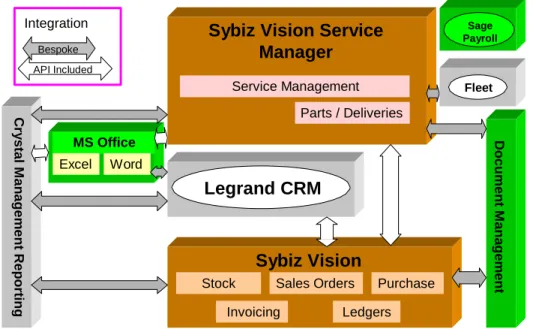
Stage three was the implementation roll-out. The main elements, depicted in Figure 2, were:
• Upgrade of the Sybiz sales order processing, financials and service management software.
• Enhancement of the new fleet tracking system with bespoke management reports.
• Provision of new reporting tools across the systems portfolio for improved management information and to support process improvement and bespoke integration (using Crystal Reports and bespoke reporting over data cleansed using Artificial Intelligence techniques and visualisation techniques for complex data).
• Introduction of basic document management of scanning/digitizing short, medium and long term documentation and operational forms with search facilities (supporting re-deployment of office space previously used for archiving).
• Introduction of searchable version controlled repositories of extensive technical product information (schematics, user guides, service manuals, parts lists etc).
• Use of internal overlay on invoices to give clear print for poor sighted customers, improve working conditions in the office, removal of health and safety hazards and provision of professional quality business
Fleet D o c u m e n t M a n a g e m e n t C ry st al M an ag em en t R ep o rt in g
correspondence, new channels for personalised advertising and reduction in costs. In-house printing of almost all pre-printed stationary followed.
• Introduction of computerised reporting and procedures to allow management to examine and manage previously unknown taxation liabilities
Integration Bespoke API Included
Sybiz Vision Service
Manager
Service Management Parts / Deliveries Sage Payroll Fleet MS Office Excel WordLegrand CRM
Sybiz Vision
Stock Sales Orders Purchase
Invoicing Ledgers
Figure 2. New systems portfolio at TPG DisableAids, 2008
Stage four focussed on the embedding of a new information culture and the
management of a corporate training programme. The Associate organized and led a wide-ranging change programme that impacted in many areas across the business. In summary, these included:
• Training and support of the key users of the new Vehicle Tracking system (Tracker) and Order to Cash system (Sybiz upgrade)and associated management reports.
• Introduction of personal and shared responsibility calendars and task list management for all personnel
• Overhaul of the tendering process for large contracts, including new documentation and highly co-ordinated working practices across departments with new quality procedures.
• Day-to-day reinforcement of the value of IT to the business: its role in transforming error prone and labour and time intensive paper-based processes by providing tools that are both supportive of individuals and business objectives.
3.3 Project 2: Develop and implement a new marketing strategy (2006-2008) The core aim of the second KTP project was to develop a marketing strategy and a sustainable marketing capability within the business, which up to that point had been sales-driven and had grown organically. Again there were several distinct stages to the project.
The initial stage of the project involved intensive internal research and analysis, and hands-on involvement in promotion and marketing support, including advertising,
events and the cleaning and development of mailing lists. The second stage built on this, with an intensive programme of market and competitor research, including an in- depth customer survey, continuing development of promotional campaign materials and the website, and planning of an integrated system for quotations and order processing. The third stage involved continued research and analysis in support of the development of a strategic marketing plan and continued development of promotion and marketing operations.
The project introduced a number of key changes:
• initiation of systematic gathering and dissemination of market intelligence, through regular customer surveys, a proactive stance towards learning through customer relationships and internal knowledge-sharing.
• piloting of a new Customer Relationship Management package (LeGrand CRM), replacing the existing spreadsheets and manual systems,
• review, refreshment and improvement of the existing customer databases and associated processes. This activity informed the onward development of the pilot CRM system.
• development of new promotional initiatives, including local media coverage, open days, PR events and radio advertising.
• internal reorganisation of all customer-facing functions, involving restructuring of sales and service staff, revised format for sales meetings and empowerment of field salespersons.
3.4 Project 3: Develop e-business capability for extended supply chain (2008- 2010)
The first KTP project established a stable integrated information systems backbone, which provided the platform for the company to be at the leading edge of e-
procurement processes with major customers, notably the National Health Service (NHS), whilst at the same time driving through supply chain efficiencies with its own suppliers. This became the focus of the third KTP project which started in November 2008. Project objectives constituted a transformation of the company from a
traditional family business to a highly efficient e-business, operating electronically across its extended supply chain. Failure to enable electronic trading would cause significant damage to the company’s ability to tender for or renew upcoming supply contracts (and post sales services) and have a detrimental effect on efficiency. This represented a step change for the company, with the KTP project underpinning the next phase of growth for TPG DisableAids Ltd in line with the company Business Plan, which aims to develop new strategic partnerships with key customers, reduce supply chain costs and increase revenues to £8.5m by 2014/15, with profits on new business achieving at least a 15% margin (cf 10-12% in previous years).
This opportunity is reinforced by the pressure on hospital beds in the NHS, which can result in ‘rapid discharge requirements’ at short notice. It is important that the
company have the technical capability to respond quickly to the equipment and service requirements of the NHS and related public sector bodies at short notice. The third KTP project has integrated TPG DisableAids’ core systems with key customers and suppliers via the development of a web portal linked to legacy systems by bespoke middleware. The NHS e-procurement initiatives require specific systems integration capabilities not hitherto possible. The project is providing this capability and also acting as a model for TPG DisableAids to drive efficiencies through its own supply chain via systems and process integration with its supplier base. There were several main stages to the project.
Stage one achieved the design of the required systems architecture to support flexible e-trading with key customers. The current technologies of main customers and
suppliers across TPG DisableAids supply chain have been researched and assessed and this has allowed the specification of the functional requirements and the technical architecture required to allow multi-point access to new TPG DisableAids systems and client systems via the web. Stage two has seen a review and upgrade of the technology infrastructure to support e-trading with key customers. A range of
packaged solutions allowing customers to achieve e-procurement with the company were explored and assessed. However, the need for flexibility to respond
in different ways with different clients and also to allow for changes in internal systems, suggested that bespoke middleware products that can link with customer systems is the best solution.
Stage three focused on the design and coding of bespoke software elements including middleware connectivity components, web interfaces and web services (using a range of programming tools, but particularly HTML, JavaScript and MySQL). Stage four involved the implementation of e-trading with key customers, including new e-procurement/order capture capabilities to allow transaction processing with NHS and other key customers. The company is now in a position to trade
electronically with NHS Shared Business Services and local authority organisations responsible for the provision of disabled facilities grants and associated products and services. This may include trading via third party data transfer intermediaries or other similar agencies.
4.
Knowledge Transfer impacts on the company partner
The combined effects of the three KTP projects on TPG DisableAids have been multi-faceted and have supported a step change in the company’s operations and significant progress towards the realisation of an ambitious business plan. Impacts are examined below against the four main impact categories outlined in the
introductory section.
4.1 Initiative generation and innovation
Utterback (1994) notes that ‘incremental innovation is clearly of critical economic and competitive importance, especially when investment in radical innovation is difficult to justify’. This is always likely to be the case in family owned SMEs where cost control is usually a key component of business strategy. The three projects at TPG DisableAids illustrate how the KTP scheme can act as a catalyst for enabling companies to make a step change in their exploitation of new thinking in support of their main business goals.
The IS project generated significant attempts at innovation in the back office and operations areas, and the new vehicle tracking system can be seen in this light. A by-product of the first two KTP projects was the explicit formation of co-operative and co-ordinated teams within departments and between business units to maximise opportunities for positive employee interaction and commercial outcomes. Feedback processes for all stakeholders were introduced to ensure improved management- employee relations and positive culture. This was supported by the embedding of training and quality spot checks within project planning and implementation in all three projects. In this context, the University academic supervisors have in many ways provided a quality assurance role, and this has helped illustrate and prove the value of a quality function.
• development of a newsletter for key influencers.
• development and implementation of a telesales function for enquiry handling, customer relationship management and proactive market development.
• the production of a complete suite of promotional literature and the creation of a ‘marketing handbook’.
• review of the website and commissioning of an ongoing development programme (including a prototype web-shop during the project).
Another related initiative has been the development of a sustainability agenda that has developed alongside the three projects. The company’s environmental impact will be improved by removing the need to print and post paper documents such as purchase orders and invoices which is being addressed in the e-business project. This project is of critical importance in allowing the company to grow from ‘small’ to ‘medium’ in its outlook and culture – administration costs for these inter-company transactions are not supportable as the company grows and thus manual procedures must be automated.
4.2 Professional development
The IS KTP project established an IT function in the company that had hitherto not existed, and the KTP Associate is now employed by the company as their IT manager. There has been a significant building of critical mass in terms of IS/IT capability and standards that are necessary to allow the company to pursue its growth aspirations.
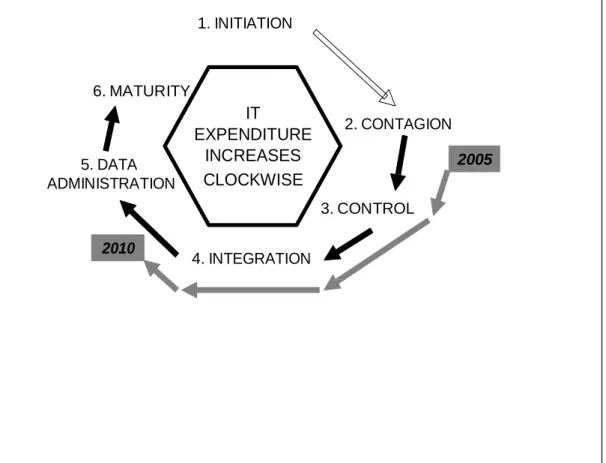
In terms of Nolan’s model of the IT function in business (Figure 3), TPG DisableAids has advanced from a position short of ‘control’ prior to the KTP projects, to a position between ‘integration’ and ‘data management’.
1. INITIATION 6. MATURITY 5. DATA ADMINISTRATION 2010 IT EXPENDITURE INCREASES CLOCKWISE 4. INTEGRATION 2. CONTAGION 3. CONTROL 2005
Figure 3. TPG DisableAids progression on Nolan’s Model of the Evolution of the IT/IS Function. Source: Nolan (1979)
Allied to this upgrade in standards and quality in IT operations has been the
introduction of PRINCE2® principles for project management. The KTP Associate on the first KTP project acquired practitioner level qualification in PRINCE2 and has since introduced processes for structured documentation and control of project estimation, risk analysis, planning, actualisation, reporting, quality management, project decommission, follow-up and post-project review. Improved project
management has allowed more competitive pricing and gross and net profit margin estimation and control of larger projects.
The marketing KTP project also delivered a number of improvements in professional standards and practice. This includes the following:
• increased market knowledge, including a much richer understanding of buyer perceptions, needs and preferences and an understanding of the buying cycles of organisational customers.
• knowledge and understanding of marketing management, particularly of market research and analysis, segmentation and targeting, integrated marketing planning and customer relationship management.
• understanding of the role of strategic marketing and its centrality to the development of the business.
• accumulated experience of the application and implementation of marketing management - in particular, its internal implications for leadership, communications, organisation structure, culture, training, information systems and knowledge management.
In the third KTP project, the Associate has introduced standards for Java
programming and also facilitated the use of Open standards and software for the technical infrastructure used by the company. The final project has also plugged a previously unmet need for the management of contracts for the supply of goods with unique service level agreements and special pricing. The majority of such contracts are long term partnerships with top or long term high value customers. Apart from almost eliminating operational errors such as pricing or invoice errors, the e-trading portal promoted contracts management from a side-issue to one central in the mind of management. In particular, management reporting (including forward projections) and the introduction of contracts as a manageable entity throughout the company enables sales personnel to become used to looking to the future rather than day-to- day / short term objectives. Finally, contract management, when viewed over its entire life span, is being used to introduce the company to management by exception via business intelligence reporting.
4.3 Skills enhancement and embedding
At an operational level, the IS and e-business projects have given the company the capabilities to use and onward develop a new range of systems and technologies that are supporting the company’s sales and servicing processes and providing critical management information, notably in the cost estimating of projects. In addition, employees have been trained to use the new systems and adopt new working methods, encompassing the order capture and invoice generation processes using the new portal.
The installation of GPS tracking in vehicles has brought a number of new skills and capabilities that are now embedded in business operations. These include:
• instant location tracking for emergency geographical pinpointing when critical breakdowns need attending to meet agreed service level agreements and meet customer quality expectations
• checking employee timesheets against overtime logging, thereby reducing overtime costs and errors and abuse of company vehicles
From the marketing project, the company acquired a range of capabilities of vital strategic importance:
• an ability to collect and process market intelligence and to use it to inform strategic and marketing decisions.
• an ability to plan and implement marketing activities in an integrated systematic way.
• a more proactive stance towards the market environment, being more sensitive to opportunities and better able to act on them rapidly and effectively.
4.4 Organisational development and process change
As a result of efficiency gains from new technology deployment, fleet engineers and sales teams (despite their growth in numbers) are now supported by the same number of administration staff and this is expected to be adequate to support significant further growth in turnover. A realistic estimate of headcount savings to date is some £40K per year for the past four years. The improved ability of TPG DisableAids to respond to customers’ information and collaboration requirements has numerous benefits in maintaining existing relationships and securing new business. This has reduced the overhead on management in resolving data conflicts in the customer area and generally improved information quality and quickened effective decision-making.
Software improvements have also allowed a tighter control on stock and a better turnover of parts held. The first KTP project was also the catalyst for the introduction of a new business processes relating to re-assignment of data entry duties reducing delays and errors, explicit tactics for reputation management and repeat trade, and processes providing staff monitoring and training. New internal communications facilities (information portals and internal email) enhance internal communication and information sharing and collaborative, co-operative and co-ordinated working
between departments. External use (customers, sub-contractors, suppliers, etc) with extensive archival and search facilities has transformed the information and
communication culture to treating email as a primary communication channel and information resource.
The marketing KTP project fostered a structure, culture and knowledge base that will support the development of the business as a marketing-led organisation. New, integrated administrative and information processes were developed and implemented for enquiry handling, lead qualification and quotations. This encompassed a sales force reorganisation, with delegation of market intelligence- gathering and market development to salespersons and new processes for systematic intelligence-gathering, customer communications and the management of promotional programmes. The company’s competitive position was improved significantly through greater awareness and understanding of the market and competitive environment, enabling a richer understanding of its current position and the competitive challenge.
The third KTP project (focusing on e-business capability) has reinforced this culture change, linked to a more outward looking vision encompassing multiple operators in an extended supply chain. Improved efficiencies will be seen throughout the
company’s order and sales processing procedures, minimising the opportunity for human or machine error. This will allow a range of interactive services to be
performed to support new revenue earning activity, delivering an estimated additional £500K in 2011/12.
The introduction and transfer of explicit supply chain management thinking and knowledge is a significant corporate development that will produce many ancillary benefits. The programme will deliver technological, managerial, philosophical and financial benefits across the company’s supply chain and business-to-business relationships. The blurring of inter-organisational boundaries through supply chain management techniques and control, and information flow will enable the companies in the supply chain to compete with the increasing number of large multi-nationals entering the consumer disabled-equipment sector. Demonstrating the practical benefits of electronically enabled supply chain automation technology and in-house knowledge facilitates the future evolution of organisational and business unit
specialisation required for planned growth.
In terms of knowledge exchange between the three main parties, throughout all the projects the Associate acted as a conduit (and sometimes translator) between dry idealised theory of academia and the constraints of practicable and pertinent solutions for the company. Moreover, the real-world nature of almost all issues faced by the Associates informed and provided new impetus for refinement and re- evaluation of cherished standard models and theories. In all cases, the Associates benefited most by understanding these otherwise diametrically opposed cultures and viewpoints. Pertinent academic and commercial skills were developed and honed by the Associates, giving them a unique broad and deep ability to mediate between the two or productively bring new viewpoints to bear.
5.
KTPs and the development of university-industry engagement
5.1 Process change to support KT activitiesThe University of Gloucestershire has embarked on 44 KTP projects since 2003. Of these 44 projects:
• 29 have been related to information systems, e-business or software development
• 11 were based on new sales and marketing developments
• 3 focused on new product development
• 1 delivered general efficiency improvements in a local authority
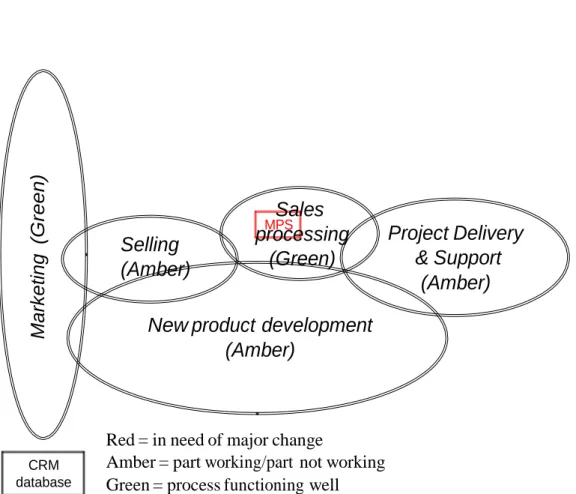
University processes have required rapid and significant change to adapt to the new requirements of knowledge transfer (or knowledge exchange as it is now often termed in the UK), identified in a number of UK Government White Papers as a key third stream of activity, alongside teaching and research (e.g. Lambert, 2003). Experience at the University of Gloucestershire suggests varied levels of progress in the main process areas (Figure 4). Whilst the marketing capability (including a new CRM system) has adapted well, driven and supported by the university’s Centre for Enterprise and Innovation, selling activity has not developed in line, despite the call by the vice-chancellor of another university to ‘embrace, don’t shun, the ethos of business’ (Wilson, 2007). The financial and administrative systems have evolved reasonably well to accommodate KE products and services, including the
introduction of a new project costing system. Project design and project supervisory skills and capabilities for KTP projects remain patchy, with just a few academics undertaking the bulk of this work; and the development and ‘packaging up’ of new KE products (e.g. consultancy propositions, short courses) has advanced very little until recently.
In light of the above, and given the experience to date of winning and supervising KTP projects at the University of Gloucestershire, the following guidelines for selling,
M
a
rk
e
ti
n
g
(Gr
een
)
designing and supervising KTPs are offered as checklists that may be of value to other KT practitioners.
Selling
(Amber)
Sales
p
Mro
Pc
Sessing
(Green)
Project Delivery
& Support
(Amber)
New product development
(Amber)
CRM database
Red = in need of major change
Amber = part working/part not working
Green = process functioning well
Figure 4. Main KE processes at university of Gloucestershire 2011
5.2 Guidelines for selling KTPs
Develop in depth product knowledge
The KTP product is constantly evolving, with new financial arrangements, new requirements for project authorisation, new briefs from the funding bodies and new forms to fill in. In 2009, a new product – the ‘short’ KTP – was introduced for projects of up to 40 week duration. Know the KTP products backwards, from memory, without reference to support materials. This will help you sell with confidence.
Target the right profile of company
Rapidly growing, profitable, SMEs, with sound balance sheets who are experiencing problems associated with business expansion and need to recruit staff to move forward are ideal. TPG DisableAids is a good example of this type of company. Large companies can be problematic because the financial incentive is less; similarly with most public authorities, although this can work well if a local authority is looking for a long-term strategic partnership with its local university.
Exploit the company business plan to unearth KTP opportunities
Try to identify the key projects that the company is planning to undertake in the next few years. What are the key requirements to move the company forward to the next
level? Could one or more of these projects become a KTP? Could the KTP product provide the impetus, the skill sets or the organisational development required to implement elements of the business plan? Try to fit KTP projects to these requirements.
View it as a commercial opportunity for both parties, not an academic exercise Few companies would openly welcome in ‘academia’ as it is often viewed as not relevant enough to the real world. ‘Research’ by external experts is more attractive and akin to consultancy, but what really attracts SMEs is a combination of financial subsidy, quality assurance and general business support for projects that are just out of reach with their current staff capabilities or availability. Build an account relationship on these principles; and develop the relationship to get further KTPs and other product sales.
Develop a team with the right balance of experience, skills and attitude
Embrace and accommodate a selling culture with strong creative development skills. But be aware also of the multi-dimensional nature of these projects, including for example, intellectual property rights and ethical considerations. (A contract is signed by the University and the company partner covering these issues).
Customise and innovate the product offering
Position KTP benefits and the sales proposition according to company context and requirements e.g. for companies declaring significant pre-tax profit, highlight the R&D tax credit; for large organisations, focus on the broader benefits of a strategic alliance with the university; see if current recruitment plans could be an opportunity for a KTP instead of recruitment.
Develop different routes to market & ways of selling
Target appropriate networking events, conference presentations, growth companies featured in local newspapers, companies recruiting what could become KTP posts, and student placement links; look for other KTPs in the supply chain of each company partner.
5.3 Guidelines for designing KTP projects and submission for funding This can be a lengthy and involved process involving academics, company management, the KTP adviser, the funding authorities and the university’s own KTP office. To avoid a ‘pass the parcel’ mentality prevailing, it is essential to take ownership, manage and carry out as much of the whole process yourself, and ‘make it happen’. If no one is prepared to do this, project design and submission can take months, even over a year, especially if a re-submission is necessary.
Establish the nature of the project in outline with the company partner
Get buy-in in principle to the main purpose of the project (and commitment to the company financial contribution to the project funding)
Take the lead as regards filling in the application forms
Do as much of the work on filling in the forms as you can; if you have to keep going back to the company or academics for information, it will delay the process and possibly even kill the project.
Build up a good working knowledge of previous KTP projects and use them as templates
Most KTP projects follow a similar pattern of research-design-development-piloting- implementation-embedding of change. Study previously approved projects and use them as templates.
Develop a good working relationship with the KTP Adviser
Each region in the UK has a KTP Adviser who is contracted to the relevant UK government agencies to help in the project submission process, and who will decide with colleagues from other regions whether the company and project proposal
warrant support. It is important to keep the KTP adviser on board in the design stage. Try and arrange a meeting with the company and the adviser early on – but make sure you and the company management have a shared vision of what the project will achieve.
Identify the company financial profile early on
The KTP adviser will want to be reassured about the financial health of the company partner. Get the company to provide the past two years audited accounts early in the design process and run them by the KTP Adviser. Make sure any irregularities are highlighted and discussed as early as possible.
Focus on the work plan and project deliverables – follow the ‘golden thread’ The KTP advisers talk in terms of a ‘golden thread’ running through the application form that links different milestones in the work plan to specific deliverables and quantifiable benefits. It is important to ensure these all tie up and that there is consistency throughout the proposal.
Take the lead in attempting to quantify benefits
Try and take the lead in quantifying business benefits. Previous models and established metrics on turnover growth and margin improvement can be used. Emphasise to the company that these will not be audited – this is just a forecast to set a commercial context for the project, and the benefits it might bring.
5.4 Guidelines for KTP project supervision
The academic supervisor plays a vital role in helping manage the project, providing support to the Associate, developing account relationships, and ensuring the overall smooth running and fine tuning of all aspects of the project. This includes liaison with the government’s KTP Adviser who visits the company every 4 months when the Local Management Committee (LMC) meetings are held. This is akin to a project steering group, and is an essential part of the project management and quality review process.
Change the emphasis from ‘academic supervision’ to ‘project quality assurance’ and ‘project direction’.
Although the academic’s role is termed ‘academic supervisor’, it is important to ensure intervention is not viewed as too academic or removed from the real world. Company partners are looking for new knowledge and past experience sensibly and realistically applied in their business environment. Develop project management and consultancy skills; be a friend to the company.
Set up a weekly control group, and insist on weekly minuted meetings
It is very important to make a weekly control meeting an essential part of the modus operandi of the project (even if it doesn’t happen every week). Once you lose a shared understanding of what is happening on the project at a reasonable level of detail, it becomes more difficult to influence the project direction and outcome, and the risk of failure increases significantly.
Use a Project Plan as a key management tool
Get the Associate to report on and update the project plan periodically. Use the plan as a point of reference in the weekly review meetings, allied to the on-going minutes and actions.
Understand the company and develop good working relationships with key personnel Develop an ‘esprit be corps’ with the Associate and line manager; go out of your way to establish relationships with other staff members.
Jointly manage the LMC process with the Associate and line manager
Carefully plan the LMC presentations with the Associate and company personnel; make sure you are all ‘singing from the same hymn sheet’; avoid any disagreement in LMCs; ensure the project financial statement is correct and can be justified. Develop the ‘esprit de corps’ to include the KTP Adviser.
Focus on the project benefits
As the project develops, benefits and deliverables will become more important. Ensure the Associate logs benefits as the project progresses; and help the project team quantify benefits as far as possible (these will be important in the final report) Add value beyond the project scope; act as an account manager as well
Don’t be constrained by the project scope in your interaction with the company; wear a salesman’s hat as well from time to time. Consider opportunities for other KTPs, student projects, and training courses at the University for company staff.
Don’t forget the knowledge transfer!
So the academic supervisor must act as account manager, project manager and salesman; but he/she is also the key catalyst for knowledge transfer, and most company partners will expect a range of knowledge transfer deliverables, some not directly linked to the project. Be prepared, know what else the University can offer, and how you can make it available to the company partner; and ensure you bring direct benefit yourself by supporting the Associate and bringing something extra from your knowledge and experience.
Deliver a good Final Report
The Final Report is jointly authored by the company line manager and the academic supervisor; the Associate also submits a final report. Make sure both reports are aligned as far as possible. Present the ‘big picture’, don’t get bogged down in detail; highlight the project benefits to all parties. This is important because the project is graded and good grades are helpful for subsequent project submissions.
6.
Concluding Remarks
The KTP scheme is at the heart of the challenge facing Universities in the UK to transition their culture and organisation to encompass a commercial approach to working with industry and the public sector. As the University Alliance (2010) notes ‘in the UK’s global, knowledge based economy...universities are playing a critical role in driving the UK’s economic future’. Although there is a significant government subsidy for KTP projects, the concept nevertheless has to be ‘sold’ to potential business partners, who have to make a contribution of £20K-£33K per annum. Then there is the challenge of successfully designing the project with industry colleagues, and finally, the task of contributing to the management and delivery of the project. It is these three aspects of the KTP scheme – selling, designing, and delivery – that have been explored in the latter sections of this article.
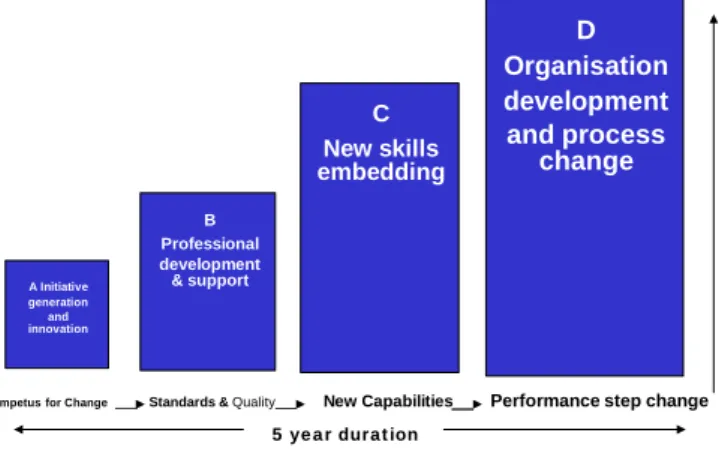
T PG Disa ble Aids K T P Busine ss I m pa c t 2 0 0 5 -2 0 1 0 C New skills embedding D Organisation development and process change Tur nove r 2 0 0 9 /1 0 £ 4 .3 m
Tur nove r & Profit I nc re a se s A Initiative generation and innovation B Professional development & support
Impetus for Change Standards & Quality New Capabilities Performance step change
Tur nove r 2 0 0 4 /5 £ 3 .1 m 5 ye a r dura t ion
Figure 5 Impact of Three KTP projects at TPG DisableAids
The great value of the KTP scheme is that it provides a dedicated resource (the Associate) to instigate, promote and manage key initiatives to drive the project forward, supported by the academic supervisor from the University whose role is critical in making sure all aspects of the project are functioning efficiently and effectively. The KTP scheme brings in new perspectives and expertise from the university, and the government KTP Adviser will normally ensure there is a disciplined steering group process that encourages project delivery.
David Cameron, the British Prime Minister, has recently insisted that innovation and job creation in the private sector are essential to help rebuild the economy and TPG DisableAids is a good example of how KTPs can bring a range of major benefits in innovation, professional standards, skills enhancement and organisational change to underpin bottom-line benefits and growth (Figure 5). It does take some time to get an Associate ‘on board’ (typically 4-6 months), but experience to date suggests the time is well invested and that these projects more than pay their way for the companies involved. This article has attempted to discuss and illustrate some of the main components of knowledge transfer in the UK, and suggests how university practitioners may set about growing this activity in the coming years.
References
Commission of the European Communities (2007), Voluntary guidelines for
universities and other research institutions to improve their links with industry
across Europe,
a
ccompanying document to the Communication from theCommission, Improving knowledge transfer between research institutions and
industry across Europe: embracing open innovation– Implementing the Lisbon
agenda,
Brussels, 4.4.2007 SEC(2007) 449.
Euractiv (2008) ‘EU pushes for better knowledge transfer’, published April, 2008 available at www.euractiv.com/en/science/eu-pushes-better-knowledge-
Lambert, Lord (2003), Lambert Review of Business-University collaboration:
Final Report, December, HMSO, Crown copyright.
Nolan, R. L. (1979), ‘Managing the crisis in data processing’, Harvard Business
Review, Mar-April.
Universities Scotland (2009), What was/what next? February,
http://www.universities-scotland.ac.uk/uploads/publications/what%20next, accessed October 22nd 2010.
University Alliance (2010), 21st century universities: engines of an innovation economy, University Alliance, research paper 2010/06.
Utterback, J. M. (1994), Mastering the Dynamics of Innovation (How companies
can seize opportunities in the face of technological change), Harvard Business
School.
Wilson, T. (2007) ‘Embrace, don’t shun, ethos of business’, Times Higher
Education Supplement, October 12th, p 14.
Work Foundation (2010), No city left behind? The geography of the recovery –
and the implications for the coalition, Work Foundation, July.
Wynn M, (2009) ‘Information systems strategy development and implementation in SMEs’, Management Research News, Vol 32 No 1 pp 78-90.
Wynn, M., Turner, P., Abbas, H., and Shen, R. (2009) ‘Employing Knowledge Transfer to support IS implementation in SMEs’ , Journal of Industry and Higher