Amelia W Holmes. A Latent Content Analysis of Access Restriction Concepts in Archival Processing Manuals. A Master’s Paper for the M.S. in L.S degree. July, 2016. 27 pages. Advisor: Jacqueline Dean
This study describes a latent content analysis of processing manuals used at U.S.-based college or university members of the Association of Research Libraries who currently use Aeon software from Atlas Systems. The purpose of the study was to assess the range of concepts present in archival processing manuals related to access restriction statements in finding aids.
Headings:
A LATENT CONTENT ANALYSIS OF ACCESS RESTRICTION CONCEPTS IN ARCHIVAL PROCESSING MANUALS
by
Amelia W Holmes
A Master’s paper submitted to the faculty of the School of Information and Library Science of the University of North Carolina at Chapel Hill
in partial fulfillment of the requirements for the degree of Master of Science in
Library Science.
Chapel Hill, North Carolina July 2016
Approved by
Table of Contents
Introduction ... 2
Literature Review... 4
Legal and ethical implications of privacy ... 4
Legal implications of privacy ... 5
Ethical implications of privacy ... 6
Legal and ethical implications of access ... 8
Legal implications of access ... 8
Ethical implications of access ... 9
Methodology ... 11
Results ... 14
Discussion ... 17
Conclusion ... 19
References ... 20
Appendix A: Request to Repositories ... 23
Introduction
The Society of American Archivists’ (n.d.) Code of Ethics charges archivists with “recognizing that use is the fundamental reason for keeping archives.” Archivists
maintain physical and intellectual control of the collections in their care and ensure that their materials are as easily accessible to users as possible. However, the Code follows up the principles of access and use with privacy. Archivists are required by law to protect the privacy of donors and the individuals and organizations documented in their collections. The Code of Ethics does not delineate how archivists are expected to navigate balancing these two ideals.
Finding aids are used by archives to share information about their holdings with the public. Finding aids help users locate items and ideas within a collection. They help users determine if a trip to the archives is necessary - might the collection have what they are looking for? Because these documents can play such a key role in the research
decision-making process, it is important that they are as clear as possible on what is and is not available to users. However, while there are professional guidelines in the form of content standards, it is ultimately up to each repository to determine what language they are going to use in order to make these restrictions known to users.
inconsistency across the profession with regards to what information should be included when conveying access restrictions to patrons. It suggests that consistency in practice across the profession would benefit both researchers and archivists. Researchers would benefit from being able to clearly and easily determine what materials are and are not available before requesting material, let alone showing up in the reading room. Callahan (2015) pointed out that archivists should be capitalizing off of the structured data in which they are already investing a significant amount of time developing. By moving towards consistent access restriction statements now, archivists set themselves up for the eventual ability to enact machine-actionable restrictions, which would allow for
Literature Review
Legal and ethical implications of privacy
Hodson (2006) highlighted the public’s subjective understanding of privacy by comparing it to a remark made by Supreme Court Justice Potter Stewart in the 1964 Jacobellis vs. Ohio decision: “I know it when I see it”. Fortunately for archiving
professionals, while there is plenty of room for professional judgement, there are both legal and ethical definitions of privacy that have implications for how archival functions are carried out.
The right to privacy was first asserted in December 1890 by Warren and Brandeis in an article for Harvard Law Review in response to the rise of photography, and was defined as “the right to be let alone” (p. 195). They found the new technology’s
infringement into private lives “unacceptable,” and argued that the public needed a new
means of dealing with the intrusion (Gilliland and Wiener, 2011). Although others have expanded on this concept, political scientist Westin’s (1967) definition is particularly relevant to the work of archivists. He wrote that privacy is “the claim of individuals,
groups or institutions to determine for themselves when, how, and to what extent information about them is communicated to others” (p. 7). This perspective has entered
Legal implications of privacy
One of the major pieces of legislation impacting archives, the Family Educational Rights and Privacy Act (FERPA) was passed in 1974, and focused on the privacy of student information. Prior to the age of 18, parents have specific rights regarding access to information about their child’s education. After the age of 18, these rights are
transferred to the student.
Archives institutions that disclose educational records do court some legal risk, though how much is unclear as individual students are not able to seek private legal remedy if their privacy rights under FERPA are violated (Behrnd-Klodt, 2008, p. 139). FERPA does not require an institution to keep records unless there is an outstanding request to inspect said records, and it only applies to institutions who receive funds from the U.S. Department of Education (Cervone, 2016). FERPA does allow for some
disclosures, such as directory information, including name and address, and researchers are allowed to access education records if all personally identifying information has been removed (Yaco, 2010; Cervone, 2016).
“individually identifiable health information of a person who has been deceased for more than 50 years is not protected health information under the Privacy Rule” (Modifications
to HIPAA Rules, 2013, p. 5613).
There are a number of other legal considerations that affect archives. For example, the Privacy Act of 1974 was established to prevent agency disclosure of
personal information without the individual’s consent unless the information request met
one of twelve exceptions (Behrnd-Klotz, 2008). Additionally, the Freedom of
Information Act (FOIA) allows government agencies to make selective decisions about disclosing records of the deceased as “under the Privacy Act, privacy rights are
extinguished at death,” although agencies may consider the privacy interests of the deceased’s survivors and the right of publicity is extended beyond death for celebrities in
some jurisdictions (Yaco, 2010; Gilliland & Wiener, 2011).
Privacy issues are also different for materials made available in the reading room than materials made available online. Gilliland and Weiner (2011) pointed out that, In the reading room, privacy issues are a much lower legal risk because of their “obscurity and low visibility” and that many jurisdictions require that the private information be widely
disseminated before legal action can be taken (p. 384).
Ethical implications of privacy
The archival profession has a history of recognizing the need to protect the privacy of those who appear within their collections, even considering this to be a central tenet of good stewardship (Gilliland & Wiener, 2014). The Society of American
profession. SAA acknowledged that privacy is “sanctioned by law” and that archivists
must work to establish procedures and policies that protect the interests of stakeholders whose lives are documented in an institution’s holdings, particularly those who had “no voice or role in the collections’ creation, retention, or public use.” The Society of
American Archivists is a non-licensing professional association and is therefore unable to enforce this Code of Ethics. Rather, according to Guimarães (2005), “the object of a
professional ethics is the set of moral values that a particular professional class should follow to achieve a correct and appropriate professional action to the society in which he/she operates” (p. 6).
As long as there has been a concept of privacy, there has been private or sensitive information present within archival records. However, with the introduction of Meissner and Greene’s More Product, Less Process (MPLP) in preparing archival collections for
researchers, archivists may not have the opportunity to thoroughly analyze collections for privacy concerns and restricted materials (Gilliland & Wiener, 2011). Additionally, with the advent of the internet, digitization, and born-digital materials, private information which may have remained somewhat obscured in the reading room now has the ability to be made widely available online (Gilliland & Wiener, 2014). Finally, Gilliland and Wiener (2011) also cautioned archivists to consider the following: “Donors who gave their records to an institution with an understanding of and comfort with the institution’s
mission and target audience may not have been as willing to donate if they had
anticipated worldwide exposure on the Internet” (p. 392). For example, the digitization of On Our Backs, a lesbian porn magazine with a run from 1984 to 2004, caused
have on the lives of individuals who had consented to participate in a limited-run print publication but may have felt differently about having those same images made publicly available on the internet thirty years later (Robertson, 2016).
Legal and ethical implications of access
Sixty years ago, Schellenberg wrote, “the end of all archival effort is to preserve
valuable records and make them available for use. Everything an archivist does is concentrated on this dual objective” (p. 224). Today, access is the driving force behind
archival work, as archivists no longer see themselves as guardians of collections but mediators between materials and researchers (Greene, 1993; Kepley, 1989). Even that perception is changing as finding aids and archival materials are becoming more widely available through the internet (Hodson, 2006). Given these changing notions of the role of archives and archivists, there has been considerable discussion to the legal and ethical implications of access.
Legal implications of access
Open records laws serve to provide timely public access to government
information (Yaco, 2010, p. 644). The Freedom of Information Act (FOIA), signed into law in 1966 and in effect since 1967 codifies United States citizens’ right to information
about their government and opens all federal records to public access, with nine specific exemptions. In addition to the exemptions, FOIA does not apply to the records of
conflicts with the Privacy Act, “information that must be disclosed under FOIA is
exempted from the restrictions of the Privacy Act” (Behrnd-Klotz, 2008, p. 119). In this instance, Congress has placed a higher emphasis on access than privacy.
While FOIA applies only to federal entities, all fifty states have their own set of “sunshine” laws. Many of them are modeled after the federal FOIA, though they
generally contain an exemption for personal and medical records (Behrnd-Klotz, 2008).
Ethical implications of access
Brown & Kaiser (2012) wrote that equitable access is imperative because it maintains both “the integrity of historical research and the public’s trust in the
institution” (p. 62). When it comes to access, SAA (n.d.) has addressed it not only in their
Code of Ethics but they consider it a core value as well: The Core Value of Access and Accessibility acknowledges that there are mandatory access restrictions such as statutes and donor contracts, but that separate from these, archivists work to “provide the widest possible accessibility of materials.” Additionally, archivists should both welcome and actively promote access to records as it is “essential in personal, academic, business, and government settings” and it benefits even those who do not directly use archival
materials. Further down in the Code of Ethics, SAA (n.d.) recognizes that “use is the fundamental reason for keeping archives,” which includes minimizing restrictions. In
result of both legal authorization and the existence of finding aids” (p.3), and it is
intended to serve as an authoritative international baseline against which an institution can measure itself and adjust its practice accordingly.
Methodology
The primary purpose of this study is to determine how archival repositories are addressing access restrictions in their online finding aids. In particular, the goal is to gauge what direction processing manuals currently provide, identify room for improvement, and begin a conversation around making access restrictions not only understandable to archivists but transparent to researchers as well.
This study utilizes a qualitative content analysis to gain insight into institution-specific processing manuals and the guidance that they provide archivists in the area of describing access restrictions. In order to narrow the scope of this study, the manuals analyzed came from U.S.-based college or university members of the Association of Research Libraries who are currently users of the Aeon software from Atlas Systems. Institutions using Aeon were selected because the software automates online requesting and works in conjunction with EAD-encoded finding aids (Atlas Systems, n.d.)
The method of qualitative content analysis was chosen because it is focused on “providing a detailed description of the material under analysis” unlike quantitative
content analysis which is more focused on testing hypotheses (Schreier, 2014, p. 173). Additionally, it requires a rigidly systematic nature that “counteracts the danger of
describing access restrictions? Are certain concepts more likely to be present or absent in processing manuals? Discussion of why certain topics are more likely to be absent leaves room for further research.
Some archives make their processing manuals available to the public, but this is not true everywhere. As a result, it was first necessary to check the website of each institution to see if their processing manual was available to the public. If it was not publicly available, a form email was sent requesting access to the processing manual for the purpose of analysis and which indicated that participating repositories would not be identified.
The processing manuals were coded using a spreadsheet. Each manual received a number and was examined for the presence of several concepts, which were informed by the details DACS suggests archivists provide regarding conditions governing access (Society of American Archivists, 2015):
whether the processing manual provided guidance on how archivists
should describe access restrictions;
if no restrictions were present, whether archivists were instructed to include a statement saying so (e.g., “No restrictions. Open for research.”); whether restrictions were included at the file-level in addition to the
collection level;
whether end dates for restrictions were present;
if they were present, whether they were listed as a date or number of
whether archivists were instructed to indicate the nature of the restriction
(donor imposed, federal law, etc); and
whether contact information of any kind is included for researchers with
questions about a restriction.
Results
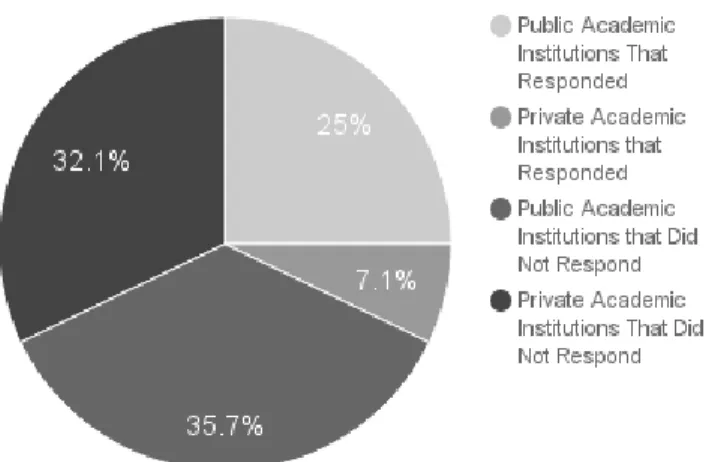
There are 28 U.S.-based college and university members of the Association of Research Libraries who are listed as using Aeon software, and nine institutions either made their processing manuals publicly available online or responded with the manual when contacted directly: four were publicly available online, and five were from the remaining repositories. The overall response rate was 32.1%. Seven manuals came from repositories at publicly-funded institutions, while the remaining two came from
repositories at private universities. Because processing manuals were only available for two private academic institutions, the results of the analysis were not differentiated by type of institutions and were instead looked at as a whole.
All of the processing manuals addressed describing access restrictions in some way. One manual did not address privacy restrictions of any kind, but instead focused on format-based access restrictions. Because those are still conditions governing access, they were still included in the analysis.
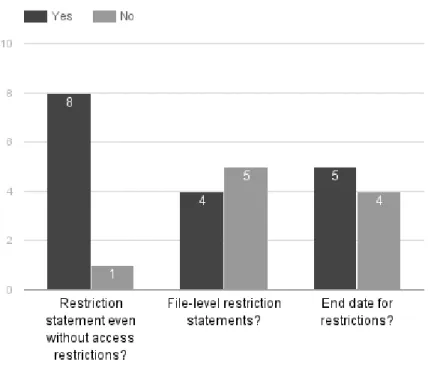
Figure 2 Discussion of access restriction concepts in processing manuals
As seen above in Figure 2, all but one (89%) of the manuals instructed archivists to include a statement indicating if a collection contained no restrictions of any kind. Fewer than half (44%) incorporated restrictions statements down to the file-level where the restriction occurs, as shown in the middle graph of Figure 2. The remainder (56%) only included the restriction information in the administrative information at the
month-and-year date format rather than as a number of years (e.g. July 2016 rather than 75 years). The remaining institutions (56%) do not indicate any end point to restrictions.
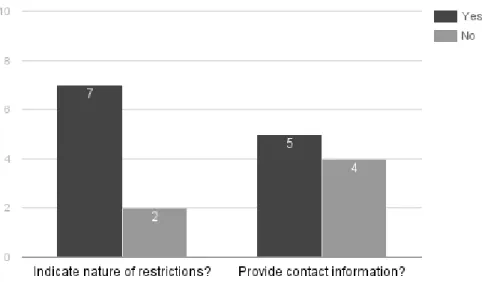
Figure 3 Discussion of access restriction concepts in processing manuals
As figure 3 illustrates, seven processing manuals (78%) instruct archivists to indicate the nature of the restriction - whether the restrictions are donor imposed, due to federal law, or another reason - while the remaining two (22%) provide no guidance either way. Finally, also shown in figure 3, five of the processing manuals (56%)
included instructions for providing some form of contact information for researchers who would like to know more about restricted information. One institution encouraged
researchers to contact the reference desk and provided a phone number, while the others stated to contact the relevant curator (none provided the names of curators). The
Discussion
This study contributes to the research on descriptive practices for archival collections. The analysis suggests that archivists are aware of the need to notify patrons of access restrictions, which is unsurprising given that it is a required field in DACS, the national content standard for describing archival materials. It is also unsurprising that all but one processing manual directed archivists to indicate that a collection is open to research when no restrictions to access were in place as Section 4.1.5 of DACS directs “if there are no restrictions, state that fact” (Society of American Archivists, 2015).
It is unclear why there were mixed results for three of the six areas analyzed. As discussed in the literature review, Section 4.1.5 of DACS indicates that archivists should delineate relevant details of restrictions, including the topics covered in the content analysis. Instead, there are mixed results, with around 50% of repositories indicating when restrictions will be lifted, providing contact information for whom a researcher may contact to appeal a restriction, and cascading restriction information down to the relevant series or file level.
from requesting materials that are currently unavailable due to access restrictions. Automation of access restrictions would prevent reference archivists from having to double-check that a folder or box is available to a researcher before pulling it, and they could also save archivists from having to manually lift restrictions, a time-consuming process to manage which could easily be put off when there are a high number of projects pulling for an archivist’s attention.
An obvious limitation of this study is the sample size of processing manuals. Repeating the study with a larger sample, possibly expanding to all U.S.-based, college and university members of the Association of Research Libraries regardless of the means by which they manage reference requests would produce more generalizable and
informative results. It might also be helpful to consider additional information such as when the manual was last updated and to also examine a random sample of access restriction statements in finding aids from each institution. There is also room for further study in terms of how researchers interact with and understand access restrictions. In particular, private university records where permission is needed from sometimes multiple university authority figures would provide interesting insight into these interactions.
Conclusion
References
Atlas Systems. (n.d.) Aeon. Retrieved from http://www.atlas-sys.com/aeon/ Atlas Systems. (2014). Aeon 3.8 Documentation. Retrieved from
https://prometheus.atlas-sys.com/display/aeon/Aeon+3.8+Documentation
Behrnd-Klodt, M. L. (2008). Navigating Legal Issues in Archives. Chicago: Society of American Archivists.
Bingo, S. (2011). Of provenance and privacy: Using contextual integrity to define third-party privacy. The American Archivist, 74(2), 506-521.
http://www.jstor.org/stable/23079048
Brown, L. C., & Kaiser, N. (2012). Opening archives on the recent past: Reconciling the ethics of access and the ethics of privacy. In C. B. Potter, & R. C. Romano (Eds.), Doing recent history: On privacy, copyright, video games, institutional review
boards, activist scholarship, and history that talks back (pp. 59-82). Athens, Ga.:
University of Georgia Press.
Callahan, M. (2015). Making Promises Machine Actionable. Paper presented at the annual meeting of the Society of American Archivists, Cleveland, OH.
Cervone, H. F. (2016). Information doesn't always want to be free. Digital Library Perspectives, 32(2), 68-72.
Gilliland, A. T. & Wiener, J. A. (2011). Digitizing and providing access to privacy-sensitive historical medical resources: A legal and ethical overview. Journal of Electronic Resources in Medical Libraries, 8(4), 382-403.
doi:10.1080/15424065.2011.626347
Gilliland, A. T. & Wiener, J. A. (2014). A hidden obligation: Stewarding privacy concerns in archival collections using a privacy audit. Journal for the Society of North Carolina Archivists 11(1), 19-35.
Greene, M. A. (1993). Moderation in everything, access in nothing?: Opinions about access restrictions on private papers. Archival Issues, 18(1), 31-42.
Guimarães, J. A. C., Fernández-Molina, J. C., Pinho, F. A., & Milani,S. O. (2008). Ethics in the knowledge organization environment: An overview of values and problems in the LIS literature. In C. Arsenault and J. T. Tennis (Eds.), Culture and identity in knowledge organization: Proceedings of the Tenth International ISKO
Conference (pages 361-6). Würzburg: Ergon-Verlag.
Hodson, S. S. (2006). Archives on the web: Unlocking collections while safeguarding privacy. First Monday, 11(8).
http://firstmonday.org/ojs/index.php/fm/article/view/1389/1307
International Council on Archives. (2012). Principles of access to archives.
Kepley, D. R. (1989). Reference services and access. In J. Bradsher (ed.), Managing Archives and Archival Institutions, p. 161-173. Chicago: University of Chicago
Press.
Act and the Genetic Information Nondiscrimination Act; Other Modifications to the HIPAA Rules; Final Rule, 78 Fed. Reg. 5566 (January 25, 2013)
Robertson, T. (2016). Digitization: Just because you can, doesn’t mean you should.
Retrieved from http://tararobertson.ca/2016/oob/
Schellenberg, T. (1956). Modern Archives: Principles and Techniques. Chicago: University of Chicago Press.
Schreier, M. (2014). Qualitative content analysis. In U. Flick (Ed.), The SAGE Handbook of Qualitative Data Analysis, p. 170-184. London, SAGE Publications Ltd.
Society of American Archivists. (n.d.). Core Values Statement and Code of Ethics. Retrieved from http://www2.archivists.org/statements/saa-core-values-statement-and-code-of-ethics
Society of American Archivists. (2015). Describing archives: A content standard. Chicago: Society of American Archivists.
Warren, S. D. & Brandeis, L. D. (1890). The right to privacy. Harvard Law Review, 4(5), 193-220. http://www.jstor.org/stable/1321160
Westin, A. F. (1967). Privacy and Freedom. New York: Atheneum.
Wiener, J. A. & Gilliland, A. T. (2011). Balancing between two goods: Health Insurance Portability and Accountability Act and ethical compliancy considerations for
privacy-sensitive materials in health sciences archival and historical special collections. Journal of the Medical Library Association 99(1), 15-22. doi:10.3163/1536-5050.99.1.005
Appendix A: Request to Repositories
Dear archivist,
I am conducting research regarding how institution-specific processing manuals are advising archivists in the area of access restrictions. The research will be used as the basis for a master’s paper for the degree of Master of Science in Library Science at
UNC-Chapel Hill. Jackie Dean, Head of Archival Processing at UNC-UNC-Chapel Hill’s Louis Round Wilson Special Collections Library, is acting as my advisor. I am contacting you to request your institution’s assistance.
Specifically, I am asking that you send me a copy of your repository’s processing
manual for use in my project, where it will serve as the unit of analysis. This research is voluntary and seeks no personal or identifying information. All data will be anonymized, and no reference to your specific institution will be included in the resulting paper. All responses are anonymous and confidential. By analyzing the content of processing manuals addressing access restrictions, I hope to suggest some steps institutions can take to standardize access restriction statements in EAD-encoded finding aids with an eye toward automated statements in the future. I hope that you agree to participate by sending your repository’s processing manual. If you have additional questions that you want
answered before making a decision, please do not hesitate to contact me at [email address]. Thank you for considering my request.
Sincerely,
Appendix B: Content Analysis Coding
Column A:Repository ID number - The identification number assigned to each processing manual.
Column B: Repository type - Identifies whether the institution is a public academic institution or a private one.
Public: a repository that is part of a publicly-funded university. Private: a repository that is part of a privately-funded university.
Column C: Does the processing manual provide guidance for describing conditions
governing access?
1: Yes 0: No
Column D: Is an access restrictions statement included when there are no conditions
governing access and an entire collection is open to research?
1: Yes 0: No
Column E: Do access restrictions appear at all relevant hierarchical levels or just
within the administrative information at the collection level?
Column F: Do restrictions indicate an end point at which time the material will be
available for research?
1: Yes 0: No
Column G: If yes to the question in Column F, is the end point communicated in a
month-and-year date format or as a number of years?
1: Month-and-year date 0: Number of years
Column H: Do access restriction statements indicate the nature of or reason for the
restriction?
1: Yes 0: No
Column I: Do the restrictions include contact information of any kind for
researchers who have questions about the restrictions?