Acknowledgements
First, I would like to sincerely thank my thesis advisors, Dr. Jeffrey Summerlin-Long and Dr. Aubrey Comperatore. I would not have been able to complete this project without their help. A huge thank you goes out to Dr. Summerlin-Long for reading my countless drafts, answering my questions, and always giving me encouragement and positivity. A huge thank you goes out to Dr. Comperatore for reading my thesis and giving me helpful feedback.
I would like to thank my parents, who have always supported me and pushed me to do my best. I would also like to thank Dr. Anna Krome-Lukens, whose weekly meetings and feedback were really helpful. Finally, a huge thank you goes out to my reading partners and the rest of the thesis group for always being supportive through this process.
Table of Contents
Acknowledgements ...1
Abstract ...3
Table of Figures ...4
Chapter 1: Significance and Specific Aims ...5
Introduction to Adult ESL Programs ...5
Policy Problem ...6
Significance ...6
Focus on North Carolina ...8
Research Questions ...10
Next Steps ...10
Chapter 2: Literature Review on Successful Teaching Strategies ...11
Creation of Standards for Teaching ESL in Adult ESL Programs ...12
Standards for Adult Education ESL Programs ...13
English Language Proficiency Standards for Adult Education ...14
Adult Content Standards in North Carolina ...17
Successful Strategies for Teaching ESL ...18
Successful Strategies for Teaching Civics Education ...19
Connecting Literature to Existing Standards ...22
Chapter 3: Methods and Data Sources ...24
Limitations ...25
Chapter 4: Findings and Data Analysis ...27
Program Demographic Data ...27
Curriculum and Teaching Strategies ...30
Guidelines for Teaching Civics Education ...32
Best Practices for Teaching Civics Education in the Life Skills Curriculum ...33
Best Practices for Teaching Civics Education in the Naturalization Curriculum ...38
Comparing Best Practices Across Regions in North Carolina ...40
Comparing Adult ESL Program Structures ...40
Connecting Practices to Content Standards ...42
Additional Findings ...43
Chapter 5: Recommendations and Conclusion ...44
Policy Recommendations ...44
Suggestions for Future Research ...45
Conclusions ...45
References ...47
Appendix A: Self-Review Instrument Created by TESOL ...53
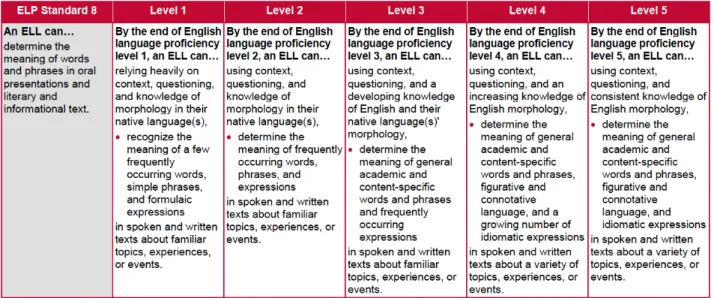
Appendix B: Level Descriptors for English Proficiency Standards ...54
Abstract
Research has found that there is a strong relationship between civics education and civic engagement. Effective civics education instruction in adult ESL program not only teaches
Table of Figures
CHAPTER 1: SIGNIFICANCE AND SPECIFIC AIMS Introduction to Adult ESL Programs
The first forms of English as a Second Language (ESL) programs in the United States date back to colonial times, when there were multiple nationalities that inhabited the area (Cavanaugh, 1996). However, the contemporary form of ESL programs, one that emphasizes teaching the English language in schools, grew from the Americanization Movement after World War I (Cavanaugh, 1996). During this time period, the prevailing attitude regarding immigrant education was that immigrants needed to learn English so that they could learn the U.S.
Constitution, understand the government of their new country, and become assimilated into American culture (Cavanaugh, 1996). Because schools continued to treat immigrant children like all children, sociologists argued that rather than focusing on assimilation, schools should
incorporate the concept of cultural pluralism, allowing immigrants to retain their cultures while also learning the English language, and American institutions and culture (Cavanaugh, 1996). This is known as integration – the process by which immigrants become accepted into society, both as individuals and as groups (Penninx, 2003).
An important factor of integration involves civics education – learning the host country’s institutions. Civics education, while focused on the workings of governmental and political institutions, can also include teaching students about the workings of banking systems, school systems, and important career and social skills that are specific to their host countries.
United States after a 1990 amendment to the Adult Education Act of 1966 expanded federally funded educational services for adults to include ESL and citizenship (Shaetzle and Young, 2005). In addition to federally funded programs, volunteer and faith-based organizations, libraries and other community centers, and private language schools also offer adult ESL services.
Policy Problem
According to a 2012 study conducted by the Center for Information and Research on Civic Learning and Engagement, all states have school standards for social studies, a broad category that includes civics and government along with other disciplines such as history and geography, and every state except Missouri has standards that cover the theme of civic ideals and practices (Godsay et al., 2012). Standards are official state documents that itemize what must be taught – they can influence the curriculum, textbooks, tests and other assessments, but they do not necessarily come with rewards or sanctions for compliance (Godsay et al., 2012). Adult ESL programs also have established content standards for English language acquisition, but there are no explicit standards for teaching civics education in adult ESL programs, nor are there any requirements put forth by federal or state governments mandating that certain practices be used during civics education instruction in adult ESL programs that encourage civic engagement. Significance
2008 presidential election, voter turnout among the native-born voting-age population was 64.4 percent, compared to only 54 percent among the naturalized voting-age population (Wang, 2013). In 2006, voting rates among naturalized citizens were 12 points lower compared to their native-born counterparts, and in 2004, there was an 11 point gap between these two groups (Wang, 2013). Naturalized citizens are even less likely to register to vote compared to native-born citizens (Wang, 2013). Civics and language education is essential for immigrants because it reduces the time it takes for immigrants to become inclined to civically engage in their
communities. Effective civics education instruction is important for immigrants and their integration into their host country’s society because research has found that there is a strong relationship between civics education and civic engagement. A study by William Galston researched the current condition of civic engagement among adolescents in the United States. His study found that there are important links between basic civics education and civic attributes (Galston, 2004). For example, the research found that civics education promotes support for democratic values, and effective civics education also has a deliberate focus on civic outcomes such as students’ propensity to vote, work on local problems, join voluntary associations, and follow the news (Galston, 2004). The study also found that civics education promotes political participation and helps citizens understand their interests as individuals and as members of groups (Galston, 2004). Effective civics education can also affect one’s internal empowerment and plays a vital role in building political efficacy. A study by Elizabeth Beaumont researched the relationship between political learning experiences and political efficacy among
For immigrants who are able to become citizens, civics education is important for the naturalization process, specifically the civics portion of the naturalization test. In the United States, the civics portion of the naturalization test consists of 100 questions on U.S. history and government, and applicants will be asked up to 10 questions from the list of 100 questions in English (“Citizenship Resource Center,” n.d.). To pass, the applicant must correctly answer six of the 10 questions (“Citizenship Resource Center,” n.d.). However, this process can be very difficult for individuals who do not have the proper English knowledge or civics education. Data collected by the Pew Research Center found that among Latino legal permanent residents (LPRs) who had not yet naturalized, 11.7 percent identified personal reasons for not naturalizing, with a large majority stating that those reasons include needing to learn more English and finding the citizenship test to be too difficult (Taylor et al., 2012).
Overall, integration policies like effective civics education instruction in adult ESL programs are important because they are meant to strengthen social cohesion and the
performance of the immigrant population. By learning the workings of their host country’s social and political institutions, immigrants are able to participate as equals in their host society. Access to resources such as effective civics education instruction provides access to knowledge that can ultimately increase the ability of immigrants to realize equal civic engagement in their host country (Lutz, 2017).
Focus on North Carolina
through community colleges or local literacy councils across the state (“2018-2019 Program Providers List,” 2018). Because all adult ESL programs provided through community colleges have federal funding, these programs must report program statistics such as the number of instructional hours, number of students in a year, and English competency and growth percentages (“National Reporting System Assessment Training,” n.d.). All community
organizations, including literacy councils, are also subjected to this requirement if they receive federal funding.
The U.S. Department of Education, as well as the Teachers of English to Speakers of Other Languages, Inc. (TESOL), an independent professional organization for ESL teachers, have created content standards for adult ESL programs, and the U.S. Department of Education also approves of federally funded programs using assessments created by the Comprehensive Adult Student Assessment Systems (CASAS) to gauge English proficiency for English language learners (ELLs) (“Adult Education Content Standards,” n.d.). These resources help adult ESL program instructors target materials to their students needs.
benchmarks and target gains means that instructors likely use teaching methods that they deem effective in teaching English Language Learners.
Research Questions
This research seeks to understand the best practices for teaching civics education in adult ESL programs in North Carolina by gathering data on active and engaging teaching methods. The data is used to answer the following research questions:
• Are adult ESL programs in North Carolina using effective practices for teaching civics
education?
• How might their practices be improved?
This research can serve as the framework for creating structural and instructional program standards that adult ESL programs can use when teaching civics education to boost civic engagement among their students.
Next Steps
CHAPTER 2: LITERATURE REVIEW ON SUCCESSFUL TEACHING STRATEGIES Civics education can be defined in many ways. It can be intentional or unintentional, explicit or implicit. Some people, such as education historian and philosopher R. Freeman Butts, believe that civics education is largely intentional, defining the subject as the “explicit and
continuing study of the basic concepts and values underlying our democratic political community and constitutional order,” while a broader definition of the subject can mean “all the processes that affect people’s beliefs, commitments, capabilities, and actions as members or prospective members of communities,” (Rogers and Gooch, 2015). This broader definition aligns with the definition of North Carolina’s Integrated English Literacy and Civics Education (IEL/CE) program. This program defines English literacy and civics education as “education services provided to English language learners who are adults, including professionals with degrees and credentials in their native countries, that enables such adults to achieve competency in the English language and acquire the basic and more advanced skills needed to function effectively as parents, workers, and citizens in the United States,” (“English Language Acquisition,” n.d.). These services include instruction in literacy and English language acquisition, as well as instruction on the rights and responsibilities of citizens and civic participation (“English Language Acquisition,” n.d.). Civic engagement builds on civics education by allowing individuals to become involved in their communities through both political and non-political processes (Ehrlich, 2000).
on English language learners’ growth and the content they must understand before moving to the next level, this body of literature can give insight on the best practices for teaching civics
education in adult ESL programs, for which there are no existing standards. Creation of Standards for Teaching ESL in Adult ESL Programs
Attention to program standards in adult education grew out of the concerns of both adult education professionals and legislators at the federal level. The Adult Education and Literacy Act of 1991 required the U.S. Department of Education to develop indicators of program quality so that states and local adult education service providers could assess the effectiveness of their programs (Adult Education and Literacy Act of 1991). In response to this requirement, the U.S. Department of Education developed examples of quality indicators for Adult Basic Education programs in general, but did not provide examples specifically related to adult ESL programs (Shaetzle and Young, 2005). Subsequently, Title II of the Workforce Investment Act of 1998, also known as the Adult Education and Family Literacy Act, was enacted and included both Adult Basic Education and ESL programs (Shaetzle and Young, 2005). The act required adult education providers to establish core indicators of program quality, report learner performance related to educational gain, placement and retention in employment, participation in
Adult Education ESL Programs, was finished in 2003 and has been integral in the development
of program standards in adult ESL education (Shaetzle and Young, 2005). In addition, states adopted content standards for adult education in response to the Workforce Innovation and Opportunity Act mandate requiring states to “align content standards for adult education with state-adopted challenging academic content standards,” (“English Language Proficiency
Standards,” n.d.). Because of this trend, the American Institutes for Research, contracted by the U.S. Department of Education and the Office of Vocational and Adult Education, created the English Language Proficiency (ELP) Standards for Adult Education in 2016 to address the need
for educational access and rigor for adult English language learners (ELLs) (“English Language Proficiency Standards for Adult Education,” 2016). These standards were created with
correspondences to the College and Career Readiness Standards for English Language Arts and Literacy, and Mathematical and Science Practices, which were created by the Office of Career, Technical, and Adult Education (OCTAE) (“English Language Proficiency Standards for Adult Education,” 2016). OCTAE, a subdivision of the United States Department of Education, is responsible for administering and coordinating programs that are related to adult education and literacy, career and technical education, and community colleges (“Adult Education and
The program standards created by TESOL were designed to allow program
administrators to evaluate the quality of their adult ESL programs. The standards are divided into four parts: Part 1 describes considerations in developing standards for program quality; Part 2 lists the nine standards created by TESOL; Part 3 describes two programs and demonstrates how they are scored on sample standards; and Part 4 provides a program review instrument that can be used to evaluate standards (Schaetzel and Young, 2005).
According to TESOL, program standards can fall into one of nine categories: program structure, administration, and planning; curriculum and instructional materials; instruction; learner recruitment, intake, and orientation; learner retention and transition; assessment and learner gains; employment conditions and staffing; professional development and staff
evaluation; and support services (Schaetzel and Young, 2005). Because the program standards created by TESOL emphasize program evaluation rather than content, the standards are accompanied by a program self-review instrument. The components of the self-review
instrument include measures, sample evidence, score, priority, comments, and action plan (see Appendix A for the self-review instrument) (Schaetzel and Young, 2005). The section for measures is used to describe the criteria for determining the extent to which the standard is in place and give examples of the many ways that the standard is implemented, and sample
evidence lists specific items that demonstrate that the standard is in place (Schaetzel and Young, 2005). After these two sections, a score, ranging from 0 to 3, is given based on the measures and evidence provided (Schaetzel and Young, 2005). The standard is then marked as either high priority or low priority (Schaetzel and Young, 2005). Comments and an action plan describe next steps related to the standard.
While TESOL’s program standards are focused on program structure and program evaluation, the standards created by American Institutes for Research (AIR) are focused on content in adult literacy programs. In order to create the English Language Proficiency (ELP) Standards for Adult Education, the American Institutes for Research team used a widely accepted framework of K-12 English Language Proficiency standards as a basis for developing standards for adult education (“English Language Proficiency Standards for Adult Education,” 2016). These standards, known as the English Language Proficiency Assessment for the 21st Century (ELPA21), were created by WestEd in conjunction with the Council of Chief State School Officers (CCSSO), the Understanding Language Initiative at Stanford University, and states from the ELPA21 consortium (“ELP Standards,” 2017). When considering the ELP standards for adult education, the creators of the standards acknowledged the importance of the ELPA21 ELP standards, state-adopted academic content standards for adult education, and the guiding principles for adult English language learners and instruction for English language acquisition (“English Language Proficiency Standards for Adult Education,” 2016). The guiding principles were intended to ensure that the selected standards would help adult educators
recognize the strengths and needs of adult English language learners. The principles represent the foundational understandings about adult ELLs and English language teaching that influenced the creators’ selection of the ELP standards for Adult Education (“English Language Proficiency Standards for Adult Education,” 2016). These guiding principles are listed below:
1. Adult English language learners (ELLs) have the potential to meet state-adopted challenging academic standards.
2. Adult ELLs represent a diverse population of learners.
3. Adult ELLs’ funds of knowledge are a resource for their learning.
4. Social language has an important role in ELLs’ English language acquisition process. 5. Three key instructional advances form the basis of state-adopted content standards for
speaking grounded in evidence from test; and 3) building knowledge through content-rich nonfiction.
6. Adult ELLs must be able to successfully engage with a wide variety of informational texts.
7. Scaffolding is an essential tool to facilitate ELLs’ acquisition of language and content. 8. ELLs with disabilities have specific instructional needs.
9. Multimedia technology aligned to the ELP Standards for AE should be integrated into instruction.
10. Academic language instruction should be incorporated into all content lessons, including mathematics and science (“English Language Proficiency Standards for Adult
Education,” 2016).
These principles can be used in conjunction with ELP standards to create an educational climate that supports the use of the ELP standards in an effective way.
According to the Workforce Innovation and Opportunity Act, English language acquisition programs should be designed to support English language learners in becoming skilled in reading, writing, speaking, and comprehension of English (“English Language
Proficiency Standards for Adult Education,” 2016). Research conducted by the AIR team yielded a set of 10 ELP standards. These standards determine whether an English language learner can:
1. Construct meaning from oral presentations and literary and informational text through level-appropriate listening, reading, and viewing.
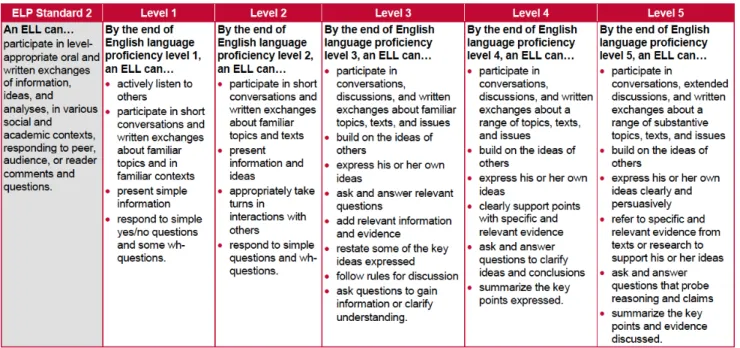
2. Participate in level-appropriate oral and written exchanges of information, ideas, and analyses, in various social and academic contexts, responding to peer, audience, or reader comments and questions.
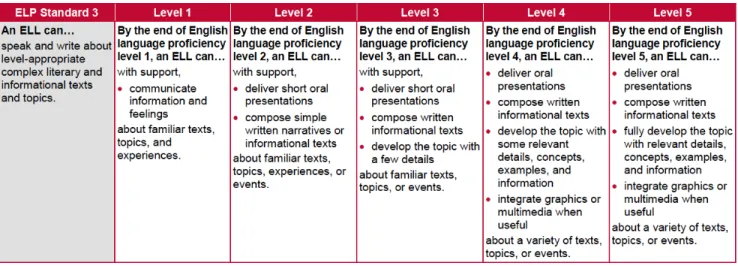
3. Speak and write about level-appropriate complex literary and informational texts and topics.
4. Construct level-appropriate oral and written claims and support them with reasoning and evidence.
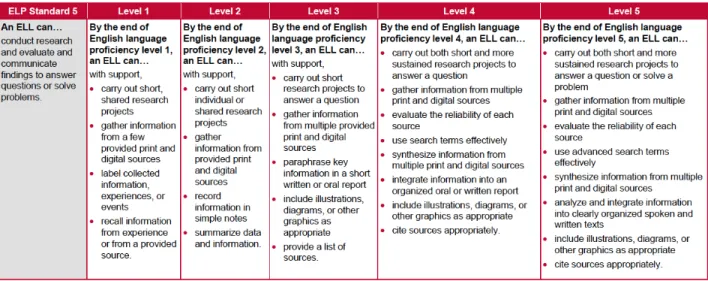
5. Conduct research and evaluate and communicate findings to answer questions or solve problems.
6. Analyze and critique the arguments of others orally and in writing.
7. Adapt language choices to purpose, task, and audience when speaking and writing. 8. Determine the meaning of words and phrases in oral presentations and literary and
informational text.
9. Create clear and coherent level-appropriate speech and text.
These standards can be divided into two groups: Standards 1-7 “describe the language necessary for ELLs to engage in content-specific practices associated with state-adopted academic content standards,” and Standards 8-10 “focus on micro-level linguistic features such as determining the meaning of words and using appropriate speech and conventions of language,” (“English
Language Proficiency Standards for Adult Education,” 2016). These standards do not define a national or federal set of mandates. Rather, while they do not specify how instructors should teach, these standards articulate a framework for states to strengthen their adult English language acquisition programs.
In addition to the standards on English language acquisition, each of the standards includes five level descriptors (Levels 1-5) detailing performance targets for each standard in practice (“English Language Proficiency Standards for Adult Education,” 2016). The descriptors help facilitate the design of instruction that allows all ELLs in a classroom to successfully work toward the same ELP standard. Figures 3-12 in Appendix B show the 10 standards, each
detailing the five level descriptors.
Adult Content Standards in North Carolina
North Carolina does not have specific standards for teaching civics education in adult ESL programs. However, with the national release of the College and Career Readiness Adult Education Content Standards from the Office of Career, Technical, and Adult Education
North Carolina use a common set of instructional and content standards (“North Carolina 2014-2015 Narrative Report,” 2014-2015). These standards state that, at a minimum, quality instruction should:
1. Be grounded in best practice documented by viable research.
2. Be aligned to the North Carolina College and Career Readiness Adult Education Content Standards.
3. Be taught by qualified staff. 4. Be contextualized.
5. Incorporate technology (“North Carolina 2014-2015 Narrative Report,” 2015). An integral part of these standards is that instruction in adult education programs should be “grounded in best practice documented by viable research,” (“North Carolina 2014-2015 Narrative Report,” 2015). Even though these standards were not specifically created for adult ESL instruction, about 40 percent of adults in adult education programs in North Carolina are in adult ESL programs (“North Carolina 2014-2015 Narrative Report,” 2015). Therefore,
understanding the best practices for teaching ESL and civics education is vital to the content standards for adult education.
Successful Strategies for Teaching ESL
While there are no binding federal standards for teaching English in adult ESL programs, numerous research studies have found trends in content and successful strategies for teaching English in traditional and adult ESL classrooms. Multiple studies on effective teaching strategies have found that learners retain more information for longer periods of time if they are able to connect the information that they are learning to existing information or concepts with which they are familiar (Condelli and Wrigley, 2006; Richards and Renandya, 2002). In a study by Condelli and Wrigley, researchers found that students in classes where teachers made
information with existing information in long-term memory, building mental structures and schemata (Richards and Renandya, 2002). Therefore, using existing information as a foundation for learning new material is a strategy that both instructors and learners can implement in the classroom.
The research study by Condelli and Wrigley also found that it is important for teachers to use students’ native language to aid in instruction, use varied practice and interaction strategies, and emphasize oral English communication during instruction, as these strategies were linked with higher growth in students’ learning and understanding of the material (Condelli and
Wrigley, 2006). The effectiveness of using students’ native languages in ESL classrooms is often debated, with some ESL instructors arguing that this strategy can lead to students depending on their native language and can hinder their English language acquisition (Spahiu, 2013).
However, a study on how to use this strategy effectively found that there is no “pedagogic reason” to exclude using students’ native languages in ESL classrooms. In fact, this study found that using this strategy decreases confusion when teaching complex topics like grammar rules and vocabulary. This strategy also allows students to express their ideas if they struggle to express thoughts in English and can save a great deal of class time (Spahiu, 2013).
The main trend in the research on effective teaching in adult ESL programs has shown that having students engage with the material rather than just teaching facts to memorize
increases their retention of the material. These effective teaching strategies can be combined with the English Language Proficiency Standards for Adult Education to improve instruction and increase learner growth and competency.
Civics education and civic engagement, defined as involvement in community life, are common topics that are taught in adult ESL programs. While there are no explicit standards that indicate how civics education should be taught in adult ESL programs, multiple studies on successful strategies for teaching civics education in traditional classrooms and in adult ESL programs can give insight as to how this topic should be taught, as well as the main themes found across multiple programs.
One study found that there are four broad teaching approaches employed by social studies teachers: traditional teaching, active learning, video teaching, and maintenance of an open classroom climate (Martens and Gainous, 2012). The analysis indicates that approaches that
foster an open classroom climate (encouraging student input) in combination with the others tend
to be the most successful across the board. Students who were exposed to an open classroom
environment had an odds ratio of 1.41 for civics knowledge, meaning these students were 41
percent more likely than not to answer civics content questions correctly (Martens and Gainous,
2012). In addition, students who were exposed to an open classroom environment had an odds ratio of 1.13 for internal efficacy, meaning these students were 13 percent more likely than not to
hold the belief that they have the ability to politically engage in their communities (Martens and
Gainous, 2012). While any combination including an open classroom climate maximizes benefit, traditional teaching (i.e. use of methods including textbook reading, worksheets, memorization,
and so forth) combined with an open classroom climate seems to do the best (Martens and
Gainous, 2012).
The most common trend throughout the literature on successful strategies for teaching civics education advocates for an active approach to teaching rather than a purely passive
in the learning process (i.e. asking students to debate a topic), while passive teaching strategies are those that strictly teach content (Michel, Varela, and Cater, 2003). Effective civics education explicitly advocates for civic and political engagement, without adopting a particular position or partisan stance, places emphasis on the ideas and principles that are essential to constitutional democracy, engages students in discussions of relevant issues, and encourages them to take part in activities that help put a “real life” perspective on classroom learning (Galston, 2004). These active approaches can vary from physical and direct involvement in civic practices to debates in the classroom.
Civic engagement is important because it can help learners apply their civics education in order to develop democratic values (Lenzi et al., 2014). Many studies have found that
successfully teaching civics education in adult ESL programs includes active engagement. A study by Huang, Tindall, and Nisbet found that successful topics in civics education included visits to local government offices and activities where students were asked to interact with the civics education learning process (Huang, Tindall, and Nisbet, 2011). A similar approach advocates for involvement in service-learning projects. A study by Morgan and Streb evaluated the impact of service-learning programs on students’ self-concept, political engagement, and attitudes toward out-groups (Morgan and Streb, 2001). The study found that if students were involved in service-learning projects in which they have a high degree of voice and ownership, their self-concept and political engagement would improve (Morgan and Streb, 2001). These studies indicate that having an active role in civics education, whether it is through fieldtrips or service-learning projects, helps build citizenship.
quality student government activities, and building on particular types of service that have proven to enhance civic participation can provide factual knowledge of history and government and encourage students to partake in their communities (Youniss, 2011). In addition, simulation of procedures and the democratic process can also help students contextualize political
institutions (McDevitt and Kiousis, 2004). One study of the Kids Voting USA program attempted to identify the curricular components that directly impact civic engagement. This study found that engaging students in classroom political discussion and having students
encourage others to vote were the most effective at promoting involvement in politics (McDevitt and Kiousis, 2004). Classroom political discussions also appeared to correlate with increased civic knowledge (McDevitt and Kiousis, 2004).
Connecting Literature to Existing Standards
The content standards created by the American Institutes for Research and released by
the Office of Career, Technical, and Adult Education focus on the activities that students in adult
ESL programs should be able to complete. Research on successful practices for teaching civics
education closely aligns with Standard 6 of the English Language Proficiency (ELP) Standards
for Adult Education created by the American Institutes for Research. Standard 6 states that
students should be able to “analyze and critique the arguments of others orally and in writing,”
(“English Language Proficiency Standards for Adult Education,” 2016). However, the rest of the existing standards for adult ESL programs focus on English language skills acquisition rather than teaching students about civics education and encouraging civic engagement. In addition, the North Carolina Adult Education Standards state that adult education instruction must be
teaching to adult education instruction, this specific standard is very vague because “viable research” includes a broad range of strategies, and since these standards are not binding, there is no guarantee that adult ESL programs are using effective practices for teaching civics education.
CHAPTER 3: METHODS AND DATA SOURCES
In order to understand and analyze the best practices for teaching civics education and engagement in adult ESL classes, interviews were conducted with program supervisors and instructors in federally funded adult ESL programs in North Carolina. These programs are
provided by community colleges and local literacy councils. Because the purpose of this research is to determine whether these programs are using effective practices for teaching civics
education, these interviews were conducted in order to obtain primary data and compared the results to findings from previous research studies on successful teaching methods for civics education.
could be incorporated (see Appendix C for the full list of interview questions). General
demographic information about ELLs was also collected. This data includes the number of ELLs enrolled in each program, the average age range of these students, and the most commonly spoken native language among these students. This data was collected from interviews with program supervisors and instructors rather than ELLs themselves because of the potential language barrier that would arise when talking to ELLs with limited English proficiency.
After finishing the data collection process, all interviews were transcribed. The transcriptions were coded using the ATLAS.ti software and values coding method. Before starting the coding process, some predetermined codes were created, such as codes indicating whether or not a program uses active teaching methods like debates, fieldtrips, or
service-learning projects. An open coding method was also used throughout the coding process. Once the coding process was completed, codes were grouped together by themes in order to determine trends in the data.
In the results section, findings from each adult ESL program are discussed and a
summary of any trends across all programs is also included. The data is used to evaluate whether adult ESL programs in North Carolina are using effective practices for teaching civics education. Finally, suggested recommendations for improving these practices are included.
Limitations
instructors feel are best practices for teaching civics education and do not include the thoughts of English language learners. In addition, this study focused on federally funded adult ESL
CHAPTER 4: FINDINGS AND DATA ANALYSIS
In this chapter, I will present and discuss the findings from my interviews with seven adult ESL program members, along with data from the National Reporting System through the Office of Career, Technical, and Adult Education (OCTAE). Then, I will analyze the data for major trends in order to form policy recommendations.
Program Demographic Data
Demographic data for each of the seven programs is presented in Table 1 below. For the purposes of protecting the privacy and identity of the research participants, I refer to data
collected from each participant as coming from “Program 1,” “Program 2,” “Program 3,” and so on. Therefore, no specific program can be identified. Programs are listed in the order that the interview was conducted. The following explains the content in each column in Table 1:
1. Column 1 shows the generic title of each program (i.e. “Program 1”).
2. Column 2 shows whether the interview participant is a program administrator or an instructor.
3. Column 3 shows whether the program was provided through a community college or a local literacy council.
4. Column 4 shows the approximate number of participants currently enrolled in each program.
5. Column 5 describes the structure of classes in each program (i.e. whether classes
operated on one-on-one instruction where each students is assigned to a tutor or whether classes included multiple students and were taught by one instructor).
6. Column 6 shows the average length of one class session in each program.
program, “there has been a huge drop off in the number of Latino/Latina students coming to class due to changes in the government,” (“Interview with Program 7,” 2019). This administrator did not state which specific changes in the government might have caused this trend.
As shown in Table 1, the majority of the interview participants currently work as
administrators of adult ESL programs, and one participant currently works as an ESL instructor. In addition, five out of the seven programs have a traditional classroom structure, where one instructor teaches multiple students, while only two programs use a one-on-one class structure.
*Represents the number of ELLs in the entire program
**Represents the number of students in the individual instructor’s class, not the entire program Program Title Type of
Participant Program Provider Number of ELLs* Class Structure Length of Class
Program 1 Administrator Community College 1800
One instructor, multiple
students 3 hours
Program 2 Administrator Literacy
Council 250 One-on-one 1 hour
Program 3 Administrator Literacy
Council 35 One-on-one Varies
Program 4 Administrator Community College 135
One instructor, multiple
students 3 hours
Program 5 Administrator Community College 450
One instructor, multiple
students Varies
Program 6 Administrator Literacy Council 100
One instructor, multiple
students 1.5-2 hours
Program 7 Instructor Literacy Council 8**
One instructor, multiple students
The programs represented in this study are located in different parts of North Carolina. Figure 1 below shows North Carolina divided into the mountain, piedmont, and coastal plains regions. The legend indicates which programs are located in which regions. The programs represented in this study are evenly distributed among the three regions. Later, I will compare findings across these three regions.
Source: Our State Geography in a Snap: Three Regions Overview, n.d.
percentage of post-tested students achieving at least one educational functioning level gain. Functioning levels are separated into ESL Beginning Literacy (Level 1), ESL Beginning Low (Level 2), ESL Beginning High (Level 3), ESL Intermediate Low (Level 4), ESL Intermediate High (Level 5), and ESL Advanced (Level 6) (Rubio-Festa, 2018). These gains combine data from all federally funded adult ESL programs in North Carolina for a given year, so program-specific gains are difficult to determine. However, since 2011, there has been an upward trend in the percentage of students showing at least one functioning level gain across all levels.
Functioning level gains are highest among ESL Beginning Low, or Level 2, students and lowest among ESL Advanced, or Level 6, students.
Curriculum and Teaching Strategies
Adult ESL programs in North Carolina base their teachings on a life skills curriculum, a naturalization and citizenship curriculum, or a combination of both. The life skills curriculum focuses on teaching English in the context of life skills (i.e. teaching students English in the context of work, school, and other settings). The naturalization and citizenship curriculum is focused on teaching students the material they need in order to successfully complete the naturalization process and become citizens of the United States.
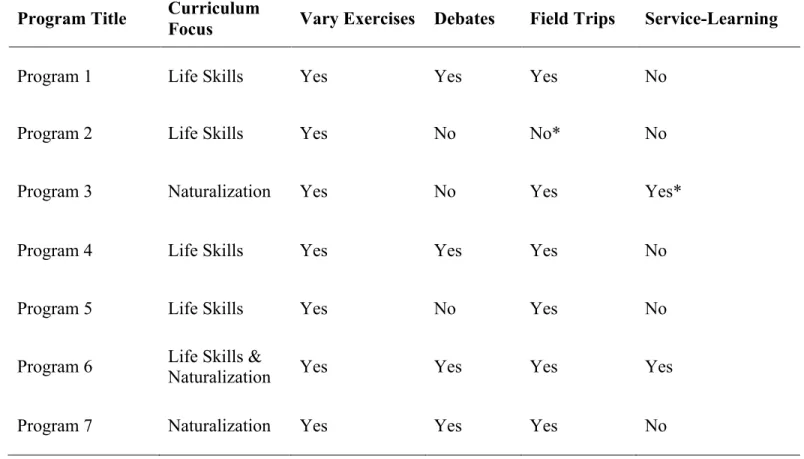
that have a traditional class structure because this activity can be easily implemented in a class with a group of students compared to classes that operate on a one-on-one basis. All programs except for Program 2 currently incorporate or have previously incorporated fieldtrips into their curriculum. Since the structure of the classes in Program 2 are one-on-one, students and their tutors are encouraged to take fieldtrips on their own, but fieldtrips are not implemented on the program level (“Interview with Program 2,” 2019). Only two programs reported that they have incorporated service-learning into their curriculum, and because classes in Program 3 are structured as one-on-one, students in this program have completed service on their own rather than as a class (“Interview with Program 3,” 2019).
Table 2: Types of Active Learning Strategies Implemented by Adult ESL Programs
Program Title Curriculum Focus Vary Exercises Debates Field Trips Service-Learning
Program 1 Life Skills Yes Yes Yes No
Program 2 Life Skills Yes No No* No
Program 3 Naturalization Yes No Yes Yes*
Program 4 Life Skills Yes Yes Yes No
Program 5 Life Skills Yes No Yes No
Program 6 Life Skills &
Naturalization Yes Yes Yes Yes
Program 7 Naturalization Yes Yes Yes No
Guidelines for Teaching Civics Education Emphasizing Proper Training for Instructors
All interview participants emphasized the importance of properly training instructors and volunteers before they start teaching. Administrators mentioned that most of their instructors or volunteers already had some experience teaching English as a Second Language, but having a thorough training process and incorporating development workshops throughout the year are also important for students’ learning process (“Interview with Program 1,” 2019; “Interview with Program 6,” 2019). This also allows instructors and volunteers to learn from their peers, discuss successful and unsuccessful teaching strategies, and develop as teachers.
Becoming a certified ESL instructor requires an ESL teacher degree through a state-approved teacher preparation program (“How to Become an English as a Second Language (ESL) Teacher,” n.d.). Some states offer ESL as an additional endorsement for teachers who are already licensed and certified in a standard content area (“How to Become an English as a Second Language (ESL) Teacher,” n.d.). Programs that are provided through community
colleges use certified ESL instructors because the program is offered through an institution rather than a local community organization, and instructors are paid (“Interview with Program 1,” 2019). However, this does not mean that community organizations do not use certified ESL instructors. Rather, because many community organizations like literacy councils have a one-on-one or small group class structure, the demand for instructors is higher in these programs. Therefore, since ESL instructor certifications can be costly and time-consuming, community organizations train volunteers, some who have teaching backgrounds and some who do not (“Interview with Program 3,” 2019).
When students register for an adult ESL program, they are given an assessment before beginning the program in order to gauge their level of English knowledge. This helps programs place students in classes that are appropriate for their level of English (“Interview with Program 2,” 2019). After a certain number of instructional hours, some programs will require students to take a post-assessment to measure their growth (“Interview with Program 6,” 2019). For
programs using federal funding, this process is a requirement. Because students enter adult ESL programs with different levels of English acquisition, most programs have levels of classes, ranging from beginner classes for students who do not know any English to advanced classes for students who want to work on more specialized topics (“Interview with Program 1,” 2019). These levels are important because they allow students to interact with others who are at the same level of English ability, while also allowing students to learn material that is appropriate for their English skill level. An important takeaway from the interviews regarding the levels within adult ESL programs is that program administrators and instructors must be careful not to
underestimate or overestimate the ability of their students. One program administrator stated that teaching English to adults is different from teaching English to children because even adults who do not know English very well are able to handle complexity (“Interview with Program 1,” 2019). Adult students have critical thinking ability and enough life experience to understand nuances in the curriculum, and some adult students may have different levels of reading and comprehension abilities (“Interview with Program 1,” 2019). Therefore, when placing students into levels, program administrators and instructors have stated that it is important to look for levels of student understanding along with periodical growth assessments.
Part of the life skills curriculum requires students to learn English while also learning about topics such as their host country’s health care, work system, and school system. Within this life skills curriculum, programs incorporate civics education, whether included broadly as learning about how to function as a citizen in society or focused on learning the workings of the United States’ political and historical institutions. Ensuring that students are not just learning civics material but are also engaging in the learning process is important because engagement has been shown to increase student growth and increase participation in the community. Along with active teaching methods shown in Table 2, interview participants explained the variety of strategies they use to help engage their students when learning civics education. According to the data, best practices for teaching civics education in this curriculum include making connections between institutions and cultures in students’ native countries and those in the United States, ensuring that students have a strong understanding of the foundation of a topic before
introducing more complex material, using a variation of active teaching methods to encourage civic engagement outside of the classroom, and emphasizing the importance of community. Connecting Material to Students’ Experiences
When asked about successful strategies for teaching civics education, all interview participants emphasized the importance of keeping material relevant to students. One
experience is a common method that participants said they used when teaching civics education. For example, one administrator said that when instructors in their program taught students about the flag of the United States, they started by asking students if they own a flag (“Interview with Program 1,” 2019). Then, students are asked what their flags look like and are encouraged to draw their flags on the board (“Interview with Program 1,” 2019). Given the level of the
students’ English ability, they are asked to read a short passage about the design of the flag of the United States, which tests students’ reading comprehension (“Interview with Program 1,” 2019). They might even watch a Schoolhouse Rock video or a song (“Interview with Program 1,” 2019). To explain a historical event like the origins of Thanksgiving, this administrator explained how they started by showing students some of the things the pilgrims brought with them when they came to the United States (“Interview with Program 1,” 2019). Then, they asked students about some of the things they brought when they came (“Interview with Program 1,” 2019). These methods allow students to learn the same material multiple times and contextualize the content by connecting the material to their personal experiences.
Starting from the Bottom
According to the participants, an important part of teaching English as a Second
Language is ensuring that students understand the foundation of the material before moving on to material that builds on the foundation (“Interview with Program 4,” 2019). While this may be an obvious strategy, some participants have noticed students struggling with material when they had not completely grasped underlying content (“Interview with Program 1,” 2019). This is
students about the flag of the United States, they start with the colors on the flag, then the shapes in the flag, and then putting these two concepts together to understand the importance and symbolism of the flag (“Interview with Program 4,” 2019). Another example that an
administrator described involved teaching students about the Electoral College map, so they could understand “why winning California is a big deal whereas winning Rhode Island is not as big of a deal,” (“Interview with Program 1,” 2019). This helps beginner level students
understand the basis of more complex concepts. Using Active Teaching Strategies
Many of the successful active teaching strategies focus on teaching similar civics topics in different ways. These successful teaching strategies not only teach students about civics content, but they also encourage students to participate in their communities and in the political sphere. Common strategies include engaging students in the voting process, going on fieldtrips to local historical organizations, incorporating and debating current events and issues, and
encouraging a service-learning approach.
agencies and leaders to talk to the class about the importance of voting and how to register to vote can also help students learn about the voting process (“Interview with Program 3,” 2019).
Allowing students to connect civics content to the community is important for encouraging civic engagement. One way to achieve this is to incorporate fieldtrips into the curriculum. One administrator said that their students went on a fieldtrip to a local historical institution where they were able to learn about the Civil Rights Movement and the history of black communities (“Interview with Program 1,” 2019). The students also had follow-up
seminars with the tour guides to discuss what they had learned and how it was important to their lives (“Interview with Program 1,” 2019). This strategy can be useful to introducing ways in which students can get involved in their community.
Another strategy that encourages community involvement includes incorporating service-learning into the curriculum. Program 2 actively teaches its students how to volunteer in the community and access resources in the community (“Interview with Program 2,” 2019). Program 3 also encourages volunteerism, though the administrator of this program said that the strategy is best used in advanced English classes (“Interview with Program 3,” 2019). Encouraging service-learning means that students not only learn which areas of their communities are in need, but they also learn where to find resources should they need them.
In addition to helping students engage in the their communities, instructors have also incorporated debates and discussions on current events and issues. For example, one
Program 6,” 2019). Program 5 even subscribes to “News for You,” a weekly publication that uses current events to help build vocabulary and comprehension skills (“Interview with Program 5,” 2019). These strategies allow students to stay connected to current events and issues while also giving them the time to form their own opinions and build their verbal skills.
Emphasizing Community and Community Involvement
When teaching civics education, interview participants said that a major focus point of adult ESL classes is not just ensuring that students learn the material in the curriculum, but also highlighting the importance of emphasizing community when teaching civics education. One administrator said that they “make sure students understand the important things that are going on in the community and the things they are going to be interacting with” in their ESL class (“Interview with Program 1,” 2019). This allows students to build that internal efficacy to participate in their communities and helps them apply theoretical knowledge in their daily lives. Best Practices for Teaching Civics Education in the Naturalization Curriculum
Some programs focus on teaching their students the knowledge they need in order to successfully complete the naturalization process and become citizens. In most cases, programs that focus mostly on this type of curriculum are located near a program that has a life skills based curriculum for adult English language learners. This allows programs to specialize in one
curriculum, while allowing access to both. On average, students who choose to pursue the
naturalization process, teaching students how to use community resources (i.e. library cards), and bringing community groups and leaders into the curriculum.
Preparing Students for the Citizenship Test
There are many materials that immigrants can use to prepare for the content portion of the naturalization test. According to the interview participants, books such as “Citizenship: Passing the Test,” “Voices of Freedom,” and materials published by the U.S. Citizenship and Immigration Services are all helpful in teaching students about the content questions that will be on the naturalization test (“Interview with Program 3,” 2019; “Interview with Program 6,” 2019; “Interview with Program 7,” 2019). Along with these content materials, these administrators and instructors stated that they also teach content through videos, allowing students to learn the same things multiple different ways.
The naturalization process requires students to exhibit competency in English oral and writing skills along with content questions. To prepare their students for the interview portion of the naturalization process, Program 3 and Program 6 recruit volunteers from the community to hold mock interviews for its students so they can familiarize themselves with the process (“Interview with Program 3,” 2019; “Interview with Program 6,” 2019). This helps students roll play the process so they are aware of what to expect when they finally go through the
naturalization process (“Interview with Program 3,” 2019). This strategy not only helps them prepare for the naturalization process, but it also helps them build soft skills that they can use in their everyday lives (“Interview with Program 6,” 2019).
Teaching Community Skills
students how to access resources in their communities and become involved in the political sphere. The administrator from Program 3 stated that their program “has students go to the library and get a library card so they can learn how to use that resource,” (“Interview with
Program 3,” 2019). They also said that their program “teaches parents how to participate more in the school system,” (“Interview with Program 3,” 2019). Program 3 also invited the local mayor to talk about the importance of voting, and the program invited a local chapter of the League of Women Voters to better educate students on their choices for voting. When using these types of resources to teach students, the administrator from Program 3 said that it is important to refrain from pushing a political agenda (“Interview with Program 3,” 2019).
Comparing Best Practices Across Regions in North Carolina
The programs included in this study are approximately evenly distributed among the three regions in the state. In addition, each region includes at least one program with a life skills based curriculum and at least one program with a naturalization based curriculum. Best practices for teaching civics education were relatively the same across these three regions. All programs represented in this study emphasized the importance of using a variety of methods to teach English and civics content, using active teaching methods, and keeping material relevant for students. However, materials and active teaching methods differed among programs. There is no advantage of choosing an adult ESL program in one region over an adult ESL program in either of the other two regions. The only disadvantage for programs in the coastal region involves changes in student attendance due to displacement caused by natural disasters (“Interview with Program 6,” 2019).
The two main structures for adult ESL programs are one-on-one instruction, where a student is paired with a tutor or an instructor, and traditional class structure, where one instructor teaches a group of students. There are benefits and disadvantages of both program structures, and some teaching strategies might be more easily implemented in a traditional classroom structure compared to a program with one-on-one instruction.
Benefits and Disadvantages of Both Program Structures
When using a one-on-one teaching style, the curriculum can be tailored to the individual needs of the student, whereas in traditional classrooms, this is difficult to implement. One program administrator stated that a main strength of their program was that “specific goals that students have can be addressed by tutors” when working on an individual basis (“Interview with Program 3,” 2019). In addition, working one-on-one allows both tutors and students more flexibility for meeting given that both tutors and students are working adults with family and work obligations (“Interview with Program 6,” 2019). Program 6, which teaches students in a small group, even incorporates an open attendance policy, meaning that students are welcome to come to whichever classes they are able to come to (“Interview with Program 6,” 2019). This allows students to make up classes when they miss them. The administrator of this program said that their open attendance policy allows them to retain attendance because “often times, students stop coming to class altogether because they missed classes in the past,” (“Interview with
Program 6,” 2019). Open attendance policies and flexible schedules, while beneficial for both students and tutors, are difficult to implement in a classroom with a large number of students.
instruction. Because traditional classes are taught in groups, having students engage in debates and organizing fieldtrips and service-learning projects can be done on a classroom scale,
ensuring that all students have the opportunity to experience these strategies. In fact, according to Table 1 and Table 2, programs with traditional classroom structure incorporate more debates, fieldtrips, and service-learning activities into their curriculum compared to programs with one-on-one instruction. In addition, one administrator stated that an advantage of having a traditional classroom structure over one-on-one instruction is that students get the opportunity to make connections with other students during class (“Interview with Program 6,” 2019). “Most ESL students come to class to meet people, make connections, and relate to others who are going through the same thing they are,” and having a traditional class structure can more easily facilitate the formation of relationships among students (“Interview with Program 6,” 2019). Connecting Practices to Content Standards
Existing standards for adult ESL programs in North Carolina include the North Carolina Adult Education Standards and the English Language Proficiency (ELP) Standards for Adult Education. While the ELP Standards for Adult Education are content-based and can be used to determine student growth and competency, the North Carolina Adult Education Standards include some core instructional standards for teaching English to adult learners. Three of the standards put forth by the North Carolina Adult Education Standards require that at a minimum, adult ESL instruction should be “grounded in best practice documented by viable research,” classes should be “taught by qualified staff,” and instruction should “be contextualized,” (“North Carolina 2014-2015 Narrative Report,” 2015). According to the data collected from the
practices include using a variation of reading, writing, speaking, and listening activities, along with active and engaging methods like debates, using videos, and incorporating fieldtrips and service-learning projects. However, group activities like debates, fieldtrips, and service-learning projects seem to be more easily implemented in programs that have a traditional classroom teaching structure. In addition, programs provided through community colleges are taught by certified ESL instructors, while programs provided by local literacy councils train volunteers before they begin teaching. However, the extent to which these volunteers are trained may differ between programs. Lastly, all programs represented in this study use some form of
contextualization when teaching civics education – material is contextualized by themes like health care or voting, or contextualized by applying content to students’ experiences. This allows students to form connections with the content that they learn.
Additional Findings
CHAPTER 5: RECOMMENDATIONS AND CONCLUSIONS Policy Recommendations
Since there are no existing instructional standards for teaching civics education in adult ESL programs, this research can serve as the foundation for creating such standards in order to ensure that all programs are using the same basic practices. The results show trends that are integral to the learning process and important for encouraging civic engagement. These practices can be used to create a set of instructional standards for teaching civics education. These
standards can be divided into standards for program structure and standards for teaching civics education in adult ESL programs.
Standards for Adult ESL Program Structure
Because both traditional classroom structure and one-on-one instruction have their benefits, implementing a combination of these two program structures could increase
opportunities for students to engage with their classmates while also getting some individualized instruction. Using a traditional classroom structure while allowing students to pair with tutors for some one-on-one instruction would give students the opportunity to engage in debates. The combined structure would also make it easier for program instructors to organize fieldtrips and service-learning opportunities for all students. In addition, this combined structure allows students to form a community within the classroom.
Standards for Teaching Civics Education in Adult ESL Programs
students and, if possible, incorporate this involvement into the curriculum. Creating partnerships with local organizations that can come and talk to students about civic engagement opportunities in the community is also another strategy that all programs should implement, especially those that may not have the means to plan fieldtrips or excursions for their students. Lastly, if not already implemented, programs should establish communication and share teaching strategies with other adult ESL programs in the state. This would allow administrators and instructors to share successful strategies with others while also learning from other programs.
Suggestions for Future Research
Future research on this topic could involve collecting data from adult English Language Learners to see if the strategies that they find successful in learning civics education align with the strategies found in this research study. However, this could be difficult because of the potential language barrier for some beginner level students. In addition, future research could look at voting patterns and civic engagement among those who have attended adult ESL programs in order to determine if certain teaching strategies are more likely to lead to civic and political engagement among adult immigrants.
Conclusions
Adult ESL programs in North Carolina use a variety of practices to teach civics education to English language learners. Learning a broad topic like civics education can be difficult,
References
2018-2019 Program Providers Contact List. (2018, July 1). Retrieved January 12, 2019, from https://www.nccommunitycolleges.edu/college-and-career-readiness
About Us - National Report System. (n.d.). Retrieved January 12, 2019, from https://nrsweb.org/about-us
Adult Education and Literacy. (n.d.). Retrieved January 12, 2019, from https://www2.ed.gov/about/offices/list/ovae/index.html
Adult Education Content Standards. (n.d.). Retrieved January 12, 2019, from https://www.nccommunitycolleges.edu/college-and-career-readiness Adult Education and Literacy Act of 1991, 20 USC §§ 9201-9204.
Alatis, J. (n.d.). The Early History of TESOL. Retrieved January 12, 2019, from
https://www.tesol.org/about-tesol/association-governance/tesol%27s-history/the-early-history-of-tesol
Beaumont, E. (2011). Promoting Political Agency, Addressing Political Inequality: A Multilevel Model of Internal Political Efficacy. The Journal of Politics, 73(1), 216–231.
https://doi.org/10.1017/s0022381610000976
Carrera, S., & Wiesbrock, A. (2009). Civic Integration of Third-Country Nationals. Center for European Policy Studies, 1(1), 1–40. Retrieved from
https://www.ppic.org/publication/english-proficiency-of-immigrants/ Citizenship Resource Center. (n.d.). Retrieved November 2, 2018, from
Condelli, L., & Wrigley, H.S. (2006). Instruction, Language and Literacy: What Works Study for Adult ESL Literacy Students. Office of Vocational and Adult Education, 6, 111-133. Ehrlich, T. (2000). Civic Responsibility and Higher Education. Retrieved from
https://books.google.com/books/about/Civic_Responsibility_and_Higher_Educatio.html? id=4gOpzfEqgE4C
ELP Standards. (2017). Retrieved January 12, 2019, from http://www.elpa21.org/elp-standards English Language Acquisition (ELA). (n.d.). Retrieved January 12, 2019, from
https://www.nccommunitycolleges.edu/college-and-career-readiness
English Language Proficiency Standards for Adult Education. (2016, October). Retrieved January 12, 2019, from https://lincs.ed.gov/publications/pdf/elp-standards-adult-ed.pdf Exemptions and Accommodations when Filing for Naturalization. (2015, June 1). Retrieved
November 2, 2018, from https://www.uscis.gov/us-citizenship/citizenship-through-naturalization/exceptions-accommodations
Farnell, R., & German, D. Civic Education in the Contemporary United States, Princeton, New Jersey: Educational testing Services, March 1967
Galston, W. (2004). Civic Education and Political Participation. Political Science and Politics, 37 (2), 263–266. Retrieved from https://www.jstor.org/stable/4488817
Godsay, S., Henderson, W., Levine, P., & Littenberg-Tobias, J. (2012, September). State Civic Education Requirements. Retrieved January 12, 2019, from
https://eric.ed.gov/?id=ED536256
How to Become an English as a Second Language (ESL) Teacher. (n.d.). Retrieved March 23, 2019, from ESL Teacher website: https://www.eslteacheredu.org
Huang, J., Tindall, E., & Nisbet, D. (2011). Authentic Activities and Materials for Adult ESL Learners. Journal of Adult Education, 40(1), 1-10.
Immigrants in North Carolina. (2017, October 6). Retrieved November 2, 2018, from https://www.americanimmigrationcouncil.org/research/immigrants-north-carolina Lenzi, M., Vieno, A., Sharkey, J., Mayworm, A., Scacchi, L., Pastore, M., & Santinello, M.
(2014). How School can Teach Civic Engagement Besides Civic Education: The Role of Democratic School Climate. American Journal of Community Psychology, 54(3), 251– 261. https://doi.org/https://doi.org/10.1007/s10464-014-9669-8
Lutz, P. (2017). Two Logics of Policy Intervention in Immigrant Integration: An Institutionalist Framework Based on Capabilities and Aspirations. Comparative Migration Studies, 5(1). https://doi.org/10.1186/s40878-017-0064-0
Malone, W. (1968). Civic Education. Peabody Journal of Education, 46 (2), 110–114. Retrieved from https://www.jstor.org/stable/1491074
Martens, A., & Gainous, J. (2012). Civic Education and Democratic Capacity: How do Teachers Teach and What Works? Social Science Quarterly, 94(4), 956–976. Retrieved from https://doi.org/10.1111/j.1540-6237.2012.00864.x
McArthur, E. (1998). Adult Participation in English-as-a-Second-Language (ESL) Classes. National Center for Education Statistics, 1–2.
McDevitt, M., & Kiousis, S. (2004). Education for Deliberative Democracy: The Long‐Term
Influence of Kids Voting USA. In CIRCLE Working Paper (pp. 1–37). University of
Michel, N., Varela, O., & Cater, J. (2009). Active Versus Passive Teaching Styles: An Empirical Study of Student Learning Outcomes. Human Resource Development Quarterly, 20(4), 397–418. https://doi.org/10.1002/hrdq.20025
Morgan, W., & Streb, M. (2002). Building Citizenship: How Student Voice in Service‐Learning
Develops Civic Values. Social Science Quarterly, 82(1), 154–169. https://doi.org/https://doi.org/10.1111/0038-4941.00014
National Reporting System Assessment Training. (n.d.). Retrieved January 12, 2019, from https://www.nccommunitycolleges.edu/college-and-career-readiness/national-reporting-system-assessment-training
North Carolina 2014-2015 Narrative Report. (2015). Retrieved January 12, 2019, from
https://wdcrobcolp01.ed.gov/CFAPPS/OVAE/NRS/documents/index.cfm?s=&ss=NC&s y=2014&dt=1
O’ Malley, M., Chamot, A., Stewner‐Manzanares, G., Kupper, L., & Russo, R. (1985). Learning
Strategies Used by Beginning and Intermediate ESL Students. Language Learning, 35(1), 21–46. https://doi.org/https://doi.org/10.1111/j.1467-1770.1985.tb01013.x
Our State Geography in a Snap: Three Regions Overview. (n.d.). Retrieved February 12, 2019, from NCPEDIA website: https://www.ncpedia.org/geography/regions
Penninix, R. (2003, October 3). Integration: The Role of Communities, Institutions, and the State. Retrieved November 2, 2018, from
https://www.migrationpolicy.org/article/integration-role-communities-institutions-and-state