Inpatient Smoking Cessation Counseling: Prevalence and Demographic Bias Among Patients Admitted with Acute Myocardial Infarction
By Jana Johnson
A Master's Paper submitted to the faculty of The University ofNorth Carolina at Chapel Hill
In partial fulfillment of the requirements for The degree of Master of Public Health in
The Public Health Leadership Program.
ABSTRACT
BACKGROUND: Most studies of smoking cessation counseling have been done in outpatient settings and show that brief counseling can improve cessation rates. However, rates of counseling are low and vary based on patient demographics. Fewer studies addressing the delivery of smoking cessation counseling have been conducted in inpatient settings. Therefore, our research aims were: to assess the prevalence of cessation
counseling delivered by providers to inpatient smokers admitted with AMI; to determine
if a demographic bias exists as to who receives counseling; and to determine if an
educational intervention for providers resulted in an increase in the frequency of smoking cessation counseling.
METHODS: Medical Review of North Carolina conducted two prevalence studies of quality indicators, before and after an educational intervention for providers, among Medicare recipients who had been admitted with an acute myocardial infurction (AMI) in approximately 50 hospitals across the state. We performed a secondary data analysis of the smoking cessation counseling indicator from this project.
RESULTS: 154 smokers were included in the Baseline study and 147 in the Follow up. Among the smokers, the median age was 68, 57% were male, and 82% were white. Prior to the intervention, 31% received cessation counseling, and after the intervention, 3 8% received counseling (p=0.16). Multivariate analysis revealed no demographic bias as to who receives counseling before the intervention, but revealed greater odds of receiving counseling for those who were male (OR 2.4, 95%CI 1.1-5.2) and lower odds of receiving counseling for those who were black (OR 0.3, 95%CI 0.08-0.8) after the intervention.
CONCLUSION: The overall prevalence of smoking cessation counseling delivered to inpatient smokers with a smoking-related illness was low and the educational
Cigarette smoking remains the number one preventable cause of death in this country1 In 2000, approximately 46.5 million adults (23.3%) in the United States were current smokers2 and during 1995-1999, more than 400,000 persons died prematurely each year as a result of smoking.3 The average annual cessation rate among smokers in 2000 was 4-6%. 2
Although the highest smoking cessation rates are generally reported as a result of comprehensive smoking cessation programs (8-18% abstinence at 6 months), studies in the outpatient setting have demonstrated that even brief smoking cessation counseling by a health care professional can result in a 2.5% absolute increase in cessation rates4 This translates into an additional 1.6 million smokers who could quit each year. In addition, the United States Preventive Services Task Force has given smoking cessation counseling an "A"
recommendation for all persons who use tobacco products5
These interventions have been documented in the literature primarily in the outpatient setting, and reveal a demographic bias as to who receives
counseling. For example, a number of studies have demonstrated that whites are more likely to receive cessation counseling than blacks or non-white Hispanics. 6
·7•10-12·16 Other studies have found that older subjects are more likely to be counseled 7'9-11 although a few studies associate younger age with a greater
fr equency o cessation counse mg. f . 1. 14-16
w·
1t 1tt e vanat10n, women rece1ve h 1. 1 . . 11 .that younger women received counseling more often, while older men were more
likely to receive smoking cessation counseling6•7
Other studies report a greater frequency of receiving advice to quit
smoking among those who smoked more cigarettes per day, or had smoked for a
greater number ofyears,5•6•8-12 and some studies report factors such as fair or poor
self-reported health status, number of quit attempts and the presence of
smoking-related illnesses as associated with a greater frequency of receiving smoking
cessation advice5•8-11•13-15 Finally, several studies have specifically noted an
association with a higher frequency of smoking cessation counseling and having
cardiovascular disease or surviving an acute myocardial infarction (AMI). 6'13-15
In general, frequency of counseling in the outpatient setting varies from 48 to
81%.
Regarding smoking cessation counseling among inpatients, only one study
has performed a demographic analysis in this setting specifically addressing who
receives counseling, but it was underpowered to find any effects.17 Another study
noted that hospital staff were much more likely to counsel patients hospitalized on
a cardiovascular disease unit than on a general medical unit, 18 which is consistent
with other data suggesting that patients with more severe illness are more likely to
receive smoking cessation counseling.
Studies evaluating the efficacy of hospital-based smoking interventions
have shown mixed results, although types of interventions and results vary
widely.19-26 For example, in a review of smoking cessation interventions in
moderate intensity hospital interventions demonstrated an improvement in
long-term quit rates27 However, the positive study was published in 1974 and lacked
detailed data regarding success of implementation of physician advice or
follow-up clinic or home visits28 The other studies lacked sufficient power to detect
meaningful increases in cessation rates.
Another review of interventions for smoking cessation in hospitalized
patients concluded that post-discharge follow-up after inpatient smoking cessation
interventions increased abstinence rates22 That review found no studies
reporting on the efficacy of brief advice during hospitalization with no subsequent
follow-up.
Recently, however, Hajek, et al25 published results of a randomized
controlled trial evaluating a brief, single session smoking cessation intervention
among inpatients who had had an AMI and bypass surgery in 17 hospitals in
England. This study found no difference in abstinence rates at 12 months
between intervention and control groups. The authors concluded that a single
session intervention is likely not enough to reach a highly dependent group of
smokers as those in this study. Of note, the smoking cessation intervention in this
study was delivered by existing cardiac rehabilitation nurses with no special
training in counseling or behavioral interventions. This also may have played a
role in the negative findings, as another recent study29 has suggested smoking
cessation interventions for hospitalized patients may be more effective when
In general, studies of inpatient smoking cessation interventions have shown mixed results and have lacked consistency of study design, type of intervention, and type and degree of follow-up. In spite of these discrepancies, many health care professionals agree that undertaking smoking cessation
counseling with smokers who have been admitted to the hospital, particularly with a smoking-related illness, is especially advantageous because many such patients may be more willing to quit at that time. Hospitalization of these smokers is a "teachable moment", likely to increase perceived vulnerability to smoking-related health harms and responsiveness to medical quit-smoking advice21 In fact, Sciammana, et af6 found that smoking behavior in the first 24 hours of
hospitalization predicts long-term remission, suggesting that smoking cessation counseling and interventions during admission may improve quit rates.
Interestingly, hospitalization itself has been shown to be associated with smoking cessation, with long-term quit rates following hospitalization tending to be higher than those of the general population. Further, quit rates among patients admitted to a coronary care unit are higher than those of other hospitalized
patients, even in the absence of smoking cessation interventions27
of this counseling opportunity. For the purposes of this study, we will assume
that brief, inpatient smoking cessation counseling delivered by existing hospital
staff is an effective tool that increases abstinence rates.
Given the paucity of data regarding patient characteristics associated with
receiving smoking cessation counseling in inpatients compared to that of
outpatients and the potential to improve cessation rates in hospitalized patients by
taking advantage of the "teachable moment", we undertook this secondary data
analysis to answer the following questions: I) What is the proportion of cardiac
inpatients in small to mid-sized rural hospitals that receive smoking cessation
counseling? 2) Does a demographic bias exist among hospitalized patients as to
who receives smoking cessation counseling? 3) Do patients with more
comorbidities receive smoking cessation counseling more often than those with
fewer comorbidities? 4) If a demographic bias does exist among smokers as to
who receives cessation counseling, does a simple smoking cessation intervention
eliminate the bias? 5) Does a simple, inexpensive smoking cessation intervention
increase the proportion of cardiac inpatients that receive smoking cessation
counseling?
Methods
The Medical Review ofNorth Carolina (MRNC), the Quality
Improvement Organization (QIO) for the state, performed serial prevalence
studies of 1478 charts ofMedicare patients admitted with a diagnosis of acute
Improvement Project, was developed with the objective of decreasing mortality rates from AMI among Medicare beneficiaries. To this end, the project aimed to increase compliance with the following quality indicators that the literature has suggested are associated with improved outcomes: Aspirin administered during the hospital stay, aspirin prescribed at discharge from the hospital, beta-blocker prescribed at discharge, ACE inhibitor prescribed at discharge, and smoking cessation advice given during hospitalization.
This study analyzes results regarding only the smoking cessation advice indicator. Therefore, data for this study was from Medicare enrollees who were current smokers and were admitted with a principal diagnosis of AMI to
approximately 50 hospitals across North Carolina that were part of the National AMI Medicare Quality Improvement Project. Most hospitals in this analysis were in rural communities and had less than 300 beds. One large academic medical center participated in the study. The participating hospitals were comprised of a convenient sample of all hospitals in North Carolina that collaborate with MRNC.
The first round of data collection ("Baseline") in this serial prevalence analysis included information gathered from 731 eligible patients between
October 1, 1998 and March 31, 1999, which was followed by a smoking cessation counseling intervention. After the intervention, described below, a second round of data ("Follow-up") was collected from 747 different eligible patients between January 1, 2001 and June 30, 2001.
birth) were abstracted from the charts of eligible patients. Smoking status as abstracted from the patient chart was used to determine whether the patient was a smoker for the purposes of this study. The formal ICD-9 diagnosis of Tobacco Use Disorder, if present, was given to patients at discharge and was considered a "secondary diagnosis". It was not used to determine smoking status as eligibility for this study. A full description of data abstraction methods is described
elsewhere. 30
Age was calculated from date of birth and date of discharge. Data for the other variables in this analysis (sex, secondary diagnoses, race, and discharge disposition) were collected from the National Claims History database for the same patients over the same time periods. The number of comorbidities and diagnoses (other than AMI) were calculated from the "secondary diagnosis" variable.
The intervention, called the Smoking Cessation Toolkit, was developed by MRNC for the hospitals in the study. Instructions for the interventions were delivered to hospitals via a teleconference on September 26, 2000. Participants in the teleconference included 3 physicians with expertise in smoking cessation and/or cardiology, the project coordinator from MRNC, and at least one representative from each of the participating hospitals. The content of the call included descriptions of the quality indicators from the National AMI Medicare Quality Improvement Project, a presentation describing the importance of smoking cessation counseling in patients who have had an AMI, and a
Subsequently, the presenters discussed the contents of the Smoking Cessation Toolkit, which contained notes for the teleconference presentations, a review of the Quality Improvement Project, a journal article overview of the Clinical Practice Guideline for Treating Tobacco Use and Dependence,31
strategies for implementing the Guideline, sample documents for hospitals to use in implementing the intervention, resources for information regarding heart disease, AMI or smoking cessation, a Smoker Identification Chart Sticker and Smoking Cessation Documentation Label, and a Patient Education Kit. Each hospital was then responsible for ordering these materials free of charge and implementing the counseling intervention. Evidence from order forms suggests that the majority (approximately 80%) of participating hospitals ordered at least some of the available materials.
Statistical Analysis
All analyses were performed using Stata Version 8.0 statistical software (Stata Corp., College Station, TX).
Only data from smokers in the Baseline group (n=l54) and in the
Follow-up groFollow-up (n=l47) were used in this analysis. Pearson's
x
2 test was used in the bivariate analysis to assess the association between frequency of smoking cessation counseling and variables likely to be related to counseling. These variables were chosen based on data from smoking cessation literature suggesting an association of these factors with receiving advice to quit smoking. They include age, race, sex, number of comorbidities, discharge disposition, and diagnosis.To control for confounding, variables that demonstrated a statistically significant association with smoking cessation counseling in the bivariate analysis, along with others thought to be strongly associated with smoking
cessation counseling, were included as independent variables in a multiple logistic regression model, with smoking cessation counseling as the dependent variable. Variables not statistically significantly related to smoking cessation counseling were assessed with the Wald test to ensure that they could be dropped from the logistic regression model.
analysis. Data for the Race variable were missing for 7 subjects in the Baseline group, therefore, analyses were performed with the Race data that existed for the other subjects. The subjects with missing Race values had data for all of the other variables and were included in all other analyses.
Results
Frequency Data
Frequency data for Baseline and Follow-up groups (Table 1) demonstrated an even distribution of patients older and younger than 68 years. A majority of these patients, however, were white (83% Baseline, 82% Follow-up) and male (68% Baseline, 57% Follow-up). A higher frequency was discharged to home (68% Baseline, 61% Follow-up) compared to other discharge dispositions (32% Baseline, 39% Follow-up) and the majority of patients had a documented diagnosis of coronary artery disease (57% Baseline, 65% Follow-up). A relatively even distribution of other diagnoses was seen with the exception of a slight predominance of tobacco use disorder and hypertension.
What is the Prevalence of Smoking Cessation Counseling?
Overall, 31% of smokers in the Baseline group had documentation of smoking cessation counseling in their chart.
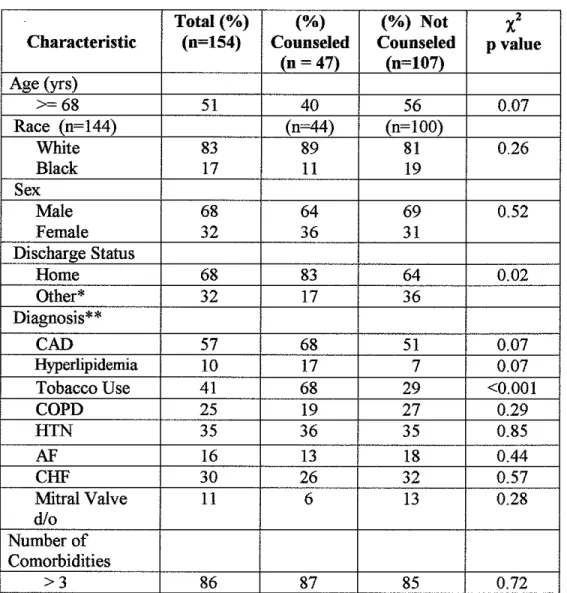
Does a Demographic Bias Exist As To Who Receives Counseling? Bivariate analysis of the Baseline group (Table 2) demonstrated
charts (p<0.001), as well as with being discharged to home (p=0.02). Patients
older than 68 years tended to receive counseling more often than patients less than
68 years. Those with documented diagnoses of coronary artery disease and
hyperlipidemia tended to receive counseling more often than patients without
those diagnoses.
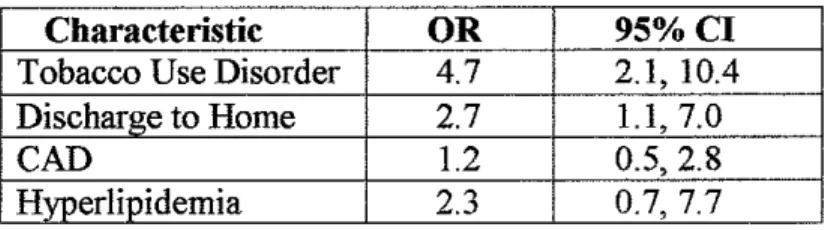
Multiple logistic regression analysis ofBaseline group data (Table 3)
revealed greater odds of receiving smoking cessation counseling for those patients
with a formal ICD-9 diagnosis of Tobacco Use Disorder documented in their
charts as compared to those without such documentation (OR4.7, 95% CI
2.1-10.4 ), and if they were discharged to home as compared to other discharge
dispositions (OR2.7, 95%CI 1.1-7.0), controlling for the presence of coronary
artery disease (CAD) and hyperlipidemia.
Do Patients With More Comorbidities Receive Counseling More Often?
The majority of patients in both the Baseline and Follow-up groups had
more than 3 comorbidities (86%, 89%, respectively). Bivariate analysis in neither
the Baseline nor the Follow-up groups revealed an association between number of
comorbidities and receiving smoking cessation counseling.
Does a Simple Intervention Eliminate Bias?
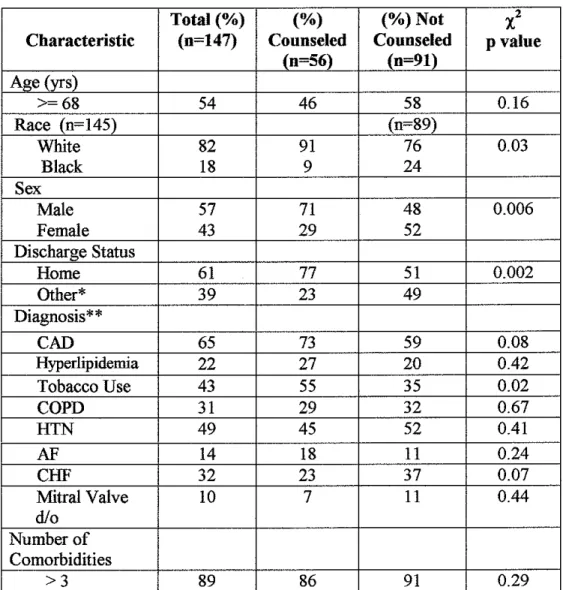
Bivariate analysis of Follow-up data (Table 4) demonstrated statistically
significant associations between receiving smoking cessation counseling and
having a formal diagnosis of Tobacco Use Disorder documented in the chart
(0.02), black race (p=0.03), female sex (p=0.006), and being discharged to home
and congestive heart failure ( CHF) and receiving counseling compared to those without such diagnoses, but this did not reach statistical significance.
Multiple logistic regression analysis ofFollow-up data (Table 5) demonstrated greater odds of receiving smoking cessation counseling for those with a formal diagnosis of Tobacco Use Disorder documented in their charts as compared to those without this diagnosis (OR 3.4, 95%CI 1.4-7.6) and for those who were male (OR 2.4, 95%CI 1.1-5.2). Patients had lower odds of receiving counseling if they were black (OR 0.3, 95%CI 0.08-0.8).
Does a Simple Intervention Increase Counseling Frequency?
Overall, 38% of smokers in the Follow-up group had documentation of smoking cessation counseling in their chart. Chi-square analysis comparing this to the baseline frequency of counseling (31%) was not statistically significant (p=0.16).
Discussion
What is the Prevalence of Smoking Cessation Counseling?
The overall frequencies of smoking cessation counseling in this study are consistent with those from the literature in both inpatient and outpatient
counseling with over 60% of smokers admitted with AMI. This is perhaps the most striking feature of this study. Physicians and other health care providers are missing a valuable opportunity (the "teachable moment") to inform, educate and advise a population of smokers who have already suffered health consequences related to smoking about the benefits and methods of quitting.
In this study, no control group of smokers admitted with a non-smoking-related illness was included in the analysis. Anda, et al6 demonstrated a higher likelihood of cessation counseling among patients who survived an AMI, and other studies have shown a similar association among patients with a history of cardiovascular disease.10•13-15 Therefore, smoking cessation frequencies among hospitalized smokers with non-smoking-related illnesses may be even lower than those reported in this study among smokers who were AMI survivors.
As with any intervention, the frequency of the delivery of inpatient smoking cessation counseling is most important if it improves the outcome of interest, in this case long-term abstinence rates. However, the literature is inconsistent regarding long-term abstinence rates as a result of brief hospital-based smoking cessation interventions. Several studies show increased long-term abstinence rates as a result of inpatient smoking cessation interventions, but levels of intensity of interventions and degree of post-discharge follow-up vary
with 1 month offollow-up improved cessation rates, but insufficient evidence existed to assess the effect of very brief interventions delivered during the hospital stay. 36 These inconsistencies limit the ability to draw useful conclusions from the data, and prevent analysis of the efficacy of individual components of each intervention.
No study has evaluated the efficacy of an intervention such as the one in this study, although Hajek, et al25 suggested in a recent controlled trial that this type of brief intervention is not useful in patients admitted after an AMI. However, given the lack of conclusive data regarding the efficacy of brief hospital-based smoking cessation interventions, the smoke-free environment of hospitals today that requires abstinence during admission thus providing a "quit date", and good outpatient data suggesting brief smoking cessation advice improves quit rates, the delivery of smoking cessation counseling to inpatients can, at the very least, raise awareness of the importance of quitting and educate patients about various quitting methods (nicotine replacement therapy, bupropion, outpatient programs, etc.). Inpatient smoking cessation counseling may also improve abstinence rates. Health care providers must take advantage of this prime opportunity to intervene among this population of smokers.
smoked for decades. Active smokers in that study had an excess risk of coronary heart disease death of75% compared with those who had quit, and the mortality rates for ex-smokers were no higher than for nonsmokers. In addition,
Hermanson, et al38 studied the effects of smoking and cessation in a cohort from the Coronary Artery Surgery Study (CASS) and saw no diminution of beneficial effect of smoking cessation with increasing age. Smoking cessation lessened the risk of death or AMI in older and younger patients with CAD in that study. Does a Demographic Bias Exist As To Who Receives Counseling?
At baseline, bivariate and multivariate analyses did not demonstrate a demographic bias with respect to who receives smoking cessation counseling, although we found an association between having tobacco use disorder documented in the chart and receiving advice to quit smoking. However,
diagnoses in this study were those that were documented in the chart using formal ICD-9 codes at the time of hospital discharge. As a result, the association
intervention, so analysis of this association is not possible in this study. Studies in outpatients, however, have documented that physicians are more likely to provide cessation advice when patients' smoking status is routinely identified in the medical recordi1'32
Surprisingly, in this analysis, only approximately 40% of smokers in each group had formal ICD-9 code documentation of Tobacco Use Disorder in their charts, and only SO% of those patients in each group were counseled. This suggests that even formal documentation in the chart of this ICD-9 diagnosis did not provide a strong enough incentive for providers to deliver cessation
counseling in half of smokers for whom they entered this diagnosis. The factor(s) contributing to the lack of cessation counseling of smokers in this setting is( are) unclear.
Patients who were discharged to home were associated with a higher frequency of receiving smoking cessation counseling in both the bivariate and multivariate analyses. One possible explanation for this is that those patients well enough to go home after hospitalization may have seemed more receptive to smoking cessation counseling, more interactive in discussion about quitting, and more likely to heed advice to quit. Although no association was seen between number of comorbidities and smoking cessation counseling, those patients who were discharged to home may also have been healthier.
literature suggests, however, that patients with more comorbidities, especially when the comorbidities are smoking-related illnesses, are more likely to receive smoking cessation advice.13'15'18 The likely explanation for the lack of
association in this study is the small sample size and the fact that more than 80% of patients in the Baseline and the Follow-up groups had greater than 3
comorbidities.
Does a Simple Intervention Eliminate Bias?
Follow-up data revealed more statistically significant predictors of smoking cessation counseling than did Baseline data. This is surprising because we expected the intervention to result in more uniform counseling of all inpatient smokers in this study. A possible explanation for this is that the intervention raised awareness among health care providers so that they initiated counseling more often, but without a specific effort to counsel all patients uniformly. The lower odds of black patients receiving smoking cessation counseling is consistent with results from outpatient studies,7'10"12 while the finding that males received counseling more often than females contributes to the mixed findings of various studies, although most show higher frequencies of counseling for females7•9-11
than for males. 12
Does a Simple Intervention Increase Counseling Frequency?
because the intervention failed or because it was not implemented by all of the hospitals.
Limitations
This study has several limitations. First, all results are from reviews of charts and an administrative database (National Claims History) and therefore rely on accurate documentation by health care providers of all variables collected. Providers likely underdocument the occurrence of smoking cessation counseling17 along with other patient information resulting in inaccuracies in analysis results. However, although the low frequencies of smoking cessation counseling in this study are possibly due in part to underdocumentation, this is unlikely to account for the entire gap between those who smoked and those who received cessation advice. As mentioned, only 40% of smokers in each analysis group had a formal ICD-9 diagnosis of Tobacco Use Disorder documented in their charts. This type of underreporting likely occurred with other variables as well.
Second, the Follow-up group of patients was comprised of different individuals than patients in the Baseline group. Although all patients were Medicare enrollees admitted with a diagnosis of AMI and general characteristics were similar between groups, the assessment of different individuals in the
Third, no data were collected with respect to other factors that the
literature suggests are often associated with smoking cessation counseling. These factors include race and gender of the health care provider, and other patient characteristics such as socioeconomic status, level of education, degree of
readiness to quit, number of cigarettes smoked, duration of smoking, or degree of nicotine dependence. These variables may have confounded results as to who received smoking cessation counseling in this analysis.
Fourth, of all the Medicare patients involved in the National AMI Medicare Quality Improvement Project, only 20% (154 patients in the Baseline group and 147 patients in the Follow-up group)(Table 1) were smokers. As a result, the study was likely underpowered to detect other effects noted in the literature as relating to smoking cessation counseling. This percentage is somewhat higher than population figures reported by the CDC, which listed the smoking prevalence for Americans over age 65 as 9. 7%3 This difference is likely because this cohort was selected due to the presence of a smoking-related illness (AMI) and therefore represents a larger proportion of smokers. Even so, the low absolute numbers of patients in this study could have resulted in an absence of effects for some variables such as number of comorbidities, CAD, hyperlipidemia and age that may have been detected with larger sample sizes.
rigorously implemented it, or the results may represent its maximal efficacy if all of the hospitals implemented it fully. If long-term abstinence data had been collected after the intervention, we may have been able to determine if the counseling that was done was effective, and if the increase in counseling frequencies from 31% to 38% (Baseline and Follow-up, respectively) was clinically, if not statistically, significant.
A particular advantage of this analysis of the National AM1 Quality Improvement Project, however, is the fact that the intervention was implemented in mostly rural, community hospitals. Therefore, these data have good external validity and may reflect what is feasible in similar hospital settings across the country.
Future Efforts
Improving the frequency of smoking cessation counseling among
inpatients requires a change in health care provider behavior. Numerous studies have assessed the methods and efficacy of changing physician behavior, and a recent review of this literature concluded that "imperfect" evidence exists to determine which implementation strategies are most effective39
However, a review of randomized controlled trials that evaluated the efficacy of continuing medical education lists several characteristics of
respected health personnel who served as medical educators. Investigators of the trials in the review were interviewed and their feedback suggested that orienting provider's efforts around a public health approach to clinical practice, giving physicians feedback on behaviors, and looking at clinical outcomes of
interventions to assure that strategies improve patient's health were factors that would improve efforts at health care provider behavior change. Finally, the study concluded that high priority should be given to the recruitment of medical
educators, that interventions of the greatest value would be transferable to different settings, and that researchers must be vigilant in following up positive physician behaviors to determine the need for reinforcement.
These qualities of effective continuing medical education strategies can be applied to interventions to improve smoking cessation counseling among
A prospective cohort study could be used to assess the effectiveness of smoking cessation counseling on quit rates. However, during the study, the baseline prevalence of smoking cessation counseling could also be determined among this cohort of smokers, followed by providers implementing the training they had received. Medical educators could then provide effectiveness feedback through the measurement of the frequency of smoking cessation counseling at some point after the intervention had begun. In addition, the prevalence of cessation counseling could be determined among various demographic groups to assess the presence of bias regarding who received counseling.
Finally, long-term (12 month) abstinence rates could be collected and analyzed for everyone in this cohort of smokers (both counseled and not
counseled) admitted during a specified time period to determine the effectiveness of the counseling intervention on quit rates.
As a result of this project, providers would receive important training regarding smoking cessation counseling, researchers would be able to determine the effectiveness of the intervention on counseling frequencies, and researchers and providers could collect data regarding demographic biases among those counseled, as well as determine the effectiveness of the intervention on patient outcomes (12 month abstinence rates). In addition, because the project would be locally supervised, researchers could easily follow-up physician behavior to determine the need for reinforcement.
rates, and this could also be performed. However, the cohort study described above allows for the determination of the effectiveness of the intervention at increasing cessation rates as well as of counseling prevalence before and after the intervention, a measurement that would not be possible in a randomized
controlled triaL This information would be valuable in assessing the project's effectiveness at changing physician behavior.
Other changes that would likely increase the frequency of smoking cessation counseling by providers among inpatients include Medicare, Medicaid and private insurance reimbursement of cessation counseling as well as rigorous assessment of inpatient cessation counseling frequencies by Quality Improvement Organizations across the country with prevalence feedback provided to each hospitaL
health medical educators, can effectively deliver useful inpatient smoking cessation advice that results in long-term abstinence.
Table I. Frequency Data of Baseline and Follow-up groups.
Baseline Follow-up Characteristic Total(%) Total(%) (n=154) (n=147)
Age (yrs)
>=68 51 54
<68 49 46
Race (n=l44) (n=l45)
White 83 82
Black 17 18
Sex
Male 68 57
Female 32 43
Discharge Status
Home 68 61
Other* 32 39
Diagnosis**
CAD 57 65
Hyperlipidemia 10 22
Tobacco Use 41 43
COPD 25 31
HTN 35 49
AF 16 14
CHF 30 32
Mitral Valve d/o 11 10
Number of Comorbidities
<=3 14 11
>3 86 89
*Other= Discharge to Other Hospital, Skilled Nursiug Facility, Intenuediate Care Facility, Another Institution, Home Health Services, or Left Agaiust Medical Advice.
Table 2. Baseline Data. Frequencies of Patient Characteristics and Results of
x
2 Analyses of Associations of Patient Characteristics With Receiving Smokiog Cessation Couoseliog.Total(%) (%) (%) Not
·l
Characteristic (n=154) Counseled Counseled p value
(u = 47) (n=107) Age (yrs)
>=68 51 40 56 0.07
Race (n=144) (n=44) (n=IOO)
White 83 89 81 0.26
Black 17 11 19
Sex
Male 68 64 69 0.52
Female 32 36 31
Discharge Status
Home 68 83 64 0.02
Other* 32 17 36
Diagnosis**
CAD 57 68 51 0.07
Hyperlipidemia 10 17 7 0.07
Tobacco Use 41 68 29 <0.001
COPD 25 19 27 0.29
HTN 35 36 35 0.85
AF 16 13 18 0.44
CHF 30 26 32 0.57
Mitral Valve 11 6 13 0.28
d/o Number of Comorbidities
>3 86 87 85 0.72
*Other~ Discharge to Other Hospital, Skilled Nursiog Facility, Another Institution, Home Health Services, or Left Against Medical Advice.
** CAD~ coronary artery disease; COPD ~ clnonic obstructive pulmonary disease; HTN ~
Table 3. Logistic Regression of Statistically or Clinically Significant Factors Associated Witb Receiving Smoking Cessation Counseling, Baseline Group.
Characteristic
OR
95%CITobacco Use Disorder 4.7 2.1, 10.4
Discharge to Home 2.7 1.1, 7.0
CAD
1.2 0.5, 2.8Table 4. Follow-up Data. Frequeocies of Patient Characteristics and Results of
l
Analyses of Associations of Patient Cbaracteristics Witb Receiving Smoking Cessation Counseliog.Total(%) (%) (%)Not
xz
Characteristic (n=147) Counseled Counseled p value (n=56) (n=91)
Age (yrs)
>=68 54 46 58 0.16
Race (n=l45) (n=89)
White 82 91 76 0.03
Black 18 9 24
Sex
Male 57 71 48 0.006
Female 43 29 52
Discharge Status
Home 61 77 51 0.002
Other* 39 23 49
Diagnosis**
CAD 65 73 59 0.08
Hyperlipidemia 22 27 20 0.42
Tobacco Use 43 55 35 0.02
COPD 31 29 32 0.67
HTN 49 45 52 0.41
AF 14 18 11 0.24
CHF 32 23 37 0.07
Mitral Valve 10 7 11 0.44
d/o Number of Comorbidities
>3 89 86 91 0.29
*Other= Discbarge to Other Hospital, Skilled Nursing Facility, Intermediate Care Facility, Anotber Institution, Home Healtb Services, or Left Against Medical Advice.
Table 5. Logistic Regression of Statistically or Clinically Significaot Factors Associated With Receiving Smoking Cessation Counseling, Follow-up Group.
Characteristic OR 95%CI
Tobacco Use Disorder 3.4 1.4, 7.6
Sex (Male) 2.4 1.1, 5.2
Race (Black) 0.3 0.08, 0.8
REFERENCES
1. Centers for Disease Control and Prevention, National Center for Chronic Disease Prevention and Health Promotion, Office on Smoking and Health. Reducing Tobacco Use. A Report of the Surgeon General- 2000.
http://www.cdc.gov/tobacco/sgr tobacco use.htm
2. Centers for Disease Control and Prevention. Morbidity and Mortality Weekly Report. Cigarette Smoking Among Adults- United States, 2000. July 26, 2002; 51(29):642-645.
3. Centers for Disease Control and Prevention. Morbidity and Mortality Weekly Report. Annual Smoking-Attributable Mortality, Years of Potential Life Lost, and Economic Costs - United States, 1995-1999. 2002; 51(14): 300-303.
4. Silagy, C, Stead, LF. Physician Advice for Smoking Cessation (Cochrane Review). In: The Cochrane Library, Issue 4, 2002. Oxford: Update
Software.
5. United States Preventive Services Task Force. Guide to Clinical
Preventive Services, 2"d Ed. Chapter 54: Counseling to Prevent Tobacco Use. pp. 597-609. International Medical Publishing. Alexandria, Virginia.
1996.
6. Anda, Robert F.; Remington, Patrick L.; Sienko, Dean G.; Davis, Ronald M. Are Physicians Advising Smokers to Quit? The Patient's Perspective. JAMA. 1987; 257(14): 1916-1919.
7. Gilpin, Elizabeth; Pierce, John; Goodman, Jerry; Giovino, Gary; Berry, Charles; Bums, David. Trends in physicians' giving advice to stop smoking, United States, 1974-87. Tobacco Control. 1992; 1:31-36. 8. Ockene, Judith; Hosmer, David W.; Williams, Joanne W.; Goldberg,
Robert J.; Ockene, Ira S.; Biliouris, Timothy; Dalen, James E. The Relationship of Patient Characteristics to Physician Delivery of Advice to Stop Smoking. Journal of General Internal Medicine. 1987; 2:337-340. 9. Goldstein, Michael G.; Niaura, Raymond; Willey-Lessne, Cynthia; DePue,
10. Frank, Erica; Winkleby, Marilyn A; Altman, David G.; Rockhill, Beverly; Fortmann, Stephen P. Predictors ofPhysicians' Smoking Cessation Advice. JAMA. 1991; 266(22): 3139-3144.
11. Doescher, Mark P.; Saver, Barry G. Physicians' Advice to Quit Smoking. The Glass Remains Half Empty. Journal of Family Practice. 2000; 49(6): 543-547.
12. Rogers, Laura Q.; Johnson, Karen C.; Young, ZinMandy; Graney,
Marshall. Demographic Bias in Physician Smoking Cessation Counseling. American Journal of the Medical Sciences. 1997; 313(3): 153-158.
13. Ossip-Kiein, Deborah J.; Mcintosh, Scott; Utman, Christopher; Burton, Kathi; Spada, Jean; Guido, Joseph. Smokers Ages 50+: Who Gets Physician Advice to Quit? Preventive Medicine. 2000; 31:364-369. 14. Sheridan, David P.; Hornung, Carlton A; McCutcheon, Ernest P.;
Wheeler, Frances C. Demographic and Educational Differences in Smoking in a Tobacco-Growing State. American Journal ofPreventive Medicine. 1993; 9(3): 155-159.
15. Thorndike, AnneN.; Rigotti, Nancy A; Stafford, Randall S.; Singer, Daniel E. National Patterns in the Treatment of Smokers by Physicians. JAMA 1998; 279(8): 604-608.
16. Centers for Disease Control and Prevention. Office on Smoking and Health. Morbidity and Mortality Weekly Report. Receipt of Advice to Quit Smoking in Medicare Managed Care -United States, 1998. Sept. 8, 2000. 49(35):797. http://www.cdc.gov/mmwr/PDF/wk/mm4935.pdf 17. Neighbor, William E.; Stoop, Daniel H.; Ellsworth, Allan. Smoking
Cessation Counseling Among Hospitalized Smokers. American Journal of Preventive Medicine. 1994; 10(3): 140-144.
18. Emmons, Karen M.; Goldstein, Michael G. Smokers Who Are Hospitalized: A Window of Opportunity for Cessation Interventions. Preventive Medicine. 1992; 21:262-269.
20. Stanislaw, Alicia E.; Wewers, Mary Ellen. A smoking cessation intervention with hospitalized surgical cancer patients: A pilot study. Cancer Nursing. 1994; 17(2): 81-86.
21. Orleans, C. Tracy; Rotberg, Heidi L.; Quade, Dana; Lees, Patricia. A Hospital Quit-Smoking Consult Service: Clinical Report and Intervention Guidelines. Preventive Medicine. 1990; 19:198-212.
22. Munafo, M.; Rigott~ N.; Lancaster, T.; Stead, L.; Murphy, M.
Interventions for smoking cessation in hospitalized patients: a systematic review. Thorax. 2001; 56: 656-663.
23. Kottke, Thomas E.; Battista, Renaldo N.; DeFriese, Gordon H.; Brekke, Milo, L. Attributes of Successful Smoking Cessation Interventions in Medical Practice. A Meta-analysis of39 Controlled Trials. JAMA.
1988; 259(19): 2882-2889.
24. Lewis, Stephen F.; Piasecki, Thomas M.; Fiore, Michael C.; Anderson, Jane E.; Baker, Timothy B. Transdermal Nicotine Replacement for
Hospitalized Patients: A Randomized Clinical Trial. Preventive Medicine. 1998; 27:296-303.
25. Hajek, Peter; Taylor, Tamara Z.; Mills, Peter. Brief intervention during hospital admission to help patients to give up smoking after myocardial infarction and bypass surgery: randomized controlled trial. BMJ. 2002; 324: 87-89.
26. Sciammana, C.N.; Stillman, FA; Hoch, J.S.; Butler, J.H.; Gass, KG.; Ford, D.E. Opportunities for Improving Inpatient Smoking Cessation Programs: A Community Hospital Experience. Preventive Medicine. 2000; 30:496-503.
27. France, EricK.; Glasgow, Russell E.; Marcus, Alfred C. Smoking Cessation Interventions among Hospitalized Patients: What Have We Learned? Preventive Medicine. 2001; 32: 376-388.
28. Burt, A.; lllingworth, D.; Shaw, TRD; Thornley, P.; White, P.; Turner, R. Stopping smoking after myocardial infarction. Lancet. 1974; 304.
30. Jencks, S.F.; Cuerdon, T.; Burwen, D.R.; Fleming, B.; Houck, P.M.; Kussmaul, A.E.; Nilasena, D.S.; Ordin, D.L.; Arday, D.R. Quality of medical care delivered to Medicare beneficiaries: A profile at state and national levels. JAMA. 2000; 284(13): 1670-1676.
31. Fiore, Michael, C.; The Tobacco Use and Dependence Clinical Practice Guideline Panel, Staff, and Consortium Representatives. A Clinical Practice Guideline for Treating Tobacco Use and Dependence: A US Public Health Service Report. JAMA. 2000; 283(24): 3244-3254. 32. Fiore, M.C.; Jorenby, D.E.; Schensky, A.E.; Smith, S.S.; Bauer, R.R.;
Baker, T.B. Smoking status as the new vital sign: Effect on assessment and intervention in patients who smoke. Mayo Clinic Proceedings. 1995; 70: 209-213.
33. Ockene, Judith K.; Kristeller, Jean; Goldberg, Robert; Amick, Terrence L.; Pekow, Penelope S.; Hosmer, David; Quirk, Mark; Kalan, Kathryn. Increasing the Efficacy of Physician-delivered Smoking Interventions: A Randomized Clinical Trial. Journal of General Internal Medicine. 1991; 6: 1-8.
34. Stevens, Victor J.; Glasgow, Russell E.; Hollis, Jack F; Lichtenstein, Edward; Vogt, Thomas M. A Smoking-Cessation Intervention for Hospital Patients. Medical Care. 1993; 31(1): 65-72.
35. Smith, Patricia M.; Reilly, Kelly R.; Miller, Nancy Houston; DeBusk, Robert F.; Taylor, C. Barr. Application of a nurse-managed inpatient smoking cessation program. Nicotine & Tobacco Research. 2002; 4:211-222.
36. Rigotti, NA.; Munafo, MR; Murphy, MFG; Stead, LF. Interventions for smoking cessation in hospitalised patients. (Cochrane Review). In:
JheCochrane Library, Issue 1, 2003. Oxford: Update Software.
37. Jajich, Cindy L.; Ostfeld, Adrian M.; Freeman, Daniel H. Smoking and Coronary Heart Disease Mortality in the Elderly. JAMA. 1984; 252(20): 2831-2834.
38. Hermanson, Bonnie; Omenn, Gilbert S.; Kronmal, Richard A.; Gersh, Bernard J.; Participants in the Coronary Artery Surgery Study. Beneficial Six-Year Outcome of Smoking Cessation in Older Men and Women With Coronary Artery Disease. Results from the CASS Registry. New
39. Grimshaw, Jeremy M.; Eccles, Martin P.; Walker, Anne E. Changing Physicians' Behavior: What Works and Thoughts on Getting More Things To Work. Journal of Continuing Education in the Health Professions. 2002; 22(4): 237-243.
ACKNOWLEDGEMENTS
I gratefully acknowledge the assistance of Anna Schenck, Senior
Epidemiologist, Medical Review ofNorth Carolina, who provided expertise and guidance for the statistical analysis of this paper.
I am also grateful to Debbie Nicholas, Statistical Analyst, Medical Review ofNorth Carolina, for her assistance in accessing the database.
I sincerely thank Medical Review ofNorth Carolina for allowing me to collaborate with them on this project.
I am grateful to Russ Harris, my second reader, for sharing with me his wisdom and experience in bringing a focus to these findings.
UNC
SCHOOL OF PUBLIC HEALTH OFFICE OF THE DEANTne University of North Carolina at Chapel Hill
TO:
DEPARTMENT: ADDRESS: DATE: FROM:
Jana Johnson Social Medicine CB#7240
02/0j20Q3 \\ I ~ :
Andrea K. Biddle, PhD, Deputy Chair
UNC School of Public Health Institutional Review Board
IRB NUMBER: 03-1911
APPROVAL PERIOD: 02/04/2003 through 02/03/2004
TITLE: inpatient Smoking Cessation Counseling: Demographic Bias Among Patients Admitted with Acute Myocardia! Infarction
SUBJECT: Expedited Protocol Approval Notice--New Protocol
vour research project has been reviewed under an expedited procedure because it involves only minimal risk to human subjects. This project is approved for human subjects research, and is valid through the expiration date above.
NOTE:
(1) This Committee complies with the requirements found in Part 56 of the 21 Code of Federal regulations and Part 46 of the 45 Code of Federal regulations. Assurance Number: M-1390, IRS No. !RB00000540.