Available on-line at: www.oapub.org/edu
Copyright © The Author(s). All Rights Reserved.
doi: 10.5281/zenodo.3376875 Volume 5 │ Issue 11 │ 2019
COLLISION OF DEMOCRATIC COACHING LEADERSHIP STYLE
TO IMPROVE TECHNICAL SKILLS OF BADMINTON PLAYERS
iNisar Ahmed Khaskheli1ii,
Muhammad Akram Ansari1,
Hakim Ali Sahito2,
Muhammad Akhlaque Memon1,
Farhan Ali Khaskheli3
1Center for Physical Education Health and Sports Sciences,
Faculty of Natural Sciences, University of Sindh, Jamshoro, Sindh, Pakistan
2Date Palm Research Institute (DPRI),
Shah Abdul Latif University, Khairpur Mir’s, Sindh, Pakistan
3Department of Teachers Education,
Shah Abdul Latif University, Khairpur Mir’s, Sindh, Pakistan
Abstract:
This research study was carried out on the game technique of badminton players during the tournament educational organizational structure for developing successful inter-collegiate and inter-department level badminton players of Sukkur region, Sindh. The study was conducted on 200 male players of Badminton. The student-players of 20 affiliated colleges (N=100) and 20 teaching departments (N=100) of Shah Abdul Latif University Khairpur participated in the study through a survey questionnaire was applied for the collection of data. The results show that the majority of students were with the higher impact of democratic coaching on technical skills of the badminton players. The frequencies, percentages were differently found with the overall means such as; 2.51, 2.55, 2.41, 2.39 and 2.48, respectively which were significantly different to each other. It is concluded that this information will help the coaches to improve the techniques of badminton players. Therefore, it is suggested that the University or College level inter-collegiate and inter-department badminton tournaments should be arranged and encouraged.
Keywords: democratic coaching style, impact assessment, players, badminton
1. Introduction
Badminton is one of the most popular sports in the world, with 200 million adherents (Kwan et al., 2010). It is the fastest racket game (Singh et al., 2011) originating in China and created in England it is the national sport of various Asian countries. It can be practiced by anyone regardless of age or experience Badminton is a racket sport for two or four people, with a temporal structure characterized by actions of short duration and high intensity. This sport has five events: men’s and women’s singles, men’s and women’s doubles, and mixed doubles, each requiring specific preparation in terms of technique, control, and physical fitness. Badminton is one of the most popular sports in the world, with 200 million adherents. The decision to include badminton in the 1992 Olympics Game increased participation in the game (Phomsoupha and Laffaye, 2015). According to an estimation of BWF this diversion is presently played by more than, 200 million individuals on the planet and more than thousand took part in various rivalries
and competitions around the globe (Alam et al., 2009).
Coaching in sports is defined as a set of strategies intended to enhance the coach’s ability to influence the behavior of the whole team and players more effectively (Smith, 2010). Effective coaching changes throughout specific play situation as the qualities of players and the known situations vary (Farrow and Abernthy, 2003). Coach posses a capability to offer an expert teach individuals to explore and assure development in different games as well (Christensen and Ball, 2016). A more effective coach must see the players as a distinctive and strive to enhance the performance of each player according to need (Kristiansen et al., 2012).
The majority of the exploration that has been organized on in the efficacy of coaching region limiting the most recent 3 decades have been influenced by a want to distinguish the specific coaching qualities, abilities, insights or cognitions, practical methodologies and strategies, styles of leadership, or behavioral ways have an efficacy (Horn, 2008). The players have distinguished the abilities and each merit for his / her uniqueness. Coaches need to vary their style with each player. A similar type of coaching program does not suit everyone. Each and every player should be roused dissimilarly (Pilus and Saadan, 2009). The Training of being a coach has become a well-known methodology for the advancement of leadership and change in complex situations. In spite of expanding popularity or prevalence, little confirmation defines the
coaching need and effect (Carey et al., 2011). The players of badminton of Sukkur region
have been found to be reached at good levels of their sports. Continuance of this phenomenon raised a question to find out the fact of coaching relationship on player’s game technique thus; the research study was conducted.
and agility, are extremely important (Badminton Australia, 2012). Footwork is the foundation to be able to produce quality stroke in badminton, which, if it is done in a good position. To be able to hit with a good position, an athlete must have a movement speed. Footwork speed cannot be achieved if the footwork is irregular. The focus of good footwork is reaching the bird as quickly as possible with as little effort as possible. Good footwork gets player into the best position to execute shots while maintaining good balance and body control (Grice, 2008).
Significant literature review defines coaches as leaders. Presently in football, the term “Coach” and “Manager” are utilized conversely. Also, numerous specialists in wear settings utilize the terms “Coach” and “leader” reciprocally strengthening the presupposition that the coaches are leaders. Achievement in coaching in the field of sports depends, to a great extent, on the authority style of the trainer in the sports. It is relied upon of the Coach to attempt to guarantee that there is accordance between the
required, genuine and favored leadership conduct (Surujlal and Dhurup, 2012). This
may need the coach to show adaptability or elasticity in adjusting his/her style of leadership to suit particular circumstances of leadership with the goal that all partners which are coach, player, and leadership are fulfilled. Coaches employ solid collision over their players, hence their leadership abilities shapes a key component of their coaching. Thus; the research study was conducted to evaluate the significant values, latter on; the findings will be shared with the stakeholders of badminton game.
2. Research Methodology
2.1 Hypothesis
H0 Democratic coaching leadership style does not impact significantly on the
game technique of badminton players.
H1 Democratic coaching leadership style significantly impacts the game
technique of Badminton players.
The sample size of the study is 200 badminton players, as 100 from affiliated
colleges of Shah Abdul Latif University and 100 from the various departments of Shah Abdul Latif University Khairpur. This research consists of the 40 badminton teams of different affiliated Colleges and the badminton teams of various departments of Shah Abdul Latif University (SALU) Khairpur. The list of affiliated colleges was taken from the office of the Inspector of Colleges of the concerned University. The population of the study was the student-players of badminton, studying in colleges of Sukkur region and the student-players studying in different classes of various departments at Shah Abdul Latif University Khairpur. All the colleges of Sukkur region were visited to know the availability of badminton players by the cooperation of Directors Physical education of concerned colleges.
inter-department, intercollegiate or intervarsity tournaments, whereas from the University side, Sports week was organized by the Sports Section, Shah Abdul Latif University Khairpur during the year 2017 and various sports competitions were arranged where the inter-department badminton tournament was also organized, list of all the participating departments along with the names of players was available in the office of the Director Physical Education, Shah Abdul Latif University Khairpur which was used to select the players for the collection of data. 20 teams of 20 departments were selected as the sample of the study, following the convenience sampling technique.
As there were two areas of the study one was the affiliated colleges of Shah
Abdul Latif University Khairpur and other were different departments of Shah Abdul Latif University Khairpur so the study was limited to the student-players (boys) of B.A Part-I & II, BSC part-I &II, B. Com part-I & II of affiliated boys degree colleges of Sukkur region and badminton (boys) players of different departments of Shah Abdul Latif University Khairpur studying in bachelor or master degree programs and represented his department or University as badminton player. The students who were studying in the first year & inter classes in colleges and M. Phil & Ph. D in University were excluded.
2.2 Statistical Analysis
The Coaching Efficacy Scale (CES; Feltz, et al; 1999) consisting of 5 coaching efficacy domains was used as an instrument to collect the data as a structured survey questionnaire. The frequency, percentage and mean were computed through the application of Statistical Package of Social Sciences (SPSS) version 22.
3. Results
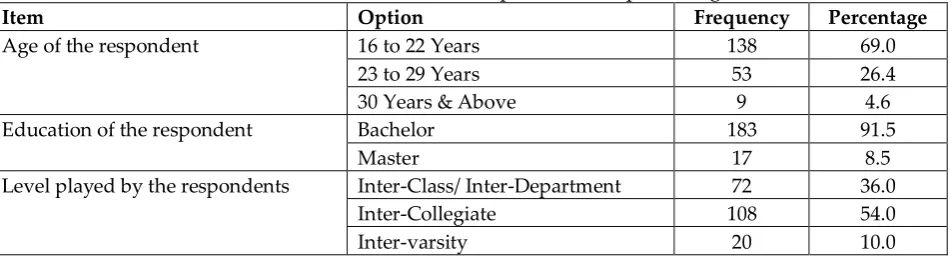
Table 1: The majority of respondents belong to the age group, inter-class with a different frequencies and percentage
Item Option Frequency Percentage
Age of the respondent 16 to 22 Years 138 69.0
23 to 29 Years 53 26.4
30 Years & Above 9 4.6
Education of the respondent Bachelor 183 91.5
Master 17 8.5
Level played by the respondents Inter-Class/ Inter-Department 72 36.0
Inter-Collegiate 108 54.0
Inter-varsity 20 10.0
The statements of assessment by badminton player for efficiency of democratic coach to improve the game technique, mentioned in (Table- 2) majority of respondents in the first item have responded as extremely with a frequency of 137 and 68.5 percentage similarly; most of the respondents for 2nd item have responded as extremely with 132 frequency and 65.5 percentage. There were a total of 200 frequency numbers with the percentage of 1.00 that shows the overall mean 2.5100 of performs skills. Whereas; the focuses on techniques were found not at all zero, moderately with the frequency of 69 and percentage 34.5 with the extremely frequency 131 and percentage 65.5 with the overall mean of 2.5500, respectively. The statements for assessment of badminton players regarding the capability of their democratic coach as detailed under given table for improvement in-game technique; the majority of respondents in the first item have responded as extremely with a frequency of 124 and 62.0 percentage similarly most of the respondents for 2nd item have responded as extremely with 112 frequency and 56 percentage. The statements for assessment of badminton players regarding the capability of their democratic coach as detailed for improvement in-game technique; the majority of respondents in the first item have responded as extremely with a frequency
of 101 and 50.5 percentage similarly most of the respondents for 2nd item have
responded as extremely with 112 frequency and 56 percentage with the 200 and 100 for each and every statement.
Table 2: The frequency, percentage and mean of all statements
regarding the impact of democratic coaching leadership style on technical skills
Statement Option Frequency Percentage Mean
Performs skills
Not at all 8 4.0
2.5100
Moderately 55 27.5
Extremely 137 68.5
Focuses on techniques
Not at all 0 0.0
2.5500
Moderately 69 34.5
Extremely 131 65.5
Promotes ability of the player
Not at all 8 4.0
2.4100
Moderately 68 34.0
Extremely 124 62.0
Moderately 80 40.0 2.4100
Extremely 112 56.0
Find out skill errors
Not at all 8 4.0
2.3900
Moderately 91 45.5
Extremely 101 50.5
Teaches game skills
Not at all 4 2.0
2.4800
Moderately 84 42.0
Extremely 112 56.0
H1 Democratic coaching leadership plays a role significant role to improve the
game technique of the player.
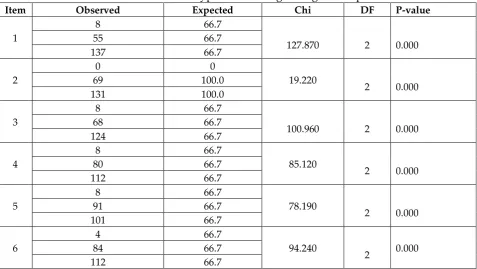
Chi-square test was applied to find out the chi value of all items, results indicated in table-3 as item no. 1; 127.8, item no. 2; 19.220, item no. 3; 100.9, item no. 4; 85.120, item no. 5; 78.190, and item no. 6; 94.240 respectively with a df= 2 and p-value 0.000 of all items. An alternative hypothesis was tested through Chi-square with the P=value of all items was found to be significant and less than 0.5 (Table- 3).
Table 3: Alternative hypothesis testing through Chi-square
Item Observed Expected Chi DF P-value
1
8 66.7
127.870 2 0.000
55 66.7
137 66.7
2
0 0
19.220
2 0.000
69 100.0
131 100.0
3
8 66.7
100.960 2 0.000
68 66.7
124 66.7
4
8 66.7
85.120
2 0.000
80 66.7
112 66.7
5
8 66.7
78.190
2 0.000
91 66.7
101 66.7
6
4 66.7
94.240
2 0.000
84 66.7
112 66.7
H0: Democratic Leadership Style does not impact significantly on Badminton
players
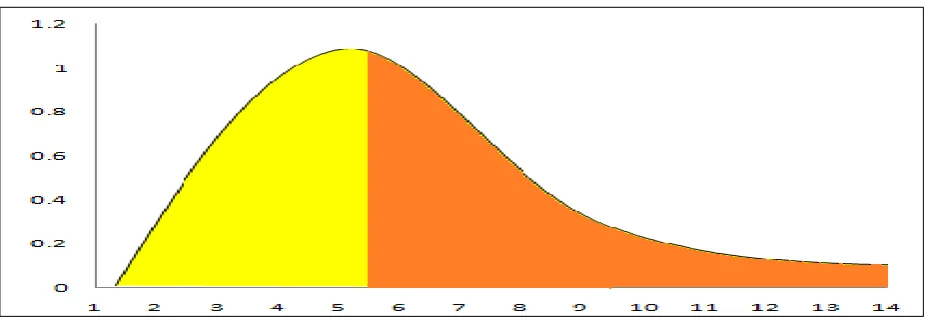
df =2 and χ2 = 49.040, whereas; the Null Hypothesis was already rejected as shown as under given in (Fig. 1).
Figure 1: The chi-square of statistic all items values was larger
than the Critical Chi-Square value
4. Discussion
This research consists of the 40 badminton teams of different affiliated Colleges and the badminton teams of various departments of Shah Abdul Latif University, Khairpur. The sample size of the study was kept 200 badminton players, as 100 from affiliated colleges of Shah Abdul Latif University and 100 from the various departments of the University. The population of the study was the student-players of badminton, studying in colleges of Sukkur region and the student-players studying in different classes of various departments at SALU-Khairpur. Other investigations conducted recently, have found a positive association between the players and coaches. It was observed that the student-players of Badminton of who participated in the badminton competitions during their student life were approaching good positions in a higher level of competitions like inter-varsity, inter-district, inter-region, and Sindh and even national games competitions. The Coaching leadership styles of the coaches were also observed from time to time by the researcher during the inter-collegiate badminton competitions. The impact of coaching leadership styles have been proved to be a scale to which the trainers consider a concept of having possessed a capability to impact the learning and performance of related players and consists of domains: motivation, game strategy, technique, competition and character building of the player. Impact on game technique denotes the self-confidence or capability of coaches or trainers in their capability to train and guide their players to a winning performing position during the tournaments (Kavussanu et al., 2008).
(2017). The Coaching style and standard techniques have been proved for having certain impacts on the recreational level in relation to performance (Horn, 2008). The research was to find out different leadership styles followed by sports officials, implemented at Universities in South Africa, established whether there were any differences in conditions of gender and create the relationship between management
styles and organizational efficiency (Naidoo et al., 2015). The self-motivated were
developed, social support and goal activities, in achieving a task of the group and association performance demanded by the groups, aims, and purpose on the number of tracks and assistance (Ryan and Tipu, 2013).
The badminton players of Sukkur region were observed to be reached at good levels of their sports. Thus, a question rose for finding the fact of coach-player relationship in shape of the impact of democratic coaching leadership style on technical skills of badminton players. The enlargement in the concentration of social, psychological and behavioral improvements in the players has resulted to compel the coaches, managers, and researchers for finding out the fact, reasoning and solutions to meet the day to day needs in the field of coaching for improving technical skills of the player and better competitive results. As there are different coaching leadership styles which are applied according to the attitude, behavior and technical requirement of the players. Myers, et al., (2006) and Kavassanu et al., (2008) reported that the behavioral, social and psychological consequences of coaching impact has enlarged the concentration in recent past years with various researches denoting significant results of this construct for examining the impact of coaches’ styles on athletes. This study analyzed the impact of democratic coaching leadership style on the technical skills of badminton players at Sukkur region, Sindh. N The student-players assessed for their Coaches’ democratic leadership style and impact on technical skills. As per the assessment, democratic coaching leadership style has a positive relationship with the improvement of technical skills of the badminton players.
The evidence of justification of the scale by giving an analyzation of the psychometric properties of the data collection tool from previously collected data on school and college level coaches from the United States. The results showed the validity of scale which includes motivation, game strategy, technique, competition and character building. Findings denoted all the items of the efficacy as accurate and reliable. The coaching efficacy scale was recommended for future research to investigate the effects of coaching on the players and to find out the coach-player relationship
(Myers et al., 2006). Perhaps due to the importance, they place on winning, male coaches
experience has been linked to higher levels of technique (Feltz et al., 1999), but also game strategy (Feltz et al., 1999; Marback et al., 2005; Myers et al., 2005), motivation (Feltz et al., 1999; Marback et al., 2005), and character-building (Marback et al., 2005) efficacy. Although the coaching experience was a significant predictor of only technique
efficacy, all dimensions of coaching efficacy were positively related to coaching
experience as indicated by the zero-order correlations; however, these correlations were
not significant, likely due to the small sample size (Kavassanu et al., 2008). A trainer or
coach must be capable of understanding the technical needs of the players for appropriate utilization of their potential and to stable the relationship of coach and player. In this regard, the basic role of a coach is to upgrade the performance level of players and to generate an atmosphere as an instrument to promote and the results of this study will allow the researcher to provide this latest research to the trainers and coaches for its application technical improvement in the players for better victory results.
5. Conclusion
A study on the impact of democratic coaching leadership style which is assumed as a process to train the players in a participative way, which is applied throughout Pakistan and worldwide but at this juncture, the main objective was to find out its impact on technical skills of college-level badminton players during competitions. This study denotes that there is a positive impact of democratic coaching leadership style on the technical skills of badminton players at Sukkur region, Sindh.
5.1 Recommendations
While; examining the present study and expected future studies, an aspect for understanding the coaching, impact of coaching, coaching as leadership, coaching leadership style could be ensured. It is recommended that; the present research could be applied by the coaches and trainers, managers or by any individual in sports structured organizations in order to enhance the level of performance focusing on technical skills of players and the same can be appropriately applied not only for badminton players but players of all games.
Acknowledgments
References
Alam, F., H. Choudheri, Ch. Thepadungporn, A. Subic and M. M. K. Khan. (2009). International School of aerospace, Mechanical and Manufacturing Engineering and built environment, Central queen’s land University Rokhampton Australia.
J. Mech. and Material Eng., 4, 266-272.
Bandura, A. (1997). Self-efficacy: The exercise of control. New York: Freeman & Company.
Badminton Australia (2012). Fitness testing. Retrieved from
http://www.badminton.org.au/development/juniorprograms/ fitness-testing. Christensen, B. T., and L. J. Ball. (2016). Dimension of creative evaluation: Distinct
design and reasoning strategies for aesthetic, functional and originally
judgments. Design Studies, 45(PA), 116-136.
Carey, W., D. J. Philippon and G. G. Cummings. (2011). Coaching models for leadership development: An integrative review, Journal of leadership studies, 5(1): 51-69.
Farrow, D. and B. Abernethy. (2003). Do expertise and the degree of perception-active
coupling affect natural anticipatory performance, Perception, 32: 1127-1139.
Grice, T., (2008). Badminton: Steps to Success. Human Kinetics. United States of America 2nd ed.
Feltz, D. L., M. A. Chase, S. E. Moritz, and P. J. Sullivan. (1999). A conceptual model of
coaching efficacy: Preliminary investigation and instrument
development. Journal of Educational Psychology, 91(4): 765-776.
Horn, T. S., (2008). Coaching effectiveness in the sport domain. In: T.S. Horn (Ed.), Advances in sport psychology (Pp. 239-267). Champaign, IL: Human Kinetics. Kavussanu, M., I. D. Boardly, N. Jutkiewiez, S. Vincent, and C. Ring. (2008). The
Coaching efficacy and Coaching effectiveness. The Sports Psycho., 22(4): 383-404.
Kwan M, C. L. Cheng and W. T. Tang. (2010). Measurement of badminton racket deflection during a stroke. Sports Eng., 12(3):143–53.
Kristiansen, E., S. E. Tomten, D. V. Hanstad, and G. C. Roberts. (2012). Coaching communication issues with elite female athletes: Two Norwegian case studies.
Scandinavian Journal of Medicine & Science in Sports, 22: 156-167.
Marback, T. L., M. W. Short, S. E. Short, and P. J. Sullivan. (2005). Coaching confidence:
An exploratory investigation of sources and gender differences. Journal of Sport
Behavior, 28: 18–34.
Myers, N. D., E. W. Wolfe and D. L. Feltz. (2006). An evaluation of the Psychometric Properties of exercise science, 9(3): 133-105.
Naidoo, P., C. Yoga & J. Surujlal (2015). “Perceived leadership styles of sport
administrators and the relationship with organizational effectiveness”, African
Journal for physical, health, education, recreation and dance. Pp. 167-181.
Pilus, A. H. M. and Saadan R. (2009). Coaching leadership styles and athlete
satisfactions among Hockey team. J. Human Capital Develop., 2(1): 77-87.
See discussions, stats, and author profiles for this publication at:
https://www.researchgate.net/publication/267574668.
Ryan, J. C., and S. A. Tipu. (2013). Leadership effects on innovation propensity: A
two-factor full range leadership model, Journal of Business Research, 66: 2116-2129.
Rodolfo, A. Ignacio, R. C. Montecalbo-Ignacio and R. C. Cardenas. (2017). “The Relationship between Perceived Coach Leadership Behaviors and Athletes Satisfaction” International. Journal of Sports Science, 7 (5): 196-202
Smith, R. E. (2010). A positive approach to coaching effectiveness and performance
enhancement. In: J. M. Williams (Ed.), New York: McGraw-Hill. Applied sport
psychology: personal growth to peak performance (Pp. 42-58).
Singh J., S. Raza and A. Mohammad (2011). Physical characteristics and level of
performance in badminton: a relationship study. J Educ. Pract. 2(5): 6–10.
Surujlal, J. and M. Dhurup. (2012). African Journal for Physical Health Education,
Recreation and Dance - Athlete preference of coach's leadership style: sport
management. African J. for Physical Health Education, Recreation and Dance, 18 (1):
Creative Commons licensing terms