NEODYMIUM(III) SORPTION ONTO SODIUM BENTONITE
AND MAGNETIC ACTIVATED CARBON: A COMPARATIVE
STUDY
Abdelkader Miraoui
[a]and Mohamed Amine Didi
[a]*Keywords: Neodymium, sodium bentonite, magnetic activated carbon removal, kinetics.
In this paper, the liquid-solid extraction of neodymium(III) by sodium bentonite and magnetic activated carbon was reported. Neodymium (Nd) is a key element that widely applied in high-tech industries; various parameters, such as: the time, metal concentration, ionic strength, effect of initial pH etc., have been studied to assess the efficiency of sodium bentonite and magnetic activated carbon for the removal of Nd(III). Optimal extraction yield was achieved at pH equal to 9.1 for sodium bentonite and in the range of pHi from 3.1 to 9.2 for the magnetic activated carbon. The time needed for magnetic activated carbon to absorb the maximum of Nd(III) is 100 min and 60 min for sodium bentonite. The experimental capacity obtained was 528 mg g-1 for magnetic activated carbon and 503 mg g-1 for sodium bentonite. In order to validate the performance of this extractants, kinetics and diffusional studies were also developed throughout this study. Adsorption equilibrium data were calculated for Langmuir and Freundlich isotherms. It was found that the sorption of Nd(III) on sodium and magnetic activated carbon was better suited to the Freundlich adsorption model.
* Corresponding Authors Fax: +21352639237 E-Mail: [email protected]
[a] Laboratory of Separation and Purification Technologies,
Department of Chemistry- Faculty of Sciences, Box119. Tlemcen University -13000, Algeria.
INTRODUCTION
The rare earth elements (REEs), including lanthanide elements as well as yttrium and scandium, are 17 in number. They are divided conventionally into two groups: the light group (Sc, La, Ce, Pr, Nd, Pm, Sm, Eu, Gd) and the heavy group (Y, Tb, Dy, Ho, Er, Tm, Yb, Lu). The REEs are widely used in various field, such as chemical engineering, metallurgy, nuclear energy, optical, magnetic, luminescence, laser materials, high-temperature superconductors and secondary batteries, catalysis, red phosphors etc.1-4 Rare earth elements (REEs) are of great importance owing to their unique physical and chemical properties best suited for the creation of advanced materials for high-technology devices.5,6 A significant increase of rare earth metals production is expected in the coming years due to increasing demand for them.7 Rare earth ores tend to be localized, and often include radioactive elements8, they occur together in nature in some minerals, e.g. bastnasite, monazite and xenotime.9
Neodymium is one of the most abundant rare earth elements. Neodymium (Nd) is an important member of the first triad of the lanthanide series and its atomic number being 60.2,5,6,9 Neodymium compounds were first commercially used as a glass dye and they are still used as a popular additive in glass. Its color, due to the Nd(III) ion, is often reddish-purple but changes with the type of lighting due to fluorescent effects. Neodymium oxides are also used as a laser material to replace ruby in order to produce a coherent light, as components of advanced materials such as high temperature ceramics and superconductors, and in catalytic systems.10 Neodymium gains great attention due to
high demand in the Nd-Fe-B magnet industry, especially in high performance electric motors in hybrid electric vehicles and direct-drive wind turbine generators.1, 3,11 Neodymium– iron–boron permanent magnets is costs less than samarium– cobalt permanent magnets.2,5 Currently, (Nd–Fe–B) permanent magnets are used in hard disk drives, motors in hybrid cars and MRI machines, among others.8 Since the development of the iron–neodymium–boron (Nd–Fe–B) permanent magnet in 1980, the production volume of neodymium metal has increased dramatically. Currently, about 10,000 tons of Nd-FeB alloy magnets are produced annually.3,8,12 The separation from other rare earth elements requires energy consuming procedures; therefore, there is an industrial demand for the recycling of neodymium from scrap to save time and energy.8,12
Various methods can be used to recover this metal from aqueous solutions. Traditional methods, for example such as ion exchange, precipitation and solvent extraction have been found to be ineffective at a very low concentration of contaminated metal ions.2 Adsorption is the most popular method in which activated carbon or ion exchange resins are usually applied. Adsorption phenomenon in solution systems plays a vital role in many areas of practical environmental technology, which are mainly in water and wastewater treatment due to several advantages such as high efficiency, simple operation and easy recovery/reuse of adsorbent.13
An innovative technology that gains attention is the use of magnetic materials for magnetic separation of pollutants from effluents. In environmental applications, magnetic separation can be a promising method for a novel purification technique because it produces no contaminants such as flocculants and has the capability to treat a large amount of wastewater within a short time, and magnetic adsorbent can be quickly separated from a medium by a simple magnetic process.17,18
In this paper, the liquid-solid extraction of neodymium is performed by sodic bentonite and magnetic activated carbon. Various parameters have been studied to assess the performance of sodic bentonite and magnetic activated carbon for the removal of Nd(III). The nature and the properties of the sorbent materials play an important role in the effective retention of analytes from the sample solution.19
EXPERIMENTAL
Reagents
Neodymium solution at 10-2 M was prepared by dissolving of neodymium nitrate (3.3025 g) in 1 L of distilled water (purchased from Sigma-Aldrich). The initial pH of the sample solutions were adjusted by using dilutes HNO3 or NaOH (from Sigma-Aldrich). NaNO3 (from Merck) NaS2O3 (from Merck) were used in the salt effect. Arsenazo III solution (10-3 M) from Fluka was prepared by dissolving 0.0820 g sample in absolute ethanol. Hydrochloric acid (from Organics), sulfuric acid (from Fluka), nitric acid (from Cheminova) and acetic acid (from Riedel de Haen) were used from elution study.
The natural bentonite used in this study was obtained from deposits in the area of Maghnia, Algeria. For synthesis of magnetic activated carbon, FeCl2.4H2O (from Sigma Aldrich), FeCl3.6H2O (from Panreac), activated carbon (Aldrich Chemical Company Inc.), NH4OH (from Sigma-Aldrich), HNO3 and Fe(NO3)2 (from Sigma Aldrich) were used.
Apparatus
The extraction of Nd(III) was studied by the batch process using a stirring vibrator (Haier model). pH measurements were performed with a pH meter using a combined electrode mark (Adwa). Thermogravimetric analyses of samples (TGA) were performed using a SDT Q600 thermogravimetric analyzer at a heating rate of 20°C min-1, under nitrogen atmosphere, at Tlemcen-Algeria. FTIR was performed using a Cary 630 FTIR from Agilent Technologies, at Tlemcen-Algeria. The BET-N2 method was used to determine the specific surface area of the bleaching earths, using a Volumetric Analyzer (Nova-1000). A magnet and centrifugation for the recovery of the magnetic activated carbon and sodium bentonite, respectively, in the aqueous phase were used. Samples containing Nd(III) were analyzed by spectrophotometer (Analytik Jena Specord 210 Plus) with Arsenazo III as ligand.
Preparation of sodium bentonite
For the purification of bentonite, 120 g of natural bentonite was dispersed in 1.5 L of distilled water, and after agitation during 15 min; a buffer solution of sodium citrate (pH 7.3) was added. The mixture was heated under agitation at 75° C for 20 min and then, 15 g of sodium thiosulfate (Na2S2O4) was slowly added. After 15 min under agitation, the mixture was cooled and centrifuged at a rotational speed of 6000 rpm for 15 min. The solid recovered was washed two times with HCl 0.05 M (1.5 L) during 3 h.
To convert the purified bentonite into sodium form an amount of bentonite was dispersed in NaCl solution (1 M) with a 1/5 mass ratio and after agitation for 2 h, the solid was separated by centrifugation at a rotational speed of 6000 rpm for 15 min, this operation was repeated three times. The solid was washed three times with distilled water, and it was dried at 40 °C for 3 days.13
The chemical composition of purified bentonite was found to be 64.7 % SiO2, 18.1 % Al2O3, 0.95 % Fe2O3, 2.66 % MgO, 0.8 % K2O, 0.61 % CaO, 0.2 % TiO2, 1.43 % Na2O, 0.05% As, 10.0% loss on ignition. The cation-exchange capacity (CEC) of bentonite was determined according to the ammonium acetate saturation method and was found to be 0.070 equiv. per 100 g of dry natural-Bt and 0.098 equiv per 100 g of dry Na–Bt. The BET specific surface area increase from 50 m2 g-1 in natural-Bt to 95 m2 g-1 in Na–Bt.13
Preparation of magnetic activated carbon
Dissolved FeCl3 (7.8 g, 28 mmol) and FeSO4 (3.9 g, 14 mmol) in 400 mL of water at 70 °C. Added 3.3, 6.6 or 9.9 g of activated carbon in different solutions to obtain the following adsorbent:iron oxide w/w ratios 1.0:1.0, 1.5:1.0 and 2.0:1.0. To these suspensions added a solution of NaOH (100 mL, 5 mol L-1) drop wise to precipitate the iron oxides. Washed the obtained solid materials with distilled water and dried in an oven at 100 °C for 2 h. After the preparation a simple test with a magnet (0.3 T) was carried out showing that the whole material is completely attracted to the magnet.20
Extraction and analysis procedure
The percentage of neodymium ions that was extracted by the magnetic particles was determined by Eqn. (1) and the rate of Nd uptake, qt (mg g-1), was determined by Eqn. (2), where Ci, Ct and Ce were the initial, time and equilibrium Nd(III) concentration (mol L-1), respectively; V(4 mL) was the volume solution; M molecular weight (g mol-1), and m was the mass of the particles magnetic used (0.01 g).18,21
(1)
where ϕ is the extraction yield in %.
0 e
(
/ )
(
)
M
q mg g
C
C V
m
=
−
(2)Desorption procedure
After saturation of the magnetic particle by the neodymium ions, the regeneration of adsorbents is an important aspect in adsorption, using the HCl, HNO3, H2SO4, CH3COOH. We can determine the best eluting agent with Eqn. (3).18,21
RESULTS AND DISCUSSION
TGA of magnetic activated carbon
TGA of magnetic activated carbon showed a weight loss due to water vapor of approximately 10 % at temperatures lower the 100 °C and a weight loss of 65 % between 350 and 500 °C relating to the oxidation of carbon. A residual weight of 25 % was found after the oxidation of the activated carbon, bonded to the Fe oxide in the composite.
Figure 1. TGA patterns of magnetic activated carbon.
BET Analysis
BET surface area and microporous volumes obtained for both composites are shown in Table 1.
BET analysis showed that the specific surface area and micropore volume are affected by the presence of iron oxide in the magnetic activated carbon. It is found that the specific surface area decreases from 931 to 656 m2 g-1 and we also noticed a decrease in the volume of micropores from 0.263 to 0.176 cm3 g-1. In both cases, a reduction of 30 % corresponds to the presence of iron oxide in the magnetic activated carbon.
Table 1. BET surface areas and microporous volumes for magnetic activated carbon.
Composite BET surface area (m2 g-1)
Vmicropores
(cm3 g-1)
Activated carbon 931 0.263
Magnetic activated carbon
656 0.176
XRD analyses of magnetic activated carbon
The XRD analyses of magnetic activated carbon suggest the presence of magnetite or a maghemite in the structure of composites ( Figure 2). The peaks of magnetic activated carbon appear broader suggesting smaller crystallite size (ca. 25 nm for Fe oxide and 16 nm for the magnetic activated carbon, obtained by Scherrer’s equation). Weak diffraction peaks at d=2.45 and 2.70 Å are also observe which might be related to the presence of small amounts of goethite and also some hematite.
Figure 2. XRD for the magnetic activated carbon and Fe oxide.
SEM micrograph
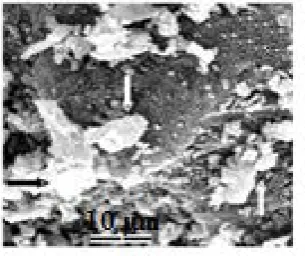
The morphologies of the magnetic activated carbon were studied by scanning electron microscopy (SEM) ( Figure 3).
Figure 3. SEM micrograph of magnetic activated carbon.
i e
i
100
C
C
C
Effect of initial pH
Both the pH and the ionic strength of solutions are regarded as the key factors during adsorption process, which is related to the formation of soluble metal complexes and subsequently their stabilities in aqueous solutions. It is well known that surface charge of adsorbent can be modified by charging the pH of the solution and the chemical species in the solution depends on this parameter.1,23 Sorption of thorium by magnetic activated carbon and sodium bentonite were studied at different pH ranging from 2.0 to 9.2 and the results are show in Figure 4. The amount of magnetic particles, the initial concentration, and the contact time were kept to be constants. It is evident that percentage of extraction increases with increasing pH value in the range of 2.0 to 9.2 for sodium bentonite. At low pH values, protons are strongly competing with adsorbates.24-26 Hence, adsorbent is less able to retain neodymium and adsorption of Nd is very low. After pH 2.0, adsorption of Nd increases sharply up to pH 3.0, for magnetic activated carbon. This evolution can be explained by the La Chatelier principle, when hydronium ions concentration decreases more (pH increase), the metal ions were extracted more and converted to the product. At this pH, (pH=3.0), the maximum yield extraction of Nd(III) was achieved.6,27
Figure 4. Removal of Nd(III) by magnetic activated carbon and sodium bentonite as a function of initial pH, [Nd(III)]0=10-3 mol L-1, w=0.01 g, V=4 mL, Ø=250 rpm, room temperature.
Effect of contact time
The fast recovery of target element on adsorbent is very important in a large scale application. Thus, the influence of contact time on the recovery of Nd(III) was examined to determine the time required for the attainment of adsorption equilibrium. The effect of equilibration time on the extraction of 10-3 M. Nd(III) with 0.01 g of sodium bentonite and magnetic activated carbon has been studied in the range 1-180 min.1, 28
Figure 5 illustrates the extraction yield as a function of time. It is seen that initially neodymium extraction yield increases as a function of time. For sodium bentonite, it reaches a maximum of 97 % in 10 min. For magnetic activated carbon, the time taken to reach a maximum of 97 % is 50 min. This difference can probably be attributed to a number of available active adsorption sites onto the two solid extractants.1 After 10 min for sodium bentonite and 50 min for magnetic activated carbon, the Nd(III) adsorption did not change with time anymore. Hence, a contact time of
10 min and 50 min for sodium bentonite and magnetic activated carbon respectively, were sufficient to reach equilibrium. For sodium bentonite and magnetic activated carbon the t50 is 3 and 8 min, respectively. The equilibrium values of Nd uptake (qe) on the magnetic activated carbon and sodium bentonite are 57.23 mg g-1 and 57.62 mg g-1, respectively.
Figure 5. Removal of Nd(III) by magnetic activated carbon and sodium bentonite as a function of time, [Nd(III)]0=10-3 mol L-1, w=0.01 g, V=4 mL, Ø =2 50 rpm, room temperature
Adsorption kinetics
Figure 6. Pseudo-first order plot of Nd(III) adsorption kinetics onto the magnetic activated carbon and sodium bentonite as a function of time, w=0.01 g, V=4 mL, Ø=250 rpm, room temperature.
Kinetics of sorption describing the solute uptake rate, which, in turn, governs the residence time of the sorption reaction, is one of the important characteristics defining the efficiency of sorption.29 Two popularly used kinetic models, pseudo-first-order ( Eqn. 4) and pseudo-second-order ( Eqn. 5),27 were used to fit the data, as shown in Figures 6 and 7, indicating the linear forms of the pseudo-first order and the pseudo-second order kinetics respectively.
(4)
(5)
1 2 3 4 5 6 7 8 9 10
0 20 40 60 80 100
magnetic activated carbon sodium bentonite
R
em
oval
, %
pHi
0 20 40 60 80 100 120 140 160 180 200
0 20 40 60 80 100
magnetic activated carbon sodium bentonite
R
em
oval
, %
time, min
0 20 40 60 80 100 120 -2,0
-1,5 -1,0 -0,5 0,0 0,5 1,0 1,5 2,0 2,5
3,0 magnetic activated carbon
sodium bentonite
L
n
(
qe -qt
)
time, min
2
t 2 e e
1
t
t
q
=
k q
+
q
e t e 1
Here qe and qt are the amounts of sorbed Nd(III) on magnetic activated carbon and sodium bentonite at equilibrium and at time t, respectively (mg g-1), k
1 is the first-order adsorption rate constant (min-1), k
2 is the pseudo-second-order adsorption rate constant (g mg-1 min-1).
The results presented in Figure 6, Figure 7 and Table 2 indicate that the pseudo-second-order kinetic model yields a better fit and suggest that the chemisorption processes could be a rate-limiting step. The correlation coefficients obtained are, 0.998 for magnetic activated carbon and 0.999 for sodium bentonite and the theoretical qe values calculated from the pseudo-second-order equation are in agreement with the experimental data (Table 2), suggesting that adsorption system of neodymium by magnetic activated carbon and sodium bentonite are a pseudo-second-order reaction.
Figure 7. Pseudo-second order plot of Nd(III) adsorption kinetics onto the magnetic activated carbon and sodium bentonite as a function of time, w= 0.01 g, V= 4 mL, Ø=250 rpm, room temperature.
Table 2. Comparison of the Pseudo-First order and Pseudo-Second order models for sorption of neodymium on magnetic activated carbon and sodium bentonite at ambient temperature.
Composite qe (exp.)
mg g-1
Pseudo-first order Pseudo-second order Magnetic activated carbon
57.23 R=0.954 qe(calc.)= 20.92 mg g-1 K1=0.021
R=0.998 qe(calc.) = 58.82 mg g-1 K2=0.003
Sodium bentonite
57.62 R =0.749 qe(calc.)= 1.716 mg.g-1 k1=0.021
R =0.999 qe(calc.)= 58.89 mg g-1 k2=0.057
Boyd relationship represents an intra-particle diffusion model as follows.30
(6)
Here D is the intra-particle diffusion coefficient and r is the particle radius. For short times (when qt/qe is less than 0.3), Eqn. (6) can be reduced to Eqn. (7).
(7)
where kID is the intra-particle diffusion constant. The significant property of this equation is that, if the intra-particle diffusion is the only rate-limiting step, then the linear plot of qt versus should pass through the origin. On the other hand, if the intercept of plots do not equal zero, then it indicates that the intra-particle diffusion is not the sole rate determining step.31 Then Eqn. (7) is modified to Eqn. (8).32
(8)
where S is a constant and reflects the boundary layer effect. Investigation of various reports about the sorption rate shows that the intra-particle diffusion model is the most popular one for the diffusion rate-controlling step that has been used in conjunction with the surface reaction models to recognize the adsorption kinetics.
Figure 8. Intra-particle diffusion kinetic models for the adsorption of Nd(III), (a) magnetic activated carbon, (b) sodium bentonite, [Nd(III)]0=10-3 mol L-1, w=0.01 g, V=4 mL, Ø=250 rpm, room temperature.
The plot of the Boyd relationship for the sorption of neodymium, at initial concentration equal to 1 mmol L-1, by sodium bentonite and magnetic activated carbon is shown in Figure 8. Based on this Figure, it may be seen that the intra-particle diffusion of Nd(III) onto the sodium bentonite and magnetic activated carbon occurred in 2 stages. The first linear represent the external mass transfer or film diffusion (boundary layer) and the rapid distribution of Nd(III) molecules onto the outer surface of sodium and magnetic activated carbon. The second linear portion corresponds to the intra-particle diffusion and binding of Nd(III) molecules 0 20 40 60 80 100 120 140 160 180 200
0,0 0,5 1,0 1,5 2,0 2,5 3,0 3,5
magnetic activated carbon sodium bentonite
t/
qt
time, min
0 20 40 60 80 100 1,0 1,5 2,0 2,5 3,0 3,5 4,0 4,5 5,0 5,5 6,0 (a) -l n (1 - F ) time, min
0 20 40 60 80 100
0,5 1,0 1,5 2,0 2,5 3,0 3,5 4,0 4,5 5,0 (b) -l n (1 -F
2 )
time, min
2 3
x 1 ..,
2 2 1! 2! 3!
t
2 2 2
1 e
6
1
1
exp
x x x
e x
n
q
Dn
t
q
n
r
π
π
= + + + + −∞< <∞
=
= −
−
∑
t 1Dq
=
k
t
t 1D
into the internal active sites of the extractants. Moreover, the second stage of the lines does not pass through the origin. This means that the intra-particle diffusion, although important over longer contact time periods, is not the rate-limiting step in the adsorption process of Nd(III).13,18
Diffusion study
The neodymium (III) transport from the solution phase to the surface of sodium bentonite and magnetic activated carbon occurs in several steps. The overall adsorption process may be controlled either by one or more of these steps. (i) The diffusion of ions from the solution to the surface of sodium bentonite and magnetic activated carbon, (ii) the diffusion of ions within the solid extractant
,
(iii)t
he chemical reaction between ions and functional groups of the extractants. If the liquid film diffusion controls the rate of exchange, the following relation can be used ( Eqn. 9).(9)
If the case of diffusion of ions in the sodium bentonite and magnetic activated carbon phase controlling process, then Eqn. (10) is used.
(10)
where F is the fractional attainment of equilibrium, which is expressed as F=qt/qe. In both eqns. (9) and (10), k is the kinetic coefficient or rate constant. k is defined by eqn (11).
2 r
2 0
D
k
r
π
=
(11)where Dr is the diffusion coefficient in the sodium bentonite and magnetic activated carbon phase and r is the average radius of solids extractants.
When the adsorption of metal ion involves mass transfer accompanied by chemical reaction the process can be explained by the moving boundary model. This model assumes a sharp boundary that separates a completely reacted shell from an unreacted core and that advances from the surface toward the center of the solid with the progression of adsorption. In this case, the rate equation is given by Eqn. (12).27, 29
(12)
The results of application of both the mathematical models are shown in Figure 9.
The comparison of the kinetic and diffusion parameters of Nd(III) sorption onto magnetic activated carbon and sodium bentonite (Table 3), shows that the adsorption of Nd(III) can be controlled by both diffusion model (film diffusion and particle diffusion)for both the extractants.
Effect of initial metal concentration
Solutions of Nd(III) of different concentrations were prepared and mixed each with the same mass of adsorbent (0.01 g). The results showed that the amount of Nd(III) sorbed per unit mass of the particles magnetic increased with the initial metal concentration (Fig. 10). At a concentration of 10-2 M of Nd(III), sorption capacities reach 528 mg g-1 for magnetic activated carbon and 503 mg g-1 for sodium bentonite. This sorption capacity is very interesting for liquid–solid extraction, because in the literature, most studies were done with liquid–liquid extraction.33-37
Figure 9. Plots of diffusion study for Nd(III) sorption on magnetic activated carbon () and sodium bentonite (O) at different time. [Nd(III)]0=10-3 mol L-1, w=0.01 g, V=4 mL, Ø=250 rpm, room temperature: Film diffusion (a), interne diffusion (b), chemical reaction (c).
Figure 10. Removal of Nd(III) magnetic activated carbon and sodium bentonite as a function of [Nd]. w=0.01 g, V=4 mL, Ø=250 rpm, room temperature.
Table 3. Kinetic and diffusion parameters of neodymium sorption onto magnetic activated carbon and sodium bentonite.
[Nd(III)]=10-3 M Film
diffusion Eqn. (9)
Particle diffusion Eqn. (10)
Chemical reaction Eqn. (12)
Magnetic activated carbon
K=0.033 min-1 R=0.991
K= 0.032 min-1 R=0.991
K=0.006 min-1 R=0.979
Sodium bentonite K=0.026 min-1 R=0.981
K =0.026 min-1 R=0.981
K=0.002 min-1 R=0.951
0 20 40 60 80 100 0,2
0,3 0,4 0,5 0,6 0,7 0,8 0,9 1,0
(c)
3 - 3
(1
- F
)
2/
3
2
F
time, min
0,000 0,002 0,004 0,006 0,008 0,010 0
100 200 300 400 500 600
magnetic activated carbon sodium bentonite qe
, m
g
.g
-1
[Nd3+], mol.L-1
ln(1
F
)
kt
−
−
=
ln(1
F
)
kt
−
−
=
2/3
Isotherm adsorption
The sorption data, commonly known as adsorption isotherms, are basic requirements for the design of adsorption systems.18 The Freundlich and Langmuir isotherms are the most commonly used adsorption isotherms for describing a non-linear equilibrium of adsorbate between solution and adsorbent at a fixed temperature.1 For the interpretation of both models, we have used the following equations.38
(13)
(14)
where Ce is the equilibrium concentration of Nd(III) (in mg L-1), q
e is the amount of Nd(III) sorbed on the sodium and magnetic bentonite (mg g-1), K
L is the Langmuir adsorption constant (L mg), qm is the maximum amount of Nd that can be sorbed, KF is the Freundlich adsorption constant and n is a constant that indicates the capacity and intensity of the adsorption, respectively.
The Freundlich isotherm correlated better than Langmuir isotherm with the experimental data from adsorption equilibrium of neodymium ions by magnetic activated carbon and sodium bentonite ( Figures 11 and 12; Table 4). The correlation coefficients of Freundlich isotherm and Langmuir isotherm are very high.
Figure 11. Langmuir isotherm plot for the sorption of Nd(III) onto and magnetic activated carbon and sodium bentonite.
Figure 12. Freundlich isotherm plot for the sorption of Nd(III) onto and magnetic activated carbon and sodium bentonite.
Effect of ionic strength
The effect of NaNO3, NH4NO3 and Na2S2O3 on the performance of extraction was studied. Figures 13 and 14 show the influence of ionic strength on sorption of neodymium by magnetic carbon activated and sodium bentonite.
Table 4. Isotherm models parameters for the adsorption of Nd(III) on magnetic activated carbon and sodium bentonite.
Composite Langmuir
isotherm
Freundlich isotherm
Magnetic activated carbon
R=0.254 R =0.961 KF=2757954.94 n=1.269 Sodium bentonite R=0.268 R=0.968
KF=707858.858 n=1.092
Changing the ionic strength by the addition of an electrolyte influences adsorption in at least two ways,39,40 one by affecting interfacial potential and therefore the activity of electrolyte ions and adsorption and secondly by affecting the competition of the electrolyte ions and adsorbing anions for sorption sites. Figures 13 and 14 show that the addition of all salts, increase the ionic strength and decrease extraction yield of Nd by magnetic activated carbon and sodium bentonite, this can be explained by a competitiveness in the extraction between Na+/NH
4+ and Nd(III).41
Figure 13. Removal of neodymium by magnetic activated carbon as a function of electrolytes under standard conditions.
Figure 14. Removal of neodymium by magnetic activated carbon as a function of electrolytes under standard conditions.
e e
e m m L
1
C
C
q
=
q
+
q K
0 2 4 6 8 10
0 5 10 15 20 25 30 35
magnetic activated carbon sodium bentonite
10
6 .C
e
/qe
104.C
e, mol.L
-1
-15 -14 -13 -12 -11 -10 -9 -8 -7 -6
-4 -2 0 2 4 6 8
magnetic activated carbon sodium bentonite
ln
qe
ln Ce
0,0 0,2 0,4 0,6 0,8 1,0 1,2 20
30 40 50 60 70 80 90 100
Na2S203
NaNO3
NH4NO3
R
em
oval
, %
[salts], mol.L-1
0,0 0,2 0,4 0,6 0,8 1,0 1,2 0
10 20 30 40 50 60
Na2S3O3
NaNO3
NH4NO3
R
em
oval
, %
[salts], mol.L-1
e F e
Desorption study
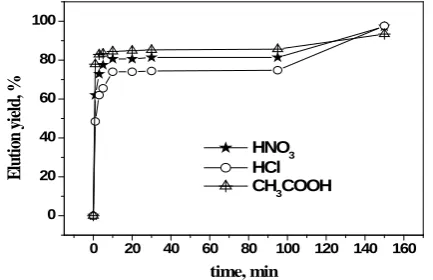
Desorption is a key process in sorption studies because it determines the economic value of the sorption process. To investigate the feasibility of regenerating used adsorbent, desorption experiments were performed using various eluting agents, namely HCl, HNO3, H2SO4 and CH3COOH at a concentration of 0.5 mol L-1 after Nd(III) adsorption. To a saturated sample the appropriate sorbent (0.01 g), 4 mL of the selected acid was added and kept for 3 h. The elution yield is calculated by Eqn. (3). Though hydrochloric acid, nitric acid and acetic acid have given significant elution yield for magnetic activated carbon (close to 100 % in a single step), sulfuric acid showed a less efficiency. The elution kinetics was made to optimize this study. Figure 16 show the kinetics of elution efficiency. This study shows that initially desorption of neodymium is rapid, it reaches a value of around 80 % after 10 min of agitation for the three acids. Between 10 and 100 min, the elution yield is stable then it reaches its maximum value after 150 min of agitation (around 100 %). The behaviour of the three acids for the desorption is similar.
Figure 15. Optimum eluants for quantitative recovery of neodymium.
Figure 16. Effect of contact time on the desorption of Nd(III).
CONCLUSION
The activated carbon magnetic and sodium bentonite were successfully applied for the removal of Nd(III) from seawater matrix. Equilibrium time, pH effect, kinetics, isotherms, ionic strength and effect of initial metal concentration were examined carefully. The characterization of magnetic activated carbon by BET, XDR and TEM indicate that the activated carbon was functionalized by iron oxide. The optimal adsorption efficiency could be observed
over 99.9 % at pH 9.2 for sodium bentonite and in a range between 3.1 and 9.2 for magnetic activated carbon. The pseudo-second order model accurately fits the Nd adsorption kinetics for both adsorbent and the data agrees well with Freundlich adsorption isotherm model. The experimental capacity obtained was 528 mg g-1 for magnetic activated carbon and 508 mg g-1 for sodium bentonite. The sorption of Nd(III) achieves equilibration at 100 and 60 min for magnetic activated carbon and sodium bentonite, respectively.
The synthesized magnetic activated carbon has the great potential for fast and effective neodymium recovery from seawater media. The magnetic activated carbon have superiority in separation, it can be quickly separated from a medium by a simple magnetic process and the results obtained in this comparative study make this magnetic particle as promising material for sorption, immobilization and pre-concentration of rare earth elements, radioactive metal and heavy metal ions from large volume of solutions.
REFERENCES
1Yao-Jen, T., Sheng-Chung, L., Chen-Feng, Y., Selective and fast recovery of neodymium from seawater by magnetic iron oxide Fe3O4, J. Chem. Eng., 2015, 262, 966. https://doi.org/10.1016/j.cej.2014.10.025
2Wannachod, T., Phuphaibul, P., Mohdee, V., Pancharoen, U., Phatanasri, S., Optimization of synergistic extraction of neodymium ions from monazite leach solution treatment via HFSLM using response surface methodology, Miner. Eng., 2015, 77, 1.
https://doi.org/10.1016/j.mineng.2015.01.016
3Anithaa, M., Ambarea, D. N., Singh, D. K., Singh, H., Mohapatra, P. K., Extraction of neodymium from nitric acid feed solutions using an emulsion liquid membrane containing TOPO and DNPPA as the carrier extractants, J. Chem. Eng. Res. Des., 2015, 98, 89.
https://doi.org/10.1016/j.cherd.2015.04.011
4Panda, R., Jha, M. K., Hait, J., Kumar, G., Singh, R. J., Keun,Y., K., Extraction of lanthanum and neodymium from leach liquor containing rare earth metals (REMs), Hydrometallurgy, 2016, 165, 106.
https://doi.org/10.1016/j.hydromet.2015.10.019
5El-Hefny, N. E., Kinetics and mechanism of extraction and stripping of neodymium using a Lewis cell, J. Chem. Eng. Process., 2007, 46, 623.
https://doi.org/10.1016/j.cep.2006.08.007
6Gok, C., Neodymium and samarium recovery by magnetic nano-hydroxyapatite, J. Radioanal. Nucl. Chem., 2014, 301, 641.
https://doi.org/10.1007/s10967-014-3193-z
7Aghayan, H., Mahjoub, A. R., Khanchi, A. R., Samarium and dysprosium removal using 11-molybdo-vanadophosphoric acid supported on Zr modified mesoporous silica SBA-15, J. Chem. Eng., 2013, 225, 509.
https://doi.org/10.1016/j.cej.2013.03.092
8Onoda, H., Nakamura, R., Recovery of neodymium from an iron– neodymium solution using phosphoric acid, J. Environ. Chem. Eng., 2014, 2, 1186.
https://doi.org/10.1016/j.jece.2014.04.019
9Wannachod, T., Leepipat Piboon, N., Pancharoen, U., Nootong, K., Synergistic effect of various neutral donors in D2EHPA for selective neodymium separation from lanthanide series via HFSLM, J. Ind. Eng. Chem., 2014, 20, 4152.
https://doi.org/10.1016/j.jiec.2014.01.014
10Dedov, A. G., Loktev, A. S., Moiseev, I., Aboukais, A., Lamonier, J. F., Filimonov, A., Oxidative coupling of methane catalyzed by rare earth oxides: Unexpected
CH3COOH H2SO4 HCl HNO3
0 20 40 60 80 100
HNO3
HCl
H2SO4
CH3COOH
E
lu
tio
n y
ie
ld
, %
Eluants, 0.5 mol.L-1
0 20 40 60 80 100 120 140 160 0
20 40 60 80 100
HNO3 HCl CH3COOH
E
lu
tio
n y
ie
ld
, %
synergistic effect of the oxide mixtures, J. Appl. Catal., 2003, 245, 209. https://doi.org/10.1016/S0926-860X(02)00641-5 11Ambare, D. N., Ansari, S. A., Anitha, M., Kandwal, P., Singh, D.
K., Singh, H., Mohapatra, P. K., Non-dispersive solvent extraction of neodymium using a hollow fiber contactor: Mass transfer and modeling studies, J. Membr. Sci., 2013, 446, 106. https://doi.org/10.1016/j.memsci.2013.06.034 12Okabe, T. H., Takeda, O., Fukuda, K., Umetsu, Y., Direct
Extraction and Recovery of Neodymium Metal from Magnet Scrap, J. Mater. Trans., 2003, 44, 798.
https://doi.org/10.2320/matertrans.44.798
13Makhoukhi, B., Djab, M., Didi, M. A., Adsorption of Telon dyes onto bis-imidazolium modified bentonite in aqueous solutions, J. Environ. Chem. Eng., 2015, 3, 1384.
https://doi.org/10.1016/j.jece.2014.12.012
14Bulut, Y., Akçay¸ G., Elma, D., Ersin Serhatli, I., Synthesis of clay-based superabsorbent composite and its sorption capability, J. Hazard. Mater., 2009, 171, 717.
https://doi.org/10.1016/j.jhazmat.2009.06.067
15Wu, L., Ye, Y., Liu, F., Tan, C., Liu, H., Wang, S., Wang, J., Yi, W., Wu, W., Organo-bentonite-Fe3O4 poly(sodium acrylate) magnetic superabsorbent nanocomposite: Synthesis, characterization, and Thorium(IV) adsorption, J. Appl. Clay Sci., 2013, 83-84, 405.
https://doi.org/10.1016/j.clay.2013.07.012
16Makhoukhi, B., Didi, M. A., Moulessehoul, H., Azzouz, A., Villemin, D., Diphosphonium ion-exchanged montmorillonite for Telon dye removal from aqueous media, J. Appl. Clay Sci., 2010, 50, 354.
https://doi.org/10.1016/j.clay.2010.08.026
17Ngomsik, A., Bee, A., Siaugue, J., Talbot, D., Cabuil, V., Cote, G., Co(II) removal by magnetic alginate beads containing Cyanex 272®, J. Hazard Mater., 2009, 166, 1043. https://doi.org/10.1016/j.jhazmat.2008.11.109
18Miraoui, A., Didi, M. A., Extraction of thorium(IV) with sodium bentonite and maghemite containing magnetic nanocomposite bentonites, Eur. Chem. Bull., 2015, 4, 512. http://dx.doi.org/10.17628/ecb.2015.4.512-521.
19Baghban, N., Shabani, M., Dadfarnia, S., Solid Phase Extraction of Trace Amounts of Cadmium with
Cetyltrimethylammonium Bromide‐Coated Magnetic
Nanoparticles Prior to Its Determination by Flame Atomic Absorption Spectrometry, J. Chin. Chem. Soc., 2012, 59, 782.
https://doi.org/10.1002/jccs.201100561
20Oliveira, L. C. A., Rios, R. V. R. A., Fabris, J. D., Lago, R. M., Magnetic Particle Technology. A Simple Preparation of Magnetic Composites for the Adsorption of Water Contaminants, J. Chem. Educ., 2004, 81, 248.
https://doi.org/10.1021/ed081p248
21Miraoui, A., Didi, M. A., Villemin, D., Neodymium(III) removal by functionalized magnetic nanoparticles, J. Radioanal. Nucl. Chem., 2016, 307, 963. https://doi.org/10.1007/s10967-015-4267-2
22Kaczmarek, G., Meinrath, S., Kufelnicki, L., The Interaction of Arsenazo III with Nd(III)—A Chemometric and Metrological Analysis, J. Solut. Chem., 2008, 37, 933.
https://doi.org/10.1007/s10953-008-9287-x
23Abderrahim, O., Ferrah, N., Didi, M. A., Villemin, D., A new sorbent for europium nitrate extraction: phosphonic acid grafted on polystyrene resin, J. Radioanal. Nucl. Chem., 2011, 290, 267. https://doi.org/10.1007/s10967-011-1243-3 24Prakorn, R., Ura, P.,Synergistic extraction and separation of
mixture of lanthanum and neodymium by hollow fiber supported liquid membrane, J. Chem. Eng., 2003, 20, 724.
https://doi.org/10.1007/BF02706915
25Abderrahim, O., Didi, M. A., Moreau, B., Villemin, D., A New Sorbent for Selective Separation of Metal: Polyethylenimine Methylenephosphonic Acid, J. Solv. Extr. Ion Exch., 2006, 24, 943. https://doi.org/10.1080/07366290600952519 26Abderrahim, O., Ferrah, N., Didi, M. A., Villemin, D., Removal
of copper ions from aqueous solutions by a new sorbent: Polyethyleneiminemethylene phosphonic acid, Desalination, 2011, 269, 17. https://doi.org/10.1016/j.desal.2010.11.035 27Ferrah, N., Abderrahim, O., Didi, M. A., Villemin, D., Sorption
efficiency of a new sorbent towards uranyl: phosphonic acid grafted Merrifield resin, J. Radioanal. Nucl. Chem., 2011, 289, 721. https://doi.org/10.1007/s10967-011-1172-1
28Panda, N., Bala Devi, N. R., Mishra, S., Extraction of neodymium(III) using binary mixture of Cyanex 272 and Cyanex 921/Cyanex 923 in kerosene, J. Radioanal. Nucl. Chem., 2013, 296, 1205. https://doi.org/10.1007/s10967-013-2425-y
29Esma, B., Omar, A., Amine, D. M., Comparative study on lanthanum(III) sorption onto Lewatit TP 207 and Lewatit TP 260, J. Radioanal. Nucl. Chem., 2014, 299, 439.
30Boyd, G. E., Adamson, A. W., Myers Jr., L. S., The Exchange Adsorption of Ions from Aqueous Solutions by Organic Zeolites. II. Kinetics, J. Am. Chem. Soc., 1947, 69, 2836-2848. https://doi.org/10.1021/ja01203a066
31Haerifar, M., Azizian, S., Mixed Surface Reaction and Diffusion-Controlled Kinetic Model for Adsorption at the Solid/Solution Interface, J. Phys. Chem. C., 2013, 117, 8310.
https://doi.org/10.1021/jp401571m
32Barkakati, P., Begum, A., Das, M. L., Adsorptive separation of Ginsenoside from aqueous solution by polymeric resins: Equilibrium, kinetic and thermodynamic studies, Chem. Eng. J., 2010, 161, 34. https://doi.org/10.1016/j.cej.2010.04.018 33Rout, A., Kotlarska, J., Dehaen, W., Binnemans, K., Liquid–
liquid extraction of neodymium(iii) by dialkylphosphate ionic liquids from acidic medium: the importance of the ionic liquid cation, J. Phys. Chem., 2013, 15, 16533.
https://doi.org/10.1039/c3cp52218k
34Nayak, D., Lahiri, S., Das, N. R., Synergistic extraction of neodymium and carrier-free promethium by the mixture of HDEHP and PC88A, J. Radioanal. Nucl. Chem., 1999, 240, 555. https://doi.org/10.1007/BF02349413
35Sanchez, J. M., Hidalgo, M., Salvado, V., Valiente, M., Extraction of neodymium(III) at trace level with di(2-ethylhexyl)phosphoric acid in hexane, J. Solv. Extr. Ion Exch., 1999, 17, 455.
https://doi.org/10.1080/07366299908934623
36El-Kot, A. M., Solvent extraction of neodymium, europium and thulium by di-(2-ethylhexyl)phosphoric acid, J. Radioanal. Nucl. Chem., 1993, 170, 207.
https://doi.org/10.1007/BF02134592
37Kao, H., Yen, P., Juang, R., Solvent extraction of La(III) and Nd(III) from nitrate solutions with 2-ethylhexylphosphonic acid mono-2-ethylhexyl ester, J. Chem. Eng., 2006, 119, 167.
https://doi.org/10.1016/j.cej.2006.03.024
38Kul, A. R., Koyuncu, H., Adsorption of Pb(II) ions from aqueous solution by native and activated bentonite: Kinetic, equilibrium and thermodynamic study, J. Hazard. Mater., 2010, 179, 332.
https://doi.org/10.1016/j.jhazmat.2010.03.009
39Abderrahim, O., Didi, M. A., Villemin, D., A new sorbent for uranium extraction: Polyethyleniminephenylphosphonamidic acid, J. Radioanal. Nucl. Chem., 2009, 279, 237.
40Vilar, V. J. P., Botelho, C. M. S., Boaventura, R. A. R., Influence of pH, ionic strength and temperature on lead biosorption by Gelidium and agar extraction algal waste, J. Process. Biochem., 2005, 40, 3267.
https://doi.org/10.1016/j.procbio.2005.03.023
41Didi, M. A., Villemin, D., Abderrahim, O., Azzouz, A., Liquid– liquid extraction of thorium(IV) by fatty acids: a comparative study, J. Radioanal. Nucl. Chem., 2014, 299, 1191.
https://doi.org/10.1007/s10967-013-2855-6
![Figure 5. Removal of Nd(III) by magnetic activated carbon and sodium bentonite as a function of time, [Nd(III)]0=10-3 mol L-1, w=0.01 g, V=4 mL, Ø =2 50 rpm, room temperature](https://thumb-us.123doks.com/thumbv2/123dok_us/7823346.2087951/4.595.54.254.345.491/figure-removal-magnetic-activated-carbon-bentonite-function-temperature.webp)

![Figure 9. Plots of diffusion study for Nd(III) sorption on magnetic 020406080100[Nd(III)]activated carbon () and sodium bentonite (O) at different time](https://thumb-us.123doks.com/thumbv2/123dok_us/7823346.2087951/6.595.305.546.641.774/figure-diffusion-sorption-magnetic-activated-carbon-bentonite-different.webp)