Chapter 5 – Rail Safety and Security
The rail system in Texas is comprised of national, regional, and local railroads that vary greatly in the types of cargo hauled, operating speeds, condition of equipment and infrastructure, and frequency of operation. Transport of hazardous materials by rail and the reliability of railroad infrastructure are certainly of major concern; however, condition of equipment and operating practices also have a significant impact on the safety of the railroad system for both railroad companies and employees, as well as the general public. The intent of Texas rail safety programs is to address safety issues presented by these systems as demands on the state’s transportation network evolve and new railroad operating conditions arise.
Federal and state laws that regulate railroad operations also promote transportation safety. The Federal Railroad Administration (FRA) has established federal regulations pertaining to rail safety. These rules set standards that must be observed by all railroads dealing with the interchange of railroad cars and equipment and all passenger-carrying railroads (excluding light-rail facilities). Federal rail safety regulations and laws preempt most other state rail safety laws (if federal and state laws address similar issues, federal law prevails) in the interest of maintaining interstate commerce and consistency of railroad practices across state lines. The state’s rules on rail safety were previously under the jurisdiction of the Texas Railroad Commission (RRC), but were transferred to the Texas Department of Transportation (TxDOT) by the 79th Texas Legislature in 2005.
5.1 – History of Rail Safety Programs
It is necessary to review the state of railroad safety that led to Congress enacting federal regulations to understand the current institutional arrangements for rail safety legislation, inspection, and enforcement. By the 1850s, railroad transport of people and goods was an important factor in America’s economic development. Railroads expanded at a rapid pace after the Civil War; as steel rails increasingly spanned the nation, rail transportation became more important. Total national rail mileage increased from 53,000 in 1870 to 163,000 in 1890, reaching a zenith in 1916 of 254,000 miles.
During the period of rapid expansion at the end of the nineteenth century, safety of railroad system and equipment was often compromised by non-standard equipment operated by hundreds of railroads and the inherent flaws in quickly-constructed infrastructure. Railroads were dangerous for both passengers and railroad employees. As economic regulation of railroads was enacted by Congress through the creation of the Interstate Commerce Commission (ICC), national railroad safety legislation was contemplated. The first safety legislation, enacted in 1893, required automatic couplers for rail cars, expanded automatic brake systems on more rail cars (so trains could be braked from the locomotive rather than through application of hand brakes on each car),
handholds and grab irons on all rail cars, and power brakes on locomotives. This and future safety legislation was subject to regulatory oversight and enforcement by the ICC’s Bureau of Safety. Subsequent legislation regulated employee hours of service, boiler inspections, accident reports, brake systems, hazardous materials, and signal and train control systems. The ICC generally had a cooperative regulatory relationship with railroads.
When the U.S. Department of Transportation (USDOT) was created in 1967 and with it the creation of the FRA, all rail safety functions of the ICC were transferred to the FRA. However, it was the Federal Railroad Safety Act of 1970 that clarified that the FRA had specific authority over all rail safety-related matters and authorized the FRA to establish civil penalties for each violation of the regulations set forth by the Act. The passage of the 1970 Act provided the railroad safety program with a new and fundamentally different charter, which included:
• broad regulatory authority to address all areas of railroad safety; • strong emphasis on national uniformity of safety standards;
• effective sanctions, including the ability to address emergency situations; and • state participation in enforcement of national standards.
Congress continued to enact rail safety legislation but delegated specific application of the laws to the FRA through subsequent administrative rulemaking authority. A recent example of this practice is the Rail Safety Improvement Act of 2008, which mandates implementation of positive train control (PTC) technology by 2015 on all main lines carrying passenger rail service and over which certain hazardous materials are transported (poison-by-inhalation and toxic-by-inhalation materials). PTC systems refer to a variety of systems designed to avoid train-to-train collisions, over-speed derailments, and injuries to railway workers working within their limits of authority. The FRA issued regulations governing this new requirement, and railroads submitted PTC implementation plans to the FRA in April 2010.
Inclusion of passenger rail service on existing freight lines requires PTC systems, which can mean that cost of PTC implementation is added to the other costs of passenger rail services if PTC implementation had not otherwise been planned for a given rail line. Railroad capital spending to implement PTC by 2015 will affect capital resources that might otherwise be available for capacity expansion on rail networks in Texas.
Class I railroads operating in Texas have submitted PTC implementation plans to the FRA in April 2010. Not all materials in these submissions are publically available for all railroads; some railroads have identified subdivisions subject to PTC implementation, while others have redacted all specific PTC implementation because it reveals sensitive information on hazardous materials movements. Railroads are required to describe the
of wayside equipment, the numbers of locomotives equipped, and an overall implementation risk mitigation strategy. Because this detailed information is not available for all Class I railroads in Texas, it is currently not possible to offer an overall estimate of the cost and extent of PTC implementation in Texas.
However, general information on PTC can be found in FRA regulatory documents. Final PTC rules (49 CFR 236, Subpart I) require PTC implementation on railroad main lines (defined as Class I railroad lines over which more than five million gross tons are transported annually) over which (a) any intercity or commuter passenger rail traffic operates or (b) any amount of material poisonous by inhalation (including anhydrous ammonia) is transported. The FRA’s July 2009 PTC Economic Analysis report estimated PTC implementation costs on a unit basis: $55,000 per locomotive and $50,000 per mile for wayside implementation. The FRA estimates that the cost to railroads nationally during the next 20 years will be between $9.5 and $13.2 billion. The Association of American Railroads (AAR) reports that railroads will thus incur $20.00 in PTC costs for each $1.00 in PTC benefits.
Other major rail safety issues are resolved at the federal level:
• Train horn use and quiet zones. The conditions for creating a quiet zone—a corridor of adjacent highway-rail grade crossings at which locomotives do not sound train horns—are governed by FRA rules and overseen by FRA grade crossing staff in the FRA’s eight regions, including the regional office in Ft. Worth that covers all of Texas.
• Routing of hazardous materials shipments. The issue of how hazardous materials are routed along rail lines through urban areas is managed by the FRA, the Pipeline and Hazardous Materials Safety Administration, and the railroads under federal law. This will be discussed later in this chapter.
• Bridge Management Plans. The 2008 Rail Safety Improvement Act also requires railroads to implement bridge management programs to keep records on bridge conditions, maintenance, and inspections. Class I railroads are required to have such plans by March 2011, as are other railroads that carry passenger rail traffic. Class II railroads are given a deadline of September 2011, and all other railroads must conform by March 2012. These programs are required to maintain inventory records on all bridges (load capacity, design, maintenance, and inspection records), a program for regular bridge inspections (once a year), and requirements for bridge personnel (bridge engineers who assess bridge capacity, bridge inspectors who inspect bridges, and bridge supervisors who supervise maintenance or construction).
• Tank car safety standards. The National Transportation Safety Board (NTSB) investigated a derailment near San Antonio in 2004 that resulted in a chlorine release from a punctured tank car. This incident1 raised concerns regarding tank car construction standards. NTSB safety recommendations result from
accident investigations but are not governed by the same administrative law that controls the FRA and other executive branch agencies that must balance safety implications of proposed regulations with economic costs to persons subject to the regulations. The FRA is engaged in work with the Transportation Security Administration (TSA) to set new tank car safety standards. The FRA is also tracking tank cars manufactured prior to 1989 made of brittle steel proven to be vulnerable to damage in high energy derailments. Tank car standards for new cars and existing equipment are a federal matter.
5.2 – The Texas Rail Safety Program
The Federal Railroad Safety Act of 1970 authorized state governments to participate in enforcement of federal railroad regulations. Final rules were in place by 1975 that covered training and certification of state safety inspectors in track and freight car safety standards. In 1980, states were further authorized to enforce rules on motive power, safety appliances, signal and train control systems, and hours of service regulations. Effective September 1983, the 68th Texas Legislature authorized the RRC to implement a railroad safety program in conjunction with the FRA. The 79th Texas Legislature transferred the program to TxDOT effective October 1, 2005. Texas now has one of the largest state rail safety programs in the nation, sharing safety inspection activities across Texas’ expansive rail network with the FRA.
The rail safety program’s primary concerns are enforcement of state and federal rail safety standards for track, locomotives, freight cars, signal and train controls; operating practices of employees; and transportation of hazardous materials. The state program must comply with requirements of “State Safety Participation Regulations” (49 C.F.R., Part 212) and participate with the FRA in the enforcement of federal standards. These regulations specify requirements for inspector training and coordination with FRA regional offices and are governed by a multi-year agreement between the state and the FRA.
A rail safety inspector is qualified in one of the FRA’s safety disciplines: • track (which also includes bridges);
• motive power & equipment (MP&E); • operating practices (OP);
• signal & train controls (STC); or • hazardous materials (hazmat).
Safety Inspections
TxDOT currently has 16 full-time employee positions in the Rail Safety Inspection program, the third most of any participating state behind California and Ohio. Texas is one of only seven participating states with inspectors in each safety discipline. Inspectors are assigned to specific regions across the state to achieve comprehensive inspection coverage, quicker accident and complaint response time, and greater operational efficiency. Specific territorial boundaries are established so state and federal inspectors do not conduct overlapping inspections; however, territories only pertain to regular inspection activities. Accidents and complaints are investigated on a statewide basis as needed. Safety inspection activities are conducted in cooperation with FRA regional staff.
The inspector’s job is to ascertain compliance with state and federal laws, regulations, and standards. Inspectors perform routine inspections of operations, equipment, and facilities within their territory and discipline. When defective conditions are found by inspectors, they are reported to the railroad. Inspection reports may list minor defects requiring repair within a specified time limit or serious defects requiring immediate repair or removal from service. An inspector may issue a violation report for noncompliance for serious defects. Violation reports recommend assessment of a predetermined monetary penalty for failure to comply with federal regulations or safety standards. Failure to correct defects within prescribed time limits can result in the deficiencies being reported to the FRA or the Texas Office of Attorney General for assessment of civil penalties.
Complaints and Accident Response
Complaints alleging unsafe conditions or non-compliance with safety standards are investigated, and appropriate corrective action by the carrier is required when necessary. The rail safety inspector also investigates accidents to determine probable cause, as well as if any safety regulations were violated. The NTSB reserves the right to investigate any rail accident. The NTSB is the lead agency that responds to an accident. FRA and state inspectors then work in coordination with the NTSB. Investigations for probable cause are performed to identify accident trends related to defective equipment components or unsafe operating practices or maintenance procedures to reduce the possibility of additional accidents.
Rail Accident Trends
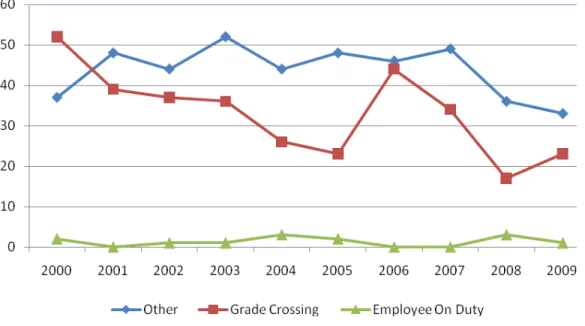
Rail accidents and incidents in Texas have steadily decreased in the past decade, as have national rail safety trends. Figure 5-1 shows the total number of rail accidents/incidents2 for Texas (left axis) and numbers for Class I railroads in Texas (right axis). Figure 5-2 shows numbers of rail fatalities, which primarily involve highway/rail grade crossing accidents and pedestrians trespassing on railroad property (trespassers
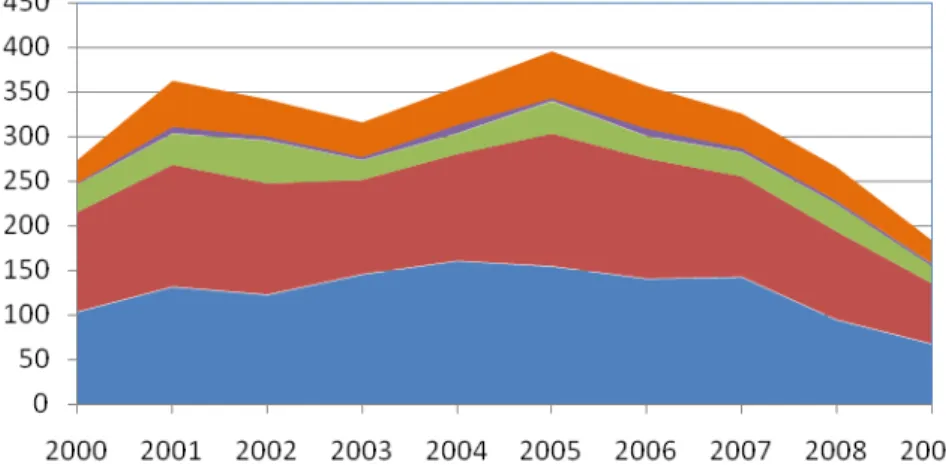
make up the majority of FRA’s “other accident” category). Figure 5-3 illustrates numbers of rail-related injuries. Employee on duty injuries dominate the injury figures, in part because railroad employees are more exposed to the dangerous railroad operating environment than trespassers or drivers in grade crossing collisions. Total train accidents/incidents by type are shown in Figure 5-4. Figure 5-5 displays the causes of those accidents/incidents.
Figure 5-1: Texas Total Railroad Accidents/Incidents, 2000–2009
Source: FRA Office of Safety Data. Total accidents include train accidents, crossing incidents, and other incidents that result in physical harm to persons.
Figure 5-2: Texas Railroad Fatalities by Type, 2000–2009
Source: FRA Office of Safety Data. The “Other” accident category refers to incidents that result in physical harm to persons other than train accidents or grade crossing incidents.
Figure 5-3: Number of Texas Railroad Injuries by Type, 2000–2009
Source: FRA Office of Safety Data. The “Other” accident category refers to incidents that result in physical harm to persons other than train accidents or grade crossing incidents.
Figure 5-4: Number of Texas Rail Accident/Incident Types, 2000-2009 Source: FRA Office of Safety Data. The “Other” accident category refers to incidents that result
in physical harm to persons other than train accidents or grade crossing incidents.
Figure 5-5: Number of Texas Rail Accident/Incident Causes, 2000–2009 Source: FRA Office of Safety Data.
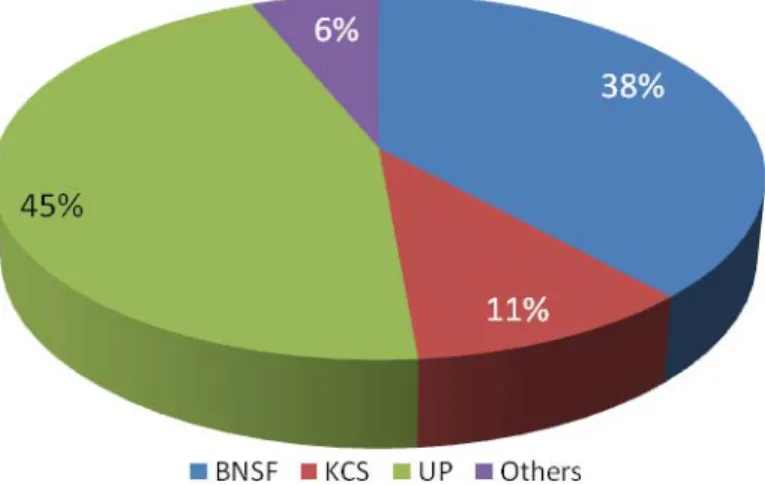
On average, 74% of train accidents in Texas involve derailments, but slightly more than half of these derailments occur on tracks in rail yards at low speed with little property damage or effect to the general public. Figure 5-6 shows 2009 derailments by railroad, and Figure 5-7 shows derailments by cause factor.
Figure 5-6: 2009 Texas Derailments by Railroad Source: FRA Office of Safety Data
Figure 5-7: 2009 Texas Derailments by Accident Cause Source: FRA Office of Safety Data.
The FRA requires railroads to report accidents above a certain property damage threshold set by 49 CFR Section 225.19 (the 2010 figure is $9,200). Accidents that result in more than $150,000 in damage are considered “major” accidents. Fewer than 20% of train accidents involve more than $100,000 of damage. Only 4% of train accidents involve more than $500,000––the kind of significant accidents that by their very nature would affect communities and attract public attention. About the same small percentage of train accidents involve release of hazardous materials, but these accidents can be hazardous to communities and citizens near the accident site.
State Regulation of Rail Operations
Texas has adopted federal safety standards relating to railroad track, equipment, operating practices, signals, and train control by reference. In addition to federal regulations, state regulations prescribe standards for the horizontal and vertical clearance of structures over and alongside railway tracks, sight distances at non-signalized grade crossings, and exemptions for certain rail-related structures. Monthly reports of excess hours of service required by federal regulations must also be submitted to TxDOT. Railroads must indicate points of contact for rail operations within the state and provide upon request copies of the railroad’s operating rules, timetables, and special instructions; any amendments to a railroad’s operational tests and inspections; and copies of programs for employee instruction. Regulations also require railroads to file and maintain a map, list, or chart that indicates the location of wayside detectors in Texas.
Railroads are required to report to TxDOT, by telephone or fax, any accidents or incidents that meet certain criteria, such as an incident or occurrence involving railroad on-track equipment that results in the death of any railroad passenger or railroad employee.
5.3 – Hazardous Materials Transportation Safety
The FRA Office of Safety Assurance and Compliance is granted authority by the U.S. Secretary of Transportation to administer a safety regulatory program that focuses on the transport of hazardous materials. This program is administered through the FRA’s Hazardous Materials Division and includes programs such as the Hazardous Materials Incident Reduction Program and the Spent Nuclear Fuel and High-Level Nuclear Waste Program.
At the state level, TxDOT’s rail safety program is tasked with collecting information on the transport of hazardous materials by rail in the state and uses this information to optimize the allocation of inspection resources. As with railroad operational safety issues (i.e., track, signal and train control, motive power and equipment, and operating practices), state and FRA safety inspectors monitor regulatory compliance with respect to transport of hazardous materials by conducting on-site investigations.
Congress also enacted the Implementing Recommendations of the 9/11 Commission Act of 2007, which required USDOT to adopt rules regarding routing of hazmat shipments through urban areas. The FRA and the Pipeline and Hazardous Materials Safety Administration adopted these rules in November 2008. Rules establish guidelines for railroads to use in studying hazmat shipping patterns, assessing alternate routes that minimize risk, and establishing procedures for reviewing routing decisions. These routing decisions are shared with state and local governments through intelligence fusion centers at the state level that work with the federal Department of Homeland Security. The Texas Fusion Center is part of the Department of Emergency Management managed at the Texas Department of Public Safety (DPS); TxDOT participates through interagency Homeland Security committees.
State and local governments already work with railroads to prepare for possible hazmat releases through the federal Emergency Planning and Community Right to Know Act of 1986, administered through the Environmental Protection Agency (EPA). Again, the DPS Division of Emergency Management serves as the state agency responsible for oversight and coordination of emergency response planning among local emergency planning commissions generally established at the county level in Texas.
Texas has also examined the issue of rerouting hazardous materials shipments. In response to a fatal chlorine release caused by a June 2004 San Antonio derailment, in 2007, the Texas Legislature directed TxDOT to conduct a study to determine the economic feasibility of relocating freight trains transporting hazardous materials away from residential areas of the state in municipalities of more than 1.2 million. The study found that it is possible to relocate a portion of freight trains carrying hazardous materials from these municipalities, although it is not possible to completely relocate all of them. There are also safety risks associated with local delivery of hazardous materials via truck.
The analysis found that many hazardous materials movements are necessary on existing routes to serve customers or facilities (such as the Port of Houston and water purification facilities) located on those routes. The number of through-freight movements not destined for those areas are minimal and the cost of constructing bypass facilities are prohibitive. Relocation of a small percentage of hazardous materials movements to these bypasses does not significantly lower the risk of exposure in proportion to the cost of the bypass facilities. The study found that the risk of hazardous materials releases and the safety of rail operations could be more effectively improved by investments in upgrades to existing rail infrastructure.
Improving existing track conditions to a higher FRA track classification, while maintaining current operating speeds3, reduces the risk of hazardous material releases by reducing risk of track-caused derailments4. This also has a more significant impact since it is not possible to relocate all hazardous materials movements. However, expenditures would not be a one-time fix; tracks would require continued maintenance investments to remain in optimal condition.
5.4 – Highway-Rail Grade Crossing Safety
The U.S. transportation network has more than 140,000 miles of railroad track and 246,601 highway-rail grade crossings––a ratio of 1.72 grade crossings per route mile of track. An estimated 28% of all grade crossings have active warning devices, such as automatic gates, flashing lights, or rail-linked highway traffic signals where these facilities intersect. Nationwide, 369 grade crossing fatalities occurred in 2006 alone. Although a tragic loss of life, this is a 49% reduction in fatalities compared to those that occurred in 1981. During this time, the total number of grade crossing accidents also declined from 9,461 to 2,926 nationwide due to the increased number of grade crossing warning device installations, reduction in the number of crossings, and public awareness efforts.
According to a 2004 USDOT Inspector General’s report, 94% of grade crossing accidents are caused by risky driver behaviors. Although active warning devices (lights, gates, bells) are installed on only 28% (68,834 devices) of the 246,601 highway-rail grade crossings in U.S., approximately 49% of grade crossing accidents occur at crossings with warning systems in place. National statistics show that the greatest number of these accidents is the result of motorists driving around lowered crossing gates, suggesting that current public awareness programs, such as Operation Lifesaver and the Highway Safety Council, have had limited success in educating drivers.
The high number of fatalities and injuries that occur due to trespassing on railroad property is another concern. The tragic loss of life and injuries caused by both trespassing and risky driver behaviors are unnecessary and avoidable. Most of these incidents occur as a result of a decision to engage in dangerous behavior (trespassing on railroad property) or a decision to ignore a highway traffic signal (grade crossing lights or gates).
Federal Grade Crossing Rules and Regulatory Authority
Most federal regulations pertaining to railroad safety are described in 49 C.F.R. Parts 200-299. Railroad companies must submit a record of all highway-rail grade crossing accidents to the FRA within 30 days (49 C.F.R. Part 225). Highway-rail grade crossing accidents must be reported by the railroad regardless of the extent of damages or if a casualty occurred. If death or injury from such an accident occurs, the accident must be filed on Form FRA F 6180.55a.
The FRA regulates grade crossing signal system safety in 49 C.F.R. Part 234, which prescribes minimum maintenance, inspection, and testing standards for warning systems at highway-rail grade crossings and defines standards for reporting and taking action on system failures.
Highway-Rail Grade Crossings in Texas
Statistics released by the FRA and Operation Lifesaver indicate a marked decline in the number of grade crossing collisions and injuries occurring in the state between 1981 and 2009, although the population has grown from 14.2 million to more than 21 million during this same period.
One of the intentions of the TRP is to set a goal permitting continuous improvement of safety and efficiency of traffic movement across the state’s 15,042 grade crossings. Significant efforts have been made in Texas to provide grade separations at highway-rail intersections and to provide safe grade crossings for motorists when this is not possible. Table 5-1 lists the numbers of both passive and active warning devices used at highway-rail grade crossings in Texas. The numbers in this table indicate that 56% (5,525 crossings) of 9,784 public crossings are equipped with active warning devices.
Table 5-1: Number of At-Grade Warning Devices in Texas
Warning Device Number
Crossbucks (passive) 3,607
Lights Only (active) 942
Gates (active) 4,583
Stop Signs 207
Special Warning 66
Highway Traffic Signal (active) 56
Four Quad Gates 73
Other (passive or active) 5
Unknown 245 Total 9,784 Source: Public At Grade Motor Vehicle Crossings by County and Warning Device for Texas,
Federal Railroad Administration, 2010.
Texas has more than 10,743 miles of rail track and 301,796 miles of roadway. According to FRA statistics, Texas leads the U.S. in number of at-grade rail crossings. Table 5-2 lists 2010 statistics that shows that between 6% and 7% of all U.S. public and private grade crossings are located in Texas.
Table 5-2: Number of At-Grade Highway-Rail Grade Crossings: 2007 Type of Crossing U.S. Texas % of the U.S.
Public 137,634 9,784 7.0
Private 85,174 5,258 6.3
Total Crossings, Public and Private 222,808 15,042 6.7
Source: Total At Grade Crossings, Federal Railroad Administration, 2007
Grade Crossing Accidents/Incidents
Grade crossing incident frequencies and casualties are not evenly distributed among states; the top 10 states account for a majority of incidents and consequences of such incidents. Figure 5-8 shows the proportion of grade crossing incidents, fatalities, and injuries are distributed among states. For this reason, the Rail Safety Improvement Act of 2008 requires special grade crossing accident prevention reports from the top 10 states with the most grade crossing fatalities, as this focus on a small number of states would have a large impact on national grade crossing statistics. Texas ranks first among the states with the highest number of grade crossing incidents, fatalities, and injuries. Texas also has the highest number of grade crossings compared to other states.
Figure 5-8: Grade Crossing Accidents/Incidents by State Groups, 2007–2009 Totals
A more careful examination of the accident and fatality statistics can compare Texas to the other “top 10” states. Figures 5-9 and 5-10 show state grade crossing accidents for 2007, 2008, and 2009, and the three-year total. All 10 states show reductions in incidents from 2007 to 2009, with Texas showing a strong reduction in absolute numbers. However, Ohio and Florida had a greater percentage decrease during the 3 years.
Figures 5-11 and 5-12 illustrate grade crossing fatalities for the same 10 states over the same period. California has the most grade crossing fatalities among the 10 states, with Illinois and Texas behind.
0 50 100 150 200 250 300 350 Texas Illinois California Indiana Georgia Louisiana Ohio Alabama Florida Iowa 2009 2008 2007
Figure 5-9: Grade Crossing Accidents/Incidents by 2010 Top Ten States, 2007–2009 Annual Totals
Figure 5-10: Grade Crossing Accidents/Incidents by 2010 Top Ten States, 2007–2009 Three Year Totals
Source: FRA Office of Safety Data
0 10 20 30 40 50 California Texas Illinois Florida Indiana Louisiana Georgia Alabama Ohio Iowa 2009 2008 2007
Figure 5-11: Grade Crossing Fatalities by 2010 Top Ten States, 2007–2009 Annual Totals
Figure 5-12: Grade Crossing Fatalities by 2010 Top Ten States, 2007–2009 Three Year Totals
Source: FRA Office of Safety Data
Texas, California, Illinois, and Ohio share similar combinations of risk factors that may lead to more highway-rail grade crossing incidents. These states have extensive rail networks with high rail traffic volumes coexisting in states with high populations, vehicle traffic, and numbers of drivers and vehicles. Table 5-3 lists some relative measures of rail-related activity to compare the 10 states. Each state’s measure for each column is then compared to the average amount for all 10 states for that measure to develop an index measure of relative difference. Then all three index amounts are averaged for the state, shown in the column titled “indexed risk factors.” This shows that Texas, Illinois, California, and Ohio have higher than average rail risk factors measured by number of grade crossings, total rail miles, and rail traffic.
Table 5-3: Rail-related Grade Crossing Risk Factors, 2010 Top Ten States Grade crossings, 2007 2008 Rail Miles 2008 Carloads Carried Indexed Rail Factors Texas 15,102 10,743 9,425,554 185.37 Illinois 12,316 7,306 11,285,483 162.95 California 10,117 5,200 6,852,011 114.22 Indiana 7,988 4,448 6,312,944 97.80 Georgia 7,906 4,720 3,669,031 83.58 Louisiana 6,027 2,789 1,803,602 52.49 Ohio 9,279 5,318 6,200,409 107.87 Alabama 4,518 3,271 2,767,390 55.52 Florida 5,264 2,874 1,575,282 48.73 Iowa 7,321 3,925 6,269,511 91.50
Source: AAR State Rankings, FRA 2007 Accident Report
Table 5-4 lists a series of motor vehicle related risk factors:
• Number of total publicly owned road miles, measuring the road network;
• Driver population as a ratio of total driving age population, measuring numbers of drivers that could have an accident;
• Number of registered vehicles, measuring the number of vehicles that could be involved in an accident; and
• Measure of total vehicle miles traveled (VMT), a measure of relative vehicle traffic density.
Texas, California, and Florida have the highest values of motor vehicle-related risk factors.
Table 5-4: Motor Vehicle-Related Grade Crossing Risk Factors, 2010 Top Ten States
2008 Public Road Miles 2008 Licensed Drivers per 1000 Drivers Age Pop* 2008 Total Vehicles 2008 VMT (millions) Indexed Vehicle Factors Texas 306,404 839 18,207,948 235,382 165.94 Illinois 139,492 819 9,793,821 106,079 90.80 California 172,512 832 33,483,061 327,286 192.74 Indiana 95,613 1,116 5,847,546 70,973 75.37 Georgia 121,875 844 8,569,625 109,057 86.10 Louisiana 61,093 873 1,074,465 45,091 46.63 Ohio 122,973 876 10,933,169 108,302 92.30 Alabama 97,325 1,022 4,729,791 59,303 68.34 Florida 121,386 948 16,461,925 198,616 123.77 Iowa 114,226 838 3,430,867 30,713 57.93
*The ratio is the number of registered drivers per 1,000 persons of driving age. Source: FHWA 2008 Highway Statistics
Figure 5-13 shows these two rail and vehicle risk factors and an average of the two. Looking at those states above the 100 index value (the average of all ten states), Texas has relative high rail and motor vehicle risk factors, and California and Illinois have high risk factors of one category or another.
‐ 50.00 100.00 150.00 200.00 250.00 Texas Illinois California Indiana Georgia Louisiana Ohio Alabama Florida Iowa
rail vehicles average
Figure 5-13: Indexed Rail and Vehicle Grade Crossing Accident Risk Factors, 2010 Top Ten States
Source: Cambridge Systematics, Inc
Grade crossing safety substantially improved in Texas between 1981 and 2009. The number of auto-train grade crossing accidents decreased from 1,202 (1981) to 177 (2009), a reduction of approximately 85%. This reduction occurred despite a growth in population, vehicular traffic, and rail traffic throughout the state, the risk factors described above.
Grade crossing accidents in Texas have been steadily decreasing in the last 10 years, as shown in Figure 5-14. The number of accidents at private grade crossings has decreased in the past three years, as shown in Figure 5-15.
As noted, the FRA requires the top 10 states with the most auto-train collisions to submit an action plan by August 2011. The Texas crossing safety action plan focuses on identifying crossings where multiple collisions occur. A 2003–2007 crash data analysis revealed that among those crossings reporting multi-collisions, 63% were equipped with train-activated warning devices. Flashing light signals and gates were in place at 41% of the multi-collision crossings. As a result of this analysis, crossings equipped with
Utilizing evaluation, engineering, education, and enforcement safety program components, projects will be developed and implemented using existing federal dedicated funding sources to reduce or eliminate collisions at these crossings. The plan will include a five-year implementation plan.
Figure 5-14: Texas Grade Crossing Accidents/Incidents, Public and Private Crossings, 2000-2009
Source: FRA Office of Safety Data
Figure 5-15: Texas Private Grade Crossing Accidents/Incidents, 2000-2009 Source: FRA Office of Safety Data
Safety Improvements to Grade Crossings in Texas
TxDOT is charged with administering all federal and state funds designated to build overpass bridge structures, install or maintain active warning devices, replank grade crossings, or to implement other measures that improve grade crossing safety. For example, funds distributed by TxDOT as part of the Obligated Federal Railroad Signal Program are listed in Table 5-5; estimated expenditures through 2012 from this source are listed in Table 5-6. At an average of slightly more than $31 million, these funds cover roughly 4% of the estimated needs to improve crossings statewide5.
Table 5-5: Federal Railroad Signal Program Funds & Projects in Texas (2003–2007) Year Number of Projects Amount (millions) 2003 162 $ 25.84 2004 2005 2006 2007 154 190 239 184 $ 25.37 $ 32.30 $ 41.09 $ 31.28 Source: Texas Department of Transportation, Rail Division
Table 5-6: Federal Railroad Signal Program Funds in Texas Program Year Authorized Amount
(millions) 2008 2009 2010 2011 2012 $ 35 $ 35 $ 15 $ 15 $ 15
Source: Texas Department of Transportation, Rail Division
The average annual expenditure per crossing project between 2003 and 2007 was $167,793. With more than 4,200 crossings in the state equipped with only signs to warn motorists they are approaching a grade crossing and must yield to train traffic, it would cost an estimated $705 million to upgrade these crossings with flashing lights and gates.6
In addition, Section 1103 (f) funds are available for grade crossing studies and improvements in federally-designated high-speed rail corridors. In 2007, TxDOT
hazards on high-speed rail corridors in Texas. TxDOT is working with the local governments to determine the best uses for these funds.
Section 130 permits up to 50% of the available Railroad Crossing Protection (RXP) and Railroad Crossing Hazard Elimination (RXH) safety set-aside funds to be allocated to projects other than railroad signal upgrades. However, the Texas Transportation Commission has elected to allocate the entire Section 130 set-aside to railroad signal upgrade projects and has supplemented the set-aside with additional optional Surface Transportation Program (STP) safety funds. Under SAFETEA-LU (FY 2004–2009), Texas will average $35 million per year in STP optional safety funds for the railroad crossing safety improvement program.
When developing projects under the Section 130 program, the diagnostic team must first consider if the opportunity exists to consolidate and close redundant, non-essential crossings, either at the selected crossing or at adjacent crossings. The program provides financial incentives to the local governmental entity by providing funds to make operational improvements that facilitate crossing closure.
TxDOT uses a federally-required priority index to select candidates for these improvements, which considers:
• average daily vehicle traffic; • average daily school bus traffic; • average daily train traffic; • maximum speed of trains;
• existing type of warning device; and, • the past five years of auto/train accidents.
Current efforts to improve highway-rail grade crossing safety include modifications by TxDOT to existing facilities and the implementation of new safety measures by state and municipal authorities. These strategies are discussed in the following sections.
Crossing Surfaces: A review of grade crossing accident history indicates that “Rough
(Humped) Crossings” are a contributing factor to grade crossing incidents. TxDOT’s safety enhancement program includes funding for “replanking” the crossing area over ties to eliminate humped crossing surfaces and improving crossing approaches by repairing potholes in the crossing to provide a smooth flow of vehicles over the track.
Highway Median Barriers: Review of grade crossing accidents indicates many motorists
involved in these accidents are attempting to drive around warning gates. TxDOT considers the construction of highway median barriers at grade crossings, which generally requires highway widening as a proposed method of addressing this problem.
Grade Crossing Consolidation: Under TxDOT’s safety enhancement program, traffic patterns are reviewed to determine which grade crossings can be closed while minimizing inconvenience to local communities. Crossing consolidation and closure often encounters resistance from local communities that are resistant to the inconvenience caused by traffic rerouting. These closures usually require modifications to the existing roadway.
Grade Crossing Signal Upgrades: TxDOT upgrades grade crossing signalization as part
of the safety enhancement program, which includes the installation of flashing lights or gates at crossings equipped solely with crossbucks, as well as the installation of gates at crossings only equipped with flashing lights.
Installation of Reflector Systems: Texas regulations authorize the upgrade of existing
passive warning systems to high intensity reflectorized systems of crossbucks and track signs. These systems are for use at all grade crossing locations that do not have train activated warning devices and consist of reflectorized material placed on both sides of the crossbuck support pole. In addition to improving crossbuck visibility, trains passing through these grade crossings at night provide a “flicker” effect from motorists’ headlights due to their position and spacing relative to the reflectors. This effect helps to notify motorists of passing trains. TxDOT has completed a statewide project utilizing Federal Section 130 funds to upgrade crossbuck sign assemblies with reflective material on the front and back of sign support posts. Railroad carriers are also encouraged to implement similar programs on private crossings.
Trespasser Issues: From 2006 to 2009, trespasser fatalities made up 55% of total
rail-related fatalities on average. In this same time period, half of trespasser casualties (deaths plus injuries) occurred in eight Texas counties: Harris, Tarrant, Bexar, Webb, Dallas, El Paso, Travis, and Potter. About half of the casualties involved being struck by rail equipment while walking, standing, sitting, or lying down. A 2008 FRA study, Rail
Trespasser Fatalities: Developing Demographic Profiles, reported an analysis from a
survey of medical examiners in jurisdictions with trespasser fatalities. Considering the survey responses (those returning surveys with usable information), certain information can be gleaned from trespasser fatality information. Most fatalities were males (87%) and involved alcohol or drugs (57%). It is difficult to determine how many trespasser deaths are intentional, because railroad accident reports do not require that coroner suicide determinations be included.
Educating the public on the dangers of trespassing on railroad property, including the realization that walking along a train track constitutes trespassing, is challenging. In many urban areas, train tracks are seen as linear corridors for walking, and many people cross train tracks or go under or between stationary rail cars with little concern for safety hazards. Popular culture is filled with images of people walking or riding on rail tracks, and the instances are shown as adventurous rather than reckless. Operation Lifesaver
educational programs seek to inform people of the dangers of trains, not only at grade crossings.
Pedestrian Crossings: As more passenger rail systems are implemented in Texas
(including intercity, commuter, and light rail), pedestrian safety is a part of the safety considerations for rail construction, particularly around stations or in instances where roads and sidewalks cross passenger rail lines at grade. TxDOT, as the state oversight agency for rail transit systems, reviews pedestrian crossing improvements as part of the agency’s review of transit system safety programs. Some of the same safety improvements used in highway rail grade crossings are applicable: Signage, protective gates, and signals. Other safety improvements include channelization of pedestrian activity through fencing, walkway markings or tactile pavement strips, signs, or gates.
In addition to modification of existing facilities, several new supplemental safety measures have been implemented or are under consideration throughout the state. In many cases, these improvements are implemented as part of a quiet zone application.
Quiet zones are corridors of adjacent crossings at which train horns are not sounded because safety improvements to crossings along the corridor reduce total safety risks to levels equal to or less than the safety risks when sounding the horn. Public agencies can work with the FRA to reduce the overall Quiet Zone Risk Index, a measure of the safety risks at the collection of crossings given each crossing’s safety risks (train speed, frequencies, commodities, accident history, and motor vehicle traffic volumes). A mixture of grade crossing protection device upgrades, crossing closures, grade separations, or implementation of supplemental safety measures can be applied to reduce the Quiet Zone Risk Index to a level below the Nationwide Significant Risk Threshold (a measure of average risk at grade crossings where horns are sounded). The FRA is interested in approving quiet zones only if crossings are as safe as if the horns were sounded. The quiet zone process is a matter for public agencies to work with the FRA using online crossing risk calculators or consulting engineers to identify and design supplemental safety measures.
These new supplemental safety measures include:
Median Barrier Protection: Median barriers or channelization devices are constructed in
the center of highway rights-of-way to prevent vehicles from crossing the centerline to drive around highway-rail crossing gates (see Figures 5-16 and 5-17). These barriers, high curbs, or delineators generally require highway expansion to accommodate the reduction in lane widths caused by installation of the median barrier. In addition, median barriers need to be at least 60 feet long to serve as an effective deterrent, although 100 feet is preferred.
One-Way Streets with Gates: Another approved supplemental safety measure is a
movement around the gate is possible. The street must be bounded by a non-traversable curb extending at least 100 feet from the crossing. A pair of grade crossings on adjacent streets could be converted to two one-way streets with gates that block the entire roadway.
Figure 5-17: Highway-Rail Crossing Channelization
Four Quadrant Gate Systems: This system would prevent vehicles from going around
lowered crossing gates and intruding onto the track (Figure 5-18). Local entities should review physical conditions for installation of four-quadrant gate systems in coordination with TxDOT. These systems can be more expensive to install than regular gated crossings and require more maintenance.
Figure 5-18: Four Quadrant Gate System Features of the four-quadrant gate system include the following:
• gate timing customized by location based upon the specific characteristics of the crossing (i.e., number of tracks, skew angle, average daily traffic, etc.);
• radio links to the system’s event record for the highway-rail grade crossing control points to improve safety and minimize response time in the event of malfunctions; and
• traffic loops to preempt closing of the exit gates under standard delay times from crossing activation.
Sealed Corridors: A sealed corridor is created by modifying highway-rail crossings in a
way that prevents vehicular traffic from intruding on any crossing in the corridor during train operations. This is accomplished by installing median barriers or four-quadrant gates at all active crossings and eliminating as many crossings as possible. This system prevents accidents from occurring and increases train speeds in the corridor.
Crossing Horns: Crossing horns, or wayside horns, are mounted on a signal mast at
grade crossings with the warning sound directed along the roadway and toward vehicular traffic instead of on the train (Figure 5-19 shows a wayside horn). A signal along these rail lines notifies the locomotive engineer in an approaching train that a crossing horn is active, permitting the engineer to avoid sounding the locomotive horn.
This system reduces the disturbance of trains passing through grade crossings to area residents while improving safety. Figure 5-20 illustrates the noise contours of a typical grade crossing with a locomotive horn. Figure 5-21 shows the noise contours of a wayside horn at the same location. There are approximately 35 such systems currently in place throughout the U.S., while additional installations await FRA approval. An installation of this type of system requires a cooperative agreement between the railroad and the local community.
Figure 5-20: Example of Noise Impacts of Locomotive Horn (Red: 90-110 dB, Blue: 80-90 dB)
Figure 5-21: Example of Noise Impacts of Wayside Horn (Red: 90-110 dB, Blue: 80-90 dB)
Temporary Blockage of Grade Crossing: In some instances, jurisdictions could choose
to erect a barrier and signs that completely block a street and sidewalks from 10:00 p.m. to 7:00 a.m. to provide cessation of locomotive horns during the night. Jurisdictions would be responsible for the daily activation and deactivation of these barriers and for ensuring that the devices are tamper-proof. Figure 5-22 shows an installation of a temporary blocked crossing at Ft. Leavenworth in Kansas, shown with the gate locked in the open position. The wayside device shown to the left of the power line pole is a signal indicator which signals the train engineer whether the closure device is locked closed (visible signal, no horn sounded) or open (no signal, horn sounded). A similar gate locking device is located at the other side of the roadway. When locked, the device
activates the wayside signal. The signal device is wired only to the gate locking device and is not connected to any track-based signaling or train control systems.
Figure 5-22: Example of Temporary Blocked Crossing
Closed Crossing: The final supplemental safety measure authorized by the FRA is the
complete closure of a crossing in which the roadway is ended and all vehicle crossing plates or pavement is removed from the track bed. Eliminating a crossing is often politically difficult; however, if included in a corridor-based quiet zone that also incorporates other safety improvements and vehicle benefits (perhaps including a grade separation), the closed crossing is a powerful tool in reaching the safety risk thresholds necessary to install a quiet zone.
5.5 – Public Information Campaigns
To supplement the effects of improving highway-rail grade crossing safety through facility upgrades and vehicle warning systems, information campaigns are in place to
educate drivers on the safe operation of roadway vehicles at these crossings. Statewide educational efforts currently in place are discussed in the sections that follow.
Public Awareness
Literature from organizations such as Operation Lifesaver is currently being used to notify the trucking industry, industrial parks, and marinas, etc., of the potential for vehicles becoming stuck on rough and uneven crossings. Videos/commercials are used as aids to publicize the dangers of highway-rail grade crossings. Railroad operators also participate in other public awareness programs such as “officer on the train.” In this program, law enforcement officers ride the train with railroad personnel and observe the actions of motorists at crossings. Another officer may be stationed nearby to respond to radio advisories of unsafe acts on the part of motorists. This program helps law enforcement personnel better understand the behavior of motorists at grade crossings.
Operation Lifesaver
Operation Lifesaver is a non-profit organization dedicated to reducing the number of collisions, deaths, and injuries at rail-highway intersections and on railroad rights-of-way through public awareness campaigns and programs that emphasize improved engineering, education, and enforcement. The program seeks to improve driver and pedestrian behavior at rail-highway intersections by encouraging compliance with traffic laws relating to crossing signs and signals. Operation Lifesaver has many successful programs that emphasize the enforcement of existing traffic and trespassing laws, which are conducted in conjunction with law enforcement efforts. In addition, Operation Lifesaver supports the consolidation and closure of redundant grade crossings and seeks engineering improvements to increase rail safety.
State Rail Safety Inspectors and Grade Crossing Safety Education
Rail safety inspectors are trained to present Operation Lifesaver programs to schools, driver education classes, community groups, industry audiences, and professional drivers. The RRC gave over 100 of these presentations annually when administering the rail safety program, typically reaching 2,000 to 4,000 people per year.
Specialists in the Rail Division (RRD) analyze grade crossing collision data to determine problem areas so safety programs can be targeted at areas with high-risk crossings. Results from these analyses are used to educate the public on the dangers of trains, as well as to educate law enforcement officials on the need for strict enforcement of laws governing motor vehicle operations at grade crossings.
In general, the state’s role in providing information on grade crossing safety includes: •promoting grade crossing safety through public education programs and
• networking with state and federal agencies, municipalities, industry, and other programs to increase cooperation and promote support for highway-rail grade crossing safety;
• coordinating with state and national Operation Lifesaver programs to facilitate the expansion of grade crossing safety education;
• developing public information resources to support grade crossing safety; and • serving on the Board of Directors of the Texas Operation Lifesaver Program. TxDOT Grade Crossing Safety Education
TxDOT, in cooperation with the Federal Highway Administration (FHWA), produced Report No. 1469-4, Highway-Rail Grade Crossing Public Safety Education Materials. This report, in booklet form, contains information relating to common myths of train and crossing interactions, frequently asked questions, statistics, laws, responsibilities, warning devices, and emergencies. The report also addresses safety awareness for various age groups from kindergarteners to senior citizens. This resource is periodically updated and available from TxDOT’s RRD.
TxDOT has also provided funding through a Federal Section 402 Safety Grant to produce a "Highway-Rail Grade Crossing Traffic Law Enforcement" pocket guide for Texas peace officers. This same information is distributed to law enforcement police academies across the state.
5.6 – Rail Security
The regulatory environment that enhances rail safety and economic policy—openness, disclosure of information, and accessible statistics—reflects the basic interactions by which safety and economics are advanced. Railroad operations at some level involve collaborative, voluntary, and mutual actions by various parties. Success in reaching financial or safety goals depends on those interactive relationships. In the realm of rail security, the primary objective is to prevent certain parties from gaining information about and access to railroad operations so operations are not disrupted. In this environment, transparency about infrastructure vulnerability, details of movement of high-risk, high-consequence commodities, or lists of risk countermeasures would serve to diminish rail security.
Rail security is primarily a federal matter, led by the Department of Homeland Security through the TSA in cooperation with USDOT through the FRA and the Pipeline and Hazardous Materials Safety Administration. While the FRA and TSA have regulatory authority over railroad security implementation plans, day-to-day actions to keep the railroad industry safe are the responsibility of Railroad Police Officers, authorized by Article 2.121, Code of Criminal Procedure. Prior to the increased national attention to
security after 9/11, rail security was primarily a concern of the railroads themselves and among the community of first responders responsible for addressing rail incidents involving hazardous materials. Railroads responded quickly after 9/11 to develop more robust security plans, and as the Transportation Security Administration (TSA) was created, the industry worked together with federal agencies and other entities. These efforts were formalized through the enactment of the Implementing Recommendations of the 9/11 Commission Act of 2007, which established requirements for rail security planning, information sharing, and hazmat routing.
Final rules for rail security, published in November 2008, establish requirements for protecting security sensitive information, identifying rail security coordinators at railroads and other hazardous materials shippers and receivers, reporting security incidents, and authorizing inspections of rail network facilities by TSA personnel. These rail security coordinators are required to coordinate security practices with appropriate law enforcement and emergency response agencies. The TSA reports that it has 175 freight rail security inspectors working out of 54 field offices around the country but otherwise does not publish information about its security inspection personnel (e.g., numbers in particular states, activities by state). TSA also is responsible for coordinating security on passenger rail, commuter rail, and rail transit systems.
5.7 – Rail Fixed Guideway Mass Transportation Safety Oversight
Since 1997, TxDOT has been directed by Chapter 455, Transportation Code to oversee the safety and security planning of transit agencies in Texas that operate light rail, commuter rail, rapid rail transit, trolley, or other fixed automated guideway transit systems. State law and regulations impose certain requirements on transit operators to maintain system safety plans and system security plans, establish accident reporting requirements, and specify requirements for periodic internal plan reviews and reporting requirements to TxDOT. TxDOT’s RRD coordinates this program, which involves both the FRA and the Federal Transit Administration, or FTA (FRA for commuter rail or systems that operate on the rail network; and FTA for all other systems). The FTA regulates state oversight of rail transit system safety and security programs (49 C.F.R. Part 659). Federal law currently prevents the FTA from establishing federal transit safety standards or regulations for rail transit systems, so the FTA’s regulations cover the state oversight of the systems put in place by the transit operators.
In 2009, the FTA proposed legislation7 allowing federal rail transit safety standards and enforcement of those standards by states and/or federal inspectors. States could apply for safety certification approval from the FTA, demonstrating that the state has adequate trained staff to enforce federal regulations; has authority to compel compliance from rail transit operators; and has independence from the rail transit operators. The proposed legislation would authorize federal financial assistance to participating states that could cover salary and benefit costs of transit safety personnel, including costs of training and
provides no federal funding for rail safety inspectors. The expansion of federal authority in rail transit authority would present Texas with an opportunity to participate in an expanded rail transit safety enforcement program.
1
National Transportation Safety Board report NTSB/RAR-06/03. 2
FRA refers to train accidents as collisions, derailments, fires, explosions or other acts that result in damage to all railroads involved in excess of reporting thresholds. Train incidents involve the movement of train equipment that result in a casualty or damage less than the threshold amounts. Non-train incidents involve a casualty or damage less than the threshold without the movement of on-track equipment.
3
FRA safety regulations specify nine classifications for track, each with specific requirements for track structure, track geometry and inspection frequencies. Each classification has a maximum allowable speed for passenger and freight train operations.
4
Hazmat release frequency per FRA Track Class is estimated on Page 4-4 of the 2008 TxDOT Report, Economic Feasibility of Relocating Hazardous Materials Transported by Freight Rail. 5
Based on an estimated need of $850 million to upgrade 5,000 passive crossings with signalization.
6
TxDOT, Rail Division. 7