PREVENTION OF SCUBA DIVING MISHAPS USING A PREDIVE CHECKLIST: A CLUSTER RANDOMIZED TRIAL
SHABBAR ISMAILBHAI RANAPURWALA
A dissertation submitted to the faculty at the University of North Carolina at Chapel Hill in partial fulfillment of the requirements for the degree of Doctor of Philosophy in the Department of Epidemiology in the
Gillings School of Global Public Health.
Chapel Hill 2014
ii © 2014
iii ABSTRACT
Shabbar Ismailbhai Ranapurwala: Prevention of Scuba Diving Mishaps Using a Pre-dive Checklist: A Cluster Randomized Trial
(Under the guidance of Steven B. Wing)
Scuba diving mishaps, caused by equipment problems or human errors, increase the risk of morbidity and mortality while diving. Pre-dive checklists may mitigate mishaps. This study evaluated the effect of using a pre-dive checklist on the incidence of diving mishaps in recreational divers.
A multi-location cluster randomized trial with parallel groups and allocation concealment was conducted between June 1 and August 17, 2012. The participants had to be at least 18 years of age, permitted to dive by the dive operator, and planning to dive on the day of participation. They were recruited at the pier and dive boats at four locations. The intervention group received pre-dive checklist and post-dive log. The control group received a post-dive log only. The outcomes, self-reported major and minor mishaps, were prompted by a post-dive questionnaire. Mishap rates/ 100 dives were compared using Poisson regression with generalized estimating equations. Intent-to-treat, per-protocol, and marginal structural model analyses were conducted. Two nested studies were also conducted – first, among the control group participants, to evaluate the relationship of routine use of written self-checklist on the incidence of mishaps. And second, among the intervention group participants, to assess the factors affecting the adherence to the intervention pre-dive checklist.
Total 1043 divers (intervention=617; control=426) made 2041 dives, on 70 location-days
iv
were routine use of self-checklist and older age. Factors that were associated with lower adherence were non-white race and diving in North Carolina.
In this trial, pre-dive checklist use prevented the incidence of mishaps which could prevent injuries and fatalities. Use of pre-dive checklists should not entail any risk and their use should be promoted.
v
vi
ACKOWLEDGEMENTS
Many thanks to my wonderful advisor, mentor and friend Dr. Steven B. Wing, PhD, for being ever so kind, inspirational, fatherly, patient, soothing, nurturing, supporting, and a person to look up to. Many thanks to my committee member and mentor Dr. Petar J Denoble, MD, DSc for being very kind, patient, believing in me, and guiding me at each step. Many thanks to the rest of my committee members – Dr. Charlie Poole, Dr. Stephen W Marshall, PhD, and Dr. Kristen L. Kucera, PhD, for being ever so
supportive and interested in helping me. Many thanks to Divers Alert Network (DAN), Jeanette Moore – DAN Research Administrator, and the DAN summer 2012 interns: Patrick Dolezal, Samuel Hurley, Devon Donohue, and Marie Claire Joseph. Many thanks to Dr. Nicholas Bird, Regional Director, Duke Urgent Care, and Katy Locke, Dive Operator, Discovery Diving Company, Beaufort, NC.
Many thanks to the dive shops that allowed us to go on their boats and recruit divers, and their staff that co-operated with us: Discovery Diving Company, Beaufort, NC; Aquatic Safaris Dive Emporium, Wilmington, NC; Sand Dollar Sports, Cozumel, Mexico; Aldora Divers, Cozumel Mexico; Sunset House, Grand Cayman, Cayman Islands; Aqua Safari, Cozumel, Mexico. Many thanks to all the study
participants.
Everlasting thanks to my parents – Ismailbhai S. Ranapurwala and Sakinaben I. Ranapurwala for their immense hard work, sacrifices, constant guidance, and everlasting love in raising me and helping me become who I am. Everlasting thanks to my better half – Rebecca A. Bruening for her companionship, warmth, patience, receptiveness, and nurturing love. Everlasting thanks my elder brothers – Mohammed I. Ranapurwala and Kausar I. Ranapurwala for the struggles they endured, and continue to endure, to help me realize my dreams, and for being the two pillars I can fall back on. Everlasting thanks to the rest of my family – my bhabhis, my nephew and my niece for the sheer joy and happiness they bring to me. And everlasting thanks to some great friends, worth mentioning – Abhinav Golas, Ravish Mehra,
vii
TABLE OF CONTENTS
LIST OF TABLES ... xi
LIST OF FIGURES ... xii
LIST OF ABBREVIATIONS ... xiii
I. BACKGROUND AND SIGNIFICANCE ... 1
A. Brief history of scuba diving and the advent of a recreational sport ... 1
B. The Diver Eligibility and diving fitness ... 3
C. Recreational diving equipment ... 3
D. Diving injuries and fatalities ... 5
E. Diving mishaps ... 8
F. Scuba diving interventions ... 10
G. Checklists ... 12
1. Checklist as an intervention ... 12
2. Pre-dive checklists ... 14
3. DAN pre-dive checklist ... 15
II. STUDY AIMS ... 17
III. DATA COLLECTIONS METHODS AND MATERIALS ... 19
A. Study design... 19
B. Instruments ... 19
C. Interns and training ... 20
D. Administration and data collection ... 20
E. Study Population ... 21
1. Eligibility ... 21
2. Pretesting ... 22
viii
ii. Consent and processes ... 22
3. Group Randomized Trial ... 23
i. Recruitment ... 23
ii. Consent ... 23
iii. Data management/ Quality control ... 23
F. Data ... 24
G. Aim 1 ... 27
1. Exposure Assessment: ... 27
2. Outcome Assessment: ... 28
3. Covariates ... 35
4. Analysis ... 35
i. Descriptive Analysis ... 35
ii. Sample size calculation ... 36
iii. Variable structure: ... 36
iv. Regression modeling: ... 38
v. Confounding: ... 38
vi. Effect Measure Modification: ... 38
H. Aim 2: ... 39
1. Exposure assessment: ... 39
2. Outcome assessment: ... 40
3. Analysis: ... 40
i. Variable Structure and Directed Acyclic Graph (DAG): ... 40
ii. Regression modeling: ... 42
iii. Confounding: ... 43
I. Aim 3 ... 43
1. Outcomes: ... 43
2. Covariate structure: ... 43
ix
IV. RESULTS CHAPTER 1: The effect of using a pre-dive checklist on
the incidence of diving mishaps in recreational scuba diving: A cluster randomized trial ... 45
A. Introduction: ... 45
B. Materials and Methods: ... 46
C. Statistical Methods: ... 49
D. Results: ... 51
E. Discussion: ... 53
F. Conclusion: ... 57
V. RESULTS CHAPTER 2: The effect of using a self-pre-dive checklist on the incidence of diving mishaps in recreational scuba diving ... 63
A. Introduction ... 63
B. Materials & Methods ... 64
C. Statistical Methods ... 66
D. Results ... 67
E. Discussion: ... 68
F. Conclusions: ... 70
VI. RESULTS CHAPTER 3: Factors affecting adherence to the intervention in a cluster randomized trial of pre-dive checklist among recreational scuba divers. ... 75
A. Introduction: ... 75
B. Methods: ... 76
C. Statistical Methods: ... 78
D. Results: ... 78
E. Discussion: ... 79
F. Conclusions: ... 81
VII. DISCUSSION ... 84
A. Summary ... 84
B. Strengths ... 86
C. Limitations ... 87
D. Recommendations ... 88
x
APPENDIX 2: Form B – Control form – Post-dive log ... 92
APPENDIX 3 – Outcomes Questionnaire ... 93
APPENDIX 4: Contact information Form ... 95
APPENDIX 5: Consent form ... 97
xi
LIST OF TABLES
Table 1.1: Comparison of a defined Divers Alert Network diver population (18
years or older) with the general US population (18 years or older) ... 6
Table 3.1: Demographic distribution of the data ... 25
Table 3.2: Age distribution of participant’s at the four study locations ... 26
Table 3.3: Use of self-pre-dive-checklist at the four study sites ... 26
Table 3.4: Categories of scuba diving mishaps ... 30
Table 3.5: Mishaps and unsafe conditions addressed by the intervention ... 32
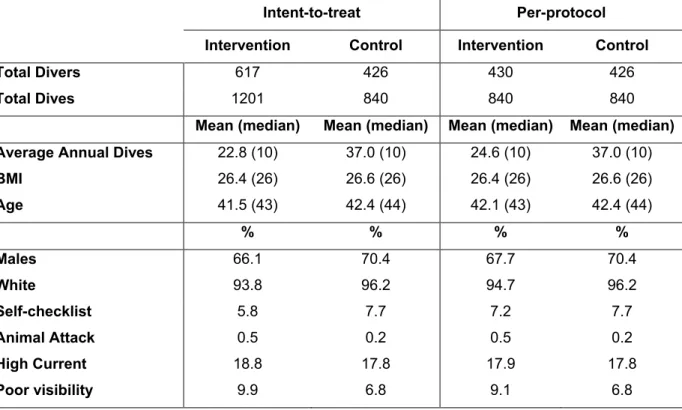
Table 4.1: Demographics and distribution of covariates in the assigned groups ... 59
Table 4.2: Crude rates of major and minor mishaps by the assigned groups ... 60
Table 4.3: Crude rates of unsafe conditions and crude risks of not-diving by the assigned groups ... 61
Table 4.4: Estimates comparing the intervention and control groups for the incidence of mishaps, unsafe conditions, and not-diving ... 62
Table 5.2: Crude rates of mishaps among divers who used a written self-checklist vs not ... 72
Table 5.3: Crude rates of unsafe conditions and risk of not-diving among divers who used written self-checklist vs not ... 73
Table 5.4: Crude and adjusted rate ratios comparing the use of written checklist with none ... 74
Table 6.1: Aim 3 covariate distribution ... 82
xii
LIST OF FIGURES
Figure 1.1: Annual fatality rate per 100,000 dives in PADI certification training ... 7
Figure 1.2: Haddon matrix of scuba diving ... 9
Figure 3.1: Nested structure of the data ... 24
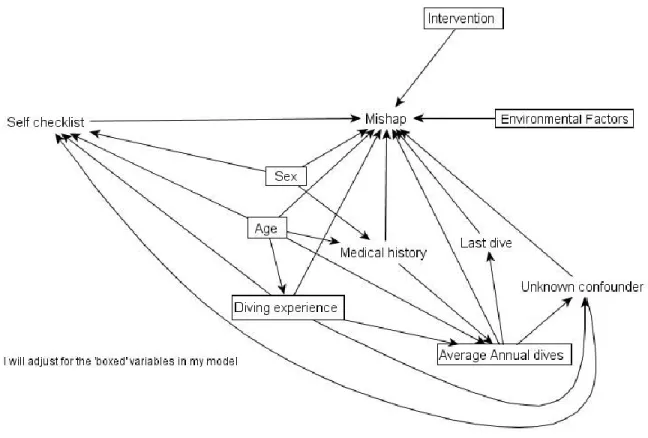
Figure 3.2: Directed Acyclic Graph for the effect of self-checklist on mishaps ... 42
xiii
LIST OF ABBREVIATIONS
95% CI – 95% confidence interval AGE – Arterial gas embolism AOR – Adherence odds ratio BCD – Buoyancy control device BMI – Body mass index
CDP – Conservative diving practices CRT – Cluster randomized trial DAG – Directed acyclic graph DAN – Divers Alert Network DCS – Decompression sickness FAD – Flying after diving
GEE – Generalized estimating equations ICC – Intra-class correlation
IRB – Institutional review board ITT – Intent-to-treat
MSM – Marginal structural models NNT – Number needed to treat
PADI – Professional Association of Diving Instructors PBT – Pulmonary barotrauma
PFO – Patent foramen ovale PFSI – Pre-flight surface-interval PI – Principal investigator PP – Per-protocol RR – Rate ratio
1
I. BACKGROUND AND SIGNIFICANCE
A. Brief history of scuba diving and the advent of a recreational sport
The unknown has forever intrigued humans. And to satisfy this attraction there are many places in the world which are still untouched by humans. The wilderness of the world underwater has long been the focus of our fascination, much like the vastness of space, or the majestic forests and mountains.
The first known records of modern bell diving are from the 1640s, however these were not supplied with fresh air, and divers only had the air contained in the bell at their disposal. The first bell with continuous surface supplied fresh air was devised in 1790. A force pump on the surface accomplished this task. When it was understood that air pressure increases as one goes deeper, pressurized surface air supply was provided that allowed divers to go deeper. However, these supplies were manual, and pressure had to be monitored continuously. This bell was the forerunner of the future all modern bell chambers. These chambers were known as caissons. Caisse is a French word meaning box. Caisson is a watertight container, which is supplied by pressurized air and keeps the water out, thus providing a dry working environment.
The first scientist that recorded the symptoms of decompression sickness (DCS) in a viper and hinted that they may be due to bubble formation was Sir Robert Boyle in 1670, he also postulated the laws of gaseous exchange, which later became the basis for the explanation of bubble formation in
decompression sickness (Acott, 1999a). Triger, in 1841, invented the caisson, and was the first to describe the symptoms of DCS in two coal miners. Thereafter, Pol and Watelle in 1854 observed that these symptoms may be alleviated by sending the divers back to the caisson. These were the symptoms of decompression sickness, usually skin lesions, joint pains that are constant and not affected by
2
amount of the dissolved gases in the blood and plasma increases with proportional increase in ambient pressure (Acott, 1999a; Kindwall, 2004). When the pressure is released the gas comes out of the
solution, just like it does in case of a bottle of sparkling water. The nitrogen bubbles released in the tissue lead to pain, and marbling of the skin, in extreme case there are neurological symptoms like weakness and paralysis. The set of symptoms caused by the release of inert gas (nitrogen) bubbles in the body is called as Decompression Sickness (DCS) (Vann, 2004).
Up until the end of the 18th century, divers usually dove while being contained in a Caisson with a
constant surface supply of compressed air. Although rebreather diving equipment was first developed in the 17th century by Boreilli. It wasn’t until 1819, when Siebe devised a diving rig for non-rebreather divers,
3
B. The Diver Eligibility and diving fitness
The diving industry is mainly self-regulated. Training agencies determine the eligibility for diving on a broader level. They set the age limits for training and determine the minimum swim requirements.
Professional Association of Diving Instructors (PADI) sets the minimum age limit for diving at 10 years for supervised divers, and 15 years for unsupervised divers. There is no upper age limit. Health and physical fitness related exclusion criteria are few. Training agencies and dive operators require a medical physical of divers if they report one of the major medical conditions suggested by the World Recreational Scuba Training Council or regional dive industry bodies, these conditions may increase the risk of an injury while diving.
Dive operators and dive shops may have their own additional criteria before they allow a diver to dive with them. Dive operators are known to refuse divers who have major clinical conditions even if they were provided clearance for diving by their physicians. On the other hand, many dive shops allow seasoned patrons to dive despite obvious health risks that would otherwise preclude one from diving. In the end, dive operators make a subjective assessment of risks for each diver.
C. Recreational diving equipment
The diving equipment consists of mask, fins, snorkel, breathing apparatus (scuba), buoyancy compensator device (BCD), diving suit, weights, and accessories including dive computers and gauges. The mask creates a pocket of air between the eye and the water, thus allowing the diver to see clearly underwater. The fins enhance propulsion while swimming. The snorkel is a curved tube that is open on both ends and has an exhaust valve near the mouth end. It allows the diver to breathe on the water surface with face immersed. Swimming on the water surface along with all the diving gear could be cumbersome; using fins and snorkel ease this difficulty.
The scuba consists of a gas tank that contains pressurized gas. It is connected to a first stage
4
mouthpiece creating a negative pressure in the mouth, that allows the demand valve to open and air is released for the diver to breathe. The diver exhales through the mouthpiece and the exhaled air is exhausted out through a non-return valve. The tank is kept in a backpack, mounted on the BCD, to hold it in place.
The BCD is essentially a flotation device. It is connected to the diver’s gas tank so that the diver can add or remove air into the BCD. Doing so helps the divers regulate buoyancy, thus facilitating their descent and ascent in the water column, and allowing them greater control over what they want to do. In emergency it can be used as a flotation device, too, the diver or their buddy can fill up the air in the BCD and launch the diver on to the surface in order to be rescued.
Dive suits are usually of three types – skin suits, wet suits, and dry suits. The skin suits are essentially very thin suits that do not provide thermal protection. It may only provide protection from sunburn in warm waters. Usually it may only consist of diving undergarments that are used to provide thermal protection to limited body area. These are generally used in warm summer equatorial waters. Wet suits are full body suits (except face) made up of neoprene that trap the water near the skin and protect the body by heat exchange due to constantly brushing up against flowing water. As the diver goes deeper the water temperature drops, and the wet suits also compress under increasing pressure reducing their thermal protection capacity. This can also change buoyancy. Wet suits are used usually in tropical waters which usually get colder as we go deeper even during the summer. Dry suits do not allow any water contact with the body and come with seals, to stop any water from entering the suit. While the dry suits provide superior thermal protection, they may limit diver’s movements. Using dry suits may require specialized training. Dry suits are best for diving cold waters.
Apart from these, divers carry a weight belt and sometimes additional weights to help them be negatively buoyant in the water, so that the diver can go deeper. Weights allow the divers to submerge themselves easily and also control ascent as more weight would mean slower ascent.
5
This multitasking has been reduced by dive computers that use mathematical algorithms to calculate the time the diver can spend underwater, and their decompression obligations. However, the algorithms used by the dive computers seek to maximize the divers bottom time and hence may be less conservative approach, and may expose the divers to greater risk of DCS.
The tank backpack, the BCD, the weights, mask, fins, all have releases that need to be working properly in order to hold the equipment in place, and let go of it when needed, underwater or on surface. It is important that all of these work properly to provide a safe and incident free diving experience for a diver (Egstrom, 2004).
D. Diving injuries and fatalities
6
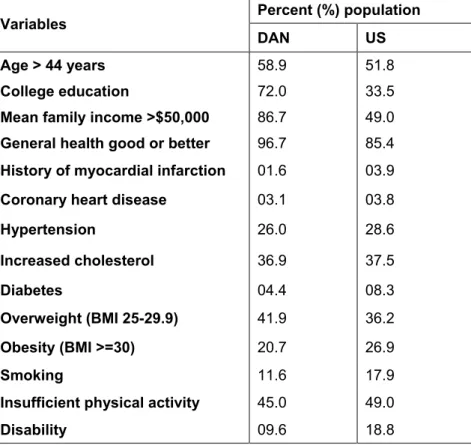
Table 1.1: Comparison of a defined Divers Alert Network diver population (18 years or older) with the general US population (18 years or older)
Variables Percent (%) population
DAN US
Age > 44 years 58.9 51.8
College education 72.0 33.5
Mean family income >$50,000 86.7 49.0
General health good or better 96.7 85.4
History of myocardial infarction 01.6 03.9
Coronary heart disease 03.1 03.8
Hypertension 26.0 28.6
Increased cholesterol 36.9 37.5
Diabetes 04.4 08.3
Overweight (BMI 25-29.9) 41.9 36.2
Obesity (BMI >=30) 20.7 26.9
Smoking 11.6 17.9
Insufficient physical activity 45.0 49.0
Disability 09.6 18.8
Scuba diving is a sport that involves challenges to mind and body, and has known risks of injuries and fatalities. Divers Alert Network (DAN) estimated a fatality rate of 16.4/100,000 person-years in their member population (Denoble et al., 2008). This number is very close to diving fatalities rates reported in a recreational diving population from Western Australia (1.3/10,000 person-years) (Buzzacott, Rosenberg, & Pikora, 2009a). Data in both these studies are all-cause diving mortality.
7
suitable. It is also hypothesized that DAN members may be more active than other recreational divers (Denoble, Ranapurwala, Vaithiyanathan, Clarke, & Vann, 2012).
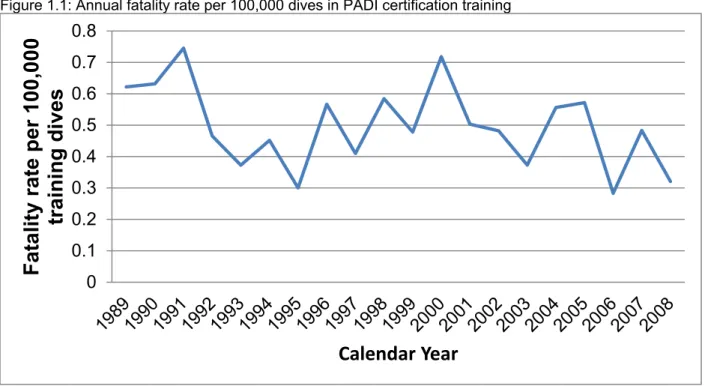
Figure 1.1: Annual fatality rate per 100,000 dives in PADI certification training
DAN reports between 80-90 diving related deaths among US and Canadian divers every year (Denoble et al., 2008). Overall injury rates for all kinds of diving injuries are not known. Most studies focus their attention on decompression sickness (DCS) and arterial gas embolism (AGE), as they are treated at hyperbaric chambers and their information may be readily available. Conversely other injuries are treated at traditional medical care settings and not separately reported. One DAN study estimated DCS rate of 20.5/10,000 person-years (Denoble et al., 2012) in its member population over an eight-year period. DCS is just one kind of the many injuries of concern to scuba divers. It follows that scuba diving fatalities and injuries are rare events and hence hard to study. Data from a self-reported survey of divers suggest that the injury rate of all diving related injuries in 2010-2011 was about 3/100 dives (Ranapurwala, Bird, Vaithiyanathan, & Denoble, 2014). This was about 20 times greater than the rate of self-reported DCS symptoms from 2010-2011 which is about 1.52/1000 dives, and about 500 times more than the treated DCS cases from 2010-2011 which is 5.7/100,000 dives (Ranapurwala et al., 2014). Diving injuries amount to a significant financial burden due to treatment costs, residual disability, loss of productivity, and/or death (Buzzacott, 2012). Growing participation in the sport may further amplify the burden of
8
injuries and fatalities. In addition, fatality rates increase with increase in age (Denoble et al., 2008) and since the diving population is rapidly ageing (Denoble et al., 2012) (also evident in table 1), presumed financial and healthcare burden (Buzzacott et al., 2009a; Buzzacott, 2012; Denoble et al., 2008; Denoble et al., 2012; Richardson, 2010) will be even greater. This makes a strong case for action.
E. Diving mishaps
Most common causes of diving-related mortality are drowning, arterial gas embolism with or without pulmonary barotrauma, cardiac events, aspiration of vomitus, trauma, marine animal injury,
decompression sickness (DCS), and coincidental or unknown cause (Buzzacott, 2012). Most of the fatalities are labeled as drowning; however it is believed that drowning is preceded by other debilitating injuries that ultimately result in drowning (Denoble, Caruso, Dear, Pieper, & Vann, 2008). Denoble et al investigated 947 diving fatalities, identified sequence of mishaps and adverse events and grouped them in four major groups, viz. trigger of the event, disabling agent, disabling injury, and cause of death. They identified most common disabling injuries that lead to the fatality. Asphyxia, AGE, and cardiac-related causes comprised up to 88% of deaths, while unexplained loss of consciousness, DCS, and inappropriate gas (CO poisoning) constituted the remaining 12%. The authors identified sequence of adverse events and grouped them in four major groups, viz. trigger of the event, disabling agent, disabling injury, and cause of death (COD). It was suggested that the consequent fatalities could have been prevented by preventing triggering events (Denoble et al., 2008).
A similar study was conducted on all work-related deaths in Australia from 1982-1984 (Willamson & Feyer, 1990). They identified precursor events and contributing factors of all the fatalities. It is noteworthy that the triggers and disabling agents or contributing and precursor events could all be categorized into human errors, equipment failures, or environmental factors. Both papers conclude that appropriate prevention strategies aimed at these factors (triggers/ errors or precursor events/ accidents) could reduce the injuries and fatalities (Denoble et al., 2008; Willamson & Feyer, 1990).
9
be classified as human errors (Acott, 1995a; Acott, 1999b; Edmonds & Walker, 1989), equipment failures (Acott, 1996; Edmonds & Walker, 1991), or adverse environmental factors(Edmonds & Walker, 1990).
Many interventions have been implemented to reduce the burden of diving-related injuries and fatalities from the diving community. Healthcare advancement and hyperbaric medicine focus on diver treatment, reducing disability, rehabilitation, and preventing death. However, it seems be prudent to act before the injuries occur. As discussed below there have been many improvements in technology over time. Consequently, divers diving in the 21st century are well equipped, educated, and safer than their
predecessors who dove up until the early 1990’s. While there is greater acceptance of technology, only a little consideration is afforded to prevent human errors, or equipment malfunction.
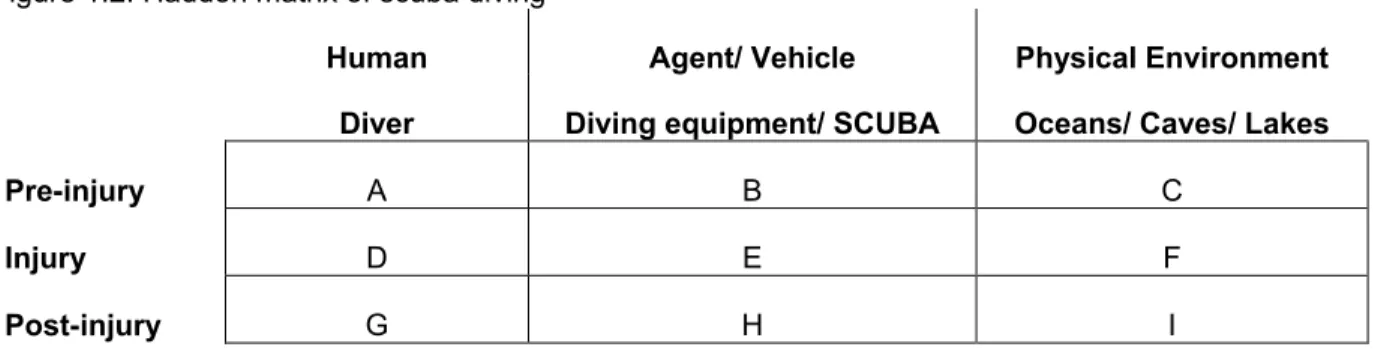
A Haddon examines the roles of human attributes, agent or vehicle attributes, and the physical environmental attributes in the pre-injury, during injury, and the post-injury phases. In the diving context, the human attributes are the attributes of the diver, the agent or vehicle is the diving equipment, and the environment is usually places like oceans, lakes, caves, etc. Cells A & B in the Haddon Matrix below (figure 1.2) are the pre-injury phases where human error and equipment problem may lead to mishaps and unsafe conditions. Identifying human error and equipment problems in this phase and preventing potentially ensuing mishaps and unsafe conditions is the key to prevent injuries, disabilities, and fatalities. Figure 1.2: Haddon matrix of scuba diving
Human Agent/ Vehicle Physical Environment Diver Diving equipment/ SCUBA Oceans/ Caves/ Lakes
Pre-injury A B C
Injury D E F
Post-injury G H I
Most common mishaps are out-of-air scenarios, rapid ascent, equipment problemsand
10
used by DAN’s summer 2012 cluster randomized trial (CRT), and can be found in the outcomes questionnaire (appendix 3). This list was created using the ‘diving incident report form’ from an ongoing study by DAN Asia Pacific (Australia) (Acott, 1994). However, this is not an exhaustive list, it acted as a prompt for divers to help them remember the mishaps; there is also an ‘other’ option to include anything else that might not have been on the list. Acott suggested that 30% of the reported diving mishaps (Acott, 2003) led to diving injuries. However, not all of the mishaps are reported, and hence it is difficult to know the actual percentage of mishaps that cause injuries. DAN CRT used mishaps as study outcomes based on three principles. Firstly, preventing mishaps will lead to better diving experiences. Secondly, to really prevent injuries we need to act before injuries have occurred, which means to essentially prevent mishaps and reduce unsafe diving conditions. And lastly, using diving mishaps as an outcome measure would allow us to study the effectiveness of our intervention much better because mishaps are more common than injuries. This would reduce the sample size requirement and the cost of the study.
F. Scuba diving interventions
Diving studies have noted that a large number of injuries occur as a result of preventable mishaps (Denoble et al., 2008; Edmonds & Walker, 1989; Edmonds & Walker, 1991). Traditionally, all injury prevention efforts in scuba diving have been targeted towards diving specific injuries like DCS, AGE, and other barotraumas. The post-world-war-II time of the 20th century was characterized by many
11
maximum decompression limits, which may increase the risk of DCS. Moreover, it is hard to know when and if a dive computer is malfunctioning (Wilmshurst, 1998).
A few behavioral interventions have also had marked effect in reducing diving injuries. Free ascent – meaning rapidly ascending to the surface without a regulator in mouth while continuously exhaling, is taught to divers as a way of practicing an emergency ascent in case of being out of air. However, this technique is found to lead to PBT, especially in training dives (Lafère, Germonpré, & Balestra, 2009). Consequently, the Belgian Underwater Federation banned this technique, but it is still practiced in many parts of the world including the United States. Conservative decompression practices (CDP) have been utilized to reduce the incidence of DCS in divers with a previous history of DCS. Klingmann reported that CDP reduced the incidence of DCS in 23 divers over 0-11 years of follow-up from 20/10,000 dives to 3/10,000 dives. CDP is especially recommended for divers who have a right-to-left shunt (mainly a patent foramen ovale) where the incidence of DCS went down from 47.6/10,000 dives to 3.0/10,000 dives after the recommendation of CDP (Klingmann, Rathmann, Hausmann, Bruckner, & Kern, 2012).
Other interventions seek to identify, inform, and mitigate factors that increase the diver’s susceptibility to DCS, e.g., flying after diving (FAD), and having a patent foramen ovale (PFO). FAD has long been considered a problem as it may precipitate DCS if enough pre-flight surface-interval (PFSI) is not allowed before flying (Vann, Gerth, Denoble, Pieper, & Thalmann, 2004). Various FAD trials done since 1993 have reported reduced incidence of DCS with increasing PFSIs (Vann et al., 2004; Vann et al., 2007). Billinger et al reported that a 5 year follow-up of 26 divers post PFO closure reduced their incidence of major decompression illness (DCS + AGE) from 5.6/10,000 dives at baseline to 0.5/10,000 dives at the end of the follow-up (Billinger et al., 2011). However, not all PFOs may have right to left shunting, hence, not all of them may need treatment. Also, CDP may be a better alternative than PFO closure in case of right-to-left shunting.
Concurrent to these advances in diving, the treatment of DCS advanced, too. Surface oxygen
12
All these interventions and trials have fostered a culture of safety, awareness and have reduced the incidence of diving specific injuries like DCS, AGE, and consequent fatalities. However, there is a dearth of interventions to prevent non-diving-specific diving-related injuries. All the aforementioned interventions focus on the technical or medical aspects of injuries, which, although important, are not enough.
Behavioral interventions allow divers to play a more active role in ensuring their safety. The only intervention that comes closest in doing so is CDP. A pre-dive checklist, when used immediately prior to the dive, can control most of diving injuries (specific and non-specific) that are caused by preventable diving mishaps.
G. Checklists
1. Checklist as an intervention
Remembering steps is important for accurate completion of any task. Avoiding, omitting, neglecting or not understanding the importance of these steps leads to human errors. Human error increases with increasing levels of stress (Acott, 1995a; Jablonski, 1965; Sexton, Thomas, & Helmreich, 2000). A further surge in the errors occurs due to difficult-to-operate or malfunctioning equipment (Acott, 1995a; Acott, 1996; Acott, 1999b; Acott, 2003; Jablonski, 1965). Errors are also supplemented by aberrations in natural conditions and the environment humans operate in. A Checklist can be a mnemonic (Scriven, 2000) or a reminder to do a certain set of actions. A proper checklist though must be a written physical tool that replaces mere mnemonics, the need to recall its components, and the need to remember to recall and use it. It is a simple and effective tool for reducing error (human and equipment), improve performance and meet safety requirements (Hales & Pronovost, 2006). Checklists do so by reducing the tendency to avoid, omit or neglect important steps in any task.
13
planes in to service, which are now known as the famous B-17s.Today pilots are required to complete checklists for their equipment, flying procedures, and even their individual health and mental status (Boorman, 2001; Civil Air Patrol, June 2004; Frick, 1989; G.Morrow, Leirer, Andrassy, Hier, & Menard, 1998; Golemboski, 2011; Hales & Pronovost, 2006; Helmreich, 2000; Sharps, Wilson-Leff, & Price, 1995; United States Air Force, 1969). Checklists are enforced upon pilots and crew members in armed forces as well as commercial airliners. Not only do these checklists enforce safety standards but they allow data collection and reporting to ensure a continued scrutiny and amendment of procedures (Scriven, 2000).
Another high risk setting is surgery. Based on the 2008 guideline of safe surgery by the World Health Organization (WHO) (World Health Organization, 2009), a surgical checklist was developed by Hayes et al(Haynes et al., 2009) in 2009 that aimed to reduce post-surgical deaths and morbidity. This checklist was administered in three stages: Before anesthesia, immediately before incision and before patient is to be moved out of the operation theater. The checklist intended to improve team communication and streamline the process of care. Its efficacy was tested in a trial in eight cities (from eight different
countries) in more than 7500 patients. The trial compared patient outcomes pre- and post-intervention. It was observed that post-intervention the rate of post-surgical deaths and complications was reduced significantly as compared to pre-intervention. The checklist was subsequently adopted by WHO (World Health Organization, 2008) and its universal adoption in the National Health Services of UK by 2010 (Abdel-Galil, 2010) was announced. Positive outcomes increased with increased compliance (Van Klei et al., 2012) and better strategies for efficient implementations (Healy, 2012). The use of checklist improved communication, attitudes and satisfaction of patients and staff alike (Böhmer et al., 2012; Takala et al., 2011). Ko et al (Ko, Turner, & Finnigan, 2011) suggested that effectiveness of checklists may vary based on previous training, design of the checklist and the outcome measured; hence they advised caution in generalizing the findings. It has been noted that explanation of the use of checklists and communication about its effects are necessary to inspire a buy-in among the users, without which effectiveness of checklists is diminished (Conley, Singer, Edmondson, Berry, & Gawande, 2011; Fourcade, Blache, Grenier, Bourgain, & Minvielle, 2012; Hales & Pronovost, 2006).
14
2007). Recreational and health activity programs have also used checklists whilst improving outcomes, viz. Bikes, Blades and Boards program at Hamilton Health Sciences in Canada educates children about brain, various injury mechanisms to brain, prevention of those injuries, use of helmets in the prevention, the proper way to wear a helmet, and to assess the condition of a helmet. Following the education, every child’s performance of wearing helmets is judged by using a Helmet checklist, which addresses the mishaps related to the condition of the helmet, proper fit, and the way a helmet is worn (Blake, Velikonja, Pepper, Jilderda, & Georgiou, 2008). Participants were 2nd grade students. They were given the checklist
to take home and show to their parents so that they could continue to monitor and guide their children about proper helmet use. The experimental group received the education and the checklist while the control group did not. Helmet use for both the groups was rated by a blinded evaluator using the helmet checklist. It was observed that children who participated in the program and used the checklist
(experimental group) scored better in helmet use than children who did not. One year later these children were re-evaluated and the children in the experimental group retained the helmet using skills.
Others have proposed to design checklists for self-observation to promote safe driving behavior among drivers and prevent motor vehicle injuries (Nielsen, 2010). One researcher placed a magnetic sign behind his car that said “Please use turn signals”. He observed that prompting drivers this way improved their use of turn signals by 33.5%.
2. Pre-dive checklists
15
The US Navy uses a thorough pre-dive checklist which is strictly regulated (US Navy, 2008a; US Navy, 2008b). The Professional Association of Diving Instructors (PADI) uses an acronym ‘BWARF’ for a pre-dive check (Professional Association of Diving Instructors, 2008) for recreational divers. The acronym emphasizes issues with the Buoyancy compensator device, Weights, Air, Releases and a Final ok. The National Association of Underwater Instructors diving manual includes various checklists including an on-site planning checklist with an acronym – SEA BAG (National Association of Underwater Instructors, 2000).The safety topics emphasized by this acronym are Site survey, Emergency, Activity, Buoyancy,
Air, and Gear and Go. American Academy of Underwater Sciences also advises its divers to conduct a pre-dive check and has provided a format in their manual (American Academy of Underwater Sciences, 2009). Although present in the diving manual these checklists are not provided to the divers in printed form such that they may be used in the field. Besides, it is not known if either of these checklists is used routinely in the field. Moreover, none of these checklists have been evaluated for effectiveness. A more detailed literature review about the components of different pre-dive checklists from other agencies will follow as a part of the dissertation, including but not limited to a table comparing different checklists.
3. DAN pre-dive checklist
There is no gold standard pre-dive checklist. The checklists provided by the leading training agencies contain mnemonics. While remembering mnemonics may be easy, but in remembering the mnemonics divers undermine the multiple action items that characterize each mnemonic item. Hence, DAN
16
management plan). Additionally, the pre-dive checklist had four dive tips, and a post-dive log to record actual dive parameters.
17
II. STUDY AIMS
Standard pre-dive procedures include a thorough check of equipment, planning and organization of the dive. Different training agencies may advocate different training methods however pre-dive check procedures remain more or less consistent. Divers are trained to conduct step by step pre-dive checks but their compliance is questionable. In summer 2012, Divers Alert Network (DAN) conducted a cluster randomized trial (CRT) to study the effect of using a pre-dive checklist of safe diving practices,
immediately before the dive, on the incidence of diving mishaps in recreational scuba divers. The principal investigator (PI) of this study was Shabbar I. Ranapurwala, BHMS, MPH - a research assistant at DAN. A pre-dive checklist is expected to reinforce compliance with pre-dive check procedures and is hypothesized to reduce diving mishaps related to human errors and equipment failures. To test this hypothesis, we will:
1. Investigate the effect of administration of a pre-dive checklist at the time of diving, on the incidence of diving mishaps in recreational scuba divers.
Rationale: It is hypothesized that the administration of a pre-dive check list at the time of diving may improve compliance with standard pre-dive check procedures, decrease human error and equipment problems, and may consequently reduce the incidence of diving mishaps. To the best of our knowledge, this study will be the first to evaluate the efficacy of checklist use in scuba diving.
18
2. To evaluate the relationship between a diver’s own pre-dive checklist use and the incidence of diving mishaps in recreational scuba divers.
Rationale: Several training agencies advocate diving safety by promoting the use of checklist that they develop themselves. However, these checklists are not uniform, not evaluated and include different degrees of detail. The control group data from the CRT was used to examine the total effect of all the pre-dive checklists in the field with an aim to appreciate and quantify the effect of their use on the incidence of pre-dive mishaps.
Method: Data was collected for the use of a pre-dive checklist (training agency developed, self-developed; physical or mental) and the incidence of diving mishaps with the help of a post-dive outcomes questionnaire. The incidence of diving mishaps incidence among those who use their own pre-dive checklist (physical) was compared with those who do not use any pre-dive checklist of their own. This analysis was conducted in the control group participants, only.
3. To evaluate the factors affecting the adherence to the pre-dive checklist.
Rationale: A pre-dive checklist is a tool that may improve diving safety. However, when a pre-dive checklist is provided to divers, some adhere to the checklist, while others do not. Divers who do not adhere to the provided pre-dive checklist may have different risk perceptions than those who do.
Identifying the individual and environmental factors related to diving adherence may provide insight about groups that require greater persuasion to help them continue using a pre-dive checklist.
19
III. DATA COLLECTIONS METHODS AND MATERIALS A. Study design
By utilizing a cluster randomized trial (CRT) design, this research intended to evaluate the
effectiveness of using a pre-dive checklist immediately before diving on the incidence of diving mishaps among recreational scuba divers. The intervention was randomly assigned by location-day such that each day all enrolled participants at same location were either all control or all intervention group participants. This prevented bias due to cross-contamination. Each diver could participate in the study only once. The dive shops and boat crew were informed about the study in advance and advised not to disclose study information to the divers.
B. Instruments
There were four instruments utilized in the study: Pre-dive Checklist (intervention – Form-A), Control form (Form-B), Contact-Information form, and Outcomes Questionnaire. The pre-dive checklist included a checklist of procedures, a gas management plan, and a post-dive log (appendix 1). The control form was given to the control group participants and included only a post-dive log (appendix 2). The contact-information form was used to enroll and track participants, this form also noted the participant’s age, gender and racial/ethnic background (appendix 4). The outcomes questionnaire was given to both intervention and control group participants at the end of their dive day (appendix 3). It included
information on incidence of mishaps among divers, information on height, weight, brief medical history and diving history. Participant identifiers were collected while taking consent for participation. We are interested to see if reminding the divers to conduct proper pre-dive checks reduces the incidence of diving mishaps.
20
sample size to obtain conclusive evidence of checklist effectiveness on dive-related injuries, rendering the study expensive and time consuming.
C. Interns and training
Four trained interns were hosted by busy dive shops located at 4 coastal sites – one in North
Carolina, two in Cozumel (Mexico), and one in Cayman Islands. Interns collected data at these sites from June 1 to August 17, 2012. Interns were college students from different universities across the United States pursuing a bachelor’s degree in science. Each of them had advanced diving experience, some previous experience with observational research, and excellent communication skills. They were recruited via a competitive application and interview process. They received one week of training prior to study. Training included ethical principles of research, understanding the study design, the importance of randomization in research studies, information on the study materials, skills to recruit participants and conduct the study, online data entry, and maintenance of study records. DAN Education staff trained and certified the interns in Basic Life Support and First Aid, Oxygen First Aid for Scuba Diving injuries, and First Aid for Hazardous Marine Life Injuries. All interns completed DAN research ethics training modules. All the above training was provided at DAN’s headquarters in Durham, NC. Interns also received two-day field training at Wilmington, before being sent to their specific locations for data collection. All the study related training was provided by the PI.
D. Administration and data collection
For each location-day separate packets of study materials were made. Half of the packets were intervention packets and the remaining half were control packets. Each packet contained 30 sets of consent forms, laminated Form-A (intervention) or Form-B (control), outcomes questionnaire, marker-pens and one contact-information-form (Appendix 4). Packets were randomized beforehand at DAN using a SAS random number generator and then sequentially numbered. An excel-spreadsheet of the
21
Interns who administered the study had to pick one sequentially numbered packet every day before going to work.
Divers were briefed about the study and those who agreed to participate were asked to provide consent. At this time, interns also collected the participant’s name, contact information, age, gender and race using the Contact-Information Form (Appendix 4). Name and contact information allowed for censoring repeat participation on other days. Participants received either Form-A, or Form-B and explanation for its use; interns noted the form-number/ participant number on the Contact-Information Form. When the participants completed their dives, or upon divers’ return to the pier, interns collected the study form (A or B) and asked the participants to answer the outcomes questionnaire; this questionnaire had the same number as the participant’s form (Form-A or Form-B). Interns then collected back
completed outcomes questionnaire at the same time.
E. Study Population 1. Eligibility
Any participating diver had to be more than 18 years of age. They had to have a valid diver
certification, had to be planning to dive the day they were recruited in the study, had to be deemed fit for diving by the dive operator, and had to have working knowledge of English.
22
2. Pretesting i. Recruitment
Participants for pretesting were recruited by the study PI at the pier of Aquatic Safaris dive shop at Wilmington, NC, before they board the charter boat that takes them to the sea for diving. Aquatic Safaris had two dive boats going out. Sixteen divers were enrolled for pretesting from both the boats. All the sixteen divers were asked to complete the pre-dive checklist before their dives and an outcomes questionnaire when they returned back to the pier. There was no follow-up of these divers after the pretesting.
ii. Consent and processes
The PI informed the participants about the instruments and explained the goals, risks, benefits, and the voluntary nature of participation. The PI distributed the pre-dive checklist, and explained its use. The PI then went on-board on one of the boats to observe the divers during their diving trip. On their return to the pier, participants were asked to answer the outcomes questionnaire. The PI recorded the events of the day and participants attitudes towards the checklist.
The Pre-dive checklist and the outcomes questionnaire were then refined based on the lessons learnt from pretesting. Pretesting also helped us establish best practices for recruitment and implementation of the study.
23
3. Group Randomized Trial i. Recruitment
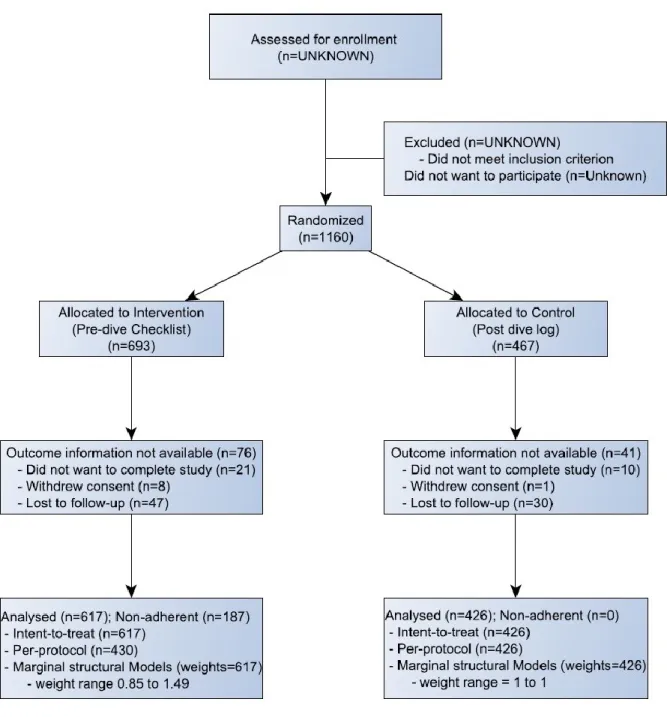
Interns recruited the participants while travelling with the divers on a charter boat or before the divers boarded the boat. Data collection continued from June 1st through August 17th for a total of 70 days (40 intervention days and 30 control days). On average, interns collected 29.19 dives per location-day (range 15-50 dives) by recruiting on an average of 15.43 divers/ location (range 8-25 divers). It must be noted that the interns were out in the field longer than the location-day of data collection. This was due to bad weather and days with little or no recruitment due to non-participation or repeat divers. In total 1080 divers completed the study. Those who completed the study contributed total of 2043 dives, 1205 intervention dives and 838 control dives. Total number of divers present on each dive boat at the time of enrollment is not known; hence, calculating participation rate may be difficult.
ii. Consent
Interns informed the subjects about the goals and objectives of the study, explained the risks, benefits, and voluntary nature of participation including participants’ right to withdraw from the study at any time. Subjects were also be informed that non-participation or withdrawal would not result in any penalty or loss of services that they were otherwise entitled to receive from DAN or the partner dive shop. Those who volunteered were asked to sign a consent form (Appendix 5).
iii. Data management/ Quality control
Data was collected from three different sites using the same pre-dive checklist and outcomes questionnaire. All the interns were trained to enter data to online forms, which were identical to the pre-dive checklist and outcomes questionnaire. All the records are numbered and contain identification and contact information of participants. This ensured that pre-dive checklist and outcomes questionnaire from the same participant are entered together. Data was monitored on weekly basis by the PI.
24
F. Data
The distribution of divers and the dives at the four study sites is shown below (table 3.1). Study sites 1 and 2 had more intervention group participants as compared to control group. The two groups were balanced at study site 3 and 4. Site 1 and Site 2 had more intervention dives than control dives; however, the number of dives in the intervention and the control group were almost equal at site 3 and 4.
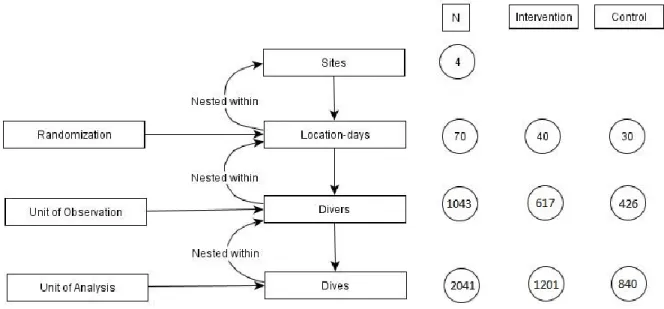
This imbalance between intervention and control groups was because of the location-days were not block randomized. Instead interns were given materials that would last them for 40 days (20 intervention packets and 20 control packets). These 40 days were randomized beforehand at DAN using SAS random number generator. However, interns were not able to complete all 40 days of data collection. Interns at sites 3 and 4 completed 18 envelopes each while intern at site 1 completed 19 envelopes and the intern at site 2 completed 15 envelopes only. Due to randomization, sites 1 and 2 had more intervention packets earlier as compared to the control packets, and the control packets that were to be used later could not be used. Secondly, the number of divers enrolled on any given study day (intervention / control) were not the same. Interns enrolled between 8-25 divers (mean=15.43) for a range of 15-50 dives (mean=29.19). Due to these two factors, the number of intervention days and control days varied and so did the number of divers enrolled in both the groups. A schematic representation of the data collection process shows the distribution of data between the intervention and the control arms (figure 3.1).
25
There were more males in the study than females at all the study sites; 68% vs 32% overall. Majority of participants were Caucasians or White (94.8% overall) at all the study sites, followed by Hispanic population, especially in Cozumel (2.5% overall), followed by African American / Black population (1.5%) followed by Asians (1.1%).
Table 3.1: Demographic distribution of the data
Location
Site 1 Site 2 Site 3 Site 4 Total
N % N % N % N % N %
Location-days
Intervention 9 60.0 13 68.4 9 50.0 9 50.00 40 57.14
Control 6 40.0 6 31.6 9 50.0 9 50.00 30 42.86
Divers Intervention
111 59.0 223 69.9 142 50.9 141 54.9 617 59.2
Control 77 41.0 96 30.1 137 49.1 116 45.1 426 40.8
Dives Intervention 243 56.6 423 71.3 281 51.6 254 53.67 1201 58.84 Control 181 43.4 170 28.7 268 48.4 221 46.33 840 41.16
Gender
Males 103 54.8 214 67.1 189 67.7 202 78.6 708 67.9
Females 85 45.2 105 32.9 90 32.3 55 21.4 335 32.1
Race
White 175 93.1 295 92.5 267 95.7 252 98.0 989 94.8
Black 6 3.2 7 2.2 2 0.7 1 0.4 16 1.5
Asian / PI 5 2.6 2 0.6 2 0.7 2 0.8 11 1.1
Hispanic 2 1.1 15 4.7 8 2.9 2 0.8 27 2.5 Site 1 – Grand Cayman; Site 2 – Cozumel 1; Site 3 – Cozumel 2; Site 4 – North Carolina
26
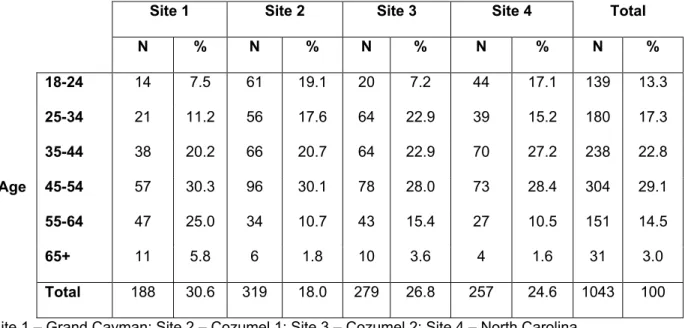
Table 3.2: Age distribution of participant’s at the four study locations
Location
Site 1 Site 2 Site 3 Site 4 Total
N % N % N % N % N %
Age
18-24 14 7.5 61 19.1 20 7.2 44 17.1 139 13.3
25-34 21 11.2 56 17.6 64 22.9 39 15.2 180 17.3
35-44 38 20.2 66 20.7 64 22.9 70 27.2 238 22.8
45-54 57 30.3 96 30.1 78 28.0 73 28.4 304 29.1
55-64 47 25.0 34 10.7 43 15.4 27 10.5 151 14.5
65+ 11 5.8 6 1.8 10 3.6 4 1.6 31 3.0
Total 188 30.6 319 18.0 279 26.8 257 24.6 1043 100 Site 1 – Grand Cayman; Site 2 – Cozumel 1; Site 3 – Cozumel 2; Site 4 – North Carolina
Use of self-pre-dive-checklists is described in table 4. About 20% participants said that they do not use a self-pre-dive-checklist. Those who said that they use a self-pre-dive-checklist were further asked about the type of checklist they used. Almost 60% of all participants said that they use a memorized checklist that they made themselves. About 12% said that they use a training agency checklist that they memorized, while just over 6% participants said that they use some form of physical pre-dive-checklist (training agency or self-made). 2% participants mentioned other kinds of checklists.
Table 3.3: Use of self-pre-dive-checklist at the four study sites
Self-Checklist Use
Location
Total Site 1 Site 2 Site 3 Site 4
N % N % N % N % N %
None 28 14.9 79 24.8 62 22.2 34 13.2 203 19.5
Self – Mental 120 63.8 161 50.5 181 64.9 175 68.1 637 61.1
Self – Physical 8 4.3 15 4.7 4 1.4 15 5.9 42 4.0
TA* - Mental 31 16.5 52 16.3 26 9.3 25 9.7 134 12.8
TA* - Physical 1 0.5 12 3.7 6 2.2 8 3.1 27 2.6
27
Note: Mental checklists - those that are memorized by the divers, are not really checklists. A checklist must be a physical written/printed tool that contains safety procedures to be followed.
G. Aim 1
Investigate the effect of administration of a pre-dive checklist at the time of diving, on the incidence of diving mishaps in recreational scuba divers.
1. Exposure Assessment:
Exposure of interest for aim 1 was the presence or absence of the intervention pre-dive checklist. This was recorded as a binary variable. The pre-dive checklist (Form A) had two parts, both of which together serve as an intervention, 1) checklist of procedures, and 2) gas management plan. On page-2 of the pre-dive checklist there were four dive tips, which are accepted diving rules that the U.S. Navy enforces among Navy divers (US Navy, 2008a; US Navy, 2008b). Also, on page 2 was a dive log where divers could record up to 4 dives for the day they participate in the study. All of this together composed the pre-dive checklist (or the intervention). There were a total of 14 safety measures. These safety measures were developed to reduce mishaps that might be caused by human errors (Acott, 1995a; Acott, 1999b; Edmonds & Walker, 1989) and/or equipment errors (Acott, 1996; Edmonds & Walker, 1991).The pre-dive gas management plan was intended for a diver to plan four aspects of their dive; the intended depth of the dive and amount of gas the diver will retain for turn-around, ascent and back-on-board reserve. Research shows that depth-time profiles and gas management errors predict the risk of diving injuries (Buzzacott et al., 2011). This was intended to get the diver to plan a dive and minimize mishaps like running low or out of gas. The post-dive log asked the participants to report the actual dive values for the same aspects they planned for.
28
The participants in the control group received a control form (Form B), this only contained a dive log good for recording up to 4 dives for the day they participate in the study. This dive log was identical to that in the intervention pre-dive checklist (Form A).
We assessed the participants in the intervention group for adherence to the intervention pre-dive checklist. Three criteria were used to determine adherence, such that all three must be met to be
adherent. The criteria were 1) a diver must have reported the starting tank pressure on the checklist, 2) a diver must have checked at least 10 procedures out of the 14 on the checklist, and 3) a diver must have added at least one of the 4 values on the gas management plan. All the participants in the control group were considered adherent.
Based on the adherence we used three approaches to data analysis for aim 1. The approaches were intent-to-treat analysis, per-protocol analysis, and marginal structural model analysis. The intent-to-treat (ITT) analysis kept all the participants randomized to the intervention in the intervention group irrespective of their adherence status. The per-protocol (PP) analysis removed the non-adherent participants from the intervention group. The marginal structural models (MSM) provides solution to the question – what would have happened if all the non-adherent would have been adherent? In doing so MSM calculated the inverse probability of being adherent for all intervention group participants, and used these inverse probabilities as weights. All the participants in the control group were given an inverse probability weight of 1. Thus the ITT analysis estimates the effect of treatment given, while the PP and MSM analysis estimate the effect of treatment received.
2. Outcome Assessment:
Outcomes were collected in this study using outcomes questionnaire. The questionnaire included a list of events that could be checked off if they occurred during any of the dives the participant made that day, with space to specify events that were not mentioned in the list. This questionnaire took about 5-10 minutes to be completed by a diver.
29
The questionnaire included mostly specific closed-ended questions and only a few open-ended questions where needed; this was intended to reduce errors in data collection, entry into the online system, and reduce amount of coding for open-ended questions. While the participants answered this questionnaire, interns were present at the pier / dive boat and were able to assist them, if they had difficulties. The primary outcome of interest was the number of diving mishaps.
An event is a change in condition, state, energy or health that is distinctive in space and time. An event, during the dive, may have significant impact (or be a potential threat) on the evolution of dive whether or not it causes injury. This event is called a mishap. Some events may occur in the pre-dive period and the checklist may help to detect it, and prevent a mishap during dive. Some of these can be easily rectified and the dive may be executed, while some may force the diver to not dive. These conditions that do not occur during the dive are not diving mishaps – we classified them as unsafe conditions.
To be able to classify the outcome events correctly we need to define a dive first. A dive starts when the diver enters the water equipped with scuba with an intention to submerge, and the dive ends when the diver leaves the water.
Furthermore, some mishaps may carry a relatively higher risk of causing a severe injury than others. Accordingly, the outcomes were classified in three groups: 1) Major mishaps: These are mishaps that occur during the dive and are more likely to cause injury; or the potential injury is severe. 2) Minor mishaps: These are mishaps that occur during the dive and are less likely to cause injury; or the potential injury is mild. 3) Unsafe conditions: These are conditions that exist pre-dive and if detected, may make a diver to undertake some corrective action. The diver may choose to dive as planned after correcting the condition, or the condition may be too difficult to rectify and the diver may choose to not dive. If not detected pre-dive and diver does dive with unsafe condition present, the risk of injury is increased.
30 Table 3.4: Categories of scuba diving mishaps
Major mishaps Minor mishaps Unsafe conditions
Rapid ascent/ Computer recorded rapid ascent
Air used frequently to maintain
buoyancy Unable to locate alternate regulator
Entanglement/ entrapment
Changed buoyancy due to dive suit
Dive computer not turned on before dive
Lost buddy contact Unable to clear mask Dive tables – misread
Buddy breathing Unable to release weights Didn’t know how to inflate/ deflate 2nd stage regulator
malfunction
Unable to clear mask/ caused
panic Confusion in inflate/ deflate buttons Low to our of air Weights belt/ weights dropped Unfamiliar with the use of BCD Spontaneous inflation Fins lost/ loose/ dislodged Dive computer battery problems Free Ascent Fins strap broke Unit confusion on the dive gauge Content hose rupture Air not turned on/ not fully on Tight/ uncomfortable dive suit Free flowing 2nd stage Safety Stop missed Incorrect BCD size
Multiple ascents Overweight Equalization problems Underweight
O-ring problem Not familiar with Dive computer Octopus reg snagged Computer hard to understand Buddy mismatch Size changed between dives
Leaking BCD Not used before
Mask flooded/ Dislodged/ Panic Unable to understand dive tables Computer stopped working Fins - Caused cramp
Mask squeeze Max depth indicator problem Mask strap broke Inaccurate dive gauge
31
We listed a total of 57 mishaps and unsafe conditions in the outcomes questionnaire. These were divided under the headings – Dive Suit, Environment, Ascent, Buddy, Air & Regulator, BCD, Mask, Weights, Dive Computer, Dive Gauge, Tank, Dive Tables and Fins, each of these categories also had an ‘other’ option, where divers could specify the mishap if it was not listed by us.
Each participant could report one or more events. Each of the three types of events – major mishaps, minor mishaps, and unsafe conditions were totaled. The total number of major mishaps, minor mishaps and the unsafe conditions are count data.
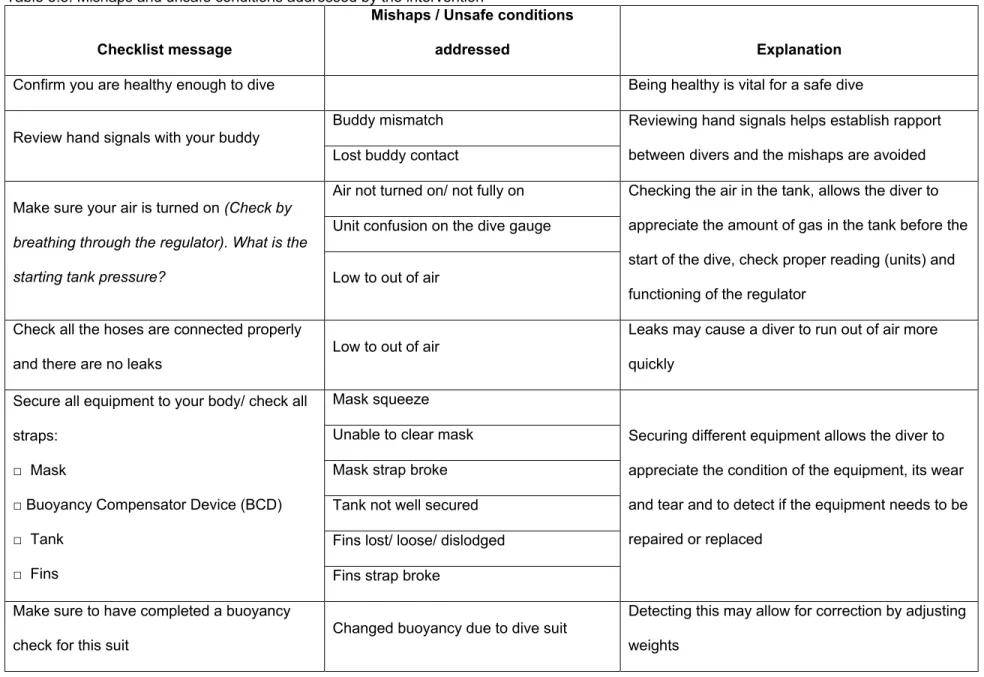
Table 3.5: Mishaps and unsafe conditions addressed by the intervention
Checklist message
Mishaps / Unsafe conditions
addressed Explanation
Confirm you are healthy enough to dive Being healthy is vital for a safe dive
Review hand signals with your buddy
Buddy mismatch Reviewing hand signals helps establish rapport between divers and the mishaps are avoided Lost buddy contact
Make sure your air is turned on (Check by breathing through the regulator). What is the
starting tank pressure?
Air not turned on/ not fully on Checking the air in the tank, allows the diver to appreciate the amount of gas in the tank before the start of the dive, check proper reading (units) and functioning of the regulator
Unit confusion on the dive gauge
Low to out of air
Check all the hoses are connected properly
and there are no leaks Low to out of air
Leaks may cause a diver to run out of air more quickly
Secure all equipment to your body/ check all straps:
□ Mask
□ Buoyancy Compensator Device (BCD) □ Tank
□ Fins
Mask squeeze
Securing different equipment allows the diver to appreciate the condition of the equipment, its wear and tear and to detect if the equipment needs to be repaired or replaced
Unable to clear mask Mask strap broke Tank not well secured Fins lost/ loose/ dislodged Fins strap broke
Make sure to have completed a buoyancy
check for this suit Changed buoyancy due to dive suit
Detecting this may allow for correction by adjusting weights
Check if the weight releases work properly
Unable to release weights Weights help maintain buoyancy and are critical to maintain control over a dive especially descent and ascent. In emergency ascent or rescue, the release of weights makes operation easier. Inability to discard weights in some situation at surface causes drowning.
Weights belt/ weights dropped
Test your BCD □ Inflate □ Deflate
□ Integrated weights (if so equipped) □ Releases
Spontaneous inflation
It is vital to know the different functions of a BCD. Many divers rent gear and may not know different capabilities and functions on a given BCD. This will avoid mishaps that may lead to severe injuries Didn’t know how to inflate/ deflate**
Confusion in inflate/ deflate buttons** Unfamiliar with the use**
Inadequate buoyancy Unable to release weights Test the spare second stage regulator (it
should not free-flow) 2nd stage regulator malfunction
Malfunctioning may lead to leak of air, which may lead to running low or out of air, cause rapid ascent, panic, etc. Regulator may not provide gas when needed.
Unable to locate alternate regulator
Make sure that you are satisfied with the fit of your suit
An uncomfortable diver may have problems with breathing, buoyancy or just be distracted throughout the dive.
Carry a cutting tool with you if allowed Entanglement/ entrapment A cutting tool may allow one to become free of
entrapments
Familiarize yourself with your buddy’s gear Buddy breathing
Familiarizing with buddy’s gear will allow a diver to be at ease, if buddy breathing has to be initiated
Make sure your depth gauge (once you start descending) and/ or computer are working □ Battery check
□ Understand their use properly
Unit confusion on dive gauge Making sure dive gauge and computer works properly before the dive and at the beginning of descent allow the diver accurate information on depth, time and remaining gas, this will prevent many other mishaps and injuries
Dive computer not turned on before dive
Dive computer battery problems
Once in water do a final-ok buddy check before descending
Helps diver to realize everything is working before they start descending into the water
Dive plan: (Plan your dive before diving)
Rapid ascent*
A proper dive plan conserves sufficient gas for the time and circumstances and thus prevents situation caused by running out of gas.
Computer recorded rapid ascent* Buddy breathing
Low to out of air
Dive tips:(Important during diving)
Lost buddy contact
Dive tips provided additional tips for the diver to remember that will make themselves safer Rapid ascent
Dive tables – misread
*, ** - These outcomes corresponding are dependent on each other. Hence, if one or more of the corresponding of them are reported by a participant, it would still be counted as one outcome events.
35
Data was also collected for the number of dives each participant made on the day they participated in the study. This information was collected using outcomes questionnaire (Appendix 3). The number of dives formed the denominator for the incidence rate of mishaps to be compared between the intervention and the control group. Incidence rates of mishaps (major, minor, and both) were reported per 100 dives such that,
Incidence rate of mishaps in the intervention group =
Incidence rate of mishaps in the control group =
One of the effects of the intervention may be that a diver chooses not to dive. This outcome was a binary variable, such that if someone did not to dive then their answer was ‘yes’, and if someone dove then their answer was ‘no.’ We calculated the risk of not diving in both the groups such that,
Risk of not diving in the intervention group =
Risk of not diving in the control group =
3. Covariates
Data on covariates was collected using outcomes questionnaire as well. Participants were asked to report their weight, height, age, medical and diving history, use of other checklists, and the day
(approximate date) of their last dives. Information about participant’s sex and race were collected by the intern using contact-information form.
4. Analysis
i. Descriptive Analysis
36
using tables and histograms. Variable distributions were compared between the intervention and the control groups to check if randomization was able to achieve adequate balancing of the variables between both the study arms.
ii. Sample size calculation
The estimated sample size to achieve 90% power and detect a 50% reduction in the incidence of mishaps, at 10/100 dives baseline mishap rate and alpha of 0.05, with an intervention to control allocation ratio of one, was 1704 dives, 852 intervention and 852 control. Considering that each diver would make an estimated 1 or 2 dives during their enrollment, 1200 divers had to be randomly recruited; 600 interventions and 600 controls. Accounting for clustering required an average of 30 dives per location-day. Further assumptions were made for the within-location-day standard error and between-location-day standard error to be 0.1 and 0.01 respectively.
Hence, between-location-day variance for the outcome = 2
g = (0.01)2 = 0.0001
Within-location-day variance for the outcome = 2
d = (0.1)2 = 0.01
ICC = 2
G / (2G + 2d) = 0.0099 m=Average daily dives = 30
Design effect = 1 + [(m-1)*ICC] = 1 + (29*0.0099) = 1.2871
Hence, a total sample size of 1704*1.2871 = 2193 dives would be needed; 1097 intervention dives, and 1097 control dives. The within-diver clustering of dives was not accounted for.
iii. Variable structure:
Exposure: It was coded as a binary variable. Those who were given the intervention pre-dive checklist were the exposed and those who were not given the intervention were un-exposed or controls.
Outcomes: The outcomes of interest were the number of mishaps (major, minor, and all) – count data, the number of unsafe conditions – count data, and not-diving – binary variable.