PUBLIC HEALTH NURSE INTERVENTION FOR DEPRESSION SCREENING DURING SEXUALLY TRANSMITTED DISEASE RISK ASSESSMENTS
Jessica Grimes
A project submitted to the faculty at the University of North Carolina at Chapel Hill in partial fulfillment of the requirements for the degree of Doctor of Nursing Practice in the School of
Nursing
Chapel Hill 2018
iii ABSTRACT
Jessica Grimes: Public Health Nurse Intervention for Depression Screening During Sexually Transmitted Disease Risk Assessments
(Under the direction of Jean Davison)
The United States Preventive Services Task Force (2016) recommends screening adolescents and adults for depression. Depression screening is important during sexually transmitted disease (STD) risk assessments due to the association between depression and STD risk behavior. STD Enhanced Role Registered Nurses (ERRNs) are ideally positioned to incorporate depression screening into STD risk assessments.
Purposes:
1. Expand the STD ERRNs’ education to include an understanding of the association of depression with STD risk factors, be able to identify those at high risk for depression, and give them an evidence-based tool to screen for depression, thus enhancing the STD ERRNs’ comfort and self-efficacy to screen for depression to facilitate evidence-based practice change in the clinical setting
2. Provide the STD ERRNs with a temporary policy addendum and depression
screening guidelines to support them as they perform depression screens in the STD clinic
iv
pretest, and posttest were sent to all remaining STD ERRNs. Two follow-up surveys were sent to determine depression screening goal attainment, barriers, and supportive factors.
Results: The Needs Assessment Survey found a low percentage of STD ERRNs screened for depression due to time and policy barriers. Pilot LHD feedback included changes to the screening tool and development of an implementation timeline. The course showed an improvement in comfort levels with administering depression screens and reported improved knowledge of depression and risk for STDs. The follow-up surveys showed that the majority of STD ERRNs were able to meet or exceed their depression screening goals, although some STD ERRNs experienced a time barrier related to the referral process.
v
ACKNOWLEDGEMENTS
vi
TABLE OF CONTENTS
LIST OF TABLES ... x
LIST OF FIGURES ... xii
LIST OF ABBREVIATIONS ... xiv
CHAPTER ONE: INTRODUCTION ... 1
Prevalence of STDs ... 2
STD Risk Factors ... 4
Prevalence of Depression ... 4
Depression Screening Recommendations ... 5
CHAPTER TWO: REVIEW OF LITERATURE ... 7
Minority Stress Theory... 8
Substance Abuse ... 8
Risky Sexual Behavior ... 9
People Living with HIV ... 11
CHAPTER THREE: PROBLEM STATEMENT ... 12
Project Setting ... 12
Project Population ... 13
Project Purpose ... 13
CHAPTER FOUR: THEORETICAL FRAMEWORK ... 15
CHAPTER FIVE: PROJECT PLAN ... 17
vii
Screening Tool ... 18
Design Plan ... 21
Timeline... 21
Ethical Considerations and Confidentiality ... 23
CHAPTER SIX: PHASE ONE – NEEDS ASSESSMENT SURVEY ... 25
Methods ... 25
Results ... 27
Analysis and Discussion of Needs Assessment Survey ... 37
Limitations ... 41
Conclusions ... 41
CHAPTER SEVEN: PHASE TWO – PILOT AND FULL IMPLEMENTATION OF A CONTINUING NURSE EDUCATION COURSE ... 43
Continuing Nurse Education Content Planning ... 43
Learning Outcomes ... 44
Temporary Policy Addendum... 44
Pilot ... 45
Final Course Methods ... 55
Pretest and Posttest Data ... 64
Analysis and Discussion of the Course ... 74
CHAPTER EIGHT: PHASE THREE – POST COURSE FOLLOW-UP AND SMART GOAL ACHIEVEMENT ... 76
Methods ... 76
viii
Analysis and Discussion of Follow-Up Surveys/SMART Goals ... 85
Phase Two and Three Conclusions ... 88
Phase Two and Three Limitations ... 89
CHAPTER NINE: SUSTAINABILITY ... 91
CHAPTER TEN: NEED FOR FURTHER RESEARCH ... 92
APPENDIX 1: NC DPH STD CLINIC ASSESSMENT FORM ... 93
APPENDIX 2: PHQ-2 AND INSTRUCTIONS FOR USE ... 96
APPENDIX 3: PHQ-9 AND INSTRUCTIONS FOR USE ... 97
APPENDIX 4: INSTITUTIONAL REVIEW BOARD ... 99
APPENDIX 5: JUNE 11, 2017 EMAIL WITH MEMO TO DIRECTORS OF NURSING ...101
APPENDIX 6: JUNE 11, 2017 EMAIL WITH MEMO: LHD DON FEEDBACK ...103
APPENDIX 7: NEEDS ASSESSMENT SURVEY ...107
APPENDIX 8: NEEDS ASSESSMENT SURVEY CROSS TABULATION TABLES ...113
APPENDIX 9: EMAIL TO BRANCH HEADS REQUESTING TEMPORARY POLICY ADDENDUM APPROVAL WITH ATTACHED TEMPORARY POLICY ADDENDUM...118
APPENDIX 10: SEPTEMBER 25, 2017 EMAIL REQUESTING SUPPORT TO DIRECTORS OF NURSING AND NURSE SUPERVISORS ...121
APPENDIX 11: EMAIL TO STD ERRNS OFFERING COURSE ...123
APPENDIX 12: FOLLOW-UP SURVEYS ...125
APPENDIX 13: DEPRESSION SCREENING IN STD CLINIC COURSE ...130
ix
APPENDIX 15: MENTAL HEALTH RESOURCES HANDOUT ...154
APPENDIX 16: PILOT LHD EMAIL ...155
APPENDIX 17: PRETEST ...156
APPENDIX 18: PILOT POSTTEST ...162
APPENDIX 19: PILOT PHQ-2 HANDOUT ...167
APPENDIX 20: FINAL PHQ-2 HANDOUT ...168
APPENDIX 21: FINAL REVISED POSTTEST ...169
x
LIST OF TABLES Table
1. Number of Chlamydia, Gonorrhea, and Syphilis Cases in
North Carolina from 2014-2016... 3 2. USPSTF Depression Screening Recommendations ... 6 3. ERRN Years of Experience with Depression Screening Practices ... 30 4. ERRN Years of Experience with Comfort Level with Administering
Depression Screens and Referring to Mental Health ... 32 5. ERRN’s Comfort Level with Administering Depression Screens
and Referring to Mental Health with Depression Screening Practices ... 33 6. ERRN’s Understanding of the Association between STDs/HIV and
Depression with Depression Screening Practices ... 35 7. Average Number of Patients Seen per Week with Depression
Screening Practices ... 36 8. Pretest (questions 11-15) and Posttest (questions 6-10) Score
General Statistics (N = 35)... 65 9. Pretest (questions 11-15) and Posttest (questions 6-10) Score
Analysis Using One-Tailed, Paired Samples t-Test (N = 35) ... 66 10.Improvement in Posttest Scores in Relationship to
Additional Factors using Binary Logistic Regression (N = 35)... 67 11.Change in Comfort Level Statistics (pretest question 17
and posttest question 12; N = 35) ... 70 12.Pretest and Posttest Comfort Level Analysis Using
One-Tailed Paired Samples t-Test (pretest question 17 and
posttest question 12; N = 35) ... 70 13.Change in Pretest and Posttest Reported Knowledge
Level (pretest question 16 and posttest question 11; N = 35) ... 71 14.Change in Pretest and Posttest Reported Knowledge Level
xi
xii
LIST OF FIGURES
Figure 1 - NC Communicable Disease Branch Health Department Regions ... 27 Figure 2 - Question 7, barriers to screening for depression in the
STD clinic as reported by the Needs Assessment Survey participants... 28 Figure 3 - Comparison between STD ERRN’s agreement from
pretest question 16 to posttest question 11 ... 48 Figure 4 - Comparison between STD ERRN’s agreement from
pretest question 17 and posttest question 12 ... 49 Figure 5 - Pretest Question 3, the participants’ years of experience
as an STD ERRN ... 58 Figure 6 - Pretest Question 5, the average number of clients assessed
per week in the STD clinic ... 59 Figure 7 - Pretest Question 7, how the participants reported their
agency screened for depression ... 60 Figure 8 - Pretest Question 8, the participants reported personal
screening practices ... 61 Figure 9 - Logic question from pretest question 8, how do you
screen for depression... 62 Figure 10 - Pretest question 9, barriers STD ERRNs who assess
1-5 clients per week identified ... 63 Figure 11 - Pretest question 9, barriers STD ERRNs who assess
21 clients or more per week identified ... 64 Figure 12 - Differences in the familiarity with mental health resources
between pretest and posttest participants ... 68 Figure 13 - Goal Attainment Scale scores from participants that
responded to the first follow-up survey (n = 14) ... 78 Figure 14 - Goal Attainment Scale for participants (n = 17) who
xiii
Figure 15 - Comparison of barriers reported on the first and
second follow up survey... 81 Figure 16 - Comparison of supportive factors reported between the
xiv
LIST OF ABBREVIATIONS AIDS Acquired immunodeficiency syndrome
ANCC American Nurses Credentialing Center APA American Psychiatric Association
CDC Centers for Disease Control and Prevention CES–D Centers for Epidemiological Studies–Depression CNE Continuing Nurse Education
DON Director of nursing
DNP Doctor of Nursing Practice DAST-10 Drug and Alcohol Severity Index ERRN Enhanced Role Registered Nurse GAS Goal Attainment Scale
HIV Human immunodeficiency virus IRB Institutional Review Board
LGBTQ Lesbian, gay, bisexual, transgender, queer and questioning LHD Local health department
MDD Major depressive disorder
NC DPH North Carolina Division of Public Health PHQ-2 Patient Health Questionnaire–2
PHQ-9 Patient Health Questionnaire–9 STD Sexually transmitted disease
xv
1
CHAPTER ONE: INTRODUCTION
The increase in Sexually Transmitted Diseases (STDs) is a national epidemic. Jonathan Mermin, the director of the Centers for Disease Control and Prevention (CDC)’s National Center for HIV/AIDS, Viral Hepatitis, STD, and TB Prevention, stated, “STDs are a persistent enemy, growing in number, and outpacing our ability to respond” (Centers for Disease Control and Prevention, 2017f). To reduce the risk of STDs, public health efforts typically focus on increased screening, early treatment, and reducing STD risk factors (such as intravenous drug use or unprotected sex). Depression is an additional risk factor that co-exists with other STD risks. Reducing the risk of STDs requires depression screening and treatment due to the close association between risk for STDs, risky behaviors, and depression (Jackson et al., 2015).
2
particular problem for adolescents, as this is a developmental time period when they are developing advanced reasoning skills and beginning to think abstractly (Sanders, 2013).
The relationship between risky behaviors, depression, and the risk of contracting STDs can also be described through the Syndemic Framework. Parsons, Grov, and Golub (2012) state that a Syndemic Framework occurs when multiple risk factors compound in a synergistic fashion that increases the risk of developing a disease or increases the morbidity of a disease. Syndemic risk factors such as psychosocial health problems like depression or substance abuse compound the risk for developing STDs. Therefore, STDs disproportionately affect individuals who
experience greater psychosocial issues and multiple risk factors together. To decrease the risk of STDs, public health efforts must target risky behaviors as well as depression due to their close correlation.
The Prevalence of STDs
Targeting STD risk factors (including depression) is important because of the continual increase in STDs. In 2016, over two million cases of chlamydia, gonorrhea, and syphilis were reported to the CDC, the largest number of STDs ever reported (Centers for Disease Control and Prevention, 2017f). From 2015 to 2016, chlamydia increased by 4%, gonorrhea by 18.5%, and primary and secondary syphilis by 17.6% (Centers for Disease Control and Prevention, 2017b). There are 20 million new STDs every year and half of these STD cases are aged 15 to 24. STDs cost the United States an estimated $16 billion dollars annually (Centers for Disease Control and Prevention, 2017d).
North Carolina has the 6th highest rate of chlamydia, 5th highest rate of gonorrhea, and 8th
3
Table 1 shows the increase in chlamydia, gonorrhea, and syphilis cases in North Carolina from 2014-2016 (North Carolina Department of Health and Human Services, 2016; North Carolina Department of Health and Human Services, 2017).
Table 1
Number of Chlamydia, Gonorrhea, and Syphilis Cases in North Carolina from 2014-2016
2014 2015 2016
Chlamydia 49,956 54,384 58,078
Gonorrhea 14,970 17,049 19,724
Syphilis 1,137 1,886 1,894
Note. Information derived from the North Carolina Department of Health and Human Services, 2016; and the North Carolina Department of Health and Human Services, 2017.
4
90% (North Carolina’s rate was 87%) and reduce late-stage HIV diagnoses to 19.1% (North Carolina was at 24.6%) (Centers for Disease Control and Prevention, 2015).
STD Risk Factors
Factors that increase an individual’s risk for contracting STDs include:
• Risky sexual practices such as unprotected sex, multiple sex partners, exchanging sex for drugs or money, sex with individuals who are STD-positive, or sex with partners who are unaware of their STD or HIV status;
• Drug use (particularly intravenous drug use and/or sharing needles); and
• Previous diagnosis of an STD.
Demographics that increase an individual’s risk for contracting an STD:
• Low socioeconomic status such as poverty, low employment rates, low education levels, and/or homelessness;
• Minority race;
• Men who have sex with men;
• Sexually active persons aged 13 to 24 years old; and
• Incarceration.
(Office of Disease Prevention and Health Promotion, 2017; U.S. Department of Health and Human Services, 2017).
The Prevalence of Depression
5
health treatment. Of those with severe depression, only 35% have had contact with a mental health professional in the past year (Centers for Disease Control and Prevention, 2014). The prevalence of depression creates a financial burden. In 2010, Greenberg, Fournier, Pike, & Kessler (2015) estimated that in the United States, depression accounts for an estimated $210.5 billion each year in medical care costs due to suicide, loss of workplace productivity, and costs of comorbidities related to depression. To increase the recognition and early treatment of
depression, the United States Preventive Services Task Force (USPSTF) recommends depression screening for all adolescents and adults (U.S. Preventive Services Task Force, 2016).
Depression Screening Recommendations
The USPSTF is an organization that reviews current evidence and makes
6 Table 2
USPSTF Depression Screening Recommendations
Note. From the U.S. Preventative Services Task Force, 2016.
Age group USPSTF depression screening recommendation Grade Date of
recommendation Adolescents The USPSTF recommends screening for major
depressive disorder (MDD) in adolescents aged 12 to 18 years. Screening should be implemented with adequate systems in place to ensure accurate diagnosis, effective treatment, and appropriate follow-up.
B February 2016
Adults The USPSTF recommends screening for depression in the general adult population, including pregnant and postpartum women. Screening should be implemented with adequate systems in place to ensure accurate diagnosis, effective treatment, and appropriate follow-up.
7
CHAPTER TWO: REVIEW OF LITERATURE
This literature review establishes the connection between depression and risky behaviors to illustrate the importance of depression screening for populations at risk for STDs. The
literature review was conducted from January 2017 to May 2017 using the terms “risk* behavior*” AND “STDs/HIV” AND “depression” using the CINAHL and PubMed databases. Articles were included if they discussed the risk of HIV or STDs, risky behavior such as sexual risk behavior or drug use, were written in English, were focused on the United States or Canada, were conducted within the past five years, and had subjects 11 years or older. Articles were excluded if they were focused outside the United States or Canada, had pediatric subjects defined as ten years or younger, exclusively used HIV-positive people as subjects, or studied other psychiatric conditions besides depression. The CINAHL database produced 109 results and PubMed produced 333 articles, creating a total of 442 articles. PubMed does not include a geographical filter so this search limit could not be applied. Seventy-eight articles remained after the title screen. Thirty articles remained after the abstract screen. Two additional articles
8 Minority Stress Theory
As this literature review will show, minorities are disproportionately affected by STDs and depression. For example, African Americans make up 13% of the United States population but account for 45% of all new STD diagnoses (Centers for Disease Control and Prevention, 2016a). Similarly, the National Alliance on Mental Illness (2017) stated that African Americans were 20% more likely to suffer from serious mental health problems like suicide than the general population. Likewise, the lesbian gay bisexual transgender queer and questioning (LGBTQ) community is three times more likely to suffer from a mental illness than the general population. LGBTQ youth aged 10-24 are four times more likely to attempt suicide. The Minority Stress Theory is one way to elucidate the relationship between minorities, psychosocial health problems, and risky sexual behavior. The Minority Stress Theory states minorities are at an increased risk of psychosocial health problems, which affects risky sexual behavior. Minorities’ increased risk is related to stigma, unequal treatment by health care professions, and
discrimination they receive in the health care setting (Storholm, Satre, Kakpdai, & Halkitis, 2015). Therefore, it is important for all health care organizations, especially those that care for minorities, to include evidenced-based interventions that address the psychosocial needs of their most at-risk patients and be conscientious about any potential discrimination that could affect patient care.
Substance Abuse
9
experience the sadness and hopelessness that leads to depression (DualDiagnosis.org, 2017). In the context of populations at risk for STDs, depression and substance abuse together increase risky behaviors and therefore increase the risk of contracting STDs. Jackson, Seth, DiClemente, and Lin (2015) performed a study among 701 African American female adolescents and found that depressive symptoms and substance abuse together significantly increased the likelihood of risky sexual behaviors over the course of two years. Adolescents who were depressed and used drugs were also more likely to acquire sexually transmitted diseases. Similar results are seen in the older-age population. Tross et al. (2015) studied drug use in 1,258 adult patients in outpatient substance abuse treatment programs using the Drug and Alcohol Severity Index (DAST-10). The purpose of the study was to compare DAST-10 scores with unprotected sex with primary and non-primary partners and unprotected sex when drunk or high. Results showed a statistically significant difference in unprotected sex with primary and non-primary partners when the DAST-10 score increased. With each standard deviation increase in DAST-10, unprotected sex while drunk or high increased by 23%. For injection drug users, unprotected sex while high increased by 78%.
Given that depression is strongly associated with substance abuse, mental health interventions for depression could decrease sexual risk behavior (Tross et al., 2015). Reducing the risk of STDs requires depression screening and treatment due to the association between substance abuse, depression, and the risk of STDs (Jackson et al., 2015).
Risky Sexual Behaviors
10
of depression, as measured by the Centers for Epidemiological Studies–Depression (CES–D) screen, were 5.7 times more likely to engage in both receptive and insertive unprotected anal intercourse with a serodiscordant partner. At Columbia University, researchers Wilson, Stadler, Boone, and Bolger (2014) sampled STD-positive men weekly for six weeks to measure the number of unprotected anal intercourse episodes with a corresponding CES–D. This study found that the severity of depression correlated with the number of unprotected sexual encounters.
The relationship between depression and risky behaviors expands outside of the United States. In Canada, Rogers, Lemstra, and Moraros (2015) completed a study examining the behaviors of sex trade workers, men who have sex with sex trade workers, people living with STDs, populations at risk for contracting STDs, and men who have sex with men. Participants completed the CES–D depression screening tool and a risk behaviors assessment that included questions about drug use and trading sex for money. Results showed that injection drug use significantly increased the risk of depression. In addition, 84.6% of sex trade workers were identified as depressed based on the CES–D screening tool. Sex trade workers who were
depressed were more likely to have a low self-efficacy for sexual health practices such as using a condom with clients or other partners. Furthermore, the severity of depression correlated with a greater probability of sexual risk episodes.
11 People Living with HIV
Depression is a risk factor not only for populations at risk for STDs but also for people living with HIV. People living with HIV are more likely to be depressed. In the United States, 7.6% of adults suffer from depression compared to 20 to 30% of adults with HIV who suffer from depression (CDC, 2016; Bess et al., 2013). Despite this knowledge, people living with HIV are less likely to be screened for depression (Bess et al., 2013).
12
CHAPTER THREE: PROBLEM STATEMENT
Depression increases the risk of contracting STDs because depression is associated with risky behaviors such as drug use, sexual compulsivity, unprotected sex, sex with sex workers, and/or sex for drugs or money. People who suffer from depression are more likely to engage in these risky behaviors and are thus at a higher risk for contracting STDs than those without depression (Storholm, Satre, Kapadia, & Halkitis, 2014). This quality improvement project is consistent with the USPSTF guidelines and the evidence demonstrating the close relationship between depression and risky behaviors because it directs clinicians to screen all populations at risk for STDs for depression and to refer them to mental health services as appropriate to reduce their risk of contracting STDs.
Project Setting
This Doctor of Nursing Practice (DNP) project focuses on the STD Enhanced Role Registered Nurses (STD ERRNs) who work in STD clinics in local health departments (LHD) in North Carolina. LHDs are comprised of a variety of clinics, such as the maternal health clinic, family planning clinic, and STD clinic. STD clinics are an ideal setting for this project because they serve populations at risk for STDs and see a larger male population that is not as prevalent in the other clinics.
13
If the LHDs have a plan in place as to what they will do if the patient endorses [mental health] issues, i.e. who to refer to and if suicidal/homicidal how to assure the patient either goes to the ED or get police involved, then it is a good idea to assess for mental health issues. But without a firm plan in place, [mental health questions] could do more harm than good and it is definitely a liability issue if you ask a question that elicits a response that suggests the patient is a danger to themselves or others, but then you do nothing about it.
The variations amongst STD clinics to include the barrier described above pose depression screening challenges for the STD ERRNs. One of this project’s purposes is to address this challenge and promote practice change.
Project Population
The STD ERRNs are registered nurses who have completed additional training to screen, assess, and treat certain STDs based on standing orders, program policies, and protocols to serve populations at risk for STDs and decrease communicable STD rates. Currently, the requirements to become a STD ERRN include the basic education and training necessary to recognize signs and symptoms of depression, interpret depression screenings, and/or refer to mental health services if needed.
Project Purpose
14
1. Expand the STD ERRNs’ education to include an understanding of the association of depression with STD risk factors, be able to identify those at high risk for depression, and give them an evidence-based tool to screen for depression, thus enhancing the STD ERRNs’ comfort and self-efficacy to screen for depression to facilitate evidence-based practice change in the clinical setting
15
CHAPTER FOUR: THEORETICAL FRAMEWORK
To fulfill the project purposes, the ERRNs were given new knowledge to include
evidence-based guidelines and had to transition this knowledge into practice. According to David Kolb’s theory of experiential learning, learning requires reflective practice (1984). In order for new knowledge to transition into practice, learners must take and reflect on the concrete experiences from their everyday practice and then form, conceptualize, and test a new abstract concept in a new situation (Kolb, 1984). STD ERRNs have concrete experience in completing STD risk assessments. An evidence-based educational intervention required the STD ERRNs to reflect on their current practice and attempt to integrate a new concept into what they already knew. After the education, the STD ERRNs had the opportunity to incorporate the evidence-based education into their professional practice.
16
enable them to sustain the changes they made to their practice and consistently perform depression screens (Bandura, 1994).
Once in practice, the STD ERRNs needed to utilize Orlando’s nursing process discipline theory in patient interactions. This theory describes the type and quality of an interaction
necessary for the STD ERRNs to recognize the need to screen for depression. According to this theory, there are three components to each interaction between a nurse and a patient: the
17
CHAPTER FIVE: PROJECT PLAN Project Description
The goal of this project was to provide evidenced-based education to STD ERRNs about the association of depression with risky behaviors, offer an evidence-based screening tool to prepare STD ERRNs to screen and refer clients if necessary, and provide a temporary policy addendum and depression screening guidelines. In practice, STD ERRNs use a state-mandated Sexually Transmitted Disease Patient Assessment Form 2808 (Appendix 1) to guide patient visits that includes a sexual risk assessment. This sexual risk assessment does not include any depression screen such as the Patient Health Questionnaire-2 or PHQ-2 (Appendix 2).
18
frequently than the clinics providing family planning or maternal health services that typically conduct depression screens. If STD ERRNs conduct depression screens in the STD clinic, they will have a greater opportunity to screen a sub-population that is not as prevalent in the other LHD clinics.
Screening Tool
The Patient Health Questionnaire-2 2) and Patient Health Questionnaire-9 (PHQ-9) are two validated depression screening tools that are designed to screen (not diagnose) patients for self-reported depression symptoms, have a high sensitivity and specificity, and contain the same depression symptomology criteria as the Diagnostic and Statistical Manual of Mental Disorders Fifth Edition (DSM-5) published by the American Psychiatric Association (APA) (Kroenke, Spitzer, & Williams, 2003; Kroenke Spitzer, & Williams, 2001; American Psychiatric Association, 2013). The APA is the largest psychiatric association in the world and
internationally respected for its classification and diagnostic criteria for many psychiatric conditions (American Psychiatric Association, 2013).
Patient Health Questionnaire-2
19
greater, the clinician should refer the patient to mental health resources or could also follow up with the PHQ-9, which serves as a more comprehensive screening tool (Kurt, Spitzer, & Williams, 2003). The PHQ-2 is a valid screening tool because of its high specificity and sensitivity. If a patient scores equal to or greater than 3, there is a sensitivity of 83% and specificity of 92% for Major Depressive Disorder. A high specificity in depression screens is very important, as false positives can create an additional burden on under-resourced mental health services (Kroenke, Spitzer, & Williams, 2003).
Patient Health Questionnaire-9
If a patient scores 3 or greater on the PHQ-2, the clinician should connect the patient with mental health resources and/or administer the PHQ-9 (Appendix 3). The PHQ-9 serves as a more detailed screening tool and has the ability to monitor depression severity and response to
depression treatment. The form consists of nine questions asking the patient if he or she has experienced anhedonia, depressed mood, trouble sleeping, poor appetite, feelings of
worthlessness, difficulty concentrating, moving slower than usual or feeling more restless than usual, and thoughts of self-harm or suicide over the past two weeks (Appendix 3). As mentioned previously, the first two symptoms, anhedonia and depressed mood, are the questions from the PHQ-2. The PHQ-9 adds an additional seven symptoms to its screening tool. Responses are scored based on the number of days a patient experiences the symptom, in the same manner as the PHQ-2 scores responses. In the PHQ-9, scores can range from 0 to 27. Scoring and
20
care setting in conjunction with a mental health professional interview and concluded that scores greater than or equal to 10 have a sensitivity of 88% and specificity of 88%, with an internal reliability Cronbach’s 𝛼 score of 0.89.
DSM-5, the PHQ-2, and the PHQ-9
The DSM-5 lists nine symptoms that detail depression diagnostic criteria. These nine symptoms are the same symptoms addressed in the PHQ-9. To aid in the diagnosis of depression, a patient must have a mental health professional interview, have five of the nine symptoms for the same two-week period and one of the following two symptoms: depressed mood or
anhedonia–the same symptoms as on the 2. Thus, if a patient screens positive on the PHQ-2, he or she has fulfilled one of the DSM-5’s three main indicators of depression. Together, the PHQ-2 and PHQ-9 are widely accepted and utilized tools for the STD ERRNs to use because of their high specificity and sensitivity and congruence with DSM-5 guidelines (American
Psychiatric Association, 2013).
Plan for Depression Screening in the STD Clinic
21 Design Plan
This project was completed in three phases:
1. Phase One: The STD ERRNs completed a voluntary Needs Assessment Survey to determine the STD ERRN’s baseline knowledge, depression screening practices, and depression screening barriers.
2. Phase Two: The author of this project designed and offered an evidence-based Continuing Nurse Education (CNE) course about depression screening to the STD ERRNs to address their knowledge gaps, skills gaps, and the screening barriers they had identified in the Needs Assessment Survey. STD ERRNs completed a pretest and posttest before and after the course. The educational course was first piloted to a small group of STD ERRNs at one LHD. This pilot course was formatted in the same way as the final course to evaluate the quality of the CNE course, pretest, and posttest questions. After the pilot was administered at one local health department, the course was offered across the state of NC to all STD ERRNs.
3. Phase Three: The STD ERRNs who volunteered to participate in Phase 3 received two surveys spaced three weeks apart to evaluate their Specific, Measurable, Achievable, Realistic, and Timely (SMART) goal progress.
Timeline
• The proposal defense was completed on April 3, 2017.
22
• The Phase One memo to the LHD directors of nursing (DONs) and nurse supervisors was sent on June 11, 2017 (Appendix 5). Feedback was received by email
immediately following (Appendix 6).
• The Needs Assessment Survey was sent on June 19, 2017 (Appendix 7).
• Two weeks following the dissemination of the Needs Assessment Survey, on July 3, 2017, the results were analyzed and adjustments were made to the CNE course, as applicable (Appendix 8).
• A temporary policy addendum was sent to two NC DPH branch heads for approval on August 29, 2017 (Appendix 9).
• The pilot of Phase Two occurred on September 19, 2017 at one local health department in central North Carolina.
• On September 25, 2017, an email was sent to all local health department DONs and nurse supervisors requesting support for the STD ERRNs to perform depression screening in the STD clinic (Appendix 10).
• The online course was disseminated to the STD ERRNs on October 1, 2017
(Appendix 11). Initially, they were given from October 1, 2017 to October 16, 2017 to take the course. This end date was later extended to October 30, 2017 to increase participation.
• The STD ERRNs were allotted two weeks from October 16, 2017, to October 30, 2017 to communicate with their DONs and nurse supervisors to determine the best way to proceed with implementing depression screens in their LHD.
23
• The first follow-up for all LHDs, other than the pilot LHD, was on November 20,
2017 (Appendix 12).
• The final follow-up for all LHDs, other than the pilot LHD, was on December 11, 2017 (Appendix 12).
• The follow-up was extended for the pilot group, as they needed additional time; the first follow-up for the pilot LHD was on December 18, 2017 (Appendix 12).
• The final follow-up for the pilot LHD was on January 8, 2017 (Appendix 12). Ethical Considerations and Confidentiality
The author of this project completed the online training entitled Protecting Human Research Participants developed by the National Institutes of Health to ensure appropriate understanding and protection of the rights of human subjects. On May 30, 2017, this DNP project was reviewed by the University of North Carolina Office of Human Research Ethics, which determined that “this submission does not constitute human subjects as defined under federal regulations [45 CFR 46.102 (d or f) and 21 CFR 56.102(c)(e)(l)] and does not require Institutional Review Board (IRB) approval” (Appendix 4).
The following paragraphs detail the protections taken to ensure the ethical conduct and confidentiality of all participants prior to implementation.
24
During the Phase One Needs Assessment Survey, STD ERRNs were sent an email link to take a voluntary, anonymous survey. The email addresses were obtained from the North
Carolina Division of Public Health (NC DPH) Public Health Nursing and Professional Development Unit and the Needs Assessment Survey was sent through the Public Health Nursing and Professional Development Unit on behalf of the DNP candidate. The first question stated “Thank you for voluntarily taking this survey. This is a Doctor of Nursing Practice project with the University of North Carolina at Chapel Hill School of Nursing. Your responses will be anonymous and data will be complied so that your comments and responses will not be
associated with your email or personal identifying information”; participants were then asked to enter their email addresses and the county they worked in. Results of the survey were analyzed without associating personal identifying information.
During Phase Two, the pretest and posttest results were secured separately from personal identifying information; STD ERRNs were not required to use this course as CNE but if they chose to do so, they followed the NC DPH Public Health Nursing and Professional Development Unit policy to receive the credit and obtained their CNE certificate through a link at the end of the posttest. If Phase Two participants wanted to be part of the follow-up survey, they
25
CHAPTER SIX: PHASE ONE- NEEDS ASSESSMENT SURVEY Methods
Memo to the Directors of Nursing and Nurse Supervisors
A memo was sent to the NC LHD directors of nursing(DONs) and the nurse supervisors. The LHD DONs and nurse supervisors oversee all STD ERRNs. The memo gave these
administrators insight into the DNP project and offered theman opportunity to ask questions and give or receive feedback. The memo detailing the project’s objectives and methodology was sent on June 11, 2017. A copy of the email and attached memo can be found in Appendix 5.
One nurse supervisor and five DONs responded to the email. The nurse supervisor stated there were no STD ERRNs practicing in her STD clinic. One DON stated she was in support of the project but unfortunately was resigning from her current position and therefore would not be able to participate. The second DON stated she would forward the email and memo to her
26
Because the DONs and nurse supervisors were stakeholders and could provide needed support for successful implementation, their email responses were important to this project as they described both barriers and facilitators that could impact project implementation. The collective response from the LHD DONs showed that this is a needed behavioral health intervention that could improve the health of the STD clinic patients, but that there are policy barriers in regard to the current education and job requirements for the STD ERRNs. It was important to address these barriers in the CNE content to maximize the STD ERRNs’ likelihood of changing their practice.
Needs Assessment Survey
Following the preparation memo sent to the DONs and nurse supervisors, the STD ERRNs were sent an email through the Public Health Nursing and Professional Development Unit on behalf of the DNP candidate on 6/19/2017 offering a survey in anticipation of the CNE course through the Qualtrics Survey Software. The survey accepted responses for two weeks, closing 7/3/17. Participants were incentivized by an offer to enter a drawing to win a $50 retail gift card. This survey served as a needs assessment and obtained:
• Basic demographics of the participating STD ERRNs;
• LHD clinics’ depression screening practices;
• The STD ERRNs’ professional depression screening practices;
• The STD ERRNs’ baseline knowledge of the association of risky behaviors with depression;
27
• Barriers to screening for depression in the STD clinic. The Needs Assessment Survey is found in Appendix 7.
Results
The results of the Needs Assessment Survey were analyzed using descriptive statistics based on the participants’ responses. Sixty three of 176 STD ERRNs from 45 health departments responded. The map below shows the four health department regions and corresponding
counties. The county names printed in red represent where the survey participants worked as STD ERRNs.
Figure 1. NC Communicable Disease Branch Health Department Regions. The county names printed in red represent the locations of the survey participants (NC Communicable Disease Branch, 2017).
The Needs Assessment survey population identified multiple barriers to screening for depression in the STD Clinic. Question 7 in Appendix 7 asked the STD ERRNs what barriers existed using a “select all that apply” format. Figure 2 shows the results (n = 59).
28
Figure 2. Question 7, barriers to screening for depression in the STD clinic as reported by the Needs Assessment Survey participants. The two most popular responses were lack of time and lack of support in the STD clinic.
The remaining survey responses were analyzed using cross tabulation. Groups of
questions were set up to understand the correlation between different variables and to show how correlations changed from one variable grouping to another. For this survey, cross tabs
compared the STD ERRN’s years of experience, how often the STD ERRN screened for depression, the average number of patients the STD clinics saw weekly, the STD ERRN’s comfort level with administering depression screens, and the STD ERRN’s understanding of the association between the risk of STDs and depression. The cross-tabulation tables are detailed in Appendix 8. 48 30 5 17 12 4 16 4 0 10 20 30 40 50 60 Not enough or limited time Not recommended or supported in STD clinic
Comfort level No adequate referral options
Concerned with what do with positive
result
I am not familiar with mental health
services
I cannot bill for depression
in the STD clinic Other N um be r of R es pons es Barriers
29
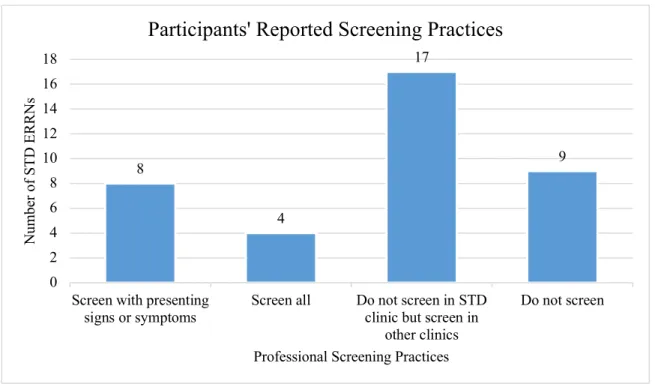
Sixty-one survey participants responded to question 6 in Appendix 7 as follows: 11%, or 7 out of 61, responded that they did not screen for depression at all, 38% (23/61) screened for depression in the women’s health and prenatal clinics but not the STD clinic, 41% (25/61) screened for depression if the patient presented with signs and symptoms of depression, and 10% (6/61) responded they screened all patients for depression. If STD ERRNs indicated that they “screened for depression if a patient presented with signs or symptoms of depression”, the signs and symptoms described in the question were as follows: apathy in regard to treatment of STDs, lack of social support, depressed mood, expressing feelings of hopelessness, self-care deficit, or changes in behavior, mood, or affect if they saw this patient on multiple occasions.
30 Table 3
ERRN Years of Experience with Depression Screening Practices
ERRN years of experience
0-1 years 1-2 years 3-4 years
5 years or
more Total I personally do not screen
for depression. 1 (11%) 2 (20%) 1 (8%) 3 (10%) 7 (11%) I personally do not screen
for depression in the STD clinic, but screen in women’s health and/or
prenatal clinics. 3 (33%) 2 (20%) 9 (75%) 9 (30%) 23 (38%) I personally screen for
depression if a patient presents with signs of
depression. 2 (22%) 5 (50%) 2 (17%) 16 (53%) 25 (41%) I personally screen all
patients for depression regardless of subjective or objective signs of
depression. 3 (33%) 1 (10%) 0 (0%) 2 (7%) 6 (10%)
Total number (n) 9 10 12 30 61
Thirty-three percent of STD ERRNs with 0-1 years of experience (n = 9) screened for depression in other clinics but not in the STD clinic or screened all patients for depression, 22% (2/9) screened if a patient had signs of depression, and 11% (1/9) did not screen for depression. For STD ERRNs with 5 years of experience or more (n = 30), the majority screened if the patient presented with signs and symptoms of depression (53% or 16/30), 30% (9/30) screened outside the STD clinics, 10% (3/30) did not screen, and 6% (2/30) screened all patients.
31
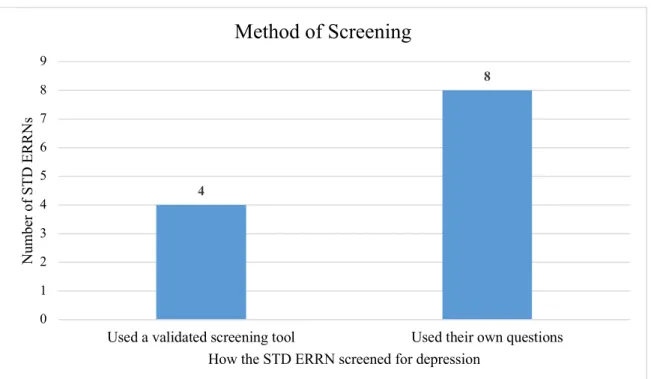
regardless of subjective or objective signs of depression (n = 6), 83% (5/6) used a validated screening tool and 17% (1/6) used their own questions– whatever questions they felt were most appropriate for the patient or situation. Out of the 25 STD ERRNs who screened if the patient presented with signs or symptoms of depression, 40% (10/25) used a validated screening tool and 60% (15/25) used their own questions. In total (n = 31), 48% (15/31) used a validated screening tool and 52% (16/31) used their own questions.
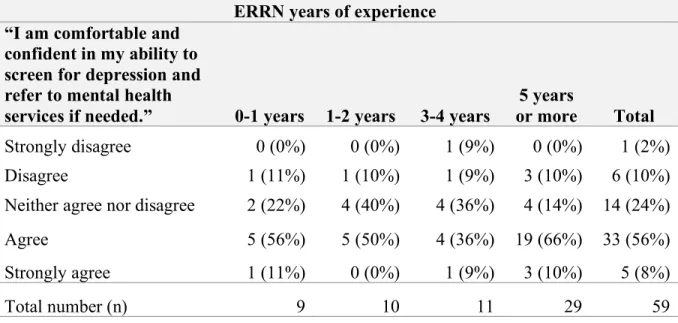
32 Table 4
ERRN Years of Experience with Comfort Level with Administering Depression Screens and Referring to Mental Health
ERRN years of experience “I am comfortable and
confident in my ability to screen for depression and refer to mental health
services if needed.” 0-1 years 1-2 years 3-4 years
5 years
or more Total
Strongly disagree 0 (0%) 0 (0%) 1 (9%) 0 (0%) 1 (2%)
Disagree 1 (11%) 1 (10%) 1 (9%) 3 (10%) 6 (10%)
Neither agree nor disagree 2 (22%) 4 (40%) 4 (36%) 4 (14%) 14 (24%)
Agree 5 (56%) 5 (50%) 4 (36%) 19 (66%) 33 (56%)
Strongly agree 1 (11%) 0 (0%) 1 (9%) 3 (10%) 5 (8%)
Total number (n) 9 10 11 29 59
33 Table 5
ERRN’s Comfort Level with Administering Depression Screens and Referring to Mental Health with Depression Screening Practices
“I am comfortable and confident in my ability to screen for depression and refer to mental health services if needed.”
Strongly
disagree Disagree
Neither agree
nor
disagree Agree Strongly agree Total I personally do not
screen for depression. 0 (0%)
3 (50%) 3 (21%) 1 (3%) 0 (0%) 7 (12%) I personally do not
screen for depression in the STD clinic, but screen in women’s health and/or prenatal clinics. 1 (100%) 1 (17%) 4 (29%) 12 (36%) 3 (60%) 21 (36%) I personally screen for
depression if a patient presents with signs of depression. 0 (0%) 2 (33%) 6 (43%) 15 (45%) 2 (40%) 25 (42%) I personally screen all
patients for depression regardless of subjective or objective signs of depression. 0 (0%) 0 (0%) 1 (7%) 5 (15%) 0 (0%) 6 (10%)
Total number (n) 1 6 14 33 5 59
STD ERRNs had differing screening practices based on their comfort level and
confidence with screening for depression and referring to mental health when indicated. Of the STD ERRNs who stated they strongly agreed with the statement “I am comfortable and
34
disagreed, 50% (3/6) did not screen for depression, 17% (1/6) did not screen in the STD clinic, 33% (2/6) screened if a patient presented with signs and symptoms of depression, and no STD ERRNs (0/6) screened all patients.
35 Table 6
ERRN’s Understanding of the Association between STDs/HIV and Depression with Depression Screening Practices
I understand the association between populations at risk for STDs/HIV and depression and can apply this concept into my role as an Enhanced Role RN.
Disagree Neither agree nor
disagree
Agree Strongly
agree Total
I personally do not screen
for depression. 0 (0%) 3 (19%) 4 (12%) 0 (0%) 7 (12%)
I personally do not screen for depression in the STD clinic, but screen in women’s health and/or
prenatal clinics. 1 (50%) 5 (31%) 12 (36%) 3 (43%) 21 (36%) I personally screen for
depression if a patient presents with signs of
depression. 1 (50%) 5 (31%) 15 (45%) 3 (43%) 24 (42%)
I personally screen all patients for depression regardless of subjective or objective signs of
depression. 0 (0%) 3 (19%) 2 (6%) 1 (14%) 6 (10%)
Total number (n) 2 16 33 7 58
36 Table 7
Average Number of Patients Seen per Week with Depression Screening Practices
Average number of patients seen in STD clinic per week 1-5
patients 6-10 patients 11-15 patients 16-20 patients 21 patients or more Total I personally do
not screen for
depression. 0 (0%) 1 (8%) 0 (0%) 1 (14%) 5 (33%) 7 (11%) I personally do
not screen for depression in the STD clinic, but screen in women’s health and/or prenatal
clinics. 9 (47%) 5 (42%) 3 (38%) 2 (29%) 4 (27%) 23 (38%) I personally
screen for depression if a patient
presents with signs of
depression. 8 (42%) (50%) (38%) (57%) (27%) 5 (41%) I personally
screen all patients for depression regardless of subjective or objective signs
of depression. 2 (11%) 0 (0%) 2 (25%) 0 (0%) 2 (13%) 6 (10%) Total number 19 (31%) 12 (20%) 8 (13%) 7 (11%) 15 (25%) 61
37
not screen in the STD clinic, 42% (8/19) screen if a patient presents with signs of depression, and 11% (2/19) screen all patients. In the busiest clinics, with 21 patients or more per week, 33% (5/15) responded that they do not screen for depression, 27% (4/15) do not screen in the STD clinic, 27% (4/15) screen if a patient presents with signs of depression, and 13% (2/15) screen all patients.
Of the 6 out of 61, or 10%, of participants that reported screening all patients for depression regardless of the subjective or objective signs of depression, 83% (5/6) agreed with the statement that they were comfortable with screening for depression and 17% (1/6) stated they neither agreed nor disagreed. 50% (3/6) stated they agreed with the statement that they
understand the association of risk for STDs/HIV with depression and can apply it to practice, 33% (2/6) neither agreed nor disagreed, and 17% (1/6) stated they strongly agreed.
In comparison, 7 out of 61 or 11% of the participants did not screen for depression. In this group, 57% (4/7) neither agreed nor disagreed, 29% (2/7) disagreed, and only 14% (1/7) agreed with the statement that they were comfortable with screening for depression. Fifty-seven percent (4/7) agreed and 43% (3/7) neither agreed nor disagreed with the statement that they understood the association of risk for STDs/HIV and depression.
Analysis and Discussion of Needs Assessment Survey
38
This could be due to a few reasons. Experienced STD ERRNs are further away from their training, which includes some information on depression so they may not be as comfortable screening for depression as new STD ERRNs. They also could have a deeper understanding of barriers or have had bad experiences with screening for depression and referring to mental health resources, which could have decreased the experienced STD ERRNs’ likelihood that they would screen for depression.
Only 10%, or 6 out of 61, survey respondents reported screening all patients for
depression as part of their everyday practice. Of those who screened all patients for depression, 50% (3/6) of STD ERRNs had 0-1 years of experience, 17% (1/6) had 1-2 years of experience, 0% (0/6) had 3-4 years, and only 33% (2/6) had 5 years or more. Despite this, 76% (22/29) of STD ERRNs with 5 or more years of experience reported that they agreed or strongly agreed with the statement that they are comfortable and confident in their ability to screen for
depression. This shows that despite the comfort level the experienced STD ERRNs report, there may be different barriers, depending on the LHD, that inhibit depression screening, such as policy or time limitations. The participants identified time as the top barrier and “depression screening is not recommended or supported in the STD clinic” as the second most common barrier. The NC DPH does not currently have a policy dictating how the STD ERRN should screen for depression. A lack of policy to support depression screening in the STD clinic could make the STD ERRN unsure of how to proceed in screening, documentation, and referral of patients who are depressed. If the STD ERRN chooses to go outside of the job duties and
responsibilities dictated by policy, they could be liable for the consequences of their decision. An STD ERRN with more years of experience could be more familiar with the organizational
39
boundaries. STD ERRNs may also not have enough time to complete a depression screen. Even though the screen itself does not take a lot of time to administer and interpret, a positive screen would lengthen the appointment time because the STD ERRN would then need to make time to refer the patient to mental health resources.
There was a positive correlation with comfort level and STD ERRNs who always screened for depression. Seven percent (1/14) of STD ERRNs who neither agreed nor disagreed about their comfort level always screened for depression, in comparison to 15% (5/33) of STD ERRNs who agreed that they were comfortable screening for depression.
There was not a strong correlation between STD ERRNs who stated they “[understood] the association between populations at risk for STDs/HIV and depression and [could] apply this concept into [their] role as an Enhanced Role RN” and STD ERRNs that screened all patients for depression. Of the 7 STD ERRNs who strongly agreed with this statement, only 1 out of 7, or 14%, screened all patients for depression, and only 2 out of 33, or 6%, of STD ERRNs who agreed, screened all patients. Four out of thirty-three, or 12%, of STD ERRNs agreed but did not screen for depression. These data show that despite STD ERRNs strongly agreeing or agreeing with the statement that depression is associated with the risk for STDs/HIV, they were not using this knowledge in practice by screening all patients who presented to the STD clinic,
demonstrating either a lack in complete understanding or difficulty applying this concept in practice. Also, STD ERRNs who did not have any opinion on the association of depression with STDs/HIV were the most likely not to screen, demonstrating that a lack of understanding can contribute to poor practice as well.
40
for depression. Zero out of the 19 STD ERRNs that saw an average of 1-5 clients per week did not screen for depression, 1/12, or 8%, of STD ERRNs who worked in clinics with 6-10 clients did not screen, 0/8, or 0%, of STD ERRNs in clinics with 11-15 did not screen, 1/7, or 14%, of STD ERRNs who worked in clinics with 16-20 clients did not screen, and 5/15, or 33%, of STD ERRNs who worked in clinics with 21 patients or more did not screen for depression. The increasing likelihood that an STD patient would not be screened in busier clinics indicated that time was one barrier to conducting depression screens. Table 7 shows that time was not the only barrier. Only 2/19, or 11%, of STD ERRNs who worked in the least-busy clinic, seeing 1-5 clients per week, reported they screened all patients for depression.
41 Limitations
Limitations of the Needs Assessment Survey include self-report and a small sample size. The survey questions required the STD ERRNs to subjectively report their depression screening practices and estimate the average number of patients the STD ERRN saw in the STD clinic per week. This information could be incorrect and, if so, would decrease the validity of the survey results. In addition, while 63 out of 176 STD ERRNs is a positive response rate when looking at the survey results as a whole, the cross tabs break this sample into much smaller groups for each question which makes generalizations about different groups of STD ERRNs difficult.
Conclusions
42
43
CHAPTER SEVEN: PHASE TWO – PILOT AND FULL IMPLEMENTATION OF A CONTINUING EDUCATION COURSE
In Phase Two the author of this project designed an evidence-based Continuing Nurse Education (CNE) course on depression screening, drafted a temporary policy addendum, piloted the course with STD ERRNs at one LHD in central NC, and disseminated the course to all North Carolina (NC DPH) STD ERRNs.
Continuing Nurse Education Content Planning
Course planning took place before the pilot. The course content was derived from the knowledge and skills gaps identified in the review of literature and the results of the Phase One Needs Assessment Survey (Appendix 13). The content was delivered using an online
asynchronized training model in order to reach the target population, who work across the state. The knowledge and skills gaps were the foundation for the learning outcomes listed in the following section.
For the course to be approved for Continuing Nurse Education (CNE) contact hours, the course needed to be in compliance with the American Nurses Credentialing Center (ANCC) Commission on Accreditation criteria. The ANCC requires that the nurse planner document the learning gap, supporting evidence to validate the learning gap, educational needs, target
44
ensure that the individual administering or planning the CNE does not have a commercial or financial interest in the content or planning of the course.
Learning Outcomes
There were three learning outcomes planned for this DNP project. After completing the CNE training and follow up, the learners were to have increased:
1. Their knowledge of the relationship between depression and the risk of STDs, as measured by a statistically significant increase in correct answers from the pretest at the beginning of the CNE to the posttest at the end of the CNE.
2. Their comfort level with administering depression screens and referring to mental health resources as appropriate, as measured by a statistically significant increase in comfort levels from the CNE pretest to the CNE posttest using a 5-point Likert scale.
3. Their progress on their individual SMART goal to increase depression screenings and refer to mental health services as needed, as measured by an improvement on the Goal Attainment Scale.
Temporary Policy Addendum
The NC DPH’s policies support the STD ERRNs’ roles and responsibilities. On the Needs Assessment Survey, the STD ERRNs identified a lack of recommendation or support for depression screening as the second most common barrier. Without a policy, there is no
45
project, committee member Dr. Little, and the STD nurse consultant for the southern region drafted the temporary policy addendum and sent it to the Technical Assistance and Training branch head and the Communicable Disease branch head for approval (Appendix 9). The Technical Assistance and Training branch head approved the policy without further questions. The Communicable Disease branch head approved the policy with three remarks. She asked what data would be collected, stated she was pleased the project was voluntary, and asked to see the mental health resources handout. The author of this project responded with a summary of the Phase Two methods and the mental health resources handout in Appendix 15. The temporary policy addendum was designed to be reviewed by the STD ERRNs and the STD ERRNs’ leadership at their LHDs and later adopted or adapted as the LHDs saw fit.
Pilot Methods
The purpose of the pilot was to evaluate the efficacy, quality, validity, and reliability of the course and pre/posttest prior to sending the final course and pre/posttest to all STD ERRNs. The pilot also provided an opportunity to receive feedback on the course and depression
screening implementation plan.
The pilot took place on September 19, 2017, at one LHD in central NC. In attendance were the five STD ERRNs from the LHD, the clinic nurse manager, the Technical Assistance and Training Program (TATP) STD nurse consultant representing the southern region’s health departments, committee member Dr. Little, and committee chair Dr. Davison. The TATP STD nurse consultants for the northern and eastern regions joined via conference call.
46
this LHD had 5 years or more experience, and one out of five, or 20%, had 1-2 years of experience. STD services at this LHD were available five days a week or more. Patients were screened for depression in the Family Planning, Maternity, Refugee, Child Health and Teen clinics but not the STD clinic.
On September 14, 2017, the five STD ERRNs were sent an email (Appendix 16) containing the link to the course, pretest (Appendix 17), posttest (Appendix 18), printout of the PHQ-2 (Appendix 19), list of mental health resources by county (Appendix 15), and a copy of the course slides (Appendix 13). The STD ERRNs were allotted time during their work day on September 15, 2017, to complete the course.
The course disseminated to the pilot group was in the same format as the final course. The course content is in Appendix 13. The course was developed using PowerPoint software accompanied by audio and video recording. STD ERRNs were given access to the course by following an online link that led them to the recording. The pretest and posttest were offered through the Qualtrics Survey Software.
The pretest consisted of 17 questions (Appendix 17). Questions 1-11 and questions 16-17 derived from the Needs Assessment Survey, asked for demographic data (questions 1-6),
depression screening practices (questions 7 and 8), barriers to screening for depression (question 9), familiarity with mental health resources (question 10), shared risk factors between STDs/HIV (question 11), how well the STD ERRN understood the association between risk for STDs and depression (question 16), and the STD ERRN’s comfort level with depression screening (question 17). The additional questions (12-15) were derived from the course content.
47
asked for demographic and depression screening information that was obtained in the pretest. The posttest added questions 13-18. Question 13 asked the STD ERRNs to create a SMART goal, questions 14-16 asked questions required for all NC DPH CNE, question 17 asked the STD ERRNs for course feedback, and question 18 asked the STD ERRNs to enter their email
addresses if they wanted to be a part of the voluntary follow-up surveys. Pretest and Posttest Results
On pretest question 8, all five STD ERRNs stated they screened for depression if a patient presented with signs and symptoms of depression. Pretest question 9 asked the STD ERRNs what depression screening barriers existed in the STD clinic. One hundred percent of STD ERRNs stated time was a barrier, 2/5, or 40%, stated there were no adequate referrals to mental health services, and 2/5, or 40%, indicated they could not bill for depression screens in the STD clinic. Although 2/5, or 40%, stated that a lack of mental health resources was a barrier to depression screening in the STD clinic, only 2/5, or 40%, were familiar with the mental health resources available to their patients.
For the course-based knowledge questions (pretest questions 11-15 and posttest questions 6-10), all STD ERRNs got all questions on the pretest and posttest correct except for question 15 (posttest 10), “The PHQ-2 asks the following two questions.” Two out of five, or 40%, of STD ERRNs answered this question correctly on the pretest and 100% answered correctly on the posttest.
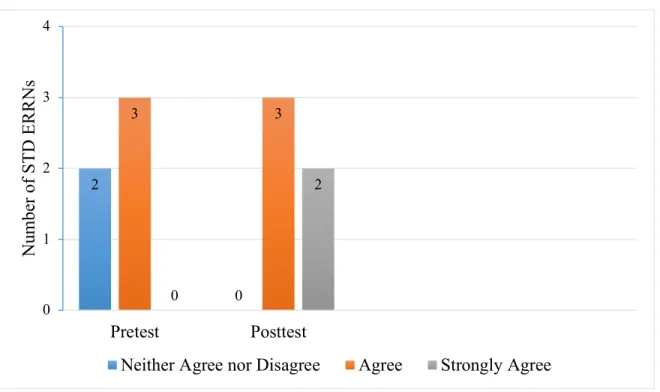
The STD ERRNs reported a greater understanding of the association between STDs and depression and a greater comfort level with depression screening from the pretest to the posttest. Pretest question 16 and posttest question 11 asked the STD ERRNs’ agreement with the
48
can apply this concept in my role as an Enhanced Role RN.” The figure below shows the increase in STD ERRNs’ agreement from pretest to posttest (n = 5).
Figure 3. Comparison between STD ERRN’s agreement from pretest question 16 to posttest question 11. On the pretest, 2/5 (40%) neither agreed nor disagreed, 3/5 (60%) agreed, and nobody strongly agreed. On the posttest, nobody neither agreed nor disagreed, 3/5 (60%) agreed, and 2/5 (40%) strongly agreed.
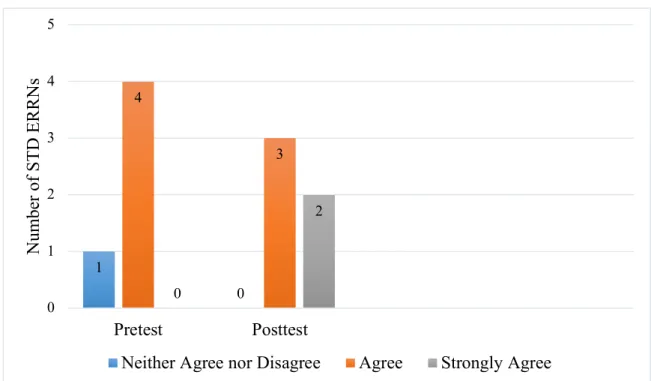
Pretest question 17 and posttest question 12 asked the STD ERRNs their agreement with the following statement: “I am comfortable and confident in my ability to screen for depression and refer to mental health resources as necessary.” Figure 4 shows the increase in STD ERRNs who agreed and strongly agreed with this statement from pretest to posttest (n = 5).
2
0
3 3
0
2
0 1 2 3 4
Pretest Posttest
N
um
be
r of
S
T
D
E
R
R
N
s
49
Figure 4. Comparison between STD ERRN’s agreement from pretest question 17 and posttest question 12. On the pretest, 1/5 (20%) neither agreed nor disagreed, 4/5 (80%) agreed, and nobody strongly agreed. On the posttest, nobody neither agreed nor disagreed, 3/5 (60%) agreed, and 2/5 (40%) strongly agreed.
Pilot Feedback
The STD nurse consultants and pilot STD ERRNs provided feedback and questions about the target learner population, the efficacy of the course and pretest/posttest, PHQ-2 handout, SMART goal follow-up, and the implementation process the LHDs should take to begin depression screening.
One pilot STD ERRN asked if other providers can take the course and participate in the follow-up because STD ERRNs are not the only providers who assess patients presenting to the STD clinic. It was explained that the target learner population for this DNP project were the STD ERRNs. The course can be viewed by any provider the LHD sees fit, however, the STD ERRNs are the only ones who can take the pretest, posttest, and two follow up surveys.
All STD ERRNs stated they felt the course was valuable, relevant, and pertinent to their 1 0 4 3 0 2 0 1 2 3 4 5 Pretest Posttest N um be r of S T D E R R N s
50
job roles. One STD ERRN pointed out she specifically appreciated the Needs Assessment Survey statistics that were placed in the course because it helped to highlight the gaps between knowledge and practice. The STD ERRNs were in agreement that the pretest and posttest questions were derived from the course, appropriate in difficulty, and able to gauge mastery of the course content.
The PHQ-2 handout for the pilot (Appendix 19) included the two questions from the PHQ-2. STD ERRNs were originally requested to ask the patient the final PHQ-9 question (“Have you had any thoughts that you would be better off dead or of hurting yourself in some way?”) if the patient got a score of three or above on the PHQ-2. After communicating with the pilot STD ERRNs, the PHQ-9 question was placed on the handout along with the PHQ-2 (Appendix 20). It was discussed that having this question next to the PHQ-2 questions would keep all of the screening questions and results in one place and ensure that this important PHQ-9 question was asked. For the PHQ-9 question, we decided to use a yes/no response rather than a score based on the number of days because we wanted to get mental health referrals for any patient experiencing suicidal thoughts. A yes/no response also increased simplicity, which would be ideal for a busy STD clinic.
Some of the STD ERRNs reported confusion on how to evaluate their SMART goal or thought they had to evaluate their goal using client data. In response, questions 13 and 18 of the pilot posttest were modified. Question 13 of the pilot posttest read:
Create a SMART goal to help you implement depression screens in the STD clinic. For example: “I will use the PHQ-2 to screen 60% of patients in the STD Clinic by one month.” To make sure your goal is a SMART goal, please write in how your goal is specific, measurable, attainable, relevant, and timely.
51
Create a SMART goal to help you implement depression screens in the STD clinic. For example: “I will use the PHQ-2 to screen 60% of patients in the STD Clinic by one month.” To make sure your goal is a SMART goal, please write in how your goal is specific, measurable, attainable, relevant, and timely. This goal does not have to be evaluated using actual client data. You can evaluate your goal based on your personal self-report or how well you think you are meeting your goal.
Question 18 of the pilot posttest read:
Please provide your email address if you are willing to be contacted via email twice over the next 4-8 weeks to follow up on your SMART goal progress and to answer any questions you may have or provide support. All participants will be entered to win a gift card.
Question 18 was rewritten as:
Please provide your email address if you are willing to be contacted via email twice over the next 4-8 weeks to follow up on your SMART goal progress and to answer any questions you may have or provide support. All participants will be entered to win a $50 gift card. In the follow-up, you will be self-evaluating your progress on your goal and do not have to obtain real client data about how many patients you screen for depression. Your goal will be measured based on your subjective report of how many patients you believe you screened for depression.
The revised and final posttest disseminated to all STD ERRNs is in Appendix 21.