EXPLORING HOW INSTRUCTIONAL COACHING INFLUENCED TEACHERS’ PERCEPTIONS OF ASSESSMENT, DATA USE, AND LITERACY PRACTICES: A CASE
STUDY OF AN URBAN ELEMENTARY SCHOOL
Jessica R. Milton
A dissertation proposal submitted to the faculty of the University of North Carolina at Chapel Hill in partial fulfillment of the requirements for the degree of Doctor of Philosophy in the
School of Education (Culture, Curriculum, and Change).
Chapel Hill 2019
ABSTRACT
Jessica R. Milton: Exploring How Instructional Coaching Influenced Teachers’ Perceptions of Assessment, Data Use, and Literacy Practices: A Case Study of an Urban Elementary School
(Under the direction of Rita O’Sullivan)
Low-income urban schools that have chronic student underachievement have
championed instructional coaching as an effective education reform strategy. Studies have shown that instructional coaching can be a promising approach for teacher professional development aimed at building educators’ capacity to use student data to inform literacy instruction and increase student performance on standardized reading assessments (Bertrand & Marsh, 2015; Huguet, Marsh, & Farrell, 2015; Marsh, McCombs, & Martorell, 2010). The purpose of this qualitative case study was to better understand how teachers in a low-performing urban
elementary school serving mostly minority students perceived student assessment, data use, and literacy instruction after participating in an externally funded professional development
performing students who did not meet reading benchmarks, which resulted in assigning students to reading groups for targeted interventions. Data analysis revealed that teachers perceived student progress toward meeting mid-year and end-of-year literacy goals as being an outcome of the instructional coaching they received and the small-group literacy instruction they
ACKNOWLEDGEMENTS
Several people have been instrumental in helping me complete this dissertation. I would like to express my sincere appreciation to my academic advisor, Dr. Rita O’Sullivan, for her support, feedback, and expertise throughout this project. I want to recognize members of my dissertation committee, Dr. Jocelyn Glazier, Dr. Rodney Hopson, Dr. James Trier, and Dr. Xue Lan Rong, who asked insightful questions and offered constructive feedback that, ultimately, enriched the research process and deepened my analysis of the phenomena being explored. I want to thank The University of North Carolina at Chapel Hill School of Education for providing rich and varied learning opportunities in which to better understand PK-12 education and teacher development. I would like to extend a very special thank you to my dear friend Selma
TABLE OF CONTENTS
LIST OF TABLES ... x
CHAPTER 1. INTRODUCTION ... 1
Problem Statement ... 3
Significance of the Problem ... 5
Purpose Statement ... 9
Research Questions ... 10
Theoretical Methodological Perspective... 11
Summary ... 11
CHAPTER 2. LITERATURE REVIEW ... 13
Introduction ... 13
Policy Contexts for Data Use ... 13
Accessibility of Student Data... 15
Benchmark and Interim Assessment ... 17
Data Literacy ... 18
Building a Culture of Data Use ... 20
Data Use to Address Equity Issues ... 22
Supporting Teacher Data Use Through Collaboration and Professional Learning ... 24
Professional Learning Communities ... 25
Coaching ... 28
Summary ... 33
Introduction ... 36
Philosophical Foundation... 37
Qualitative Case Study Methodology ... 39
Unit of Analysis ... 40
Socio-Political Context of District of Columbia Public Schools ... 41
Research Site ... 43
Participants ... 47
Teachers ... 48
External Literacy Consultant ... 49
Principal ... 51
Data Collection ... 51
Responsive Interviews ... 52
Observation ... 55
Researcher Positionality... 59
Role of the Researcher ... 60
Data Analysis ... 61
Limitations ... 64
CHAPTER 4. RESEARCH FINDINGS ... 66
Emerging Themes ... 67
RQ1. How Did Literacy Teachers Perceive Student Assessment After Participating in a Coaching Project That Focused on Data-Driven Instruction in an Underperforming Urban Elementary School? ... 69
CHAPTER 5. DISCUSSION ... 118
Summary of Findings ... 118
Discussion of the Findings ... 125
Teacher Autonomy... 126
Teacher Resistance... 127
Student Labels ... 129
Shared Commitment to Improvement ... 131
Time Coaches Spend on Activities ... 133
Equitable Learning Outcomes for Students ... 135
Limitations of the Study... 138
Conclusion ... 139
APPENDIX A: TEACHER INTERVIEW GUIDE ... 142
APPENDIX B: PRINCIPAL INTERVIEW GUIDE ... 145
APPENDIX C: EXTERNAL LITERACY CONSULTANT INTERVIEW GUIDE ... 149
APPENDIX D: LITERACY COACH INTERVIEW GUIDE ... 154
APPENDIX E: CLASSROOM OBSERVATION PROTOCOL ... 159
LIST OF TABLES
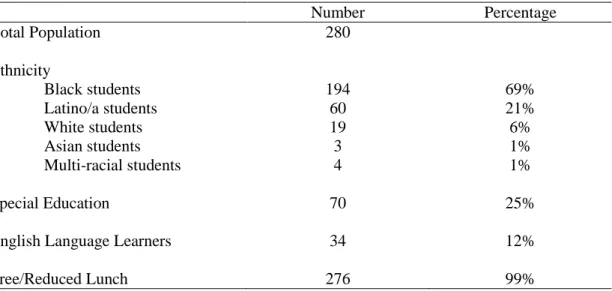
Table 1. 2013–2014 Demographic Characteristics of the Student Population ... 46
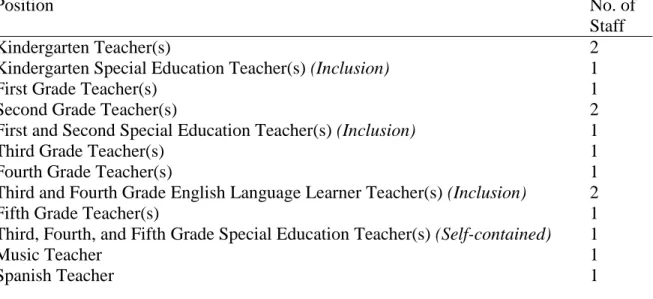
Table 2. Teachers by Grade Level for the 2014–2015 School Year ... 49
Table 3. Data Collection and Analysis Overview ... 52
Table 4. Classroom Observations and Coaching ... 57
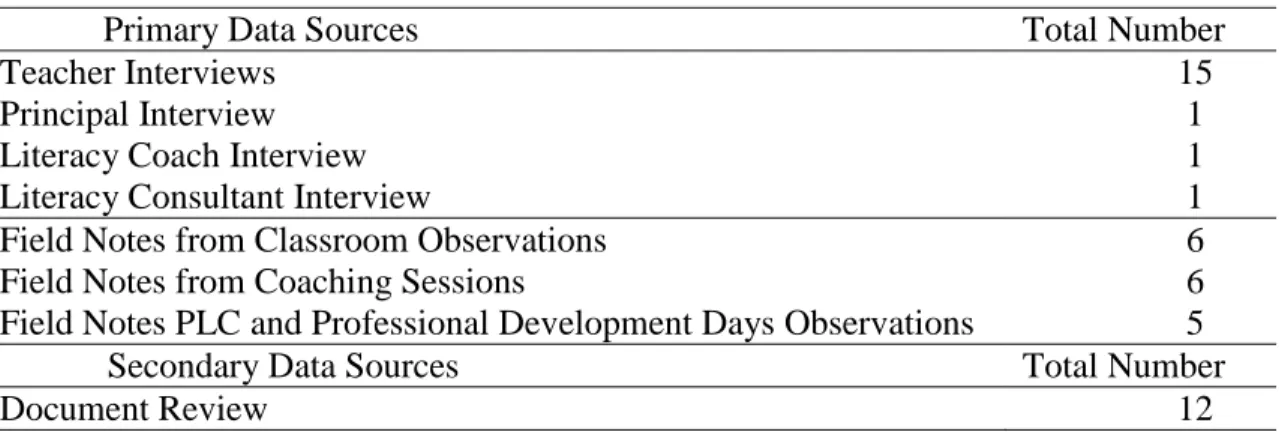
Table 5. Data Sources ... 67
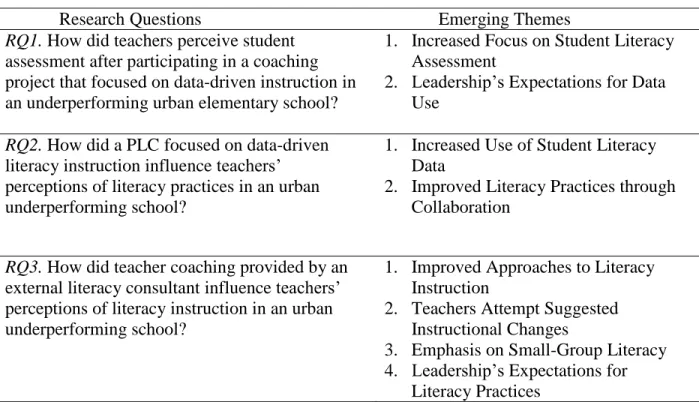
Table 6. Research Questions and Themes ... 68
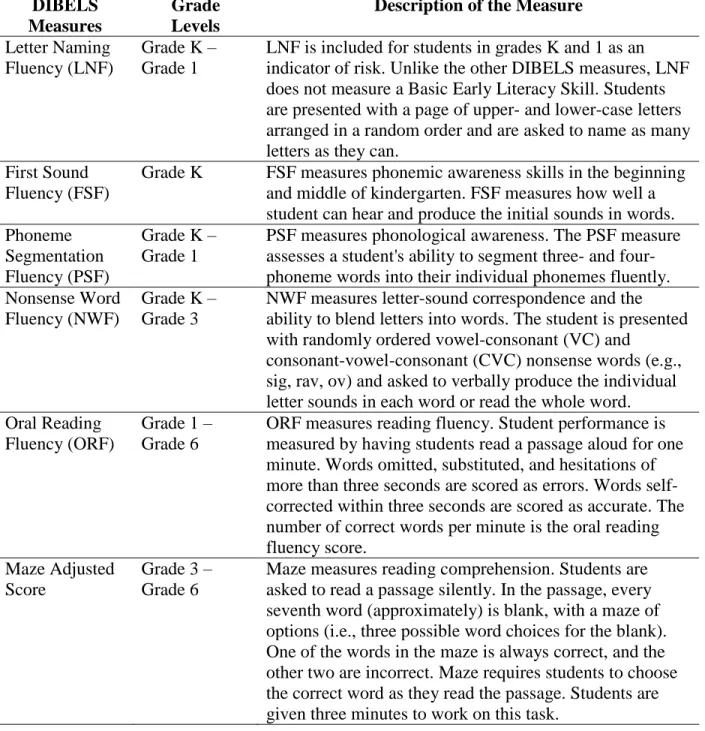
Table 7. DIBELS Measures ... 70
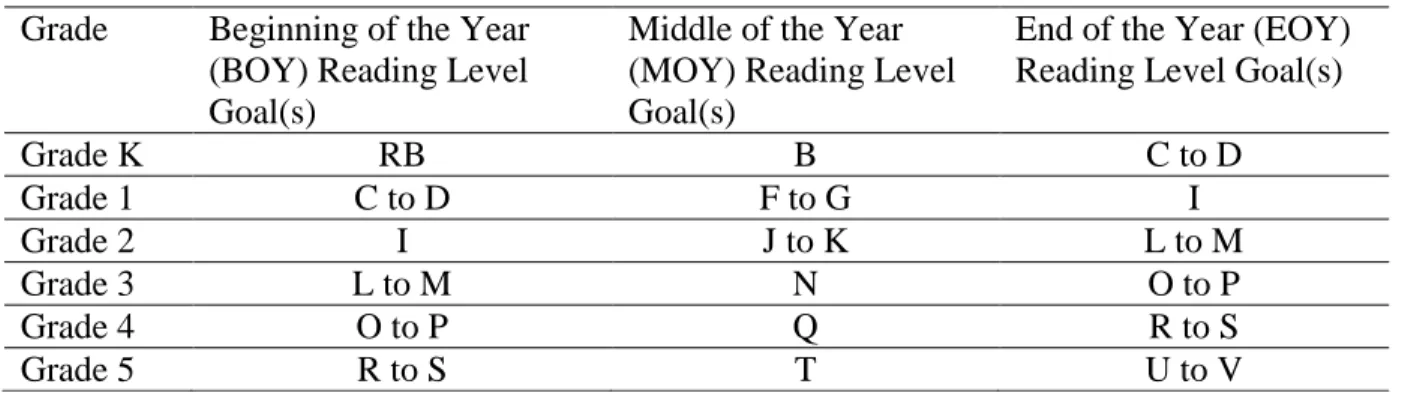
Table 8. 2014–2015 TRC Benchmark Goals ... 72
Table 9. Teacher Quotes on Limitations with the Student Assessment System ... 75
Table 10. DIBELS Progress Monitoring Schedule ... 78
Table 11. Chancellor Goals... 82
Table 12. Teacher Leader Quotes on Data Use Sustainability ... 85
CHAPTER 1. INTRODUCTION
Neoliberal education reform strategies focus on increased student assessment, high-stakes accountability, and regulation of schools, teachers, and students. These reforms have been
implemented to improve the quality of schools, particularly urban school systems, by raising standards and accountability policies. Politicians, corporations, and neoliberal intellectuals justify tough accountability measures by pointing to the chronic failure of public schools, particularly their failure to educate children of color (Lipman, 2006). The Bush administration’s No Child Left Behind Act (NCLB) of 2001 set in motion a standards-based reform movement that pushed for improved student achievement and teacher effectiveness in American public schools. NCLB was the first federally implemented neoliberal policy that resulted in increased testing and accountability with the intention of reducing racial and socioeconomic achievement gaps. The neoliberal education reform movement has required public school systems to increase the administration of student assessments and implement a system of rewards and sanctions based on student performance. Consequently, neoliberal education reforms require extensive changes to data collection and analysis, testing, staffing, and operations in public schools (Braithwaite, 2016).
on schools to improve student tests scores. Implicit in NCLB and other state accountability policies is the belief that data—particularly student test scores—are important sources of information to guide instructional decisions (Marsh, McCombs, & Martorell, 2010). In recent years, interest has risen in data-driven decision making in education. That is to say, researchers and practitioners want to learn how districts, schools, and classrooms can improve through the use of various types of data, especially quantitative assessment data, to inform a range of instructional decisions.
Data-driven decision making1 has resulted from the advent of technological changes that make data readily accessible to educators, the creation of test-based accountability systems under NCLB, and the increased availability of quantitative data due to accountability reforms (Faria et al., 2012; Marsh, Pane, & Hamilton, 2006). Although the NCLB policy carried an implicit assumption that the availability of data will inform and initiate changes in teaching practice, mechanisms for helping educators turn accountability data into actionable information was lacking in the federal policy (Wayman, 2005).
Policymakers continue to argue that student performance data, specifically assessment data, are important levers that should be used systematically and strategically to increase student achievement and improve teaching. In fact, recent studies that have examined the characteristics of high-performing schools and school districts found that data-driven instruction is a common feature in many of these organizations (Datnow, Park, & Wohlsetter, 2007; Snipes, Doolittle, & Herlihy, 2002). Proponents of effective data use argue that data-driven decision-making practices allow school systems to learn more about their schools, identify successes and challenges, target
1
areas of improvement, and help evaluate the impact of programs and practices (Mason, 2002). At the classroom level, advocates of data-driven decisions claim it is a learning-centered teaching tool that supports differentiated instruction by providing information that helps teachers tailor instruction to fit class and individual learning needs (Dunn, Airola, Lo, & Garrison, 2013).
Problem Statement
With a burgeoning body of evidence supporting the power of data-driven decision making for district, school, classroom, and student improvement, teachers are expected to successfully use data to change student outcomes, which requires teachers to be technologically, analytically, statistically, and pedagogically astute (Dunn et al., 2013). Mandinach (2012) referred to pedagogical data literacy or instructional decision making as:
The ability to transform data to instructional action.It entails combining the pedagogical content knowledge (Shulman, 1986) that teachers bring to an
instructional event and their knowledge about how the data can be used to impact classroom practices and instruction to affect change in student learning and performance. (p.73)
However, researchers claim, and the general public has typically agreed, that practitioners in the field of education make decisions based on intuition and instinct rather than evidence (Slavin, 2002, 2003; Ingram, Louis, & Schroeder, 2004). Furthermore, we know that not all educators are equipped to analyze and use data to adapt their planning and instruction (Cosner, 2012; Kerr et al., 2006; Means et al., 2009; Mash, Pane, & Hamilton, 2006; Olah et al., 2010). In many cases, teachers have difficulty bridging the gap between identified problems reflected in student
Recent studies have also shown that many teachers do not know how to use student data properly or do not actively use student data to guide planning and instructional decisions
(Cosner, 2012; Earl & Katz, 2006; Kerr, Marsh, Ikemoto, Darilek & Barney, 2006; Mandinach, 2012; Schildkamp & Teddie, 2008; Schildkamp, Visscher, & Luyten, 2009; Wohlstetter,
Datnow, & Park, 2008). Although teachers seem to appreciate having access to various types of student data—including classroom assessments, teacher observations, benchmark assessments, state tests—they frequently struggle to use student data effectively due to a lack of skills and knowledge to formulate questions, select indicators, interpret results, and develop instructional responses (Cosner, 2012; Huguet, March & Farrell, 2014).
ideology that privileges business-oriented education policies and explicitly links corporate interests with education practices and goals.
NCLB follows the pervasive logic that the market can do things better that public institutions, from managing retirement funds, to providing health care, to running prisons. Test scores serve as a surrogate for productivity, and business is called on to supplement the work of educators who by definition have failed (Lipman, 2006, p. 36).
Significance of the Problem
Studies have shown that one promising approach to providing teachers with better guidance on using data to inform practice is the use of instructional coaches and data coaches (Huguet, Marsh, & Farrell, 2015). These coaches are teacher educators who offer on-site and ongoing instructional support to educators. Despite the widespread use of coaches and data-driven decision making, there is limited research examining how coaches support data-data-driven decision making in schools and the degree to which these efforts improve teaching and student achievement (Marsh, McCombs, & Martorell, 2010; Marsh & Farrell, 2014).
Dunn and her colleagues (2013) suggested another promising approach may be professional learning communities (PLC) that provide an optimal context for addressing teachers’ data-driven making concerns and improving teachers’ data-driven decision-making practices. Research on teacher learning has critiqued the one-shot professional
development workshop paradigm, which is typically provided outside the context of a school and focuses on the dissemination of information while neglecting the important role teacher beliefs play in taking up new knowledge and practices. In place of this model, education researchers promote ongoing job-embedded professional learning to address teachers’ beliefs and concerns and achieve change in teacher practice (Bruce, Esmonde, Ross, Dookie, & Betty, 2010; Coburn & Stein, 2006; Dunn et al., 2013a; Dunn et al., 2013b). Research has indicated that PLCs and instructional coaches—data coaches and literacy coaches in particular— can influence teachers’ data use and potentially change instructional delivery (Marsh, Bertrand, & Huguet, 2014).
Despite a heavy push in schools to use data to drive instruction, few studies have
groups, such as English Language Learners (ELLs) and students with special needs (Bertrand & Marsh, 2015). For instance, teachers’ sense-making of data may be influenced by their past experiences with and beliefs about students in special education and ELLs, who are often the target of accountability policies and data-use directives. According to Bertrand and Marsh (2015), how teachers attribute student learning outcomes is especially important because it can shape their future instructional responses to data and expectations of student performance. For example, teachers may attribute low test scores to poor instruction or to perceived student deficits.
The education reform movement in the United States is fundamentally about improving urban public schools—every educational issue is magnified and every potential solution is more challenging to implement in America’s major cities (Snipes, Dolittle, & Herlihy, 2002). Schools in urban areas serve 40% of the country’s minority populations and 30% of economically disadvantaged students. It is in our country’s inner cities that the burden of not implementing successful improvement strategies (from standards reform, student testing, governance, busing, vouchers, charter schools, social promotions, and class sizes to accountability measures) disproportionately impacts African American and Latino students, children with disabilities, English language learners, and poverty-stricken communities. Urban schools serving mostly African American, Latino, or low-income students suffer from a range of issues, which may explain their unequal outcomes. Typically, these schools have fewer qualified teachers and limited monetary resources. Teachers in low-income schools often report a low sense of
responsibility for improving student learning (Clotfelter et al, 2010; Diamond et al., 2004). For a host of reasons, urban schools tend to have a lower capacity to educate their students.
Some researchers who studied school inequality argue that school reform efforts alone cannot substantially reduce achievement gaps as measured by standardized tests (Jencks et al., 1972). A more recent examination of the achievement gap resulted in a similar position. Rothstein (2004) claimed that schools are unable to overcome the influences of poverty no matter how well-trained teachers are, yet some scholars continue to suggest that schools and teachers have a major role to play in improving the learning outcomes of underserved students.
looking at National Assessment of Educational Progress (NAEP) data, the findings generally indicated that urban education has significantly improved over the years in the area of math but not reading. Snipes, Dolittle, and Herlihy (2002) found that with the many reforms that urban schools pursue to increase performance, policymakers and researchers were not investigating which improvement strategies were actually improving urban school achievement. Thus, despite more than 30 years of urban school research and reform aimed at improving the academic performance of disadvantaged students in high-poverty schools, there is limited insight into which school policies and classroom practices actually reduce achievement gaps.
Data use in low-performing, urban schools is an emerging body of research that builds on school reform literature. In research and practice literature, data-driven decision making is commonly cited as building capacity for school improvement, educating students equitably, and reducing achievement gaps (Armstrong & Anthes, 2001; Bernhardt, 2000; Faria et al, 2012; Killion & Bellamy, 2000; Johnson, 2002; Lachet & Smith, 2004; Mason, 2002; Symonds, 2004). Studies indicate there are several important factors that influence data use in urban schools. In particular, researchers point to policy contexts, school conditions and climate, classroom
practices, teachers’ attitudes toward data use, and teachers’ beliefs about the students they serve as influential factors that either promote or hinder the effective use of data in urban schools.
Purpose Statement
assessment data, learn to make sense of student data, and connect their interpretation of student data to classroom instruction in an effort to educate students equitably and reduce achievement gaps (Lachet & Smith, 2004, 2005).
This study is qualitative and seeks to better understand how literacy teachers in a low-performing, high-poverty elementary school who are participating in an externally funded project to enhance teacher data use and improve literacy instruction in classrooms serving mostly
Latina/o and African American students. Further, this study examines how the PLC and coaching activities at the school may or may not affect this process. In general, qualitative case study methodology allows researchers to explore complex phenomenon—interventions, relationships, communities, or programs—in context using a variety of data sources and supports the
deconstruction and subsequent reconstruction of various phenomena (Denzin & Lincoln, 2000; Yin, 2003). An exploratory case study design is used to capture the details of data-driven instructional decision making of 15 elementary school teachers in an urban school and the context, social practices, and outcomes of a data-centered PLC and coaching activities led by an external literacy consultant.
Research Questions
The research questions that guide this exploratory study are listed below:
RQ1. How did teachers perceive student assessment after participating in a coaching project that focused on data-driven instruction in an underperforming urban elementary school?
RQ2. How did a PLC focused on data-driven literacy instruction influence teachers’ perceptions of literacy instruction in an urban underperforming school?
Theoretical Methodological Perspective
A review of research has shown a clear link between research questions and
methodology. The qualitative case study design selected for this dissertation is rooted in the interpretive theoretical perspective, which guides and anchors the data collection and analysis. Jones, Torres, and Armino (2006) posited that qualitative case studies with a theoretical perspective add “philosophical richness and depth to a case study and provide direction for the design of the research project” (p. 54). Similarly, Yin (2003) argued that case study research should identify a theoretical perspective at the beginning of the investigation, because it influences the research questions, data collection, interpretation of data, and analysis.
In general, theories are used to explain “how” and “why” something happens (Johnson & Christensen, 2007, p. 7). Interpretivism, specifically, seeks to develop an understanding of an action, event, and shared experiences between individuals. Schwandt (2000) posited that to find meaning in action or to attempt to understand what a particular action means, researchers must interpret what the actors are doing or saying. Moreover, Miles and Huberman (1994) argued that qualitative researchers following the interpretive perspective have their own understandings, their own convictions, and their own conceptual orientations that color their interpretive lens. In embracing interpretivism throughout the research process, researchers must be keenly aware of their assumptions, experiences, and relationships with participants, which will inevitably
influence interpretation of what is seen and heard during data collection and what understanding emerges through analysis of findings.
Summary
purpose, stating the research questions being explored, and offering a theoretical methodological perspective. Chapter 2, the literature review, outlines the scholarly work on data-driven decision making in schools and professional learning strategies aimed at supporting teachers’ data use to improve classroom instruction. Chapter 3, the methodology section, defines the epistemological framework used in this qualitative case study, lays out the research design and site used, and describes the participants and data collection methods involved in the investigation.
CHAPTER 2. LITERATURE REVIEW
Introduction
The literature review is organized to provide a general overview of data-driven decision making and the complexities that aid or impede the implementation of teachers’ collaborative data use to inform classroom instruction. First, a brief look at how policy contexts shape the use of student achievement data is offered. Second, an examination is provided of how states, districts, and schools have invested resources into the infrastructure and technological tools designed to provide teachers and principals with access to student assessment data. Third, a summary is given of the role interim assessments play in helping teachers modify instructional strategies to address students’ learning needs. This section is followed by a brief review of the training and support needed to create a data-literate teaching force and the requisite skills and knowledge for transforming student assessment data into instructional responses. The final sections of the literature review examine school conditions that promote a culture of data use and capacity-building interventions, mainly professional learning communities and coaching, that facilitate, enable, and support teachers’ data-driven decision making.
Policy Contexts for Data Use
determine if schools are succeeding of failing to make “adequate yearly progress.” NCLB
accelerated a growing trend toward the current high-stakes accountability movement. In response to these accountability demands, many school districts began to analyze student assessment data in an effort to promote high-quality instruction and improve student achievement (Kerr et al., 2006). In an attempt to close achievement gaps, the U.S. Department of Education implemented new policies and programs that promoted data use in schools and classrooms. These systems were intended to enhance the ability of states to efficiently and accurately manage, analyze, and use education data.
In 2005, the State Longitudinal Data System (SLDS) grant program, managed by the National Center for Education Statistics, distributed grants to assist states in developing data systems. Under the precept that better decisions require better data, the SLDS grant program propelled the expansion of K-12 and P-20 longitudinal data systems across the country. The federal stimulus package, known as the American Recovery and Reinvestment Act of 2009 (ARRA), continued to support states in building and using statewide longitudinal data systems to improve student achievement. Through ARRA, 20 longitudinal data systems grants were funded to support the development and implementation of data systems for tracking student progress from early childhood to postsecondary education.
facilitate data-driven instruction (Faria et al., 2012), they overlooked the resources and support needed to build human capacity to understand and use data to drive instructional improvement.
These accountability policies seemingly placed sole onus on teachers for determining how to raise student achievement irrespective of variables outside their control that influence student success. Yet, without the appropriate guidance and support to classroom teachers that demonstrated how to accomplish the task of better teaching and learning, educators would fumble and schools would continue to fail to meet students’ needs. Some researchers posit that this shifting emphasis on data necessitates not only new data systems that are accessible to educators and administrators, it requires individuals to develop the knowledge and skills to successfully use data to drive improvement. However, these same researchers note that many districts and schools lack the resources and staff capacity to use data for school improvement efforts, especially urban schools (Kerr et al., 2006).
Accessibility of Student Data
Using student performance data to make instructional decisions is not a new
it or data reports may have been presented in complex and confusing formats, which did not facilitate use.
With funding to support the proliferation of educational data systems and given recent technological advances in data-warehousing applications that allow efficient organization, access, and disaggregation of student data and (Hamilton, 2005), the range of data available to educators is extensive—student demographics, educational program data, student attendance, student suspension data, and student performance data. These state and district data systems allow teachers access to previously unattainable data describing their students.
Nevertheless, some researchers claim data are rarely used effectively to improve student-learning opportunities (Wayman & Stringfield, 2003). In many cases, educators are
overwhelmed with the amount of data available to them and struggle to distinguish what types of data are most useful. Although researchers emphasize the importance of advanced data-system technology, student data have to be presented in meaningful formats for teachers and school leaders to act on (Rudnor & Boston, 2003; Thorn, 2001). Hence, technology capacity alone is not the answer. Educators have to be willing and trained to use data management platforms and be able to ask good questions about student data, accurately interpret data, and apply data results appropriately and ethically (Mason, 2002). Wayman (2005) argued that data accessibility is just the tip of the iceberg when comes to equipping teachers with the tools and know-how to use student data effectively:
Benchmark and Interim Assessment
Several studies on formative assessment indicate that teachers can use classroom-embedded student assessments to elicit achievement gains (Black, Harrison, Lee, Marshall, & Williams, 2002; Heritage, 2007; Shepard, 2005). Although Black and Wiliam (1998) proposed that the use of formative assessments can provide essential feedback for modifying instructional strategies to address students’ skill and knowledge gaps, they cautioned against positioning formative assessment as a “magic bullet” for school reform efforts.
Typically, educators use data intended for compliance; however, what is most needed is timely, diagnostic information on the students they teach (Lachet & Smith, 2005; Rudner & Boston, 2003). Although annual standardized tests allow policymakers and the public to rate and rank school quality across a district, state, and the country, teachers and school leaders require more frequent feedback on student progress. Along with frequent student learning data,
educators benefit from having multiple assessment measures that provide a more comprehensive snapshot of students’ strengths and weaknesses (Symonds, 2004). According to Pardini (2000), teachers are better equipped to adapt instructional practices when they have current and varied information about the proficiencies and skill levels of their students.
Benchmark assessments are administered at regular intervals and intended to help teachers plan instructional interventions aimed at enhancing student learning. According to Marshall and Drummond (2006), schools that serve disadvantaged students who academically excel analyzed their benchmark assessment data as part of their overall strategy for improving achievement. Another study focused only on low-attaining students and students with learning disabilities showed that feedback from frequent assessment helped both student groups improve learning outcomes (Fuchs et al., 1997). Faria et al. (2012) posited that benchmark or interim assessment data have three intended purposes that lead to improved and more responsive teaching and, thus, increased student learning outcomes:
1. To better understand the academic needs of individual students and respond to these needs by targeting instruction, support, and resources accordingly. 2. To better understand the instructional strengths and weaknesses of individual
teachers and use this information to focus professional development, peer support, and improvement efforts.
3. To support and facilitate conversations among teachers and instructional leaders regarding strategies for improving instruction.
Data Literacy
It is important to keep in mind that the existence of student data does not ensure that teachers will use it to make informed decisions. That is, data alone do not equal information or action (Wayman & Cho, 2008). Herman et al. (2008) found that teachers were typically not trained in assessment and were not introduced to the content and pedagogical knowledge required to interpret student performance results and make instructional changes.
Love (2004) characterized data-literate teachers as being able and willing to examine multiple measures and multiple levels of data, to refer to research, and to develop sound interpretations. After teachers and school leaders understand student data, they need to how to connect their interpretations of student data to classroom practice. This act requires teachers to have a deep and broad understanding of instructional strategies and curricula so they can make well-informed choices regarding how to address specific student needs. High-quality
professional development coupled with classroom-based coaching can help build teachers
pedagogical data literacy. Mandinach, Parton, Gummer, and Anderson coinedthe construct
pedagogical data literacy as:
The ability to transform information into actionable instructional knowledge and practices by collecting, analyzing, and interpreting all types of data (assessment, school climate, behavioral, snapshot, longitudinal, moment-to-moment, etc.) to help determine instructional steps. It combines an understanding of data with standards, disciplinary knowledge and practices, curricular knowledge, pedagogical content knowledge, and an understanding of how children learn. (2015, p. 26)
Pedagogical data literacy consists of three interlocking knowledge domains that allow
teachers to understand data in terms of their content area and then translate that actionable knowledge into instructional aspects:
1. Data use is the ability to analyze and use data.
2. Content knowledge is a teacher’s understanding of a specific a subject or
3. Pedagogical content knowledge(Shulman, 1986) is the ability to apply knowledge of pedagogy in the context of the content area.
Building a Culture of Data Use
In many cases, school districts explicitly state data use as a priority and make personnel decisions to hire school leaders to promote data use in schools. On one hand, studies have found that teachers’ own use of data depends largely on if and how principals support the use of data in schools and classrooms (Lachat & Smith, 2005; Mason, 2002; Murnane, Sharkey, & Boudett, 2005). Young (2006) conducted observations and interviews with principals and teachers about data use and concluded that effective data use was more likely to occur when principals modeled data use for their teachers. On the other hand, Anderson, Leithwood, and Strauss (2010) found that although principals play a major role in influencing data use in schools, many do not create conditions conducive for effective and efficient data use.
Principals can create a school culture of data use by clearly articulating a shared vision, norms, goals, and expectations for data use. This means establishing measurable goals at the system, school, classroom, and individual student level. Furthermore, school leaders should create a school climate that involves continuous inquiry, learning, and improvement based on data rather than using data to place blame (Faria et al., 2012; Schildkamp & Kuiper, 2009; Wayman & Stringfield, 2006). Marsh et al. (2006) found that teachers used data more frequently in schools where principals had committed to data-driven decision making and had a clear vision about data use at the school level. These schools were also characterized by openness and a sense of collaboration around data use in contrast to schools where data analysis was perceived as an individual activity.
decision making. According to their study, urban school leaders were more likely to influence school culture around data use and the extent to which teachers believed it was a meaningful strategy for school improvement when principals developed a) diagnostic frames that confronted student achievement and learning opportunity gaps, b) motivating frames that positioned school improvement as a collective responsibility, and c) prognostic frames focused on making
incremental change to sustain reform efforts and creating measurable school, classroom, and student goals to monitor progress. When school leaders situate data use within a high-stakes accountability system, teachers may be apprehensive about using student data to shape the decision-making process (Ingram et al., 2004). Typically, data use within an accountability culture has a short-term time frame, emphasizes student test scores, and excludes teacher voice. Furthermore, data for accountability purposes are mainly used to identify problems and for compliance whereas data use within an organizational learning culture has a long-term time frame, focuses on student learning and instructional improvement, and includes teacher and principal voices (Firestone & Gonzalez, 2007).
School leaders can support effective data use in schools by establishing collaborative data teams and setting aside adequate time for teams to meet regularly during the school day.
and team roles within a professional learning community. In addition, principals can help build staff capacity for data use by organizing meaningful teacher training and coaching activities. Several studies suggest that trained teachers are more apt to modify their teaching practices appropriately on the basis of the knowledge they have gained from assessment data (Marsh et al., 2006; Mason, 2002).
Data Use to Address Equity Issues
Despite myriad school reform efforts, significant gaps in academic achievement persist among different groups of students due to historical, economic, and sociopolitical inequalities and inadequacies in the United States education system (Ladson-Billings, 2006). According to longitudinal results reported by National Assessment of Educational Progress (NAEP), gaps in achievement appear by income, race, and ethnicity with a large percentage of African American, Latino, and Native American students performing at the low rungs of the achievement ladder. Conversely, a large percentage of middle- and high-income White and Asian students, mainly Chinese American, Japanese American, and Korean American, perform at the high rungs of the achievement ladder (NCES, 2011).
Although public education is currently in an era of high-stakes standardized testing and test-based accountability, critical conversations about effective policies and strategies that create equitable outcomes for underserved populations remain absent from the discourse. In low-performing schools, school leaders and teachers are faced with dual priorities driven by school reform—increasing demands for accountability and equity2 concerns related to student
achievement (Lachat & Smith, 2005). These parallel agendas, equity and accountability, require
2
educators to make instructional decisions based on accurate, timely, and meaningful student learning data.
Although closing the achievement gap between low- and high-achieving groups of students has been a focus of federal and state policy over the years, there is limited research on school-level policies and practices that increase student performance and, ultimately, close achievement gaps (Symonds, 2004). In Ruth Johnson’s (2002) book Using Data to Close the
Achievement Gap: How to Measure Equity in our School, sheproposed that schools engage in a
critical self-examination of how learning opportunities are allocated to all students. As school leaders and educators disaggregate student performance data by race, gender, and grade, they can begin to identify strategies for closing learning opportunity gaps. Moreover, the process of compiling and reflecting on school-level data can bond educators together in a common pursuit to create a culture of data use and high achievement for all students. To effect change in schools, educators require a mindset that closing the achievement gap is not only a collective
responsibility but a moral obligation and a realistic possibility (Johnson, 2002; Love, 2004). Schools that are narrowing the achievement gaps use data in a variety of ways to engage in a continual improvement process. Symonds’ (2004) research on San Francisco Bay area schools indicated that there are stark differences between the “gap-closing” and
One way underperforming, urban schools are addressing the achievement gap is by focusing resources on improving literacy instruction to early childhood students. Studies have shown that literacy proficiency in early grades is a leading indicator in a student’s academic development. According to Gullo (2013), leading indicators in education are significant in that they are viewed as ways in which student outcomes can be improved and achievement gaps reduced. When school leaders understand literacy to be highly associated with academic success in later grades, they strategically invest resources and time in developing teacher expertise in literacy instruction (Foley et al., 2008; Gullo, 2013).
Supporting Teacher Data Use Through Collaboration and Professional Learning
All too often to prepare for accountability assessments, many teachers feel pressured to teach the test and implement skill and drill activities, which through repetition and review reinforce student memorization and adoption of concepts. After students take the test, staff are notified of testing results, told to improve student-learning outcomes, and sent back to their classrooms to figure out how by themselves. Sadly, this is a common scenario in schools that can lead to feelings of isolation and a sense of helplessness. Many teachers would benefit from structured opportunities to engage in informed reflection, collaborative discussion, and professional learning so they can take appropriate action to positively impact instruction.
Collaborative data use involves collective analysis and interpretation of student assessment data. As teachers develop a deeper understanding of students’ learning needs, they use this new knowledge to inform a range of instructional practices (Cosner, 2012). Schildkamp and Kuiper (2010) claimed that although the process of inquiry was sometimes frustrating and time
Building teachers’ data literacy and pedagogical content knowledge takes time. More specifically, teachers can benefit from time to collaborate, discuss practice, help each other with challenges, and share effective classroom strategies. Furthermore, regularly scheduled
collaborative planning can support the diffusion of improvement strategies. In fact, researchers caution against approaching data use as a one-time event. It should be a continuous, integrated part of practice that is part of an ongoing cycle of instructional improvement (Earl & Katz, 2006; Mandinach, 2012). Researchers recommend embedding collaborative data inquiry and
professional learning into the school schedule so that it becomes routine practice over the course of the workweek.
Professional Learning Communities
A growing body of literature focuses on the social processes that influence teacher learning. The communities of practice perspective, which sits within sociocultural learning theory, posits that learning does not occur inside the minds of individuals but rather learning occurs as individuals engage in social and cultural interactions within a sustained community (Lave, 1991; Lave & Wenger, 1991). Within this perspective, learning is conceptualized as the way in which teachers transform their practice within a community through continual
“negotiation of meaning” as they interact with one another and respond to changes in their environment. As a result, community members evolve new ways to engage with each other, fine-tune their [joint] enterprise, and further develop their [shared] repertoire (Coburn & Stein, 2006).
In the case of developing teachers’ capacity for data-driven decision making, the first dimension of mutual engagement canbe applied to understand how teachers take up
Last shared repertoire of practice lends itself to exploring how teachers, through their interactions with each other and experts, develop the skills and knowledge required to use student data to inform literacy instruction in the classroom. Nevertheless, most research has not made the explicit connection between learning processes in communities and changes to
teachers’ instructional practice (Coburn & Stein, 2006; Little, 2002).
The creation of strong professional learning communities in schools is widely considered an important condition for school improvement (Marsh et al., 2014). Although learning in any setting is a complex endeavor, teacher learning under a high-stakes accountability climate and in an underperforming, urban school creates additional pressures and motivations to an already intricate process. Lave’s (1991) view of situated learning within a sustained community of practice claims learning, thinking, and knowing can occur when people engage in a meaningful activity. Thus, Coburn and Stein (2006) claimed that an effective way to bring about change in teacher thinking and practice was through strong and consistent professional interactions:
The strength of teachers’ professional relationships influence the degree to which they change their practice…Teachers in schools with shared goals, collaboration, a focus on student learning, shared responsibility, and social trust are more likely to make changes in their instructional practice than teachers in weak communities. (p. 27)
Research studies on change processes associated with teacher buy-in and implementation of data-driven decision making emphasize the importance of focusing on the role teacher beliefs play in the acquisition of new knowledge and the adoption of new teaching practices (Bruce et al., 2010). Studies have shown that when teachers’ anxiety, misconceptions, and skepticism concerning data-driven decision making are addressed through targeted, job-embedded
Dunn et al., 2013b). Research on professional development suggests that to address teachers’ beliefs and concerns and achieve real teacher change, schools must move beyond the one-shot seminar or workshop paradigm that focus on the dissemination of information and move toward ongoing job-embedded professional learning (Dunn et. al, 2013; Bruce et al., 2010). Snipes, Dolittle, and Herlihy (2002) also found that the professional development strategy in urban schools was generally fragmented, often consisted of one-shot workshops on a series of topics, and failed to focus on a consistent instructional strategy.
The growing presence of professional learning communities in schools can be seen as the result of strengthening teacher practice through job-embedded approaches. Bruce et al. (2011) defined professional learning as “embedded in the classroom context and constructed through experience and practice in sustained iterative cycles of goal setting, planning, practicing, and reflecting” (p. 1599). For certain, the concept of school data teams is not novel. However, in many instances, data teams involve teachers discussing data and then blaming various factors that they perceive as contributing to a student’s academic challenges. These meetings seldom involve teachers discussing how they will change their core instruction let alone evaluate the effectiveness of their data-driven instructional responses. Earl and Timperley (2009) studied the quality of teachers’ data conversations and the role data conversations played in informing school improvement decisions and actions. They concluded that teachers in lower-achieving schools had a vague understanding of the purpose for reviewing student data. In contrast, in higher-achieving schools, teachers met more often to examine student assessment data in reading and writing, and they joined that analysis to a discussion of what teaching practices might
learning through a collaborative data inquiry process. Earl and Timperley (2009) asserted that the goal of collaborative data use was to:
Set the stage for new knowledge to emerge as participants [teachers] encounter new ideas or discover that ideas that they have held as “truth” do not hold up under scrutiny and they use this recognition as an opportunity to rethink what they know and what they do. (p. 2)
Based on research, teachers are more apt to alter their beliefs about low-achieving students, change their attitudes about data-driven decision making, and develop the requisite knowledge and skills— data literacy and pedagogical content knowledge—for data-driven decision making through professional learning communities. Little (2012) claimed that there are limited studies of school workplace interactions that have begun to uncover the ways in which interaction in collaborative groups promotes or constrains teacher learning, instructional change, and peer support among teachers. Consequently, additional research on the activity settings in which teachers use data to inform instruction is needed (Datnow & Hubbard, 2015; Little, 2012; Marsh et al., 2014). This research would not only focus on the individual ways in which teachers employ data-driven decision making in their respective classrooms, it would also attend to the actual practices teachers use in group settings to collectively examine and interpret student data.
Coaching
One central strategy districts and schools have begun using to build teachers’ data-use capacity to interpret and respond to student learning data and broaden teachers’ instructional repertoire is coaching (Huguet, Marsh, & Farrell, 2014; Marsh et al., 2010; Means et al., 2009). An instructional coach is viewed as a master teacher who provides on-site and ongoing
instructional support for school educators (Marsh et al., 2010). Instructional coaching has been adopted by nearly every urban district in the United States and is widely recognized by
student achievement (Marsh et al., 2008; Marsh et al., 2010; Matsumara, Garnier, & Resnick., 2010). Furthermore, literacy coaches have increasingly become a cornerstone of literacy reform policies and programs in underperforming, urban schools (Marsh et al., 2010).
Two popular coaching positions, instructional coach and data coach, have been central strategies for providing educators with professional development on data-driven decision making. More specifically, coaching in schools has played an integral role in developing teachers’ data literacy and improving literacy instructional practices, particularly as researchers claim there are limited courses and opportunities available to pre-service teachers for data
literacy development in teacher preparation programs (Mandinach & Gummer, 2013). According to Matsumara et al. (2010), the objective of instructional coaching is to cultivate embedded, practice-based learning opportunities for teachers aimed at improving the quality of instructional practice and student learning.
Coaching is frequently seen as a vehicle for bringing about collaborative interactions in schools (Matsumara et al., 2010). Most commonly, instructional coaching is school-based, collaborative, and is conducted in a one-on-one or small group setting. In general, instructional coaches serve in a non-evaluative support role for educators and do not directly deliver
instructional objectives. In more recent studies, researchers have associated coaching interventions with improvements in school culture, teacher collegiality, and collaboration; positive changes to teachers awareness, comprehension, alignment, and implementation of state standards; and knowledge of how to apply learning from professional development to their classroom practice ((Marsh et al., 2010; Wong & Nicotera; 2006). Furthermore, studies have shown that teachers were more likely to implement changes in instruction while being coached than while working independently and that the instructional changes that resulted from coach-teacher interactions were sustained after coaching ended (Kohler, Crilley, Chearer & Good, 1997; Kohler, McCullough & Buchan, 1995).
Coach-teacher interactions that are characterized by shared goals, a focus on student learning, and trust can lead to improvements in instruction and learning by expanding teachers’ access to expertise and knowledge and sustaining teachers’ motivation to continually improve their instruction (Coburn & Stein, 2006; Matsumara et al., 2010; Marsh et al., 2014). However, it is important to realize that the quality, frequency, and type of coach-teacher interactions can vary greatly between schools and between teachers in the same school, which potentially impacts the degree of new knowledge and skills teachers gain from coaching. For instance, one study of a literacy coach found that teachers’ perceptions of coaches’ skills, expertise, and experience influences that coach’s impact on instructional change in the school (Marsh, McCombs, & Martorell, 2012).
development through coaching to ensure teachers had the skills they needed to effectively teach reading to early childhood students. Instructional coaches are often expected to identify teachers who could benefit from coaching support, observe classroom instruction, model effective
lessons, gather data, and connect teachers with resources intended to enhance their instructional practice (Huguet, Marsh, & Farrell, 2014). Typically, the focus of an instructional coach is primarily on pedagogy and content-specific curriculum. Research has shown that instructional coaches, particularly literacy coaches, can help increase teachers’ catalogs of instructional reading strategies. For example, when student data indicate a weakness in decoding text, coaches support teachers in learning how to be more effective in teaching decoding skills to students. Additionally, instructional coaches can detect gaps in curriculum and advise teachers on appropriate reading materials to use with students.
helping teachers access and analyze data without additional focus on instructional responses to data did not support teachers in changing their instructional practice.
Research has shown that principals’ actions and their beliefs regarding the role and responsibilities of an instructional coach play a significant role in the successful implementation of coaching activities in schools (Matsumara et al., 2010). As it relates to literacy coaches, in particular, Burch and Spillane (2003) found that principals who were more actively engaged in literacy reform initiatives at their schools were more likely to support the efforts of their literacy coaches. For example, Matsumara et al. (2009) found that teachers were more likely to
participate in a literacy coaching program when their principal endorsed the coach’s content knowledge and expertise. Furthermore, teachers were more likely to actively engage with literacy coaches when the principal supported a coach’s leadership role in the school and gave the coach more autonomy in their role (Matsumara et al., 2010).
To address this research gap, researchers have drawn on theoretical frameworks, mainly Vygotsky’s sociocultural learning theory and theory of actions for data use, to identify practices and contextual factors that shape and support coaches’ work with educators around student data. Researchers often look to learning theory to rationalize the use of coaching to support teachers’ professional development and capacity building to understand and use data effectively.
Specifically, learning theory implies that teachers learn best when they are given opportunities to discuss and reflect with other teachers, to practice application of new ideas and instructional techniques, to receive feedback from a master educator or expert, and to observe effective modeling of instruction (Marsh et al., 2010).
Summary
Even though there is limited research available on how literacy coaches support teachers’ data use, some conclusions can be drawn from the broader literature on coaching on the factors that enable or hinder effective coaching practices. For instance, the content knowledge of an instructional or data coach plays can play a significant role (West & Staub, 2003). One study of a literacy coaching program found that teachers’ perceptions of coaches’ expertise and experiences were correlated with their ratings of coaches’ impact on instructional change (Marsh, McCombs, & Martorell, 2012). This means when educators viewed their instructional coach as having sufficient content knowledge and skills to support them, educators believed that the coaches had a greater influence on their instructional practice.
Studies have shown that there is a core set of coaching practices that contribute to
Assessing teacher needs to create specific goals for data-use work;
Modeling effective data use, which involves explaining and demonstrating
ways to interpret, respond to, and act on student learning data;
Observing teachers to monitor how they engaged in particular phases of the
data-use cycle;
Providing feedback and sharing expertise, which consisted of suggesting next
steps for instructional practice;
Dialoguing and questioning about student data and literacy instruction, which
helped teachers make changes to their instructional planning and delivery; and
Brokering the divide between student data and application through their
ability to connect teachers to expertise and resources that support the data-driven decision-making process (Marsh, McCombs, & Martorell, 2012).
Scholarship has also shown that a coach’s interpersonal skills are as important to her/his role and relationship with teachers as is content knowledge (Brown, Reumann-Moore, Hugh, du Plessis, & Christman, 2006; Ertmer et al., 2005). Instructional coaches must be able to build supportive and trusting relationships with the educators with whom they work (Matsumura et al., 2010). Ultimately, for instructional coaches to effectively share their expertise and influence teachers’ classroom practice, they must be skilled with working with adult learners. Marsh and Farrell (2014) reported in their study that some teachers preferred learning in a professional learning community due to the shared identity of the team members as opposed to working one-on-one with a coach. In the same study, the researchers noted that the intensity of coaching interactions may vary within a group setting and one-on-one activities based on the learning needs of teachers, group dynamics, and what the different stages of data-driven decision making might require (Corbin & Strauss, 2008; Emerson, Fretz, & Shaw, 1995).
School contextual factors can also play a significant role in mediating coaching
political climate within a school can effect teachers’ interactions with and perceptions of coaches, successful coaches are aware of the school’s socio-political dynamics and approach their work with teachers in ways that are viewed as non-threatening (Lachat & Smith, 2005). For instance, if teachers are reluctant to work with an instructional coach, their perceptions of the coach’s effectiveness are diminished (Marsh et al, 2008). These socio-political tensions may be heightened in circumstances where data are perceived as valuable sources of influence,
advantage, and power within a school (Huguet, Marsh, & Farrell, 2014). Principal leadership is also a key factor within the school context that can affect an instructional coach’s success and the implementation of a literacy coaching program. Research suggests that a principal who actively supports a coach’s role in building teachers’ data-use capacity, literacy content knowledge, and pedagogical skills may be associated with increased effectiveness (Bean et al., 2010).
CHAPTER 3. METHODOLOGY
Introduction
This chapter provides a description of the methodology, participants, research site, data collection and analysis, and the researcher’s role. This section outlines the techniques or procedures used to gather and analyze data to explore the proposed research questions. The initial research questions and sub-questions guiding this study are as follows:
RQ1. How did teachers perceive student assessment after participating in a coaching project that focused on data-driven instruction in an underperforming urban elementary school?
RQ2. How did a PLC focused on data-driven literacy instruction influence teachers’ perceptions of literacy practices in an urban underperforming school?
better understand how literacy teachers in an urban, high-poverty elementary school use data to improve literacy instruction.
The research design was selected after careful consideration of various research
methodologies, the study’s purpose, the research questions, and the researcher’s epistemological stance. The foundational tenets that guide qualitative research serve as the means to
contextualize and understand the research questions in the study. A qualitative approach is most appropriate for this research because it fosters a better understanding of the lived experiences of the participants, elementary school teachers, and their own understandings of how they collect, make sense of, and work with student literacy data. Furthermore, this research allows
participants to articulate the ways in which student literacy data informs teachers’ pedagogical decisions.
This study, based in a constructivist paradigm, used an exploratory case study design to capture the details of data-driven instructional decision making of 15 elementary school teachers serving mostly African American and Latino/a students and the context, social practices, and outcomes of a data-centered professional learning community and coaching interactions led by an external literacy consultant. Further, an exploratory case study approach was used to explore how teachers’ beliefs and attitudes about student data use influence their data-driven literacy practices in an urban, under-performing school.
Philosophical Foundation
1. Because meaning is constructed by people as they engage with others in social interactions, qualitative researchers use open-ended questions to solicit the viewpoints of participants;
2. People engage with others in social interactions and make sense of those encounters based on their own historical, cultural, and social perspectives; and 3. Meaning is socially constructed and results from human interactions within a
community.
These assumptions help remind researchers that interpretations and findings in a qualitative study are context-specific.
Constructivism is a helpful philosophical framework for this study. According to Stake (1995), the researcher is a central instrument in the collection and interpretation of data. Stake further claimed that most contemporary, qualitative researchers promote the belief that
knowledge is a social construction rather than a discovery. Stake described constructivism as a belief that knowledge is formed by social interpretations about the world.
This study is based on the interpretations of teachers working in an urban elementary school who are responsible for planning and providing literacy instruction. Of particular interest are the ways in which these teachers interpreted their interactions within a professional learning community and coaching activities focused on student data use and literacy instruction.
Furthermore, the study explored teachers’ perceptions of the student assessments used, student achievement, and literacy practices within the school and their respective classrooms.
Participants in the study constructed their own unique understanding of their individual and shared experiences. How they made instructional decisions based on their interactions with student assessment data, the external literacy consultant, administration, and students is complex and reflects a constructivist epistemology.
student assessment data that they collected and analyzed and the literacy practices they used in their classrooms. Specifically, this research is interested in discovering how an external literacy consultant supported teachers in collecting and analyzing student assessment data and how the data, if at all, informed literacy practices for elementary school students in a small, urban school. The interpretive tradition emphasizes the examination of a social setting through inquiry rather than imposing predisposed assumptions and theories on a context. A major component within interpretivism is the role of the researcher in understanding how participants construct meaning of a situation or interaction. Thus, the researcher is an instrument in understanding how
participants perceive their experiences. The strategy is inductive, and the outcome is descriptive (Merriam, 2002). In general, the interpretive approach involves researchers immersing
themselves in the natural setting that their study participants inhabit rather than beginning with a theory or preconceived idea of how the social players work together to construct, modify, and interpret their social reality (Esterberg, 2002).
Qualitative Case Study Methodology
This section provides an overview of case study research, defines case study
methodology, and examines the usefulness of a case study research design for addressing this study’s research questions. Although there are several prominent case study researchers who have written about case study research, for the purpose of this dissertation, I will rely mostly on the extensive scholarly works of modern case study methodologists Robert K. Yin, Robert E. Stake, and Sharon B. Merriam.
learning environment consists of coaching activities and a professional learning community of teachers involved with literacy instruction. The study explored teachers’ data-use practices in the context of a professional learning community and one-on-one coaching activities and, ultimately, the myriad factors influencing teachers’ adoption and application of data-driven instructional choices in the classroom.
According to Yin (2003, 2014), case studies are the preferred approach when “how” and “why” questions are posed. Yin additionally claimed a qualitative case study approach is well-suited for examining contextual conditions that appear relevant to the phenomenon being
studied, literacy teachers’ data-driven decision making. In this instance, the urban school context and the social context in which literacy teachers engage with, analyze, and interpret student data and build their pedagogical knowledge around literacy instruction is particularly important. It is in these settings, coaching activities and the professional learning community, that data-driven instructional decision-making skills are developed and practiced.
A qualitative approach allows the researcher to explore phenomena such as feelings and thought processes that are typically difficult to ascertain through conventional research methods (Strauss & Corbin, 1998). Qualitative methods emphasize the researcher’s role as an active participant in the study. For the present study, the researcher will be instrumental in the
collection, interpretation, and analysis of data. Ultimately, the intention is to explore and seek to understand participants’ beliefs, attitudes, and perceptions of their current and potentially changing data-use and literacy practices in the school and their respective classrooms.
Unit of Analysis
narrow the scope of research, case boundaries will be established to indicate what will and will not be studied (Miles & Huberman, 1994; Stake, 1995; Yin, 2014). For the present study, the unit of analysis will be a three-year professional development program focusing on data-driven instructional decision making for literacy teachers at an under-performing elementary school in Washington, D.C. A single case study design will be used to explore literacy teachers’
participation in various professional learning opportunities, including one-on-one coaching activities with an external literacy consultant and a data-centered professional learning
community aimed at building teachers’ data-use capacity and improving literacy instructional practice.
Socio-Political Context of District of Columbia Public Schools
In 2011, a National Research Council report on District of Columbia Public Schools (DCPS) ranked student test score averages in the city below almost every other major city from 2003 onward. According to the National Assessment for Educational Progress (NAEP), only 8 percent of the districts’ eighth graders were proficient in math and only 12 percent were proficient in reading (NCES, 2011). In sharp contrast, Chancellor Michelle Rhee found 95 percent of DCPS educators were “meeting expectations” based on the performance evaluations she examined when she was hired to reform the district’s public school system. During Rhee’s chancellorship, she put in place neoliberal reform agenda aimed at instilling accountability and improving principal and teacher quality.
Turning the ship would require strategies that had never been tried before in D.C. It was clear that those strategies would generate significant pushback, especially from those with a vested interest in the status quo, and in a system that had zero accountability in place (Rhee, 2012, p. 40).
including Baltimore, New Orleans, New York City, and Washington, DC. This work, which mainly focused on strengthening the teacher workforce in major cities by privatizing teacher preparation, helped cement her blueprint for creating a culture of accountability in DCPS based on high-stakes testing and teacher and leader performance evaluations. During Michelle Rhee’s first year as chancellor, her leadership team channeled their efforts on disrupting the central office and dismissing school leadership who appeared ineffective. According to a 2014
Mathematica study, 39 percent of DCPS’s 131 school principals left the district at the end of the 2007–2008 school year. In the subsequent year, 22 percent of school leadership left the system.
Next, Rhee’s leadership team focused their attention on improving teacher quality by building and rolling out a robust evaluation system intended to accurately assess teacher performance in the district. Eventually, the new IMPACT evaluation system would cover all 7,000 school-based staff, from custodians and aides to teachers and principals. It marked a new era of accountability in DCPS that rewarded teachers based on performance rather than seniority. To ensure IMPACT focused on what mattered most—high-impact instruction—Rhee’s
them,” remarked Jason Kamras, Director of Human Capital for Teachers, a new role within the newly formed human capital department (McGrummen, 2011, p. 5).
Along with the new teacher evaluation system, Chancellor Rhee brokered a new
agreement with the Washington Teachers Union to include performance-based compensation for the first time for teachers. Teachers rated “Highly Effective” were eligible for higher
compensation as well as significant bonuses while teachers rated “Minimally Effective” would receive no salary increase. Teachers receiving “Minimally Effective” or “Ineffective” ratings for two consecutive years would be terminated from DCPS. In summary, Michelle Rhee and her leadership team actualized a neoliberal agenda by implementing radical and swift changes to DCPS’s human capital policies and structures around teacher and leader recruitment, selection, evaluation, development, compensation, and retention, with the ultimate goal of increasing student achievement as measured by standardized tests. From 2007 to 2014, math proficiency scores in DCPS rose 23 percentage points and reading scores rose 13 percentage points. The district’s students made larger performance gains than their peers in any other state in the NAEP assessments.
Research Site
Fortunately, there were no barriers to identifying and accessing a research site to conduct this study. The researcher had a school contact who was involved with coordinating and