Abstract:
This literature review examines the use of left ventricular assist devices (LVAD’s) in the
treatment of End Stage Heart Failure (ESHF) and patient outcomes. The American Heart Association defines Heart Failure as a chronic, progressive condition, in which the heart muscle is incapable of pumping enough blood to meet the body’s blood and oxygen demands. Currently,
about 5.7 million Americans are living with Heart Failure, while roughly 10% have ESHF (American Heart Association, 2015). This literature review examines prescription medications, implantable devices (specifically LVAD’s) and heart transplants, their cost-effectiveness, and
impact on symptom management and quality of life in the treatment of End Stage Heart Failure
(ESHF). Despite the various treatment modalities none have yet been established as the gold standard. While much research focused on cost and mortality, findings were limited in relation to quality of life pre and post LVAD placement. Therefore future recommendations include
utilizing a tool to evaluate clinical effectiveness of LVAD’s and improved quality of life pre and post-operatively, providing patients with the necessary knowledge to make informed,
individualized decisions on which treatment modality to pursue.
Keywords: LVAD's, Heart-assist Devices, ESHF, Cost vs Mortality, Mortality and Decreased
Defining Heart Failure:
Heart Failure can be further defined as a complex clinical syndrome of symptoms and
signs that result in the impairment of the heart as a pump to support physiological circulation. (National Library of Medicine, 2014). According to University California San Francisco Medical
Center, common signs of heart failure include: shortness of breath, fatigue, chronic cough or wheezing, rapid or irregular heartbeat, lack of appetite, mental confusion, edema and weight gain (AHA, 2015). Furthermore, End Stage Heart Failure or Stage IV Heart Failure often presents as
the inability to carry on any physical activity without discomfort, in addition to symptoms of heart failure that occur at rest (NYHA, 1994). If any physical activity is undertaken, discomfort
increases (AHA, 2015). Due to the lack of research done evaluating pre- and post-symptom management experienced by ESHF patients, a rating scale and questionnaire will be utilized for each of the clinical symptoms listed above to evaluate quality of life pre- and post-LVAD
therapy.
Introduction:
ESHF remains a major health threat, resulting in increased morbidity and mortality, high costs and decreased life span. Roughly 5.7 million Americans suffer from Heart Failure, of which approximately 10% of those patients have the most advanced form. (American Heart
Association, 2015). Heart failure (HF) remains as one of the most common causes for hospital admission amongst men and women 65 and older. According to the CDC’s 2009 report,
treatment costs in the United States have risen annually to an excess of $32 billion. Despite the prevalence and admission rates, the associated costs for major treatments still remain high.
When HF worsens despite optimal medical therapy, patients are often left with limited
ventricular assist devices (LVAD’s), or pharmacologic treatments, may help bridge the gap in effective therapy. An LVAD can be defined as a surgically implanted circulatory support device
that acts as a pump moving blood from the left ventricle to the ascending aorta in patients with severe heart failure. Alternative options to LVAD therapy include Orthotropic Heart Transplant
(OHT). OHT is the transplantation of a donor heart into the original location where the previous organ has failed. However, as heart failure progresses, costs for treatment options increase. The review examines these costs, associated mortality rates, and quality of life for each of the
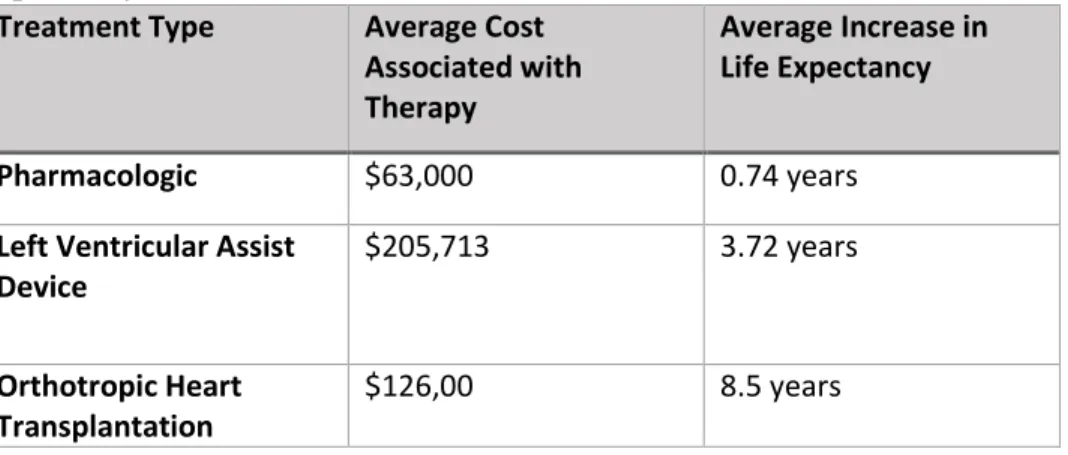
available treatment options. Findings reveal the average cost for heart transplantation is $126,000 with an additional 8.5 years of life gained. LVAD therapy costs roughly $205,713 with an
increase of 3.72 years of life, while prescription medications cost $63,000 with an added 0.74 years of life.
According to University of Wisconsin Medicine guidelines, several selection criteria for
destination LVAD use include: severe symptomatic heart failure in spite of medical therapy, left ventricular ejection failure less than or equal to 25 percent, severe left ventricular dysfunction or
intractable arrhythmias, exercise VO2 less than or equal to 12 ml/kg/min and decreasing renal function or pulmonary congestion. Additionally, several heart transplantation criteria include: impaired functional capacity despite medical management, continuous inotropic support, Maximal VO2 < 14 ml/kg/min and major limitation of the patient’s daily activities, refractory
angina not cooperative with revascularization and no underlying pulmonary disease.
Without one of the aforementioned interventions, ESHF leads to worsening symptoms such as: decreased activity levels, discomfort, and the inability for patients to live their normal lives. Furthermore symptoms like fatigue, shortness of breath, edema and irregular heartbeat are
life. There is, however little research that examines individual symptoms pre- and post- LVAD and OHT intervention leaving patients with a challenge when it comes to a decision on what
individualized optimal therapy is for them.
In conducting the literature review few studies were discovered focusing on quality of
life, particularly the treatment’s effects on patient symptoms. Therefore, the Minnesota Living with Heart Failure Questionnaire will be utilized to further evaluate pre and post-therapy quality of life. This tool will examine whether a decrease in specific symptoms occurs after LVAD
placement to assess quality of life pre and post-therapy. This information will provide patients with additional information about LVAD placement and enable them to make an informed
decision, aware of the impact on their quality of life. Methods:
Relying on resources from Cinhal and PubMed, this study aims to provide a
comprehensive review of LVAD therapy and its impact on cost, mortality, and quality of life. Research was initially begun, using the search terms “left ventricular assist devices” and “overall
patient outcomes.” This however, returned a large number of results. In order to refine my search, Mesh Terms were established by selecting specific patient outcomes specifically cost, mortality and quality of life. Search criteria were limited to the use of a combination of the
following terms: LVAD's, Heart-assist Devices, ESHF, Cost vs Mortality and Decreased Length of Stay. Articles were then selected based on the applicability to the research question. Articles
were eliminated from the search based on the following criteria: (1) research not performed within the Unites States were eliminated and (2) research not performed within the last ten years.
An initial literature review was conducted to evaluate the correlation between LVAD, OHT and pharmacologic therapy in relation to cost effectiveness, quality of life and related
mortalities. Findings indicated that a gold standard has not been established for the treatment of End Stage Heart Failure when analyzing these factors despite the many studies examining costs
and mortality among the varying treatment modalities. The research lacked information comparing the cost and quality of life improvements in pre- and post-LVAD therapy.
Establishing a correlation between improved quality of life and decreased symptoms pre- and
post-therapy may reveal a relationship between the clinical effectiveness, particularly its effects on quality of life, and the overall cost of LVAD’s. Therefore, the hopes of this research on
quality of life will allow patients the ability to make informed decisions as to which treatment modality to pursue.
Background on Cost-Effectiveness:
Mcllvenan, Allan, Nowels, Brieke, Cleveland, Matlock (2014) reports cost as a significant variable in the decision making process regarding LVAD placement.
“Cost-effectiveness of left ventricular-assist devices in end-stage heart failure,” by Hutchinson, Scott, Clegg, Loveman, Royle, Mryant & Colquitt (2008) examines the use of mechanical support, specifically LVAD’s, as a viable long term treatment for ESHF. The article addresses whether
the therapy is effective both medically and in so far as cost. Hutchinson (2008) performs a systematic review of 18, in which 6 reviews examined long term support of LVAD’s as
(Hutchinson et al, 2008). Despite the findings related to cost, the study does not reveal any information related to quality of life, symptom management and mortality.
Digiorgi, Reel, Thornton and Burton (2005) further evaluates these costs by examining LVAD efficacy in Heart Failure treatment compared to Orthotropic Heart Transplant (OHT).
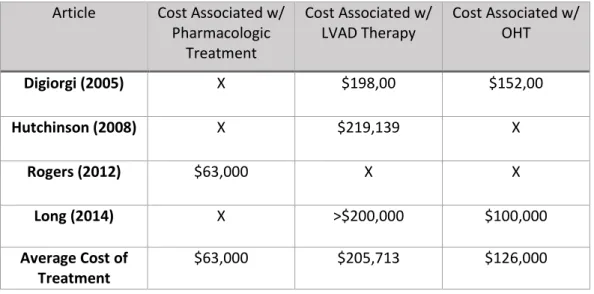
Length of stay, readmission and outpatient services of LVAD and OHT therapy are examined in same patients to account for any patient-specific variables. Digiorgi (2005) reports similar findings with total actual hospital cost for post-LVAD placement of approximately $198,000
plus or minus $77,000 compared to $152,000 plus or minus $54,000 in OHT. Additionally, Long, Swain & Mangi (2014) reports OHT costs of $100,000, 1 year-survival rates exceeding
85%, an additional life expectancy of 8.5 years but average wait times of roughly 5-6 months. Patients receiving destination LVAD therapy, however, showed costs in excess of $200,000 (Long, 2014). Table 1 summarizes the cost associated with each treatment based on article.
Table 1: Reported Initial Cost Associated Amongst Treatment Type: This table displays the initial cost related to each of the three different treatment types based on individual article
Article Cost Associated w/ Pharmacologic
Treatment
Cost Associated w/ LVAD Therapy
Cost Associated w/ OHT
Digiorgi (2005) X $198,00 $152,00
Hutchinson (2008) X $219,139 X
Rogers (2012) $63,000 X X
Long (2014) X >$200,000 $100,000
Average Cost of Treatment
$63,000 $205,713 $126,000
lengths of stay upon readmission and more outpatient services compared to the LVAD group. Rather than a symptom of the treatment type, these numbers may reflect the further degraded health of patient’s’ prior to the implementation of therapy. Digiorgi concludes, OHT therapy is
still the most effective treatment for heart failure but due to limited resources LVAD’s
significantly improve patient outcomes. While Digiorgi (2005) reports no findings related to quality of life, Long (2014) reveals data regarding increased life years and freedom from complications following therapy. Neither study addresses symptom management pre nor post
LVAD therapy.
Despite the high cost, each of the articles present considerable improvements in both
survival and quality of life among LVAD patients. Long (2014) reports 80% one-year LVAD survival rates and an additional life expectancy of 4.4 years. Khazania, Hammill, Patel, Eapen, Peterson, Rogers, Milano, Curtis & Hernandez (2014) support trends in decreasing mortality,
stating “the 1-year mortality decreased from 42% to 26%.”Furthermore, long-term LVAD use established a 48% reduction in mortality compared to medically managed patients (Hutchinson,
2008).
Long-Term Costs Analysis:
In addition to the initial costs related to VAD therapy, patients can also expect higher
long term costs. “Heart transplantation versus continuous-flow left ventricular assist device: comprehensive cost at 1 year” by Patel, Sileo, Bello, Gunda, Nguyen & Goldstein (2015)
reviews comprehensive one year costs with LVAD placement compared to cardiac
transplantation. Patel (2015) analyzes direct and indirect costs from the initial operation to one year post-op (365 days). Cost determinants were separated into two categories: (1) the index
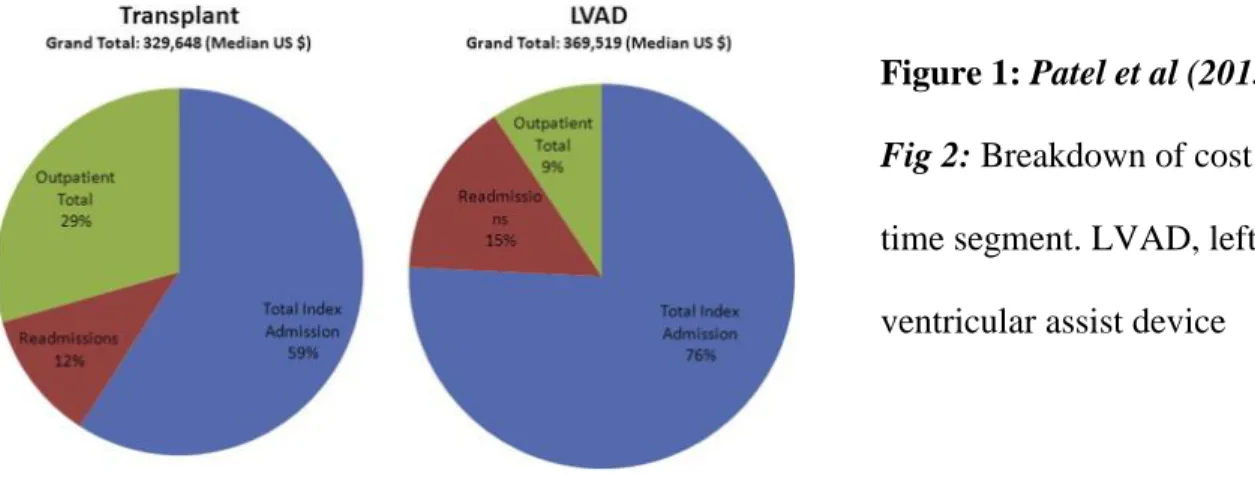
These results are slightly skewed as, outpatient medication cost were estimated on wholesale price. “Median total 1-year costs were higher for the LVAD group than for the transplant group ($369,519 vs $329,648)” (Patel, 2015). Majority of cost associated with each treatment occurred
within initial hospital stay. Further, the length of hospital stay and readmission rates with LVAD
therapy remained higher at 24 days and 15% compared to OHT therapy.
Figure 1: Patel et al (2015) Fig 2: Breakdown of cost by time segment. LVAD, left
ventricular assist device
Rogers, Bostic, Tong, Adamson, Russo, & Slaughter (2012) further assesses long term costs by using an analytic model to assess LVAD and pharmacologic treatment data based on
five year outcomes. Cost-effectiveness, survival, hospitalization rates, quality of life and cost data were analyzed from several sources. Rogers (2012) reports LVAD associated cost of $360,400, far exceeding the costs of medical management at only $63,000. Yet, with these high
costs came an additional 2.42 years of life among LVAD patients compared with 0.65 years with medical management. Patel (2015) summarizes both articles, stating “the absolute cost, at more
than one-third of a million dollars, remains high.” (Patel et al, 2015). However, literature suggests that costs for LVAD therapy could be decreased with an increase in selection criteria, experience and device implementation
Over the past decade many advancements in ventricular assist devices have been made, often accompanied by decreased costs. Literature shows these advancements have already
provided significant changes. “Cost of Ventricular Assist Devices: Can we afford the Progress?” by Miller, Guglin, and Rogers (2013) explains the evolving history of LVAD’s as destination
therapy for ESHF. Costs associated with varying medical treatments for End Stage Heart Failure are examined. Researchers compare overall cost with quality adjusted life years for each
treatment method. Initially, literature shows the progression of costs from pharmacologic to
transplant and finally to VAD therapy. The study explores the evolution of mechanical
circulatory support especially VAD therapy, the advancements, quality of life improvements, and
related costs. The article concludes by arguing that the cost-effectiveness of mechanical circulation support is extremely dynamic and rapidly changing,” and should, therefore, not be dismissed as a viable treatment option (Miller et al, 2013).
Literature reports significant changes in current hospital costs associated with implantation of LVAD’s. Two articles examine values based off the 2001, Randomized
Evaluation of Mechanical Assistance for the Treatment of Congestive Heart Failure Study or REMATCH study. REMATCH was the first study evaluating the efficacy, safety and cost-effectiveness associated with LVAD placement for heart failure. Research shows the cost
associated with LVAD placement after the initial REMATCH study to have decreased (Miller, Nelson, Bostic, Tong, Slaughter & Long, 2006). Subsequently, Slaughter (2011) alternatively
Destination therapy with LVADs for end-stage heart failure have improved in the post-REMATCH era and the decreasing trends in costs signal improving survival and shorter length
of hospital stay with this (Miller, 2006). Since 2001, the cost associated with hospitalization for LVAD placement has reduced by nearly 50 % (Slaughter, 2011). Further research also shows a
significantly diminished number of total in-hospital mortalities in patients undergoing treatment. Slaughter (2011) concludes by discussing how current patients experience superior clinical outcomes compared to the initial REMATCH patients. Therefore, when examining data,
advancements in medicine show significant decreased cost in LVAD therapy.
Quality of Life Improvement:
Over the last decade, advancements in medicine/research have led to many improvements in VAD therapy with only more to come. However, in spite of the many studies addressing costs and mortality associated with LVAD therapy, little has been done on quality of life pre- and
post-LVAD placement. With decreasing costs, LVAD therapy could become a gold standard in HF patients. Mcllvenan (2014) reports a major determiner on whether or not to undergo
destination LVAD therapy was its ability to prolong life however quality of life was not
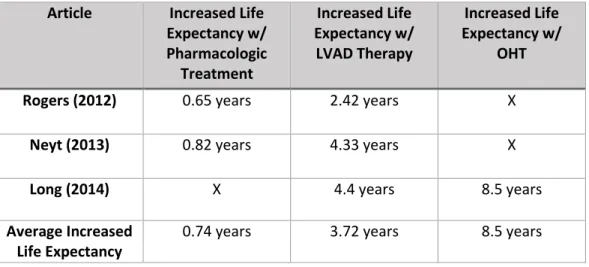
examined. Several articles further address how VAD, OHT and pharmacologic therapy alone can add additional life years. Neyt, Van den Bruel, Smit, De Jonge and Erasmus (2013) studies how the use of LVAD’s affect treatment of ESHF in regards to quality of life, cost and increased life
expectancy. Upon comparison of LVAD and pharmacologic treatment, LVAD’s lead to an
increase in life expectancy by 4.33 years compared to only 0.82 years with pharmacologic treatment. Long (2014) further discusses similar treatments however, he presents different data related to increase in life years between the varying treatment methods, excluding
years while destination VAD therapy shows only an increase in 4.4 years of life. Rogers (2012) also shows variance in years of life gained after treatment. He asserts LVAD’s result in increased
life expectancy by 2.42 years while pharmacologic or medical management by 0.65. Table 2 displays this change in life expectancy denoted by each study.
Table 2: Reported Increased Life Expectancy Amongst Treatment Type by Article: This table shows the increased life expectancy with each of the three treatments by individual article.
Article Increased Life Expectancy w/ Pharmacologic
Treatment
Increased Life Expectancy w/
LVAD Therapy
Increased Life Expectancy w/
OHT
Rogers (2012) 0.65 years 2.42 years X
Neyt (2013) 0.82 years 4.33 years X
Long (2014) X 4.4 years 8.5 years
Average Increased Life Expectancy
0.74 years 3.72 years 8.5 years
Neyt (2013) concludes how existing trials show superior quality of life with LVAD therapy compared to pharmacologic management. However, no studies use a generic tool to
establish perfect health or death. Findings indicate increased years of life but do not address specifically the quality of life associated with those additional years.
Although lacking studies on quality of life, this analysis identifies the number of hospital readmissions following LVAD placement as an indicator of quality of life. Akhter, Badami, Murray, Kohmoto, Lozonschi, Osaki, Lushaj (2015) examines the timing and length of stay of
hospital readmissions amongst the patient population. Akhter (2015) reports, “The median follow-up period was 11 months. While receiving device support, patients spent 93% of their
(2015) further supports this idea by stating “a relatively low readmission rate of 2.2 times per patient during the period of CF-LVAD support.”
Furthermore, Neyt (2013) asserts that “further research should also try to capture the impact of LVAD implantation on QoL (quality of life). Applying a generic utility instrument, in
addition to disease-specific instruments, should be encouraged.” By creating a method to address quality of life pre- and post-LVAD implantation an analysis can be performed examining cost and quality of life in End Stage Heart Failure treatment providing patients with the knowledge to
make individualized decisions.
Results/Discussion:
End Stage Heart Failure continues to be associated with high morbidity and mortality,
costs and decreased life spans. Existing and new medical treatments are being established for the treatment of ESHF. As alternative treatments become more and more accessible, it is imperative
that healthcare providers stay up to date with current guideline and recommendations. The array of treatment options patients can undergo calls for close attention to which method can be established as the gold standard in care. While each treatment targets the management of ESHF,
they vary according to cost, quality of life and mortality.
While pharmacologic management alone is the most conventional and practical method,
disease management and quality of life do not necessarily correlate. Multiple studies indicate the lowest cost associated with this treatment; however, quality of life tended to decrease.
Pharmacologic therapy also only showed an increase life expectancy of 0.74 years. Table 3 depicts these values along with the different treatments, average cost and increased life expectancy for each. While pharmacologic management has the lowest values in cost, it also
treatment modalities in conjunction with device therapy has proven to be beneficial. Likewise, several articles cited report decreased overall effectiveness with the use of pharmacological
management as destination therapy in the treatment of ESHF. Addition of other treatment modalities in conjunction with device therapy has proven to be beneficial
Table 3: Treatment vs. Average Cost Association vs. Average Increase in Life Expectancy: This table shows the correlation between the different treatment types, cost and increased life expectancy with each of the treatment methods.
Treatment Type Average Cost Associated with Therapy
Average Increase in Life Expectancy
Pharmacologic $63,000 0.74 years
Left Ventricular Assist Device
$205,713 3.72 years
Orthotropic Heart Transplantation
$126,00 8.5 years
Research and literature illustrate that OHT therapy can be set as the Gold Standard in
care for the treatment of End Stage Heart Failure. Multiple studies report the second lowest average cost associated with care at approximately $126,000, while approximately 8.5 years of life are gained. This correlates with highest quality of life in regards to cost-effectiveness. In
addition to cost and quality of life, several articles address how OHT affects mortality rates amongst ESHF patients. Findings indicate an average 85% survival rate at one year, the highest
of all three interventions. Upon analysis, OHT is clearly the most suitable choice in treating ESHF.
However, while current findings highlight Orthotropic Heart Transplant (OHT) as
rejection must be taken into account. Establishing a cost-effective, alternative treatment such as LVAD therapy, would help bridge the gap for patients with end stage heart failure who are
unable to receive transplants and improve their quality of life.
Literature reports the average overall cost for LVAD treatment in End Stage Heart
Failure to be approximately $205,713. While, LVAD’s have the highest associated cost, several factors should be taken into consideration. First, Miller (2013) mentions how LVAD cost are rapidly changing and appear to be decreasing, a trend which should continue. Further, mortality
rates amongst LVAD patients are significantly lower for ESHF patients than pharmacologic management. Findings indicate a one year survival rate of 80% for patients undergoing VAD
therapy. LVAD use further established a 48% reduction in mortality compared to medically managed patients alone. Akhter (2015) also reports, “while receiving device support, patients spent 93% of their time out of the hospital.” In addition to these benefits, patients would also not
have to fear rejection or the possibility of finding a viable organ. This data, therefore, illustrates the possibility of LVAD’s acting as a viable option for the treatment of ESHF.
Determining its viability will require further research, particularly in respect to quality of life. The available studies lack a discussion of (1) the quality of life pre-LVAD therapy and (2) symptom management as an outcome and its effects on quality of life pre- and post-operatively.
Each of the articles cited above use increased life expectancy to measure quality of life; however, symptom management is not taken into consideration. Thus, with evidence available on
cost-effectiveness, future research should focus on comparing cost of LVAD’s specifically to heart transplantation, symptom management, and quality of life pre- and post-therapy. By
implementing a tool, the effects of both LVAD therapy and OHT on symptom management can
Tool:
To help evaluate symptoms related to quality of life and the clinical effectiveness of left
ventricular assist devices in ESHF patients, the Minnesota Living with Heart Failure Questionnaire (MLHFQ) will be used to track the management of specific heart failure
symptoms pre- and post-LVAD. Alongside the tool, smartphone technology will be used in developing an app based on this questionnaire in the future. The MLHFQ will be administered 1 month prior to LVAD implantation in order to measure current symptoms present and frequency.
Patients will be continually followed and instructed to record daily symptoms at 1, 3, and 6 months following discharge from the hospital with their LVAD.
Symptoms tracked will include: shortness of breath, fatigue, persistent cough or wheezing, rapid heartbeat, lack of appetite, edema and weight gain. The tool will assess symptom management through a series of questions and a rating scale, set by MLHFQ.
Questions such as whether symptoms are present, how often symptoms occur, and activity during symptom onset (ie. resting, exercise, walking, etc.) will be asked. Furthermore weight
gain will be monitored through daily recording of weights. Based on the tool’s findings, we can better understand how the symptoms of ESHF are affecting patients’ quality of life.
An analysis will then be conducted to assess how the patient’s symptoms and frequency
have changed since the device was placed. The results of this tool will help patients make
informed decisions based on the treatment modality of their choosing. Potential Impact/Nursing Implications:
While no clear gold standard exists, it is our hope that by tracking symptoms, researching quality of life, and utilizing the tool that patients will be able to make more informed
individualized decisions regarding treatment options. If left ventricular assist devices can be
established as standard therapy for the treatment of End Stage Heart Failure, treatment decisions can be made on individual, unit and system levels to prevent the negative outcomes related to
ESHF. Treatment can be tailored to each individual patient based on symptoms, cost, mortality and overall quality of life reported after LVAD placement.
Standing at the frontline of clinical care for patients with ESHF or HF exacerbations,
nurses are in prime position to intervene. The findings from the tool will enable nurses to better care for the predominant symptoms related to ESHF for each individual. In addition, this tool can
be administered upon hospital admission for HF exacerbation. By identifying symptoms such as shortness of breath, edema and irregular heart rates nurses can provide appropriate care and advocate for patients. Proper medications can be administered and interventions can be
implemented prior to symptoms progressing.
In addition, nurses are vital in the pre and post-operative care of patients with LVAD’s.
Nurses would be able to administer the tool prior to discharge aiding in several areas of patient care. First, by assisting the patient with the first several attempts at completing the questionnaire will lead to improved health literacy. Current literature shows a positive correlation between
literacy have rates of adherence that are, on average, 14% higher than patients that have low health literacy skills.” By aiding in health literacy, better results with the continued follow-up
care at one, three and six months will be seen. Secondly, each patient’s health literacy level can be assessed and allow for the proper teaching technique to be utilized. By doing this, patients
will have a better understanding of the questions being asked in the tool and allow them to properly care for themselves. In addition by educating patients about this tool they will be more in tune with their symptoms and hopefully they can see when symptoms are worsening and call
the provider and hopefully avoid hospital admission.
Nurses can further act as patient advocates during the time following LVAD
implantation. Huber (2015) reports that “nurses are accustomed to serving as patient advocates, by putting the patient’s needs, desires, and safety first, working to protect patient’s rights.”
Advocacy for patients is important following LVAD placement due to changes seen in
post-operative patients. Nurses further facilitate patient healing psychologically by providing a calming presence and reassuring safety following intervention. Additionally, nurses are able to
provide education to help patients modify current behaviors.
This tool can advance nursing care of patients with end stage heart failure and LVAD therapy. Stromberg (2005) states, “heart failure nurses specialize in providing patient education,
and these nurses have the skills and motivation to provide individualized, evidence-based
education to heart failure patients.” Based on the symptoms and needs of each patient nurses can
alter care in a way that fits the patient’s needs while providing the necessary education. This tool
nurses provide. These patients rely heavily on the information provided by their nurses while receiving treatment.
Foremost, through better understanding of end stage heart failure and symptoms
following LVAD placement nursing and medical management can be altered. Beyond utilization
of the tool, long-term management of HF patients will improve. The heart failure symptom screening tool could further be implemented in the primary care setting, cardiac hospital floors and during admission and discharge of heart failure patients. By bridging current and future
research, key information can be provided to ESHF patients in regards to quality of life following treatment allowing more informed, individual decisions.
Conclusion and References:
After examining current research data on cost and progression of VAD therapy for the treatment of ESHF, it is reasonable to predict that VAD therapy will reach cost-effective
guidelines in the future. Furthermore, while quantitative data provides beneficial information determining cost-effectiveness, qualitative data, yet to be collected and analyzed, would be more
beneficial in establishing quality of life.
Though research on the field of LVAD therapy and ESHF is expanding, few studies analyze symptom management and its effects on quality of life. Pharmacologic, left ventricular
assist devices and orthotropic heart transplant all have been shown to improve life expectancy. However, no study discusses the quality of life experienced following these treatments. With
further advances in research, future studies should be directed at how symptom management affects quality of life. This information would help improve knowledge about to quality of life following LVAD therapy, potentially in spite of increased costs, and direct treatment and
As treatment for ESHF evolves, patient-specific interventions also evolve. The heart failure symptom screening tool would be one example. By strategically utilizing a tool to
evaluate symptoms pre and post-operatively, symptoms can be addressed, target interventions provided and key information delivered to patients regarding LVAD placement, allowing them
References:
1. Akhter SA, Badami A, Murray M, Kohmoto T, Lozonschi L, Osaki S, Lushaj EB. (2015).
Hospital Readmissions After Continuous-Flow Left Ventricular Assist Device
Implantation: Incidence, Causes, and Cost Analysis. Ann Thoracic Surg. 100(3):884-9.
doi: 10.1016/j.athoracsur.2015.03.010.
2. American Heart Association. (2015). About Heart Failure. Retrieved from
http://www.heart.org/HEARTORG/Conditions/HeartFailure/AboutHeartFailure/About-Heart-Failure_UCM_002044_Article.jsp#.VwfLdcvmrug
3. Center for Disease Control. (2009). Heart Failure Fact Sheet. Retrieved from http://www.cdc.gov/DHDSP/data_statistics/fact_sheets/fs_heart_failure.htm
4. Digiorgi PL, Reel MS, Thornton B, Burton E, Naka Y, Oz MC. (2005). Heart transplant and left ventricular assist device costs. J Heart Lung Transplant. 24(2):200-4.
5. Huber. TH. (2015). Nursing Advocacy for Patients and the Profession. Kentucky Nurses Association. Vol 63 (4) 13
6. Hutchinson J, Scott DA, Clegg AJ, Loveman E, Royle P, Bryant J, Colquitt JL. (2008).
Cost-effectiveness of left ventricular-assist devices in end-stage heart failure. Expert Rev Cardiovasc Ther. 6(2):175-85. doi: 10.1586/14779072.6.2.175.
7. Khazanie P, Hammill BG, Patel CB, Eapen ZJ, Peterson ED, Rogers JG, Milano CA, Curtis LH, Hernandez AF. (2014). Trends in the use and outcomes of ventricular assist
8. Long EF, Swain GW, Mangi AA. (2014). Comparative survival and cost-effectiveness of advanced therapies for end-stage heart failure. Circ Heart Fail. 7(3):470-8. doi:
10.1161/CIRCHEARTFAILURE.113.000807.
9. McIlvennan CK, Allen LA, Nowels C, Brieke A, Cleveland JC, Matlock DD. (2014)
Decision making for destination therapy left ventricular assist devices: "there was no choice" versus "I thought about it an awful lot". Circulation: Cardiovascular Quality and Outcomes. 7(3):374-80. doi: 10.1161/CIRCOUTCOMES.113.000729
10.Miller TA. (2016). Health literacy and adherence to medical treatment in chronic and acute illness: A meta-analysis. Patient Educ Couns. 1(16)30041-6. doi:
10.1016/j.pec.2016.01.020.
11.Miller, LW, Guglin, M., Rogers, JG. (2013). Cost of Ventricular Assist Devices: Can we afford the Progress? Circ Heart Fail. Oct(127):743-748. doi:
10.1161/CIRCULATIONAHA.112.139824
12.Miller LW, Nelson KE, Bostic RR, Tong K, Slaughter MS, Long JW. (2006). Hospital
costs for left ventricular assist devices for destination therapy: lower costs for implantation in the post-REMATCH era. J Heart Lung Transplant. 25(7):778-84. 13.National Library of Medicine. (2014). Heart Failure. Retrieved from
http://www.ncbi.nlm.nih.gov/pubmedhealth/PMH0063056/
14.New York Heart Association. (1994). Classes of Heart Failure. Retrieved from
15.Neyt M, Van den Bruel A, Smit Y, De Jonge N, Erasmus M, Van Dijk D, Vlayen J. (2013). Cost-effectiveness of continuous-flow left ventricular assist devices. Int J
Technol Assess Health Care. 29(3):254-60. doi: 10.1017/S0266462313000238. 16.Patel SR, Sileo A, Bello R, Gunda S, Nguyen J, Goldstein D. (2015). Heart
transplantation versus continuous-flow left ventricular assist device: comprehensive cost at 1 year. J Card Fail. 21(2):160-6. doi: 10.1016/j.cardfail.2014.11.007.
17.Rogers JG, Bostic RR, Tong KB, Adamson R, Russo M, Slaughter MS. (2012).
Cost-effectiveness analysis of continuous-flow left ventricular assist devices as destination therapy. Circ Heart Fail. 5(1):10-16. doi: 10.1161/CIRCHEARTFAILURE.111.962951..
18.Slaughter, M. S., Bostic, R., Tong, K., Russo, M. and Rogers, J. G. (2011), Temporal Changes in Hospital Costs for Left Ventricular Assist Device Implantation. Journal of Cardiac Surgery, 26: 535–541. doi: 10.1111/j.1540-8191.2011.01292.x
19.Strömberg A. (2005). The crucial role of patient education in heart failure. Eur J Heart Fail. 16;7(3):363-9.
20.University of Wisconsin Medicine. (2016). Ventricular Assist Device (VAD Patient Selection Criteria. Retrieved from
http://www.uwhealth.org/heart-cardiovascular/ventricular-assist-device-vad-patient-selection-criteria/39748
21.University of Minnesota. (2016). Minnesota Living with Heart Failure. Retrieved from