AN EXPLORATORY STUDY OF VALUES ALIGNMENTS IN A TEACHER PROFESSIONAL DEVELOPMENT DIGITAL BADGE SYSTEM
Sheryl L. Grant
A dissertation submitted to the faculty at the University of North Carolina at Chapel Hill in partial fulfillment of the requirements for the degree of Doctor of Philosophy in the School of
Information and Library Science.
Chapel Hill 2017
Approved by: Barbara Wildemuth Gary Marchionini Sandra Hughes-Hassell David Gibson
ABSTRACT
Sheryl L. Grant: An Exploratory Study of Values Alignments in a Teacher Professional Development Digital Badge System
(Under the direction of Barbara Wildemuth)
ACKNOWLEDGEMENTS
I had wonderful support while writing this dissertation. I am so grateful to Barbara Wildemuth, my advisor, who literally wrote the book on methods for our field, and gave me the confidence to devise a new method for my own study. Her door was always open and she provided the exact kind of support I needed, from start to finish.
I am so grateful, too, for my committee. When I started this work, few people were familiar with open digital credentialing platforms. It was my good fortune to have David Gibson and James Diamond, distinguished scholars and experts in the areas that thread throughout my research, agree to be on my committee. Their trans-disciplinary feedback and thoughtful questions always made the work feel relevant to real-world applications, and I owe them both a tremendous amount for their contributions and their friendship throughout the process. Sandra Hughes-Hassell and Gary Marchionini provided much-appreciated practical suggestions during the dissertation process and graciously provided invaluable feedback. Information and library science topics can be far-ranging; Gary and Sandra’s intellectual curiosity and ability to see important connections made the research that much better.
Cathy Zimmer at UNC’s Odum Institute deserves a special mention. She is a true master, and brought a Zen-like calm to statistical consulting; meeting with her to discuss my analyses was a highlight of doing this research.
grateful to Julie Keane, who infused her New York can-do attitude into my dissertation-fu; to Mark Otter, whose talent for making good ideas work is what persuaded me to focus on the VIF platform; to Jenny Bao and Tania Tani, two of the loveliest people I have ever met, who were invaluable during data collection and analysis. Lauren Hanford and Arne Plum offered their time and knowledge in more ways than one. Together with Shaun Kellogg, they provided context for the participants, the program, and the database in ways that were invaluable. Lucas Blair of Little Bird Games, and Kerri Lemoie at OpenWorks Group consulted on the platform and are two of the best people on the planet. Just knowing them made everything all better.
I want to thank my wonderful HASTAC family for what can only be considered extreme support: Mandy Dailey and Kaysi Holman, who listened politely for years as I developed my research and who leant their incisive talents to the coding process. These are people you want in a crisis. Demos Orphanides is a world-class listener and a great appreciator of the absurd, two great qualities in a colleague and friend. Anh Nguyen was a mainstay of support and provided an important kind of laid-back impatience about finishing things up and getting on with my life. His willingness to field technical questions about platform design and systems engineering was invaluable. I am grateful to the Digital Media and Learning community of scholars, educators, and researchers for working so diligently to make open digital credential platforms a thing; I became an accidental expert in a brand-new field still defining itself thanks to their efforts. In particular, thank you to Chris Gamrat, a fellow PhD student, who was invaluable for
commiseration.
seem like one of life’s great lessons. I am certain that I would not be the person I am today without her, and could write pages about the ways she has touched my life, personally and professionally. Thanks to Cathy’s leadership, HASTAC has been the best home base for doing scholarly work imaginable, with people I am truly privileged to work alongside.
I dedicate this work to David Carr, who was there from the very beginning, who put everything in perspective, and who passed away before I could finish. I miss him every day. I dedicate this work to my beloved partner and best friend, Chris Manik, who joined me in the last five years of this adventure, and who bore witness to the final writing frenzy that surely must
have driven him nuts. He was always there, for everything, and his love and support have been nothing short of amazing.
Last and most, I dedicate this work to my son, Walker Grant Harrison, the joy of my life and reason for everything. I worked on this dissertation around the edges of his life; even so, he lived
through every moment of this with me, and put the meaning in all of it. He was shorter than me when I started and now towers above, which is a testament to how long it really took finishing
TABLE OF CONTENTS
LIST OF TABLES ... xii
LIST OF FIGURES ... xiv
LIST OF ABBREVIATIONS ... xv
CHAPTER 1: INTRODUCTION ... 1
Significance of the Study ... 4
Problem Statement and Research Questions... 11
Organization of the Study ... 12
CHAPTER 2: REVIEW OF RELATED LITERATURE AND RESEARCH ... 13
Technology-Mediated Social Participation ... 14
Participation in digital environments ... 15
Types and degrees of participation ... 17
Community types and motivations to contribute ... 20
Morals, values, and motivation ... 23
Peer feedback and assessment ... 25
Teacher online professional development and social participation ... 28
21st Century Learning and Digital Badges: From Authority to Credibility ... 30
Defining open digital badges ... 32
From digital badges to open digital badges ... 34
Wikipedia Barnstars ... 37
Stack Exchange badges ... 40
Values, Motivation, and Technical Artifacts ... 45
Schwartz’s basic human values and pragmatic values ... 47
Dimensions of values ... 50
Values inventories ... 53
Schwartz’s Portrait Values Questionnaire ... 58
Teacher values ... 58
Summary of Literature Review ... 61
CHAPTER 3: METHODS ... 63
Research Questions ... 64
Research Design Rationale ... 65
Rationale for Case Selection ... 67
Participants and Context ... 69
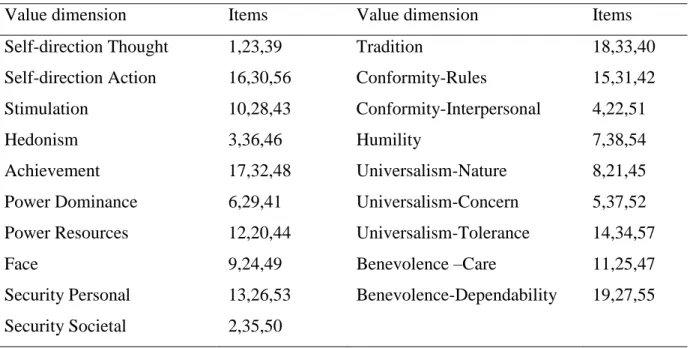
Addressing Research Question 1: Users’ personal values ... 76
Scoring the PVQ-RR ... 79
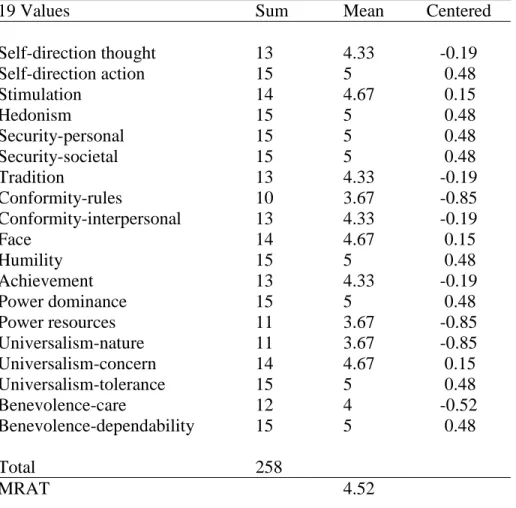
Scoring for the 19 values in the PVQ-RR ... 80
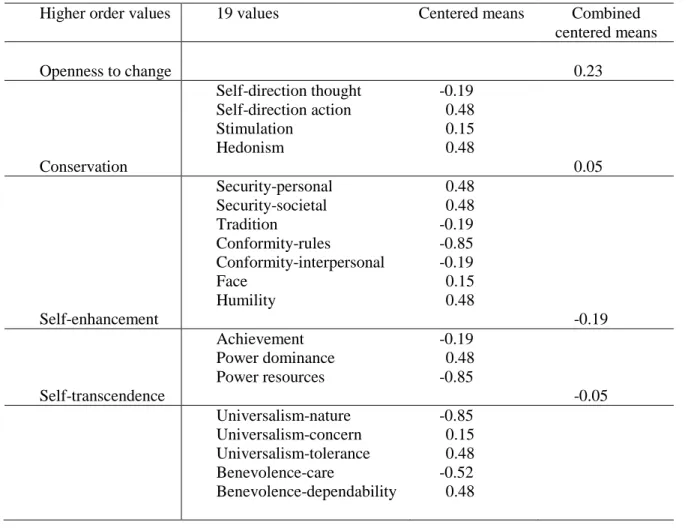
Scoring higher order values ... 82
Addressing Research Question 2: Values enacted in system features ... 86
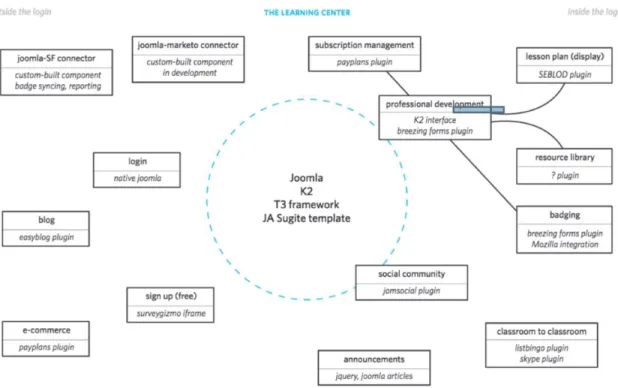
Step 1: Identifying features ... 89
Step 2: Assigning values to features ... 97
Addressing Research Question 3: Effects of values alignment on system use ... 101
System use as represented in web logs ... 102
Locating web log data ... 104
Analysis of the web log data ... 106
Summary of Methods ... 106
Findings for Research Question 1: Users’ personal values ... 107
Characteristics of VIF Learning Center system user survey respondents ... 108
Comparing higher order values across sub-groups ... 110
Findings for Research Question 2: Values enacted in system features ... 112
Overview of the post hoc technical investigation ... 113
Frequency of values assigned ... 116
Frequency of higher order values assigned ... 117
Refining the feature-value pairs ... 120
Findings for Research Question 3: Effects of values alignment on system use ... 121
Identifying survey respondents in web log activity ... 122
Summary of Findings ... 123
CHAPTER 5: DISCUSSION ... 125
Discussion of Research Question 1: Users’ personal values ... 127
Survey data quality ... 127
Comparison of current findings with prior studies on teachers’ values ... 128
Gender ... 130
Administrators and teachers ... 131
Summary of Research Question 1 Discussion ... 131
Discussion of Research Question 2: Values enacted in system features ... 132
Identifying features: Multiple functions ... 132
Assigning values to features ... 135
Coder values and frequency of values ... 144
Resolving coder disagreements ... 145
Discussion of Research Question 3: Effects of values alignment on system
use ... 147
Steps to locate missing data ... 147
Data cleaning ... 149
Summary of research question 3 discussion ... 150
Summary of Discussion ... 151
CHAPTER 6: IMPLICATIONS AND CONCLUSION... 153
Implications for value sensitive design methods ... 155
Pragmatic values ... 155
Technical investigation ... 157
Implications for design ... 158
Conclusion ... 161
APPENDIX A: RECRUITMENT EMAIL ... 163
APPENDIX B: PORTRAIT VALUES QUESTIONNAIRE ... 164
APPENDIX C: FEATURE-VALUES CODING INSTRUCTIONS ... 166
APPENDIX D: DEFINITIONS & DISTINCTIONS OF 19 VALUES ... 171
APPENDIX E: STATISTICS & T-TESTS FOR N=536 ... 173
APPENDIX F: T-TESTS OF HIGHER ORDER VALUES ... 175
APPENDIX G: FREQUENCY AND DISTRIBUTION OF OBSERVATIONS... 179
APPENDIX H: FEATURE-VALUE CODING AND COMMENTS ... 182
LIST OF TABLES
Table 1. Questions to guide values dimensions (Shilton, Kloepfeltzer, and
Fleischmann, 2014) ... 52
Table 2. Critical heuristics for both identifying and checking values (Yetim, 2011) ... 53
Table 3. Schwartz's 19-Value Inventory (Schwartz et al., 2012) ... 55
Table 4. Sample of the 19-Value Item PVQ-RR (Schwartz et al., 2012) ... 78
Table 5. Scoring key for 19 values in the PVQ-RR value scale ... 79
Table 6. Example PVQ-RR scoring of 19 values for an individual... 81
Table 7. Example PVQ-RR higher order scoring for an individual ... 84
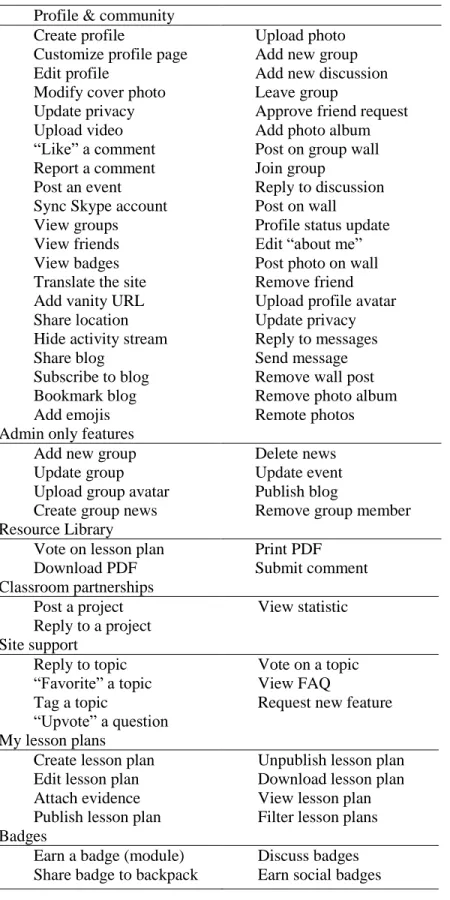
Table 8. VIF Learning Center features identified ... 95
Table 9. Final set of VIF Learning Center features and categories ... 96
Table 10. Critical heuristics for identifying and checking pragmatic values (Yetim, 2011) ... 98
Table 11. An ethogram of feature-tables in the VIF Learning Center ... 103
Table 12. Revised ethogram with data tables available for web log analysis ... 105
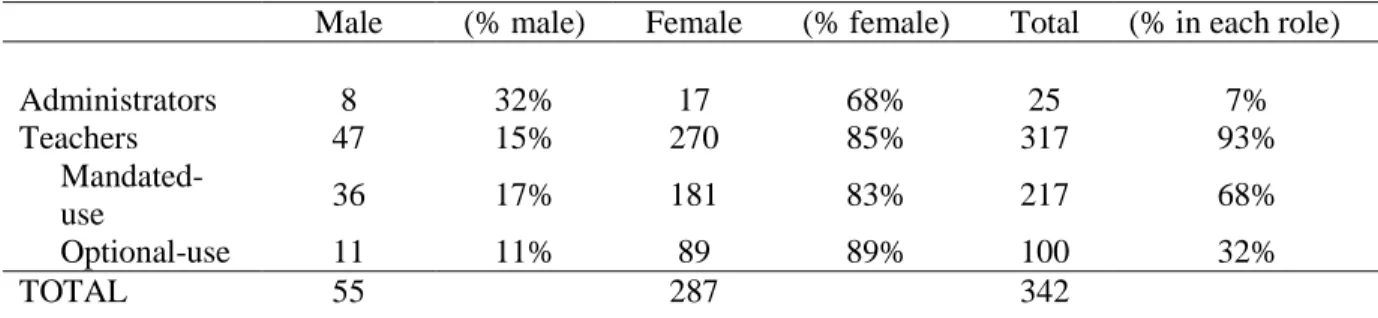
Table 13. Descriptive statistics: survey respondents, n=342) ... 108
Table 14. Summary of centered scores for higher-order values (n=342) ... 109
Table 15. Centered scores for higher-order values by sub-group (n=342) ... 110
Table 16. Male and female higher values t tests (n=342) ... 111
Table 17. Administrator and teacher higher values t tests (n=342) ... 111
Table 18. Mandated-use and optional-use teacher higher values t tests (n=342) ... 112
Table 19. Feature-value sets and resulting higher-order values ... 114
Table 20. Frequency of values assigned to features ... 117
Table 21. Frequency of higher order values assigned ... 118
Table 22. Final higher order feature-value pairs available for analysis ... 121
LIST OF FIGURES
LIST OF ABBREVIATIONS MOOCs massive open online courses
MRAT mean rating
CHAPTER 1: INTRODUCTION
This exploratory study sought to identify whether value alignments between users and system features could be detected in an online digital badge system and learning environment, and if so, whether those value alignments could be said to affect use of the system. As such, an understanding of human values is central to this research. Values are “guiding principles of what people consider important in life” (Cheng & Fleischmann, 2010, n.p.) and are believed to have explanatory power in predicting behaviors and attitudes (Schwartz, 2007). Values can be
between online learner participation in a digital badge system and learning outcomes is an important area worthy of study, this research limited itself to questions about pragmatic values, motivation, and participation.
The VIF (Visiting International Faculty) Learning Center’s online learning system
provided a specific instantiated case of a digital badging system, in which micro-credentials were used to motivate and recognize behaviors. VIF’s teacher professional development approach is based on a theoretical framework that integrates “technology, pedagogy, and content through a flexible social platform” (VIF Learning Center, 2016, n.p.). This study focused on the interest-driven and sociotechnical features of the platform, and how these aspects could be leveraged to deepen engagement in the service of learning, rather than with the impacts on learning itself. The study is firmly situated within the theories and methods of information sciences, and addresses a clearly defined theoretical gap in which value sensitive design methods are applied to
information behaviors in an informal learning environment. Value sensitive design focuses on the way technological innovations are shaped by, and in return shape moral, ethical, or pragmatic values (Friedman & Nissenbaum, 1996; Nissenbaum, 2009). It is derived from a research
framework that addresses the multiplicity of values in sociotechnical systems, and claims that a given technology may be more suitable for certain activities; therefore, certain values (and the behaviors and actions that follow) are supported while others are not. Though “learning is implicated in ideas of information behavior and information contexts” and “is implicated in online interaction and collective building” (Anh & Erickson, 2016, p. 81), it is users’ motivation to engage with features in an interest-driven, social platform that impelled the research,
While there are philosophical arguments about the degree to which values can be
manifest in digital features, we can infer that embodied values are associated with the properties of those features (Van de Poel & Kroes, 2014). Researchers argue that technologies can contain embedded values, and are therefore a worthy focus of study (Winner, 1980; Fleischmann, 2014; Friedman, 1997). For example, research has indicated that when the embodied values of digital features are aligned with users’ values, rapid adoption and long-term acceptance are more likely to occur (Kujala & Väänänen-Vainio-Mattila, 2009). This study applies the methods of
exploratory research (e.g. pattern seeking without hypotheses, flexibility in scope and an openness to expansion or reduction of scope based on early findings and indications, looking at data to see what it seems to say; see (Tukey, 1977)); it involves a mix of methods as part of case study research: a user survey, a technical investigation, and web log analysis. These methods are used to explore whether alignments between teachers’ values and the pragmatic values embodied in technological features can be detected in the VIF Learning Center digital badge system, and whether those alignments might foster more user participation.
A digital badging system is a particularly interesting study site for an exploratory study because badges not only contain value (as credentials carrying potential currency within a medium of exchange), they also reflect values designed into and embodied within the larger sociotechnical system. Open digital badges are relatively new web-enabled features that contain metadata, and are designed to “make specific claims about learning and offer detailed evidence in support of those claims” (Hickey, Ito, Schenke, Tran, Otto, & Chow, 2013, n.p.). Typically, these digital badging systems include many other sociotechnical features of networked
community, they encourage participation by those interested in the badges, [and] they provide the means to identify more closely with the learning experience” (p. 371). Embodied values are also present in other aspects of the badge system, including peer assessment features such as rating, ranking, voting, “liking,” and commenting. Evaluating values embodied in badges as well as values associated with the larger feature set that delineates a badge system could conceivably identify alignments between embodied and realized values. The VIF Learning Center teacher professional development platform presents a compelling use-case to examine whether the alignment of human values and values embodied in technical artifacts has explanatory power in digital environments.
Significance of the Study
human values have explanatory power with regard to user participation at the feature level and whether certain conditions can contribute to subsequent long-term adoption of the system.
Digital badge systems, like other sociotechnical systems, express trade-offs in values; thus, design decisions about how they will function are critically important. A post-hoc analysis of value alignments between the features of the system and its users would allow researchers to evaluate how pragmatic decisions and technical choices at the coding and design level influenced possible actions and outcomes, conceivably favoring certain values and behaviors over others. Choices made while designing new technologies can influence the way users engage the system, and potentially affect the way people associate with one another, not only online but in the offline social systems in which they function (Winner, 1980; Nissenbaum, 2009). While this potential is influenced by the explicit and implicit assumptions and human values that developers bring to the design task (Hirschheim & Klein, 1989), it is also potentially influenced by the underlying personal values that drive users’ motivations, helping to explain why people voluntarily interact (or do not) with the platform and each other in digital environments.
apart from other types of technology-mediated social participation that tend to tether a person’s reputation or credentials to the platforms where they were earned. In comparing traditional badges with these newer digital counterparts, Halavais (2012) writes that traditional badges have “baggage,” and that the regimental and hierarchical values they carry with them can conflict with values more commonly associated with online communities and platforms that have become the foundations for many modern digital badge systems. Predating the Internet, badges were used to signal rank and membership within a group, whether literally affixed to a uniform or figuratively evoked to symbolize the status, achievement, reputation, or membership within a social class (Simpson & Weiner, 1989). Traditional badges provided social proof for desired attributes. They functioned as both incentive and reward while signaling key information about the badge
owner’s identity, and physically owning a badge could indicate whether someone had access to specific privileges and opportunities. Digital badges function in many of the same ways as these precursor badges, and coexist with other online features designed to increase engagement and activity, including profits for commercial sites. As Halavais observed, digital badges “are being used in settings where autonomy and community are emphasized” (2012), despite the potential for latent values that may work at cross-purposes with explicit or implicit community goals. Research from the information sciences can bring forward new insights into online learning environments that are designed to be social and interest-driven, conditions that are becoming more common across 21st century learning platforms, especially as digital badging practices expand.
and educational practices, such as use of personal education records (Eisenberg & Fullerton, 2012) to signal our credentials and reputations. Personal education records give learners a greater degree of ownership over the body of electronic evidence that accrues throughout their lifetimes, similar to what open digital badge systems are purportedly designed to do. Open digital badges, however, represent more than evidence of learning; like certificates, degrees, and transcripts, they serve to function as a “medium of exchange that permits activities performed in one
institution of the system to be substituted for the same activities as if they had been performed in another” (Green, 1980) and, depending on how they are designed, can represent curricular blocks of learning that are smaller than the course level. As credentialing mechanisms, digital badge systems also have the potential to favor what kind of sociotechnical behaviors are valued, how those behaviors are implemented, and how (or whether) learners are motivated to participate in those behaviors. Since system designers can inadvertently transfer value judgments to specific features or functions during the development phase (Hirschheim & Klein, 1989), enacted values in the system may conflict with the personal values of potential users and inhibit optimal use or limit widespread adoption of the system (Yetim, Widenhoefer & Rohde, 2011). Sociotechnical features can inadvertently curb the pursuit of learning, especially when that learning is optional and situated in social environments such as the communities of practice cultivated in online teacher professional development platforms.
example, in the information sciences, assessment is often associated with reputation systems and peer feedback mechanisms used to increase social participation. With the emergence of digital badge systems, this type of assessment often appears side-by-side with more educative
assessment practices that can include self, expert, peer, and algorithmic approaches either in the service of learning (i.e., to promote deeper or more social engagement), which is addressed in this study, or to assess the learning itself (i.e., to gauge or aid learner progress), which aligns more with learning science research and objectives. If “assessment is about shaping the direction of society and its members” (Schwartz & Arena, 2013), the values associated with assessment practices are particularly relevant to badge systems, including sociotechnical-based peer feedback (i.e., “upvoting,” “liking,” rating, ranking, “following,” etc.) of the kind found in the VIF Learning Center badge system. Behavior, abilities, skills, or achievements being assessed and recognized in many sociotechnical systems may align with values that can undermine or negatively influence user motivation. Digital badges that are issued in social Q&A sites like StackOverflow.com, knowledge networks like Wikipedia.org, and online gaming platforms such as Xbox 360, involve assessments that range from simple point systems to elaborate algorithms, and are largely designed to promote pro-social behaviors and deeper levels of engagement. These networks and platforms also use badges as incentives and rewards in combination with other types of technology-mediated social participation, such as leaderboards, tagging, and
alignments can be detected between users’ pragmatic values and the values associated with a feature set in an online learning platform.
Furthermore, the significance of this study contributes knowledge to research on teacher online professional development platforms. As discussed in Chapter 2, while a comprehensive research agenda for online teacher professional development has called for more empirical studies and theory building as the field grows (Dede et al., 2009), research on learner motivation and participation in these environments is limited (Chen & Jang, 2010). Digital badge systems are currently being designed for traditional institutions of learning such as schools and
universities, as well as out-of-school learning, workforce learning, and professional development. Some of the most promising work is taking place in teacher professional development platforms (Gamrat et al., 2014; Casilli & Hickey, 2016; Diamond & Gonzalez, 2016), including the teacher professional development digital badging system that is the focus of this study, VIF Education International, which was initially founded as an international teacher exchange program. In the VIF Learning Center online credentialing platform, which piloted in 2013, teachers (both American and international) progress through professional development modules and earn digital badges that represent competencies in global curriculum and instruction by “collaborating with peers” and creating “globally themed lessons” (VIF Education
International, 2014, n.p.). Educators that complete 40 hours of professional development are eligible to earn a Global Ready Teacher digital badge designed to be recognized by external stakeholders, including employers and, in some cases, government agencies (i.e., North Carolina State Board of Education’s recognition of the Global Educator Digital Badge)1. Teachers
participate in the VIF professional development platform network with one another through
discussion forums and groups in which they share ideas on how to apply module topics in classrooms and develop lesson plans with global themes. VIF Learning Center also provides an infrastructure for district administrators and state policymakers to identify evidence of global-ready teaching in their schools, and offers Global Gateway professional development badges:
Digital badging provides a way for teachers to share visual representations of their achievements and opens doors to exciting professional opportunities… Teachers can build digital portfolios complete with badges as they progress through professional development modules and can share their achievements in the VIF community, via social media, and with administrators and district personnel. With Global Gateway PD,
proficiency in global education can be demonstrated through a portable badging credential recognized by schools, districts and state and national institutions. (VIF Education International, 2014, n.p.).
The VIF Learning Center makes a compelling study site because teachers can be engaged along a spectrum of participation from fully optional to fully mandatory depending on their institutional affiliations. The VIF Learning Center may be able to foster a sense of community among members who reflect and share values, which could potentially increase participation, an important goal for an organization that intends to scale their system by relying on peer
assessment of learning artifacts. Could human values and values alignments influence
Last, an exploratory study that addresses emerging technology brings with it both opportunities and challenges that are well served by case study methods, even when researchers have some “a priori notions of critical variables and how they will be measured” (Benbasat, Goldstein & Mead, 1987, p. 371), as is the case with this research. The nature of information systems is that they are “characterized by constant technological change and innovation” (Benbasat, Goldstein & Mead, 1987, p. 370) and the boundaries of the phenomena of interest were not entirely evident at the outset of this research. An exploratory mindset and approach is an asset when researching phenomena that can change, a predisposition that became a salient point during the course of this study. As such, knowledge gained from investigating a single case that was susceptible to change provided valuable knowledge for conducting future studies in similar environments. These lessons learned became a major contribution of this research. Problem Statement and Research Questions
This study aimed to identify value alignments between users and system features in a teacher professional development badge system. Specific objectives were: 1) to identify how value alignments might be detected between teachers and digital features of the VIF Learning Center digital badges system; 2) to investigate the effects of any value alignments on social participation in a digital badging and learning environment; and 3) to identify possible ways to improve the detection of alignments between teachers’ human values and the values associated with the system’s feature set.
The study aimed to provide evidence to address the following research questions: RQ1: What are the pragmatic human values (versus ethical and/or moral values) of teachers and administrators using the platform?
RQ3: How can alignment between personal values and the values embodied in system features be detected? If alignment can be detected, does it positively influence use of particular features?
RQ3a: How does teacher participation vary across contexts? Specifically, can differences in activity levels be detected in contexts where participation is
mandatory (i.e., where superintendents or principals mandate participation) versus where participation is optional?
Organization of the Study
This chapter presented the introduction, significance of the study, and statement of the problem. The remainder of the narrative will be divided into five chapters. Chapter 2 contains a comprehensive review of literature and research related to the problem being investigated, including three sub-sections that provide an overview of technology-mediated social
CHAPTER 2: REVIEW OF RELATED LITERATURE AND RESEARCH The alignment of human values in an online teacher professional development digital badge system can be situated within a wider disciplinary conversation about (1) technology-mediated social participation; (2) digital badges designed for 21st century learning; and (3) value
sensitive design in sociotechnical platforms. The review of relevant literature below is therefore divided into sections that correspond to these three broad themes.
The first section provides an overview of technology-mediated social participation
research that includes: (1) types of sociotechnical platforms and online communities; (2) types of participation in these networks; (3) community types and motivations to contribute; (4) morals and values as motivations to participate; (5) peer assessment and feedback; and (6) teacher online professional development communities. This literature grounds the current study in the context of motivation and human information behaviors in online communities, a broader field of research that can inform our understanding of similar behaviors in online learning platforms.
Badges are an emerging type of technology-mediated social participation that warrant special attention given their multifaceted properties and elevated importance within many online learning platforms. Thus, the second section of the literature review provides a brief overview of digital badges and 21st century learning, including: (1) current trends in education practices; (2) a brief evolution of digital badges; (3) Barnstar badges in the Wikipedia editor community; (4) badges in Stack Exchange communities; and (5) badges in education.
inventories; and (4) teachers’ values. This last section ties together the specific focus of this study, which is to approach the research questions in the context of pragmatic values and motivation.
Technology-Mediated Social Participation
Digital badge systems are situated within a broader research framework referred to in the literature as technology-mediated social participation, which describes both the social media technologies (i.e., wikis, blogs, forums, social networking, media making and sharing, virtual worlds, etc.) and the participatory and collaborative behaviors supported by those technologies (Shneiderman et al., 2009). Many, if not most, badge systems are built as platforms that combine these social media technologies in one form or another. Badges for learning serve at least three purposes, including the ability to: 1) incentivize learning; 2) map progress and foster discovery; and 3) signal completion with a credential that holds value outside the community (Gibson, Ostashewski, Flintoff, Grant & Knight, 2013). It is the use of badges to incentivize learners to engage in pro-social behavior that has received the most attention in the literature. As described in promotional materials on their website, the VIF Learning Center provides an online
community for educators:
Tailored groups allow community members to interact on more personal levels, and each group has its own focus, photos, videos and events section. Discussion forums allow teachers to initiate conversations relevant to their groups or to take part in discussion threads... Helpful photo and video galleries offer real insights into global classrooms and allow members to share the global initiatives happening in their own classrooms. At the heart of the VIF learning center is a collaborative community of teachers and
administrators who share a commitment to bringing global perspectives to their students.2 Technology-mediated social participation is particularly relevant to the VIF Learning Center badge system, which depends on voluntary participation from peers in order to scale and foster
optimal use of the system. The following section addresses more broadly the literature on technology-mediated social participation, then narrows to discuss more specific research on digital badges within this environment.
Participation in digital environments
Rheingold (1993) first described virtual or online communities as “cultural aggregations that emerge when enough people bump into each other often enough in cyberspace” (p. 57). Lave and Wenger (1991) describe these cultural aggregations as communities of practice, which are “groups of people who share a concern or a passion for something they do and learn how to do it better as they interact regularly” (n.p.). Benkler (2007) describes similar pro-social online behaviors as commons-based peer production, a framework “based on social signals and motivations to organize significant productive enterprises” (p. 2). Commons-based peer production and knowledge-sharing platforms like Github, a large open source code-hosting repository with social networking functionality, have heavily influenced the rhetoric around digital badge system design, including the VIF Learning Center. Designing and refining systems that foster pro-social behaviors is a major goal for online communities and commercial
participation, particularly for commercial enterprises seeking to optimize advertising revenue, but also for learning platforms that seek to increase learner engagement, as is the case with many badge systems, including the VIF Learning Center. Digital badge systems, which are one way of making contributions and reputation visible to others, are a product of that quest.
In their Open Badges white paper (2011), Mozilla authors depict a badging infrastructure that is indistinguishable from online communities of practice and peer networks, and in fact functions as a sort of meta-community of learners using badges earned across the web to signal aspects of their identity to one another. These authors propose an infrastructure that would allow evidence of peer contributions (i.e., digital badges) to be earned, created, shared, and displayed across multiple contexts:
…[imagine a] world where your skills and competencies were captured more granularly across many different contexts, were collected and associated with your online identity and could be displayed to key stakeholders to demonstrate your capacities…This evidence could be acquired automatically from your interactions with online content or peers, explicitly sought out through various assessments or based on nominations or endorsements from peers or colleagues. This would allow you to present a more complete picture of your skills and competencies to various audiences, including potential
employers, mentors, peers and collaborators (n.p.).
Presenting online evidence of skill and ability to employers predates open digital badges. For example, recruiters seeking talented programmers were using online sites such as Github, Coderwall, and Stack Overflow to gather evidence of technical skills and other valued abilities (Capiluppi, Serebrenik, & Singer, 2013). GitHub’s Open Source Report Card was designed to give developers a “global view of their contributions, skills and habits,”3 and to track activity and
display it in a way that others might find useful. In online communities like GitHub and Stack Overflow, developers implemented features designed to increase pro-social participation, a
fundamental goal for sites that seek to encourage high-quality contributions. As people
contribute to these types of online platforms, they build reputation by earning points, badges, or the approval of peers through “likes,” voting, rating, commenting, following, ranking and other forms of peer feedback and assessment. As a result, individuals have the ability to build digital reputations directly linked to evidence that others can easily view. In many of these online communities, pro-social participation is both voluntary and fundamental to the success of the platform. Without some kind of peer assessment and engagement with technology-mediated social features, individuals may be less inclined to participate in the community. Conversely, if individuals find that the “rules” of peer assessment and feedback are unclear, onerous, unfair, or conflict with personal goals and values, they may be inclined to abandon the system.
Types and degrees of participation
Even though opportunities to engage in online social participation have increased in the last decade, many sites continue to experience low participation and high attrition rates,
videos, and albums; create and attend events; and vote on the quality of teacher-created learning plans.
Participation in most online communities is not necessarily successive, and may change over time in response to variables such as group size, interface design, individual goals,
personality traits, and other possible influences (Preece & Shneiderman, 2009), including personal values, which have been correlated with the Big Five personality traits (Roccas, Sagiv, Schwartz & Knafo, 2014). System designers have therefore experimented with different features to encourage high-quality engagement, such as the use of badges, completion certificates, and a variety of sociotechnical and game-based features including leaderboards, customizable avatars, ranking systems, and different types of peer assessment. The ratio of technology-mediated social participation activities in the VIF Learning Center appears to reflect the norm for other online communities. In other words, a majority of users appears to be present without necessarily interacting with site features, in lieu of performing other activities more easily tracked within the system, such as social contributions (i.e., commenting, replying, “liking,” voting, and posting photos or videos), peer collaborations (i.e., joining group discussions, creating or attending events; providing peer assessment on learning artifacts); and leading (i.e., creating groups, moderating discussions). Like other online platforms, VIF Learning Center seeks to increase both the quantity and quality of technology-mediated social participation within the system.
Ravid & Soroka, 2004; Schroer & Hertel, 2009; Preece, Nonnecke & Andrews, 2004), a
behavior that some researchers describe in less derogatory terms as observing, viewing, listening, and reading. Lurkers have been defined as a “persistent but silent audience” (Rafaeli, Ravid, & Soroka, 2004, p. 2) who may not contribute content but benefit from belonging to an online community, and who may become more participatory over time, given the right motivations.
As different types of social participation have become more commonplace across the web, research has begun to focus on other types of engagement. For example, contributors represent a category of individuals that display higher levels of social participation (Bishop, 2007). Wasko and Faraj (2000) defined contributions as voluntary acts of helping others by providing information, a general definition that Preece and Shneiderman (2009) expanded to include tagging photos, rating films, commenting on websites, adding images, rating posts, uploading videos, and other similar actions. Representing even more engaged levels of
participation are collaborators who often make up a smaller but more productive group. In terms of online social participation, collaboration has been described as engagement in tasks that may last a few minutes (Preece & Shneiderman, 2009), or the creation of information in a wiki or open-source software program over lengthier periods of time. At the top end of the participation scale are leaders who distinguish themselves by contributing high volumes of content, mediating disputes, welcoming newcomers, creating new groups, influencing community policies, or taking responsibility for administrative duties (Preece & Shneiderman, 2009). In a system like VIF Learning Center, where collaboration is core to the platform, it is essential that teachers feel inclined to socially participate, not only to achieve their professional development goals, but to also create a scaffold of community engagement that can be sustained over time. If the
teachers may be inclined to look elsewhere to advance learning or, if participation is mandated by their employers, to display only minimal or mandated effort.
While online social participation is thought to increase as a function of time, members do not always move progressively through levels of participation, and may instead jump to more active roles immediately; alternatively, they may decrease participation and abandon the community altogether (Arrasvuori et al., 2008; Porter, 2004; Kim, 2000; Youcheng &
Fesenmaier, 2003). Participation is also likely to reflect conditions that Preece (2001) refers to as people, policies, and sociability, factors that influence modes of engagement in any given
community. What motivates teenagers to participate in a file-sharing community will likely differ from teacher’s motivation for participation in knowledge-sharing networks, particularly if the former is for recreation and the latter is mandatory. Despite an interest in the influences of context, however, research on what motivates users to participate, contribute, or collaborate in online communities is relatively limited and little is understood (Singh, Jain & Kankanhalli, 2009).
Community types and motivations to contribute
VIF Learning Center teachers are expected to participate in ways that bear similarities to open-source communities, which are themselves an example of commons-based peer production, similar to the community tasked with the development of the open badges infrastructure. In commons-based peer production communities, members tend to be driven by intrinsic motivations such as altruism, the production of social goods, and the desire to freely and
platform, functions much like open-source software communities, and may reflect more closely the motivations of pro-social members in learning networks as opposed to consumer-driven sites. In contexts where this more altruistic type of pro-social participation is prevalent, peer
production “seems to thrive on volunteerism,” according to Benkler and Nissenbaum (2006, p. 403). Similarly, Lai and Turban (2008) argue that members who edit wikis are motivated to serve the common good. Koh et al. (2007) observed that some people sacrifice time and effort to share knowledge when it seems counter to their self-interest to do so, especially when the
economic rational action would be to free-ride. Understanding what motivates people to
participate in systems like VIF Learning Center and the nature of their contributions is one of the goals of this exploratory study. If teachers are inclined to be more pro-social in altruistic
communities (versus, say, more competitive communities), this can influence the nature of the feature set and how the system is designed.
Altruism and competition represent two types of community motivators. In other
communities, researchers have found that contributors were motivated by enjoyment, whether as a result of social engagement, entertainment, creativity, or a sense of fun (Lakhani et al., 2005; Jrgen et al., 2005). Providing useful or timely information to others may also increase
participation, particularly to provide benefits that outweigh costs in time or money (Koh et al., 2007; Arguello et al., 2006; Butler, 2001). One of the unique features of online social
entire community, which is particularly notable with regard to the VIF Learning Center, where teachers can post globally themed learning plans and receive peer feedback. As Dube, Bouris, and Jacob (2006) observed, “the process of innovation is widely influenced by the capacity of an organization to share tacit knowledge” (p. 70), and this can provide motivation to participate in or contribute to an online community.
Other factors that influence online participation include the size of the community and amount of member traffic, which may signal that resources are abundant and reciprocity is high (Youcheng & Fesenmaier, 2003; Kollock, 1999; Arguello et al., 2006; Koh et al., 2007; Butler, 2001). Participation may also increase as a function of responsiveness, measured by the
quickness of a reply, the phrasing of the message, and the language used to communicate
(Arguello et al., 2006), an indication that individual behavior and group social dynamics have an effect on members’ contributions. Koh et al. (2007) suggest a similar motivation in communities whose members demonstrated higher levels of participation when care for the community superseded self-interest. In communities where knowledge sharing was the primary focus, community management also had a significant influence on social participation (Koh et al., 2007; Andrews et al., 2002; Yoo, Suh & Lee, 2002). In one study, Bourhis and Dube (2010) found that management was critical to increasing and sustaining social participation, although the concept of management tends to be broadly defined to discrete and different behaviors. For example, effective management strategies could range from sending welcome messages to new members (Arguello et al., 2006) to organizing offline activities (Koh et al., 2007), or facilitating the appearance of spontaneity (Bourhis & Dube, 2010). Exploring the motivating role of
Morals, values, and motivation
Of the communities Koh et al. (2007) studied, those who shared knowledge most freely were motivated by moral obligations to help others, and saw their behavior as the “right thing to do” (p. 160). Benkler and Nissenbaum (2006) took this moral perspective one step further, suggesting that members who behaved virtuously created an environment in which peers felt motivated to replicate virtuous behaviors, an effect seen in open-source software communities where collaboration is common and monetary rewards are rare. Benkler and Nissenbaum (2006) also found that high levels of collaboration or leadership – participation that tends to be driven by a minority of users in most communities – were more likely to be motivated by intrinsic values rather than extrinsic rewards. Because collaboration and leadership tend to be driven by a minority of users in any given community, this would suggest that intrinsic motivation might vary not only by individuals, but also by community context, as well as types and levels of participation. Indeed, individuals may perform the same behavior for different psychological reasons depending on the context and the technological actions that are possible or valued within that community environment (Zhenhui, Jian, & Chan, 2011). They may also perform the same behavior for different psychological reasons depending on their personal values and the features of the system.
Knowledge reciprocity, or what Kollock (1999) refers to as gift economy, is also an intrinsically motivated behavior that takes place in commons-based peer production. Echoing what Benkler and Nissembaum (2006), above, refer to as the replication of virtuous behavior, participation in this type of collective may transform “individuals from self-seeking and
“When people consider knowledge a public good, people are motivated to share it with others due to a sense of moral obligation rather than an expectation of return” (Wasko & Faraj, 2000, p. 160). Knowledge as a public good is addressed by a number of researchers (Ardichvili et al., 2003; Benkler & Nissenbaum, 2006; Lai & Turban, 2008; Arguello et al., 2006; Bourhis & Dube, 2010; Hars & Ou, 2002; Huffaker & Lai, 2007) as a basis for what motivates community members to not only participate but to contribute and collaborate as well (Schroer & Hertel, 2009).
In ways that reflect Benkler and Nissenbaum’s (2006) replication of virtuous behaviors, researchers Vandenabeele (2007) and Moynihan and Pandey (2007) suggest a process of
socialization based on Perry’s (2000) theory of public service motivation: “Preferences or values should be endogenous to any theory of motivation; and preferences are learned in social
processes” (p. 42). In other words, individuals are both influenced by their values and
The current exploratory study contributes knowledge to this area of research, insofar as
pragmatic values of teachers and the values associated with system features are examined to see if different levels of participation can be traced to predominant values across groups (i.e., males vs. females; teachers vs. administrators, mandated use vs. optional use) and the context in which those holding particular values engage with particular system features.
Peer feedback and assessment
recognition, and attribution mechanisms that are part of a system’s technical design, and can help a user build reputation and status.
Other kinds of assessment, including information about community size, page views, downloads, and temporal patterns that measure participation have become easy metrics to track, as well as clicking, viewing, tagging, rating, posting, uploading, commenting, editing, and other types of contributions (Preece & Shneiderman, 2009). Not all assessment features are created equal, however. Rating and voting mechanisms may suggest values more commonly associated with competition, for example. Understanding what kinds of values are aligned with assessment features may be even more important than understanding the values aligned with other features because assessment conveys user values in more explicit ways. It is also possible that users can compartmentalize their values depending on the context. For example, users who attribute high importance to values such as benevolence may rate or rank their peers as a type of appreciation, awarding everyone with five stars or up-voting each post regardless of quality, thereby turning a competition-based feature into one that is more altruistic.
The assessment practice of rating and ranking others is also considered one way to build trust and reward users, and is a reciprocal way of recognizing and developing reputation among participants. Reputation, often signaled through login name or profile page, as well as visible signs of user activity (i.e., stars, ranking, bars, leaderboard, etc.), may motivate increased participation (Oreg & Nov, 2008; Ames & Naaman, 2007) by rewarding users with
about their expertise (Ling et al., 2005) or an acknowledgement of shared values (Kuznetsov, 2006) may also be strong motivators of social participation.
Teacher online professional development and social participation
Currently, there are many online teacher professional development sites designed in part to motivate “teacher change” or teacher effectiveness, and to deliver high-quality curricula that fit with teachers’ busy schedules, especially teachers for whom resources are not locally
available (Dede, Ketelhut, Whitehouse, Breit, & McCloskey, 2009). Researchers suggest that an online teacher professional development community must have a set of goals, shared tools and spaces, and a means to create, display, and store artifacts that can then be used by others
(Schlager, Fusco, & Schank, 2002). However, little is known about best practices for the design and implementation of these sites, and high attrition rates are a major concern (Reeves &
Pedulla, 2011), which speaks, in part, to the technology-mediated social participation research discussed above. While a comprehensive research agenda for online teacher professional development has called for more empirical studies and theory building as the field grows (Dede et al., 2009), research on learner motivation and participation in these environments is limited (Chen & Jang, 2010). A need to understand how educators participate in online teacher professional development and how they create peer communities has led to growing research into the technological structures and affordances of these sites, and how they support the cognitive, affective, and social goals of learners (Ching & Hursh, 2014). Similar to the state of other technology-mediated sites, high rates of social participation cannot be assumed simply because it is technologically possible (Kreijins, Kirschner & Jochems, 2003). As Gunawardena (1995) explains, “the social interactions tend to be unusually complex because of the necessity to mediate group activity in a text-based environment. Failures tend to occur at the social level far more than they do at the technical level” (p. 148).
(2014), “teachers’ attitudes, intents, and confidence are still the most powerful factors that influence technology integration” (p. 73). Others note that a successful online teacher professional development site must optimize empowerment and self-development, and that personalization involving digital badges can serve this purpose (Gamrat, Zimmerman, Dudek & Peck, 2014). Little is known about social participation in online teacher professional sites because prevailing research tends to focus on evaluative studies of program effectiveness, despite a need to “answer questions about whether a program design works well” (Dede et al., 2009, p. 6). As mentioned above, a majority of research focuses on teacher change and teacher effectiveness, which is outside the scope of this research study. However, a mixed-method research study that compared different levels of support in online teacher professional development sites found that higher levels of participation in the program led to greater participant satisfaction (Whitaker, Kinzie, Kraft-Sayre, Mashburn & Pianta, 2007). This
exploratory study responds to one of the key challenges facing the field, which is to make use of data streams produced by technology-mediated interactions and to “investigate new questions of interaction, collaboration, and communication,” in order to better understand trajectories of learning (Dede et al., 2009, p. 8).
contributed to open-source software projects. As mentioned earlier, examining whether
pragmatic values can be detected in system features, as well as understanding users’ pragmatic values as a source of motivation, may help explain why some types of technology-mediated social participation work in some contexts but not others. Understanding whether value alignments exist between technical features and teacher values, and whether value alignments influence higher rates of participation can contribute useful knowledge to online teacher
professional development sites and platforms. This exploratory study presents an opportunity to examine these variables in greater detail, building on the work that Oreg and Nov (2008) initiated, and applying it to the examination of pragmatic values and participation levels among teachers in the VIF Learning Center system.
21st Century Learning and Digital Badges: From Authority to Credibility
Eisenberg and Fullerton (2012) have reflected on education practices that date from the 1970s and projected what changes might subsequently occur in the next 40 years based on current trends. They believe that “the most profound and far-reaching change in education over the next 40 years will be the move from a mass production model focused on teaching to a customized, individualized model focused on learning” (Eisenberg & Fullerton, 2012, p. 105). While advances in information technologies have boosted capacity to process, communicate, retrieve, and store information for both students and teachers, the institutional norms and infrastructure associated with education have not fully adapted to the transformative
technological changes that permeate modern life. Eisenberg and Fullerton predict that by 2050, “education on all levels will be radically different from today with a far-reaching shift from education factories aimed at the masses to individual education aimed at meeting the goals and aspirations of individuals” (p. 106). As we move deeper into the 21st century, the role of
spaces that present opportunities for new types of engagement and assessment. As Anh and Erickson (2016) claim, “These new informal environments, now well beyond the confines of the formal classroom, teem with different informational triggers” and represent “a myriad of
practices, such as informing, socially engaging, networking, and playing” (p. 83).
As a result of changes in technologies being used to teach and learn, the 21st century is also shifting from “issues of authoritativeness to issues of credibility” (Davidson & Goldberg, 2009, p. 27), largely driven by the types of technology-mediated social participation mentioned in the section above. Mozilla, the company responsible for the open-source Firefox browser, and other proponents argue that badges can address issues of credibility for skills learned outside traditional institutions of learning, and provide recognition for granular achievements (2011). In recent years, the delivery of education has diversified because of new technologies, and is no longer dependent on traditional institutions to scaffold learning trajectories, a trend that also dovetails with the growth of competency-based learning and digital badges to validate that learning. The U.S. Dept. of Education defines competency-based learning as “a structure that creates flexibility, and allows students to progress as they demonstrate mastery of academic content, regardless of time, place, or pace of learning” (n.d.; n.p.). According to the Department of Education, competency-based learning is referred to as a “learning revolution” (p. vii) that upends the traditional paradigm of credit hours or “seat time,” in favor of the “bundling and unbundling” of skills and knowledge (Voorhees, 2001, p. 9). In the United States, the
to embrace this pedagogical shift (U.S. Department of Education, 2002), including the VIF Learning Center. The potential to design evidence-based assessments and more flexible learning pathways has made digital badges and the systems designed to issue them particularly relevant to proponents of competency-based learning.
Defining open digital badges
In information systems terms, open digital badges are essentially web-based containers for image files and metadata. In more traditional terms, they are credentials awarded in
recognition of a person’s skills and achievements. While the word credential is often associated with learning, it is more accurately defined as, “a fact, qualification, achievement, quality, or feature used as a recommendation or form of identification” (Simpson & Weiner, 1989, n.p.). In other words, credentials provide a way to vouch that people are who they say they are, and have the qualities they claim to have (Grant, 2014). Open digital badges are intended to function the same way as traditional credentials, except that they typically exist within or emerge from information infrastructures, platforms, and systems that contain an array of technology-mediated social participation features, including ones mentioned in the section above. Open digital badges are aligned with rhetoric and values that promote transparency and interoperability. This refers to an emerging data exchange infrastructure in which a person can theoretically control how his or her data (via the badge) can be displayed, stored, arranged, viewed, and used. As badges spread, they may become integrated into the type of personal education records described by Eisenberg and Fullerton (2012), in which the “big data” of a student’s entire learning experience is
processed, organized, parsed, and displayed so it is easier to view and validate.
educational institutions and broader career ecosystems” (Mozilla Foundation, 2011, n.p.). These learner composites are intended to reflect how many people acquire career-ready skills and knowledge in the 21st century, whether that learning is assessed through experts, mentors, computer algorithms, or peers, and whether it takes place inside or outside school. The learner composites and their scenarios reflect a world where traditional credentials do not always open doors to opportunities, even when learners may have the skills and achievements to open them. The intended net effect of the open badges infrastructure (OBI) is an emerging medium of exchange in which credentials need not be tethered predominantly to formal learning in schools and universities, and can instead emerge from co-curricular or informal, online learning spaces. Many non-traditional learning institutions are issuing credentials for the first time, including VIF, and their digital badge systems tend to include a suite of technology-mediated social participation features and assessment mechanisms.
Just as there are different types of learning content and programs to deliver that content, there are many types of badge systems, including ones that are combinations of offline and online learning. Perhaps not surprisingly, experimental approaches to badge system design are happening among institutions that historically have never issued credentials (Grant, 2014), including the teacher professional development of the kind offered by the VIF Learning Center. Museums, libraries, professional associations, youth organizations, and workforce development represent only a handful of entities that are designing new digital credentialing systems. These organizations represent a wide range of institutional values, learning content and objectives, pedagogical approaches, assessment practices, and types of learners. As badge system designers consider how to measure what is valued, they make assessment and design decisions that
experimenting with credentials, describing digital badges as one of the key components of their professional development approach:
Advancing through VIF professional development is represented through the awarding of digital badges, which recognizes teachers’ professional learning achievements. Each VIF PD module equates to 10 hours of professional development or continued education, which can be easily shared and acknowledged by districts and states (Keane, Otter, Oxley & Lipscomb, p. 227).
According to VIF administrators, their primary challenge was to recognize professional learning accomplishments for international exchange teachers (Keane, Otter, Oxley & Lipscomb). Digital badges offer VIF a way to digitally acknowledge the modules that their exchange teachers complete, and a way for them to digitally share these accomplishments with others.
From digital badges to open digital badges
While open badges as web-based portable credentials represent a relatively recent type of technology-mediated social participation, digital badges have existed online for over a decade. Wikipedia began issuing digital badges or “Barnstars” to editors as early as 2003. Microsoft’s Xbox gaming platform began issuing digital achievement badges to gamers in 2004. Since then, many more knowledge-sharing platforms have used badges as incentives and rewards on their sites (e.g., StackOverflow.com, TopCoder.com, KhanAcademy.org). Often, these platforms include other features of technology-mediated social participation in addition to badges, such as leaderboards, ranking and rating systems, tagging, commenting, “liking,” following, and game mechanics designed around storylines, quests and opportunities to advance. However, finding the right balance to motivate meaningful feedback and recognition for different kinds of
In many badge systems, especially those in which there is peer-to-peer assessment, badges appear to be “socially entangled with the site, and with the process of learning” (Halavais, Kwon, Havener, & Striker, 2014, p. 1613). While an effective sociotechnical platform may seem fairly easy to create, for every Facebook or LinkedIn social media platform, there are hundreds of sites that see little to no activity (Preece & Shneiderman, 2009).
Similar to historical badges, digital badges may represent different values depending on how they are designed in the context of the larger system architecture. Some functions of historical badges are described by Halavais (2012) as: badges of honor, authority, and privilege; badges of achievement, qualification, and experience; and badges of expression and experience. Antin and Churchill (2011) proposed five social-psychological functions for digital badges including instruction, reputation, status, group identification, and goal setting. Badges designed to emphasize instruction inform users about social norms, displaying the system's valued
activities to new and veteran users as they become more familiar with the sociotechnical
by Antin and Churchill (2011) and potential conflicts when those values are at odds with each other.
Google News, Huffington Post, and Foursquare are examples of commercial sites that use badges to motivate people to develop certain skills and incentivize them to repeatedly return to the site. Stack Overflow uses badges as part of their points-based reputation system to reward people for “being especially helpful.”4 TopCoder5 is another reputation system that issues competition-based achievement badges in addition to the “popular ranking system” of the site. Badges also appear in the evaluation practices of cultural production, including music sites Spotify and Indaba Music (Suhr, 2014). Each of these sites has a distinct culture where values and functions associated with digital badges may be out of sync with user values. While there is no empirical research that examines the alignment of badges with user values, Wikpedia and Stack Overflow represent two systems where badges fulfill very different functions and may represent how feature values and system design can be out of alignment with user values. In the VIF Learning Center badge system, there are over 70 badges that correspond to learning modules for different levels of competency categorized by each year of professional development (i.e., Year 1: Global-Ready Developing Teacher; Year 2: Global-Ready Proficient Teacher; Year 3: Global-Ready Accomplished Teacher: Year 4: Global-Ready Distinguished Teacher) according to the different grades taught (i.e., K-5, 6-8, 9-12). The badges are awarded largely independent of the platform’s social media features and are instead contingent on successful completion and assessment of the professional development modules. The following section outlines the digital environment in which badges have evolved, including examples of Wikipedia and Stack
4 Stack Overflow badges: http://stackoverflow.com/help/badges
Overflow communities where different approaches to badge system design overlap and diverge from the VIF Learning Center platform.
Wikipedia Barnstars
Wikipedia Barnstars represent a widely implemented peer-based badge system despite their relative obscurity to casual readers of Wikipedia content. In 2003, Wikipedia Barnstar badges were created "to recognize particularly fine contributions to Wikipedia, to let people know that their hard work is seen and appreciated.”6 Researchers have described Barnstars as "an
image accompanied by a short and often personalized statement of appreciation for the work of another editor" (Kriplean et al., 2008, p. 49) and as "a community created mechanism for
identifying and acknowledging activity of others" that can also "be considered as a specific form of recognition similar to more widely used badges and achievements" (McDonald, Javanmard, & Zachry, 2011, p. 15). Elsewhere, Barnstars are defined as "a community stamp of approval that is awarded to an editor by other editors" (Halfaker, Kittur, Kraut, & Riedl, 2009, n.p.), which differs from the badging practices in the VIF Learning Center, where badges are earned and awarded after completing modules for professional development.
Hundreds of different kinds of Barnstars have now been created by Wikipedia editors, and are displayed on editors’ user pages for both serious and more light-hearted achievements. As of 2016, these achievements included a wide range of categories defined by researchers as "wikiwork," or the work that describes activity traces in Wikipedia, including editing, border patrol, administrative, meta-content, collaborative action and disposition, and actions considered as social support (Kriplean, Beschastnikh, & McDonald, 2008, p. 49). Barnstars can also
represent specific distinctions, such as the Featured Page Barnstar, a badge awarded to editors
who make significant contributions to articles that become featured on Wikipedia, representing a lengthy process of review that is considered a prestigious reward of its own.
Wikipedia is an example of a distinct culture that has anything but a uniform response to badges, suggesting that pragmatic values may be incongruent across its membership. In a content analysis of Barnstars from 2006, McDonald et al. (2011) counted 14,573 Barnstars given to 4880 editors, and found that roughly a third had received Barnstars, a third had given them, and a third had both given and received at least one. Compared to the more than 15 million registered editors on Wikipedia, of which only a fraction are considered regular contributors, the number of editors who awarded or received Barnstars was negligible. Even fewer were considered active community members as measured by discussion activity and the number of user Talk pages where Barnstars are typically displayed. Thus, Barnstars are more likely to be given and received by experienced editors and administrators who are familiar with community norms and are fluent with the tools and technologies involved in editing Wikipedia.
In another peer-based assessment practice on Wikipedia, Halfaker et al. (2009) observed that despite support for Wikipedia’s article rating system, only 5 percent of articles had earned an assessment above "start," the rating for articles that were mostly incomplete. Barnstars appear to experience the same rates of underuse. The Project page titled Awarding Barnstars includes a plea for editors to award "one of the chronically underused Barnstars to somebody deserving."7 There is also evidence that editors do not universally appreciate Barnstars, with some editors being overtly disparaging about their use. Kriplean et al. (2008) noted that "Barnstars seem to carry relatively high value to receivers given their prominence on user pages" (p. 49), but also pointed out important nuances. In addition to amending social slights, recognizing valued work,