TNF-α INHIBITOR TREATMENT AND THE RISK OF CARDIOVASCULAR EVENTS IN PATIENTS NEWLY DIAGNOSED WITH RHEUMATOID ARTHRITIS
Rishi J Desai
A dissertation submitted to the faculty of the University of North Carolina at Chapel Hill in partial fulfillment of the requirements for the degree of Doctor of Philosophy in the Division
of Pharmaceutical Outcomes and Policy in the Eshelman School of Pharmacy
Chapel Hill
2013
Approved by:
Joel F Farley, PhD
Jaya K Rao, MD
Gang Fang, PhD
Richard A Hansen, PhD
ii
ABSTRACT
RISHI J DESAI:TNF-α inhibitor treatment and the risk of cardiovascular events in patients newly diagnosed with rheumatoid arthritis
(Under the direction of Dr. Joel Farley)
Rheumatoid arthritis (RA) is an autoimmune disease that is mainly treated with
various non-biologic and biologic disease modifying anti-rheumatic drugs (DMARDs). RA
patients experience cardiovascular diseases (CVD) at a higher rate compared to the general
population. Biologic DMARDs that inhibit the effects of the pro-inflammatory cytokine,
tumor necrosis factor (TNF)-α which is implicated in various atherosclerotic processes, may
reduce the risk of CVD. Very little evidence exists evaluating the association between
TNF-inhibitors (TNF-Is) and CVD in early RA patients.
Using data from Truven’s MarketScan claims database for the period of 2007-2010,
we first examined the factors influencing treatment with biologics in RA patients in a
retrospective cohort study. We observed that treatment initiation with biologics in RA
patients is associated with patient age, RA severity, RA type, pre-index non-biologic
DMARD and steroid use, health insurance type, and drug benefit generosity. Neither the
presence of cardiovascular risk factors, hypertension, hyperlipidemia or diabetes nor the
history of CVD, including acute myocardial infarction, chronic heart failure, stroke or other
iii
We then evaluated the impact of treatment with TNF-Is on the risk of incident CVD
events in patients newly diagnosed with RA using a nested case-control design with
incidence density sampling. We observed that the risk of an incident CVD event was reduced
by current treatment with TNF-Is and non-biologic DMARDs compared to no treatment with
DMARDs. Further, we observed that this protective effect was found to be associated with
the duration of TNF-I and non-biologic DMARD use in a linear manner. Finally, we
examined the independent effects of infliximab, adalimumab and etanercept on the risk of
CVD in the same cohort. We observed that treatment with adalimumab, but not with
infliximab and etanercept, was found to be associated with a reduced risk of incident CVD
events compared to no treatment with DMARDs.
In conclusion, we observed that early TNF-I or non-biologic DMARD treatment may
play a vital role in reducing the increased CVD burden in RA patients, potentially by
iv
ACKNOWLEDGEMENTS
I would like to take the opportunity to thank some very important people
without whom this dissertation would not have been possible. Firstly, I express my deepest
appreciation to my dissertation committee chair Dr. Joel Farley for his unflinching support
and encouragement that made this work possible. I want to thank Dr.Jaya Rao, who in
addition to serving on my dissertation committee, has been my mentor throughout this
graduate program at UNC. I also am grateful to the members of my dissertation committee
Dr. Hansen, Dr. Fang and Dr. Maciejewski, whose valuable suggestions helped immensely in
completion of this research.
I also want to thank my fellow graduate students in DPOP, whose critical
comments on my research always helped me to lift the quality of my work and whose
delightful company made this graduate program a memorable experience of my life.
Finally, I would like to extend my gratitude to the most important people in
my life, my family members. I want to express my deepest gratitude to parents in India,
Jyotindra and Asha Desai, and my brother, Parth. This work and my graduate studies would
not have been possible without their support. I also want to thank my wife Hiral, whose
v
TABLE OF CONTENTS
LIST OF TABLES……….viii
LIST OF FIGURES………...x
LIST OF ABBREVIATIONS………..xi
Chapter I. INTRODUCTION.………... 1
Overview………....1
Specific Aims ………....3
II. BACKGROUND AND LITERATURE REVIEW.………... 6
Rheumatoid arthritis overview.………..6
Rheumatoid arthritis and cardiovascular diseases ………8
Current evidence for the impact of anti-rheumatic agents on cardiovascular events in rheumatoid arthritis patients……….11
Significance of this research………....21
Theoretical model………27
III. METHODS………..33
Data-source………..33
Methods by Specific Aim………34
Statistical power consideration………53
vi
Overview………..55
Introduction………...56
Methods……….. .59
Results………. 64
Discussion………... 67
Conclusion……….. 70
V. TNF-ALPHA INHIBITOR TREATMENT AND THE RISK OF INCIDENT CARDIOVASCULAR EVENTS IN PATIENTS NEWLY DIAGNOSED WITH RHEUMATOID ARTHRITIS……….91
Overview………..91
Introduction……….92
Methods………...94
Results………....100
Discussion………..103
Conclusion……….…106
VI. ASSESSMENT OF INDEPENDENT EFFECT OF INFLIXIMAB, ETANERCEPT AND ADALIMUMAB ON THE RISK OF INCIDENT CARDIOVASCULAR EVENTS IN PATIENTS NEWLY DIAGNOSED WITH RHEUMATOID ARTHRITIS……….. 119
Overview ………...119
Introduction………...120
Methods...………..122
Results………...127
vii
Conclusion………131
VII. SUMMARY………..142
Key Findings……….142
Implications……….. 144
Strengths and Limitations………. 148
Implication for future research …...………..152
Conclusion……….154
viii
LIST OF TABLES
Table 2.1: Summary of studies evaluating impact of traditional
DMARD therapy on cardiovascular outcomes in RA patients...………....13
Table 2.2: Summary of studies comparing the impact of TNF-I therapy with no use of TNF-I therapy on cardiovascular
outcomes in RA patients.………...17
Table 4.1: Baseline characteristics of the biologic initiator and non-initiator patients with rheumatoid arthritis identified
from Marketscan database, 2008-2010………...73
Table 4.2: Multivariate predictors of treatment initiation with biologic
agents in RA patients……...76
Table 4.3: Sensitivity analyses: Multivariate predictors of treatment
initiation with TNF-Inhibitors and other biologics in RA patients.………...78
Appendix Table 4.1: Results of hierarchical models for prediction
initiation of biologics………...……….82
Appendix Table 4.2: Sensitivity analyses: Multivariate predictors of treatment initiation with biologics in RA patients,
6 months and 12 months follow-up period………...85
Appendix Table 4.3: Sensitivity analyses: Multivariate predictors of treatment initiation with biologics in RA patients,
Medicare supplemental and commercial enrollees………...88
Table 5.1: Baseline comparison of cases of incident cardiovascular diseases
and controls sampled from a cohort of incident RA patients………...…….109
Table 5.2: Patient disposition into categorical exposure groups based on
the exposure definition scheme used………111
Table 5.3: Absolute CVD risk & relative measures of association of an
incident CVD event by exposure status……...……….112
Table 5.4: Association between duration of RA treatments and incident
CVD event………114
ix
Appendix Table 5.2: Sensitivity analysis set 2, TNF-I monotherapy and
combination therapy considered separately………....117
Table 6.1: Baseline comparison of cases of incident cardiovascular diseases
and controls sampled from a cohort of incident RA patients...………....134
Table 6.2: Estimates of the association between the use of individual TNF-Is, non-biologic DMARDs and other biologics and the risk of an incident
CVD event compared to no DMARD use or etanercept use………136
Table 6.3: Association between duration of RA treatments and incident CVD event..……137
Appendix Table 6.1 Distribution of covariates by DMARD use status…..………..138
Appendix Table 6.2 Distribution of covariates among users of individual
x
LIST OF FIGURES
Figure 2.1: Andersen’s Emerging Behavioral Model of Health Services Use (Adapted)...28
Figure 2.2: Directed acyclic graph (DAG) for the association between TNF-I use and cardiovascular diseases………30
Figure 3.1: Inclusion and exclusion criteria for Aim 1 cohort…...……….36
Figure 3.2: Study design for Aim 1……...………...37
Figure 3.3: Study design for Aims 2 and 3……..………....44
Figure 3.4: Statistical power consideration………...………..54
Figure 4.1: Timeline of the study………...……….71
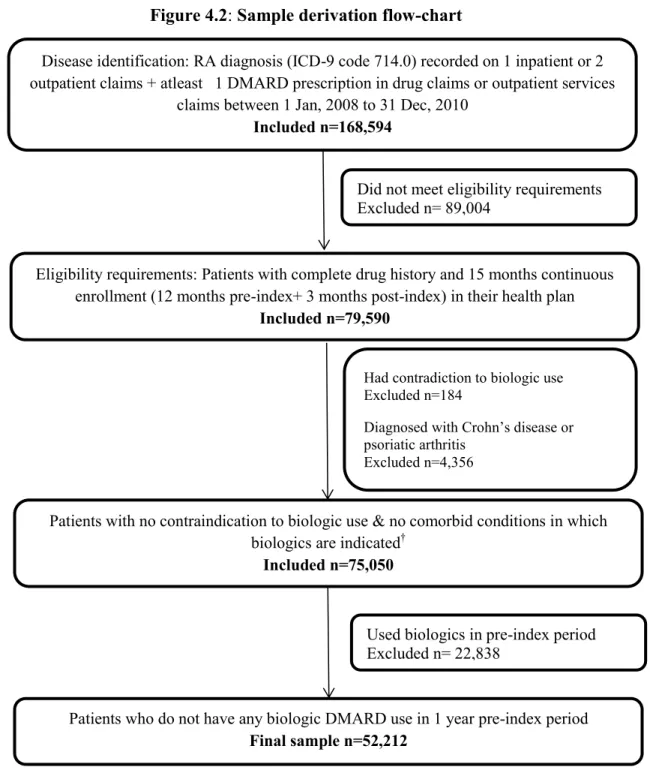
Figure 4.2: Sample derivation flow-chart..……….72
Figure 4.3: Proportion of individual biologics initiated in RA patients……..………... 81
Figure 5.1: Timeline of the study……...……….. 107
Figure 5.2: Sample derivation flow chart.…....……… 108
Figure 6.1: Timeline of the study…...……….. 132
xi
LIST OF ABBREVIATIONS
AMI Acute myocardial infarction
CAD Coronary artery disease
CHF Chronic heart failure
CVA Cerebrovasculr accident
CVD Cardiovascular disease
DMARD Disease modifying anti-rheumatic agent
HR Hazard ratio
IHD Ischemic heart disease
IRR Incidence rate ratio
MSA Metropolitan statistical area
MTX Methotrexte
OR Odds ratio
RA Rheumatoid arthritis
RR Risk ratio
CHAPTER 1
1. INTRODUCTION
1.1 Overview:
Rheumatoid arthritis (RA) is an autoimmune disease characterized by inflammation of
the synovium, a membrane that lines the joint capsule and produces lubricating fluid in the
joint, leading to disability in most cases (1). Data from 2008 suggest that RA affects
approximately 1.3 million adults in the United States (2). Disease onset generally occurs
between ages 30 and 50 years, and the incidence is higher in women and older adults. During
the past 20 years, pharmacotherapy of RA has evolved to include treatment with one or more
disease modifying anti-rheumatic drugs (DMARD) with a goal of controlling inflammation
and preventing joint damage (3). DMARDs are generally classified into non-biologic
(traditional) and biologic agents. Non-biologic DMARDs include orally-administered
medications such as methotrexate (MTX), sulfasalazine hydroxychloroquine, and
leflunomide. These agents halt the progression of RA through reducing inflammation by
suppressing systematic immune response; however their suppression of the immune system
is non-selective. Biologics differ from non-biologic DMARDs because they target specific
components of the immune system, specifically cytokines such as Tumor necrosis factor
2
Patients with RA experience cardiovascular diseases (CVD) at a higher rate compared
to general population (4, 5). CVD is believed to contribute to as much as half of the deaths in
RA patients (6). The increased rate of CVD in RA patients is driven by accelerated
atherosclerosis that occurs as a result of increased inflammation (7). Structural damage to
joints is known to occur aggressively within first few years of RA diagnosis (8, 9), so it is
possible that acceleration of atherosclerosis may also be more aggressive during early stages
of RA. Supporting this hypothesis, data from two small studies indicate that atherogenic lipid
profile and subclinical atherosclerosis can be seen in RA patients at very early stages of the
disease (10, 11). Therefore, it is important to evaluate the impact of various RA treatments on
CVD events in early RA patients from a clinical standpoint.
The first step in evaluating outcomes of biologics treatment is to understand the
factors that play a role in the treatment initiation in RA patients with biologics. The current
literature lacks studies that specifically evaluate the factors influencing biologic treatment
initiation. Identifying predictors of biologic treatment may in turn help to access and target
the most important factors that facilitate treatment initiation. After understanding the patient
characteristics that influence treatment initiation with biologics, the next logical step is to
examine their association with CVD outcomes in RA patients. Among all of the
currently-available treatments, TNF- α inhibitors (TNF-Is) are of special interest because of the
involvement of TNF-α in the development and acceleration of atherosclerosis. Although,
several observational studies have attempted to evaluate this association, most of these
studies are conducted in patients with established RA and very limited information is
available specific to early RA cases. The literature also lacks evidence for the independent
3
heterogenous class of drugs and therefore it may not be appropriate to assume a class effect
of TNF-Is in terms of their effects on reducing the risk of CVD.
Thus, the main goal of this dissertation is to understand the predictors of biologic
treatment initiation in RA patients and to examine the effect of TNF-I treatment on the risk of
CVD events in early RA patients.
1.2 Specific Aims:
This dissertation has the following Specific Aims.
Specific Aim 1: To identify factors influencing biologic treatment initiation in RA patients
We designed a retrospective cohort study to evaluate the influence of sets of various
population characteristics on biologic treatment initiation using the Andersen’s behavioral
model (ABM) for health services use (11). ABM posits a process of health care use in which
predisposing factors influence the ability (measured through enabling factors) of a person to
obtain health care which, when adding the need for treatment, predicts the use of health care
services. Predisposing factors included the variables that may influence the likelihood of
need for health services. Patients’ age, gender and geographic location were included in this
set. Enabling factors included variables suggesting patients’ ability to secure healthcare
services. We included the following variables in this set: visit to a rheumatologist, health plan
type, type of insurance and drug benefit generosity. Need factors included health conditions
of patients that necessitate the utilization of health services. In this set, we included RA
related factors such as RA type, RA severity, RA drug use in pre-index period, and other
4
biologic agent after controlling for other predictors in a multivariate manner, hierarchical
logistic regression models were used in which the predictors were entered in 3 sets.
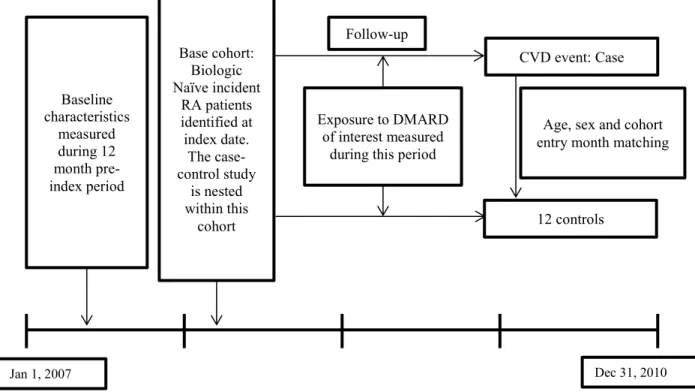
Specific Aim 2: To examine the effect of TNF-I treatment on incident CVD event in
patients newly diagnosed with RA
In this specific Aim, we evaluated the association between TNF-I treatment and
incident CVD events in patiently newly diagnosed with RA using several different
definitions of treatment exposure to account for the timing and history of treatment with all
the DMARDs. A nested case-control study was designed to evaluate this association. The
outcome of interest was defined as a composite measure consisting of acute myocardial
infarction, unstable angina, angina pectoris, chronic heart failure, other forms of chronic
heart diseases, ischemic stroke; and transient ischemic stroke. Three unique exposure
definition schemes were used. First classified TNF-I use as ever vs never use, second
definition considered current use indicators for TNF-Is and other RA treatments, third
definition considered current and past use indicators for TNF-I and other RA treatments. The
estimates of the association between TNF-I use and CVD events were derived from
conditional logistic regression models.
Specific Aim 3: To assess independent effects of individual TNF-Is (adalimumab,
etanercept, infliximab) on the risk of incident CVD events in patients newly diagnosed with
RA
In this specific Aim, we examined the association between the use of individual
TNF-Is, infliximab, etanercept and adalimumab, and incident CVD events in patients newly
5
of acute myocardial infarction, unstable angina, angina pectoris, chronic heart failure, other
forms of chronic heart diseases, ischemic stroke; and transient ischemic stroke. A nested
case-control study design was used for this specific Aim.
We analyzed data from Truven's MarketScan Commercial Claims and Encounters
(CCAE) and Medicare Supplemental and Coordination of Benefits (COB) for the years
2007-2010 for this study. The Marketscan database contains claims submitted from health plans
which have contracts with large private employers or public organizations in the United
States (12). This longitudinal database covers all inpatient, outpatient, and prescription
claims for individual patients as long as they remain enrolled in the health plan.
The results of of our Aim 1 can improve our understanding of the predictors of
biologic treatment initiation in RA patients. This can help identify factors and target patient
subgroups for biologic treatment initiation to maximize treatment benefit from these agents.
Results from Aims 2 and 3 can add unique information to the literature by providing
information on whether TNF-I therapy has an effect on improving CVD outcomes among
newly diagnosed RA patients. These findings could guide therapeutic decision-making to
CHAPTER 2
2 BACKGROUND AND LITERATURE REVIEW
In section 2.1, we provide an overview of rheumatoid arthritis (RA) and current
treatment options. Section 2.2 provides a review of the literature on the relationship between
RA and cardiovascular diseases (CVD). In section 2.3, we present a review of the current
evidence regarding TNF-α inhibitor (TNF-I) treatment and CVD events in RA patients. In
section 2.4, we describe the limitations of previous studies and provide a rationale for the
proposed study. Finally in section 2.5, we propose a theoretical framework for this study.
2.1 Rheumatoid arthritis overview:
RA is an autoimmune disease characterized by inflammation of the synovium, a
membrane that lines the joint capsule and produces lubricating fluid in the joint.
Uncontrolled synovial inflammation, or synovitis, leads to progressive erosion of bone and
cartilage and, ultimately results in joint malalignment and secondary osteoarthritis (1). As the
inflamed synovium destroys the joint, the surrounding muscles and tendons become weak,
leading to disability in most cases. According to a 2008 estimate, RA affects approximately
1.3 million adults in the United States and is associated with substantial morbidity and
mortality (2). Disease onset generally occurs between ages 30 and 50 years. and the
7
Annually, approximately 9 million physician office visits and more than 250,000
hospitalizations occur as the result of arthritis and other rheumatic conditions (13, 14).The
mean total annual direct cost to patients with RA is estimated to be $9,519 per person (15),
and according to most studies, the indirect costs of RA are approximately twice the direct
costs associated with this condition (16). The average number of days absent from work due
to RA has been reported to be in the range of 2.7 to 30 days annually (17).
Patients with RA are typically treated with a combination of medications from one or
more of the following therapeutic classes: 1) non-steroidal anti-inflammatory drugs
(NSAIDs), 2) corticosteroids, and 3) disease modifying anti-rheumatic agents (DMARDs)
(18). The overarching goal of pharmacological therapy in RA is to control inflammation and
prevent joint damage. NSAIDs and corticosteroids provide symptomatic relief in RA
patients while DMARDs halt the progression of the disease.
DMARDs are generally classified into non-biologic (traditional) and biologic
treatments. Non-biologic DMARDs are orally-administered medications and include agents
such as MTX, SSZ, HCQ, azathioprine, penicillamine and leflunomide. Non-biologic
DMARDs halt the progression of the disease by suppressing inflammation, but they do not
interfere with the functioning of specific components of the immune system. On the other
hand, biologics are intravenously or subcutaneously administered and target specific
components of the immune system, such as T cells, B cells, and cytokines, that play an
important role in the pathogenesis of RA (19).
The US Food and Drug Administration (FDA) approved the first biologic (infliximab)
for treatment of RA in 1998. Since that time, nine more agents have been approved:
8
certolizumab pegol (2008), golimumab (2009), tocilizumab (2010), and tofacitininb (2012).
Infliximab, adalimumab, golimumab, etanercept and certolizumab produce their primary
effect by blocking TNF-α from interacting with cell surface TNF receptors, thereby blocking
the inflammatory effects of TNF- α (20); these medications are classified as TNF-Is. Other
biologic agents act on different components of the immune system. Anakinra and
Tocilizumab block interleukins (IL), abatacept inhibits T-cell activation by binding to CD80
and CD86 surface antigens, tofacitinib,is a janus kinase inhibitor. and rituximab causes
depletion of B-cells by blocking CD 20 surface antigen (21).
Since the 1990s, treatment of RA has evolved from a traditional pyramid approach in
which treatment with DMARDs was reserved for patients with refractory disease to an
“inverted pyramid” approach in which patients with early RA symptoms are treated with a
combination of DMARDs in an attempt to control inflammation and prevent joint damage
(3). Non-biologic DMARDs are recommended for all the RA patients while the use of
TNF-Is is recommended in RA patients with moderate to high disease activity with features of
poor prognosis (22). If the patients do not respond to TNF-Is, then they may be moved to
other biologic agents. For RA patients with low disease activity, TNF-Is are reserved for
patients who fail to respond to non-biologic DMARDs.
2.2 Rheumatoid arthritis and cardiovascular diseases:
The association between RA and CVD has been the focus of recent attention, primarily
because of the increasing recognition of the major role that inflammation plays in the
9
2.2.1 The role of inflammation and the development of cardiovascular disease
The pathway leading to CVD-related events begins with the development of
atherosclerosis (25). RA is hypothesized to be associated with early initiation of
atherosclerosis through endothelial cell dysfunction (26). TNF-α, a pro-inflammatory
cytokine involved in the pathogenesis of RA, may mediate endothelial cell dysfunction by
inducing expression of leukocyte adhesion molecules that facilitates the penetration of
monocytes into the vessel wall (27). After entry, the monocytes differentiate into
macrophages that ingest lipoproteins to form “Foam cells” and fatty streak (25). Foam cells
express pro-inflammatory cytokines, including TNF-α that promotes proliferation of smooth
muscle cell into the intima of blood vessels and formation of a fibrofatty plaque (28). TNF-α
is also synthesized in the plaque (29) and is thought to increase collagen breakdown and
facilitate plaque rupture (25). Nearly three-quarters of all acute MIs are believed to be caused
by plaque rupture (25). Several reports suggest that endothelial functioning may improve
with TNF-I treatment (30-34).
TNF-α also has an effect on traditional CVD risk factors such as insulin resistance
and dyslipidemia (35). TNF-α is considered to be an important mediator of insulin resistance
because it decreases tyrosine kinase activity of insulin receptors and impedes
insulin-mediated uptake of glucose in skeletal muscle (36). TNF-α also directly interferes with the
metabolic pathways of triglycerides and cholesterol (35)resulting a higher level of
low-density lipoprotein (25). Numerous studies have shown a positive impact of TNF-I treatment
on these traditional CVD risk factors in RA patients (37-40).
Thus, TNF-α may play an important role in the development and acceleration of
10
TNF-Is in RA patients may be able to halt the progression of atherosclerosis, ultimately
leading to reduction in risk of CVD events.
2.2.2 Data on the relationship between rheumatoid arthritis and cardiovascular disease
Several epidemiological studies indicate that RA patients have an increased risk of
CVD-related morbidity and mortality compared to the general population (4, 5, 41). A
case-control study of data from the UK General Practice Research Database showed that RA
patients had a 47% higher odds of developing a first episode of acute myocardial infarction
(AMI) compared to non-RA patients (41). Maradit-Kremers et al.(4) also reported that
patients with RA have a significantly higher risk of chronic heart diseases (CHD) and are
more likely to suffer an unrecognized myocardial infarction (MI) compared to patients
without RA. Data from the Nurses Health Study showed that women with RA had a two-fold
increase in the risk of AMI compared to women without RA (5). A meta-analysis reported
that CVD-related mortality is approximately 50% higher in RA patients compared to the
general population(6).
Studies indicate that the increased risk of CVD-related morbidity and mortality in RA
patients cannot be satisfactorily explained by traditional risk factors such as hypertension,
dyslipidemia, smoking and diabetes mellitus. Gonzalez et al.(42) reported that traditional risk
factors imparted significantly less risk for the development of CVD in RA patients compared
to patients without RA. This finding suggests that extraneous RA-related risk factors may
also play a role in the development of CVD. Solomon et al. (43) observed an improvement
in the prediction of CVD events in RA patients when RA-related risk factors such as disease
duration > 5 years, the presence of radiographic joint erosions, the presence of subcutaneous
11
score ≥ 2, a Clinical Disease Activity Index score > 22, and seropositivity were added to
traditional CVD risk factors.
Thus, the increased CVD risk in RA patients is well demonstrated in the literature. This
increased risk is believed to be driven by sustained inflammatory activity in these patients.
2.3 Current evidence for the impact of anti-rheumatic agents on cardiovascular events in rheumatoid arthritis patients:
Because of the increased burden of CVD in RA patients, investigators have focused on
examining the effect of various RA drug treatments on reducing CVD events. In general,
randomized controlled trials (RCTs) lack sufficient power to study rare CV outcomes. Thus,
most of the evidence for the effect of different RA treatment options on the risk of CVD
events is based on observational data. In the following sections, we review the previous
observational studies that evaluated the effect of traditional DMARDs (Section 2.3.1) and
biologic DMARDs (Section 2.3.2) on the risk of CVD events in RA patients.
2.3.1 Non-biologic DMARDs and cardiovascular events in rheumatoid arthritis patients:
Non-biologic DMARDs are believed to exert a cardio-protective effect by its ability
to control inflammation in RA. In addition some more specific mechanisms for specific
agents are also suggested. For instance, it is reported that through adenosine A2A receptor
activation, methotrexate (MTX) promotes reverse cholesterol transport and limits foam cell
formation in THP-1 macrophages and thus hinders the process of atherosclerosis (44). By
contrast, some authors have argued that MTX can in fact promote atherosclerosis by
12
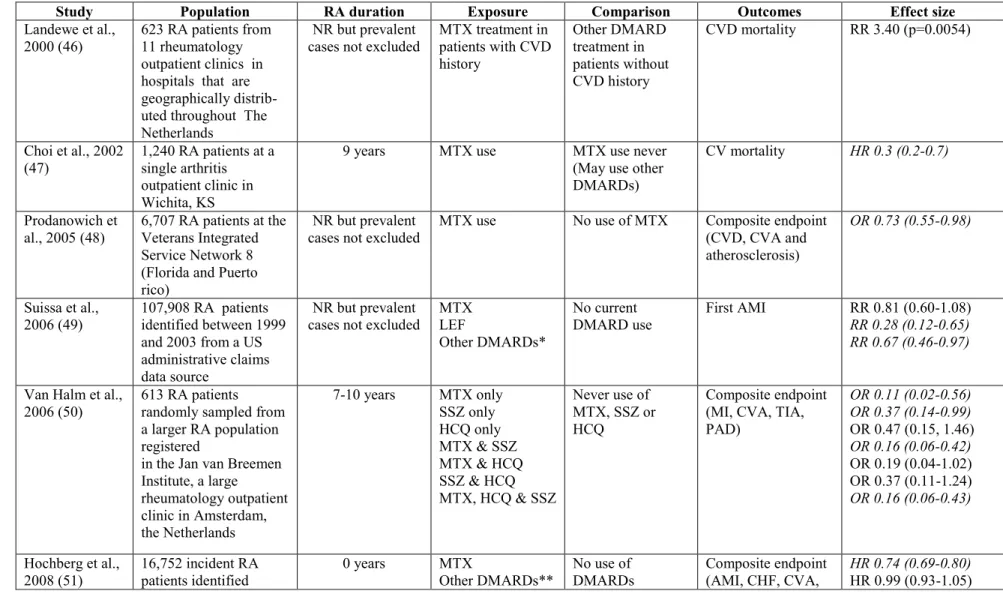
association between non-biologic DMARDs and CVD events in RA patients (46-54) . Table
2.1 summarizes these studies.
These studies varied considerably with respect to the study populations and outcomes
evaluated. Three studies used data from nationwide registries (46, 52, 54), 2 studies used data
from RA patients registered at a single outpatient RA clinic (47, 50), 2 studies used
administrative claims data (49, 51), 1 study used electronic medical records from department
of Veterans Affairs (VA) integrated service network (48) and 1 study used data from an
international collaboration project that recruited patients in 15 different countries (53). Eight
of these 9 studies evaluated were conducted in cohorts of established RA patients, and the
duration of RA varied from 6-15 years in these studies. Only one study (51) was conducted
in a cohort of new RA patients. Two studies used mortality due to CVD as the primary
outcome (46, 47), 5 studies used a composite CVD outcome (48, 50, 51, 53, 54), 1 study used
stroke (52) and 1 study used AMI (49) as the outcome of interest.
All the 9 studies evaluated the association between MTX treatment and CVD
outcomes. Five of these nine studies found significant reduction in the risk of CVD outcomes
with MTX treatment (Range: 15% to 89% reduction) (47, 48, 50, 51, 53). Three studies
reported no significant association between MTX treatment and CVD outcomes (49, 52, 54).
One study reported a significant increase in the risk of CVD mortality with MTX treatment
(46). Association between non-MTX DMARDs and CVD events were reported less
frequently in these studies. However, two studies documented statistically significant
reduction in the risk of CV endpoints with SSZ treatment compared to no treatment with SSZ
(50, 53). Two studies reported significant reduction in risk of CV outcomes with leflunomide
13
Table 2.1: Summary of studies evaluating impact of traditional DMARD therapy on cardiovascular outcomes in RA patients
Study Population RA duration Exposure Comparison Outcomes Effect size
Landewe et al., 2000 (46)
623 RA patients from 11 rheumatology outpatient clinics in hospitals that are geographically distrib- uted throughout The Netherlands
NR but prevalent cases not excluded
MTX treatment in patients with CVD history
Other DMARD treatment in patients without CVD history
CVD mortality RR 3.40 (p=0.0054)
Choi et al., 2002
(47) 1,240 RA patients at a single arthritis outpatient clinic in Wichita, KS
9 years MTX use MTX use never
(May use other DMARDs)
CV mortality HR 0.3 (0.2-0.7)
Prodanowich et
al., 2005 (48) 6,707 RA patients at the Veterans Integrated Service Network 8 (Florida and Puerto rico)
NR but prevalent
cases not excluded MTX use No use of MTX Composite endpoint (CVD, CVA and atherosclerosis)
OR 0.73 (0.55-0.98)
Suissa et al.,
2006 (49) 107,908 RA patients identified between 1999 and 2003 from a US administrative claims data source
NR but prevalent
cases not excluded MTX LEF
Other DMARDs*
No current
DMARD use First AMI RR 0.81 (0.60-1.08) RR 0.28 (0.12-0.65) RR 0.67 (0.46-0.97)
Van Halm et al.,
2006 (50) 613 RA patients randomly sampled from a larger RA population registered
in the Jan van Breemen Institute, a large
rheumatology outpatient clinic in Amsterdam, the Netherlands
7-10 years MTX only SSZ only HCQ only MTX & SSZ MTX & HCQ SSZ & HCQ MTX, HCQ & SSZ
Never use of MTX, SSZ or HCQ
Composite endpoint (MI, CVA, TIA, PAD)
OR 0.11 (0.02-0.56) OR 0.37 (0.14-0.99) OR 0.47 (0.15, 1.46) OR 0.16 (0.06-0.42) OR 0.19 (0.04-1.02) OR 0.37 (0.11-1.24) OR 0.16 (0.06-0.43)
Hochberg et al., 2008 (51)
16,752 incident RA patients identified
0 years MTX
Other DMARDs**
No use of DMARDs
Composite endpoint (AMI, CHF, CVA,
14
*Other DMARDs in this study included HCQ, CQ, SSZ, gold, azathioprine, minocycline, penicillamine, chlorambucil, cyclophosphamide, cyclosporine List of abbreviations used:
** The list of individual agents is not reported in the study
†CORRONA (Consortium of Rheumatology Researchers of North America) registry includes a network of 268 participating academic and community rheumatologists at 103 sites and 35 states within the USA
AMI Acute myocardial infarction CAD Coronary artery disease CHF Chronic heart failure CQ Chloroquine
CVA Cerebrovasculr accident CVD Cardiovascular disease
DMARD Disease modifying anti-rheumatic agent GC Glucocorticoid
HCQ Hydroxychorloquine HR Hazard ratio
IHD Ischemic heart disease LEF Leflunomide
MTX Methotrexte OR Odds ratio
PAD Peripheral arterial disease RA Rheumatoid arthritis RR Risk ratio
SSZ Sulphasalazine
TIA Transient ischemic attack between 1999 and 2006
from a US
administrative claims data source
angina, IHD)
Nadareishvili et
al., 2008 (52) 5,765 RA patients registered in the National Data Bank (NDB) for Rheumatic Diseases within the USA
15 years MTX No use of MTX Stroke OR 0.77 (0.39-1.54)
Naranjo et al.,
2008 (53) 4,383 RA patients from 48 sites in 15 countries 11 years MTX GC Antimalarials (HCQ, CQ) SSZ Gold LEF
No use of that particular DMARD (May use other drugs other DMARD)
Composite endpoint (AMI/Stroke/ angina/ CAD)
HR 0.85 (0.81-0.89) HR 0.95 (0.92-0.98) HR 0.98 (0.94-1.02) HR 0.92 (0.88-0.97) HR 0.96 (0.92-1.00) HR 0.55 (0.41-0.75)
Greenberg et al.,
2010 (54) 10,156 RA patients registered in the CORRONA registry†
6 years MTX Non-biologic
DMARDs** other than MTX
CVD composite endpoint (AMI, stroke, TIA)
15
2.3.2 TNF-α inhibitors and cardiovascular events in rheumatoid arthritis patients:
Given the role that TNF-α plays in facilitating the development and acceleration of
atherosclerosis in RA patients, it is plausible that TNF-I treatment may halt the progression
of atherosclerosis and ultimately lead to a reduction in the risk of CVD events. Several
observational studies have been conducted to test this hypothesis. In this section, we briefly
summarize the studies testing this hypothesis available in the literature.
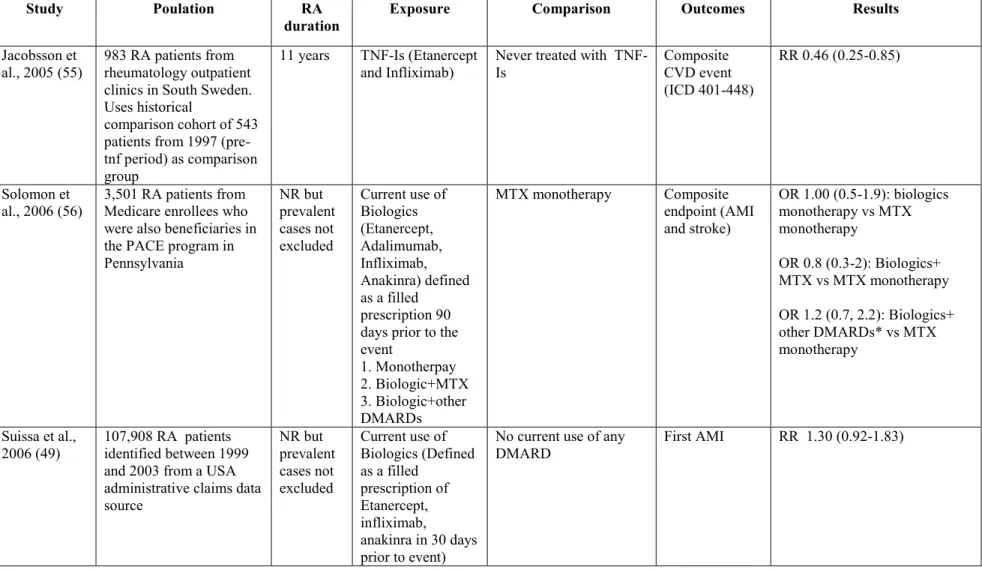
Table 2.2 summarizes the 12 studies that evaluated the impact of use of TNF-Is on
CVD events (49, 51-61). These studies differ significantly in terms of the data sources,
population included, exposure definitions, and outcomes evaluated. Six of these studies used
data from nationwide registries (52, 54, 55, 57, 59, 61), 1 study used data from an
international collaboration project that recruited patients in 15 different countries (53), 1
study used data from a statewide registry (58), 1 study used a cohort of Medicare enrollees
from Pennsylvania (56),1 study used electronic medical records from department of VA (60),
and 2 study used administrative claims data (49, 51). Five studies evaluated composite CVD
outcomes,(51, 54-56, 61), 4 studies evaluated AMI (49, 57-59) while 1 study evaluated
stroke (52) and 2 studies evaluated cerebrovascular accident (CVA) and AMI individually in
addition to a composite CVD outcome as the outcomes of interest (53, 60). Seven studies
used non-exposure to TNF-Is as the comparison group (49, 51-53, 55, 59, 61) , while 5
studies used active comparators (54, 56-58, 60). Two studies compared TNF-I therapy with
MTX monotherapy (56, 58), one study used non-biologic DMARDs other than MTX as the
comparison (54), one study used only non-biologic DMARDs as comparison (57) and one
16
biologic drug users in a single group (60). Only 2 studies evaluated the impact of TNF-I
treatment on the risk of CVD events in early RA patients (51, 61).
Two studies comparing TNF-I use vs no use in established RA patients reported
significant reduction in the risk of composite CVD outcome with TNF-I treatment (54-58%
reduction) (53, 55). Two other studies using same definition and population did not find a
significant associations between TNF-I treatment and evaluated outcomes (52, 59). One
study reported increasing trend of AMI with biologic treatment including TNF-Is compared
to no DMARD use in established RA cases, but the estimate was not statistically significant
(OR: 1.30, 95% CI: 0.92-1.82) (49). Three studies reported that treatment with TNF-I was
significantly better in improving CVD outcomes (17-80% reduction) against a variety of
active comparators (54, 58, 60) in established RA patients. Two studies found no difference
in the risk of CVD outcomes between TNF-I treatment and comparator groups (56, 57) in
similar population. One analysis reported an increase in trend of CVA with TNF-Is, but the
results were not statically significant (HR: 1.07, 95% CI: 0.997-1.155) (60). The two studies
that only included early RA cases reported a statistically non-significant reduction in the risk
17
Table 2.2: Summary of studies comparing the impact of TNF-I therapy with no use of TNF-I therapy on cardiovascular outcomes in RA patients
Study Poulation RA
duration Exposure Comparison Outcomes Results
Jacobsson et
al., 2005 (55) 983 RA patients from rheumatology outpatient clinics in South Sweden. Uses historical
comparison cohort of 543 patients from 1997 (pre-tnf period) as comparison group
11 years TNF-Is (Etanercept
and Infliximab) Never treated with TNF-Is Composite CVD event (ICD 401-448)
RR 0.46 (0.25-0.85)
Solomon et al., 2006 (56)
3,501 RA patients from Medicare enrollees who were also beneficiaries in the PACE program in Pennsylvania
NR but prevalent cases not excluded
Current use of Biologics (Etanercept, Adalimumab, Infliximab, Anakinra) defined as a filled
prescription 90 days prior to the event
1. Monotherpay 2. Biologic+MTX 3. Biologic+other DMARDs
MTX monotherapy Composite
endpoint (AMI and stroke)
OR 1.00 (0.5-1.9): biologics monotherapy vs MTX monotherapy
OR 0.8 (0.3-2): Biologics+ MTX vs MTX monotherapy
OR 1.2 (0.7, 2.2): Biologics+ other DMARDs* vs MTX monotherapy
Suissa et al.,
2006 (49) 107,908 RA patients identified between 1999 and 2003 from a USA administrative claims data source
NR but prevalent cases not excluded
Current use of Biologics (Defined as a filled
prescription of Etanercept, infliximab, anakinra in 30 days prior to event)
No current use of any
18
Dixon et al.,
2007 (57) 10,755 RA patients registered in the BSRBR* 7-12 years TNF-Is (Etanercept, Adalimumab, Infliximab)
Non-biologic DMARDs (list of agents not reported)
First AMI IRR 1.44 (0.56-3.67)
Singh G et al., 2007 (58)
19,223 RA patients from a registry of medical assistance patients in California (MediCal database) NR but prevalent cases not excluded
TNF-Is +MTX MTX monotherapy First AMI RR 0.20 (0.05-0.88)
Hochberg et al., 2008 (51)
16,752 incident RA patients identified between 1999 and 2006 from a US administrative claims data source
0 years Biologics use (defined as a filled prescription of etanercept, adalimumab, infliximab or anakinara in the pre-index period
No use of biologics Composite endpoint (AMI, CHF, CVA, angina, IHD)
HR 0.99 (0.83-1.18)
Nadareishvili et al., 2008 (52)
5,765 RA patients registered in the National Data Bank (NDB) for Rheumatic Diseases within the USA
15 years TNF-Is (Etanercept, Adalimumab, Infliximab) 1. In the 6 months pre-index period 2. In the baseline period
Not treated with TNF-Is in the respective time periods
Stroke OR for TNF-I use in 6 months pre-index Vs no use in that period: 0.8 (0.34-1.82)
OR for TNF-I use at baseline Vs no use in that period: 0.37 (0.18-1.66)
Naranjo et al., 2008 (53)
4,383 RA patients from 48 sites in 15 countries
9 years TNF-Is exposure time (in years)
Not treated with TNF-Is (exposure time to tnf=0)
Composite AMI Stroke
19
Wolfe and Michaud, 2008 (59)
17,738 RA patients registered in the National Data Bank (NDB) for Rheumatic Diseases within the USA
NR but prevalent cases not excluded TNF-Is (Etanercept, Adalimumab, Infliximab) 1. Ever use & 2. Current use (6 months prior to event)
Not treated with TNF-Is in the respective time period
First AMI OR: 1.1 (0.8-1.6): Ever use vs Never use
OR: 1.3 (0.9-1.6): Current use vs no current use
Greenberg et
al., 2010 (54) 10,156 RA patients registered in the CORRONA registry**
8 years TNF-Is
1. New+prevalent use
2. Only new use
Non-biologic DMARDs† other than MTX
CV composite endpoint (AMI, stroke, TIA)
HR 0.39 (0.19-0.82) for new and prevalent use of TNF-I vs non-biologic DMARDs
HR 0.45 (0.13-1.56) for only new users ot TNF-I vs non-biologic DMARD use Al-aly et al.,
2011 (60)
20,811 RA patients from Veterans Administration EMR (USA) NR but prevalent cases not excluded TNF-Is (Etanercept, Adalimumab, Infliximab)
Other DMARDs (HCQ, Gold, Penicillamine, SSZ, MTX, LEF, Azathioprine, Cyclophosphamide, Cyclosporine, Anakinara) Composite CVA CHF PAD CAD
HR 0.96 (0.89-1.04) HR 0.83 (0.74-0.89) HR 1.05 (0.91-1.22) HR 0.85 (0.69-1.05) HR 1.07 (0.99-1.15)
Ljung et al.,
2012 (61) 6,496 patients with early RA in the Swedish Rheumatology Register
< 1 year Exposure to
TNF-Is (First time use) Never exposed to TNF-Is Composite endpoint (ACS events)
20
* Other DMARDs in this study included HCQ, CQ, SSZ, gold, azathioprine, minocycline, penicillamine, chlorambucil, cyclophosphamide, cyclosporine List of abbreviations used:
*CORRONA (Consortium of Rheumatology Researchers of North America) registry includes a network of 268 participating academic and community rheumatologists at 103 sites and 35 states within the USA
† List of individual agents not reported
AMI Acute myocardial infarction
BSRBR British Society for Rheumatology Biologics Register CAD Coronary artery disease
CHF Chronic heart failure CQ Chloroquine
CVA Cerebrovasculr accident CVD Cardiovascular disease
DMARD Disease modifying anti-rheumatic agent GC Glucocorticoid
HCQ Hydroxychorloquine HR Hazard ratio
IHD Ischemic heart disease LEF Leflunomide
MTX Methotrexte OR Odds ratio
PAD Peripheral arterial disease RA Rheumatoid arthritis RR Risk ratio
SSZ Sulphasalazine
21
Thus, very limited information exists in the literature for the association of TNF-I
treatment with incident CVD events in patients with early RA. It is known that structural
damage to joints occur aggressively within first few years of RA diagnosis (8, 9), so it is
possible that acceleration of atherosclerosis may also be more aggressive during early stages
of RA. A couple of small studies have indicated that atherogenic lipid profile and subclinical
atherosclerosis are features of early RA (10, 11). The epidemiological evidence of the effect
of TNF-Is on early RA CVD events is limited to only two studies limited to modest sample
sizes (61) and mixed treatment exposure with TNF-Is and other biologics, which could bias
results (51).
2.4 Significance of this research:
The first step in evaluating outcomes of biologics treatment is to understand the factors
that play a role in the treatment initiation of RA patients with biologics. The current literature
lacks studies that specifically evaluate the factors influencing biologic treatment initiation.
Only 2 studies have looked at this issue and both have important limitations. The study by
Bonafede et al. (62) used insurance claims data to study the predictors of DMARD treatment
initiation in patients with newly diagnosed RA. This study provides limited information
regarding biologics specifically since the factors were not differentially evaluated for
non-biologic and non-biologic DMARDs. It is well-understood that these two subgroups of DMARDs
differ drastically in their mechanism of actions, effectiveness and cost of treatment. So to
study those as a single group may not give us estimates that are relevant to biologic agents.
DeWitt et al. (63) studied specific predictors of biologic initiation in 1,545 RA patients in an
observational database using patient self-reported data. However, this study suffers from
22
centers for patient recruitment in the entire nation. They also did not consider patient
enabling factors such as drug benefit coverage and insurance type, which are important from
a policy perspective to understand biologic treatment initiation. Moreover, they used data up
to 2006, at which point there were only 5 biologics compared to 10 which are available
currently. Therefore, our study addressed limitations by addressing the important
phenomenon of biologic treatment initiation in RA patients with the help of a theoretical
framework using recent data from a large insurance claims database in Aim1.
After understanding the patient characteristics that influence treatment initiation with
biologics, the next logical step is to examine their association with CVD outcomes in these
patients. Among all of the currently-available treatments, TNF-Is are of special interest
because of the involvement of TNF-α in the development and acceleration of atherosclerosis.
Although, several observational studies (discussed in section 2.3) have attempted to evaluate
this association, limited information is available specific to early RA cases. The first of these
two studies that evaluated the association in new RA patients had a small sample size (198
acute coronary syndrome cases only) and hence may be underpowered to detect treatment
effect (61). The second study did not differentially define exposure to TNF-Is form other
biologics (51). Since these agents differ vastly in their mechanism of actions, we believe that
categorizing them into a single group may produce biased estimates. Therefore, in Aim 2 of
our study we evaluated the association between TNF-I treatment and CVD events in early
RA cases to contribute new knowledge to the literature for this specific population. We have
tried to overcome these limitations by ensuring sufficient sample size and detailed exposure
23
Additionally, precise exposure definition is extremely important in evaluating any
exposure-outcome association. It is especially important for RA since the use of treatments in
these patients is complex and patients are known to stop and switch DMARDs frequently. No
study to our knowledge has systematically tried to evaluate the impact of exposure definition
on the association of RA treatment and CVD events. Therefore, in our Aim 2 we take up that
challenge to provide some justification to the contrasting estimates of the RA treatment-CVD
outcome association available in the literature. In this study we use 3 different exposure
definitions that are summarized below and compare the resulting estimates.
The first approach that is used in a couple of studies (51, 55) is to define the use of
TNF-Is or biologic DMARDs as ever-treated vs never-treated, meaning once a patient begins
therapy with TNF-Is he or she is considered to be treated for the entire follow-up period. This
over-simplified definition of exposure into a binary variable leads to non-differential
misclassification of exposure by ignoring the recency of exposure as well as the frequency of
exposure. For example, in this scheme, a patient who uses the treatment only for 1 day would
be considered no different than a patient who uses the treatment for 1 year and
pharmacologically this makes little sense because these patients are likely to have different
treatment effects. Although, some authors argue that such non-differential misclassification
of the exposure would produce a bias towards the null and hence provide a conservative
estimate of the treatment-outcome association (47), there is also evidence in the literature that
this may not be true under all circumstances (64). Therefore, it is complicated to predict the
direction of the bias produced by such misclassification. The best way to address this issue is
24
Another approach used by several studies (49, 54, 56) is to classify the use of TNF-Is
as ‘current use’ vs ‘no current use’ based on a prescription filled within a certain time period
prior to the event. This approach addresses some of the misclassification by considering the
recency of the exposure, which may be closely associated with the outcome. However, this
definition still ignores the treatment history of the patients. In other words, if a patient has
used the treatment in the past before discontinuing it and the reason for discontinuation is
associated with the outcome, we are likely to miss out on this important finding because
these patients would not be classified as drug users in this exposure scheme. Therefore, it is
also important to consider treatment history while defining exposure.
Because of the reasons discussed above, for this research we also added the
determinants of past DMARDs use, along with current use while defining exposure. This
approach has been advocated previously as the most effective in reducing the non-differential
exposure misclassification (65). This definition however, does not take into account the
cumulative exposure to the treatment and therefore to quantify the impact of duration of drug
use, we defined the duration of TNF-Is as cumulative days of use in to derive estimates of the
association between TNF-I duration and CVD events.
The literature also lacks evidence for the independent effects of different individual
TNF-I agents on CVD outcomes in RA patients. TNF-Is are a heterogenous class of drugs.
These agents include a chimeric [IgG.sub.1] monoclonal antibody (infliximab); monoclonal
antibodies with fully human amino acid sequences produced by phage display (adalimumab)
or from mice transgenic for the human immunoglobulin locus (golimumab); an engineered
25
human [IgG.sub.1] (etanercept); and a pegylated Fab' fragment that lacks an Fc portion
(certolizumab) (20).
Certolizumab and golimumab have been on the market for approximately two years
and there are limited pharmacological and epidemiological data for these agents. Therefore,
we limit our discussion to differences among etanercept, infliximab and adalimumab. These
agents possess unique pharmacokinetic and pharmacodynamic properties (66). The p75
TNFRII dimer, Etanercept, has been shown to bind with lymphotoxin B and does not induce
neutralizing antibodies, unlike the monoclonal antibodies, adalimumab and infliximab.
Infliximab has been reported to form more stable complexes with soluble TNF compared to
etanercept (67). These three agents have not been compared head-to-head in RCTs for their
efficacy in RA. However, recent evidence from a mixed treatment comparison using data
from RCTs reported that the odds of achieving ACR50 response (American College of
Rheumatology response criteria for 50% improvement in joint function), were higher with
etanercept compared to infliximab and adalimumab both (etanercept vs infliximab OR: 4.17,
95% CrI 2.00-11.17, etanercept vs adalimumab OR: 3.50, 95% CrI 1.37-7.63) (68).
They also differ with respect to their effectiveness in treating other rheumatologic
diseases. Unlike adalimumab and infliximab, etanercept lacks efficacy in treating
granulomatous diseases, such as Crohn's disease, Wegener's granulomatosis and sarcoidosis
(69, 70). These agents are also reported to have differences in their safety profiles.
Infliximab, but not etanercept, is found to be associated with an increased risk of
granulomatous infections such as mycobacterium tuberculosis and histoplamosis (71).
Evidence from mixed treatment comparisons using withdrawals due to adverse events
26
profile compared to infliximab and adalimumab (etanercept versus infliximab OR:0.30, 95%
CrI 0.16-0.62, etanercept versus adalimumab OR: 0.50, 95% CrI 0.25-0.91) (72).
No study has provided estimates for the independent effects of these individual TNF-I
agents for their effects on the risk of CVD events in RA patients. Because these agents differ
with respect to their pharmacological properties, effectiveness profiles in various
rheumatologic diseases and tolerability, we believe that it is not appropriate to assume a class
effect in terms of these agents’ effect on the risk of CVD events in RA patients. Therefore, in
Aim 3 of the proposed study, we added novel information to the literature by providing
estimates for the independent effects of these 3 TNF-Is on the risk of CVD events.
This dissertation used the data from administrative claims submitted from health plans
which have contracts with large private employers or with public organizations in the United
States for the years between 2007 and 2010. The use of this recent data from ‘real-world’
strengthened the external validity of the study by inclusion of patients with multiple
comorbid conditions in the study cohort, which can not be achieved with RCTs. In addition,
RCTs examining the efficacy of TNF-Is in RA patients are usually under-powered for
studying CV outcomes. The accelerated onset of atherosclerosis in RA patients often leads to
events such as AMI and stroke that can be detected in observational studies using
administrative data. This provided us with a valuable opportunity to evaluate the effect of
TNF-I treatment on the risk of CVD events in RA patients using secondary databases that
document the use of medications and clinical events.
Results from our Specific Aim 1 may be useful in accessing and targeting the most
27
help in guiding therapeutic decision-making to improve the quality of care provided to
patients with RA.
2.5 Theoretical model:
A conceptual model forms the basis for the consideration of appropriate variables in
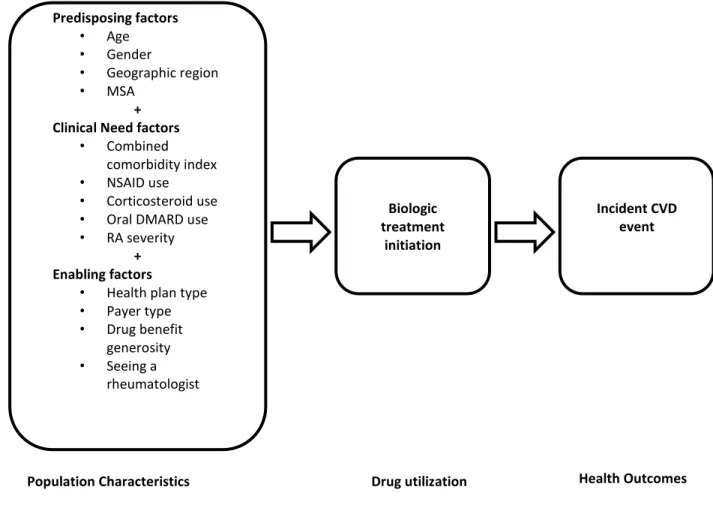
any research study. For our Specific Aim 1, we used a conceptual framework based on
Andersen’s Emerging Behavioral Model of Health Services Use (73). This model posits that
the use of healthcare services and subsequent health outcomes are influenced by a set of
population characteristics. More specifically, these characteristics are divided in to three
groups,
1) Predisposing factors: include patient characteristics that predisposes them to the utilization
of health services (eg, age, sex, geographical factors)
2) Need factors: include health conditions of patients that necessitates the utilization of health
services (eg, comorbid conditons, severity of illness, use of other medications) &
3) Enabling factors: include variables depicting patients’ ability to secure the healthcare
services (eg, health insurance, drug coverage).
The Andersen behavior model has been used to study utilization of healthcare services and
subsequent outcomes in numerous studies in the literature (74-76). Based on these principles,
we adapted this model to fit our research needs. Figure 2.1 shows the Andersen model with
28
Figure 2.1: Andersen’s Emerging Behavioral Model of Health Services Use (Adapted)
After identifying all the relevant variables in the Andersen model, it is equally
important to consider their relation with the exposure and outcome of interest, as well as with
one-another. In pharmacoepidemiology research, the biggest threat to the internal validity of
any study is the issue of confounding. Confounding refers to a phenomenon where the
relationship between the exposure and outcome of interest is due, completely or in part, to
another variable that is associated independently with exposure and outcome. This variable
is defined as the confounder (77).The theory of directed acyclic graphs (DAG) provides a Predisposing factors
• Age
• Gender
• Geographic region
• MSA
+ Clinical Need factors
• Combined
comorbidity index
• NSAID use
• Corticosteroid use
• Oral DMARD use
• RA severity + Enabling factors
• Health plan type
• Payer type
• Drug benefit generosity
• Seeing a rheumatologist
Biologic treatment
initiation
Incident CVD event
29
theoretical framework for identifying the potential confounders based on subject-matter
knowledge (78-80).
In the past, various studies have successfully used the theory of DAG to identify
relevant confounders and controlling for them through conditioning (81-83). Weng et al.
(84) compared DAG with change-in-estimate method, in which the confounders are selected
based on their impact on exposure-outcome association, for their performance in covariate
selection in a simulation analysis. The performance was measured by standard error, bias,
square root of the mean-squared error, and 95% confidence interval coverage. This study
concluded that under correct specifications, DAG outperformed change-in-estimate method.
More recently, Cox et al. (85) have recommended the use of DAGs in identifying
confounders in design of nonrandomized studies of treatment effects using secondary data
sources. Therefore, we used the theory of DAG to identify relevant confounders based on
information from the literature.
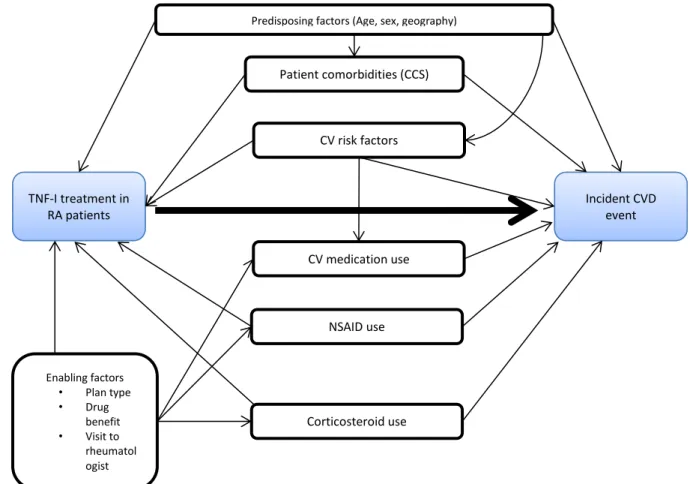
A DAG is drawn as a network of exposure, outcome and all the other relevant
variables that are associated with exposure and outcome independently. All the associations
specified in the DAG must be directed, meaning the direction of the association between all
the variables must be known. DAG must be acyclic, meaning there must not be any closed
loops in the DAG. Any variable should not affect itself through other variables. Following all
these rules, we constructed a DAG for the association between TNF-Is and CVD events
(Figure 2.2). Within this framework, factors independently associated with TNF-Is
(exposure) and CVD event (outcome) are shown along with the associations of interest,
30
Figure 2.2: Directed acyclic graph (DAG) for the association between TNF-I use and cardiovascular diseases
*CCS: Combined Comorbidity Score
** CVD risk factor includes diabetes mellitus, hyperlipidemia and hypertension
Patient predisposing factors, age, sex and geogrpahic location, are considered as
factors independently associated with exposure (TNF-I) and outcome (CVD events) in the
DAG. This observation is supported by several studies in the literature. Bonafede et al. (62)
reported that geographic location was associated with biologic medication initiation. Patient
age has been consistently shown to be associated with prescription of biologic agents in RA
TNF-I treatment in RA patients
Incident CVD event
Predisposing factors (Age, sex, geography)
CV risk factors
CV medication use
NSAID use
Corticosteroid use
Enabling factors • Plan type • Drug
benefit • Visit to
rheumatol ogist
31
in the literature (63, 86-88). Older age is also directly associated to higher risk of CVD
events as established by the Framingham heart study (89). Gender differences in the
incidence of CVD have also been well established (90).
A number of clinical need factors including patients’ comorbidities, CVD risk factors,
use of NSAIDs and use of corticosteroids were postulated to be associated with both
exposure and outcome independetly. Analysis of a registry data suggested that prior
treatment with steroids were significantly associated with inititation of TNF-Is (63). Another
study reported an association between NSAIDs use and initiation of biologic treatment (62).
Both NSAIDs and steroids have been shown to be associated independently with CVD
events (91, 92). Literature suggests that patient co-morbid conditions play an important role
in initiation of biologic treatment in RA (62, 63). Comorbid conditions including diabetes,
high blood pressure and hyperlipidemia have been consistantly reported to be associated with
higher risk of CVD (93-95). We also must account for the causal effect of various classes of
CV medications, including beta-blokers, inhibitors of renin angiotensin system, calcium
channel blockers, and lipid lowering agents, on prevention of CVD events.
Finally, a set of enabling variables, including health plan type and patient co-pay are
considered for their effect on the utilization of prescription medications including TNF-Is,
NSAIDs, corticosteroids and CVD medications. Different plan types differ in their generosity
of drug prescription coverage and the co-payments have been shown to be associated with
prescription medication utilization (96). Therefore, it is important to consider impact of these
variables on medication utilization while evaluating subsequent outcomes. Additionally, we
32
research demonstrated higher likelihood of initiation of biologics if the patient visited a
rheumatologist (62).
Thus, DAG provided us with a systematic framework of all the relavent variables that
should be considered for confounding control while evaluating the effects of TNF-Is on the
risk of CVD events. We evaluated all the causal and non-causal paths in our Figure 2.2 and
identified a minimal sufficient adjustment set to control for confounding in a multivariate
CHAPTER 3
3 METHODS
In section 3.1, the data source used for this dissertation is described. In section 3.2,
methods used are described in detail by Specific Aims and finally in section 3.3, issues
related to statistical power are discussed.
3.1 Data-source:
Data from the Truven’s MarketScan Commercial Claims And Encounters (CCAE) and
Medicare Supplemental and Coordination of Benefits (COB) were analyzed for this study.
This database contains de-identified, person-specific health data including clinical utilization,
expenditures, insurance enrollment/plan benefit, inpatient, outpatient, and outpatient
prescription information. The data include private sector health data from approximately 100
payers, and can be linked to track detailed patient information across sites, types of
providers, and over time (12). Over 35 million individuals were included in the 2008 CCAE,
encompassing employees, their spouses, and their dependents. The Medicare Database
contains the health care experiences of 2.5 million individuals annually with Medicare
Supplemental insurance paid for by employers. Both the Medicare-covered portion of
payment (represented as the COB amount) and the employer paid portion are included, as
well as any out-of-pocket expenses to patients. These data have been used widely in health
34
unique data links, this database provides an ideal opportunity to conduct
pharmacoepidemiology studies. For this particular analysis, data from inpatient services file,
outpatient services file, outpatient drug claims file and enrollment file were merged using
unique patient identifiers.
3.2 Methods by Specific Aim:
The plan for patient population, study design, measurement of variables and statistical
analyses is detailed below by Specific Aim.
3.2.1 Specific Aim 1: To identify factors influencing biologic treatment initiation in RA
patients
Patient population:
The total study period for our study was from Jan 1, 2007 to Dec 31, 2010. This time
frame was selected because our dataset also contains Medicare enrollees and in 2006,
Medicare part D was implemented extending drug benefit coverage to many beneficiaries.
Therefore, it is likely that prescription medication utilization pattern may have changed
between pre-2006 and post-2006. To avoid the threat of this history effect on our study’s
internal validity, we began our study period from Jan 1, 2007. To allow for 12 months of
baseline period for everyone, the subject identification period started from Jan 1, 2008 and
ended at Oct 1, 2010. All patients with a recorded diagnosis in this subject identification
period were eligible for inclusion in our cohort. Diagnoses of RA was defined by ICD-9-CM)
code of 714.0 in our data source. This ICD-9-CM code has been shown to be highly sensitive
in detecting RA in previous studies (97, 98). However, concerns have been raised about the
specificity of this code because of the high false positive rate observed by Singh et al. (97).
35
patients to have at least 2 outpatient claims (not on the same day), or 1 inpatient claim with
this diagnosis code. The earliest of these diagnoses dates was defined as the index diagnosis
date. Further, we required patients to fill a prescription of a DMARD in the study period after diagnosis of RA because as suggested by Singh et al. (97), this criterion reduces the high
false positive rate of RA identification obtained by only using ICD-9 codes.
We excluded any patients with age <18 years at the time of their diagnoses because
RA diagnosis under the age of 18 years is generally classified as juvenile rheumatoid arthritis
(JRA), which differs systematically from RA in terms of disease progression and treatments
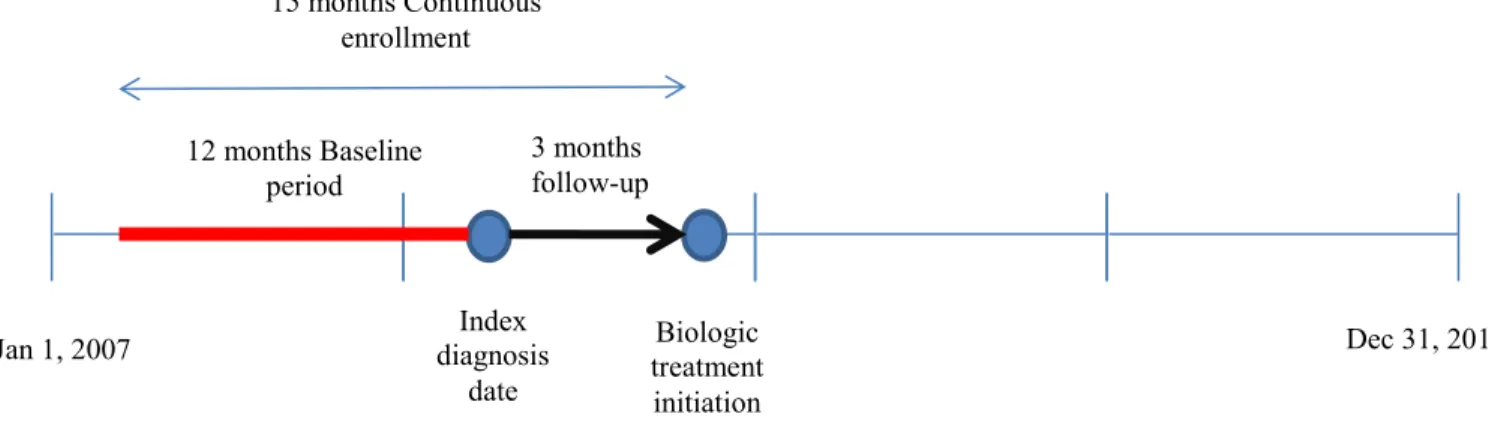
used (99, 100). We further limited the inclusion to patients continuously enrolled in their
health plan for at least 12 months prior to and 3 months after their index diagnosis date. This
was done because intermittent enrollment may result in incompleteness of the data in our
analytic dataset; which in turn could lead to misinterpretation of our effect estimates. The 12
months of continuous enrollment period prior to the index diagnosis date was defined as the
baseline period. Figure 3.1 summarizes the inclusion and exclusion criteria for our RA
cohort.
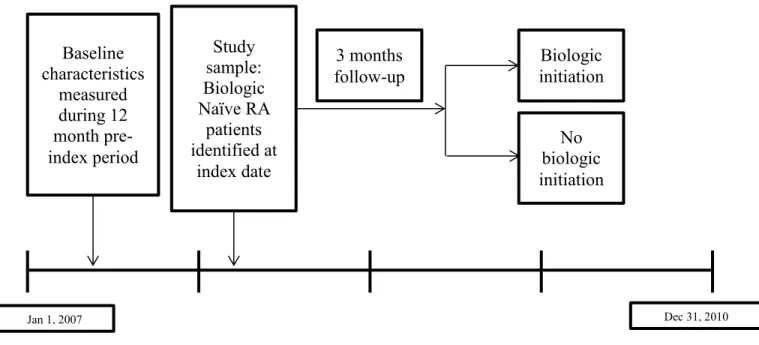
Study design:
We designed a retrospective cohort study to evaluate factors influencing biologic
treatment initiation for this particular aim. Patients included in the RA cohort (See Figure
3.1) were followed for 3 months from the index diagnosis date for determining initiation of a
biologic DMARD treatment. Figure 3.2 shows a schematic diagram of study design for Aim
36
Figure 3.1: Inclusion and exclusion criteria for Aim 1 cohort
Disease identification: RA diagnosis (ICD-9 code 714.0) recorded on 1 inpatient or 2 outpatient claims + atleast 1 DMARD prescription in drug claims or outpatient services
claims between 1 Jan, 2008 to 31 Dec, 2010
Exclude: Did not meet eligibility requirements
Eligibility requirements: Patients with complete drug history and 15 months continuous enrollment (12 months pre-index+ 3 months post-index) in their health plan
Exclude: Had contradiction to biologic use
Exclude: Diagnosed with Crohn’s disease or psoriatic arthritis
Patients with no contraindication to biologic use & no comorbid conditions in which biologics are indicated
Patients who do not have any biologic DMARD use in 1 year pre-index period
Final sample